By Riley Waggaman, Substack, 10/29/25
As Russia’s special military operation approaches its fourth year, “independent” media continues to dutifully avoid discussing the stated goals of the SMO and whether or not any of these goals have been achieved.
You would be forgiven for thinking the purpose of the SMO was to dig thousands of miles of trenches so that Russians and Ukrainians could have nice holes to sit in as they wait patiently for drones to murder them, but actually, Moscow’s military incursion was supposed to prevent the formation of a NATO-aligned “anti-Russia” in Ukraine.
Who could have predicted that nearly four years of war would exacerbate the problems that the SMO aimed to solve, turbo-charging Ukraine’s transformation into a permanent anti-Russia armed to the teeth with NATO weaponry?
The late Marko Marjanović warned of just such an outcome in January 2022, at a time when most “independent” journalists were insisting that a Russian attack on Ukraine would be impossible (because the Kremlin said so):
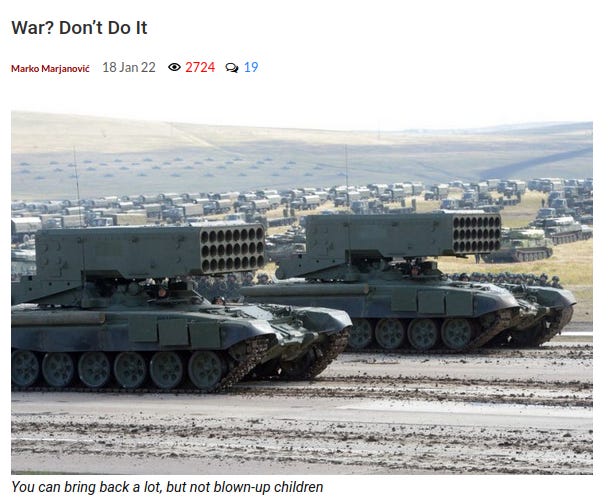
In “War? Don’t Do It”, Marjanović grappled with questions that few were willing to ask: What would motivate a Russian attack on Ukraine, and what could this military operation hope to accomplish?
To answer the first question, Marko turned to an essay published by Putin in July 2021, “On the Historical Unity of Russians and Ukrainians”. In his essay, Russia’s president argues that “forces that have always sought to undermine [Russia-Ukraine] unity” are engaged in a deliberate policy of “divide and rule”, with “the overarching goal being to divide and then to pit the parts of a single people against one another.”
In the same essay, Putin states that Moscow cannot allow the concept of “Ukraine is not Russia” to turn into “Ukraine as an anti-Russia”:
Ukraine was dragged into a dangerous geopolitical game aimed at turning Ukraine into a barrier between Europe and Russia, a springboard against Russia. Inevitably, there came a time when the concept of “Ukraine is not Russia” was no longer an option. There was a need for the “anti-Russia” concept which we will never accept.
Writing on January 18, 2022, Marjanović correctly assessed that if the Russian military were to march into Ukraine, preventing the formation of an “anti-Russia” would be a primary objective for Moscow.
(Marko even republished Putin’s essay two days earlier, noting: “If Moscow goes to war in the coming months, you can take this text as its ‘Why We Fight’”.)
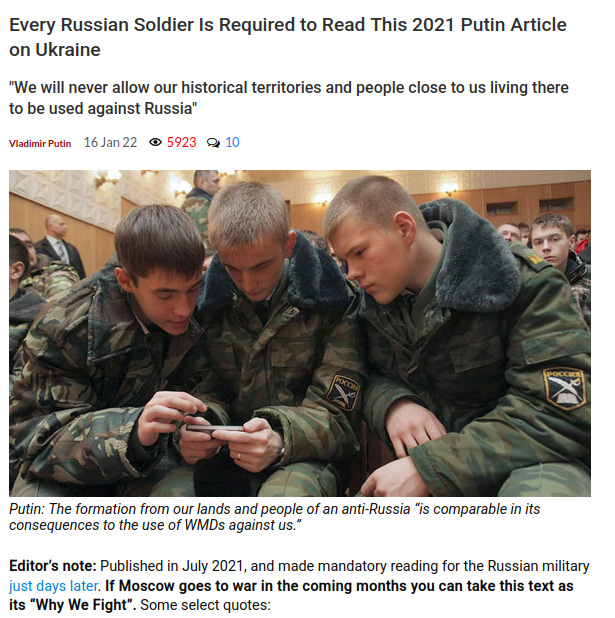
Indeed, Putin’s address to the Russian people on February 24, 2022 borrowed heavily from his July 2021 essay. The prevention of a hostile “anti-Russia” taking shape in Ukraine was the end-goal of the SMO (which could only be achieved after preventing the further eastward expansion of NATO, protecting the people of Donbass, and ensuring the demilitarization and “denazification” of Ukraine).
As Putin explained when announcing the start of the SMO:
Any further expansion of the North Atlantic alliance’s infrastructure or the ongoing efforts to gain a military foothold of the Ukrainian territory are unacceptable for us. Of course, the question is not about NATO itself. It merely serves as a tool of US foreign policy. The problem is that in territories adjacent to Russia, which I have to note is our historical land, a hostile “anti-Russia” is taking shape. Fully controlled from the outside, it is doing everything to attract NATO armed forces and obtain cutting-edge weapons.
Returning to Marko’s January 2022 article: After correctly theorizing that Putin would cite his “anti-Russia” thesis should he ultimately order an attack on Ukraine, Marjanović asked a crucial follow-up question: Would war with Ukraine stop it from becoming an “anti-Russia”?
I will let Marko explore this question in his own words.
I have republished “War? Don’t Do It” below. It serves as a remarkable 1,700-word prophecy, an unheeded warning from almost four years ago. I hope you will help me honor Marko’s legacy by sharing it with your internet friends and acquaintances. Maybe there are “independent military experts” you know who would also benefit from reading it.
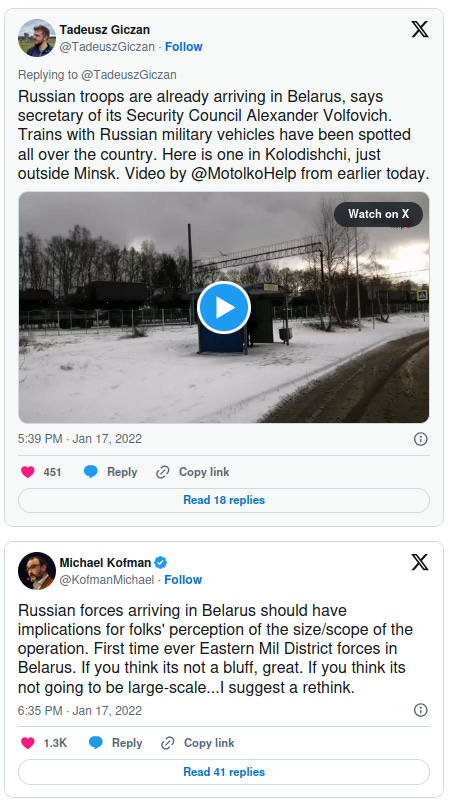
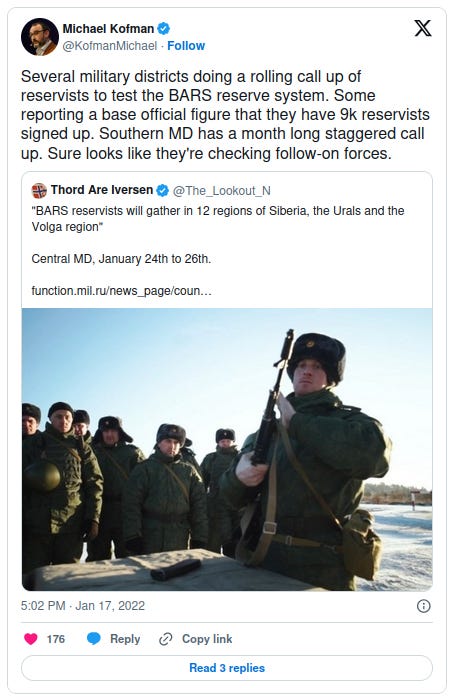
The article has been republished with its original formatting (Marko emphasized key points with bold text). The tweets at the end of the article (which demonstrated unusual troop movements in Russia and Belarus in the run-up to the SMO), and the YouTube video, are also his.
— Riley
War? Don’t Do It
By Marko Marjanović
Originally published on January 18, 2022 at Anti-Empire.com
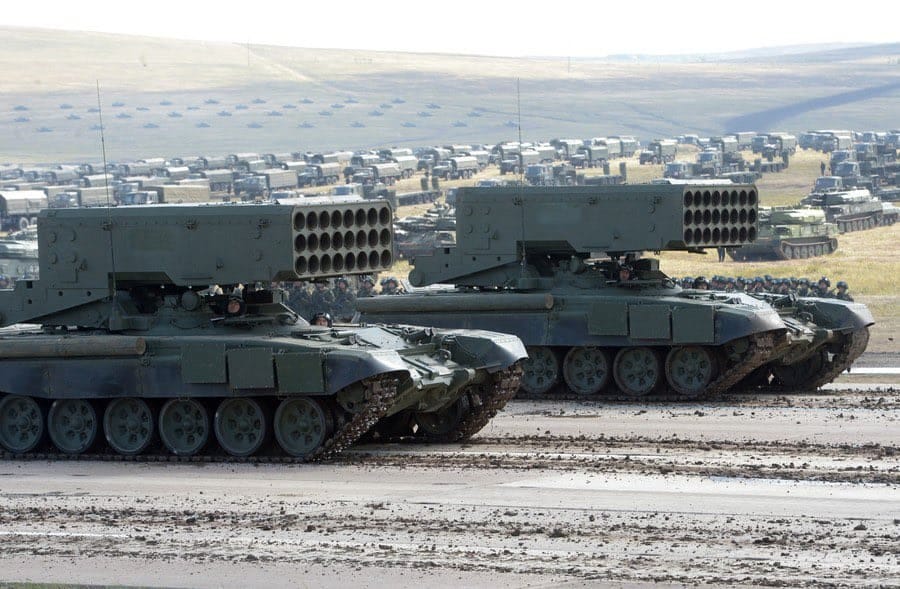
Russia has delivered an ultimatum to the Empire. If it does not receive a satisfactory response what will the Russian “or else” be? I am sympathetic to the view of boomer commentators (Doctorow, Armstrong, Helmer) that it will not be an invasion of Ukraine but something entirely else. I am sympathetic because I hope they are right. Trouble is when I read their guesses what that something else might be (except Helmer’s who refuses to speculate) it all seems rather underwhelming. All this circus only to station Russian troops in Venezuela or park a missile frigate off the coast of Washington, DC…it just isn’t the sort of stuff that would mean a great deal to Russia. But what does mean a lot to Russia?
Russia has a policy of no-first-use on nuclear weapons, but there is one caveat. If subject to a conventional attack of such ferocity that it should be indistinguishable from a nuclear strike then Russia says it’s atom-splitting time. What does it mean for a conventional attack to be the equivalent of a nuclear one? In Russian historiography the damage the Soviet Union suffered in WW2 (25 million war dead, 60 million people and 40% of industry lost to occupation) is often likened to the equivalent of a nuclear strike. In other words, should there be another Operation Barbarossa Russian atomic forces will not rest. Barbarossa famously advanced to roughly the present-day Russian-Ukrainian border reaching cities such as Kharkov and Rostov.
Might there be another thing that to Russia would be the equivalent of getting hit by a nuclear strike? According to Vladimir Putin yes, there is. In his last year’s article on Ukraine Putin writes that historic Russian lands settled by people who are Rus’ being forged into “an anti-Russia” is the equivalent of an WMD attack on Russia:
It would not be an exaggeration to say that the path of forced assimilation, the formation of an ethnically pure Ukrainian state, aggressive towards Russia, is comparable in its consequences to the use of weapons of mass destruction against us.
Putin argues that if one branch of the Rus people, primarily perhaps due to Soviet-era nation-building, developed a separate non-Russian identity and nation-state that this is a reality that Russia can, and must, live with. But when that state is rabidly anti-Russian that this is crossing a red line:
All the subterfuges associated with the anti-Russia project are clear to us. And we will never allow our historical territories and people close to us living there to be used against Russia. And to those who will undertake such an attempt, I would like to say that this way they will destroy their own country.
Having on its former lands a state composed of its own people who are looking out for their best interest is one thing, but having an entity driven solely by anti-Russianism is entirely another:
Today, the ”right“ patriot of Ukraine is only the one who hates Russia. Moreover, the entire Ukrainian statehood, as we understand it, is proposed to be further built exclusively on this idea. Hate and anger, as world history has repeatedly proved this, are a very shaky foundation for sovereignty, fraught with many serious risks and dire consequences.
The very act of anti-Russia prioritizing reflexive anti-Russianism even over Ukrainian national interests is what convinces Putin it is ultimately illegitimate and possibly “a tool in someone else’s hands”:
Russia is open to dialogue with Ukraine and ready to discuss the most complex issues. But it is important for us to understand that our partner is defending its national interests but not serving someone else’s, and is not a tool in someone else’s hands to fight against us.
No doubt having 50 million of your countrymen with shared ancestry and ethnicity spin out into a separate nation, and then having that nation become increasingly defined by antagonism against you is a bitter pill to swallow. Especially if the separation comes about as a result of top-down policies in the aftermath of a Communist coup. It is also a state of affairs that few powers with the means to challenge it would not seek to rectify. (Lincoln’s invasion of the South comes to mind.)
I do find that a Russian invasion of Ukraine would be totally out of character for what Putin’s Russia has been up until now. But I also remember that Putin has moved the bounds of what was possible for Russia before. Both the 2014 takeover of Crimea and the 2015 expedition to Syria were unthinkable for Russia as it had been until then. Russia in the past twenty years has been capable of some evolution, particularly in the international arena. Putin’s very article on Ukraine would have been entirely unthinkable 20 years prior. It now stands as proof that this old centrist statist has — under the pressure of external forces and under the influence of internal ones — gradually and after much resistance assimilated a smidgeon of Russian nationalism.
I don’t know if Russia is going to march into Ukraine. I certainly don’t know how that is supposed to fix Putin’s problem of Ukraine being “anti-Russia”. Isn’t a war between the two only going to deepen animosities and provide Ukrainian nationalists with more fodder? Try as they might at least until now it has been very difficult for Ukrainian nationalists to find historical examples of Ukrainians and Russians spilling each other’s blood.
Putin lays the blame for Ukraine’s anti-Russianism at the feet of “Western authors”:
The Western authors of the anti-Russia project set up the Ukrainian political system in such a way that presidents, members of parliament and ministers would change but the attitude of separation from and enmity with Russia would remain. Reaching peace was the main election slogan of the incumbent president. He came to power with this. The promises turned out to be lies. Nothing has changed. And in some ways the situation in Ukraine and around Donbas has even degenerated.
But is that really so? Critics may say that Putin is at least as responsible for the dominance of anti-Russians in Kiev as any Westerner. Putin certainly played his part in events that removed 6 million Russian speakers in Donbass and Crimea from Ukrainian voter rolls. Moreover, the Russian-aided rebuff of Kiev’s attempted takeover of rebel Donbass by military means provided the nationalists with the much-needed semblance of a Russian-Ukrainian war. One of the critiques against Putin is precisely that in 2014 he helped deal near maximum damage to Ukrainian-Russian friendship at the popular level while getting Russia nothing but the 2-million Crimea in return. There were those who proposed that since Ukraine would henceforth be lost to anti-Russianism anyway he may as well have grabbed the entire Russian-speaking (and Russia-friendly) half.
In reality, it is neither Westerners nor Putin who are primarily responsible for the hold of “anti-Russians” over Kiev. As Putin says, twice now (with Poroshenko and especially with Zelensky) the voters have rallied behind a negotiated-settlement candidate only for the latter to turn into a hawk once in power. The cause is ultimately found in the nature of fractured systems such as democracy. Ukraine has multiple centers of power and additionally the notionally top leader is actually a weak one because his position is one of the least secure. Pursuing peace which takes a lot of investment outright for a very distant payoff isn’t the optimal strategy for a leader who is besieged from all sides and just trying to survive into the next month. A cheap pro-war policy that kicks the can down the road and pays minor but instant dividends is much better. Especially for the kind of room-reading empty suits that are likely to rise to the top in a modern electoral system.
Of course, one reason Putin didn’t order the military to occupy entire Russia-friendly Ukraine in 2014 are Moscow’s precious foreign exchange reserves. Moscow wants a Ukraine that is economically integrated with Russia and even plugged into its defense industry, but it definitely doesn’t want to be on the hook for the material condition of “our historical territories and people close to us”. We have seen as much in Donbass. While there has been significant investment into incorporated Crimea (to say nothing of Chechnya), the same hasn’t been the case for Donbass which today is economically worse off than it was in 2014 and exists in such an economic ghetto that the export of 1500 kilograms of sausage to Russia “bypassing Ukraine” is treated as newsworthy. (Why did it take eight years??) This comes on top of Russia having presided over the gradual killing off of all of its interesting (but independent-minded) leaders and their replacement by “economically-motivated” yes-men. If Moscow has a similarly progressive vision for Left-Bank Ukraine then I imagine a considerable portion of its residents would ask her to not bother liberating them. The money men around Putin; the Kudrins, the Chubaises, and the Grefs can not be counted on to release the sort of monies that reinvigorating Eastern Ukraine would take. (What they can be counted on is to mRNA-treat its people and cattle tag them.)
The final problem is that while rearranging borders in a coloring book is a blast, this isn’t a video game. The Russian military is an artillery-firepower army. It is incredibly lethal. The takeover of Southern and Eastern Ukraine doesn’t happen without tens of thousands of deaths. Mostly Ukrainian. But didn’t Putin just explain that Ukrainians are Russians too? Well, I prefer my Malorussians deluded (and even anti-Russian) over dead.
I think a Russian offensive into Ukraine is a possibility (say 20%). I don’t think we should be eager for it.
Putin has already demonstrated to Ukraine that push comes to shove all of its Western “well-wishers” will abandon Kiev to its fight. Let’s hope he finds that sufficient.
Take it from someone who knows a little about fratricidal war: You don’t want one.
Marko Was RightWe’ve lost the Slavic H. L. Mencken
·
Oct 14
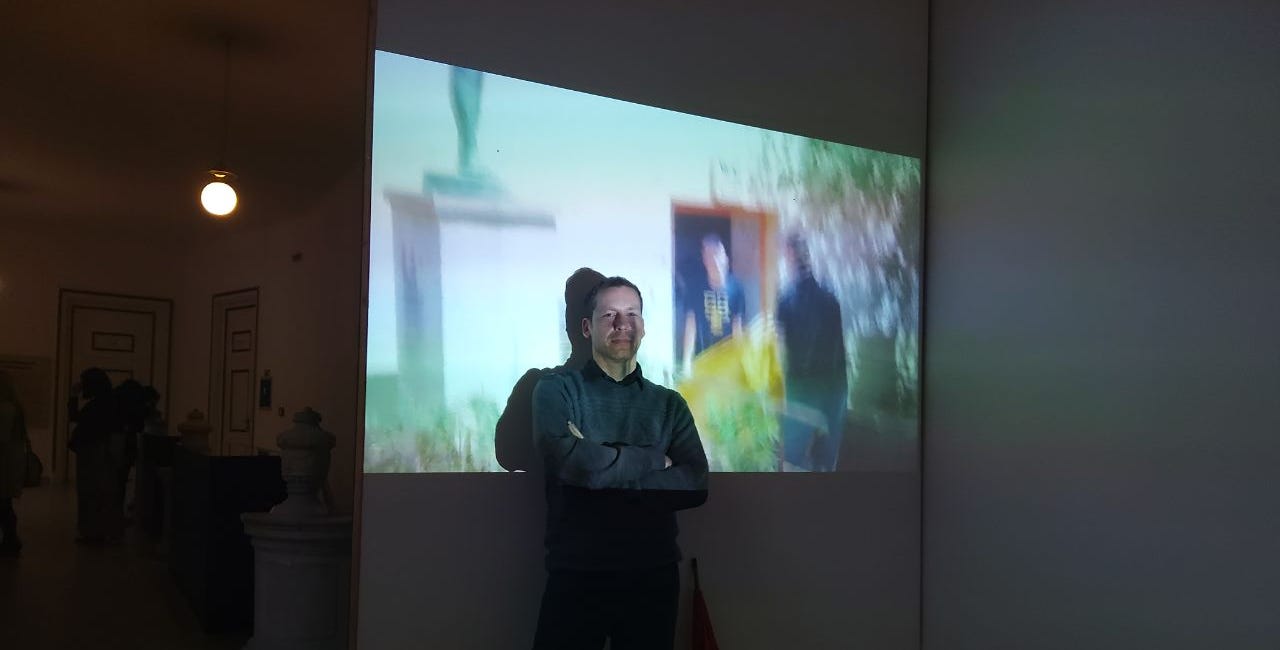
Marko Marjanović, the editor of Anti-Empire.com who waged a one-man insurgency against soothing falsities, seeking favor from no one and enraging State Department toadies and Kremlin boot-lickers alike, was discovered dead in his apartment in Cagayan de Oro, Philippines, on July 22. He was 40 years old.