Pietro Shakarian: Russo-Iranian Relations Amid the Rise of the Rest

By Pietro Shakarian, Substack, 12/26/25

Pietro A. Shakarian, PhD, is a historian of Russia and the Soviet Union and a lecturer in history at the American University of Armenia in Yerevan. He is the author of Anastas Mikoyan: An Armenian Reformer in Khrushchev’s Kremlin (Indiana University Press, 2025).

Earlier this month, on December 17, Iranian Foreign Minister Abbas Araghchi paid a working visit to Moscow where he held a high-level meeting and press conference with Russian Foreign Minister Sergei Lavrov. Although the visit went almost entirely unnoticed by many observers of international affairs, it marked yet another significant milestone in Russo-Iranian relations, signaling a further deepening in ties between Moscow and Tehran amid the rise of a new multipolar world order.

Both Lavrov and, even more pointedly, Araghchi underscored the main aim and achievement of the meeting – a program for intensifying cooperation and consultation between the Russian and Iranian foreign ministries over the next three years. In his remarks, Araghchi underscored the historic signing as a “roadmap” or an “action plan” of cooperation between the two sides, building on their Treaty of Comprehensive Strategic Partnership inked at the beginning of this year. Araghchi likewise underscored the degree of closeness that had developed between Moscow and Tehran over the course of 2025. He maintained that Russo-Iranian cooperation had strengthened in virtually all areas and tracks, especially in the military-technical and political spheres. Meanwhile, consultations between the two countries, already held regularly, had grown in frequency and intensity throughout 2025. Iran’s President Masoud Pezeshkian had met with Russian President Vladimir V. Putin five times “over the last 18 months,” Araghchi underscored. “This, indeed, is a very important number,” he concluded, emphatically. For his part, Lavrov highlighted that his talks with Araghchi took place “as always, in a friendly, constructive, and trust-based atmosphere.” Such statements indicate a sincere, steady, and consistent deepening of relations, contradicting periodic Western reports, particularly in the British press, underscoring areas of disagreement between the two Eurasian giants.

Although the Araghchi-Lavrov meeting had been planned in advance, it was given additional impetus by recent news reports that Israeli Prime Minister Benjamin Netanyahu is scheduled to meet US President Donald Trump on December 29. Bibi’s main demand? To resume the Israeli-US “12-day war” on Iran that has been halted since June. The main justification for the attack will no longer be Iran’s nuclear program, but instead its sophisticated ballistic missile defense system that had succeeded in wreaking havoc across Israel. As the Quincy Institute’s Trita Parsi has stressed, “Israel’s military doctrine does not allow for any of its regional foes to deter it or challenge its military dominance. Iran’s missile program currently does exactly that.” Araghchi’s visit to Russia, therefore acquired additional significance, augmenting a growing strategic partnership between two major BRICS countries.

While the threat of a new Israeli-instigated war with Iran looms large, it is only the most pressing of a litany of security concerns facing both Moscow and Tehran. As Araghchi and Lavrov noted, these areas of mutual concern include the ongoing genocide of Palestinians in Gaza, security dilemmas in Transcaucasia, stability concerns in Afghanistan and Central Asia, and the ongoing war in Ukraine. Of these, one zone of particular interest is Transcaucasia, a small but critical region sandwiched between Russia to the north and Iran to the south. Here the Israel-allied Republic of Azerbaijan has increasingly goose-stepped its way toward NATO, even going so far as completely aligning its military to NATO standards. Emboldened by its conquest and ethnic cleansing of Armenian-inhabited Nagorno-Karabakh, Baku has made no secret of its efforts to gradually orient itself toward the Western alliance. It also continues to openly espouse extensive territorial claims on neighboring Armenia and Iran, confident in its belief that military might will serve its interests far better than any diplomatic negotiation. At the same time, despite such actions and rhetoric, both Moscow and Tehran have taken a cautious approach toward President Ilham Aliyev’s blustery bravado, with both expressing hope that Baku will “return to reason” and even participate constructively in the Western section of the International North–South Transport Corridor.

Meanwhile, Armenian Prime Minister Nikol Pashinyan has also vocally backed the idea of pivoting toward the West, to such a degree that he even sacrificed his own co-ethnics in Nagorno-Karabakh. Already broadly unpopular in Armenia, Pashinyan’s domestic reputation took another hit in August when he signed a declaration with Aliyev endorsing the US-backed “Trump corridor” (or TRIPP) in Armenia’s southern Syunik Province, granting a free hand to Israel, Turkey, and the US on Iran’s sensitive northern frontier. Faced with widespread accusations of treason at home, Pashinyan has since moved to crack down on the political opposition and the Armenian Apostolic Church, the country’s main religious institution since its Christianization in the 4th century. At the same time, Pashinyan has turned to the EU to bolster his flagging domestic position, while imposing himself over an increasingly recalcitrant Armenian population. “I am the government,” Pashinyan declared in one recent speech in Yerevan, channeling France’s Louis XIV. For his part, Lavrov has accused the EU of meddling in Armenia’s internal affairs.

The “Trump corridor” has ramifications well beyond Transcaucasia. Backed by an unholy alliance of US neocons, Israeli Likudniks, Western war interests, and big energy corporations, the plan aims to remove Russia and Iran from the Caucasus altogether while creating alternative “energy conduits” linking post-Soviet Central Asia to the EU. The extension of US geopolitical influence into Central Asia, particularly Kazakhstan, is of particular alarm, not only to Russia and Iran, but also, ultimately, Trump’s chief geopolitical rival – China. The idea itself is not new. Zbigniew Brzezinski expounded on it in his Grand Chessboard. Meanwhile, Clinton’s “Russia hand,” Strobe Talbott, once praised such a policy approach in his correspondences with George F. Kennan, promoting an “exasperated” response from the then-93-year-old veteran US statesman. Now the idea has been given new life under Trump, despite his “no war” campaign pledges.

Although such schemes present a clear and direct strategic threat to Russia, Moscow has generally taken a publicly restrained stance toward them. By contrast, Iran has been far less reticent in voicing its concerns on the matter, with some Iranian commentators even giving the “Trump corridor” the alternative moniker of “NATO’s Turan Corridor.” During the Araghchi-Lavrov press conference, one Iranian journalist pointedly asked Araghchi about the dangers facing Iran and Russia in the South Caucasus. In his response, the Iranian foreign minister stressed that Moscow and Tehran hold a “clear position” on the region, as articulated in the Comprehensive Strategic Partnership Treaty – specifically Article 12, which expressed overt opposition to the presence of any external actors in the larger Eurasian region. Araghchi further added that both the South Caucasus and Central Asia together are areas “that must ensure security” in the critical zone of Eurasia adjoining both Russia and Iran. Any “non-regional presence,” Araghchi maintained, is inadmissible in the view of Moscow and Tehran, including, presumably, any “Trump corridor.”

In the backdrop of all these developments stands the much greater geopolitical context of the rise of global multipolarity, or the “rise of the rest.” This theme of multipolarity was clearly and unambiguously discernable throughout the entire Araghchi-Lavrov press conference. Both foreign ministers stressed the need for the “democratization” of the international order and unity against the “impunity” of the United States, particularly in light not only of the recent US and Israeli war on Iran, but also the growing attacks on Venezuela by the Trump administration. “They consider themselves untouchable,” noted Araghchi, who added that “they’re using brute force to achieve favorable terms.” Above all, he stressed that the US was “pushing the international community into the atmosphere of the jungle” and that both Russia and Iran were committed to opposing such developments by adhering to the legal institutions safeguarding the post-World War II global order. Lavrov concurred with Araghchi’s assessments. “It is necessary to implement these principles [of the UN Charter], respect them, and apply them in practice not selectively, on a case-by-case basis, but exclusively in their entirety, completeness, and interrelatedness,” Lavrov noted. Both stressed continued mutual support against “illegal sanctions” imposed on Iran and Russia by the West. Taking to X/Twitter, Araghchi further stressed that the December 17 agreements “will enable stronger action against unlawful Western sanctions, promote regional stability, advance infrastructure projects, and block illegal measures in the UN Security Council.”

Thus, while the December 17 agreements may have gone “under the radar” of many geopolitical analysts, they represent a significant step not only in the intensification of Russo-Iranian relations, but also in global developments more broadly. As multipolarity proceeds to rise, advocates of unipolarity in Washington’s Beltway will not retreat into introspection and policy reevaluation, but will continue to double-down on the same failed policies in an eager bid to preserve what they believed was an era of American primacy. Whether such policies are framed as “liberal interventionist” or “transactionalist” makes no difference as their objectives remain essentially the same. In this regard, the Beltway “blob” is not motivated by any desire to “defend democracy,” but rather by the cynical self-interest of the various lobbies that continue pushing for war – e.g., the need to continue producing weapons to ensure the continued generation of profits.

Therefore, until America’s domestic troubles become too great to ignore, the stream of crusades to “counter” Russia, Iran, and China will continue into 2026, with regions such as Transcaucasia and Central Asia becoming new theatres of soft power competition and potential geopolitical conflict. From the view of Moscow and Tehran, the disastrous record of the Trump administration in 2025 already indicates that “business as usual” continues in Washington. The Strategic Partnership Treaty of January and the December 17 agreements thus function as effective “insurance policies” to maintain security and stability in Eurasia amid the rise of the rest.

Kyle Anzalone: Ukraine Takes Part in NATO War Games, Further Integrating Into Collective Defense Architecture

By Kyle Anzalone, Libertarian Institute, 12/28/25

Ukrainian representatives participated in NATO war games simulating the alliance’s response to an attack.

According to a NATO press release, 1,500 soldiers and civilians from multiple European countries participated in the Loyal Dolos 2025 drills that were conducted at the beginning of the month. 

On Sunday, the General Staff of the Armed Forces posted on Facebook that Ukrainian officials participated in Loyal Dolos. “Ukraine is becoming part of the collective defense architecture of NATO. Ukrainian JATEC experts have, for the first time, joined the work of the mechanisms of Article 5 of the NATO Treaty on the training LOYAL DOLOS 2025,” the post explained. 

Senior National Representative of Ukraine in JATEC, director of Implementation of the programs of the Joint Center NATO-Ukraine Colonel Valery Vyshnivsky said, “The participation of Ukrainian JATEC experts in the LOYAL DOLOS 2025, which is one of the key elements of NATO’s preparation according to Article 5 of the North Atlantic Treaty, has strategic significance for us, as for the first time Ukrainian representatives have been involved in the work of the Alliance’s collective security mechanisms.” 

Kiev’s military ties to NATO countries are one of the primary reasons Russian President Vladimir Putin ordered the invasion of Ukraine in 2022. The Kremlin has demanded that Kiev agree to neutrality as a condition for ending the war. 

President Zelensky recently announced that Ukraine would agree to stop seeking formal membership in the North Atlantic Alliance if members of the bloc agreed to bilateral agreements with Kiev that are similar to NATO’s Article 5. Article 5 is considered the mutual defense pact in the NATO charter. 

That Ukraine is continuing its integration into NATO suggests that Kiev is still seeking to become an informal member of the bloc.

NATO, Oreshniks, Ukraine’s ‘golden toilets’: Putin’s Defense Ministry Board meeting takeaways

RT, 12/17/25

Russian President Vladimir Putin and Defense Minister Andrey Belousov delivered a wide-ranging assessment of the Ukraine conflict and Russia’s military posture at an expanded Defense Ministry Board meeting on Wednesday, addressing battlefield developments, new weapons priorities, and what they described as deepening problems in Kiev.

Here are the key takeaways from their remarks:

Russia’s battlefield claims and “strategic initiative”

In 2025, Russian forces have liberated more than 300 populated areas, including major cities and fortified territories, Putin said, noting that the Russian army “has gained and continues to hold the strategic initiative along the entire line of contact.”

Belousov echoed that assessment, saying the army “confidently maintains the strategic initiative” and is conducting “active offensive operations in virtually all directions.” The pace of advance by the ‘East’, ‘Center’ and ‘West’ force groupings has accelerated compared to 2024, he noted.

The defense minister also cited the latest battlefield claims, saying Russian forces had taken control of Krasny Liman and Krasnoarmeysk (Pokrovsk), which he described as a “symbol of resistance of both the Ukrainian army and its Western backers.” He also said that the capture of Kupyansk would expand a “security buffer zone” in Ukraine’s Kharkov Region and reduce the threat of shelling of the Lugansk People’s Republic. Russian forces had liberated 24 settlements and 400 square kilometers in Russia’s Zaporozhye and Ukraine’s Dnepropetrovsk regions since November, according to Belousov.

Putin also praised North Korean soldiers who have fought alongside Russian forces in the Kursk Region.

Ukraine’s losses and reduced combat capability

Ukraine has lost nearly 500,000 servicemen this year alone, Belousov said, adding that Ukraine’s combat capability had been “reduced by about a third” over the past year, stripping Kiev of the ability to replenish its forces through forced mobilization of civilians.

According to the minister, Ukraine has lost more than 103,000 weapons and pieces of military equipment this year, including about 5,500 of Western manufacture – almost double the total recorded the previous year.

“What was obvious from the start has been confirmed – the collapse of the Ukrainian army’s defenses is inevitable,” Belousov said, stressing that “finally, Kiev’s Western backers understand this clearly.”

Kiev’s deepening crisis and “golden toilets”

Ukraine’s statehood is “unraveling,” Putin said, pointing to massive corruption scandals linked to Vladimir Zelensky’s inner circle and symbolized by “golden toilets.”

The scandal, which has sent shockwaves across the Ukrainian political landscape since kicking off in mid-November, involved Zelensky’s longtime close associate Timur Mindich, who fled the country last month hours before he was due to be arrested for extortion. Reports also surfaced of a gilded toilet in the businessman’s elite Kiev apartment.

The case drew in multiple other high-profile figures, leading to the downfall of the justice and energy ministers and the dismissal of Zelensky’s enigmatic chief of staff, Andrey Yermak, who was widely regarded as the key figure in the Ukrainian power structure.

The Russian president also emphasized what he described as mass desertions in Ukraine. More than 100,000 criminal cases have been opened in the country, while the number of deserters “runs into the hundreds of thousands,” he said.

Western “lies” and NATO’s “major war” preparations

Putin dismissed Western claims that Moscow was planning an imminent attack as “lies and nonsense,” saying such statements are being made “quite deliberately” to raise hysteria in Europe.

“I have repeatedly stated that this is a lie, nonsense, pure nonsense about some imaginary Russian threat to European countries,” Putin said.

He accused NATO countries of “preparing for a major war” by building up and modernizing offensive forces, while “brainwashing” their populations with claims that a clash with Russia is inevitable. Putin said that NATO’s efforts to supply Ukraine with large-scale military aid are “continuing uninterrupted,” adding that NATO countries are “actively building up and modernizing offensive forces, while creating and deploying new types of weapons, including in outer space.”

Belousov said NATO’s actions, including bolstering military spending and force levels, deploying medium-range missile systems, and streamlining logistics for rapid troop movement to Eastern Europe, indicate that preparations for a confrontation with Russia are underway. “The alliance’s plans have set the early 2030s as the deadline for their readiness for such action… We are not threatening, but we are being threatened,” he said.

NATO is working on a so-called “military Schengen” to speed up transfers of equipment and personnel to Eastern European borders, Belousov stated, adding that the US-led military bloc has increased the range of its nuclear warheads, while its budget is set to grow by more than 1.5 times.

Oreshnik missile systems and deterrence priorities

Russia’s newly developed medium-range Oreshnik missile system will be placed on combat duty before the end of the year, Putin said, naming it as one of the weapons meant to “ensure Russia’s strategic parity, security, and global positions for decades to come.”

He also brought up the unlimited-range Burevestnik cruise missile and the underwater Poseidon drone, saying both have reached development milestones this year. “We will keep working on those systems, tuning and improving them, but we already have them,” Putin said.

Putin said missile systems, drones, and robotics are being delivered to Russian troops “on a continuous basis,” adding that, in 2025, the Navy has received new submarines, as well as 19 surface ships and auxiliary vessels. Improving strategic nuclear forces remains a priority “as before,” the president said, adding that they will continue to play the main role in deterring aggressors and maintaining the global balance of power.

Belousov agreed that ensuring credible deterrence against aggression is a key priority, listing the commissioning of a new Borey-A-class strategic nuclear submarine, the deployment of two additional Tu-160M strategic bombers, and the rearmament of Strategic Missile Troops units with Yars systems as examples of how this is being done.

Russia’s strategic nuclear forces are 92% modernized, the president stated, adding that “there is nothing like this in any other country,” and “there is no other army like this [Russian] in the world – it simply does not exist.”

Russia’s “full sovereignty” and strategic demands

Putin said Russia has sought diplomatic solutions “as long as there was even the slightest hope of success,” but argued that “those who have convinced themselves that Russia could be spoken to in the language of force are fully responsible for those missed opportunities.”

He said the most important outcome of Moscow’s Special Military Operation is that “Russia has regained the status of a fully sovereign nation and has become sovereign in every sense of the word.”

Putin also said Moscow insists that NATO fulfill the promises it made to Russia not to expand eastward.

“It was publicly stated that there would be no NATO expansion to the East. And what happened? They couldn’t care less – one wave of expansion after another,” he said.

Moscow’s hopes for dialogue

Putin said Russia supports “mutually beneficial and equal cooperation” with the US and European countries, as well as the creation of a unified security system across Eurasia. He pointed to progress in bilateral talks with Washington, saying he hopes “the same will eventually happen with Europe, but it is unlikely with the current political elites.”

Putin also argued that Russia never became “a full and equal part” of the West after the Soviet Union’s collapse, adding: “Today it turns out there is no civilization there – only total degradation.”

He accused Western countries of deliberately adding fuel to the flames of the Ukraine conflict while ignoring Russia’s interests, warning that if Kiev refuses to engage in substantive talks, Russia will liberate its territories “by military means.” 

“It was not us who started the war in 2022. It was destructive forces in Ukraine with Western support – in effect, the West itself unleashed this war. We are only trying to end it, to stop it,” Putin said.

For full English transcript of Putin’s meeting with the defense ministry board go here.

Kit Klarenberg: ‘Hit Squad’: The Dawn Sturgess Inquiry Coverup

By Kit Klarenberg, Substack, 12/21/25

All my investigations are free to read, thanks to the enormous generosity of my readers. Independent journalism nonetheless requires investment, so if you value this article or any others, please consider sharing, or even becoming a paid subscriber. Your support is always gratefully received, and will never be forgotten. To buy me a coffee or two, please click this link.

On December 4th, a long-running Inquiry into the mysterious July 2018 death of Dawn Sturgess delivered its final report. To the surprise of surely no one, it concluded Sturgess was contaminated with Novichok as a result of the attempted assassination of GRU defector Sergei Skripal in Salisbury by Russian intelligence operatives, directed by Vladimir Putin, four months earlier. While the mainstream media unquestioningly accepted the findings as unchallengeable gospel, evidence heard and produced throughout the Inquiry raised considerably more questions than it provided answers.

Sturgess’ death, many miles away from Salisbury, was a puzzling coda to the already enigmatic poisonings of Sergei Skripal and his daughter Yulia in March 2018. She is the only person in history known to have died from coming into contact with Novichok, despite the substance being the most lethal nerve agent known to man, and Russian intelligence repeatedly using it to strike targets – purportedly. Her boyfriend Charlie Rowley allegedly gifted her a bottle of Novichok disguised as perfume, which he found – when and where, he seemingly doesn’t know.

Despite apparently spraying the substance on his hands, then wiping it on his jeans, Rowley didn’t die. He was hospitalised unconscious on June 30th 2018, hours after Sturgess collapsed, having unwittingly contaminated herself with Novichok. Or so British authorities would have us believe. Rowley awoke on July 10th, two days after Sturgess’ death. Mysteriously, he was one of many absolutely key witnesses the Inquiry neglected to call to testify. Then again, the process was a flagrant whitewash farce from start to finish.

Under English law, a coroner’s inquest should typically be completed within six to nine months of an individual’s passing. However, as independent journalist John Helmer has extensively documented, British authorities were suspiciously resistant to convening one for Sturgess. It was only after intense legal battles between Sturgess’ family and the government that an Inquiry was instituted. Unlike inquests, which have sweeping legal powers, inquiries are little more than flaccid public relations exercises. Those interviewed and evidence considered was strictly limited, by state decree.

This fudge conveniently prevented British intelligence agencies from scrutiny – an astonishing shortfall, given much of the Inquiry focused on the supposed link between the poisonings of the Skripals and Sturgess’ death. Inquiry chief Anthony Hughes, a former Supreme Court judge, concluded the Skripals’ alleged GRU assassins, Alexander Petrov and Ruslan Boshirov, “brought with them to Salisbury” Novichok secreted in a perfume bottle. He added, “it was probably [emphasis added] this bottle that they used to apply poison to the door handle of Sergei Skripal’s house”.

Novichok James Bond-style: Perfume bottle used by Salisbury assassins was  'made by top scientists | Daily Mail Online
The perfume bottle supposedly discarded by Skripal’s GRU assassins

“There is a clear causative link between the use and discarding of the Novichok by Petrov and Boshirov, and the death of Dawn Sturgess,” Hughes ruled. Squaring this circle required extraordinary mental gymnastics. Multiple witnesses – some anonymous – suggested the two would-be GRU assassins used a portable heat sealer to conceal the Novichok delivery mechanism in a perfume box, after applying the deadly poison to Skripal’s doorknob. The pair then allegedly dumped it in parts unknown for Rowley to find, at an indeterminate place and date.

The Inquiry expended enormous time and energy attempting to validate this dubious narrative, to the extent of consulting an expert on heat sealers at some length. Despite this monumental effort though, Keith Asman, a senior counter-terror officer who participated in the probe of the Skripals’ poisoning, acknowledged under questioning during the Inquiry there was “no forensic evidence whatsoever” to support the assessment a portable heat sealer was used by the alleged GRU assassins. But the Inquiry’s glaring evidentiary issues didn’t end there.

‘Under Surveillance’

Independent journalist Tim Norman has documented in forensic detail the myriad contradictions, discrepancies and confounding dualities thrown up over the course of the Inquiry. For example, it was revealed Yulia Skripal, contrary to all prior mainstream reporting, awoke in hospital just four days after her poisoning. Moreover, via blinking, she communicated to an on-duty intensive care doctor she and her father had been “sprayed” with an uncertain substance while they lunched together on March 4th 2018. Police had initially made the exact same judgment.

Nonetheless, the Inquiry attributed no credibility to Yulia’s potentially bombshell, hitherto unrevealed hospital testimony, on the basis she was sedated at the time. By contrast, the Inquiry unquestioningly accepted Charlie Rowley gifted the bottle of Novichok disguised as perfume and discarded by the Skripals’ failed assassins to Sturgess, leading to her death. This is despite Rowley providing wildly discrepant and implausible accounts of when and where he supposedly found the bottle over time, and avowedly poor memory, due to drug addiction and alcoholism.

Yet, perhaps the most marked paradox to emerge over proceedings was Sergei Skripal’s apparently heightened concern, and simultaneous lack of anxiety, about his personal safety. A statement he purportedly wrote in October 2024 – albeit unsigned and undated, rendering it inadmissible under British law – asserts he believed there was a significant risk “Putin would ‘get me’”. Mysteriously though, Skripal refused to undertake any measures to conceal his identity or location while living in Britain.

His handlers reportedly offered him “protection, including changing my name,” but Skripal “wanted to lead as normal a life as possible, including maintaining my personal and family relationships,” and “felt quite safe” as he’d “received a Presidential pardon from the Russian state.” Besides, his MI6-purchased Salisbury home was situated in “a quiet street built for police officers,” and “several neighbours” of his “were ex-police” – “residents knew and kept an eye out for each other.”

Such was Skripal’s sense of sanctuary, he allegedly didn’t even have “a house security alarm or sensor activated security lights,” let alone CCTV attached to his home, despite this being “recommended”. Skripal reportedly didn’t want to make his house “conspicuous or live under surveillance,” although domestic CCTV cameras are extremely common in Britain. This supposedly self-professed lax attitude to security is at stark odds with the accounts of his friend Roy Cassidy, both in the wake of the Salisbury incident and during the Inquiry itself.

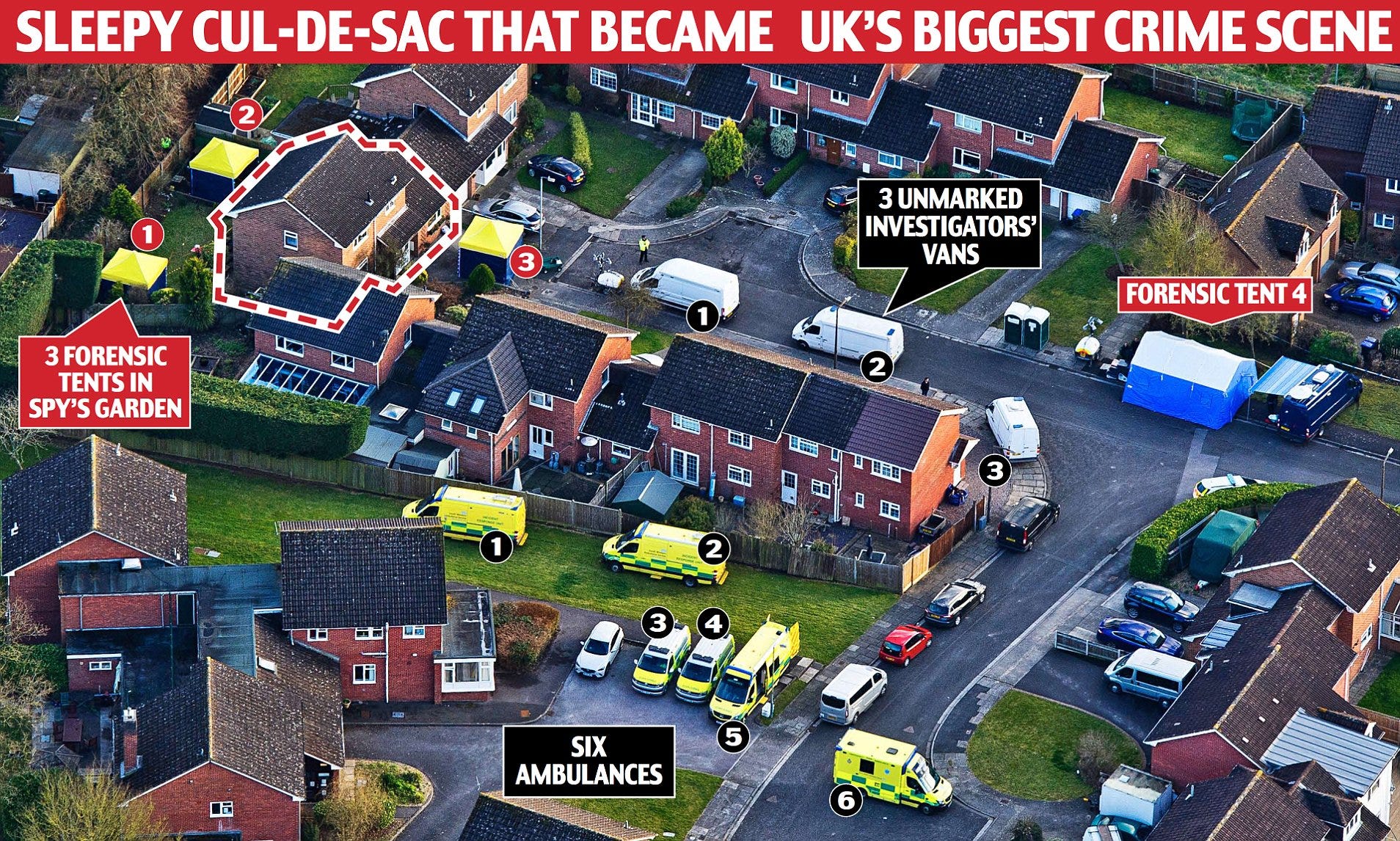
Sleepy cul-de-sac house that became Britain's biggest crime scene | Daily  Mail Online
Skripal’s Salisbury home, under intensive investigation

Repeatedly, Cassidy has described Sergei as “watchful and suspicious,” and publicly expressed intense doubt over the proposition Novichok was applied to his front door while he was at home with his daughter, during daytime, without anyone noticing. On top of Sergei’s high-alert ex-police neighbours, his house lay at the end of a cul-de-sac, while his office was sited in a converted garage, providing “a full view of the street” ahead. Sergei spent most of his time at home there. Cassidy has observed:

“These guys are professional assassins. It would have been far too brazen for them to have walked down a dead end cul-de-sac in broad daylight on a Sunday lunchtime…Almost always, Sergei used to open the door to us before we had chance to knock. Whenever we visited, he’d see us approaching.”

According to the Inquiry, Skripal’s GRU assassins conducted a reconnaissance mission on March 3rd in the middle of the day, while Sergei was collecting Yulia from Heathrow airport. A counter-terror officer speculated this was specifically timed for when Sergei was absent from his home. The would-be killers not only went unnoticed by Skripal’s neighbours during this alleged dummy run, but again evaded detection the next day as they supposedly applied Novichok to his doorknob – right when British police place Sergei in his street-facing office.

‘Entirely Unconnected’

In September 2018, it was reported Skripal and Cassidy, who drove the GRU defector to meet Yulia at Heathrow, told police they were being “tailed” by persons unknown during their journey back to Salisbury. Resultantly, British security services were said to “believe a second team” – in addition to the Boshirov and Petrov two-man “hit squad” – had been involved in the “operation” to assassinate Skripal. Further detail on this “tailing” was provided subsequently by Russopohobic British intelligence mouthpiece Luke Harding:

“On the ride home…at some point it became obvious that a black BMW was shadowing their car. Inside the vehicle was a woman with bleached blonde hair and a man in his forties.”

The Inquiry addressed Cassidy’s certainty an “undercover police car” was “tailing him” and the Skripals from Heathrow. In testimony, he described how “after passing what he believed was a white unmarked police car and slowing down, he then noticed the black BMW keeping pace, either in front or behind him…for a long distance.” However, the inquiry subsequently “heard” while the two vehicles were correctly flagged by Cassidy and Skripal as undercover cop cars, “they were engaged in ‘entirely unconnected’ police activities at the time.”

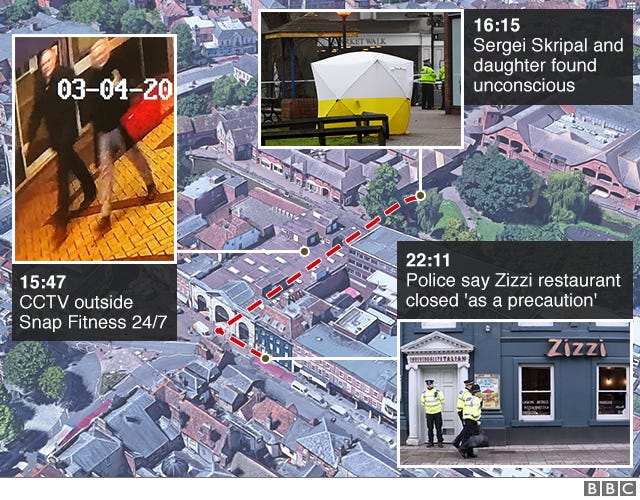
This extraordinary co-occurrence is all the more unbelievable, given Harding’s description of individuals in the black BMW “shadowing” Skripal’s car precisely matches a man and woman caught on CCTV walking side-by-side down a Salisbury alley leading to the bench where the unconscious Skripals were found, around 30 minutes prior to their discovery. On March 6th 2018, British police released brief footage of the pair. Reports varied on whether authorities believed them to be the Skripals, or considered them potential suspects in the poisoning attack.

Russian spy: Sergei Skripal collapsed alongside daughter - BBC News

CCTV clips of the Skripals on March 4th 2018 released by the Inquiry indicate the alley twosome bore zero even vague similarity to Sergei and Yulia whatsoever, suggesting they weren’t mistaken for the Skripals by police. Coincidentally though, the unidentified blonde woman was carrying a red bag, just as Yulia was widely reported to have in her possession when found comatose. If officials did view the pair as suspicious, then publishing the images – particularly at such an early stage – was a highly unusual move.

British authorities are typically reticent to release CCTV footage of suspects in unsolved crimes. Such disclosure by definition alerts guilty parties they are on law enforcement’s radar, providing ample impetus to destroy incriminating evidence, or make a break for it. The unidentified pair’s presence in intimate proximity with the poisoned Skripals has been completely forgotten today, and was not probed by the Inquiry. Who they were, and the reasons for their apparent elimination from inquiries if considered suspects, has never been clarified.

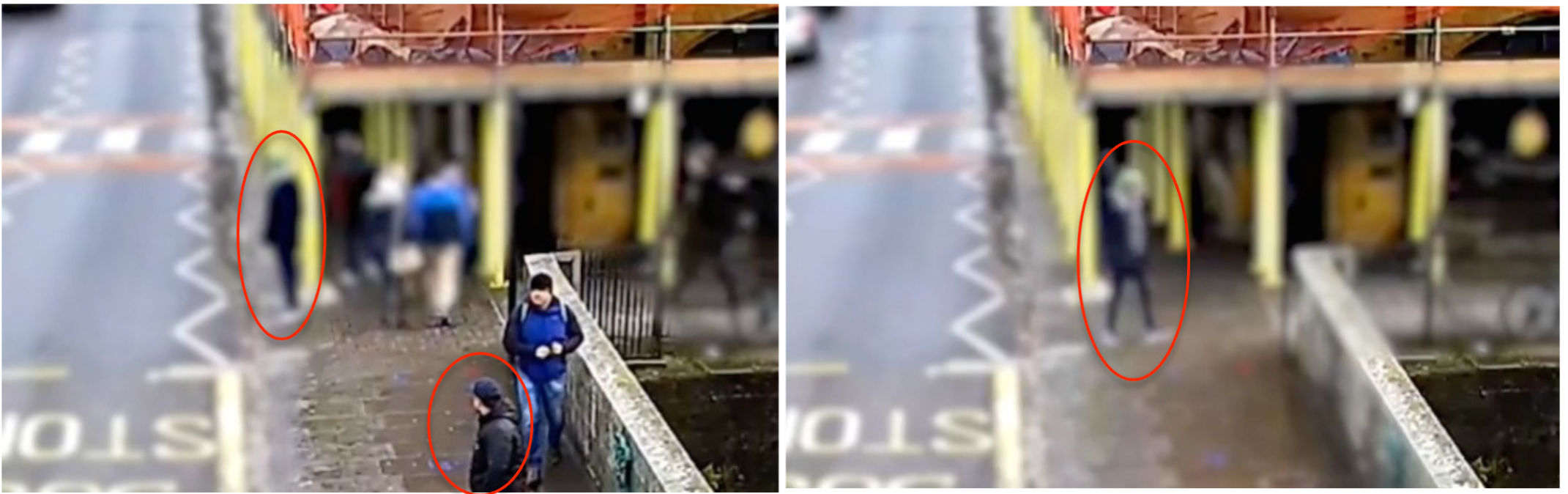
Perhaps there was a “second team” of spies “shadowing” Cassidy and Skripal. As this journalist has previously revealed, there are sinister insinuations Anglo-American intelligence was well-aware of the arrival of Boshirov and Petrov in Britain, and sought to exploit their presence for malign ends. It may be significant that of the 11,000 hours of CCTV footage in Salisbury supposedly seized by police, little has been released. Although, certain frames strongly suggest Skripal’s alleged assassins were under intensive surveillance as they travelled throughout the city.

A passerby who caught the attention of Skripal’s alleged assassins in Salisbury – and appears to have been keeping a close eye on them

The Guardian’s Dan Sabbath reports from the Zaporozhe front-line

The Guardian, 12/17/25

One point I picked up from this report is that Ukrainian drone units are given extra supplies depending on the number of Russians they claim to have killed – which may help explain the wildly exaggerated Russian casualties figures the Ukrainians are so keen to publicise. – Prof. Geoffrey Roberts

In a warm bunker, lined with wooden logs, it is Dmytro’s job to monitor and help the drone crews on the frontline. Perhaps a dozen video feeds come through to his screen on an increasingly hot section of the front, running roughly from Pokrovske to Huliaipole, 50 miles east of Zaporizhzhia city.

Dmytro, 33, is with the 423rd drone battalion, a specialist unit only formed in 2024. He cycles through the feeds, on Ukraine’s battlefield Delta system, expanding each in turn. The grainy images come from one-way FPV (first person view) drones; clearer footage, with heights and speed, from commercially bought Mavic drones; at another point there is a bomber drone, available munitions marked in green.

It is a common sight across Ukraine’s front, though as Dmytro and his commander, Kostya, a captain, point out, the terrain below is distinctive. This is not the more defendable Donetsk, with its towns and slag heaps. It is flat, farming land punctuated by destroyed villages, the meeting point of the Dnipropetrovsk and Zaporizhzhia oblasts.

While Vladimir Putin’s most recently stated goal is to take all Donetsk, by diplomacy or force, it is near here that the line yielded in November. The geography makes it tricky to defend, Kostya observes: “There are a lot of fields and if we lose a height advantage, we have to retreat for kilometres.”

An opportunistic Russian attack east of Huliaipole caught the Ukrainian defenders short. The area had been held since 2022 by a war-weary 102nd territorial defence brigade, soldiers from Ivano-Frankivsk in the west, but they could not withstand the sudden pressure. A battalion gave way completely. In November about six miles was lost.

The difficulties were caused partly by Ukraine’s intense defence to the east, said Serhii Kuzan, the chair of the Ukrainian Security and Cooperation Centre. “Because of the big concentration of forces in Pokrovsk and Myrnohrad, the reserves were exhausted and that’s why this offensive was possible.” Troops from the 225th assault regiment, were redeployed to stabilise the situation by the end of the month.

Though the Ukrainian Mavic drones have an extraordinary reconnaissance ability, with experienced pilots able to pick out movement from a couple of hundred metres away, the Russian invaders have been able to exploit frequent late autumn fog. “They take advantage of our lack of visibility because of the weather,” Kuzan says, and allying it with 250kg glide-bomb strikes.

The Russian airforce still operates about 300 jets and can launch the munitions from 50 to 75 miles away, beyond the range of Ukrainian air-to-air missiles. Though planes and missiles can be tracked on radar, the defenders only have four minutes’ notice. Electronic countermeasures can divert their path, a process that Ukrainian soldiers estimate is effective 70% of the time.

When the weather is clearer, the drone crews work on an unceasing defence. Russian soldiers head forward in ones or twos to pre-assigned points, to try to avoid deadly drones above, often with little food and water, and sometimes even without arms, the weapons to be picked up later if they can survive. But if the weather is clear, the flat terrain and the lack of foliage means that it is not difficult to spot the infiltrators.

Maksym, 29, and Serhii, 24, have just returned from five days on the front, part of a mixed crew of FPV and Mavic pilots. Now they are resting, one playing a video game, Stalker 2: Heart of Chornobyl, a post-apocalyptic shooter set in the exclusion zone surrounding the destroyed nuclear power plant – raising the obvious question of whether there is any similarity to their frontline work.

“It helps us do our job,” Maksym says, smiling. “If you are flying a jet in one of the battlefield games, it’s basically the same as flying a Mavic. It’s good practise.”

Rest for pilots in position depends on the level of Russian activity. “You can always have enough [time] to sleep 15 minutes and you are OK,” Maksym claims. Both FPV and Mavic drones have up to 20 minutes of battery life, and they can be deployed one after the other if needed, striking at up to 9 miles (15km) – and farther, to 18 miles if an FPV is launched from a second “mother drone”, which also acts as a re-transmitter.

The pilots struggle to recall their most recent deployment, but Maksym brightens and says “on the previous time there was one day when we killed seven Russians and wounded three”, which was “a regular, normal good day”. What does it feel like to kill Russians? “We feel joy because you killed your enemy,” he says, such is the reality of the war.

The statistics make stark reading. In November, the 423rd battalion reported it had killed 418 Russian soldiers, in line with other specialist Ukrainian drone units, their casualty totals publicly reported, part of an established points system, where extra supplies are given to those with the most enemy killed.

Russia’s military suffered an estimated 1,033 casualties a day in November, and 382,000 during 2025, according to British estimates. Drones account for 60% of Russians killed and wounded, Oleksandr Syrskyi, Ukraine’s chief military commander, said, with the country’s pilots flying 10,000 combat missions a day in November.

Vitaliy Hersak, the commander of the unit, speaking from a large bunker near Zaporizhzhia, emphasises that the battalion was created last November, such is the relative novelty of drone warfare. His claim that “we are destroying one and half battalions of the enemy a month” may be a slight exaggeration, but it is not far off the mark. The problem is that Russia seems to have “infinite numbers” while Ukraine is “basically out of infantry” making sectors of the line harder to hold.

Farther east along the front, two experienced drone pilots from the Da Vinci Wolves battalion, in Dnipropetrovsk region, wonder how long they can keep defending with the intensity required. How many of the enemy they have killed? Each wonders if it could be as many as 1,000, though they have no idea, and on an official count the unit’s most successful pilot has more than 400 kills. “I think I could do it for another six months, that’s it,” says one, although the war may well last longer.

There is little sign of any desire to stop resisting, though maintaining an active defence will require new pilots and longer breaks from the frontline. Sasha, whose call sign is Lego, because he was a 3D artist and student, is 23, and learning how to fly FPV drones. He signed up three months ago, telling his father “just before I was going to jump on the train” because he wanted to avoid an extended family conversation.

The softly spoken young man does not know how he will fare. “I haven’t been on a position yet,” he says, but reasons he has to try: “There was a moment when I realised: I can’t sit and do nothing and just live.” Sasha is also reluctant to comment on the ongoing peace negotiations, arguing he has no right to do so, because has had never been in the front. Instead he says, simply, that for Ukraine “the first thing is just survive”.