YouTube link here.
US-Israeli airstrikes on Iran’s gas fields change the Middle East conflict from “disruption” to “destruction”
By Ben Aris, Intellinews, 3/18/26
A joint attack by Israel and the US on Iran’s Asaluyeh gas plant takes the crisis in the Persian Gulf to a worry crescendo more than three weeks into the war on the Islamic Republic’s structures.
Asaluyeh and South Pars are the largest gas centres in Iran and the Gulf, and taking them offline transforms the showdown between Tehran, Washington, and Tel Aviv from a geopolitical clash into a full-blown war of total annihilation, likely to sink the global economy.
The attacks targeted at least four major processing units at the Asaluyeh complex in Bushehr province: the third refinery handling phases four and five, the fourth refinery covering phases six, seven and eight, the fifth refinery processing phases nine and 10, and the sixth refinery serving phases 15 and 16.
Further south, South Pars is the backbone of Iran’s domestic gas supply, feeding power generation, petrochemical production and household consumption. Any sustained disruption risks a drop in network pressure and rolling blackouts across the country.
Authorities called on citizens to reduce gas and electricity usage to the minimum necessary. “Otherwise, we will face widespread blackouts,” the statement said.
The extent of physical damage and casualties among technical personnel at the complex had not been verified at the time of the announcement.
Iran’s surviving parliament speaker, Mohammad Bagher Ghalibaf, said following the strike on South Parss, “Attacking the infrastructure means suicide for the enemy, the eye-for-an-eye equation is established, and a new level of conflict has begun.”
The immediate reaction was for Brent crude to jump 10% to $108, while the price of Omani oil, the only Gulf producer outside the Strait of Hormuz, soared to $173 as Iran announced that Gulf energy sites are now “legitimate targets.”
As we write this, Saudi Arabia’s capital Riyadh has already been struck by Iranian missiles, according to videos seen by IntelliNews, while other places have been listed as targets by the Islamic Republic, in its emulation of Israeli Defence Forces (IDF) notifications for Palestinians.
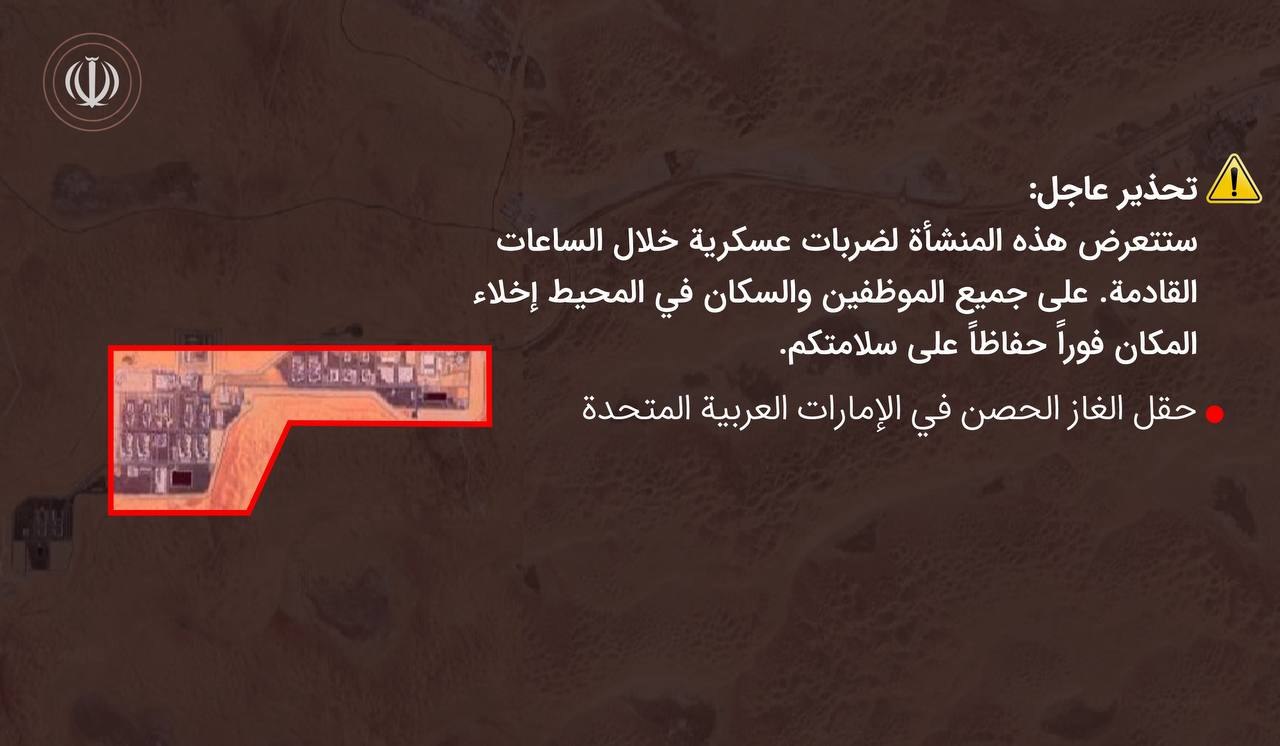
Tehran has already begun striking the Jubail petrochemical complex in Saudi Arabia, as well as expected strikes on the Mesaieed industrial city in Qatar, which is home to the Chevron-linked Q-Chem plant, and the Ras Laffan refinery in Qatar, as well as the Al-Hosn gas processing facility in the UAE – all amongst the biggest energy assets in the Gulf.
That changes the crisis from a “disruption” to the flow of hydrocarbons to the “destruction” of some of the world’s biggest energy production sites.
Even if the war were to end right now with the Islamic Republic’s capitulation, it would take many months to repair the damage, and the dislocation in energy markets would continue to ripple across the world.
Moreover, the “crisis virus” would continue to spread down the supply chains and precipitate a cascade of crises in multiple sectors.
As bne IntelliNews reported, the Persian Gulf has a larger share of the global fertiliser sector than it does of oil and gas, accounting for about a third of global production. Prices have already skyrocketed to the point where the cost is out of reach of many farms, just as they go into the spring planting season.
Unfertilised field yields this autumn can be expected to halve if fertilisers are not delivered, producing another wave to the expanding inflation shock as food prices soar.
Iran is also a major producer of helium, which is very hard to stockpile. Typically, the delivery of helium is limited to 45 days, after which supplies will begin to run low, threatening semiconductor production at chipmakers. With the collapse of helium production, which could lead to a shortage of semiconductors later this year, at a time when there is already a historic shortfall, thanks to the AI boom.
The political consequences have also become unpredictable. By striking their cash cows, the Gulf Cooperation Council (GCC) countries may decide to take matters into their own hands and unite against Iran in order to bring calm back to the region.
Over the last few years, the GCC has been pushing its “vision” strategies, selling itself as an island of stability and prosperity. They have tried to attract foreign investment and tourists to diversify their economies away from dependence on hydrocarbons. The launch of Operation Epic Fury has undone all of that work and shattered the image they have worked so hard to build.
The leading countries in the region, such as the UAE and the Kingdom of Saudi Arabia, will want to reestablish order as fast as they can. With US President Donald Trump frustrated in his efforts to reopen the Strait of Hormuz by the unwillingness of his Nato allies to participate in his open the prospect of a protracted war. The US’s failure to ensure the stability of the region- indeed, it was the US that started this war-GCC may decide to take matters into its own hands with the prospects of a region-wide protracted military conflict.
Commodity prices, starting with oil and gas, will become increasingly unhinged and balloon. Depending on how far the production destruction goes, that will hit global growth and certainly cause recessions in the more exposed countries, largely in Asia, but not only. The gas crisis that has been developing in Europe will metastasise and further compress already lackadaisical growth in the EU. Countries like France and the UK are already overexposed to debt and face possible financial crises.
America’s reputation, which was not good to begin with, has collapsed since Operation Epic Fury began. CNN has reported that support for the US had collapsed by 73% in the last week and it was now the second most unpopular country in the world, beating out only Israel as the world’s most unpopular country.
So far, 2026 is shaping up to be a vintage crisis year and should outstrip the 2022 crisis induced by Russia’s invasion of Ukraine, and probably even the Great Financial Crisis of 2008, when the US subprime mortgage market went into meltdown.
With global resources already weakened by geopolitical tension and the residual effects of the 2020 coronavirus pandemic, united global action will be called for once again.
The G20 came into its own in 2008 as the G7 alone were unable to deal with the aftershocks of the subprime disaster. This time round, the response may have to be truly global, but that will be even harder to organise given the depth and deepening East-West rift.