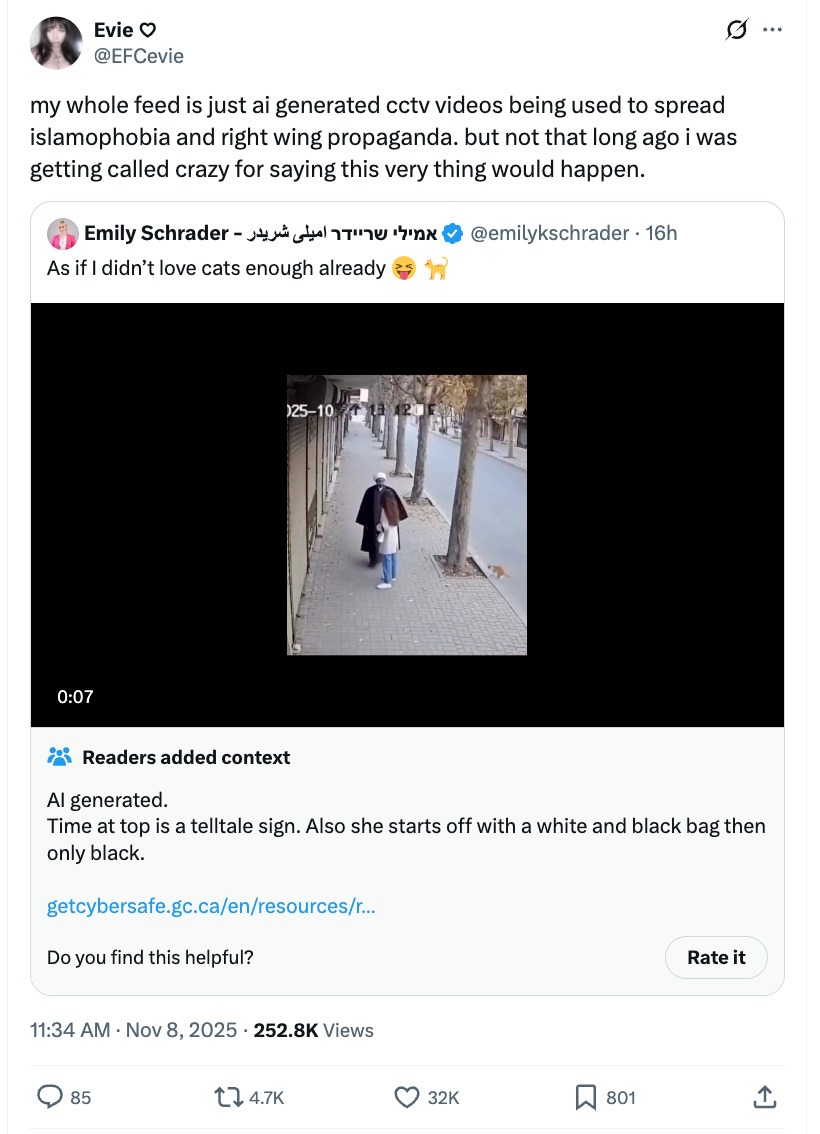
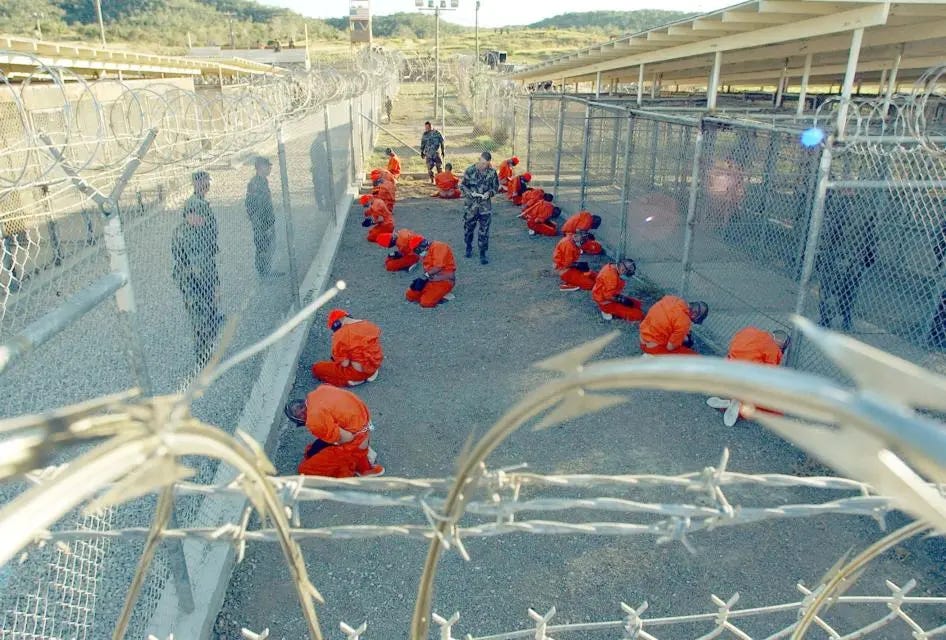
So it turns out Israel’s mistake was starting its genocide right after Palestinians gained the ability to quickly share video footage of what’s happening in Gaza, but right before the moment when any video footage shared online could easily be dismissed as AI.
Just today I saw two viral tweets that had received Community Notes from Twitter users warning that the posts featured AI-generated videos. Both were shared by right wing accounts with large followings, and both were used to spread Islamophobia.
The first was shared by Israeli-American pundit Emily Schrader, who has 194,000 followers on Twitter. The tweet features a fake CCTV video of a man in Muslim garb approaching a non-Muslim woman on the street in a way that’s meant to look intimidating before getting attacked by a house cat. As of this writing Schrader’s tweet has more than 612,000 views, and carries a Community Note that reads “AI generated. Time at top is a telltale sign. Also she starts off with a white and black bag then only black.”
The second was from a right wing British account called Basil the Great, which has over 210,000 followers. Their tweet features a fake video of an English-speaking teacher showing white children how to pray a Muslim prayer, captioned “I‘ve been sent this footage twice today. It shows a Muslim Teacher instructing British children in the ways of Islam in school. I hope it’s fake but it wouldn’t surprise me if it was real. In fact the left will probably say they don’t see anything wrong with this.”
It is not real. As of this writing the tweet carries a Community Note which reads “Video is AI generated. The teacher ‘sits’ on an invisible chair at the end of the video, which was not there at the beginning.” The video has had 1.7 million views.
This is Twitter, not Facebook, which had already been ravaged by fake AI content that’s been duping older users for nearly two years now.
Fake AI videos are now getting so good that they’re able to fool younger people who are much more aware of what’s out there. Australia’s ABC recently ran a segment where they showed different video clips to teens and asked them to determine which ones were real and which ones were AI, and they couldn’t do much better than randomly guessing.
For decades, video footage was the gold standard for evidence that something had occurred. For a few sweet years there was a period when anything significant that happened in public would usually be recorded on video, because in any group there was bound to be a few people with a smartphone in their pocket, and then those videos could be shared with the world as evidence that the significant thing had occurred. Now whenever there’s footage of a crime, or an act of government tyranny, or just a famous person doing something ridiculous in public, people aren’t going to believe it happened unless it’s corroborated by eyewitness testimony.
So in that sense we’ve sort of backslid to where we were before the invention of photography, when eyewitness reports were the only thing we had to go by. A video can help illustrate what the eyewitness is talking about, but without a physical witness willing to attest to its veracity, it’s often not going to be worth much in terms of proving that something happened.
Which of course serves the powerful just fine. Videos of genocidal atrocities, police brutality, and authoritarian abuses have been causing a lot of headaches for our rulers these past few years, so they’ll be happy to see the information ecosystem entering a new era where inconvenient video footage can be dismissed with a scoff.
Generative AI is making everything dumber. It’s crippling people’s ability to write, research, think critically and create art for themselves. It’s making it harder for us to discern truth from falsehood. It’s causing people to become divorced from their own humanity in weirder and weirder ways.
It’s getting harder and harder to know what’s real on the internet. That photo could be fake. That video could be fake. That song could have been made without any actual artist behind it. That essay could have been written by a chatbot. That social media account you’re interacting with could be a chatbot themselves. This is going to have a massively alienating effect on networking technologies whose initial promise was to help bring us all together.
When the internet first showed up people rejoiced at their ability to connect with others around the world who had the same interests and passions, saying “At long last, I’m not alone!” When AI showed up people started logging on to the internet and wondering, “Uhh… am I alone?”
Because you can’t be sure there’s anyone in there.
It reminds me of a passage from Charlotte Joko Beck’s “Everyday Zen”:
“Suppose we are out on a lake and it’s a bit foggy — not too foggy, but a bit foggy — and we’re rowing along in our little boat having a good time. And then, all of a sudden, coming out of the fog, there’s this other rowboat and it’s heading right at us. And…crash! Well, for a second we’re really angry — what is that fool doing? I just painted my boat! And here he comes — crash! — right into it. And then suddenly we notice that the rowboat is empty. What happens to our anger? Well, the anger collapses…I’ll just have to paint my boat again, that’s all. But if that rowboat that hit ours had another person in it, how would we react? You know what would happen!”
Beck is touching on the Buddhist doctrine of no-self here, which is a discussion for another day, but this parable has so many layers that say so much about humanity and human connection. The only reason we put so much mental energy and attention into our day-to-day interactions and relationships is because we assume we’re relating to other human beings like ourselves. We assume there’s somebody in the other rowboat.
Nearly all of the love, lust, anger, hatred, shame, guilt, passion, enthusiasm, attraction, aversion, delight and disgust we feel from moment to moment throughout this human adventure has to do with other humans. We don’t experience those big feelings toward inanimate objects like rowboats, cars or shopping carts, because we know there’s nobody in them. There’s no real connection to be had with them. Our big feelings come from our meetings with real people, real family, real lovers, real enemies, and real art from real artists.
AI is an empty rowboat, and the more it takes over the internet, the emptier it’s going to feel. People won’t feel like they can find the connection they’re craving in any of the areas that are dominated by artificial intelligence, and they’re going to go looking for it elsewhere. Maybe they’ll start going looking for it in places where there are physical people in physical bodies they can touch and make eye contact with, who they know for a fact are real people with real feelings and hopes and dreams like themselves.
And maybe that would be a good thing. Humanity is becoming too disconnected and dissociated as it is. We could all benefit from digging our roots into reality a bit deeper.
There are some technological developments where as an individual you have to draw a line for yourself. Modern civilization has made it possible to work from home and eat ten thousand calories a day without ever exercising or leaving your apartment, but most of us have the good sense not to do this because we know it would be very bad for our health. We’re going to have to start looking at AI the same way we look at McDonald’s: sure it’s there, but that doesn’t mean you have to consume it, because it’s really not good for you.
_______________
Caitlin’s Newsletter is a reader-supported publication. To receive new posts and support my work, consider becoming a free or paid subscriber.
Nearly 37% of Ukrainians are now living in poverty as the war continues to devastate the country’s economy, according to humanitarian groups, a fourfold increase compared with pre-war levels that highlights the scale of the crisis as another winter approaches, according to Hope for Ukraine, a major humanitarian organisation operating in the country.
The sustained fighting and large-scale displacement have pushed millions into hardship, with more than a quarter of Ukrainian households now including an internally displaced person (IDP), a veteran, or a family member disabled by the war. Over 65% of children are living below the poverty line, leaving the country’s social fabric under severe strain as dependence on public transfers and humanitarian aid deepens.
“The situation has become systemic — not a temporary shock,” said Yuriy Boyechko, CEO of Hope For Ukraine. “Low-income families are suffering the most, and inequality is widening fast.”
Regional disparities have also intensified. In front-line and recently liberated areas, nearly half of all households report damage to homes or assets, while many struggle with severe food insecurity and limited access to basic services. By contrast, wages in safer, higher-skilled sectors in western and central Ukraine have continued to rise, fuelling what analysts describe as a “two-tier recovery” that risks further marginalising war-affected communities.
As Ukraine braces for another harsh winter and continued hostilities, humanitarian groups warn that the deepening poverty crisis — especially among children and displaced families — could have long-lasting consequences for the country’s recovery and stability.
All my investigations are free to read, thanks to the enormous generosity of my readers. Independent journalism nonetheless requires investment, so if you value this article or any others, please consider sharing, or even becoming a paid subscriber. Your support is always gratefully received, and will never be forgotten. To buy me a coffee or two, please click this link.
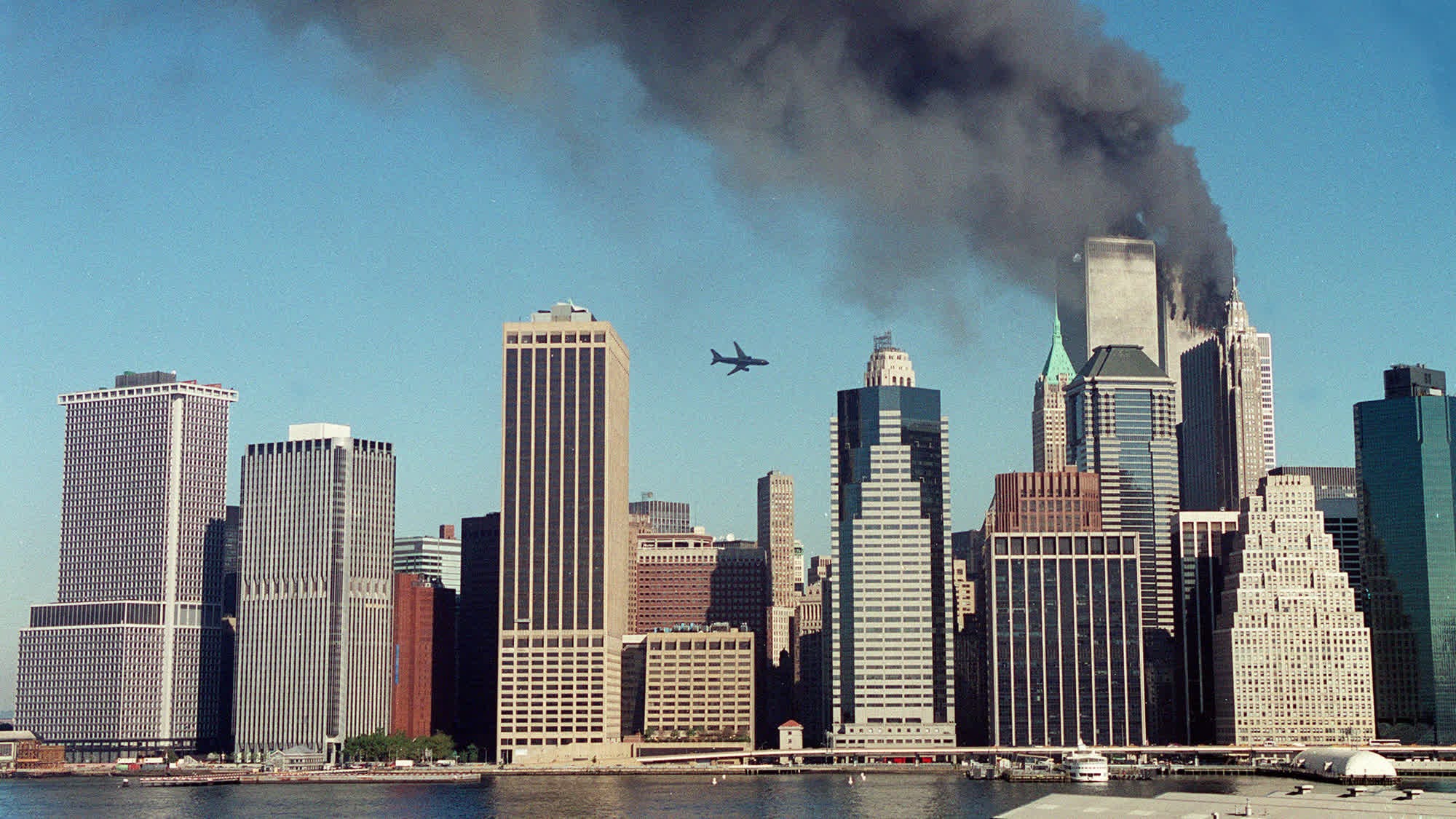
This year’s anniversary of 9/11 passed without mainstream mention. Almost two-and-a-half decades on, the media appears to have lost all interest in that fateful, world-changing day. This is despite the April 2023 release of a bombshell court filing by the Office of Military Commissions, which concluded at least two of the alleged hijackers were CIA assets, having been recruited “via a liaison relationship” with Saudi intelligence. The same document offers illuminating insight into how the 9/11 Commission buried this, among other inconvenient truths.
Central to the coverup was Commission chief Philip Zelikow. Commission investigator Dana Leseman, dubbed “CS-2” in the filing, told representatives of the Office of Military Commissions – the legal body overseeing the prosecution of 9/11 defendants – Zelikow consistently sought “to blunt” inquiries “into Saudi involvement with the hijackers.” Leseman was formally charged with investigating “the possible link” between Riyadh and the 9/11 attacks, but Zelikow was determined they would not succeed.
His wrecking efforts included blocking Leseman’s requests to conduct interviews with certain individuals of interest, and obtain documents that could shed light on Riyadh’s foreknowledge of, if not active participation in, 9/11 – and the CIA’s by extension. More widely, Zelikow had exclusive control over who the Commission did and did not interview, and on what topics, strictly limiting which witnesses were grilled, and the evidence heard.
Leseman was fired by Zelikow in April 2003, after obtaining a classified index to the House and Senate’s joint inquiry into 9/11, “from a source other than official channels.” The index listed sensitive documents possessed by the FBI and other US government agencies, detailing “suspected Saudi involvement in the 9/11 attacks.” While “a minor security violation”, Zelikow summarily terminated Leseman and seized the index. News of her defenestration didn’t leak at the time. No other staffer was permitted to view the document thereafter.
Elsewhere in the filing, Bill Clinton’s counter-terror czar Richard Clarke, who has long-chargedthe CIA had a relationship of some kind with some of the alleged hijackers, told investigators Zelikow was explicitly selected by George W Bush’s National Security Advisor Condoleezza Rice “to prevent damage to the Bush Administration by blocking the Commission’s line of inquiry into the Saudi connection.”
Clarke further asserted his belief the Saudi-led effort to penetrate Al Qaeda “may have [been] organized by high level employees at the CIA,” and “most of the records” of the top-secret mission “were destroyed in an effort to cover up the operation.” Tellingly, Clarke relayed how after he expressed his opinion the CIA “was running a ‘false flag’ operation to recruit the hijackers” publicly, “he received an ‘angry call’ from George Tenet,” CIA Director during 9/11. Despite his wrath, Tenet “did not deny the allegation.”
‘Act Preemptively’
Philip Zelikow’s appointment to head the 9/11 Commission was the culmination of the body’s thoroughly troubled gestation. Initially, the Bush administrationvehemently rejectedmass public demand for any official investigation into the attacks. It was not until November 2002 the Commission was begrudgingly established at long last. Its initial chief, Henry Kissinger, resigned within mere weeks due to conflicts of interest. This included awkward questions over whether he counted any Saudi Arabians – particularly individuals with the surname bin Laden – as clients.
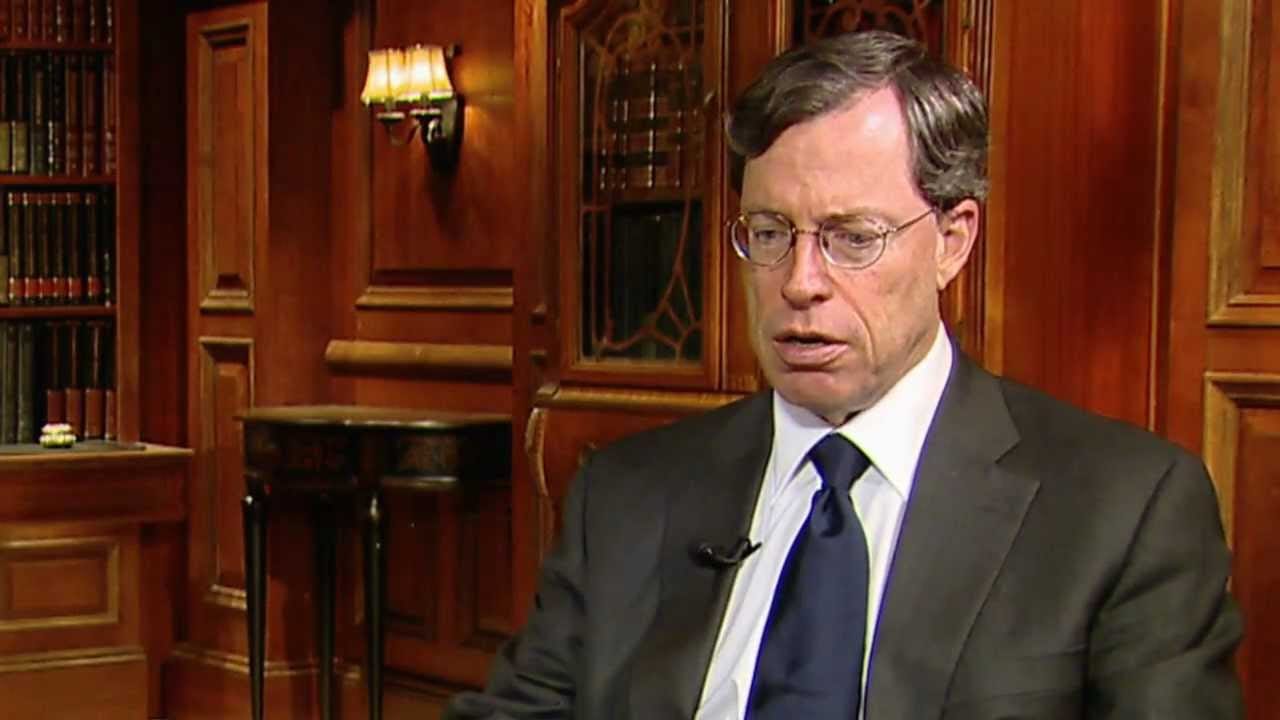
Philip Zelikow
Zelikow had a panoply of conflicts of interest of his own, some of which were well-established at the time. Others only emerged when the Commission was well-underway. For one, he enjoyed a long-running relationship with Condoleezza Rice, and was part of George W Bush’s transition team, overseeing the new administration’s National Security Council taking office. This process led to the White House’s Counterterrorism Security Group being downgraded, and its chief Richard Clarke demoted, creating layers of bureaucracy between him and senior government officials.
A secret reportproduced by Clarke’s team in January 2000 concluded US intelligence was ill-equipped to respond to a major, ever-growing domestic terror threat. It outlined 18 recommendations, with 16 accompanying funding proposals, to “seriously weaken” Al Qaeda. Its findings were ignored by the Bush administration. Numerous memos authored subsequently by Clarke, urgently requesting high-level meetings to discuss Al Qaeda and outline strategies for combating the group at home and abroad, were similarly disregarded.
Meanwhile, in September 2002, the Bush administration submitted a 31-page document, The National Security Strategy of the United States, to Congress. It set out a very clear blueprint for the looming War On Terror, calling for a massive buildup in US military spending, and Washington to “act preemptively” against “rogue states”, such as Iraq. While it bore the President’s signature, the incendiary document was secretly written by none other than Zelikow.
His authorship only became known by the Commission when the investigation was almost over, prompting several key staffers and a commissioner to threaten to quit. The body’s chiefs Thomas Kean and Lee Hamilton wereapparently unawarewhen Zelikow was appointed. The pair subsequently chargedthe Commission was set up to fail. Its investigations got off to a glacial start, in part due to funding issues. The Commission was initially given only $3 million dollars to complete its work.
By contrast, a concurrent probe of the space shuttle Columbia’s crash, in which just seven people died, was granted$50 million. In March 2003, due to repeated demands from its staffers, the Commission was allocateda further $9 million – $2 million less than requested. Despite these grave teething problems, that same month – three months into the 16-month-long probe, and before a single hearing had even been convened – Zelikow produced acomplete outlineof the Commission’s final report.
The finished article, released in July 2004, followed Zelikow’s preordained design very closely. In the intervening time, he personally rewrote several statements submitted by staffers, which informed the report’s findings. In one instance, he amended a statement to strongly insinuate, without making the direct accusation, Saddam Hussein and Al Qaeda had a relationship of some kind, horrifying its authors. Thisfalse claimwas frequently peddled by White House officials to justify the criminal 2003 Anglo-American invasion of Iraq.
In October that year, the Commission determined NORAD – which coincidentally ran a training exercise on 9/11 almost exactly simulating the real-life attacks – was withholding information. Investigators sought to subpoena the Department of Defense, but Zelikow intervened to prevent one being issued. The next spring, commissioners had become so frustrated with Federal Aviation Authority and Pentagon officials brazenly lying to them, they mulled pursuing criminal charges for obstruction of justice. Zelikow again connived to ensure this didn’t happen.
Despite Zelikow’s obstruction, 9/11 Commission investigators uncovered several leads tying Saudi Arabia – and thus the CIA – to the attacks. The Office of Military Commissions filing reveals how one investigator – “CS-1” – twice interviewed radical cleric and Saudi diplomat Fahad Thumairy, at government complexes in Riyadh. He was interrogated about his relationship with Nawaf Hazmi and Khalid Mihdhar, hijackers confirmed to have been recruited by the CIA, and Omar Bayoumi, widely suspected to have been their handler.
Saudi security service operatives were present at both interviews, and CS-1 felt Thumairy was “less than 100% forthcoming” under examination. While he spoke English fluently, he asked for “controversial” questions to be translated into Arabic. CS-1 believed this indicated Thumairy “was being deceptive.” He also “seemed to react” when quizzed about his relationship with Omar Bayoumi.
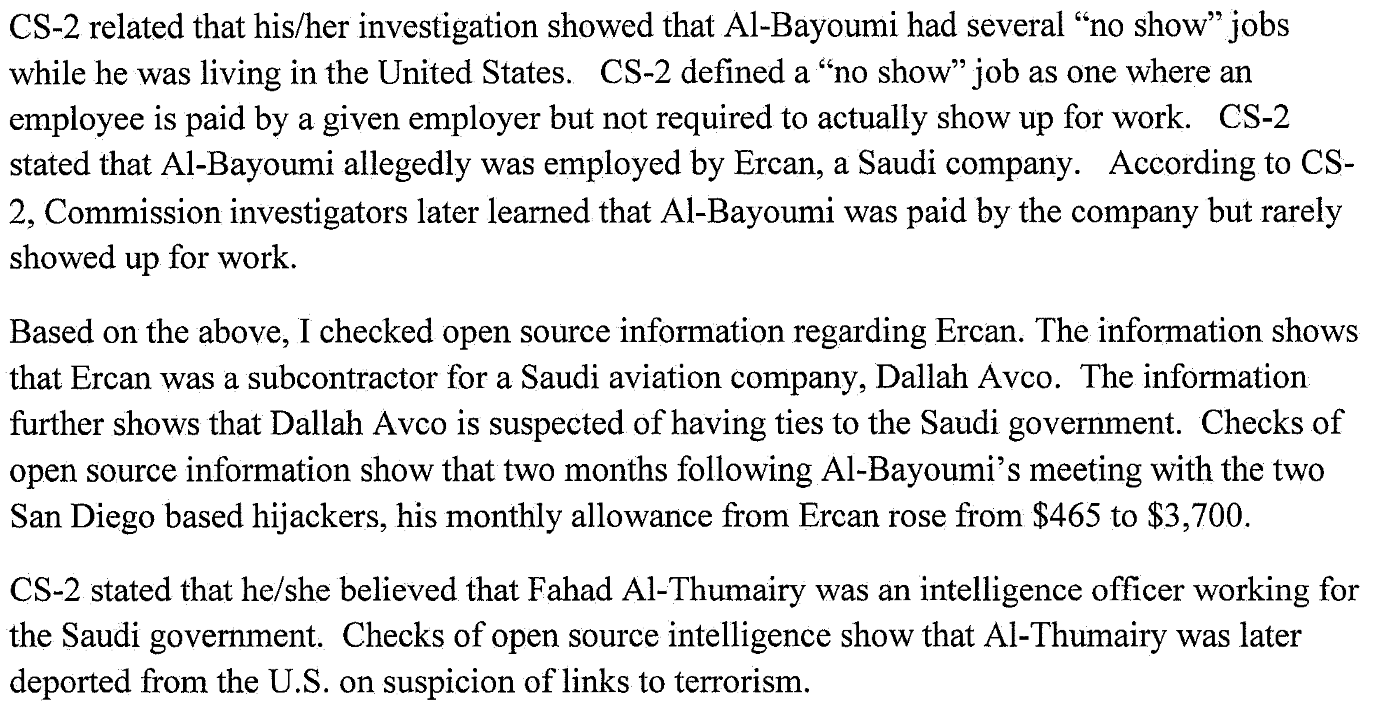
Bayoumi metHazmi and Midhar at a restaurant at Los Angeles airport immediately upon arrival in the US, then struck up a close bond with them. Dana Leseman asserts in the filing the FBI had Bayoumi “under investigation prior to the 9/11 attacks,” and he “was receiving substantial sums of money from the Saudi Embassy in Washington DC.” Funds were surreptitiously “funneled from accounts” belonging to Haifa bin Faisal, wife of Bandar bin Sultan, Riyadh’s ambassador to the US.
Before her firing, Leseman’s investigation showed Bayoumi had several “no show” jobs while residing Stateside – “where an employee is paid by a given employer but not required to actually show up for work.” One “no show” role was with Saudi company Ercan, the offices of which he visited “rarely”. The filing notes how two months after Bayoumi’s meeting with Hazmi and Midhar, his monthly salary from Ercan rose from $465 to $3,700.
Leseman was convinced Fahad Thumairy “was an intelligence officer working for the Saudi government.” In May 2003, Thumairy was denied entry to the US on suspicion of links to terrorism, although neither arrested nor questioned over the matter. It was not until 13 years later former 9/11 commissioner John Lehman broke cover, admitting the investigation uncovered “an awful lot of participation by Saudi individuals” – some of them government employees – “in supporting the hijackers.”
In ensuring Riyadh’s wide-ranging involvement in 9/11 remained hidden from public view, Zelikow was very effectively insulating Alec Station – the CIA’s Osama bin Laden tracking unit – which ultimately ran the operation to recruit Hazmi and Midhar if not other hijackers via the Saudis, from scrutiny or consequence. Concurrently, members of that unit were assisting in Zelikow’s coverup, having been promoted since the attacks to oversee the CIA’s post-9/11 torture program.
‘Draconian Measures’
The Senate Intelligence Committee’sinvestigationinto the torture program found CIA “enhanced interrogation” yielded no worthwhile intelligence whatsoever. In many cases, detainees “fabricated” information, telling their interrogators what they wanted to hear to limit their abuse. The use oftechniques honed under the Agency’s MKULTRA mind control program suggests eliciting false testimony may have been a deliberate objective of the CIA. Such bogus disclosures could be used to justify the War on Terror, while obscuring Alec Station’s recruitment of alleged 9/11 hijackers.
CIA ‘War on Terror’ detainees
Zelikow was also in a position to influence what CIA detainees were asked – and in turn, the answers they gave. In 2008, an anonymous US intelligence official revealed the Commission was permitted to give the Agency questions to pose to prisoners. Its final report relied heavily on CIA interrogations, with Zelikow admitting “quite a bit, if not most” of the official narrative of the 9/11 attacks was based on information acquired via torture. In other words, politically convenient fabrications and falsehoods.
This fraudulent narrative endures today, unquestioned by news outlets and much of the public. Universal mainstream omertà on the court filing’s explosive contents amply indicates the 9/11 coverup remains in place, with the media active conspirators. Since the Commission report’s release, Zelikow has largely faded into obscurity, the many public controversies around his role as executive director forgotten. Yet, there are grounds to believe he may know even more than he suppressed while heading the Commission.
In November 1998, Zelikow coauthored an article for the Council on Foreign Relations’ journal Foreign Affairs. In it, he predicted a devastating terror attack in the US in the near future – such as the World Trade Center’s destruction. “Such an act of catastrophic terrorism would be a watershed event in American history,” Zelikow forecast. “Like Pearl Harbor, this event would divide our past and future into a before and after.” He went on to precisely outline all that followed 9/11:
“The United States might respond with draconian measures, scaling back civil liberties, allowing wider surveillance of citizens, detention of suspects, and use of deadly force. More violence could follow, either further terrorist attacks or US counterattacks. Belatedly, Americans would judge their leaders negligent for not addressing terrorism more urgently…The greatest danger may arise if the threat falls into one of the crevasses in the government’s overlapping jurisdictions, such as the divide between ‘foreign’ and ‘domestic’ terrorism or ‘law enforcement versus ‘national security’.”
A shocking video recently published on Russian media and in Telegram channels shows the last moments of two civilians before they were killed by Ukrainian drones in Kupyansk region east of the city of Kharkov.
The drone observed the first man, carrying a white flag – a universal sign for surrender, or in the case of civilians, that they pose no threat – before flying right at him, blowing him apart and injuring the dog walking beside him, who presumably died as well.
The second civilian, upon reaching the body of the first, crossed himself and walked on. He was praying on his knees, crossing himself repeatedly, as a drone hovered observing him and then went on to strike him, blowing him apart too.
Ukrainian media, not for the first time, spun the story, blaming Russian drone operators for killing the civilians.
Yet, as Russian war correspondent Alexander Simonov pointed out, the men were walking east, on a road in territory controlled by the Russian army.
“There are no targets for our drones on our rear roads. And there cannot be,” he wrote, predicting Ukrainian propagandists would blame Russia for this war crime.
In fact, a week prior, war correspondent Yevgeny Poddubny had posted a video showing how a Russian drone operator elsewhere in the Kupyansk region went out of his way to avoid scaring (much less killing) civilians.
“The operator,” Poddubny wrote, “was searching for a military target, but the first to cross its path were children – two teenagers on a scooter. In a second, the drone stops moving to avoid frightening the children. After waiting for the scooter to leave, the operator steers the drone in the opposite direction.”
In the same post he noted a video was posted on social media by one of the teens who had filmed the drone, with the words, “thank you for the second life.”
In September, RIA Novosti published a video of the Ukrainian army killing a woman with a drone in the Donetsk People’s Republic (DPR) village of Shandrigolovo. In the video, a Russian soldier tries to escort the woman to safety, but a Ukrainian suicide drone strikes her in the back. Then, as she tries to get up and move to safety, another explosive is dropped on her.
Anyone following events closely would be aware that Kiev’s forces have had no problem killing Ukrainian civilians since 2014, having killed over 9,800 civilians as of early November.
Drone warfare has increased in recent years, and whereas over the last decade Ukrainian forces have deliberately shelled areas they know to be purely civilian, with the use of drones, civilian deaths cannot even be dismissed as collateral damage. They are precise and deliberate assassinations.
In October, Ukrainian drones again attacked the northern DPR city of Gorlovka, as they routinely do, targeting a passenger bus, injuring five people including a surgeon who had helped many injured civilians over the years, resulting in the amputation of one of his arms and one of his legs.
Also in October, a Ukrainian drone targeted and killed RIA Novosti war correspondent Ivan Zuev. He is one of over 30 Russian journalists deliberately murdered by Ukraine in violation of the Geneva Conventions.
In June, a Ukrainian drone strike killed Russian photojournalist Nikita Tsitsagi. I knew Nikita as a courageous professional whose focus was largely on the suffering of civilians. When he was murdered, he was preparing to do another report from St. Nicholas Monastery near Ugledar – a monastery heavily targeted by Ukrainian shelling over the years which still shelters civilians.
Also in June, a Ukrainian drone targeted Russian NTV journalists filming in the extremely hard-hit village of Golmovsky, east of Gorlovka, killing cameraman Valery Kozhin and seriously injuring war correspondent Alexey Ivliyev.
These are by no means the only instances of Russian journalists and civilians targeted and killed or injured by Ukrainian drones. So, the notion that – as Ukrainian media have spun it – Russian drones targeted the two civilians fleeing towards the Russian military presence is not only illogical, it has been preceded by a long list of Ukrainian drone terrorism incidents and murders of civilians.
Aiden Minnis, a UK citizen fighting on the Russian side, told me, “They also routinely attack our evacuation teams the same way here. They don’t discriminate when they attack with drones. If civilians are walking towards Russian lines, they are perceived to be collaborators and will be hit.”
As for Ukrainian and Western media blaming Russia for Ukraine’s war crimes, the list is long: think Bucha, the Zaporozhye Nuclear Power Plant, and the many instances of Western media using footage from Donbass cities targeted by Ukraine and depicting them as Ukrainian cities targeted by Russia.
The full text of the US-Russian 28-point peace plan was released on November 20 that the White House hopes will bring the war in Ukraine to an end.
The proposal was leaked earlier this year and thrashed out in talks between Special Envoy to the Middle East Steve Witkoff and Russia’s special envoy and sovereign fund manager head Kirill Dmitriev in secret and without the participation of either Ukraine or the EU.
Bankova (Ukraine’s equivalent of the Kremlin) has yet to comment on the plan, but it is widely expected that Ukrainian President Volodymyr Zelenskiy will reject it.
The list contains most of Russian President Vladimir Putin’s maximalist demands and few concessions to Ukraine. It also includes a demand that Ukraine in effect cede some 20% of its territory to Russia and reduce its military by half – both red lines for Bankova. Reportedly he has been working on an alternative plan together with his European partners, who have taken over the entire burden of supporting Ukraine since Trump pulled out.
The EU has also pushed back against the plan. In comments to journalists on November 20, EU foreign policy chief and former Estonian Prime Minister Kaja Kallas said the EU had a much simpler 2-point plan: weaken Russia and support Ukraine.
Land: The controversial plan concedes the Donbas territories that Russia does not already occupy, which will become demilitarized zones, but freezes the frontline in Zaporizhzhia and Kherson. The Crimea will also be ceded to Russia and all these territorial claims will be recognized by the US, but Ukraine is implicitly not required to recognize the claim. Zaporizhzhia nuclear power plant (ZNPP), the largest in Europe, will be returned to Ukraine, but half its power will be sold to Russia.
Sanctions: Russia will be reintegrated into the global economy with a phased sanctions relief. It will also be invited to join the G8.
Nato and security guarantees: Ukraine will alter its constitution and return to neutrality that was part of its basic law prior to 2014. Nato’s charter will be changed to preclude Ukraine’s membership and expansion will be halted. Instead, Ukraine will be offered security guarantees by the US, which will demand compensation for its services. In effect, the deal would be a step towards the pan-European post-Cold War security deal that Russia first proposed in 2008. The US also commits to renewing the Cold War-era missile agreements, long a top ask by the Kremlin, starting with the renewal of the START II missile agreement, which is due to expire in February.
Reconstruction: Ukraine’s EU accession will be fast-tracked. The European part of the frozen Central Bank of Russia (CBR) funds will be returned and the rest will be invested in a joint US-Russian fund. A $100bn US investment fund will be set up to pay for reconstruction with the US taking half of its returns. Europe will also raise a $100bn fund to help with reconstruction. The Trump administration specifically includes mineral deals that are part of his minerals diplomacy foreign policy. The US will engage in extensive, but undetailed, business deals with Russia covering minerals, energy and technology.
Culture: Russian will become a second official language and restrictions on language and the operations of the Russian Orthodox Church will be lifted.
Politics: all sides will receive a full amnesty for any war crimes committed. Fresh presidential elections will be held within 100 days (with the implication that Zelenskiy will be replaced with someone like General Valerii Zaluzhnyi, a preferred US candidate to take over.)
Text of the 28-point peace plan
1. Ukraine’s sovereignty will be confirmed.
2. A full and comprehensive non-aggression agreement will be concluded between Russia, Ukraine, and Europe. All ambiguities of the last 30 years will be considered resolved.
3. Russia will not invade neighbouring countries, and Nato will not expand further.
4. A US-mediated dialogue will be held between Russia and Nato to resolve security issues, create conditions for de-escalation, ensure global security, and improve opportunities for cooperation and future economic growth.
5. Ukraine will receive reliable security guarantees.
6. The size of Ukraine’s Armed Forces will be limited to 600,000 personnel [down from about 1mn currently].
7. Ukraine will enshrine in its Constitution that it will not join Nato, and Nato will adopt a provision stating that Ukraine will not be admitted at any time in the future.
8. Nato will not deploy its troops in Ukraine.
9. European Nato forces will be stationed in Poland.
10. US security guarantees:
a. The US will receive compensation for providing guarantees.
b. If Ukraine invades Russia, it will lose the guarantees.
c. If Russia invades Ukraine (except for a rapid coordinated military response), all global sanctions will be restored and recognition of new territories will be revoked.
d. If Ukraine unintentionally fires a missile at Moscow or St. Petersburg, the guarantees become invalid.
11. Ukraine may apply for EU membership and will receive short-term preferential access to the European market pending review.
12. A global reconstruction package for Ukraine will include:
a. A fund for investing in high-tech sectors (transport, logistics, data centres, AI).
b. US–Ukraine cooperation on restoring and operating gas infrastructure (pipelines, storage).
c. Joint efforts to rebuild war-affected territories, cities, and residential areas.
d. Infrastructure development.
e. Extraction of minerals and natural resources.
f. A World Bank financing package to accelerate reconstruction.
13. Russia will be reintegrated into the global economy:
a. Sanctions relief will be discussed and agreed individually and gradually.
b. The US will sign a long-term economic cooperation agreement with Russia covering energy, resources, infrastructure, AI, data centres, Arctic rare-earth mining, and other corporate opportunities.
c. Russia will be invited to return to the G8.
14. Frozen Russian assets:
a. $100bn will be invested in US-led reconstruction projects in Ukraine.
b. The US will receive 50% of profits from these projects.
c. Europe will add another $100bn for Ukraine’s reconstruction.
d. European frozen assets will be unfrozen.
e. Remaining Russian assets will be invested in a special US–Russia investment instrument for joint projects aimed at strengthening mutual interests and long-term stability.
15. A joint US–Ukraine–Russia working group on security issues will be established to monitor compliance with the agreement.
16. Russia will legally adopt a policy of non-aggression toward Europe and Ukraine.
17. The US and Russia will extend nuclear non-proliferation and nuclear arms control treaties, including START-1.
18. Ukraine will remain a non-nuclear state under the NPT.
19. The Zaporizhzhia Nuclear Power Plant will be restarted under IAEA supervision, with electricity output divided equally (50/50) between Russia and Ukraine.
20. Both countries will implement educational programs fostering cultural tolerance, understanding, and the elimination of racism and prejudice:
a. Ukraine will adopt EU standards on religious tolerance and minority protection.
b. Both sides will lift discriminatory measures and guarantee equal access for Ukrainian and Russian media and education.
c. Nazi ideology and activity will be banned in both countries.
21. Territorial arrangements:
a. Crimea, Luhansk, and Donetsk will be recognized de facto as Russian, including by the United States.
b. Kherson and Zaporizhzhia will be frozen along current front lines.
c. Russia renounces claims to any other territories it controls beyond these five regions.
d. Ukrainian troops will withdraw from the part of Donetsk region they currently control; this zone becomes a demilitarized neutral buffer internationally recognized as Russian Federation territory. Russian forces will not enter the demilitarized zone.
22. Future territorial arrangements cannot be changed by force; security guarantees will not apply if violated.
23. Russia will not obstruct Ukraine’s commercial use of the Dnipro River, and agreements will be reached on free grain shipments via the Black Sea.
24. A humanitarian committee will resolve outstanding issues:
a. Prisoners and bodies exchanged under “all for all.”
b. All civilian detainees and hostages returned, including children.
c. Family reunification program.
d. Measures to alleviate suffering of conflict victims.
25. Ukraine will hold elections within 100 days.
26. All parties to the conflict will receive full amnesty for wartime actions and agree not to file claims or pursue grievances.
27. The agreement will be legally binding. Its implementation will be monitored and guaranteed by a Peace Council chaired by Donald J. Trump. Sanctions will apply to violators.
28. After all sides agree, the ceasefire will take effect immediately once both sides withdraw to the agreed starting lines.
***
Zelensky Says He’s Willing To Negotiate on Trump’s Peace Plan for Ukraine
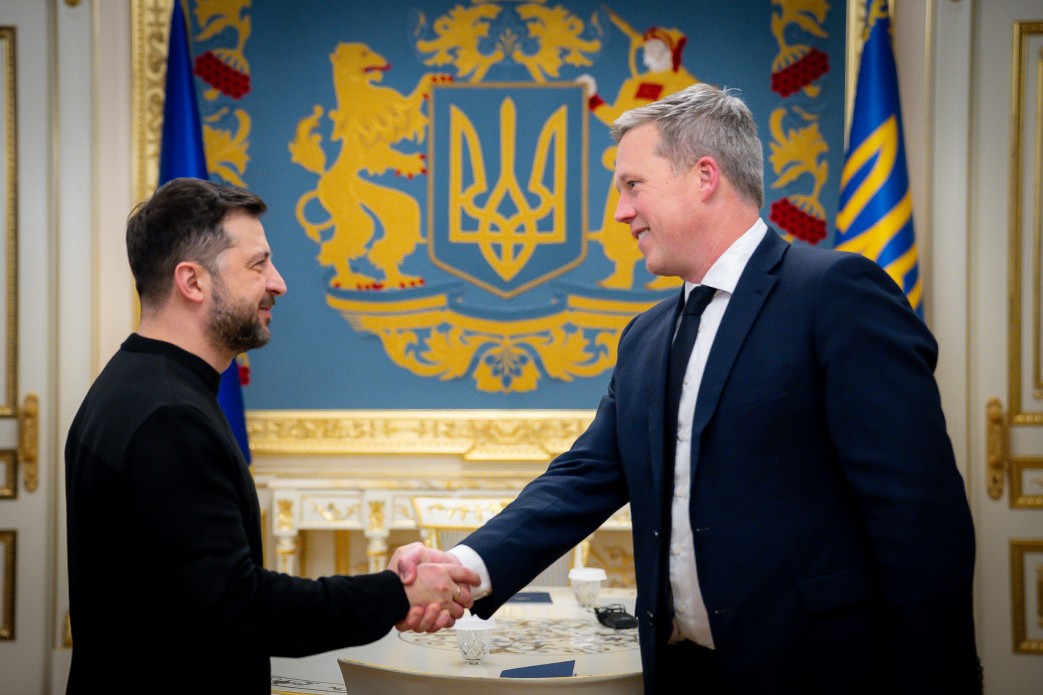
Ukrainian President Volodymyr Zelensky met with US Army Secretary Daniel Driscoll on Thursday and told him that he’s willing to work with the Trump administration on a new plan to end the war with Russia, Axios reported, citing US and Ukrainian officials.
The Trump administration has drafted a new 28-point peace plan with input from Russia that would require Ukraine to cede what territory it still controls in the Donbas and accept limits on its military.
“Our teams – of Ukraine and the United States – will work on the provisions of the plan to end the war. We are ready for constructive, honest and swift work,” Zelensky wrote on X following his meeting with Driscoll.
Zelensky and Driscoll meet in Ukraine on November 20, 2025 (photo released by Zelensky’s office)
A US official told Axios that Zelensky and Driscoll “agreed on an aggressive timeline for signature,” signaling the Trump administration wants to get the deal done quickly. But the report also said that the US would take Ukrainian concerns into account and potentially alter the plan.
Driscoll’s meeting with Zelensky followed Reuters reporting that Keith Kellogg, Trump’s special envoy to Ukraine, had told associates he planned to leave the administration in January. Kellogg is known for his maximalist positions on the war, always insisting that Ukraine could win, and has reportedly clashed with Steve Witkoff, President Trump’s Middle East envoy, who has also been working on Ukraine and drafted the peace plan after holding talks with Russian envoy Kirill Dmitriev.
The Axios report said that Driscoll didn’t know until last week that he would serve as a peace envoy to Ukraine, an unusual role for the Army secretary. “He’s taking policy briefs. He’s taking backgrounds, history of the war, all sorts of things all the way through the weekend, and then they scream out of here,” a US official said, describing what Driscoll did in the days leading up to his meeting with Zelensky.
The White House said on Thursday that Witkoff and Secretary of State Marco Rubio are in contact with Russian and Ukrainian officials about the potential peace plan.
“Special Envoy Witkoff and Marco Rubio have been working on a plan, quietly, for about the last month. They have been engaging with both sides, Russia and Ukraine equally, to understand what these countries would commit to in order to see a lasting and durable peace,” said White House Press Secretary Karoline Leavitt.
***
Putin’s Meeting with Security Council on November 21, 2025 (Transcript Excerpts re 28 Point Peace Plan)
We have two important questions today: the priorities of Russia’s CSTO chairmanship in 2026 and the Russian Federation’s strategy for combating neocolonial practices. The Minister of Foreign Affairs is invited to address both questions. We can begin.
V. Matvienko : Vladimir Vladimirovich, allow me.
Vladimir Putin : Yes, please, Valentina Ivanovna.
V. Matviyenko : Trump’s 28-point peace plan for the Ukrainian crisis is currently being actively discussed around the world. Before we begin discussing the main issues on the agenda, could you please express your opinion and your stance on this plan, and how it relates to your recent talks with Trump in Alaska?
V. Putin : Yes, of course, there’s no secret here. We’ve barely discussed this publicly, only in the most general terms, but it’s no secret: President Trump’s peace plan for resolving the situation in Ukraine was discussed before the Alaska meeting, and during those preliminary discussions, the American side asked us to make certain compromises and, as they put it, to show flexibility.
The main point of the meeting in Alaska, the main goal of the meeting in Alaska, was that during the negotiations in Anchorage we confirmed that, despite certain difficult issues and difficulties, on our part we nevertheless agree with these proposals and are ready to show the flexibility offered to us.
We have thoroughly briefed all our friends and partners in the Global South on all these issues, including the People’s Republic of China, India, the Democratic People’s Republic of Korea, South Africa, Brazil, and many other countries, as well as the CSTO countries , of course. All of our friends and partners, I want to emphasize, every single one, supported these potential agreements.
However, we see a certain pause on the American side following the Alaska talks, and we know this is due to Ukraine’s de facto rejection of President Trump’s proposed peace plan. I believe this is precisely why the new version, essentially a modernized 28-point plan, was released.
We have this text; we received it through existing channels of communication with the American administration. I believe it could also form the basis of a final peace settlement, but it has not been discussed with us in detail. And I can guess why.
I believe the reason is the same: the US administration has so far failed to secure Ukraine’s consent; Ukraine is opposed. Apparently, Ukraine and its European allies are still under the illusion of inflicting a strategic defeat on Russia on the battlefield. I believe this position stems not so much from a lack of competence—I won’t discuss that aspect of the matter now. But, most likely, it stems from a lack of objective information about the real state of affairs on the battlefield.
And, apparently, neither Ukraine nor Europe understands what this could ultimately lead to. Just one, most recent example: Kupyansk. As we recall, just recently, on November 4th, I believe, that is, two weeks ago, Kyiv publicly stated that there were no more than 60 Russian troops in the city and that within the next few days, as stated, the city would be completely unblocked by Ukrainian troops.
But I want to inform you that even at that moment, on November 4th, the city of Kupyansk was almost entirely in the hands of the Russian Armed Forces. Our guys were, as they say, just finishing their assault, clearing out isolated blocks and streets. The city’s fate had already been decided by that point.
What does this indicate? Either the Kyiv leaders lack objective information about the situation on the front, or, even if they do have it, they are simply unable to assess it objectively. If Kyiv is unwilling to discuss President Trump’s proposals and refuses to do so, then both they and the European warmongers must understand that the events that took place in Kupyansk will inevitably be repeated in other key areas of the front. Perhaps not as quickly as we would like, but inevitably, they will be repeated.
And overall, we’re happy with this, as it leads to achieving the goals of the Joint Military District by force of arms, through armed struggle. But, as I’ve said many times before, we’re also ready for peace talks and peaceful resolution of problems. However, this, of course, requires a substantive discussion of all the details of the proposed plan. We’re ready for this.
Let us now move on to the topics proposed for discussion during today’s Security Council meeting…
***
Analyses of the Proposals
Zelenskiy should take the US peace deal – By Ben Aris, Substack, 11/21/25
The U.S. plan: an analysis – By Sergey Radchenko, Substack, 11/21/25
Analyzing All 28 Points Of The Leaked Russian-Ukrainian Peace Deal Framework – By Andrew Korybko, Substack, 11/21/25