By Volodymyr Ishchenko, Al Jazeera, 10/26/22
Ishchenko is a research associate at the Institute of East European Studies, Freie Universität Berlin
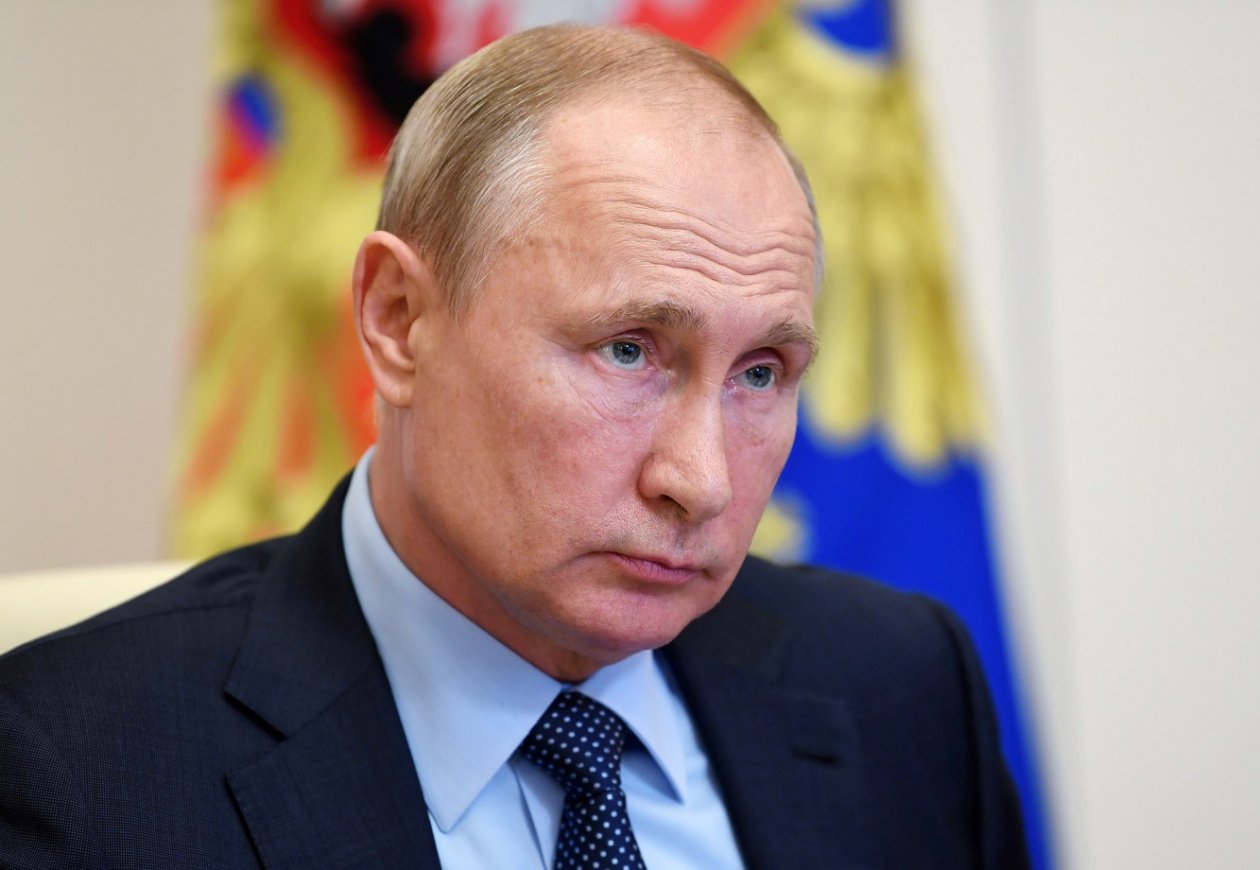
In late September, Russian President Vladimir Putin announced a “partial” mobilisation in Russia, as he forced through the annexation of four occupied regions in southeastern Ukraine after sham referendums. As many have pointed out, the draft broke an informal social contract between Putin and the Russian population, in which the Russian president provided not high but at least tolerable living standards and stability in exchange for political passivity.
Now, many expect the draft to change everything. Soon the corpses of poorly trained soldiers, sent as cannon fodder to the battlefield to stop the Ukrainian counteroffensive, will begin returning to their families, stirring public anger. According to this reasoning, this, along with the economic impact of sanctions, could result in popular unrest, which would necessitate further repression.
The Kremlin would not be able to last long on sheer coercion. To score a military victory, Putin may be tempted to use a tactical nuclear weapon or some other wildly escalatory option that would likely deprive him of his unreliable allies in the world. Then he would either bury the whole world with him or be removed by a Russian elite scared for their own lives.
The problem with this line of thinking is that more repression is not the only option for Putin and is not the only basis of his regime. To understand the other direction he could take, it is important to look at the political economy dimension of recent developments.
When declaring the “partial” mobilisation, Putin emphasised that drafted Russian soldiers would be paid the same as the contract soldiers who have been the backbone of the Russian forces in Ukraine so far. This means they should be paid at least $3,000 per month, depending on military rank, bonuses, insurance and a generous welfare package. This is about five to six times higher than the median wage in Russia. Drafting 300,000, let alone more than one million soldiers – as some media reports have claimed may be the real target – would necessitate the redistribution of billions of dollars from the Russian state budget.
There were reports of chaos in the payment arrangements in the first weeks since the start of mobilisation. However, at an October 19 meeting of Russia’s Security Council, Putin ordered that all problems with military wages be resolved, showing that the high remuneration for mobilised soldiers and support for their families is an important part of his strategy.
Add to that the money flowing to the reconstruction of the ruined Mariupol and other heavily destroyed Ukrainian cities in the newly annexed regions of southeastern Ukraine. Currently, workers from across Russia are recruited for the reconstruction effort and are offered double the amount they would make at home. Even a non-qualified construction worker receives more than $1,000 a month.
Recently, Russian deputy prime minister Marat Khusnullin said more than 30,000 Russian workers are employed in the reconstruction of occupied Ukrainian territories, and that the government plans to increase the number to 50,000-60,000.
In the next three years, the Russian budget is expected to allocate at least $6bn for the reconstruction of the newly annexed Ukrainian territories. How much of it will not be lost to Russian crony capitalism remains to be seen.
There are also a lot of funds flowing into the military-industrial complex. As demand for weapons and munitions has increased significantly, the number of workers, as well as wages, has grown. At least partially, the growth in the military-industrial complex compensates for the decline of production in the industries dependent on Western components and suffering from sanctions. In other sectors, employees who have been drafted into the army have left jobs to be filled by new workers, which decreases unemployment.
All in all, the state expenditure for “national defence” has already increased 43 percent from last year to this year and reached $74bn. A planned cut for 2023 has been scrapped and instead Moscow plans to spend some $80bn. The “national security and law enforcement” expenses are also expected to increase by 46 percent to $70bn next year.
Looking at all these developments, we see something like military Keynesianism taking shape in Russia. Millions of Russians who are either mobilised to fight in Ukraine, employed in reconstruction or in the military industry, or participating in the suppression of unrest in the occupied territories and at home, or are family members, have turned into direct beneficiaries of the war.
Among other things, this means the emergence of a positive feedback loop that did not really exist before. The Russian ruling elite started the war to pursue its own interests and it managed to get only ritual and passive support from the Russian population.
However, this redistribution of state wealth through the military effort is creating a new basis for more active and conscious support within a significant section of Russian society, which now has a material stake in the conflict.
The fact that a full-scale invasion and occupation of a large part of the Ukrainian territory would require some fundamental changes in the Russian socio-political order was predictable even before February 24. Soon after the start of the invasion, I wrote the following: “[t]he Russian state would need to buy the loyalty of Russians and subjugated nations by less fiscally conservative and more Keynesian economic policies. […] Instead of the empty rhetoric of “de-Nazification” which has clearly been insufficient to inspire enthusiasm for the war within Russian society, this would require a more coherent imperialist-conservative project connecting the interests of the Russian elites to the interests of the subaltern classes and nations.”
The Kremlin’s strategy of combining coercion with bribing a significant part of the population has helped keep anti-war protests relatively small, as most Russians have obediently accepted the mobilisation. The disproportionate number of people drafted from the poorer parts of Russia might have to do not only with the Kremlin’s fear of protests from more opposition-minded residents of the big cities but also with its calculation that the monetary incentives it offers would be of greater value to the residents of more deprived peripheral regions.
The crucial question, of course, is for how long military Keynesianism will be sustainable in Russia. The classical imperialist positive feedback loops relied on technologically advanced industrial production. The conquered territories and colonies provided new markets and supplied the raw materials and cheap labour to expand production even more.
The profits were then shared with the “labour aristocracy” at home who benefitted from the imperialist expansion and subjugation. The bloc formed between the imperialist ruling classes and segments of the working classes became the basis of the hegemonic regimes and precluded social revolutions in Western metropolises.
Whether Ukraine can provide any of the above for the Russian economy is highly questionable. Furthermore, many expect that the long-term impact of sanctions would cripple the Russian economy and lead to its primitivisation.
That leaves the flow of petrodollars as the main source of funding to buy loyalty. That, however, depends on the successful reorientation and sufficient growth of China and India’s economies to sustain the demand for Russian energy resources. No less important would be reforming Russian state institutions in order to manage revenues more efficiently rather than lose them to incompetence and corruption.
But if the Russian regime is capable of transforming and strengthening in response to the existential challenge rather than collapse, it means that Russia could be ready for a longer and more devastating war.
Russian military Keynesianism contrasts sharply with the Ukrainian government’s decision to stick to neoliberal dogmas of privatisation, lowering taxes and extreme labour deregulation, despite the objective imperatives of the war economy. Some top-notch Western economists have even recommended to Ukraine policies that constitute what British historian Adam Tooze has termed “warfare without the state”.
In a long war of attrition, such policies leave Ukraine even more dependent not only on Western weapons but also on the steady flow of Western money to sustain the Ukrainian economy. Making oneself fundamentally dependent on Western support may be not a safe bet, especially if your adversary is in it for the long haul.