All posts by natyliesb

Nadezhda Azhgikhina: A Letter From the Dacha

An idyllic Russian village of dachas (countryside cottages) in the summertime. (Franz Marc Frei / Getty)

By Nadezhda Azhgikhina, The Nation, 8/3/22

Like many Muscovites, I am spending this summer at the dacha. In 2022, there are many more people than in years past vacationing in our village, located close to the former Obiralovka Junction, where Lev Tolstoy tossed Anna Karenina under a train (women leave bouquets at the memorial plaque at the station, thinking that Anna was a real victim of unhappy love and not a fictional character). One reason there are more people is the development of the Internet; many continue working remotely, which they began doing during the pandemic. Besides, almost everyone who usually vacations abroad is spending the summer of 2022 in Russia because of the international sanctions.

The “special operation” in Ukraine that began on February 24 has radically changed many Russians’ lives, particularly members of the middle class, intellectuals, and people who were active civically.

As Western sanctions were levied against Russia, almost all the major international businesses and their affiliates left the country, leaving thousands of specialists without work. Russian scholars, doctors, musicians, and athletes are being expelled from international associations and universities and barred from concerts and competitions, while at the same time Russian colleges and educational institutions have ended programs of international cooperation and student exchanges. An iron curtain has dropped precipitously from both sides. New laws and rules have made political discussion almost impossible in public, and almost all independent media outlets have been shut down or have decided to close.

The list of “foreign agents” is regularly updated with new names of journalists and human rights activists—this process is aided by denunciations from “vigilant citizens,” a long-forgotten Soviet practice. According to data from human rights organizations, by midsummer close to 200 online and off-line mass media sources were blocked and more than 150 criminal cases and more than 200 administrative cases have been started under the new laws on fake news and discrediting the army. Dozens of rights activists, journalists, and information technology specialists have left the country, finding themselves in a difficult, even untenable, situation: Russian banks are under sanctions, and they cannot use their credit cards or transfer money from Russia. At the same time, people in small towns or poor regions, or who work for the state, or who have never been abroad or cared about politics have not seen serious changes. Grocery prices have gone up, but not a lot. Poor families and pensioners received small (but noticeable to them) state subsidies and other benefits. It must be said that throughout Russia the most varied sources of information are available, including blocked foreign resources, through the simple acquisition of a virtual private network (VPN ownership is free and not criminal—what is punishable is disseminating critical information). But far from everyone is interested in alternative opinions.

This spring, analysts Natalya Zabarevich and Yevgeny Gonmakher predicted that the “special operation” and sanctions would most affect the middle class, educated, and pro-West. The poor would remain poor, and the rich and officials would continue in their privileged positions. Founder of the Yabloko Party Grigory Yavlinsky has warned of the dangers of the growing wealth gap. It is clear today that class differences are highly significant. Three strata of society live in different worlds, experiencing events in their own way.

Our dacha community has representatives of all three classes. My businessman neighbor is building a second “cottage” on his lot. Before 2014, he was in oil products, but after the introduction of anti-Russian sanctions, he switched to import replacement and the production of “Russian Parmesan.” His wife continues to buy the real Italian cheese in Europe. His children live in Spain, and he recently visited them. He thinks that Russia had no choice but to start the “operation” in Ukraine.

He is the only one building in the community. Prices for construction materials, many of which are imported, have tripled. Prices for cars, gadgets, and appliances have soared.

Groceries, pharmaceuticals, and the most essential staples have not increased in price greatly. Store shelves are as stocked as they were before. The shortages predicted in the spring have not occurred. Some brands closed their boutiques, but rather quickly fashionable cosmetics and clothing have appeared in other stores—at a much higher price. However, the demand remains high, and people are still spending. Restaurants in and around Moscow are full and you can’t get in without reservations. McDonald’s and Starbucks may have left Russia, but they have been replaced by Russian-owned cafes with other names and similar products. Russians have become avid consumers in recent years, and the authorities understand that. Delivery services in our community work smoothly.

The businessman’s wife has cosmetics and other mystery packages delivered, while his handyman, a former electrician from a neighboring village, gets beer and nationalist publications. He strongly supports the “special operation” in Ukraine and sometimes calls on fellow drinkers at the local bar to go “fight the Nazis.” His wife, a veterinarian, leader of the local animal rights movement, and regular participant in protests of recent years, was recently fined for an anti-war picket. Husband and wife do not discuss politics. They spend all their money on training for their teenage son—he is the Russian champion in karate and hopes that soon the sanctions will be lifted and he will be able to participate in the next Olympic Games. Their older son, a computer specialist, moved to Georgia at the start of the military operation.

My longtime friends at the dacha—writers, doctors, teachers, engineers—and our long evening conversations this summer remind me of those held by the Soviet intelligentsia, our parents, during the Brezhnev “stagnation” years. We discuss the latest news and statements on the Internet, and every evening we talk about what happened to our country, how we lost what we had fought for in August 1991 and the following 30 years, and how to live now. About how we must complete the conversations from 30 years ago which did not clearly assess the Soviet past. About how it is still not too late to do it. What each of us—at university, business, school—can do to resist the return of totalitarianism. After all, history does not depend only on global trends but also on real people. Perestroika was not made only by Gorbachev and Reagan but by the millions of Soviet people who believed in change and inspired Gorbachev. Just like the Americans who believed that the Cold War had to end. That experience of inner resistance to nascent totalitarianism is extremely important today. As are the 300 years of resistance by Russian intellectuals, journalists, and writers to censorship and arbitrary rule. It lends strength. The experience of resistance to bans, censorship, and state pressure is returning to Russian practice, and it will certainly lead to the victory of common sense. This is what my dacha friends, and many other people in Moscow and other Russian cities, are saying. This gives us hope.

Translated by Antonina W. Bouis

MK Bhadrakumar: Russia’s Vostok 2022 has big messages

By M.K. Bhadrakumar, Indian Punchline, 7/27/22

Bhadrakumar is a retired Indian diplomat.

The announcement by Russian Defence Ministry on Tuesday on Vostok-22 strategic command post exercises during August 30-September 5 gives a big message to the West in political and military terms.

The announcement said, “In addition to the troops (forces) of the Eastern Military District, units of the Airborne Troops, Long Range Aviation and Military Transport Aviation, as well as military contingents from other states, will be involved in these manoeuvres.”

If there is going to be participation by China, it will be highly significant in the present context of global politics, especially in the Far East.

Vostok 2018, held exactly four years ago, was the first time such a massive military exercise was held after the dissolution of the Soviet Union. (At the height of the Cold War in 1981 under Leonid Brezhnev, the Soviet Union held its last Vostok exercise). In the event, Vostok 2018 turned into a Russia-China gun show.

The Russian Federation put more than 300,000 troops in the field—alongside tens of thousands of tanks, helicopters, and weapons of every sort—for a huge war game in Russia’s far-eastern reaches, and invited the Chinese People’s Liberation Army to play along, which it did.

And a whole new groove in international affairs began appearing, signifying that the interests of Russia and China have once again begun to align — this time around, in response to US military power under a pugnacious president, Donald Trump. 

On the sidelines of the exercise, Presidents Vladimir Putin and Xi Jinping had a breakfast of blinis together in Vladivostok. It was a powerful signal that Russia no longer saw China as an adversary but as a potential military ally. It was widely noted internationally as heralding a major shift in the co-relation of forces in world politics.

To be sure, any Chinese participation in Vostok 2022 will be similarly subjected to close analysis by Washington and its allies at a time of heightened tension in US-China relations, with Beijing warning last week to take “resolute and strong measures” should the Speaker of the US House of Representatives Nancy Pelosi proceed with reported plans to visit Taiwan.

China has vowed to annex Taiwan by force if necessary, and has advertised that threat by flying warplanes near Taiwanese airspace and holding military exercises based on invasion scenarios. At a meeting in Singapore early July with Chairman, US Joint Chiefs of Staff, the chief of the Joint Staff Department of China’s Central Military Commission Gen. Li Zuocheng had warned that Chinese military would “resolutely safeguard national sovereignty and territorial integrity. If anyone creates a wanton provocation, they will be met with the firm counterattack from the Chinese people.”

However, at the end of the day, Chinese participation in Vostok 2022 will be seen as an expression of solidarity with Russia in the best spirit of the February 4 joint statement by the two leaderships, which states that “Friendship between the two States has no limits, there are no ‘forbidden’ areas of cooperation.”

No matter the usual mantra that the Vostok 2022 is not directed against any third party, its optics will be as a counter to the US pressure on Russia and China. Both Russia and China face new security challenges in the Far East in the recent period — especially, the revival of “militarism” in Japan, NATO’s growing Asia-Pacific posturing, and the belligerence in the US’ provocations over Taiwan.

Tass news agency has reported that Russian Defence Ministry has proposed certain amendments to Russia’s Federal Law “On territorial waters, territorial sea and the contiguous zone of the Russian Federation”, putting restrictions on the passage of foreign military ships through the Northern Sea Route connecting Europe and East Asia.

The proposed amendment will require foreign military and state ships to sail through the Northern Sea Route without entering ports or naval bases, and, furthermore, seek permission from the Russian authorities at least 90 days in advance. The amendment will be effectively restricting the use of the shortest sea route to Asia for the western navies operating in the Asia-Pacific region.

Significantly, this Russian move comes in the wake of the NATO’s plans to forge stronger security links between the North Atlantic area and Asia-Pacific countries (Japan, South Korea, Australia and New Zealand) in a coordinated strategy to counter China’s rise. 

Equally, the staging of Vostok 2022 comes at a juncture when Russia’s military operations in Ukraine are entering a crucial phase. In a major speech in Moscow on July 7 at a meeting with leaders of the parliament, Putin warned that everyone should understand that Russia “by and large hasn’t started anything seriously yet” in Ukraine.

To be sure, Vostok 2022 flies in the face of western propaganda that Russian military capabilities are steadily weakening due to the conflict in Ukraine. The MOD announcement on Vostok 2022 made it a point to touch on it indirectly.

The MOD statement said, “A number of foreign media are spreading inaccurate information about alleged mobilisation activities. Please note that only a part of the Armed Forces of the Russian Federation is involved in the special military operation, the number of which is sufficient to fulfil all the tasks set by the Supreme Commander-in-Chief.

“Moreover, none of the planned operational and combat training and military-technical and international cooperation activities of the Russian Ministry of Defence have been cancelled and will be provided with the necessary personnel, weapons, military equipment and materials.”

This is only logical, since, following the massive haemorrhage suffered by the Ukrainian military in the past 5-month period, the military balance is now working favourably for the Russian forces. Equally, the Russian military strategy to grind the Ukrainian forces with heavy artillery and missile strikes and the slow pace of the conflict also meant that the operations are sustainable over a prolonged period.

At any rate, given the hostile posturing of the NATO forces all along Russia’s western borders, it is inconceivable that Moscow would have risked by heavily committing its forces to the Ukraine operations. Interestingly, Germany’s army chief Lieutenant General Alfons Mais told Handelsblatt newspaper recently in an interview that Russia has “almost inexhaustible” resources. 

In the general’s estimation, “With its artillery superiority, the Russian army is apparently working its way forward kilometre by kilometre. This is a war of attrition that will raise the question of how long Ukraine can hold out… The Russian army is getting stronger, and Russia has resources that are almost inexhaustible.”

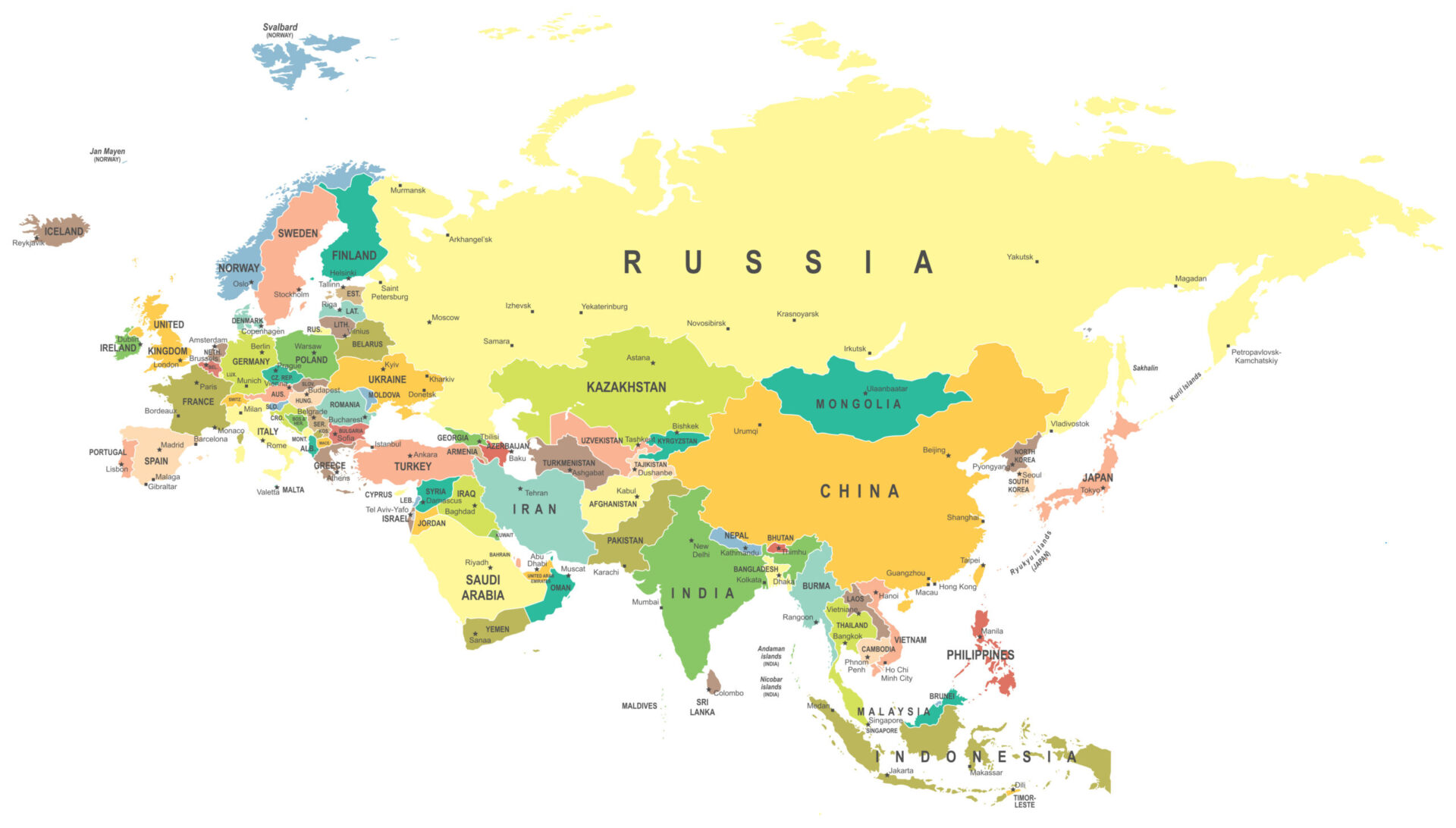
The focus of Vostok 2022 will be “on the use of groupings of troops (forces) to ensure military security.” It will be staged in 12 different locations spread across the Eastern Military District, one of Russia’s five military districts, with a vast geographical spread of 7 million sq. kilometres, headquartered in Khabarovsk on the Amur river in the Russian Far East near the Russia-China border, and comprises the regions up to Sakhalin Oblast, which includes Kuril Islands.

Roundtable Discussion on US-Russia with Ray McGovern, Ted Postol and Larry Johnson

Link here.

This was an excellent conversation among Ray McGovern, Larry Johnson, and Ted Postol, mediated by Gonzalo Lira. It’s nearly 3 hours long and I had to divide it up into a couple of sittings. I especially recommend watching the first hour or so. The experts here discuss the context of the current conflict between US/NATO and Russia, the nuclear treaties that were abrogated by the US, as well as the utter lack of competence and character of people like Condoleezza Rice and Michael McFaul who have passed themselves off as experts on Russia and have served as advisors to presidential administrations.

Eva Bartlett: Ukraine bombed a Donetsk hotel full of journalists – here’s what it felt like to be there

Photo by Eva Bartlett

By Eva Bartlett, In Gaza Blog, 8/4/22

*Note: an abridged version of this article originally appeared at RT.

At 10:13 am Thursday, Ukraine began shelling central Donetsk. There were five powerful blasts in the space of ten minutes. The last explosion blew out my hotel’s ground-floor glass, including a sitting room – where journalists often congregate before and after going out to do field reporting, and where until less than ten minutes prior, I’d been sitting working on my laptop – and the lobby, which I had passed through a minute earlier. A cameraman’s assistant who was there at the time of that fifth explosion suffered a concussion from the force of the blast.

A woman walking outside the building was killed, as were at least four others, including an 11 year old rising-star ballerina, her grandmother, and her teacher (a world-renowned former ballerina).

Donetsk Telegram channels are filled with videos locals have taken, of the dead, the injured and the damage, and of grief-stricken people. One such hard-to-watch Telegram post (warning: graphic footage) features a man in shock at the gruesome sight of the bodies of his murdered wife and grandchild on a street two blocks from the hotel.

First estimates placed the number at at least ten, among them two ambulance workers: a paramedic and a doctor.

When the shelling started, I was in my room editing footage from the previous day – from the aftermath of another Ukrainian shelling of a Donetsk district.

Reading the news, you have the luxury of graphic image warnings and the choice not to look at the pictures and videos of the carnage that occurred on Thursday, as well as over the past eight years of Ukraine’s war on Donbass. The people here on the ground don’t get a warning, or a choice as to whether they will see the mutilated remains of a loved-one or stranger. As uncomfortable as it is to see such footage, it does need to be shown if the world is to know the truth of what’s going on in Donbass, to give voice to the locals, killed and terrorized by Ukrainian forces as Western corporate media looks elsewhere or covers up these crimes. 

Chronology of the bomb strikes

You wouldn’t know it from most Western media coverage but explosions are so common here that I didn’t think much of the blast other than it was louder than usual and the car alarms were going off.

Seven minutes later, another explosion, much louder and much closer. From the window, smoke could be seen rising to the north, probably 200 meters away. This would have been right near the Donetsk Opera and Ballet Theatre, where the funeral ceremony for Donetsk People’s Republic (DPR) Colonel Olga Kachura, killed yesterday, was commencing.

A minute later, another loud blast sent me running from the room, which faced the direction of incoming artillery. Luckily, the only damage ended up being a broken window.

Downstairs, journalists who had been in the hotel and others who had been outside ready to go out reporting, took shelter in the hallway for the time being, ready to run to the basement if things escalated, telling me that the last shelling hit 50 metres from the hotel.

One told me he had been preparing to go film and was about 10 meters away from where the last shell struck. “I believe they were trying to target the funeral. And journalists also,” he said. He also said there was a woman outside who had lost a leg, and that she was probably dead by now.

I left the lobby briefly and during that time, the fifth strike hit, blowing out the windows and killing a woman just outside the hotel. Journalists in the lobby suffered from the pressure of the blast. A cameraman’s assistant got a concussion from it. It was by pure luck that I was not in the lobby.

I was back inside the hotel, sitting in a hallway, beginning to stitch together my footage, to publish it, when the shelling resumed. Journalists still outside ran back in. After another four blasts, the shelling died down. Meanwhile, Telegram was filled with videos people had sent from Donetsk streets. A man slumped dead near a bus stop. Three civilians slaughtered on a sidewalk just two streets from the hotel, a man shrieking his grief at the horrific site of his wife and granddaughter in pieces.

After the dust had settled and it seemed Ukraine had stopped its shelling, we went outside to document the damage, and the carnage. The poor women killed by the shelling was by this point covered with a hotel curtain, blood stains around her body.

It’s safe to assume that Kiev’s forces’ intended target was the funeral service for Colonel Kachura, aiming perhaps to send a message to the DPR military and the civilians who support it. While that would be egregious by itself, it is likely that a hotel housing journalists was not just ‘collateral damage,’ either. 

It is common for aggressors like Ukraine or Israel or terrorists in Syria to target journalists. In 2009, as it waged war on the civilians of Gaza, Israel repeatedly shelled a media building I was in.

In May 2021, as it resumed intensely bombing Gaza, Israel destroyed two Gaza media buildings housing 20 media outlets.

Ukraine routinely persecutes, censors, imprisons, tortures, and targets media personnel, putting us on kill lists.

Kiev’s forces know a lot of journalists stay at this hotel for its central location and strong wifi. Many frequently do their live reports from outside the hotel. And those staying there, as well as in other central Donetsk neighbourhoods, have been loudly reporting on Ukraine’s showering of Donetsk with the insidious, internationally-prohibited ‘butterfly’ anti-personnel mines of late – the latest, until today, in the list of Kiev’s war crimes. These explosives are designed to rip off feet and legs, and Ukraine has repeatedly fired rockets containing them, intentionally dropping them on civilian areas in Donetsk and other Donbass cities.

After the explosions rang out in central Donetsk Thursday, Emergency Services arrived at the scene and, following a period of calm, journalists went out to document the damage and the dead. The woman I’d been told about lay in a pool of blood, covered with what appeared to be a curtain from one of the blown-out windows.

The calm didn’t last long. Ukraine soon resumed shelling, and journalists outside ran back inside as we received another four attacks. “It’s like a common thing, they shoot one place and shoot it again. So we’re in the middle of that process right now,” a Serbian guy near me said.  The chief of a local Emergency Services headquarters told me Kiev also makes triple strikes, not only double.

It is said that Ukraine used NATO-standard 155mm caliber weapons in today’s attack. If that is true, this is another instance of Ukraine using Western-supplied weapons to slaughter and maim civilians in the Donetsk and Lugansk People’s Republics.

If by bombing a hotel full of journalists Kiev wanted to intimidate them away from reporting on Ukraine’s war crimes, it won’t work. Most journalists reporting from on the ground here do so because, unlike the crocodile tears of the West for conflicts they create, we actually care about the lives of people here.

Alan MacLeod: MOST OF THE “FACT-CHECKING” ORGANIZATIONS FACEBOOK USES IN UKRAINE ARE DIRECTLY FUNDED BY WASHINGTON

By Alan MacLeod, MintPress News, 8/2/22

Most of the fact-checking organizations Facebook has partnered with to monitor and regulate information about Ukraine are directly funded by the U.S. government, either through the U.S. Embassy or via the notorious National Endowment for Democracy (NED).

In light of Russia’s invasion of Ukraine, an information war as bitter as the ground fighting has erupted, and Meta (Facebook’s official name) announced it had partnered with nine organizations to help it sort fact from fiction for Ukrainian, Russian and other Eastern European users. These nine organizations are: StopFake, VoxCheck, Fact Check Georgia, Demagog, Myth Detector, Lead Stories, Patikrinta 15min, Re:Baltica and Delfi.

“To reduce the spread of misinformation and provide more reliable information to users, we partner with independent third-party fact-checkers globally,” the Silicon Valley giant wrote, adding, “Facebook’s independent third-party fact-checkers are all certified by the International Fact-Checking Network (IFCN). The IFCN, a subsidiary of the journalism research organization Poynter Institute, is dedicated to bringing together fact-checkers worldwide.”

The problem with this? At least five of the nine organizations are directly in the pay of the United States government, a major belligerent in the conflict. The Poynter Institute is also funded by the NED. Furthermore, many of the other fact-checking organizations also have deep connections with other NATO powers, including direct funding.

STOPFAKE

Perhaps the most well-known and notorious of the nine groups is StopFake. Established in 2014, StopFake is funded by NATO’s Atlantic Council, by the British Foreign and Commonwealth Office, the British Embassy in Ukraine and the Czech Foreign Ministry. It has also received money from the U.S. via the National Endowment for Democracy, although that fact is far from trumpeted by either party.

One potential reason for this was alluded to in a 2016 article reprinted by StopFake itself. As the article notes, “in the case of StopFake.org when opponents want to insult the project, they immediately invoke National Endowment for Democracy donor support as evidence of U.S. government and CIA involvement.”

In the wake of the Russian invasion, the NED pulled all public records of their Ukraine projects from the internet. Nevertheless, incomplete archived copies of those records confirm a financial relationship between the groups.

StopFake was explicitly set up as a partisan organization. As a glowing report on them from the International Journalists’ Network notes, the majority of StopFake’s fact-checks are on stories from Russian media, and the motivation for its creation was “Russia’s 2014 occupation of Crimea and a campaign to portray Ukraine as a fascist state where anti-Semitism, racism, homophobia and xenophobia thrived.”

While it is indeed incorrect to label Ukraine a fascist state, the country clearly has one of the strongest far-right movements anywhere in Europe. And unfortunately, StopFake itself is far from an apolitical bystander in that rise. Multiple established Western media outlets, including The New York Times, have reported on StopFake’s ties to white power or Nazi groups. When local journalist Ekaterina Sergatskova exposed these links, death threats from far-right figures forced her to flee her home.

Indeed, according to some, one of StopFake’s primary functions appears to be to promote the far-right. A long exposé by Lev Golinkin in The Nation cataloged what it called StopFake’s history of “aggressively whitewashing two Ukrainian neo-Nazi groups with a long track record of violence, including war crimes.”

Surely StopFake’s most famous former host is Nina Jankowicz. Jankowicz was briefly head of President Biden’s newly formed Disinformation Governance Board before public uproar caused her to resign. Dubbed the “Ministry of Truth”, both the board and Jankowicz generated strong opposition. Yet few mentioned the fact that, while at StopFake, Jankowicz herself had, on camera, enthusiastically extolled the virtues of multiple fascist paramilitaries.

In a 2017 TV segment about the Aidar, Dnipro-1 and Azov Battalions, Jankowicz presented the groups as heroic volunteers deafening Ukraine from “further Russian separatist encroachment.” As she stated,

The volunteer movement in Ukraine extends far beyond military service. Volunteer groups are active in supporting Ukraine’s military with food, clothing, medicine, and post-battle rehabilitation, as well as working actively with the nearly two million internal refugees displaced by the war in Ukraine,”

This framing jars with multiple reports from human rights groups such as Amnesty International, who claim that the Aidar Battalion is guilty of a litany of abuses, “including abductions, unlawful detention, ill-treatment, theft, extortion, and possible executions.” Amnesty also accuses Aidar and Dnipro-1 of “Using starvation of civilians as a method of warfare.”

Azov, meanwhile, is the most infamous organization of the lot. The group’s insignia is directly lifted from the 2nd Waffen-SS Panzer Division, a unit responsible for carrying out some of the worst crimes of Hitler’s holocaust. The Azov Battalion also dip their bullets in pig fat before battle as a calculated hate crime, attempting to block Jewish or Muslim enemies from a better afterlife. Andriy Biletsky, the group’s founder, said in 2010 that he believes Ukraine’s mission is to “lead the white races of the world in a final crusade … against Semite-led Untermenschen” – the word Hitler used to describe Jews, Poles, Ukrainians and other peoples he designated for extermination.

In February, Facebook announced that it was changing its rules on hate speech to allow praise and promotion of the Azov Battalion. Was this on StopFake’s recommendation? MintPress asked Meta/Facebook for comment on their fact checking partner’s ties to far right groups and if StopFake had influenced their decision to allow pro-Nazi content on their platform, but did not receive a reply.

As Golinkin noted in his article for The Nation, StopFake has also defended C14, another fascist paramilitary, describing it merely as a “community organization”, citing C14’s own denial of its pogroms against Roma people as “evidence” of its innocence. This designation clashes even with the U.S. State Department, which classifies C14 as a “nationalist hate group.” The “14” in its name refers to the “14 words” white supremacist slogan.

StopFake has made a number of controversial claims, including that the rise in anti-semitism in Ukraine is “fake” – even going so far as to brand well-established outlets like NBC News and Al-Jazeera as printing fake news about the Azov Battalion’s role in this. In an article entitled “Russia as Evil: False Historical Parallels. Some peculiarities of Russian Political Culture,” it also insisted that Hitler’s concentration camps were modeled on Russian ones set up by Vladimir Lenin. In reality, the German government pioneered the use of concentration camps during their genocide of the Herero and Namaqua peoples between 1904 and 1908 in Namibia. The British and Spanish were also early adopters.

In addition, StopFake has close links with The Kyiv Post, a Ukrainian outlet directly funded and trained by the National Endowment for Democracy. Since 2016, the Post has published 191 StopFake reports.

WHO IS THE NED?

Why receiving funding from the National Endowment for Democracy should immediately raise suspicions of any organization is because the NED was explicitly established by the Reagan administration as a front group for the Central Intelligence Agency.

Although it is funded by Washington and staffed by state officials, it is technically a private company and therefore not subject to the same legal regulations and public scrutiny as state institutions.

The CIA has used the NED to carry out many of its more controversial operations. In recent years, it has trained and funneled money to the leaders of the Hong Kong protesters to keep the insurrection alive, fomented a nationwide campaign of demonstrations in Cuba, and helped attempts to topple the government of Venezuela. Perhaps most importantly for this story, however, the NED was also involved in the 2014 coup that removed Ukrainian president Viktor Yanukovych from power. Regime change is, in short, one of its primary functions.

The NED does this by establishing, funding, supporting and training all manner of political, economic and social groups in target countries. According to its 2019 annual report, Ukraine is the NED’s “top priority”. The agency has (officially) spent over $22 million in Ukraine since 2014.

In their more candid moments, NED leaders are explicit about the organization’s role. “It would be terrible for democratic groups around the world to be seen as subsidized by the CIA,” Carl Gershman, NED president from 1984 to 2021 said, explaining why his organization was set up. NED co-founder Allen Weinstein agreed: “A lot of what we do today was done covertly 25 years ago by the CIA,” he told The Washington Post.

VOXCHECK

VoxCheck receives substantial monetary assistance from the U.S. government through both the NED and the U.S. Embassy. It is also funded by the Dutch and German governments. Incomplete NED records show VoxCheck receives substantial yearly grants and has accepted around $250,000 in total.

That sort of money goes an extremely long way in Ukraine, which is by quite some way the poorest nation in Europe. The country’s GNI per capita of $3,500 per year is well below that of even Russia, which stands at $10,700. One $15,000 NED grant given to a Ukrainian media foundation, for instance, was enough to pay for over 100 articles to be written.

Despite its funding, Western media portray VoxCheck extremely positively. The Washington Post, for example, describes them as “a small group of independent fact-checkers.” In common parlance, the word “independent” is usually reserved for any media group not owned or funded by governments (as if that is the only type of dependence). But even at this extremely low bar, VoxCheck falls.

In the article, the Washington Post describes VoxCheck’s fact-checking process, which largely consists of “sourcing credible news sources – such as a BBC article,” and then labeling Russian claims as false on this basis. In other words, the official state mouthpiece of the British government – one that was instrumental in promoting the lies which led to the invasions of Iraq and Libya – is considered sacrosanct.

What comes across in the Post’s glowing exposé is that VoxCheck staff have few pretensions about being neutral and see themselves as digital foot soldiers in a crusade against Russia. As one employee said, the mission is to “prevent someone from falling into Russian lies and manipulation.” Indeed, one of the staff quit his job to volunteer for the Ukrainian Army. Other VoxCheck employees revealed that they felt guilty for not doing so themselves and only contributing virtually to the fight.

Of course, Russia has lied constantly during this war; the entire invasion was based on a lie. Throughout the winter, Russian officials consistently repeated that they had no intention of invading Ukraine. Russian media, meanwhile, claimed that President Zelensky had fled the country in the wake of the invasion. But in war, all sides lie. And when a fact-checking operation constantly critiques only one side and stays largely quiet about the other, it has clearly taken a side in the conflict and is therefore acting in a partisan fashion. People interested in thinking critically should be scrutinizing claims made by all sides.

FACT CHECK GEORGIA

Fact Check Georgia describes itself as “an independent and non-partisan website which offers readers researched, verified and evidence-based information.” Yet it is bankrolled by a litany of dubious organizations, including the NED and the U.S. Embassy, the German Marshall Fund, the Dutch government and the European Endowment for Democracy, a European government-funded “private” organization explicitly modeled on the NED.

Fact Check Georgia’s independence is potentially undermined by the fact that at the bottom of every page of its website, it displays the crests of both the NED and the U.S. Embassy in Georgia. This is accompanied by the disclaimer, “The views and opinions expressed on this website belong to Factcheck.ge and are not the views and opinions of project support organizations” – a sentence that would not be necessary to attach if an organization was truly independent.

Furthermore, some of its staff have notable backgrounds. The first person listed on Fact Check Georgia’s “our team” section was formerly the Deputy Minister of Defense for Georgia – a country that fought a war against Russia in 2008.

MYTH DETECTOR

Another Georgia-based company, Myth Detector, was funded by the U.S. Embassy to the tune of €42,000 in financial year 2021. German state broadcaster Deutsche Welle contributed €41,000. Also donating €41,000 last year, according to Myth Detector’s financial report, is a group called “Zinc.” This is quite possibly the Zinc Network, a shadowy intelligence firm that conducts information warfare operations on behalf of the U.K. and U.S. governments.

DEMAGOG

Not only is the U.S. Embassy in Poland funding Demagog, it is also carrying out training in how to think. Demagog’s website notes that the embassy established a “fact-checking academy” on “how to deal with false information.” “Thanks to the [embassy] cooperation,” it notes, “classes were conducted for students and teachers on fake news, reliable sources of information and fact-checking.”

Alongside the U.S. government, Demagog also receives money from Polish government, European Union and European Economic Area organizations.

Together, these five organizations’ operations are all directly bankrolled by Washington. However, many of the other fact-checking groups Facebook pays to serve as content police on their platform have similarly close connections to Western state power. Indeed, the only one of the nine that appears relatively free from direct government collaboration is self-funded outlet Lead Stories.

PATIKRINTA 15MIN

Lithuanian outlet Patikrinta 15min insist that they are an independent, non-partisan group. As their “About” section states: “Sponsors of Patikrinta 15min cannot be political parties, politicians, state organizations or companies or organizations related to politicians.” They do, however, accept funding from the Poynter Institute, the journalism group that owns U.S. fact-checking organization Politifact. Since 2016, the Poynter Institute has sought for and received at least seven grants from the National Endowment for Democracy, totaling well over half a million dollars.

Notably, some of these grants are clearly a way of funneling cash to Eastern European fact-checking groups. As one NED grant summary for $78,000 notes, the goal of the money is to “promote the use of fact-checking websites as an effective accountability tool in Central and Eastern Europe, and strengthen the global fact-checking community.” The NED goes on to note that Poynter will bring over 70 journalists to a training summit and afterward continue to “train” “mentor,” “support,” and help them and their organizations with “capacity building.”

A cynic might conclude that the NED was simply trying to launder its money through Poynter. MintPress asked Patikrinta 15min to confirm or deny whether they were one of the Eastern European groups mentioned in the NED filings but has not received a response.

Like other groups, Patikrinta 15min’s non-partisan veneer frequently slips. This can be seen in headlines such as “Russian cynicism knows no bounds” and the fact that they frequently defend Nazi groups like the Azov Battalion.

Like StopFake, n 15min has argued that Azov’s use of the Waffen SS symbol is coincidental. It also presented Azov as an apolitical organization and has used quotes from Azov founder Andriy Biletsky – possibly the world’s most infamous living neo-Nazi – as “proof” that charges against it are Russian disinformation.

RE:BALTICA

While there is no evidence that Re:Baltica has a financial relationship with the United States government, the lion’s share of its funding still comes from the West. As they note on their website, around two-thirds of their funding comes “from the institutions based in EU/NATO countries.” They also list “the Kingdom of the Netherlands” as one of their “friends” – i.e., donors.

Re:Baltica is generously funded by western govt’s and NGOs, including George Soro’s Open Society Foundation

DELFI

Delfi is a major web portal in Eastern Europe and the Baltic. The company does not disclose if it receives foreign funding. It does, undeniably, however, have a close relationship with the NED. In 2015, Delfi interviewed Christopher Walker, a senior NED manager about the best way they could counter Russian propaganda. Two years later, NED President Gershman addressed the Lithuanian parliament, revealing that his organization had,

[W]orked with Lithuania in countering Russian efforts to subvert and destroy democracy in Lithuania, in Europe, and in Russia itself. We have supported the work of the Lithuania-based Delfi and the East European Studies Center in monitoring, documenting, and combatting Russian disinformation in Lithuania and the Baltic states.”

Later that year, Delfi teamed up with the NED to hold the 1st Vilnius Young Leaders Meeting, whereby handpicked young activists were invited to rub shoulders with journalists and spooks from across Europe and the United States, in the hope of building up a Western-friendly force in civil society.

Delfi, Re:Baltica and StopFake were all identified as proposed members of a “counter”-propaganda network hoping to be established by the EXPOSE Network. EXPOSE was allegedly a secret U.K.-government funded initiative that would have brought together journalists and state operatives in an alliance to shape public discourse in a manner more conducive to the priorities of Western governments.

As EXPOSE wrote, “An opportunity exists to upskill civil society organizations around Europe, enhancing their existing activities and unleashing their potential” to be the next generation of activists in the fight against Kremlin disinformation.”

“Coordinat[ing] their activities,” wrote EXPOSE, “represents a unique opportunity” for the British government in their fight against Russia. Unfortunately, they lamented, StopFake’s “monomaniacal fixation” on Russia had hurt its credibility.

Remarkably, EXPOSE also wrote that, “Another barrier to combating disinformation is the fact that certain Kremlin-backed narratives are factually true” – an admission that underlines that, to many governments and media outlets, “disinformation” is rapidly coming to simply mean “information we disagree with.”

The names of those individuals listed as potential employees of this network are a who’s who of state-linked operatives, including the Zinc Network, multiple individuals from NED-funded investigative journalism website Bellingcat and Ben Nimmo, a former NATO spokesperson who is now head of global intelligence for Facebook.

FACEBOOK’S CYBER WAR

Nimmo is only one of a great many former state agents now working in the higher echelons of Facebook, however. Last month, MintPress published a study revealing that the Silicon Valley giant has hired dozens of ex-CIA personnel into influential positions within the company, especially in security, content moderation and trust and safety.

Given how influential Facebook is as a media and communications giant, this sort of relationship constitutes a national security issue to every other country in the world. And this is not a hypothetical threat either. In November, Nimmo led a team that effectively attempted to swing the Nicaraguan elections away from the ruling Sandinista party and towards the U.S.-backed candidate. In the days leading up to the election, Facebook deleted hundreds of accounts and pages of pro-Sandinista media.

This action underlines the fact that Facebook is not an international company existing only in the ether, but an American operation bound by American laws. And increasingly, it is moving closer to the U.S. government itself.

WHO WILL GUARD THE GUARDIANS?

Fake news abounds online, and we as a society are wholly unprepared to counter it. A study conducted by Stanford University found that the vast majority of people – even the digitally savvy youth – were unable to tell factual reporting from obvious falsehoods online. Many will fall for Russian propaganda. Russian media is indeed pumping out misleading information constantly. But so are NATO countries. And if the fact-checkers who have volunteered to sort truth from fiction for us relentlessly attack Russia but are quiet on their own side’s spin, many more will fall for Western propaganda.

The implicit outlook of many of these fact-checking groups is that “only Russia lies.” This is the position of a partisan organization, one that cares little about truth and more about imposing control over the means of communication. And this is all being done in the name of keeping us safe.

Who is fact-checking the fact-checkers? Unfortunately, it is up to small, independent media outlets to do so. However, MintPress has faced constant suppression for doing so, being blocked from communicating with our 400,000+ Facebook followers, suppressed algorithmically by the Silicon Valley giants, and being removed from financial transaction services like PayPal. The solution is to teach and develop critical media literacy. All media outlets have biases and agendas. It is up to the individual to learn these and constantly scrutinize and evaluate everything they read. However, governments do not want their populations thinking critically; they want their message to be dominant, one reason why the NED has been quietly bankrolling so many fact-checking organizations to do its work for it.