By Igor Pellicciari, Russia in Global Affairs, 8/10/22
The outbreak of war in Ukraine, considered by many as highly improbable until very shortly before the Russian military invasion, is not “surprising.” It is part of the West’s historical struggle to foresee the Kremlin’s decisions and to understand its objectives, both internal and external.
Contributing to this handicap in reading Russian events has been the abundant recourse to basic interpretations which, borrowed too easily from publicist narratives, have long prevented the formulation of more articulate hypotheses on what is happening in Moscow and the reasons behind these events.
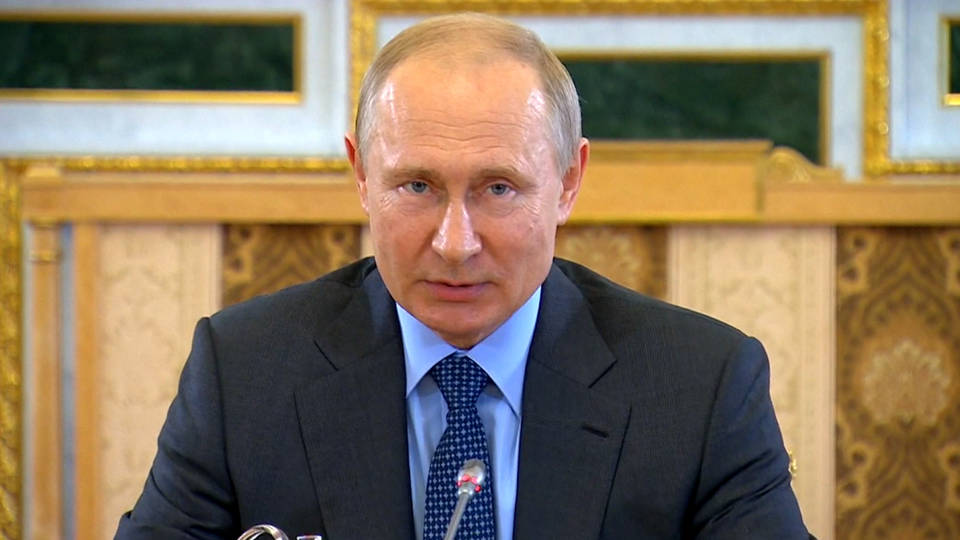
Above all, the portrayal of Putin as a tsar, whose power is absolutely unchallenged in the Kremlin, is a simplification used to convey to the 24-hour infotainment audience the exceptional concentration of power in the hands of the Russian President.
Nonetheless, continually re-proposing such a simplified image without methodological adjustments has over time led to the crystallization of deforming lenses in analyzing Russia’s choices, ineffective in fully grasping their content and predicting their timing.[1]
This simple idea—easy to use for neophytes in Russian affairs—of a political framework focused on the figure of the President alone, prevents analysts from depicting the complexities of a political system that is rather difficult to decipher. And so is the institutional background (far from neutral) that accompanies it, the product of anomalous constitutionalization over the last two centuries, unparalleled in Europe.[2]
A second deforming lens leads to the obsessive focus on Vladimir Putin’s personal affairs, even on his physical and/or mental health, so much so that numerous works have gone into hypothesizing on his possible illnesses (serious, sometimes terminal) in a bid to find the causal link to the Kremlin’s decision-making strategies.
These approaches have been reinforced over the course of two decades of Putin’s rule but, despite their longevity, they have done little to help understand (not justify) Moscow’s present and future moves. In the West, they have led to the widespread belief—long outdated in the social sciences—that a country’s political course depends on one man and thus to a disregard of the remaining dynamics within Russia, creating an important information gap, to the detriment of the ability to keep an up-to-date mapping of institutional power.
The conflict in Ukraine has helped revive these basic interpretations with new vigor to such an extent that they have become pillars of the powerful and united European opposition to the war since the very first days of the Russian invasion.
Abundantly used by the media in the first conflict of the “social era,” they have also spread to professional and academic circles that are experiencing a chronic lack of Western expertise on the post-Soviet space. This is the result of the drastic decrease in investment in research studying the political and institutional aspects of Russia during the 1990s, following a dramatic decline in its geo-political importance.
OPTICAL ILLUSION
Today, alongside continuous daily reports from the Ukrainian frontlines, dramatic but failing to provide an overall picture, these deforming interpretative lenses have corroborated two beliefs, predominant in Western mass media:
a) the idea of Putin being solely responsible for the decision to unleash the war in Ukraine—and consequently for chartering its course;
b) the conclusion (which follows from point a) that Putin’s exit from the political scene is the shortest—if not the only—way to stop the hostilities.
These two premises have inspired multiple analyses and commentaries.
One predicted Putin’s exit due to the deterioration of severe illnesses (neurological and oncological) he is allegedly afflicted with; the other one openly hoped for the Russian President’s ousting, ideally at the initiative of the oligarchs angered by the harshness of the Western sanctions imposed after the start of hostilities in Ukraine at the end of February 2022.
Simplifications aside, these interpretations succeeded in immediately rallying Western public opinion, shocked by the outbreak of a real war in the heart Europe.
However, as the situation unfolded, these arguments lost relevance in the face of outcomes that contradicted the numerous predictions made in the first days of the invasion. These ranged from the duration of the conflict, which has become a marathon of attrition instead of the expected blitzkrieg, to the strengthening of the ruble despite initial projections of Russia’s default by mid-March 2022, to Moscow’s extra-Western diplomatic activism (China, India, Africa, the Middle East) despite assertions that Russia has been isolated from the rest of the world, to the absence of substantial internal opposition forces—both institutional and popular—capable of removing Putin from power (let alone the oligarchs, with their fortunes depending on the Kremlin’s decisions rather than the other way round).
In other words, the unfolding scenario lays bare the shortcomings of the vision based on the Putin=tsar equation and the consequent assumption that the imminent replacement of the Russian President by hook or crook is a guarantee of regime change preferred by the West. Hence the need to make more articulate assumptions about the actors in the Russian decision-making process.[3]
TURNOVER OF ELITES
In 2017, we argued why in a country with such resources, interests, ambitions, institutional framework and state apparatus as Russia, “the specific weight of an empire is far greater than any emperor (or tsar) coming to command it.”[4]
This is not to deny the exceptional importance of the President in Russia and in particular the figure of Putin (nor is it to reduce the weight of his political responsibilities), but rather to put forward interpretations that complement, rather than contradict, the aforementioned basic consideration, giving it greater depth.
A historical tradition of sudden internal changes within the Kremlin, which the West took note of only after they happened, unable to predict their timing and outcome, would suggest a more systematic use of social science theories—and those concerning elite relations—in deciphering Moscow’s decision-making. They should be applied first and foremost to the political-institutional context in order to reconstruct the dynamics between the groups that animate the country’s mammoth civil service, of which Putin is the apex but also the expression, synthesis and point of coexistence.
Rather than in the Russian leader’s psychological profile, it is in the evolution of the Kremlin’s internal political balances that the origin of the Kremlin’s surprising choice to invade Ukraine with old-fashioned direct military action, more in keeping with the 19th than the 21st century tradition, should be sought.
In this regard, an earlier theory of ours, which ideally divided the first fifteen years of the Putin era into three phases, according to the civil service groups that flanked the Russian president, should be renewed and updated in accordance with the current events. These are the Intelligence, the Jurists, and the Diplomats.[5]
Although quite distinct from each other, these three elites did not clash but rather worked in synergy, alternating in the leadership role of the Executive, depending on the objectives and priorities of the moment.
Granted that these are indicative periods, the first phase encompasses a flexible time span from Putin’s inauguration (December 31, 1999) until Russia’s presidency of the G8 in 2006.
At the beginning of the millennium, Russia was a country that had come out hard from the dark decade of the 1990s: socially in tatters, with a collapsing public-economic sector, launched like a trapeze artist without a safety net into liberalism without theoretical or practical brakes, with catastrophic results.
The elite called upon to take charge of this complex situation came from the intelligence services, already the undisputed vanguard of the Russian civil service since Soviet times. The oligarchs, who enjoyed political dominance in the 1990s, played the decisive role in entrusting them with the reins of government. For the most part, they had become disinterested in staying actively involved in politics and sought, instead, to entrust running the country’s political institutions to their own righthand agents. Chosen precisely because of their reliability in the public sector, the intelligence services, guided by a primatus politicae unknown to the oligarchs, began to autonomize themselves from the latter and marginalize them, starting with the choice of government priorities.
Their main objective was to secure the “Russian style” of governance, in reaction to the dominance of neoliberal economists who had brought the country one step closer to collapse and sold off its immense resources to foreign entities.
In the following five years, intelligence remained a decisive factor, but fell back into formal roles more in keeping with its tradition, leaving the stage to the classical top echelons of the civil service, best represented by jurists, due to the traditional basic training common among PA managers. It was up to them to implement a new priority task of facilitating the resurgence of a pro-government lower-middle class, largely coinciding with the huge Russian state and para-state apparatus, in the belief that it would have a conservative impact on the status quo, thus strengthening the establishment.
As the center of gravity of the political system shifted towards a type of legitimation that was linked to real popular consensus and concentrated in the public sector, the iron rule of direct proportionality between power and money, which in the 1990s had underpinned the unchallenged dominance of (certain groups of) oligarchs, had been overcome. In fact, they were increasingly marginalized from policymaking, in a trend that the West struggled to understand, as speculation that they would be the protagonists of a coup d’état that would remove Putin from power continued to resurface from time to time.
With these two phases over and government objectives achieved on the domestic front, roughly with the end of Dmitry Medvedev’s presidential term in 2012, the outlook changed to refocus on the international front. With foreign policy strongly downsized after the end of bipolarity, which had relegated Moscow to secondary roles in the major negotiations of the time (above all, the Dayton Peace Accords in 1995), the Kremlin sought to regain the status of super-power, lost after the collapse of the USSR.
This explains why the third phase of government action focused on diplomats, particularly those trained at MGIMO University and disciples of Yevgeny Primakov, a figure of absolute reverence in Russian foreign policy circles, and a strong proponent of a doctrine designed to contain the U.S. through Moscow’s multilateral activism. Called upon to play key roles even outside the Ministry of Foreign Affairs, the diplomats give a new twist to Russian protagonism in areas of geo-political interest as well as to the instruments used for this purpose. They work to create and maintain an intense network of privileged bilateral relations with international players, even opposing ones, from Saudi Arabia to Iran to Turkey, via Israel and Hamas, but above all, from India to China.
Driven by its ambition to regain the role of global actor it once played in the days of bipolarity, Moscow shows interest in macro-areas—such as the former Soviet space—that were, in fact, snubbed during Boris Yeltsin’s presidency and characterized by post-ideological rejection of any elements even remotely reminiscent of the communist period.
In foreign policy, the new course manifested itself most vividly in the pursuit of objectives by using diplomatic instruments rather than military action, even when a symmetrical response would be predictable and consonant with Russian tradition. It was in this context that the decision had matured to channel huge resources into international aid policies, with Moscow definitively leaving behind the subordinate role of Beneficiary to become one of the main Re-emerging Donors of the period.
Russia’s specificity lies in interpreting this role by reconnecting to the Soviet tradition of “catch-all” aid: not limited only to cooperation and/or humanitarian interventions but extended to any sphere or resource of state competence, including interventions in the fields of defense, energy, technology, and up to direct financial support.
A clear example of this modus operandi in the field of international aid is Russia’s recent assistance to third countries during the pandemic, in particular its support for their immunization campaigns. The Russian vaccine, the first of the kind announced on a global scale (August 2020), is characterized by a purely public matrix that allows the state to control its entire production and distribution cycle, making it a geo-political instrument in the pursuit of its foreign policy objectives.
Similar to what has been seen in other fields such as sports (Olympic Games in Sochi, FIFA World Cup) or technology (cooperation in international missions in space and the Arctic), Russian aid seeks to pursue soft power politics, which alongside the aims of classical power politics creates a new image of an open and engaging country, as opposed to the harsh and military one of the Soviet period.
From this perspective, the Kremlin’s turn towards Ukraine represents a striking departure from the choices made in previous years. It is so incongruent with the previous policy that it cannot reflect the preferences of Russia’s diplomats. Even if they are opposed to war, observers have nevertheless harbored excessive hopes that this might lead to active opposition, which is rarely the outcome of disagreement in Russia’s rigidly vertical state culture.
Updating the theory of the turnover of Kremlin elites, the decision to use the military instrument to defend national interests in foreign policy is to be placed in the fourth phase, which began even before the Ukraine crisis and was marked by the growing influence of the military. A traditional element of national identity, the military (Armiya) is an operational manifestation of the defense sector, unlike the U.S. military, which is strictly public and acts as the driving force behind research in a variety of fields (such as, referring to pandemics, bacteriological studies) that are private in the West and have civil applications.
Having begun its rise during the conflict in the Caucasus in 2008, continued it with the spectacular annexation of Crimea in 2014 (through an intelligence operation rather than combat action), and solidified it in Syria, with results being far from predictable, however, the military has repeatedly demanded a greater political role in the last decade. In Russian military culture, this has never propelled anyone directly to the top of the government (as in Latin American military regimes), but rather reflected the ability to show one’s worth in combat, be it a classic war scenario or a hybrid intervention such as the aid campaign in Italy “From Russia with Love,” during the COVID-19 outbreak.
When the Kremlin’s initial plan to implement a “blitz-without-war” in Ukraine on the Crimean model, with a co-optation of the leadership and nerve centers of the Ukrainian Armed Forces and regime change in Kiev evaporated, an alternative plan was undertaken that envisages a full-scale long-term military action with the use of professional army units on the Syrian model. However, the point is that once these sectors of the army are mobilized, it becomes difficult to limit the scope of their advance or call them back in the name of negotiations, precisely because of the enhanced role of the military in the Kremlin.
CONCLUSIONS
This can be summed up in three observations from the recent past, which form the basis for several predictions for the immediate future:
On the past:
-The Russian political system cannot simply be reduced to the role played by Vladimir Putin, albeit decisive and powerful. Although he is at the top of the decision-making pyramid, his power is nevertheless mediated by a huge public and para-state sector and internal interest groups, whose influence must be balanced and managed.
-After the Intelligence Service, the classic Civil Service, and Diplomacy, the defense sector has taken central stage in the Kremlin’s decision-making process.
-Moscow’s choice to switch from the carrot (aid) to the stick (war) in pursuing its geopolitical goals should be understood in this context.
On future scenarios:
-Possible escalation of the conflict in Ukraine in intensity and duration precisely because it is managed by the Kremlin’s military rather than political logic.
-Moscow’s recourse to military action to resolve its disputes could become a recurring instrument of its foreign policy.
-A change of leader in the Kremlin (highly unlikely to come at the hands of the oligarchs) will not make the leadership that planned and supported the Ukrainian invasion fade away. Moreover, it would be difficult to come to terms with any post-Putin leadership because we know very little about the actors operating backstage.