Ukrainian special services planned an attack on Russian President Vladimir Putin and Russian Defense Minister Andrei Belousov at a parade in St. Petersburg on Navy Day. This was stated by Russian Deputy Foreign Minister Sergei Ryabkov on the Rossiya-1 TV channel.
He noted that several days before the parade, Belousov had a telephone conversation with Pentagon chief Lloyd Austin, in which he urged his American counterpart to persuade Kiev to abandon its intentions. According to Ryabkov, Austin was “extremely surprised” by the information, but took it seriously.
“Moscow and Washington avoided an escalatory spiral,” Ryabkov emphasized.
Earlier, the official representative of the Russian Foreign Ministry , Maria Zakharova, pointed out the role of Great Britain in the Ukrainian assassination attempt on Putin. “There is no doubt that the assassination attempt on Putin, which [the head of the Main Intelligence Directorate (GUR) of the Ukrainian Ministry of Defense, Kirill] Budanov (included in the list of terrorists and extremists of Rosfinmonitoring ) spoke about, was planned with the participation of the Anglo-Saxon masters of Kiev,” she said.
The conversation between Belousov and Austin took place on July 12. As the American newspaper The New York Times (NYT) later wrote, citing sources, Belousov called Pentagon chief Austin about a secret Ukrainian operation.
Russia and the West exchanged 24 prisoners [last] Thursday in the largest such swap since the Old Cold War. The Wall Street Journal (WSJ) and CNN published detailed reports about the diplomacy that led up to this deal, which included the WSJ’s Evan Gershkovich and Russia’s Vadim Krasikov as the highest-profile exchanges. The New York Times also shared brief bios about the others who were swapped. Here are the top five takeaways from this historic deal that most observers might have missed:
———-
1. Germany Was Responsible For Holding Everything Up
Russia conveyed that it won’t agree to any swap without the release of Vadim Krasikov, who was jailed in Germany for assassinating a Chechen terrorist that President Putin told Tucker Carlson had driven his car over the heads of Russian prisoners, among his other crimes. Germany balked for a while though due to the “morality” of releasing a convicted killer that’s serving a life sentence, but the US convinced it to go along with this, especially since Russia and Belarus agreed to release jailed Germans as part of the deal.
2. Poland, Slovenia, and Norway Chipped In But Got Nothing In Return
A total of four Russians who were imprisoned in the aforementioned countries were also released even though their governments didn’t get anything in return. This suggests a concession on the West’s part, albeit one that enabled Russia to make its own such concession that’ll be touched upon in the next point for turning this deal into the largest one in decades. Those three Western countries are presenting this as an “act of solidarity”, but it’s really proof of the US’ hegemonic power over them.
3. A Russian “Government-In-Exile” Will Likely Soon Take Shape
Eight members of Russia’s non-systemic “opposition” were also sent to the West as part of this deal. They’ll predictably soon set up a “government-in-exile”, which might generate lots of media attention but fail to have any influence inside of Russia. Their inclusion in this swap made it appear more “moral” in Germany’s eyes and thus helped convince it to agree. It can also be understood as a reciprocal concession for freeing the four Russians mentioned above from Poland, Slovenia, and Norway.
4. Turkiye’s Role In Facilitating This Swap Positions It To Host The Next Round Of Peace Talks
For as noble as China, India, and Hungary’s efforts are in trying to mediate a resolution to the Ukrainian Conflict, Turkiye has a much better chance of doing so than they do. Its role in facilitating this latest swap builds upon the earlier ones that it facilitated, which show that Russia and the West still regard it as a neutral middleman. This suggests that they’d agree to it hosting the next round peace talks along the lines of spring 2022’s ultimately sabotaged ones once all parties are ready instead of looking elsewhere.
5. Kamala Will Try Politicizing This Swap To Discredit Trump
Trump claimed earlier this spring that only he could secure Gershkovich’s release and that he’d get Putin to agree to this as a favor without receiving anything in return, yet the this week’s historic swap proved him wrong. In response, Trump suggested that the deal was lopsided despite the West getting twice as many people as Russia did, and he also speculated that cash was paid for them too. Kamala will certainly try politicizing this swap to discredit Trump, but it’s unclear whether voters will care all that much.
———-
Altogether, each side in this swap got what they wanted, and it represents a rare example of successful New Cold War diplomacy. Reflecting on the top five takeaways, the last two are the most significant, but neither can be taken for granted with respect to Turkiye hosting the next round of peace talks (let alone anytime soon) and Kamala’s politicization of this swap having any effect on the presidential race. Even so, they’re what observers should monitor to see whether anything meaningful comes of them.
The story: Russian security chief Sergei Shoigu has visited Tehran for talks with top officials, raising eyebrows given the growing tensions between Iran and Israel. Already, reports charge that Moscow has begun delivering air defense equipment and advanced radars allegedly requested by the Islamic Republic.
The visit comes as Iran and its regional allies weigh the scale of their response to Israel’s suspected assassination of Hamas political bureau chief Ismail Haniyeh. Iran has pledged to avenge the July 31 killing of Haniyeh in Tehran as the region braces for escalation.
The Russian visit:
Shoigu, the secretary of Russia’s Security Council, landed in Tehran on Aug. 5 on what Russian media described as a “planned working visit.”
Shoigu met his Iranian counterpart Ali Akbar Ahmadian, though details of their meeting have been kept under wraps.
The Russian security chief also sat down with President Masoud Pezeshkian and separately met Mohammad Baqeri, the chief of staff of the Iranian Armed Forces.
Iranian media quoted Shoigu as saying in his meeting with Baqeri that Russia “is ready for comprehensive cooperation with Iran in the region.” On his part, the top Iranian military commander described ties as “strategic,” indicating a systemic decision to expand the partnership.
Russia was one of the first countries to condemn the killing of Haniyeh and warn of its consequences.
In connection with a UN Security Council session on the assassination, Moscow also drafted a statement to condemn Israel, but the statement was blocked by Washington.
Given Russia’s growing defense cooperation with Iran, there has been speculation about the timing of Shoigu’s visit.
Some commentators have pointed out that Ahmadian invited his Russian counterpart to visit Tehran during a phone call in May, but no date was announced.
However, observers have also noted that the timing of the trip may have been influenced by developments in the region, such as Haniyeh’s assassination and the impending Iranian response.
Notably, Shoigu’s visit came on the same day that the head of US Central Command (CENTCOM), Michael Kurilla, arrived in Israel for talks with military figures. Washington has been rushing additional forces to the region, and played a key role in helping defend Israel when Iran last attacked Israeli military bases in Apr. 2024.
Amid the dispatch of US reinforcements, rumors have been circulating on social media about an alleged uptick in Russian cargo flights landing in Iran in the past three days. However, flight trackers have only confirmed one such arrival.
Reports emerged on Aug. 7 which claimed that Iran has requested advanced military gear, including air defenses and radar equipment, and that Russia has initiated deliveries.
The Iranian posturing:
Haniyeh was killed in Tehran on July 31, just hours after attending the inauguration of President Pezeshkian.
The IRGC, which was hosting Haniyeh at a complex in northern Tehran, has said a “short-range projectile” carrying a 7 kg (15.4 lbs) warhead struck the room where the Hamas political bureau chief was staying in.
Iranian authorities continue to insist that Iran has a right to respond to Israel over the killing. Israel has not claimed the July 31 assassination.
In a meeting with foreign ambassadors to Tehran on Aug. 5, Acting Foreign Minister Ali Baqeri-Kani said Iran has a “legitimate right to take deterrent action.”
On the same day, Foreign Ministry spokesman Nasser Kanani vowed that Iran would “definitely and decisively” take action—but added that Tehran does not want to escalate tensions.
An article published on Aug. 4 in the weekly magazine Sobh-e Sadeq sought to make the case for a “severe response” against Tel Aviv, which it said would be a “wise” move.
The magazine, which is published by the Islamic Revolutionary Guard Corps (IRGC), described Haniyeh’s killing as an attack on Iranian territory and insisted that the Iranian public supports action against Israel.
The conservative-dominated state broadcaster on Aug. 4 and Aug. 5 aired vox pops in which ordinary Iranians almost unanimously said Israel should be struck. However, many argued that any action should be aimed at restoring deterrence rather than starting a war.
The context/analysis:
Long plagued by mutual distrust, relations between Iran and Russia have significantly expanded following Moscow’s invasion of Ukraine in Feb. 2022.
The bilateral partnership has especially grown in the military sphere, with Iran delivering drones which are reportedly being used in the Ukraine war. Tehran is also supporting Russian efforts to localize drone production.
Cooperation between Moscow and Tehran is additionally focused on connectivity, with the two sides pursuing development of the International North-South Transport Corridor (INSTC). The initiative seeks to connect India and Russia via Iran.
The growing Iranian-Russian cooperation has been a cause for concern in the west, leading European diplomats to call on the Islamic Republic to reverse course.
While cooperation has generally grown, many obstacles remain. For instance, Iran has so far avoided exporting ballistic missiles to Russia amid warnings from Washington. Moreover, collaboration in the energy sector has been lackluster.
In Feb. 2024, reports emerged that Iran had allegedly supplied Russia with around 400 missiles, including short-range Fateh-110 projectiles. However, those reports have reportedly been dismissed by Iran, Russia, and Ukraine.
Speculations that Russia may deliver up to two dozen Sukhoi-35 (Su-35) fighter jets and Mil Mi-28 attack helicopters to Iran have not materialized. This is even though reports emerged in Sept. 2023 that Yak-130 combat trainers were transferred to Iran amid rumors that an air base may have been prepared for the arrival of Su-35s.
The finalization of a comprehensive 20-year cooperation agreement has also been lagging, with Moscow pointing the finger at Tehran. The accord would succeed the 10-year cooperation treaty signed in 2001, which has since been extended for five-year terms—most recently in 2021.
While bilateral ties blossomed under late conservative president Ebrahim Raisi (2021-24), incumbent Reformist President Pezeshkian has signaled a willingness to engage with the west. Such a shift by Tehran, if it were to be reciprocated by western capitals, may be problematic for Moscow and could play a part in Shoigu’s engagement.
It remains unclear whether the precise date of Shoigu’s trip to Iran was set prior to Haniyeh’s killing. However, such a trip in the current climate may be seen as either Russian support for Iran vis-à-vis Israel, or an attempt to manage tensions between the two regional arch-foes.
What will likely fuel the view of Russia siding with Iran is what analysts see as the cooling of relations between Moscow and Tel Aviv over the past year, in view of Russia’s invasion of Ukraine and Israel’s war on Gaza.
Shoigu, a former defense minister who has a good working relationship with Baqeri, notably oversees Russia’s Federal Service for Military-Technical Cooperation which handles arms exports. Against this backdrop, it remains to be seen whether the bilateral engagement will produce dividends for Tehran in the military field.
Despite a possible shift by Moscow, the broader disparities at play are significant. Should a direct conflict between Iran and Israel emerge, observers argue that potential Russian support for Tehran is unlikely to match US backing for Tel Aviv.
The future:
The vox pops on Iranian television may be an attempt by the authorities to gauge the public’s views, and scale the response to Israel accordingly. The Islamic Republic most recently struck Israel in Apr. 2024, when the IRGC launched an unprecedented attack over the suspected Israeli bombing of Iranian diplomatic premises in Syria.
Operation ‘True Promise’, which involved the firing of hundreds of drones and missiles, marked the first attack on Israel launched from Iranian territory.
Should Iran press on with a strike on Israel, it could be bigger than ‘True Promise’. Moreover, it may well include coordinated action by the Islamic Republic’s regional allies.
While military relations between Iran and Russia are growing, Russia will think twice before overtly backing Tehran against Tel Aviv. If cooperation is to expand, it will in all likelihood be limited to defensive capabilities, including air defenses.
Israel and Russia have seen their ties dwindle in the shadow of the Ukraine war. However, they have a so-called deconfliction mechanism in Syria to protect.
The deconfliction mechanism has prevented Israeli and Russian forces from clashing in Syria. If Moscow were to aid Tehran, it could impact Russian arrangements with Tel Aviv.
Even if Russia rushes air defense systems to Iran, their reliability and capabilities are questionable. Moreover, Moscow could very well be supplying spare parts. Notably, in Apr. 2024, Israel reportedly took out a radar site associated with a Russian-built S-300 missile defense battery covering a key nuclear site. Iran denied the incident.
Amwaj.media is based in the UK but our bustling newsroom is chiefly made up of journalists and analysts from across the region. Founded in January 2021, Amwaj.media is independently funded and operates as a service provider. The Editor is Mr. Mohammad Ali Shabani. We prioritize the safety and security of our team while considering our output as the result of a team effort. We have therefore chosen to anonymize most of our team’s own output.
The Moscow Metro subway system continues to grow rapidly. In 2023 alone, 14 new stations were opened and, in the last five years, more than 40! Each has its own, unique design. And Muscovites voted for the most successful ones.
1. ‘Elektrozavodskaya’
stroi.mos.ru
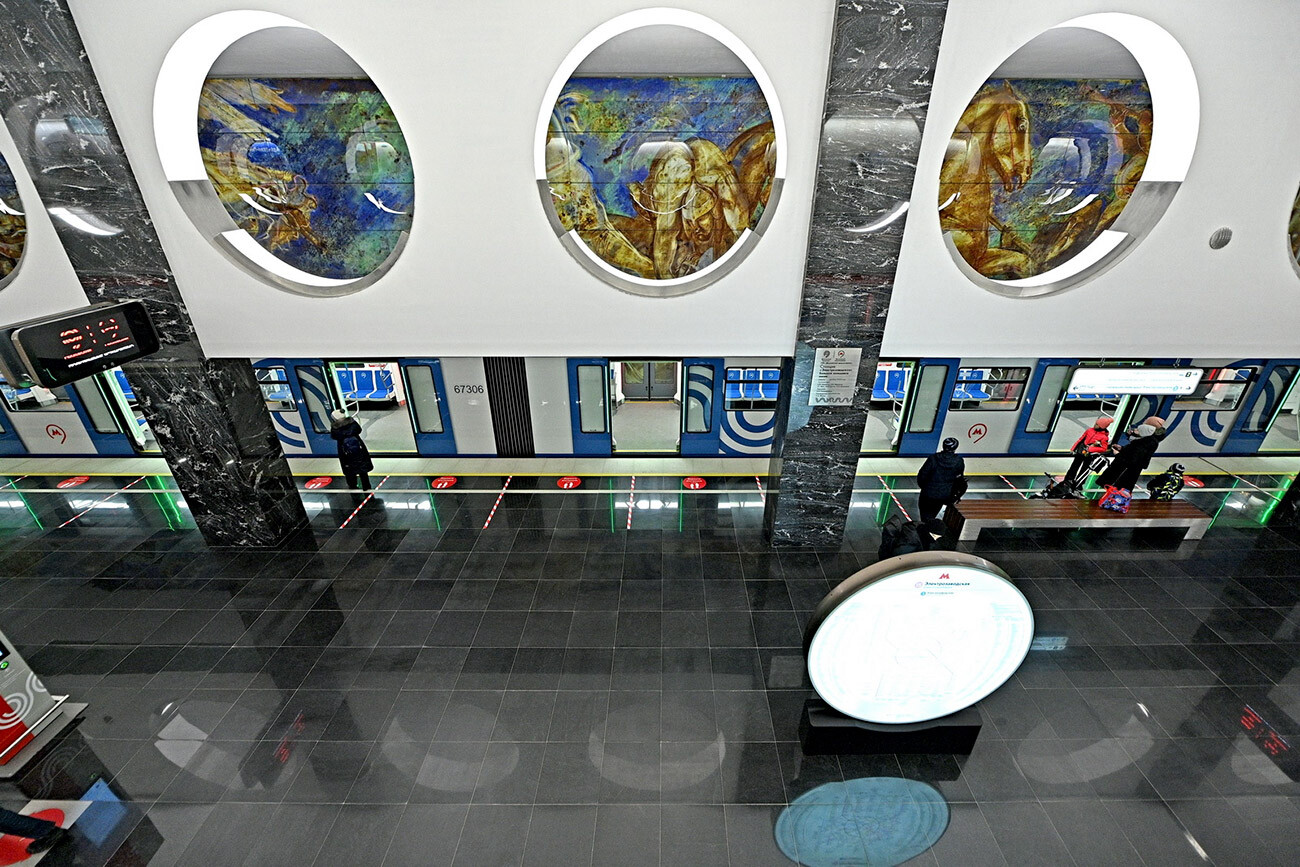
This ‘Big Circle Line’ station opened in 2020. You can transfer from it to the station of the same name on the ‘blue’ Arbatsko-Pokrovskaya line. On one of its walls is a huge glass panel called ‘Battle of Heroes’ depicting a historical plot and the image of the defender of Old Russia. An interesting view of the image opens from the large round openings of the pedestrian gallery.
2. ‘Michurinsky Prospekt’
Sergei Kiselev/Moskva Agency
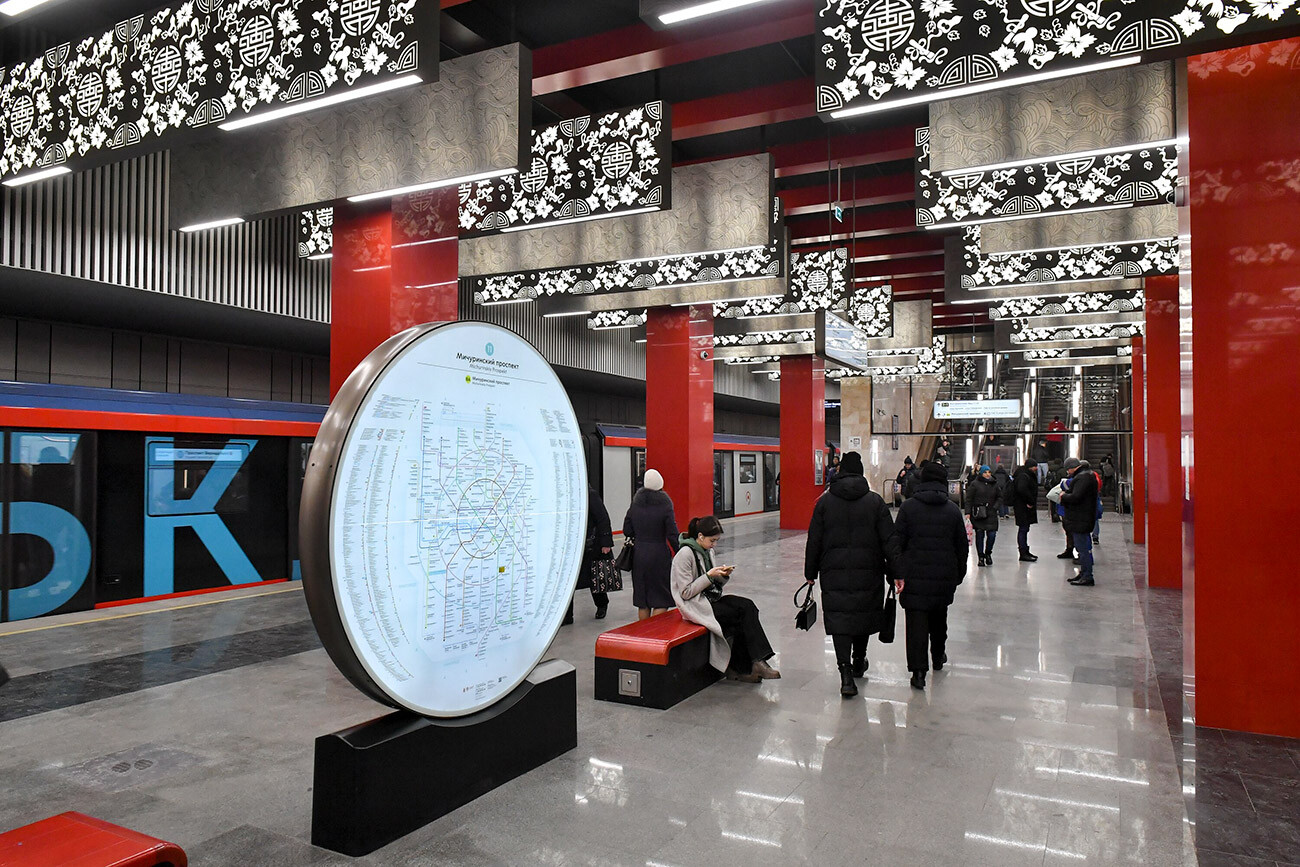
This ‘Big Circle Line’ station was opened in 2021. You can transfer from it to the station of the same name on the ‘yellow’ Solntsevskaya line, opened earlier, in 2018. The main feature of the design of this station are the red columns and ceiling panels with LED lighting. Some of them depict Chinese ornaments symbolizing the “friendship of nations”.
3. ‘Nagatinsky Zaton’
Sergei Kiselev/Moskva Agency
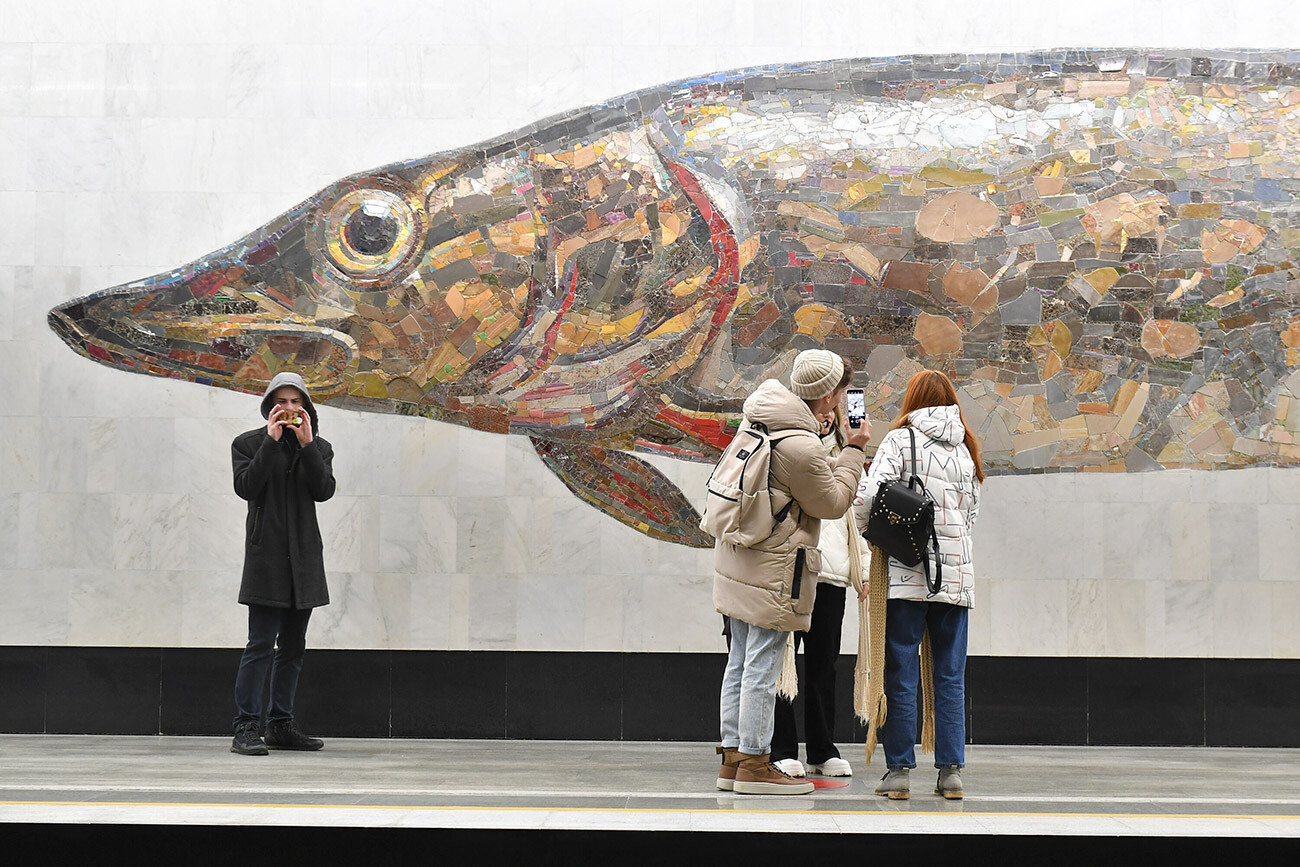
This ‘Big Circle Line’ station opened in 2023. When going outside, passengers get a picturesque view of the Moskva River. Therefore, the station was decorated with huge mosaic panels depicting fish.
4. ‘Filatov Lug’
stroi.mos.ru
This station on the ‘red’ Sokolnicheskaya line was opened in 2019. It’s an above ground station and its large panoramic windows let in daylight all year round. The designers were inspired by the stations of the 19th century: Waterloo in London, Pennsylvania Station in New York and Kievsky railway station in Moscow. Hence the abundance of glass and high vaulted ceilings.
5. ‘Airport Vnukovo’
stroi.mos.ru
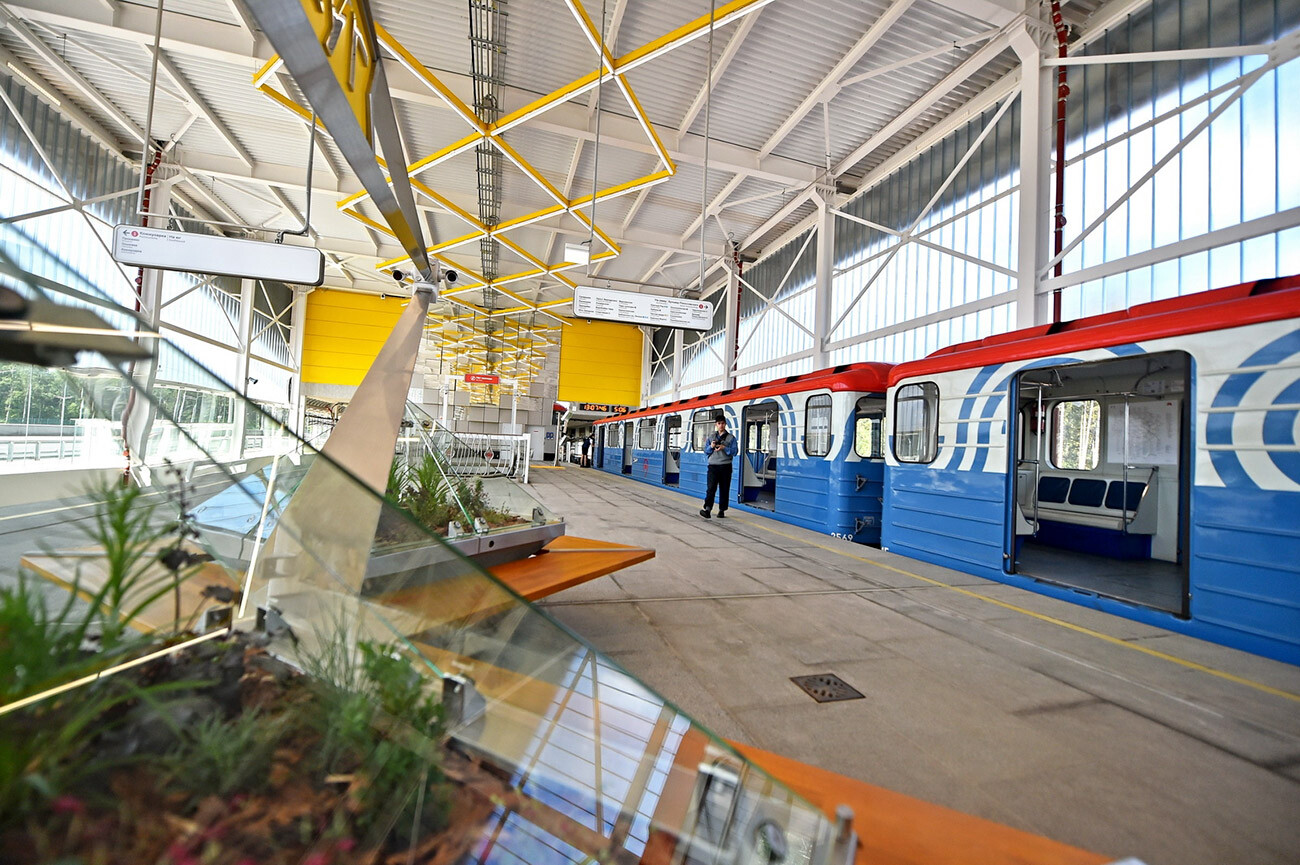
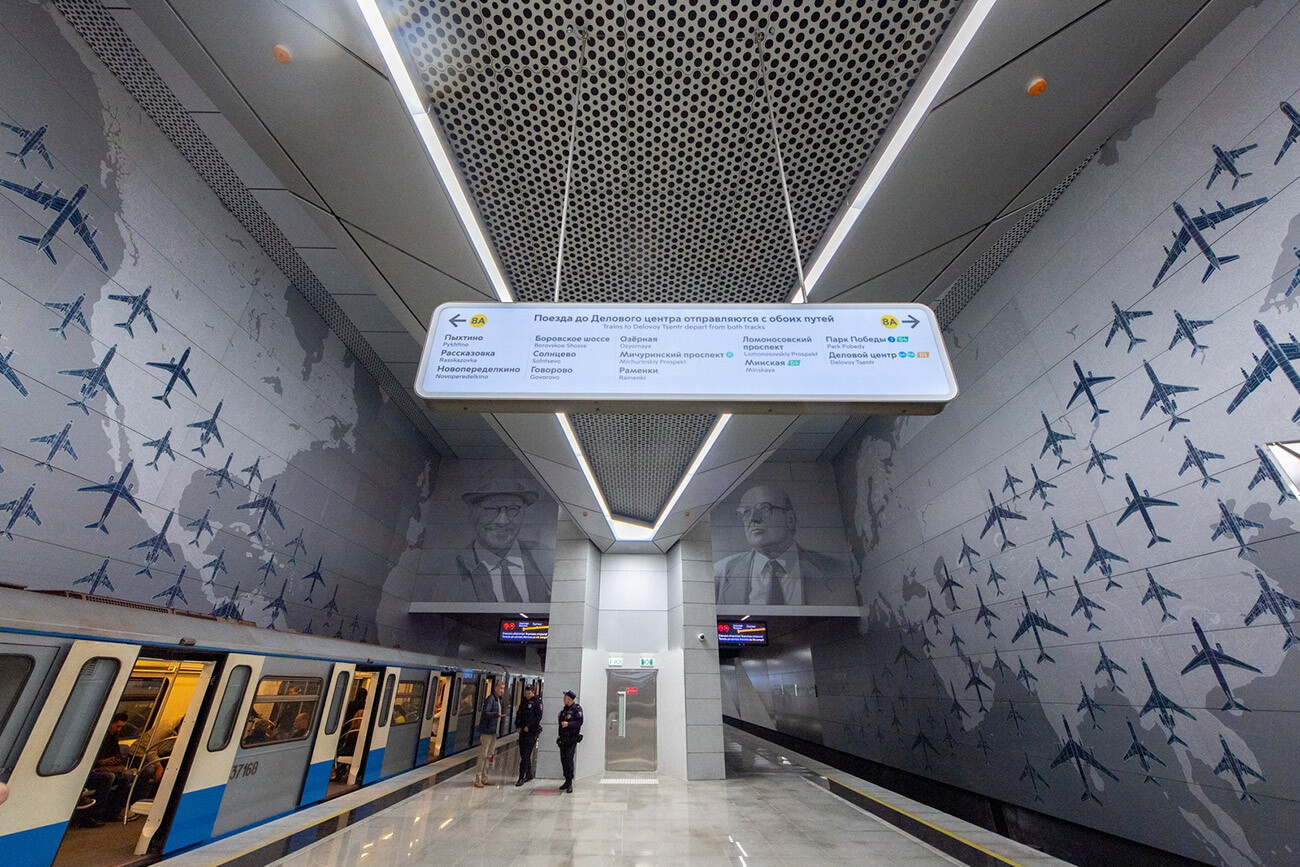
This station on the ‘yellow’ Solntsevskaya line was opened in 2023. It is absolutely unique not only for Moscow, but also for the whole of Russia, as it is the first (and, so far, the only) subway station that leads directly to an airport! That is why its design is reminiscent of the civilian airplanes by the Tupolev Design Bureau, which the airport is dedicated to.
Dear readers,
Our website and social media accounts are under threat of being restricted or banned, due to the current circumstances. So, to keep up with our latest content, simply do the following:
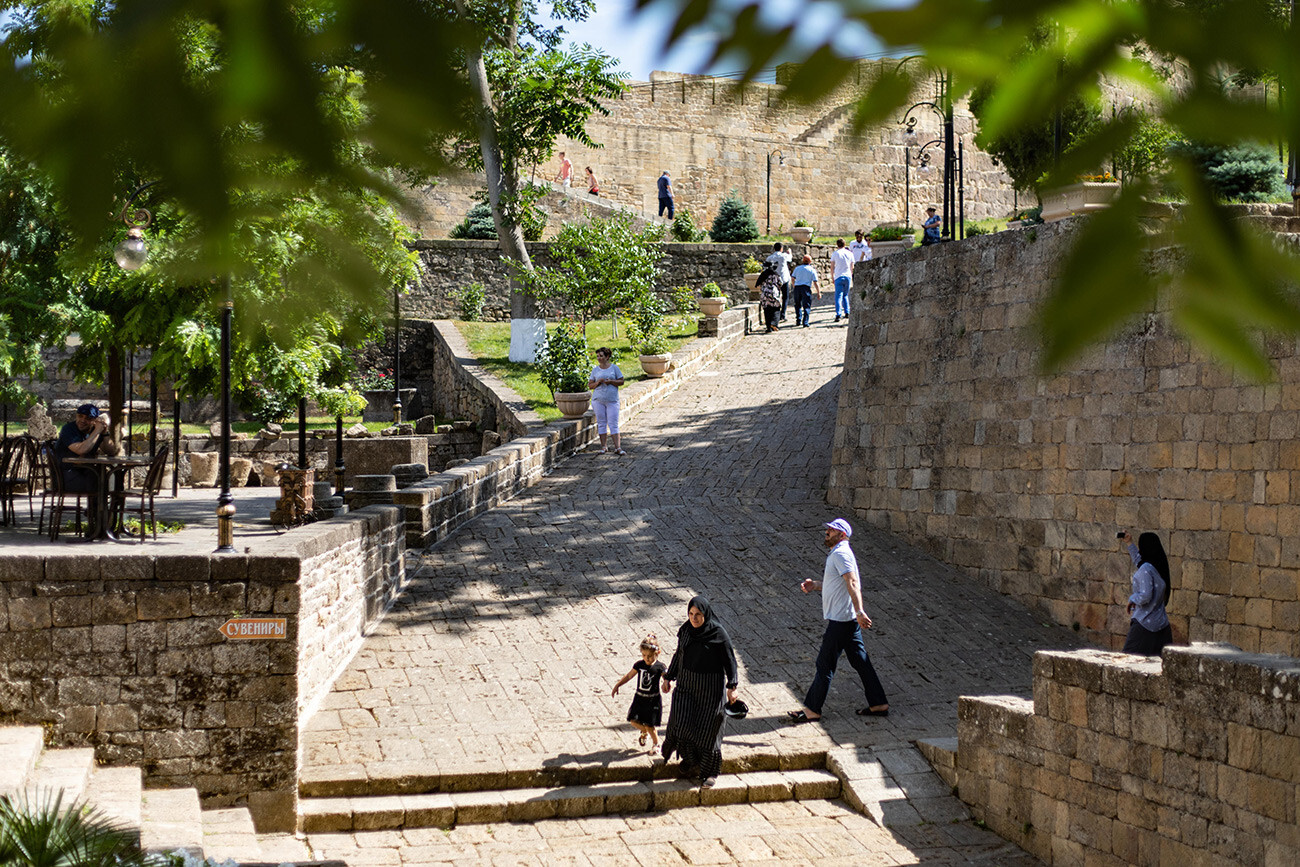
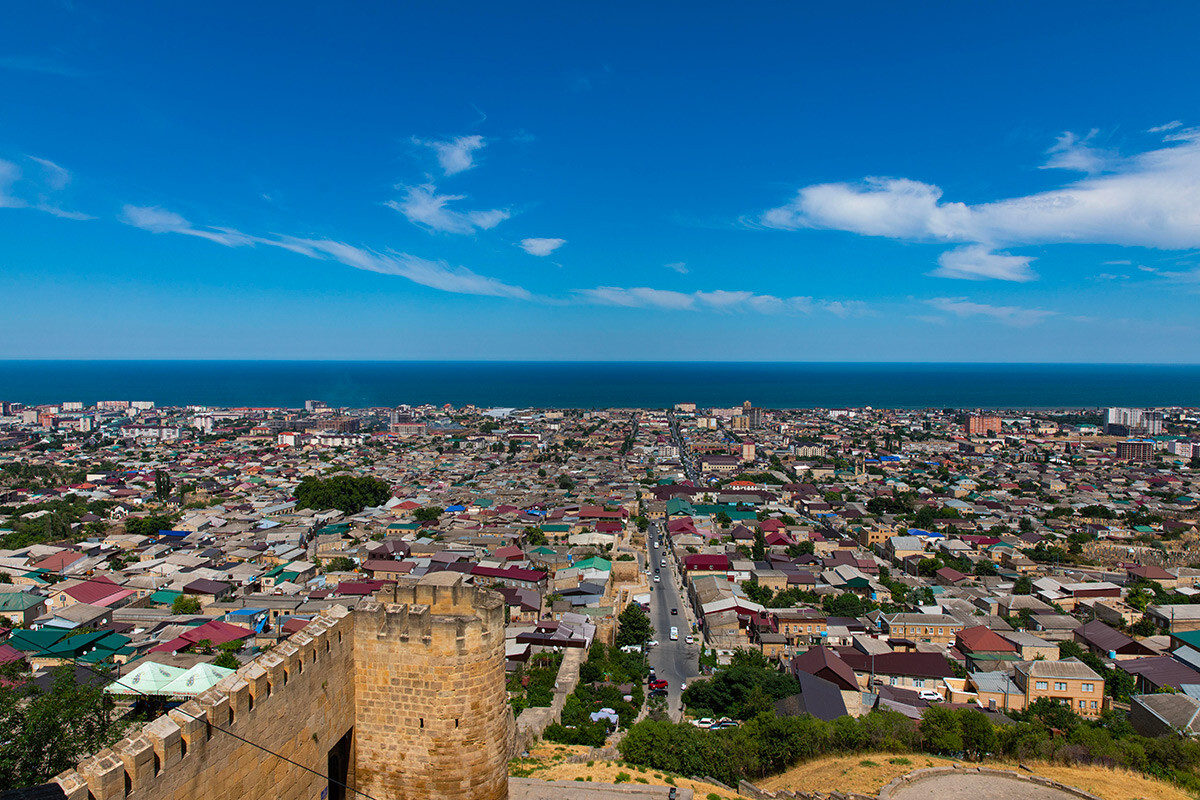
Derbent is a city in the Republic of Dagestan, where about 130,000 people live.
Serguei Fomine/Global Look Press
Serguei Fomine/Global Look Press
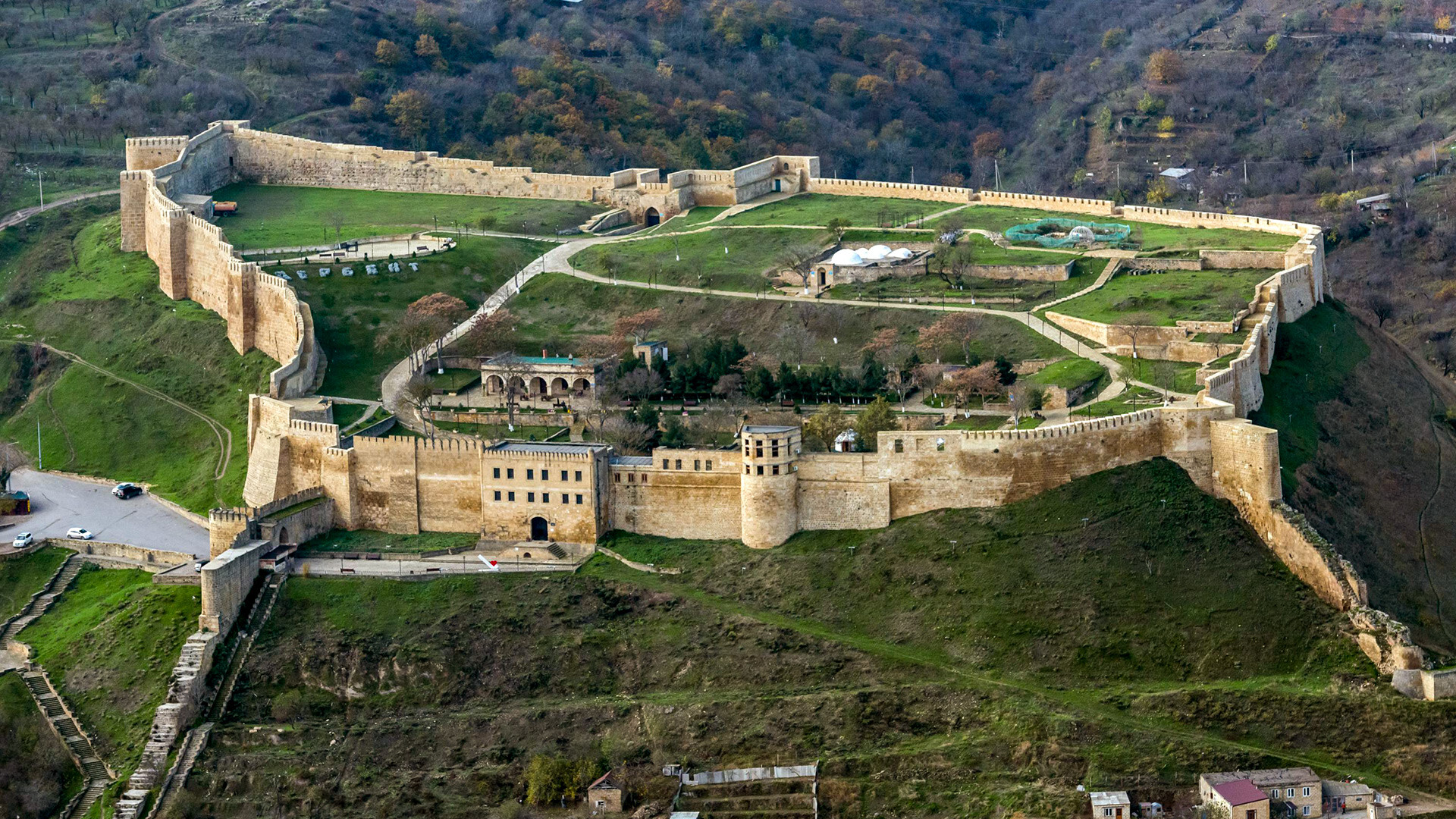
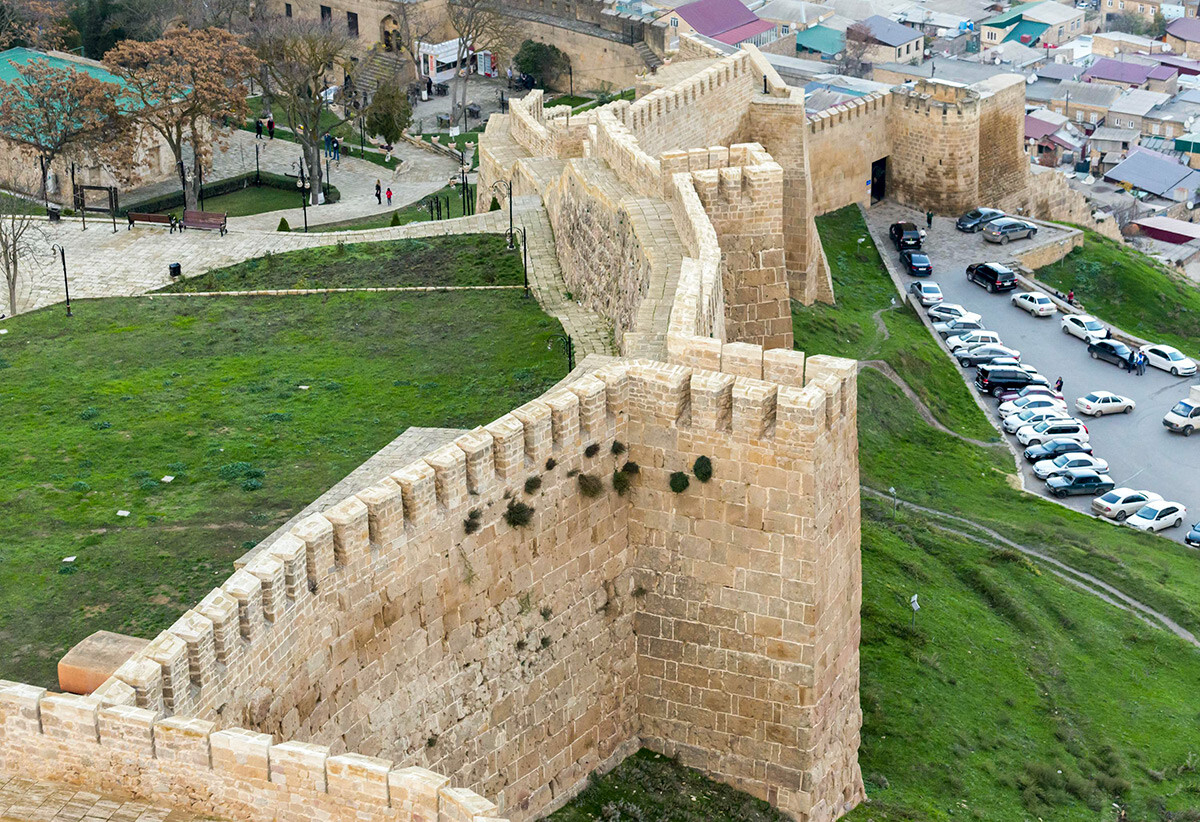
It is not only the southernmost (located on the 42nd parallel), but also one of the oldest cities in Russia. It was founded in 6th century B.C. And, in 6th century A.D., the Derbent fortess of Naryn-kala, the “solar fortress”, was built. Its walls are three meters thick and, in some places, reach 25 meters in height. It is the oldest fortress in Russia.
Legion Media
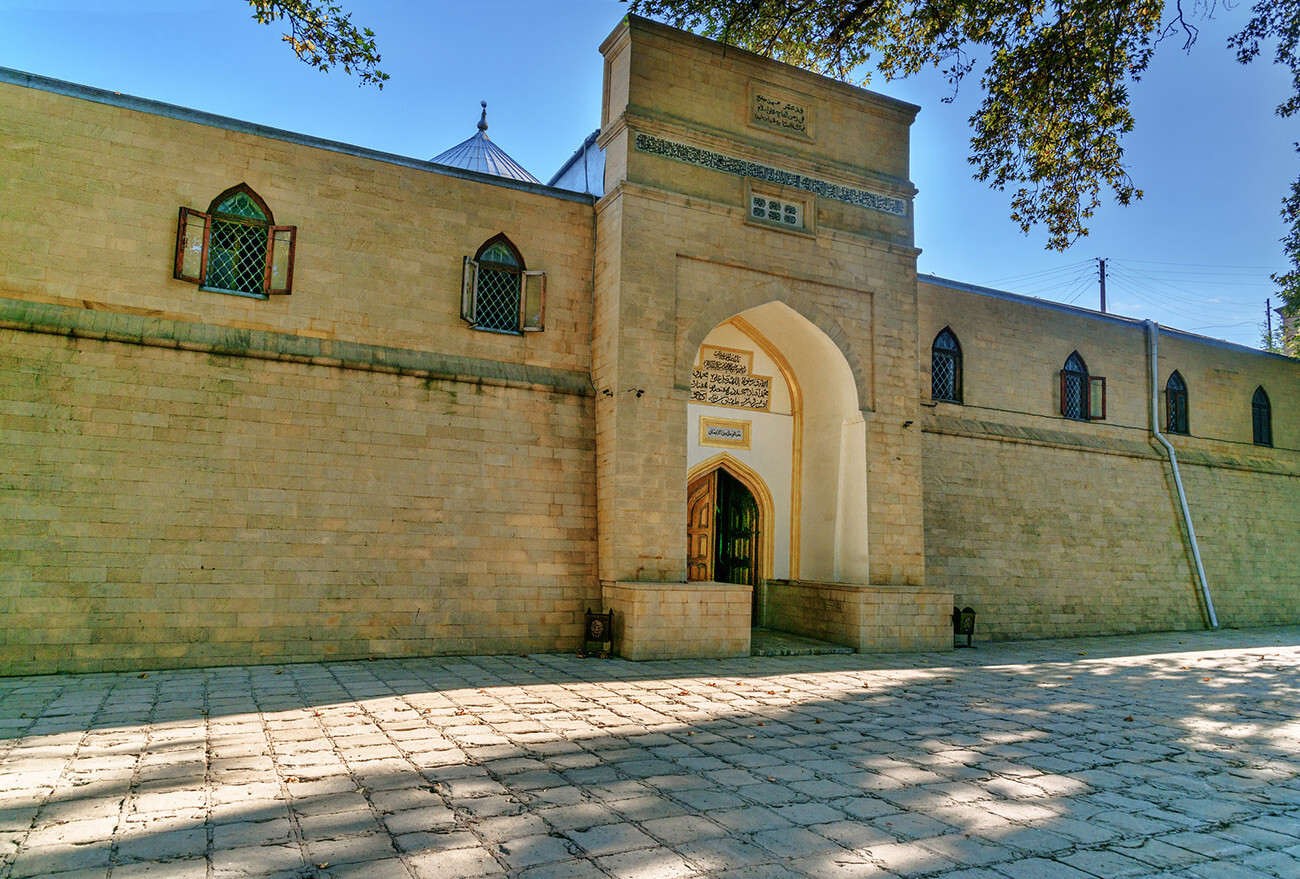
The Derbent Juma Mosque, meanwhile, is the oldest mosque not only in Russia, but also in the entire post-Soviet space. It was built in 734.
Bai Xueqi/Global Look Press
Derbent is home to dozens of ethnic peoples. Lezgins, Azerbaijanis, Tabasarans, Dargins, Kumyks, Avars and many others.
Bai Xueqi/Global Look Press
Derbent used to be dubbed the ‘Caspian Gate’. The city had a successful strategic position: the Caucasus Mountains on one side and the Caspian Sea on the other. Today, Derbent has become one of the most popular tourist destinations in the country.
Bai Xueqi/Global Look Press
Dear readers,
Our website and social media accounts are under threat of being restricted or banned, due to the current circumstances. So, to keep up with our latest content, simply do the following:
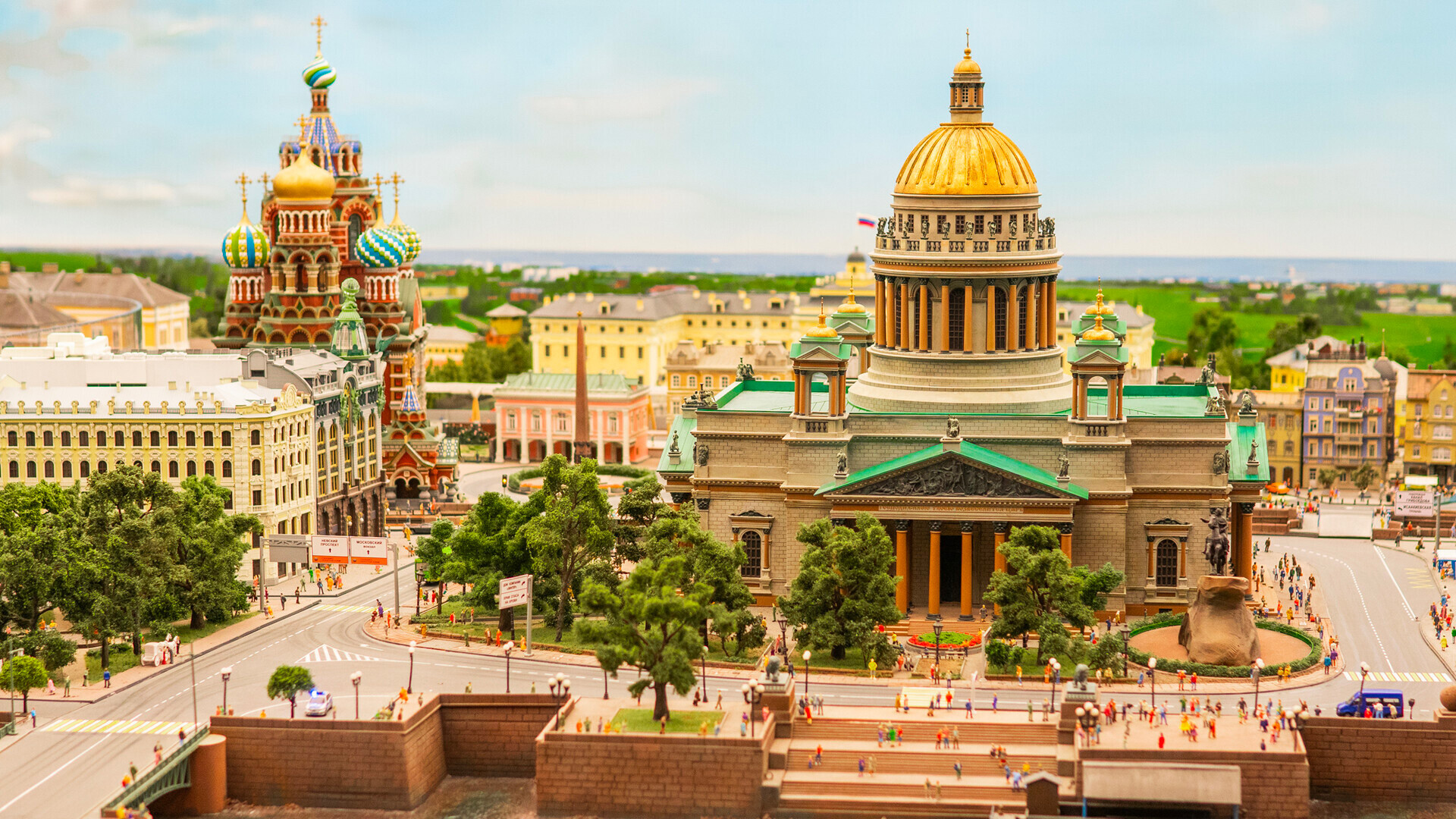
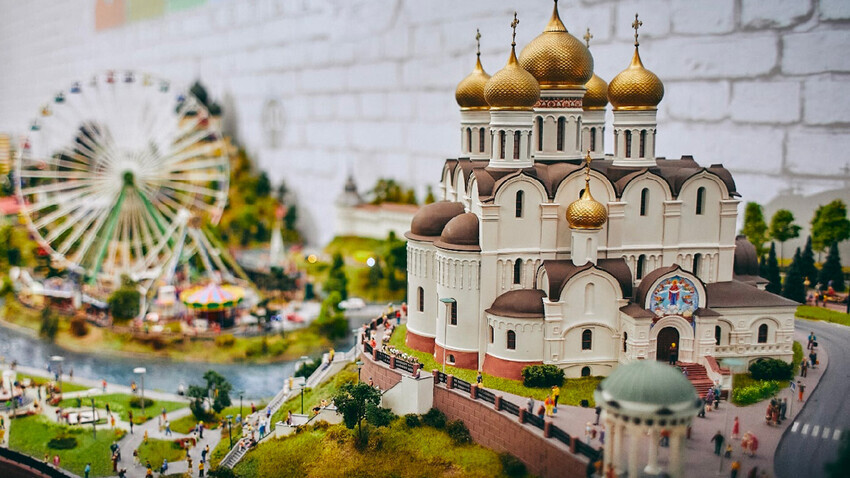
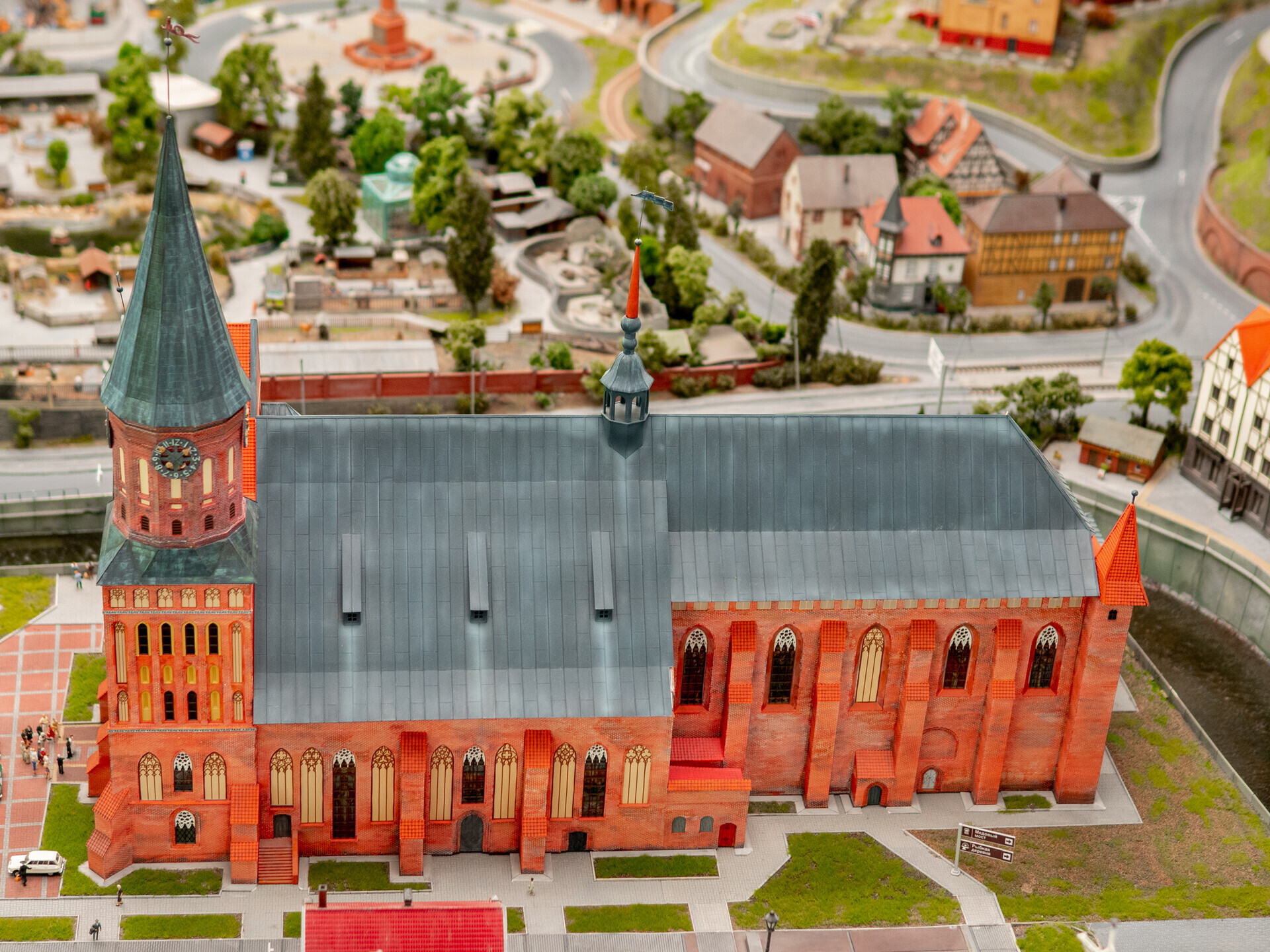
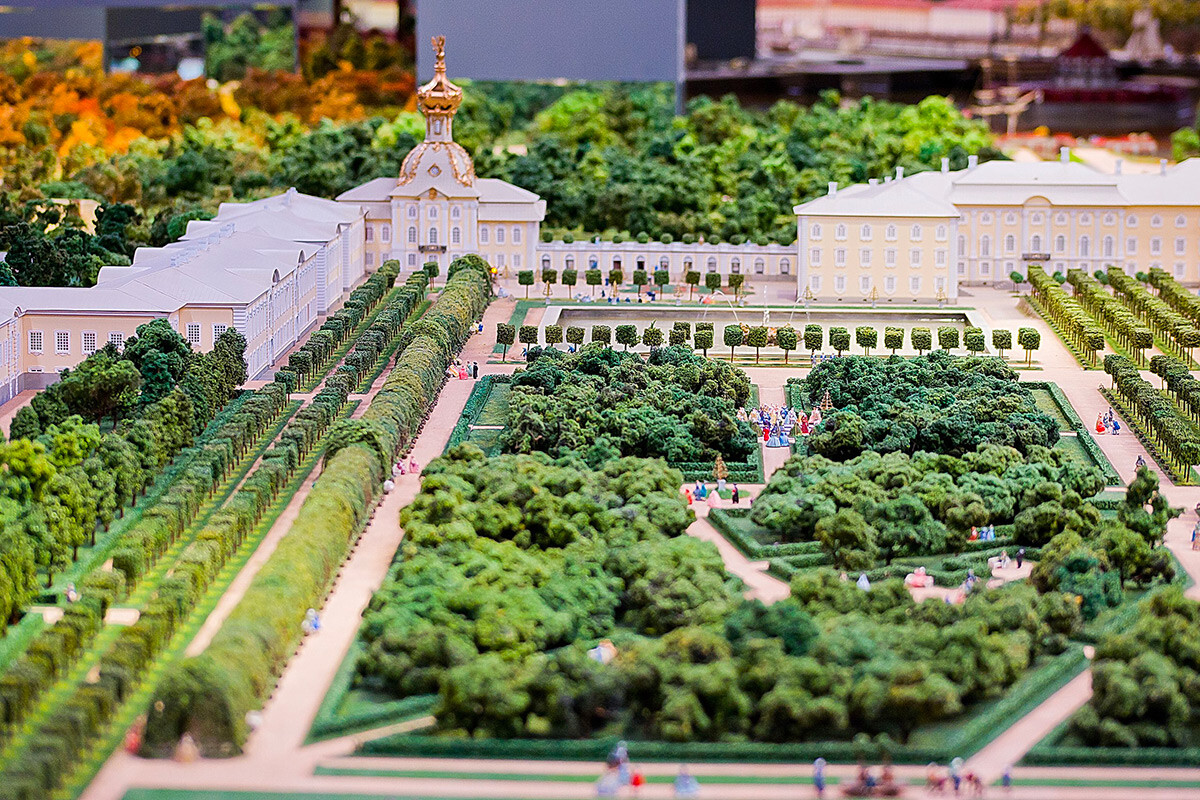
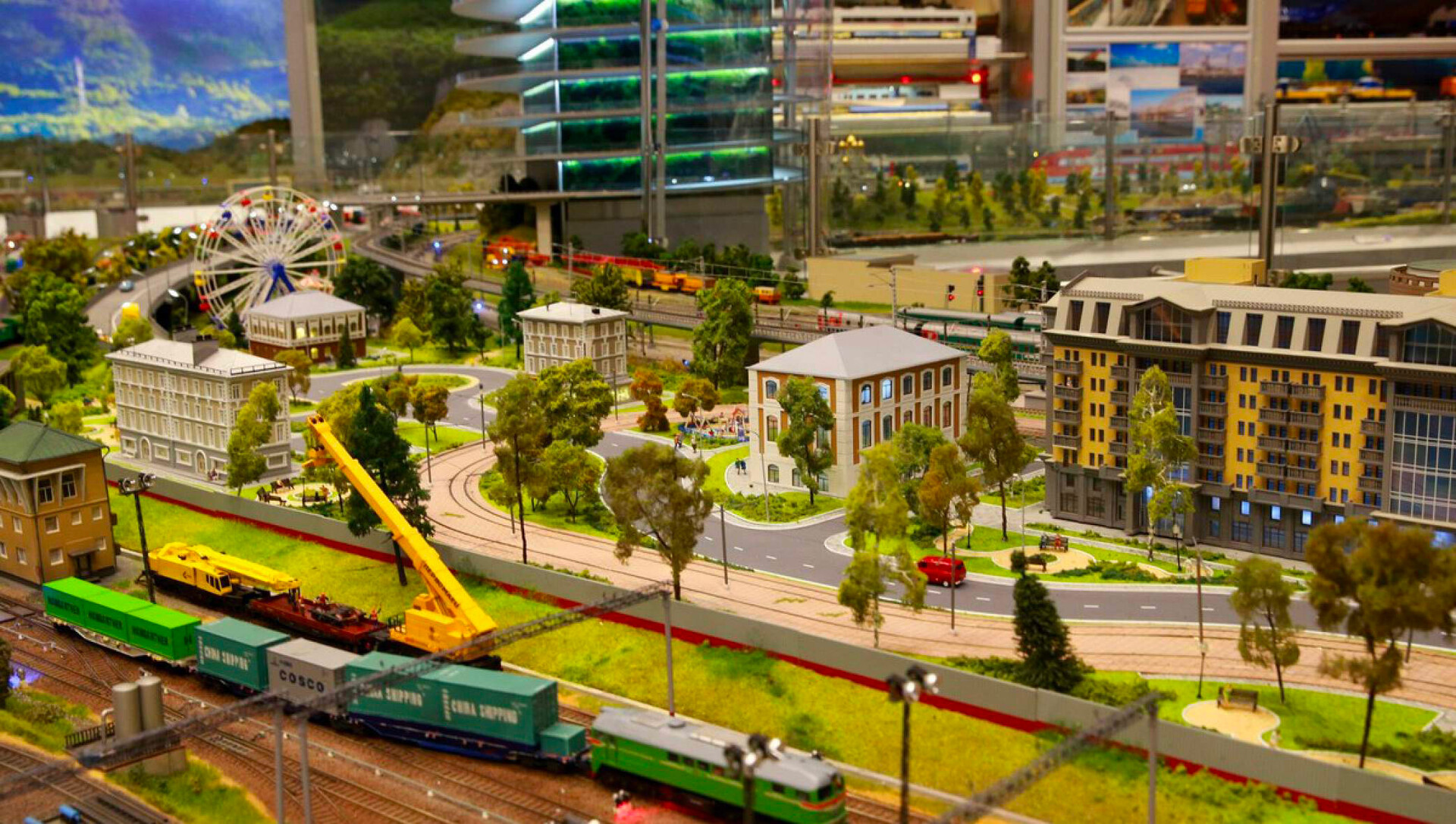
Moscow, St. Petersburg, cities of the Golden Ring and the whole country in miniature. You can see the main sights of Russia on detailed models-dioramas.
You can visit all the ancient cities of Russia in just one hour in Yaroslavl. In the center of the city there is a show model of the Golden Ring, where not just the main sights and ancient temples are presented, but the life and atmosphere of the cities have been recreated.
The main cities of the Golden Ring are also represented in miniature: Yaroslavl, Kostroma, Uglich, Ivanovo, Rostov the Great, Pereslavl-Zalessky, Sergiev Posad, Vladimir and Suzdal. In Ivanovo, dubbed the “city of brides”, they make fun of stereotypes – you can see brides in white dresses, while tours are being held in the Rostov Veliky Kremlin.
Night falls every 10 minutes. The street lamps in the cities turn on and the windows of the residential houses light up.
2. Miniature Moscow model, VDNKh, Moscow
Artur Novosiltsev/Moskva Agency
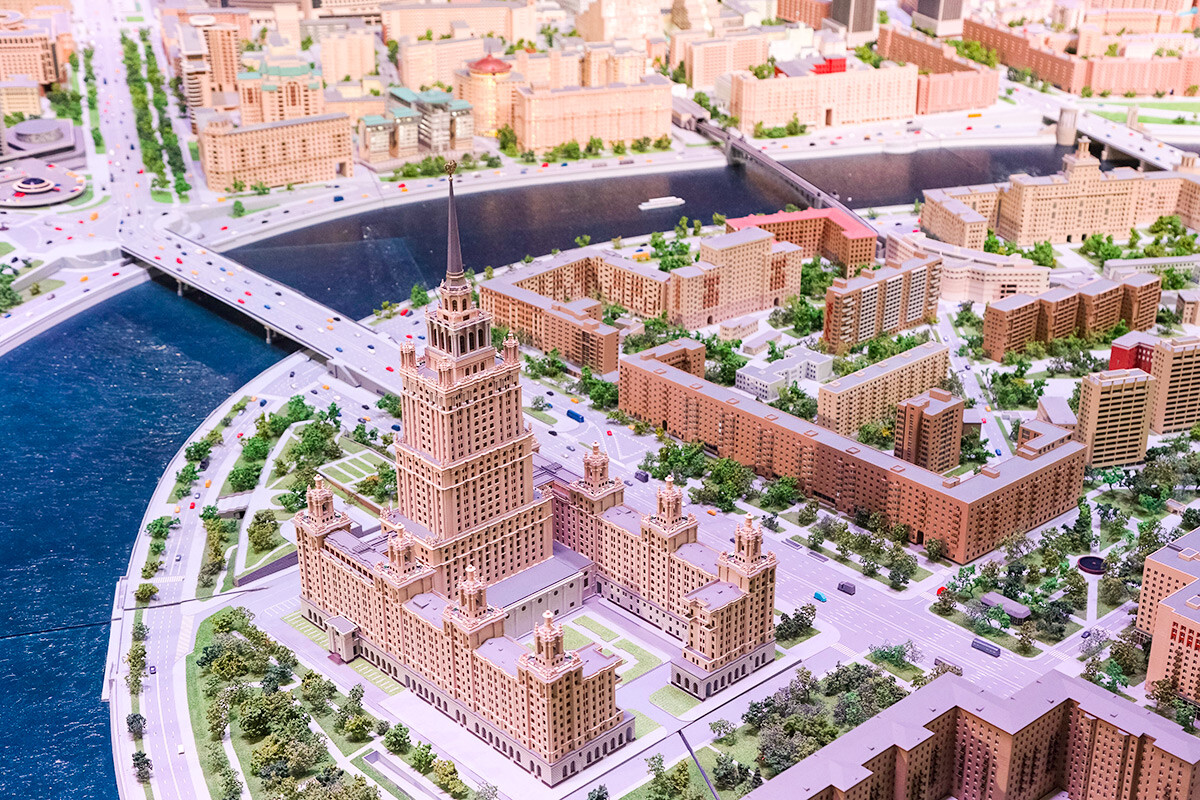
At the VDNKh exhibition center in Moscow, there is a whole pavilion dedicated to a miniature version of Moscow, in which more than 23 000 buildings and constructions of the capital have been recreated on a scale of 1:400.
Monasteries, train stations, bridges, palaces, skyscrapers are represented in detail. Interestingly, the chimes of the Kremlin’s Spasskaya Tower chime at the exact time. The lighting system imitates not only day and night, but also natural phenomena. In addition, the layout accurately depicts all the hills and valleys of Moscow. You can explore the city endlessly!
3. ‘Tsar’s layout’ of Russia, Moscow
Pavel Kuzmichev
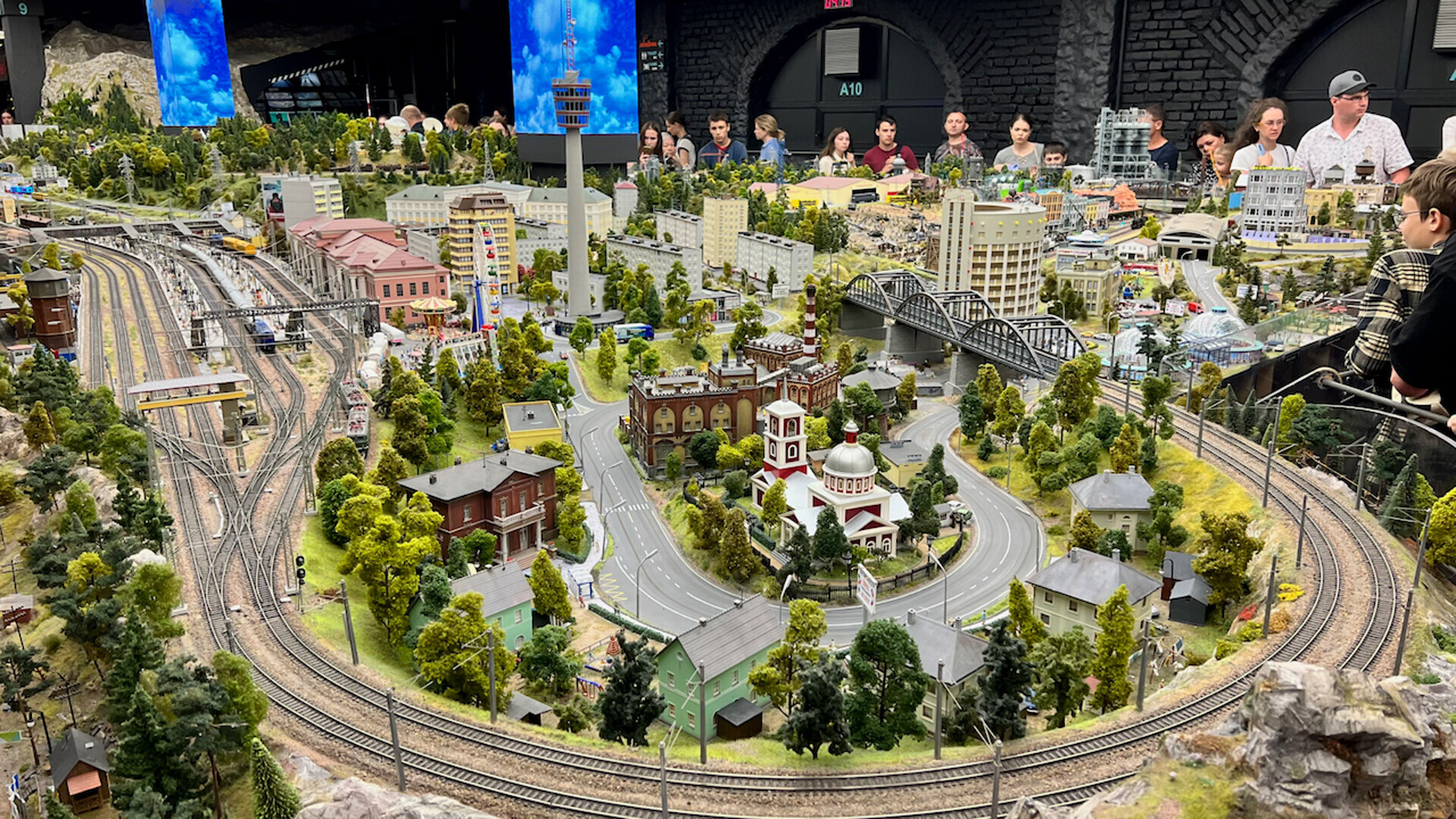
Travel by train from St. Petersburg to Moscow, climb Mount Elbrus by funicular and get stuck in traffic near Moscow City. All in one day. In the Moscow diorama museum ‘Tsar-Maket’ (‘Tsar-layout’), you can see the whole of Russia on a 1:87 scale model and meet its tiny inhabitants.
The main idea of the model was to depict how trains and roads connect different regions. As on a real railroad, in addition to the trains themselves, there is a repair bureau, where diesel locomotives are repaired and several tracks between which the switches are switched and people who have mixed up their trains.
In mini-St. Petersburg, it rains all “night”, Moscow greets you with a giant traffic jam near the skyscrapers and, in Rostov-on-Don, there is a soccer match being held in a huge stadium. Soviet cartoon characters – ‘Cheburashka’, ‘Crocodile Gena’ and ‘Shapoklyak’ – ride on the carriage of one of the trains in Pskov. And there are a huge number of such “Easter eggs” in the layout!
4. ‘Grand Maket Russia’, St. Petersburg
Yulia Khakimova
Everyday life of Russia, from Kamchatka to Kaliningrad, can be found in miniature on the ‘Grand Maket’ (“Grand Model”) in St. Petersburg. In Siberia, they play dominoes, in the Urals, a TV crew films a report about mysterious crop circles, while in Kamchatka, a volcano wakes up at night. The 1917 Bolshevik Revolution is also depicted by the creators on a movie set.
Along the entire model field, there are buttons that activate interactive scenarios: extinguishing a forest fire, ash ejection on the Kamchatka hills, operating a sawmill and much more.
5. ‘Petrovsky Aquatorium’, St. Petersburg
Maria Rukhlova (CC BY-SA)
You can see 18th century St. Petersburg in this model museum. The main part of the layout shows the space in the waters of the Neva River and the Gulf of Finland, and the water is real!
You can see interesting scenes of city life of that time: elephants walking along Nevsky Prospekt (they were once sent as a gift to Emperor Peter the Great), a fight between Lomonosov and sailors, Maslenitsa festivities, duels, balls and haymaking.
6. Exhibition Complex of Russian Railways, Moscow
Exhibition Complex of Russian Railways
At the Rizhsky train terminal, there is another model of Russia, the central idea of which is railways. On it, you can see all modern types of trains that travel around the country, the historical steam locomotive depot, railroad bridges and, of course, a model of the Riga station itself. All train lovers will find it very interesting!
Alexander Hill is a Professor of Military History at the University of Calgary
Russian president Vladimir Putin’s recent visits to both North Korea and Vietnam received significant attention in the western media. So, too, did a recent visit by Russian warships to Cuba.
Before the outbreak of the full-blown war in Ukraine in February 2022, such visits would have likely received much less attention. Now, they come amid western attempts to isolate Russia on the world stage. However, it seems these efforts have had little effect in undermining many of Russia’s international relationships.
While most European nations are on board with western sanctions, many other countries — particularly in the Global South — have maintained economic and political links with Russia. Why that is the case owes much to both historical ties and contemporary circumstances.
Old friends
Many of Russia’s enduring international relationships are ones with long histories. When it comes to North Korea and Vietnam, governments in both those states exist in their current forms thanks in part to military and political support from the former Soviet Union during the Cold War.
In the case of Cuba, it is certainly possible that Fidel Castro’s government would have been overthrown after the 1959 revolution had it not been for Soviet political and military support. In 1961, the CIA backed an attempt to overthrow Castro that failed. Subsequent Soviet support for Castro — even after the Cuban Missile Crisis — remained considerable.
In 1975, as Portugal’s colonial empire collapsed, the Soviet Union helped the People’s Movement for the Liberation of Angola (MPLA) seize power in Angola. Throughout the late 1970s and 1980s the Soviet Union — and Cuba — backed the MPLA in the face of opposition supported by the United States and apartheid South Africa.
Elsewhere in Southern Africa, nationalist and anti-colonial movements also received support from the Soviet Union. The African National Congress in South Africa and Namibia’s SWAPO Party operated from bases in Angola and both received Soviet support.
Both parties have remained the dominant political force in their respective countries since the fall of apartheid in South Africa. In both cases, there is still a recognition of the Soviet Union’s historical support.
After the collapse of the Soviet Union in 1991, the Russian government allowed some Cold War relationships to wither to some extent. For much of the 1990s, President Boris Yeltsin’s government was more concerned with stabilizing the economic and political situation at home, and deepening ties with the West, rather than maintaining Cold-War era relationships.
Keeping friendships alive
From the late 1990s, the Russian government started to put more effort and money into reviving Soviet-era relationships. What has helped sustain many relationships are personal and military connections going back to the Cold War.
Tens of thousands of Soviet personnel — both military and civilian — spent time in other countries as younger people. More than 10,000 served at some point in Angola alone. Russian veterans organizations, such as the Union of Angola Veterans, maintain important links between the countries concerned today.
Many young people from countries across the globe studied and trained in the Soviet Union. Some of them are now leaders in their home countries. One example is the current president of Angola, João Lourenço, who attended university in the Soviet Union.
The Soviets typically supplied these countries with arms and military equipment. The ongoing maintenance and upgrading of this equipment is a further driver of continued ties.
After the collapse of the Soviet Union, many of these countries sought better relations with the West. Nonetheless, Cuban relations with the U.S. have remained strained, and American sanctions from the Cold War period have remained in effect for decades. The U.S. is also at the forefront of efforts to isolate North Korea. In both Cuba and North Korea, it is perhaps unsurprising that they would be keen to rekindle and maintain relationships with Russia.
Balancing between Russia and the West
In the case of Vietnam, relations with the U.S. have improved significantly since the Cold War and the destruction the Americans wrought on the country during the Vietnam War. However, Vietnam’s nominally communist government is hardly glowingly endorsed by the U.S. Despite some reconciliation with the Americans., Vietnam isn’t willing to drop its relationship with Russia at the behest of the West.
There are also important economic dimensions to many of Russia’s contemporary international relationships, particularly where discounted Russian oil is concerned.
Many governments with which Russia has good relations lack the sort of liberal-democratic credentials that are seen as desirable in the West. That certainly is the case for North Korea, Vietnam and Cuba. However, seeing Russia’s international relationships as a case of authoritarianism versus democracy is simplistic.
Countries like Namibia and South Africa are democracies. Their economic relations with Russia are relatively limited. However, a shared desire not to be beholden to the West plays a significant role in their ongoing relationships.
Russia’s growing ties with China helps strengthen its connections with other states through international organizations such as BRICS. The recent expansion of BRICS — and the possibility of other Russian allies like Venezuela joining it — point to a growing desire in some parts of the world for alternatives to a western-dominated international system.
Whether the U.S. and its allies like it or not, the world is becoming more multipolar than it was at the end of the Cold War.
The western response to Russia’s war in Ukraine has certainly crystallized European opposition to Russia. Elsewhere in the world, however, western actions and hypocrisy over the situation in Gaza have given many pause for thought, and possibly, even emboldened some to develop their ties with Russia.