Category Archives: Uncategorized

Howard Altman: Exclusive Interview With Ukraine’s Spy Boss From His D.C. Hotel Room

ukrainian flag waving in wind with clear sky in background
Photo by Nati on Pexels.com

By Howard Altman, The Drive, 9/22/23

The first time I met Kyrylo Budanov, commander of Ukraine’s Defense Intelligence Directorate (GUR) and the mastermind of many a thorn in Russia’s side, was in November 2021. He was a young brigadier general, largely unknown beyond the borders of his homeland, where he was a special operations hero who was thrice wounded fighting the Russians since 2014. We sat down on couches in the middle of a busy Washington D.C. hotel lobby and he laid out how Russia was about to attack Ukraine as visitors milled about unaware of the heady discussion taking place. His prediction, which included a battle map, would prove prophetic just three months later.

Budanov, who reached out to me last week asking if I wanted to meet up with him during an otherwise secret trip to D.C., is now one of the world’s most famous sitting generals. He is the architect of the constant asymmetrical operations against Ukraine’s great foe, Russia, and has become the subject of numerous stories, including interviews with The War Zone, and ubiquitous memes (more on that later).

A top target of Russia, it is no longer safe for him to meet in a crowded hotel lobby, so I agree to meet him in his room. Outside his door stands a burly man dressed in black, clearly security.

“Do you have a gun?” I am asked.

“No, I am a journalist,” I respond and with that, I am waived in.

Budanov greets me with a smile and a handshake. Unlike our last encounter, he is dressed not in his uniform, but in a dark blue suit, blue shirt and salmon-colored tie.

Against a sweeping vista of the U.S. capitol city seen through the huge window behind us, we sit down at a table with a bowl of fresh fruit, some untouched packs of nuts and bottles of water. For the next hour, through an interpreter, we discuss everything from his blunt assessment of the ongoing counteroffensive, attacks he helped orchestrate inside Russia, the systematic campaign against Russia’s air defenses, warnings about Abrams tank usage, doubts about Prigozhin’s death, what Ukraine needs from the U.S. and, of course, his favorite Budanov meme. All the while, sitting across from me, he stares that unnervingly stoic Budanov stare, the one you’ve seen in many photos.

At his request, out of concern for his security, we agree to hold the interview until after his journey to the U.S. is finally revealed through very public visits to the Pentagon and White House with his president, new defense secretary and their contingents.

Our exclusive conversation, reported in full, has been lightly edited for clarity and context.

TWZ: It’s been a while since we actually saw each other. Is this the first time you’ve been back in Washington D.C. since?

KB: Yes

TWZ: What brings you to Washington? Who you meeting with and what goals do you have for this visit? Have US officials asked you for any advice or insights?

KB: My current visit is not actually mine. It’s part of a presidential visit and I’m assisting him on this trip. And surely there are meetings waiting for me with military leaders of this country as part of the presidential delegation.

TWZ: Is this the first time President Zelensky has asked you to come on one of these foreign trips?

KB: No.

TWZ: Can you tell me who you are meeting with?

KB: We’ll have meetings within the DoD and the special services of the U.S.

TWZ: Will you meet with the CIA?

KB: (Laughs and declines to answer)

TWZ: Are you being asked by the U.S. for your insights based upon the defense that Ukraine’s put up? Is the U.S. asking for your advice on how to fight a peer competitor?

KB: Thank God there’s not a single place across the world that has that kind of competitor and that kind of fighting, so not war on that level of intensity. But if such recommendations are required from us, we’ll gladly provide those.

TWZ: I want to talk a little bit about the ongoing counteroffensive. I know that you’re not the general in charge of land forces, but as the eyes and ears of the Ukrainian military, what’s your assessment? Do you still believe that Ukraine will retake Crimea this year or will a counteroffensive push on until next year?

KB: Our counteroffensive operation started at the beginning of summer and is still ongoing. It hasn’t stopped. And as you’ve rightly said I’m not the commander-in-chief of the General Staff. That is why questions about the tempo or progress of the counteroffensive operation should be addressed to the General Staff. But speaking of Crimea, you could not have missed that since the middle of August, there’s been a certain intensification going on with regard to Crimea, and that might indirectly give you a hint about the answer to your question.

So first of all, the fact itself is that we’re engaging the military infrastructure and military targets in occupied Crimea and the occupier’s infrastructure. If we’re going deeper into strikes against the air defense system, it’s more complicated here. First of all, the air defense systems themselves are very costly equipment and it takes a lot of time to produce those and Russian flags those systems because all this inventory is currently engaged in fighting against Ukraine and also in protection of Moscow. They’ve taken away air defenses from everywhere else.

That is why, naturally, when we engage in another and another air defense battalion of the Russian military, they need to think about where they can pull those systems from and where are they able to tolerate less defenses in other places.

The second point in engaging defenses is that we’re making those holes in the overall air defense coverage. Those holes are exploited for other things. Also, we’re depleting their air defense missile stocks because those are not limitless. And from the political standpoint, we’re also demonstrating the obvious inability of Russian air defense systems, which respectively makes them less lucrative on the world arms markets.

TWZ: And this is part of a coordinated campaign, it’s not just Crimea, right? You’re doing this inside Russia, with the strikes on air bases and other targets and on Moscow?

KB: Let’s put it like this, we have never confirmed [attacks on Moscow] officially (Budanov laughs) and I will be keeping that stance. But I can share my opinion about those strikes. All the above-mentioned factors clearly coincide with the strikes inside Russia. Especially when we’re talking about the obviously decreasing demand for Russian weapons because when the whole world sees that some drones are attacking Moscow, nobody wants to buy Russian air defense systems any longer. And that is very painful for them. And it links back to additional factors which are absent when we’re discussing Crimea.

One side note. There’s a completely opposite situation in terms of demand on weapon systems. There’s a very high demand on Ukrainian drones now. We can’t sell those now because all of them are used for warfighting, but after the war ends, this will have a lot of meaning.

Now speaking about the strikes deep into Russia, including Moscow, that are conducted by someone. There is a social side of it. Because now the Russian population and especially large Russian businesses really start to feel the impact of war. Because before that, it was just a war going on on TV. Yes, it did have some financial impact on big players, but smaller ones weren’t even touched. But demonstrative strikes, such as strikes against Moscow city – the skyscraper district in Moscow – demonstrates to everyone that now it touches upon them.

Besides that, it undermines the belief of the population in an all-powerful Russian regime that is the strongest one in the world. They start asking those logical questions, like: “where’s our air defenses that are supposed to protect us?” And they start blaming their authorities for that, for stealing all the money. The next aspect is strikes against critical military infrastructure. It includes oil refineries that supply fuel to the warfighting as well as the factories and plants that produce components for military equipment. So that’s the overall picture.

TWZ: Talk to me about the sabotage attack on Chkalovsky Air Field, located less than 20 miles from Moscow.

KB: Those were activities of sabotage groups.

TWZ: Are they connected to you?

KB: Of course all of those [groups] are in some kind of connection with us.

TWZ: Did you suggest that attack? Orchestrate it? Plan it?

KB: Of course. We’re assisting them, let’s put it that way.

TWZ: Did you select the target and help them figure out how to enter the base and blow up the planes?

KB: Let’s skip that one.

TWZ: What effect is being able to breach such a secure base having in Russia?

KB: The explanation here is the same because it was an attack conducted in a secure area actually inside Moscow because that airfield is within the greater Moscow [region]. It demonstrates the obvious inability of the regime to protect even its most critical and secure infrastructure. And if we’re talking about airframes, of course, Russia has a lot of those but some of them, such as the Il-20, are not in big numbers available.

TWZ: Did you suggest that those particular aircraft be targeted?

KB: (Laughs) So we’re going back to the spot where I didn’t want to go.

TWZ: What is the military chatter you are picking up in the wake of this attack? Is there panic? Consternation?

KB: We’re aware of the very negative reaction because they got the blame for it. This surely wasn’t the task, but it’s a side effect. And they received the blame because they were supposed to ensure security and they let those sabotage people come into that secure facility and conduct this sabotage operation.

TWZ: Who received the blame?

KB: The FSB. Besides that, of course, it’s a blow against the political leaders, and military leadership of the Russian Federation because they are not able obviously to ensure proper guarding of strategic critical airfields in Moscow.

TWZ: Do you think they have a dartboard with your face on it at the FSB?

KB: (Laughs) I don’t know, I haven’t been there.

TWZ: I want to return a little bit to the counteroffensive. It’s obviously a big part of what’s going on. And you must get tired of being asked about the pace of this. What do you tell people when they bring that up?

KB: I’m also always referring those questions to the General Staff. They’re doing the fight. I’m just assisting.

TWZ: Can you talk about how this will progress into the winter? When we first met and I asked if you were concerned about fighting in the cold, you said, ‘It’s no problem.’ So does this pending weather concern you?

KB: It’s not a problem at all. And as everyone saw last time, it’s not a problem to fight in winter for both sides – for us and for Russians. It’s not a pleasant thing to do, but it’s not a big deal. There’s one very important nuance that makes a difference between current warfighting and the previous periods of fighting. Currently, all main instances of fighting are done on foot without using any materiel. This is linked to the high saturation of artillery systems on the forefront and also portable anti-tank weapons. And that’s true for both sides. Those [armored] systems are not enough to create a gap in the orbits of the enemy – to create a powerful breakthrough as in classic doctrine. But it is well enough to deter any attempt of the enemy of any side to conduct that breakthrough with materiel and convoys.

Also, there’s a high level of saturation with both anti-personnel and anti-tank minefields. Anti-tank mines are making a lot of difference because when such a mine goes off on their wheels, it completely destroys the wheels and that piece of materiel is not able to move any further. Damage done to a piece of equipment is minimal but it still cannot move any longer. Those anti-tank mines are a big problem for those tracked vehicles. And a new feature that hasn’t been observed anywhere before is the high number of FPV [First Person Video] suicide drones on both sides which are able to engage practically any piece of equipment.

All of those above-mentioned factors reduced the possibility of using armored equipment in practically all of the main directions to the minimum. Now that hardware is only used for evacuation or to swiftly transport infantry teams to a particular spot but it doesn’t take part in the fighting.

TWZ: Given that, those 31 Abrams tanks heading to Ukraine…

KB: We’re looking forward to seeing that. We haven’t seen them yet.

TWZ: Will they make a difference given all these factors and given the difficulty of maneuvering in mud?

KB: They should be used in a very tailored way for very specific, well-crafted operations because if they are used at the front line and just in a combined arms fight, they will not live very long on the battlefield. They need to be used in those breakthrough operations, but very well-prepared.

TWZ: Are you confident that’s going to happen? Let me step back to the situation in June near Malaya Tokmachka where there were a number of armored vehicles were destroyed.

KB: Actually there wasn’t that much materiel that was destroyed. There was a lot of damaged materiel. And by now it’s repaired. The number of those that were destroyed was not that high. But it’s the very example we’ve just talked about. So if if we just deploy some battalion tank group into the battlefield somewhere, just as long as it gets under the range of artillery it will get hit.

I will share two other examples on the enemy side. Similar situations could be observed during Russian attempts to attack Vuhledar last winter. The same thing happened. They went on attack in combat convoys and there were dozens of pieces of equipment that just didn’t get through. And by the way, what is peculiar about that specific operation was that it was commanded personally by Gen. [Sergei] Gerasimov, and when all that equipment was destroyed, he blamed everyone around him and just left the frontline.

I’ll provide you with one more different example. It’s about how Wagner units advanced. When they did manage to take Bakhmut [on May 21], they were not using armored vehicles. They were only using artillery support to infantry actions on foot. So practically they were just using infantry.

TWZ: That’s expensive in terms of lives, right? Are you able to talk about the toll these kinds of attacks are taking on Ukrainian forces?

KB: Regretfully I don’t possess precise numbers of our casualties. But it is completely logical that all of our casualties – both killed in action and wounded in action – went up as we shifted to offensive operations if we compare those with the previous periods. But there is still this very interesting peculiarity that even though we’re on the offensive, our numbers of casualties are still lower than on the enemy’s side who are in defense.

But having described the overall realities of our current situation we’re smoothly coming to the conclusion that we will have to change something. The conclusion is that we’ll need additional weapons systems and capabilities that could still change this balance we have today. Because looking at the situation solely from the perspective of manpower, if we compare the Ukrainian potential with Russian potential, the Russians have a lot more human resources. That is why we cannot keep on fighting just soldier on soldier. This will not deliver the results we want.

TWZ: So what do you have to do to change this?

KB: We need to resolve the issue of increasing numbers of overall artillery barrels on the battlefield. And we need longer-range weapon systems in order to engage their command posts, their logistics storages, etc., etc.

TWZ: When you meet with U.S. officials are you going to ask for [Army Tactical Missile System] ATACMS? And what are you going to say to convince them to provide ATACMS?

KB: I think that this issue will be raised.

TWZ: What’s your argument for them?

KB: My argumentation is very simple. The majority of [Russian] command posts and logistic storages are beyond the distance of 85 kilometers (about 50 miles) which is the maximum range for our current [Guided Multiple Launch Rocket Systems (GMLRS) munitions] – for [M142 High Mobility Artillery Rocket Systems or] HIMARS that we have. The Russians just place command posts and other things beyond those distances so we don’t have anything to reach them there. And the situation is the same with Russian aviation at the airfields. Fighting Russian aviation using air defense systems is very costly and ineffective. Aviation should be taken out at the air bases.

TWZ: Are you talking about airfields in Russia?

KB: No, we’re talking about the airfields in the occupied areas of Ukraine.

TWZ: Like those bases in Crimea.

KB: Crimea is Ukraine.

TWZ: On Tuesday, a U.S. official said the new Precision Strike Missile (PrSM), a replacement for ATACMS, is coming online soon and could potentially open up the availability of ATACMS for Ukraine. Do you have a sense of how many ATACMS the U.S. has that they can give you?

KB: So let’s wait for the official announcements to be made. There are still different ways how this situation can turn out so let’s wait for [the official announcement] but I can say conditionally that if it’s 100 missiles, this won’t change the situation.

TWZ: You need thousands?

KB: At least hundreds.

TWZ: Do you think you will return to Ukraine with good news about ATACMS?

KB: I always hope for the better. We’ll do everything to make that happen.

TWZ: Let me switch to the Russian side of this war. As Ukrainian forces push through that Robotyne-Verbove salient, as there’s success near Bakhmut with the recent capture of Andriivka and Klischiivka, and as the Russians are trying to push through toward Kupiansk, how can the Russians man all these areas?

KB: It’s not actually like that.

TWZ: So tell me, because you know better than I do!

KB: The offensive operation in the south will continue as it’s been ongoing as long as we have resources. In parallel to that, of course, are operations for the de-occupation of Bakhmut. You’ve very rightly mentioned that we recently have taken back Klischiivka, which looks like it’s a very small [spot] of land, but it’s important because it’s on a hill overlooking the rest of the terrain.

The next step is to cut off all the supply routes that go into Bakhmut. Practically this operation we’re following is a track really similar to the Russian one which they used to take Bakhmut. The only difference is that they still conducted those frontal attacks on the city which led to very high casualties in manpower. We won’t be doing that. We will try and envelop the city and only after it’s enveloped will we be entering the city.

And you mentioned the Russian actions in Kupiansk. Those are just local operations that cannot be called a campaign or an offensive operation. They had certain success a few months ago but after that they were stopped at certain defense lines and there’s nothing happening since.

TWZ: Is the operation in Bakhmut designed to pin down Russian forces and keep them from reinforcing the Berdiansk and Melitopol attack axes?

KB: For sure, and it has delivered the result that we wanted. For example, the Russians recently redeployed their only reserve force – the 25th Army – which was just recently raised and hasn’t completed its creation. Now it’s redeployed to roughly the north of Bakhmut and that’s the place where it’s going to be buried.

TWZ: How many forces does the 25th Army have?

KB: About 15,000 men. It’s not that much. And besides that, the threat for Russians to lose Bakhmut makes them redeploy at all times additional and additional forces to the Bakhmut area, which of course drains their resources from other directions like the south.

TWZ: Speaking of which, are the Russians able to reinforce their defense against the Burdiansk and Melitopol pushes? Are they able to bring enough troops there to prevent Ukrainian advances, given all the stresses?

KB: So we’re going back to the previous question. All that they have already have been thrown into the fire. And now all the backbone of current Russian airborne troops is in defense and trying to deter the movement of our offensive groupings in the south. Before that, there were units of the Russian 810th Naval Infantry Brigade. That brigade was completely defeated, completely smashed, and now they have withdrawn being replaced by airborne troops.

TWZ: How do you protect that Robotyne-Verbove salient against a Russian incursion?

KB: You can’t invent anything new. You have to be powerful in defense, but you have to be constantly pushing forward. In this case, they will just physically be unable to fight back. So to continue the way it actually happens now across the whole of the front line.

TWZ: Will you strike the Kerch Bridge again and if so, what will Putin do?

KB: It’s not a question of will we strike or won’t we strike. We’re doing that regularly so we will finish it. It’s just an issue of time.

TWZ: And what will Putin do?

KB: He’ll get upset once again. What can he do?

TWZ: Did you sink the Project 22160 class patrol ship Sergey Kotov with uncrewed surface vessels (USV) and do you have any pictures to show that?

KB: It is damaged. Its propeller was damaged and also it’s got a hole on the backside of the body on the right. It’s 50 by 100 centimeters (about 5.5 square feet). So it will be sent for repairs and this ship will spend some time in the dock.

TWZ: Can you talk about some of the weapons you’ve been using – the modified Neptunes, the sea drones, the UAVs?

KB: We’re using everything we have available. The list of various drones produced in Ukraine is quite large now and we’re using everything we can. The Neptunes are in the process of development, which is still ongoing and they are being improved and improved. But the problem with those is that we don’t have the line to produce a lot of them. So the problem is in the quantity of those available.

TWZ: So when you request a strike with a modified Neptune, what kind of targets are you looking at given the limited number?

KB: The purpose of moves with those weapon systems is to make holes in Russian air defense coverage and then to exploit that hole in the air defense coverage for other operations.

TWZ: I want to do a complete shift here. Were you guys involved with the attack on a Wagner-backed militia in Sudan? CNN reported that Ukrainians were likely involved in the attack on the Rapid Support Forces (RSF) forces with FPV drones.

KB: I will only say the following: About two to three months ago I was giving an interview to one of the media, I don’t remember which specific one. I answered them back then that anywhere across the world we will be seeking and hunting down Russian military criminals, and sooner or later that time will come whenever they are. That is why we shouldn’t be surprised when in any territory, something happens to Russian military criminals.

Then speaking about your specific question about Sudan, regretfully I cannot confirm or deny. I suppose it’s not a big secret that there were and there still are Wagner fighters in the same way as everywhere in central Africa. Russia has led itself to a situation where it’s on the verge of strategic collapse. Russia step-by-step will be gradually lose what it has won. It has paid a large price in terms of men, in terms of financial resources, everywhere across the world. The more Russia fights against us, the more it loses.

TWZ: Who killed former Wagner leader Yevgeny Prigozhin?

KB: I wouldn’t be in a hurry to say he’s killed.

TWZ: You think he might be alive?

KB: I just wouldn’t rush with that question. I don’t possess any confirmation.

TWZ: You don’t have confirmation that he’s dead yet?

KB: We don’t possess that.

TWZ: Do you trust Elon Musk?

KB: (Laughs) In what sense?

TWZ: There was the discussion over Walter Isaacson’s book excerpt and whether Musk shut off Starlink to prevent a Ukrainian attack on Sevastopol last year, or whether as he claimed he denied a request to provide it.

KB: Look, [Starlink] is a private property of a private person. Yes we really very widely use his products and services. The whole of the line of contact talks to each other to some extent using his products and services. The only thing I can say here is that without those services and products it would be a catastrophe. But it is true that he did turn off his products and services over Crimea before. But there’s another side to that truth. Everybody’s been aware of that.

TWZ: So he did turn it off?

KB: This specific case everybody’s referring to, there was a shutdown of the coverage over Crimea, but it wasn’t at that specific moment. That shutdown was for a month. There might have been some specific cases I’m not aware of. But I’m totally sure that throughout the whole first period of the war, there was no coverage at all.

TWZ: But did he ever put it on and then shut it off?

KB: There have been no problems since it’s been turned on over Crimea.

TWZ: I want to get to some personal questions. Are you still living in your office with your family? What’s that like?

KB: Yes, it’s like that.

TWZ: Are you concerned about your safety? Are the Russians trying to kill you?

KB: Why don’t you understand that [my wife and I are living in my office]? Why is that strange for you?

TWZ: It’s not strange, I just wanted to get your reaction….

KB: We’re absolutely fine. She has been living with me since the February invasion. And she’s a police officer herself. She’s actually a professor at our national police academy. She’s teaching legal psychology. It’s not a problem for her as it might have been for someone else.

TWZ: In an excerpt from his new book, Financial Times reporter Christopher Miller writes about a situation where you were in a meeting with President Zelensky, Denys Shmyhal, Ukraine’s prime minister; Valery Zaluzhny, the commander-in-chief of the Armed Forces of Ukraine; Ivan Bakanov, head of the Security Service of Ukraine and then-Defense Minister Oleksii Reznikov. You laid out a map and you explained what was about to happen. Can you talk about that moment and what it was like to convince your fellow leaders that the Russians were actually going to invade?

KB: It’s already history and frankly, currently, I cannot recall a specific meeting you’re referring to but as an intelligence chief, surely I’m reporting the information I have to the leadership of the state and all the people involved in the administration.

TWZ: Were you disappointed in not being named defense minister?

KB: Absolutely not.

TWZ: Would you even want that job?

KB: No, I love my current job.

TWZ: I read that you were attending Ostroh Academy to study political science. Are you interested in running for office?

KB: You’re wrong. I’ll explain. I’m writing my PhDs there.

TWZ: What’s your thesis?

KB: Global interaction between special services across the world, how they interact, and how they influence their domestic policies.

TWZ: Are you going to write a book after this is all over?

KB: (Laughs) I’ll write my PhD first. And under the calendar plan that they’ve provided me with I have two years to do that.

TWZ: When we first met, you were an up-and-coming one-star general – brigadier general – but outside of Ukraine not many people had known who you were. Now you’re world famous. What do you think about the memes like the Budnov eyes and the jokes?

KB: (Laughs) I cannot influence those anyhow, what can I do about those? But some of them I need to admit surprised me (laughs). Especially after I had my haircut and there was this meme with Prigozhin’s head and mine. So it was right after his insurrection attempt in Russia and the meme was four pictures. First was mine and I said I will give you the sign. And then he is kind of asking what will be that sign and I say you’ll get it. The next picture is me being bald (laughs). That was one I really kind of remember.

TWZ: Was that one of your favorites? Do you have a favorite?

KB: I like that one.

TWZ: Any message you want to give to the American public?

KB: No, I think we’ve covered everything. The only thing I can say is that Ukraine will be forever grateful for all the assistance that’s been provided to Ukraine. And the victory over the Russian Federation will be the same extent an American victory. It will be the same for Ukraine and America together. It will be our joint victory.

TWZ: When will that happen do you think?

KB: In any case it’s close.

TWZ: This year? Next year?

KB: So currently it’s hard to prognose that because there are so many factors playing in and even if we go back to our offensive operation currently, in the General Staff, no one’s being able to surely say for how long will that continue.

After the interview wrapped, Budanov and I have a few more minutes of small talk. Budanov agrees to some photographs and then goes back to his busy day. Meetings await at the Pentagon and White House. On Thursday, he accompanied President Zelensky to both. But despite being in Washington, he is never far removed from what is taking place back home.

Friday morning, there was a Ukrainian missile strike on the headquarters of the Russian Black Sea Fleet in Sevastopol, Crimea. During a round of fact-check questions, I asked him about the GUR’s role in that attack.

“We just gave some intelligence assistance,” he tells me. “We always give 24/7 intel information to the General Staff.”

It’s the kind of assistance that has kept Kyrylo Budanov a hero in Ukraine and a wanted man to Russia.

Geoffrey Roberts: Ten Reasons Why Putin Might Prefer the Risks of a Compromise Peace to the Costsof a Forever War with Ukraine and the West

By Prof. Geoffrey Roberts, Website, 9/22/23

1. Russian Casualties: the BBC-Mediazona research indicates that Russia has lost 40,000-50,000 soldiers – three times as many as during 10 years of war in Afghanistan and almost as many as the Americans in Vietnam. Russia’s forceconservation tactics and strategy are designed to minimise casualties but completing conquest of the Donbass may cost thousands more Russian lives. Capturing Kharkov and Odessa would be even more costly. Over-running and occupying Western Ukraine would require mobilisation of hundreds of thousands of additional troops. Ukraine’s casualties are far higher than Russia’s – a minimum of 150,000-200,000 and perhaps as many as 400,000 military dead. A precipitate Ukrainian military collapse is possible but Kiev just might, with Western support, be able to fight on for some time.

2. The Nuclear Danger: atomic war threatens the very existence of Russia as well as the rest of the world. The war’s escalation into an all-out NATO-Russia conflict remains a real possibility. Never so high has been the danger of nuclear hostilities or of a catastrophic incident involving Ukrainian (or Russian) nuclear power stations.

3. Regime-Change in Kiev: the current Ukrainian regime will last as long as the war. Peace negotiations will be its downfall. Its replacement by an even more ultra-nationalist government is possible but would further weaken Western support – without which Ukraine cannot survive as a state. The odds favour a successor regime that will swallow the bitter pill of a peace settlement that suits Russia – an outcome that Ukrainian public opinion will hate but accept as the least bad alternative.

4. Russian Public Opinion: Polling data indicates that the majority of Russia’s citizens will support the war for as long as it takes but would also like to see a ceasefire and peace negotiations as soon as possible. The westernising sections of Russian elites are quiescent but they, too, will push in the same direction if and when a possible peace settlement appears on the horizon. A small, but vociferous and not insubstantial, minority of Russians favour total war and complete victory over Ukraine and the West. Putin’s power and popularity means he can over-ride these so-called turbo-patriots, though they could hamper any peace negotiations.

5. Pressure from the Global South. Russia’s friends, allies, partners and wellwishers in the Global South oppose a long war and want a ceasefire as soon as possible. If and when Ukraine and the West begin to court peace, China, India, Brazil, South Africa and other independent actors will be a formidable lobby urging Putin to pick up the ball and run with it.

6. Reconstruction of Incorporated Territories: the retention of Crimea and the four other incorporated provinces are the minimum Russian war aim. While its achievement is now virtually guaranteed, it will be a pyrrhic victory if Moscow is unable to rapidly reconstruct and re-populate the devasted lands of southern and eastern Ukraine. The longer the war, the more mammoth that task. Putin went to war to destroy the growing Ukraine-NATO military bridgehead on Russia’s borders but also to protect pro-Russia Ukrainians. Ending the war may be the best way to guarantee their lives and livelihoods

7. Slavic Solidarity: Putin’s July 2021 claim that Russians and Ukrainians are essentially the same people provokes outrage in some quarters, even though it was a statement that at the time was supported by 40% of Ukraine’s citizens. Russia has fought the war under the banner of multi-nationalism not mono-ethnic nationalism. It has, for the most part, treated its Ukrainian opponents with respect. The identified enemies are Ukrainian neo-Nazis and ultra-nationalists, corrupt officialdom, exploitative oligarchs and sell-outs to Western interests. Ideologically, Russia is committed to healing the wounds of war it has inflicted on what it still considers a brother nation. At best, healing will take a very long time; a long war could make the gulf between Russia and Ukraine unbridgeable for generations.

8. Restoration of Russo-Western Commerce: Russia has weathered the Western sanctions war very well. Russia’s war-economy is booming and significantly out-performing Western arms manufacturers. New relationships and markets have been forged with the Global South. Russia has more economic and technological sovereignty than it did before the war. China, Russia and the non-Western world are challenging US global financial hegemony. But Western sanctions do hurt – ordinary Russians most of all – and the pain will likely intensify in the medium to long-term. Detached from and in conflict with the West, Russia can survive and even thrive, but greater prosperity and opportunity lies in ending Western sanctions and restoring commercial and trade ties.

9. Global Co-operation. Russia and the West need each other to resolve a multitude of mutually pressing problems – nuclear proliferation, cross-border crime and international terrorism, dire environmental challenges, world health threats, global poverty and inequity.

10.Birthing a New World Order: Russia aspires to an international system based on sovereignty, multipolarity, multilateralism, mutual security, international law and the re-balancing and re-invigoration of global and regional institutions. Immanent in Russia’s vision of the future is an implicit preference for benign spheres of influence in which great powers provide stability and order and help secure justice for all states. A new global order is within Russia’s grasp – provided it avoids the nightmare of a forever war that begets the Orwellian dystopia of a permanently divided world of warring blocs.

Caitlin Johnstone: This War Wasn’t Just Provoked — It Was Provoked Deliberately

king chess piece
Photo by Gladson Xavier on Pexels.com

By Caitlin Johnstone, Website, 9/24/23

In an interesting speech about the way US imperial aggression provokes violence around the world, antiwar commentator Scott Horton made reference to an April 2022 article from Yahoo News that had previously escaped my attention.

The article is titled “In closer ties to Ukraine, U.S. officials long saw promise and peril,” and it features named and unnamed veterans of the US intelligence cartel saying that long before the February 2022 invasion they were fully aware that the US had “provoked” Russia in Ukraine and created a powderkeg situation that would likely lead to war. [https://news.yahoo.com/in-closer-ties-to-ukraine-us-officials-long-saw-promise-and-peril-090006105.html]

“By last summer [meaning the summer of 2021], the baseline view of most U.S. intelligence community analysts was that Russia felt sufficiently provoked over Ukraine that some unknown trigger could set off an attack by Moscow,” a former CIA official told Yahoo News’ Zach Dorfman, who adds, “(The CIA and the Office of the Director of National Intelligence declined to comment.)”

Dorfman writes that initial support provided to Ukraine during the Obama administration had been “calibrated to avoid aggravating Moscow,” but that “partially spurred by Congress, as well as the Trump administration, which was more willing to be aggressive on weapon transfers to Kyiv, overt U.S. military support for Ukraine grew over time — and with it the risk of a deadly Russian response, some CIA officials believed at the time.”

Policymakers “would always say, ‘If we do X thing, if we give the Ukrainians X system, how are the Russians going to react?’ And our answer would always be, ‘You can’t look at any one thing in isolation,’” the unnamed former CIA official told Yahoo News. “And we might look and say, ‘Well, it’s just a few hundred MANPADs [man-portable air-defense systems] or a few hundred Humvees,’ but it’s missing the point that the Russians are taking all of this stuff in the aggregate, and they’re drawing this picture of this ever-increasing relationship between the U.S. and Ukraine.”

“I understand the moral argument,” says former CIA official Jeffrey Edmonds regarding the weapons transfers into Ukraine, “but I also understand the argument that, well, why would you want to give these things if it’s just going to increase the chances that Russia does something?”

So while we members of the public were blindly speculating about whether or not Russia would attack Ukraine, the US intelligence cartel was fully aware that the US was taking actions ensuring that that would happen. That’s the environment the US security state knew it was operating under when it continued to taunt the idea of adding Ukraine and Georgia to NATO right up until the final moments before the invasion.

This war wasn’t just provoked, it was knowingly provoked. Off ramp after off ramp was sped past by the US war machine at a hundred miles an hour on its beeline toward a horrific proxy war, because empire managers had calculated that such a war would serve US interests. And now we routinely see US officials like Mitch McConnell openly saying that this war serves US interests.

They really couldn’t be more obvious about it if they tried.

It’s been funny to watch the response of empire apologists to NATO Secretary General Jens Stoltenberg’s surprising refutation of a year and a half of empire propaganda by openly admitting that NATO expansion provoked the invasion of Ukraine and acknowledging that NATO powers rejected Moscow’s proposed compromises which could have averted the war. Basically the only argument they now have after this admission is to say that Russia should not have viewed NATO expansion as an existential threat.

Their only remaining trick is to argue with reality; to basically say that yes it’s reality that NATO expansion provoked this war because Moscow saw it as a threat, but reality shouldn’t have been what reality was. They argue that Russia should have felt completely different feelings about a military threat on its border than nations like the United States would feel, since as we’ve discussed previously the last time there was a credible military threat near the US border the US responded so aggressively that the world almost ended.

That’s really all they’ve got: “Yes it’s true that all the people who’ve died and lost their homes in this war did so because we were amassing a hostile military alliance near Russia’s border, but in our defense the Russians should’ve thought different thoughts in their heads than the ones that we ourselves would think about a hostile military threat on our border.”

If all westerners deeply understood all the suffering and danger that has been unleashed upon our world by this war, and deeply understood the fact that their own governments played a role in starting it, the political status quo of the western world would be impossible to maintain. Which is why such unprecedented levels of propaganda and internet censorship have gone into preventing westerners from coming to such an understanding.

Westerners were deceived into supporting yet another evil war, which once again is showing every sign of dragging on for the foreseeable future with no exit strategy in sight. The only difference between this war and all those other wars is that this one is laden with the risk of nuclear annihilation, a risk which the US empire has been treading less and less carefully around as the bloodshed continues.

The more you think about it, the more horrifying it gets.

These people are absolute monsters.

Michael C. Desch: The Tragedy of Volodymyr Zelensky

By Michael C. Desch, Harper’s, October 2023

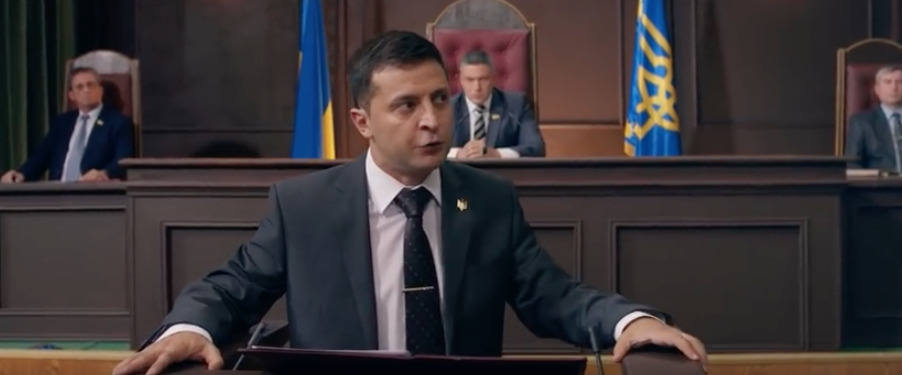
In December 2022, Time magazine named the Ukrainian president Volodymyr Zelensky its Person of the Year. The reasons seemed obvious: When Russia invaded in February of that year, few thought that Ukraine would survive more than a week, or that its president would remain at his post in Kyiv. But Zelensky, who had been a comedian and actor before his unlikely landslide election victory in 2019, defied Russian airstrikes and mobilized his countrymen, rebuffing Western offers of evacuation: “I need ammunition, not a ride.” His unexpected courage helped to rally Ukrainian forces against Russia’s northern thrust. He also reminded many of the two-time Man of the Year—in 1940 and 1949—Winston Churchill. Also known for defending his country against the aggression of an authoritarian leader, Churchill was, as Time’s tribute noted, “the historical figure to whom [Zelensky] has most often been compared in recent months.”

Comparisons between Zelensky and Churchill are apt, but not only for the reasons that those making them intend. The British Bulldog’s legacy is in fact quite mixed. His biographer Geoffrey Wheatcroft rightly reminds us that a balanced assessment of Churchill must acknowledge “the one irredeemably sublime moment in his life, when he saved his country and saved freedom.” But his actions in Britain’s “finest hour” do not negate the many missteps he made over the course of his political career. As more critical accounts of Churchill’s tenure have emerged—among the best are Robert Rhodes James’s Churchill: A Study in Failure, 1900–1939 and John Charmley’s Churchill: The End of Glory—it has become harder to ignore his many blunders. These include the ill-fated Gallipoli campaign during World War I (which resulted in around 200,000 casualties) and several miscalculations during the interwar years, when he took a relatively benign view of Mussolini, Franco, and even Hitler, then pursued a mostly one-sided relationship with Stalin (“I like him the more I see him,” he confessed to his wife). Notwithstanding his resolve in the face of a potential German invasion, even his strategizing during World War II was far from masterful. Churchill badly underestimated the Japanese threat and then, in the face of the siege of Singapore, demanded that British forces fight to the bitter end. His cold-blooded attack on the French fleet in Mers-el-Kébir in July 1940 not only constituted shabby treatment of an erstwhile ally but was based on the false assumption that Vichy France planned to turn its ships over to the Axis powers.

Like Churchill, Zelensky deserves a place in history for his actions during a perilous moment. The Ukrainian leader showed great physical courage by staying in Kyiv when it appeared that the Russian Army would seize the capital. But physical courage is not the only thing Zelensky will need to steer his country out of its current conflict. And like Churchill, Zelensky’s track record before and since his finest hour is checkered at best.

Born in the eastern Ukraine mining city of Kryvyi Rih in 1978, Zelensky is an improbable successor to Churchill. His father was a professor and his mother an engineer. As a teenager, he began competing in comedy contests modeled after the popular Russian television show KVN. This set the stage for his successful TV series Servant of the People, in which he played a simple schoolteacher who becomes a reformist president of Ukraine.

Zelensky has a history of defying the odds. When he announced his candidacy for president in 2018, few anticipated that he would defeat Petro Poroshenko, the incumbent, or edge out Yulia Tymoshenko, a former prime minister and the darling of the Orange Revolution. He not only prevailed over these veteran politicians but did so handily, winning more than 70 percent of the vote in the second round of elections. Before the ticker tape had settled, he dissolved parliament and called elections, in which his party—Servant of the People, named after the TV program—gained an outright majority. Zelensky went from dark horse to powerful president in the blink of an eye.

Three main factors account for Zelensky’s rapid rise. First, he was considered to be above the fray. Though anti-Semitism is still rampant in the post-Soviet states, the Zelenskys, as a Russian-speaking Jewish family, straddled the country’s ethnolinguistic fault lines. As a Russian speaker, Zelensky could communicate across the border with Russia and could point to his friends and relatives in the eastern, predominantly Russian-speaking region known as the Donbas as evidence of his ability to bridge that divide. Zelensky had also wisely stayed out of the contentious Maidan Revolution in 2014. Neither he nor his close colleagues were active in the movement to overthrow Ukraine’s Russia-friendly president Viktor Yanukovych, which deeply divided the country. Instead, Zelensky aimed his barbs at targets across the political spectrum, and even performed with his comedy troupe in the Donbas city of Horlivka during the post-Maidan uprising.

Zelensky’s second advantage was timing. His meteoric ascent reflected widespread disenchantment with business as usual—particularly corruption and the war in the Donbas, which had taken the lives of some thirteen thousand people. By 2019, public distrust of the elite was deep-seated. A vote for Zelensky was seen as both a repudiation of the establishment and an act of faith in a brighter future.

Finally, Zelensky was careful to keep his agenda quite vague, so as to avoid disturbing the image that voters had of him as an actor or backing himself into a corner. His biographer Serhii Rudenko has suggested that his voters imagined themselves electing the protagonist of Servant of the People, rather than Zelensky himself. Writing on the eve of the election in the New York Times, the journalist Alisa Sopova explained that keeping his political slate clean was “an asset for him—as well as a canvas onto which people can paint whatever they want.”

No wonder Zelensky’s supporters initially believed he would bring an end to the two scourges plaguing the Ukrainian body politic: its rampant corruption and the festering civil war in the Donbas. That he has failed, so far, to solve either problem constitutes the great missed opportunity of the Zelensky presidency, and has much to do with the tragic predicament that Ukraine finds itself in today.

Zelensky’s resolve to root out corruption flagged early in his term. There are, to be sure, structural features of post-Soviet states—a dependence on only a few industries and natural resources; the legacy of state-owned enterprises—that have long empowered oligarchs to manipulate the political system. But a more recent development is just as central to Ukraine’s endemic corruption. In 2014, during the Maidan Revolution, Yanukovych was toppled by mass protests in which a small group of ultranationalists pushed an extreme agenda. These forces subsequently regarded any move against Yanukovych’s anti-Russian successor Poroshenko as a betrayal of the revolution. In turn, many Ukrainian oligarchs found that wrapping themselves in the Maidan battle flag helped to conceal their nefarious business activities.

On television, Zelensky played an incorruptible teacher turned president, but the reality is more complicated. One of his original backers was Ihor Kolomoisky, a Ukrainian billionaire with a controlling interest in the television channel that aired Zelensky’s show, who would later be placed on the U.S. sanctions list for alleged fraud. Despite attempting to distance himself from his former patron, Zelensky has never been able to make a clean break with him. Indeed, Zelensky and his associates have been linked by journalists to some $40 million in offshore accounts associated with Kolomoisky’s notorious PrivatBank.

Another sign that Zelensky was not going to clean out Ukraine’s Augean stables came in March 2020, when he fired the prime minister, Oleksiy Honcharuk, whose anticorruption efforts were creating waves. An assassination attempt on Zelensky’s adviser Serhiy Shefir, reportedly due to anticorruption efforts, seems to have further reinforced the steep cost of pursuing good governance. This January, amid continued allegations of corruption, several high-ranking ministers were forced out, along with a raft of regional governors.

Zelensky’s commitment to end the war in the Donbas has suffered a similar fate. While the prospect of settling things through peaceful negotiation looks increasingly remote after more than a year of all-out war, at the beginning of Zelensky’s administration conditions were far more favorable. According to research collected by the San Diego State University political scientist Mikhail Alexseev, around 70 percent of Ukrainian poll respondents in the years leading up to the 2019 presidential election said that ending the war in the Donbas was their “number one concern.” Voters in the eastern region turned out in droves for Zelensky in the second round of presidential voting in April 2019. That November, a poll administered by the Democratic Initiatives Foundation found that 73 percent of respondents supported a negotiated settlement.

Russia also seemed amenable to negotiations. A spokesman for the Russian president Vladimir Putin said that the country’s primary interest in the 2019 Ukrainian election was to see a candidate win who would work to settle the conflict. Putin maintained through 2021 that “the Donbas is an internal issue of the Ukrainian state,” and waited until the eve of the February 2022 “special military operation” to support the independence of the rebellious Donbas oblasts of Luhansk and Donetsk. This suggests that Putin’s initial strategy was to ensure that pro-Russian Ukrainians retained veto power to counterbalance Kyiv’s increasingly Western tilt. The New York Times quoted the former president of Kazakhstan Nursultan Nazarbayev’s claim that Russia would have traded the Donbas for “other things”—the promise that Ukraine would not join NATO, for example.

Zelensky initially seemed inclined to pursue a negotiated settlement along lines worked out in a series of meetings in Minsk in 2014 and 2015. The so-called Minsk process began in the fall of 2014, once the war in the Donbas had shifted in favor of the separatist rebels (and their Russian backers). The Minsk agreements, signed in September 2014 and February 2015, mandated a ceasefire, withdrawal of heavy weapons, the deployment of Organization for Security and Cooperation in Europe (OSCE) monitors, the demobilization of militias, the departure of foreign fighters, and eventual Ukrainian control of the international border, following elections. It called for a decentralization of power, a special status for Luhansk and Donetsk, the holding of local elections within the self-proclaimed republics, and general amnesty for fighters on both sides. Economically, the agreements focused on the resumption of commercial ties between the Kyiv-controlled and rebellious provinces. Finally, they enumerated provisions for humanitarian aid and the exchange of civilian and military prisoners. After a rebel victory at Debaltseve in 2015, the parties returned to the negotiating table to discuss elections and decentralization in detail. The German foreign minister Frank-Walter Steinmeier then proposed that the regional elections be held under auspices of OSCE.

Soon after taking office, Zelensky took steps to implement this framework, agreeing to a prisoner-of-war exchange in early September 2019. He also embraced Steinmeier’s proposal to hold elections in October and was preparing to move Ukrainian forces back from the line of contact in the Donbas—a key Putin demand—in anticipation of a December summit in Paris. But that meeting would prove to be the zenith of Zelensky’s peace campaign, as he soon ran up against one of the forces that had also helped to stymie his anticorruption efforts: the nationalist far right.

Though Russia’s claims of a neo-Nazi government in Kyiv were never credible, there remains a dark undercurrent in Ukrainian politics. Far-right parties, some with a clear neo-Nazi bent, include the Congress of Ukrainian Nationalists, Svoboda, the Ukrainian National Union, the Right Sector, and the National Corps. Ultra-right-wing forces have not done well electorally in recent years, but they have nonetheless proven influential, in part because they are willing to resort to extra-parliamentary action. Radical nationalist groups have also been successful in making alliances with influential political players, including several powerful oligarchs. Few of these oligarchs endorse the far right’s ideology, but some seem to regard it as less threatening to their interests than the anticorruption agenda embraced by Ukrainian liberals. In addition, ultranationalists are overrepresented in the armed and security forces, including movements with their own militias such as S14, the Misanthropic Division, the Carpathian Sich (associated with Svoboda), Aidar, and Azov (associated with the National Corps). These battalions proved themselves to be effective early in the Donbas uprising, at a time when Ukraine’s army was in disarray. As the army rebuilt with substantial aid from the West, several of these paramilitary groups were incorporated into the regular forces.

In October 2019, after Zelensky had proposed a ceasefire and the withdrawal of forces from the line of contact, he went to the front to persuade the various battalions to honor it. A widely circulated video from the visit shows Zelensky debating the leader of the National Corps, Denys Yantar, who warned that there would be protests if the president agreed to a ceasefire. This was just one of many such warnings passed along by veterans’ groups. The Poroshenko ally Volodymyr Ariev warned that “if the president signs anything granting Russian influence in Ukraine, it would cause riots.”

These were not idle threats. The right never accepted the Minsk process, and met Zelensky’s tentative steps toward peace with stiff opposition. This began with smaller protests in Kyiv in October 2019. Then, on December 8, around ten thousand hard-liners rallied on the Maidan to encourage the president to say “no” to Putin. Rudenko notes that their “speeches in the center of Kyiv were, of course, a warning to Zelensky himself.” The website Myrotvorets, which makes an infamous list of allegedly anti-Ukrainian journalists and public figures, briefly included the president’s wife Olena Zelensky, claiming that she had inadvertently revealed sensitive information about the movements of Ukrainian armed forces on her Facebook page.

Such opposition would be daunting for any leader, but Zelensky promised that he was the man for the job. “I am not afraid to make difficult decisions,” he declared. “I am ready to lose my popularity, my ratings if needed, or even my post as long as we achieve peace.” Yet his enthusiasm for the Minsk agreements quickly wilted in the face of hard-line opposition. In a statement following the December 2019 summit, Zelensky echoed many of the right wing’s red lines when laying out Ukraine’s position. At that meeting, Zelensky had established a new formula for peace that included a limited special status for the Donbas (no different than any other Ukrainian region), and proposed only a piecemeal military disengagement. In July 2020, he signaled a lack of interest in the OSCE-coordinated Trilateral Contact Group—which had been a central platform for the negotiations—by appointing the former president Leonid Kravchuk, who was then eighty-six, as Ukraine’s representative. In early 2021, Zelensky moved substantial numbers of troops back toward the line of contact, closed pro-Russian media outlets, and charged the leaders of the breakaway republics with treason. Soon after these moves, Russia began building up its military forces on the other side of the border.

A charitable view of Zelensky’s failure to end corruption or peacefully settle the Donbas conflict might be that he had little room to maneuver in either case. Corruption is deeply ingrained in the structure of post-Soviet states, and the sort of negotiated peace needed to finish the civil war could have compromised the country’s sovereignty to an extent that would have been anathema to large numbers of Ukrainians, some of whom had guns and a propensity to use them. Addressing these issues would have posed political and perhaps even personal risks. But Zelensky did have opportunities—and, for a time, an overwhelming political mandate—to do so. That he folded so swiftly contradicts his well-managed image of integrity and courage; more importantly, his failures of foresight and fortitude meant that Ukraine squandered its chance to avoid the current conflict. Indeed, if Zelensky could have stood down his domestic opponents, particularly in the honeymoon period after his 2019 victory, perhaps he would not have had to stand up to the Russians in February 2022.

What explains Zelensky’s failure? To begin with, he and his team always favored style over substance. The Economist, which had expressed ardent support for Zelensky during the campaign, voiced concern just before his landslide victory, noting that he had “offered little indication of what exactly he plans to do, beyond vague assurances to maintain Ukraine’s Western course, improve the investment climate and end the war in the east.” Roman Bezsmertny, whom Zelensky appointed and then fired from the Ukrainian delegation to the Trilateral Contact Group, said that when he met with the president in the summer of 2019, he asked him how he viewed the situation in the Donbas: “He replied that by the new year, i.e., by 2020, we have to resolve the issue with the Donbas. And I already realized that he had no idea what it was. Because the words ‘solve the issue with the Donbas’ sounded like ‘tackle corruption,’ ‘engage in economic reform’—that is, do nothing.”

While Zelensky’s career in show business taught him to craft inspiring narratives, it provided him with little in the way of practical political experience. The former economics minister Tymofiy Mylovanov told the New York Times that Zelensky and his advisers “think differently” than typical politicians. “They think in terms of dramaturgy. They think, Who is the villain, who is the hero, what is the roller coaster of emotions?” Rudenko explains in his biography that “Servant of the People just stood for a popular TV series in which Zelensky, in the guise of Vasyl Holoborodko, skillfully defeated the government that hated the people.” But there was a yawning chasm between that simplistic drama and the real situation in Ukraine.

In a strikingly similar fashion to Churchill, Zelensky seems to be at his best during periods of chaos. Zelensky’s former press secretary Iuliia Mendel told the Financial Times that he was “a person of chaos. In war, it is chaos, he feels at home.” War, as the military theorist Carl von Clausewitz famously teaches, is a realm of disorder and uncertainty, and great wartime leaders are often those who thrive in such an environment. In his philosophical treatise On War, Clausewitz distinguishes between physical courage, which Zelensky may be said to have shown during the early days of the Russian invasion, and moral courage, or “courage before responsibility, whether it be before the judgement-seat of external authority, or of the inner power, the conscience.” Zelensky’s foreign supporters like to describe him as the conscience of the West, but there are many instances in which he has lacked moral courage in this sense.

This has been evident not only in his failure to stand up to extremist forces at home, but also in his dealings with Ukraine’s allies, as exemplified by his infamous phone call with Donald Trump in July 2019 when he was asked to investigate the Bidens. Zelensky’s efforts to ingratiate himself with Trump were bad enough, but perhaps can be explained by virtue of America’s importance to Ukraine and Trump’s transactional approach to politics. More troubling was Zelensky’s eagerness to denigrate others for little discernible reason. A transcript of the call records him carping about how the German chancellor Angela Merkel and the French president Emmanuel Macron were not doing enough for Ukraine, telling Trump that he was “absolutely right. Not only one hundred percent, but actually one thousand percent” when he said of European leaders that “all they do is talk.” He likewise echoed Trump’s view that the recently recalled American diplomat Marie Yovanovitch was “a bad ambassador.” As the French journalist Sylvie Kauffmann put it in the New York Times:

This popular maverick comedian turned real-life politician after playing one in a TV series, this promising reformer that President Emmanuel Macron of France had hosted at the Élysée even before he was elected, was in fact another spineless, unprepared leader jumping into President Trump’s every trap.

The lack of moral courage Zelensky displayed during the exchange was not only personally embarrassing; it also boded poorly, as Kauffmann noted, for his ability to deal with the domestic problems he had been elected to confront.

While Russia is of course a major actor in Ukraine’s tragedy, the West, and the United States particularly, bears its own share of responsibility for Zelensky’s failures. America has done little since 2013 to advance a peaceful settlement of the conflict, and its most recent actions have only inflamed tensions. Under Barack Obama, the United States was guilty, in the judgment of the Brookings Institution scholar Alina Polyakova, of “absenteeism” in the Minsk process. Trump, meanwhile, seemed interested in Ukraine only so far as it could advance his own political fortunes. And soon after taking office, Joe Biden began undermining the Minsk agreements. Speaking in Washington on February 7, 2022, Biden’s secretary of state Antony Blinken grumbled about Minsk’s “sequencing,” a sign that the United States was unlikely to play a constructive role in the peace process.

Once the Russians launched their attack, of course, U.S. policy turned decisively against a negotiated settlement, even as the Zelensky government was talking with the Russians. In March 2022, Biden mused publicly about regime change, saying of Putin that “for God’s sake, this man cannot remain in power.” Putin complained in September of that year that peace talks with Ukraine had been going well until the West ordered Kyiv to “wreck all these agreements,” a charge that Western analysts and politicians have essentially confirmed. Though head of a NATO member country, the Turkish president Recep Tayyip Erdogan complained that “the West has only made provocations and failed to make efforts to be a mediator in the Ukraine-Russia war,” which is likely why Turkey assumed a mediator role in 2022.

During the early days of the conflict, it briefly appeared that Russia and Ukraine were converging on a peace deal. In an interview with ABC News on March 7, 2022, Zelensky even said that he had “cooled down” on joining NATO. But later that month, he abruptly adopted a hard-line position, stepping back from compromise in the Donbas. At this point, any suggestion of territorial or diplomatic concessions to Russia were, in Zelensky’s increasingly Churchillian mindset, nothing more than a rerun of the 1938 French and British surrender in Munich (brokered by Churchill’s rival and predecessor Neville Chamberlain).

Meanwhile, Zelensky’s ambitions keep growing. Last December, he told the U.S. Congress, quoting FDR, that he intends to achieve an “absolute victory.” This victory would entail not only reclaiming territory seized by Russia since 2022, but also liberating the Donbas and Crimea. Following the dramatic Ukrainian counterattacks in the fall of 2022, which liberated large chunks of Russian-occupied territory, Zelensky’s star reached its zenith. This July, during the NATO summit in Vilnius, Zelensky struck a very different tone than he had sixteen months earlier, tweeting that it was “unprecedented and absurd” that Ukraine had not been provided with a time frame for joining NATO.

Zelensky and his advisers are now hoping to do more than make the Russian bear bleed for attacking Ukraine; they imagine they can rout Russia’s army and bring about Putin’s demise. Zelensky has increased his demands for sophisticated weaponry—including tanks, infantry fighting vehicles, and cluster munitions—and continues to insist on sanctions against Russia. He is also pushing to expand the geographical focus of the war. Ukrainian drone and artillery strikes on pre-2014 Russian territory have been increasing. Most alarmingly, in November 2022 the Ukrainian president doggedly maintained, with no evidence, that a missile that struck Polish territory and killed two Poles was a Russian attack rather than an accidental strike by a Ukrainian anti-aircraft battery. Had there been evidence for Zelensky’s claims against Russia, he might have triggered NATO’s Article 5 collective defense clause, widening and escalating the war.

Is Volodymyr Zelensky the right leader to settle this conflict? Here the comparison to Churchill may once again be apt, though not in a way that reflects well on Zelensky. Churchill’s Conservative Party was voted out of power in July 1945, two months after the end of fighting in Europe and before the surrender in the Pacific. Churchill seemed out of touch with British voters, who were disturbed by his distaste for social reform after six years of war. Zelensky has at times, like Churchill, become a hero outside of his country while his standing is diminishing at home. Where he once merely kowtowed to the far right during the Minsk process, he now seems to be embracing some of its leading figures, like the Azov commander Denys Prokopenko. And while it is not uncommon during wartime for democracies to restrict the press, the Zelensky Administration is doing so to such an extent that some claim journalism in the country has devolved into a “marathon of propaganda.” According to the Financial Times, Ukrainians are “already debating whether their leader, like his illustrious British predecessor, may be the right man for a war of national survival but the wrong one for the peace that follows.”

Reflecting on Poroshenko’s lack of enthusiasm for the Minsk framework, The Economist suggested that Zelensky’s predecessor came to see the Donbas conflict as a diversionary war, removing the pressure for domestic reforms. The nightmare scenario is that Zelensky will similarly recognize the frustration of his domestic agenda and find, like many other wartime leaders before him, that the only thing harder than conducting a war is governing in peace. Indeed, given the likelihood of a prolonged military stalemate between Ukraine and Russia—and the fact that, the longer the war drags on, the longer elections can be delayed under martial law—Zelensky may feel less pressure to consider diplomatic measures than he did in the early days of the conflict. Perhaps Zelensky’s biggest moral failure will prove to be prolonging a war that in a year or two won’t look any different on the ground, save for much larger cemeteries on both sides.