Category Archives: Uncategorized

Gilbert Doctorow: U.S. ups the ante: are we indeed headed into WWIII and what can save us?

Gilbert Doctorow, Blog, 9/9/22

The UK and Commonwealth may be mourning the passing of Queen Elizabeth II yesterday. I am in mourning as well, but for a very different reason: the gathering of the Ukraine Defense Contact Group in the Ramstein air base in Germany yesterday reshuffled the deck on Western military and financial assistance to Ukraine, raising contributions to the ongoing holy crusade against Russia from still more nations and adding new, still more advanced precision strike weapons to the mix of deliveries to Kiev. It was an open summons to the Kremlin to escalate in turn, as were the test firing the same day of a new intercontinental rocket, the Minuteman III, from Vandenberg air base in California and the unannounced visit to Kiev yesterday of not only Secretary of State Antony Blinken, who was featured in Western media accounts, but also other top officials of the Biden administration. The most notorious member of this delegation was surely Blinken’s deputy, Victoria Nuland, who had stage managed the February 2014 coup that put in power in Kiev the Russia-hating regime that Zelensky now heads.

 The Russians may be compelled to take the bait due to the course of military action on the ground. As now becomes clear, they have just suffered some losses in very heavy ground and artillery fighting these past few days around Kharkov. The Ukrainian gains were facilitated by the advanced weaponry recently arrived from NATO countries, by the targeting data they are receiving from the U.S. and from off-stage tactical direction from NATO officers. By ‘take the bait,’ I mean the Russians may escalate to all out war on Ukraine. This question figured prominently in yesterday’s major news and political talk show programs of Russian state television. I will go into these matters in some detail below.

Regrettably, all of the foregoing also obliges me to revisit the critique I published a couple of weeks ago on the latest essay in Foreign Affairs magazine by John Mearsheimer. His overarching message on the dangers of our stumbling into a nuclear war is better substantiated by the latest developments, even though I believe that Mearsheimer failed to identify the several successive steps that lie ahead before we find ourselves in such a war. Mearsheimer oversimplified Russian options to deal with setbacks on the ground. This also will be a central issue in my narrative below. 

Finally, in this essay I will direct attention to the second dimension of the ongoing confrontation between Russia and the entire Collective West: the economic war being waged on the Russian Federation via sanctions, which now far outnumber those directed against any other country on earth. This war, as I will argue, is going well for the Russians. More importantly for us all, it is the sole area in which the peoples of Europe may have a say in putting an end to the mad policies being pursued by their national governments under the direct pressure of Washington.

                                                               *****

Over the past ten days, we have witnessed the start of the Ukrainian counter-offensive which was preceded by so much anticipation in Western media. A reversal of Russian fortunes in the war was predicted, leading to the stalemate or outright defeat for Russia which Mearsheimer and some other analysts in the US foreign policy community feared would trigger a nuclear response from the Kremlin.

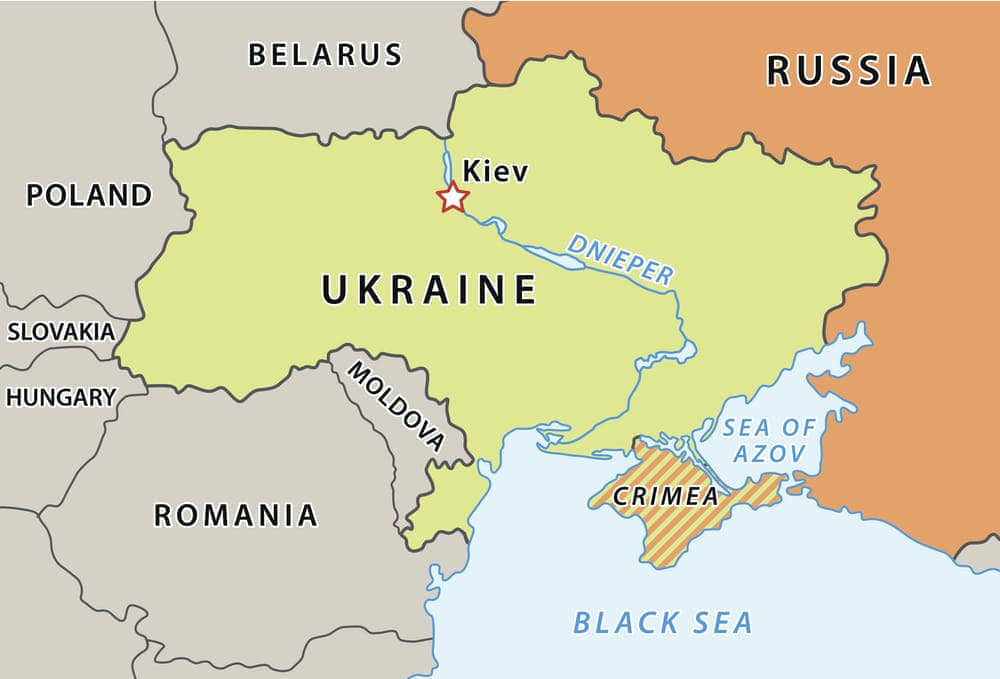
In fact, the Ukrainian counter-offensive got off to a very bad start. It opened in the south, in the Kherson region. Kherson, which is predominantly Russian-speaking, was the first major Ukrainian city to fall to the Russians and it has strategic importance for ensuring Russian domination of the Black Sea littoral. However, first results of the Ukrainian attacks there were disastrous for the Ukrainian armed forces. It soon was obvious that they had deployed new recruits who had little or no military experience. The infantry attacked across open terrain where they were easily destroyed in vast numbers by the Russian defenders of Kherson. I have heard the figure of 5,000 Ukrainian casualties in the Kherson counter offensive.  Obviously the Russians were jubilant, though there were reports of some Ukrainian reservists being withdrawn from the field of action for redeployment elsewhere.

What followed was something the Russians evidently did not expect, namely a well prepared and implemented assault on their positions around the northeastern city of Kharkov, Ukraine’s second largest city. Kharkov was briefly surrounded by Russian forces at the start of the war, but was left in relative peace as the Russians refocused their strategy on taking the Donbas and avoiding major urban warfare except in one place, Mariupol. Exactly what the Russian game plan has been was recently explained in a remarkable paper published by a certain ‘Marinus’ in the Marine Corps Gazette. See https://www.imetatronink.com/2022/08/a-former-us-marine-corps-officers.html

A couple of days ago I picked up the following amidst the chatter of panelists on Evening with Vladimir Solovyov: “yes, we made some mistakes, but it is inevitable in a war that mistakes are made.” As from the latest news on the apparent loss of Balakliya and surrounding villages on the outskirts of Kharkov, we can see that the Ukrainian tactics were precisely those which Russia had been using so effectively against them from day one of the ‘special military operation,’ namely a feint in one war zone followed by all-out attack on a very different region. Of course, the ‘feint’ around Kherson, if that is what it was, entailed the cynical sacrifice of thousands of young and not so young Ukrainian foot soldiers. But the resultant distraction prevented the Russians from bringing up sufficient manpower to successfully defend their positions around Kharkov, which include the strategically important city of Izyum.

Izyum is close to the Russian-Ukrainian border southeast of Kharkov and is a major logistical base for munitions and weaponry that are sent onward to support the Donbas operation. The latest information on the Russian side appears to be that the Russians have now dispatched large numbers of reservists to this area to hold their positions. They also speak of intense artillery duels. We may well assume that both sides have experienced heavy loss of life. As yet, the outcome is unforeseeable. Meanwhile, Russian war correspondents on the ground in Donetsk insist that the Russian advance towards Slavyansk, in the center of the former Donetsk oblast, is continuing without pause, which suggests that the strikes on their munitions stores claimed by the Ukrainians have not been totally effective. If Slavyansk is taken in the coming few weeks, then Russia will quickly assume control of the entire territory of the Donbas.

In last night’s talk show program, host Vladimir Solovyov said that this latest push in the Ukrainian counter-offensive was timed to coincide with the gathering at the Ramstein air base, Germany of top officials from NATO and other allies under the direction of the visiting U.S. Secretary of Defense Lloyd Austin. If the Ukrainian efforts were failing in the field, then the cry would go up: we must provide them with more weapons and training. And if the Ukrainian efforts in the counter-offensive were succeeding, those in attendance at Ramstein would hear exactly the same appeal to aid Kiev.

Though Evening with Solovyov, on air from about 23.00 Moscow time, offered viewers some few minutes of video recordings from the opening of the Ramstein gathering, far more complete coverage was provided to Russian audiences a few hours earlier by the afternoon news show Sixty Minutes. Here, nearly half an hour on air was given over to lengthy excerpts from CNN and other U.S. and European mainstream television reporting about Ramstein. Host Yevgeni Popov read the Russian translation of the various Western news bulletins. His presentation clearly sought to dramatize the threat and to set off alarm bells.

For his part, Vladimir Solovyov went beyond presentation of the threat posed by the United States and its allies to analysis of Russia’s possible response. He spoke at length, and we may assume that what he was saying had the direct approval of the Kremlin, because his guests, who are further removed from Power than he is, were, for the most part, allowed only to talk blather, such as the critique by one panelist of a recent pro-Ukraine, anti-Russia article in The New York Review of Books by Yale professor Timothy Snyder, who counts for nothing in the big strategic issues Russia faces today.

So, what did Solovyov have to say? First, that Ramstein marked a new stage in the war, because of the more threatening nature of the weapons systems announced for delivery, such as missiles with accuracy of 1 to 2 meters when fired from distances of 20 or 30 kilometers thanks to their GPS-guided flight, in contrast to the laser-guided missiles delivered to Ukraine up till now. In the same category, there are weapons designed to destroy the Russians’ radar systems used for directing artillery fire. Second, that Ramstein marked the further expansion of the coalition or holy crusade waging war on Russia. Third, that in effect this is no longer a proxy war but a real direct war with NATO and should be prosecuted with appropriate mustering of all resources at home and abroad.

Said Solovyov, Russia should throw off constraints and destroy the Ukrainian dual use infrastructure which makes it possible to move Western weapons across the country to the front. The railway system, the bridges, the electricity generating stations all should become fair targets. Moreover, Kiev should no longer be spared missile strikes and destruction of the ministries and presidential apparatus responsible for prosecution of the war. I note that these ideas were aired on the Solovyov program more than a month ago but then disappeared from view while the Russians were making great gains on the ground. The latest setbacks and the new risks associated with the Western policies set out at Ramstein bring them to the surface again.

Solovyov also argued that Russia should now use in Ukraine its own most advanced weapons that have similar characteristics to what NATO is delivering to the other side. As a sub-point, Russia should consider neutralizing in one way or another the GPS guidance for U.S. weapons. Of course, if this means destroying or blinding the respective U.S. satellites, that would mean crossing a well-known U.S. red line or casus belli.

Next, in the new circumstances, Russia should abandon its go-it-alone policy and actively seek out complementary weapons systems from previously untouchable countries, such as Iran and North Korea. Procurements from both have till now been minimal. On this issue, a couple of panelists with military expertise were allowed to explain that both these countries have sophisticated and proven weapons that could greatly assist Russia’s war effort. Iran has unbeatable drones which carry hefty explosive charges and have proven their worth in operations that are unmentionable on public television. And North Korea has very effective tanks and highly portable field artillery which are both fully compatible with Russian military practice, because the designs were based on Chinese weapons, which in turn were copies of Russia’s own. These weapons also have shown their worth in the hands of unnamed purchasers in the Middle East. Moreover, North Korea has a vast store of munitions fully compatible with Russian artillery. It was also mentioned in passing that insofar as Kiev has mobilized in the field many Western mercenaries and covert NATO officers, Russia should also recruit from abroad, as for example, whole brigades from North Korea available for hire.

If any of these ideas put out by Solovyov last night are indeed implemented by the Kremlin, then the present confrontation in and over Ukraine will truly become globalized, and we have the outlines of what may be called World War III. However, I note that the use of nuclear weapons, tactical or otherwise, does not figure at all in the set of options that official Moscow discusses in relation to the challenges it faces in its Ukraine operation. Such a possibility would arise only if the NATO forces being sent to the EU’s ‘front line states’ grew in number by several times those presently assigned and appeared to be preparing to invade Russia.

Continue reading here.
Oliver Boyd-Barrett: Pro-Russians Betrayed

By Oliver Boyd-Barrett, Substack, 9/11/22

Mercouris, on Sunday September 11, reports Russian MOD announced redeployment of troops from Kharkiv area to Donbass, claiming a successful “deception operation,” without giving further details, and also claiming that Ukraine had lost 2,000 men in Kharkiv area operations, and a total loss of 4000 men since September 6 both in Kherson and Kharkiv.

He notes there is no doubt that the withdrawal from Izium and other cities in the area has been effective, fast and with minimum losses. A video circulating of crushed Russian tanks and the like, supposedly from Izium, is a fake. Mercouris is inclined to believe the Russian estimate of Ukrainian losses, but does not make clear why, especially as he argues that there has been very little fighting, but he does claim the Ukrainian forces have faced artillery barrages without the security of the own air cover. Otherwise, I don’t see why, in Kharkiv area, there should have been high Ukrainian losses if Russia was retreating fast (but this could have been accompanied to the tune of simultaneous artillery attack.

He talks of the Russian description of the withdrawal as a “success,” which Russia had been planning for quite some time. He notes there were constant attacks on Russian flanks, especially in Balakliya area. He appears to argue that Russia was ready to withdraw from Izium, that Izium’s significance was greatly exaggerated, etc. – but all this seems far too convenient and optimistic a rationalization from the Russian perspective, which understates what is at the very least a significant PR failure.

The Ostol (correct spelling later) river is now the Russian defense line in Western Ukraine. Mercouris notes there was likely a long-standing debate in the Russian leadership whether or not to do this thing; at some point, probably a couple of weeks ago, Moscow reached a consensus decision to withdraw. A withdrawal of this scale, to be carried out effectively, needs forward planning . Perhaps, but once again, this is an interpretation and explanation that is all too kind towards Russia.

The Donetsk militia, given their shortage of support and equipment, may have been pressing for this withdrawl for some time. There surely is concern for the welfare of the people left in this area, mostly pro-Russian even as Russians have been thinning their forces in the area for quite some time. For the first time we saw recently that Russian regular troops were taking part in the regular fighting in the Donbass, specifically in Marinka, and it is a reasonable guess that these troops came from Izium.

Mercouris cites extensive intelligence cooperation between the US and Ukraine. Very possibly the Ukrainians launched the offensive because they knew that the opposition was thin, and that they could send out flying columns to occupy villages at lightening speed in the knowledge that Russian forces had already been drawn down. Had their been large numbers of Russian forces, the Ukrainian offensive would have failed.

Total Ukrainian force was 15,000.

Mercouris does not agree that the Russian withdrawal can be a “success.” He recalls seeing video images of Russian reinforcements rushing to the defense of Izium. This was probably the “deception operation,” to which the Russia MOD referred, intended to deter Ukrainians from pressing their advantage.

Lots of other people were deceived by this operation including Mercouris himself. He now suspects that reports of Russian troop movements around the Donetesk ring road were probably filmed on the Moscow ring road as part of the deception operation. The Russian people, Telegram bloggers etc., etc., were also deceived into thinking the Russian army would stand and fight for Izium. The deceived are now very angry, given the large loss of territory and of weapons, without even a battle – territory which Russia had had to fight hard for earlier in the war.

If a proper evacuation of civilians had been organized civilians would be feeling less betrayed. Russia had been saying that its forces would stand and fight but then withdrew quickly.

One conclusion is that Russia simply did not deploy sufficient forces, even though it does indeed have these resources. Some of the troops who took part in the Vostock exercises may have been sent there from Ukraine. And while Mercouris himself doesn’t believe this, he understands why such claims are being made and are believed. The real problem is not that there were not enough Russian troops. The problem lies in the nature of the special military operation itself. Back in February it was meant to provide support for the Donbass militia, supplemented by Chechnyan forces and the Wagner group. Up until recently, commentators have presumed that Russian regular forces were central to the operations in Donbass, but this is incorrect, as it understates the role of these other forces. The lack of information as to who is fighting on the Russian side obscures the role of the Donbass militia. Khordokovky points out that these are divided between tough, regular forces trained up to the professional level, and the reservists. The militia themselves do not have vast numbers of forces they can call on. Ultimately, there is a shortage of infantry because the Donbass militia have been given a disproportionate role. They do their job very well even if they are insufficient against a Ukrainian offensive.

How much time does Putin have? Adam Touse (?), a supporter of Ukraine, notes that Ukraine is losing $7 billion a month and will collapse economically very soon. It is printing money . On the brink of winter, with contracting economy and broken supply lines, hyper-inflation is a real danger now. A collapse could work to Russia’s advantage. But for so long as Russia depends on the militia it risks a crippling weakness of strategy. Ukrainians are now concentrating forces at Uglada where Russian forces are much stronger and a Russian withdrawal is not an option. Mercouris thinks Russians will parry this. We may expect to see more regular Russian troops in time for the scheduled elections.

[So, one conclusion from the foregoing is that Russian propaganda has been exposed and that this will severely hurt its credibility. In particular, Russia’s reputation for giving high priority to the welfare of pro-Russian civilians in the Donbass has been undermined. Another conclusion is that Russia, like Ukraine, has focused far too much on the PR war, feigning strength at the Vostock exercises, preening along with Chinese and Indian participants, while foolishly leaving allied militia forces to fend for themselves against overwhelming force in the real war.

All this is very damaging, and Russia will now be under pressure – dangerous pressure, that can elicit ill-considered action – to reverse its positions on the battlefield. Another conclusion, for now, is that the confidence which the Military Summary Channel, Mercouris, Berlect and many others have invested, over at least two months, in the Russian assaults on the Ukrainian Izium-Kramtorsk defense line has been badly misplaced, and they allowed insufficient account of who, exactly, was doing the actual fighting.

And a final conclusion is that Putin has been trying to achieve a relatively humanitarian victory, within the norms of warfare, and within the contours of a “special military operation,” when many will argue that battlefield success may have required, may require, outright war. There will of course be many disturbing implications of any such conclusion – OBB]

John Hudson: Wounded Ukrainian soldiers reveal steep toll of Kherson offensive

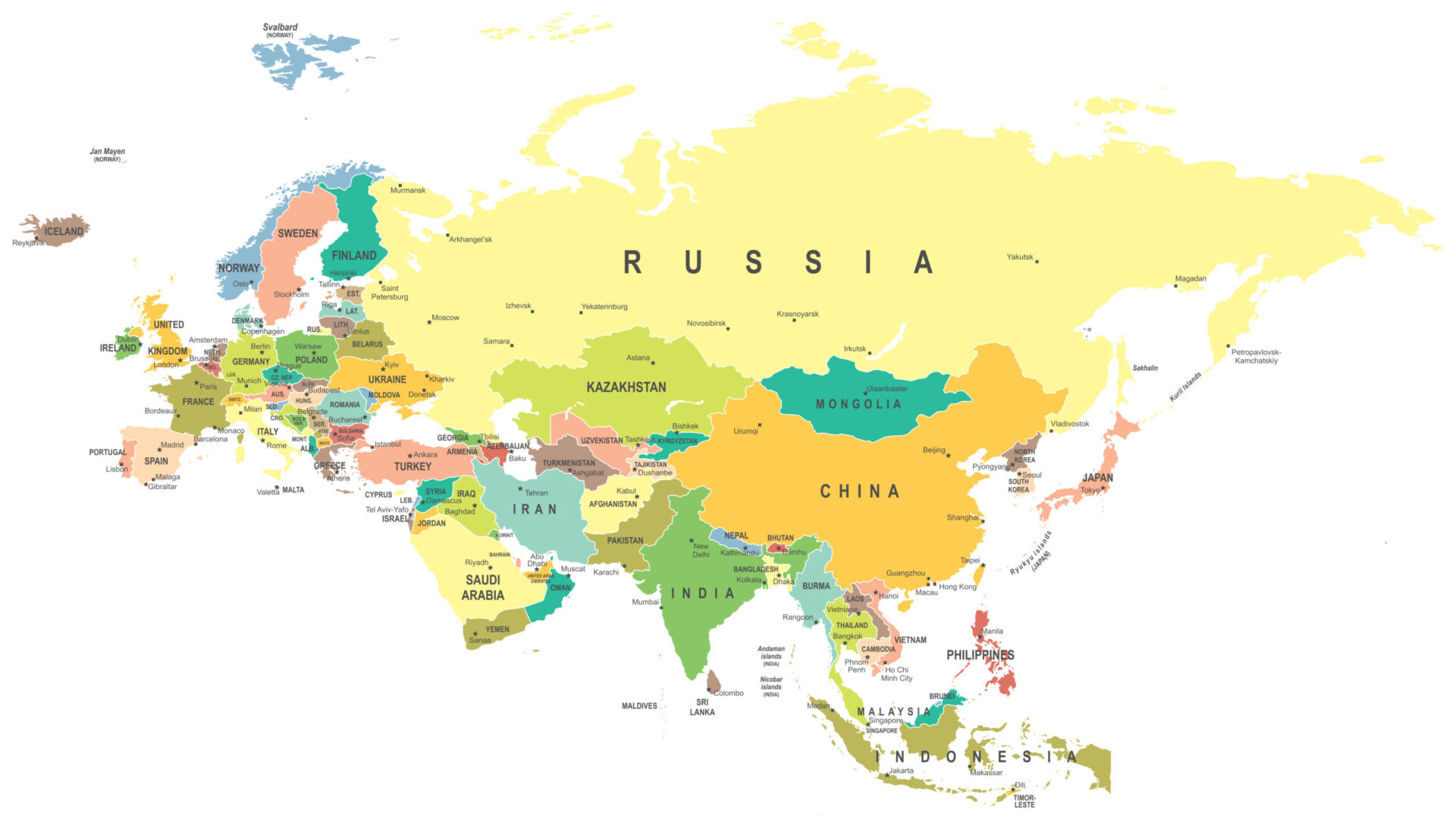
Map of Ukraine

By John Hudson, Washington Post, 9/7/22

SOUTHERN UKRAINE — In dimly lit hospital rooms in southern Ukraine, soldiers with severed limbs, shrapnel wounds, mangled hands and shattered joints recounted the lopsided disadvantages their units faced in the early days of a new offensive to expel Russian forces from the strategic city of Kherson.

The soldiers said they lacked the artillery needed to dislodge Russia’s entrenched forces and described a yawning technology gap with their better-equipped adversaries. The interviews provided some of the first direct accounts of a push to retake captured territory that is so sensitive, Ukrainian military commanders have barred reporters from visiting the front lines.

“They used everything on us,” said Denys, a 33-year-old Ukrainian soldier whose unit fell back from a Russian-held village after a lengthy barrage of cluster bombs, phosphorous munitions and mortars. “Who can survive an attack for five hours like that?” he said.

Denys and eight other Ukrainian soldiers from seven different units provided rare descriptions of the Kherson counteroffensive in the south, the most ambitious military operation by Kyiv since the expulsion of Russian forces at the perimeter of the capital in the spring. As in the battle for Kyiv, Ukraine’s success is hardly assured and the soldiers’ accounts signaled that a long fight, and many more casualties, lie ahead.

“We lost five people for every one they did,” said Ihor, a 30-year-old platoon commander who injured his back when the tank he was riding in crashed into a ditch.

Ihor had no military experience before Russia’s invasion of Ukraine on Feb. 24. He made a living selling animal feed to pig and cow farms. His replacement as platoon commander also has no previous military experience, he said.

The soldiers were interviewed on gurneys and in wheelchairs as they recovered from injuries sustained in the offensive. Some spoke on the condition of anonymity to avoid disciplinary action. Others, like Denys and Ihor, agreed to reveal only their first names. But most spoke plainly about the disadvantages they faced.

Continue reading here.

Paul Robinson: The Strange Death of Liberal Russia – Part III

By Prof. Paul Robinson, Russia Post, 8/15/22

In a 2019 interview, Russian president Vladimir Putin remarked that, “The liberal idea has become obsolete. It has come into conflict with the interests of the overwhelming majority of the population.”
While liberalism undoubtedly faces severe troubles in Russia, some may doubt the conclusion that it is obsolete. The purpose of this article, therefore, is to examine whether there are any realistic prospects for a liberal revival in Russia.

Do Russians care about liberal values?

One argument in favor of a liberal recovery rests on the belief that while Russians have turned their back on liberalism as a political movement they haven’t turned their back on liberal values. In other words, Russians dislike liberals while not disliking liberalism. Valery Solovey, for instance, writes that: “The main values and ideas of political liberalism – such as checks and balances, an independent judiciary, competitive elections, a multiparty system, civil rights and liberties, and the like – are valued highly by Russians … Russians appear to reject the forms of liberalism while endorsing its political and economic content.”

Opinion polls partly bear this out, but only partly. Surveys on democratic values indicate that two-thirds of Russians consider law and order and just courts to be very important. Fifty-two percent consider free elections very important, 42 percent – freedom of speech, 36 percent – an independent press, 30 percent – minority rights, and 26 percent – political opposition.

This indicates some support for liberal principles, although the lack of interest in political opposition suggests some limitations to this support. This conclusion is backed up by a 2017 survey, in which Russians stated that the things that most concerned them were their health, their family, their personal security, and social infrastructure, such as roads, shops, and healthcare. Only eight percent deemed “participation in social and political life” to be important.

Only seven percent Russians share the idea that “the state should interfere in the life and economic activity of citizens as little as possible”, 2021. Source: Wiki Commons

In a 2020 poll, 60 percent of respondents supported the idea that the state had a duty to provide citizens with what they need for a dignified life; 49 percent the statement that “Our people always needs a ‘strong hand’;” 31 percent the idea that the state should merely “establish the rules of the game;” and only seven percent the idea that “the state should interfere in the life and economic activity of citizens as little as possible.”

In a 2021 survey, 49 percent said that they preferred the “Soviet system as it was until the 1990s,” 18 percent the “current system,” and only 16 percent “democracy according to the model of Western countries.” As regards economic models, 67 percent favored “a system based on state planning and distribution,” and only 24 percent a system “founded on private property and market relations.” And as far as minority rights are concerned, a 2020 poll concluded that in recent years Russians had become more tolerant of sexual minorities but less tolerant of religious sects. Young Russians were in general more tolerant than older ones.

Laying expectations on the young

This last point raises the possibility that Russia may become more liberal as the current younger generation grows up. The evidence for this is somewhat mixed. A 2020 poll of 1,500 Russians aged 14 to 29 asked them to identify the values that were most important to them. The top response (78 percent) was human rights, followed by security (57 percent), employment (52 percent), economic welfare of citizens (37 percent), equality (31 percent), and democracy (18 percent). However, young Russians’ understanding of human rights had a socialist tint to it, with the rights to life and medical care coming top, followed by the right to a fair trial, right to social security, right to education, and the right to free speech, in that order. Of those surveyed, only 12 percent declared themselves “liberals,” with 28 percent considering themselves “social democrats” and 16 percent “nationalists.” Meanwhile, 58 percent disagreed with the statement that “Russia is a European country,” and 80 percent responded that it would be a “bad” thing if a homosexual individual or couple moved into their neighbourhood.

Liberalism has its limits even among youth. None of this means that liberalism in Russia is doomed. It is not impossible that economic stress due to the Ukrainian war or some other unexpected event could unleash processes that provoke mass protests that in due course topple the government and pave the way for a liberal revival. At present, though, this looks rather unlikely.

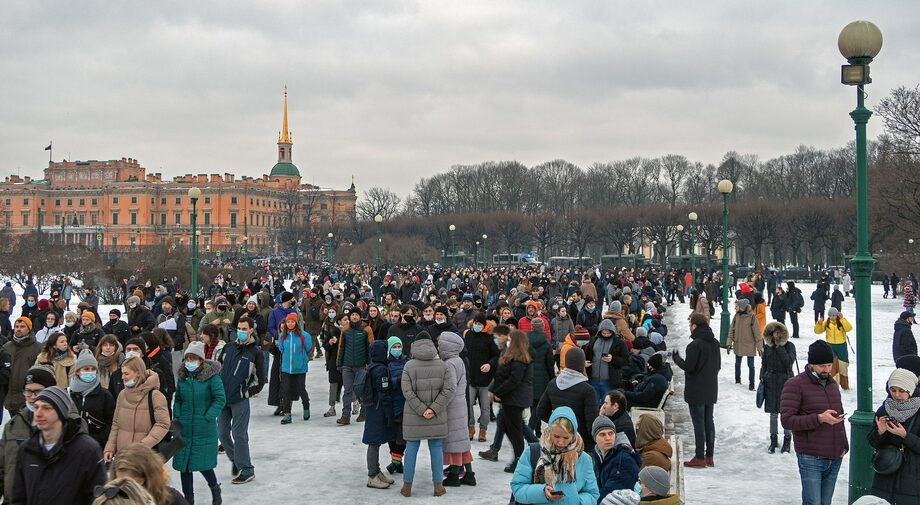
While a few radicals, particularly Alexei Navalny and his followers, have hoped to further their cause by means of mass street protests, they have had little success and their radicalism has been rejected even by many in the liberal opposition. As the Yabloko party’s former president Sergei Mitrokhin put it: “The revolutionary scenario is unacceptable for Russia because Russia is the biggest country in the world, with the longest borders, and large ethnic and confessional diversity … Any revolution could lead to our country’s disintegration.”

In this regard, a comparison with 1917 is useful. Back then, there was an enthusiasm for revolution in Russia which is almost entirely absent today. Furthermore, liberals were able to take power following the Tsar’s abdication in March 1917 because they had a powerful presence within the Russian parliament, where they had formed a coalition with moderate conservatives. This is not the case today. Moreover, after taking power in 1917 liberals soon lost it, in large part due to the fact that they lacked strong roots in the Russian population. Power shifted to organizations that did have such roots and who were able to speak to people in a language they understood. In this regard, liberals are even worse placed than they were 100 years ago. As in 1917 so too today there is little reason to suppose that the beneficiaries of regime collapse in Russia would be liberals.

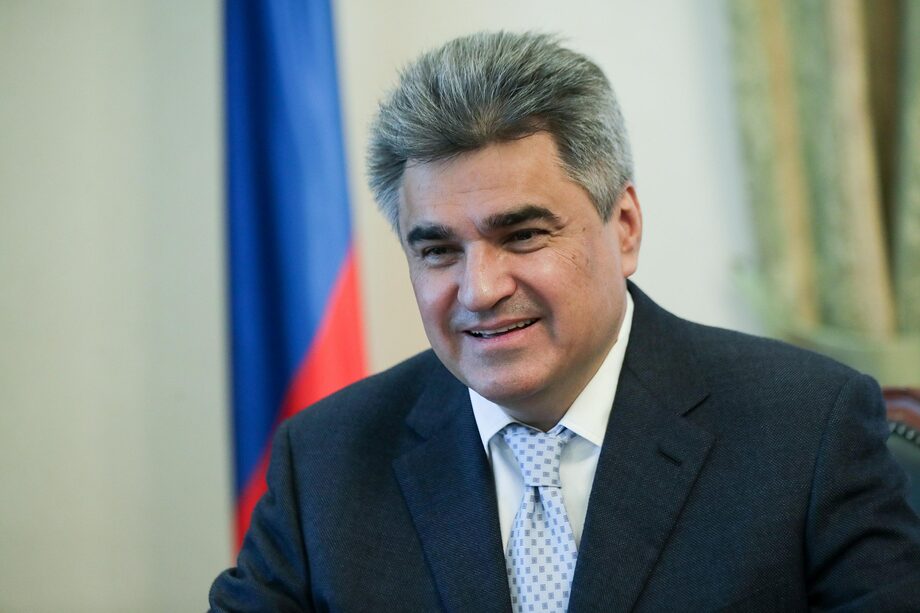
Alexey Gennadievich Nechayev, chairman of the New People political party, 2021. Source: Wiki Commons

Lacking organizational base

Bottom-up liberalization requires some organizational base. At present this is lacking, with the older liberal parties, notably Yabloko, having no realistic prospects of future success. The only semi-liberal group to have significant parliamentary representation is the party New People, which in 2021 won just over 5% of the national vote. The party’s founder Alexei Nechayev says that “We aren’t liberals [but] democratic values are close to us”. The decision to eschew the liberal label may reflect an understanding of its unpopularity more than a rejection of liberal values. The party program adopts relatively liberal political and economic policies, calling for the decentralization of power, “political diversity … and competition,” “freeing entrepreneurs” from the pressure of the state, and so on.

But the party specifically states that it aims to work within the political system not to overthrow it. It also avoids overt Westernism and emphasizes that its focus is on local affairs. In this way it stays within the boundaries of what the central authorities will tolerate. Given this, it possibly represents a mechanism through which liberalism can regain a small foothold in Russian politics. It remains to be seen, though, what will become of it.

Overall, the prospects of liberalization driven from the bottom up seem slim. Historically, reform in Russia has rarely come that way. Rather it has been driven from the top down. In particular, liberal reforms have largely been the product of what one might call “enlightened bureaucrats.” These have promoted change not so much out of respect for liberal ideas as out of a recognition that the state would benefit from some degree of liberalization. This was the case during the Great Reforms of the 1860s and in the era of perestroika in the 1980s. In both instances, change came from within the system.

Modern-day equivalents of the enlightened bureaucrats of the past do exist, and a handful still retain relatively high office, particularly in the economic sphere. Their numbers, however, have shrivelled over the past 20 years. At present, it is hard to see them being able to amass the influence required to successfully promote a reform agenda.

Defeat in war could perhaps change this calculus, and provide the necessary impetus for reform, as in the aftermath of the Crimean War in the mid-nineteenth century. If the country’s elites decide that drastic liberalization is the only way of preserving their own privileges, of saving the state from collapse, or of preventing revolution, then change is possible.

There is, however, a crucial difference between the situation today and in previous eras of reform. In the 1860s, Russia was at peace. Similarly, perestroika coincided with a period of improved international relations – indeed, Gorbachev and his advisors brought the Cold War to an end precisely because they believed that peace was a prerequisite of successful reform. Today, by contrast, Russia is at war. Moreover, there is little to no chance of Russia’s relations with the West improving significantly in the foreseeable future. Among other reasons, the conditions set by the West for the normalization of relations include demands that no Russian government, of whatever political hue, could ever satisfy (the return of Crimea to Ukraine being the most obvious example). It could be that the invasion of Ukraine marked a decisive historical turning point at which Russia and the West separated themselves from each other once and for all. There may be no turning back – or at least not for a very, very long time. The balance of world power is shifting to the East.

In these circumstances, Russia’s elites have little option but to rally around the flag (even in 1917 they defected not because they were opposed to Russia’s war with Germany but because they felt that the Tsar was losing it and that they could fight it better without him).

This is not just because any form of Westernism will bear the taint of treason. In recent years, the West has lost much of its moral authority, in part as a result of its own crimes and misdemeanors, such as the 2003 Anglo-American invasion of Iraq. Meanwhile, the balance of world power is shifting to the East. As noted in Part 1 of this series, Russian liberalism has long rested on a form of historical determinism that sees the West as the model towards which history is inevitably marching. But the rise of China and the shifting balance of global power pose a serious challenge to this concept. The allure of the West is not what it was.

How Russian liberalism will respond to these challenges is as yet unclear. But if it is to have any hopes of future success, it will need to recognize that the world has changed. In particular, it will have to find a way to adapt to a new global context in which talk of a “return to Western civilization” has become largely redundant. Russian liberalism has been defeated before and yet come back to life. The same may happen again, but as in the twentieth century the wait may be long.