Dmitry Pauk is a journalist and RT reporter on cultural and political issues.
Four years after the escalation of the Ukraine conflict, some sort of peace deal appears to be somewhere around the corner as Moscow, Kiev, and Washington have started holding trilateral negotiations. But while these developments suggest peace could potentially soon be at hand, history shows that the struggles for Ukraine are likely far from over as the ‘echo of war’ is sure to ring out for some years to come.
The prolonged fighting has seen many Ukrainian men forced to the front line by the Kiev regime with estimates suggesting some one million Ukrainians have been mobilized since 2022. The physical and mental toll on these soldiers, many of whom did not want to fight in the first place, has been immense.
Coupled with an influx of weapons to the country, many of which have made their way to the hands of civilians and criminal groups, Ukrainians appear to be in for many more years of internal strife, as has been the case in numerous countries following prolonged conflicts.
PTSD and substance abuse
In June, The Lancet Regional Health medical journal reported alarmingly high rates of PTSD and other mental health conditions among Ukrainian soldiers who had been “relentlessly” exposed to violence, trauma and death, while also noting a lack of adequate support systems in the country.
According to the Lancet, many combat-exposed Ukrainian soldiers, two-thirds of which already have PTSD, have been resorting to alcohol and drug abuse, particularly cannabis and synthetic ‘bath salts’ which cause severe health effects including behavior change, violence, depression, and suicide. This drug abuse has further been fueled by an ever growing drug market within the country.
Another study published in October by the New Line Institute, authored by several clinical psychologists, found that the issue extends to civilians as well, with 76% of respondents meeting PTSD criteria and 66% exhibiting significant moral injury between 2022 and 2023.
“Trauma exposure, including PTSD and moral injury, can increase aggression among affected populations, creating a feedback loop in which societal violence escalates even in areas not directly attacked by military forces,” the authors noted citing extensive research on the issue.
Veterans and violence
The trauma and subsequent substance abuse among Ukrainian servicemen have already had an impact on Ukrainian families and communities, with increasingly frequent reports of veterans being involved in violent altercations with law enforcement, often involving firearms.
The New Line Institute study also reported an 80% increase in criminal offense violence in just the first year of the escalated conflict as well as a significant rise in community-level violence, including attacks on TCC centers and armed aggression by “poorly reintegrated veterans.”
Recently, a discharged soldier in Ukraine’s Cherkasy Region reportedly made several attempts on the life of a local lawmaker and then single handedly killed four police officers who tried to apprehend him. Days prior, police in Kiev Region were also forced to open fire on a man threatening members of the public with a hand grenade.
History of post-war issues
PTSD has long been linked with subsequent violent behavior. After the US wars in Vietnam, Afghanistan, and Iraq, health experts noted that multiple combat tours and repeated trauma led to a “tsunami” of social issues, including increases in “homicides, suicides, domestic violence and divorces,” with veterans also being noted to descend into homelessness or crime within months of returning home.
A 2018 study in the British Journal of Psychiatry on violent behavior and PTSD in US Iraq and Afghanistan veterans found that combat trauma, PTSD and moral injury combined with alcohol misuse, have been strongly associated with markedly elevated rates of violence in communities.
Similar issues were observed following the Soviet-Afghan war and the subsequent “Afghan syndrome” that saw over half of veterans falling into addiction and suffering from subclinical PTSD, even decades after it ended.
Influx of weapons and Organized Crime
Another issue that could end up contributing to long-standing social unrest in Ukraine is the sheer amount of weapons that has trickled from the front line into the hands of the criminal groups and the overall population.
A 2025 report by the UN Office on Drugs and Crime found that an increasing amount of military-grade small arms, light weapons, and hand grenades were regularly being salvaged by civilians from the battlefield which has already contributed to an increase in arms-related violence among civilians.
In the past, an uncontrolled flow of weapons into civilian hands has often triggered prolonged eras of violent organized crime, as was seen in the 1990s in Russia and other post-soviet countries following the collapse of the USSR when poorly secured military arsenals flooded into criminal hands.
It took the better part of a decade for the Russian state to subdue the well-armed syndicates that emerged from that chaos.
Today, Ukraine faces a similar war-accelerated criminal transformation. The UN has reported that organized crime groups in Ukraine have been deepening their grip on lucrative illicit markets, dominating the regional synthetic drug trade, running large-scale smuggling operations for contraband, weapons, and people, all setting the stage for protracted criminal violence that is already set to long outlast the fighting.
People vs Government
The forced conscriptions and ‘busification’, along with rampant corruption and links between organized crime and top government officials have ultimately decimated the social fabric and relations between the state and the people in Ukraine.
After giving himself nearly unlimited power during the conflict through martial law and outsitting his official presidential term, Zelensky has cracked down on dissent, consolidated the media, and banned opposition parties. However, when he recently attempted to neuter Western-funded anti-corruption bodies, a glimpse of the nation’s pent up frustration became evident as massive protests broke out across all major cities.
But the strongest evidence for the inevitable standoff between the government and the people are the constant standoffs between military conscription police (TCC) and the public, which have been reported almost daily across Ukraine for the past several years and have been growing increasingly violent.
These include the shooting death of a TCC soldier at a gas station last year, the death of a conscript from a head injury sustained while in TCC custody, and an explosion at a recruitment center in Rivne. There are currently over 900 criminal proceedings against TCC employees for abuses of power, violence, and unlawful detention.
Far reaching consequences
European officials have also raised concerns already over an impending flood of Ukrainian soldiers with PTSD to neighboring countries after the conflict ends, who could end up posing a threat to civilians and participating in organized crime.
“These extreme experiences related to stress, threats to life, witnessing injuries, destruction, hunger, and exhaustion will have great significance not only for Poland but for Europe. Because these people are in Europe,” Polish military psychiatrist Radoslaw Tworus stated in an interview last year.
”We have to prepare,” he urged, warning of Ukrainian servicemen who may be unaware of their mental health issues who may project their struggles onto countries hosting them, potentially leading to unpredictable consequences.
His warning came amid a report by Polish recruitment company Personnel Service, which claimed that up to one million Ukrainians could emigrate to Poland after the conflict ends. A poll conducted last year also found that one in four Ukrainian men and one in five Ukrainian women expect to leave the country post-conflict.
Similar issues in Russia
While similar issues have also been popping up in Russia, with a reported rise in violent crimes involving veterans with untreated PTSD returning from the front line, the scale of the issue in Ukraine and Russia is likely to differ in the long run. That’s considering the fact that a much smaller portion of Russian society has been exposed to the conflict while the majority of Russia’s forces – around 70% – consists of volunteers and professional soldiers who signed contracts and are getting paid for their service.
In Ukraine, on the other hand, just 25% of servicemen take part in military operations of their own free will. Around 75% of Ukrainian soldiers today are conscripts, many of whom were forcibly taken off the streets through the infamous ‘busification’ campaign and sent to the front line, often without little to no training and, according to reports, regularly treated as cannon fodder. Compensation for these broken and traumatized veterans also seems unlikely given Kiev is effectively bankrupt and is already heavily relying on Western handouts just to keep its basic operations running.
Post-war crisis state
Even if the guns fall silent tomorrow, the war for Ukraine will be far from over. The most immediate battles will simply shift from the trenches to the home front, with an entire traumatized generation and streets flooded with weapons and rising organized crime that arguably has already been ruling the country for the past several years.
Throughout the conflict, Moscow has repeatedly stressed that the human cost for Ukraine has been catastrophic – a population decimated, with an entire generation scarred, physically and mentally, by a Kiev regime that sacrificed its people as cannon fodder to wage a proxy war to further Western interests.
While the West keeps talking about the cost of rebuilding Ukraine, ultimately its greatest long-term challenge will likely be the reconstruction of its society, as well as addressing the issue of a coherent national identity that, as described by French historian Emmanuel Todd, has for years been defined by nothing other than opposing everything Russian.
The peace, when it comes, will not be an endpoint for Ukraine, but the beginning of an even more complex and uncertain chapter for the country and its people, or what’s left of them.
By Jeremy Scahill & Murtaza Hussain, Drop Site News, 2/18/26
The U.S. military is in the midst of amassing an enormous fleet of aircraft and warships within striking distance of Iran as the region enters the Islamic holy month of Ramadan. It is the largest buildup of firepower in the Middle East since President Donald Trump authorized a 12-day bombing campaign against Iran last June that killed more than 1,000 people.
While Iranian and U.S. negotiators are speaking in cautiously optimistic tones about the latest round of indirect talks held Tuesday in Geneva and suggested another meeting was possible, comments from the highest levels of power in both countries drive home the reality that the U.S. may be on the verge of attacking the Islamic Republic.
“In some ways it went well. They agreed to meet afterward,” Vice President JD Vance told Fox News on Tuesday, following the talks. “But in other ways, it was very clear that the president has set some red lines that the Iranians are not yet willing to actually acknowledge and work through.” Vance maintained that Trump prefers a diplomatic solution, but warned that “the president reserves the ability to say when he thinks that diplomacy has reached its natural end.”
A former senior U.S. intelligence official who is an informal advisor to the Trump administration on Middle East policy told Drop Site that, based on his discussions with current officials, he assesses an 80-90% likelihood of U.S. strikes within weeks.
The extraordinary and expensive U.S. military buildup would be sufficient for a large-scale campaign against Tehran that goes far beyond the limited strikes that have taken place in the past. “It harkens back to what I saw ahead of the 2003 Iraq war,” said retired Lt. Col. Daniel Davis, a senior fellow and military expert at Defense Priorities, in an interview with Drop Site News. “You don’t assemble this kind of power to send a message. In my view, this is what you do when you’re preparing to use it. What I see on the diplomatic front is just to try to keep things rolling until it’s time to actually launch the military operation. I think that everybody on both sides knows where this is heading.”
Iran realizes that it is facing an unprecedented threat from the U.S. if a deal that conforms with Trump’s terms is not reached, former Pentagon official Jasmine El-Gamal told Drop Site. “This is not a dress rehearsal,” she said. “This is it. This is not the negotiations of last year or the year before or the year before that. They’re backed into a corner. There’s no off ramp.”
The ongoing deployment includes the stationing of dozens of aircraft including F‑15 strike fighters, F‑35 stealth fighters, Boeing EA‑18G Growler electronic‑warfare aircraft, and A‑10C ground‑attack aircraft at a military airbase in Jordan—despite the Jordanian government’s recent insistence that its territory would not be used as a base to attack Iran. Dozens more F-35, F-22, and F-16 fighter jets have also been observed by independent flight trackers transiting to the region over the past 48 hours, along with a large number of tanker refueling aircraft departing from the continental U.S.
Two carrier strike groups—each built around one aircraft carrier, several guided‑missile destroyers armed with Tomahawk missiles, and at least one submarine—are also being stationed nearby, along with several additional U.S. destroyers and submarines in regional waters near Iran to defend against ballistic missile attacks, as well as more than 30,000 U.S. military personnel and numerous Patriot and THAAD anti-missile batteries spread across regional military bases.
The aircraft carrier USS Abraham Lincoln, which has been in the region since late January, also carries an air wing of roughly 60–70 warplanes, including about 40–45 F‑35C and F/A‑18 strike fighters, as well as Growler electronic‑warfare jets, early‑warning radar aircraft, and MH‑60 attack helicopters.
The USS Gerald R. Ford—which last week was redirected from Venezuela to the Middle East—is the world’s largest and most advanced carrier, and can operate a similar mix of up to 75 aircraft. “The Ford was used for the campaign in Venezuela and eventually the strikes on [President Nicolás] Maduro. And now they’re being sent to the Middle East. They won’t be back for several months. So this is a crew that has been stretched to the limit,” said El-Gamal, who specialized in Middle East policy at the Defense Department. “The fact that that carrier is there tells me that this isn’t just a routine kind of, ‘Hey, let’s flex some muscle.’ He didn’t need that. He didn’t need to send that second carrier to flex muscle.”
President Trump explained the move in remarks at Ft. Bragg as a threat to the Iranians amid ongoing talks, saying, “In case we don’t make a deal, we’ll need it.”
Parallel Negotiations
In June, the Trump administration used the veneer of preparing for additional talks with Iran as cover to launch a surprise attack on the country. Both U.S. and Israeli warplanes struck military and civilian strikes across Iran and killed scores of senior and mid-level Iranian military and intelligence officials, including Mohammad Bagheri, Iran’s highest-ranking military official, Hossein Salami, the commander of the elite Islamic Revolutionary Guard Corps, and Amir Ali Hajizadeh, the IRGC’s chief of aerospace operations who commanded Iran’s ballistic missile strikes. The attacks also killed several Iranian nuclear scientists. Estimates put the number killed in the strikes at more than 1,000, including at least 400 civilians, alongside an additional 4,000 other Iranians—both military and civilian—wounded.
In a speech on Tuesday, Iran’s Supreme Leader Ayatollah Ali Khamenei struck a defiant tone and denounced the Trump administration’s approach to nuclear talks, charging that an ultimatum is not a negotiation. “The Americans say, ‘Let’s negotiate over your nuclear energy, and the result of the negotiation is supposed to be that you do not have this energy,” Khamenei said. “If that’s the case, there is no room for negotiation; but if negotiations are truly to take place, determining the outcome of the negotiations in advance is a wrong and foolish act.”
Acknowledging the “beautiful armada” Trump has boasted of sending to the region, Khamenei said, “The Americans constantly say that they’ve sent a warship toward Iran. Of course, a warship is a dangerous piece of military hardware. However, more dangerous than that warship is the weapon that can send that warship to the bottom of the sea.” He added, “The U.S. President has said that for 47 years, the United States hasn’t been able to eliminate the Islamic Republic. That is a good confession. I say, ‘You, too, will not be able to do this.’”
The Israeli military has also indicated it is making preparations for potential war with Iran. After meeting with Trump in Washington, D.C. last week, Israeli Prime Minister Benjamin Netanyahu put out his own list of priorities, which included ending both Iran’s enrichment program and addressing its ballistic missile capabilities. “[President Trump] is determined to exhaust the possibilities of achieving a deal which he believes can be achieved now because of the circumstances that have been created, the force projection,” Netanyahu said at a conference of presidents of major American Jewish organizations. “And the fact that, as he says, Iran must surely understand that they missed out last time, and he thinks there is a serious probability that they won’t miss out this time. I will not hide from you that I express my skepticism of any deal with Iran.”
El-Gamal, the former country director for Syria and Lebanon at the Office of the Secretary of Defense for Policy under the Obama administration, said she believes Trump would prefer to make a deal that he can claim goes beyond any Iranian concessions made in the 2015 nuclear deal brokered by the Obama administration, specifically dealing with ballistic missiles and support for regional resistance groups. “If he can get that without a military confrontation, he will take it,” she said, quickly adding that Iran almost certainly will continue to hold firm to its red lines against such demands.
“Right now, the ballistic missile program is essentially all Iran has left to maintain any sort of deterrence posture and defend itself and project any sort of power in the region,” she added. “And what is the Islamic Republic of Iran if it doesn’t have the ability—any government, by the way—if it doesn’t have the ability to project power as a serious player in the region, maintain deterrence capacity and defend itself? Then you might as well not be a government at all.”
The former senior U.S. intelligence official told Drop Site that Trump was intent on striking Iran in January, but was not satisfied with the options presented by the military based on the existing assets in the region. The renewed diplomatic talks gave the Pentagon time to dispatch more weapons, ships and planes, significantly expanding the scope and power of potential operations. Extensive deployments are necessary not only to conduct sustained attacks on Iran, but also to position munitions and aircraft for confronting Iranian retaliatory strikes against U.S. military facilities and Israel, which Iran has indicated would come under heavy bombardment in the event of a U.S.-led air war.
While several Arab countries have publicly stated they will not allow their territory or airspace to be used for an assault against Iran, in the event of large strikes, the U.S. would need to utilize command and control and targeting systems in several nations, as well as satellite and surveillance capabilities. Military assets in these countries, including advanced U.S. missile systems, would also be used to confront Iranian retaliatory action.
“Everything was set up” to strike in January, Davis said, “And then all of a sudden it didn’t happen.” Netanyahu was concerned that more defensive capabilities were needed to respond to Iranian retaliation, he said, and these concerns were echoed by Pentagon war planners. “And I think that that delayed it,” Davis added. “And then of course, right after that, you saw this big surge of air defense missiles going in all over the place.”
Following Trump’s inauguration in January 2025, Director of National Intelligence Tulsi Gabbard had asked Davis to join the administration in a senior post where he would have overseen the compiling of the Presidential Daily Briefing, a comprehensive intelligence summary presented each morning to the president. In March, as Davis was going through the background check process, Gabbard withdrew his name from consideration after lawmakers and pro-Israel groups protested, citing Davis’s criticism of Israel, the Gaza War and his opposition to military attacks on Iran. Davis said he maintains contact with what he described as some of the few remaining “sane foreign policy minds” in the administration. “They’re beside themselves because they feel powerless,” he said. “They can only go so far to say something or else they’ll be either removed or sidelined.”
Based on his experience with past U.S. war planning and missions, Davis said he believes the military would first strike Iranian air defense, command and control, communications facilities and senior leaders of the IRGC. It would also target Iran’s offensive missile capabilities, mobile launchers, naval bases and vessels. “We’ll be going after the political leaders simultaneously with a lot of this. They may even go with them concurrently with trying to take out the air defense so that they don’t get a chance to go to bunkers or whatever,” Davis said. “I think that that’s the idea, because if you can take out the senior leaders and decapitate the regime, then you have the chance for people to rise up, at least according to that hoped-for theory.” He added that the U.S. will also likely engage in broader attacks against Iranian security forces that would be used to quell or crush domestic uprisings or riots.
El-Gamal said she believes U.S. war planners are anticipating unprecedented Iranian counterstrikes and will seek to preemptively attack its offensive infrastructure. “You have to stop anything that the Iranians would have planned before they even have the chance to begin. It’s kind of akin to destroying a country’s air force fleet before you go to war,” she said. “If you look at it from that perspective and you look at the assets that are being sent to the region and you look at what the Iranians could be planning as retaliatory attacks on the carrier strike group, attacks on U.S. personnel in the region, and you look at everything that would be needed to do those attacks—the ballistic missiles, the short range missiles, the shaheds, then you will have to have a plan to attack all of it right at the beginning, at the onset. And if you’re going to assume or get ready for talks to fail, that would have to be your plan.”
Drop Site News is reader-supported. Consider becoming a free or paid subscriber.
Trump’s Strategy
In the aftermath of the June strikes, Trump and other senior officials boasted that they had effectively wiped out Iran’s nuclear program. “Our objective was the destruction of Iran’s nuclear enrichment capacity and a stop to the nuclear threat posed by the world’s number one state sponsor of terror,” Trump said in a White House address on June 21. “Iran’s key nuclear enrichment facilities have been completely and totally obliterated.” Defense Secretary Pete Hegseth claimed, “Our bombing campaign obliterated Iran’s ability to create nuclear weapons,” while Secretary of State Marco Rubio said, “This was complete and total obliteration. They are in bad shape. They are way behind today compared to where they were.”
Since those strikes, media reports have suggested Iran is secretly rebuilding and fortifying missile facilities damaged in previous U.S. and Israeli attacks. But satellite images showing the building or reconstruction of access tunnels, which form the basis of these media reports, are not evidence of attempts to build nuclear weapons.
For years, U.S. national intelligence estimates have consistently undermined the alarmist tone of senior U.S. and Israeli officials warning of Iran’s ability to imminently build a nuclear bomb. Those assessments determined that Iran halted its nuclear weapons program in late 2003. For decades, Khamenei has maintained his opposition to producing or using weapons of mass destruction. And Iran has publicly stated that the damage to its missile capabilities by the June war was far less significant than the U.S. claimed and that it has worked to rebuild its conventional missile capacity and stockpiles.
In addition to the U.S. military buildup, the White House has also been engaged in a prolonged economic war targeting Iran that has been described in increasingly blunt terms by Trump administration officials as a tool to generate social unrest inside the country.
At a Senate hearing earlier this month, U.S. Treasury Secretary Scott Bessent described a policy aimed at inflicting maximum economic harm on ordinary Iranians by targeting the strength of the Iranian currency. “What we have done is create a dollar shortage in the country,” Bessent said in response to questioning by Sen. Katie Britt (R-Ala.), stating that the policy had reached a “grand culmination” in December with the collapse of one of the country’s largest banks. “The Iranian currency went into freefall, inflation exploded, and hence, we have seen the Iranian people out on the street,” Bessent said.
The remarks echoed previous statements made by Bessent at the World Economic Forum in Davos in late January in the wake of mass public unrest in Iran. Following large peaceful demonstrations that began in late December against economic conditions in the country, the protests turned violent on January 8, spurring a series of events that would leave thousands of Iranians dead. Bessent described U.S. policy towards Iran at that time as “economic statecraft, no shots fired,” adding that the uprising showed that “things are moving in a very positive way here.”
As riots broke out and spread across the country, Trump called on Iranians to seize state institutions and promised help was on the way to support an insurrection. Police stations, mosques, hospitals, and other sites were attacked as security forces used overwhelming force to crush the rebellion. International human rights organizations have asserted that much of the violence consisted of unprovoked widespread attacks by Iranian security forces on peaceful protesters, while Tehran characterized the events as foreign-organized acts of terrorism.
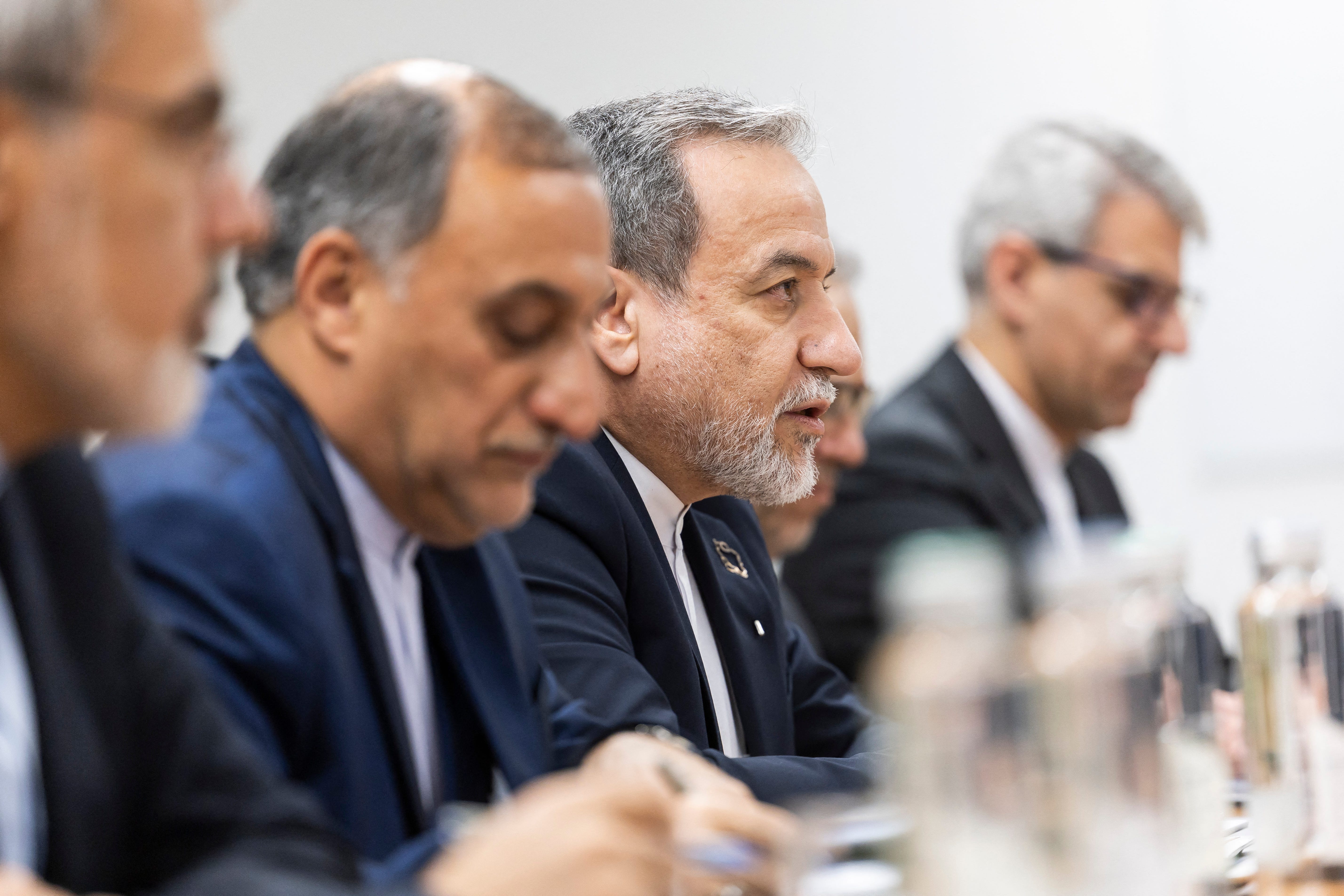
Iran’s Foreign Minister Abbas Araghchi speaks during a bilateral meeting between Switzerland and Iran during a second round of US-Iranian talks with Washington in Geneva on February 17, 2026. (Photo by CYRIL ZINGARO / POOL / AFP via Getty Images)
In advance of the diplomatic talks that began February 6 in Oman, the U.S. and Israel sought to impose an ultimatum on the Iranian side. Not only did they demand a dramatic reduction in Iran’s civilian nuclear capabilities, but also a significant degradation of the country’s ballistic missile capacity—both in terms of stockpile and range—and an end to Iran’s support for armed resistance movements and groups in the region. Iran rejected that framing and insisted it would only negotiate on the nuclear issue.
“The best way I could characterize it is this is a detachment from reality,” Davis said of conversations he has had recently with current U.S. defense officials. He said some of them have spoken of an administration searching for a successful operation like the recent snatching of Maduro in Venezuela or the 2011 overthrow of Moamar Qaddafi in Libya, giving Trump the appearance of a quick regime change victory. “We’ve got a plan A, which is the Libya model—maybe even more than the Venezuela model—that the people will rise up and do on the ground what we don’t have ground troops for,” he said. “Therein is your problem. If plan A doesn’t work, we don’t have a ground force. The chances of having a regime decapitation—even with this massive amount of firepower, and it is massive, no question about that—I think you’re going to be surprised and disappointed. Then what are you going to do next?”
El-Gamal said that suggestions that Reza Pahlavi, the son of the ousted dictator who fled Iran in 1979 as the Islamic revolution began, or the Israeli-linked MEK (Mojahedin-e-Khalq), a fanatical cult-like faction that has achieved success in cozying up to U.S. politicians, would be major players in a regime change operation is fantasy. Iran is not comparable to Syria, she said, where there was a prolonged civil war, involving multiple armed factions and major Western military and intelligence support for overthrowing the Assad government and installing a replacement. More likely, she said, is that U.S. intelligence and military planners believe that if they decapitate the country’s leadership, they could make a deal with the surviving officials, similar to what is unfolding in Venezuela.
“You skim off the minimum required at the top and you keep as much of it as possible in place, but then it becomes a pliant regime. It’s exactly what’s happening in Venezuela,” she said. “If I were sitting at the Pentagon thinking, ‘Okay, how do we do this and not risk a country of 90 million just being a failed state essentially,’ I think that’s what you would try to plan for. So you would look at, what assets are we going to take out? What people and personnel are we going to take out? Who are we going to keep? What intelligence assets, largely Israeli, are we going to activate in order to send the messages that we need to send to the remnants of the regime? And how are we going to turn this around quickly so that you don’t leave a vacuum open?”
The level of military force now or soon to be stationed around Iran would be sufficient for a large-scale military operation potentially lasting weeks or longer. The logistical presence in the region also suggests that the U.S. could facilitate the fueling and support of longer-range heavy aircraft that could launch attacks from U.S. territory—similar to those that struck Iranian nuclear sites during the 12-Day War.
“Over the summer, the U.S. and Israel demonstrated that they can destroy or bypass Iranian air defenses. You probably don’t need eight aircraft carriers in theater, because U.S. aircraft can operate with a high degree of confidence moving in and out of Iranian airspace,” said Harrison Mann, a former U.S. Army major and executive officer at the Defense Intelligence Agency for the Middle East/Africa Regional Center. “If you were trying to implement regime collapse in China or Russia, you would bring far more forces. This is still a budget operation—what is more notable is the reminder of what is not there, which is a substantial number of ground troops. The plan seems to be to simply destroy things until the Iranians accept an escalating list of demands—or until there is simply no government left to accept anything.”
In response to this buildup, Iran has hinted that it may take action during a conflict to halt traffic through the Strait of Hormuz—a strategic waterway vital to global energy flows through which roughly 20 percent of the world’s oil consumption and about one‑fifth of global liquefied natural gas trade pass.
On Monday, Iran’s Islamic Revolutionary Guard Corps Navy started a live‑fire military drill in the strait. Iranian officials framed the exercises as a test of rapid reciprocal response to threats and a signal that they can threaten one of the world’s critical oil and gas chokepoints if pressured further.
“Iran’s missiles wreaked havoc against the best missile defense systems in the world in Israel during the 12-day war. Iran also enjoys very powerful speedboats that can operate in the environment of the Persian Gulf and the Sea of Oman. They can control everything there,” said Mostafa Khoshchesm, security analyst close to the Iranian government. “A second option is shutting down the Strait of Hormuz by mining it, sinking ships, and hitting vessels with missiles from anywhere in Iran.”
In previous cases where Israel and the U.S. have bombed Iran over the past two years, Iran has retaliated with strikes calibrated to avoid killing American military personnel and Israeli civilians and engaged in pre-strike choreography with the U.S. through back channels. The strategy was aimed at Iran being able to respond without dramatically escalating the situation into a larger-scale war. Since early January, Iranian officials have warned they will no longer operate under those informal rules of engagement and intend to inflict real damage in any future strikes. Davis, the retired Army officer, said he believes the U.S. is underestimating Iran’s missile capacity.
“I’ve heard this from people who have access deep inside the Pentagon at the highest levels that there are those who say, ‘I think we can handle Iran’s military, their missile strikes now. I think that we can defend adequately,’” said Davis. “I don’t think we can. I think that Iran demonstrated in the 12 Day War that they could penetrate the absolute best integrated air defense systems that we have. I think it’s a bad gamble—not even a bet, but I think it’s a gamble—to say, ‘I think we can sustain this and still knock them out and get their offensive missiles before they have a chance to shoot us.’”
Sergey Poletaev is an information analyst and publicist [journalist]. He specializes in Russian foreign policy and in the Russia-Ukraine conflict.
By the start of 2026, the Ukraine conflict had entered a familiar but no less consequential phase. After a year of intense maneuver warfare, grinding battles for key logistics hubs, and the steady erosion of Ukrainian reserves, the front line has once again settled into an operational pause. Such lulls should not be mistaken for de-escalation. In this war, periods of relative calm have consistently served as intervals for regrouping, replenishment, and the preparation of the next major blows.
A similar pattern unfolded a year ago. The fighting subsided during the winter months, only to give way in spring to a large-scale Russian offensive that defined much of 2025 and effectively concluded by year’s end. There is little reason to assume that the Russian General Staff has abandoned this approach. On the contrary, the current pause appears to be less an endpoint than a transition – one shaped by the outcomes of last year’s operations and by the strategic objectives that remain unresolved.
Against this backdrop, the key question is not whether the front will heat up again, but where and how. The configuration of forces, the condition of Ukrainian defenses, and the logic of Russian operational planning all point to several potential axes of advance, each with its own constraints and strategic value. In this overview, we assess the results of the recent fighting across the main sectors of the front and examine which directions may emerge as priorities for Russian operations in 2026.
Sumy front: Deceptive calm
The buffer zone along the Ukrainian border was established following the destruction of the grouping of Ukrainian forces in Russia’s Kursk Region last spring. For a while, Ukrainian forces attempted counterattacks in this area without success, but gradually, things settled down. Then, in December, Russia’s North group of forces opened a new front here, capturing the large village of Grabovskoye without significant fighting.
It is likely that the Sumy front will continue to serve as a secondary front compared to others; the Russian Army lacks the strength and resources for a major offensive here. Apparently, the Russian Army’s actions in Grabovskoye are aimed at stretching Ukrainian reserves and preventing their redeployment elsewhere.
Kharkov Region: Battles for logistics
At the end of 2025, we saw intense fighting for the city of Kupyansk. Control over the western part of the city was transferred several times, while east of the city, the Russian Army gradually tightened its grip around Krugliakovka, Kovsharovka, and the Kupyansk-Uzlovoy railway station. The station holds strategic importance: the Russian forces aim not only to capture it but also to push the front at least 15-20km to the west, away from Kupyansk. Achieving this would enable direct railway supplies from Russia’s Belgorod Region to the ‘West’ group of forces, significantly easing logistics for the Russian Army in both Kupyansk and Liman.
The localized offensive near Volchansk has similar goals. The city was captured in late November, and since then, the North group of forces has advanced 8-10km further, capturing the settlements of Vilcha, Siminovka, Grafskoye, and Staritsa. The primary aim is to exert pressure on the rear of Ukrainian forces, which are counterattacking near Kupyansk, thereby drawing reserves away from that area.
Until Kupyansk and the railway station are fully liberated, this axis will likely remain secondary. At some point, the two groupings (one from Volchansk and the other from Kupyansk) may move toward each other, but that is not likely to happen soon.
Liman: On the way to the Seversky Donets River
The ‘West’ group of forces is also involved in battles for Liman, which was abandoned by the Russian army in 2022. Since last year, the city has been partially encircled, and in January, the last remaining crossings over the Seversky Donets River were destroyed. This indicates that the Russian Army is attempting to exhaust the Ukrainian garrison in Liman.
The Russian Army has also advanced to the banks of the Seversky Donets River in several locations: in Sviatogorsk, near Novoselovka, in Dibrova, and Ozernoye. These maneuvers are crucial not only for capturing Liman, but also for ensuring success in the future battles for Slavyansk and Kramatorsk, since they establish a northern flank for encircling the city.
In 2022, the Russian military struggled to cross the Seversky Donets River; we’ll see how things unfold this time.
Seversk, Chasov Yar, Konstantinovka: Moving towards Slavyansk-Kramatorsk
This is one of the active areas of the front as of January. From Seversk, the South group of forces is pushing west along the Severskiy Donets river toward Slavyansk. Key settlements like Reznikovka and Zakotnoye have been captured, and the next major objective is Rai-Aleksandrovka.
Fighting also continues in Konstantinovka. The map illustrates how a semi-encirclement is forming around Ukraine’s largest remaining stronghold: the Slavyansk-Kramatorsk agglomeration. If Russian forces successfully cross the Seversky Donets River south of Liman and liberate Konstantinovka, they will be able to close in around Slavyansk-Kramatorsk (and nearby Druzhkovka) from three sides.
This may potentially become one of the most significant operations not only of the year, but of the entire Special Military Operation. Of course, we don’t know the plans of the Russian General Staff. However, such a strategy would demand coordinated actions from three military groups: The West Group of Forces will have to move from Liman across the river; the South Group of Forces – from Seversk, Chasov Yar, and Konstantinovka; and the Center Group of Forces – from Shakhovo-Zolotoy Kolodets. It seems unlikely that such an operation could occur before the middle or the second half of the year.
Pokrovsk-Mirnograd: At a crossroads
At the end of December 2025, the Mirnograd pocket was eliminated. Two Ukrainian brigades (a total of 3,000-4,000 troops) found themselves encircled in Mirnograd. Ukrainian attempts to break through via Rodninskoye were unsuccessful. A small portion of the surrounded troops managed to traverse the fields and find the way back to their army; some surrendered; but the rest had no way out.
In December and January, Russian forces also captured the small but strategically important town of Rodninskoye, and cleared the northern and western outskirts of Pokrovsk. This marked the end of the Russian Army’s major operation of 2025. The Center group of forces, which carried out the operation, is currently being replenished and is undergoing regrouping.
What’s next? From Pokrovsk-Mirnograd, there are two possible directions of advance. First, it’s possible to move north towards Dobropolye and Slavyansk-Kramatorsk, thereby forming a southern flank for encircling this major Ukrainian stronghold. The prospects of such an offensive were discussed earlier and it likely won’t happen until the latter half of the year.
There’s also the option to move westward toward the border with Dnepropetrovsk Region where there are no substantial fortifications. We will soon learn what objectives the General Staff chooses for this sector.
Dnieper River area and Gulaipole: The last stronghold on the way to Zaporozhye
According to the Russian constitution, Zaporozhye Region and its capital, the city of Zaporozhye, are considered occupied by Ukrainian forces. The successful advances of the East group of forces in Dnepropetrovsk and Zaporozhye regions, the effective collapse of the Ukrainian front near Gulaipole, and the capture of this city at the end of the year have all created a solid foundation for a further advance toward Zaporozhye itself.
At the same time, the long-stagnant front along the Dnieper River has become active again. The Dnepr group of forces has liberated the strategically important town of Stepnogorsk and is advancing further along a wide front.
The main Ukrainian stronghold on the way to Zaporozhye is the city of Orekhov, which was the center of the Ukrainian counteroffensive in 2023. Approaching Orekhov from the south is challenging due to a formidable line of Ukrainian defenses, but a glance at the map reveals that the city is gradually becoming encircled from the sides of Gulaipole (from the east) and Stepnogorsk (from the west). If Ukrainian forces suffer losses comparable to those in Pokrovsk-Mirnograd during the fighting for Orekhov, they may find themselves unable to defend Zaporozhye, at least its left bank.
Given how rapidly the Ukrainian front crumbled in Gulaipole, the situation in this sector looks grim for Kiev. To patch up the holes, Ukrainian Commander-in Chief Aleksandr Syrsky had to pull reserves from other fronts – primarily Pokrovsk and Seversk.
In summary, an analysis of the front suggests that the Russian Army could launch two major offensives this year: one towards Slavyansk-Kramatorsk and another towards Orekhov, which would open the way to Zaporozhye. Both operations will require coordination and joint action from several groups of forces. In scale, they may surpass anything we’ve seen on the front since spring 2022.
It’s likely that these operations will begin simultaneously, although the first is more ambitious and will take longer to execute; troops will first need to reach Slavyansk-Kramatorsk. As in 2025, we may expect results and significant achievements towards the end of the year.
On August 25th 2025, this journalist documented how the 1975 Helsinki Accords transformed “human rights” into a highly destructive weapon in the West’s imperial arsenal. At the forefront of this shift were organisations such as Amnesty International, and Helsinki Watch – the forerunner of Human Rights Watch. Supposedly independent reports published by these organisations became devastatingly effective tools for justifying sanctions, destabilisation campaigns, coups, and outright military intervention against purported overseas “rights” abusers. A palpable example of HRW’s utility in this regard is provided by Yugoslavia’s disintegration.
In December 2017, HRW published a self-laudatory essay boasting how its publication of “real-time field reporting of war crimes” during the Bosnian civil war’s early stages in 1992, and the organisation’s independent lobbying for a legal mechanism “to punish military and political leaders responsible for atrocities” committed in the conflict, contributed to the International Criminal Tribunal for the former Yugoslavia’s establishment. Documents held by Columbia University“reveal the fundamental role of HRW” in the ICTY’s May 1993 founding.
These files moreover detail HRW’s “cooperation in various criminal investigations” against former Yugoslav officials by the ICTY, “through mutual exchange of information.” The organisation is keen to promote its intimate, historic ties with the Tribunal, and how the ICTY’s work spurred the International Criminal Court’s creation. Yet, absent from these hagiographic accounts is any reference to HRW’s pivotal contribution to manufacturing public and political consent for Yugoslavia’s breakup, which produced the very atrocities the organisation helped document and prosecute.
In November 1990, HRW founding memberJeri Laber authored a tendentiously-titled op-ed for The New York Times, “Why Keep Yugoslavia One Country?”. Inspired by a recent trip to Kosovo, Laber described how her team’s experience on-the-ground in the Serbian province had led HRW to harbour “serious doubts about whether the US government should continue to bolster the national unity of Yugoslavia.” Instead, she proposed actively facilitating the country’s destruction, and laid out a precise roadmap by which Washington could achieve this goal.
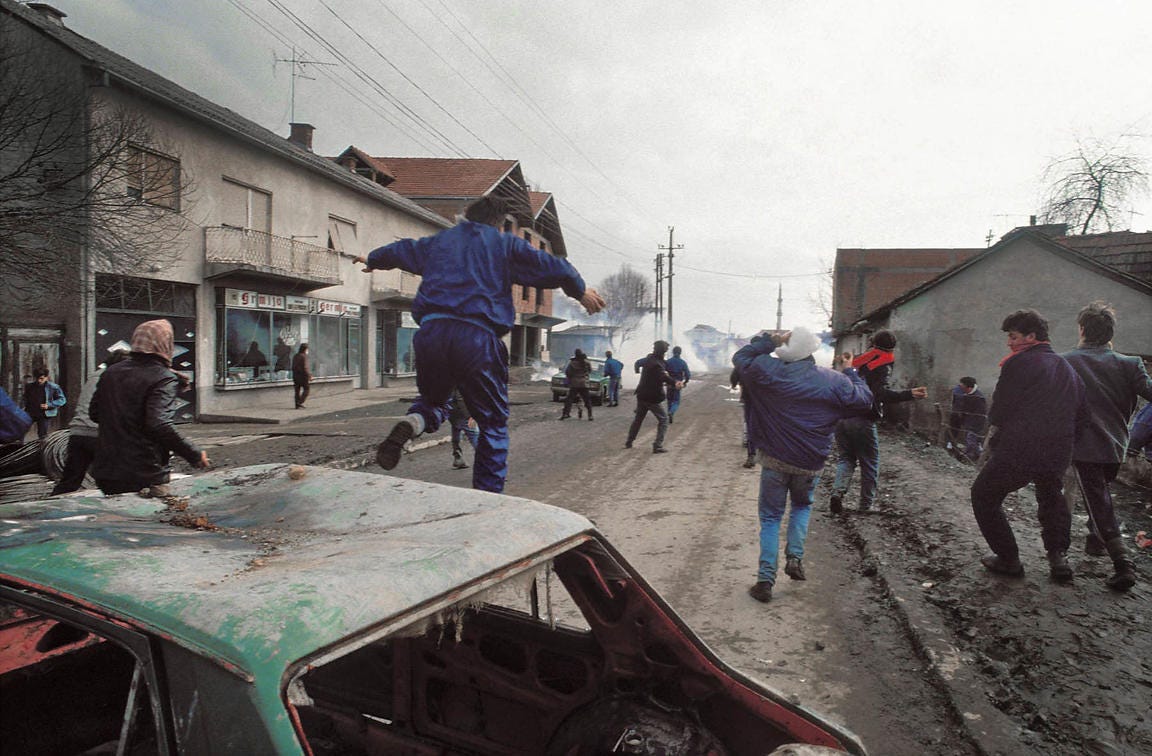
Kosovo Albanians flee the Yugoslav Army’s approach, 1990
Namely, by offering financial aid exclusively to Yugoslavia’s constituent republics, “to help them in a peaceful evolution to democracy,” while sidelining “weak” federal authorities from any and all “economic support”. She forcefully concluded, “there is no moral law that commits us to honor the national unity of Yugoslavia.” Coincidentally, mere days earlier, US lawmakers began voting on the Foreign Operations Appropriations Act, which codified Laber’s prescriptions as formal government policy.
Under the legislation’s auspices, Washington would provide no “direct assistance” to Yugoslavia’s federal government whatsoever. Moreover, financial aid would be withheld from the country’s constituent republics unless they all convened elections under US State Department supervision within six months. In a stroke, Belgrade’s central authority was neutralised, and the seeds of bitter, bloody wars of independence throughout the multiethnic, multifaith socialist federation were sown. Shockingly, Human Rights Watch was well-aware this was an “inevitable” consequence of terminating Yugoslav “national unity”.
‘Multinational Experiment’
In January 1991, HRW published an investigation, Human Rights in a Dissolving Yugoslavia. Laber was lead author, and its findings relied heavily on her visit to Kosovo the previous year. The report claimed the Serbian province was home to “one of the most severe situations of human rights abuse in Europe today,” due to the Yugoslav army’s mass-deployment. Kosovo resultantly teemed with soldiers and roadblocks. Numerous anonymous local Albanians told HRW lurid tales of atrocities, supposedly committed by the military and security forces against civilians.
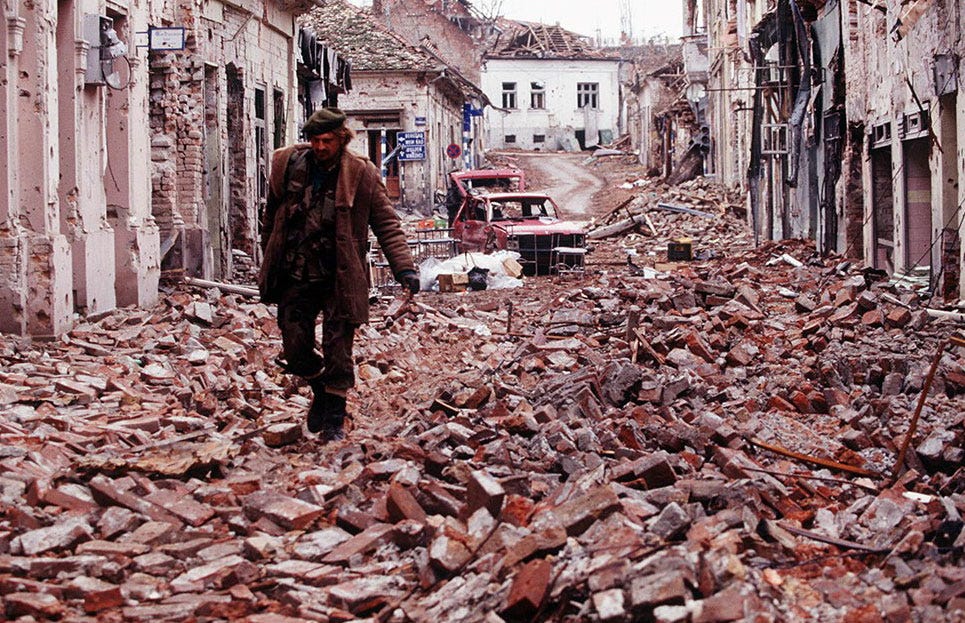
Vukovar, Croatia 1991
The report briefly acknowledged Serbs, and Kosovo’s other ethnic and religious minorities, had previously “suffered abuse” from elements of the province’s Albanian population, and local governments “composed predominantly of ethnic Albanians.” It also noted prior HRW missions to Kosovo concluded the Yugoslav military’s mission was “to protect the Serb minority.” However, the report asserted there was now “no justification” for the army’s presence, and its true purpose was to “subjugate ethnic Albanian identity” locally on the Serbian government’s behalf.
That non-Albanians “suffered abuse” in Kosovo before the Yugoslav army’s arrival is quite an understatement. As The New York Times reported in November 1982, Albanian ultranationalists had in recent years embarked on a savage “war of terror” to create a Kosovo “cleansed of all Slavs.” That year alone, 20,000 terrified Serbs fled the province. In 1987, the outletrecorded how this barbarous crusade had intensified to such a degree, Yugoslav officials and citizens across the federation feared the outbreak of civil war.
“There is no doubt Kosovo is a problem of the whole country, a powder keg on which we all sit,” Slovenian Communist chief Milan Kucan, who three years later led his republic’s independence from Yugoslavia, was quoted as saying. “Officials in Belgrade” of every ethnic and religious extraction viewed the “challenge” of Kosovo Albanian secessionists as “imperiling the foundations” of the country’s “multinational experiment”. They cautioned of the “Lebanonizing” of their state, comparing the situation to the “Troubles” inBritish-occupied Ireland:
“As Slavs flee the protracted violence, Kosovo is becoming what ethnic Albanian nationalists have been demanding for years…an ‘ethnically pure’ Albanian region…Last summer, [Kosovo] authorities…documented 40 ethnic Albanian attacks on Slavs in two months…Slavic Orthodox churches have been attacked, and flags have been torn down. Wells have been poisoned and crops burned. Slavic boys have been knifed, and some young ethnic Albanians have been told by their elders to rape Serbian girls.”
Earlier in 1987, Belgrade’s nine-strong Presidency, led by Sinan Hasani– himself a Kosovo Albanian – formally condemned the actions of ultranationalists in the province as “counter-revolutionary”. In the parlance of socialist Yugoslavia, this was the gravest qualification that could be bestowed by the country’s leadership. Hasani remained part of the Presidency in February 1989, when its members unanimously declared a state of emergency in Kosovo, leading to the military’s deployment.
HRW singularly failed to probe this complex, essential context in its report. There was also no recognition whatsoever the situation in Kosovo for non-Albanians remained fraught at this time, to the extent Serbs escaping brewing ethnic tensions elsewhere in Yugoslavia were explicitly warnednot to seek refuge in the province by authorities. These omissions are all the more unpardonable given HRW’s distorted view of events in Kosovo was central to the report’s conclusion – the US should sanction the Yugoslav federal government for human rights violations.
This finding was reached despite HRW conceding it was widely believed punitive action against Belgrade would “inevitably” lead to the federation’s disintegration, with “human rights virtually guaranteed to suffer” as a result. The organisation however did “not endorse this position”, believing it of far greater urgency Washington “express its disapproval” over purported abuses in Kosovo via destructive sanctions. Meanwhile, HRW unbelievably stressed it took “no position on whether Yugoslavia should or should not stay together as a country.”
‘Communal Violence’
Fast forward to December 2002, and Jeri Laber testified as an “expert” witness during Slobodan Milosevic’s ICTY prosecution. Under cross-examination by the indicted former Serbian and Yugoslav President, she exhibited an absolutely staggering ignorance of socialist Yugoslavia’s culture, history, legal and political systems, and much more besides. For example, Laber was unaware Tito, the federation’s founder and longtime leader, was – famously – a Croat. Her pronounced lack of local comprehension proved particularly problematic when Milosevic dissected an August 1991 HRW report, on the Croatian civil war.
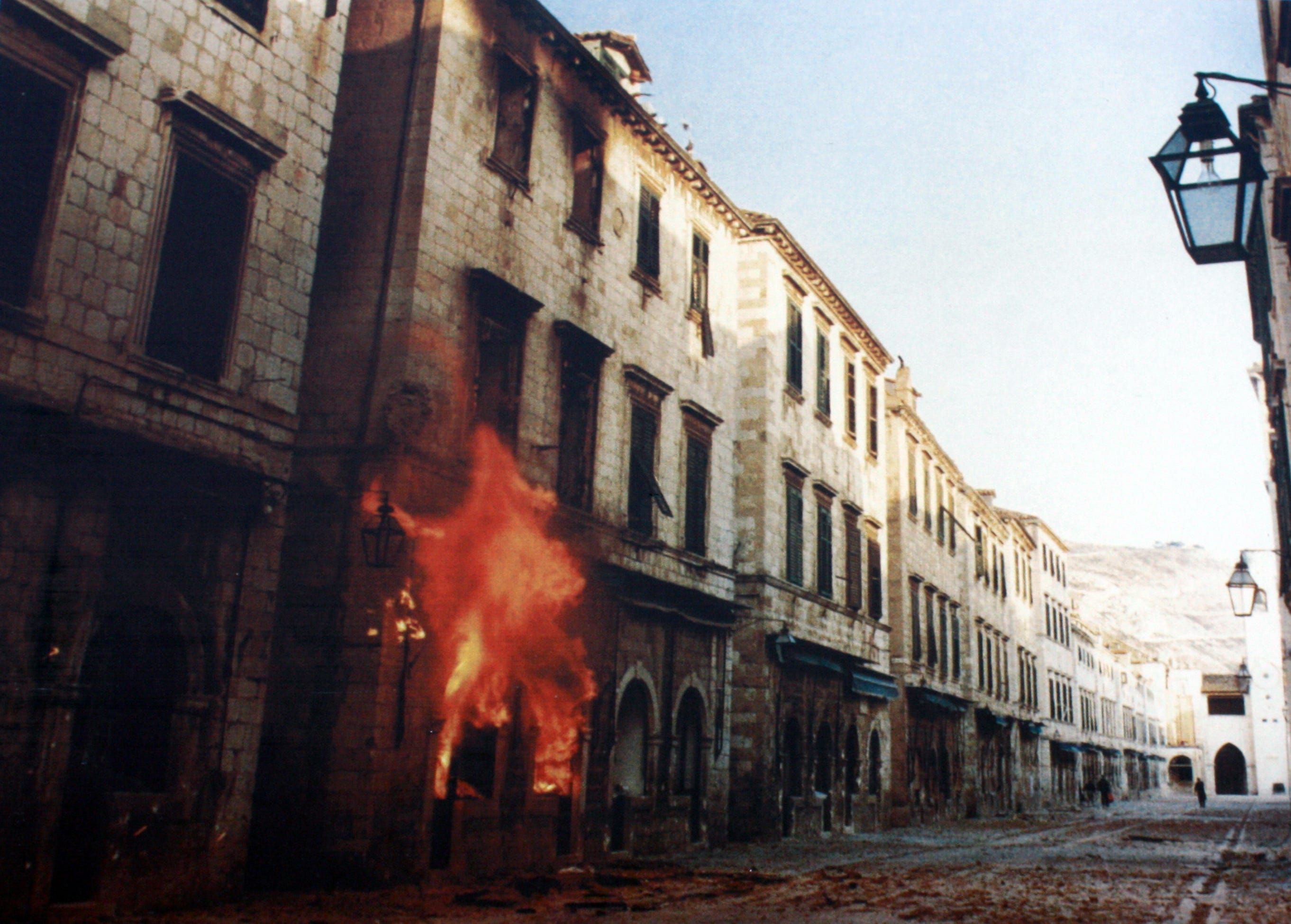
Siege of Dubrovnik, 1992
The probe made a number of bold claims regarding that conflict, describing “the resurrection of Croatian nationalism” producing the deadly standoff “as a reaction to 45 years of Communist repression and Serbian hegemony,” leaving Croats “bitter” over how Zagreb was, in Yugoslavia, “a vassal” of Belgrade. HRW strongly suggested – without evidence – Milosevic was personally responsible for fomenting local tensions and violence. Western sponsorship of Nazi-veneratingCroat leaders, who openly advocatedtotal erasure of their republic’s Serb population, was unmentioned.
Milosevic asked Laber how HRW could’ve possibly concluded Croatia’s membership of socialist Yugoslavia amounted to almost half a century of “Serbian hegemony”, given a Serb occupied the office of Prime Minister just once throughout the federation’s history, for a four-year-long period. He further questioned her cognisance of Belgrade’s three federal premiers 1982 – 1992 all being Croats, that Croats led and dominated Yugoslavia’s defence apparatusduring the Croatian conflict itself, and how “all ethnicities were represented proportionally” in the country’s government and military by law.
Laber confessed to not knowing a single one of these inconvenient truths, fatally undermining the claims of every HRW report published on Yugoslavia under her watch – which inspired the ICTY’s formation, and prosecutions. Flailing on the witness stand, she resorted to arguing the countless flagrantly bogus assertions in HRW’s assorted Yugoslav investigations weren’t intended to be taken as her organisation’s own independent findings, or in any way rooted in reality, but merely reflected what some people locally had voiced to HRW researchers:
“We were not saying that was factually the case, we were trying to explain the attitudes we heard, what people told us when we were there…There was no intent or implication…this is what we thought. We were just saying Croats talked about many years of Serb hegemony. That was the way they seemed to see it, not the way we were saying it was…We were trying…to explain a very complicated situation to people who were not living in [Yugoslavia]…in our own simplest way.”
Such crucial, self-nullifying caveats were of course not included in any of HRW’s reports on Yugoslavia’s collapse and the numerous internecine conflicts that resulted, which the organisation actively encouraged and facilitated. That Laber’s witless pronouncements informed and justified US policy, despite her ignorance of the most basic facts about Yugoslavia, is a disquieting testament to the woeful quality of ‘expertise’ routinely exploited in pursuit of Washington’s imperial goals. What the federation’s breakup would produce was entirely predictable, and indeed contemporaneously predicted by scholar Robert Hayden.
In a December 1990New York Times op-ed, Hayden – an actual expert on Yugoslavia – harshly condemned Laber’s strident call for the US to shatter the federation in the newspaper the previous month as “remarkable for its lack of comprehension.” He rightly warned, “those who would break up the country are strong nationalists, not likely to treat minorities within their own borders well,” while recording how the federal military’s interventions helped “forestall armed conflict” in Croatia that August, which could’ve easily spread across the country.
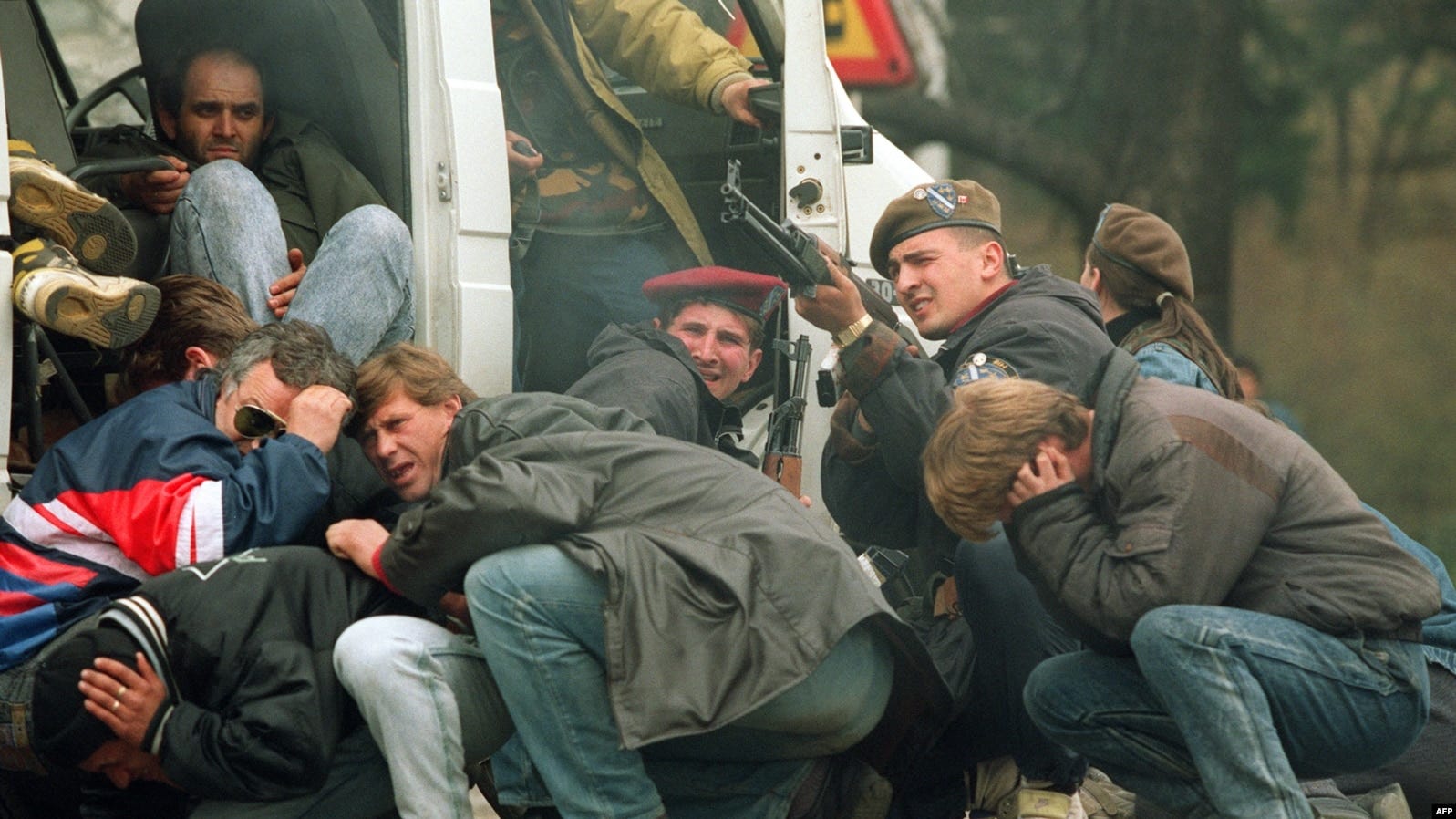
Bosnian special forces soldier returns fire, Sarajevo, April 1992
Comparing Belgrade’s present situation to the US civil war’s leadup, Hayden charged it was “truly bizarre…‘human rights’ activists so cavalierly advocate policies that are likely to turn Yugoslavia into the Lebanon of Europe.” With eerily precise foresight, he warned if Belgrade’s federal authority collapsed, “the republics are almost certain to fight one another because of the large minority populations that are scattered through the country.” His dire premonitions today reverberate as a prophet’s curse wretchedly validated:
“At best, we could expect strict repression, perhaps massive expulsions, the sundering of mixed towns and families, followed by permanent hostility and…communal violence as to make present human rights abuses in Kosovo seem absolutely civilized…The nations of Yugoslavia, despite their hostilities, are tightly bound to one another. These bonds cannot be broken, at least not without atrocities. ‘Human rights’ advocates should thus consider policies that will lead these nations to put down their arms, rather than policies that will induce fratricide.”
I’ve written for UnHerd about how Europe has spent the past four years “freeing itself” from its “dependence” on cheap reliable Russian gas, only to replace that with a much more dangerous and real dependence on expensive, volatile US gas — one that Trump is now using to blackmail Europe. [https://unherd.com/2026/01/how-trump-keeps-europe-weak/]
Over the past four years, Europe’s shift from Russian to American has already translated into higher energy prices that have crippled industrial competitiveness and pushed major economies, above all Germany, towards deindustrialisation. But now, just as Brussels celebrates the final approval of a complete ban on Russian gas by the end of the year, things are about to get much worse.
This week, US gas prices surged around 70%, reaching their highest level in three years. Those price spikes will feed directly into higher gas and electricity costs in Europe — during one of the coldest winters in years, and at a time when millions of Europeans are already unable to afford adequate heating.
The episode encapsulates the self-destructive character of EU energy policy over the past four years. Yet the problem is not merely that cheap and reliable Russian gas has been replaced with costlier and more volatile American LNG. More troubling still is that the United States is far more likely to use its energy exports as an instrument of political pressure than Russia ever was, leaving the EU more dependent on its imperial master than ever.
For all the talk of Russia’s “weaponisation” of gas supplies, history tells a different story. For decades, first the Soviet Union and later Russia continued supplying energy to Germany and the rest of Europe through multiple geopolitical crises, including during the height of the Cold War. More recently, even after the delivery of German weapons to Ukraine, and then the attack on Nord Stream, Moscow repeatedly stated that it was up to Berlin whether to resume gas supplies or not.
The United States, by contrast, has a long and well-documented history of weaponising energy — using it as leverage to extract economic and geopolitical concessions. And under Donald Trump, this has become explicit policy. The US National Security Strategy, published in November 2025, designates “American energy dominance” across oil, gas, coal and nuclear power as a top strategic priority, explicitly framing the expansion of American energy exports as a means to “project power”. This is not mere rhetoric.
Even though Europe’s dependence on US energy was already a fait accompli by the time Trump returned to office, since then Trump has actively sought to further deepen and entrench that dependence. But even more worryingly, Washington has increasingly politicised these energy flows, with US officials openly linking continued LNG supplies to regulatory and political concessions — or even more disturbingly weaponising US energy exports to extract concessions not only over Greenland but across a wide range of issues.
Europe now effectively finds itself heavily dependent for its gas on a country whose President openly threatens the territorial integrity of a European state. Whatever risks were associated with dependence on Russian gas, they pale in comparison.
It is crucial to understand, however, that Trump’s weaponisation of European energy supplies is about far more than bluster or the ruthless pursuit of short-term gains. As the US National Security Strategy makes clear, these moves are part of a broader, long-term strategy aimed at securing American energy dominance for decades to come. This is about much more than just increasing revenues for American energy companies. It’s part and parcel of Trump’s desperate ditch to preserve US hegemony at all costs in a rapidly changing global order.
If we look at many US actions in recent years — from severing Europe’s access to Russian gas, to the seizure of Venezuelan oil assets, to escalating pressure on Iran — they are all, in one way or another, aimed at reasserting American physical and financial control over global energy flows, gaining leverage over adversaries and allies alike, and deterring countries from breaking with the unwritten rules of the US order.