JFK: A President Betrayed (Documentary)

YouTube link here.

Film description from Center for Citizen Initiatives:

“John F. Kennedy contended with the fear of nuclear war with Russia and fought what that fear might lead to forcefully.  He also confronted the grave responsibility held by a free press in keeping Americans informed of what their government was doing to face that danger.  Do we not live in similar times?

The documentary…explains eloquently President Kennedy’s efforts to improve US-Russia relations that led to the peaceful resolution of the Cuban Missile Crisis, and to the nuclear test ban treaty. It also explains the resistance that President Kennedy faced from those in his own administration who were opposed to such efforts.”

Active Measures: Grayzone Journalist & US Citizen Jeremy Loffredo Arrested by Israel

YouTube link here.

Below is an interview of Aaron Mate by Judge Napolitano that discusses this issue as well.

YouTube link here.

Gordon Hahn: A River Runs Through the End of the NATO-Russia Ukrainian War

By Gordon Hahn, Website, 9/22/24

A river runs through Russian and, more recently, Ukrainian history. Ironically enough, the Dnieper River that unites Russia and Ukraine in this and other ways – the river rises in the Valdai Hills of Smolensk, Russia and runs through Belarus and Ukraine – is now the focus of the greatest schism in the history of Russian-Ukrainian relations. Russian forces appear impossible to stop and will arrive at the Dnieper at some point along its snaking length no later than next year, with Russian troops perhaps controlling the river’s and the country’s Left Bank by then. Russia – as well as the West and whatever remains of Ukraine‘s Maidan regime will then face some serious decisions.

The Dnieper River in Russian and Ukrainian History

The Dnieper River has played a major role in Russian and Ukrainian history and is now positioned to so again. The Dnieper drove the foundation of the first Russian city and state. The first Russian state of Kievan Rus rose from the city-state of Kiev, founded by Vikings as a result of the early small port town‘s location on the great north-south water route, the Amber Road, flowing between Scandinavia (the Swedish Viking Varangians) and Byzantian Constantinople. Thus, the Dnieper gave birth to ‚the mother of Russian cities‘ and connected Kievan Rus to what would become the source of much of Russian culure: Greek or Eastern Orthodoxy.

The Zaporozhian Cossacks, famous in Russia and Ukraine, as well as other Cossack formations, were located on the Dnieper, the Zaporozhians in the marshes and islands on the Lower Dniper near its Black Sea estuary. The Dnieper became the dividing line between Polish- and Russian-controlled ‚Ukrainian‘ lands, with the western side of what today is Ukraine called the ‚Right Bank Ukraine‘ and the eastern side known as ‚Left Bank Ukraine.‘ In the Soviet era, the Dniper’s six major hydroelectric stations and damns were symbols of communist modernization. One is featured near the end of Boris Pasternak’s famous novel Doctor Zhivago, as well as in the British film version of the novel.

The Dnieper was the focus of great battles during what Russians call the ‚Great Patriotic War‘ and what others call ‚World War II.‘ Following the largest tank battle in history at Kursk, the Battle for Dnieper was one of the largest operations of the war, involving four million troops, stretching over nearly 900 miles of front, and lasting over four months in 1943. It opened the way to the liberation of Kiev from the Nazi fascist army on 28 October 1944.

The Dnieper – more accurately one of its tributaries, the Pripyat – was the locus of the world’s first great nuclear disaster in 1986 at Chernobyl‘. The poetic Ukrainian name for the river, Slavutych or Slavuta, taken from an ancient Kievan Rus name for the river became the name of the town used to house displaced Chernobyl nuclear power plant workers.

Today, the Dnieper finds itself at the center of history once again.

Russia Marches to the Dnieper: What Then?

By the end of next year, if not earlier, Russian forces likely will reach the Dnieper and perhaps already be laying seige to Zaporozhe, Dnipro, Cherkassk, and, perhaps, Right Bank Kiev. This situation will demand key, pivotal decisions by the NATO-Russian Ukrainian War’s participants: NATO, Russia, and Ukraine.

For Russia, there will be at least three choices: (1) stop territorial advance at the Dnieper and offer peace talks with the threat to cross the Dnieper in lieu of an agreement that precludes NATO expansion to rump Ukraine and Moldova; (2) stop at the Dnieper without offering negotiations and warn the West that Russia will cross the Dnieper should NATO or NATO countries continue any activity or relations with Maidan Ukraine; (3) continue to Right Bank Kiev, the city’s center and country’s capitol, and then to the rest of Right Bank Ukraine without offering any negotiations, only conquest, capitulation, and survival of a Ukrainian or Galician state solely on lands not occupied by Russian troops before a capitulation act is signed by Maidan Ukraine, Washington, and Brussels.

The first option — halting Russian forces‘ territorial advance at the Dnieper while offering peace talks and threatening to cross the Dnieper in lieu of an agreement that precludes NATO expansion to rump Ukraine (and Moldova?) and any other NATO activity in Ukraine and meets other Russian demands – has advantages and weaknesses as do the other options. The obvious advantages are the end of NATO expansion to Ukraine and of the war or ‚special military operation‘ (SMO), assuming the West (and Russia) meet their obligations. The downside from Russia’s perspective is the possibility of the agreement collapsing or being violated by Ukraine and the West at some point in the future, necessitating another SMO or fully-declared war. Assuming Ukraine restores something resembling democracy, the presence of a democratic state on Russia’s border is not a threat to Russia, and is not by itself viewed by Russia as such. Such an assumption is based on the false and largely propagandistic notion that ‚Putin abhors democracy‘ and Russia is inherently antagonistic to democracies. This is false, as demonstrated by Putin’s recently warm visit to democratic Mongolia, located on Russia’s border like Ukraine.

It is important to keep in mind that obstacles to this option include Zelenskiy’s 2022 law forbidding negotiations with Moscow as long as Putin is in power and Putin’s post-Kursk incursion statement that talks with Zelenskiy and his Maidan regime were now excluded as an option. However, there are caveats to both of these. To the first, Kiev apparently was negotiating with Moscow through the Qatari Emir on an agreement – ultimately scuttled seemingly by the Kursk incursion – that two sides would not target each other’s energy-related facilities. To the second, Putin subsequently discussed the option of talks with Kiev as if they were still possible, unlikely albeit, in his view.

The second option – stopping Russian forces‘ advance at the Dnieper without offering negotiations and warning Kiev and the West that Russia will cross the Dnieper and seize all of western Ukraine if there is any continuation of military operations or should NATO or NATO countries continue any activity or relations with Maidan Ukraine – is likely a non-starter for Moscow. This option relies on trusting Kiev and the West far beyond what Moscow is now capable of. Without a binding treaty there remains the threat of a NATO-backed and in future NATO member Ukraine on Russia’s border, with the certainty that Washington and Brussels will re-arm Ukraine/Galicia for a future attack as well as support partisan guerilla and terrorist activity by Ukrainian special forces from western Ukraine and anti-Russian resistance fighters in eastern Ukraine. Putin and Russia would be faced with a long quagmire, draining resources and limiting Russia’s ability to defend itself in other places, where NATO or others may pose security threats. This option leaves open the possibility, indeed likelihood of an all-out NATO-Russia war.

One issue that has been raised by some observers is that Russia must „control“ much if not all of western Ukraine in order to ensure full control of the Dnieper River’s infrastructure such as dams, quality control mechanism, and navigation against western rump Ukraine. It is noted also that managing the river will be an expensive proposition (www.nakedcapitalism.com/2024/09/russias-prosecution-of-the-war-in-ukraine-can-it-square-the-circle-of-probable-boundary-conditions.html). River control and management is perhaps one factor that may support any eventual decision to have Russian forces cross the Dnieper, but it is hardly the main one. Key will be the defense of the eastern bank and nearby territories from missile, artillery and drone attacks and from infiltration by sabotage and terrorist cells. Moreover, there are other ways of controlling the river’s west bank and adjacent land other than occupying it or all or most of western Ukraine. The Russians have their own missile, artillery, drone and covert infiltration capacities that can target western Ukraine and perhaps establish a cordone sanitaire within ten or more kilometers from the river. Any peace agreement will have to establish principles and procedures for ensuring the security of the river, broadly conceived, and that of any new Russian territory acquired by Moscow as a result of an agreement or Ukrainian capitulation and attendant consequences and sub-agreements.

The considerations above propose the third option: to cross the Dnieper in order to seize Right Bank Kiev, the city’s center and country’s capitol, and perhaps part or all of Right Bank Ukraine or Galicia without offering any negotiations, only conquest, capitulation, and survival of a Ukrainian or Galician state solely on lands not occupied by Russian troops before a capitulation act is signed by Maidan Ukraine, Washington, and Brussels. This option has the advantages of the first option only after expending more Russian blood and treasure. It has the disadvantages of the second in that it holds even greater risk of the rise of an anti-Russia resistance underground and quagmire, and this even after the great expenditure of blood and treasure seizing all of Ukraine would pose. This option offers a future of years of more war and prolongs the situation in which an all-out NATO-Russia war can begin, rendering that outcome more likely.

As I wrote earlier, it is possible that Moscow will consider and select one of these options but not in relation to crossing the Dnieper but in relation to whether or not to continue to advance after Russian forces have seized all of Donetsk and Luhansk Oblasts and all of Zaporozhe and Kherson Oblasts. Again, the three options would be similar: stop in these conquered territories and propose talks, stop but not propose talks, or continue hoping for capitulation before the Dnieper, where the same options will face Moscow.

There is no guarantee that any Russian negotiation offers will be accepted by the West and or Ukraine. In that event, the future is obvious: a long war to take western Ukraine, risking quagmire, and NATO intervention. Indeed, the present resistance to negotiations demonstrated by Kiev and, after Kursk, by Moscow as well argues in favour of the third and most tragic and dangerous option being the one most likely to be realised.

Jeff Childers: West Changes the Narrative in Ukraine

By Jeff Childers, Substack, 10/7/24

As the world braces for….[the] anniversary of the barbaric October 7th attacks on Israel and as the war in the Middle East heats up, the influential Financial Times floated a very suggestive proposal yesterday headlined, “Ukraine, Nato membership and the West Germany model.” The sub-headline added, “Security guarantees will have to underpin any peace deal where Russia retains control of Ukrainian land.” So much for “not one inch.”

image 6.png

“Although it remains committed to recovering the lands seized by Russia over the past decade,” the Financial Times regretfully explained, Ukraine “regrettably lacks the manpower, weaponry and western support to do it.” Later, it somberly conceded, “the west patently lacks a strategy for Ukraine to prevail.”

Now they tell us! And here, we all thought they had a strategy of some kind. (Just wait for the next story to see what the current strategy is.) But apparently not. So now they want to split the Ukraine baby.

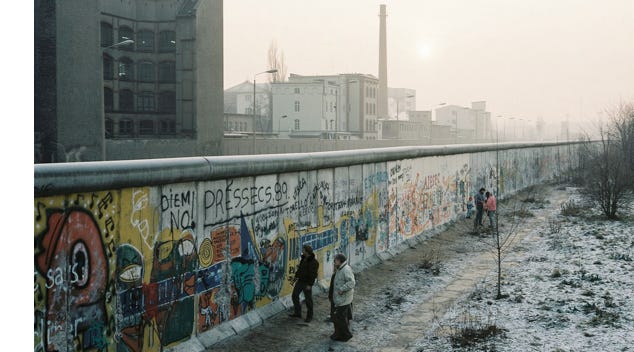
Now they tell us, Part Deux: “The West German model for Ukraine has been discussed in foreign policy circles for more than 18 months.” Surprise! What they mean by the “West German model” is splitting Ukraine into two parts, like West and East Germany after the Second World War. In that historic scenario, West Germany was allowed to join NATO even though half the country remained under Soviet control.

This overly optimistic scheme suffers from two obvious problems, as the article eventually got around to admitting. First, in Germany, the occupied borders were well-defined, allowing the famous Berlin Wall to be erected right down the line. But in Ukraine, the war marches on, and the ever-changing borders remain fluid.

Second, after the war, the Soviets agreed to the Germany-splitting compromise. Today, Russia will never agree to let West Ukraine join NATO as part of any peace plan. It will never ever happen.

Biden’s neocons, Antony Blinken and Jake Sullivan, must now divide their attention between the old, difficult, plan-less Ukraine war, and the shiny new war emerging in the Middle East, which is ripe with potential and enthusiasm for a fresh conflict and all its glorious potential.

Meanwhile, things are only getting worse in Eastern Europe’s strategy-free theater of war. Any day now, Ukraine will head into winter and its rasputitsa mud season, further freezing and bogging down prospects for Ukraine’s ‘victory.’

Perhaps it isn’t completely fair to say there’s no strategy. On Saturday, the New York Times ran an eye-watering story headlined, “Ukraine’s Donbas Strategy: Retreat Slowly and Maximize Russia’s Losses.” The agonized sub-headline added, “It’s far from clear if the Ukrainian strategy will succeed.” So, there is a strategy after all.

image 7.png

Talk about trying to put a good spin on failure. The gist was that the Ukrainians are losing, are in retreat all along the front lines, but Kiev has ordered its troops to hold their untenable positions at all costs, in the hope that the Russians will eventually get tired of winning and go home.

That’s it. That’s the whole strategy.

To be clear, Ukraine has an alternative: pulling its troops from vast numbers of unholdable towns and villages, and mustering them together in more defensible positions, such as behind the giant Dnieper river, which divides the country in half. The main advantage of this defensive strategy would be saving tens or hundreds of thousands of Ukrainian lives.

Instead, Ukrainian martial law coordinator and former comedian Zelensky figures that, despite the astonishingly high cost in lives and free NATO materiel, by holding on till beyond the last minute in every little hamlet and township, the Russians might, sooner or later, get exhausted by all the fighting and give up.

Given that one of Russia’s stated objectives at the outset was to demilitarize Ukraine, it seems unlikely that Russia will get tired anytime soon of killing Ukrainian soldiers by the battalion.

Combined, these two stories, the Financial Times’ and the New York Times’ articles, together revealed the war’s hideous truth. Western war planners don’t care about Ukraine. They don’t care about its courageous soldiers willing to fight Russia to their inglorious deaths. As I reported yesterday, all the West cares about is the Wolfowitz Doctrine: establishing a NATO foothold in Ukraine to keep a lid on Russia and prevent it from becoming a rival world superpower.

In other words, the Ukrainian people and their land are disposable NATO resources. But there isn’t any strategy. Doing the same thing over and over and hoping for a different result isn’t a strategy, it’s insanity.

But the fact the corporate media conversation and “foreign policy circles” have evolved from a goal of crushing Russia any day now to a strategy of trading land for peace is a great sign. Perhaps the end lies in sight.

Scott Ritter: Life, Preempted

By Scott Ritter, Consortium News, 9/27/24

If you’re not thinking about the end of the world by now, you’re either braindead or stuck in some remote corner of the world, totally removed from access to news.

Earlier this month we came closer to a nuclear conflict between the U.S. and Russia than at any time since the Cuban Missile Crisis of 1962.

[See: SCOTT RITTER: 72 Minutes]

Today we are even closer.

Most scenarios being bandied about in the Western mainstream media that involve a nuclear conflict between Russia and the United States have Russia initiating the exchange by using nuclear weapons against Ukraine in response to deteriorating military, economic, and/or political conditions brought on by the U.S. and NATO successfully leveraging Ukraine as a proxy to achieve the strategic defeat of Russia.

Understand, this is what both Ukraine and the Biden administration mean when they speak of Ukraine “winning the war.”

This is a continuation of the policy objective set forth by Secretary of Defense Lloyd Austin in April 2022, “to see Russia weakened to the degree that it can’t do the kinds of things that it has done in invading Ukraine,” meaning that Russia should “not have the capability to very quickly reproduce” the forces and equipment that it loses in Ukraine.

This policy has failed; Russia has absorbed four new territories — Kherson, Zaporizhia, Donetsk and Lugansk — into the Russian Federation, and the Russian defense industry has not only replaced losses sustained in the Ukrainian conflict, but is currently arming and equipping an additional 600,000 troops who have been added to the Russian military since February 2022.

It is the United States and its NATO allies that find themselves on their back feet, with Europe facing economic hardship as a result of the extreme blowback that has transpired because of its sanctioning of Russian energy, and the United States watching helplessly as Russia, together with China, turns the once passive BRICS economic forum into a geopolitical juggernaut capable of challenging and surpassing the U.S.-led G7 as the world’s most influential non-governmental organization,

Illusionary Red Lines

As a result of this abysmal failure, policymakers in both the U.S. and Europe are undertaking increasingly brazen acts of escalation designed to bring Russia to the breaking point, all premised on the assumption that all “red lines” established by Russia regarding escalation are illusionary — Russia, they believe, is bluffing.

And if Russia is not bluffing?

Then, the Western-generated scenario paints an apocalyptic picture which has a weak, defeated Russia using nuclear weapons against Ukraine in a last, desperate act of vengeance.

According to this scenario, which the U.S. and NATO not only war-gamed out but made ready to implement when these entities imagined that Russia was preparing to employ nuclear weapons back in late 2022-early 2023, the U.S. and NATO would launch a devastating response against Russian targets deep inside Russia designed to punitively degrade Russian command and control, logistics, and warfighting capacity.

This would be done using conventional weapons.

If Russia opted to retaliate against NATO targets, then the U.S. would have to make a decision — continue to climb the escalation ladder, matching Russia punch for punch until one side became exhausted, or preemptively using nuclear weapons as a means of escalating to de-escalate — launch a limited nuclear strike using low-yield nuclear weapons in hopes that Russia would back down out of fear of what would come next — a general nuclear war.

The Pentagon has integrated such a scenario into the range of nuclear pre-emption options available to the president of the United States. Indeed, in early 2020 U.S. Strategic Command conducted an exercise where the secretary of defense gave the launch instructions for a U.S. Ohio class submarine to launch a Trident missile carrying W-76-2 low yield nuclear warheads against a Russian target in a scenario involving Russian aggression against the Baltics in which Russia used a tactical nuclear weapon to strike a NATO target.

The insanity of this scenario is that it ignores published Russian nuclear doctrine, which holds that Russia will respond with the full power of its strategic nuclear arsenal in the case of a nuclear attack against Russian soil.

Once again, U.S. nuclear war planners believe that Russia is bluffing.

Another Twist
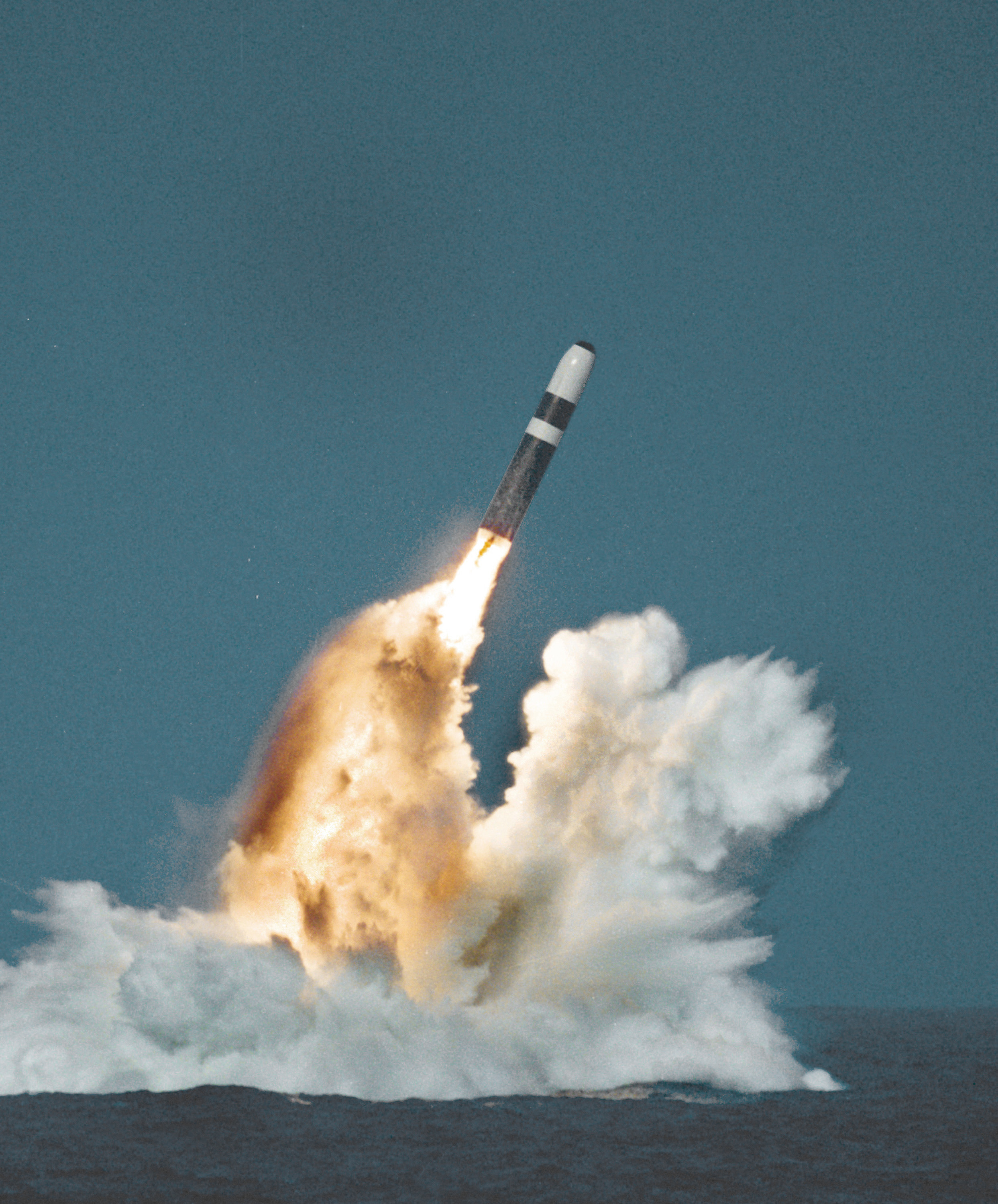
Submarine launch of a Lockheed Trident missile. (Wikimedia)

Submarine launch of a Lockheed Trident missile. (DoD, Wikimedia Commons, Public domain)

There is another twist to this discussion.

While the U.S. might assess that Russia would not seek a general nuclear war following the use by the U.S. of low yield nuclear warheads, the problem is that the means of employment of the W-76-2 warhead is the Trident submarine launched ballistic missile.

While the February 2020 scenario had Russia using nuclear weapons first (something which, at the time, represented a gross deviation from published Russian nuclear doctrine and the declaratory policy statements of the Russian president), the fact is the U.S. will not necessarily wait for Russia to kick things off on the nuclear front.

The United States has long embraced a nuclear posture which not only incorporates the potential of a nuclear first strike, but, through declaratory policy statements, actively encourages America’s potential nuclear adversaries to believe such an action is, in fact, possible.

David J. Trachtenberg, the deputy undersecretary of defense for policy during the Trump administration, said in a speech at the Brookings Institution in 2019 that a key aspect to the U.S. nuclear posture was “keeping adversaries such as Russia and China guessing whether the U.S. would ever employ its nuclear weapons.”

But the U.S. takes the guesswork out of the equation. Theodore Postol points out, in a recent article in Responsible Statecraft, that a new fuse used on the W-76 nuclear warhead (not the low yield W-76-2, but rather the 100 kiloton version) has turned the 890 W-76 warheads loaded on the Trident missiles carried onboard the Ohio-class ballistic missile submarines into weapons capable of destroying hardened Russian and Chinese missile silos with a single warhead.
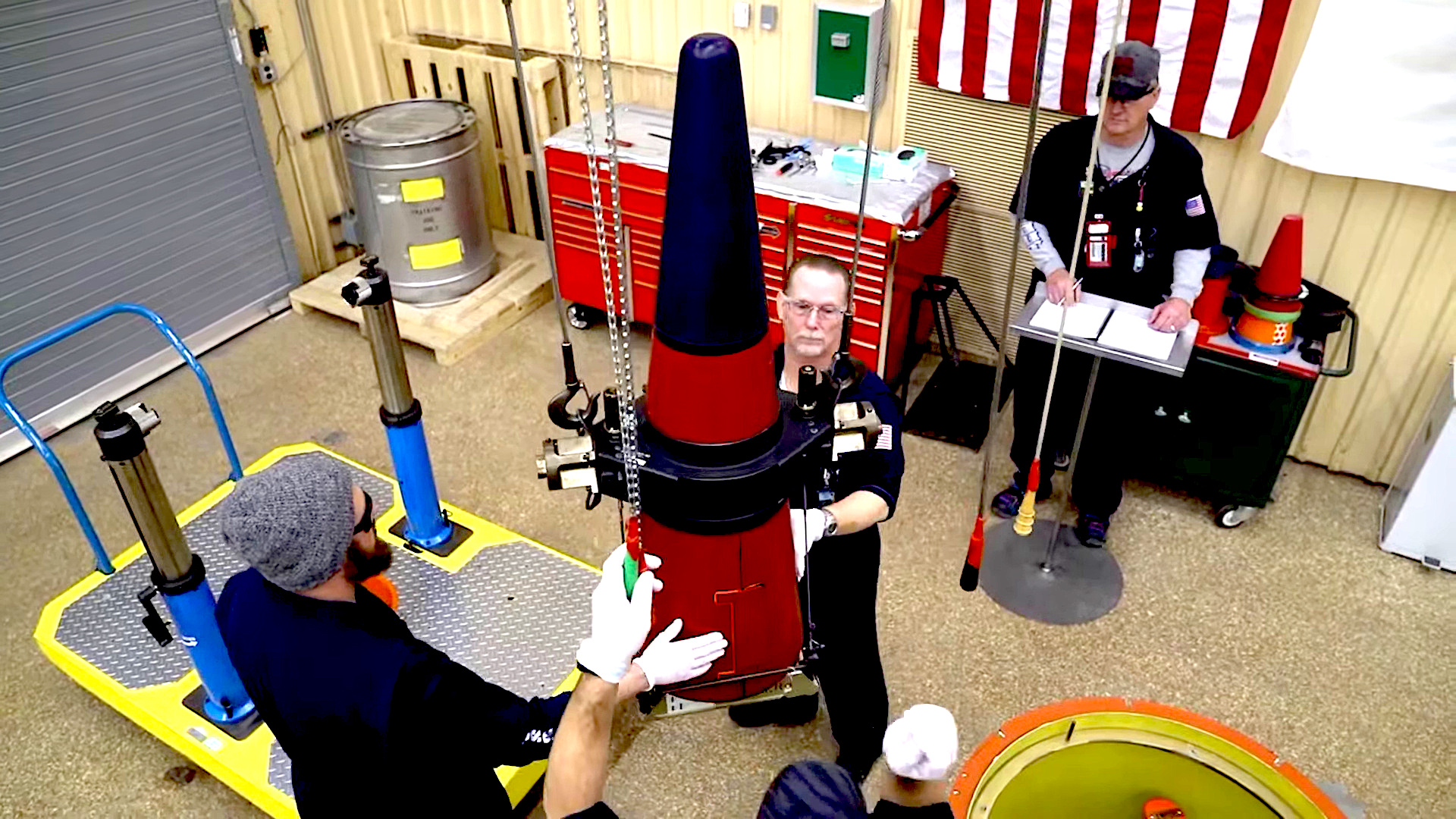
Screenshot of a National Nuclear Security Administration video from 2019 showing the casing of a W-76-1 thermonuclear warhead. (National Nuclear Security Administration, Wikimedia Commons, Public domain)

This means that, firing in a reduced trajectory profile from a position close to the shores of either Russia or China, the United States possesses the ability to launch a nuclear first strike that has a good chance of knocking out the entire ground-based component of both the Chinese and Russian strategic nuclear deterrent.

As a result, Russia has been compelled to embrace a “launch on detect” nuclear posture where it would employ the totality of its silo-based arsenal the moment it detected any potential first strike by the United States.

Return, for a moment, to the scenario-driven employment of the W-76-2 low-yield nuclear weapon as part of the “escalate to de-escalate” strategy that underpins the entire reason for the W-76-2 weapon to exist in the first place.

When the United States launches the Trident missile carrying the low yield warhead, how are the Russians supposed to interpret this act?

The fact is, if the U.S. ever fires a W-76-2 warhead using a Trident missile, the Russians will assess this action as the initiation of a nuclear first strike and order the launching of its own nuclear arsenal in response.

All because the United States has embraced a policy of “first strike ambiguity” designed to keep the Russians and Chinese guessing about American nuclear intentions.
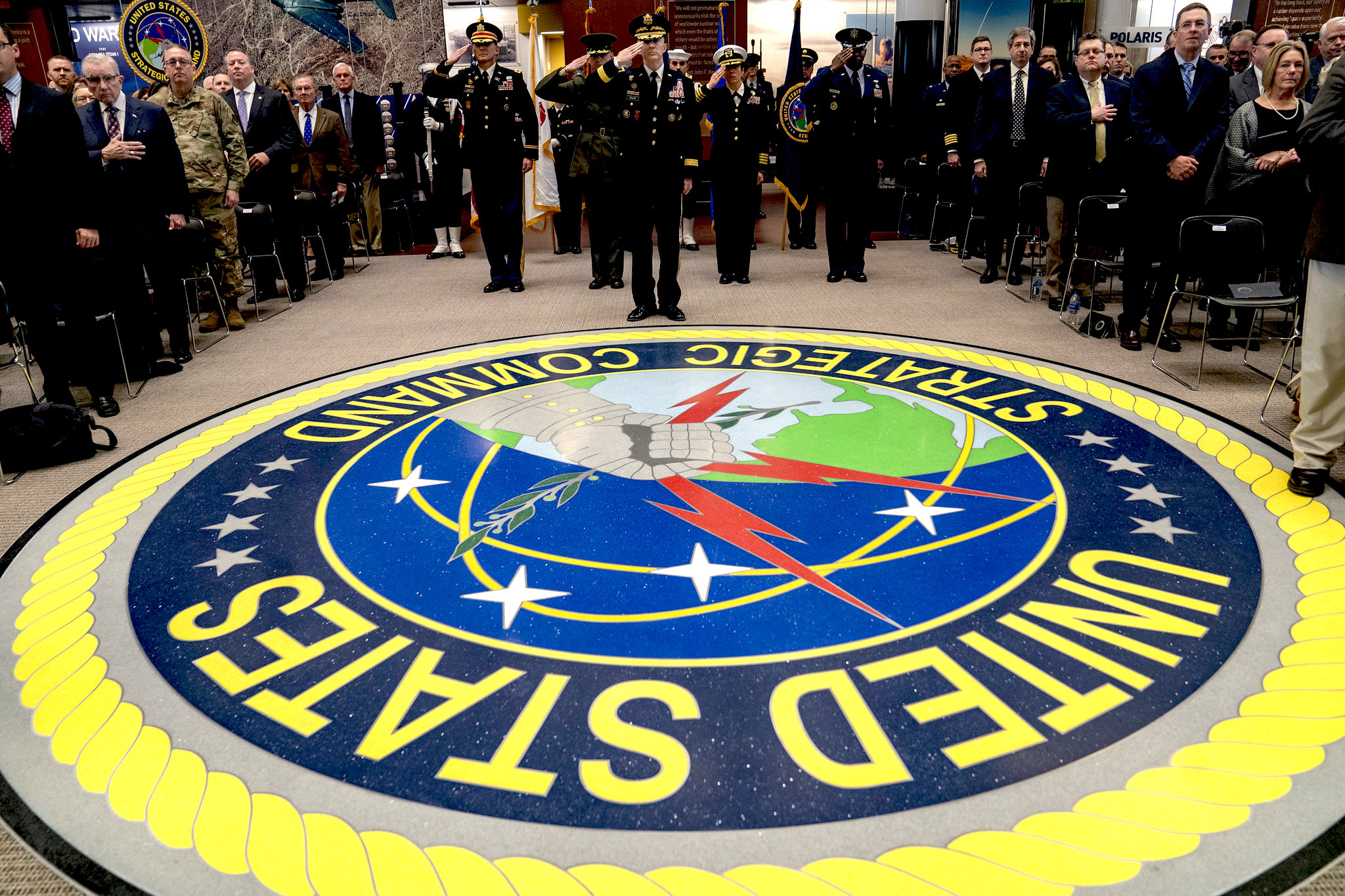
Change-of-command ceremony in November 2019 at Offutt Air Force Base in Nebraska for U.S. Strategic Command, which has responsibilities that include strategic deterrence and nuclear operations, including NC3 – command, control and communications. (DOD/Dominique A. Pineiro)

And, to put icing on this nuclear cake, Russia’s response appears to have been to change its nuclear posture to embrace a similar posture of nuclear pre-emption, meaning that rather than wait for the U.S. to actually launch a nuclear-armed missile or missiles against a Russian target, Russia will now seek to pre-empt such an attack by launching its own pre-emptive nuclear strike designed to eliminate the U.S. land-based nuclear deterrent force.

In a sane world, both sides would recognize the inherent dangers of such a forward-leaning posture, and take corrective action.

But we no longer live in a sane world.

Moreover, given the fact that the underlying principle guiding U.S. policies toward Russia is the misplaced notion that Russia is bluffing, any aggressive posturing we might engage in designed to promote and exploit the ambiguity derived from the first-strike potential inherent in existing U.S. nuclear posture will, more likely than not, only fuel Russian paranoia about a potential U.S. nuclear pre-emption, prompting Russia to pre-empt.

Russia isn’t bluffing.

And our refusal to acknowledge this has embarked us on a path where we appear more than willing to pre-empt life itself.

We need to pre-empt nuclear preemption by embracing a policy of strict no- first-use principles.

By choosing deterrence over warfighting.

By deemphasizing nuclear war.

By controlling nuclear weapons through verifiable arms control treaties.

And by eliminating nuclear weapons.

It truly is an existential choice — nuclear weapons or life.

Because they are incompatible with one another.
Analysis & Book Reviews on U.S. Foreign Policy and Russia