By Gordon Hahn, Russian & Eurasian Politics Blog, 10/9/23
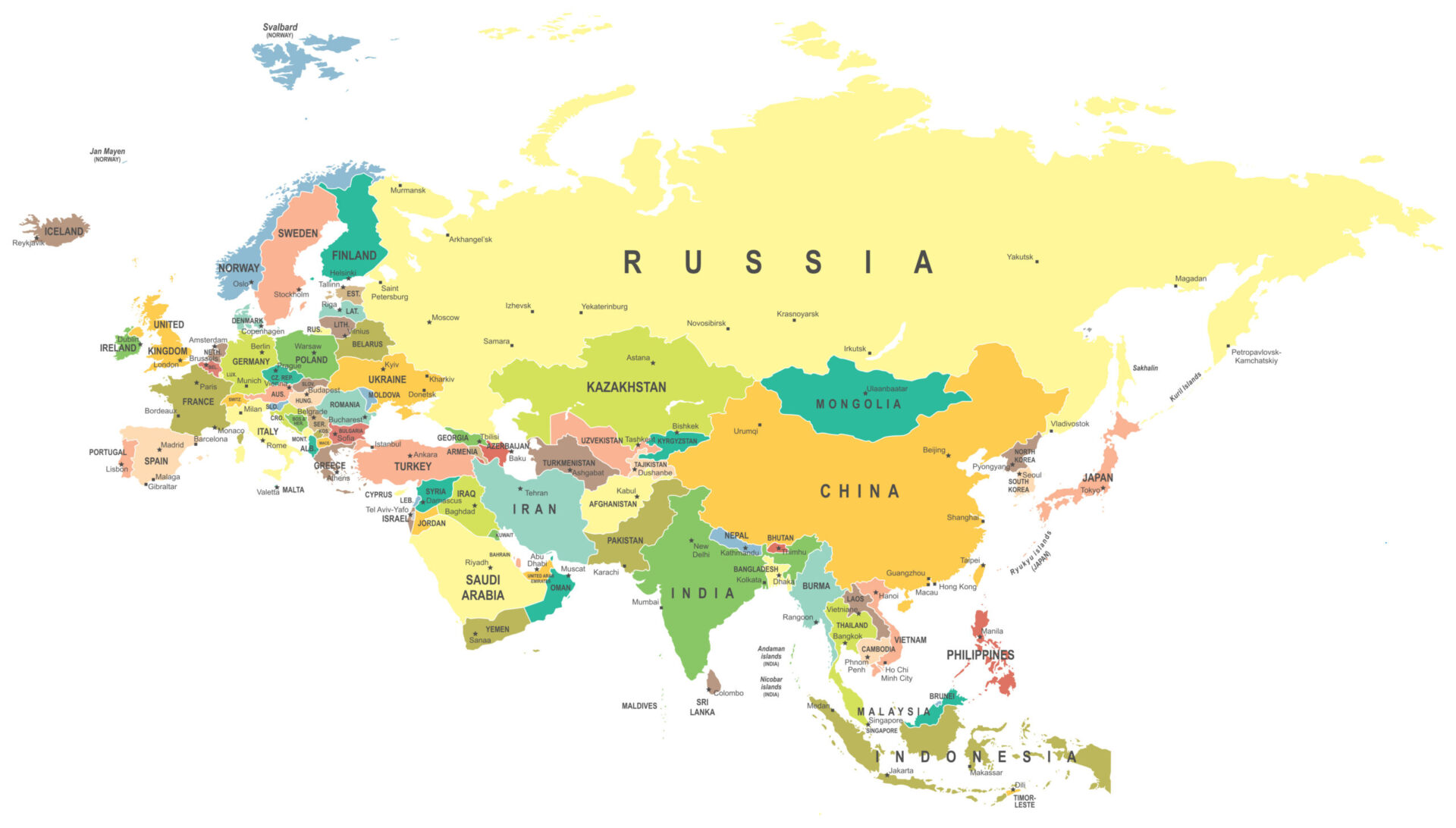
There is a growing danger that Ukraine’s now imminent rout on the battlefield at the hands of a far better-trained and better-equipped Russian force will lead to a period not unlike the Ruin that occurred in the latter half of the 17th century on Ukrainian territory and temporarily split Cossackdom into two several entities divided between Poland and Russia. The great Ruin involved a series of wars conducted by foreign powers — most notably Poland and Russia, but also the Ottoman Empire and Crimean Tatar Khanate — and internecine fighting and social unrest, which decimated a good part of Cossack territories, including many of those now being destroyed by NATO-Russia Ukrainian war.
With the failure of Ukraine’s counter-offensive, high attrition and increasingly low morale among its fighting forces, declining political and military support from the West, the coming onset of winter and a possible, massive Russian offensive, the stage is being set for potential catastrophe. An all too possible path to a new Ruin could now be open and take the following course: the Ukrainian army’s collapse, a subsequent coup in Kiev, resulting in civil war, chaos and, as I have written before, the possible formation of Ukrainian guerrilla resistance forces fighting Moscow’s occupation.
COLLAPSE OF THE UKRAINIAN ARMY
The failure of Ukraine’s counteroffensive has major implications for the further course of the war, in particular the health and internal stability of Ukraine’s military establishment. First and foremost, the counteroffensive has brought the Ukrainian army perhaps as many as 70,000 casualties, nearly exhausted the army’s reserves, depleted its short- and medium-range artillery capabilities, led to the destruction of perhaps more than 5,000 pieces of military equipment. There is growing discontent in the middle-officer ranks and among the rank-and-file as a result of bad strategic and tactical operation of the counteroffensive, which led to throwing small wave after small wave along the same difficult, often heavily mined terrain without air cover and artillery suppression against far superior force in order to take and re-take small patches of territory and insignificant, depopulated, and almost completely destroyed villages.
Psychologically, Ukrainian soldiers are demoralized because of the high casualties and insignificant gains they brought on the background of the leadership’s claims that Western military equipment and training would lead to a successful counteroffensive as demoralized Russian forces would be routed and retreat as they did in Kharkiv and Kherson last year. Ukrainian society has been treated to this spectacle, exposure of wide-scale corruption in civilian and even military leadership circles, brutal forced recruitment tactics contrasted against the privileged party life abroad enjoyed by government officials, oligarch, and these elites’ sons and daughters. If the army comes from society and a demoralized army meets an outraged society, the will of both the army and society to keep up the fight cannot but be shaken.
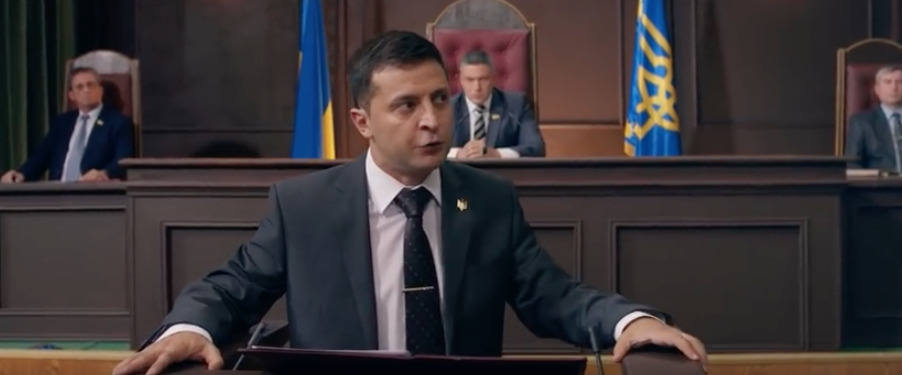
These trends wll be made even more powerful, as the war leads to greater militarization of society. One manifestation of such a development that will intensify politicization in the military is the recruitment of military personnel, including officers, by political parties. Reports suggest that Ukrainian President Volodomyr Zelenskiy is preparing to jettison his now exceedingly corrupt and thus unpopular ‘Servants of the People’ Party and form a new one which will be based largely on those who served in the military (https://t.me/rezident_ua/19475). Other Ukrainian parties are likely to follow this example, further militarizing society and politicizing the army.
As the position of Ukraine’s army deteriorates along the 600-mile front, the likelihood of a military insurrection and/or popular revolt becomes quite high.
KIEV COUP
Wars tend to politicize militaries, and there can be nothing worse for civil-military relations in any country than a mix of the collapse or even just the failure of a military campaign run by a civilian leadership along with a failing but increasingly politicized military. As the civilian leadership continues to flail in the running of the war, with Zelenskiy’s less than competent leadership and his alienation of allies, the issue of its replacement by a military leadership or a new civilian one brought to power by the military cannot but appear on the agenda. Chief of the General Staff of the Ukrainian Armed Forces, Gen. Valeriy Zalyuzhnyi was opposed to the timing of this summer’s failed counteroffensive but was careful to publicly point the finger only at Ukraine’s Western allies for pushing the counteroffensive without providing Ukraine’s army the necessary weapons for artillery and air support for carrying out. But there should be no doubt that he also blames the civilian leadership for succumbing to such pressure, overpromising the results of such a hasty and poorly thought out offensive, and perhaps even for Zelenskiy’s failure to resist the West’s pressure to continue the war rather than conclude the March 2022 Istanbul talks for an agreement that would have avoided the disaster now hanging over Kiev. There can also be little doubt that many other military officers as well as rank-and-file soldiers fell the same way.
From the other side of Ukraine’s political spectrum on this issue, the ultra-nationalists and neo-fascists who comprise the vanguard of the ‘war party’ in Kiev form a good part of the Ukrainian army, though surely many have perished in the fighting over the past 19 months. This element has less commitment to the rule of law, and many of the so inclined have long asserted that the Miadan revolt was just the first phase of Ukraine’s ‘national revolution’, which needs to be completed by the final neofascist takeover. On this background, the risk of a palace and/or military coup runs high. Forces such as Right Sector, Azov, the Ukrainian Volunteer Corps, and a host of smaller ultranationalist and neofascist parties and organizations, with access to arms could return to Kiev and seize power in tandem with some moderate military officers. After all, these elements have been a source of political violence, mass disturbances, and protests of neofascist intimidation for a decade or more. Indeed, they played the lead role in transforming the peaceful Maidan demonstrations, motivated by European aspirations and distaste for corruption, into a violent false flag terrorist attack that targeted protesters and police, sparking the outrage that led to fall of President Viktor Yanukovych in February 2014. There is no reason why they cannot convert a new cycle of upheaval, even chaos into a new overthrow of the political leadership.
A military coup or military-backed coup could also come about as a result of the disintegration and isolation of one or more large Ukrainian military contingent, which manages to set up a separate or even separatist enclave, for example in western Ukraine or parts thereof, under the patronage and leadership of a local politician, oligarch and/or military commander establishing himself as warlord. In this way and others political schism could spark internecine warfare and civil war.
CIVIL WAR
Any successful coup in Kiev or separatist entity could generate an opposition, sparking civil war. Along with the breakup of the army or simply given the ubiquity of weapons in Ukraine, such a rejection of the coup leadership by one or more forces would almost certainly lead to internecine violence. Ukrainian culture is touted by many in the West as essentially a Western one, characterized by values of freedom, democracy, and the rule of law. This is inaccurate. Ukrainian political culture is equally dominated by an anarchic democracy, which can confound republicanism and the rule of law. The various neofascist, ultranationalist, moderate nationalist, national democratic, and liberal democratic elements in Ukrainian culture and society have not been successful in forging a political and cultural consensus over the course of thirty post-Soviet years. Although the separation of the pro-Russian and Soviet nostalgic east and Crimea eliminated one of the points around which conflict swirled in Ukrainian state and society, the others noted above remain and are incompatible with each other. To be sure, the war consolidated Ukrainian society in the first year of the war, as the rise of Zelenskiy’s catastrophic approval ratings at the time demonstrated. However, the ‘bump’ from the shock of the war’s onset has largely dissipated, and defeat at the front is likely to return Zelenskiy’s ratings to their pre-war low. Zelenskiy’s new face and fresh energy temporarily consolidated Ukrainian society and dampened its schismatic, conflictive, and anarchic cultural elements. Now, however, deep divisions, high political tensions, internecine violence, and the threat of civil war are being revived. The threat of civil war raises the specter of chaos and quagmire.
THE POTENTIAL OF A UKRAINIAN QUAGMIRE FOR RUSSIA
There is real potential for any internecine conflict or civil war to devolve into political and social chaos and state breakdown or failure. In a failing or failed war-torn, even civil war-torn Ukraine, we could see one or more remnants of the army, one or more guérilla or partisan armies carrying out combat, sabotage, and terrorist attacks against any Russian occupying force. The farther west Russian forces move and attempt to occupy and annex territories, the likelihood of the emergence of an underground partisan army in the tradition of the Ukrainian Partisan Army of World War II and post-World War II anti-Soviet resistance grows. Even in the Russia-annexed southern regions of Kherson and Zaporozhe — where there is considerable, though likely not majority pro-Russian sentiment – pro-Russian administrations have been plagued by assassinations of their officials and other cases of support for Kiev. Underground resistance to Russian rule also likely would emerge in Mikolaev and Odessa in the south, Kharkov, Sumy, and Chernigov in the north, as well as in central, not to mention in very anti-Russian western Ukraine.
Depending on how the war plays out, Russia may be forced to send forces into one or more of these areas, crossing the Dnepr around Kiev and moving further west would guarantee the Russians a difficult occupation. If Ukrainian armed factions are roaming and fighting, growing millions of refugees and general chaos, the Russians could find themselves in a situation like that which faced the US and NATO forces in Iraq and Afghanistan, contending with a long, drawn out armed guerrilla insurgency, underground terrorism, and nation-building.
But it is not just Russia that will feel the repercussions of such developments. Belarus, Moldova, and Europe’s NATO and EU states will see an even greater influx of Ukrainian refugees. Poland will simply be inundated, and with great mutual antagonism lying just below the surface of Polish-Ukrainian relations, there would be potential for Ukrainian political violence in Poland.
CONCLUSION
The above is no longer an unlikely scenario; several of its elements are beginning to shift over into the likely category. For Russia, a quagmire would lengthen and raise the costs of Russia’s involvement in Ukraine. Moscow cannot let a new anti-Russian regime to emerge in Kiev or allow chaos and state collapse to persist on its border. Russia could end up facing a second Afghanistan, with all the domestic political risks such a development would be fraught. Imagine a scenario in which Moscow has been saddled with Ukrainian conflict, chaos, and state-building for 5-10 years and Putin’s health begins to wane or fails. Not a preferred scenario, you would agree.
Obviously, a Russian quagmire in Ukraine will offer opportunities for the West to continue attempting to exact costs on Russia for its actions in Ukraine. Washington, Brussels, London and Warsaw could supply and fund anti-Russian partisan and terrorist activity. A recent U.S. strategic plan for the future of Ukraine being discussed in the wake of Kiev’s failed, ill-conceived counteroffensive already proposes creation of a “national level resistance plan,” that, according to Politico, “could allude to ordinary Ukrainians fighting back if Russia gains more territory” and about which “(t)he State Department official would not clarify that point” (www.politico.com/news/2023/10/02/biden-admin-ukraine-strategy-corruption-00119237). It cannot be excluded that in tiring of Zelenskiy’s less than competent, increasingly erratic, and unpopular leadership the West may back a coup plot against him. After all, Washington for its part has a long track record of doing so. In any civil war scenario, the West likely would attempt to ensure that pro-Western, anti-Russian Ukrainians came to power, arming and funding one or another group as has now become the tradition. Most disturbingly of all, a scenario of social chaos and state failure will heighten the fog of war and politics to a peak of uncertainty in which the risk of miscalculation by Russia and/or the West becomes even greater than it is now. This risks the spread of the Ruin scenario beyond Ukraine’s borders to the detriment of Russia, the West, and perhaps all the rest of us.