Mick Hall: New Zealand’s ‘Russian Edits Scandal’ — How a National Broadcaster Demonized the Truth

By Mick Hall, Consortium News, 10/7/23

In this tumultuous time of war and global conflict, where pervasive propaganda campaigns mask geopolitical machinations of the powerful and serve their interests, mainstream journalists’ ability to counter these campaigns have never been more limited.

Gone are the days when John Pilger was able to have a story attacking George W. Bush and Tony Blair’s invasion of Iraq on the front page of the British tabloid, the Daily Mirror.

We live in a time of state surveillance and creeping restrictions on freedom of speech, where whistleblowers are criminalised and publishers like Julian Assange face persecution and life imprisonment.

Self-censorship is strictly adhered to by media outlets as narratives are shaped by a technocratic elite. Mainstream stories are packaged with a kind of hermeneutic seal, keeping out vital context that would allow readers to interpret the meaning of events happening in the world.

Yet so much is currently taking place of profound importance that the public needs to know about. For those of us living in New Zealand and the wider Pacific region, these matters include the potential of being caught up in a proxy war with China at the behest of its peer rival, the United States, with all the horror that would involve.

‘Rules-Based’ Domination

For a long time, the U.S. has dominated the global economy using its petrodollar, instruments of economic coercion like sanctions, the International Monetary Fund (IMF) and the World Bank, as well as C.I.A. interference in nations’ internal affairs, including the fermentation of opposition groups and violent coups.

As a last resort, it has exercised raw military might, invading countries like Iraq and Afghanistan, or directed its will through NATO, bombing Serbia and Libya in the interests of its corporate state.

Contemporary history shows at the core of its so-called “rules-based international order” lies a very destructive neo-colonial system of domination, one that pays lip service to democratic values and institutions only when corporate schemes for profit are not being threatened.

It is in the interests of democratic participation and accountability that citizens of countries aligned with U.S. power understand this, so they can hold their governments to account for foreign policy positions.

They should also understand that this unipolar power, exercised by the U.S. since the fall of the Soviet Union, is being challenged by an emerging multipolarity, particularly through the growing strength of trading bloc BRICS.
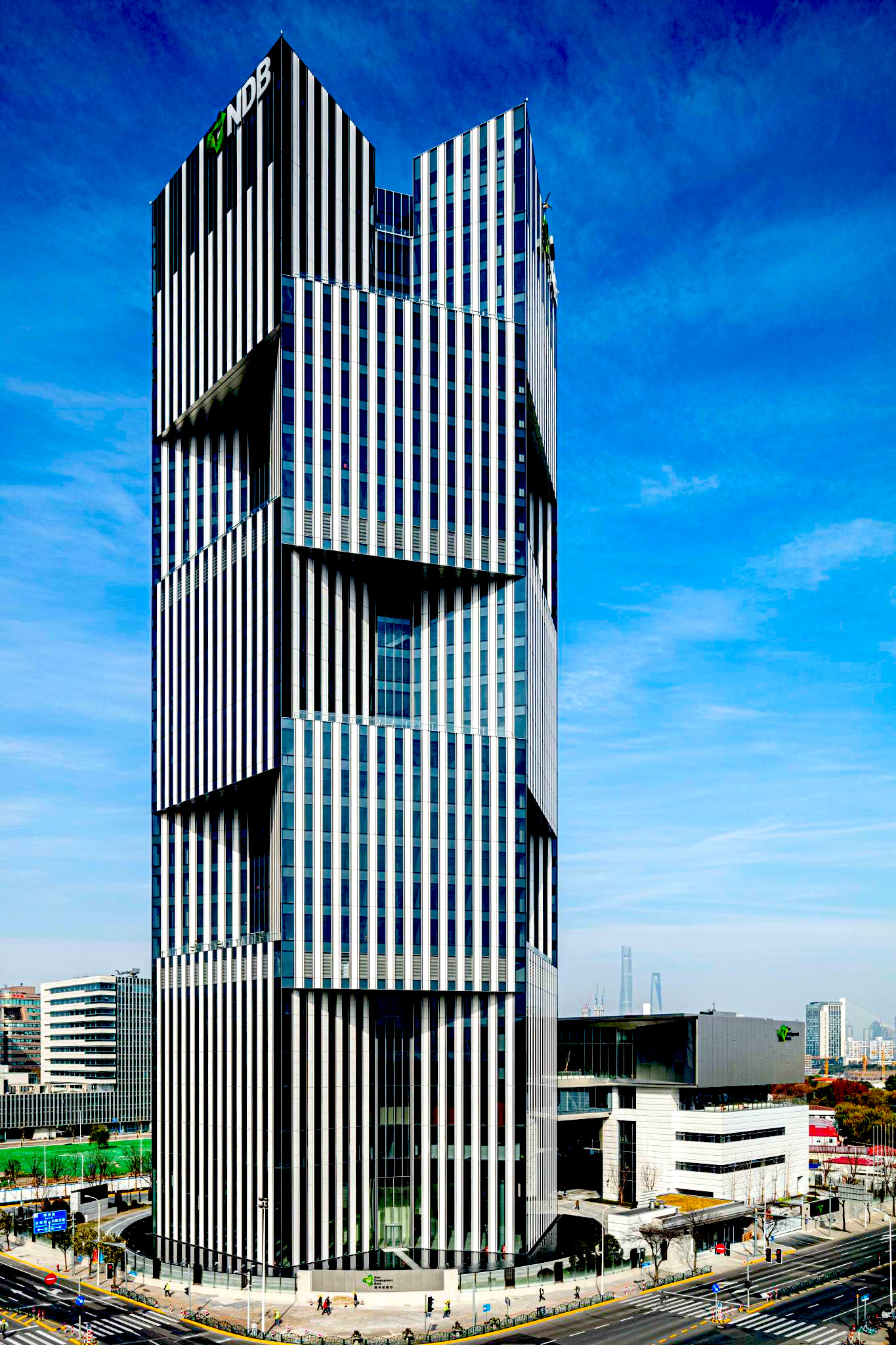
BRICS’ New Development Bank headquarters in Shanghai. (Donnie28, Wikimedia Commons, CC BY-SA 4.0)

Nations are breaking free from the U.S.-dominated global system, trading in their own currencies, and seeking greater economic sovereignty to avoid sanctions, the predatory practices of Western financial institutions. BRICS leaders have stated an intent to build an alternative, more equitable and just global framework for trade and co-operation.

Current U.S. foreign policy strategies that push proxy war as a means of ‘containing’ those nations leading this charge towards multipolarity, namely Russia and China, pose an unprecedented danger of nuclear exchange and the annihilation of life on Earth.

Within Western mainstream media, striving to present a contextual framework for world news stories that reflect these overarching realities is an onerous task and one fraught with risk. I’m very much aware of the price journalists face for attempting to do so.

In June, I was publicly cast as a Russian propagandist by my employer Radio New Zealand (RNZ) and thrown to the wolves over my subediting of a Reuters story on the U.S. proxy war in Ukraine.

The gross mischaracterisation created a scandal and widespread hysteria amid speculation that the national broadcaster — New Zealand’s most trusted source of news — had been infiltrated by a Russian agent. It led to weeks of intense national and international media coverage. It also left me jobless, with a 20-year career in tatters. Others around the world are being smeared in a similar fashion.

Edits ‘Pro-Kremlin Garbage’

I had worked on the RNZ digital team since September 2018. Part of my job involved selecting and processing news stories from international wires for website publication. I had approached such copy critically, finding that Reuters copy on occasions blatantly leaned towards a U.S. State Department position, while BBC copy reflected a U.K. government bias.

In both cases it led to unbalanced and distorted stories. Addressing political or cultural bias usually involved deleting or reframing the paragraph that carried it, or adding counter-factual context to achieve greater balance.
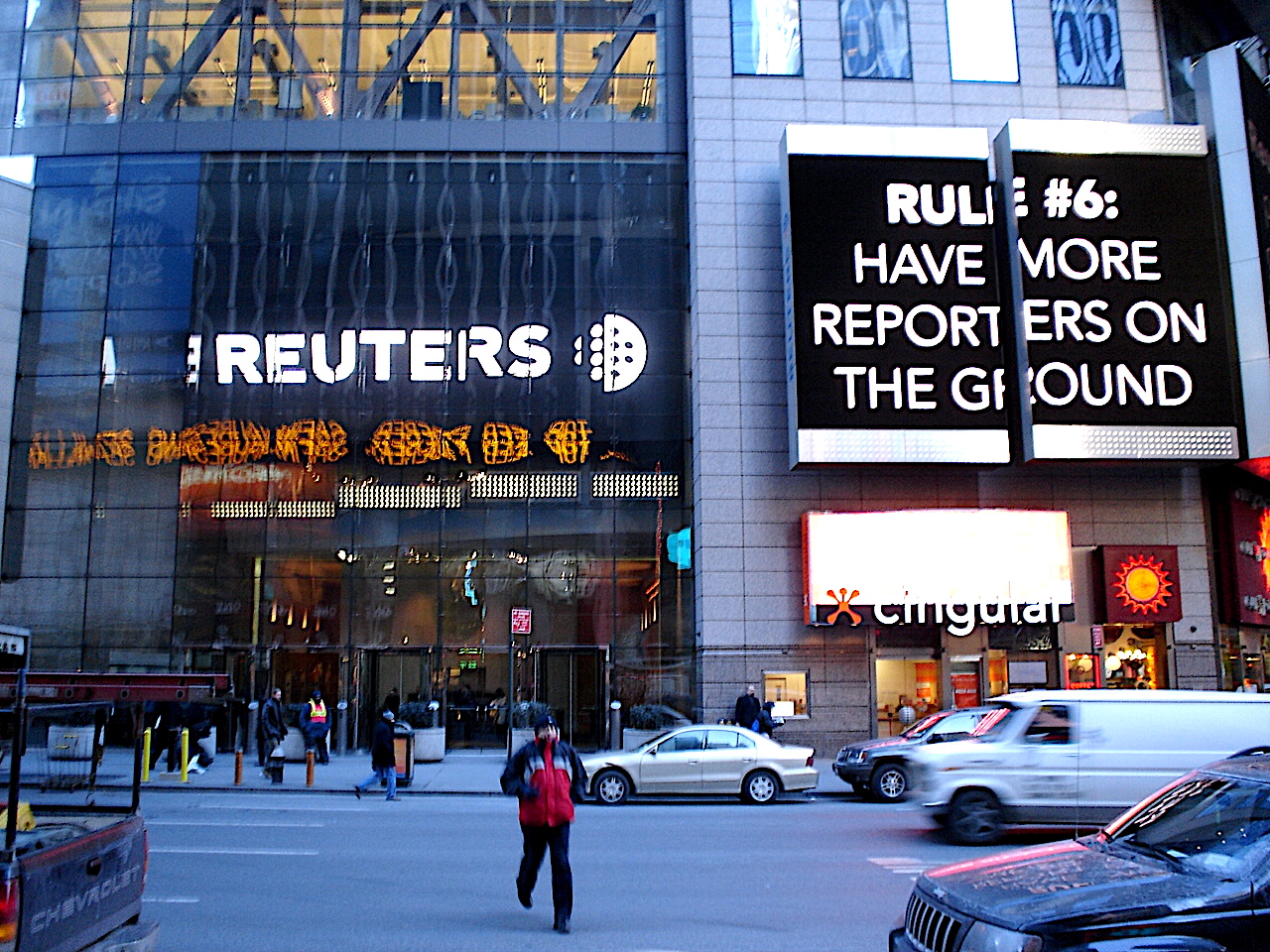
Reuters building entrance in New York City, 2007. (Eternalsleeper and Broadbeer, Wikimedia Commons,CC BY-SA 3.0)

As the Ukraine war kicked off, instances of such bias and imbalance increased, as did what I saw as a journalistic duty to remove it.

On June 8 a story on the Russian-Ukraine conflict I had subedited and then published was flagged on Twitter by New York-based lawyer and media commentator Luppe B. Luppen. He claimed it presented a propagandised version of events during the Maidan protests of 2014 and contacted Reuters.

The original paragraph had read:

“The conflict in eastern Ukraine began in 2014 after a pro-Russian president was toppled in Ukraine’s Maidan Revolution and Russia annexed Crimea, with Russian-backed separatist forces fighting Ukraine’s armed forces.”

The edited version instead stated:

“The conflict in Ukraine began in 2014 after a pro-Russian elected government was toppled during Ukraine’s violent Maidan colour revolution. Russia annexed Crimea after a referendum, as the new pro-Western government suppressed ethnic Russians in eastern and southern Ukraine, sending in its armed forces to the Donbas.”

When adding references in news copy to the Maidan coup that ousted the then Ukrainian President Viktor Yanukovych, I would have usually attributed the position to Russia as a matter of prudence. On this occasion, I didn’t. Leaving in the Reuters reporter’s byline didn’t help my case and it would be used to push the false idea my editing was surreptitious ‘tampering’, even though this was an isolated error.

My immediate boss approached me after Reuters sent an email to RNZ pointing to a breach of contract over the edited story. She emphasised the matter was “really, really serious” as I’d changed the intended meaning of the story. I took responsibility for the changes and accepted paid leave while an investigation took place, alongside the implementation of an external strategy to minimise reputational damage to the company.

In my mind, I was guilty of procedural errors and believed I may be looking at a verbal or written warning after explaining to furious bosses the reasons for the copy edits. Instead, that evening an audit of my work spanning five years was launched after RNZ informed the public it was investigating how “Russian propaganda” had been inserted into its international wires online content.
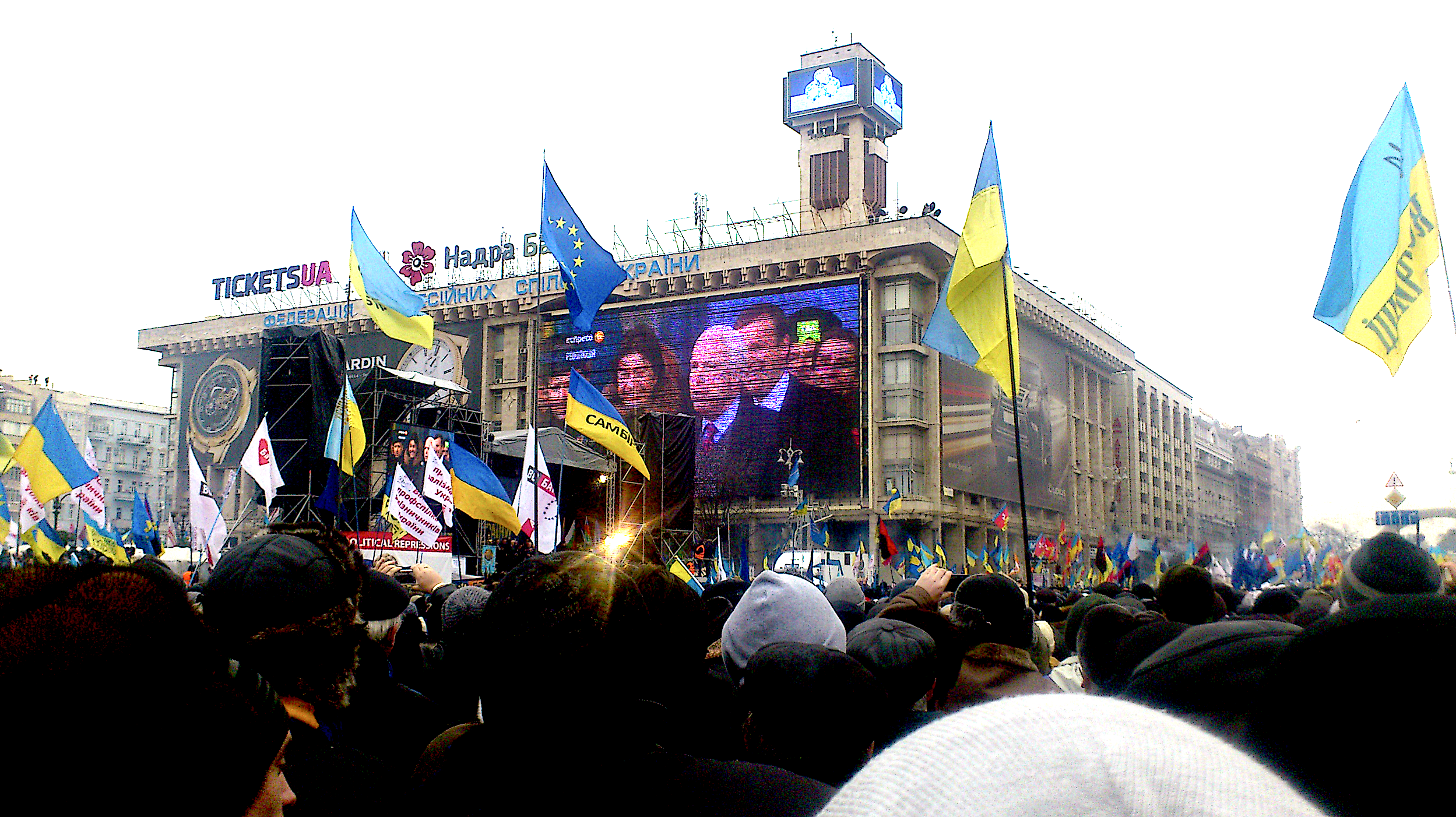
The late U.S. Sen. John McCain addressing crowds in Maidan square, Kiev, Dec. 15, 2013. (Mr.Rosewater, Wikimedia Commons, CC BY-SA 3.0)

In framing the matter this way, the RNZ leadership maximised reputational damage to its organisation, as well as to myself. International coverage of the unfolding “Russian edits scandal” really took off after RNZ CEO Paul Thompson increased the maelstrom by calling the edits “pro-Kremlin garbage.”

A Political Show Trial

The broadcaster began publishing a list of other stories it found “inappropriately” edited and in breach of its editorial standards.

Three days after being put on leave, the audit had identified 16 stories of concern, prompting right-wing politicians to demand a government inquiry. Instead, the RNZ board of directors set up an independent review panel to determine what had gone wrong, re-establish public trust and ensure such “breaches” could never happen again.

The active audit was published at the top of the RNZ website, ostensibly to reassure the public and demonstrate transparency. It in effect became a type of political show trial. I felt the pressure every time it was updated with new stories, complete with editorial notes at the bottom of each. But the audit also betrayed where RNZ management stood ideologically — firmly and explicitly behind a skewed Anglo-American worldview.

It would eventually flag 49 world news stories out of a total of 1319 world stories checked. Less than half relating to Russia and Ukraine. The audit demonstrated that, when it came to Palestinian rightsclass struggles and coups in Latin AmericaU.S. provocations against China involving TaiwanJulian Assange’s plight, and even U.K. workers’ right to strike, no deviation from U.S. State Department or Westminster positions would be tolerated.

Donate to CN’s
Fall 
Fund Drive

My own original stories were also put under the microscope. In July 2022 I’d written a story “NZ entering Ukraine conflict ‘at whim of govt’ – former Labour general-secretary,” featuring ex-senior politicians, who said the New Zealand government was risking nuclear catastrophe by giving material support to the U.S. proxy war in Ukraine at the expense of diplomacy.

It was removed from the website and screened for Russian bias, before being republished without a byline and with a note incorrectly telling readers an earlier version of the story had lacked balance.

Resignation

Amid public scrutiny, which also included disinformation experts being invited on national media platforms to comment on foreign interference in relation to my work, as well as online threats and speculation over my motives, I resigned.

Coming to terms with the loss of a job with a young family was one thing. The circumstances of the loss was causing much more immediate anxiety.

With New Zealand part of the Five Eyes Western intelligence apparatus, I expected the security services would be knocking on my door. Isolated and feeling vulnerable, I began to catastrophize, believing there was a chance I could be removed from the country and estranged from my Kiwi children. As an Irish national I had resided in the country since 2009.

In times of crisis, I’d always prayed for help and this time was no exception.
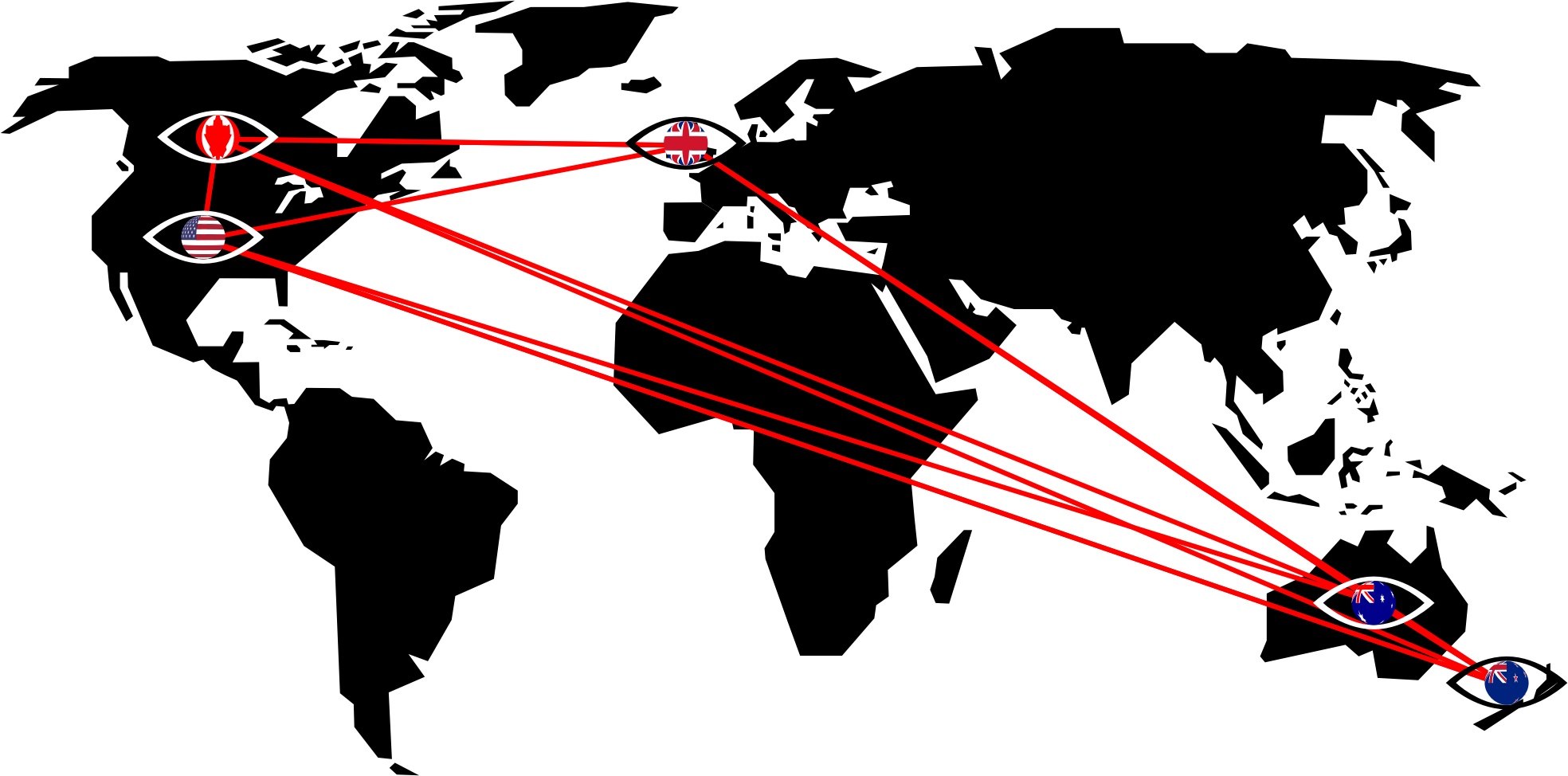
Rendering of the “Five Eyes” intelligence network that includes Australia, Canada, New Zealand, the U.K., the U.S. (@GDJ, Openclipart)

People Begin Rallying

I stopped reading media reports as the toxic groupthink of my former colleagues became too taxing to process. I also ignored media requests. Instead, my energy went into writing up a 14,000-word substantive statement as part of plans to meet with the review panel, which was now seeking to interview RNZ staff, as well as myself.

As I did so, light began breaking through the darkness. People who understood what was going on began to reach out. A reformed Ukrainian nationalist got in contact and offered to assist, thankful for what he said I had helped point to — the plight of his fellow countrymen who were being cynically used, many unwillingly, as cannon fodder to forward U.S. strategic interests.

Award-winning cartoonist Malcolm Evans, an outspoken critic of Israel’s occupation of Palestine who had himself been ousted from The New Zealand Herald decades before, suggested I ring lawyer Deborah Manning. I did so. The power differential between RNZ and myself troubled Manning enough that she offered to guide me through the inquiry process, alongside her colleague Simon Lamain, on a pro-bono basis.

Manning had gained a high public profile after her prolonged, but successful battle against the imprisonment and persecution of Algerian refugee Ahmed Zaoui after he arrived in New Zealand in 2002, accused by intelligence agencies of being a terrorist.

She also represented Afghan villagers during a 2019 government inquiry following a raid by members of New Zealand’s special forces in 2010 that left five dead and 15 wounded. Manning had proven herself a formidable advocate.

My sense of isolation lessened further after a supportive call from investigative journalist Nicky Hager, co-author of Hit & Run, a book detailing that NZ Special Air Service (SAS) Afghan operation. He assured me time would attest to the fact that RNZ had called it wrong.

Columbia University Professor Jeffrey Sachs and University of Chicago Professor John J Mearsheimer, alongside other highly regarded scholars and political scientists, agreed to write letters of support to the review panel. Both men took a keen interest in the unfolding drama.

In his letter to the review panel, Sachs wrote:

“It may be that the RNZ leadership is simply trying to keep in step with official U.S. and U.K. policies, rather than to help its readers and listeners to understand the dramatic events of our time…

The claim that the edits are pro-Russian propaganda is nonsense. The edits add depth of historical context and understanding, and open minds to a deeper inquiry.”

Commenting on various elements of context I’d added to the Ukraine stories, Mearsheimer wrote:

“I think that his characterization of the Azov battalion and how it was portrayed in the West before the recent war is correct. I think his views on how Russian leaders thought about NATO enlargement and how that helped cause the war is correct. I think his identification of American involvement in the events on the Maidan and his description of it as both a color revolution and a coup is correct…

Someday, historians are going to look back at this period in amazement, wondering how the West allowed itself to engage in such an all-encompassing and vicious propaganda campaign – that is so at odds with the truth as well as liberal values. Hopefully, RNZ will correct its mistake with Mr. Hall, so those historians do not point to this incident as prime evidence of how the West lost its mind.”

Facing the Panel

Buoyed by the fact I was in good company I prepared to meet the review panel, my statement outlining the circumstances of the wires copy editing now completed.

Seated inside the ground floor of a soulless, nondescript corporate hotel in central Auckland, I nervously scanned the faces of those descending the staircase to the cold marble foyer next to our lounges, where immigrant staff served coffee, hoping to identify the person I thought might bring the group of three to the inquiry’s interview room.

Manning stood up as Willie Akel, a media law expert and the panel chairman, suddenly appeared a few metres away, greeting us with a smile and handshakes. A tall, studious-looking man in his early 60s, Akel had a history of battling for corporate media freedoms. He would be the most personable of the panel, yet the most importunate during intense cross-examinations that would take place over two days.

It became clear from my initial meeting with the three-person panel that I would not convince them that all my Russia-Ukraine edits were accurate or appropriate.

The panel did not intend to assess all stories flagged by RNZ but wanted to look at a sample to establish that inappropriate editing had indeed taken place. In my view, exchanges that followed pointed to an inability to discuss the Ukraine conflict without deference to Western orthodoxies, an implicit bias that trumped empirical evidence.

One story discussed was “UN again trying to evacuate civilians from Ukraine’s Mariupol,” published on May 6, 2022. It included a comment from an Azov Regiment commander, after which I had added: “The Azov Battalion was widely regarded before the Russian invasion by Western media as a neo-Nazi military unit.” [Related: ROBERT PARRY: When Western Media Saw Ukraine’s Neo-Nazis]
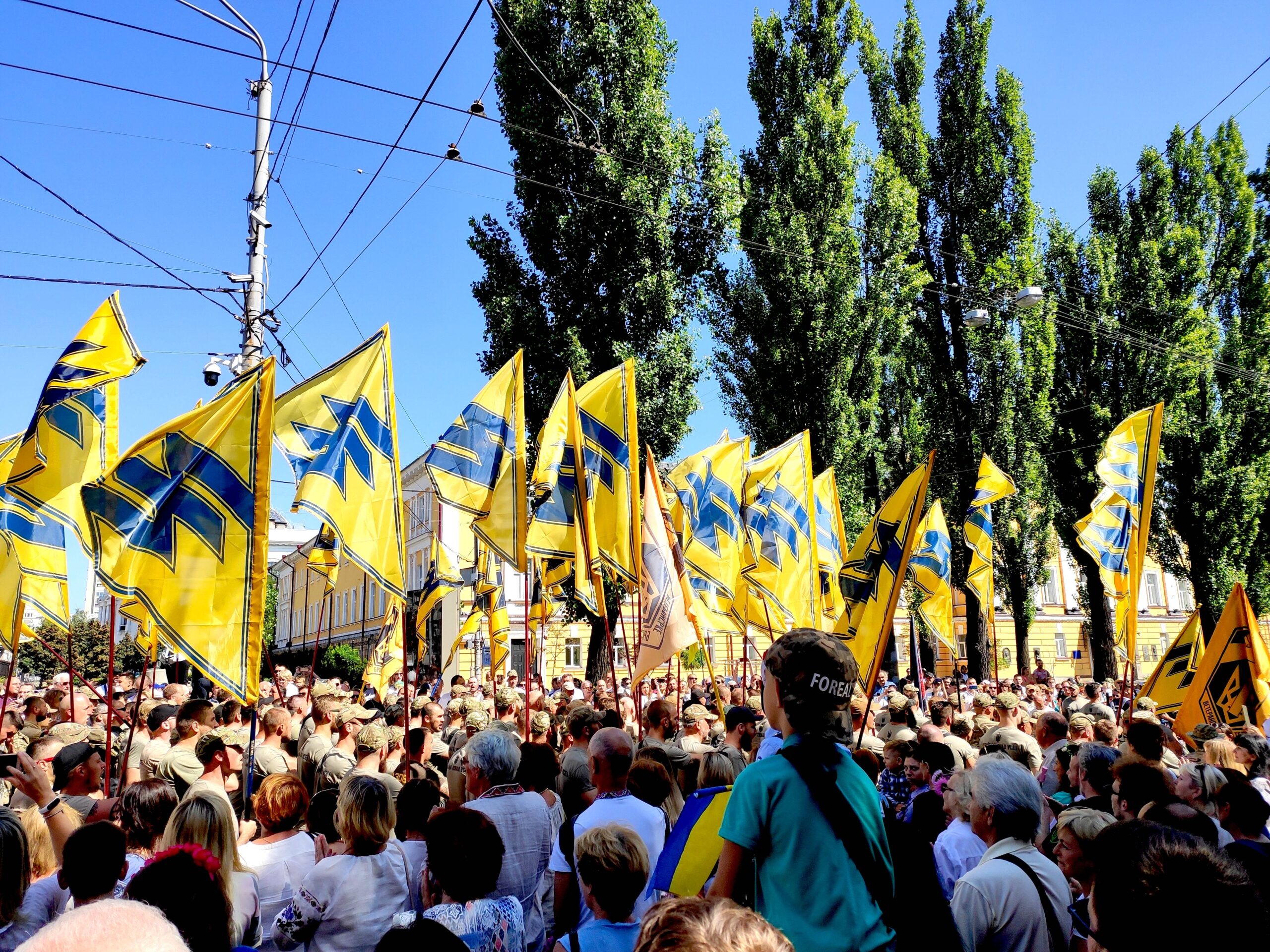
A march of Azov veterans and supporters in Kiev, 2019. (Goo3, Wikimedia Commons)

A panel member argued it had been inappropriate to add the line without also giving further balancing context, namely, that Ukrainian President Volodymyr Zelensky had brought the Azov private militia into Ukraine’s regular army and in doing so had “reigned” the group in.

I pointed out that even Reuter’s own commentator Josh Cohen had said Azov’s inclusion within Ukraine’s interior ministry did not necessarily mean this and that the group continued to push its neo-Nazi ideology through non-profit activities and children’s camps.

In its subsequent report, the panel found the line’s “uncritical and unexplained inclusion” had unbalanced the story without attribution to Russia and more balancing context added. It noted a “contested and complex debate about the origins of the battalion some years earlier and the extent to which they were and still are influenced by neo-Nazi elements.”

It remains unclear why the panel believed the line needed to be attributed to Russia, while offering a Ukrainian counter position would have only amounted to adding false balance, in the absence of any real evidence Azov had renounced its fascism.

One-sided, Politically Coloured and Unbalanced’

The panel’s main scrutiny was directed at reporting, as uncontested fact, the Maidan events as a U.S.-backed coup that had sparked a civil war and had led to Russia’s annexation of Crimea after a referendum.

I argued that, although I had not attributed this context to the Russian position – alongside Reuter’s ‘Maidan Revolution’ U.S.-aligned narrative which I had instead removed – in mitigation the paragraph did not contain misinformation. It contained key historical antecedents to the Russian invasion.

Yanukovych was removed from office by a Parliamentary vote that the Ukrainian constitution did not allow, a move backed by the U.S. He had in any case already left Kiev the day before amid violence and threat of arrest, or worse.

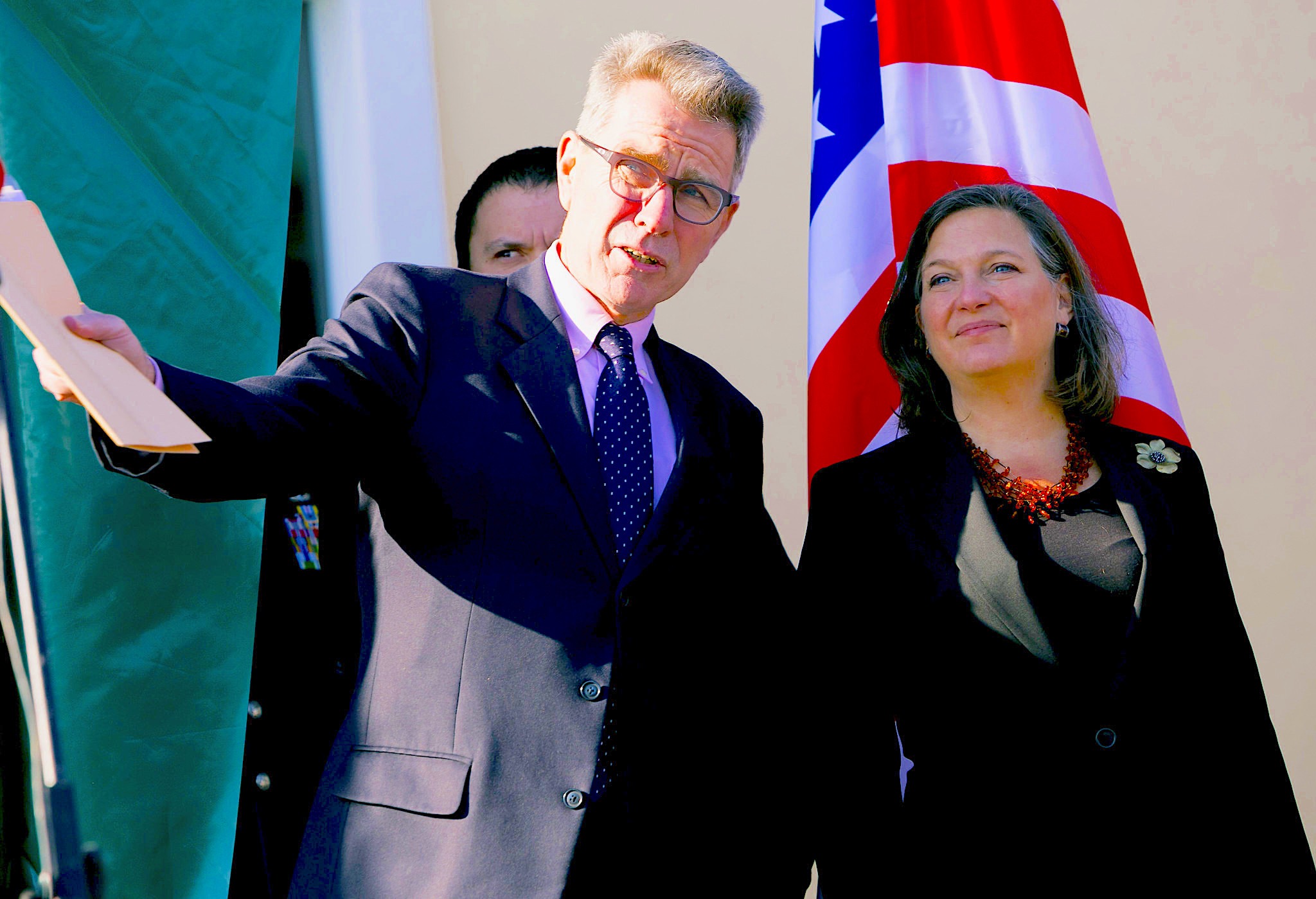
The panel continued to listen intently, but with palpable scepticism, as I mentioned the intercepted phone conversion [LISTEN] between the State Department’s Victoria Nuland and diplomat Geoffrey Pyatt, where the two U.S. officials discuss who should make up the next administration, several weeks before Yanukovych was driven from power.

Oct. 8, 2014: Pyatt and Nuland at a Ukrainian State Border Guard Service Base in Kiev. (U.S. Embassy Kyiv, Flickr)

I referred to academic Ivan Katchanoski’s Revelations from Ukraine’s Maidan Massacre Trial and Investigation and Ukraine-Russia War Origins, a peer-reviewed study that presented compelling evidence snipers positioned in hotels controlled by far-right groups killed dozens of protesters and police during a false flag operation at Maidan Square, putting pressure on Yanukovych after he was accused of ordering the shootings.

[Related: The Buried Maidan Massacre and Its Misrepresentation by the West]

None of it mattered much. In its report, the panel found the edits to the June 8 story flagged by the New York commentator were “one-sided, politically coloured and unbalanced.” The finding came as no surprise.

I maintain this instead accurately describes Reuter’s original copy, not the version I edited. The logic used by the panel seemed to dictate that anything contested by the Western powers cannot be stated as fact, regardless of the evidence.

Inquiry Scathing of RNZ for Causing Alarm

On the other hand, the panel did show commendable fairness. It found many of the stories flagged by RNZ’s audit had not been edited inappropriately. It also took on board my reasons for not “referring up” to management when making the edits – that my managers lacked expertise in world news and that I had been siloed in a dysfunctional editorial system. They were scathing of the organisation’s structural inadequacies.

The report found no evidence I set out to introduce misinformation or disinformation, “never mind run a Russian propaganda campaign.” It was also highly critical of RNZ management for alarming the public. It found language used by the broadcaster “unhelpful in maintaining public trust” in that “listeners and others may have believed the editing had been a deliberate and orchestrated exercise in propaganda.”

The report stated: “We consider that had RNZ’s own language about the incident been more restrained, the resulting coverage might have been too.”

In response, RNZ board chairman Jim Mathers promised to implement its recommendations, which included a major restructure, improved editorial systems and the establishment of an editorial “standards” enforcer.

There were signs that RNZ was not happy with the findings over my editing. Its flagship programme Morning Report wheeled out a belligerent mainstream media figure to reassert the discredited view the edits were in fact pro-Kremlin garbage, while an RNZ manager falsely reported that the review panel had “said the ‘rogue actor’ would not have gotten away with it had RNZ’s systems and oversights been up to scratch”. The report explicitly rejected the suggestion I was a “rogue actor.”

Frightened, Compliant Censorship’

The panel’s inquiry gave me some closure, while putting to bed New Zealand’s fears of Russian disinformation. I was thankful for that.

But it did not address the deeper systemic malaise within RNZ and the wider corporate media ‘eco-system’. Although it questioned the veracity of the RNZ’s audit, it did not see it for what it was. That was left to veteran journalist John Pilger, who called it “frightened, compliant censorship.” That assessment was echoed by others, including Joe Lauria at Consortium News and Max Blumenthal at The Grayzone.

Should we expect it any other way, given the societal role critics like Noam Chomsky assign to media – a place where stenographers to power, gatekeepers of what can be considered reasonable discourse, shape public opinion?

My attitude had always been at the very least that we should be held to our promise of balance, fairness and accuracy and be pushed to express a preferential option for peace and justice in international news reporting. I believed approaching international news copy critically to address potential issues of bias and accuracy to be an integral part of the editorial process at any public news service.

Unfortunately, the review panel’s position seemed to align with RNZ’s view stated during the inquiry process – that international wire copy should be treated as sacrosanct.

Yet, when Associated Press journalist James La Porta last November used an unnamed “senior U.S. intelligence official” to falsely point the finger at Russia after a Ukrainian rocket crossed into NATO country Poland killing two people, he demonstrated the dangers of this position. There are numerous other examples.

Just because a story is written and edited within a well-resourced, professional international news organisation does not mean it is accurate or balanced, particularly as war rages and that organisation’s country is a party to it.

RNZ’s new editorial standards enforcer will presumably oversee an uncritical publication of this copy, conflating editorial standards with narrative control. In my view, it will not be to benefit a public that RNZ’s charter states the broadcaster is duty-bound to supply with “comprehensive, independent, accurate, impartial, and balanced regional, national and international news and current affairs.”

Most seriously, this position will not benefit informed, much-needed debate about the supposed ‘threat’ of China, as the spectre of proxy war looms ever more clearly over Asia-Pacific.

In the words of imprisoned publisher and journalist Julian Assange, if wars can be started by lies, peace can be started by the truth. It is incumbent on journalists that they get this truth out and that wider society offers them support and protection to do so.

However, given the structural restraints on journalists and the apparent chill factor around questioning narratives of power at present, it will remain difficult to do so within New Zealand’s mainstream media.

Mick Hall is an independent journalist based in New Zealand. He is a former digital journalist at Radio New Zealand (RNZ) and former Australian Associated Press (AAP) staffer, having also written investigative stories for various newspapers, including the New Zealand Herald.

Views expressed in this article and may or may not reflect those of Consortium News.

Dave DeCamp: Report Details How the CIA Is Backing Ukraine’s Assassinations Inside Russia

By Dave DeCamp, Antiwar.com, 10/23/23

A report published by The Washington Post on Monday revealed how the CIA has supported covert Ukrainian attacks inside Russia, including the killing of Darya Dugina, daughter of the prominent Russian philosopher Alexander Dugin.

The report said the killing of Dugina was carried out by the Security Service of Ukraine (SBU) and that it was one of many operations inside Russian territory involving special units the CIA helped form in the wake of the 2014 coup in Kyiv that ousted former Ukrainian President Viktor Yanukovych.

The report reads: “The missions have involved elite teams of Ukrainian operatives drawn from directorates that were formed, trained, and equipped in close partnership with the CIAaccording to current and former Ukrainian and US officials. Since 2015, the CIA has spent tens of millions of dollars to transform Ukraine’s Soviet-formed services into potent allies against Moscow, officials said.”

The CIA support since 2015 has included advanced surveillance systems, training both inside Ukraine and inside the US, the building of new headquarters for Ukraine’s military intelligence agency, and intelligence sharing thought unimaginable pre-2014. Officials told the Post that the CIA still maintains a significant presence in Kyiv to this day.

The CIA helped the SBU form a new unit known as the “Fifth Directorate.” Recruits for the new unit were trained by the CIA outside of Kyiv with the purpose of forming groups “capable of operating behind front lines and working as covert groups.”

The CIA also gave major support to Ukraine’s military intelligence agency, known as the GUR. “We calculated that GUR was a smaller and more nimble organization where we could have more impact,” a former US intelligence official who worked in Ukraine told the Post. “GUR was our little baby. We gave them all new equipment and training.”

Officials insisted that the CIA was not involved in targeted killings carried out by Ukrainian intelligence and said the focus was on “bolstering those services’ abilities to gather intelligence on a dangerous adversary.” The report said the SBU and the GUR have been involved in dozens of assassinations against Russian officials in Russian-controlled Ukraine, alleged Ukrainian collaborators, and Russian officials and civilians deep inside Russia.

Darya Dugina was killed in a car bombing outside of Moscow in August 2022, but officials said her father was the real target. Despite the fact that they are civilians, Ukrainian officials justify Dugina’s killing because she was a supporter of Russia’s war in Ukraine, telling the Post she was no “innocent victim.” One security official called her the “daughter of the father of Russian propaganda.” The official said the car bombing and other operations inside Russia are “about narrative” and showing enemies of Ukraine that “punishment is imminent even for those who think they are untouchable.”

The report, which was based on conversations with more than two dozen current and former Ukrainian, US, and Western intelligence and security officials, said the CIA has objected to some of the Ukrainian operations but never withdrew support. Other assassinations inside Russia have included Stanislav Rzhitsky, a former Russian submarine commander who was killed while jogging in a park in the southern Russian city of Krasnodar, and Maksim Fomin, known as Vladlen Tatarsky, a military blogger killed in a bombing at a cafe in St. Petersburg.

The SBU was also behind the two attacks on the Kerch Bridge, which connects Russia to the Crimean Peninsula. The first attack in October 2022 was a truck bombing that killed five people. According to the Post, the driver of the truck, who was killed in the explosion, was unaware the SBU had planted a bomb in his vehicle. The second attack on the Kerch Bridge involved naval drones that, according to the Post, were “developed as part of a top-secret operation involving the CIA and other Western intelligence services.”

A former CIA official compared the CIA-backed Ukrainian intelligence services to Israel’s Mossad, which is known for being behind assassinations in Iran. “We are seeing the birth of a set of intelligence services that are like Mossad in the 1970s,” the official said, adding there are risks for NATO. “If Ukraine’s intelligence operations become even bolder — targeting Russians in third countries, for example — you could imagine how that might cause rifts with partners and come into serious tension with Ukraine’s broader strategic goals.”

Gilbert Doctorow: Are the talk shows on Russian state television just yes-men to power?

By Gilbert Doctorow, Website, 10/3/23

To those who are totally ignorant of Russia, meaning all of the American political elites and most of the foreign policy expert community, Russia is easy to comprehend, an easy target for labels like “autocracy” and “imperialist.” But then these folks don’t care much about the peculiarities of friends and allies abroad, so long as they are totally subservient to Washington. Why should they bother themselves with the realities of a country that stretches across 11 time zones, accounts for nearly 15% of the Earth’s land mass and has 145 million people drawn from a multitude of ethnic groups or “nationalities”?

Sunday night’s edition of the Vladimir Solovyov talk show gave an unequivocal negative answer to both questions in my title thanks to some extraordinary statements by one panelist, deputy chairman of the State Duma Aleksandr Mikhailovich Babakov.

Leaders and representatives of the Duma parties outside the governing United Russia group have been a permanent fixture of the Solovyov show going back years. Communist Party chief Gennady Zyuganov used to be an invitee, but he was not a good conversationalist and has disappeared from view. Instead, the Communist parliamentarian and chair of the Duma committee on relations with the Community of Independent States [former Soviet Union republics] Leonid Kalashnikov is a regular panelist. He and Solovyov engage in sparring, the one standing for Communism in general and a full war economy today, the other for the free market. Their contests are as predictable as televised American wrestling used to be.

The founder and leader of the right wing Liberal Democrats (LDPR), Vladimir Zhirinovsky, was a frequent guest on the Solovyov show till his death in the midst of the Covid pandemic. Solovyov shared many of Zhirinovsky’s nationalist, anti-Western views and allowed him to verbally whiplash other panelists. I know this from the receiving end when I was denounced by Zhirinovsky as a spy during my one invitation to the show back in 2016. But then again, most any Western visitor was a spy in Zhirinovsky’s lexicon and it always would draw a laugh from the audience. 

Zhirinovsky’s serious contributions to the panels were often in connection with his expert knowledge of Turkish affairs as a speaker of the language. He also roundly criticized the Putin government for its gently-gently approach to foreign relations. If Zhirinovsky had his way, the Russians would have bombed Berlin long ago. As for foreign aid, Zhirinovsky did not believe in the way it was practiced in the past by the Soviet Union with blank checks to the friends of Russia. Instead he called upon the government to use its diplomatic efforts to establish relations abroad that brought net revenues to Moscow, in emulation of the United States. As you will see below, I think this part of Zhirinovsky’s policy platform has influenced the Putin government. However, it would be better if Russia’s senior statesmen did not openly show their intentions.

 Zhirinovsky’s successor as chair of the party bloc in the Duma, Leonid Slutsky, is dull as dull can be and never appears on the talk show. However, a fellow LDPR deputy, former KGB operative Andrei Lugovoy, who is wanted by UK police on suspicion of the murder of Litvinenko, is invited fairly frequently by Solovyov and adds some spice to the discussions of relations with the West. He is no friend of London and is pushing a much more aggressive line than the Russian Ministry of Foreign Affairs.

Now I turn to the panelist last night who so impressed me: Babakov. Let us begin with what he said.

The main topic he pursued was a very harsh critique of the work of the head of the Central Bank, Elvira Nabiullina, who is one of the relatively few survivors of the Liberal group of economic advisers at the center of power for well more than a decade. She worked under Finance Minister Alexei Kudrin. She worked under minister, later Sberbank chief executive German Gref. Both were/are Putin protégés. And, most importantly, she clearly enjoys the protection of Vladimir Putin today. In that regard, Babakov’s criticism of her is ….a direct criticism of Putin himself. And since what Babakov was saying is also being said by many ordinary Russians, its airing on state television is politically important.

Babakov told us that Nabiullina is leading the economy into the desert by its current policy of very high interest rates to combat inflation, all of which results in falling investments and stagnating production that, in turn, will set off a new round of inflation as output does not keep pace with buying power and demand. Babakov has every right to challenge the country’s financial management: he holds a Ph.D. in Economics from Moscow State University and is a successful entrepreneur who made his fortune by companies he co-founded in Ukraine in the energy sector and diverse interests including a major hotel in Kiev.

Babakov explained at length last night why Russia should look more closely at the Chinese model of economic and financial management, wherein the equivalent of Russia’s Central Bank, the Bank of China, is not an independent actor but works in close coordination with the government to support its growth plans and sets out different interest rates and conditions for the different levels of business, from small enterprises to medium and very large enterprises. Moreover, Babakov praised the Chinese rules on currency management and especially the controls on currency transfers abroad. Whereas in Russia anyone with the funds in his account can transfer up to one million dollars abroad each month, in China the limit is a thousand times less.

These remarks by Babakov are in direct contradiction with Nabiullina’s public rejection of the Chinese model as unsuitable to Russia last week at a meeting on finance at which other heavy hitters in the field, including the chairman of VTB bank (the former Foreign Trade Bank) Andrei Kostin also spoke. Kostin, by the way, had been advocating for a Chinese like bifurcation of the foreign exchange market between domestic and foreign transaction exchange rates.

Babakov also had his spear out for Finance Minister Siluanov. He repeated Siluanov’s stupid sounding advice to the two hundred parliamentarians from most Latin American countries who gathered in Moscow last week as guests of the Russian State Duma. Per Babakov, who as Duma deputy chair took part in all the proceedings, the visitors included many speakers of their national parliaments and all had made the trip to Moscow in defiance of heavy lobbying by the U.S. embassy in their country to keep them away from Russia’s embrace. What impressed him most was that the Latin Americans all expressed their support for Russia, their correct understanding of the causes of the war in Ukraine and their rejection of any sanctions against Moscow. They enthusiastically embraced Putin’s speech to them.

Of course, implied Babakov, during their stay the visitors hoped to hear about Russian investment plans in their region. Instead, Siluanov told them that money is not the essential thing in life, that what you need is to be smart and to have good hands so that you can get along on less money. To Babakov’s thinking, Siluanov was singing from the wrong scores in the wrong opera.

Will the attacks on the government’s bank chief and finance minister by Babakov and others like him bring them down? Quite possibly. The ruble’s slipping below 100 to the dollar yesterday has unnerved middle class Russians. If they listened to Kostin’s projection that in the coming year the ruble’s value in dollar terms may fall further by half, then they will be an unstoppable force against Nabiullina and the other free market defenders in Putin’s circle.

I have watched Babakov on the Solovyov show many times and he always was dapperly dressed. His demeanor is avuncular. You understand at once that he is not in anyone’s pocket. He has changed his party affiliations several times over the years. For a time he headed the very patriotic Rodina (Homeland) party that was founded by the maverick politician Dmitry Rogozin. Then he spent several years in the left-of-center A Just Russia party headed by Sergei Mironov. He quit that and took a position in a public activism organization under the aegis of the governing United Russia party. Next he was a founder of the Za pravdu (For truth) party which eventually formed an alliance with Mironov in a hyphenated joint organization.

From 2003 to 2016 Babakov was an elected member of the Duma. From 2016 to 2020, he served in the upper chamber of the Russian legislature with the title of Senator. But that was an appointive position. Next he took what is nominally a step down to run again for a seat in the State Duma, won and rose to deputy speaker there. Meanwhile, he has served on a number of Presidential missions, including responsibility for relations with organizations of compatriots abroad and on a council overseeing implementation of the country’s National Projects.

Clearly Babakov is an insider in the Russian power elite while always having freedom of movement, and as Sunday night indicated, freedom of expression. Notwithstanding his financial declarations before standing for election to the Duma showing that he owns almost nothing and has annual revenues of perhaps $20,000 per year, his Wikipedia entry tells us that he owns an estate in France said to be worth $16 million and an apartment on the Rue de l’Université in Paris. Since he is on the EU sanctions list, it is doubtful he gets much pleasure from these properties today.

To understand the complexity of Russia’s power structure, it pays to take a look at the pre-political biography of Babakov. He was born in 1963 and grew up in the capital, Kishinev (today’s Chișinău), of what is today the poorest state in Europe, Moldova (then the Moldavian SSR). So how did this boy from the far provinces get into Moscow State University and then make his way to the top of Russian-Ukrainian business and political elites?

First, it happened because Soviet society and now Russian society was and is very mobile, with many social ladders for kids with brains and talent. To those who doubt this because it does not jibe with the concept of a corrupt, autocratic regime, I say: rethink the latter, not the former.

Secondly, it happened because at the time when young Babakov was ready to enroll in a university Moldova was doing very well. It was home base of party leader Leonid Brezhnev and received priority investment into its agrarian economy and also into industry. It was closely linked to Moscow by many daily flights, more, for example than to Soviet Georgia. I know: I was there at the time. In 1978 I visited the orchards and vegetable farms of Moldova in the company of Castle & Cooke Inc. top management for furtherance of their plans to grow iceberg lettuce in the USSR. I wrote about this in my Memoirs of a Russianist, Volume I.

The agricultural machinery company FMC had very extensive farm projects in Moldova at the time to grow tomatoes and process them for puree. In another domain, the American pharmaceutical company Abbott Labs built the first infant formula factory (Similac) in the Soviet Union in Moldova in the mid-1970s. I saw that the shops in Kishinev were better stocked than those in Moscow. It was this Moldova that was the launching pad for Mr. Babakov.

Surely it was this personal experience of how a distant and formerly poor land can become prosperous under state planning and then revert to dire poverty under free market management and adverse geopolitical developments that shapes Mr. Babakov’s beliefs on the benefits of state dirigisme today. There are many others with similar experience and critical views of the now inappropriate Liberal economic policies being pursued under Vladimir Putin. They will probably win out.

ACURA Announcement: Statement on the Arrest and Detainment of American Journalists in Russia

American Committee for US-Russia Accord (ACURA), 10/23/23

In April, The American Committee for US-Russia Accord (ACURA) released a statement condemning the arrest and detainment of the American journalist Evan Gershkovich by Russian authorities on espionage charges.

Sadly, 6 months later, we are compelled to protest yet another arrest and detainment of an American journalist, Alsu Kurmasheva, an editor for Radio Free Europe/Radio Liberty. Upon her arrest, RFE/RL president Jeffrey Gedmin released a statement saying Ms. Kurmasheva, “Needs to be released so she can return to her family immediately.”

We agree.

The arrests of Mr. Gershkovich and Ms. Kurmasheva are an affront to the values of free inquiry and will only increase the already dangerous level of tension between the United States and Russia.

We call for their unconditional release.

We further call for all parties to the war in Ukraine to engage in meaningful dialogue to put an end to this conflict which has cost the lives of so many.

—The Board of the American Committee for US-Russia Accord

Jeffrey Sachs: Beyond the Neocon Debacle in Ukraine

By Jeffrey Sachs, CommonDreams, 10/3/23

We are entering the end stage of the 30-year U.S. neoconservative debacle in Ukraine. The neocon plan to surround Russia in the Black Sea region by NATO has failed. Decisions now by the U.S. and Russia will matter enormously for peace, security, and wellbeing for the entire world.

Four events have shattered the neocon hopes for NATO enlargement eastward, to Ukraine, Georgia, and onward. The first is straightforward. Ukraine has been devastated on the battlefield, with tragic and appalling losses. Russia is winning the war of attrition, an outcome that was predictable from the start but which the neocons and mainstream media continue to deny.

The second is the collapsing support in Europe for the U.S. neocon strategy. Poland no longer speaks with Ukraine. Hungary has long opposed the neocons. Slovakia has elected an anti-neocon government. E.U. leaders—including Macron, Meloni, Sanchez, Scholz, Sunak, and others—have disapproval ratings far higher than approvals.

The third is the cut in U.S. financial support for Ukraine. The grassroots of the Republican Party, several GOP Presidential candidates, and a growing number of Republican members of Congress, oppose more spending on Ukraine. In the stop-gap bill to keep the government running, Republicans stripped away new financial support for Ukraine. The White House has called for new aid legislation, but this will be an uphill fight.

The fourth, and most urgent from Ukraine’s point of view, is the likelihood of a Russian offensive. Ukraine’s casualties are in the hundreds of thousands, and Ukraine has burned through its artillery, air defenses, tanks, and others heavy weapons. Russia is likely to follow with a massive offensive.

Biden foolishly refused to negotiate with Putin in December 2021. It’s time to negotiate now.

The neocons have created utter disasters in Afghanistan, Iraq, Syria, Libya, and now Ukraine. The U.S. political system has not yet held the neocons to account, since foreign policy is carried out with little public or congressional scrutiny to date. Mainstream media have sided with the slogans of the neocons.

Ukraine is at risk of economic, demographic, and military collapse. What should the U.S. government do to face this potential disaster?

Urgently, it should change course. Britain advises the U.S. to escalate, as Britain is stuck with 19th-century imperial reveries. U.S. neocons are stuck with imperial bravado. Cooler heads urgently need to prevail.

President Joe Biden should immediately inform President Vladimir Putin that the U.S. will end NATO enlargement eastward if the U.S. and Russia reach a new agreement on security arrangements. By ending NATO expansion, the U.S. can still save Ukraine from the policy debacles of the past 30 years.

Biden should agree to negotiate a security arrangement of the kind, though not precise details, of Putin’s proposals of December 17, 2021. Biden foolishly refused to negotiate with Putin in December 2021. It’s time to negotiate now.

There are four keys to an agreement. First, as part of an overall agreement, Biden should agree that NATO will not enlarge eastward, but not reverse the past NATO enlargement. NATO would of course not tolerate Russian encroachments in existing NATO states. Both Russia and the U.S. would pledge to avoid provocations near Russia’s borders, including provocative missile placement, military exercises, and the like.

Second, the new U.S.-Russia security agreement should cover nuclear weapons. The U.S. unilateral withdrawal from the Anti-Ballistic Missile Treaty in 2002, followed by the placement of Aegis missiles in Poland and Romania, gravely inflamed tensions, which were further exacerbated by the U.S. withdrawal from the Intermediate Nuclear Force (INF) Agreement in 2019 and Russia’s suspension of the New Start Treaty in 2023. Russian leaders have repeatedly pointed to U.S. missiles near Russia, unconstrained by the abandoned ABM Treaty, as a dire threat to Russia’s national security.

Third, Russia and Ukraine would agree on new borders, in which the overwhelmingly ethnic Russian Crimea and heavily ethnic Russian districts of eastern Ukraine would remain part of Russia. The border changes would be accompanied by security guarantees for Ukraine backed unanimously by the UN Security Council and other states such as Germany, Turkey, and India.

Fourth, as part of a settlement, the U.S., Russia, and the E.U. would re-establish trade, finance, cultural exchange, and tourist relations. It’s certainly time once again to hear Rachmaninoff and Tchaikovsky in U.S. and European concert halls.

Border changes are a last resort, and should be made under the auspices of the UN Security Council. They must never be an invitation to further territorial demands, such as by Russia regarding ethnic Russians in other countries. Yet borders change, and the U.S. has recently backed two border changes. NATO bombed Serbia for 47 days until it relinquished the Albanian-majority region of Kosovo. In 2008, the U.S. recognized Kosovo as a sovereign nation. The U.S. government similarly backed South Sudan’s insurgency to break away from Sudan.

If Russia, Ukraine, or the U.S. subsequently violated the new agreement, they would be challenging the rest of the world. As President John F. Kennedy Jr. once observed, “even the most hostile nations can be relied upon to accept and keep those treaty obligations, and only those treaty obligations, which are in their own interest.”

The U.S. neocons carry much blame for undermining Ukraine’s 1991 borders. Russia did not claim Crimea until after the U.S.-backed overthrow of Ukraine’s President Viktor Yanukovych in 2014. Nor did Russia annex the Donbas after 2014, instead calling on Ukraine to honor the UN-backed Minsk II agreement, based on autonomy for the Donbas. The neocons preferred to arm Ukraine to retake the Donbas by force rather than grant the Donbas autonomy.

The long-term key to peace in Europe is collective security as called for by the Organization for Security and Co-operation in Europe (OSCE). According to OSCE agreements, OSCE member states “will not strengthen their security at the expense of the security of other States.” Neocon unilateralism undermined Europe’s collective security by pushing NATO enlargement without regard to third parties, notably Russia. Europe—including the E.U., Russia, and Ukraine—needs more OSCE and less neocon unilateralism as key to lasting peace in Europe.

Analysis & Book Reviews on U.S. Foreign Policy and Russia