Gilbert Doctorow: What the Russians are saying on televised talk shows about the Israeli-Hamas war

By Gilbert Doctorow, Website, 10/16/23

In the past week, I have been interviewed several times by Indian television and asked about the present situation and immediate path ahead in the Israeli-Hamas war. I have replied on air, though I felt uncomfortable going outside my area of core competence. I do not present myself as an expert on the Near East. My added value is specifically in the following: to take readings of Russian governmental and public thinking about the most important international events of our times, of which the Mideast war is today number one. And that is what I offer in the essay below.

What I am about to say first is drawn from last night’s Vladimir Solovyov show, which gave the microphone to some of the most capable panelists in his stable of regulars. The key issue was how Russians view the concept of collective responsibility applied to whole nations or ethnic groups as the Israeli government is now doing in its approach to Gaza by proceeding on a mission to root out and destroy Hamas. Solovyov put on the screen the latest speech by Israeli president Isaac Herzog which reflected the doctrine of collective responsibility in no uncertain terms.

“It is an entire nation out there that is responsible,” Herzog said at a press conference on Friday. “It is not true this rhetoric about civilians not being aware, not involved. It’s absolutely not true. They could have risen up. They could have fought against that evil regime which took over Gaza in a coup d’etat.”

Solovyov also showed the Israeli Defense Minister Yoav Gallant saying that Israel is fighting against “human animals.”

Solovyov himself condemned unreservedly the brutal murders perpetrated by Hamas militants on 7 October just as he condemned any attempts to justify the brutal Israeli heavy bombardment of Gaza and their planned horrific land invasion of Gaza in the immediate future.

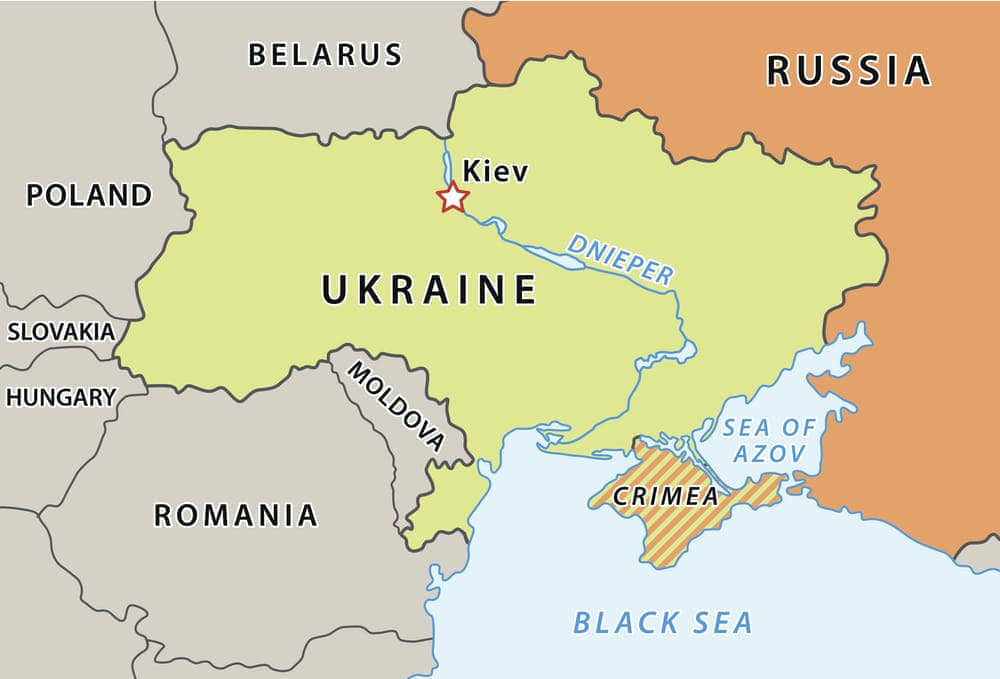
For his part, Solovyov used the issue to highlight the difference between the Russian way of war, as seen in the ongoing Special Military Operation in Ukraine, and the Israeli way of war which we are now witnessing 24/7 on television. Russians could have smashed Kiev, bombed the main boulevard downtown, the Kreshchatik, but did not. They were/are not targeting residential districts.

Surely some readers will disagree and say that the distinction is more blurry, but please note this is the Russian self image. Said Solovyov to further drive home his point: during our Chechen wars in the 1990s we only denounced the terrorist groups, not the entire Chechnya nation.

 In fact, the whole issue of applying collective responsibility to peoples has a special meaning in Russia which the Western public would not necessarily know. And this came out in the eloquent, uninterrupted 10 minute speech of RT directress Margarita Simonyan.

I have in the past criticized Simonyan for the concept behind RT programming, for its hiring has-been Western journalists to hold up a mirror to American society instead of presenting the much more sophisticated and interesting domestic Russian news programming in English translation for global audiences. However, as she made clear last night, Margarita Simonyan, the journalist is a top quality intellectual as well as a Russian patriot. Her lengthy quotations from the poetry of Anna Akhmatova on how you should stay in the country of your birth and make the best of it were entirely germane to the discussion of Russians who left the country at the time of the mobilization of reservists last autumn. I will get to the subject of these “relocants” as they have been dubbed in Russian social networks further on.

But first I point to the bit of Simonyan family history that she shared with the audience last night. She said that she understood very well the terrible side of collective responsibility as reflected in the various expulsions of ethnic groups from one or another region of the Soviet Union during Stalin’s reign. Her own family was based in Crimea until Stalin ordered the deportation of all Armenians there. Still more obnoxious was Stalin’s deportation of Crimean Tatars, the native population, which was only reversed after the fall of the USSR.

The uniform condemnation of what Israel is doing in Gaza on the Solovyov show last night was contradicted by one panelist, Yaakov Kedmi, who was brought in by remote from Jerusalem. Kedmi is a former Soviet citizen, a ‘refusenik’ who long ago emigrated to Israel and made a career in the intelligence services. Retired, he has for several years appeared in the Moscow studios of the Solovyov show, where he often presented himself as a super patriot for Russia, recommending a very aggressive posture abroad, to the point that I thought at times he was an agent provocateur.

Appearing last night on the Solovyov show, Kedmi looked fatigued, distressed and made a weak case for Israel’s right to self-defense, whatever action against Gaza that it entailed because Hamas had to be torn up by the roots. As for collective responsibility, Kedmi at first denied that the Israeli president had ever spoken in terms of applying the principle against Palestinian civilians for the Hamas atrocities, then relented and said that the president had acted stupidly and did not represent the views of the broad Israeli public. He went on longer than the program host wished defending the noble behavior of the Israeli Defense Force. Kedmi insisted that the IDF was engaged in precision, not wanton bombing; that it telephoned the residents of apartment buildings twenty minutes before a planned raid to give them time to get out. This sweet story strained credulity as you could see on the faces of other panelists.

I have in the past called attention to the former military officer, present day Duma member Andrei Gurulyov who appears fairly often on the Solovyov show. Last night he had a lot to say about both the situation in Israel and about President Putin’s remarks earlier in the day that the Russians had now entered a phase of “active defense,” meaning the daily incremental capture of land in Ukraine-occupied Donbas at the line of confrontation so as to get control of commanding heights and other tactically important positions. However, his most important remarks last night were with respect to Iran. Russian television had reported on the meeting of the Iranian foreign minister with Hamas leaders in Qatar on Saturday, during which the Iranian spoke of their “red line,” meaning that Iran will not stand idly by if Israel proceeds with its planned full invasion of Gaza. I add that today the Iranian parliament issued a declaration to the same effect. Said Gurulyov, the Iranians are not loquacious; when they speak, they mean what they say. Moreover, the Iranian armed forces are, in his estimation, very capable and they are equipped with fully modern weapons.

The subject of “relocants” has been highly topical on Russian television and social media this past week. It arose in connection with the arrival back in Moscow of some highly visible scoundrels who had been living in Israel and departed hastily after the Hamas attacks. The question became very hot after Vyacheslav Volodin, Speaker of the Duma, the lower house in Russia’s bicameral legislature, told reporters that upon their return to Russia, such people should be sent directly to Magadan, a port city in the Russian Far East that was a notorious transit point of Gulag internees in the Stalinist years.

That really sent tongues wagging and the question popped up in a press conference that Putin gave during his Central Asian travels later in the week. Putin said directly that everyone holding a Russian passport has the right to leave the country and take up residence in any destination of his or her choosing; moreover, they all have the right of return. The only issue which could subject them to legal investigation is if they used their time abroad to defame Russia.

In her ten minutes at the microphone, Margarita Simonyan gave a more detailed answer, saying that indeed many men who left Russia a year ago following the mobilization orders did so because the mobilization was not conducted with uniform professionalism. In some cases, the local mobilization personnel ignored the legal exemptions from service that reservists may have had for reasons of their profession, for reasons of health or family circumstances. As far as the Russian government is concerned, it stood ready to leave in place IT specialists who were more useful to the nation sitting at home by their computers with a latte at their side than if they were sent to the front. However, there were also those who had left Russia after the start of the SMO who never had any affection for Russia and Russians, but covered it up in the past by a fig leaf of pacifism or reproaches over authoritarianism. Now these same fine folks, from their perches in Israel or elsewhere abroad, are posting on social networks their expressions of full support for “our boys,” meaning the IDF. Such people will indeed get a fast track to Magadan if they return.

                                                                    *****

Before closing, I note that Russian news programs yesterday and today have broadcast a considerable amount of information that you should know to better understand our chances of surviving the Middle East conflict but will not hear about in major Western media.

For example, the arrival in Berlin of the Qatari emir for talks with Chancellor Scholz on Thursday was indeed mentioned in our media. The content of their talks was not. However, per Russian news the emir told Scholz openly that if the Europeans persist in giving unqualified support to Israel for its pending land invasion of Gaza then the emirate will halt all further deliveries of natural gas to Europe. It bears mention that Qatar accounts for 13% of global LNG sales and its planned deliveries to Europe are critical for the Old Continent to maintain energy security this winter under conditions of the sanctions applied to the traditional supplier, Russia.

Another important news item was released by the Russian Ministry of Defense today, namely that Russian deaths in the Ukraine war are in 1:8 ratio to Ukrainian deaths. This may sound fine, but if Ukraine has lost 400,000 soldiers so far in the war, that means the Russians have lost 50,000. Remember that the United States lost 58,000 solidiers in the five most active years of the Vietnam war ending in 1973. Also consider that the Russian population today is approximately one half of the U.S. population during the Vietnam war. These simple facts should make it manifestly clear why Russia will reject any U.S. attempt now to “freeze the conflict” and buy time for a future continuation at America’s choosing. No, the Special Military Operation will likely continue until the objectives are reached or the Ukrainians capitulate, whichever comes first.

Finally, I call attention to Vladimir Putin’s arrival in Beijing this morning for his meeting with President Xi and participation in the celebration of the 10th anniversary of the Belt and Road Initiative. I fully expect the two leaders to issue a joint declaration demanding that the parties to the Israeli-Hamas war immediately agree to a cease-fire and allow humanitarian aid to be delivered to the residents of Gaza. There is still time for these powers to provide mediation which the United States is patently incapable of delivering. Failing that, should the situation cross Iran’s red lines, all hell may break out. All hell also means chaos in energy markets that will immediately sting the whole developed world.
Andrew Korybko: Does Orban Have A Point In Describing The Ukrainian Conflict As A “Slavic Fraternal War”?

By Andrew Korybko, Substack, 10/1/23

Western Civilization exploited Slavic Civilization’s wayward Ukrainian component upon its post-Soviet independence as a sovereign state via the cultivation of extreme nationalism in order to divide-and-rule its Russian-centric Slavic opponent. By launching its special operation, Russia wasn’t engaging in an “imperial war of conquest”, but attempting to avert the West’s own such imperial war by neutralizing Ukraine’s “Trojan Horse” status to that end.

Hungarian Prime Minister Viktor Orban described the Ukrainian Conflict as a “Slavic fraternal war” in comments that he made on Friday. He didn’t elaborate on why he chose that particular phraseology, but his point appears to have been to emphasize the need for others to stop fueling the flames. This aligns with Budapest’s stance towards the conflict, which contrasts with its Western allies’, who instead want to globalize it. That said, his description is still debatable for the reasons that will now be explained.

From the Russian perspective, Ukraine is merely NATO’s proxy for waging a Hybrid War against it. By reframing the conflict as a “Slavic fraternal war”, that bloc’s role in provoking and perpetuating it risks being overlooked in favor of focusing on Russia and Ukraine’s shared ethnic ties. The resultant impression is that Ukraine has been able to hold its own against Russia, which isn’t factually true since it’s only survived so far due to NATO’s assistance.

The Ukrainians’ objections will likely be that they consider themselves to be a distinct ethnic group from Russians so it’s therefore highly offensive to describe the conflict the way that Orban did. From their perspective, reframing it this way risks undermining Ukraine’s sovereign statehood by implying the possibility that more of the land that it claims as its own could – and possibly should – be incorporated into Russia. It also suggests that both parties share guilt for the conflict, which Kiev refuses to admit.

Nevertheless, although neither Russia nor Ukraine is likely to acknowledge it, they each tacitly agree with some of the other’s points. President Putin’s magna opus from July 2021 “On the historical unity of Russians and Ukrainians” concludes by recognizing Ukraine’s distinct ethnic identity and sovereign statehood. Likewise, Kiev doesn’t want the world to think that it survived thus far largely on its own lest those in the West who are against supporting it have yet another argument for cutting off aid. 

Having constructively critiqued Orban’s debatable description of the Ukrainian Conflict as a “Slavic fraternal war”, it’s now time to draw attention to its merits. Apart from what was mentioned in the introduction, he might also have wanted to signal his belief in the emerging civilizational paradigm of International Relations. This school of thought posits that civilizations have a similar level of agency as states do in shaping the world order and was partially included in Russia’s latest Foreign Policy Concept.

With that paradigm in mind, the Hungarian leader’s reference to the “Slavic” and “fraternal” nature of the Ukrainian Conflict reconceptualizes its very nature. Instead of being the result of a Western-provoked international security dilemma like Russia regards it as or a so-called “imperial war of conquest” like Ukraine claims, it can now be thought of as an intra-civilizational conflict among fellow Slavs, albeit one provoked and perpetuated by Western Civilization.

To elaborate, there are grounds for reframing Ukraine as a “defector” of sorts from Slavic Civilization due to its efforts to comprehensively distance itself from Russia, to which end it informally allied with the West and conspired with NATO to clandestinely cross its neighbor’s national security red lines. Had Russia eschewed its special operation and instead let events naturally unfold, then Ukraine would have inevitably turned into Western Civilization’s “Slavic Trojan Horse” for Balkanizing Russia.

In that scenario, Slavic Civilization – or what can more accurately be described as Russia’s Eurasian Civilization in which Slavs have historically played the most important state-forming role – would cease to exist with time after its multidimensional conquest by Western Civilization. That outcome would represent the unprecedented expansion of Western Civilization over Northern Eurasia, which could set the stage for a clash with Chinese Civilization in the (then-former) Slavic/Russian lands.

To simplify this civilizational interpretation of the Ukrainian Conflict, Western Civilization exploited Slavic Civilization’s wayward Ukrainian component upon its post-Soviet independence as a sovereign state via the cultivation of extreme nationalism in order to divide-and-rule its Russian-centric Slavic opponent. By launching its special operation, Russia wasn’t engaging in an “imperial war of conquest”, but attempting to avert the West’s own such imperial war by neutralizing Ukraine’s “Trojan Horse” status to that end.

It might be that Orban didn’t intend to reconceptualize the Ukrainian Conflict to that extent by describing it as a “Slavic fraternal war” and only wanted to add a creative rhetorical flourish to his efforts aimed at dissuading fellow Westerners from further fanning the flames. Even if that’s the case, however, his language still inadvertently inspired a novel way of interpreting everything. Experts would therefore to well to build upon this paradigm in order to discover what other insight it holds.

Analysis of Hamas-Israel Conflict

Craig Jardula, guest hosting for Jimmy Dore, interviews Moscow-based geopolitical analyst Mark Sleboda on the likely motive for Hamas’s massacre in Israel last weekend and the geopolitical implications of the escalating conflict. Link here, embed below.

Glenn Greenwald interviews realist scholar Stephen Walt for his analysis of the events of the past eight days regarding Hamas-Israel. Link here, embed below.

Bruce Clark: When the West picked winners in Russia

By Bruce Clark, 10/3/23

Bruce Clark is a Former London Times correspondent in Moscow

Exactly 30 years ago (on 3 October 1993), the world of hazardous news-gathering lost one of its finest practitioners. After many hours of gunfire around Moscow’s broadcasting centre known as Ostankino, bodies were strewn across the blood-stained concrete. Among them was the unmistakable figure of Rory Peck, whose cheeky grin and big bald pate framed by brown curls were familiar to every reporter roaming the post-communist war zones. Aged nearly 37, a supremely skilled cameraman of lofty and eccentric Anglo-Irish origin, with a feline ability to negotiate danger, had finally – so it seemed run out of luck. At least two other Westerners also perished: a Frenchman, Yvan Skopan, filming for his country’s first TV channel, and a brave young American lawyer, Mike Duncan, who had hauled several people to safety.

Yet so momentous was the wider drama then unfolding in Moscow that the world had little time to ponder the Ostankino massacre. Boris Yeltsin told the world that his young democracy had come under devastating attack from a fiendish mix of Stalinists and fascists, with whom his political adversaries in the legislature had cynically allied. Against such threats, he implied, only draconian force would work. He then drove his foes out of the White House – the Russian parliament – by lobbing shells at the upper floors until its pale front was streaked with black. Morally and militarily he seemed to have triumphed in the deep political deadlock which had become critical after he suspended parliament on September 21. The way was clear for him to push through a more presidentially-oriented constitution and to organize elections with his own authority unchallenged.

Whatever the rights and wrongs of Moscow’s micro-civil war, and regardless of the foreign casualties, Western leaders fully accepted Yeltsin’s story. Bill Clinton insisted the Russian leader had “bent over backwards” to avoid violence. John Major said Yeltsin “deserves the support of all democrats inside and outside Russia.” Any casualties had been entirely the fault of “ugly attacks” by Yeltsin’s foes. But this was, to put it very mildly, an over-simplification. On both sides of Russia’s political crisis, there had been dark forces bent on drawing blood, as well as idealists who believed that they enjoyed constitutional legitimacy. The Yeltsin people were simply cleverer. 

As chaos subsided, Rory’s colleagues including myself were left trying to make sense of a great reporter’s life and death, and to honour his memory. On the latter front, extraordinary things have happened. The Rory Peck Trust, a London-based charity, has raised millions of pounds and assisted nearly 3,000 news-gatherers in practical ways. It showcases the work of freelancers with a star-studded annual awards ceremony. It has become of the world’s leading advocates for independent journalism.

In quieter ways, those of us who knew Rory well are still searching for the meaning – if there is one – of his passing. Was it the inevitable consequence of a reckless life? Having mulled that question, I find

my friend innocent. Not only did Rory add to the annals of history during his short, brilliant career – for example, by filming the besieged enclaves of Bosnia, and capturing the scenes in Moscow’s corridors of power in the August 1991 putsch. He also, in death, bore witness to a grave moral truth that the Western world chose to ignore. The Muscovite crisis of October 1993 was not, contrary to many claims, a very close-run thing. And the battle for Ostankino, in which Rory and other unarmed people died, was more like a turkey-shoot by the president’s forces than an almost-revolution. True, the anti-Yeltsin mob, led by dim-witted General Albert Makashov, which raced from the White House to Ostankino on October 3 imagined they might win. In fact they were in a trap.

An investigation for Russia’s chief prosecutor (suppressed in 1994 but leaked a few years later) found that Makashov’s ragtag followers amounted to no more than 20 lightly armed men, while about 900 police and soldiers loyal to Yeltsin, including special forces, were progressively deployed to defend the TV buildings and make a massive counter-attack. David Satter, an American writer who has watched Russia closely since Soviet times, argues that by bringing the constitutional crisis to a violent head, Yeltsin committed the “original sin” of the post-Soviet order. It was the first step, Satter says, in building a new authoritarian state which would carpet-bomb Chechnya, harass critics and ultimately invade Ukraine.

That argument is difficult to prove – but the sight of brave reporters’ bodies, along with at least 40 other unarmed folk, lying outside the Ostankino building, makes it impossible to dismiss. In death as well as life, Rory told a story to the world.

Perhaps the fundamental mistake of Western leaders back then was their certainty that by unconditionally “picking winners” in Russia’s internal fights, they could gain moral leverage over those winners and influence Russia’s future. In fact, by unconditionally accepting Yeltsin’s claim that all blame for the October 1993 crisis lay with the opposition, the West diminished itself in the eyes of many Russian citizens.  As they progressively turned against Yeltsin and blamed him for the bloodbath, as well as for much else, they concluded that the West had collaborated with a near-treacherous president to

harm their nation. The anti-Western sentiment which Vladimir Putin so relentlessly cultivates today had started to build up.   

There were no perfect options for Western leaders faced with a chaotically re-emerging Russia. But turning a blind eye to the shootout that claimed the lives of Rory, of Yvan Skopan, of Mike Duncan, and other decent people wasn’t among the better ones. Rory’s death pointed to a story, one which Western leaders would not hear. They paid a price for that, and perhaps we are still paying a price.

Fred Weir: With one video, Russia’s Chechnya problem seizes the spotlight again

By Fred Weir, Christian Science Monitor, 10/2/23

When Chechen leader Ramzan Kadyrov posted a video on his Telegram channel last week that showed his teenage son brutally beating up a Russian prisoner, Mr. Kadyrov said he was “proud” of his son’s actions.

But many Russians were shocked, and the Kremlin was visibly irritated.

The episode is just the latest of many in recent years to highlight the basic conundrum at the heart of the arrangement ending a decade-long cycle of wars between Russia and the formerly separatist Caucasus republic.

Russia’s military devastated and pacified Chechnya, and the Russian government expended vast subsidies to reconstruct Chechnya’s war-ravaged cities. But Moscow did little to reintegrate the republic with Russia’s constitutional order, and instead left Chechnya in the hands of a leader who swore fealty to Russia but otherwise had a free hand to run the republic as he wished.

The result is a maze of contradictions, a statelet where Russian law is openly flouted and the official ideology is at odds with the Russian constitution. Yet it is one of the most Kremlin-loyal regions in Russia, and has sent thousands of volunteers to fight alongside Russian troops in the war against Ukraine.

“The regime installed in Chechnya was intended to establish peace and insure Moscow’s control,” says Andrei Kolesnikov, a Carnegie expert who continues to live and work in Russia.

But very quickly it became more of a feudal system in which Mr. Kadyrov enjoys absolute personal power, Chechen clans are his vassals, and his rule is enforced by brutal methods, Mr. Kolesnikov adds. Mr. Kadyrov repays Russian President Vladimir Putin for Moscow’s lavish subsidies with total loyalty. “The tasks set by Putin were solved by such methods, and he was satisfied. Kadyrov demonstrates absolute loyalty, and that is why he is permitted more than the heads of other regions.”

Oleg Orlov, chairman of the now-banned Memorial human rights center, says the odd relationship of Chechnya to Russia is not an accident, but part of Mr. Putin’s design for governing his huge, fractious country.

“At some point I thought Chechnya was a tiger that had escaped from the Kremlin’s control,” he says. “But then I realized that it’s part of Putin’s system of balances and counter-balances. Even if the situation with Chechnya is bad for Russia, it’s good for Putin.”

But it comes at the price of constant embarrassment, as inner-Chechen reality and Mr. Kadyrov’s wayward behavior repeatedly underlines the difficult and disconnected nature of Chechnya’s place within the Russian Federation.

“Chechnya is a separate state”

After Mr. Kadyrov posted the video of his son beating an incarcerated man, Kremlin spokesman Dmitry Peskov opened his daily briefing with a shrug: “I will say from the start, I will not comment on the story about Kadyrov’s son,” he said. “I don’t want to.”

Mr. Orlov says the Kremlin faces a dilemma. “It’s not the first time Kadyrov has put the Kremlin in a stupid situation. They can neither support nor condemn him. Peskov’s reaction shows they are at a loss for what to do.”

Many other Russian politicians and thought leaders offered what was, for many, unusual expressions of outrage. “This is a challenge to Russia’s whole legal system. They have shown that they can commit crimes and nothing will happen to them,” said Eva Merkacheva, a member of Russia’s Presidential Human Rights Council.

The abused prisoner was a Russian man, Nikita Zhuravel, from Volgograd, a city far from Chechnya. Last May, Mr. Zhuravel was charged with “insulting the feelings of religious believers” by allegedly burning a Koran outside of a mosque at the behest of Ukrainian intelligence services, it was claimed.

The alleged crime was local, but Russia’s Investigative Committee used strained reasoning to transfer the incarcerated man to Chechnya for “further investigation.” How Mr. Kadyrov’s son happened to gain access to the prisoner, and given the opportunity to beat him, has not been explained.

“For Russian intellectuals it emphasizes that Chechnya is a separate state, outside the laws of Russia,” says Grigory Shvedov, editor of Caucasian Knot, an independent online news site that covers the Caucasian region. “Ordinary Russians usually don’t think about Chechnya, or care whether it recognizes Russian law. But this case draws attention, because it shows that any regular Russian person could be sent to Chechnya and end up a similar situation. … This person, Zhuravel, might be innocent, just a victim, but he was just taken to Grozny and treated in such a way.”

Even many Chechens appear to have been shocked by the arbitrary violence depicted in the video, Mr. Kadyrov’s declared pride in his son’s actions, and the absolute impunity it suggests. Chechnya’s state TV channel posted a survey on its Telegram channel last week asking viewers how they react to the younger Kadyrov’s actions. The first wave of responses showed 84% took it negatively, and even after the results began to shift, 55% were still condemning it a full day later.

Despite such embarrassments, some analysts say the Chechnya model has been a success for the Kremlin, one that perhaps holds implications for the final outcome of the ongoing war in Ukraine. It took a long time to subdue Chechnya, the human costs were horrific, and the expense of rebuilding it exorbitant. Yet the long-term result is a territory under reliable control, with a pacified population and a loyal leader.

“The Chechnya model not only looks like a success from Moscow’s point of view,” says Mr. Shvedov. “It comes down to the question of price: Was it worth it? And it looks like the answer is yes, that’s a price [the Kremlin is] willing to pay.”

Analysis & Book Reviews on U.S. Foreign Policy and Russia