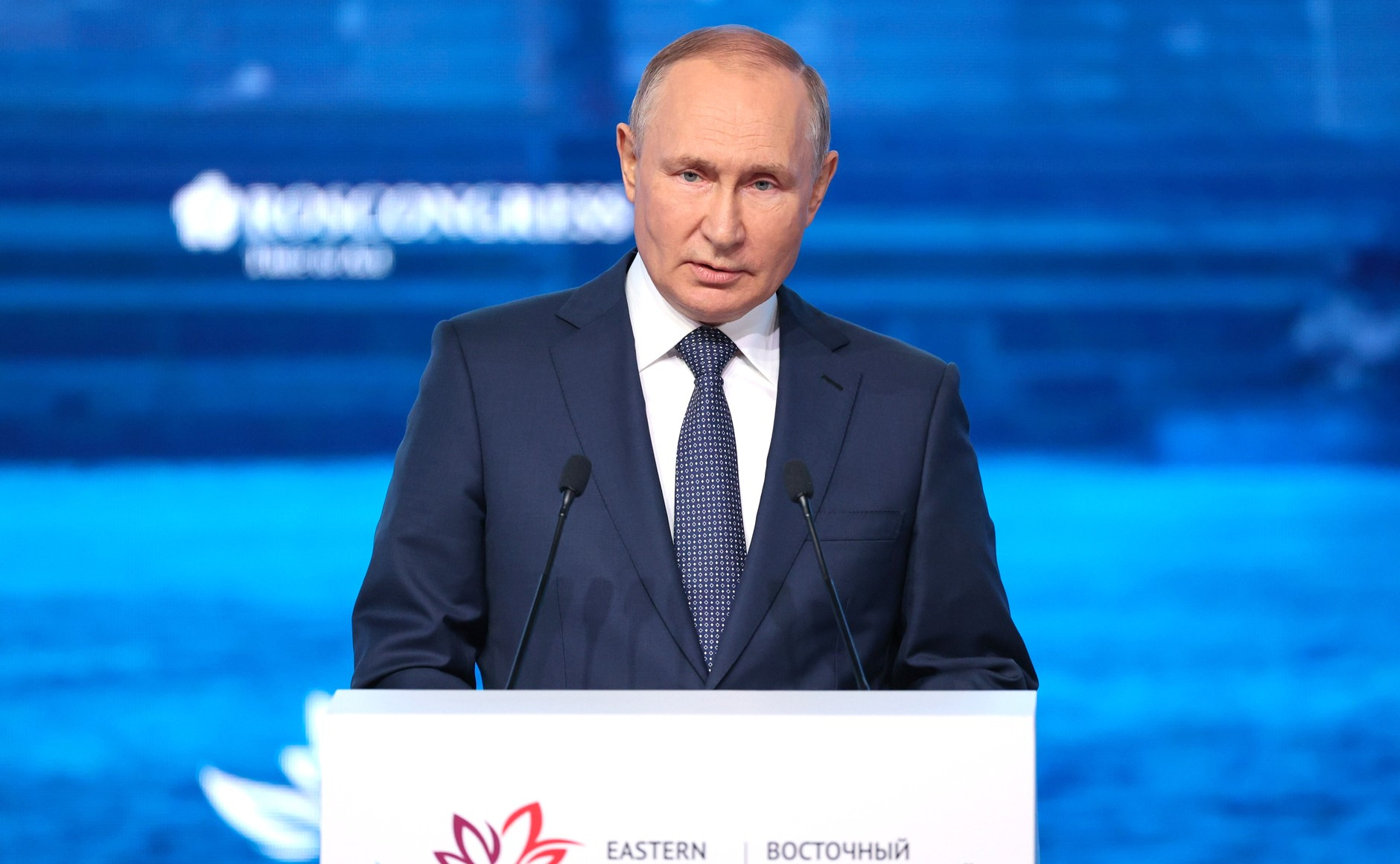
Vladimir Putin’s address at the plenary session of the 8th Eastern Economic Forum. (Excerpt)

Kremlin website, 9/12/23

Ilya Doronov: There is one more important question regarding the developments in Ukraine. It is widely rumoured now that a new mobilisation is possible in Russia.

What can you tell those who are watching us now?

Vladimir Putin: Look, forced mobilisation is taking place in Ukraine. It comes in waves, one after another, and I do not know if there is anyone left to call up there.

We carried out a partial mobilisation. As you know, we called up 300,000 people. Over the past six or seven months, 270,000 people have volunteered for contract service in the Armed Forces and volunteer units.

Ilya Doronov: Is this in addition to the partial mobilisation?

Vladimir Putin: Yes, of course, they signed up in the past six or seven months. People go to military recruitment offices and sign contracts. As many as 270,000 have done this. Moreover, the process continues. Every day, between 1,000 and 1,500 people come to sign up, every day.

You know that this is the distinguishing feature of the Russian people, Russian society. I do not know if this is possible in any other country because our people consciously sign up in the current situation, knowing that they will be ultimately sent to the frontline. Our men, our Russian men, realising in full measure what lies ahead and understanding that they might die defending their Motherland or be seriously wounded, they still make this choice, voluntarily and consciously, to protect their country’s interests.

You spoke about elections. They have been held everywhere, including in the Zaporozhye and Kherson regions and in the Lugansk and Donetsk republics. They were held in difficult conditions there, and I admire the courage of the staff at polling stations. When bombing raids began there – the enemy also targeted voting stations, people went into basements, leaving them to resume their work when the raids were over. People came to voting stations and stood in lines despite the possibility of attacks on them.

Why am I saying this? The reason is that our soldiers, our men, our heroes who are fighting on the frontline know that there are people they must protect, and this is the key point. We are protecting our people.

Ilya Doronov: We’ll be finishing soon. But I still have several questions.

On September 1, a new history textbook was delivered to schools. I will not discuss it in detail because we interviewed your aide, Vladimir Medinsky, who specified the official position.

But it contains the following phrase. I quote: “You know, life is always more complicated than any ideological or newspaper stereotypes. A decade will pass and our time will come under rigorous scrutiny. Historians will ask what steps by world leaders, including the leadership of our country, were right and timely, and in what cases a different course of action should have been taken.”

If possible, I wanted to ask you, let us not wait for the historians from the future. From your point of view, what was done correctly and where errors have been committed over this period?

Vladimir Putin: No, let us wait for the historians from the future. It is only the future generations that will be able to assess what we have done for this country in an objective way.

You know, I recall what Prince Potyomkin wrote to Catherine the Great about the annexation of the Crimea. I will not be able to reproduce the exact quote, but I can convey the meaning. He wrote the following: The time will pass and the future generations will blame you for failing to annex Crimea in spite of being able to do so, and you will feel ashamed. State interests come first. We are guided precisely by these considerations, we give them top priority, and we are certainly not ashamed of that.

Ilya Doronov: I have a sports-related question. What I have in mind is the Olympic Games that will be held in France next year.

Before I ask my question, I would like all of us to applaud our tennis player, Daniil Medvedev, who put up a fight at the US Open finals in New York. It was a good final match, with a Russian and a Serb, two Orthodox believers, playing.

Let us thank Daniil for this. True, there was no flag – I saw the broadcast – nor any mention that he is from Russia.

President of France Emmanuel Macron also said about the Olympic Games which his country will host next year that there will be no Russian or Belarusian flags – nothing.

What can you tell our athletes, for whom the Olympics is truly the goal of their life? They are waiting and they will have to miss them.

Vladimir Putin: I will say this. The situation being what it is, we should in the first place be guided by the athletes’ interests. Each of them, who trained for these crucial competitions for years or even decades, should take a decision all on their own.

As for the Olympic Movement itself, this is what I would like to say. I believe that the current management of international federations and the International Olympic Committee are distorting Pierre de Coubertin’s original idea that sport must be beyond politics, that it should not disunite people – it should unite them.

What has happened over the past few decades? The Olympic Movement has been caught in the trap of financial interests. International sports and the international Olympic Movement has been commercialised, which is unacceptable, and this commercialisation has resulted in… What am I talking about? The sponsors, commercial airtime, the leading Western companies, which ultimately provide the basis for the functioning of the International Olympic Committee and the movement as a whole, directly depend on the political organisations and governments in their countries.

Taken together, this combination has created a situation in which international sports and the Olympic Movement are declining and no longer fulfil their main functions. The main idea [of sports] is not only to break records but to bring people together, but the international Olympic Movement is no longer doing this. This is deplorable for the Olympic Movement itself because alternative movements will be created, one way or another, and nothing can be done about this because it is an objective process.

Next year, we will hold the World Friendship Games; we will hold competitions within the framework of BRICS, and those who are depoliticised will happily attend them. This will have a destructive effect on the current international organisations. They must be rejuvenated, including in terms of personnel.

It is regrettable that this is happening, but we will protect the interests of our athletes. This is the first point. Second, we will create alternative possibilities for them, including in terms of the financial results of their achievements.

Ilya Doronov: The Ministry of Sport provided statistics for the EEF or before the EEF, according to which 55 Russian Olympic athletes have changed their citizenship, and the number including non-Olympic athletes is over 100. Do you understand these people?

Vladimir Putin: I said at the beginning of my answer that people worked towards their goals for decades but have been prevented from reaching them for political reasons.

You know, there is one more element in this. I do not know if I can say this, but some people say that sports and international competitions have become the sublimation of war. There is something in this.

I am not judging anyone, but it is important for athletes, especially top-class ones, to hear the anthem and see the flag of their country when they stand on the podium. But ultimately everyone makes his or her own choice. This is what I believe.

Ilya Doronov: I will ask you one last question.

We opened today’s plenary session by stating that ten years ago we proclaimed the Far East, Siberia and the Arctic our priorities.

I would like to take a peek into the future and talk about what the Far East, Siberia, and Russia may look like ten years from now.

Right now, we are witnessing a sort of reincarnation at a new stage, perhaps, comparable to the Soviet Union when there was a young pioneer movement, and now we have the Movement of the First. Some time ago, we brought back the music of the Soviet anthem. An exhibition titled Russia is being prepared at VDNKh, which also reminds us of the past.

The future image, for example, for Ukraine is clear and it includes NATO and EU membership. In the West, the image of the future also looks, shall we say, rosy.

What is the image of the future for Russia?

Vladimir Putin: You have just mentioned that for some countries, the image of their future includes their membership in organisations like NATO or the EU. Do you realise what you have just said? In other words, their future is linked not only to interaction with others, but with their complete dependence on others.

In the defence sphere, they need someone to provide cover for them; otherwise, they will fail. In the economic sphere, they need someone to send them funds, or else they will not be able to lift their economy. By the way, no one wants peace in Ukraine because, if the war comes to an end, they will have to answer to their people for the economic and social aspects, and there is not much to show. I doubt that, once the hostilities are over, the recovery of Ukrainian economy will ensue. Who will even feed them? I doubt it.

We are the makers of our future. I recently met with young scientists at Sarov. They asked me questions too, at least we talked about this. What about? I want to say this, maybe in a different format, but the core idea will be the same. Scientists engage in R&D. Industrialists work in the sphere of material production, agriculture, in the industrial sector, etc. Cultural figures create images to preserve our values, which shape the inner life of every person and each citizen of Russia. All of this taken together will certainly yield a result. All of this should become embodied in our country’s self-reliance, including in the areas of security and defence. But this does not mean that this country will go into self-isolation. This means that we will develop our own country and make it even stronger in cooperation with our partners and friends and in integration with the overwhelming majority of countries that represent most of the world population.

I have already mentioned industry, science, and so on. But in so doing, we must under all circumstances preserve the soul of Russia, the soul of our multi-ethnic and multi-faith nation. This humanitarian component, along with science, education and real production, will be the basis upon which this country will advance, while feeling and taking itself as a sovereign and fully independent state with good prospects for development. It will be this way.

Look, despite all the restrictions imposed against Russia… What did they hope for? They expected our financial system to fall into pieces, the economy to collapse, industrial plants to grind to a stop, and thousand-strong work teams to be left jobless. But nothing of that happened. Last year’s performance placed Russia among the top five major world economies in terms of purchasing power parity and the economy’s volume. There is every chance that we will continue along this path. I did say that inflation in Russia had grown somewhat, but it is within the bounds of relevant indicators. Unemployment is at a historical low of three percent. This is unprecedented – a three-percent national unemployment figure.

Of course, some other workforce-related issues emerge in this connection, but they are being addressed as well. Real incomes are rising for the first time in several years. Yes, these are modest incomes, as I said, but the trend is in the right direction. Real disposable incomes and real wages are also growing. Taken together, all of this gives us every reason to think that Russia not only has a sustainable and good future but also that this future is secured by the efforts of our entire multi-ethnic people.
Ukrainians blame Zelensky for corruption – poll

RT, 9/12/23

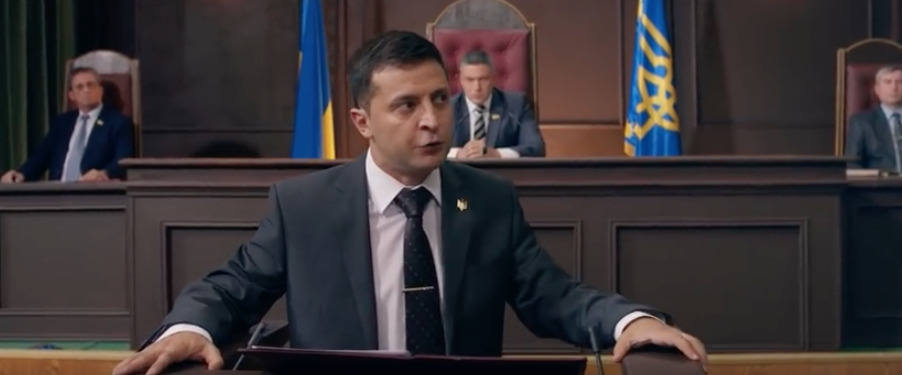
The vast majority of Ukrainians believe that President Vladimir Zelensky is at fault for widespread corruption in the country’s government and military, a new study has revealed.

The poll, released on Monday [9/11/23], found that 78% of Ukrainian adults see Zelensky as “directly responsible” for Kiev’s corruption problem. It was conducted by the Ilko Kucheriv Democratic Initiatives Charitable Foundation and the Kiev International Institute of Sociology.

Prior to the launch of Russia’s military offensive in February 2022, Ukraine consistently ranked among the world’s most corrupt nations, but it was touted as a bastion of freedom and democracy as the US and its NATO allies rallied public support for massive aid to Kiev. However, Ukrainian corruption remains a concern and could hinder the country’s bid to join the European Union, an unidentified Western diplomat told Politico on Monday.

Ukraine is a “very corrupt country,” the diplomat said, adding that Zelensky’s plan to use the Security Service of Ukraine (SBU) to prosecute graft cases could “send the wrong message.” Upon landing in Kiev for a surprise visit on Monday, German Foreign Minister Annalena Baerbock reportedly said Ukraine needed to step up its efforts to fight corruption.

The Ukrainian poll was conducted from July 3 to July 17 in face-to-face interviews with thousands of citizens across the country. There were no major differences in findings based on region or socioeconomic factors. Respondents aged 60 and older took a harsher view, with 81% saying Zelensky was responsible for government corruption. The rate was 70% in the youngest segment, ages 17 to 29. Overall, only 18% of Ukrainian adults disagreed with the statement that Zelensky bears responsibility.

Documents obtained by the International Association of Investigative Journalists in 2021 showed that Zelensky and his business partners set up offshore companies to purchase lavish properties in central London. Zelensky transferred his stake in one of the companies to an aide just before he was elected president in 2019. Supporters of former Ukrainian president Petro Poroshenko accused Zelensky and his associates of using their offshore accounts to evade taxes.

Zelensky has purged officials in his government for alleged corruption, including an embezzlement scheme involving humanitarian aid. Just this month, he sacked Defense Minister Aleksey Reznikov, who came under fire earlier this year over purchases of military rations at inflated prices. However, the new defense chief, Rustem Umerov, is reportedly under investigation for alleged crimes in his previous job.

Newsweek: Europe’s Leaders Are Paying a High Price at Home for Supporting Ukraine | Opinion

blue and yellow round star print textile
Photo by freestocks.org on Pexels.com

By Michael Gfoeller and David H. Rundell, Newsweek, 9/7/23

In 1919, John Maynard Keynes was a young economist with the British delegation negotiating the Versailles Treaty. Keynes strongly objected to the harsh economic treatment being meted out to Germany. He resigned and went home to write “The Economic Consequences of the Peace,” which accurately predicted how the treaty would sow the seeds for future conflict. Had Keynes been alive last year, he might well have written “The Economic Consequences of the War,” predicting how the economic sanctions being placed on Russia would, in fact, unravel Europe’s political order.

Few products contribute more to economic prosperity and political stability than affordable food and energy. Increased energy costs retard every aspect of economic growth. Rising food costs act much like a regressive tax increase. By imposing economic sanctions on Russia, Europe destroyed its own access to inexpensive food and energy. One did not need John Maynard Keynes to predict that as a result of the sanctions, Europe’s prices would rise and economic growth stall. We made that prediction in these pages a year ago.

Between February and May of 2022, the OPEC basket oil price rose from $75 to $125 per barrel. During the same period wheat prices in Germany increased from $350 to $530 per ton. Germany had imported half of its natural gas from Russia. According to the Center for Global Energy Policy, last year the cost of heating the average German single family home went from $1,500 to $5,250. As a result, the German government took advantage of the EU‘s Temporary Crisis Framework to provide a $200 billion package, which has ultimately cost German taxpayers more than all the military equipment the United States has sent Ukraine.

While the price on some commodities has since eased, the fact remains that overall levels remain substantially higher than before the war.

In 2022, the Eurozone’s annual inflation rate rose to over 10 percent and although the rate at which prices are rising has now stabilized at prewar levels, the overall price level in Europe remains much higher than it was two years ago. Moreover, the Eurozone’s average inflation rate disguises the fact that in places like Poland and Hungary the inflation rate remains 10 and 17 percent respectively.

Meanwhile, Eurozone GDP growth continues to collapse from 5.3 percent in 2021 to 3.5 percent in 2022 and an IMF predicted rate of less than 1.0 percent this year. Again, this overall figure conceals the fact that some nations like Germany, Poland, and Hungary will see no economic growth at all in 2023. Europe’s unemployment rate remains nearly twice that of the United States while European wages, productivity, and hours worked all remain at or below pre-Covid levels.

Europe’s economic difficulties were compounded by a massive wave of Ukrainian refugees that has strained public services and government budgets across the continent. According to the United Nations, more than 8 million refugees have fled Ukraine.

Most have gone to Poland, Russia and Germany. However all EU nations were affected because for the first time the European Union implemented a temporary protective directive (TPD). This allowed Ukrainians to enter without formal asylum procedures, something that had never been done for African and Middle Eastern refugees. The TPD guaranteed Ukrainian refugees residency, housing, education, employment, medical, and social services benefits. Tensions rose as schools and hospitals became overcrowded and citizens perceived that refugees were receiving preferential treatment.

These economic problems have had very substantial political consequences. Over the past 18 months, more than a third of European Union governments have fallen. It would be inaccurate to blame these changes solely on the war in Ukraine. In many instances, local issues played a major role. Nevertheless, it would be equally misleading to ignore the fact that economic hardship created an atmosphere of anger and apprehension which contributed to political change.

Here is a selection of some of those changes:

  • In Italy, Giorgia Meloni, a conservative who openly criticizes EU refugee policies became prime minister.
  • In Sweden, the ruling Socialist Party was defeated by a coalition of conservative parties.
  • Finnish Prime Minister Sanna Marin was ousted after her Social-Democratic Party lost parliamentary elections to two conservative parties.
  • Dutch Prime Minister, Mark Rutte, lost power when his coalition government collapsed.
  • Spanish Prime Minister Pedro Sánchez called snap parliamentary elections after his Socialist Workers Party did extremely poorly in local elections. The conservative People’s Party won a plurality in the snap election, securing 136 seats in the 350 seat Spanish parliament but no one has yet been able to form a new government.
  • The government of Moldova fell in February 2023.
  • Romanian Prime Minister Nicolae Ciucă resigned in June 2023, together with his entire cabinet.
  • Bulgaria has been in a state of chronic political instability throughout 2022 and 2023 and held its fifth snap parliamentary election in two years last April.

More ominously, the governments in Europe’s three largest economies look increasingly shaky. In France, economic growth has fallen from 7 percent in 2021 to 2.5 percent last year and is predicted to be only .8 percent for 2023. Economic frustrations are growing and recent opinion polls indicate that the leader of France’s far-right opposition party, Marine Le Pen, would defeat incumbent Emmanuel Macron if a presidential election were held today. Great Britain has had three prime ministers since the war in Ukraine began and few expect its adamantly pro-war government to remain in power after the next general election.

In Germany, the once marginal right wing opposition party “Alternative for Germany” is now the second largest party in the country and is polling ahead of Chancellor Olaf Scholz’s Social Democrat Party. Sensing these changing winds, the German government appears unlikely to increase defense spending to the NATO target of 2 percent of GDP in 2024.

Only one issue unites these diverse outcomes—all of these nations are struggling economically due to the sanctions placed on Russia. Those sanctions have been strikingly ineffective. It now seems very doubtful that Ukraine will defeat Russia or that peace can be restored without significant Ukrainian concessions. Once European voters perceive that their economic sacrifices have been in vain, we expect more governments to fall. Ultimately, the most enduring effect of NATO’s war with Russia may well be the rise of conservative, nationalist-populist governments in much of Europe.

David H. Rundell is a former chief of mission at the American Embassy in Saudi Arabia and the author of Vision or Mirage, Saudi Arabia at the Crossroads. Ambassador Michael Gfoeller is a former political advisor to the U.S. Central Command. He served for 15 years in Eastern Europe and the former Soviet Union.

The views expressed in this article are the writers’ own.

Gilbert Doctorow: Is the expanded BRICS truly a new international institution or just the Nonaligned Bloc 2.0?

By Gilbert Doctorow, Substack, 9/2/23

In the week since the 15th Summit meeting of BRICS in Johannesburg closed, there has been a lot of commentary in Western media directed at quashing the notion that something substantial occurred there which will further the emergence of a multipolar world, which had been the message of the five member states in their closing Declaration.

Some analysts have said that the addition of six new members taking effect on 1 January 2024 and plans for still greater enlargement next year to take in more of the 23 nations which had expressed an interest in joining amounts to little more than the recreation of the Bloc of Nonaligned Nations, which was a talking shop among Global South countries and little more during the Cold War. Other critics point out that there are serious contradictions between the national interests of the founding members India and China, and that this problem will arise between the new members, as for example between Iran and Saudi Arabia, so that the chances of BRICS arriving at consensus in policy matters and geopolitics in particular will be slim;  its weight on the world stage will be correspondingly small, they say.

As for the first line of attack on BRICS, it overlooks the changes in weighting of the economies and political stature of Global South countries since the 1970s and 1980s when the nonaligned movement was in its heyday. BRICS countries presently account for 37% of global GDP by purchasing power parity versus 30% for the G7. If and when all the countries now in line to join are admitted, it will account for more than 50% of global GDP and a still greater share of global population. The strength of any policies it recommends to the international community will go far beyond mere moral force, and must be reckoned with.

As for the second line of attack on BRICS, the commentators have not understood the logic of its expansion, which is precisely to bring together countries which have been in conflict in regions of major importance and to reconcile them with the assistance of global peers.  The reconciliation of Iran and Saudi Arabia that was brokered this spring by China can be consolidated with the support of fellow BRICS members in confidential regular meetings at the working level as well as at the periodic summits behind closed doors. This is the peace mission of BRICS which will be acting in an ad hoc manner as adjunct to the United Nations.

The lesson here is one that the United States has not begun to learn: that inclusion of fractious nations is a far better way of arriving at policy moderation and coexistence than exclusion and creation of ‘pariah states’ through sanctions.

                                                                        *****

Several political observers in the West have remarked upon the decision announced a couple of days ago by Chinese authorities that President Xi will not be attending the next G20 gathering in India. Like Vladimir Putin, Xi appears to have found no room in his busy agenda for an institution that had been promoted since 2009 as a more effective and widely accepted board of global economic and political governance than the G7.

Western observers have not yet put this downgrading of the G20 into the context of the newly purposed BRICS. Let us do that now.

First, let us take a step back to the decision taken in March 2014 by G7 members not to attend the planned G8 gathering in Sochi and to suspend Russia’s membership in their group. That was to punish Russia for its move to take control of and annex Crimea following the February 2014 US-engineered coup d’état in Kiev.

Punishment?  I believe that for Vladimir Putin it was pure relief not to be obliged to join the seven other members of that Collective West club. At every turn, Russia was in the humiliating minority of one during the G8 deliberations in the years since G8 membership was thrown to Boris Yeltsin as a sop for not being admitted to NATO.  The suspension spared Putin the need to be the first to end what had become deeply unpleasant and unproductive sessions.

The latest meeting of the G20 in Indonesia in November 2022 demonstrated that this club suffered greatly from geopolitical fracture lines between Russia-China on one side and the Collective West members on the other side. The acrimony and politicization of every issue on the agenda compromised the utility of such gatherings.  Is it any surprise, then, that both Russia and China have chosen demonstratively not to send their number one officials to the summit and that this decision came in the wake of the very successful BRICS gathering in South Africa?

BRICS is precisely the institution in formation where the Global South can meet on its own without wasting time and effort defending itself from the pressures that the United States and its allies bring to every international gathering in which they take part.

                                                               *****

As one of the two superpowers in the bipolar world of the Cold War days, Russia was, of course, not a member of the Nonaligned Bloc, though it sought friends there. The USSR gave substantial financial and military assistance to independence movements in European colonies, especially in Africa. And the newly liberated states sent their talented youth to study in Moscow. Their leaders often had strong ideological affinity with Soviet Marxism.

 Moscow’s leading role in the creation and expansion of BRICS has a lot more to explain it than its loss of superpower status and its imperative need to cultivate friends in the Global South.

I mentioned in an article published several days ago that I occasionally pick up novel perspectives on Russia and global politics from one or another panelist on Russia’s talk shows on state television. That is the source for what I am about to say as I expand upon the foregoing point, namely that Russia’s approach to the Global South is dramatically different today from the USSR’s approach to the  Nonaligned Bloc and to Developing Nations more broadly.

The profound difference can be seen in the speeches of Vladimir Putin to the visiting African delegations which held top level talks in Moscow before most traveled to South Africa for the BRICS gathering.  You see it again in the speech Putin delivered to the BRICS Business Forum. And you see it in the language of the Declaration which closed the BRICS Summit.

To understand this difference you have to look closely and put on your thinking cap. It is not only Western media commentators who miss the point.  I believe that the leader of the Communist Party of the Russian Federation Gennady Zyuganov also does not get it. When surrounded by all the guests from the Third World descending on Moscow, he seems to think that the good old days of the Soviet Union have returned.

They haven’t. Something very new is afoot.

The USSR’s ideology came from the West. Marxism, with or without the additions or distortions of Leninism, was deeply embedded in Western thinking about humankind and human society. The common denominator here is that all people are the same, that societal development over time follows the same course everywhere on earth.

This concept fits in nicely with globalism and economic Neo-Liberalism. It also fits in nicely with Neo-Conservative geopolitical ideology, which should not surprise anyone since the original Neocon thinkers in New York were former Communist sympathizers, as Francis Fukuyama tells us in his history of the movement.

Under pressure from the sanctions regimes first put in place in 2014 in the name of “the international community” and drastically increased since the start of the Special Military Operation in 2022, the Kremlin now flatly rejects the globalism of that U.S. dominated international community. The decision about to be taken to leave the WTO is confirmation of this.

Russia today flatly rejects the notion of a single path of development for all of mankind. Instead Russia is saying that each country should develop in keeping with its national traditions and values. Each must find its own path to realization of its economic and human potential. This is a new and more comprehensive version of the concept of each state having its own religion that neighbors may not interfere with as enshrined in the 1648 Peace of Westphalia.  As we know, Russia and China have long championed on the world stage the principle of noninterference in the affairs of sovereign states.. NB: Westphalia assumed a world of sovereign states, whereas Europe swept this aside when the European Community became the European Union.

Russia expects that this new approach to the Global South as defender of the sovereignty and distinctive character of each nation makes it and BRICS a much more attractive partner for the Global South than the USSR was in its time, or than the Collective West, with its arrogance and neocolonial prejudices, can be today.

©Gilbert Doctorow, 2023

Kit Klarenberg: Ukraine’s ‘biggest arms supplier’ orchestrated 2014 Maidan massacre, witnesses say

By Kit Klarenberg, The Grayzone, 9/6/23

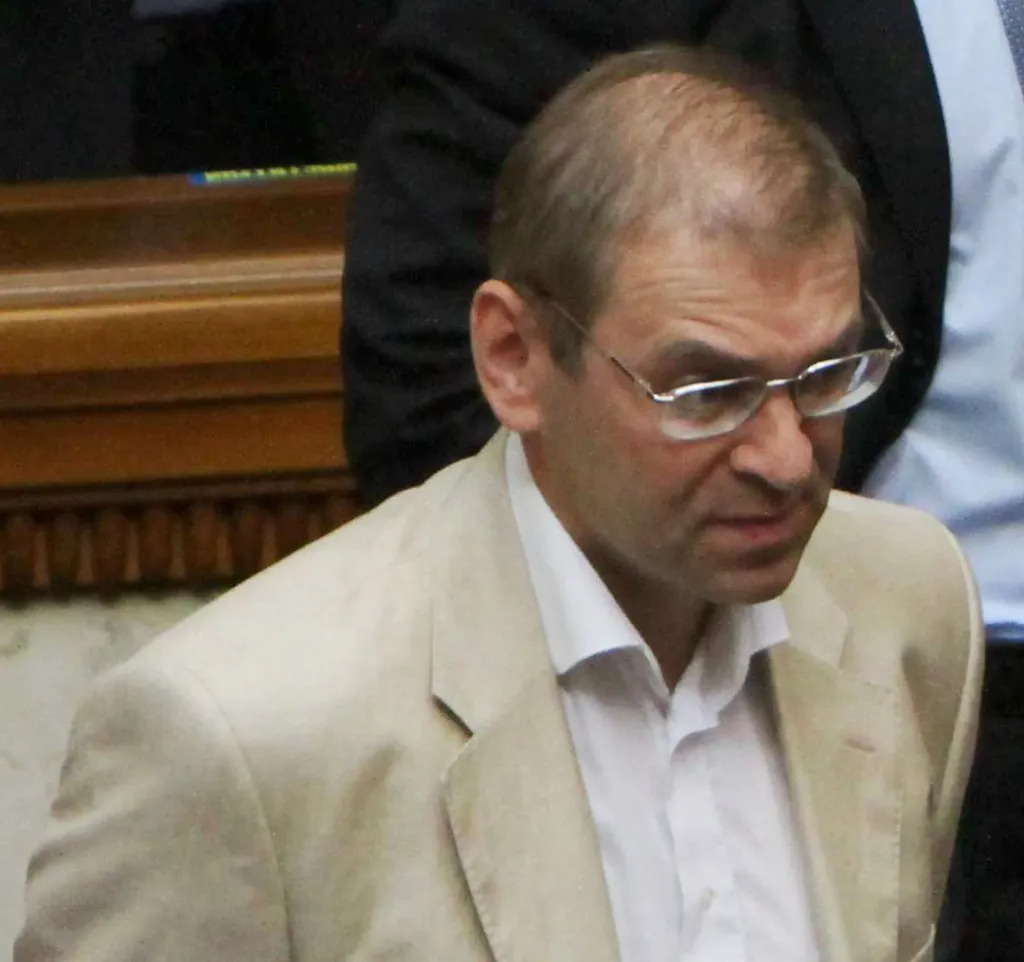
Once denounced by Zelensky as a “criminal,” gun runner Serhiy Pashinksy has become the top private supplier of arms to Ukraine. Eyewitness testimony has fingered Pashinsky as the architect of a bloody false flag operation which propelled the 2014 Maidan coup and plunged the country into civil war.

Years before emerging as Kiev’s top private weapons trafficker, ex-legislator Serhiy Pashinsky played a key role in the 2014 US-backed coup which toppled Ukraine’s democratically-elected president and set the stage for a devastating civil war. Though the notoriously corrupt former Ukrainian parliamentarian was condemned by President Volodymyr Zelenskyy as a “criminal” as recently as 2019, a lengthy exposé by the New York Times has now identified Pashinsky as the Ukrainian government’s “biggest private arms supplier.” 

Perhaps predictably, the report makes no mention of evidence implicating Pashinsky in the 2014 massacre of 70 anti-government protesters in Kiev’s Maidan Square, an incident which pro-Western forces used to consummate their coup d’etat against then-President Viktor Yanukovych.

In an August 12 report on Ukraine’s new weapons-sourcing strategy, the New York Times alleged that “out of desperation,” Kiev had no option but to adopt increasingly amoral tactics. The shift, they say, has driven up prices of lethal imports at an exponential rate, “and added layer upon layer of profit-making” for the benefit of unscrupulous speculators like Pashinsky. 

According to the Times, the strategy is simple: Pashinksy “buys and sells grenades, artillery shells and rockets through a trans-European network of middlemen,” then “sells them, then buys them again and sells them once more”:

“With each transaction, prices rise – as do the profits of Mr. Pashinsky’s associates – until the final buyer, Ukraine’s military, pays the most,” the Times explained, adding that while using multiple brokers may technically be legal, “it is a time-tested way to inflate profits.”

As the seemingly endless supply of cash from Western taxpayers provides a bonanza for arms manufacturers such as Raytheon and Northrop Grumman, it similarly benefits war profiteers like Pashinsky. His company, Ukrainian Armored Technology, “reported its best year ever last year, with sales totaling more than $350 million” — a whopping 12,500% increase from its $2.8 million in sales the year before the war.

Pashinsky is not the only racketeer benefitting from the elimination of anti-corruption measures in wartime Ukraine. Several suppliers previously placed on an official blacklist after they “ripped off the military” are now free to sell again, according to the Times investigation. The outlet downplayed this as an unfortunate, but ultimately necessary measure.

“In the name of rushing weapons to the front line, leaders have resurrected figures from Ukraine’s rough-and-tumble past and undone, at least temporarily, years of anticorruption [sic] policies,” the Times asserted, describing “the re-emergence of figures like Mr. Pashinsky” as “one reason the American and British governments are buying ammunition for Ukraine rather than simply handing over money”:

“European and American officials are loath to discuss Mr. Pashinsky, for fear of playing into Russia’s narrative that Ukraine’s government is hopelessly corrupt and must be replaced.”

However, even the seemingly critical Times report overlooks a key aspect of Pashinsky’s unsavory biography. Conspicuously absent from the coverage was any explanation of his role in carrying out the infamous massacre of anti-government activists and police officers in Kiev’s Maidan Square in late February 2014.

A defining moment in the US-orchestrated overthrow of Ukraine’s elected government, the death of 70 at the hands of mysterious snipers triggered an avalanche of international outrage that led directly to the ouster of President Viktor Yanukovych. Even today, these killings officially remain unsolved.

However, firsthand testimony by individuals who claimed to have helped carry out the false flag attack suggest Kiev’s most prolific gun runner was intimately involved in the grisly affair.

Maidan massacre organizer ‘takes no prisoners’

In November 2017, Italy’s Matrix TV channel published eyewitness accounts by three Georgians who say they were ordered to kill protesters by Mamuka Mamulashvili. Then the top-ranking military aide to Georgian president Mikhael Saakashvili, Mamulashvili later founded the infamous mercenary brigade known as the Georgian Legion, whose fighters were widely condemned after they published a gruesome video of themselves gleefully executing unarmed and bound Russian soldiers in April 2022.

The documentary, “Ukraine: The Hidden Truth,” features an Italian journalist’s interviews with three Georgian fighters allegedly sent to orchestrate the coup. All described Pashinsky as a key organizer and executor of the Maidan massacre, even alleging the corrupt arms dealers provided weapons and selected specific targets. The film also featured footage of him personally evacuating a shooter from the Square, after they had been caught with a rifle and a scope by protesters and surrounded.

One of the Georgian fighters recalled how he and his two associates arrived in Kiev in January, “to arrange provocations to push the police to charge the crowd.” For almost a month, however, “there were not many weapons around,” and “molotov [cocktails], shields and sticks were used to the maximum.”

This changed around mid-February, they said, when Mamualashvili personally visited them alongside a US soldier named Brian Christopher Boyenger, a former officer and sniper in the 101st Airborne Division, who personally gave them orders they “had to follow.”

Pashinky then personally moved them along with sniper rifles and ammunition to buildings overlooking Maidan Square, they alleged. At that point, Mamualashvili reportedly insisted that “we have to start shooting, so much, to sow some chaos.”

So it was that the Georgian fighters “started shooting two or three shots at a time” into the crowd below, having been ordered to “shoot the Berkut, the police, and the demonstrators, no matter what.” Once the killing was over, Boyenger moved to the Donbas front to fight in the ranks of the Georgian Legion, which Mamulashvili commands to this day.

In the meantime, Ukrainian journalist Volodymyr Boiko, who headed the civic council of the Prosecutor General Office of Ukraine after Maidan, has alleged that in order to obscure his role, Pashinsky personally hand-picked the figures leading the official investigation into the massacre, and even bribed the prosecutor who headed it.

Despite these shocking claims, Pashinsky’s involvement in the Maidan massacre has never been officially investigated, let alone punished, and his most recent experiences with the Ukrainian judicial system suggest it is unlikely to be heavily scrutinized by officials in Kiev. While a member of Ukraine’s Verkhovna Rada, he was arrested for shooting and wounding a pedestrian in a traffic-related dispute, but was ultimately acquitted in 2021. 

When Israeli journalists confronted Pashinsky about his role in the Maidan massacre, the arms dealer warned that they would be tracked down in their home country, where his associates would “tear them apart.” They could be forgiven for believing it was not an idle threat; there is a troubling tendency for Pashinky’s detractors to end up viciously beaten or shot dead in the street.

Analysis & Book Reviews on U.S. Foreign Policy and Russia