The points made in this article remind me of my discussions with Prof. Geoffrey Roberts who said that while Putin chose to start the war of February 2022, it is the west that has chosen to unnecessarily prolong the war to Ukraine’s utter destruction. – Natylie
In the early days, the war in Ukraine had not escalated into the dangerous NATO-Russia nightmare that it is today.
The massive amounts of death and destruction was not yet imagined. Though “the news keeps repeating that Putin is targeting civilians,” according to a senior analyst at the Defense Intelligence Agency in March 2022, “there is no evidence that Russia is intentionally doing so.” The analyst said that “almost all of the long-range strikes have been aimed at military targets.” A retired Air Force officer, working with a “large military contractor advising the Pentagon” added that “the Russian military has actually been showing restraint in its long-range attacks.” These sources told Newsweek that Russia was not bombing indiscriminately and that the US dropped more missiles on the first day in Iraq in 2003 than Russia dropped in the first 24 days in Ukraine. Observing the US bombing of Iraq, including the use of depleted uranium and white phosphorous, “British officers were appalled by the lack of concern for civilian casualties.” Instead, “The vast majority of [Russian] airstrikes are over the battlefield, with Russian aircraft providing “close air support” to ground forces. The remainder – less than 20 percent, according to U.S. experts – has been aimed at military airfields, barracks and supporting depots.” The DIA analyst concluded that “that’s what the facts show. This suggests to me, at least, that Putin is not intentionally attacking civilians.”
It was while the war was still at this stage that it could have been stopped. On February 27, just three days into the war, Russia and Ukraine announced that they were ready to hold talks in Belarus. In those and subsequent talks over the next several weeks, including the most promising talks of all in Istanbul, Ukraine and Russia were ready to stop the war on terms that met both of their goals.
But the US stopped the war from ending before the devastation began because the talks did not meet their goals. Putin “should . . . not be negotiated with,” the US and UK told Ukrainian President Volodymyr Zelensky, and even if Ukraine was ready to sign some agreements with Russia, “the West was not.” The US “blocked” the negotiated end to the war because they “want[ed] the war to continue,” since meeting Ukraine’s goals was insufficient. “This is a war,” the US State Department explained, “that is in many ways bigger than Russia, it’s bigger than Ukraine.”
The three day war became a year and a half long war that escalated into the dangerous and devastating war it is today because the US forbade Ukraine from ending it on terms that satisfied them and pressured them into fighting on against Russia in pursuit of American goals. From this point on, all the probably hundreds of thousands of Ukrainian deaths, the destruction of infrastructure and the loss of land became the joint responsibility of the US.
But neither American nor Ukrainian goals have been met. The war is going very badly for Ukraine and no amount of US help seems to be altering the battlefield. Barring an unlikely change in fortune, Ukraine is fighting on only to arrive at an inevitable negotiated end that will be tragically worse than the one they negotiated in Belarus and Istanbul.
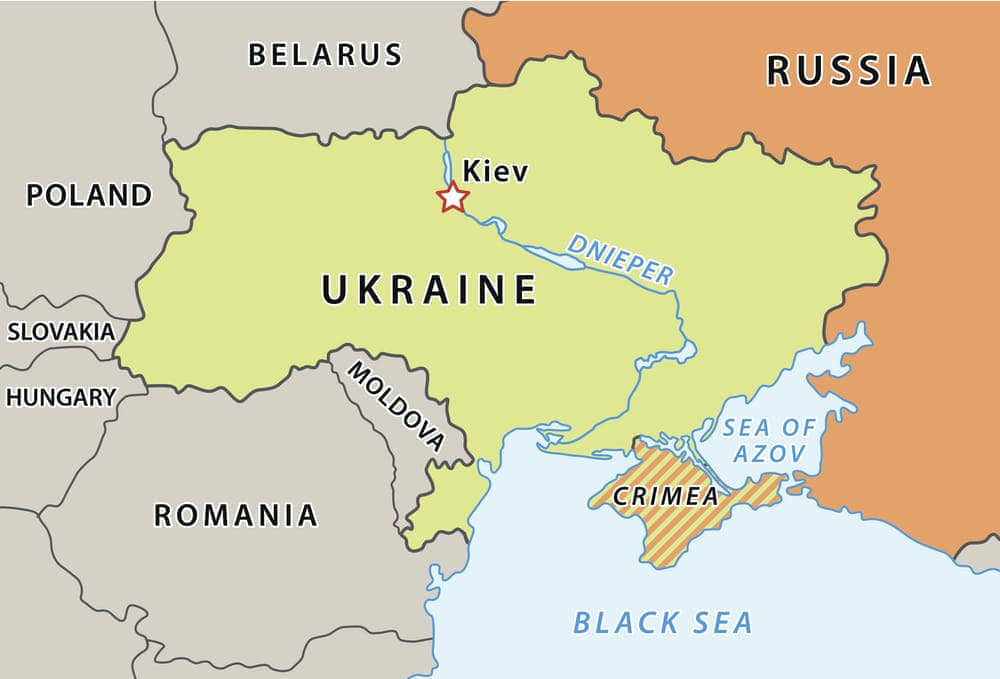
That change of fortune hangs upon the so far suicidal counteroffensive. Since June 5, Ukraine has thrown its NATO trained troops and its NATO supplied tanks against the Russian defensive lines. And, according to Russian President Vladimir Putin, in that nearly two month period, Ukraine has suffered more than 26,000 deaths. They also lost at least a “startling” 20% of their NATO supplied tanks and armored vehicles in the first weeks of the counteroffensive.
What’s worse is that the US encouraged Ukraine to launch the counteroffensive and publicly broadcast their “very good chance for success” when, privately, they knew Ukraine was ill prepared. According to reporting in The Wall Street Journal, “When Ukraine launched its big counteroffensive this spring, Western military officials knew Kyiv didn’t have all the training or weapons – from shells to warplanes – that it needed to dislodge Russian forces.” Incredibly, military officials were prepared to count on “Ukrainian courage and resourcefulness.”
But all the “courage and resourcefulness” is still being outweighed by the lack of training, weapons and troops. The New York Timesreported on July 26 that Ukraine has started the “main thrust” of its counteroffensive, “pouring” thousands of reinforcements into the battle, “many of them trained and equipped by the West.”
Though it is hard to keep track of which attack is which, there have been reports of massive Ukrainian losses in recent days. The Times places the “main thrust” south of Orikhiv and farther south at Robotyne. An attempted Ukrainian advance from Novosanylivka south toward Robotyne and Tokmak turned into what one analyst called “possibly the worst calamity for Ukraine since the beginning of the offensive.” Another, referring to an offensive attempt in the “Rabotino-Orekhov direction,” that included Leopard tanks and Bradley armored vehicles, says that Russian forces “repulsed” the attempt with “horrific” losses to the Ukrainian armed forces. There are reports of several Leopards and Bradleys being destroyed. Belarusian President Alexander Lukashenko said that fifteen German Leopard tanks and twenty US Bradley armored vehicles were destroyed in one day. He also said that more than 200 more Ukrainian soldiers were “lost.”
On July 27, as the “main thrust” continued, Putin claimed that, in the past 24 hours, Ukraine “used a large amount of heavy hardware, around 50 pieces. Some 39 of them, namely 26 tanks and 13 armored vehicles were destroyed.”
The US pressed Ukraine, before the war had escalated into the devastation it now is, to continue fighting in pursuit of US goals when Ukrainian goals had been satisfied and the war could have ended. That has led to the loss of lives, the loss of land and the destruction of infrastructure. The US then encouraged a Ukrainian counteroffensive when they knew the Ukrainian armed forces “didn’t have all the training or weapons . . . that it needed to dislodge Russian forces.” That has led to horrific loss of additional life. The US has pursued a self-interested policy in pursuit if its own goals that has been callous and cruel to the people of Ukraine.
Ted Snider is a regular columnist on US foreign policy and history at Antiwar.com and The Libertarian Institute. He is also a frequent contributor to Responsible Statecraft and The American Conservative as well as other outlets.
After three weeks of travel around Northwest Russia, keeping an eye on the people and circumstances of daily life around me, my answer to the question in the title is ‘yes and no.’
On the one hand, the consumer society is going strong. Supermarkets are well stocked. Within Europe, Russia had the lowest rate of inflation in the food products sector during the past month: zero percent. When you read about export bans of one commodity or another, such as the ban on rice exports just imposed today by the Kremlin, the reason is found in the external world, not within Russia itself. The Kremlin was reacting to the ban on rice exports recently announced in India, which drove up global prices and would have led to Russian sales abroad of rice needed at home if the markets were left to their own devices.
Meanwhile we are told that the grain harvest in Russia this season may well show a record surplus, notwithstanding all the climatic abnormalities globally and within the Russian Federation. Russia represents 20% of world grain supplies, Ukraine, just 5%. In this light, Russia can easily meet world needs even if Ukraine does not export one bushel of wheat.
In one very important consumer market sector, automobiles, the reorganization of supply away from Europe and towards China has been almost seamless. The high-end cars from the PRC are more in evidence in St Pete by the week. On the main roads leading into the city, I see new Chinese brand dealerships opening here and there. I have ‘test driven’ these cars in taxi fleets and they are really impressive, not just to me as a passenger but from the remarks of drivers.
To be sure, the ruble is weak and various consumer electronics companies have announced price rises to come on devices imported from the West. This weakness has causes relating to the shift in the hydrocarbons trade from Western Europe to Asia, where contract settlements are not denominated in dollars. Hence there are fewer dollars and euros put up for auction on the Russian domestic bourse and the price of these currencies has followed the bidding.
Otherwise, despite the weak ruble I am each day surprised at how imported sea bass from Turkey or imported French premium quality Burgundy wine is on sale in the Petersburg supermarkets at prices less than half what we pay in Belgium for similar goods.
On the other side of the issue, one would have to be blind not to understand that the country is at war, considering the now omnipresent recruitment advertisements urging men to sign up as ‘contract’ soldiers for the war. I say ‘men,’ because the advertising billboards, posters and television ads are all addressed to males. They tell the reader that “combat is a man’s job.”
The appeal is openly and unapologetically sexist. But it also only accentuates the positive: ‘join your peers,’ etc. Judging by the models in these ads, men signing up would appear to be in their mid to upper 20s, with a second tranche in their 40s and 50s.There is no hint whatsoever that those who do not sign up are shirkers, cowards or pansies.
You see a lot more recruitment advertisements in St Petersburg and environs than you see actual soldiers in uniform. In my outlying borough of Pushkin, we have several military academies and so in the morning you can catch sight of a platoon doing their morning run. But that is nothing new.
The other day when riding a commuter train we were seated just across from a young soldier in his early 20s. Whereas the sartorial image of these guys used to be sad sack maybe a decade ago, I can say that this fellow’s uniform was very smart looking. And he had a self-assured demeanor.
What you do not see is any military bearing arms in civilian milieu.
Notwithstanding the appeal to Alpha males, television news reports also tell us that women are serving in armed forces. We see occasional interviews with women air force pilots. But the overriding theme with respect to women is that they serve as doctors or nurses who may treat wounded soldiers in the field on their way back to hospitals in central Russia. They are saving lives, not taking lives.
Meanwhile, for those who can bear watching war news on television, the narrative has been changing, especially in the past week. Until then, news of the material damage and bodily harm caused by daily Ukrainian bombardment of Donetsk city and other towns in the Donbas took up much of the news bulletins. Now the accent is on the destruction Russian forces are dealing out to the Ukrainians as Kiev directs larger scale attacks and brings into play its strategic reserves, especially in the Zaporozhie region. The new Ukrainian offensive appears to be no more successful than previous probing maneuvers in breaking though the dense Russian defense lines.
Russian military experts on the leading talk shows who showed great reserve about predicting the future course of the conflict lest Russians be overconfident a week ago now appear radiant and ready to confide that the Ukrainians never got the equipment they needed to make their counter-offensive a success.
As I noted in a recent essay, the Russian military command has been biding its time until it is certain that Ukraine was already committing its reserves to battle and would soon run dry. Now that time is approaching. We see that the Russians are opening an offensive in the northeast, in the Kharkov region.
There is good reason to believe that the Russian advance around Kharkov is yielding results. In the past week there was talk of starting reconstruction work in the border region of Belgorod, where the Ukrainians had made armed incursions six weeks ago from Kharkov and had destroyed or damaged a large swathe of residences by artillery strikes. The cry went up in Russia to take Kharkov and put an end to these calamities. Evidently the Russian military is succeeding in silencing the Ukrainian guns.
Against this background of the changes in the correlation of forces in Russia’s favor, I am stunned that U.S. and other observers and commentators are not taking note. A very good example of this blindness or ignorance was an article put out in the past week by owner-publisher of The Nation Katrina vanden Heuvel and James Carden, who may be said to represent the supposedly enlightened views of Progressive Democrats in the United States. The co-authors called for peace talks based on compromises by both sides to the conflict. In particular, Ukraine would accept neutrality and Russia would pay war reparations. War reparations!
These authors like so many talking heads in the West do not have the necessary linguistic skills to access Russian news sources on their own. They depend wholly on propagandists in the State Department for the raw facts from which they can spin their reasonable compromises [vanden Heuvel does speak and read Russian – NB]. I humbly submit that this war will either end on Russia’s terms or it will escalate thanks to American miscalculations and obstinacy to the point of a nuclear exchange that puts the survival of humankind in peril.
Meanwhile Secretary of State Antony Blinken is telling reporters that the dangers of human extinction from nuclear war are no greater than the dangers humanity faces from climate change. Goebels would be proud of him.
Dan Kovalik is a human rights attorney and author of seven books.
I just returned from my third trip to Russia, and my second trip to Donbass (now referring to the republics of Donetsk and Lugansk collectively) in about 8 months. This time, I flew into lovely Tallinn, Estonia and took what should be about a 6-hour bus ride to St. Petersburg. In the end, the bus trip took me about 12 hours due to a long wait in Customs on the Russian side of the border.
Having a US passport and trying to pass the frontier from a hostile, NATO country into Russia during wartime got me immediately flagged for questioning. And then, it turned out I didn’t have all my papers in order as I was still without my journalist credential from the Russian Foreign Ministry which was necessary given that I told the border patrol that I was traveling to do reporting. I was treated very nicely, though the long layover forced me to my bus which understandably went on without me.
However, sometimes we find opportunity in seemingly inconvenient detours, and that was true in this case. Thus, I became a witness to a number of Ukrainians, some of them entire families, trying to cross the border and to immigrate to Russia. Indeed, the only other type of passport (besides my US passport) I saw amongst those held over for questioning and processing was the blue Ukranian passport. This is evidence of an inconvenient fact to the Western narrative of the war which portrays Russia as an invader of Ukraine. In fact, many Ukrainians have an affinity for Russia and have voluntarily chosen to live there over the years.
Between 2014 – the real start of the war when the Ukrainian government began attacking its own people in the Donbass – and the beginning of Russia’s intervention in February of 2022, around 1 million Ukrainians had already immigrated to Russia. This was reported in the mainstream press back then, with the BBC writing about these 1 million refugees, and also explaining, “[s]eparatists in the eastern regions of Donetsk and Luhansk declared independence after Russia annexed Crimea from Ukraine. Since the violence erupted, some 2,600 people have been killed and thousands more wounded. The city of Luhansk has been under siege by government forces for the past month and is without proper supplies of food and water.” The number of dead in this war would grow to 14,000 by February of 2022, again before Russia’s Special Military Operations (SMO) had even begun.
Around 1.3 million additional Ukrainians have immigrated to Russia since February of 2022, making Russia the largest recipient of Ukrainian refugees in the world since the beginning of the SMO.
When I commented to one of the Russian border officials, Kirill is his name, about the stack of Ukrainian passports sitting on his desk, he made a point to tell me that they treat the Ukrainians coming in “as human beings.” When my contact in St Petersburg, Boris, was able to send a photo of my press credential to Kirill, I was sent on my way with a handshake and was able to catch the next bus coming through to St. Petersburg almost immediately.
Once in St. Petersburg, I went to Boris’s house for a short rest and then was off by car to Rostov-on-Don, the last Russian city before Donetsk. I was driven in a black Lexus by a kind Russian businessman named Vladimir and along with German, the founder of the humanitarian aid group known as “Leningrad Volunteers.” The car was indeed loaded with humanitarian aid to take to Donbas. After some short introductions, and my dad joke about the “Lexus from Texas,” we were off on our 20-hour journey at a brisk pace of about 110 miles an hour.
We arrived in Rostov in the evening and checked into the Sholokhov Lofts hotel, named after Mikhail Sholokhov, Rostov’s favorite son who wrote the great novel, “And Quiet Flows the Don.” We were told that, up until recently, a portrait of the titular head of the Wagner Group, Yevgeny Prigozhin, had adorned the lobby wall. They took this down after members of the Wagner Group invaded Rostov, putting fear in many of the residents. Now, the hotel only has Hollywood movie posters decorating the walls.
In the early afternoon the next day, my translator Sasha arrived from her hometown of Krasnodar, Russia – a 7-hour train ride from Rostov. Sasha, who is just 22 years old, is a tiny red-headed woman who quickly turned out to be one of the most interesting people I met on my journey. As she explained to me, Sasha has been supporting humanitarian work in Donbass since the age of 12. She told me that she derived her interest in this work from her grandmother who raised her in the “patriotic spirit” of the USSR. As Sasha explained, her parents were too busy working to do much raising of her at all. Sasha, who is from the mainland of Russia, attends the University of Donetsk to live in solidarity with the people who have been under attack there since 2014.
Sasha, who wore open-toed sandals even when we traveled to the frontlines, is one of the bravest people I have ever met, and she certainly disabused me of any notion that I was doing anything especially brave by going to the Donbass. But of course, as Graham Greene once wrote, “with a return ticket, courage becomes an intellectual exercise” anyway.
We quickly set out on our approximately 3-to-4-hour drive to Donetsk City, with a brief stop at a passport control office now run by the Russian Federation subsequent to the September, 2022 referendum in which the people of Donetsk and three other Ukrainian republics voted to join Russia. I was again questioned by officials at this stop, but for only 15 minutes or so. I just resigned myself to the fact that, as an American traveling through Russia at this time, I was not going to go through any border area without some level of questioning. However, the tone of the questioning was always friendly.
We arrived in Donetsk City, a small but lovely town along the Kalmius River, without incident. Our first stop was at the Leningrad Volunteers warehouse to unload some of the aid we had brought and to meet some of the local volunteers. Almost all of these volunteers are life-long residents of Donetsk, and nearly all of them wore military fatigues and have been fighting the Ukrainian forces as part of the Donetsk militia for years, many since the beginning of the conflict in 2014. This is something I cannot impress upon the reader enough. While we are often told that these fighters in the Donbass are Russians or “Russian proxies,” this is simply not true. The lion’s share of these fighters are locals of varying ages, some quite old, who have been fighting for their homes, families and survival since 2014. While there have been Russian and international volunteers who have supported these forces – just as there were international volunteers who went to support the Republicans in Spain in the 1930’s — they are mostly local. Of course, this changed in February of 2022 when Russia began the SMO. But even still, the locals of Donetsk continue to fight on, now alongside the Russian forces.
The lie of “Russian proxies” fighting in the Donbass after 2014 is actually one of the smaller ones of the Western mainstream press, for the claim at least acknowledges that there has been such fighting. Of course, the mainstream media has tried to convince us that there was never such fighting at all and that the Russian SMO beginning in February of 2022 was completely “unprovoked.” This is the big lie that has been peddled in order to gain the consent of the Western populations to militarily support Ukraine. What is also ignored is the fact that this war was escalating greatly before the beginning of the SMO and this escalation indeed provoked it. Thus, according to the Organization for European Security and Cooperation (OESC) — a 57-member organization including many Western countries, including the United States – there were around 2000 cease-fire violations in the Donbass in the weekend just before the SMO began on February 24, 2022. In a rare moment of candor, Reuters reported on February 19, 2022, “Almost 2,000 ceasefire violations were registered in eastern Ukraine by monitors for the Organization for Security and Cooperation in Europe on Saturday, a diplomatic source told Reuters on Sunday. Ukrainian government and separatist forces have been fighting in eastern Ukraine since 2014.”
Jacques Baud, a Swiss intelligence and security consultant and former NATO military analyst, further explains the precipitating events of the SMO:
“as early as February 16, Joe Biden knew that the Ukrainians had begun shelling the civilian population of Donbass, putting Vladimir Putin in front of a difficult choice: to help Donbass militarily and create an international problem, or to stand by and watch the Russian-speaking people of Donbass being crushed.”
. . . This is what he explained in his speech on February 21.
On that day, he agreed to the request of the Duma and recognized the independence of the two Donbass Republics and, at the same time, he signed friendship and assistance treaties with them.
The Ukrainian artillery bombardment of the Donbass population continued, and, on 23 February, the two Republics asked for military assistance from Russia. On 24 February, Vladimir Putin invoked Article 51 of the United Nations Charter, which provides for mutual military assistance in the framework of a defensive alliance.
In order to make the Russian intervention totally illegal in the eyes of the public we deliberately hid the fact that the war actually started on February 16. The Ukrainian army was preparing to attack the Donbass as early as 2021, as some Russian and European intelligence services were well aware. Jurists will judge.
Of course, none of this was news to the people I met in Donetsk, for they had been living this reality for years. For example, Dimitri, a young resident of Donetsk who has been fighting since 2014 along with his mother and father, told me quite exasperated as he pointed to some of the weapons and ammunition behind him, “what is all this stuff doing here? Why have we been getting this since 2014? Because the war has been going on since then.” Dimitri, who was studying at the university when the conflict began, can no longer fight due to injuries received in the war, including damage to his hearing which is evidenced by the earplugs he wears. He hopes he can go back to his studies.
Just a few days before my arrival in Donetsk, Dimitri’s apartment building was shelled by Ukrainian forces, just as it had been before in 2016. Like many in Donetsk, he is used to quickly repairing the damage and going on with his life.
Dimitri took me to the Donetsk airport and nearby Orthodox church and monastery which were destroyed in fighting between the Ukrainian military and Donetsk militia forces back in 2014-2015. Dimitri participated in the fighting in this area back then, explaining that during that time, this was the area of the most intense fighting in the world. But you would not know this from the mainstream press coverage which has largely ignored this war before February of 2022.
One of the first individuals I interviewed in Donetsk was 36-year-old Vitaly, a big guy with a chubby, boyish face who wore a baseball hat with the red Soviet flag with the hammer and sickle. Vitaly, the father of three children, is from Donetsk and has been fighting there for four years, including in the very tough battle for the steel plant in Mariupol in the summer of 2022. He decided to take up arms after friends of his were killed by Ukrainian forces, including some who were killed by being burned alive by fascist forces –- the same forces, we are told, don’t exist. Vitaly, referring to the mainstream Western media, laughed when saying, “they’ve been saying we’ve been shelling ourselves for 9 years.”
Vitaly has personally fought against soldiers wearing Nazi insignia, and he is very clear that he is fighting fascism. Indeed, when I asked him what the Soviet flag on his hat meant to him, he said that it signified the defeat over Nazism, and he hopes he will contribute to this again. When I asked him about claims that Russia had intervened with soldiers in the war prior to February of 2022 as some allege, he adamantly denied this, as did everyone else I interviewed in Donetsk. However, he has witnessed the fact that Polish and UK soldiers have been fighting with the Ukrainian military since the beginning. Vitaly opined that, given what has transpired over the past 9 years, he does not believe that the Donbass will ever return to Ukraine, and he certainly hopes it will not. Vitaly told me quite stoically that he believes he will not see peace in his lifetime.
During my stay in Donetsk, I twice had dinner with Anastasia, my interpreter during my first trip to the Donbass in November. Anastasia teaches at the University of Donetsk. She has been traveling around Russia, including to the far east, telling of what has been happening in the Donbass since 2014 because many in Russia themselves do not fully understand what has been going on. She told me that when she was recounting her story, she found herself reliving her trauma from 9 years of war and feeling overwhelmed. Anastasia’s parents and 13-year-old brother live near the frontlines in the Donetsk Republic, and she worries greatly about them. Anastasia is glad that Russia has intervened in the conflict, and she indeed corrected me when I once referred to the Russian SMO as an “invasion,” telling me that Russia did not invade. Rather, they were invited and welcomed in. That does seem to be the prevailing view in Donetsk as far as I can tell.
During my 5-day trip to Donetsk, I was taken to two cities within the conflict zone – Yasinovataya and Gorlovka. I was required to wear body armor and a helmet during this journey, though wearing a seatbelt was optional, if not frowned upon. While Donetsk City, which certainly sees its share of shelling, is largely intact and with teeming traffic and a brisk restaurant and café scene, once we got out of the city, this changed pretty quickly. Yasinovataya showed signs of great destruction, and I was told that a lot of this dated back to 2014. The destruction going back that far included a machine factory which is now being used as a base of operations for Donetsk forces and the adjacent administrative building which looks like it could have been an opera house before its being shelled. For its part, the city center of Gorlovka looked largely unmolested with signs of street life and even had an old trolley, clearly from the Soviet era, running through the center of town. But the outskirts of Gorlovka certainly showed signs of war. In both cities, one could hear the sound of shelling in the distance quite frequently.
In Gorlovka, we met with Nikoli, nicknamed “Heavy.” Nikoli looks like a Greek god, standing at probably 6 feet, 5 inches and all muscle. I joked with him while I was standing next to him that I felt like I was appearing next to Ivan Drago in Rocky IV. He got the joke and laughed. While a giant of a man, seemed very nice and with a strong moral compass. He led us over to a makeshift Orthodox chapel in the cafeteria of what was a school, but which is now the base of operations for his Donetsk militia forces. He told us that, even now after the SMO began, about 90 percent of the forces in Gorlovka are still local Donetsk soldiers, and the other 10 percent are Russian. Again, this is something we rarely get a sense of from the mainstream press.
Nikoli, while sitting in front of the makeshift chapel, explained that while he still considers himself Ukrainian, for after all he was born in Ukraine, he said that Donetsk would never go back to Ukraine because Ukraine had “acted against God” when it began to attack its own people in the Donbass. He made it clear that he was prepared to fight to the end to ensure the survival of the people of Donetsk, and I had no doubt that he was telling the truth about that.
At my request, I met with the First Secretary of the Donetsk section of the Communist Party of the Russian Federation (CPRF), Boris Litvinov. Boris, who has also served in the Donetsk parliament, explained that the Communist Party under his leadership had been one of the leaders and initiators of the 2014 Referendum in which the people of Donetsk voted to become an autonomous republic and leave Ukraine. According to Boris, about 100 members of the Donetsk section of the CPRF are serving on the frontlines of the conflict. Indeed, as Boris explained, the CPRF supports the Russian SMO, only wishing that it had commenced in 2014. Boris is clear that the war in Ukraine is one over the very survival of Russia (regardless of whether it is capitalist or socialist) and that Russia is fighting the collective West which wants to destroy Russia.
Boris compares the fight in the Donbass to the fight of the Republicans against the fascists in Spain in the 1930’s, and he says that there are international fighters from all over the world (Americans, Israelis, Spanish and Colombians, for example) who are fighting alongside the people of Donbass against the fascists just as international fighters helped in Spain.
The last person I interviewed, again at my own request, was Olga Tseselskaya, assistant to the head of the Union of Women of the Republic of Donetsk and First Secretary of the Mothers’ United organization. The Mothers’ United organization, which has 6000 members throughout the Donetsk Republic, advocates for and provides social services to the mothers of children killed in the conflict since 2014. I was excited that Olga opened our discussion by saying that she was glad to be talking to someone from Pittsburgh because Pittsburgh and Donetsk City had once been sister cities.
I asked Olga about how she viewed the Russian forces now in Donetsk, and she made it clear that she supported their presence in Donetsk and believed that they were treating the population well. She adamantly denied the claims of mass rape made against the Russians earlier in the conflict. Of course, it should be noted, the Ukrainian parliament’s commissioner for human rights, Lyudmila Denisova, who was the source of these claims was ultimately fired because her claims were found to be unverified and without substantiation, but again the Western media has barely reported on that fact.
When I asked Olga whether she agreed with some Western peace groups, such as the Stop the War Coalition in the UK, that Russia should pull its troops out of the Donbass, she disagreed, saying that she hates to think what would happen to the people of the Donbass if they did. I think that this is something the people of the West need to come to grips with – that the government of Ukraine has done great violence against its own people in the Donbass, and that the people of the Donbass had every right to choose to leave Ukraine and join Russia. If Westerners understood this reality, they would think twice about “standing with” and continuing to arm Ukraine.
Since January of this year, the New York Times has published dozens of articles claiming that Ukraine’s “spring offensive” would be a decisive turning point in the war with Russia. But this offensive, now six weeks old, has turned into a debacle. While Ukrainian forces have nowhere breached Russia’s main defensive line, tens of thousands of troops have died.
This is the context in which the New York Times published and quickly edited an article presenting a realistic, and therefore nightmarish, depiction of the Ukrainian troops as little more than cannon fodder, “forced into action” to face almost certain death.
Buried on page A9 and not referenced on the front page of the print edition, the extensive and detailed report on Ukraine’s offensive was titled, “Depleted Troops, Unreliable Munitions: Kyiv’s Obstacles in the East.” It included a sub-headline describing the offensive as a “grisly stalemate.”
With equally little notice, that article had been published online the day before under the title, “Weary Soldiers, Unreliable Munitions: Ukraine’s Many Challenges.”
The article presented Ukraine’s offensive as a bloody debacle, in which Ukrainian forces have suffered massive casualties, who are then replaced with older recruits who are “forced” to fight.
The article documented three new, previously undisclosed revelations:
-There exists a unit in Ukraine with a “200 percent” casualty rate, meaning that all of its members were killed or injured, then replaced with recruits, all of whom were killed or injured.
-The munitions provided to Ukraine are often so old that they regularly misfire or accidentally detonate, injuring soldiers.
-After young troops are killed in combat, they are typically replaced with much older people, a sign that Ukraine is running out of fighting-age troops.
Typically, a journalist who uncovered these facts based on firsthand reporting would proclaim each of them a “scoop” and take to Twitter to publicize them.
But the method of the New York Times is that of the “buried lede”–to take these potentially explosive revelations and stick them in an article on the inside pages, which is quickly removed from the newspaper’s online front page.
In this case, however, merely burying these revelations was insufficient. It was necessary to erase them.
The first snapshot of the article was captured by archive.org at 5:32 a.m. Eastern Time. Over the ensuing 24 hours, a series of major changes was implemented, with no public notice, in which all three of the facts presented above were effaced.
The initial version of the article published online contained a paragraph stating that Ukraine was achieving “small territorial gains” at an “outsize cost.” It continued with the following quote:
“We’re trading our people for their people and they have more people and equipment,” said one Ukrainian commander whose platoon has suffered around 200 percent casualties since Russia launched its full-scale invasion last year.
This paragraph was revised as follows:
“We’re trading our people for their people, and they have more people and equipment,” said one Ukrainian commander whose platoon has suffered around [sic] heavy casualties since Russia launched its full-scale invasion last year.
In this case, “200 percent” was replaced with “heavy,” (albeit in such a hasty manner that the preceding word, “around,” remained). In the Battle of Normandy, in which 156,000 Allied soldiers landed on the beaches, approximately 10,000, or 6 percent, were killed or injured in what would typically be described as “heavy” casualties.
By contrast, the original language in the Times article implied that the entire unit was killed or wounded, then replaced, and the entire replacement unit was killed or wounded again.
This is a jaw-dropping figure, perhaps totally unheard of since the First World War, if even then. Rather than explaining it, the Times simply expunged it from the record, never to be seen again by readers of the Times.
The modifications continued. The next (literally) explosive revelation in the article was the statement that the munitions being sent to Ukraine, often to clear out expiring stockrooms for the imperialist powers, would regularly explode as Ukrainian troops were handling them. The article originally read as follows:
“Ammunition, as always, is in short supply, and there is a mixture of munitions sent from different countries. That has forced Ukrainian artillery units to use more ammunition to hit their targets, since accuracy varies widely between the various shells, Ukrainian soldiers said. In addition, some of the older shells and rockets sent from abroad are damaging their equipment, and injuring soldiers. ‘It’s a huge problem,’ said Alex, a Ukrainian battalion commander.”
The last sentence was modified to read as follows:
“In addition, some of the older shells and rockets sent from abroad are damaging their equipment and injuring soldiers. ‘t’s a very big problem now,’ said Alex, a Ukrainian battalion commander.”
An excerpt of the Times article, showing additions in green and deletions in red.
Modern artillery munitions typically have a shelf life of 10 to 15 years. After that time, it becomes hazardous to operate these munitions, which are prone to misfires and accidental detonations.
The rate at which “older” and possibly expired munitions misfire and accidentally detonate is, apparently, a “huge” problem for Ukrainian troops. At least it was, until the problem was downgraded to “very big” by the Times editors, again without explanation.
The article continued:
“But other Ukrainian formations elsewhere on the front have had trouble filling their ranks with the caliber of soldiers capable of carrying out successful trench attacks, given that months of fighting have exhausted their ranks. New replacements are often older recruits who were forced into action.”
This article replaces this line with the following:
“But other Ukrainian formations elsewhere on the front have had trouble filling their ranks with the caliber of soldiers capable of carrying out successful trench attacks, given that months of fighting have exhausted their ranks. New replacements are sometimes older recruits who were mobilized.”
Instead of replacements for the troops that were killed being “often” older recruits, they are now “sometimes” older recruits. Moreover, instead of being “forced into action,” the troops are now “mobilized.”
The following paragraph gives context to what is being described:
“How can you expect a 40-year-old to be a good infantry soldier or machine-gunner?” asked the Ukrainian commander whose platoon had taken dozens of casualties. Youth not only means better physical prowess, but younger soldiers are less likely to question orders.
In other words, it is “often” the case that the soldiers “forced into action” are close to middle-age and, moreover, “question orders” when they are told to carry out suicidal attacks.
The changes to this article are a microcosm of US media reporting on the war. The horrendous, bloody debacle of the war in Ukraine is systematically sanitized, with certain topics clearly taboo and in many cases completely expunged from the media.
To cite just one example, a search for the term “Ukraine conscription” in the publicly accessible AP news image database returns only five results, all of them dealing with conscription in Russia.
Even though Ukraine has its entire prime-age population under arms, the US media seems to have an internal code that does not allow these images of recruitment and mobilization to be transmitted to the population.
Just one month ago, Times columnist Bret Stephens mused of the offensive bringing a “crushing and unmistakable defeat” for Russia, while Washington Post columnist Max Boot quoted General David Petraeus as stating that he expected “the Ukrainians to achieve significant breakthroughs and accomplish much more than most analysts are predicting.”
It has produced something else: A nightmare on the scale of the First World War, in which whole units are wiped out, replaced with conscripts, then wiped out again, then told to assault well-defended trenches.
In September of last year, the World Socialist Web Site characterized the growing calls in the US media and political establishment for Ukrainian forces to go on the offensive against well-defended Russian trenches as follows:
“Human life means nothing to the Washington warmongers or their stooges in Kiev. … The lives of Ukraine’s youth, many of them conscripted, are being squandered, mere cannon fodder, or to use the phrase favored by Leo Tolstoy, ‘cannon meat.’”