Scott Ritter: Wagner, I hardly Knew Ye

By Scott Ritter, Substack, 6/28/23

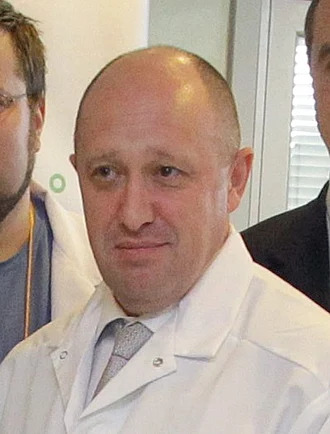
The dust has settled following last weekend’s abortive insurrection by Yevgeny Prigozhin, the owner of the private military company known as the Wagner Group, and some 8,000 fighters he employed, against Russian President Vladimir Putin. A clearer picture has since emerged about what exactly transpired during this coup, and why these events unfolded as they did. It also has allowed time to shine a light on Wagner Group, revealing it as something more than the invincible band of heroic Russian patriots celebrated by Russian society at large. Instead, a less complimentary image of Wagner emerges, one which portrays it as a business venture run by a corrupt narcissist who used Russian state funds to build a cult of personality that hypnotized an unwitting Russian populace into believing that Wagner was the sole source of salvation for Russia from the threat posed by the war with Ukraine.

As a military analyst with no small amount of experience in covering armed conflict, I don’t believe that I am susceptible to being star-struck in the presence of men who have earned, through experience, reputations as warriors of formidable stature. I was myself a US Marine, a member of a fraternity of sea-going warriors proud of both their martial history and military abilities, which are held to be second to none. I have served in harm’s way with special operators from America’s most elite military units and have worked closely with similarly skilled professionals from other nations. I think I have a good judge of what constitutes military competence and am not hesitant to give credit to where it is due.

As someone who follows events in the Middle East closely, I had been tracking the activities of the Wagner Group in Syria since their initial deployment in 2015. Their reputation as skilled fighters was earned in the blood of dozens of their comrades who lost their lives fighting terrorists affiliated with the Islamic State and Al Qaeda. As such, when in 2022 rumors started to circulate about the presence of Wagner Group fighters operating alongside the Russian Army in the region of the Donbas, I took notice. It was difficult to find credible sources of information, and the Wagner Group was reticent about anyone giving out information about its activities. But eventually I was able to piece together an understanding of the role played by Wagner in the Donbas, along with the impact Wagner had on the war. My analysis, both spoken and written, reflected the high regard I had for the Wagner Group as a combat formation, and the heroism and skill of the soldiers it employed.

Prior to my recent visit to Russia, my host informed me that the Wagner forces engaged in the fierce fighting around Bakhmut spoke highly of my analysis and could be counted among my biggest fans. Indeed, during my visit, I was introduced to several Wagner veterans, and a few serving Wagner employees, all of whom wanted to shake my hand, and many of whom presented me with gifts signifying the depth of their appreciation for my work. Whether it was a combat knife, a chrome-plated sledgehammer (an unofficial symbol of the Wagner Group), or various Wagner combat patches (including one embroidered with my name), I was taken aback by the level of genuine and heartfelt affection these Wagner men—noted for their toughness under fire—showed for me.

When the events of June 23-24 unfolded before me, I was taken aback. An organization that I held in the highest esteem was engaged in an act of self-destruction before my very eyes, engaged in conduct—an armed insurrection against a constitutionally-mandated government—that any military professional imbued with a respect for the chain of command and the nation he or she served would find reprehensible. Like many others, I was compelled to reexamine my understanding of the Wagner Group, the people it employed, and its history in the service of Russia.

Relatively little is known about the formation of the Wagner Group. What little information is available comes from Yevgeny Prigozhin himself and, as such, must be seen in the context of his tendency for self-promotion. Prigozhin long denied any involvement with Wagner Group, and indeed initiated legal action against journalists (including Bellingcat) who reported on his involvement. This changed in September 2022, when Prigozhin openly discussed his role with Wagner Group in a post published on his Telegram page.

Wagner’s origins date back to February 2014, following the violent overthrow of Ukraine’s constitutionally-elected President, Viktor Yanukovych, by Ukrainian nationalists backed by the United States and European Union. At that time, Crimea was part of Ukraine. Shortly after the Maidan revolution ousted Yanukovych, right-wing Ukrainian nationalists attempted to take control of Crimea, which had a majority ethnic-Russian population whose loyalties leaned decisively toward Moscow. The nationalists were confronted by so-called “self defense units” drawn from the local pro-Russian citizenry.

But there were other actors on the ground as well. Concerned that the Ukrainian government would call out the Ukrainian army to intervene, the Russian government mobilized a force of several hundred “little green men,” consisting of elite Russian special forces who, because of constitutional limitations regarding the deployment of regular Russian army forces on the soil of a foreign nation, were “sheep dipped” (a US term made popular during the CIA’s covert war in Laos in the 1960’s and 70’s, where active duty US Air Force officers would be transferred to the CIA’s “Air America” proprietary company for operations inside Laos.)

The man put in charge of these “sheep dipped” special operators was Dmitry Utkin, a recently-retired Lieutenant Colonel who had previously commanded a Russian special forces (Spetznaz) unit affiliated with Russian Military Intelligence (GRU). Utkin and his “little green men” played a leading role in the Russian takeover of Crimea on February 26, 2014, four days after Yanukovych fled Ukraine. Following the annexation of Crimea by Russia in March 2014, Utkin’s “little green men” were dispatched to Lugansk, where they were tasked with providing training and assistance to the pro-Russian fighters that had taken up arms against the Ukrainian nationalists who had seized power in Kiev.

As the fighting expanded, so, too, did the role of the “little green men,” and by April it became clear that the Russian government would need to create a more formal organization which would serve as the conduit for military assistance to the pro-Russian militias fighting in the Donbas. On May 1, 2014, a new entity, known as the “Wagner Group” (named after the call sign—“Wagner”—used by Utkin) was created and given a contract with the Ministry of Defense to serve in this role. While Utkin served as the military commander of this new organization, “Wagner Group” itself was managed by a group of civilian businessmen headed by Yevgeny Prigozhin, who by that time had established himself as a successful restaurateur whose clients included Russian President Vladimir Putin.

Wagner was heavily involved in the fighting that raged in the Donbas from May 2014 through February 2015, when a ceasefire came into effect after the signing of the Minsk 2 accords. With the fighting in Ukraine winding down, Prigozhin and Utkin sought to exploit Utkin’s own past experience as a mercenary in Syria. The ability to deploy a professional military unit capable of operating on foreign soil where regular Russian forces were prohibited was attractive to the Russian Ministry of Defense, who contracted with Wagner to provide military assistance to the embattled Syrian government of President Bashar al-Assad. Wagner’s success in Syria led to additional “support contracts” being executed for operations in several African countries. In addition to being paid by the Russia government, Wagner Group was able to arrange its own economic relationships with its African clients, which led to several profitable ventures designed to enrich its owners, including Prigozhin.

On February 24, 2022, Vladimir Putin ordered the Russian military to commence what was being called a “Special Military Operation” (SMO) against Ukraine. The Russian military began deploying onto the soil of the Lugansk and Donetsk People’s Republics (which were both recognized by Russia as independent states days prior to the SMO being kicked off), where they fought alongside local militias. Wagner Group continued to operate on the territory of the Donbas in a reduced capacity from 2015 until the SMO’s initiation.

After the collapse of the April 1, 2022, peace negotiation between Russia and Ukraine scheduled to take place in Istanbul, Turkey, the Russian military was instructed to begin large-scale offensive operations intended to liberate the territory of the Donbas still occupied by Ukraine. On May 1, 2023, a new contract was signed between the Russian Ministry of Defense and the Wagner Group for some 86 billion rubles, or $940 million, to expand the scope and scale of its Ukrainian operation from advisory and assistance to that of a combat unit of roughly division-size capable of largescale fighting against regular Ukrainian forces. To sweeten the deal, the Russian Ministry of Defense signed a separate 80-billion-ruble deal (some $900 million) for the provision of food to the Russian Army using Prigozhin’s catering company.

War, it seems, had become very profitable business for Yevgeny Prigozhin.

Wagner played a major role in many of the battles waged in the spring and summer of 2022 which, collectively, became known as the Battle of the Donbas. Wagner was initially organized as a battalion-sized unit of several hundred highly-trained military veterans. As the fighting dragged on, the Wagner forces began to expand in size and capabilities, soon acquiring their own armor and artillery forces, as well as dedicated fighter aircraft. By the time the Lugansk city of Sievierodonetsk fell to Russian forces, on June 25, 2022, the Wagner Group was a division-sized unit which had developed a reputation for expertise in urban warfare, taking the lead in clearing Ukrainian troops who were dug in among the ruins of that city. By the fall of the neighboring city of Lysychansk, on July 3, 2022, the Wagner Group had become synonymous with operational excellence.

The fighting in Sievierodonetsk and Lysychansk, however successful it was for the Russians and Wagner, had proven to be extremely costly from the standpoint of casualties. It became apparent to both the military command structure of Wagner, built around a cadre of experienced military veterans known as the “commanders council,” and Wagner’s corporate owners, headed by Prigozhin, that Wagner would suffer both in terms of military efficiency and profitability if it had to recruit and train seasoned veterans to replace those who had fallen in battle. During the house-to-house fighting that defined the Sievierodonetsk and Lysychansk battles, Wagner’s small unit commanders had developed tactics which combined firepower (indirect artillery and direct fire support from tanks) with aggressive infantry assaults which could overwhelm Ukrainian defenders.

Rather than waste experienced fighters in this style of fighting, Prigozhin began recruiting new fighters from Russian prisons, promising them expungement of their criminal record in exchange for a six-month contract to fight on the frontlines. The Wagner commanders would train these inmate recruits over the course of a 21-day program that focused on the rudimentary combat skills needed to execute the Wagner urban warfare tactics, before organizing them into “shock” units which would be fed into the fighting. These units, while ultimately effective, suffered up to 60% casualties. Between 30-50,000 convicts were eventually recruited by Wagner, of whom 10-15,000 are believed to have been killed in the subsequent fighting for the cities of Soledar and Bakhmut.

The battles for the twin cities of Soledar and Bakhmut began on August 1, 2022. Wagner Group and its inmate “shock” units played a central role in the intense combat that followed. By this time, the world was starting to take notice of the fighters of this private military company. Labeled as mercenaries by the Western media and governments, and patriotic heroes by the pro-Russian citizens of the Donbas whose homes, villages, towns, and cities were being liberated, Wagner began emerging from the shadows. Whereas previously the Russian government and media were reticent to even acknowledge its existence, by the end of September 2022 Prigozhin, who had famously sued journalists who (accurately) reported that he was the owner of Wagner Group, wrote a posting on his Telegram channel admitting that he was, indeed, the owner.

While many observers took Prigozhin’s unexpected step into the spotlight as a sign of Wagner’s increasing public profile, the reality behind Prigozhin’s decision was simple business. From September 25-27, 2022, the citizens of the Donbas undertook a referendum on whether they wanted to be incorporated as part of the Russian Federation. By the end of the first day, it was clear that the result would be an overwhelming “yes.”

Prigozhin went public with his role as the owner of Wagner Group on September 26, 2022. This was the first salvo of what would become a massive public relations campaign designed to create the impression that Wagner was an essential part of the Russian war effort, whose fighters were singularly capable of defeating the Ukrainians. Prigozhin’s public relations campaign was further enhanced by the fact that the Russian public had been shocked by the retreat of the Russian army during the Ukrainian Kharkov Offensive, which began on September 6, 2022. While the regular army was in retreat, the forces of Wagner continued to advance along the Soledar-Bakhmut front, providing the Russian people with the only example of battlefield success during these dark times.

For Prigozhin, it became essential that he separate Wagner from the Russian Army in the eyes of the Russian people. The reason why was simple—with the Donbas now part of the Russian Federation, Wagner Group was in technical violation of Russian laws which prohibited the operation of private military contractors on Russian soil. Already there was talk about the need to change the contractual status of Wagner’s relationship with the Russian Ministry of Defense as soon as Wagner’s contract expired on May 1, 2023.

But Prigozhin had a money-making system in place, especially when it came to the use of convicts. Prigozhin could pay them less than a regular Wagner recruit, and the cost of their training was miniscule compared to that given more specialized fighters. The money saved by this process was estimated to be in the tens of millions of dollars, all of which flowed back into the pockets of Prigozhin and his fellow owners and investors. Desperate to keep this enterprise intact, Prigozhin went on the offensive, publicly condemning senior Russian generals and officials, including Defense Minister Sergei Shoigu.

In November Wagner unveiled a shiny new center in Saint Petersburg designed to propel the company into the psyche of the Russian public as a major player in Russian national security affairs. All the while, the fighters of Wagner pressed forward their attacks on Soledar and Bakhmut, driven by Prigozhin’s desire to be seen as the only effective fighting force fighting the Ukrainians. And, increasingly, the fighters leading the charge were units composed on former Russian inmates.

But Prigozhin was running into a problem. He was forced to stop recruiting from prisons for the simple fact that he lacked a contract vehicle to pay the inmates after May 1,2023, meaning the last inmate recruit was processed by Wagner by December 1, 2022. Prisoners were still allowed to volunteer as frontline fighters, but they would have to sign contracts with the Ministry of Defense going forward. Since the prisoner contracts were linked to specific periods of service that had to be fulfilled before their records could be expunged, Wagner could not commit inmates to anything less than a full-six-month term of enlistment. Wagner could still recruit non-inmate persons, since there would be no legal headaches created if Wagner did not renew its contract with the Ministry of Defense.

While Prigozhin’s PR campaign was a tremendous success (Wagner even released a feature-length film, Best in Hell, in February 2023 that brought the horrors of urban warfare—and the individual heroism of the Wagner fighters—to the screen), he was failing to win over the Minster of Defense, Sergei Shoigu, and the Chief of the General Staff of the Russian Armed Forces and First Deputy Minister of Defense, Valery Gerasimov. Prigozhin turned what should have been a professional disagreement about legalities into a personal matter filled with allegations of corruption and incompetence. Prigozhin also began accusing the Russian Ministry of Defense of deliberately holding back on the provision of ammunition to Wagner forces, a phenomenon he described as “shell hunger,” which resulted in Wagner forces suffering disproportionally high casualties.

Prigozhin began to behave erratically. It was becoming increasingly clear that the Wagner contract was not going to be renewed, meaning that Wagner forces would have to be incorporated into the very Russian Ministry of Defense Prigozhin was publicly denigrating, a move widely rejected by the rank and file of Wagner as well as its leadership. It also was becoming clear that Prigozhin’s lucrative food contract with the Ministry of Defense was likewise not going to be renewed, an action most probably related to Prigozhin’s attacks on the Defense Ministry’s two most senior officials, Shoigu and Gerasimov.

It was around this time that Prigozhin first discussed the issue of what would become of Wagner’s 50,000-strong force if the Russian Ministry of Defense continued to insist on their formal incorporation. In an interview in February 2023 with Semyon Pegov (“War Gonzo”), a pro-Russian combat correspondent and blogger, the topic of a potential Wagner attack on Moscow was raised in the context of why the Ministry of Defense was restricting ammunition. While Prigozhin noted that the idea did not originate with him, he indicated that it was interesting—not something one wants to hear from who owns a large, combat-hardened, well-equipped private army.

It was also in February 2023 that, according to US intelligence, Prigozhin and the Ukrainian intelligence service began communicating directly. Perhaps picking up on Prigozhin’s frustration and paranoia, the Ukrainian intelligence service notified the Wagner owner of a plot involving former Wagner personnel to orchestrate a coup in Moldova. Prigozhin and Wagner had, by this time, been conducting secret talks with Ukrainian intelligence. Concerned that Russian intelligence had gotten wind of these discussions, Ukraine raised the possibility of Prigozhin’s arrest and subsequent labeling as a traitor. 

The impact of Prigozhin losing nearly $2 billion in contacts, combined with an increasing level of paranoia on his part that he was caught up in a life-or-death struggle with Shoigu and Gerasimov, led the Wagner owner to double down on his vitriolic attacks on Russia’s military leadership, and thereby create the impression that he and Wagner alone could guarantee military victory for Russia over Ukraine. These attacks reached their culmination in the final fights for Bakhmut, which concluded on May 20, 2023, when Prigozhin announced that his fighters had captured the city. Prigozhin spoke of the “meatgrinder” aspect of this battle, and how Wagner—at great sacrifice—“broke the back” of the Ukrainian army, killing between 55-70,000 Ukrainian soldiers for a loss of between 20-30,000 of its fighters.

As Russia celebrated the accomplishments of Wagner in Bakhmut—elevating even further the near-mythological status Wagner and its fighters enjoyed in the eyes of an adoring Russian public—Prigozhin had more pressing matters to deal with. His contract with the Ministry of Defense had expired. He had been given a two-month extension—through July 1, 2023—given the fact that Wagner was heavily engaged in the fighting in Bakhmut. After that time, however, the Wagner forces operating in the Donbas would have to enter a contractual relationship with the Ministry of Defense or else be disbanded. Prigozhin withdrew his fighters from Bakhmut to camps in eastern Lugansk, where he lobbied his combat-hardened commanders to reject the terms of the Ministry of Defense, and instead join him to create a common front of opposition to the leadership of the Russian military.

Prigozhin’s opposition to Shoigu and Gerasimov, and his plotting to supplant them, did not escape the attention of either the Russian government or Russia’s enemies in Ukraine, the US, and Great Britain. Vladimir Putin, in a speech delivered to Russian security officials on June 27, indicated that Russian officials were in constant contact with the commanders of Wagner to warn them not to help Prigozhin use Wagner for his own personal ambition. Days before Prigozhin sent Wagner forces to Rostov and Moscow, the CIA briefed US Congress and President Biden on the existence of Prigozhin’s plot. The British MI-6 did the same, briefing the British Prime Minister as well as Ukrainian President Zelensky.

According to Ukrainian sources, the British also lobbied the Ukrainians to pause offensive operations during the window of time Prigozhin was expected to move on Moscow in the hopes that a civil war would break out that would cause Russia to withdraw combat troops from the frontline, providing the Ukrainian army with increased opportunities for success. MI-6 also used its connectivity with the Ukrainian intelligence services, in coordination with MI-6-controlled Russian oligarchs operating out of London, to reinforce Prigozhin’s belief that he had the support of the Russian military, politicians, and business elite, all of whom Prigozhin was led to believe would rally to his side once Wagner began marching on Moscow.

The failure of Prigozhin’s gambit has already become cemented in history. However, there remains an element of Russian society which, having been swayed by Prigozhin’s intensive PR campaign, continue to believe that Prigozhin’s complaints against Shoigu and Gerasimov were legitimate and, as such, so too was his march of Moscow. The facts speak otherwise. At the time of Prigozhin’s precipitous move on Moscow, Sergei Shoigu and Valery Gerasimov were overseeing a Russian military campaign that was eviscerating Ukraine’s NATO-trained army, inflicting casualties at a 10-to-1 ration. During the first three weeks of the current Ukrainian counteroffensive, more than 13,000 Ukrainian soldiers had been killed, along with hundreds of tanks and armored vehicles—many of which were just recently supplied to Ukraine—destroyed. The Russian military was well-equipped, well-trained, and well-led. Morale was high. Any notion that Shoigu and Gerasimov were professionally incompetent was belied by the facts.

Prigozhin has bragged about the superiority of the Wagner forces when compared to those of the Russian Army. But the real reason the Wagner forces halted their march on Moscow and returned to their barracks was the fact that they had encountered the Russian military outside Serpukhov, south of Moscow. There, some 2,500 Russian special forces backed by Russian air power were waiting. At the same time, some 10,000 Chechen “Akhmat” special forces had closed in on Rostov-on-Don, where Prigozhin had taken up headquarters, and were preparing to assault the city with the intent to destroy the Wagner forces deployed there, along with their leader. Wagner’s combat experience could not make up for the fact that they were not prepared to carry out sustained ground combat against Russian ground and air forces.

Prigozhin was not only confronted with the reality of his imminent demise and of the men who had accompanied him, but, contrary to the expectations created by the British and Ukrainian intelligence services before the Wagner mutiny, the fact that not a single military unit or officer, not a single politician, and not a single businessman—no one—rallied to Prigozhin’s cause; Russia had sided with its President, Vladimir Putin. While Prigozhin’s extensive PR campaign had succeeded in winning the hearts and minds of Russian people, it had failed to convince people that they should betray their president.

In the interest of avoiding Russian-on-Russian bloodshed, Prigozhin accepted a compromise, brokered by Belarussian President Alexander Lukashenko, that had he, Dmitry Utkin (the only senior Wagner commander to join him) and the 8,000 Wagner fighters who participated in the failed coup return to their camps in eastern Lugansk. There they would disarm, turning over their heavy weapons to the Russian military, before being sent off into exile in Belarus. For those Wagner fighters—some 17,000—who refused to participate in Prigozhin’s act of treachery, they, along with their commanders, were given the option to sign contracts with the Ministry of Defense or go home. Prigozhin’s contracts were cancelled, and Wagner disbanded. Moreover, there would be no changes in the Russian Ministry of Defense—Shoigu and Gerasimov would remain in their respective positions.

Even had Prigozhin not betrayed Russia, the Wagner Group would have ceased to exist as Prigozhin’s private army. However, the Wagner Group’s honor would have remained intact. Prigozhin’s treachery guaranteed that Wagner will be forever tainted by the greed and naked ambition of its owner, a man who sought to exploit the goodwill of the Russian public that the fighters of Wagner had earned with their blood and sacrifice on battlefields in the Donbas, Syria, and Africa, all in a misguided effort to usurp a constitutionally-mandated government the people had themselves put in power.

Farewell, Wagner—I hardly knew ye.
Ted Snider: Is Putin Bluffing on Redlines? Ask Putin

By Ted Snider, The Libertarian Institute, 6/22/23

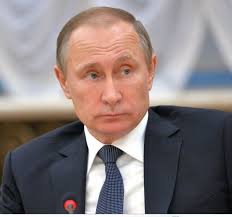
On June 13, Russian President Vladimir Putin met with war correspondents and military bloggers for a question and answer session at the Kremlin. One war correspondent asked Putin “a question about the notorious red lines.” Addressing Putin, he said, “Clearly…we are at war not just with the Kiev regime, but with the so-called collective West as well. NATO countries are constantly moving and crossing our red lines. We express our concern and keep saying that this is unacceptable, but never come up with actual answers. Are we going to keep moving our red lines?”

That is a question top officials in the Biden administration have been asking as well. Less than two weeks earlier, The Washington Post reported that the risk calculation has begun to factor in that Putin “has not followed through on promises to punish the West for providing weapons to Ukraine.” The White House has concluded that Putin is “bluffing.”

A senior State Department official says, “Russia’s reluctance to retaliate has influenced the risk calculus of Secretary of State Antony Blinken,” who has pushed the Biden administration “to do more to support Ukraine.” A White House official told the Post that “national security adviser Jake Sullivan also has viewed the benefits of supplying more lethal weaponry to Ukraine as outweighing the risks of escalation,” leading him to work “extensively with European allies on providing F-16s to Ukraine.”

But the United States may be misinterpreting Russian military decisions and not recognizing them as escalatory responses to the crossing of redlines.

Those who know Putin’s thinking best say he does not bluff. In his biography, Putin, Philip Short says that a formative lesson of Putin’s childhood was never bluff. Short says that the lesson Putin learned in the KGB had already been learned on the streets. In the KGB, Putin was taught not to “reach for a weapon unless you are prepared to use it.” As a child, Putin says, he had learned that “It was the same on the street. [There] relations were clarified with fists. You didn’t get involved unless you were prepared to see it through.”

“NATO countries are constantly…crossing our redlines,” the war correspondent said. “We express our concern and keep saying that this is unacceptable, but never come up with actual answers. Are we going to keep moving our red lines?” he asked.

We have responded to them crossing our redlines, Putin answered. He specifically identified three responses to the crossing of Russian redlines.

The “first and the most important,” Putin said was Russia’s invasion of Ukraine in the first place.

“[T]he brightest of all redlines” for Russia, as then-ambassador to Russia and now director of the CIA William Burns called it, has always been “Ukrainian entry into NATO.” On December 17, 2021, Russia, once again, highlighted that redline for Washington. The key demands of the proposals on security guarantees were no NATO expansion into Ukraine and no deployment of weapons or troops to Ukraine. On December 26, the U.S. rejected Russia’s essential demand for a written guarantee that Ukraine would not join NATO. Putin noted “that fundamental Russian concerns were ignored,” and, on February 17, the official Russian response said that the United States and NATO offered “no constructive answer” to Russia’s key demands. It then added that if the U.S. and NATO continued to refuse to provide Russia with “legally binding guarantees” regarding its security concerns, Russia would respond with “military-technical means.”

That was not a bluff. Russia drew the redline. The U.S. crossed the redline. Putin said Russia would respond with military means. One week later, they invaded Ukraine. “Is the special military operation itself not a response to them crossing these lines?” Putin responded to the war correspondent. “Is this not the answer to their crossing the red lines?”

The second Russian response to the West’s crossing of Russian redlines was the striking of Ukraine’s energy system. In the early days of the war, Russia seems not to have deliberately targeted civilian infrastructure. A senior analyst at the Defense Intelligence Agency leaked to Newsweek that, in the first month of the war, “almost all of the long-range strikes have been aimed at military targets.”

In September, 2022, Russia witnessed “U.S. military personnel” being “directly involved…in critical line functions” in the recent Ukrainian counteroffensive. On September 10, The New York Times reported that the United States was “provid[ing] better and more relevant information about Russian weaknesses” and that they had “stepped up feeds of intelligence about the position of Russian forces, highlighting weaknesses in the Russian lines.” CNN reported that the U.S. was now engage in “war-gaming” with Ukraine.

Russia interpreted this escalated involvement in the war as indicating that the United States was now “directly participating in the military actions against our country.” And that crossed the second redline. The Russian response was the first massive air strikes on electrical systems.

That the Ukrainian offensive “directly involved U.S. military personnel in critical line functions…crossed what certainly may be seen by the Russian leadership as a red line announced at the very outset of the Russian action in Ukraine,” Asia Times reported on September 12.

“Are strikes on Ukraine’s energy system not an answer to them crossing the red lines?” Putin asked the war correspondent.

The third Russian response came after a series of Ukrainian drone strikes inside Russian territory, highlighted especially by the drones that Russia was forced to explode over the Kremlin, and a blunt admission of “plans to assassinate President Putin.” Russia responded with missile strikes that destroyed Ukrainian Defense Ministry’s Main Intelligence Directorate just outside Kiev.

“And the destruction of the headquarters of the main intelligence directorate of the armed forces of Ukraine outside Kiev, almost within Kiev’s city limits, is it not the answer? It is,” Putin said to the question of answering the crossing of redlines.

You never know you have crossed a redline until you have already crossed it. That makes the choice of escalation over diplomacy very dangerous. But you also never know a country has answered the crossing of a redline unless you recognize their escalations as answers to the crossing of redlines. Putin publicly identified three Russian escalations as responses to the West crossing Russian redlines. He also suggested there may have been more escalations that might not have happened but for the crossing of redlines: “not everything may be covered by the media.”

Seymour Hersh: PRIGOZHIN’S FOLLY

By Seymour Hersh, Substack, 6/29/23

The Biden administration had a glorious few days last weekend. The ongoing disaster in Ukraine slipped from the headlines to be replaced by the “revolt,” as a New York Times headline put it, of Yevgeny Prigozhin, chief of the mercenary Wagner Group. 

The focus slipped from Ukraine’s failing counter-offensive to Prigozhin’s threat to Putin’s control. As one headline in the Times put it, “Revolt Raises Searing Question: Could Putin Lose Power?” Washington Post columnist David Ignatius posed this assessment: “Putin looked into the abyss Saturday—and blinked.”

Secretary of State Antony Blinken—the administration’s go-to wartime flack, who weeks ago spoke proudly of his commitment not to seek a ceasefire in Ukraine—appeared on CBS’s Face the Nation with his own version of reality: “Sixteen months ago, Russian forces were . . . thinking they would erase Ukraine from the map as an independent country,” Blinken said. “Now, over the weekend they’ve had to defend Moscow, Russia’s capital, against mercenaries of Putin’s own making. . . . It was a direct challenge to Putin’s authority. . . . It shows real cracks.” 

Blinken, unchallenged by his interviewer, Margaret Brennan, as he knew he would not be—why else would he appear on the show?—went on to suggest that the defection of the crazed Wagner leader would be a boon for Ukraine’s forces, whose slaughter by Russian troops was ongoing as he spoke. “To the extent that it presents a real distraction for Putin, and for Russian authorities, that they have to look at—sort of mind their rear as they’re trying to deal with the counter offensive in Ukraine, I think that creates even greater openings for the Ukrainians to do well on the ground.” 

At this point was Blinken speaking for Joe Biden? Are we to understand that this is what the man in charge believes?

We now know that the chronically unstable Prigozhin’s revolt fizzled out within a day, as he fled to Belarus, with a no-prosecution guarantee, and his mercenary army was mingled into the Russian army. There was no march on Moscow, nor was there a significant threat to Putin’s rule.

Pity the Washington columnists and national security correspondents who seem to rely heavily on official backgrounders with White House and State Department officials. Given the published results of such briefings, those officials seem unable to look at the reality of the past few weeks, or the total disaster that has befallen the Ukraine military’s counter-offensive.

So, below is a look at what is really going that was provided to me by a knowledgeable source in the American intelligence community:

“I thought I might clear some of the smoke. First and most importantly, Putin is now in a much stronger position. We realized as early as January of 2023 that a showdown between the generals, backed by Putin, and Prigo, backed by ultra-nationalist extremists, was inevitable. The age-old conflict between the ‘special’ war fighters and a large, slow, clumsy, unimaginative regular army. The army always wins because they own the peripheral assets that make victory, either offensive or defensive, possible. Most importantly, they control logistics. special forces see themselves as the premier offensive asset. When the overall strategy is offensive, big army tolerates their hubris and public chest thumping because SF are willing to take high risk and pay a high price. Successful offense requires a large expenditure of men and equipment. Successful defense, on the other hand, requires husbanding these assets.

“Wagner members were the spearhead of the original Russian Ukraine offensive. They were the ‘little green men’. When the offensive grew into an all-out attack by the regular army, Wagner continued to assist but reluctantly had to take a back seat in the period of instability and readjustment that followed. Prigo, no shy violet, took the initiative to grow his forces and stabilize his sector.

“The regular army welcomed the help. Prigo and Wagner, as is the wont of special forces, took the limelight and took the credit for stopping the hated Ukrainians. The press gobbled it up. Meanwhile, the big army and Putin slowly changed their strategy from offensive conquest of greater Ukraine to defense of what they already had. Prigo refused to accept the change and continued on the offensive against Bakhmut. Therein lies the rub. Rather than create a public crisis and court-martial the asshole [Prigozhin], Moscow simply withheld the resources and let Prigo use up his manpower and firepower reserves, dooming him to a stand-down. He is, after all, no matter how cunning financially, an ex-hot dog cart owner with no political or military accomplishments.

“What we never heard is three months ago Wagner was cycled out of the Bakhmut front and sent to an abandoned barracks north of Rostov-on-Don [in southern Russia] for demobilization. The heavy equipment was mostly redistributed, and the force was reduced to about 8,000, 2,000 of which left for Rostov escorted by local police.

“Putin fully backed the army who let Prigo make a fool of himself and now disappear into ignominy. All without raising a sweat militarily or causing Putin to face a political standoff with the fundamentalists, who were ardent Prigo admirers. Pretty shrewd.”

There is an enormous gap between the way the professionals in the American intelligence community assess the situation and what the White House and the supine Washington press project to the public by uncritically reproducing the statements of Blinken and his hawkish cohorts.

The current battlefield statistics that were shared with me suggest that the Biden administration’s overall foreign policy may be at risk in Ukraine. They also raise questions about the involvement of the NATO alliance, which has been providing the Ukrainian forces with training and weapons for the current lagging counter-offensive. I learned that in the first two weeks of the operation, the Ukraine military seized only 44 square miles of territory previously held by the Russian army, much of it open land. In contrast, Russia is now in control of 40,000 square miles of Ukrainian territory. I have been told that in the past ten days Ukrainian forces have not fought their way through the Russian defenses in any significant way. They have recovered only two more square miles of Russian-seized territory. At that pace, one informed official said, waggishly, it would take Zelensky’s military 117 years to rid the country. of Russian occupation.

The Washington press in recent days seems to be slowly coming to grips with the enormity of the disaster, but there is no public evidence that President Biden and his senior aides in the White House and State Department aides understand the situation.

Putin now has within his grasp total control, or close to it, of the four Ukrainian oblasts—Donetsk, Kherson, Lubansk, Zaporizhzhia—that he publicly annexed on September 30, 2022, seven months after he began the war. The next step, assuming there is no miracle on the battlefield, will be up to Putin. He could simply stop where he is, and see if the military reality will be accepted by the White House and whether a ceasefire will be sought, with formal end-of-war talks initiated. There will be a presidential election next April in Ukraine, and the Russian leader may stay put and wait for that—if it takes place. President Volodymyr Zelensky of Ukraine has said there will be no elections while the country is under martial law.

Biden’s political problems, in terms of next year’s presidential election, are acute—and obvious. On June 20 the Washington Post published an article based on a Gallup poll under the headline “Biden Shouldn’t Be as Unpopular as Trump—but He Is.” The article accompanying the poll by Perry Bacon, Jr., said that Biden has “almost universal support within his own party, virtually none from the opposition party and terrible numbers among independents.” Biden, like previous Democratic presidents, Bacon wrote, struggles “to connect with younger and less engaged voters.” Bacon had nothing to say about Biden’s support for the Ukraine war because the poll apparently asked no questions about the administration’s foreign policy. 

The looming disaster in Ukraine, and its political implications, should be a wake-up call for those Democratic members of Congress who support the president but disagree with his willingness to throw many billions of good money after bad in Ukraine in the hope of a miracle that will not arrive. Democratic support for the war is another example of the party’s growing disengagement from the working class. It’s their children who have been fighting the wars of the recent past and may be fighting in any future war. These voters have turned away in increasing numbers as the Democrats move closer to the intellectual and moneyed classes.

If there is any doubt about the continuing seismic shift in current politics, I recommend a good dose of Thomas Frank, the acclaimed author of the 2004 best-seller What’s the Matter with Kansas? How Conservatives Won the Heart of America, a book that explained why the voters of that state turned away from the Democratic party and voted against their economic interests. Frank did it again in 2016 in his book Listen, Liberal: Or, Whatever Happened to the Party of the People? In an afterword to the paperback edition he depicted how Hillary Clinton and the Democratic Party repeated—make that amplified—the mistakes made in Kansas en route to losing a sure-thing election to Donald Trump.  

It may be prudent for Joe Biden to talk straight about the war, and its various problems for America—and to explain why the estimated more than $150 billion that his administration has put up thus far turned out to be a very bad investment.

Megan Specia: Digging Up Old Graves to Make Room for Newly Fallen Soldiers

ukrainian flag waving in wind with clear sky in background
Photo by Nati on Pexels.com

By Megan Specia, New York Times, 6/20/23

For close to 15 months, the bodies of fallen soldiers have steadily filled up a hillside military cemetery in the western Ukrainian city of Lviv. Now, the old, unmarked graves of those killed in past wars are being exhumed to make way for the seemingly endless stream of dead since Russia’s invasion of Ukraine.

On Monday afternoon, half a dozen gravediggers took a break in the shade, waiting for the latest coffin to inter at the cemetery, called Lychakiv. Smoking cigarettes and shielding themselves from the sun, they lamented the devastation that Russia had wrought. And they said they were bracing for more deaths as the fighting grew more intense during Ukraine’s counteroffensive…

…The magnitude of the losses is being felt in communities like the one in Lviv, starkly visible in the growing number of military graves in cemeteries large and small around the country.

On Monday, two men who died hundreds of miles apart were buried next to each other. Bohdan Didukh, 34, was killed by a mine last week in the Zaporizhzhia region of southern Ukraine, where the first stages of Ukraine’s counteroffensive began. Three days later, Oleh Didukh, 52, died of a heart attack while serving in an air-defense unit in the country’s west.

The men, who shared a last name but never knew each other in life, were united in death. They were honored side by side in a joint funeral in Lviv. Their families were overcome with grief as gravediggers shoveled soil on top of their coffins.

At the funeral service in a Greek Catholic church in central Lviv, incense filled the air. The priest said he had assumed the two were father and son because of their names and ages. Their families were joined by their pain, he said.

After the church ceremony, the coffins were loaded into vans and driven to the central square, where a single trumpeter played. Then the cortege made its way to the graveyard.

Along the route, residents paused to pay their respects. A young girl stood next to her father, a small brown shopping bag in her hand, staring straight ahead as the coffins passed by. Some bystanders fell to their knees.

At the cemetery, Olena Didukh, Bohdan Didukh’s wife, fainted, overwhelmed by grief and the afternoon sun. Her sister steadied her, wrapping her arm around her back. Steps away, Oleh Didukh’s family arranged yellow and blue flowers, the colors of the Ukrainian flag, on his grave.

It has been difficult to pinpoint exact figures of deaths of Ukrainian soldiers since the start of Russia’s invasion in part because of a desire by authorities to keep those figures undisclosed…

Read full article here.

Big Serge – The Wagner Uprising: Yevgeny Prigozhin’s Wild Ride

This is long but it’s the best and most in-depth analysis that I’ve read so far of the Wagner freak show. – Natylie

By Big Serge, Substack, 6/26/23

The events of the past weekend (June 23 – 25, 2023) were so surreal and phantasmagorical that they militate against narration and defy description. On Friday, the infamous Wagner Group launched what appeared to be a genuine armed insurrection against the Russian state. They occupied portions of Rostov on Don – a city of over 1 million people, regional capital, and headquarters of Russia’s Southern Military District – before setting off in an armed column towards Moscow. This column – replete with heavy military equipment including air defense systems – came within a few hundred miles of the capital – virtually unmolested by Russian state forces – before abruptly stopping, announcing that a deal had been brokered with the aid of Belorussian President Aleksandr “Uncle Sasha” Lukashenko, turning around, and heading back to Wagner bases in the Ukrainian theater.

Needless to say, the spectacle of a Russian mercenary group making an armed march on Moscow, and of Wagner tanks and infantry cordoning off Ministry of Defense buildings in Rostov, sparked widespread confidence among the western commentariat that the Russian state was about to be toppled and the Russian war effort in Ukraine would evaporate. There were confident and outlandish predictions pushed out in a matter of hours, including claims that Russia’s global footprint would disintegrate as the Kremlin recalled troops to defend Moscow and that Russia was about to enter a state of Civil War. We also saw the Ukrainian propaganda machine kick into overdrive, with characters like Anton Gerashchenko and Igor Sushko absolutely bombarding social media with fake stories about Russian army units mutinying and regional governors “defecting” to Prigozhin.

There’s something to be said here about the analytic model that prevails in our time – there’s a machine that instantly springs to life, taking in rumors and partial information in an environment of extreme uncertainty and spitting out formulaic results that match ideological presuppositions. Information is not evaluated neutrally, but forced through a cognitive filter that assigns it meaning in light of predetermined conclusions. Russia is *supposed* to collapse and undergo regime change (Fukuyama said so) – therefore, Prigozhin’s actions had to be framed in reference to this assumed endgame.

On the opposite end of the spectrum, we saw some similar measure of aggressive model-fitting from “Trust the Plan” Russia supporters, who were confident that the Wagner uprising was just an act – an elaborate ruse concocted in concert by Prigozhin and Putin to fool Russia’s enemies and advance the plan. The analytic error here is the same – information is parsed only for the purpose of buttressing and advancing a pre-concluded endgame; except it is Russian omnicompetence which is assumed instead of Russian state collapse.

I took something of a middle view. I found the idea that Russia faced civil war or state collapse to be bizarre in the extreme and completely unfounded, but I also did not think (and I feel that events have vindicated this view) that Prigozhin was acting in collaboration with the Russian state to create a charade. If indeed the Wagner uprising was a Psyop (Psychological Operation) to trick NATO, it was an extremely elaborate and convoluted one which hasn’t yet shown any clear benefits (more on this in a moment).

My broad belief is that Prigozhin was acting of his own volition in an extremely risky way (which risked both his own life and a destabilizing effect on Russia). This presented the Russian state with a genuine crisis (albeit one which was not sufficiently severe to threaten the state’s existence) which I think they handled quite well on the whole. The Wagner uprising was quite clearly bad for Russia, but not existentially so, and the state did a good job containing and mitigating it.

Let’s get into it, starting with a short look at the timeline of events.

Anatomy of a Mutiny

The amount of disinformation (particularly propagated by the Ukrainians and by Russian liberals residing in the west) that flew around throughout the weekend was extreme, so it might be prudent to review the progression of events as they actually happened.

The first sign that something was amiss came with a few explosive statements by Wagner head Yevgeny Prigozhin on the 23rd (Friday). In a rather long and erratic interview, he made the shocking claim that Russia’s pretext for the war in Ukraine was an outright lie and that the war had been fraught with corruption and the murder of civilians. Things then got even crazier when Wagner claimed that the Russian army had struck their camp with a missile. This was extremely weird – the video which was released (purporting to show the aftermath of this “missile strike”) did not show an impact crater, debris, or any wounded or killed Wagner personnel. The “damage” from the missile consisted of two campfires burning in a trench – apparently Russia has missiles that can start small controlled fires without destroying the surrounding plant life?

The video obviously did not show the aftermath of a missile attack, but Prigozhin’s rhetoric escalated after this and he soon announced that Wagner would begin a “march for justice” to gain redress for his various grievances. It was not clear exactly what he wanted, but it seemed to center on personal grudges against Minister of Defense Sergei Shoigu and Chief of the General Staff Valery Gerasimov.

Shortly thereafter, a few videos came from the Russian authorities (including one featuring General Surovikin) apparently pleading with Wagner to “stop the movement of their columns” and return to their posts, to prevent bloodshed and destabilization. This validated some of the rumors that Wagner was leaving the theater in force. News that Russian National Guard had been activated in Moscow and elsewhere seemed to vindicate the fear that an armed clash in Russia was imminent.

By the end of Friday, armed Wagner convoys were in Rostov (bearing the red Z mark) and had taken control of several military offices in what amounted to a bloodless coup of the city. The scenes were a bit outlandish – tanks on the city streets and security cordons around key facilities, but seeming indifference from the population. People mingled among the Wagner troopers, street sweepers went about their work, Wagner bought cheeseburgers, and people took pictures with the tanks.

That evening, Prigozhin had a tense but civil face to face meeting with two high level MOD officials – Yanus Evkurov (Deputy Defense Minister) and Vladimir Alekseev (Deputy Head of the military intelligence directorate).

Things really got heated the next day (Saturday the 24th) with the news that two substantial armed bodies were on the move within the prewar Russian borders. One was a column of Wagner personnel and weapons who left Rostov for Moscow, and other was a Chechen force dispatched by the state to Rostov. Amid the news that Russian state forces were establishing roadblocks and defensive positions outside of Moscow, it looked like two separate battles might have been imminent – one by the Wagner column fighting state forces outside Moscow, and another fought between the Chechens and the Wagner remnants for control of Rostov.

It was at this point that Ukrainian disinformation really began to run wild, with claims flying around that Russian military units and regional administrations were defecting to Prigozhin – in effect positing that this was not just an uprising by Wagner against the state, but a wholesale revolt of the Russian system against Putin’s government. In fact (and this is a key point to which I will return later) there were no defections in any regular Russian military units or regional governments and there was no civil unrest. The mutiny was confined to the Wagner Group, and even so not all of Wagner participated.

Be that as it may, by the early evening hours on Saturday there were real reasons to worry that shooting might start outside Moscow or in Rostov. Putin issued a statement denouncing treason and promising an appropriate response. The Russian Ministry of Justice opened a criminal file on Prigozhin for treason. Two Russian MoD aircraft were shot down (an Mi-8 helicopter and an IL-22) by the Wagner column. The global atmosphere became notably more humid from the volume of salivation flowing from Washington.

Then, the Wagner column stopped. The government of Belarus announced that a settlement had been negotiated with Prigozhin and Putin. Lukahsenko’s office claimed “they came to agreements on the inadmissibility of unleashing a bloody massacre on the territory of Russia.” The column turned aside from the road to Moscow and returned to Wagner’s field camps around Ukraine, and the Wagner forces left in Rostov packed up and left. Aside from the crews of the two downed aircraft, nobody was killed.

Of course, speculation immediately turned to the terms of the deal between Prigozhin and the state. Some speculated that Putin had agreed to remove Shoigu, Gerasimov, or both from their posts (perhaps this was the point all along?). In fact, the terms were relatively lame and anticlimactic:

1. The treason case against Prigozhin was dropped and he was to go to Belarus

2. Wagner fighters who participated in the uprising would not be charged and would return to operations in Ukraine

3. Wagner fighters that did not participate in the uprising would sign contracts with the Russian military (essentially exiting Wagner and become regular contract troops)

4. A vague reference to “security guarantees” for Wagner fighters

So, this is all very weird. A genuine armed insurrection with tanks and heavy weapons (not a man in a buffalo headdress) with a takeover of military facilities brought to a sudden resolution by Lukashenko, and all that Prigozhin seems to have gotten out of it was… free passage to Belarus? Odd indeed.

So let’s try to parse through what happened here using an analytical framework that is not pre-deterministic – that is, let us assume that neither Russian omnicompetence nor Russian regime change and neoliberal cuddliness are guaranteed.

I’d like to start by addressing precisely these two ideologically predetermined theories. On one side we had those claiming that Russia was about to be plunged into civil conflict and regime change, and on the other those who think the whole thing was a pre-planned psyop by the Russian government. The former have already been discredited by virtue of the fact that all their dramatic predictions collapsed in 24 hours – Prigozhin did not, in fact, lead a metastasizing mutiny, overthrow Putin, and declare himself Tsar Eugene I. The other extreme theory – the psyop – remains viable, but I think extremely unlikely, for reasons I will enumerate now.

Psyop Scenarios

It’s relatively easy to simply say “the mutiny was a psyop” without elaborating. It’s trivially obvious that the Wagner uprising “fooled” western analysis – but this isn’t ipso facto evidence that the uprising was staged for the purpose of fooling the west. We have to ask for something more specific – to what end might the uprising have been scripted?

I’ve identified what I think are four discreet theories that at least merit examination – let’s take a look at them and talk about why I think they all ultimately fail to explain the uprising to satisfaction.

Option 1: Live Bait

One potential explanation – which I have seen suggested quite frequently – is the idea that Prigozhin and Putin staged the uprising for the purpose of drawing out theoretical networks of seditionists, foreign agents, and disloyal elements. I suppose the thinking was that Prigozhin would create a controlled, but cosmetically realistic sense of crisis for the Russian state, making Putin’s government appear vulnerable and coercing treacherous and enemy parties across Russia into revealing themselves.

Conceptually, this amounts to little more than Putin’s government pretending to be a wounded animal for the purpose of drawing out the scavengers so they can be killed.

I think this theory has appeal to people because it posits Putin as an extremely crafty, Machiavellian, and paranoid leader. This is also why I think it’s wrong. Putin has derived a great deal of legitimacy from his ability to fight the war without disrupting day to day life in Russia – there’s no rationing, no conscriptions, no restrictions on movement, etc. In fact, one of the biggest criticisms of Putin has been from the war party, who allege that he’s fighting the war too timidly for fear and is too preoccupied with maintaining normalcy in Russia.

It seems incongruous, then, that a leader who has taken great care to avoid putting Russian society on a war footing would then do something as destabilizing as staging a fake uprising. Furthermore, if indeed the Wagner revolt was a charade to smoke out other treacherous and terroristic elements, it failed badly – there were no defections, no civil unrest, and no denunciations of Putin. So for several reasons, the live bait theory does not pass the sniff test.

Option 2: Masking Deployments

A second theory is the idea that the Wagner uprising was essentially a giant smokescreen to enable the movement of military forces around Russia. I suppose the thinking here is that if armed columns are seemingly flying around wildly, people might not notice if Russian forces moved into position to, say, attack Sumy or Kharkov. This take was cosmetically bolstered by the news that Prigozhin would be going to Belarus. Was this entire thing a ruse to mask the redeployment of Wagner for an operation in Western Ukraine?

The problem with this line of thinking is three fold. First, it misunderstands the complexity of staging a force for operations. It’s not just about driving a line of trucks and tanks into position – there are enormous logistical needs. Ammo, fuel, rear area infrastructure all need to be staged. This can’t be done in 24 hours under the temporary cover of a fake mutiny.

Secondly, the “distraction” effect is mostly directed at media and the commentariat, not at military intelligence. Put another way – CNN and the New York Times were definitely fixated on the Wagner uprising, but American satellites continue to pass over the battlespace and western ISR is still functioning. Prigozhin’s antics would not stop them from observing staging to attack a new front.

Third and finally, it doesn’t appear that much of Wagner will be accompanying Prigozhin to Belarus – his journey to Lukashenko Land looks more like an exile than a redeployment of the Wagner Group.

Option 3: Engineered Radicalization

This is the usual “false flag” sort of theory that circulates any time anything bad happens anywhere. It’s become rather blasé and trite: “Putin staged the uprising so he could escalate the war, increase mobilization, etc.”

This doesn’t make any sense and is pretty easy to dismiss. There have been real Ukrainian attacks inside Russia (including a drone attack on the Kremlin and cross-border forays by Ukrainian forces). If Putin wanted to intensify the war, he could have used any of these opportunities. The idea that he would choose to orchestrate an internal uprising – running the risk of widespread destabilization – rather than focusing on Ukraine is ridiculous.

Option 4: Consolidation of Power

Of all the psyop theories, this is the one that probably has the most merit. There were two different strains to this, which we’ll treat in turn.

At the beginning, some speculated that Putin was using Prigozhin to create a pretext to force out Shoigu and Gerasimov. I thought this was unlikely for a few reasons.

First, I don’t think there is a valid case to be made that these men deserve to be fired. There were uneven elements of Russia’s war in the beginning, but there is a clear arc of improvement in the armaments industry with key systems like the Lancet and Geran becoming available in ever increasing quantities, and right now the Russian armed forces are making mulch out of Ukraine’s counteroffensive.

Secondly, if Putin wanted to remove either Shoigu or Gerasimov, doing so in response to a faux-uprising is the worst way to do it, because this would give the appearance of Putin bowing to the demands of a terrorist. Keep in mind, Putin has not publicly criticized either Shoigu or Gerasimov for their handling of the war. Publicly, they appear to have his full backing. Could the president really remove them in response to Prigozhin’s demands without appearing incredibly weak? Far better if Putin simply fired them of his own volition – making himself, and not Prigozhin, the kingmaker.

Sure enough, it does not appear at this point that either Shoigu or Gerasimov will lose their posts. This led the “power consolidation” theory to pivot to a second line of thinking, that Putin wanted to use Prigozhin to essentially stress-test the Russian political system by seeing how regional administration and army leadership would respond.

This treats the uprising like a fire drill – turn on the alarm, and see how everyone responds, and take notes on who followed instructions. To be sure, Russian political figures came crawling out of the woodwork to affirm their support for Putin and denounce Wagner – complete with some trademark Russian flair, like the Governor of Tver calling on Prigozhin to commit suicide. This perhaps lends credibility to the idea that Putin wanted to test his subordinates.

Again, however, I think this theory misses a few key points. First off, Russia appeared to be internally very stable. Putin was facing no opposition or pushback, no civil unrest, no mutinies in the army, no criticism from high profile political figures – it’s not clear why he would feel the need to rock the country just to test the loyalty of the political apparatus. Perhaps you think he’s a hyper-paranoid Stalin figure who feels driven to play mind games with the country, but this really does not square with his operating pattern. Secondly, the trajectory of the war is overwhelmingly in Russia’s favor at the moment, with victory at Bakhmut fresh in the public memory and Ukraine’s counteroffensive looking more and more like a world historical military bust. It makes little sense why at this time in particular, when things are going very well for Russia, Putin would want to drop a grenade just to test reaction times.

Ultimately, I think that all of these “Psyop” theories are very weak when evaluated in good faith in their own terms. Their errors share a common thread. Things have been going very well for Russia, with the army performing excellently in the ongoing defeat of the Ukrainian counteroffensive, no internal disorder or unrest, and a growing economy. The psyop line of thought presumes that, in a time where things are going well, Putin would take an enormous risk by staging a fake mutiny for negligible gains, risking not only civil unrest and bloodshed but also marring Russia’s image of stability and dependability abroad.

The presumption is that the Putin team is omnicompetent and is able to game out a highly complex deception scheme. I don’t think the Russian government is omnicompetent. I think they are simply a normal level of competent – too competent to pull a high risk, low reward stunt like this.

What Prigozhin Wants

I sometimes like to think of western “end of history” predeterminism (in which all of history is an inexorable march towards global neoliberal performative democracy and the final liberation and happiness of all mankind is announced when the victorious pride flag flies in Moscow, Beijing, Tehran, and Pyongyang) as being essentially a geopolitical corollary to Jurassic Park – a poignant story of hubris and ruin (and one of my favorite movies).

The analytic model of Jurassic Park’s creators presumed that the dinosaurs – creatures about whom they knew practically nothing – would over time submit to control routines like zoo animals. Blinded by the illusion of control and the theoretical stability of their systems (presumed to be stable because it was designed to be stable), there was no appreciation for the fact that the Tyrannosaurus had an intelligence and a will of its own.

I think that Yevgeny Prigozhin is a bit like the Tyrannosaurus in Jurassic Park. Both the western neoliberal apparatus and the Russian four dimensional plan-trusters seem to think of Prigozhin as a cog that exists to execute the function of their world model. Whether that model is the long march of history towards democracy and the last man or a brilliant and nuanced master plan by Putin to destroy the unipolar Atlantic world, it does not matter much – both tend to negate Prigozhin’s agency and turn him into a slave of the model. But perhaps he is a Tyranosaurus, with an intelligence and will that has an internally generated direction indifferent to our world models. Perhaps he tore down the fence for reasons of his own.

We have to return to who Prigozhin is, and what Wagner is.

To Prigozhin, Wagner is first and foremost a business which has made him a huge amount of money, particularly in Africa. Wagner’s value (in the most fundamental sense) comes from its high degree of combat effectiveness and its unique status as an independent entity from the Russian armed forces. Any threat to either of these factors represents a financial and status catastrophe for Prigozhin.

Recently, developments in the war have evinced an existential threat to the Wagner group as a viable PMC. These are, namely:

1. A concerted push by the Russian government to force Wagner fighters to sign contracts with the Ministry of Defense. In effect, this threatens to liquidate Wagner as an independent organization and subsume it wholesale into the regular Russian military.

2. Wagner is losing the manpower surge from last year’s conscriptions (including convicts). These conscripts provided an enormous manpower buffer that allowed Wagner to shoulder the large-scale fighting in Bakhmut, but many have completed their tours of duty.

This means that Wagner faces potential destruction from two fronts. Institutionally, the Russian government wants to essentially neutralize Wagner’s independence by folding it into the MoD. From Prigozhin’s point of view, this essentially means the nationalization of his business.

Furthermore, a slimmed down Wagner (having shed much of the conscripts that fleshed it out to Army Corps size) is not something that Prigozhin wants to send into combat in Ukraine. Once Wagner is stripped down to its core of experienced wet work operators, casualties in Ukraine will begin eating directly into Wagner’s viability.

In other words, Prigozhin and the authorities were at an impasse. What Prigozhin probably wanted most of all, to put it bluntly, was to use the fame won in Bakhmut to take Wagner back to Africa and start making lots of money again. What he did not want was to have his PMC absorbed into the Russian military, or to have his core of lethal professionals attrited in another major battle in Ukraine. The MoD, on the other hand, very much wants to absorb Wagner fighters into the regular army and use them to defeat Ukraine on the battlefield.

So, we have a clear conflict of interests.

But what can Prigozhin do about it? He has absolutely no institutional power, and Wagner is dependent on the Ministry of Defense for equipment, supplies, ISR, and so much more. Furthermore, Prigozhin’s personal wealth and his family are under the jurisdiction of the Russian state. He has very limited leverage. There are really only a few things he can do. He can record videos to embarrass, harass, and degrade the Ministry of Defense. Of course, it’s probably unwise to directly attack Putin in these rants, and it might not play well to insult ordinary Russian soldiers, so these attacks have to be properly targeted at precisely the sort of bureaucratic higher ups that the Russian public is predisposed to dislike – men like Shoigu and Gerasimov.

Apart from these video tantrums, Prigozhin really had only one other play to stop the institutional absorption of Wagner – stage an armed protest. Get as many men as he could to join him, make a move, and see if the state could be rocked enough to give him the deal he wanted.

It sounds weird, of course. You’ve heard of gunboat diplomacy – now we get to see tank-based contract negotiations. Yet it is clear that the dispute over Wagner’s independence and status vis a vis Russian military institutions was at the heart of this. Earlier this month, Prigozhin announced his intention to disobey a presidential order that required his fighters to sign MoD contracts by July 1.

Prigozhin’s statement this morning (Monday, June 26), however, was extremely instructive. It focused almost exclusively on his central grievance: Wagner was going to be absorbed into the institutional military. He doesn’t take this to its conclusion and note that this would nationalize his highly profitable business, but his comments leave no doubt as to his motivation. Here are a few key points that he makes:

– Wagner did not want to sign contracts with the Ministry of Defense

– Absorption into the MoD would mean the end of Wagner: “This unit was supposed to cease its existence on July 1.”

– “The goal of our campaign was to prevent the destruction of Wagner Group.”

But what did Prigozhin think would happen? What was his optimistic scenario? Likely, he hoped that general anti-bureaucratic and anti-corruption sentiments, combined with Wagner’s popularity and fame, would lead to an upswell of support for the group which would put the government in a position to acquiesce to Wagner’s independence.

It was a bold decision. Facing institutional absorption, Prigozhin gambled on a measured destabilization campaign that would rock the country just enough to spook Putin into cutting him a deal. Prigozhin might have convinced himself that this was a clever and decisive roll of the dice that could turn things in his favor. I rather think that they were not playing dice at all. They were playing cards, and Prigozhin had nothing in his hand.

Russia’s Crisis Management

This is the part of the article that I suspect will ruffle feathers and earn me accusations of “coping” – so be it. Let’s just get this out in the open:

Russia handled the Wagner uprising extremely well, and its management of the crisis points to a high degree of state stability.

Now, what I am not saying is that the uprising was good for Russia. It was clearly a net-negative in several ways. Russian aircraft were shot down by Wagner and Russian pilots were killed. Prigozhin was then allowed to walk away after causing these deaths – a stain on the government. There was widespread confusion which does nothing good for morale, and operations in the Southern Military District were disrupted by Wagner’s occupation of Rostov.

On the whole, this was not a good weekend for Russia. It was a crisis, but it was a crisis that the state handled quite well overall and mitigated the downsides – perhaps even making a glass or two of lemonade out of Prigozhin’s lemons. It’s a bit fitting, perhaps, that Shoigu used to be Minister of Emergency Situations (essentially disaster relief). Disasters are never good, but it’s always better to handle them well when they happen.

The state response was actually pretty straightforward: call Prigozhin’s bluff.

Prigozhin drove toward Moscow with his column – but what was he going to do if he got there? Russian national guard was preparing to block them from entering the city. Would Wagner attack Moscow? Would they shoot national guardsmen? Would they assault the Kremlin or shell Saint Basil’s? Doing so would lead to the inevitable death of every man involved. Wagner, with no supply or procurement of its own, cannot fight the Russian armed forces successfully and probably could not supply itself for more than a day or two.

The problem with Prigozhin’s approach is that pantomiming a coup doesn’t work if you aren’t willing to actually attempt a coup – and a coup only works if institutional authorities side with you. It’s not as if Prigozhin could drive a tank up to Lenin’s mausoleum and begin issuing orders to the federal ministries and armed forces. Coups require control over institutional levers of power – regional governorships, government ministries, and the officer corps of the armed forces.

Prigozhin not only lacked all of these things, but in fact the entire apparatus of power denounced him, scorned him, and branded him a traitor. Having mutinied his way into a dead end, his only choices were to either start a firefight outside Moscow and guarantee that he would die and be known to history as a traitorous terrorist, or to surrender. It is probable that the Wagner column shooting down Russian aircraft (which Prigozhin later claimed was a “mistake”) spooked him and confirmed that he was going too far and did not have a good way out. When your opponent calls and you have nothing in your hand, there is nothing to do except fold.

Consider then, for a moment, the actual scene in Russia. An armored column was driving towards the capital. What was the response from the Russian state and people? Authorities at all levels publicly denounced the uprising and stated support for the president. There were no defections, either from military units or civilian administration. There was no civil unrest, no looting, no loss of even basic government control in the country. Compare the scenes in Russia during an armed rebellion to the United States in the summer of 2020. Which country is more stable, again?

In the end, the government managed to dissipate a crisis situation, which could easily have spiraled into substantial bloodshed, without any loss of life apart from the crews of the two downed aircraft (deaths that we should not minimize, and must be remembered as victims of Prigozhin’s ambition). Furthermore, the terms of the “settlement” amount to little more than surrender by Prigozhin. He himself seems to be bound for a sort of semi-exile in Belarus (potentially awaiting a Trotsky ice-pick moment) and it seems that the majority of Wagner will sign contracts and be absorbed into the Russia institutional military. Based on the speech that Putin gave this evening (fifteen minutes ago as of this writing), Wagner fighters have only three options: sign MOD contracts, disband and go home, or join Prigozhin in Belarusian exile (presumably without their gear). As it relates to the institutional status of Wagner, Prigozhin lost and the state won. Wagner as an independent fighting body is finished.

We must be honest, of course, about the damages of the uprising.

Prigozhin killed Russian servicemembers when his column downed those aircraft, and then had his treason charge dropped. One can say, of course, that bringing a peaceful resolution prevented further bloodshed, but this doesn’t change the fact that he killed Russian soldiers and gets to walk away. This is a failure with both a moral and an institutional legitimacy dimension.

Additionally, this entire episode ought to serve as a poignant lesson about the inherent instability of relying on mercenary groups who operate outside of formal military institutions. There are many such groups in Russia, not just Wagner, and it will be malpractice if the government does not move decisively to liquidate their independence. Otherwise, they are simply waiting for something like this to happen again – potentially with a far more explosive outcome.

On the whole, however, it seems rather undeniable that the government handled an extreme crisis rather competently. Contrary to the new western spin that the Wagner revolt revealed the weakness of Putin’s government, the unity of the state, the calmness of the people, and the coolheaded strategy of de-escalation suggest that the Russian state is stable.

Conclusion: 1917

One of humanity’s most universal and beloved pastimes is making bad historical analogies, and that process was certainly in high gear this past weekend. The most popular comparison, naturally, was to compare Prigozhin’s uprising to the fall of the Tsar in 1917.

The problem is that this analogy is a perfect inversion of the truth.

The Tsar fell in 1917 because he was at army headquarters far away from the capital. In his absence, a garrison mutiny in Petrograd (Petersburg) led to a collapse of government authority, which was then picked up by a new cabinet formed from the state Duma. Coups are not achieved through mindless bloodshed. What matters most is the basic question of bureaucratic authority, for this is what it means to rule. When you pick up a phone and give an order to shut down a rail line; when you summon a military unit to readiness; when you issue a purchasing order for food or shells or medicine – are these instructions respected?

It was trivially obvious that Prigozhin lacked either the force, the institutional support, or any real desire to usurp authority, and the idea that he was attempting a genuine coup was absurd. Imagine, for a moment, that Wagner managed to bash its way through the Russian National Guard into Moscow. Prigozhin storms the ministry of defense – he arrests Shoigu and sits in his chair. Do we really believe that the army in the field would suddenly follow his orders? It’s not a magic chair. Power only comes up for grabs in the event of total state collapse, and what we saw in Russia was the opposite – we saw the state closing ranks.

So in the end, both the neoliberal commentariat and the Russian plan trusters are left with an unsatisfactory view of events. Prigozhin is neither the harbinger of regime change nor a piece in Putin’s four dimensional chess game. He’s simply a mercurial and wildly irresponsible man who saw that his Private Military Corporation was going to be taken away from him and decided to go to extreme and criminal lengths to prevent this. He was a card player with nothing in his hand who decided to bluff his way out of a corner – until his bluff was called.

Analysis & Book Reviews on U.S. Foreign Policy and Russia