Link here.
Judge Napolitano Interviews Col. Doug Macgregor on Ukraine-Russia War
Link here.
Link here.
By Fred Weir, Facebook, 1/22/23
(See: https://myrotvorets.center/criminal/arestovich-aleksej-nikolaevich/)
Everything about the Myrotvorets “enemies list”, which is rumored to be curated by Ukraine’s SBU security service, is deeply disturbing. It now lists, and rather thoroughly doxes, almost 200,000 people “whose actions have signs of crimes against the national security of Ukraine, peace, human security, and the international law”. Plenty of Russians are on the list, of course, but so are many, many Ukrainians, as well as people from around the world, some of whom are generally considered to be friends of Ukraine. The bar for enemy status is astoundingly low.
If nothing else, Myrotvorets is a dark catalogue of the vicious hatreds and internecine enmities that animate some in Kyiv’s security-connected upper circles. And the fact that it doesn’t get shut down, despite strenuous complaints from, among others, The Committee to Protect Journalists and the United Nations High Commissioner for Human Rights, demonstrates high-level protection. After all, virtually every, even mildly oppositionist, media outlet in Ukraine has been banished by now via security decrees.
Some of the doxed subjects on Myrotvorets are easy to shrug at. Henry Kissinger. Gerhard Schröder. Roger Waters. Silvio Berlusconi. Viktor Orbán. They can take care of themselves. But many are Ukrainians, still living inside Ukraine, such as former Prime Minister Yulia Tymoshenko, many members of the now-banned Opposition Bloc as well as the astounding fresh entry that I’m going to describe below.
But what is Nobel Prize-winning Belarusian novelist Svetlana Alexievich doing here, ridiculously accused of “propagating interethnic discord and manipulating information important to society”?
And before you laugh, note that Russian publicist Daria Dugina had her entry stamped “Terminated!” after she was assassinated last year, as we now know, by Ukrainian security services.
Now welcome Alexei Arestovich, who has fallen from being an adviser to President Zelensky to a Myrotvorets entry in barely a week. Arestovich resigned after publicly suggesting that the Russian cruise missile that hit an apartment bloc in Dnipro last week, killing dozens, might have been blown off its intended trajectory by a Ukrainian air defense missile. He apologized, said he had been misinformed. But, no, not good enough. On to the Myrotvorets list he goes, described like this:
“Professional provocateur. Implementation of public information sabotage in favor of the Russian invaders. Participation in acts of humanitarian aggression against Ukraine. Conscious participation in activities that undermine the defense capability of Ukraine by demoralizing the armed forces of Ukraine. Discrediting State bodies of power and administration.”
By James Carden, Responsible Statecraft, 1/13/22
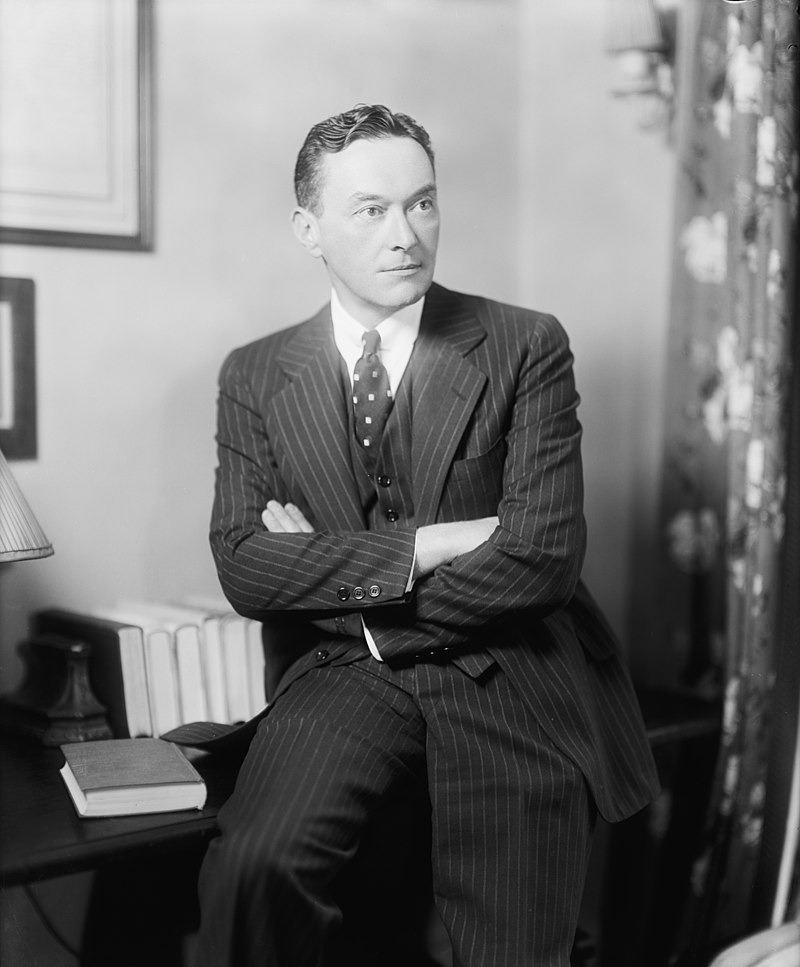
Walter Lippmann (1889 -1974) was perhaps the most influential American journalist of the 20th century. He was also among its wisest strategists. Among the many things that the Ukraine war has exposed is the conspicuous lack of media voices like Lippmann’s, as well as the paucity of strategic thinking at the highest levels of the U.S. government.
The core ideas underlying both neoconservatism and liberal internationalism remain deeply embedded in the rhetoric, practice, and failures of American foreign policy over the last two decades. They have led in part to the fractured U.S.-Russia relationship, and in many ways the conflict roiling Eastern Europe today.
In order to successfully challenge and eventually break the stranglehold these ideas have on policymakers and the Fourth Estate, we might benefit by a re-appreciation of Lippmann’s work. It might even help us to move beyond the prevailing wisdom of the bipartisan Washington war party, while at the same time reorienting the foreign policy of restraint back to first principles.
Lippmann’s Cold War
It wasn’t obvious in the early days of Lippmann’s brilliant career that he would come to be considered a — if not the — leading proponent of foreign policy restraint in the 20th century. His was a journey from committed Wilsonian to cold-eyed realist and outspoken opponent of the Vietnam war.
A co-founder of both the New Republic and the Council on Foreign Relations, he served as an adviser to President Woodrow Wilson during World War I. Later, he came to regret the enthusiastic interventionism of his early years. He was a Wilsonian mugged by reality, and, by the time the Cold War (a term Lippmann is often credited for popularizing in 1947) had entered its initial stages the late 1940s, he was criticizing Wilson’s interventionist ideology as “an impossible foundation for the foreign policy of a nation… Our people are coming to realize that in this country one crusade has led to another.”
Even before the onset of the Cold War, Lippmann was urging a modus vivendi between the U.S. and the Soviet Union. In the view of his biographer, Ronald Steele, Lippmann’s position was that “security is based on power, not on abstract principles. Alliances and spheres of influence, not majority votes in an international assembly, would govern a nation’s behavior.” For Lippmann, it was “eminently proper” that great powers such as the U.S. and Soviet Union had their own spheres of influence and responsibility.
During the early years of the Cold War, Lippmann became a leading critic of George F. Kennan’s policy of containment. Lippmann protested the militarization of the Cold War which is where he believed Kennan’s policy would lead. Among other things, Lippmann feared that, “by forcing us to expend our energies and our substance upon these dubious and unnatural allies on the perimeter of the Soviet Union, the effect of the policy is to neglect our natural allies in the Atlantic community, and to alienate them.”
In Lippmann’s view, the mistake Kennan made in outlining his initial strategy of containment was in simultaneously overestimating the role ideology played, while underestimating the role traditional national security interests played in the calculations of the Soviet leadership. [To his credit, Kennan, who admired Lippmann, eventually came to regret how containment had quickly led to U.S. militarization in practice].
Lippmann’s criticism of Kennan’s famous 1947 Foreign Affairs article, “The Sources of Soviet Conduct” came by way of 14 consecutive newspaper columns that were later collected in a book titled The Cold War. Lippmann saw Kennan’s containment policy, which recommended that Washington counter Soviet pressure through “the adroit and vigilant application of counter-force at a series of constantly shifting geographical and political points” as a “strategic monstrosity.”
Lippmann also went on to attack the author head-on. “For a diplomat to think that rival and unfriendly powers cannot be brought to a settlement is to forget what diplomacy is all about,” wrote Lippmann. “There would be little for diplomats to do,” he continued, “if the world (only) consisted of partners, enjoying political intimacy, and responding to common appeals.”
Lippmann’s concerns over containment remain relevant. Then as now, Washington-led efforts, beginning in April 2014, that sought to turn Russia into (in the words of New York Times’ reporter Peter Baker) a “pariah state,” have led exactly to where Lippmann feared Kennan’s containment strategy would go: a situation where we are deeply tied to “dubious and unnatural allies” in Kiev who wish to involve us in a shooting war with Russia.
Lippmann’s prudential approach toward the Soviet adversary, based on a narrow understanding of U.S. national interests, also influenced his thinking toward President Lyndon Johnson’s war in Vietnam. In February 1965, a mere six months after the Gulf of Tonkin Resolution had been passed by Congress, Lippmann wrote that as far as the conflict in Vietnam went, there was “no tolerable alternative except a negotiated truce.”
The following month, Lippmann expressed his concern over the conformity of establishment opinion over Johnson’s policy of engagement and escalation. According to Lippmann, “self-delusion” was the main driver of the belief that “if therefore we are agreed among ourselves, none can withstand us because none should withstand us, and we shall and must prevail.”
It would not be much of a stretch to simply and without rancor observe that a similar conformity grips Washington today regarding Ukraine. As with LBJ in 1965, the current president, Joe Biden, is being egged on by hawks in his administration, in his party, and in the American media. Worryingly, one of the differences between then and now is that then, there existed a coterie of U.S. senators such as Frank Church, Wayne Morse, and Eugene McCarthy who were early and vocal opponents of Johnson’s policy.
There was also Lippmann, whose reach was unparalleled: His thrice-weekly column ran in 200 newspapers and reached an estimated 10 million people.
In 1960, the CBS news anchor Howard K. Smith called him “the most quoted journalist in the world today.” The legendary Washington Post editor Ben Bradlee said Lippmann “towered over the Washington newspaper establishment like no one ever has since. He was the foreign correspondent, really, for every newspaper in America.”
Yet for all that, Lippmann paid a personal price for his opposition to the war. As Lippmann once said, “You can’t decide these questions of life and death for the world by epithets like appeasement.” As Steele recounts, throughout the 1960s, Lippmann’s “sense of isolation increased” and “the snide remarks about his age and judgment” all “took a toll.” And while history has vindicated Lippmann, the gung-ho militarism of those such as rival columnist Joseph Alsop remains entrenched more than half a century later.
Which Way Forward?
The war in Ukraine has brought to the fore divisions over what a proper foreign policy of restraint might look like. Some argue for what I would describe as a policy of ‘Restraint Plus’ which urges restrainers to abandon the more traditional concepts of restraint as laid out by Lippmann, in favor of those that are “forward looking.” Some have come out as vocal advocates for U.S. military and financial aid to Ukraine.
Others, such as historian Michael Brenes, believe that restrainers should “build an alternative strategy to liberal internationalism that is codified around principles of universal equity; freedom from foreign interference, coercion, and invasion; global collaboration across wealthy and poor nations; and international institutions that provide checks and balances on military spending.”
Yet some would say basing a foreign policy of restraint on “principles of universal equity” seems about as realistic as basing a foreign policy on the elimination of “terror,” as U.S. president George W. Bush once attempted. The goals which the Restraint Plus camp seek are perhaps laudable, but the problem is that they are far too broad — and broadly defined goals too easily lend themselves to interventionism and mission creep.
Restrainers should, as Lippmann urged, resist the temptation to re-shape the world in the self-image of Washington’s governing elite. “A mature power,” Lippmann wrote, “will make measured and limited use of its power. It will eschew the theory of global and universal duty which not only commits it to unending wars of intervention but intoxicated its thinking with the illusion that it is a crusader for righteousness.” It will leave behind, as today’s restrainers should, “the totally vain notion that if we do not set the world in order, no matter what the price, we cannot live in the world safely.”
Those words, by a man who was arguably the country’s most powerful media figure, in opposition to a ruinous American military adventure half a world away, were written in April 1965. It is sobering to think just how far in the wrong direction the American media — now so wedded to the prerogatives of the national security state on matters of war and peace — has traveled in the days since Lippmann.
By Kit Klarenberg, The Grayzone, 12/30/22
The established mythos of the Bosnian War is that Serb separatists, encouraged and directed by Slobodan Milošević and his acolytes in Belgrade, sought to forcibly seize Croat and Bosniak territory in service of creating an irredentist “Greater Serbia.” Every step of the way, they purged indigenous Muslims in a concerted, deliberate genocide, while refusing to engage in constructive peace talks.
This narrative was aggressively perpetuated by the mainstream media at the time, and further legitimized by the UN-created International Criminal Tribunal for the former Yugoslavia (ICTY) once the conflict ended. It has become axiomatic and unquestionable in Western consciousness ever since, enforcing the sense that negotiation invariably amounts to appeasement, a mentality that has enabled NATO war hawks to justify multiple military interventions over subsequent years.
However, a vast trove of intelligence cables sent by Canadian peacekeeping troops in Bosnia to Ottawa’s National Defence Headquarters, first published by Canada Declassified at the start of 2022, exposes this narrative as cynical farce.
The documents offer an unparalleled, first-hand, real-time view of the war as it developed, with the prospect of peace rapidly degrading into grinding bloodshed that ultimately caused the painful death of the multi-faith, multi-ethnic Yugoslavia.
The Canadian soldiers were part of a wider UN Protection Force (UNPROFOR) dispatched to former Yugoslavia in 1992, in the vain hope tensions wouldn’t escalate to all-out-war, and an amicable settlement could be reached by all sides. They stayed until the bitter end, long past the point their mission was reduced to miserable, life-threatening failure.
The peacekeepers’ increasingly bleak analysis of the reality on the ground provides a candid perspective of the war’s history that has been largely concealed from the public. It is a story of CIA black ops, literally explosive provocations, illegal weapon shipments, imported jihadist fighters, potential false flags, and stage-managed atrocities.
Read the complete Canadian UNPROFOR cables here.
See key excerpts of the files referred to in this article here.
It is a little-known but openly acknowledged fact that the US laid the foundations for war in Bosnia, sabotaging a peace deal negotiated by the European Community in early 1992. Under its auspices, the country would be a confederation, divided into three semi-autonomous regions along ethnic lines. While far from perfect, each side generally got what it wanted – in particular, self-governance – and at the least, enjoyed an outcome preferable to all-out conflict.
However, on March 28th, 1992, US Ambassador to Yugoslavia Warren Zimmerman met with Bosnian President Alija Izetbegovic, a Bosniak Muslim, to reportedly offer Washington’s recognition of the country as an independent state. He further promised unconditional support in the inevitable subsequent war, if rejected the Community proposal. Hours later, Izetbegovic went on the warpath, and fighting erupted almost immediately.
Received wisdom dictates the Americans were concerned that Brussels’ leading role in negotiations would weaken Washington’s international prestige, and assist in the soon-to-be European Union emerging as an independent power bloc following the collapse of Communism.
While such concerns were no doubt held by US officials, the UNPROFOR cables expose a much darker agenda at work. Washington wanted Yugoslavia reduced to rubble, and planned to bring the Serbs violently to heel by prolonging the war as long as possible. To the US, the Serbs were the ethnic group most determined to preserve the troublesome independent republic’s existence.
These aims were very effectively served by Washington’s absolutist assistance to the Bosniaks. It was an article of faith in the Western mainstream at the time, and remains so today, that Serb intransigence in negotiations blocked the path to peace in Bosnia. Yet, the UNPROFOR cables make repeatedly clear this was not the case.
In cables sent July – September 1993, the time of a ceasefire and renewed attempt to amicably partition the country, the Canadian peacekeepers repeatedly attribute an obstinate character to Bosniaks, not Serbs. As one representative excerpt states, the “insurmountable” goal of “satisfying Muslim demands will be the primary obstacle in any peace talks.”
Various passages also refer to how “outside interference in the peace process” did “not help the situation,” and “no peace” could be achieved “if outside parties continue to encourage the Muslims to be demanding and inflexible in negotiations.”
By “outside” assistance, UNPROFOR of course meant Washington. Its unconditional support for the Bosniaks motivated them to “[negotiate] as if they had won the war,” which they had to date “lost”.
“Encouraging Izetbegovic to hold out for further concessions,” and “clear US desires to lift the arms embargo on the Muslims and to bomb the Serbs are serious obstacles to ending the fighting in the former Yugoslavia,” the peacekeepers recorded on September 7th 1993.
The next day, they reported to headquarters that “Serbs have been the most compliant with the terms of the ceasefire.” Meanwhile, Izetbegovic was basing his negotiating position on “the popular image of the Bosnian Serbs as the bad guys.” Validating this illusion had a concomitant benefit – namely, precipitating NATO airstrikes on Serb areas. This was not lost on the peacekeepers:
“Serious talks in Geneva will not occur as long as Izetbegovic believes that airstrikes will be flown against the Serbs. These airstrikes will greatly strengthen his position and likely make him less cooperative in negotiations.”
Simultaneously, Muslim fighters were “not giving peace talks a chance, just going hell for leather,” and very much willing and able to assist in Izetbegovic’s objective. Throughout the final months of 1993, they launched countless broadsides on Serb territory throughout Bosnia, in breach of the ceasefire.
In December, when Serb forces launched a “major attack” of their own, a cable that month asserted that since early Summer, “most of the Serb activity has been defensive or in response to Muslim provocation.”
A September 13th UNPROFOR cable noted that in Sarajevo, “Muslim forces continue to infiltrate the Mount Igman area and shell BSA [Bosnian Serb Army] positions around the city daily,” the “assessed aim” being to “increase Western sympathy by provoking an incident and blaming the Serbs.”
Two days later, “provocation” of the Bosnian Serb Army (BSA) was continuing, although “the BSA is reported to be exercising restraint.” This area remained a key Bosniak target for some time afterwards. The July – September volume concludes with an ominous cable:
“BSA occupation of Mount Igman is not adversely affecting the situation in Sarajevo. It is simply an excuse for Izetbegovic to delay negotiations. His own troops have been the worst violators [emphasis added] of the [July 30th] ceasefire agreement.”
Throughout the conflict, the Bosnian mujahideen worked ceaselessly to escalate the violence. Muslims from all over the world flooded into the country beginning in the latter half of 1992, waging jihad against the Croats and Serbs. Many had already gained experience on the Afghan battlefield through the 1980’s and early 90’s after arriving from CIA and MI6-infiltrated fundamentalist groups in Britain and the US. For them, Yugoslavia was the next recruitment ground.
The Mujahideen frequently arrived on “black flights”, along with an endless flow of weapons in breach of the UN embargo. This started off as a joint Iranian and Turkish operation, with the financial backing of Saudi Arabia, although as the volume of weapons increased the US took over, flying the deadly cargo to an airport in Tuzla using fleets of C-130 Hercules aircraft.
Estimates of the Bosnian mujahideen’s size vary vastly, but their pivotal contribution to the civil war seems clear. US Balkans negotiator Richard Holbrooke in 2001 declared that Bosniaks “wouldn’t have survived” without their help, and branded their role in the conflict a “pact with the devil” from which Sarajevo was yet to recover.
Mujahideen fighters are never explicitly mentioned in the UNPROFOR cables, and neither are Bosniaks – the term “the Muslims” is used liberally. Still, oblique references to the former are plentiful.
A Winter 1993 intelligence report observed that “the weak and decentralized command and control systems” of the three opposing sides produced “widespread proliferation of weapons and the existence of various official and unofficial paramilitary groups, who often have individual and local agendas.” Among those “unofficial” groups was the Mujahideen, of course.
More clearly, in December that year, the peacekeepers recorded how David Owen, a former British politician who served as the European Community’s lead negotiator in the former Yugoslavia, “had been condemned to death for being responsible for the deaths 0f 130,000 Muslims in Bosnia,” his sentence “passed by the ‘Honour Court of Muslims’.” It was understood that “45 people were in place all over Europe to carry out the sentence.”

Owen certainly wasn’t responsible for the deaths of 130,000 Muslims, as nowhere near that many Bosniaks, Croats, and Serbs were killed over the course of the war in total. Nor were the Bosniaks religious extremists with a network of operatives across the continent, on standby to carry out fatwas passed down by an “Honour Court.”
Subsequent to this incident, which has never previously been publicly revealed, there are reports of “the Muslims” preparing false flag provocations. In January 1994, one cable observed:
“The Muslims are not above firing on their own people or UN areas and then claiming the Serbs are the guilty party in order to gain further Western sympathy. The Muslims often site their artillery extremely close to UN buildings and sensitive areas such as hospitals in the hope that Serb counter-bombardment fire will hit these sites under the gaze of the international media.”

Another cable records how “Muslim troops masquerading as UN forces” had been spotted wearing UNPROFOR’s blue helmets and “a combination of Norwegian and British combat clothing,” driving vehicles painted white and marked UN. The peacekeepers’ Director General feared that if such connivance was to become “widespread” or “be used for infiltration of Croat lines,” it would “greatly increase the prospects for legitimate UN forces to be targeted by the Croats.”
“This may be exactly what the Muslims intend, possibly to provoke further pressure for airstrikes on the Croats,” the cable adds.
That same month, UNPROFOR cables speculated “the Muslims” would target Sarajevo airport, the destination for humanitarian aid to the Bosniaks, with a false flag attack. As “the Serbs would be the obvious culprits” in such a scenario, “the Muslims would gain a great deal of propaganda value from such Serb activity,” and it was “thus very tempting for the Muslims to conduct the shelling and blame the Serbs.”

Against this backdrop, cables related to the Markale Massacre take on a particularly striking character. On February 5th 1994, an explosion tore through a civilian market, causing 68 deaths and 144 casualties.
Responsibility for the attack – and the means by which it was executed – has been hotly contested ever since, with separate official investigations yielding inconclusive results. The UN at the time was unable to make an attribution, although UNPROFOR troops have since testified they suspected the Bosniak side may have been responsible.
Accordingly, cables from this time refer to “disturbing aspects” of the event, including journalists being “directed to the scene so quickly,” and “a very visible Muslim Army presence in the area.”
“We know that the Muslims have fired on their own civilians and the airfield in the past in order to gain media attention,” one concluded. A later memo observes, “Muslim forces outside of Sarajevo have, in the past, planted high explosives in their own positions and then detonated them under the gaze of the media, claiming Serb bombardment. This has then been used as a pretext for Muslim ‘counter-fire’ and attacks on the Serbs.”

Nonetheless, in its 2003 conviction of Serb general Stanislav Galić for his role in the siege of Sarajevo, the ICTY concluded the Massacre was deliberately perpetrated by Serb forces, a ruling held up on appeal.
The authors of this article make no judgment on what did or did not happen at Markale that fateful day. However, the murkiness surrounding the event foreshadowed pivotal events that justified escalations in every subsequent Western proxy war, from Iraq to Libya to Syria to Ukraine.
Since the onset of the Ukraine proxy war this February 24th, deliberate war crimes, real incidents misleadingly framed as war crimes, and potentially staged events are virtually daily occurrences, along with accompanying volleys of claims and counterclaims of culpability. In some cases, officials on one side have even gone from celebrating and claiming credit for an attack to blaming the other within days, or simply hours. Substance and spin have become inseparable, if not symbiotic.
In years to come, who did what to whom and when could well, in the manner of the ICTY, become matters decided in international courts. There are already moves to set up a similar body once the war in Ukraine is over.
Parliamentarians in the Netherlands have demanded that Vladimir Putin be tried in The Hague. France’s Foreign Ministry has called for a special tribunal to be created. Kiev-based NGO Truth Hounds is collecting evidence every day of purported Russian atrocities across the country, in service of such a tribunal.
There can be little doubt that both Kiev and Moscow’s forces have committed atrocities and killed civilians in this conflict, just as it’s indisputable all three sides in the Bosnian War were guilty of heinous acts, and massacres of innocent and/or defenseless people. It’s reasonable to assume the savagery will become ever-more merciless as the war in Ukraine grinds on, in the precise manner as Yugoslavia’s breakup.
Just how long the fighting will continue isn’t certain, although EU and NATO officials have forecast it could be several years, and Western powers clearly intend to keep the proxy war active for as long as possible. On October 11th, The Washington Post reported that the US privately conceded Kiev was incapable of “winning the war outright,” but had also “ruled out the idea of pushing or even nudging Ukraine to the negotiating table.”
This highlights another myth that arose as a result of the Yugoslav wars and which endures to this day. It is the widely-held notion that negotiation and attempts to secure a peaceful settlement only emboldened Serb “aggressors.”
This dangerous myth has served as justification for all manner of destructive Western interventions. Citizens of these countries live with the consequences of those actions to this day, often as migrants after fleeing cities and towns scorched by regime change wars.
Another toxic legacy of the Balkan wars also endures: Westerners’ concern about human life is determined by which side their governments back in a given conflict. As the Canadian UNPROFOR cables demonstrate, the US and its allies have cultivated support for their wars by concealing a reality even their own militaries documented in clinical detail.
By Alexander Titov, The Conversation, 1/11/23
It’s been a year since I last visited Russia. Back then, most people I met thought the prospects of a war with Ukraine were very remote, despite the massive troops build-up on the border. So I was curious to see how attitudes had changed since then. Equally important was to see for myself how the war has changed life in Russia.
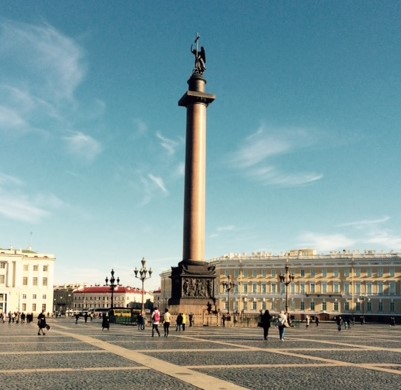
The first surprise was how normal life was. Despite all the media reports of doom and gloom as a result of western sanctions, everything works just as before. Domestic banking is working, salaries and pensions are paid on time, ubiquitous e-commerce is bustling with activity, the shops are stuffed with food and consumer goods. In St Petersburg, at least, I’ve struggled to notice any change in daily life compared to January 2021.
Yet, digging deeper and the impact of sanctions is there. One issue that kept popping up was spare car parts, which have become noticeably more expensive. But even there new supplies are being shipped now. This goes pretty much for everything else consumer orientated. There’s no shortages, even of western goods such as whisky – the supermarket shelves are fully stocked.
EU travel restrictions have had their effect – but nothing like the measures introduced during the COVID pandemic. People can still travel to many countries, including Turkey, Egypt or the Gulf states.
Business people complain of facing difficulties, particularly those in the import/export sector. But, after a few months of chaos, business has been finding new shipping routes via third countries such as Turkey or Kazakhstan.
An acquaintance who works in a defence-related sector laughed at the suggestion that Russia could run out of missiles. He told me the defence industry had been stockpiling essential parts for years and is also using more locally sourced alternatives (although this is a claim I was unable to verify). The rest can still be bought – albeit at inflated prices. Their real problem is not a lack of parts, but the capacity to scale up production to meet growing military orders.
The general impression from conversations with people in different businesses is that their main focus is on adapting to the new normal. Many things will be less efficient and more expensive, but the Russian economy will not collapse.
If this is a crisis for Russia – which it is – it’s nothing like the turmoil of the early 1990s when the state, society and economy were all collapsing at the same time.
Don’t mention the war
Another surprising thing I’ve found is the extent to which the war is avoided on a day-to-day basis. You see reports about it on TV news and chat shows (which steadfastly follow the government line), but I felt much better informed about the war using the Telegram app in Belfast, where I live and work, than when talking to actual people in St Petersburg. I found you could have whole conversations without Ukraine ever coming up, unless I deliberately mentioned it.
My overall impression was that the invasion has reinforced people’s pre-existing views. Those who were always opposed to Putin hate it, while those who are supportive of the government remain largely in favour. But the vast majority tries to ignore it as much as they can.
No one I spoke to was happy that the war started – but there’s an important caveat: regretting it doesn’t mean they want to end it at all costs. Some said that one thing worse than a war is losing a war.
Nor did I see much evidence of popular protests. Obviously, many people who oppose Putin had fled the country already, especially since mobilisation began in September 2022. Many others opposing the war have been imprisoned. A couple of my friends (long-time critics of the regime) were planning to leave to avoid future mobilisation.
One of the most frequent questions I was asked related to the energy situation: “How much do you pay for gas in the UK?” The UK and the EU are presently suffering from high energy costs. But it’s unlikely the European economy will collapse or cause political unrest – the implicit assumption behind the question. It’s a similar situation in Russia. Despite western sanctions, it appears that there is little danger of Russia’s economy collapsing.
Perception gap
My distinct impression from two weeks in St Petersburg is that Russia’s society and economy are still nowhere near to being fully mobilised for the war effort. While the partial mobilisation in September and October last year brought the war closer to home, it involved a relatively small percentage of the population – from all of my acquaintances only one friend of a friend was called up. Meanwhile further rounds of mobilisation are to an extent baked in to people’s expectations. Barring huge military setbacks leading to a really extensive mobilisation, it appears that life on Russia’s home front is carrying on fairly normally.
One of the biggest lessons from my trip is the huge gap between representations of Russia in the west and what you see when you arrive there. This gap in perception is likely to increase because of the lack of people currently travelling there from the west and the suspension of professional and academic links.
Important as they are, reliance on comment from anti-Putin activists in exile or those remaining in Russia and still active on social media won’t help as they’re marginalised at home and lose contact with Russian reality while abroad.
The fact is that there is no substitute for seeing things for yourself. I found my recent trip to Russia stressful – but I’m glad I did it.
.jpg)
