Link here.
French ex-president Hollande confirms Minsk agreements were a ploy
Link here.
Link here.
by MK Bhadrakumar, Indian Punchline, 12/28/22
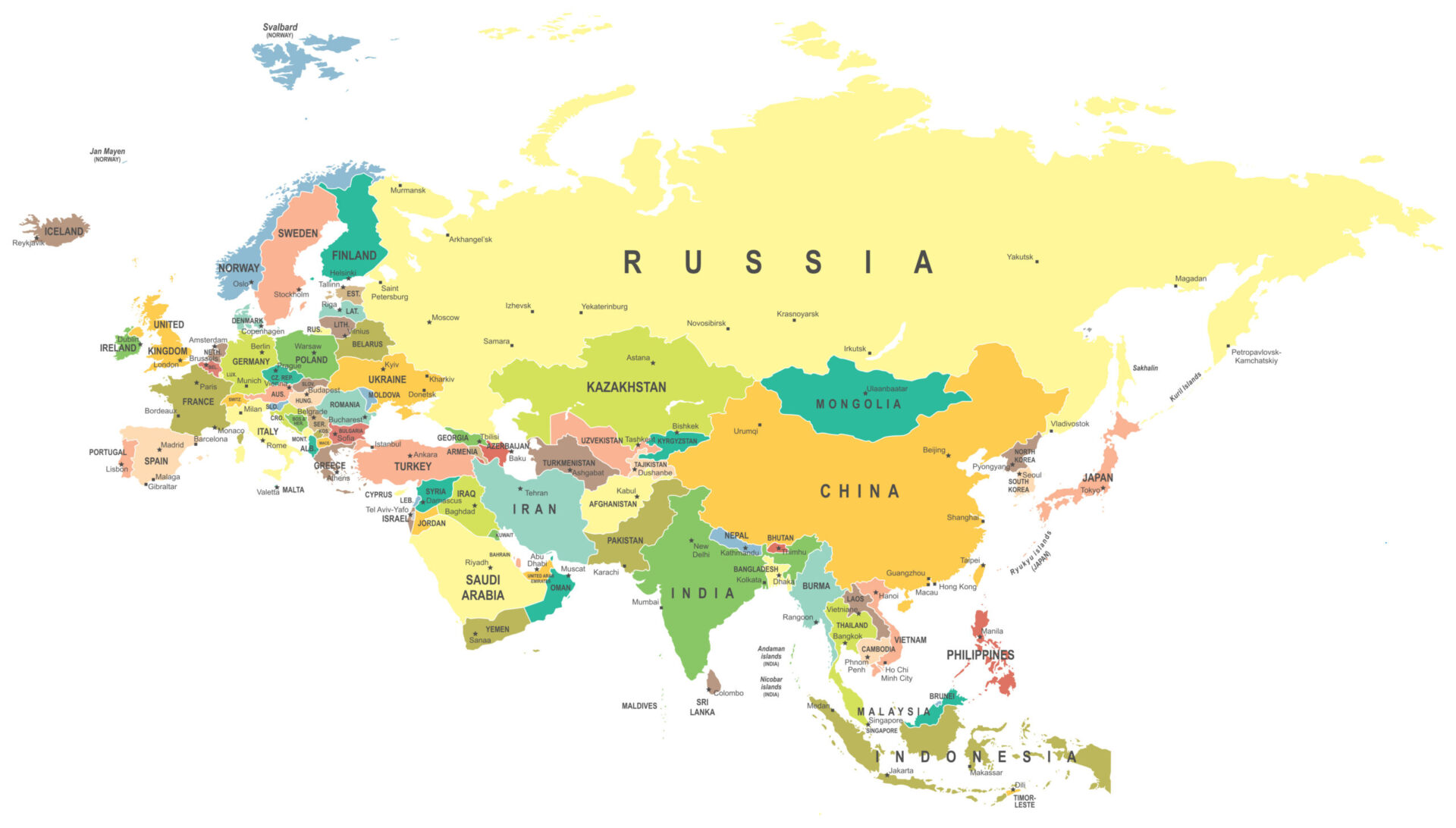
Consequent upon the Ukraine war, as the Sea of Azov becomes an inland sea for Russia, bracketed by the Crimean Peninsula and the mouth of the River Don, the sea and rail networks of the region extend to Iranian hubs on the Caspian Sea and ultimately lead to the Indian Ocean. A feature article in Bloomberg last week titled Russia and Iran Are Building a Trade Route That Defies Sanctions brings to centre stage this “sanctions-busting” project in the region.
Last month, Mehr News Agency reported that a first 12 million–ton shipment of Russian grain bound for India already transited Iran. The time has come for the inland trade corridor known as the International North-South Transport Corridor or the INSTC, which was launched in 2000 to connect the Baltic Sea with the Indian Ocean.
Ironically, the West’s “sanctions from hell” against Moscow roused the INSTC to life. Moscow is currently finalising the rules that would give ships from Iran the right of passage along inland waterways on the Volga and Don rivers!
The INSTC was conceived as a 7,200 km-long multimodal transportation network encompassing sea, road, and rail routes to move freight between Russia, Central Asia and the Caspian regions, Iran and India. At its core, this is a Russian-Iranian project who are stakeholders in countering the West’s weaponisation of sanctions.
But there is much more to their congruent interests. The Western sanctions motivate them to look for optimally developing their economies, and both Russia and Iran are pivoting to the Asian market, and in the process, a new trading bloc is forming that is completely free of Western presence. “The goal is to shield commercial links from Western interference and build new ones with the giant and fast–growing economies of Asia, ” Bloomberg noted.
Speaking to a group of senior Russian editors on Monday in Moscow, Foreign Minister Lavrov said, “Rest assured that in the near future, we will see a serious drop in the West’s ability to ‘steer’ the global economy the way it pleases. Whether it wants it or not, it will have to sit down and talk.” This is the crux of the matter — force the western powers to negotiate.
In the near term, INSTC’s takeoff will depend on some big projects. On Monday, the Russian Deputy Prime Minister Alexander Novak spoke about an energy grid involving Russia, Iran and Central Asia and the South Asian region.
Novak said, “A constant influx of national currencies gives confidence to the market. At the beginning of the year, we faced a situation where it was not very clear what to do with these currencies. At the moment, they are traded on the stock exchange and ensure mutual trade turnover… If at the beginning of the year this flywheel swayed very hard, then in just a few months it became commonplace, and we began to trade steadily in national currencies.” De-dollarisation provides an underpinning of the INSTC. This is one thing.
Second, Novak made the disclosure that Russia and Iran may reach an agreement on swap supplies of oil and gas by the end of this year. As he put it, “If we talk about perspective, this includes exports of gas to Afghanistan, Pakistan — either using the infrastructure projects of Central Asia, or through a swap from the territory of Iran. That is, we will receive their gas in the south of the country [Iran], and in exchange we will supply gas to the north for Iranian consumers.”
Novak added, “We expect around 5 mln tons [of oil] per year and up to 10 bln cubic meters [of gas] at the first stage.” Pakistan is interested in sourcing Russian gas. Novak referred to Russia’s agreement with Azerbaijan, which is set to increase gas supplies, and “when they increase gas production, we will be able to discuss swaps.”
Pakistan has an inherent advantage, as all the participating countries of the INSTC except India also happen to be members of China’s Belt and Road Initiative. At some point early enough, the two designated Iranian ports in the INSTC — Bandar Abbas and Chabahar — will likely get linked to Gwadar Port, which is the gateway to the China-Pakistan Economic Corridor [CPEC] leading to Xinjiang, and an important component of the BRI.
Clearly, the INSTC will spawn a web of international economic corridors. Iran is destined to become the hub of converging strategic interests with significant economic dimensions that will determine new alliances and impact the geopolitics of South and West Asia in the 21st century.
The US has been waging an information war to debunk the CPEC and fuel anti-China sentiments in the Pakistani public opinion. But it is a hopeless endeavour to malign the INSTC as a geopolitical project and impractical to threaten regional states from associating with what is an intercontinental trade route that is no single country’s franchise. After all, how to sanction a trading bloc?
The facts speak for themselves. The INSTC trials carried out to transport containers from Mumbai to St Petersburg using the trade corridor are able to reduce the delivery time of cargo from 45 days to 25 days at 30% cheaper rates than via Suez Canal, justifying the hopes for enhanced connectivity and utility of the corridor. Clearly, the trade potential of INSTC is immense.
However, Russia and Iran are determined to decouple the West. Lavrov said on Monday, “We can no longer rely on these people. Neither our people nor history will forgive us if we do… we too openly and naively put our faith in the assurances that we heard in the early 1990s about a common European home and the need for an international division of labour that would rely on the best performance and competitive advantages of each country, so that, by pulling our efforts together and saving resources, we would be able achieve the best and cost-effective results. All of that was empty talk.”
Iran and Eurasian Economic Union [comprising Russia, Belarus, Kazakhstan and Kyrgyzstan] have reportedly finalised the terms for a free trade agreement involving more than 7,500 types of commodities. A market as big as $700 billion is opening up to Iranian products and services as of the next Iranian year [starting March 21, 2023].
The FTA encourages free movement of goods and services, and provides for common policies in the macroeconomic sphere, transport, industry and agriculture, energy, foreign trade and investment, customs, technical regulation, competition, and antitrust regulation. It will be a game changer for the INSTC, transforming the power dynamic in the vast Eurasian landmass and the Gulf region. The INSTC signifies a strategic axis between Russia and Iran built around a trade route heralding a non-western trading bloc of free-wheeling regional states with common interests in resisting western hegemony.
By Gilbert Doctorow, Blog, 12/30/22
…Some Russian panelists [on talk shows] believe that for lack of a consistent policy on the war, the United States will cut its losses midway in 2023 and turn from Ukraine fully to the oncoming conflict with China over Taiwan.
All of which brings me to the remarkable analysis that a young specialist on China who is now invited regularly to the Solovyov show has been saying. His stand-out remark last night which I have used as the title for this essay is that 2022 has marked the emergence of a ‘New Free World,’ anchored by Russia and China, that has resources exceeding those of the U.S.-led Collective West. At these words, which clearly were delivered without any sense of irony or jest, John Foster Dulles must be turning over in his grave.
This China analyst insists that the most recent 20th Party Congress in China which gave President Xi his third term has installed around him known top ranking Party members who are ‘loyal’ to Russia and who despise America. There is every expectation that starting in 2023 there will be the approval and initial implementation of major Chinese investment projects in Russia, marking a significant departure from the economic relations of these two powers till now.
This same analyst says that with respect to China’s officially disavowing any intention to enter into alliances or to form military blocs, the reality is that the relationship with Russia very closely resembles an alliance with a military dimension. How else can one understand the recent joint Chinese-Russian naval drills in the South China Sea or the still earlier joint air force drills over the Sea of Japan. This, at the very moment when the United States and its allies denounce Russia as a military aggressor.
He insists that without Chinese backing from the very beginning, Russia would never have dared to venture upon the SMO [this is consistent with what Ray McGovern has been saying since February of 2022. – NB]. Chinese diplomatic support has been critically important in the UN Security Council. And China stepped up its import of Russian oil by 10% in the past year despite its overall reduced consumption due to the impact of Covid lockdowns on its manufacturing industry. The net result is that China was the single largest consumer of Russian oil, coal and other strategic commodities in 2022.
He notes that on the very day when Zelensky was in Washington, Xi received Dmitry Medvedev, Russia’s former President and present day close assistant to Putin. Their meeting, without masks and with warm handshakes for photo opportunities at the outset lasted well beyond the officially scheduled 45 minutes into several hours. That was clearly meant to be a signal to Washington and to the world. Moreover, today or tomorrow Presidents Putin and Xi are expected to have a lengthy video tête-à tête which will focus on coordinating actions in response to Washington’s future actions directed at either the Ukraine war or the Taiwan conflict. We do not have to wait long to see the emergence of a two front challenge to American global domination.
Meanwhile other panelists on the Solovyov show pointed to further proofs that the American century is over. As we know, China filed a suit in the WTO claiming that the United States has grossly violated WTO rules by imposing its embargo on export of state of the art semiconductors and related technologies to China. We were told last night that 126 members of the WTO have supported the Chinese position. What the Kremlin now expects is for the U.S. to effectively shut down the WTO, removing one of the important global institutions by which it has enforced its ‘rules-based order.’
I end this report by paying tribute to Charles Dickens for coining the expression which sums up the calendar year 2022 for the Russian Federation: ‘it was the best of times, it was the worst of times.’
By Sarah Lindemann-Komarova, Echo of Siberia Blog, 12/30/22
2022, my mind goes immediately to Albert Brooks in his film “Lost in America. The scene where he finds out his wife gambled away their nest egg, “We are in hell, we have entered hell, when?” Not at all the image I expected to be reflecting on in Siberia as COVID barriers began to lift around the world. It has been dizzying year of adjustment. The “when” question almost doesn’t matter anymore, whether it was 2014, February 24 2022, December 25, 1991, NATO expanding, NATO bombing of Syria or Libya, Russiagate etc We are where we are and it is as bad as it can get. 30 years after we were promised a peace dividend, how did we get here from there?
To start looking for answers, I decided to read my journals from 1992 when I first moved here. I was part of the first wave Americans who got caught up in the excitement of possibilities for Russia, for America, for ourselves. The journal is heartbreaking. Initially because there is so much misery and confusion, but in the context of today, that heartbreak comes mostly from being reminded of the opportunity America missed.
Whenever American friends ask me to explain Putin and his on-going support from the Russian people (going from 31% as Yeltsin’s Prime Minister in August 1999 to 81% this December), I tell them about the 90’s. There is a passage in my journal on a train to Krasnoyarsk, “11PM, still light as villages roll by. All across Russia tonight I know they speak of only one thing; how hard life is”.
There are details defining hard on every page:
A University Professor apologizes for not inviting me to dinner because she hasn’t been paid for 6 weeks;
Being stuck in Tomsk because the price of a bus ticket was going up and the ticket machine can’t print anything higher than 99 r.;
A school English teacher kills herself because she is afraid if she asks for psychological support she will lose her job;
A student arrives for a visit saying he was going to buy me a candy bar but the woman at the kiosk would not sell him one because (he waves his rubles in the air) “this is old money, a candy bar costs new money”;
A group of retired gold miners in a village outside Chita ask a dozen different ways my impression of their quality of life compared to American pensioners. After each question they held their breath waiting for the answer. Like a second visit to the doctor after some tests have been done or stumbling across incontrovertible evidence that your 30 year marriage was a sham.;
When Ruslan Khasbulatov was President of the Russian Parliament he came to Novosibirsk. I was told that preparation by local government officials consisted mostly of deciding whether they should stuff goods in the stores and do repairs like they used to do when leaders came, or if this was no longer appropriate? Should things look good or bad?;
An elderly couple, retired engineers who built the BAM, in one of the largest apartments on the best street in Tomsk, apologize for having us eat dinner out of the frying pan because there is so rarely water they try to cut down on dishes;
Eva, one of my students wrote, “This summer the salary of a leading scientist from the Institute of Thermophysics was 900 rubles a month. What could he buy? 4 kilograms of butter for 800 rubles or maybe 3 kilograms of sour cream for 850 rubles. I must mention that this situation really killed a lot of talented scientists who couldn’t stand the humiliating conditions. One Department at the Inst. buried three gifted scientists in three months.
While all the misery described above was happening, the US was having a love affair with Russia. It was the worst of times for Russians but the best of times for Americans. Russia was THE place to be for ambitious and adventurous Americans. The world of opportunity, the place where frogs came to become princes/princesses. In Moscow it was a legendary non-stop party. In Siberia it was quieter but still Americans could live above their paygrade and date out of their league and do pretty much anything they were or were not qualified to do.
One friend left a dead-end job at a video store in Minneapolis and opened the first chain of pizza parlors in Siberia, another came fresh from College and saved the Novosibirsk chocolate factory. When I arrived, I only had a BA and no idea how to teach English and yet I was teaching at one of the top universities in Russia.
Within a couple of months, I realized that as long as I called it a “Master Class in English”, I could talk about anything. My curriculum expanded to include a mock democracy, a gender lecture series with the only feminist in the region, and a seminar with a male American colleague, “Capitalism, Business, Women, and Sex in America”. Every time I pitched a new idea a look of dread came over Anatoli, the Vice Dean, but he never said “no”. With what became known as the ”sex lecture”, he asked that I have dinner with Galina the Department Head to discuss. Two toasts in, I made my real case to Galina that included raising awareness about AIDS and she signed off saying, “This must be done”. I was surrounded by heroes who trusted me. All that opportunity squandered.
In 92 Abram Illich, a mathematician who lost his position at the University for publishing a samizdat, told me promoting a red scare or the potential for fascism is beneficial to everyone in power because it provides the classic heist diversion while all the countries prized assets were stolen. He said I didn’t need to be afraid of a rise in fascism because “fascism requires you to believe in something deeply and no one here believes strongly in anything”. All that opportunity lost.
There is a quote from a Novosibirsk Mathematician’s wife, “Now it’s all treacherous, we don’t know what tomorrow will bring.” And that summarizes 2022 in Siberia. And while there are some similarities to 92, most people still don’t believe in anything deeply, the challenges people faced this year are a different kind of hard. They were forced to come to terms with their relationship to their country, what it means to be Russian or to live in Russia. That meant sometimes making hard choices, do I go or stay, do I serve or not? That process is finally bringing some clarity and that is no small accomplishment on the 30th anniversary of this “transition”.
For those who decided to stay, the vast majority of people in Siberia, it was a year of finding ways to adapt to a new reality every day. For many that included navigating, or not, relationships with friends and relatives in Ukraine and in the West. For some it means suffering the loss of a child, husband, brother or friend. These loses are well documented in local newspapers and by the fresh flag covered graves, Special Forces, Intelligence Services…
Everyone I met in 1992 was shell shocked by the changes and were totally unequipped to respond. That is not what is happening today. Once it was clear that this wasn’t going to end in a month or two, an impressive number of people focused on moving forward. Some wavered at first but decided to stay and make Russia a country worth fighting for. They have the skills and energy to take advantage of opportunities that have appeared because of sanctions. People are networking and building community in ways large and small. My neighbor, who moved to the Village from Moscow two years ago, is expanding her small hotel and her on-line platform while her husband commutes back and forth to an IT job. They spent yesterday with their 12 year old son dressed as Santa Claus, Snow Girl, and Helper visiting every store and municipal institution delivering gifts to all the workers. The ugly barrier that sometimes exists between “old” and “new” people in the Village is crumbling, we are all in this together.
And so, a new year begins. I have never greeted a new year with such trepidation and sadness for the opportunities lost. I know what was possible, I lived the dream that was born when the Cold War first ended. My journal includes a description of the 1992 US Embassy 4th of July party, seeing Gorbachev, meeting Strauss. I was invited by a young foreign service officer. We met when the Vice Rector called me out of class to meet someone from the US Embassy. He wanted to prove to him that an American could live here so that more American teachers would come. That Embassy guy is now one of Biden’s top NSC advisors on Russia. Maybe he knows how we got here from there?
By Robert Freeman, CommonDreams, 12/29/22
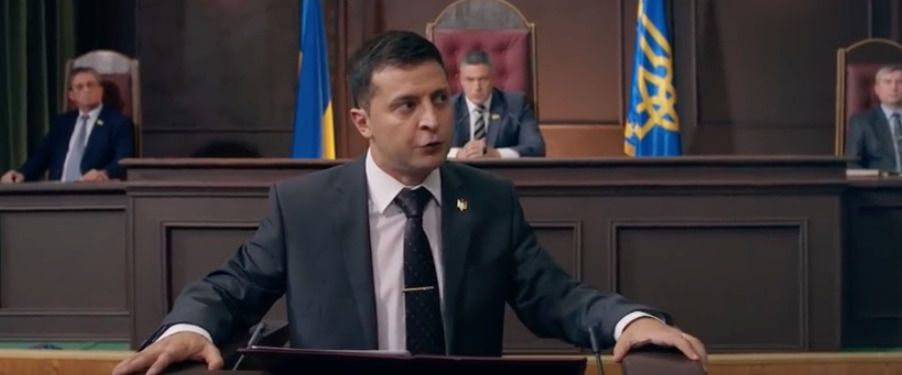
When the president of the poorest, most corrupt nation in Europe is feted with multiple standing ovations by the combined Houses of Congress, and his name invokedin the same breath as Winston Churchill, you know we’ve reached Peak Zelensky.
It’s a farcical, almost psychotic over-promotion, probably surpassed only by the media’s shameful, hyperbolic railroading of the country into war with Iraq, in 2003. Paraphrasing Gertrude from Hamlet, “Methinks the media doth hype too much.”
Finally, the neo-cons who have led the U.S. into the serial debacles of Afghanistan, Iraq, and now Ukraine, costing the country tens of trillions of dollars and even greater amounts of destroyed reputational capital, will claim their customary immunity from any accountability for their savage failures and cheerily move on to their next calamity.
Let’s remember that before ascending to his country’s presidency, Volodymyr Zelensky’s greatest claim to fame was that he could play the piano with his penis. I’m not joking. And he ran on a platform to unite his country for peace, and for making amends with Russia. Again, I’m not joking.
Now, he’s Europe’s George Washington, FDR, and Douglas MacArthur all rolled into one and before whom the mighty and powerful genuflect.
Please. The only place to go from here is down. And, that is surely coming. Soon.
Consider some inconvenient facts that the fawning media, which is essentially the public relations arm of the weapons industry, doesn’t want you to know.
The European Commission President, Ursula von der Leyen,recently let slip that the Ukrainian army has lost more than 100,000 troops in the eight months since the beginning of the war. Over the nine-year span of the Vietnam War, the U.S. with a population six times that of Ukraine, lost a total of 58,220 men.
In other words, on a per day, per capita basis, Ukraine is losing soldiers at a rate 141 TIMES that of U.S. losses in Vietnam. The U.S. lost the public on Vietnam when middle class white boys began coming home in body bags. Does anybody with half a brain believe such losses in Ukraine are sustainable? Does anybody have another plan to avert such slaughter?
Von der Leyen is among the shrewdest public figures in the world. What she is doing is laying the predicate for Western withdrawal from Ukraine and ending the War. If you look at the facts on the ground, not the boosterish propaganda ladled out by the media, you can understand why.
In a matter of weeks, Russia, with its hypersonic missiles, destroyed half of Ukraine’s electrical power infrastructure. This, as winter is coming on. It can just as easily take out the other half, effectively bombing Ukraine back into the Stone Age. Is that what anybody wants?
The startling, indeed, terrifying part of this is that neither Ukraine nor the West have any defense against these hypersonic missiles. They travel so fast, and on variable trajectories, they cannot be shot down, even by the most advanced Western systems. They represent one of the greatest asymmetries in deliverable destructive power in the history of warfare, probably dwarfed only by the U.S.’s possession of atomic bombs at the end of World War II.
Again, there is no effective defense against them. The Russians have them. The Ukrainians don’t. Game over. Can you understand why leaders in the West are beginning to wake up?
On the conventional front, the Ukrainians are having trouble securing even conventional weapons to defend themselves. U.S. arms suppliers are working around the clock to replace their own stocks and the stocks that European countries have given to Ukraine. But the backlog is running into years. A recent headline from The Wall Street Journal stated, “Europe is Rushing Arms to Ukraine but Running Out of Ammo.”
Finally, the U.S. has committed $112 billion to Ukraine. That includes $45 billion just slipped into the omnibus funding bill against the likelihood that a Republican-controlled House will cut such funding, almost certainly substantially.
That’s more than $10 billion per month since the war started in February. And that doesn’t even count the subsidies, both material and financial, from the EU which amount to billions of dollars more per month.
Without such subsidies, Zelensky would not have lasted a month in the war. How many hours do you think he is going to last once that flow dries up? And it surely is.
The Europeans are coming to realize that their continent is being de-industrialized, literally moved backwards an entire epoch in economic terms, because of their willingness to serve as the doormat for the U.S.’ imperial war against Russia. Not even they, with their supine fealty to U.S. domination, are willing to commit collective economic suicide on behalf of the U.S.
France’s Macron and Germany’s Scholz are suggesting that accommodations to Russian interests must be devised in order to bring about a peaceful settlement of the war.
Macron suggested in a television address to his nation that an antagonized Russia is not in the security interests of Europe. “We need to prepare what we are ready to do…to give guarantees to Russia the day it returns to the negotiating table.”
Scholz was even more specific. In an article in Foreign Affairs he declared, “We have to go back to the agreements which we had in the last decades and which were the basis for peace and security order in Europe.”
This is a direct repudiation of the U.S.’s maximalist position before the start of the War, that Russia’s security needs were of no interest to a marauding NATO.
Even U.S. Secretary of State Anthony Blinken is now mooting the idea that territorial concessions must be on the table. In a Wall Street Journal article, Blinken stated that, “Our focus is…to take back territory that’s been seized from [Ukraine] since February 24th.”
Notice, that this is a significant climb down from the U.S.’ earlier position that all Russian gains since 2014, including Crimea, must be reversed before negotiations could begin. And this is just Blinken’s opening hand. More concessions are sure to follow as Russian gains become greater and their likelihood of being reversed, lesser.
Put these four things together: staggering, unsustainable losses of soldiers; terrifying, indefensible asymmetries of destructive power; inability to supply oneself with even conventional defensive weapons; and categorically reduced support from your most important backers.
Does that sound like the formula for winning a war? It is not. It’s the formula for losing the war, which is why von der Leyen, Macron, Scholz, and Blinken are now laying pipe for getting out. The tide is going out under Zelensky. He will soon be remembered as a Trivial Pursuits question, or an answer on Jeopardy: “The only modern head of state known to be able to play the piano with his penis.” Ding. “Contestant #3?” “Who is Volodymyr Zelensky?”
A peace will soon be declared. Russia will keep the Donbas and Crimea in recognition of the facts on the ground. Both sides will be better off for this. The Donbas is ethnically, linguistically, religiously, and culturally Russian, which is why it voted overwhelmingly for assimilation into Russia. Besides, if Kiev loved them so much, it wouldn’t have murdered 14,000 of them over the past eight years and resumed massive shelling in early February of this year, before the Russian invasion.
Ukraine will foreswear any future affiliation with NATO. This is Putin’s highest priority and what he asked for–and was denied–in his request to the U.S. and NATO last December, before the invasion was launched. If Russia begins its much-feared winter offensive, as many expect, Ukrainian generals will dispatch Zelensky in a coup rather than send their few remaining soldiers to certain annihilation.
U.S. grain and pharma conglomerates will buy up Ukrainian farmland—some of the best in the world—for pennies on the dollar. This is the standard MO of U.S. multinational vultures coming in after the kill to pick apart the carcasses. U.S. weapons makers will look for and help provoke the next feeding frenzy, much as they materialized Ukraine barely a year after the humiliating U.S. defeat in Afghanistan derailed their last gravy train.
Russia and China, driven together by U.S. bullying, will continue to constellate the nations of the Global South into an anti-Western bloc committed to collaborative, mutually profitable, peaceful development. The U.S. and its closest allies will cower behind the walls they’ve constructed of the ever-shrinking share of the global economy that they can manage to hold as their own.
Ukraine will prove a turning point in the dismantling of U.S. hegemony over global affairs that it has enjoyed—and, let’s be honest, often abused–since 1945. The U.S. public is not psychically prepared for such a come down. But that is the cost of living in the fantasy world that the media lavishes up to keep that self-same public ignorant, fearful, confused, entertained, and distracted.
Finally, the neo-cons who have led the U.S. into the serial debacles of Afghanistan, Iraq, and now Ukraine, costing the country tens of trillions of dollars and even greater amounts of destroyed reputational capital, will claim their customary immunity from any accountability for their savage failures and cheerily move on to their next calamity. We need to be on the lookout for their next gambit to pillage the treasury and advance their own private interests above those of the nation. It will surely come.