Alan MacLeod: MOST OF THE “FACT-CHECKING” ORGANIZATIONS FACEBOOK USES IN UKRAINE ARE DIRECTLY FUNDED BY WASHINGTON

By Alan MacLeod, MintPress News, 8/2/22

Most of the fact-checking organizations Facebook has partnered with to monitor and regulate information about Ukraine are directly funded by the U.S. government, either through the U.S. Embassy or via the notorious National Endowment for Democracy (NED).

In light of Russia’s invasion of Ukraine, an information war as bitter as the ground fighting has erupted, and Meta (Facebook’s official name) announced it had partnered with nine organizations to help it sort fact from fiction for Ukrainian, Russian and other Eastern European users. These nine organizations are: StopFake, VoxCheck, Fact Check Georgia, Demagog, Myth Detector, Lead Stories, Patikrinta 15min, Re:Baltica and Delfi.

“To reduce the spread of misinformation and provide more reliable information to users, we partner with independent third-party fact-checkers globally,” the Silicon Valley giant wrote, adding, “Facebook’s independent third-party fact-checkers are all certified by the International Fact-Checking Network (IFCN). The IFCN, a subsidiary of the journalism research organization Poynter Institute, is dedicated to bringing together fact-checkers worldwide.”

The problem with this? At least five of the nine organizations are directly in the pay of the United States government, a major belligerent in the conflict. The Poynter Institute is also funded by the NED. Furthermore, many of the other fact-checking organizations also have deep connections with other NATO powers, including direct funding.

STOPFAKE

Perhaps the most well-known and notorious of the nine groups is StopFake. Established in 2014, StopFake is funded by NATO’s Atlantic Council, by the British Foreign and Commonwealth Office, the British Embassy in Ukraine and the Czech Foreign Ministry. It has also received money from the U.S. via the National Endowment for Democracy, although that fact is far from trumpeted by either party.

One potential reason for this was alluded to in a 2016 article reprinted by StopFake itself. As the article notes, “in the case of StopFake.org when opponents want to insult the project, they immediately invoke National Endowment for Democracy donor support as evidence of U.S. government and CIA involvement.”

In the wake of the Russian invasion, the NED pulled all public records of their Ukraine projects from the internet. Nevertheless, incomplete archived copies of those records confirm a financial relationship between the groups.

StopFake was explicitly set up as a partisan organization. As a glowing report on them from the International Journalists’ Network notes, the majority of StopFake’s fact-checks are on stories from Russian media, and the motivation for its creation was “Russia’s 2014 occupation of Crimea and a campaign to portray Ukraine as a fascist state where anti-Semitism, racism, homophobia and xenophobia thrived.”

While it is indeed incorrect to label Ukraine a fascist state, the country clearly has one of the strongest far-right movements anywhere in Europe. And unfortunately, StopFake itself is far from an apolitical bystander in that rise. Multiple established Western media outlets, including The New York Times, have reported on StopFake’s ties to white power or Nazi groups. When local journalist Ekaterina Sergatskova exposed these links, death threats from far-right figures forced her to flee her home.

Indeed, according to some, one of StopFake’s primary functions appears to be to promote the far-right. A long exposé by Lev Golinkin in The Nation cataloged what it called StopFake’s history of “aggressively whitewashing two Ukrainian neo-Nazi groups with a long track record of violence, including war crimes.”

Surely StopFake’s most famous former host is Nina Jankowicz. Jankowicz was briefly head of President Biden’s newly formed Disinformation Governance Board before public uproar caused her to resign. Dubbed the “Ministry of Truth”, both the board and Jankowicz generated strong opposition. Yet few mentioned the fact that, while at StopFake, Jankowicz herself had, on camera, enthusiastically extolled the virtues of multiple fascist paramilitaries.

In a 2017 TV segment about the Aidar, Dnipro-1 and Azov Battalions, Jankowicz presented the groups as heroic volunteers deafening Ukraine from “further Russian separatist encroachment.” As she stated,

The volunteer movement in Ukraine extends far beyond military service. Volunteer groups are active in supporting Ukraine’s military with food, clothing, medicine, and post-battle rehabilitation, as well as working actively with the nearly two million internal refugees displaced by the war in Ukraine,”

This framing jars with multiple reports from human rights groups such as Amnesty International, who claim that the Aidar Battalion is guilty of a litany of abuses, “including abductions, unlawful detention, ill-treatment, theft, extortion, and possible executions.” Amnesty also accuses Aidar and Dnipro-1 of “Using starvation of civilians as a method of warfare.”

Azov, meanwhile, is the most infamous organization of the lot. The group’s insignia is directly lifted from the 2nd Waffen-SS Panzer Division, a unit responsible for carrying out some of the worst crimes of Hitler’s holocaust. The Azov Battalion also dip their bullets in pig fat before battle as a calculated hate crime, attempting to block Jewish or Muslim enemies from a better afterlife. Andriy Biletsky, the group’s founder, said in 2010 that he believes Ukraine’s mission is to “lead the white races of the world in a final crusade … against Semite-led Untermenschen” – the word Hitler used to describe Jews, Poles, Ukrainians and other peoples he designated for extermination.

In February, Facebook announced that it was changing its rules on hate speech to allow praise and promotion of the Azov Battalion. Was this on StopFake’s recommendation? MintPress asked Meta/Facebook for comment on their fact checking partner’s ties to far right groups and if StopFake had influenced their decision to allow pro-Nazi content on their platform, but did not receive a reply.

As Golinkin noted in his article for The Nation, StopFake has also defended C14, another fascist paramilitary, describing it merely as a “community organization”, citing C14’s own denial of its pogroms against Roma people as “evidence” of its innocence. This designation clashes even with the U.S. State Department, which classifies C14 as a “nationalist hate group.” The “14” in its name refers to the “14 words” white supremacist slogan.

StopFake has made a number of controversial claims, including that the rise in anti-semitism in Ukraine is “fake” – even going so far as to brand well-established outlets like NBC News and Al-Jazeera as printing fake news about the Azov Battalion’s role in this. In an article entitled “Russia as Evil: False Historical Parallels. Some peculiarities of Russian Political Culture,” it also insisted that Hitler’s concentration camps were modeled on Russian ones set up by Vladimir Lenin. In reality, the German government pioneered the use of concentration camps during their genocide of the Herero and Namaqua peoples between 1904 and 1908 in Namibia. The British and Spanish were also early adopters.

In addition, StopFake has close links with The Kyiv Post, a Ukrainian outlet directly funded and trained by the National Endowment for Democracy. Since 2016, the Post has published 191 StopFake reports.

WHO IS THE NED?

Why receiving funding from the National Endowment for Democracy should immediately raise suspicions of any organization is because the NED was explicitly established by the Reagan administration as a front group for the Central Intelligence Agency.

Although it is funded by Washington and staffed by state officials, it is technically a private company and therefore not subject to the same legal regulations and public scrutiny as state institutions.

The CIA has used the NED to carry out many of its more controversial operations. In recent years, it has trained and funneled money to the leaders of the Hong Kong protesters to keep the insurrection alive, fomented a nationwide campaign of demonstrations in Cuba, and helped attempts to topple the government of Venezuela. Perhaps most importantly for this story, however, the NED was also involved in the 2014 coup that removed Ukrainian president Viktor Yanukovych from power. Regime change is, in short, one of its primary functions.

The NED does this by establishing, funding, supporting and training all manner of political, economic and social groups in target countries. According to its 2019 annual report, Ukraine is the NED’s “top priority”. The agency has (officially) spent over $22 million in Ukraine since 2014.

In their more candid moments, NED leaders are explicit about the organization’s role. “It would be terrible for democratic groups around the world to be seen as subsidized by the CIA,” Carl Gershman, NED president from 1984 to 2021 said, explaining why his organization was set up. NED co-founder Allen Weinstein agreed: “A lot of what we do today was done covertly 25 years ago by the CIA,” he told The Washington Post.

VOXCHECK

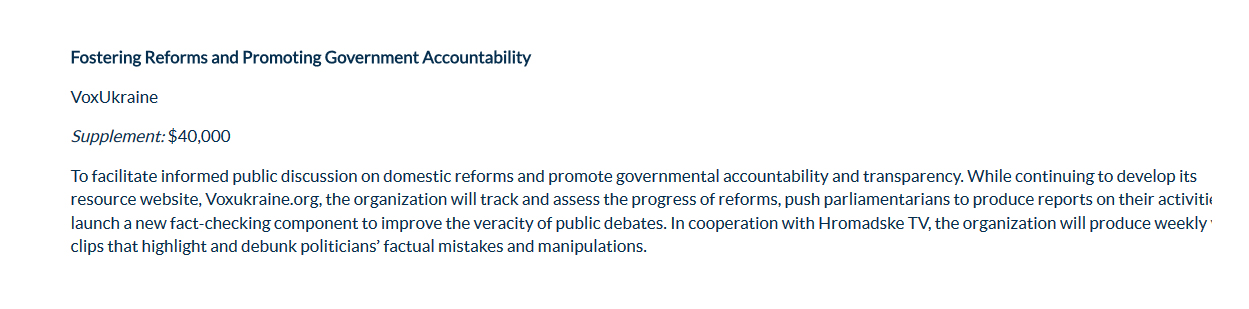
VoxCheck receives substantial monetary assistance from the U.S. government through both the NED and the U.S. Embassy. It is also funded by the Dutch and German governments. Incomplete NED records show VoxCheck receives substantial yearly grants and has accepted around $250,000 in total.

That sort of money goes an extremely long way in Ukraine, which is by quite some way the poorest nation in Europe. The country’s GNI per capita of $3,500 per year is well below that of even Russia, which stands at $10,700. One $15,000 NED grant given to a Ukrainian media foundation, for instance, was enough to pay for over 100 articles to be written.

Despite its funding, Western media portray VoxCheck extremely positively. The Washington Post, for example, describes them as “a small group of independent fact-checkers.” In common parlance, the word “independent” is usually reserved for any media group not owned or funded by governments (as if that is the only type of dependence). But even at this extremely low bar, VoxCheck falls.

In the article, the Washington Post describes VoxCheck’s fact-checking process, which largely consists of “sourcing credible news sources – such as a BBC article,” and then labeling Russian claims as false on this basis. In other words, the official state mouthpiece of the British government – one that was instrumental in promoting the lies which led to the invasions of Iraq and Libya – is considered sacrosanct.

What comes across in the Post’s glowing exposé is that VoxCheck staff have few pretensions about being neutral and see themselves as digital foot soldiers in a crusade against Russia. As one employee said, the mission is to “prevent someone from falling into Russian lies and manipulation.” Indeed, one of the staff quit his job to volunteer for the Ukrainian Army. Other VoxCheck employees revealed that they felt guilty for not doing so themselves and only contributing virtually to the fight.

Of course, Russia has lied constantly during this war; the entire invasion was based on a lie. Throughout the winter, Russian officials consistently repeated that they had no intention of invading Ukraine. Russian media, meanwhile, claimed that President Zelensky had fled the country in the wake of the invasion. But in war, all sides lie. And when a fact-checking operation constantly critiques only one side and stays largely quiet about the other, it has clearly taken a side in the conflict and is therefore acting in a partisan fashion. People interested in thinking critically should be scrutinizing claims made by all sides.

FACT CHECK GEORGIA

Fact Check Georgia describes itself as “an independent and non-partisan website which offers readers researched, verified and evidence-based information.” Yet it is bankrolled by a litany of dubious organizations, including the NED and the U.S. Embassy, the German Marshall Fund, the Dutch government and the European Endowment for Democracy, a European government-funded “private” organization explicitly modeled on the NED.

Fact Check Georgia’s independence is potentially undermined by the fact that at the bottom of every page of its website, it displays the crests of both the NED and the U.S. Embassy in Georgia. This is accompanied by the disclaimer, “The views and opinions expressed on this website belong to Factcheck.ge and are not the views and opinions of project support organizations” – a sentence that would not be necessary to attach if an organization was truly independent.

Furthermore, some of its staff have notable backgrounds. The first person listed on Fact Check Georgia’s “our team” section was formerly the Deputy Minister of Defense for Georgia – a country that fought a war against Russia in 2008.

MYTH DETECTOR

Another Georgia-based company, Myth Detector, was funded by the U.S. Embassy to the tune of €42,000 in financial year 2021. German state broadcaster Deutsche Welle contributed €41,000. Also donating €41,000 last year, according to Myth Detector’s financial report, is a group called “Zinc.” This is quite possibly the Zinc Network, a shadowy intelligence firm that conducts information warfare operations on behalf of the U.K. and U.S. governments.

DEMAGOG

Not only is the U.S. Embassy in Poland funding Demagog, it is also carrying out training in how to think. Demagog’s website notes that the embassy established a “fact-checking academy” on “how to deal with false information.” “Thanks to the [embassy] cooperation,” it notes, “classes were conducted for students and teachers on fake news, reliable sources of information and fact-checking.”

Alongside the U.S. government, Demagog also receives money from Polish government, European Union and European Economic Area organizations.

Together, these five organizations’ operations are all directly bankrolled by Washington. However, many of the other fact-checking groups Facebook pays to serve as content police on their platform have similarly close connections to Western state power. Indeed, the only one of the nine that appears relatively free from direct government collaboration is self-funded outlet Lead Stories.

PATIKRINTA 15MIN

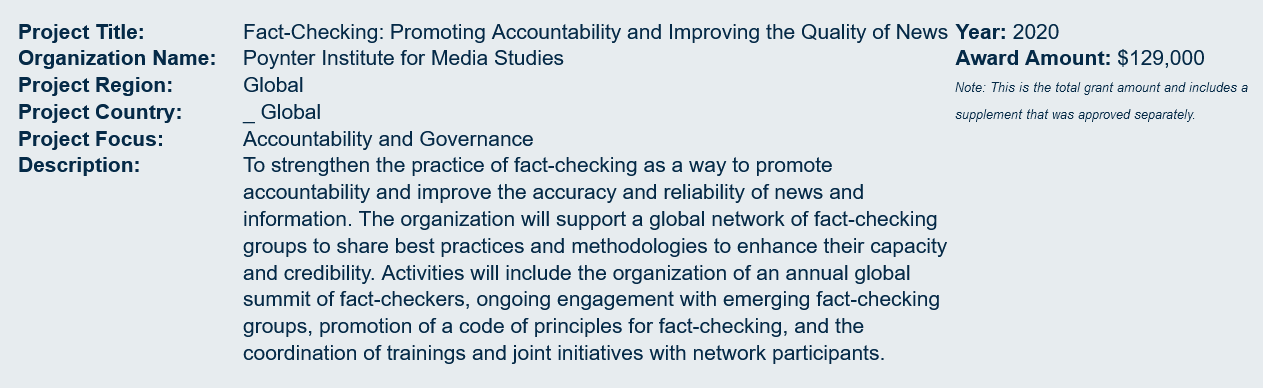
Lithuanian outlet Patikrinta 15min insist that they are an independent, non-partisan group. As their “About” section states: “Sponsors of Patikrinta 15min cannot be political parties, politicians, state organizations or companies or organizations related to politicians.” They do, however, accept funding from the Poynter Institute, the journalism group that owns U.S. fact-checking organization Politifact. Since 2016, the Poynter Institute has sought for and received at least seven grants from the National Endowment for Democracy, totaling well over half a million dollars.

Notably, some of these grants are clearly a way of funneling cash to Eastern European fact-checking groups. As one NED grant summary for $78,000 notes, the goal of the money is to “promote the use of fact-checking websites as an effective accountability tool in Central and Eastern Europe, and strengthen the global fact-checking community.” The NED goes on to note that Poynter will bring over 70 journalists to a training summit and afterward continue to “train” “mentor,” “support,” and help them and their organizations with “capacity building.”

A cynic might conclude that the NED was simply trying to launder its money through Poynter. MintPress asked Patikrinta 15min to confirm or deny whether they were one of the Eastern European groups mentioned in the NED filings but has not received a response.

Like other groups, Patikrinta 15min’s non-partisan veneer frequently slips. This can be seen in headlines such as “Russian cynicism knows no bounds” and the fact that they frequently defend Nazi groups like the Azov Battalion.

Like StopFake, n 15min has argued that Azov’s use of the Waffen SS symbol is coincidental. It also presented Azov as an apolitical organization and has used quotes from Azov founder Andriy Biletsky – possibly the world’s most infamous living neo-Nazi – as “proof” that charges against it are Russian disinformation.

RE:BALTICA

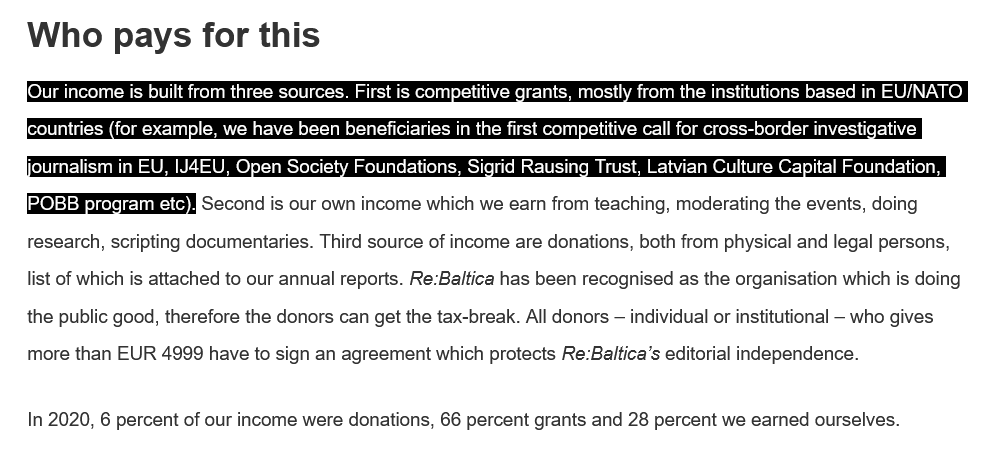
While there is no evidence that Re:Baltica has a financial relationship with the United States government, the lion’s share of its funding still comes from the West. As they note on their website, around two-thirds of their funding comes “from the institutions based in EU/NATO countries.” They also list “the Kingdom of the Netherlands” as one of their “friends” – i.e., donors.

Re:Baltica is generously funded by western govt’s and NGOs, including George Soro’s Open Society Foundation

DELFI

Delfi is a major web portal in Eastern Europe and the Baltic. The company does not disclose if it receives foreign funding. It does, undeniably, however, have a close relationship with the NED. In 2015, Delfi interviewed Christopher Walker, a senior NED manager about the best way they could counter Russian propaganda. Two years later, NED President Gershman addressed the Lithuanian parliament, revealing that his organization had,

[W]orked with Lithuania in countering Russian efforts to subvert and destroy democracy in Lithuania, in Europe, and in Russia itself. We have supported the work of the Lithuania-based Delfi and the East European Studies Center in monitoring, documenting, and combatting Russian disinformation in Lithuania and the Baltic states.”

Later that year, Delfi teamed up with the NED to hold the 1st Vilnius Young Leaders Meeting, whereby handpicked young activists were invited to rub shoulders with journalists and spooks from across Europe and the United States, in the hope of building up a Western-friendly force in civil society.

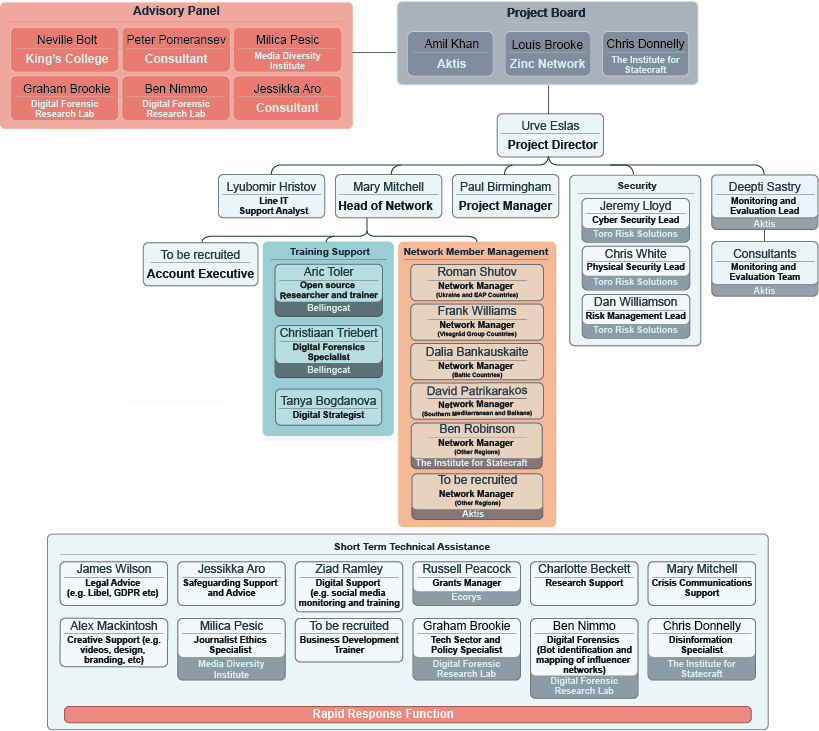
Delfi, Re:Baltica and StopFake were all identified as proposed members of a “counter”-propaganda network hoping to be established by the EXPOSE Network. EXPOSE was allegedly a secret U.K.-government funded initiative that would have brought together journalists and state operatives in an alliance to shape public discourse in a manner more conducive to the priorities of Western governments.

As EXPOSE wrote, “An opportunity exists to upskill civil society organizations around Europe, enhancing their existing activities and unleashing their potential” to be the next generation of activists in the fight against Kremlin disinformation.”

“Coordinat[ing] their activities,” wrote EXPOSE, “represents a unique opportunity” for the British government in their fight against Russia. Unfortunately, they lamented, StopFake’s “monomaniacal fixation” on Russia had hurt its credibility.

Remarkably, EXPOSE also wrote that, “Another barrier to combating disinformation is the fact that certain Kremlin-backed narratives are factually true” – an admission that underlines that, to many governments and media outlets, “disinformation” is rapidly coming to simply mean “information we disagree with.”

The names of those individuals listed as potential employees of this network are a who’s who of state-linked operatives, including the Zinc Network, multiple individuals from NED-funded investigative journalism website Bellingcat and Ben Nimmo, a former NATO spokesperson who is now head of global intelligence for Facebook.

FACEBOOK’S CYBER WAR

Nimmo is only one of a great many former state agents now working in the higher echelons of Facebook, however. Last month, MintPress published a study revealing that the Silicon Valley giant has hired dozens of ex-CIA personnel into influential positions within the company, especially in security, content moderation and trust and safety.

Given how influential Facebook is as a media and communications giant, this sort of relationship constitutes a national security issue to every other country in the world. And this is not a hypothetical threat either. In November, Nimmo led a team that effectively attempted to swing the Nicaraguan elections away from the ruling Sandinista party and towards the U.S.-backed candidate. In the days leading up to the election, Facebook deleted hundreds of accounts and pages of pro-Sandinista media.

This action underlines the fact that Facebook is not an international company existing only in the ether, but an American operation bound by American laws. And increasingly, it is moving closer to the U.S. government itself.

WHO WILL GUARD THE GUARDIANS?

Fake news abounds online, and we as a society are wholly unprepared to counter it. A study conducted by Stanford University found that the vast majority of people – even the digitally savvy youth – were unable to tell factual reporting from obvious falsehoods online. Many will fall for Russian propaganda. Russian media is indeed pumping out misleading information constantly. But so are NATO countries. And if the fact-checkers who have volunteered to sort truth from fiction for us relentlessly attack Russia but are quiet on their own side’s spin, many more will fall for Western propaganda.

The implicit outlook of many of these fact-checking groups is that “only Russia lies.” This is the position of a partisan organization, one that cares little about truth and more about imposing control over the means of communication. And this is all being done in the name of keeping us safe.

Who is fact-checking the fact-checkers? Unfortunately, it is up to small, independent media outlets to do so. However, MintPress has faced constant suppression for doing so, being blocked from communicating with our 400,000+ Facebook followers, suppressed algorithmically by the Silicon Valley giants, and being removed from financial transaction services like PayPal. The solution is to teach and develop critical media literacy. All media outlets have biases and agendas. It is up to the individual to learn these and constantly scrutinize and evaluate everything they read. However, governments do not want their populations thinking critically; they want their message to be dominant, one reason why the NED has been quietly bankrolling so many fact-checking organizations to do its work for it.
Newsweek: Ukraine Violates War Laws, Endangers Civilians: Amnesty International

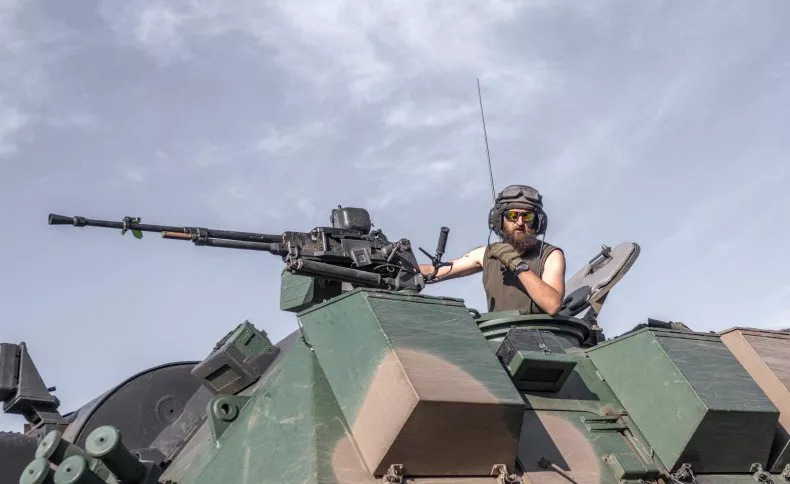
A Ukrainian soldier is pictured in an armored vehicle on the outskirts of Bakhmut, eastern Ukraine, on July 30, 2022.BULENT KILIC/AFP/GETTY

By Aila Slisco, Newsweek, 8/3/22

Amnesty International has accused Ukraine of war crimes during its ongoing military conflict with invading Russian forces.

The humanitarian organization said in a release on Wednesday that the Ukrainian military’s tactics “violate international humanitarian law and endanger civilians” by operating weapons out of bases established in residential areas while civilians are present.

Russia has previously been accused by Amnesty International of violating multiple international laws during the war. The organization on Wednesday said that Ukraine’s alleged violations “in no way justify Russia’s indiscriminate attacks.”

“We have documented a pattern of Ukrainian forces putting civilians at risk and violating the laws of war when they operate in populated areas,” Amnesty International Secretary General Agnès Callamard said in a statement. “Being in a defensive position does not exempt the Ukrainian military from respecting international humanitarian law.”

While conducting an investigation of Russian attacks in the Kharkiv, Donbas and Mykolaiv regions of Ukraine between April and July, Amnesty International researchers said they discovered that the Ukrainian military was operating out of civilian buildings in at least 19 towns and villages. The discovery was corroborated by satellite images, according to the release.

The organization said that Ukraine committed “a clear violation of international humanitarian law” by basing at least five military facilities in civilian hospitals. Russian airstrikes on health care facilities have resulted in a significant number of civilian injuries and deaths during the war, according to the World Health Organization.

Amnesty International also discovered that Ukraine had installed military bases in 22 out of 29 schools visited in the Donbas and Mykolaiv regions during the investigation, according to the release. The organization said that Russia later launched strikes on many of the same schools between April and late June, resulting in multiple deaths and injuries.

Following the destruction of schools in at least three towns, Ukraine’s military is accused of moving bases to schools in different areas, putting the community surrounding the new bases at risk for similar attacks.

While the bases in schools may not themselves be in violation of international humanitarian law because the schools were not in session, the organization said that Ukraine put bases in schools near houses and apartment buildings without warning the residents or helping them to evacuate.

In some instances, the laws of war dictate that schools and hospitals can become legitimate targets for military attacks, according to the International Committee of the Red Cross.

Amnesty International said that its investigation “does not in any way justify indiscriminate Russian attacks,” while urging the Ukrainian military to “distinguish between military objectives and civilian objects and take all feasible precautions” and immediately stop operating out of civilian-populated areas.

“The Ukrainian government should immediately ensure that it locates its forces away from populated areas, or should evacuate civilians from areas where the military is operating,” Callamard said. “Militaries should never use hospitals to engage in warfare, and should only use schools or civilian homes as a last resort when there are no viable alternatives.”

Amnesty International said that it notified the Ukrainian government about the findings of its investigation on July 29 but had not heard back as of Wednesday.

Newsweek reached out to the Embassy of Ukraine in Washington, D.C., for comment.

Read the Amnesty International release here.

Gordon Hahn: REGIME INSTABILITY IN KIEV?

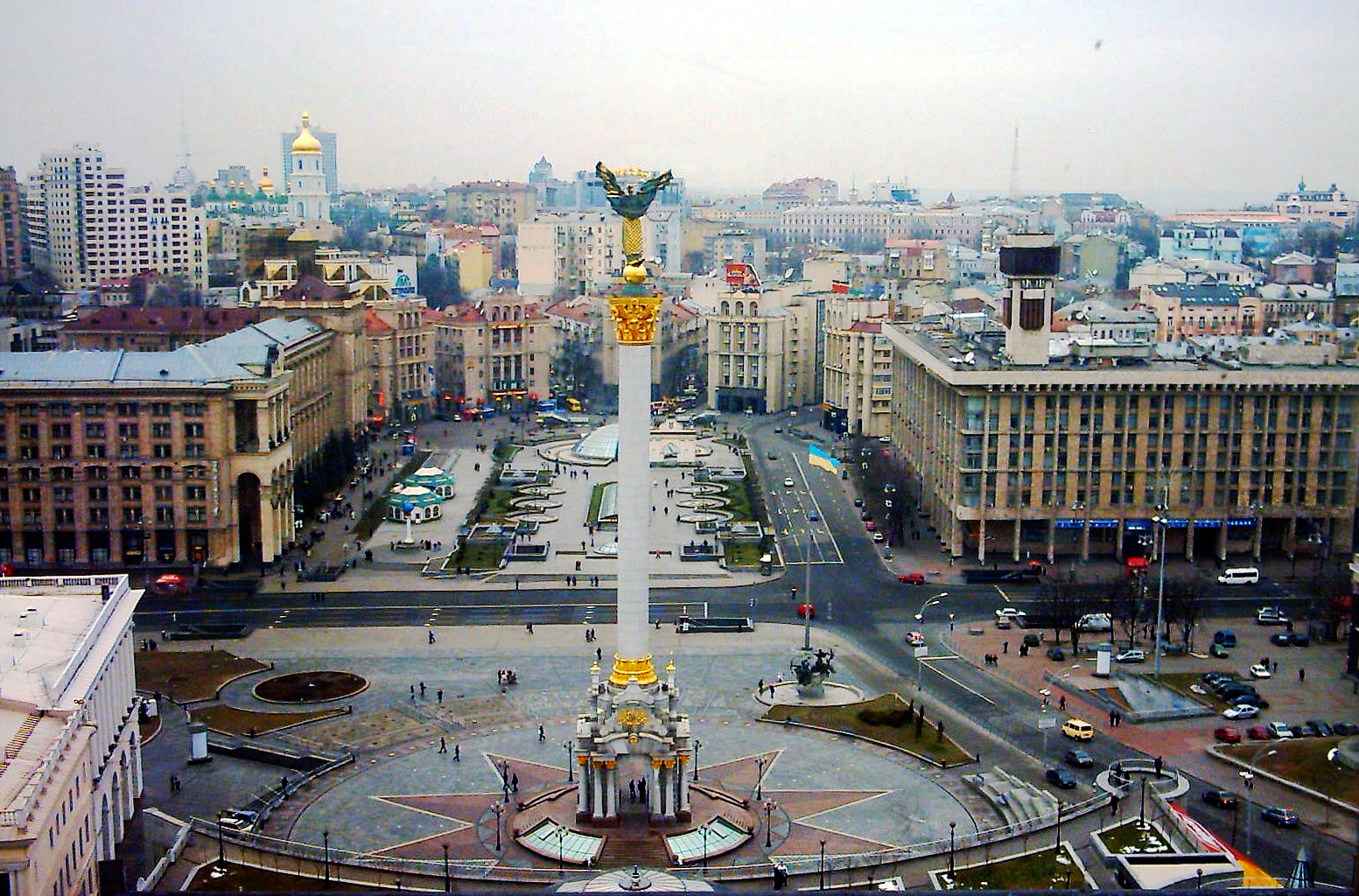
Maidan Square in Kiev.

By Gordon Hahn, Russian and Eurasian Politics Blog, 7/29/22

Western leaders, led by US President Joe Biden, have opted for an eternal proxy war against Russia at least until Ukraine ‘wins’ the war started when Russian forces invaded its western neighbor on February 24th. Biden let the cat out of the bag when he stated the goal of massive Western military and financial assistance to Kiev is to spark regime change or at least the the removal from power of Russia’s popular, if authoritarian president, Vladimir Putin. However, as Ukraine’s military forces are slowly whittled away, there is a growing evidence of major regime splitting, a precondition for military or state coups, revolts, revolutions, and other forms of regime change.

The destabilization of the Maidan regime can be expected extrapolating from some factors and is being increasingly evidenced by several others. The expectation of destabilization is supported by: (1) the historical pattern of military defeats leading to regime destabilization and sometimes state coups or revolutions and (2) Zelenskiy’s actually weak popular support. Evidence of regime destabilization is can be seen in the state’s growing authoritarianism and in splits within the regime’s elite. These trends will only deepen as Kiev faces further military defeats and perhaps collapse of the Ukrainian army and affiliated neofascist dominated national battalions, likely candidates to organize a coup or societal uprising.

Military defeat is often a death knell for political leaders, regimes (types of rule), and even states. To find evidence of the volatility caused by military defeat one need go no further than local history in and around Ukraine, whether as part of Imperial Russia or the USSR. Russia’s defeat in the 1904 Russo-Japanese War led to violent social upheaval in the ultimately failed but widespread and nearly successful 1905 ‘revolution’ that forced regime transformation-like changes such as the installment of a parliamentary State Duma, free elections to the Duma, and the declaration and implementation of many civil, political, and human rights. Russia’s military failure in World War I led to the February 1917 Revolution. In summer 1917 the failed ‘Kerenskiy Offensive’ and the Germans’ march on St. Petersburg led to the collapse of Alexander Kerenskiy’s quasi-republican Provisional Government and the successful Bolshevik coup in October. The turmoil in Ukraine during the revolution, coup, and civil war of 1917-1921 was a devilishly dizzying whirlwind of chaos and violence brought forth by a myriad of competing warlords, ideologies, and movements, perhaps a foretaste of the future in today’s Ukraine. The failures of Soviet troops in Afghanistan in the early 1980s, leading to their subsequent withdrawal in 1985, was an important factor in the Soviet communist Party-state regime’s decision to move towards reforms, Mikhail Gorbachev’s perestroika, which ultimately led to the collapse of both the Soviet party-state regime and the breakup of the Soviet Union that produced today’s independent Ukrainian state. There can be little doubt that Russia’s February invasion casts doubt on and may very well have been intended by Russian President Vladimir Putin to destroy the Maidan regime’s weak legitimacy, stability, and viability.

The Maidan regime had limited legitimacy from the start. One needs only recall its founding act – the 20 February 2014 Maidan sniper’s massacre – which saw the neofascist wing of the Maidan movement fire on the security forces of Viktor Yanukovych’s corrupt administration but more importantly also on the Maidan demonstrators themselves. The knowledge within elite circles of the truth of this false flag operation has been a hidden landmine that could explode the Maidan regime at any moment. Indeed, during his presidential campaign now sitting Ukrainian President Volodomyr Zelenskiy himself referred cryptically to the Maidan regime’s illegitimacy and the snipers’ terrorist attack. In an apparent cryptic reference to his opponent, President Petro Poroshenko (who actually may have opposed the shootings) and the snipers’ massacre of 20 February 2014, Zelenskiy commented: “People whom came to power on blood are profiting on blood” (www.pravda.com.ua/news/2019/02/26/7207718/). Later, he decried the ‘disappearance of documentation regarding the massacre (https://interfax.com.ua/news/political/640586.html?fbclid=IwAR0K4kGEZPEfsmOQActT7UXn3A3yRBmawO5MuqcYe6OiIEQMa_JbxrZOHuU). It was such seeming candor that led to Zelenskiy’s landslide election to the Ukrainian presidency. Some day it may get him killed, and Ukraine’s neofascists are first on the list of possible perpetrators.

At the same time, we often hear that President Zelenskiy’s popularity ratings have attained Putinian levels since the Russian invasion. This, however, must be unpacked a bit to provide a clearer and deeper picture. On the war’s eve, the Zelenskiy administration was extremely weak as was Ukraine’s overall state apparatus, divided by contentious political, ideological, oligarchic and criminal factions. The entire Ukrainian polity by then was opposed to Zelenskiy. His popularity ratings had plummeted to 25-30 percent. According to polls on the war’s eve, Zelenskiy would receive 23 percent and his predecessor on Bankovaya, Petro Poroshenko – 21 percent. Zelenskiy’s ‘Servants of the People’ or ‘Slugy naroda‘ party led all parties with 19 percent, but that is compared to 70 percent when the Rada was elected and 14 percent for Poroshenko’s ‘European Solidarity’ party (http://www.kiis.com.ua/?lang=ukr&cat=reports&id=1090&page=1&fbclid=IwAR0-qs5D-9Hli6YNeKunjtR9N-cAnTSISnB2vn5ot3PXmvd4Q5YGoqFxJwA). This means that Zelenskiy’s present wartime high popularity ratings are almost certainly thin and therefore highly vulnerable to the continuing stream of bad news from the front, despite Zelenskiy’s tightening of the screws on and manipulation of information on the situation at the front. Moreover, Zelenskiy is certainly giving the impression of being in and in fact seems very involved in the formulation of Ukraine’s war strategy. He makes frequent public military and strategic announcements and nightly reports on the front and geopolitical situation. This forward-leaning position makes the president even more vulnerable to the political risks surrounding military failure. There is and will be plenty more bad news.

Before the war, media manipulation, outright disinformation, and lies have been a hallmark of the actor/producer Zelenskiy’s regime—a regime filled with producers, scenario writers, and PR professionals. Zelenskiy’s masking of reality with the by now ubiquitous postmodernist virtuality and ‘strategic communication’ falsehoods are being exposed and exacerbate the delegitimizing effect of the war. Virtual simulacra, however, is absent when it comes to the Maidan’s growing authoritarianism both before the war as Zelenskiy’s ratings sunk and after the war as a knee jerk reaction to the threat to regime stability posed by the war.

Before the war, Zelenskiy had proven expert at alienating every political force in the country from his team and his ‘Slugi naroda’ party, named after his hit television program about a Ukrainian president. Zelenskiy banned opposition television stations, his prosecutors indicted former President Petro Poroshenko with treason and put him under de facto house arrest, he refashioned the Supreme Court in violation of the Ukrainian constitution, and he signed laws discriminating against the Russian language and effectively banning oligarchs from politics. The only part of the political spectrum he was able to find a modus vivendi with was Ukraine’s more prominent neofascist parties. For example, neofascist founder of the extremist Right Sector, party, commander of the semi-autonomous Ukrainian Volunteer Army, and mastermind of the 2 May 2014 Odessa terrorist pogrom Dmitro Yarosh became an official advisor to the Chief of the General Staff of the Ukrainian Armed Forces on Zelenskiy’s watch.

After the war began, Zelenskiy placed all television channels under a single command with uniform broadcasting that offered hardly any dissenting voices. He banned all opposition parties except Poroshenko’s sufficiently nationalist ‘European Solidarity’ party as well as the numerous if small ultranationalist, neofascist. The parties banned were: the Opposition Party — For Life, Shariy Party, Nashi, Opposition Bloc, Left Opposition, Union of Left Forces, State, Progressive Socialist Party of Ukraine, Socialist Party of Ukraine, Socialists Party and Volodymyr Saldo Bloc. “Any activity of politicians aimed at splitting or collaborating will not succeed,” Zelensky explained (https://news.yahoo.com/ukraine-ban-11-political-parties-141310973.html?fr=sycsrp_catchall). But Zelenskiy has been playing with fire, since the radical parties have been preparing to seize power in a ‘nationalist revolution’ ever since the first sniper salvos echoed across the Maidan. The war may provide the opportunity for a coup as the Zelenskiy administration helps establish authoritarianism for the neofascists and as mounting defeats and retreats at the front undermine the Maidan regime’s legitimacy.

There are unmistakable signs of growing factionalization, polarization, and splitting within the Ukrainian elite, prompting Zelenskiy to take authoritarian countermeasures. The most recent sign of the growing rifts was the publication by a former Rada deputy close to Zelenskiy, Sergei Leshchenko, of a draft presidential decree that would strip Putin’s {sic] [I think the author meant to say Zelensky – NB] business and political patron Ihor Kolomoiskii of his citizenship. Wanted for various crimes in the US, Kolomoiskii ran afoul of Zelenskiy’s predecessor, Poroshenko, and was stripped of his main holding, Privat Bank. In addition to Kolomoiskii, Hennadii Korban and two others were included in the same draft decree. Korban, like Kolomoiskii was a patron of the neofascist volunteer battalions manned by Right Sector and other neofascist types during the first Donbass war that have recently morphed into the Ukrainian Volunteer Army and National Korpus. Thus, Yarosh signed a petition along with 115 other members of the Ukrainian elite, including the powerful mayor of Kiev Vitaliy Klitchko, addressed to Zelenskiy to refrain from taking such an action against Korban (and by implication Kolomoiskii as well) on the grounds that such an action violates the constitution (https://www.facebook.com/dyastrub/posts/pfbid0vA6f26FMacYCyPwpmvtUhhLUqiLRwrRsk3kNcXUYvKo6BejDtagx9frbQcMpF4pgl). This episode can be another exacerbating Zelenskiy’s sometimes testy relations with the ultranationalists and neofascists even before the war.

Office of the President spokesman Alexei Arestovich’s ineffective often flagrantly absurd and outrageous strategic communications, including numerous fake news stories about the war, have discredited the military and civilian leaderships and signaled possible early development of a rift between them (https://gordonhahn.com/2022/04/15/kvartal-22-zelenskiys-simulacra/). Since spring, there have been rising tensions reported between the civilian and military leadership, as the Russian withdrawal from north of Kiev led to a new strategy and centralized focus on the Donbass eastern front and Novorossiya southern front along the Azov and Black Sea coasts. Russia’s capture of the Azov seaport of Mariupol’, the exposure of war crimes by the neofascist Azov Battalion, and the long Russian siege of the Azovstal’ Steel Plant where Azov fighters held out and pressured the regime and military to send forces to break them out from the Russian encirclement created civil-military tensions and scapegoating and exacerbated regime tensions with the neofascists. During the siege of Azovstal’ that sealed the fate of Mariupol, the deputy commander of the neo-fascist Azov Battalion fighters there criticized politicians like Arestovich who warned the Azovtsy to “mind their own business.” There was widespread dismay across the Ukrainian social net that the civilian authorities were not doing enough to break the encirclement either militarily or through negotiations (https://strana.news/articles/390297-ukrainskaja-oppozitsija-obvinjaet-ofis-prezidenta-v-dopushchenii-okkupatsii-territorij-ukrainy.html). The Ukrainian Defense Ministry’s statement that a military operation to break the Azovstal’ encirclement was not possible could be seen by some to have been the result of the generals’ breaking under civilian pressure (https://strana.news/news/390472-v-minoborony-schitajut-chto-azovstal-nevozmozhno-deblokirovat-voennym-putem.html).

Civil-military tensions became more generalized in early May. Arestovich openly criticized the military leadership, referring to “criminality” and “treason” that need to be investigated and punished. Indeed, he criticized the entire state bureaucracy in response to charges of incompetence at the presidential level: “And 360 thousand bureaucrats between us and the land? They are who? Do they have anything to answer for? And the military command, to which there are already many questions?” Voices representing the military and indicted opposition leader, former president Poroshenko, shot back, criticizing Arestovich and other civilian critics. One military voice reported to be close to chief of the Ukrainian armed forces general staff Zalyuzhniy asserted: “Hundreds of killed and wounded men and women every day are securing (your) tasty coffee in sunny Kiev. Every day. And to search today for someone to blame among them is far from the best idea. The guilty are not in the army, though there are some who can answer for something, the guilty are in the high offices that formed the budget policy and determined who would serve in key posts.” One Ukrainian journalist predicted that if the Office of the President continued to criticize the military, the consequences for the critics would be “devastating” (https://strana.news/articles/390297-ukrainskaja-oppozitsija-obvinjaet-ofis-prezidenta-v-dopushchenii-okkupatsii-territorij-ukrainy.html).

In early June, Zelenskiy and commander of the Ukrainian Armed Forces Viktor Zalyuzhniy differed over the timing of withdrawal from Severodonetsk and where to form a new defensive line against the Russian offensive in Luhansk and Donetsk Oblasts. Zelenskiy demanded that the army hold out as long as possible in Severodonetsk and creating a defensive line close to the city, risking encirclement of thousands of troops, while Zalyuzhniy called for puling back forming a defensive line running north-south through Kramatorsk (https://strana.news/news/394302-zelenskij-prokommentiroval-situatsiju-v-severodonetske.html?fbclid=IwAR0aJ4UE07ep1mLoeV1tsI48kqicxIX_uvcLFnPnnC7cWFsObmyHh28RF9w).

The civilian leadership is further plagued by defections and corruption in the intelligence and law enforcement organs. On July 17th Zelenskiy fired the head of Ukrainian Security Service (SBU) Ivan Bakanov and Ukraine’s Prosecutor General Irina Venediktova, blaming them ostensibly for the large number of defections to Russian among security and law enforcement officials. He announced that “651 criminal proceedings were registered for high treason and collaboration activities by employees of the prosecutor’s office, pre-trial investigation bodies, and other law enforcement agencies. In 198 criminal proceedings, persons were noted for suspicion, and more than 60 employees of the bodies and the SBU remained in the occupied territory and are working against our state.” The firings were apparently a response to what Zelenskiy called “an array of crimes against the foundations of the national security of the state and the connections recorded between the employees of the law enforcement agencies of Ukraine and the special services of Russia.” Bakanov’s assistant and former head of the Crimean SBU Oleg Kulinich was arrested for espionage (https://strana.news/news/399930-zelenskij-rasskazal-ob-uvolnenijakh-venediktovoj-i-bakanova-video.htmlhttps://strana.news/news/399927-zaderzhanie-eks-hlavy-sbu-kryma-i-konflikt-s-ermakom-podopljoka-otstavki-bakanova.html, and https://vesti.ua/strana/est-sereznye-voprosy-prezident-obyasnil-kadrovye-resheniya). The next day Zelenskiy fired 28 SBU officials (https://strana.news/news/400073-zelenskij-nameren-uvolit-28-sotrudnikov-sbu-video-18-ijulja.html). On July 20th, Zelenskiy fired the SBU’s deputy head and the SBU regional heads in Kharkiv, Sumy, and Poltava. The seriousness of this crisis cannot be overstated. Bakanov and Zelenskiy are friends going back to the same neighborhood in the city of Kryvyi Rih. Bakanov then ran Zelenskiy’s entertainment company as well as his presidential campaign in 2019. Then Zelenskiy appointed Bakanov to lead the SBU in 2019. It may be that at least some of these firings are the result of a failed intelligence operation to convince several Russian pilots to defect with the warplanes, for which seven Russian military men were arrested, as announced on July 25th. The Russian reports claim that in the process the Ukrainian intelligence operatives’ talks with the Russian pilots, apparently monitored by Russian intelligence, the location, structure, and other details of Ukraine’s air defense system were revealed to Russia. But most are the result of the defections to Russia Zelenskiy noted; something that would hardly be chosen as an alibi to cover the failed operation or something else, as it greatly discredits his administration if not the Maidan regime itself.

Foreign actors, most notably the United States, can complicate the polarized multi-level chess game that Ukrainian politics is becoming in the heat of this war. On July 8th, less than three weeks before the SBU and other siloviki firings, Ukrainian US Congresswoman Victoria Spartz requested the Biden Administration “to brief Congress on the performed due diligence and oversight procedures related to President Zelensky’s Chief of Staff, Andriy Yermak, at the scheduled classified congressional oversight briefing on July 12, 2022. Based on a variety of intelligence and actions by Mr. Yermak in Ukraine, Congress needs to obtain this information urgently.” Spartz emphasized that Yermak’s activity “raises many concerns with a variety of people in the United States and internationally,” though Yermak is “highly regarded” by Biden’s National Security Advisor Jake Sullivan. Spartz’s reference to “intelligence” actions supposedly taken by Yermak suggests that Zelenskiy’s chief of staff may be suspected of botching or directly undermining security, including around the operation to co-opt Russian air force pilots along with their planes (https://spartz.house.gov/sites/evo-subsites/spartz.house.gov/files/evo-media-document/Spartz%20Letter%20to%20Biden_Yermak%20_red.pdf). Recall that there were similar charges made against Yermak when Ukrainian intelligence’s effort to capture Russian Wagner fighters headed to Syria went awry in 2021 and they instead were ‘detained’ in Belarus after Zelenskiy cancelled the operation and Yermak tipped off Belarussian authorities of the Wagner personnel’s presence in their country (https://uawire.org/ukrainian-journalist-accuses-zelensky-s-administration-head-of-derailing-special-operation-to-detain-wagner-mercenaries).

In addition to the civil-siloviki tensions and the grave political consequences of banning more than ten political parties and presumably all of Ukraine’s powerful oligarchs from politics, Zelenskiy created a new cohort of enemies when he announced plans to be implemented this year to reduce the Ukrainian state bureaucracy by two-thirds. This will put hundreds of thousands of embittered officials with intricate knowledge of state organization, function, and financing out of work and on the streets looking for jobs in a war-torn country that has mobilization legislation requiring all able-bodied male citizens to serve in the armed forces, with legislation bringing women into the equation supposedly pending. These outcasts retain contacts with former colleagues in the bureaucracy and can carry out intrigues to undermine Zelenskiy, his policies, and the regime itself.

Although it may be early to conclude a high level of civil-siloviki tensions, the same cannot be said of the political struggle between Zelenskiy and former president Poroshenko and with other oligarchs. Poroshenko could be a particularly dangerous opponent. He had good relations with Biden when the latter was US vice president and led Obama’s Ukraine policy and is backed into a corner having been indicted and forced to flee abroad. His supporters remain in country, and Zelenskiy’s thin support and purge of the political landscape has created a plethora of enemies, whom Poroshenko can win over or buy off. An exacerbated Zelenskiy-Poroshenko conflict could draw in General Zalyuzhniy. He has frequent contacts with Washington and Brussels who some day might tire of Zelenskiy as the war drags on. All this becomes a likely explosive dynamic, if the situation at the front continues to deteriorate for Ukraine. Add into this mix the pro-Russian factor (in the broad sense that encompasses pro-Russian language sentiment, Russian ethnic claims to a right to live in and shape Ukraine, as well as pro-Russia sentiment), invigorated by the arrest of the pro-Russian Opposition Bloc leader Medvedchuk, and there is the real risk of a repeat of the country’s collapse through coup or revolution into warring factions as occurred post-1917 (https://strana.news/articles/analysis/392270-pokazanija-medvedchuka-na-poroshenko-naskolko-verojaten-arest-pjatoho-prezidenta.html). In this case, regions could devolve to the control of modern warlords representing these various trends backed by oligarch and various interested outside parties.

Then mix in as well the neofascists’ separate game of national revolution and their anger over the death and capture of the core of the neofascist Azov Battalion and continuing battlefield losses in general. Arestovich alluded consciously or unconsciously to this neofascist revolutionary threat, when he noted in May the “not so clever narrative: ‘heroes in the battlefield against traitors in the Office (of the President) and fat, dense generals in the staffs’” (https://strana.news/articles/390297-ukrainskaja-oppozitsija-obvinjaet-ofis-prezidenta-v-dopushchenii-okkupatsii-territorij-ukrainy.html).

Moreover, Ukraine’s GDP will contract by nearly 50 percent this year, and a quarter of Ukrainian businesses have closed down, with Russia seizing the country’s coal, agricultural lands, and seaports, comprising some 60 percent of Ukraine’s economy. Much is being written about the energy crisis in Europe and America as summer turns to fall and temperatures begin to drop. Less attention has been given to the consequences of energy deficits in Ukraine itself. The war-torn country will certainly be cutoff from Russian gas, oil, and coal, and its own coal in Donbass is under Russian control. Its energy sector is on the brink of default as residential and business customers lack the funds to pay their bills. A freezing, hungry nation losing a war will be inclined to blame Zelenskiy and the ‘democratic’ Maidan regime and to follow less than desirable leaders. They will be susceptible to demagogues, and Ukraine’s all too numerous neofascists could fit the bill. The latter are now even better-armed than they were before the war and are praised at home and in the West as heroes who defended Azovstal, Mariupol, Kiev, and Kharkiv. The Ukrainian Volunteer Army of Ukraine’s neofascist Right Sector (the former commanded and the latter founded by advisor to Zalyuzhniy, Dmitro Yarosh), the National Corps (led by founder of Azov, the neofascist Andriy Biletskiy), and other ultranationalist and neofascist groups continue to sacrifice themselves at the front in sharp contrast to those sipping coffee in Kiev and doing photo shoots in glossy Western magazines for women, as the Zelenskiys just did.

To conclude, there is significant evidence that the Russo-Ukrainian war is destabilizing the hybrid republican-oligarchic-ultranationalist Maidan regime–one riven by political, ideological, and oligarchic factionalism from the start. Below the apex of the Maidan’s quasi-republican regime headed by a thinly popular frontman lurks malign forces of oligarchic corruption and criminality and of radical nationalism and neofascism. The war temporarily papered over the ruling groups’ internal divisions, uniting them despite their multifarious interests, goals, and conflicts. However, over time the war and slow moving rout of the Ukrainian military will wear away the thin coat of plaster uniting these groups in their fight against the Russians. At the same time, corruption, criminality, and multi-nationality in Ukraine make the Maidan regime susceptible to infiltration by the Russian state. Moreover, the war along with limited commitment to republican government within the Ukrainian elite are exacerbating the country’s conflictive environment and political culture. Being comprised of competing and increasingly violent oligarchic and ultranationalist clans, Ukrainian culture will be increasingly likely to yield growing intra-national violence and political upheaval. This trend will intensify with particular vigor if or when the war becomes clearly lost and the West begins to abandon the Ukrainian cause or desperately attempt salvage it through a decisive political intervention such as a coup. Numerous coup or revolutionary scenarios are now part of picture, and contingencies should be planned for.

RT: Ukraine asked for POWs to be placed in prison it shelled – Russia

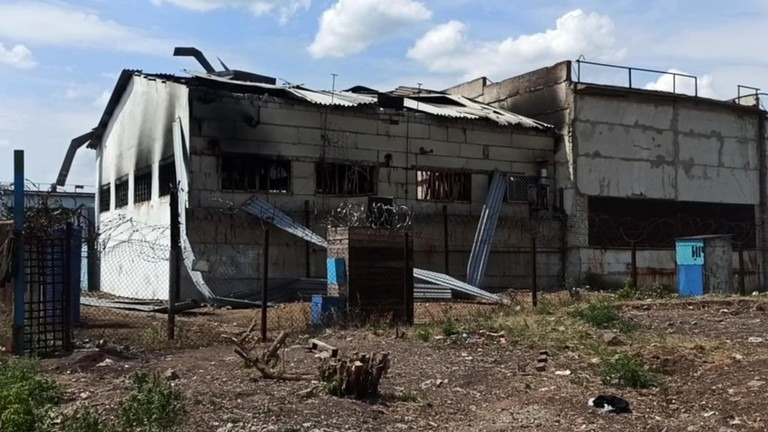
The shelled prison facility in Yelenovka in the People’s Republic of Donetsk. © Sputnik / Russia’s defense ministry

RT, 8/4/22

Russia’s Defence Ministry has accused Ukraine of deliberately targeting a prison in Donbass where it knew dozens of its own POWs were being held.

The Ukrainian authorities were aware that their soldiers, who surrendered to Russian forces at the Azovstal steel plant, were being held at the prison in the village of Yelenovka, as Kiev itself insisted on them being placed there, Russian Deputy Defense Minister Aleksandr Fomin said on Wednesday.

The shelling of Correctional colony No.120 in the Donetsk People’s Republic (DPR) in late July killed 50 inmates and left 73 others wounded. The facility held members of the infamous Azov neo-nazi battalion, who were captured in May after being holed up for weeks at the Azovstal steelworks during the Russian siege of the Ukrainian port city of Mariupol.

“On May 20, 2022, the surrendered servicemen of the Azov nationalist battalion were taken to the pre-trial detention center in the village of Yelenovka. The Ukrainian side insisted on this particular place for their detention,” Fomin said during a briefing for foreign military attachés in Moscow.

Kiev’s attack on the prison was deliberate, with “the Ukrainian leadership giving the order to carry out the missile strike because the Azov fighters started giving testimonies exposing their crimes, including those perpetrated against peaceful civilians,” he insisted.

Another reason for Ukraine hitting Yelenovka was to scare its own troops on the battlefield and “deter them from surrendering,” the Russian defense official said. Many Ukrainian soldiers have been recently laying down their arms, he added.

Aleksandr Fomin denied Ukraine’s “groundless” claims that Moscow struck the prison itself to pin the blame on Kiev, saying all the evidence shows that the missiles came from the north-western direction, where Kiev’s forces were located.

Last week, RIA Novosti news agency cited an unnamed high-ranking Pentagon official, who suggested that if Ukraine did shell the prison in Yelenovka, then it did so unintentionally.

The Russian deputy defense minister insisted that those words were nothing but “a clumsy attempt to justify the provocation by the Kiev regime.”

The attack on the detention facility was carried out with HIMARS multiple rocket launchers, supplied to Ukraine by the US, and the Americans have been claiming that those are “high-precision systems, which hit the targets they were meant to hit,” he said.

Also, in planning its strikes, the Ukrainian military actively relies on space and air reconnaissance data provided by the US and its allies, Fomin added.

In a bid to curb further speculation, the Russian Defense Ministry said on Sunday that it had officially invited experts from the UN and the International Red Cross Committee to carry out an impartial investigation into the incident in Yelenovka.

Russia sent troops into Ukraine on February 24, citing Kiev’s failure to implement the Minsk agreements, designed to give the regions of Donetsk and Lugansk special status within the Ukrainian state. The protocols, brokered by Germany and France, were first signed in 2014. Former Ukrainian President Pyotr Poroshenko has since admitted that Kiev’s main goal was to use the ceasefire to buy time and “create powerful armed forces.”

In February 2022, the Kremlin recognized the Donbass republics as independent states and demanded that Ukraine officially declare itself a neutral country that will never join any Western military bloc. Kiev insists the Russian offensive was completely unprovoked.

Related piece of interest below. Bolding for emphasis is mine. – Natylie

US Department of Defense, July 29, 2022

Senior Defense Official and Senior Military Official Hold a Background Briefing (excerpt)

https://www.defense.gov/News/Transcripts/Transcript/Article/3110921/senior-defense-official-and-senior-military-official-hold-a-background-briefing/

Q: Yeah, thanks. Just one quick follow-up on the prison and then I have an unrelated question.

I know you can’t say definitively what happened but one of the claims is by the Russians that a HIMARS system was used to strike the prison. Can you say definitively that HIMARS were not used?

SENIOR MILITARY OFFICIAL: I don’t know that we can say definitively about any of it. I — but, you know, what I will — and listen, I haven’t seen all of the reporting but I am told that the Russians, you know, have made claims that they have pieces of HIMARS that were used in the strike. Listen, the Russians have a lot of pieces of HIMARS, right?

I mean, the Ukrainians have been, you know, sending a lot of HIMARS their way. So that would not surprise me. What would also not surprise me is if the Russians would — would lead us astray, in terms of information, and tell us that the Ukrainians had done this.

Here’s the last thing I’d say, if it happened to be a Ukrainian strike, I promise you, number one, they didn’t mean to do that, right? They certainly care about their own people and they care about the civilians and military in uniform of their own army.

And then the last piece would be, just from a practical perspective in terms of our conversations, whenever we talk to the Ukrainians, we’ve spent a great deal of time back and forth about, you know, reassuring — or them reassuring us about the loss of land warfare. They clearly understand that.

So anyways, we’ll see where this goes but I would just tell you, as you approach this in your reporting, you know, we’ll find the right side of this but I wouldn’t believe it’s the Russians right away.

Stephen M. Walt: Does Anyone Still Understand the ‘Security Dilemma’?

By Stephen M. Walt, Foreign Policy, 7/26/22

The “security dilemma” is a central concept in the academic study of international politics and foreign policy. First coined by John Herz in 1950 and subsequently analyzed in detail by such scholars as Robert Jervis, Charles Glaser, and others, the security dilemma describes how the actions that one state takes to make itself more secure—building armaments, putting military forces on alert, forming new alliances—tend to make other states less secure and lead them to respond in kind. The result is a tightening spiral of hostility that leaves neither side better off than before.

If you’ve taken a basic international relations class in college and didn’t learn about this concept, you may want to contact your registrar and ask for a refund. Yet given its simplicity and its importance, I’m frequently struck by how often the people charged with handling foreign and national security policy seem to be unaware of it—not just in the United States, but in lots of other countries too.

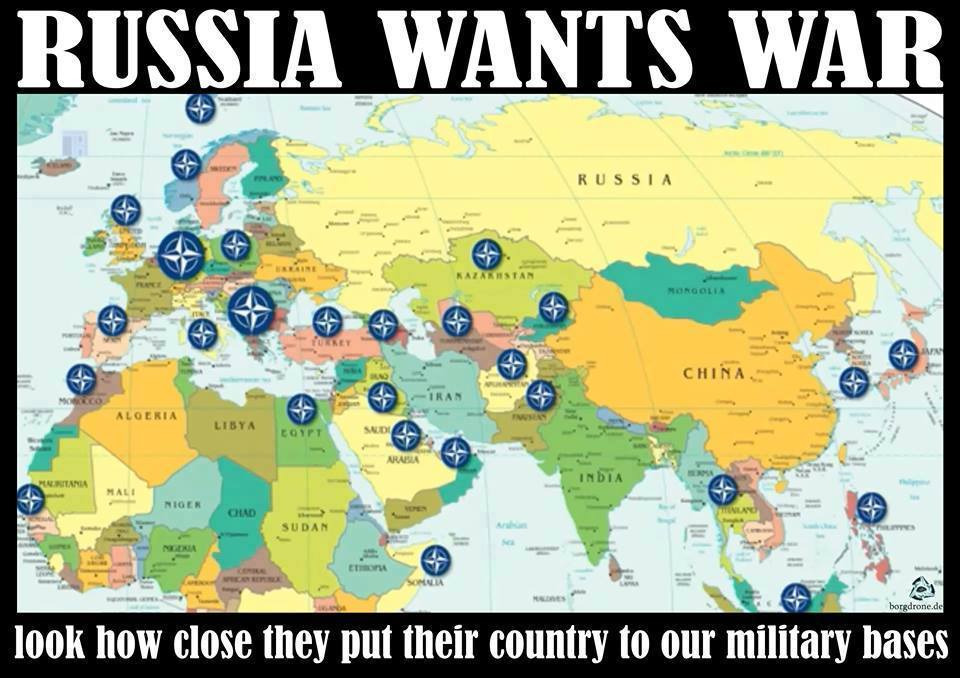
Consider this recent propaganda video tweeted out from NATO headquarters, responding to assorted Russian “myths” about the alliance. The video points out that NATO is a purely defensive alliance and says it harbors no aggressive designs against Russia. These assurances might be factually correct, but the security dilemma explains why Russia isn’t likely to take them at face value and might have valid reasons to regard NATO’s eastward expansion as threatening.

Adding new members to NATO may have made some of these states more secure (which is why they wanted to join), but it should be obvious why Russia might not see it this way and that it might do various objectionable things in response (like seizing Crimea or invading Ukraine). NATO officials might regard Russia’s fears as fanciful or as “myths,” but that hardly means that they are completely absurd or that Russians don’t genuinely believe them. Remarkably, plenty of smart, well-educated Westerners—including some prominent former diplomats—cannot seem to grasp that their benevolent intentions are not transparently obvious to others.

Or consider the deeply suspicious and highly conflictual relationship among Iran, the United States, and the United States’ most important Middle East clients. U.S. officials presumably believe that imposing harsh sanctions on Iran, threatening it with regime change, conducting cyberattacks against its nuclear infrastructure, and helping organize regional coalitions against it will make the United States and its local partners more secure. For its part, Israel thinks assassinating Iranian scientists enhances its security, and Saudi Arabia thinks intervening in Yemen makes Riyadh safer.

Not surprisingly, according to basic IR theory, Iran sees these various actions as threatening and responds in its own fashion: backing Hezbollah, supporting the Houthis in Yemen, conducting attacks on oil facilities and shipments, and—most important of all—developing the latent capacity to build its own nuclear deterrent. But these predictable responses just reinforce its neighbors’ fears and make them feel less secure all over again, tightening the spiral further and heightening the risk of war.

The same dynamic is operating in Asia. Not surprisingly, China regards America’s long position of regional influence—and especially its network of military bases and its naval and air presence—as a potential threat. As it has grown wealthier, Beijing has quite understandably used some of that wealth to build military forces that can challenge the U.S. position. (Ironically, the George W. Bush administration once tried to tell China that pursuing greater military strength was an “outdated path” that would “hamper its own pursuit of national greatness,” even as Washington’s own military spending soared.)

In recent years, China has sought to alter the existing status quo in several areas. As should surprise no one, these actions have made some of China’s neighbors less secure, and they have responded by moving closer together politically, renewing ties with the United States, and building up their own military forces, leading Beijing to accuse Washington of a well-orchestrated effort to “contain” it and of trying keep China permanently vulnerable.

In all these cases, each side’s efforts to deal with what it regards as a potential security problem merely reinforced the other side’s own security fears, thereby triggering a response that strengthened the former’s original concerns. Each side sees what it is doing as purely defensive reaction to the other side’s behavior, and identifying “who started it” soon becomes effectively impossible.

The key insight is that aggressive behavior—such as the use of force—does not necessarily arise from evil or aggressive motivations (i.e., the pure desire for wealth, glory, or power for its own sake). Yet when leaders believe their own motives are purely defensive and that this fact should be obvious to others (as the NATO video described above suggests), they will tend to see an opponent’s hostile reaction as evidence of greed, innate belligerence, or an evil foreign leader’s malicious and unappeasable ambitions. Empathy goes out the window, and diplomacy soon becomes a competition in name-calling.

To be sure, a few world leaders have understood this problem and pursued policies that tried to mitigate the security dilemma’s pernicious effects. After the Cuban missile crisis, for example, U.S. President John F. Kennedy and Soviet Premier Nikita Khrushchev made a serious and successful effort to reduce the risk of future confrontations by installing the famous hotline and beginning a serious effort at nuclear arms control.

The Obama administration did something similar when it negotiated the nuclear deal with Iran, which it saw as a first step that that blocked Iran’s path to the bomb and opened up the possibility of improving relations over time. The first part of the deal worked, and the Trump administration’s subsequent decision to abandon it was a massive blunder that left all the parties worse off. As the former Mossad chief Tamir Pardo has observed, Israel’s extensive efforts to convince then-U.S. President Donald Trump to withdraw from the deal was “one of the most serious strategic mistakes since the establishment of the state.”

As the writer Robert Wright recently pointed out, then-U.S. President Barack Obama’s decision to not to send arms to Ukraine after the Russian seizure of Crimea in 2014 showed a similar appreciation of security dilemma logic. In Wright’s telling, Obama understood that sending Ukraine offensive weapons might exacerbate Russian fears and encourage the Ukrainians to think they could reverse Russia’s earlier gains, thereby provoking an even wider war.

Tragically, this is pretty much what happened after the Trump and Biden administrations ramped up the flow of Western weaponry to Kyiv: The fear that Ukraine was slipping rapidly into the Western orbit heightened Russian fears and led Putin to launch an illegal, costly, and now protracted preventive war. Even if it made good sense to help Ukraine improve its ability to defend itself, doing so without doing very much to reassure Moscow made war more likely.

So, does the logic of the security dilemma prescribe policies of accommodation instead? Alas, no. As its name implies, the security dilemma really is a dilemma, insofar as states cannot guarantee their security by unilaterally disarming or making repeated concessions to an opponent. Even if mutual insecurity lies at the core of most adversarial relationships, concessions that tipped the balance in one side’s favor might lead it to act aggressively, in the hopes of gaining an insurmountable advantage and securing itself in perpetuity. Regrettably, there are no quick, easy, or 100 percent reliable solutions to the vulnerabilities inherent in anarchy.

Instead, governments must try to manage these problems through statecraft, empathy, and intelligent military policies. As Jervis explained in his seminal 1978 World Politics article, in some circumstances the dilemma can be eased by developing defensive military postures, especially in the nuclear realm. From this perspective, second-strike retaliatory forces are stabilizing because they protect the state via deterrence but do not threaten the other side’s own second-strike deterrent capability.

For example, ballistic missile submarines are stabilizing because they provide more reliable second-strike forces but do not threaten each other. By contrast, counterforce weapons, strategic anti-submarine warfare capabilities, and/or missile defenses are destabilizing because they threaten the other side’s deterrent capacity and thus exacerbate its security fears. (As critics have noted, the offense-versus-defense distinction is much harder to draw when dealing with conventional forces.)

The existence of the security dilemma also suggests that states should look for areas where they can build trust without leaving themselves vulnerable. One approach is to create institutions to monitor each other’s behavior and reveal when an adversary is cheating on a prior agreement. It also suggests that states interested in stability are usually wise to respect the status quo and adhere to prior agreements. Blatant violations erode trust, and trust once lost is hard to regain.

Lastly, the logic of the security dilemma (and much of the related literature on misperception) suggests that states should work overtime to explain, explain, and once again explain their real concerns and why they are acting as they are. Most people (and governments) tend to think their actions are easier for others to understand than they really are, and they are not very good at explaining their conduct in language that the other side is likely to appreciate, understand, and believe. This problem is especially prevalent at present in relations between Russia and the West, where both sides seem to be talking past each other and have been surprised repeatedly by what the other side has done.

Giving bogus reasons for what one is doing is especially harmful, because others will sensibly conclude that one’s words cannot be taken seriously. A good rule of thumb is that adversaries will assume the worst about what you are doing (and why you are doing it) and that you must therefore go to enormous lengths to persuade them that their suspicions are mistaken. If nothing else, this approach encourages governments to empathize—i.e., to think about how the problem looks from their opponent’s perspective—which is always desirable even when the opponent’s view is off-base.

Unfortunately, none of these measures can fully eliminate the uncertainties that bedevil global politics or render the security dilemma irrelevant. It would be a more secure and peaceful world if more leaders considered whether a policy they believed was benign was unintentionally making others nervous, then considered whether the action in question could be modified in ways that alleviated (some of) those fears. This approach won’t always work, but it should be tried a more often than it is.

Analysis & Book Reviews on U.S. Foreign Policy and Russia