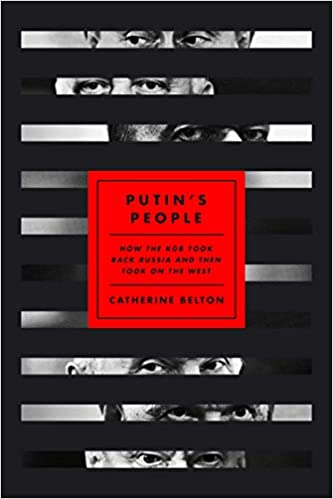
Having pored over former Financial Times reporter Catherine Belton’s book, ‘Putin’s People’, it’s hard to be surprised it is now causing her legal problems. More surprising is that it was published like this in the first place.
Despite being picked up by a major American publishing house, the Rupert Murdoch-owned HarperCollins, Belton displayed a profound lack of journalistic judgement in how she conducted the research behind her explosive claims. And that’s coming back to bite her.
In one lawsuit brought by Mikhail Fridman and Pyotr Aven, the Russian founders of one of Moscow’s largest financial institutions, Alfa Bank, a settlement was reached last week. HarperCollins agreed to amend and edit parts of the book asserting that the pair of businessmen essentially had sponsorship from the KGB when they embarked on their entrepreneurial careers. According to the agreement, the publishers admitted the claims made in the book were unsubstantiated…
We’ve all heard the statement that Russia is a declining power. It is repeated so often by western pundits that it has become a truism.
The incoming leader of Britain’s MI6, Richard Moore, said so a few months ago. Even analysts who are considered more thoughtful, such as John Mearsheimer, have made a similar declaration. But is this statement really true? If not, why do we keep hearing it?
Basic Facts About Russia
To answer the first question, let’s look at some basic facts about Russia relevant to its position in the world. Russia is the largest country in the world geographically, straddles two continents, and possesses a nuclear arsenal as large and modern as that of the United States – if not more so. In terms of its non-nuclear military capacity, only the United States is considered stronger.
Regarding its economy, Russia’s GDP is eleventh in the world, behind Italy and Canada. However, Russian total purchasing power parity comes in at sixth in the world.
Russia possesses a wealth of natural resources including minerals, metals, precious stones, and wood. The country has also been the world’s first or second largest exporter of wheat for several years. It contains an educated population and consistently places highly in computer technology competitions.
Recent History
The Russian Federation has only existed since 1991, so it makes the most sense to examine the last 30 years to determine whether or not the country is declining. This requires us to look at what Russia was like during the 1990s.
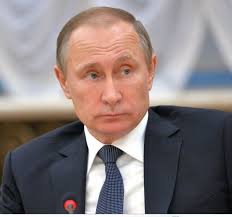
Two interesting pieces have been published in the past week that conclude the Russian political class truly believes that the US-led west is hostile to the point of posing an actual threat to both its security interests on the world stage and its domestic stability. We can debate the degree to which these conclusions may be true in objective reality, but the larger point is that there is evidence that the Russian leadership actually does believe this and is acting accordingly.
The first piece is, “Russia’s targeting of some opposition groups & media seems to be about links to hostile foreign states, not their support at home”, by historian and Russia expert Paul Robinson, published here. In this article, Robinson states that, unlike previous claims of Russia under Putin becoming overly repressive – claims that have often reflected hyperbole – recent actions against foreign-funded opposition and their media and NGO’s indicate a stepped up level of activity by the state against them:
Opposition supporters claim that the Russian “regime” is running scared. They point to the relatively low rating of the pro-Putin United Russia party and argue that the government is afraid of performing poorly in this September’s parliamentary elections. Great claims are also made of Navalny’s “smart voting” scheme, that encourages voters to cast their ballots for the candidate most likely to defeat that of United Russia. The new round of alleged state repression is said to reflect the authorities’ understanding that they can no longer rule by consent.
This explanation doesn’t fit well with the facts. Putin’s personal rating remains very high, and United Russia is still far ahead of its main electoral rivals – the Communists and the mis-named Liberal Democratic Party of Russia. Given Russia’s electoral system, United Russia will almost certainly win a majority in this year’s parliamentary elections. Electorally speaking, it has little to fear from the likes of Navalny.
As for “smart voting,” it’s not all it’s cracked up to be. In last year’s local elections, it had next to no effect on the results. Thus, It is unlikely that the Kremlin is seriously scared of it at all.
A somewhat better explanation, therefore, may have to do with the way that some oppositionists have targeted senior officials with accusations of corruption. Navalny is a case in point, as too is Proekt media.
There may be something to this, but at the same time, this is nothing new. Navalny did corruption exposés for years, including one attacking former Prime Minister Dmitry Medvedev, without him being imprisoned or his foundation getting banned. Something has changed.
Recent state actions seem to be focused against those who are perceived, rightly or wrongly, to be acting on behalf of foreign interests or in some other way (such as defending alleged ‘traitors’ in court) as contrary to the interests of state security. This suggests that the key variable that has changed is the international situation. As this has gotten worse, a perception has hardened in official circles that the West is seeking to destabilize Russia with the help of collaborators within the country.
Robinson goes on to point out the fact that other liberal opposition parties and their support network – such as Yabloko – have not been affected by the crackdown, which reinforces his conclusion.
The second piece, “Is Russia playing the victim, or is the sense of impending siege justified?”, is by historian and Russia expert Geoffrey Roberts, published here. Roberts provides a summary and analysis of Russia’s most recent National Security Strategy document:
Having sown the wind, the West will now reap the whirlwind. Two decades of failure to see Russia’s point of view or to understand why Moscow feels so threatened have helped to create not just a rival but an adversary, a state whose main mission is to isolate itself from Western power and influence at any cost.
Moscow’s current view is that external dangers to Russia have only multiplied and intensified in recent years. Accordingly, the National Security Strategy asserts that Russia and its citizens are under attack. A number of foreign states identify Russia as a threat or, worse, a military opponent. These same states strive to isolate Russia internationally and to interfere in its domestic affairs. Amid a tough global struggle for spheres of influence, the use of force to resolve international problems has become increasingly common. There is a moral vacuum at the global leadership level. The liberal democratic model is in crisis and Western states are attempting to solve their domestic problems at Russia’s expense.
Strategically, Russia will respond to this unstable and threatening situation by strengthening its military, enhancing its internal security, and reducing its dependence on foreign trade, finances, and technologies.
Equally, the document lays out Russia’s commitment to a unified international order based on legal norms and respectful, trust-based relations between states. It wants to strengthen international institutions, especially the United Nations Security Council, which it sees as the foundation of global order. It aspires to reduce the threat of war, curtail renewed arms races and develop new mechanisms to safeguard strategic stability in the nuclear sphere. Politics, diplomacy and peacekeeping are Russia’s preferred foreign policy instruments as it seeks cooperation with other states in relation to nuclear proliferation, climate change, migration, health threats and counterterrorism.
These internationalist commitments are welcome but they are thin gruel compared to past proposals by Moscow for Russo-American strategic partnership and pan-European collective security. As Russian analyst Dmitri Trenin has commented, the new strategy is designed for an era defined by an “increasingly intense confrontation with the United States and its allies.”
This sorry state of affairs is not seen as Russia’s doing, but the result of strident efforts by Western states to preserve their hegemony in an increasingly multipolar international system at a time of fierce all-around competition to control markets and financial resources.
…The Center for American Progress, a left-leaning think tank, surveyed two thousand registered voters in late March on a range of issues. The poll showed that issues like jobs, immigration and climate change dominated voters’ foreign policy thinking, while establishment concerns like confronting enemies and spreading democracy were a low priority.
Asked what their top three priorities for foreign policy are, the largest number of respondents overall — 47 percent — chose “protecting jobs for American workers,” followed by 42 percent of respondents who chose “reducing illegal immigration,” 28 percent who chose “combating global climate change,” and 28 percent who said “improving relationships with allies” was a top priority.
Respondents were split along party lines on a variety of issues. The top priority for Republican respondents was reducing illegal immigration, while the top priority for Democratic respondents was combatting global climate change.
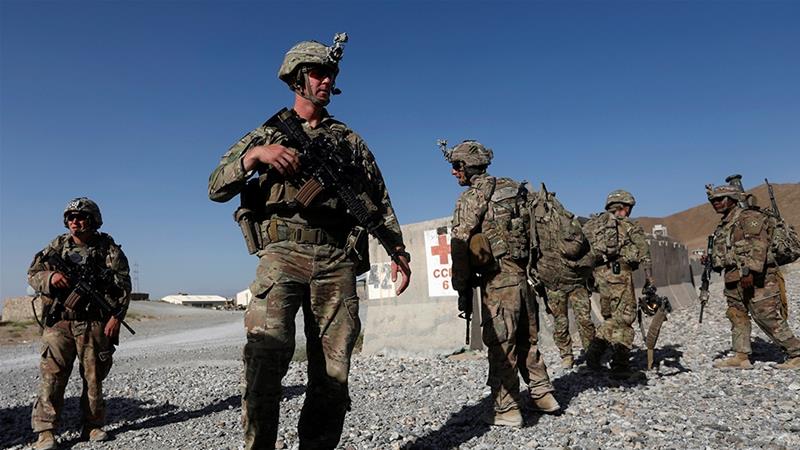
But voters appear to be united on the need to stop intervening in Middle Eastern wars. A quarter of respondents — including a similar proportion of Democrats, Republicans, independents — chose “ending U.S. involvement in wars in the Middle East” as one of their top priorities….