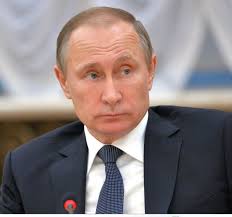
Krishen Mehta: Sanctions and Forever Wars

By Krishen Mehta, American Committee for US-Russia Accord, 5/4/21

…What do we see around us today? The US has sanctions against over 30 countries, close to one-third of the world’s population. When the pandemic started in early 2020, our Government tried to prevent Iran from buying respirator masks from overseas, and also thermal imaging equipment that could detect the virus in the lungs. We vetoed the $ 5 Billion emergency loan that Iran had requested from the IMF to buy equipment and vaccines from the foreign market. Venezuela  has a program called CLAP, which is a local food distribution program to six million families every two weeks or so, providing essential supplies such as food, medicine, wheat, rice, and other staples. The US has has been trying repeatedly to disrupt this important program as a way to hurt the government of Nicolas Maduro. With each family receiving these packets under the CLAP having four members, this program supports about 24 million families, out of a total population of 28 million in Venezuela. But our sanctions may make this program impossible to continue. Is this the US at its best? The Caesar Sanctions against Syria are causing a tremendous humanitarian crisis in that country. 80% of the population has now fallen below the poverty line as a result of the Sanctions. From a foreign policy perspective sanctions appear to be an important part of our tool-kit, irrespective of the humanitarian crisis that it causes. James Jeffreys, our senior diplomat there for many years, has said that the purpose of the sanctions is to turn Syria into a quagmire for Russia and Iran. But there is no recognition of the humanitarian crisis that has been caused for ordinary Syrian people. We occupy Syrian oil fields to prevent the country from having financial resources for its recovery, and we occupy its fertile agricultural land to prevent them from accessing food. Is this America at its best?

Let us turn to Russia. On April 15 the US announced sanctions against Russian Government Debt for so-called interference in the 2020 elections and for cyber attacks. Partly as a result of these sanctions, on April 27th, the Russian Central Bank announced that interest rates would increase from 4.5% to 5%. This is playing with fire. While the Russian Sovereign debt is only about $ 260 Billion, imagine if the situation was reversed. The US has its national debt close to $ 26 Trillion, of which over 30% is held by foreign countries. What if China, Japan, India, Brazil, Russia, and other countries refused to renew their debt or decided to sell? There could be massive rise in interest rates, bankruptcies, unemployment, and a dramatic weakening of the US dollar. The US economy could mirror a depression level economy if all countries pulled out. If we do not want this for ourselves, why do we want it for other countries? The US has had sanctions against Russia for a number of reasons, and many of them emanate from the Ukrainian conflict in 2014. The Russian economy is only about 8% of the US economy, at $ 1.7 Trillion compared to our $ 21 Trillion economy, and yet we want to hurt them further. Russia has three main sources of revenue, and we have sanctions on all of them: their oil and gas sector, their arms export industry, and the financial sector that keeps the economy going. The opportunity that young people have to start businesses, to borrow money, to take risks, is tied in part to their financial sector and now even that is under massive strain due to sanctions. Is this truly what the American people want?

Read full remarks here.
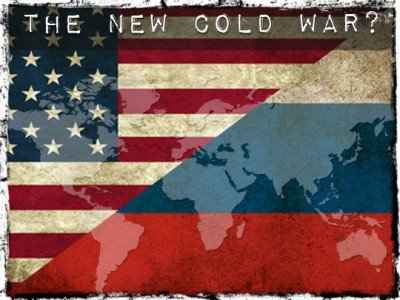
VIDEO: The Committee for the Republic’s Annual Russia Salon

This Russia salon was led by Katrina vanden Heuvel and featured ACURA Board Members addressing a wide range of topics: Nicolai Petro on Ukraine; Cynthia Lazaroff on the Nuclear Peril; Krishen Mehta on our Sanctions Addiction;  David Speedie on Russia and China; with thoughtful closing remarks by Ambassador Jack Matlock. The event also featured questions and comments from the Committee’s John Henry, Chas Freeman and Bruce Fein.

Especially insightful comments from Nicolai Petro, retired ambassador Jack Matlock and Chas Freeman.

Crisis in American expertise: Washington has a dangerous & destructive pattern of willful ignorance on Russia in post-Soviet era

By Natylie Baldwin, RT, 4/29/21

The rejection of Matthew Rojansky’s candidacy as a Russia adviser to Joe Biden represents an escalation, and not a departure, from a pervasive bipartisan American pattern of dangerous ignorance about Russia in the post-Soviet era.

Read the article here.

Regis Tremblay Interviews Attorney, Peace Activist & Citizen Diplomat Sylvia Demarest

Very interesting 1-hour interview with Sylvia Demarest on growing up in poor rural Louisiana, her career as a successful attorney, and her impressions of Russia based on her two trips to the country – the first during the Soviet era and the second in 2018.

Guest Post: Deena Stryker – Carnegie Endowment’s Analysis of Putin Address Distorts Russian President’s Priorities & Message

Vladimir Putin

By Deena Stryker

It would be too bad if the few Americans who pay attention to foreign policy took the Carnegie Moscow Center’s review of Russian President Vladimir Putin’s State of the Union speech, seriously. While it clocks in at just under a thousand words, Carnegie devoted 500 words to debunking it without a single quote. Tatiana Stanovaya faults Putin for failing to discuss Belarus and Ukraine, the only things Western governments are interested in, ignoring the raft of social measures that interest the Russian people:

“A sting operation by the intelligence agencies against members of the Belarusian opposition becomes, in Putin’s telling of it, a dangerous coup against his Belarusian counterpart, organized by the West, with Putin guilty for not revealing the contents of his subsequent meeting with Lukashenko.” (Never mind that most Americans could not find Belarus on a map.)

“Putin pledged that Russia ‘wants to have good relations with all participants of international society’, even as he noted that Russia’s modernized nuclear weapons systems were at the ready. ‘The organizers of any provocations threatening the fundamental interests of our security will regret their deeds more than they have regretted anything in a long time,’ Mr. Putin told a hall of governors and members of Parliament. ‘I hope no one gets the idea to cross the so-called red line with Russia — and we will be the ones to decide where it runs in every concrete case.’”

A more accurate review of Putin’s speech would show him chiding the gas company for failing to provide lines for residential areas, (a situation that he promised personally to check up on, while musing: “What good will this do, if it doesn’t change anything about life in villages or small towns, but only gives people a chance to watch high-speed trains and vehicles rush past,” calling for the development of a modern network.)

Health care is obviously a major focus of the Russian President, who announced new efforts to combat hepatitis C among young people, as well as a 20% discount on rail tickets to health spas, (which multiplied under Communism). The ‘wide-ranging action’ justifying accusations of authoritarianism included a pledge to provide more school buses, to ensure that all Russians were vaccinated against Covid 19 and that doctors give more heart and vascular tests.

While Americans can only dream of such government solicitude, the president of a country that covers 11 times zones considers it normal. Where the Carnegie Endowment sees ‘threats’ against a West innocent of provocations, Vladimir Putin sees “unfriendly moves, an unseemly routine where they pick on Russia for any reason, most often for no reason at all, a competition to see who can shout the loudest, for which the nuclear countries bear special responsibility.”

Putin responded indirectly to Biden’s hope for a one on one by reminding his listeners that he had proposed a meeting of the heads of state of the permanent members of the UN Security Council, confirming Russia’s view of a multi-polar world instead of one with a sole hegemon.

For the Carnegie reviewer alas, it’s:

“too early to tell whether Mr. Putin, 68, was pulling back from the brink. Now in his third decade in power, he appears more convinced than ever of his special, historic role as the father of a reborn Russian nation, fighting at home and abroad against a craven, hypocritical, morally decaying West.

“This sense of superiority mixed with arrogance gives him a feeling of power, and this is dangerous. When you think you are more powerful and more wise than everyone else around you, you think you have a certain historical mandate for more wide-ranging action.”

Although they will not be consulted on matters of survival, comments by American readers on Russia Today’s website are unlikely to agree with the Carnegie Endowment’s learned analysis.

Deena Stryker is a journalist and analyst, focused on geopolitics. She is the author of Russia’s Americans available at Amazon. In the 1960’s she conducted a multi-part interview with Fidel Castro and his associates. She has lived in Cuba, France, Poland and Hungary.

Analysis & Book Reviews on U.S. Foreign Policy and Russia