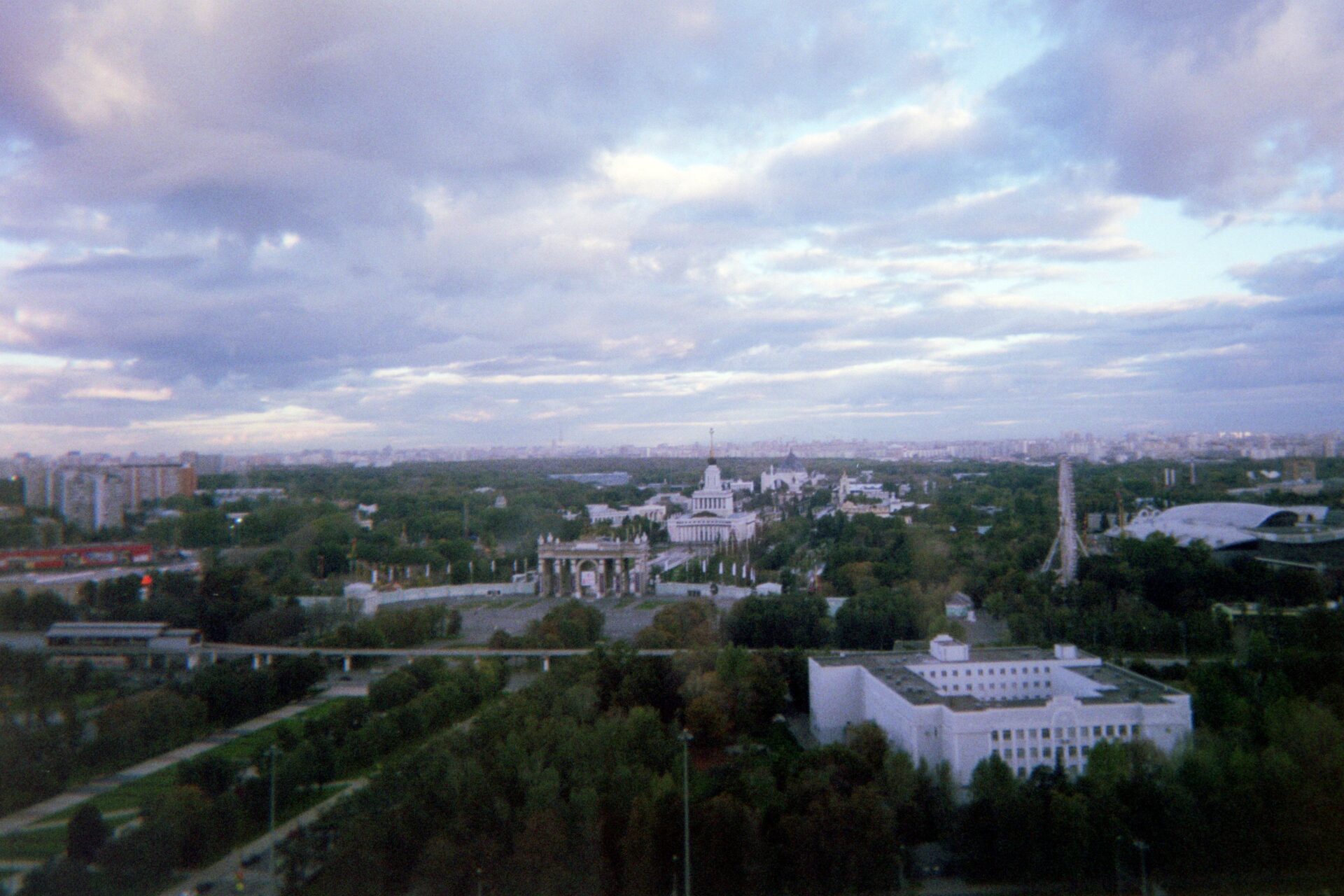
With the onset of the holiday week between New Year’s Day and Orthodox Christmas, Russians have been thronging the halls of the new Russia Expo, a collection of 130 colorful, innovative, and surprisingly upbeat exhibits spread over nearly 600 acres of exhibition grounds.
More than 4 million visitors have passed through the exhibits representing every Russian region, plus four occupied Ukrainian territories and Crimea, that make up the new Russia Expo, which runs from November to April.
That timetable also happens to coincide with the upcoming Russian presidential election campaign – with voting to be held on March 17 – in which incumbent Vladimir Putin is considered the top contender. After his first visit to the exhibition in early December, Mr. Putin seemed so pleased that he told a group of foreign ambassadors that they should also visit so that “you can see with clear examples how Russia is developing, how it lives.”
Some analysts suggest that the show is the very embodiment of Mr. Putin’s electoral program, aiming to knit Russia’s past and present into a single continuum of great achievements, with the emphasis on building a bright, unified, and prosperous future.
“The central image on display at the exhibition is the success of Putin-era Russia. You see it reflected in every exhibit, in a multiplicity of ways,” says Alexei Mukhin, director of the Center for Political Information, an independent think tank. “The unspoken message of holding this big show at such a time is to demonstrate that Russia can wage war and deliver domestic prosperity at the same time. Outwardly, this exhibition is a clear projection of Putin’s vision for Russia’s future, and he is positioned as the person who changed Russia and makes that future possible.”
A distorting mirror
The expo is being held on the sprawling grounds of the former Soviet Exhibition of Economic Achievements (known by its Russian acronym, VDNKh), which features vast green spaces and about 400 buildings, including many ornate Josef Stalin-era constructions that were built to highlight the former USSR’s achievements, including space, atomic energy, industry, and arts.
The original Soviet exhibition was established in the 1930s to convince the population that the hard times of revolution, civil war, and famine were over and a bright communist future beckoned. After World War II, it was repurposed and expanded to showcase Soviet achievements in science, industry, and technology. It was modeled on the concept of a world’s fair, but one that would encapsulate the globally isolated Soviet Union, with its 15 diverse republics supposedly united by socialist ideology and scientific dynamism. Following the collapse of the USSR, the vast grounds fell into disrepair, and many of the pavilions were used by commercial companies to warehouse and market a bewildering array of goods.
At every point, the VDNKh exhibitions served as an invitation to the population to come and embrace the state’s vision of itself, says Pavel Nefedov, curator of the museum.
“This place has always been supported by the state, and it owes its continued existence to that,” he says. “In its original conception, it represented Utopia built on a limited territory. For the visitors, visiting the exhibition was a kind of symbolic reward. It was always a mirror held up to the country, but not one that reflected things as they were, but as the state thought they should be.”
Even in the 1990s, when a veritable bazaar sprang up on VDNKh’s ruins, “it reflected the dominant idea of the time, a commercial marketplace. The communist symbols became vending platforms,” Mr. Nefedov says.
In recent years, the Russian government has spent considerable sums renovating the territory and kept it open for people to roam the grounds. But until the Russia Expo was announced, the place seemed without purpose.
Broadening the outlook?
The present exhibition looks very much like a Putin-era reincarnation of its Soviet predecessor, with entries from 84 regions of Russia, plus five annexed Ukrainian regions, and pavilions for several major state corporations. It exudes a more festive atmosphere than the old Soviet fair did, with updated presentations that include holograms, robots, interactive displays, and a parade of associated events such as daily lectures, seminars, and forums on a wide variety of (mostly nonpolitical) topics.
It’s not clear how much the Kremlin has spent to stage this show, but figures mentioned in the Russian media suggest it’s at least $60 million.
It has attracted huge crowds in its first several weeks, including large organized tours of schoolchildren. Nadya Titova, a journalist’s field assistant, says the fair appeals as a travel substitute.
“Now that our borders are closed, people have less opportunity to travel abroad, so they are turning inward, wanting to see more of Russia,” she says. “An exhibition like this broadens the outlook, and maybe gives an idea of how many interesting Russian tourist destinations are still accessible.”
The regional displays include attractions such as watching a simulated volcanic eruption in the Pacific territory of Kamchatka, taking tea in a Buryatian yurt, virtual river rafting in Krasnoyarsk, and listening to a robot explain the history of Birobidzhan, a Jewish autonomous region near the Chinese border where Yiddish is an official language.
The Crimea pavilion features a giant replica of the 12-mile-long Kerch Bridge – which has been the target of Ukrainian attacks – and an array of special effects designed to create the audiovisual, tactile, and even olfactory atmosphere of that annexed Ukrainian region, which hopes to become Russia’s premier tourist destination once the war ends.
The continuing war is a mostly silent subtext at the exhibits of the four Ukrainian regions that Mr. Putin declared officially annexed by Russia just over a year ago. The Donetsk pavilion features a “coal mountain” with a “time tunnel” that shows the region’s progression from czarist times, through Soviet-era industrialization, to its “trial by fire” as a separatist region at war with Ukraine and its projected bright future as a province of Russia. The half-occupied Ukrainian region of Kherson features its agricultural potential and nature reserves, which – left unmentioned – are not presently safe to visit.
“Not a coincidence”
Andrei Kolesnikov, a Carnegie fellow who continues to live and work in Russia, says the exhibition is an old Soviet form that’s been reinvented, modernized, and put to work to project Mr. Putin’s current vision of where Russia is headed.
“It’s not a coincidence that VDNKh was chosen for this purpose,” he says. “The grounds are filled with traditional symbols of Russian empire and achievement. The current message is that ‘everything is OK; these are peaceful times. Putin can wage war in Ukraine, and develop Russia as well. We don’t need the West; we can do it ourselves.’”
The Putin-era social contract, in which people pursue their private lives but stay out of politics, has been slightly amended, he says. “Now you don’t need to go to the trenches, but in return you must demonstrate your patriotism. Vote for Putin. Pay for a quiet life. Accept the new balance between war and normality.”
Yaroslav Listov, a Communist Party deputy of the Duma, offers a more prosaic complaint.
“To what extent do these displays correspond to real achievements?” he says. “It’s apparently costing a lot. Wouldn’t it be better to spend this money actually improving peoples’ lives than on expensive demonstrations of how life is supposedly being improved?”
Few seem to recall that the infamous, supposed Russian massacre of Ukrainian civilians at Bucha in the the second month of President Vladimir Putin’s ‘special military operation (SVO) occurred on the background of the promising March 2022 Russo-Ukrainian peace talks held in Gomel, Belarus and then Istanbul Turkey. Until recently, even fewer would recall because of Western media coverup that the talks were purposefully scuttled by Washington, Brussels (NATO), and London. These two events – the subversion of the Russo-Ukrainian talks and the purported Bucha massacre – may be inextricably interconnected (https://gordonhahn.com/2022/05/23/tentative-conclusions-on-bucha-a-small-my-lai-update/).
The details of the West’s likely scuttling of the 2022 peace talks have been revealed by numerous persons over the last year: then Israel PМ Naftali Bennet, then former Turkish foreign minister Mevlüt Çavuşoğlu, and former chancellor of Germany Gerhard Schroeder. Bennet, for example, and then others stated over the last year that a truce had been all but secured, but the US stepped in to block it (https://contra.substack.com/p/us-led-west-opposed-peace-deal-in). Ukrainian and alternative Western reporting had long indicated this, including at the time of events.
In a new German report, the scale and seriousness of the efforts and the strong likelihood of a peace agreement being concluded has been reviewed; a likelihood of which, the same report demonstrates, was strangled by NATO, President Biden, and British Prime Minister Boris Johnson. The report was written by a a formerly highest-ranking German and NATO general, a former UN assistant secretary-general official, and a German academic, who provide “a step-by-step reconstruction of the events that led to the peace negotiations in March and their collapse in early April 2022.” The report concludes: “In March 2022, direct peace negotiations between Ukrainian and Russian delegations and mediation efforts by Israel’s Bennet created a genuine chance for ending the war peacefully only four to five weeks after Russia had invaded Ukraine. However, instead of ending the war through negotiations as Ukrainian President Zelensky and his government appeared to have wanted, he ultimately bowed to pressures from some Western powers to abandon a negotiated solution. Western powers wanted this war to continue in the hope to break Russia” (https://braveneweurope.com/michael-von-der-schulenburg-hajo-funke-harald-kujat-peace-for-ukraine).
The initial inspiration, putting aside Putin’s coercive diplomacy by SVO, came from none other than Ukrainian President Volodomyr Zelenskiy, who asked Israel’s Bennet if he might contact Putin and request talks. Bennet did so, and Putin immediately invited him to Moscow, leading to the first rounds of talks in Gomel. Bennet noted: “In the conversation in the Kremlin, Putin, Bennett said, had made some substantial concessions, in particular, he had renounced his original wartime goal of demilitarizing Ukraine. …. In return, the Ukrainian president agreed to renounce joining NATO – a position he also repeated publicly a short time later. This removed one of the decisive obstacles to a ceasefire ….” (https://braveneweurope.com/michael-von-der-schulenburg-hajo-funke-harald-kujat-peace-for-ukraine). Thus, by the third week of March, less than a month after Russian forces had invaded, Russia and Ukraine had “’agreed on the broad outlines of a peace settlement. Ukraine promised not to join NATO and not to allow military bases of foreign powers on its territory, while Russia promised in return to recognize Ukraine’s territorial integrity and to withdraw all Russian occupation troops. Special arrangements were made for the Donbas and Crimea’ (Cf. Michael von der Schulenburg: UN Charter: Negotiations! In: Emma of March 6, 2023)” (https://braveneweurope.com/michael-von-der-schulenburg-hajo-funke-harald-kujat-peace-for-ukraine).
A March 24, 2022 NATO summit, contrary to the aforementioned German report, did offer casual or cursory support for the negotiations but this paled in comparison with the one-sided, aggressive tone and policy changes (40,000 troops deployed on NATO’s “eastern flank“) in the overall statement, especially given NATO’s provocations of Russia in some three decades of an expansion threatening Moscow’s national security. According to Michael von der Schulenburg, former UN Assistant Secretary-General (ASG) in UN peace missions (Cf. Michael von der Schulenburg: UN Charter: Negotiations! In: Emma, March 6, 2023), the NATO summit decided not to support the talks. To be sure, NATO Sec Gen Jans Stoltenberg’s opening remarks and concuding press conference at the summit were devoid of any mention of the Russo-Ukrainian peace talks (www.nato.int/cps/en/natohq/opinions_193612.htm?selectedLocale=en and www.nato.int/cps/en/natohq/opinions_193613.htm?selectedLocale=en). Although there was no explicit NATO endorsement of the talks, there was an implicit one in the G7 and NATO statement following the summit, which noted: “Russia needs to show it is serious about negotiations by immediately implementing a ceasefire. We call on Russia to engage constructively in credible negotiations with Ukraine to achieve concrete results, starting with a sustainable ceasefire and moving towards a complete withdrawal of its troops from Ukrainian territory. Russia’s continuing aggression while discussions are taking place is deplorable. We support Ukraine’s efforts to achieve peace, and those undertaken diplomatically by Allies to weigh in on Russia to end the war and relieve human suffering” (www.nato.int/cps/en/natohq/official_texts_193719.htm?selectedLocale=en).
By 29 March, 2022, during the negotiations in Istanbul mediated by Turkish President Erdogan, the Ukrainian delegation led by Arakhamiya presented a position paper, the proposals of which were transformed into a draft treaty by the Russian side and issued as the Istanbul Communiqué that included ten proposals.*
But by mid-April the Istanbul negotiating process was dead. Ukrainian papers, including pro-Maidan Ukrainskaya pravda, reported that during the UK PM Boris Johnson’s now infamous trip to Kiev on April 9, 2022, he communicated to Zelenskiy that Putin was a war criminal and needed to be pressured not negotiated with and that the West would not sign any agreement with Putin on security guarantees. Without them, Kiev would be left badly exposed. However, the Ukrainian paper also noted that Johnson said the West would sign an agreement with Zelenskiy, presumably on the same guarantees (Ukrainskaya pravda, 5 May 2022 cited in https://braveneweurope.com/michael-von-der-schulenburg-hajo-funke-harald-kujat-peace-for-ukraine). This suggests that some diplomatic ingenuity might have got around the impasse. Kiev could sign a ceasefire agreement and then treaty with Moscow and NATO signed a security guarantee agreement with Ukraine in which Kiev’s treaty was incorporated, bypassing any direct NATO-Russian agreement. At any rate, subsequent revelations, in particular Arakhamiya’s regarding the Johnson trip’s and thus the West’s role in scuttling the Russo-Ukrainian talks, demonstrate the viability of the German report’s account, despite some lack of sourcing.
Bucha
Despite the German report’s shortcomings, it poses one very important issue. The issue regards a possible connection between Bucha and the Istanbul talks is the timing. The German report notes: “As late as March 27, 2022, Zelensky had shown the courage to defend the results of the Ukrainian-Russian peace negotiations in public before Russian journalists.” While it might have been more appropriate to use instead of the word ‘results of’ the words ‘framework around an imminent agreement as a result of’ the talks, Zelenskiy in fact did support the now revealed Ukrainian agreement to neutral status (no Ukrainian membership in NATO) in a press conference on March 27, 2022. He said:
“Guarantees of security and neutrality, the nuclear-free status of our state. We are ready to for it. This is the most important point. This was the first point of principle for the Russian Federation, as far as I remember. And as far as I remember, they started the war because of it. It is now that they have begun to add points to ultimatums — but [at first] they talked about NATO expanding. And so [they said] that there is no bloc alliances — that, strictly speaking, there is no right to join alliances in the Constitution of Ukraine. And then we decided to go somewhere…
“’We do not agree with where you are going, and this goes beyond our agreements with the West, which have been in place for so many years. Therefore, this is the main issue, and because of this we are protecting our security,’ the Russian Federation said. Therefore, there is a point [in the draft agreement -GH] of security guarantees for Ukraine. And since they say that [security guarantees] also are for them, I understand this, and [the negotiators – GH] are discussing it. It is being worked out thoroughly, but I am interested that it is not another piece of paper a la Budapest Memorandum and so on.
“Therefore, we are interested in turning this paper into a serious treaty that will be signed…
“I’m going to move on now to the referendum, which will be signed where the points of security guarantees are, by all the guarantors of this security. It must be ratified by the parliaments of the guarantor countries, this is second. And there must be a referendum in Ukraine. Why? Because we have a law on referendums. We adopted it. Changes of this or that status… But security guarantees imply constitutional changes. You understand, right? Constitutional changes. These are two sessions. Therefore, it is faster to hold a referendum than to amend the Constitution” (https://strana.news/news/383576-zelenskij-prezident-zajavil-chto-sohlasen-na-nejtralnyj-status-ukrainy.html).
Thus, we have here a confirmation by Zelenskiy himself that the talks had led to an agreement on an exchange of Ukrainian neutrality for Russia and international security guarantees for Ukraine. At the same time, Zelenskiy insisted at the time that first a treaty agreement would be signed, and Russian troops would withdraw to Russia immediately as was their deployment as of February 21, 2022. Subsequent to the Russian withdrawal, a Ukrainian referendum on neutrality would be held, and then the constitution would be amended (https://strana.news/news/383576-zelenskij-prezident-zajavil-chto-sohlasen-na-nejtralnyj-status-ukrainy.html). Incidentally, Zelenskiy himself states here that the main reason for Putin’s special military operation was the movement of Ukraine towards NATO membership; this was, in Zelenskiy’s words “the first point of principle for the Russian Federation.” This is real-time corroboration, if one had forgotten or never known of Zelenskiy’s position back in March 2022, of the reminders and additional details – not ‘claims’ – offered by Arakhamiya, Bennet, Schroeder, et al. Thus, it seems more than coincidental that the talks disappeared upon Johnson’s visit to Kiev in the wake of the supposed ‘Bucha massacre’ (https://gordonhahn.com/2022/05/23/tentative-conclusions-on-bucha-a-small-my-lai-update/).
In summarizing their conclusions, the German authors note: “Ukraine’s decision to abandon negotiations may have been taken before the discovery of a massacre of civilians in the town of Bucha near Kiev” (https://braveneweurope.com/michael-von-der-schulenburg-hajo-funke-harald-kujat-peace-for-ukraine). Whether before or after, the question arises whether Bucha was a fake or an exponentially inflated atrocity orchestrated by elements in Ukraine perhaps in league with Western intelligence to justify or prompt abandonment of peace talks with Moscow. I noted in two article posts that it is highly likely that there was no Bucha massacre committed by Russian forces and that if any war crimes were committed they were few and may very well have been committed by Ukraine and/or Ukrainian-allied forces and then refashioned into hundreds of Russian war crimes for purposes of war disinformation (https://gordonhahn.com/2022/05/23/tentative-conclusions-on-bucha-a-small-my-lai-update/).
What I failed to note was that this likely Ukrainian fake may have been intended to help in or justify after the fact the scuttling of the onging Russo-Ukrainian Istanbul negotiating process as agreement appeared likely. From Zelenskiy’s March 27th comments, it seems the decision to abandon the talks could not have come before March 27th, and the clear abandonment of the talks after the Johnson visit to Kiev suggests the decision came on or around April 10th. Fighting raged in and around Bucha in March and involved both Russian and Ukrainian bombardment of the city, depending on which side was occupying at any particular time. Russian forces had full or nearly full control of Bucha for 9-10 days, from March 22nd-31st. On March 26th a phone number was provided on the Bucha city council (Rada) Facebook page for residents to report “humanitarian disasters”, “shootings,” rocket attacks, and the like (www.facebook.com/bucharada.gov.ua/posts/1836972983175764). According to Ukrainian sources, Russian forces remained dug in the Bucha and Nemishyev areas as of March 29th (www.understandingwar.org/backgrounder/russian-offensive-campaign-assessment-march-29). On March 30-31 Ukrainian sources reported that fighting continued throughout Bucha, Makariv, and Hostomel (www.understandingwar.org/backgrounder/russian-offensive-campaign-assessment-march-31). Then, as part of a goodwill gesture as part of the Istanbul talks, Russian forces withdrew from areas around Kiev, including from Bucha, on March 31-April 1. Ukrainian forces controled Bucha by April 1st.
The world did not hear a word about Russian atrocities or corpses lying on Bucha’s streets until after Ukrainian ‘clean up’ squads entered the city to clean out traitors and quislings on April 2nd. On 31 March 2022, Bucha’s mayor made a video to celebrate the liberation of the city. He called it a “happy day” and made no mention of civilians having been massacred by Russian troops or bodies lying in the streets (https://threadreaderapp.com/thread/1510789934827053056.html and https://web.archive.org/web/20220404062459im_/https://video.twimg.com/ext_tw_video/1510789777888804865/pu/vid/640×362/GuxBWwP7U-5tDrfa.mp4?tag=12). At the same time, a member of the Bucha city council, Katerina Ukraintseva, ignored the bodies on the streets in her first comments immediately after the Russian withdrawal but three days suddenly mentioned them in accordance with the new pro-NATO narrative (https://t.me/UkraineHumanRightsAbuses/1337). In an interview given to the media outlet Meduza (classified as a foreign agent in Russia) at the same time, a female resident of Bucha and member of its territorial defense unit (hastily formed volunteer units formed on the war’s eve and responsible for vigilante justice and human rights violations since the war began**), said that “the people lying on Yablonskaya died because of chaotic shooting.” Curiously, she did not report that Russian soldiers shot civilians during their occupation of the city (www.donbass-insider.com/2022/04/04/ukraine-the-massacre-of-bucha-a-ukrainian-timisoara/).
Then it was reported on 2 April 2022 that Ukrainian police had entered Bucha to flush out possible “saboteurs or accomplices” of the Russian troops (https://vesti.ua/kiev/politsejskij-spetsnaz-nachal-zachistku-goroda-bucha). They were accompanied by fighters under the command of Azov neo-fascist ‘Botsman Korotkikh. A Ukrainian police video of the bodies on Yablonskaya Street released on April 2nd (when it was made is unknown) shows thin corpses with fresh, clean clothing not bloated with filthy clothing that would be the case for corpses on the streets for three weeks (https://archive.ph/HRtqx; www.sott.net/image/s32/642783/full/Bucha_man.jpg; and https://web.archive.org/web/20220404073351/https:/threadreaderapp.com/thread/1510590248140800003.html). This indicates that these are wounded and that they were shot very recently, not two days prior when Russian troops were in town. The video is taken from a military vehicle in the column, not the first vehicle in the column. An alternative possibility is that some or all of these bodies were placed on the streets by Ukrainian operatives, photographed by satellites (Maxar has ties to US intelligence), and then removed. When Korotkikh and his fighters videoed their entry into Bucha and drive down Yablonskaya Street, there were no corpses. Korotkikh’s fighters seemed to receive permission to shoot at males not wearing the Ukrainian forces’ light blue armband in another video, when they were moving on foot. Russian and its allied breakaway republics DNR and LNR wear white armbands. Korotkikh posted a video titled “The Boatsman’s Boys in Bucha”, which at the 6 second mark has the following dialogue: “There are guys without blue armbands, can I shoot them?” “Fuck yeah” (https://twitter.com/RWApodcast/status/1510712264726396944). This would explain the white armbands on some 4-5 of the corpses shown in the above-mentioned videos, which are nevertheless being attributed in the West and Ukraine to a ‘Russian massacre’. Moreover, more of the corpses may be wearing the white bands than is obvious from the photos; the bands are not visible in the photographs because the corpses are lined up closely together and photographed from the side. The Ukrainian troops and militants, therefore, might have captured and killed white-armbanded civilians, regarding them to be collaborators of the Russians.
On April 3rd, with Ukrainian forces, such as Botsman’s unit and an equally violent Georgian battalion cleaning up in Bucha, the aforementioned Ukraintseva suddenly changed tone, asserting the bodies had been lying on Yablonskaya since the “beginning of March” (https://t.me/UkraineHumanRightsAbuses/1337). Had she suddenly gotten the ‘memo’ being delivered by Botsman’s men or did she just forget about the rotting corpses of some 20 fellow Buchanians shot by the hated Russian forces for three weeks? On April 4th the New York Times published an article accusing Russian forces with having carried out a massacre without reference to any of the above. Satellite surveillance firm Maxar photographs, the NYT reported, purportedly showed that some 8-20 bodies of Ukrainian civilians shot by Russian troops were lying on Bucha’s Yablonskaya Street from March 9-11 to the March 30th completion of the Russian withdrawal. Somehow, not one resident of Bucha reported to any authority that Russians had killed hundreds of civilians or photographed the bodies and sent them to an authority through the entire period from 9-11 March to the 30 March completion of the Russian withdrawal, including reporting the some 20 bodies were said by the New York Times and Maxar to have been lying on the street (www.nytimes.com/2022/04/04/world/europe/bucha-ukraine-bodies.html).
On April 11th NYT published a more detailed and comprehensive report that attributed numerous deaths in Bucha to Russian forces, sometimes with evidence sometimes not. The deaths for which evidence of some sort was presented for perhaps 10-20 victims (https://www.nytimes.com/interactive/2022/04/11/world/europe/bucha-terror.html).
A French aide worker and former French marine, Adrien Boucquet, who was in Bucha in March for some three weeks and has been assiduously ignored by NYT and all Western media, given an interview in May 2022 to French media. He states that he saw only Ukrainians, seemingly Azov militants, committing war crimes in Bucha, including executions of Russian officers and shooting Russian non-officer prisoners in the knees. Although he suspects the Russians did commit war crimes in Bucha, he personally saw only Ukrainians committing war crimes (https://t.me/UkraineHumanRightsAbuses/3705). The NYT continued to report on the Bucha events in December 2022, but nothing in it is said of Mr. Boucquet or demonstrates massive Russian atrocities, certainly nothing amounting to even a hundred deaths.
CONCLUSION
Ukrainian activity in Bucha has never been investigated by any agency with resources and access sufficient to clarify the role of its units entering Bucha on April 1, 2022. Moreover, neither Ukrainian, Western, or international actors have published a detailed list of hundreds of killed in Bucha with names attached to time, place, and cause of death and other evidence as to any perpetrator.
Whether Zelenskiy was duped into buying a simulacra production at Bucha concocted by Ukrainian and Western intelligence to convince him to continue with war may never be known. US CIA-tied media such as The New York Times were certainly curiously prompt in providing a narrative, in particular satellite ‘evidence’, just two days after the first reports of atrocities. Perhaps time will yield new revelations helping us to clarify the truth about which side wanted war more and about what precisely was happening in Bucha in March and early April 2022 and who was responsible for the tragic, senseless, and vicious killing there.
~~~~~~~~~~~~~~~~
*The Istanbul Communique’s ten proposals: (1) Ukraine would declare itself a neutral, non-aligned, and non-nuclear state in exchange for international legal guarantees; (2) security guarantees for Ukraine would not extend to Crimea, Sevastopol, or areas in the Donbas to be negotiated; (3) Ukrainian commitments not to join any military alliance or to host any foreign military bases or troops, with any international military exercises possible only with the consent of the security guarantor-states, which would declare their intent to support Ukrainian membership in the European Union; (4) as an internationally recognized neutral state, in the event of a military attack on Ukraine the guarantor-state are to implement immediately necessary individual or joint measures, such as establishment of a no-fly zone, weapons provision, of necessary weapons, or the use of armed force in order to restore and maintain Ukraine’s security and neutral status; (5) any attack on Ukraine and response to it will be reported to the UN Security Council, with response action ceasing once the UN Security Council has taken measures to restore and maintain international peace and security; (6) in order to exclude provocations, mechanisms for fulfilling Ukraine’s security guarantees would be developed on the basis of consultations between Ukraine and the guarantor-states; (7) the treaty would enter into force after (1) a national referendum approving Ukraine’s permanent neutral status, the incorporation of relevant amendments into Ukraine’s constitution, and the treaty’s ratification by the parliaments of Ukraine and the guarantor-states; (8) a 15-year period for Ukrainian-Russian talks on issues related to Crimea and Sevastopol; (9) continuing consultations involving other guarantor states to prepare and agree on provisions in a treaty on security guarantees for Ukraine, ceasefire mechanisms, withdrawal of troops and paramilitary formations, the creation and protection of safe humanitarian corridors, and the exchange of bodies and release of prisoners of war and interned civilians; and (10) agreement by the parties on the possibility of a meeting between the presidents of Ukraine and Russia for signing the treaty and/or taking political decisions on unresolved issues.”
The US is pushing for the expropriation of $291bn in Russian Central Bank reserves frozen in the West and urging the EU to transfer the funds to Ukraine.
The move marks a shift in the US stance on the use of these seized assets, with discussions taking place within the G7 in December to formulate a strategy for seizing Russian reserves by February 24, 2024, the second anniversary of the invasion of Ukraine, The Bell reports.
Ukrainian President Volodymyr Zelenskiy, after a December visit to Washington, said that he had discussed the issue of transferring Russian reserves to Ukraine and believes that this money should be spent on protecting Ukraine.
Following the start of the war, approximately €260bn of the Russian Central Bank’s assets were frozen in G7 countries, mostly by Euroclear in Belgium, as well as other EU countries and Australia, comprising nearly half of Russia’s $643bn in international reserves as of February 2022.
In December both the FT and then The New York Times reported that the United States has changed its point of view on the use of Russian Central Bank reserves seized in the West and is now, albeit gently, insisting that this money should be transferred to Ukraine.
The majority of these funds, over €210bn, are located in EU countries, with €191bn held in the Euroclear depository in Belgium. Another €19bn is frozen in France, €7.8bn in Switzerland and only €4.6bn in the US.
While Western officials are considering various options for the use of these funds, including supporting Ukraine’s economy and financing its budget deficit, concerns about potential repercussions, both economic and geopolitical, accompany the decision.
The EU, particularly Germany, France, and Italy, has been reluctant due to fears that such a move could jeopardise financial stability and undermine trust in the euro’s status as a reserve currency, thus driving up borrowing costs for the EU that could cost it billions in the long run. The European Central Bank (ECB) has been especially outspoken in its opposition to any scheme that illegally seizes the CBR’s money.
An alternative scheme proposed by the EU is to impose a 100% tax on the profits these assets earn, which is legally much easier to do but would only generate about €3bn a year. The assets of the Russian Central Bank could also be used as collateral for borrowing by the Ukrainian government on the international market in another option.
Another issue being discussed is whether this money can be used only to restore the Ukrainian economy and finance the Ukrainian budget deficit or can be spent directly on the purchase of weapons, NYT sources say.
If the assets are seized one of the legal arguments to justify this is that the Russian money will be seized in lieu of reparations for the destruction Russia’s aggression has caused, but if this argument is used then the CBR’s assets could only be legally used for reconstruction and not the purchase of weapons to sustain the current conflict.
A written American presentation to the G7, seen by the NYT, proposes to allocate money in successive tranches through the World Bank or the European Bank for Reconstruction and Development (EBRD) – in this case there will be no talk of direct purchases of weapons, as the mandates of both development banks precludes them from dealing in arms.
A US official told The New York Times that the issue of using Russian reserves will remain on the agenda even if Republicans agree to unblock a $50bn aid package for Ukraine.
But momentum to expropriate Russian reserves is clearly building as Western countries cast about for alternative ways to fund Ukraine’s war and subsequent reconstruction. Ukraine fatigue has become palpable in the last six months of 2023 and financial support packages from both the US and the EU have run aground in the face of opposition but politicians. However, a renewed effort to pass these stalled packages will be made in January and February.
As the threat of expropriation builds, the Kremlin has made it clear it will retaliate by expropriating more Western assets that remain in Russia. When asked by journalists in the last days of December if there is an expropriation list, presidential spokesman Dmitry Peskov replied: “There is,” without giving more details.
Seizing the CBR funds would be entirely unprecedented. Other central banks have been frozen in other sanction regimes – including funds from the Central Banks of Iran, Iraq, Syria, and Venezuela – but the money has never been seized and almost always returned to the object of the sanctions after the sanction’s regime is lifted. (Iranian funds remain frozen after 45 years but remain the property of Iran.) Central bank funds have always been seen as sacrosanct assets in the international financial system.
For third countries, including China, India and Saudi Arabia, which between them control more than $5 trillion in international reserves, the confiscation would send a signal that it is not safe to keep money in Europe and if they exit that could dramatically weaken the euro and the EU’s financial system.
As discussions unfold within the G7, the decision on the fate of the Russian reserves will be crucial, with potential repercussions on international financial dynamics and geopolitical relations for years to come should the CBR money be seized.
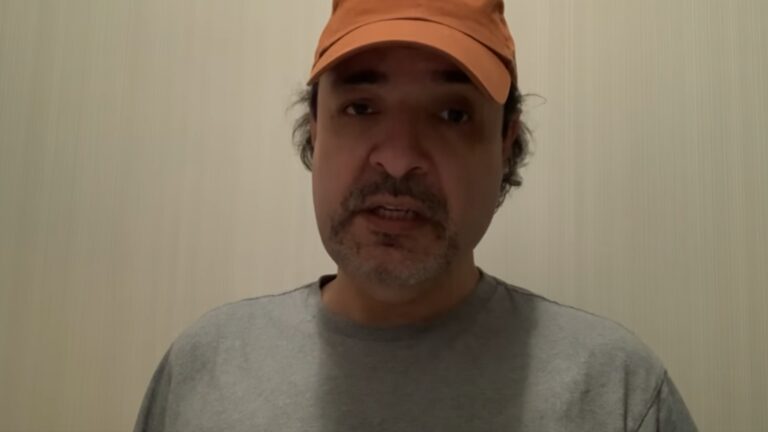
Chilean-American blogger Gonzalo Lira has died in a Ukrainian prison, Russian news agency TASS said on Saturday, citing a response it received from the US Department of State. The blogger’s death was first announced by his family on Friday.
Lira, 55 at the time of his death, lived in Kharkov and blogged as ‘CoachRedPill,’ but switched to YouTube commentary after Russia launched its military operation in Ukraine in February 2022. He was arrested by the Security Service of Ukraine (SBU) last May and accused of “discrediting” the Ukrainian leadership and the military.
“I cannot accept the way my son has died. He was tortured, extorted, incommunicado for 8 months and 11 days and the US Embassy did nothing to help my son. The responsibility of this tragedy is the dictator Zelensky with the concurrence of a senile American President, Joe Biden,” his father Gonzalo Lira Sr. wrote in a note published by The Grayzone.
Lira Sr. also reached out to X host Tucker Carlson, confirming the death of his son in Ukrainian custody. He had spoken to Carlson about the case in early December.
Lira resurfaced from custody in late July with a series of posts on X (formerly Twitter), revealing his torture in jail and attempts by the SBU to extort him for money. He said he was trying to flee to Hungary and seek asylum. “Either I’ll cross the border and make it to safety, or I’ll be disappeared by the Kiev regime,” he wrote, in his last public message.
Two days later, a source confirmed to RT that Lira had been caught and imprisoned by Ukrainian authorities.
According to a handwritten note Lira’s sister received on January 4, provided to the Grayzone by her father, Gonzalo Lira Jr. had severe health problems caused by pneumonia and a collapsed lung, which began in mid-October. Ukrainian prison authorities only acknowledged the issue on December 22, and stated he would undergo surgery.
Following his father’s appearance on Carlson’s show, X owner Elon Musk personally inquired about Lira’s case with both US President Joe Biden and Ukrainian leader Vladimir Zelensky, apparently to no effect.
Lira was a national of both the US and Chile. According to his thread from last July, the Chilean Embassy in Kiev at least tried to help him, while the US mission gave him only “empty bromides.” Lira suggested that this was because Victoria Nuland – currently the acting deputy to Secretary of State Antony Blinken – hated him personally.