Shock therapy and Russia’s fatal turn
By Prof. Paul Robinson, Canadian Dimension, 10/4/23
There are events that at the time seem to portend one thing but years later take on a very different hue. So it is with the dramatic political crisis that erupted in Russia 30 years ago this week, a crisis that ended with tanks of the Russian army blasting the country’s parliament, the Supreme Soviet, into submission.
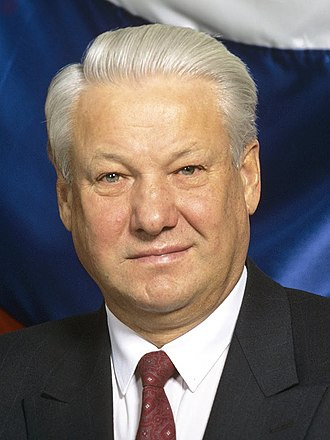
Back then, Russian President Boris Yeltsin was a hero in the West. Optimism ran high that the post-Soviet Russian Federation would rapidly evolve into a fully functioning Western-style liberal democracy and capitalist free market economy. All that stood in its way were a few hold-outs from the old communist system who sought to challenge Yeltsin from their power base in the parliament. By eliminating them, Yeltsin had secured the bright future that Russia deserved. Or so many believed.
Looking back on it, though, more and more analysts now take the opposite view: that the events of October 3-4, 1993 constituted the moment that Russia took a fatal turn in the wrong direction.
Three factors precipitated the political crisis. The first was the policy of economic reform undertaken by Yeltsin, known as shock therapy. This began with a decree liberalizing prices (which had been fixed by Soviet central planners at artificially low levels). The aim was to create incentives for producers to bring goods to the market. And indeed, soon afterwards the shops were full again. The downside was enormous inflation. The government tried to reduce this by classic monetarist means—reducing the money supply by cutting spending, including state subsidies to industries. This threatened millions of Russians with unemployment. The central bank, however, was under the control of the parliament not the president, and refused to follow the monetarist prescript, continuing to issue large amounts of funds to troubled Russian enterprises. This allowed people to keep their jobs, but the result was that inflation soon became hyperinflation.
The second factor behind the crisis was that the collapse of the Soviet Union had left the Russian Federation without a clear division of powers between the president and the parliament. In October 1991, the parliament granted Yeltsin the right to enact economic reform by means of decree. Before long, however, many parliamentarians began to have doubts about shock therapy and tried to claw back the emergency powers they had granted to Yeltsin. By contrast, the government took the view that parliament was obstructing reform and that the only way to enact it properly was by concentrating authority in the hands of the president.
A third factor was the attitude of liberal reformers toward political opposition. They tended to view reform through a moral lens. Supporting it was morally good. Opposing it was morally bad, even outright evil. Any measures were justified in fighting opposition, including undemocratic ones.
The result of this attitude was a growing preference for what one might call liberal authoritarianism. Russian liberals recognized that economic reform was likely to prove unpopular. Consequently, if the people had power they would try to halt it. Power would instead have to be centralized in the hands of “democrats” (i.e. liberal reformers) so as to force reform through against the will of the people. As the future head of privatization, Anatoly Chubais, put it in a 1990 article: “There is a fundamental contradiction between the aims of reform (the forming of a democratic economy and society) and the means of their achievement, including measures of an anti-democratic nature.”
A favoured model was that of General Augusto Pinochet’s Chile. In April 1991, a group of Russian economists visited Chile to investigate the free market reforms undertaken under Pinochet. Among the group was Alfred Koch, who later became deputy prime minister under Yeltsin. Koch remarked that:
A strong hand, when it’s really strong, that’s harmonious; it’s a dictatorship in its complete, mature form. Pinochet didn’t try to pass himself off as a democrat, which he was not. He knew they needed to build a liberal economy, and he built it; he knew they need to stifle the opposition, and he stifled it, just as he was supposed to do. … Chile 1973. Total collapse. The economy just stopped. The country was bankrupt. Politically, a dead end. Then, like in a bad movie, fast forward on the calendar, twenty years later … What better example do we need to see that we must act and not just gab about reforms?
In April 1993, Russians voted in a referendum asking four questions: whether they supported the president; whether they supported his economic reforms; whether they favoured early parliamentary elements; and whether they favoured early elections. In the subsequent vote, 60 percent supported the first question, 54 percent the second, and 60 percent the third, but only 49 percent backed the fourth (an early presidential election) with 51 percent against. Yeltsin and his supporters interpreted the result as giving him the right to rule by himself. The president then acted accordingly.
On September 21, 1993, Yeltsin issued a decree dissolving the parliament, transferring control of the central bank to his authority, and ordering elections to a new parliament, the State Duma. The decree went far beyond Yeltsin’s constitutional authority. The Supreme Soviet responded by impeaching him. On the night of October 3, a crowd of parliamentary supporters attempted to storm the central TV station. Yeltsin then ordered the army to attack the Supreme Soviet building, the “White House.” This it proceeded to do on October 4, when army tanks shelled the parliament, forcing it into submission. Some 150 people died in the two days’ violence, most of them civilians killed by security forces and the army during the attacks on the TV station and the Supreme Soviet.
Western politicians welcomed Yeltsin’s actions. “It is clear that the opposition forces started the conflict, and President Yeltsin had no other alternative but to try to restore order,” said US President Bill Clinton. Russian liberals were equally supportive. The head of the presidential human rights office, Sergei Kovalyov, for instance, said that, “There is no doubt that the victory of [Supreme Soviet speaker] Khasbulatov and his supporters… would have meant the end of democracy, the end of parliamentarism and the final result, the end of freedom in Russia.” While acknowledging that Yeltsin had violated the constitution, he argued that it wasn’t the most important thing. “What is constitutionalism—following the bad letter of a bad law or the fundamental principles of constitutionalism?” he asked. “Democracy in Russia played a very malicious joke on the process not just of economic, but also political reform,” claimed Chubais, “a strong hand plus the market is undoubtedly technically much more attractive.”
Even more passionate was the outspoken former dissident Valeriia Novodvorskaia. She wrote:
On the night of 4 October … we had a choice: to kill or to die. We preferred to kill and even found moral satisfaction in it. … And if during the night they had given tanks to us, democrats and humanists, … nobody would have hesitated. The “White House” wouldn’t have survived till morning, not even ruins would have remained of it. … We are not dealing with people, with equal opponents, but with some evil black fog … To deal with it, we need bullets. … I know that 20 percent of my fellow citizens regularly vote for communists, fascists, Zhirinovsky and simple filth … and I am completely prepared to get rid of every fifth person. … I am no longer afraid of Pinochet. I am prepared to use any methods to win this civil war.
Former Prime Minister Yegor Gaidar, by contrast, was a bit more cautious. He noted after the attack on the Supreme Soviet that “It immediately became clear that the first casualty was democracy itself. On the morning of October 3, President Yeltsin was still only one of many players on the Russian scene. … On the morning of October 5, all the power in the country was in his hands. We had leapt from the gelatinous dvoevlastie (dual power) into a de facto authoritarian regime.”
This proved to be the case. Following the destruction of the parliament, Yeltsin pushed through a new constitution that centralized power in the hands of the president. The authoritarian system that has governed Russia under his successor, Vladimir Putin, was thus not Putin’s creation. Rather it was a product of the events of October 1993.
In the context of the time, Yeltsin’s actions were understandable. In 1993, Russia was stuck in a political impasse. Existing institutions were clearly inadequate. Something had to be done to move the country forward. The chosen method, though, proved decidedly problematic. Yeltsin’s supporters imagined a liberal authoritarianism that would in due course so change the culture of the country that the authoritarian elements could be dropped, creating a truly liberal order. It seems not to have occurred to them that the system they created could fall into the hands of illiberal elements who might push it in a different direction. It’s a mistake for which they have paid a heavy price.
Paul Robinson is a professor in the Graduate School of Public and International Affairs at the University of Ottawa and a Senior Fellow at the Institute for Peace and Diplomacy. He is the author of numerous works on Russian and Soviet history, including Russian Conservatism, published by Northern Illinois University Press in 2019.
***
Yeltsin Shelled Russian Parliament 30 Years Ago – U.S. Praised “Superb Handling”
National Security Archive, 10/4/23
Washington D.C., October 4, 2023 – Thirty years ago in Moscow, Russian President Boris Yeltsin ordered tanks and airborne troops to shell and storm the “White House,” the Russian Parliament (Supreme Soviet) building, to suppress the opposition trying to impeach and remove him – a landmark turning point in Russia’s failure to develop democracy.
Declassified documents published today by the National Security Archive detail the complete American support for Yeltsin’s actions, including the transcript of U.S. President Bill Clinton’s phone call to Yeltsin the next day to praise him, and the memcon in which U.S. Secretary of State Warren Christopher subsequently told Yeltsin this was “superb handling.”
Also published in today’s briefing book are State Department cables from the U.S. Embassy Moscow that paint a more complex and less personalized portrait of the causes and consequences of the October events, the Supreme Soviet’s resistance to Yeltsin’s rule by decree, popular discontent with radical economic change, Yeltsin’s decision for military force, and the Russian electoral landscape.
The electronic briefing book publishes for the first time a prescient memo written by the former British ambassador to Moscow, Sir Rodric Braithwaite, for the new Clinton officials in January 1993, comparing the Yeltsin/parliament struggle to the English parliament’s historic efforts to rein in royal power, only after which could political parties emerge.[1] Braithwaite’s memo also criticizes the Yeltsin reformers for their failure to address Russia’s “rustbowl” industries, backbone of the opposition to Western-oriented economic “reform,” while acknowledging that no one in the West had much of an answer either.[2]
The Web posting features two oral history accounts, one from then-Russian Defense Minister General Pavel Grachev about his specific role, including his orders to fire the tank cannon that set off a “beautiful fire” that blackened the White House, and the other from then-U.S. Ambassador Thomas Pickering who believed the U.S. had “no choice” but to support Yeltsin.
Already discussing the 30th anniversary, Russian media such as the leading independent newspaper Novaya Gazeta and the news website Meduza.ru (now based in Europe rather than in Moscow because of Russia’s invasion of Ukraine) are publishing multiple articles, historic photos and video footage of the events. The Novaya Gazeta headline – “How Russia’s autocracy started” – argues that October 1993 was the crucial turning point towards Putin’s repressive centralized system today.
Three Decades after the Storming of the Russian White House
By Svetlana Savranskaya
Thirty years ago today in Moscow, President Boris Yeltsin resolved his standoff with the Supreme Soviet of the Russian Federation by storming the White House, which resulted in numerous casualties, but even more importantly, in the loss of faith in democracy and in the overwhelming preponderance of executive power in Russia ever since.
New documents published today by the National Security Archive provide a glimpse into how the situation was viewed from Washington and from the Kremlin. At the time, from these two vantage points, the picture was black and white—democratic and free market reformers on Yeltsin’s side and a communist and fascist opposition trying to force the country back into its totalitarian past. Since power in Russia never changed hands other than by way of transfer to a chosen successor, full public examination of evidence of the events of 1993 never took place. However limited, the selection of documents published today shed new light on the complexity of the events and the high stakes the Clinton administration saw in Russia in the fall of 1993.
The events of September-October 1993 are the subject of extensive coverage and intense controversy in Russia today as citizens re-examine those experiences. Unfortunately, no Russian documents on the events of 1993 are available in the archives yet. Novaya Gazeta has republished its issue of October 6, 1993, which gave comprehensive contemporaneous coverage and put blame on both sides for the first significant bloodshed in Moscow since the October revolution of 1917.[3] According to columnist Boris Vishnevsky, “after the fall of 1993, a practically unlimited autocracy triumphed in Russia.”
By the time the Clinton administration came to office in January 1993, the momentum of Russian reform was on the decline. Faced with severe consequences of market reform coupled with the effects of disintegration of economic ties after the dissolution of the USSR and the absence of any meaningful foreign economic assistance, Russia’s population and political elites began questioning the pace of the reform and the forceful methods of its implementation. The team of young reformers that Yeltsin appointed in late 1991 was decimated under the pressure from the Supreme Soviet, and Yeltsin had to replace Acting Prime Minister Yegor Gaidar with Victor Chernomyrdin in late 1992.
Rather than negotiating with the Parliament, Yeltsin habitually ruled by issuing Presidential Decrees. The opposition led by Vice President Alexander Rutskoy and Chairman of the Supreme Soviet Ruslan Khasbulatov was growing in the Parliament and in the regions, and blocking most of the president’s initiatives, which led to a paralysis of governing. The incoming U.S. administration started its dialog with Russia in a state of virtual civil war between the executive and the legislature.
The declassified telcons and memcons of early Clinton-Yeltsin conversations show instant chemistry between the two leaders, genuine warmth and optimism and an incredibly rich agenda on which Russia and the United States agreed to cooperate (Document 5. See also EBB 640). Clinton mostly set the agenda, while Yeltsin, eager to build a genuine partnership with America, enthusiastically agreed to work together with him. Clinton was deeply committed to Russia’s transformation into a democracy and market economy as well as to its full integration into the Western world. Another top U.S. priority was to safely manage the post-Soviet re-gathering of nuclear arsenal back to Russia and to help it to dismantle and secure weapons and fissile materials, which was accomplished in the framework of the Nunn-Lugar programs (See EBBs 447, 528 ).
Given this setting, Yeltsin, with his resume of a democratically elected Russian leader and a defender of democracy during the coup of 1991, seemed like an ideal partner who could deliver on all U.S. priorities. According to Strobe Talbott, some of Clinton’s advisers were concerned about Yeltsin’s unwillingness to consult and compromise with the Parliament and advised Clinton to focus on “principles and process,” not personalities. The president, however, was committed to Yeltsin as a personification of the revolutionary change and responded that this was “a zero-sum” thing.[4] This perception only intensified during Yeltsin’s final showdown with the Supreme Soviet in the final days of September 1993.
According to Ambassador Thomas Pickering, Yeltsin sent Foreign Minister Andrei Kozyrev to notify four key Western ambassadors about his intention to dissolve the Parliament and call for new elections (Document 7). In Clinton’s first phone call to Yeltsin immediately after the latter issued Decree 1400, dissolving Parliament and setting a date for early elections and a constitutional referendum, the U.S. president expressed his full support and accepted Yeltsin’s assurances that there would be no bloodshed and the reform would move faster now that there would be no obstacles. U.S. support for Yeltsin remained unwavering all through the confrontation and after the Russian President issued the order to storm the parliament (after initial violence on the part of the opposition).
On the morning of October 4, Muscovites awakened to the awful sight of the burning Parliament building—the White House they had defended against the putsch in August 1991, where Yeltsin had stood on a tank and led the democratic forces. On October 5, the day after the bloodshed, Clinton called Yeltsin and congratulated him for his handling of the situation; he did not ask about the loss of life. Even stronger support was expressed by Secretary of State Warren Christopher, while visiting in mid-October, who practically lauded Yeltsin for his actions during the crisis. Documents show that the Clinton administration saw no alternatives to Yeltsin and was prepared to support him no matter what.
This situation grew out of the extreme personification of U.S.-Russia policy but also from the black-and-white picture the Yeltsin camp presented of the political situation in Russia, painting his opponents as “fascists” and unreformed communists. In fact, it was the same Supreme Soviet that was elected in the lauded free elections of 1990, that elected Yeltsin its chairman, and that granted him emergency powers to implement the radical economic reform in October 1991. As the year 1993 progressed and the political confrontation in Russia deepened, the U.S. administration dealt exclusively with the Yeltsin camp and came to regard the opposition as their Russian interlocutors presented them. But most importantly, the stakes were very high: Yeltsin was a good partner who was willing to play on U.S. terms, and any alternative—even democratically elected—was deemed unlikely to be as cooperative or reliable. The Clinton administration was therefore highly invested in Yeltsin and, as Ambassador Pickering says he told Strobe Talbott, “you’ve got no other choice” than to support Yeltsin and hope that the December elections would be free and fair.
Not all actors on the U.S. side shared that opinion. Chargé d’Affaires James Collins’ cables show a more nuanced reading of the crisis and a deep concern about the fairness of the elections and the authoritarian potential of Yeltsin’s new Constitution, which Collins calls “half-baked.” (Document 10). The Pickering oral history also points to differences of opinion within the Embassy (Document 7). These disagreements did not seem to affect Clinton’s consistent support for Yeltsin’s handling of the opposition. U.S. backing remained constant after the disastrous election results in which Yeltsin’s party received only 15 percent of the vote and the Constitution barely passed the referendum. The system that emerged was essentially super-presidential, which did not worry most senior U.S. officials as long as a true democrat, in their view, held the post of president.
The last document in today’s published selection is an excerpt of an oral history interview with Yeltsin’s Defense Minister Pavel Grachev conducted by Petr Aven and Alfred Kokh (Document 15). Grachev’s account of events provides a graphic picture of how the Yeltsin camp viewed the opposition and their methods of dealing with it. It also gives great insight into the complexity of the situation and the role of the armed forces.
The Clinton administration at the time saw Yeltsin as the guarantor of Russia’s democratic transition and thus viewed the outcome of the crisis as a victory for democratic forces, however unfortunate the loss of life was. Many Russian democrats, however, considered the events of 1993 as the turning point from democracy to an increasingly paternalistic and autocratic rule by Yeltsin and his successor. Thirty years later, the controversy over the constitutional crisis of 1993 is not over and final judgments will have to await, among other things, the declassification of top-level Russian documents.
READ THE DOCUMENTS
Document 01
Jan 12, 1993
Source
William J. Clinton Presidential Library release 2015 from MDR 2013-0449-M
This prescient memorandum comes to the new Clinton administration (not yet inaugurated as of January 12) from Britain’s leading Russia expert, Rodric Braithwaite, fresh from four consequential years (1988-1992) as Margaret Thatcher’s ambassador to Moscow, where he dealt with both Mikhail Gorbachev and Boris Yeltsin and helped lubricate the peaceful end of the Cold War. At the point Braithwaite wrote this memo, he was serving as foreign policy adviser to Thatcher’s successor as British prime minister, John Major, and as chair of Britain’s Joint Intelligence Committee. Major would pay a state visit to Bill Clinton in February 1993, yet at that point neither of Clinton’s key choices for managing Russia policy (Strobe Talbott as special ambassador for all the newly-independent Soviet states, Thomas Pickering as ambassador in Moscow) had yet been confirmed by the U.S. Senate. (Talbott’s subsequent memoir, The Russia Hand, identifies Clinton himself as the title character always in charge of Russia policy.)
Notable is the Braithwaite tone, as if he is lecturing an introductory class on Russian history, with references to the 1917 revolution arising from the failures of democratic reformers, and the reality of tsarist Russia, an autocracy “tempered by assassination.” Perhaps most insightful is Braithwaite’s analogy of the Yeltsin/Supreme Soviet struggle in Russia to the long arc of British parliamentary struggles to restrain royal power, only after which did political parties emerge in England.
Braithwaite bemoans the historical lack of political parties in Russia, and Gorbachev’s failure to create any. Braithwaite’s incisive description of Communist Party internal jockeying and networking, the system that produced Yeltsin, warns about the latter’s characteristic “bullying, impetuous, autocratic” tendencies. Yet, “Ordinary Russians loved him precisely because he got drunk, fell into rivers, and hated the Communists – just like they did.”
Braithwaite provides some pointed criticism of the failure of Yeltsin’s “reformers” (and the West’s advisers) to come up with any credible plan to deal with the “rustbowl” defense industry in Russia. Braithwaite’s core advice was simply that there was not much the West could do for Russia – their future was theirs to make – except treat them with respect, as a great power (even if not a superpower anymore), to be included in all international geopolitical decisions. This advice Bill Clinton would follow through his entire presidency, relying on his personal connection with Boris Yeltsin.
Document 02
Jan 23, 1993
Source
U.S. Department of State declassification M-2006-01499
This is the first phone call between Presidents Clinton and Yeltsin shortly after Clinton’s inauguration. Clinton lays out his foreign policy priorities emphasizing that “Russia [will] be a top priority for U.S. foreign policy during my Administration.” He states his determination to build “the closest possible U.S.-Russia partnership,” and to do “whatever we can to help Russia’s democratic reform to succeed.” He tells Yeltsin that the appointment of “a very close friend and an expert on Russia, Strobe Talbott,” will guarantee a “high degree of personal involvement” on his part. Yeltsin is very encouraged by Clinton’s words and thankful for the offer to build a partnership and cooperate on major international issues. He accepts Clinton’s invitation to meet in person and wants it to happen as soon as possible at any place that would be convenient for the U.S. president. The relationship starts on a high note with high expectations on both sides.
Document 03
Apr 9, 1993
Source
William J. Clinton Presidential Library release 2023 from MDR 2016-0118-M
This newly declassified cable from the U.S. Embassy Moscow details the Kremlin meeting between Yeltsin and a high-level bipartisan U.S. Congressional delegation (CODEL) led by the House Majority Leader, Democrat Richard Gephardt of Missouri, together with the House Minority Leader, Republican Robert Michel of Illinois. Also speaking during the meeting were the Majority Whip, David Bonior of Wisconsin, and Michel’s chief rival for Republican leadership, future House Speaker Newt Gingrich of Georgia.
The CODEL visit is timely indeed, just days after the Vancouver summit between Clinton and Yeltsin, and two weeks before the April 25 national referendum Yeltsin has engineered in order to show public support for his presidential rule. Already engaged in a power struggle against the Supreme Soviet (and the larger Congress of People’s Deputies), Yeltsin intends to expand executive power, define his opponents as resisting the inevitable reforms that Russia needed, and here brags that he has 60 percent popular support.
The visiting American Congressmen add their support. Gephardt tells Yeltsin, “The Congress and the American people will stand by Yeltsin in his further efforts toward democratic and economic reform.” The Republicans echo the message: “Michel stressed that the U.S. has a warm regard for Yeltsin and for all he symbolizes” while “Rep. Gingrich said he supported bipartisan aid for Russia and asked Yeltsi[n] about what could be done to help.”
Yeltsin tells them Congress needs to take the Cold War restrictions off Russia, and mentions a five-page list he had given to Clinton at Vancouver. “How is it possible to treat a partner like that?” Yeltsin asks. Missing altogether from the CODEL discussion is any Congressional sympathy for their erstwhile peers in the Supreme Soviet, or any sense of legislative-versus-executive struggle like that baked into the U.S. Constitution. Instead, the CODEL exhibits the same kind of identification of U.S. policy with Yeltsin personally that Bill Clinton has already adopted.
Document 04
Jul 16, 1993
Source
U.S. Department of State declassification M-2006-01499
This is a copy of a cable containing the memcon between Yeltsin and Clinton with a cover note from Secretary of State Warren Christopher to Strobe Talbott instructing him to review the memcon before his forthcoming meeting with Russian Deputy Foreign Minister Georgy Mamedov. In the handwritten notes he also records his impressions from the meeting. He is “struck by […] B[ill] C[linton]’s command of the issues […] his dominance in [meeting] (hard to do with Yeltsin), and “no rhetoric or posturing on either side.”
This memcon is important because it shows the impressive variety of issues on which Clinton and Yeltsin had a productive exchange and agreed to cooperate: replacing COCOM with a new regime; a deal on highly enriched uranium (HEU) that Russia was going to remove from the nuclear warheads being withdrawn from Kazakhstan; Ukraine and Belarus and partly return to Ukraine as fuel for nuclear power stations and partly sell to the United States in the framework of the Megatons for Megawatts program; working with Ukraine to return the nuclear weapons to Russia; progress on CTBT; non-proliferation, and specifically limiting Russia’s sales of reactors, missiles, and submarines to Iran and India; getting North Korea to the negotiating table; peacekeeping in Georgia and Nagorny Karabakh; and the withdrawal of Russian troops from the Baltics.
On the latter, Yeltsin made an official request that the U.S. side conduct an investigation of the laws in Estonia to determine if they discriminate against ethnic Russians (Christopher in his cover note recommends giving Yeltsin a proper legal response even if it is negative). The breadth of issues helps one understand that Yeltsin truly was an indispensable partner for Clinton across the range of U.S. priorities in the former Soviet Union and even globally. Only once is there a signal that Yeltsin is in a complicated place domestically. Mentioning that the Supreme Soviet has just passed a bill declaring Sevastopol a Russian city, Yeltsin says, characteristically, “Thank God no one takes the Supreme Soviet seriously!”
Document 05
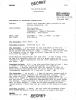
Memorandum of Telephone Conversation. Telcon with President Boris Yeltsin of the Russian Federation.
Sep 7, 1993
Source
William J. Clinton Presidential Library
Clinton calls Yeltsin two months after they last talked at the G-7 summit in Tokyo, knowing that his counterpart is “going through some difficult times,” to express his support for the embattled Russian president. They go over the results of the recent trip by Russian Prime Minister Victor Chernomyrdin to Washington for the first meeting of the Gore-Chernomyrdin commission, which was a success. Turning to Ukraine, Yeltsin shares the news of his very successful meeting with Ukrainian President Leonid Kravchuk in Crimea where the two leaders settled the issue of the Black Sea Fleet and negotiated on the withdrawal of strategic nuclear weapons from Ukraine. Yeltsin tells Clinton he is pulling Russian troops out of Poland “next week,” and will withdraw from Latvia and Estonia when they pass legislation protecting Russian minorities.
Clinton tells his Russian partner that the $2.5 billion assistance package for Russia has passed the House and that he will work hard to make sure it is approved by the Senate. He also assures Yeltsin again that he is working to “eliminate the legislative remnants of the Cold War,” about which (“60 pieces of legislation”) Yeltsin complained during their first summit in Vancouver. They touch on Yugoslavia, and Yeltsin assures Clinton that his administration will “put pressure on the Serbs.” On every issue they mention, Yeltsin comes through as a good cooperative partner, supporting U.S. foreign policy priorities.
Only at the end of the conversation do they touch on the Russian domestic crisis—Yeltsin’s confrontation with the Supreme Soviet. Already preparing his move against the legislature, Yeltsin promises Clinton that he will call him in “a very short time” regarding the “situation in the parliament.” He explains cautiously that he is “right now engaged in a bit of fighting with the parliament which is moving away from reforms.” Clinton is aware of the situation; he tells Yeltsin, “We will be pulling for you.”
Document 06
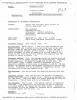
Memorandum of Telephone Conversation: Telcon with President Boris Yeltsin of Russian Federation.
Sep 21, 1993
Source
U.S. Department of State declassification M-2006-01499
Clinton calls Yeltsin immediately after the Russian president makes a speech announcing his Presidential Decree 1400-dissolving the Parliament and setting the date for early elections to a new legislature and a referendum for the draft Constitution. Clinton expresses his full support for Yeltsin but also a concern about the fate of reform and democratic process in Russia. In response, Yeltsin paints a black-and-white picture of the political struggle saying that the Supreme Soviet “has totally gone out of control. It no longer supports the reform process. They have become communist.” He assures his U.S. partner that “there will be no bloodshed,” and that “all the democratic forces are supporting me.” Clinton underscores the importance of holding the elections “in a fully democratic manner,” and providing the opposition full access to free press without hindrance. Yeltsin promises to stick to democratic principles and reiterates his commitment to peaceful solutions. Clinton mentions that a $2.5 billion assistance package is being considered by Congress at the moment and the preservation of democratic order would be important for its passing. Yeltsin promises that now the “reforms will go much faster” and thanks the U.S. president for his continuous support.
Document 07
Ambassador Thomas Pickering Oral History Excerpt
Feb 19, 2007
Source
Foreign Affairs Oral History Collection, Association for Diplomatic Studies and Training, Arlington, Virginia, www.adst.org,https://adst.org/OH%20TOCs/Pickering-Thomas-Reeve.pdf, pp. 357-362 (15th of December, the Ides of December 2006) and pp. 386-391 (19th of February 2007).
This extremely useful oral history collection includes interviews with more than 2,000 former U.S. diplomats. The interviews with Tom Pickering took place over an extended period from 2003 to 2007 after his retirement from the Foreign Service, and produced a transcript totaling 722 pages ranging from his ancestry to postings as far afield as Zanzibar and San Salvador. Pickering served as U.S. ambassador to Moscow from 1993 to 1996, among the most momentous years in Russia’s post-Soviet history, and a large section of the oral history covers his time in Russia. The particular pages related to the October 1993 events are in two parts, one from pages 357 to 362 on the overall policy and the Clinton-Yeltsin relationship, and the other, his extremely detailed eyewitness account of the assault on the White House, from pages 386 to 391. Pickering recounts his strong advice to Washington that there was “no choice” other than to back Yeltsin. He says, “There are some who argue that he, Yeltsin, was illegal in his actions and preemptory in his decisions and wrong in the outcomes. I totally disagreed with that…. Were Yeltsin to have failed to do what he did, there was a good chance that there would have been another effort at the top to return Russia to communism. I cannot but believe that would have resulted in greater bloodshed and a long civil conflict.” (p. 362) On the possibility of a negotiated settlement, Pickering comments, “[T]here were talks back and forth, not very fruitful ones because the Russian government then was in a position of deciding whether it was going to treat with these people and deal with compromises or take back the White House. They decided that they were going to take back the White House. They had the troops and the capability of doing that.”
Document 08
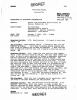
Memorandum of Telephone Conversation: Telcon with President Boris Yeltsin of Russian Federation.
Oct 5, 1993
Source
William J. Clinton Presidential Library declassification 2015-0782-M-1
This phone call takes place on the day after Yeltsin ordered tanks to fire on the building of the Supreme Soviet in Moscow(the “White House, the same building outside which Yeltsin had stood on a tank to reisist the hard-line coup attempt in August 1991). Clinton calls him to express support and inquire about the Russian president’s plans for the upcoming elections and political settlement after the constitutional crisis. Yeltsin calls his opponents “fascist,” putting all the blame on the opposition, telling Clinton that the supporters of the Parliament “brought to Moscow a gang of people from the Transdniester region, the Riga OMON-these were special forces. They had them come here, gave them machine guns and grenade launchers, and had them fire on peaceful civilians.” He says he had no alternative than using force. Yeltsin expresses regret that “some people were killed,” […] “thirty-nine people have now been killed on our side,” (estimates of casualties range in the hundreds) but assures Clinton that now both the transition to democracy and market reform will move faster and he might call for early presidential elections because at the time “no real rivals to me are visible.” (Vice President Rutskoy and Chairman of the Supreme Soviet Khasbulatov were in prison, the prosecutor general was forced to resign and the Constitutional Court was suspended after its Chairman declared Yeltsin’s decree 1400 unconstitutional.) None of that appears to undermine Yeltsin’s democratic credentials in Clinton’s eyes. Clinton never asks about the loss of life among civilians and the opposition. He says just what Yeltsin wants to hear: “you did everything exactly as you had to and I congratulate you for the way you handled it.” The Russian president responds: “Thank you for everything. I embrace you with all my heart.”
Document 09
Oct 7, 1993
Source
William J. Clinton Presidential Library declassification 2015-0782-M-1
This memo from National Security Advisor Anthony Lake clarifies two items in the October 5 conversation with Yeltsin (see Document 4). When Yeltsin referred to armed persons from Riga and Moldova who came to Moscow to support the opposition, Lake points out, they were “from the elite Russian security forces stationed in Riga and Moldova,” not representatives of the Moldovan or Latvian governments. The second important correction refers to the fact that Yeltsin did not answer Clinton’s question about freedom of the press in the period before the scheduled December elections. Yeltsin only said that there “would be no restrictions on the elections,” and his interpreter translated it as “no restrictions on the press.” In fact many oppositional newspapers were banned. President Clinton writes on the memo: “OK-but it wasn’t the time for me to raise the newspaper issue on the 5th.”
Document 10
Oct 19, 1993
Source
Department of State Declassification, Date/Case ID; 6 MAR 2003 200001030
Chargé d’Affaires and future Ambassador to Russia James Collins sends Secretary Christopher a briefing cable in advance of his visit to Moscow where he is expected to meet with Yeltsin and other government officials. This is the first visit of any Western senior official to Moscow after Yeltsin’s dissolution of the Parliament and the October 3-4 bloodshed in the center of Moscow. In the cable, Collins describes the pre-electoral landscape in Russia on the eve of Christopher’s visit. Although 92 parties are registered for the election, that in itself does not guarantee free and fair elections.
The cable describes Yeltsin’s decision to push through the new “half-baked” Constitution, which concentrates the “preponderance of authority in the hands of the chief executive.” Collins points out that “even many reformers worry about establishing a new Russian democracy so heavily tilted toward presidential power.” The cable describes the split within the reformist camp into “radical” and “cautious” reformers, the confusion at the regional levels regarding whether the elections would be held for regional legislatures, and the continuing ban on nationalist and right-wing parties and their newspapers.
Collins notes the personal nature of the confrontation: “Boris Yeltsin’s face during his October 6 speech was proof the Russian President had cast his hardline opponents into a personal anathema.” He also raises concern about the methods used by Moscow police and city government in implementing the state of emergency, such as “systematic police cleansing of non-Russian people from Central Asian and Caucasian states,” and racist remarks about dark-skinned people by Moscow Mayor Yuri Luzhkov. In the end of the cable, Collins cautions that although the actual voting is likely to be fair, “the question will be the democratic content of the entire electoral process.”
Document 11
Oct 20, 1993
Source
Source
U.S. Department of State. Date/Case ID: 04 MAY 2000 200000982
In the follow-up to the previous cable (Document 6), Chargé d’Affaires Collins reviews foreign policy issues Christopher is expected to cover in Moscow in his meetings with Yeltsin and Kozyrev and emphasizes that Yeltsin is looking for gestures of support from the United States. New elections are scheduled for December and Yeltsin needs all the support from the West he can get. Collins advises the secretary of state to be sensitive to Yeltsin’s and Kozyrev’s need for Russia to be seen domestically as a partner with whom the West consults and does not just take for granted, and he lists some controversial issues: NATO expansion, the post-Soviet space, and Ukraine.
On NATO, Collins notes that the Russians are aware that the U.S. internal debate is reaching a crucial moment about expansion and they want to be assured that the door is open to Russia, not just to East Europeans. In Collins’ view, “what the Russians hope to hear from you is that NATO is not moving precipitously and that any policy NATO adopts will apply equally to them.” Their “neuralgic” attitude stems from the fear that they will “end up on the wrong side of a new division of Europe.” Therefore, Collins counsels Christopher to make sure the Russians know that the U.S. is actively promoting Russia’s “complete reintegration into the family of Western states.”
Document 12
Secretary Christopher’s Meeting with Foreign Minister Kozyrev: NATO, Elections, Regional Issues
Oct 25, 1993
Source
U.S. Department of State. Date/Case ID: 11 MAR 2003 200001030
On his trip to Europe to explain the U.S. position on NATO expansion, Secretary Christopher comes to Moscow after meetings in Budapest. He and special ambassador Strobe Talbott meet with Foreign Minister Kozyrev and his deputy, Yuri Mamedov, before they visit Yeltsin at his country residence. Christopher raises concerns about the fairness of the upcoming elections with his Russian counterparts. He mentions that the United States has $12 million to contribute and is willing to send monitors or observers, which Kozyrev welcomes, saying they might help to guard against fraud by communist-leaning local authorities in rural areas where “the old kolkhoz mentality” still prevails. Christopher puts special emphasis on ensuring a free press since the order banning opposition newspapers was still not lifted. Kozyrev does not have a definitive answer to the question regarding banned newspapers and he says only six or seven political organizations will be banned from participating in the elections.
In this memo about the Kozyrev meeting, Christopher is very brief about the NATO discussion. He tells Kozyrev that the U.S. is sensitive to the Russian position and has developed a new proposal as a result: the Partnership for Peace (PFP), which would be open to all countries on an equal basis. Christopher does not directly address Kozyrev’s concern about the decision regarding expansion, but, misleadingly, lets it sound as if PFP is the alternative for the time being.
The rest of the conversation deals with crucial issues on which the United States needs Russian cooperation, such as support for Eduard Shevardnadze in Georgia and the withdrawal of nuclear weapons from Ukraine.
Document 13
Secretary Christopher’s Meeting with President Yeltsin, 10/22/1993, Moscow
Oct 22, 1993
Source
U.S. Department of State. Date/Case ID: 08 MAY 2000 200000982
Christopher is taken to Yeltsin’s country house, Zavidovo, for a meeting that lasts only 45 minutes. Yeltsin has most likely already been briefed by Kozyrev about his conversation with the secretary of state. In the beginning of the conversation, Yeltsin reviews the events of September 21-October 4 in Moscow and expresses “special appreciation to President Clinton and Secretary Christopher for their early and very supportive backing. The Russian president talks about the upcoming elections, which he calls “the first free and fair election for the parliament since 1917,” and assures Christopher that the country has calmed down after the crisis. Yeltsin praises the new Constitution that is “up to the standards of the best Western democracies,” which would allow them to “end the old totalitarian regime with the power assigned to the soviets.” He also welcomes the Clinton visit to Moscow planned for January 1994.
Christopher starts with strong praise for Yeltsin’s handling of the constitutional crisis with the Parliament, passing on “high appreciation” and emphasizing that Clinton is “extremely supportive” of his “superb handling of the crisis.” According to Christopher, Clinton “admired the restraint” that Yeltsin has practiced since September 21 and that in the end he acted in a way that “caused the least loss of life.” He adds that “on Sunday October 3, the President also closely followed events and wanted to tell President Yeltsin that […] our thoughts were with you in Moscow all day.” Christopher offers technical assistance for the election and notes that “there are already numbers of our experts here who could be helpful but we would like to assist in any way in which we could do so.” Essentially, Christopher lauds Yeltsin’s handling of the crisis and never raises any concerns mentioned in Collins’ cable (see Document 6, above) about irregularities in the electoral process or the nature of Yeltsin’s constitution.
At the end of the conversation they briefly touch on the sensitive question of NATO expansion. Christopher leaves Yeltsin with the impression that the Partnership for Peace is an alternative to expansion (see Document 8 in National Security Archive Electronic Briefing Book No. 621). Yeltsin is extremely pleased with everything Christopher says at the meeting. He concludes “by saying that he appreciated immensely President Clinton’s early continuing and extremely generous support and that he wanted to pass on his highest esteem for the President.”
Document 14
Memorandum of Telephone Conversation: Telcon with President Boris Yeltsin of the Russian Federation.
Dec 22, 1993
Source
William J. Clinton Presidential Library declassification 1015-0782-M-1
Clinton calls Yeltsin to check on the political situation after the elections and talk about his upcoming visit to Russia in January 1994. At the beginning of the conversation both presidents put the best spin on the disastrous election results where the nationalist Liberal Democratic Party of Vladimir Zhirinovsky finished with 23 percent, the Communist Party of Gennady Zyuganov with 12 percent and Yeltsin’s party, Russia’s Choice, headed by Yegor Gaidar, only got 15 percent. Clinton is concerned about Yeltsin’s ability to continue his economic reform with the strong nationalist-communist-agrarian opposition in Parliament. Yeltsin assures him that he is committed to the reform and will be able to work with the Parliament, “especially since the working relationship is supported by a strong democratic foundation in the new constitution.” He says that now “there is no room for extremism or fascism in the new parliament.” At the same time, he asks the U.S. president not to invite opposition party leaders to a meeting when Clinton comes to Moscow “so as not to give them an exaggerated opinion of themselves.” Clinton tells Yeltsin that they decided not to talk much about Zhirinovsky and “to play him down.”
The rest of the conversation focuses on preparations for the upcoming summit with Clinton’s three-part agenda: “economic assistance to support your reforms; our common effort to convince Ukraine to go non-nuclear; and our foreign policy agenda.” He promises to start a “quiet study” of how to increase IMF and World Bank assistance to Russia. Yeltsin is grateful for the support and emphasizes the importance of cooperation on denuclearization of Ukraine. He enthusiastically accepts Clinton’s program.
Document 15
Russian Defense Minister Pavel Grachev Oral History Excerpt
Jan 1, 2015
Source
Interview conducted by Petr Aven and Alfred Kokh and ultimately published in their book, Gaidar’s Revolution: The Inside Account of the Economic Transformation of Russia (London: I. B. Tauris, 2015), pp. 297-333.
Two of Yegor Gaidar’s close associates during the “second Russian revolution” of 1989-1992 went back 20 years later, after Gaidar’s death, to interview 10 of the other key players in that period, including the Defense Minister Pavel Grachev (the only American interviewed was former Secretary of State James Baker). Aven and Kokh published short versions of each interview in the Russian edition of Forbes between 2010 and 2012, and longer versions in their book. In the biographical listing in the back of the book, the authors sneer at Grachev as a corrupt incompetent, while for most others listed they simply provide the dates and titles of their positions. But they give Grachev more than 30 pages of space to recount his versions of multiple controversial topics. This excerpt, titled “The Army and the Putsch of 1993,” from pages 325 to 330, includes Grachev’s story of his 3 a.m. discussions with Yeltsin and his security chief Korzhakov, during which “we drank a little,” leading to the assault on the White House. Grachev says he personally gave the orders for a tank to fire “inert” projectiles into specific windows in the White House, after which “a fire started. It was beautiful.” When Aven asks how many they killed in the assault, Grachev answers, “a lot.” When Aven says, “from 200 to 400, by various estimates,” Grachev responds, “many, in short.”