All posts by natyliesb

The Bell: Russian Incomes Down, Wages Up

dirty vintage luck table
Photo by Rūdolfs Klintsons on Pexels.com

The Bell, 4/7/23

Household incomes are a sensitive issue for any government. For Russians, the last 10 years represent a “lost decade” in terms of real disposable income (i.e. income after mandatory payments and inflation-adjusted loan repayments). The last time Russians saw a consistent increase in household incomes was back in 2013. Since then, people have had to get used to wage stagnation. A Russian in 2023 is about 6% poorer than in 2013.

What happened to Russian incomes over the last decade?

From 2014 to 2017, incomes in Russia fell. In 2018, they showed near-zero growth (+0.1%) and then increased by 1% year-on-year in 2019. By the end of the pandemic in 2020, they were 11% down on 2013 levels. In 2021, incomes began to grow once more, but this was a consequence of pre-election payments from the state.

Last year, the fall in incomes was likely more than the official estimate (-1.1%) as official calculations do not include anybody working outside of large or medium-sized businesses. Economist Nikolai Kulbaka expects real incomes to fall this year at the same rate as in 2022. “The Russian economy is like a powerful, heavy ship that is sinking very slowly,” he said.

Incomes down, wages up

Russia finds itself in an unusual situation when it comes to employment and wages. As a rule, Russia’s labor market responds to crises by reducing salaries while preserving jobs – we saw this in the 1990s and in 2014-15. Instead of laying off staff, Russian employers prefer to cut wages or put people on extended, unpaid leave.

Last year, however, average salaries did not fall. Instead, they rose — despite record low unemployment (3.5% according to the latest official figures). In January, the average nominal monthly salary was 63,260 rubles ($781), up 12.4% compared with the same month a year earlier. This odd situation is the result of Russian businesses facing a labor shortage following mobilization for the Ukraine war. To retain staff, they have been forced to increase salaries. We wrote more about what is happening on the labor market in a recent newsletter.

Salaries rose fastest in 2022 in the following sectors:

  • Manufacture of computers and electronics — +25.8%
  • Public administration and military security — +22.7%
  • Specialists in pipeline transport — +20.9%
  • Railway transport — +20.6%
  • Salaries in manufacturing industries — +16.1%

The highest salaries now are:

  • Oil and natural gas workers (161,000 rubles a month, +7%)
  • Air and space transport (142,528 rubles a month, -0,9%)
  • Tobacco production (130,813 rubles a month, +6%)

Lowest salaries now:

  • Clothing manufacturing (28,273 rubles a month, +17%)
  • Leather (35,541 rubles a month, +7,3%)
  • Furniture (37,378 rubles a month, +8,7%)

The impact of social handouts

Last year, for the first time, Russia began publishing data about how incomes are distributed among different parts of the population. These figures are based on information from the Tax Service, the Social Fund, the Central Bank, credit organization and others. They make it possible to assess the incomes of different social groups.

It shows that the poorest Russians are seeing their salaries increase faster than the wealthiest — mostly due to increased welfare payments, benefits and one-off payments (for example, to soldiers injured in Ukraine). In the last three months of 2022, salaries for this group were up 1.8% compared with the equivalent period in 2021. That’s six times more than the income growth of the “wealthiest” group, which was up just 0.3%. In absolute terms, the per capita income of the “poorest” group was 10,535 rubles ($130), while the “wealthiest” group earned 165,695 rubles ($2,046).

The state spent 4.7 trillion rubles on social payments in the last three months of 2022, up 13.1% on the same period the year before. However, welfare payments are playing a slightly lesser role in overall salaries than in coronavirus-afflicted 2021. Payments have been more carefully targeted and favor low-income families with children, said Alexander Isakov of Bloomberg Economics. Incomes among the middle class barely increased in the last quarter of 2022 (ranging from 0.7% to 1%). While the government supports the poor, the middle class is left to fend for itself, explained expert Natalia Zubarevich.

Increased welfare payments in Russia have reduced poverty levels to record lows, according to the State Statistics Service (Rosstat). Its calculations suggest that, in 2022, the number of Russians below the poverty line fell by 0.7 million people — making up 10.5% of the population. That’s the lowest figure since records first began in 1992.

However, when talking about social handouts, it’s worth remembering that this includes compensation for soldiers injured while fighting in Ukraine and payments to bereaved families. Each of these payments is several million rubles. In addition, everybody mobilized to fight in Ukraine receives a one-time payment of 195,000 rubles ($2,388).

Inflation risks

Some predict real incomes could enjoy double-digit growth this month and, for 2023 as a whole, many believe income growth could reach 5%. This means that the warnings of Central Bank chairwoman Elvira Nabiullina look set to come true and wage growth will significantly exceed labor productivity. And that increases the risk of inflation: firstly, because businesses will pass increased labor costs into prices and, second, because the population will switch from saving to spending.

Bloomberg Economics anticipates the strong growth in labor costs seen in 2022 will continue this year in all private companies (apart from in the financial sector). What will happen next can be seen in Russia’s stagnant construction sector (many builders were mobilized and sent to Ukraine). The sector’s labor shortage has since eased, but only at the expense of cutbacks, output and prices. In the long term, this process will have significant consequences for the Russian economy’s potential growth.

Why the world should care

In the absence of a collapse in incomes or abrupt declines in standards of living, it’s easy to understand why most Russians are passive about the war. It can be summed up in the phrase: “negative stabilization.” Things are not bad enough to spark protests and there is more money available — albeit due to mobilization and an imbalanced labor market. However, income growth is something ordinary Russians are unlikely to see for many years.

The ruble on a rollercoaster ride

In April, the ruble recorded the worst performance of any developing country currency. By 13:50 on Thursday it had passed 81 rubles to the U.S. dollar for the first time since April 15 last year. It hit the psychological mark of 80 rubles to the U.S. dollar the previous day.

Finance Minister Anton Siluanov linked the ruble’s fall to a reduction in foreign currency inflows from exports and an increase in imports: “In recent months, trends have swung from one to another,” he said. He expressed hope that the ruble would strengthen due to rising oil prices. However, there is a time lag before this will buoy the currency.

Another reason for the sudden weakening of the ruble could be foreign companies selling their Russian assets. It emerged on Wednesday that oil major Shell might be able to take $1 billion out of Russia. As well as Shell, other companies could follow suit: for example, Tatneft’s buy-out of Nokian Tyres or Gazprom’s purchase of Salym Petroleum.

Before the Russian invasion of Ukraine, the Russian currency market would hardly have reacted so strongly to this kind of outflow – its daily turnover was five times greater than now. However, without non-residents and isolated from global capital markets, even small volumes can influence the exchange rate.

Although the ruble fell below 80 to the U.S. dollar, analysts are not rushing to revise their projections and still expect the exchange rate this year to be in the 75-80 range against the U.S. dollar. “The ruble is close to its localized low point and in the near future I expect to see it stabilize or even climb,” said Loko-Invest’s director of investments Dmitry Polevoy.

The main problem is actually not the dollar rate itself, but the dramatic fluctuations. The implied monthly volatility calculated on April 4 reached 30%.

Since the start of the war in Ukraine, when the Russian authorities stopped publishing trade data, the ruble’s worth has become the leading indicator of Russia’s international economic isolation. Currency volatility last spring after the invasion was the greatest ever seen. Exchange rates swung by as much as 10% in a single day, a level normally associated with toxic third-tier securities or crypto-currencies. When the ruble eventually strengthened to as much as 50 against the U.S. dollar, it was reflecting a record trade surplus and a collapsing import market.

Russia’s trade surplus is expected to normalize in 2023. In addition, the Finance Ministry is selling off yuan from the National Wealth Fund to smooth over volatility. In the coming months, there are plans to sell 74.6 billion rubles’ worth of yuan.

Why the world should care

In one of her first interviews as head of the Central Bank, Nabiullina said: “a strong economy has a strong exchange rate.” But it becomes difficult to talk of a strong economy when the currency is subject to 30% volatility. In the long term, this weakens the ruble’s payment and savings functions as economic agents set higher costs and postpone investments. And this makes the ruble less attractive as the world transitions to trade in national currencies.

Russia Matters: A Russia-NATO war may have been more likely than you thought

Russia Matters, 4/14/23

A Russia-NATO war may have been more likely than you thought: Few paid attention when UK defense chief Ben Wallace said in October that a Russian jet fired a missile in the vicinity of a British plane. It now turns out that the firing resulted in a “near-shoot down” of the British surveillance plane off the coast of Crimea on Sept. 29, according to the leaked U.S. intelligence documents. Two U.S. defense officials quoted in the leaked documents said the Russian pilot had misinterpreted what a radar operator on the ground was saying to him and thought he had permission to fire. The pilot, who had locked on the British aircraft, fired, but the missile did not launch properly. Had the missile struck the plane, the UK could have invoked Article 5 of the NATO treaty in a move that may have led to a full-blown war.

Ben Aris: Lavrov meets with Eurasia leaders to work on Afghan problem

By Ben Aris, Intellinews, 4/13/23

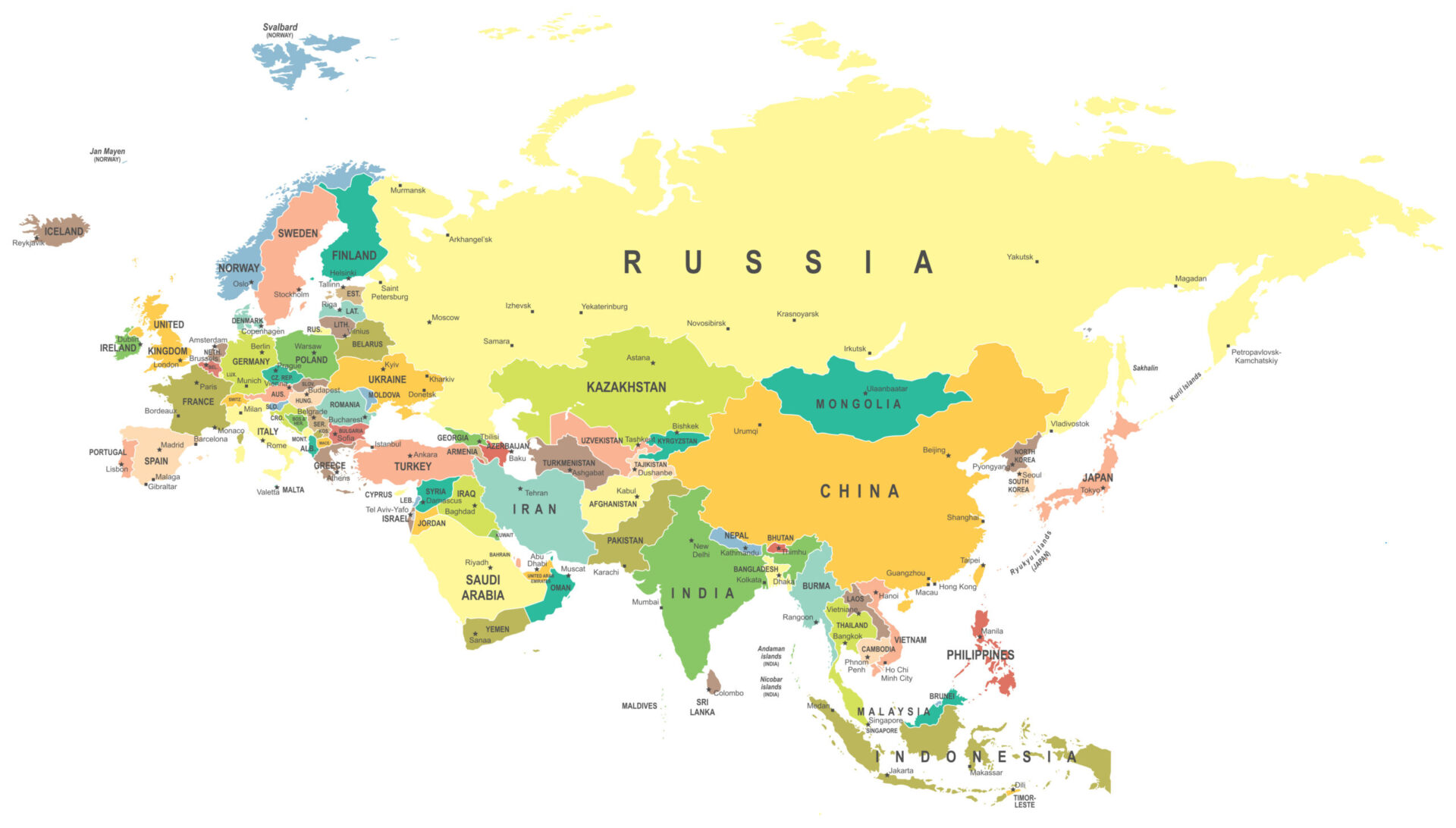
Russian Foreign Minister Sergey Lavrov is attending the fourth ministerial conference of Afghanistan’s neighbouring countries on April 13 in the Uzbek city of Samarkand to try to find a solution to the Afghan problem.

Russia and the Central Asian states are seeking to uncork the southern trade route out of Central Asia that is currently blocked by instability in Afghanistan.

Since extreme sanctions were imposed on Russia it has entered into a process of re-orientating its trade to the South and East. In theory it could redirect some of its oil and gas exports to the huge markets of South Asia, starting with Pakistan and India, by running pipelines and improving rail and road links, but the infrastructure has to run via Afghanistan, which has been in chaos since the Taliban took back control of the country last year.

The Central Asian states are very interested in the same idea, but have made little progress. Uzbekistan has taken a lead on the Afghan question with President Shavkat Mirziyoyev calling on the UN to set up a special group to deal with the problem during his inaugural UN speech in September 2020. The Uzbek president had identified an unstable Afghanistan as Central Asia’s most pressing security issue long before the Taliban retook control in August 2021 and the war in Ukraine changed the geopolitical landscape in Eurasia from February 2022.

Uzbekistan has been trying to help its neighbour improve its economy. For instance, it signed an electricity transition deal to provide the country with power. There are other even more ambitious projects for a transmission line that would transit Afghanistan and provide power to northern Pakistan, where there is an electricity deficit. There are also plans for a trans-Afghan railway line from the northern Afghan city of Mazar-i-Sharif, near the border with Uzbekistan, to Pakistan. The railway line could even be extended to ports on the Indian Ocean.

However, more recently relations between Kabul and Tashkent have soured. One sore point with the Afghans is that Uzbekistan shut down power exports to Afghanistan when it was hit by severe winter cold and a shortage of generation capacity early this year.

China is also interested in opening up transit via Afghanistan as part of its Belt and Road Initiative (BRI) to build transport links between Asia and Europe and other continents. Beijing recently signed off on the first large mineral extraction project in Afghanistan to tap that country’s significant mineral resources. A US report a few years ago identified over $1 trillion worth of mineral deposits in the country, including large amounts of lithium, essential for making electric vehicle (EV) batteries.

Russia was also quick to cosy up to the new Taliban leadership and signed off on deals to provide the embattled country with oil, gas and wheat in September last year to help stabilise the crisis-pressured government.

Work to bring Afghanistan into the fold is ongoing as Russia starts to reform the Eurasian Economic Union (EAEU). Previously the idea of the EAEU was to provide a partner to the EU in creating President Vladimir Putin’s long-standing foreign policy goal of forming a single market that would stretch “from Lisbon to Vladivostok.” Since the war in Ukraine has led to a breaking of relations and trade with Europe, the EAEU has been retasked with building up trade ties with the Global South, making transit via Central Asia key.

Likewise, China is already moving on to its second phase of developing its foreign relations by building up the Shanghai Cooperation Organisation (SCO) in Eurasia, which overlaps with the EAEU, by improving trade, economic and cultural ties. That makes the EAEU, SCO, Russia, China and the states surrounding Afghanistan natural partners.

Lavrov’s meetings in Samarkand on April 13 will include representatives from Russia, Iran, China, Pakistan, Tajikistan, Turkmenistan and Uzbekistan. The agenda will focus on discussing steps to facilitate the political settlement process in Afghanistan, and stabilise the humanitarian, social and economic situation in the country.

Russia has suggested creating a five-party “G5” platform to resolve Afghan’s problems, bringing together Russia, China, India, Iran and Pakistan. President Putin has expressed concern that the situation in Afghanistan has not improved since the withdrawal of US troops in the summer of 2021, and “international terrorist organisations are increasing their activities in the country.”

Russia and the Central Asian states, especially Uzbekistan and Kyrgyzstan, have suffered from terrorist attacks originating in Afghanistan. The heroin trade flowing from the Afghan poppy fields is also a problem for all the countries along the path of its export to Europe, largely via Kyrgyzstan, Kazakhstan and Russia.

Putin also said that Russia is worried about “non-regional countries” building and expanding infrastructure facilities under the guise of fighting international terrorism, in a reference to US meddling in the region, “without doing anything required for a genuine fight against global terrorism.”

The ministerial conference will also focus on regional economic integration and the implementation of transport and energy projects with Kabul, based on previous agreements. Last year, the Taliban’s interim government, which Russia still officially designates as a “terrorist organisation banned in Russia,” said it would provide security and push hard to get the trans-Afghan railway project completed.

The parties may also discuss gas supplies, with Russian Deputy Prime Minister Alexander Novak stating last December that Russia might send its natural gas to Afghanistan and Pakistan.

After the US announced its plans for a troop pullout from Afghanistan in 2021, the Taliban rapidly took control of the country, easily defeating the US-backed Afghan national army, which scattered to the wind. In August 2021, Taliban fighters captured Kabul without any resistance, and Afghan President Ashraf Ghani stepped down and fled the country. The US completed its troop withdrawal in September 2021, ending its almost 20-year presence in the country.

MK Bhadrakumar: US sees in Finland’s NATO accession encirclement of Russia

By MK Bhadrakumar, Indian Punchline, 4/6/23

Emphasis below is mine. – Natylie

The national flag of Finland was raised for the first time at the headquarters of the North Atlantic Treaty Organisation in Brussels on Tuesday, which also marked the 74th anniversary of the western alliance. It signifies for Finland a historic abandonment of its policy of neutrality.

Not even propagandistically, anyone can say Finland has encountered a security threat from Russia. This is an act of motiveless malignity toward Russia on the part of the NATO, which of course invariably carries the imprimatur of the US, while being projected to the world audience as a sovereign choice by Finland against the backdrop of Russia’s intervention in Ukraine.

Quintessentially, this can only be regarded as yet another move by the US, after the sabotage of the Nord Stream gas pipelines last September, with the deliberate intent to complicate Russia’s relations with Europe and render it intractable for the foreseeable future.

On the other hand, suffice it to say, this will also make Europe’s security landscape landscape even more precarious and make it even more dependent on the US as the provider of security. The general expectation is that Sweden’s accession to NATO will now follow, possibly in time for the alliance’s summit in Vilnius in July.

In effect, the US has ensured that the core issue behind the standoff between Russia and the West — viz., the expansion of the NATO to Russia’s borders — is a fait accompli no matter the failure of its proxy war in Ukraine against Russia.

Responding to the development, Kremlin spokesman Dmitry Peskov warned on Tuesday that Finland’s NATO membership will force Russia “to take countermeasures to ensure our own tactical and strategic security,” as Helsinki’s military alignment is an “escalation of the situation” and an “encroachment on Russia’s security.”

On April 4, the Russian Foreign Ministry stated that Moscow “will be forced to take retaliatory measures of both military-technical and other nature in order to stop threats to our national security.”

Finland’s NATO membership would extend NATO’s frontline with Russia by 1,300 kilometers (length of border Finland shares with Russia), which will put more pressure on Russia’s northwestern regions. Don’t be surprised if NATO missiles are deployed to Finland at some point, leaving Russia no option but to deploy its nuclear weapons close to the Baltic region and Scandinavia.

Suffice to say, the military confrontation between NATO and Russia is set to deteriorate further and the possibility of a nuclear conflict is on the rise. It is hard to see Russia failing to preserve its second strike capability at any cost or prevent the US from gaining nuclear superiority, and maintain the global strategic balance. 

The focus will be on the upgrade of defensive nuclear capabilities rather than on conventional forces, compelling Russia to demonstrate its nuclear strength. Russia has already front-loaded its deterrent by deploying tactical nuclear weapons in Belarus in response to the UK’s irresponsible decision to provide depleted uranium munition to Ukraine. It is all but certain that Russia will also double down in the Ukraine conflict.

Meanwhile, the US has for long deployed tactical nuclear weapons in European countries, including Belgium, Germany, Italy, the Netherlands and Turkey, which means the US has long deployed its tactical nuclear weapons at Russia’s doorstep, posing a significant threat to Russia’s national security. Russia’s deployment in Belarus is aimed at deterring the US’ potential provocations, anticipating what is about to happen.

Belarus’ geographical location is such that if Russian tactical nuclear weapons are deployed there, it will have a huge strategic deterrent effect on several NATO countries such Poland, Germany, the Baltic states and even the Nordic countries. A vicious cycle is developing, escalating the nuclear arms race and ultimately developing into a doomsday situation that no one wants to see.

The big picture is that knowing fully well that the situation could become extremely dangerous, the US is nonetheless relentlessly piling pressure on Russia with the objective of perpetuating its hegemonic system. Ronald Reagan’s strategy to use extreme pressure tactic to weaken the former Soviet Union and ultimately drag it down, is once again at work.

In immediate terms, all this would have negative consequences for the conflict in Ukraine. It is plain to see that Washington no longer seeks peace in Ukraine. In the Biden Administration’s strategic calculus, if Russia wins in Ukraine, it means NATO loses, which would permanently damage the US’ transatlantic leadership and global hegemony — simply unthinkable for the Washington establishment.

Without doubt, the US-NATO move to persuade Finland (and Sweden) to become NATO members also has a dimension in terms of geoeconomics. The alliance’s secretary-general Jens Stoltenberg recently stated, “if Finland and Sweden join the alliance, NATO will have more opportunities to control the situation in the Far North.” He explained that “both of these countries have modern armed forces that are able to operate precisely in the harsh conditions of the Far North.”

The US hopes that the “expertise” to operate in the Arctic and sub-Arctic conditions that Sweden and Finland can bring into the alliance is invaluable as a potential game changer when a grim struggle is unfolding for the control of the vast mineral resources that lie in the Far North, where Russia has stolen a march so far.

As polar ice melts at unprecedented speed in the Arctic, the world’s biggest players are eyeing the region as a new “no man’s land” that is up for grabs. Some recent reports have mentioned that moves are afoot for the integration of the air forces of four Nordic countries — Denmark, Norway, Finland and Sweden — undertaken with an undisguised anti-Russian orientation.

In military terms, Russia is being forced into sustaining the heavy financial burden of a 360 degree appraisal of its national security agenda. Russia has no alliance system supplementing its military resources. In an important announcement in February, paying heed to the straws in the wind, the Kremlin removed from its Arctic policy all mentions of the so-called Arctic Council, stressing the need to prioritise Russian Arctic interests, and striving for greater self-reliance for its Arctic industrial projects.

The revised Arctic policy calls for the “development of relations with foreign states on a bilateral basis,… taking into account the national interests of the Russian Federation in the Arctic.” This came days after a US state department official stated that cooperation with Russia in the Arctic was now virtually impossible.