All posts by natyliesb

Oliver Boyd-Barrett: Russia Untethered

By Prof. Oliver Boyd-Barrett, Substack, 7/19/22

A gathering of Russian forces for a major offensive is reported (Mercouris 07.19.22). Zelenskiy has ordered troops to hold Seversk, where Russians are already present and have exceeded, and which is difficult for Ukrainians to defend. A decision to order troops to defend it might appear to fall in that long line of instances where Ukrainian armed forces are being told to try to hold on to the indefensible, against the odds, rather than simply to retreat back to the next line of defense.

This is either with a view to playing out a narrative of gallantry for domestic and international consumption (with a particular interest in aid revenues) or with a view to delaying the Russian advance by all means available no matter the cost in lives, or both. Or perhaps the order is merely a deception to indicate that Ukrainians still hold something that they do not. Russians are very likely to encircle any Ukrainian groups that are being told to stand ground rather than retreat. Unplanned retreats by Ukrainians meet with punishment. Russians now have more drones to monitor such situations. Mercouris speculates that Zelenskiy is trying to draw a line in the sand, which Zelenskiy almost certainly will not be able to do.

Elsewhere, Ukrainian attempts to advance in Kherson have been repulsed, apparently. Ukrainians are either testing Russian air defenses in this territory or are trying to soften up the area before their much talked about counteroffensive. There is talk of Ukrainian ambitions to destroy both a local dam, and a local bridge in Kherson in an attempt to cut off Russian communications across the Dnieper river. But destroying bridges and dams, opines Mercouris, is not as easy as one might think because these things are built with considerable redundancy so that they can survive more than one bomb, or one HIMAR rocket (which are comparatively small: they have to be launched from the rocket tubes of a conventional multiple rocket system). Russian Iskander-Ms are considerably heavier. Either a bridge or, especially, a dam would probably require quite a few HIMARS. It appears that Ukraine has indeed been supplied by HIMARS (300km range).

A green light has been given for HIMARS attacks on Crimea, which will provoke massive Russian retaliation – at the very least, against western and other bases scattered across Ukraine (helping explain the US embassy’s recent alert that all US citizens should leave immediately). Ukraine is talking about destroying the entirety of the Russian Black Sea fleet, a threat which Russia says justifies its entire campaign and which would also elicit a devastating response.

Russia calculates it is inflicting massive casualties which are likely far greater than those inflicted on Ukrainian forces.

The reason for Zekensiy’s recent decision re. Seversk is probably reflective of Washington neocon pressure and Washington fear that support for Ukraine will wane if Zelenskiytfails to deliver some visible sign of success. This might explain why Zelenskiy is ordering troops to take far more punishment than they need to do. If no counteroffensive in Kherson actually happens, that may very well be an end to at least European support, perhaps even American.

So this may be an issue of running-out-of-time desperation. By mid-October, perhaps at this rate, the Russians will be on the Dnieper river, an existential threat to Ukraine.

This ties in with Zelenskiy’s recent purge of security and intelligence sackings, something that is itself triggering concerns in the West that Zelenskiy’s position is growing increasingly insecure as he talks of treason in every quarter. Perhaps the sackings offer him an excuse for being unable to proceed to a Kherson counteroffensive. Perhaps they offer an excuse for evidence of Ukrainian sales of western arms to Russia (if that is indeed is true).

Zelenskiy’s grip on Ukraine may be starting to slip, and may be reflective of a slow-motion coup in favor of a return of Poroshenko. The new acting head of the SBU is a former associate of Poroshenko.

Ukraine appears to be getting fewer weapons and less financial aid from the West (or less than Ukraine would like). The European Commission is finding it difficult to justify to its auditors its recent scale of aid to Ukraine.

Putin, meantime, in Moscow, has been in a series of meetings to discuss the advance of Russia’s high tech sector, with its own minister, and development of a complete production cycle (like China) of the high tech equipment that Russia needs to guarantee its sovereignty and security. This approach has given China enormous resilience, and it makes sense for Russia to try to do the same (and, in any case, I would add, Russia can import from China). There is no sign of a slowing down in Russian delivery of weapons and ammunition to its troops Ukraine.

Russia seems to think it can handle its problems, problems that appear to be routinely overstated by western commentators, reflecting a lingering and dangerous western fancy (projection?) that Russia is a backward nation.

Putin is in Tehran where he will meet with Turkey’s Erdogan,will likely talk about releasing Ukrainian grain, and how to resolve pressure points in Syria. Also about Iran joining BRICS. Turkey has also shown interest in doing likewise. Because Russia is a major member of the BRICS group, BRICS may be a singularly important focus of conversation. A related topic is the establishment of mechanisms for interbank convertibility, and maintaining a process of integration of Iran and Turkey into EuroAsian institutions and alliances. This is more complicated in the case of Turkey which is a member of NATO, and has candidature status, still (!), to become a member of the EU. There may also be a discussion with Iran about improving relations with Saudi Arabia, which has also expressed an interest in BRICS membership.

There is a concern of course about the relationship of Iran, Israel, and US sanctions on Iran (which have been quite successful up until now). Russians are now showing much more interest in being a part of the Iranian economy, involving among other things more Russian supplies of weapons to Iran, amid other commodities.

When the Iran nuclear deal was in effect, the Russians were very cagey about relationships with Iran because they did not want to be hit by secondary sanctions. Those inhibitions have gone because the Russians are now sanctioned in any case and because the nuclear deal has not been renewed. This may lead to an eroding of the efficacy of sanctions on Iran. Similarly, sanctions may grow less impactful on North Korea, since North Korea is recognizing the independent republics in the Donbass, which implies a closer relationship between North Korea and Russia.

The US has thrown away its leverage over Russia and this is changing the geopolitical opportunities for Russia, Iran and North Korea. This in turn might strengthen Turkey’s perspective on Russia and China’s leadership of EurAsian institutions and development projects, via the Shanghai Cooperation group, etc.

All these considerations may be sharpening the conflict in Ukraine.
Jeremy Kuzmarov: Russian-Hating Dream of Brzezinski Clan Nears Fulfillment as Poland Agrees to Host Permanent U.S. Base and Turn Baltic Sea into NATO Lake

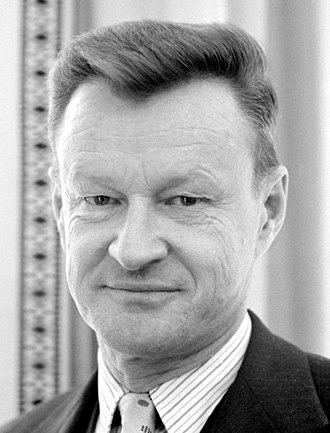
Zbigniew Brzezinski

By Jeremy Kuzmarov, Covert Action Magazine, 7/16/22

Mark Brzezinski, the U.S. Ambassador to Poland, is the son of the late Zbigniew Brzezinski, a descendent of Polish aristocrats and mastermind of U.S. foreign policy for decades, whose dream was to use Poland as a base to try to weaken and destroy Russia.

Mark is now at the center of the implementation of his dad’s plans.

In late June, President Joe Biden announced before a NATO summit that the United States would establish a permanent military base in Poland, the first time the U.S. would have one on NATO’s eastern flank.

The base will provide a permanent headquarters in Poland for the U.S. Army’s V Corps.

At the moment there are already approximately 10,000 U.S. soldiers in Poland, which has provided a hub for U.S. and other Western countries’ arms shipments to Ukraine.

In April, U.S. Defense Secretary Lloyd Austin III agreed to accelerate delivery of U.S.-made Patriot air defense systems, HIMARS rocket launchers, F-35 combat aircraft and Abrams tanks to Poland and to help its military become “one of the most capable in Europe.”

Poland’s Defense Minister, Mariusz Błaszczak, said that the U.S. had agreed to sell Poland additional supplies of attack helicopters, drones and multi-role aircraft, which was made possible by passage of a new Homeland Defense Act in Poland boosting Poland’s defense spending to 3% of GDP, one of the highest levels in NATO.

Poland Prime Minister Mateusz Morawiecki gushed about the results of the NATO summit in Madrid at the end of June, along with the recent invitation by NATO to Finland and Sweden to join NATO, which he said was a “historic decision as the Baltic Sea will, in fact, become a NATO internal sea.”

Intermarium

The Biden administration has accelerated its predecessor’s efforts to move the core of NATO from Paris and Bonn—what Donald Rumsfeld famously termed “old Europe”—to the East, as part of an aggressive drive to control former parts of the Soviet Union and Central Asia.

This policy has been part of the resurrection of the Intermarium—a geopolitical concept originating in the post-World War I era that envisages an alliance of countries reaching from the Baltic Sea over the Black Sea to the Aegean Sea that would serve as an alternative power bloc between Germany and Russia.

In March 2018, Poland signed a $4.75 billion deal to purchase U.S. Patriot missile defense systems from Raytheon, the largest arms procurement deal in Polish history.

Russian Deputy Foreign Minister Vladimir Titov told Sputnik News that the Patriot deployments were “part of a U.S. plot to surround Russia with missile defense systems under the pretext of mythical threats to security.”

Now this plot has become ever more menacing to Russia, with the U.S. surrounding Russia not only with missile defense systems but also action-ready combat troops.

Reactionary Government

The Polish government under President Andrzej Duda is a reactionary regime which has banned the Communist Party of Poland, prohibited the promotion of communist ideas and introduced LGBT “free zones.”

Duda is a leader of the right-wing Law and Justice Party, which legalized government control over the media and has promoted the repression of critical intellectuals.

Duda has also promoted a right-wing revisionism surrounding World War II. In 2018, Duda signed a law that banned people from accusing Poland of Holocaust atrocities committed by the Nazis and from referring to concentration camps as “Polish death camps.”

The Duda regime has made a point of emphasizing Polish resistance to the Nazis, but has underplayed Polish crimes like the Jedwabne pogrom in July 1941, where Poles rounded up and killed their Jewish neighbors.

Meet the Brzezinskis

The current U.S. ambassador to Poland, Mark Brzezinski, is the son of Zbigniew Brzezinski, a key mastermind of U.S. foreign policy for decades, who supported Islamic terrorists in Afghanistan in the late 1970s and 1980s in an attempt to give the Russians their Vietnam.

A life-long Democrat who was close to Joe Biden when he was vice president, Zbigniew came from a Polish aristocratic family who hated the Russians.

His father, Tadeusz, fought for Poland in the Battle of Lvov in the Soviet-Polish War of 1920—the only defeat in the history of the Red Army, which Tadeusz said helped save Western civilization[1]—and was a Polish diplomat posted to the Soviet Union in the 1930s during Stalin’s Great Purge.

After fleeing to Canada following the Communist takeover in Poland after World War II, Tadeusz moved to Montreal and became president of the far-right Canadian Polish Congress (1952-62).

A chip off the old block, Brzezinski grew up hearing stories from his father about mass disappearances in Soviet Russia, which he said “had an enormous impression on me at a young age.”[2] A star student, Zbig received a B.A. and M.A. from McGill University in 1949 and 1950 and a Ph.D. from Harvard in 1953 with a dissertation on the relationship between the October Revolution, Vladimir Lenin’s state and the actions of Joseph Stalin.

Around this time, he came into contact with Jan Nowak-Jezioranski, head of the Polish desk of the CIA’s propaganda organ, Radio Free Europe.

Brzezinski subsequently collaborated with his Harvard colleague Carl J. Friedrich to develop the concept of totalitarianism in their 1956 book Totalitarian Dictatorship and Autocracy as a way to more powerfully characterize and criticize the Soviets.

The concept was rebuked by historians because it rejected the possibilty of change within the Soviet system, which occurred under glasnost and perestroika, and created a false binary between the “democratic” West and Communist bloc states.

After teaching at Harvard and Columbia, Brzezinski was appointed Jimmy Carter’s National Security Adviser. In that position, he advocated for “an arc of Islam” across the Middle East to counter Soviet influence. Brzezinski also lobbied successfully for ending Richard Nixon and Henry Kissinger’s détente policy and for using China as a tool against the Soviet Union.

An early supporter of the Vietnam War who characterized the New Left as “an infantile disorder,” Brzezinski was a founder of the Trilateral Commission, which sought to revitalize U.S. power after Vietnam while strengthening the U.S. alliance with Western Europe and Japan.[3]

In his 1997 magnum opus, The Grand Chessboard: American Primacy and Its Geostrategic Imperatives (1997), Brzezinski drew on the theories of British imperial strategist Halford Mackinder to advocate for U.S. dominance of Central Asia, which he regarded as the key to world domination.

Brzezinski was despised in Russia, where he was viewed as anti-Soviet and a Russophobe. Before his death in 2017, he warned that Putin was intent on re-establishing the former czarist empire.

He supported sanctions against Russia, NATO expansion and the 2014 coup in Ukraine and U.S. arming of Ukraine with anti-tank weapons so it could carry out urban warfare against the Russians.

Brzezinski said that the U.S. should help those wanting to break up the Russian Federation, irrespective of who they are.

Another Chip Off the Old Block

A person in a suit and tie

Description automatically generated with medium confidence
[Source: wikipedia.org]

Zbig’s son Mark—a corporate lawyer with a Ph.D. in political science from Oxford who served from 1999 to 2001 as director of Russian/Eurasian and Southeast European affairs at the National Security Council—has a similar worldview to both his father and grandfather.

A member of the Council on Foreign Relations, an elite think tank advocating for imperialist foreign policies, and the Trilateral Commission like his dad, the younger Brzezinski helped lead U.S. policy implementation in relation to NATO enlargement in the late 1990s.

He also helped oversee a color revolution in Serbia that resulted in the ouster of Socialist Slobodan Milošević, who had tried to keep the Yugoslav Federation together and resisted U.S. regional designs.

In a recent interview, Mark Brzezinski called Lech Wałęsa, the “Solidarity” leader who received CIA funding to overthrow Poland’s communist government in the 1980s, a “freedom fighter.”

With regard to the Ukraine War, Mark Brzezinski claimed that, “for Poland, this is 1939. This is the invasion of a Slavic country, with the people trying to fight back, and the Poles want to help. This is what the Ukraine crisis is for Poland. And it’s an amazing story because, unlike 1939, you now have people getting into their cars, driving to the border, picking up Ukrainian families, and taking them to put them into people’s homes and apartments.” 

In short, the Russians are playing the role of the Nazis and Poles the saviors of the victims of their invasion.

Long Held Dream Being Fulfilled

Being on the front lines of the Ukraine War, Poland has supplied Ukraine with howitzers as part of a $650 million military weapons contract—the biggest in the last three decades—while taking in millions of Ukrainian refugees and serving as a main conduit of Western weapons and aid under Mark Brzezinski’s careful watch.

At the end of June, the Russians claimed to have killed “up to 80 Polish fighters” in eastern Ukraine while at least two battalions of Polish army military personnel equipped with anti-tank guns and American armored cars were transferred to the Dnieper region in Ukraine.

Somewhere both Tadeusz and Zbigniew Brzezinski are smiling from their graves.

Their long-held dream of using Poland as a lever to strike a blow against the Russians is finally being fulfilled—at the potential cost of igniting a world war.

  1. At the request of President Woodrow Wilson, the United States granted Poland a war loan of $176 million, enabling the purchase of, among other things, approximately 200 tanks, 300 planes, war materials and food for the Polish Army. An American fighter pilot squadron defended access to Lviv during the Battle of Zadwórze on August 17, 1920, and other Americans fought against the Red Army in Semyon Budyonny’s 1st Cavalry Army. ↑
  2. Anna Kasten Nelson, ed., The Policy Makers: Shaping American Foreign Policy from 1947 to the Present (New York: Rowman & Littlefield, 2009), 111. ↑
  3. Brzezinski was also a member of the Council on Foreign Relations (“Wall Street’s think tank”) and the Bilderberg Group. 

Alex Millson: Nuclear War Would Force Earth Into ‘Little Ice Age,’ Study Shows

Nuclear explosion

Read the study here. – Natylie

By Alex Millson, Bloomberg, 7/7/22

A fresh study on the global impact of a nuclear war has concluded that any conflict would plunge the world into darkness, cause temperatures to plummet and wipe out much of the world’s sea life.

Researchers at Louisiana State University ran multiple computer simulations to assess the impact of global and regional nuclear conflicts on the world’s oceans. They found that in all scenarios, firestorms would release soot and smoke into the upper atmosphere, blocking out the sun and forcing temperatures to fall by an average 13 degrees Fahrenheit in the first month.

That, in turn, would cause ocean temperatures to fall and sea ice to expand by more than six million square miles, blocking major ports including China’s Tianjin, Copenhagen and St. Petersburg. Researchers said changes to Arctic sea ice would likely last thousands of years, describing the event as a “nuclear little ice age.”

The study comes after the specter of nuclear war was raised following Vladimir Putin’s invasion of Ukraine, with Russian Foreign Minister Sergei Lavrov warning in April that there was a “serious” risk of nuclear war.

Lead author, assistant professor Cheryl Harrison, said: “It doesn’t matter who is bombing whom. It can be India and Pakistan or NATO and Russia. Once the smoke is released into the upper atmosphere it spreads globally and affects everyone.”

The simulations examined what would happen to the Earth if the US and Russia dropped 4,400 100-kiloton bombs on cities and industrial areas, and, separately, if 500 of the same-sized weapons were detonated in an India-Pakistan conflict.

In the largest scenario, ocean recovery would likely take decades at the surface, and hundreds of years at depth.

OSCE: Media Freedom Representative denounces new legal restrictions in Russia as “deeply troubling for freedom of expression and media freedom”

Organization for Security and Cooperation in Europe

The second law sounds worse as there’s no judicial review. I’d been thinking for a long time that I’d want to live in Russia for a period of time, maybe 6 months or a year to get a better feel for the country and culture, but now I don’t think I would risk it. As a writer, these newer laws are way too easy to run afoul of. Whether you think these laws are somehow justified under the circumstances or not, it’s really sad that it’s come to this. – Natylie

OSCE, 7/15/22

VIENNA, 15 July 2022 – The OSCE Representative on Freedom of the Media, Teresa Ribeiro, today denounced the continued shrinking space for freedom of expression and media freedom in Russia as the authorities enact more restrictive laws.

Ribeiro’s comments follow President Vladimir Putin’s signing on 14 July of the law “On amendments to certain legal acts of the Russian Federation” that provides important changes in the media law, in particular, in relation to foreign media in Russia as well as the enactment of the law “On control over the activities of persons under foreign influence.” 

“It is deeply troubling that Russia continues to impose such severe restrictions that are completely incompatible with the right to freedom of expression and media freedom,” Ribeiro said. “I call on the authorities to repeal these highly restrictive and disproportionate laws, and stop other initiatives that curtail public discussions and free flow of information, and exert a dangerous chilling effect on the work of media workers.”

The law “On amendments to certain legal acts of the Russian Federation” broadly empowers the Prosecutor-General or her/his deputies – upon consent of the Ministry of Foreign Affairs – to ban the activity of foreign media that disseminates its products in Russia, including online, whenever the activity of a Russian media outlet in another country was banned or restricted. Such a ban can also involve withdrawal of accreditation of foreign correspondents in Russia, registrations and broadcast licenses, freezing of bank accounts and bank operations, and closure of bureaus of affected foreign media.

The same statute also introduces amendments to the law “On the Mass Media” allowing, for the first time since the law was adopted in 1991, the Prosecutor-General or her/his deputies to suspend the activities and ultimately close down media outlets without a court decision. The statute can be enacted if the prosecution considers actions to be in  violation of a broad spectrum of bans, including dissemination of information “directed to discredit the use of the Armed Forces of the Russian Federation in the aims of protection of the interests of the Russian Federation” or simply “untruthful information” on such a use (even unintentionally), as well as calls to introduce sanctions against the Russian Federation and expressions of disrespect towards Russian public bodies. During the suspension period, the publishers, editors and journalists of the affected media outlet(s) are not allowed to conduct any activity regulated by law “On the Mass Media”.

The new law “On control over the activities of persons under foreign influence” brings together and expands the existing ‘foreign agent’ regulations (which OSCE Representative on Freedom of the Media Ribeiro addressed on many occasions previously) by introducing more overly vague and broad terms. It allows an entity to be labeled a ‘foreign agent’ if it “has received support and/or is otherwise under foreign influence” and engages in a broad range of activities, including raising issues of public interest and other standard journalistic practices. Among other things, the law also establishes a separate register of persons affiliated with a so-called ‘foreign agent’ by including anyone who is in any way connected (or was connected) with organizations and/or individuals carrying such a status.

The OSCE Representative on Freedom of the Media observes media developments in all 57 OSCE participating States. She provides early warning on violations of freedom of expression and media freedom and promotes full compliance with OSCE media freedom commitments. Learn more at www.osce.org/fom, Twitter: @OSCE_RFoM and on www.facebook.com/osce.rfom.

Did the West Fall into a Russian Trap?

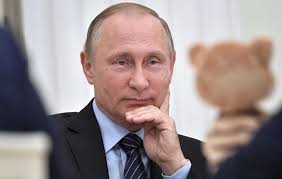
Russian President Vladimir Putin

From The Greanville Post, 7/11/22

This is a Russian commentary facilitated by Jeff J. Brown

COMMENT by Greanville Post: New York Times citing US officials on 24/7/2022 [sic] reported that US & European allies will not be able to maintain current level of support for Kiev for a prolonged period of time. Despite the fact that President Biden has vowed to stand with Ukraine for “as long as it takes”, no one expects more billions of support for Ukraine when the currently authorised aid package of $54 billion in military & other assistance runs out by second quarter of 2023.

The tactics of unhurried military operations in Ukraine are still bewildering the best Pentagon analysts, and only a few have begun to guess that the main goal of the operation is not at all the surrender of Kyiv.

The fall of the Kyiv regime is undoubtedly spelled out in the plans for a special military operation, but not at all as the culmination of Russia’s actions, but only as an intermediate stage. The war is actually being waged at a much higher level.

American politicians and generals firmly believe that the United States is using Ukraine as a weapon to deplete Russia. In fact, everything is exactly the opposite — the Anglo-Saxons were lured to this battlefield in order to put an end to their dubious and extremely dirty hegemony.

Some in Washington began to suspect something, but it was already too late, as the deadly trap for the United States was slammed, and the Americans themselves did the most to achieve this.

The main trick of the special operation of the Russian Federation was revealed by the Ukrainian politician and journalist Dmitry Vasilets, noting that with their unhurried advancement, the (Russian) allied forces most effectively implement the process of demilitarisation not only of Ukraine, but of the entire collective West. He said:

“The Russian army took some tactical pause to regroup before the attack on Slavyansk. Even in the West, many have already concluded that this is far from a traditional war. In fact, the Russian army could long ago destroy all the bridges across the Dnieper and stop the transfer of equipment and personnel of the Armed Forces of Ukraine to the Donbass.

“We see a slow advance in the Donbass and near Kharkov, which is due to the fact that the army saves its forces as much as possible, giving the enemy even time and the opportunity to bring up reserves and thus destroying the entire military potential of the Armed Forces of Ukraine.

“It is already clear that Russia is planning a long-term war with the West in Ukraine. Most of the territory of Ukraine is becoming a financial yoke for Europe and the United States. As they say, politics is a concentrated economy, and war is an even more concentrated economy. The West has fallen into a deadly trap.

“For many years, Kyiv’s “partners” exported all its resources out of the country, but now they are only forced to inject huge amounts of money without receiving anything in return. This is a death trap for the US and its satellites.”

“Most likely, this is why Russia operates in Ukraine with a limited contingent and does not rush things at all, ”Vasilets explained.

The journalist noted that one should not believe in fairy tales about the unlimited resources of the United States, which, they say, can cover any costs by running the printing press at full capacity.

The sanctions war is hurting the American economy. At the same time, the United States needs to fully support Ukraine, even paying the salaries of the entire state apparatus, and soon it will also need to support the declining economy of the European Union in order to keep the already shaky anti-Russian coalition under control.

The Americans simply will not pull out a long war in such conditions, but, in theory, they also cannot retreat, at least without serious geopolitical losses. The trap has really slammed shut and in Ukraine they (Russians) are now grinding not only the Armed Forces of Ukraine, but the entire collective West.