In the past couple of days, my peers in the community of Russia analysts have addressed the question of “what if” – what is it that Russia can and may do if the negotiations with the United States over its draft Treaties on security in Europe fail within the very short time period the Russians have set, apparently one month. Parenthetically, I am amused that spokesmen for the U.S. State Department say that they may enter into talks with the Russians some time in January. It seems they did not catch the short timeline the Russians have set or mistakenly believe it was a bluff.
The best of the analyses by my fellow analysts was posted yesterday by former Canadian diplomat Patrick Armstrong. I recommend this read to everyone, because it is in its own way reassuring, setting out possible Russian options that are far removed from pressing the button and blowing us all, and themselves, to bits.
However, I did not see in his piece, nor do I find in the writings of other independent analysts, not to mention on the pages of our mainstream newspapers, any explanation of what exactly Vladimir Putin meant when he said initially and repeated yesterday before the Collegium of the Russian Ministry of Defense, an audience of a hundred or more generals, that should the talks with the US fail, Russia will immediately implement “military-technical” retaliatory measures.
The term “military-technical” has been picked up and sold for the purchase price by nearly all our media. No explanation is given, because very likely no one really understands the term.
So I will have a go at it here and now, after a eureka moment came to me earlier this morning. The term is as elusive as the translation of “адекватный,” which most everyone (or every translation software) wrongly translates as “adequate” when it normally means “appropriate” or “suitable.”
The “technical” in the expression is coming from техника, which is the common Russian way of saying “equipment”. Military “tekhnika” means motorized howitzers, personnel carriers, fighter jets, etc. Tekhnika also has common civilian use: the outfitting of a factory is “tekhnika” as in “техническое оснащение.”
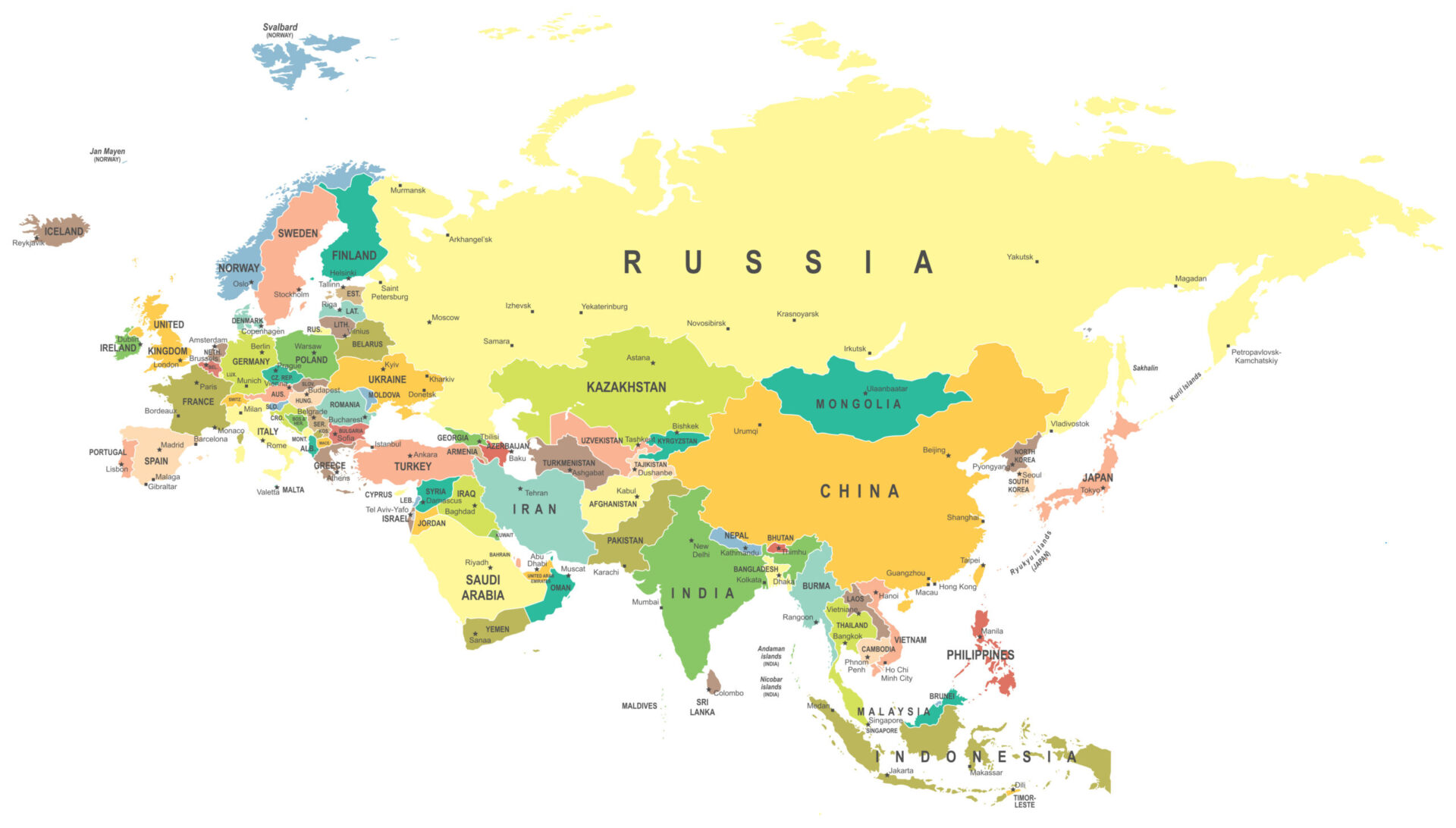
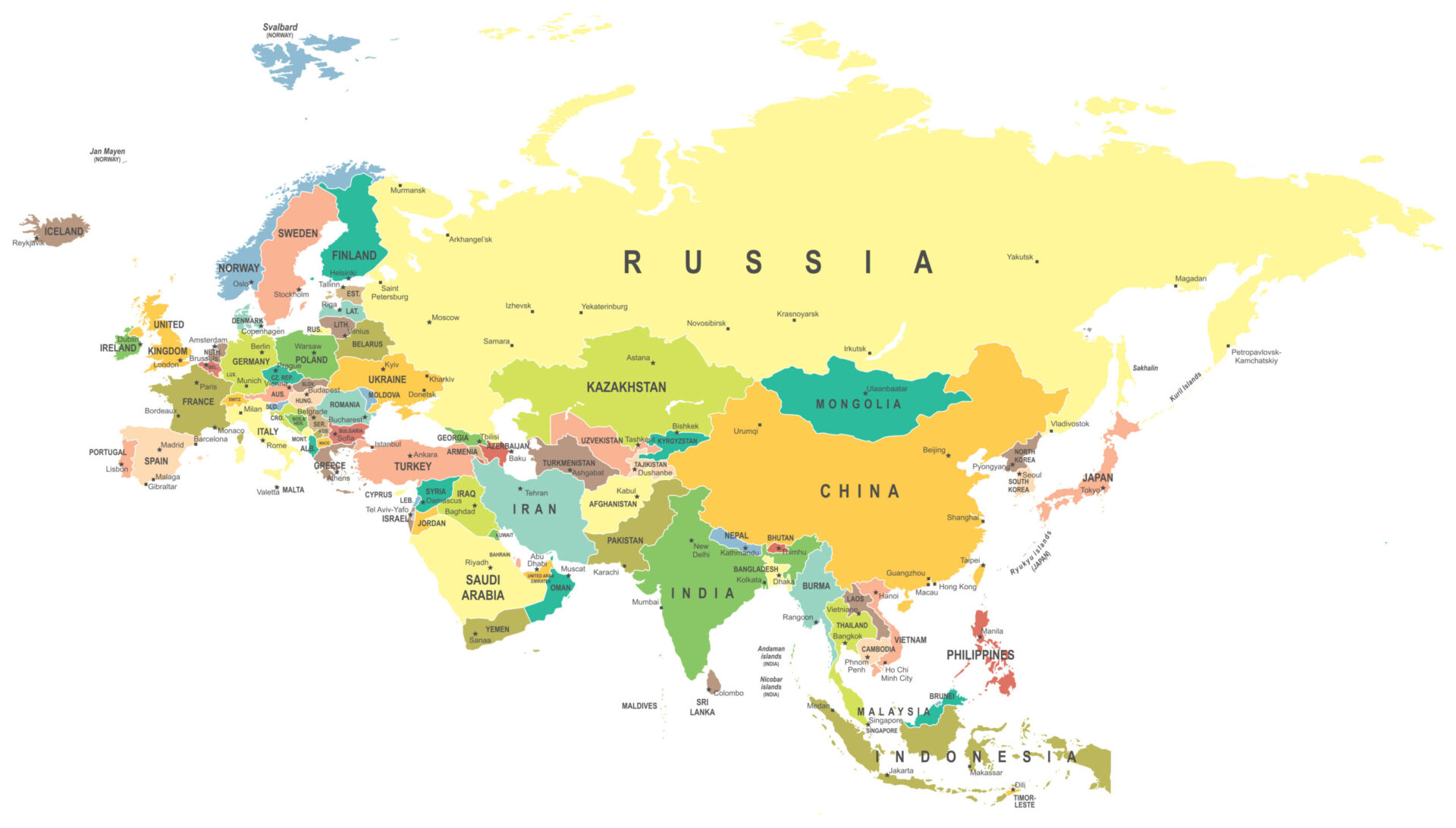
So, what Putin is saying is that the Russians will respond by deploying military hardware. Now what hardware would that be? Given that so much of the draft treaties deal with short range missiles that the US is deploying in Europe and hopes to deploy in Ukraine, it is entirely logical that the Russian response to failure in negotiations will not be to invade Ukraine, it will not be to cut gas supplies to Europe, but it will be to deploy its nuclear capable short range missiles in Belarus and in Kaliningrad.
As tensions mount in Eastern Europe amid questions about whether Russian President Vladimir Putin will order an invasion of Ukraine, a new poll has found that Americans don’t have much of an appetite to go to war to defend the former Soviet Republic, with a vast majority saying U.S. leaders should focus their attention on domestic issues.
According to a survey conducted by YouGov in conjunction with the Charles Koch Institute that was released on Friday, a plurality of Americans (48 percent) said they either strongly or somewhat oppose “going to war with Russia to protect Ukraine’s territorial integrity” should Russia invade. Just 27 percent favored such a move while 24 percent said they didn’t know…
Considering that this is a memoir of a woman whose claim to fame is being a Russia expert and a celebrated biographer of Putin, I was expecting substantive discussion of contemporary Russia to be a significant part of the book. That was not the case, however, as her real experience with Russia seems to have occurred from the late 1980’s through the early 2000’s. This experience is weaved into her general biography but it doesn’t provide the necessary insight to understand the current state of affairs in the country or the problems that have come to a head recently between Russia and the west.
Hill did not start out as a privileged insider but came from a hardscrabble working class background in Northeast England, which makes her down-to-earth and relatable. She describes how the neoliberal and deindustrialization policies of the 1970’s and 1980’s personally affected her family and many others in the UK and how she observed similarities in certain regions of the U.S. after she moved there. She draws parallels on the dynamics behind this and the economic collapse Russia went through in the 90’s – a theme I have also explored. She is to be lauded for bringing the details of this topic to the professional educated class that will most likely be reading her book. Where she tends to go off the rails is what she says – and doesn’t say – about Putin era Russia.
From what I can ascertain from her telling, she spent significant time on the ground in Russia off and on from 1987 through the early 2000’s. She goes into the most detail about her travels to Russia as an exchange student during the Gorbachev era and then again while pursuing her PhD during the 1990’s. During the former, she describes Moscow as bleak and run-down with crumbling infrastructure and food shortages but an impressive public transportation system. During the latter, she describes the effects of the Shock Therapy program that transitioned Russia to a free market economy. She also goes into the travails of being a woman during this period of economic collapse and chaos where many Russian women turned to prostitution servicing relatively well-heeled western men. She relates an anecdote in which an elevator man at the Moscow hotel where she was bringing a delegation of Japanese businessmen to visit her academic sponsor assumed she was a call girl and was aggressively intent on getting a cut until the reality of the situation was explained to him – by a man, of course.
However, it doesn’t seem that she has spent any real time in Russia for most of the Putin era, with the exception of attendance at a couple of Valdai conferences. This leads me to believe that she is relying on information from the usual dubious sources in the political and media establishment about what contemporary Russia is like. This is evident from the few remarks she makes in passing.
First, she uses the term autocratic when referring to Putin’s Russia, which is inaccurate. Autocracy is absolute rule by one person. Anyone who has any depth of understanding of Putin era Russia knows that Putin does not rule absolutely. Similarly she uses the term populist in a somewhat pejorative sense to compare Putin to Donald Trump and Brexit cheerleader Nigel Farage: “They were charismatic leaders who dealt in pithy slogans that offered promises, not programs.” This is a gross oversimplification of Putin’s politics over the past two decades and implies that Putin has had a lack of political substance in his approach to addressing the numerous crises he inherited when taking over Russia. Putin is a pragmatist who had to learn on the job. There are still many problems to tackle but the command of many details of different areas of governance he has developed over time as demonstrated during lengthy Q&A sessions, speeches and press appearances, along with the concrete improvements he oversaw in poverty reduction, infrastructure investment, lowering crime and rebuilding a dilapidated military reveals this observation by Hill to be quite laughable….
The Russian Federation and the member States of the North Atlantic Treaty Organization (NATO), hereinafter referred to as the Parties,
reaffirming their aspiration to improve relations and deepen mutual understanding,
acknowledging that an effective response to contemporary challenges and threats to security in our interdependent world requires joint efforts of all the Parties,
determined to prevent dangerous military activity and therefore reduce the possibility of incidents between their armed forces,
noting that the security interests of each Party require better multilateral cooperation, more political and military stability, predictability, and transparency,
reaffirming their commitment to the purposes and principles of the Charter of the United Nations, the 1975 Helsinki Final Act of the Conference on Security and Co-operation in Europe, the 1997 Founding Act on Mutual Relations,
Cooperation and Security between the Russian Federation and the North Atlantic Treaty Organization, the 1994 Code of Conduct on Politico-Military Aspects of Security, the 1999 Charter for European Security, and the Rome Declaration “Russia-NATO Relations: a New Quality” signed by the Heads of State and Government of the Russian Federation and NATO member States in 2002,
have agreed as follows:
Article 1 The Parties shall guide in their relations by the principles of cooperation, equal and indivisible security. They shall not strengthen their security individually, within international organizations, military alliances or coalitions at the expense of the security of other Parties. The Parties shall settle all international disputes in their mutual relations by peaceful means and refrain from the use or threat of force in any manner inconsistent with the purposes of the United Nations. The Parties shall not create conditions or situations that pose or could be perceived as a threat to the national security of other Parties. The Parties shall exercise restraint in military planning and conducting exercises to reduce risks of eventual dangerous situations in accordance with their obligations under international law, including those set out in intergovernmental agreements on the prevention of incidents at sea outside territorial waters and in the airspace above, as well as in intergovernmental agreements on the prevention of dangerous military activities. Article 2 In order to address issues and settle problems, the Parties shall use the mechanisms of urgent bilateral or multilateral consultations, including the NATO-Russia Council. The Parties shall regularly and voluntarily exchange assessments of contemporary threats and security challenges, inform each other about military exercises and maneuvers, and main provisions of their military doctrines. All existing mechanisms and tools for confidence-building measures shall be used in order to ensure transparency and predictability of military activities. Telephone hotlines shall be established to maintain emergency contacts between the Parties. Article 3 The Parties reaffirm that they do not consider each other as adversaries. The Parties shall maintain dialogue and interaction on improving mechanisms to prevent incidents on and over the high seas (primarily in the Baltics and the Black Sea region). Article 4 The Russian Federation and all the Parties that were member States of the North Atlantic Treaty Organization as of 27 May 1997, respectively, shall not deploy military forces and weaponry on the territory of any of the other States in Europe in addition to the forces stationed on that territory as of 27 May 1997. With the consent of all the Parties such deployments can take place in exceptional cases to eliminate a threat to security of one or more Parties. Article 5 The Parties shall not deploy land-based intermediate- and short-range missiles in areas allowing them to reach the territory of the other Parties. Article 6 All member States of the North Atlantic Treaty Organization commit themselves to refrain from any further enlargement of NATO, including the accession of Ukraine as well as other States. Article 7 The Parties that are member States of the North Atlantic Treaty Organization shall not conduct any military activity on the territory of Ukraine as well as other States in the Eastern Europe, in the South Caucasus and in Central Asia. In order to exclude incidents the Russian Federation and the Parties that are member States of the North Atlantic Treaty Organization shall not conduct military exercises or other military activities above the brigade level in a zone of agreed width and configuration on each side of the border line of the Russian Federation and the states in a military alliance with it, as well as Parties that are member States of the North Atlantic Treaty Organization. Article 8 This Agreement shall not affect and shall not be interpreted as affecting the primary responsibility of the Security Council of the United Nations for maintaining international peace and security, nor the rights and obligations of the Parties under the Charter of the United Nations. Article 9 This Agreement shall enter into force from the date of deposit of the instruments of ratification, expressing consent to be bound by it, with the Depositary by more than a half of the signatory States. With respect to a State that deposited its instrument of ratification at a later date, this Agreement shall enter into force from the date of its deposit. Each Party to this Agreement may withdraw from it by giving appropriate notice to the Depositary. This Agreement shall terminate for such Party [30] days after receipt of such notice by the Depositary. This Agreement has been drawn up in Russian, English and French, all texts being equally authentic, and shall be deposited in the archive of the Depositary, which is the Government of …
The United States of America and the Russian Federation, hereinafter referred to as the “Parties”,
-guided by the principles contained in the Charter of the United Nations, the 1970 Declaration on Principles of International Law concerning Friendly Relations and Cooperation among States in accordance with the Charter of the United Nations, the 1975 Helsinki Final Act of the Conference on Security and Cooperation in Europe, as well as the provisions of the 1982 Manila Declaration on the Peaceful Settlement of Disputes, the 1999 Charter for European Security, and the 1997 Founding Act on Mutual Relations, Cooperation and Security between the North Atlantic Treaty Organization and the Russian Federation,
-recalling the inadmissibility of the threat or use of force in any manner inconsistent with the purposes and principles of the Charter of the United Nations both in their mutual and international relations in general,
-supporting the role of the United Nations Security Council that has the primary responsibility for maintaining international peace and security,
-recognizing the need for united efforts to effectively respond to modern security challenges and threats in a globalized and interdependent world,
-considering the need for strict compliance with the principle of non-interference in the internal affairs, including refraining from supporting organizations, groups or individuals calling for an unconstitutional change of power, as well as from undertaking any actions aimed at changing the political or social system of one of the Contracting Parties,
-bearing in mind the need to create additional effective and quick-to-launch cooperation mechanisms or improve the existing ones to settle emerging issues and disputes through a constructive dialogue on the basis of mutual respect for and recognition of each other’s security interests and concerns, as well as to elaborate adequate responses to security challenges and threats,
-seeking to avoid any military confrontation and armed conflict between the Parties and realizing that direct military clash between them could result in the use of nuclear weapons that would have far-reaching consequences,
-reaffirming that a nuclear war cannot be won and must never be fought, and recognizing the need to make every effort to prevent the risk of outbreak of such war among States that possess nuclear weapons,
-reaffirming their commitments under the Agreement between the United States of America and the Union of Soviet Socialist Republics on Measures to Reduce the Risk of Outbreak of Nuclear War of 30 September 1971, the Agreement between the Government of the United States of America and the Government of the Union of Soviet Socialist Republics on the Prevention of Incidents On and Over the High Seas of 25 May 1972, the Agreement between the United States of America and the Union of Soviet Socialist Republics on the Establishment of Nuclear Risk Reduction Centers of 15 September 1987, as well as the Agreement between the United States of America and the Union of Soviet Socialist Republics on the Prevention of Dangerous Military Activities of 12 June 1989,
have agreed as follows:
Article 1 The Parties shall cooperate on the basis of principles of indivisible, equal and undiminished security and to these ends: shall not undertake actions nor participate in or support activities that affect the security of the other Party; shall not implement security measures adopted by each Party individually or in the framework of an international organization, military alliance or coalition that could undermine core security interests of the other Party. Article 2 The Parties shall seek to ensure that all international organizations, military alliances and coalitions in which at least one of the Parties is taking part adhere to the principles contained in the Charter of the United Nations. Article 3 The Parties shall not use the territories of other States with a view to preparing or carrying out an armed attack against the other Party or other actions affecting core security interests of the other Party. Article 4 The United States of America shall undertake to prevent further eastward expansion of the North Atlantic Treaty Organization and deny accession to the Alliance to the States of the former Union of Soviet Socialist Republics. The United States of America shall not establish military bases in the territory of the States of the former Union of Soviet Socialist Republics that are not members of the North Atlantic Treaty Organization, use their infrastructure for any military activities or develop bilateral military cooperation with them. Article 5 The Parties shall refrain from deploying their armed forces and armaments, including in the framework of international organizations, military alliances or coalitions, in the areas where such deployment could be perceived by the other Party as a threat to its national security, with the exception of such deployment within the national territories of the Parties. The Parties shall refrain from flying heavy bombers equipped for nuclear or non-nuclear armaments or deploying surface warships of any type, including in the framework of international organizations, military alliances or coalitions, in the areas outside national airspace and national territorial waters respectively, from where they can attack targets in the territory of the other Party. The Parties shall maintain dialogue and cooperate to improve mechanisms to prevent dangerous military activities on and over the high seas, including agreeing on the maximum approach distance between warships and aircraft. Article 6 The Parties shall undertake not to deploy ground-launched intermediate-range and shorter-range missiles outside their national territories, as well as in the areas of their national territories, from which such weapons can attack targets in the national territory of the other Party. Article 7 The Parties shall refrain from deploying nuclear weapons outside their national territories and return such weapons already deployed outside their national territories at the time of the entry into force of the Treaty to their national territories. The Parties shall eliminate all existing infrastructure for deployment of nuclear weapons outside their national territories. The Parties shall not train military and civilian personnel from non-nuclear countries to use nuclear weapons. The Parties shall not conduct exercises or training for general-purpose forces, that include scenarios involving the use of nuclear weapons. Article 8 The Treaty shall enter into force from the date of receipt of the last written notification on the completion by the Parties of their domestic procedures necessary for its entry into force. Done in two originals, each in English and Russian languages, both texts being equally authentic.