Category Archives: Uncategorized

Yves Smith’s first thoughts on US-Russia talks to end the Ukraine war

By Yves Smith, Naked Capitalism, 2/13/25

Trump’s announcement of talks “immediately” between the US and Russia over Ukraine after a 90 minute call with Putin, shocked Ukraine and Europe despite Trump’s outstanding promise to end the war in 24 hours when he took office. European leaders got a second gut-punch in Pete Hegseth’s statement that the US had heard Russia’s demand that it would not agree to a settlement unless Ukraine really really was not going to enter NATO:

European, UK, and above all Ukraine leaders should not be surprised at this development. There’s no appetite in this Administration or Congress to pour more arms and treasure into the war; Trump’s talk of mortgaging Ukraine mineral wealth (when pretty much all of it already has owners and/or is in Russian control) looked more like yet another dominance game of Trump’s versus Zelensky to remind him of his dependence on US largesse, as well as a ham-handed effort to pretend to Russia that the US conceivably has a politically acceptable way to keep funding Ukraine.

However, the flip side is many commentators have been reduced to frequent use of the word “delusion” to depict the European/Ukrainian grip on the trajectory of the war. The Collective West ex the US seems to be in the state of someone who has been seriously unwell and has gotten bad blood test readings, but is still somehow unprepared when imaging comes back telling him he has Stage 4 cancer. And that’s charitable. It’s hard to see Ukraine’s five year survival odds as being as high as 20%.

Since this is, as Lambert is wont to say, an overly dynamic situation, we’ll make a few observations that, as far as we can tell, seem to be sound but we don’t yet see in circulation. We’ll then turn to the UK/Europe/Ukraine meltdown and their insistence on crashing the negotiation party.

We’ll also return to the Article 51 issue Hegseth raised in the form of a clarification and correction from Auerlien via e-mail. We’ll also take a brief look at UK/European reactions.

Initial Thoughts

These developments will deliver a severe blow to what is left of Ukraine morale, most importantly among its military. One can expect an increase surrenders/running away. It will also make already difficult recruitment even harder.

That should result in reports of even more breakdowns on the front lines and corresponding increases in the speed and/or breadth of Russian advances.

Putin may not want to look like he is poking a stick in Trump’s eye via looking like he is increasing the tempo in order to step up pressure. Russia still has to take and clear Slaviansk and Karamatorsk, for instance. Operations like that would be less embarrassing to Trump than marching to the Dnieper if/when becomes possible.

Despite yet another Trump “shock and awe” show, Trump needs Ukraine and European cooperation unless he is willing to walk away. Trump is now taking the contradictory position that he wants to end US funding yet still push the other NATO members around by not merely acquiescing to a deal they detest, but also committing substantial resources to it while the US stands aside. This is a violation of the golden rule: “He who has the gold makes the rules.”

Note also that Hegseth’s “You are on your own” regarding security guarantees may not be as black and white as it sounds. Hegseth said no to ground forces, which leaves open the possibility of US air support.

And as we’ll discuss more below, from news stories, UK and European leadership are incandescent over the idea that the US and Russia are negotiating the end of the war without them. A preview from Colonel Smithers via e-mail:

On the way to Oxford this morning, I listened to the Today programme on BBC Radio 4. It was deranged, if not infuriating.

And Aurelien’s reply:

I read as much as I could bear to this morning of the hysterics of European leaders. As a number of us have been saying for a while, this is not a case of the US driving reluctant European puppets forward: the visceral hatred of Russia is stronger over here than over there, and could result in a really nasty showdown across the Atlantic

Ukraine has agency and Ukraine is not even remotely on board. Despite Ukraine running out of men and weapons, it is still fighting. Remember that possession is 9/10 of the law. Despite the close to certain outcome of an eventual Russian win, in that scenario. Russia is faced with continuing to bleed and shell Ukraine until it surrenders and/or its military really does collapse. In that scenario, Russia also bears the burden of occupying and administering Ukraine as well as rebuilding it.

Putin, despite being willing to talk to the US, has made clear that if Ukraine survives in some form, it needs to make its own commitment to no NATO membership as well as neutrality, preferably enshrined in its constitution. But as Putin has repeatedly pointed out, Zelensky signed a degree in October 2022 barring negotiations with Russia as long as Putin was in charge. Putin says the Russian reading of Ukraine’s constitution is that Zelensky, by virtue of his presidential term having expired, cannot take any binding acts on behalf of the Ukraine government, which would include reversing the decree, which Putin deems to be necessary to start any meaningful discussions with Ukraine.

In other words, clearing up the legitimacy of rule in Ukraine is on the critical path to concluding any deal. Putin has suggested that the Russian reading is the head of the Rada has constitutional authority to act under martial law when the President’s term has expired, but as far as I can tell, no one in Ukraine has been willing to endorse that idea.

So the presumed fallback is Ukraine will have to hold elections. Zelensky has already deemed that to be impossible. His latest argument:

In a sign of continuing resolve, Zelensky just sanctioned and froze the assets of the most plausible pretender to his throne, former president Petro Poroshenko. And with Musk just having killed the USAID foreign propaganda/protest machinery, the US has little ability to influence election outcomes. From Reuters:

Ukraine has imposed sanctions on former president and opposition politician Petro Poroshenko, including asset freezes and a ban on withdrawing capital from the country, a presidential decree published on Thursday said….

The decree did not say why the sanctions were imposed, but Zelenskiy said earlier that his security council would announce sanctions targeting people who had undermined Ukrainian national security.

“The billions made in what amounted to the sale of Ukraine and Ukrainian interests and Ukrainian security must be blocked and made to work for the protection of Ukraine and Ukrainians,” he said.

And what of the Banderites? They still wield disproportionate influence in Ukraine, if nothing else due to their abandon and glee in reporting to extreme violence. Yet their sell-by date is coming soon.

Do they hold fast to their weird eschatological tendencies and dig in and keep fighting? They can expect Russian war crimes trial unless they run away to say the Baltic states, Canada or London. If they stay, unless Zelensky finds a way to flee, he is effectively their hostage (Scott Ritter and other believe that Zelensky’s personal security forces have a significant Banderite participation). Remember, per above he’s useful to hold up elections to then thwart Ukraine signing any final deal.

Aurelien on the Trump Team’s confused thinking on Article 51 and peacekeeping. I am sure Aurelien would have weighed in on his excellent site, but he publishes on Wednesdays, and the news of the planned negotiations broke shortly thereafter. I’m sure he will have plenty to say next week, particularly since we’ll have a better grip on facts v. rumors v. posturing. In the meantime, we are very grateful for this input via e-mail:

You may want to comment on Hegseth’s remarks about European forces sent to Ukraine
“not having Article 5 protection.”

I’m not sure whether he is confused, or journalists or both, but we need to remember that the Washington Treaty came before the NATO structure was established, and exists independently of it. If NATO were to fold up tomorrow, the Washington Treaty provisions would still apply unless the Treaty itself was denounced by all.

That said, the “all for one” provision of Art 5 has only ever applied within the area of application of the Treaty, which is set out in Art 6. That area doesn’t include Ukraine and never has, so nothing has changed.

What he may be saying in code is that US forces in Europe (and they’re tiny anyway) would not intervene in the case of a crisis, nor would the NATO command structure (headed by a US General) be used. In the latter case, depending on the size of the operation, the Europeans might find it very hard to identify an HQ which was capable of commanding an operation of the size and complexity envisaged: there may not be one.

Aurelien was dismissive of Hegseth and others offering “non-NATO forces” as part of a peacekeeping mix:

None of the Global South countries has experience of conducing, let alone planning and commanding, such an operation. Who’s going to command the operation? What will be the language of command? Where will the strategic level HQ be? What doctrine will they use? Where will the operational HQ be? How will a Ghanaian battalion deploy to Ukraine? There have been some African PKO missions in Africa, but funded and partly equipped by the EU, and they often haven’t ended well.

Is Russian leadership constrained in how much it can concede, if things ever got that far? We pointed out in our last post on the prospects for negotiations that Putin and other leaders have gone on and on and on and on about how what a no-good duplicitous bunch the US is. Mind you, these recitations have gotten longer and more specific over time. That means that top officials have been relentless reinforcing with the Russian public the notion that the Collective West is completely untrustworthy.

So how can Russia possibly sign a pact given that? Hasn’t its leadership salted the earth as far as popular views are concerned?

Safety First made similar (and more specific) observations on the Ukraine negotiations post from the start of the week:

But it seems evident that Putin intends to keep talking – as I recall, more to mollify the Indians and the Brazilians than the Chinese – but not to compromise on any of his asks.

Separately, one part of the equation that Yves’ post does not really seem to address is Russia’s internal political picture, which I would argue is fairly complex. Not in terms of “political parties”, but, rather, the various key stakeholders and their respective interests, as well as public opinion as a whole. Both the military and big sections of the general public would react quite badly to a “Khasavyurt Part 2”, that’s a reference to an incredibly bad deal Yeltsin entered into to end the First Chechen War ahead of the 1996 elections. [And then spent 1997-1998 beating off a challenge by general Rokhlin, ultimately having him killed.] The officialdom appears split, but at least a fraction of it is still stuck in the old “neoliberal pro-western” frame of mind rather than the new “keynesian-nationalistic”. These are basically the people who speak with Anatol Lieven whenever he visits. And then there are the oligarchs, and who knows what they are thinking, but I stress that Putin’s literally very first public meeting after announcing the SMO was with the top 40-50 of them. So I suspect at least some are very much onboard, but how many exactly is hard to say.

I half-suspect that remaining “open to” negotiations, but in reality filibustering them a bit – either Trump gives me the sun and the moon, or I claim that the US is once again negotiating in bad faith, which it probably is – allows Putin not only to appease his BRICS partners, but to keep all of these factions more or less in line. [At least, as long as the military keeps on winning…]…

Insofar as anything Trump says, does or wants, to me the key giveaway that he and his boys do not understand what they are getting into is the assertion that after any ceasefire or peace agreement, the US will “rebuild the Ukraine’s military”. This is pure fantasy-land. Then again, were I an evil Dick Cheney clone pulling the strings behind US policy, this is precisely the kind of a poison pill I’d keep slipping into the negotiations to make sure they failed, so that the war would continue, figuratively, to the last Ukrainian, while I looked for a different avenue through which to pressure the Russians. Hell, pro-US regime change in Khazakhstan, especially if it led to a civil war type of scenario, would upset a whole truckload of apple carts for Russia, China and Iran…

Heads Exploding Across the Pond

A sampling, since there’s plenty more like this.

Financial Times, lead story: Europe reels after Donald Trump announces US-Russia talks on Ukraine

However, US defence secretary Pete Hegseth on Wednesday ruled out US troops being deployed or any role for Nato in co-ordinating boots on the ground after the end of the conflict. “Any security guarantee should be backed by capable European and non-European troops,” he said.

A scenario in which “the US says, ‘We did the ceasefire, and all of the rest is for you to clean up’ . . . wouldn’t work [for us]”, said one EU diplomat involved in discussions between European capitals.

“There is a limit to what the EU alone can realistically provide in terms of money, arms, and at some point maybe boots on the ground,” they added.

Telegraph, EU criticises Trump’s negotiation tactics in Ukraine peace talks

Kaja Kallas, the EU’s top diplomat, said the US had not displayed “good tactics” after he vowed to “immediately” start negotiations with Vladimir Putin following a 90-minute phone call.

Ms Kallas also demanded that Ukraine and Europe be central to any peace negotiations and vowed to continue supporting Kyiv should it choose to reject a US-Russia peace deal.

“Any deal behind our backs will not work, any agreement will need also Ukraine and Europe being part of it – and this is clear that appeasement also always fails,” Ms Kallas told journalists before a meeting at Nato.

It came after Boris Pistorius, Germany’s defence minister, said he regretted that Mr Trump had made “concessions” to Russia about freezing the conflict before talks even started.

The Times Trump’s Russia-Ukraine peace plan ‘has gone down like a bucket of cold sick’

Not long after Hegseth’s opening remarks, [UK defence secretary John] Healey was mid-way through a press conference with Mark Rutte, Nato’s secretary-general, when details of Trump’s call with President Putin came out.

Back inside the public areas of Nato, officials disappeared, presumably to thrash out their response — or merely express their horror. Putin had been handed a way back in from the cold.

Finally, Thomas Fazi confirms our downbeat take on negotiation prospects, albeit for very different reasons than ours, but are confirmed by the UK/European strident responses. From Unherd:

For Moscow, we know, will not compromise on its key demands, which include the complete withdrawal of Ukrainian forces from four Russian-occupied regions. We know from Russia’s Deputy Foreign Minister Sergei Ryabkov that any ultimatums from the US would be ineffective and that any negotiations must recognise the “reality on the ground”.

A major problem here is the proposal to have European-led peacekeeping forces in Ukraine, which is almost certain to face strong resistance from Moscow. Regardless of whether they are Nato-affiliated or not, Russia would see them as a Nato proxy force — an unacceptable scenario. As Anatol Lieven put it: “This is just as unacceptable to the Russian government and establishment as Nato membership for Ukraine itself. Indeed, the Russians see no essential difference between the two”.

Another complicating factor is that America’s security decoupling from Europe — the Europeanisation of Nato — also risks becoming an obstacle to peace, insofar as it is, paradoxically, emboldening a more hawkish stance from key European leaders….

Underlying this growing military buildup is the belief that Russia poses an existential threat to Europe, despite Moscow lacking both the capability and intent to attack Nato. What might be dismissed as European posturing in response to US disengagement actually represents a significant obstacle to peace. As long as European leaders continue to escalate militarily, the chances of a diplomatic resolution to the Ukraine war diminish.

We’ll see soon enough if the noise level drops after UK and European leaders have had some time to reflect.
Fred Weir: No more Western haute couture? Russian designers say no problem.

By Fred Weir, Christian Science Monitor, 1/2/25

When Russia invaded Ukraine almost three years ago, sparking a storm of global outrage, most major foreign apparel brands withdrew from the Russian market.

That opened up a big opportunity for Russians like fashion designer Ksenia Knyazeva.

She had been toiling in the shadows of the big labels for a decade, and the West’s implementation of economic punishments upon Russia didn’t make things any easier. But Ms. Knyazeva, who designs her own line of women’s wear, has scrambled through the international maze created by sanctions in order to source materials; made deals with garment factories in Russia, China, and Turkey; and found innovative ways to promote her name to customers.

The past three years have seen unprecedented success for Ms. Knyazeva’s business, as Russian women turn to entrepreneurs like her to dress them in the style they’d become accustomed to. She’s opened up four retail outlets in that time and will soon be moving her company headquarters into an upscale Moscow office space.

It may seem counterintuitive. But the still-escalating blizzard of sanctions leveled against Russia in the wake of its invasion of Ukraine and the mostly effective responses of Russian policymakers and private entrepreneurs have not only failed to punish Russia but actually stimulated some sectors of its economy in ways that will probably endure long after the Ukraine war has ended.

The first thing Ms. Knyazeva tells a journalist visiting one of her Moscow shops is that she’s grateful to those Western companies, which moved into the Russian market in the 1990s, for bringing ideas and expertise that transformed the old Soviet culture of fashion indifference, inculcated modern business methods, set standards of quality, and educated Russian consumers.

“I didn’t wish for this situation, but I’m a Russian who feels patriotic,” she says. “When all those foreign firms departed, it opened up niches that previously seemed unreachable to us. Russian customers were looking for equivalent goods to the ones no longer available, and our task was to provide them.”

Western sanctions vs. Russian creativity

Ms. Knayzeva is a small player among the many Russian companies that rushed into the vacuum left behind by retailers like H&M, Adidas, and Chanel. But her success is emblematic of a wider process that, through shock and adaptation, transformed Russia’s already developed consumer economy from one dominated by international brands to a largely Russified one.

Wealthy Russians are still able to obtain high-fashion clothes, jewelry, and other luxury goods, albeit at much higher prices. But for customers on a budget, the disappearance of most Western brands they’d grown accustomed to seemed to threaten a return to the era of shortages and mediocre products that still lives in the memories of Russians over 40 years old. Russian government policies stabilized the economy, and entrepreneurs like Ms. Knyazeva stepped into the breach.

For most types of relatively low-tech consumer goods, Russian businesses have proved surprisingly adept at developing alternatives, rerouting their supply chains, and providing copycat products of similar quality, though often at higher prices. Over three years of war, that has occurred in most sectors, including cosmetics and toiletries, foodstuffs, furniture, home appliances, and software. Even Russian laptop computers have reportedly captured 4% of the market, though imports from China still dominate.

Other economic sectors are struggling to replace Western imports on forbidden lists. The Russian government promotes import substitution in a variety of ways, including by subsidizing innovation centers that focus on developing replacements for critical technologies and components. One study found that Russian industry has succeeded in meeting only a quarter of its needs in this way, leaving it reliant on expensive and circuitous methods of “parallel import” to obtain needed tools and parts.

But the architects of Western sanctions appear to have greatly underestimated the power and creativity of Russian market forces to withstand and even benefit from the sudden withdrawal of foreign corporations, says Oleg Buklemishev, an economist with Moscow State University.

Russia has long since thrown off the shackles of Soviet central planning, its consumer economy has been developing on market principles for decades, and the Kremlin has been working, with some success, to sanctions-proof the macroeconomy since 2014, when conflict with the West began to look irreversible.

It’s hard to guess how deeply sanctions have impacted Russia’s military industry, which is their main intended target. That’s mainly due to wartime secrecy and disinformation. But Mr. Buklemishev says war production lies outside any normal economic rules. “If they need something for the military, they will find a way to obtain or produce it,” he says. “Cost is no object.”

But in sophisticated civilian industries such as the energy sector, automobiles, and aircraft – where commercial viability is a must – substituting vital Western imports and expertise has proved slow, and bottlenecks have formed that may last for years. Russia’s domestic car industry has struggled to produce components such as airbags and power brakes, leaving it stuck serving the low end of the lucrative Russian auto market. Chinese companies have taken over assembly plants vacated by Western automakers, and those more upscale cars are increasingly visible on Russian roads.

In many cases, Russian businesses have been temporarily boosted by the opportunity to acquire the assets of departing Western firms at fire-sale prices. That windfall may have been worth as much as $40 billion, leading some commentators to liken it to the mass sell-off of former Soviet state assets following the collapse of the USSR that created a class of instant billionaires.

“Look at me”

But no such bonanza befell Ms. Knyazeva or most of the new Russian fashion entrepreneurs.

Inside the ‘Trump-quake’: What a week of furious activity means – and doesn’t

“I studied Western haute couture and dreamed of making clothing on that level, available to the average Russian woman at affordable prices,” she says. “That’s what I’m still working to do.”

Ms. Knyazeva says the departure of Western firms has been accompanied by mood change on the part of Russian consumers, who formerly preferred foreign products, which they assumed to be superior.

“I have a half-million followers on my YouTube channel, and I’ve received many comments from people who say they are offended that all those companies just left us. Even if they returned tomorrow, people might not want their products,” she says.

The attitude shift, at least in the realm of fashion, is potentially seismic, agrees Aliona Doletskaya, former editor of Vogue Russia and a major fashion influencer in the country.

“Look at me,” she says. “I love wearing and mixing Russian designers with overseas fashion, especially those who provide excellent quality and style.”

Kremlin Readout of Putin’s Telephone Conversation with Trump | Trump’s Report of the Call on Truth Social | Zelensky’s Comments After Phone Call with Trump

Kremlin website, 2/12/25

The leaders discussed issues related to the prisoner exchange between Russia and the United States. The US President assured the President of Russia of the American side’s commitment to fulfill all the agreements reached.

The leaders also discussed a possible Ukraine settlement. Donald Trump spoke in favour of stopping the hostilities as soon as possible and solving the crisis peacefully. In turn, Vladimir Putin pointed out it was necessary to eliminate the root causes of the conflict and agreed with Donald Trump in that a sustainable settlement could only be reached via peaceful negotiations.

Additionally, the President of Russia expressed support for one of the US President’s key arguments, which was that it was time for both countries to work together.

The issues of Middle East settlement, Iran’s nuclear programme, and bilateral economic relations between Russia and the United States were also brought up during the conversation.

The President of Russia invited the US President to visit Moscow and expressed willingness to receive visiting officials from the United States to discuss topics of mutual interest, including a possible Ukraine settlement.

Vladimir Putin and Donald Trump agreed to maintain personal contact in the future, involving in particular in-person meetings.

***

Trump’s Post on Truth Social About His Phone Call with Putin

Via Elon Musk’s Tweet, 2/12/25

***

Ukrainian President Zelensky’s Comments

Twitter, 2/12/25

I had a meaningful conversation with @POTUS. We long talked about opportunities to achieve peace, discussed our readiness to work together at the team level, and Ukraine’s technological capabilities—including drones and other advanced industries. I am grateful to President Trump for his interest in what we can accomplish together. We also spoke about my discussion with @SecScottBessent and the preparation of a new document on security, economic cooperation, and resource partnership. President Trump shared details of his conversation with Putin. No one wants peace more than Ukraine. Together with the U.S., we are charting our next steps to stop Russian aggression and ensure a lasting, reliable peace. As President Trump said, let’s get it done. We agreed to maintain further contact and plan upcoming meetings.

SCOTT RITTER: Trump’s Doomed Plan for Ukraine

By Scott Ritter, Consortium News, 1/29/25

“I’m not looking to hurt Russia,” President Donald Trump recently declared in a statement he posted on his TruthSocial account. “I love the Russian people, and always had a very good relationship with President Putin.” 

Trump, however, comes from the school of “hard love,” where punishment is applied to achieve the desired results.

And punishment was on Trump’s mind as he expressed his love and admiration for the Russian people and their leader, Vladimir Putin.

“I’m going to do Russia,” Trump wrote, “whose Economy is failing, and President Putin, a very big FAVOR. Settle now, and STOP this ridiculous War! IT’S ONLY GOING TO GET WORSE.”

The odd use of capitalization aside, one would imagine that if you are in the business of expressing your love in a public fashion, you might want to make sure that your facts align with the reality of that for which you’ve declared amorous intent.

Otherwise, you will find yourself living in a fantasy world of your own construction, populated not by your ostensible paramours, but rather figments of your imagination.

If you’re sincere about doing the Russian people and Vladimir Putin a “big FAVOR,” you might want to make sure it’s a favor they want to receive.

Calling the Russian economy “failing” considering the plethora of data showing it is anything but that, probably isn’t the best way to start date night. 

“If we don’t make a ‘deal,’ and soon,” Trump threatened, “I have no other choice but to put high levels of Taxes, Tariffs, and Sanctions on anything being sold by Russia to the United States, and various other participating countries.”

“We can do it the easy way,” Trump warned, “or the hard way.”

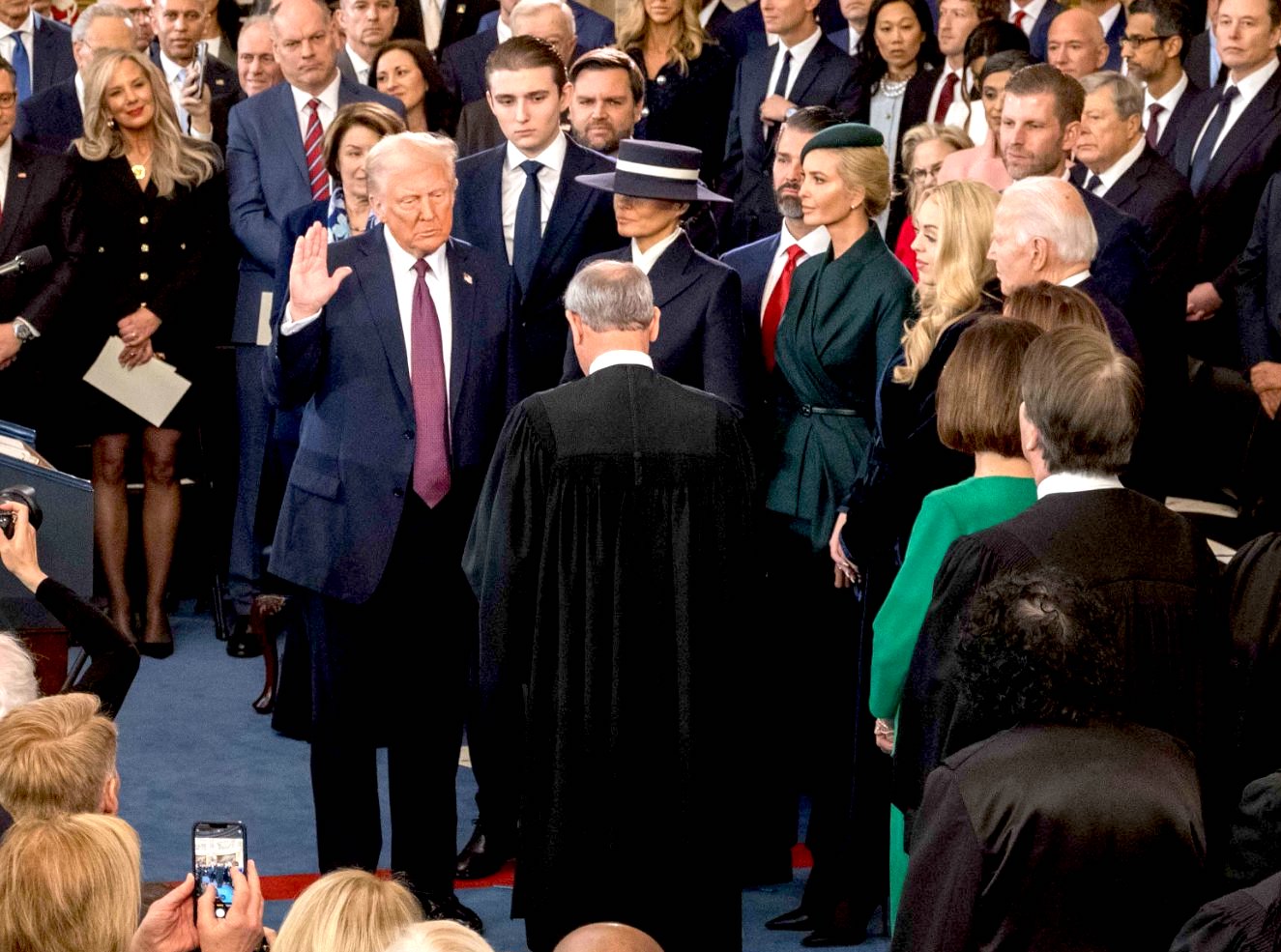
Trump taking his second oath of office, administered by Chief Justice John Roberts in the Capitol rotunda, on Jan. 20. (Wikimedia Commons, Public domain)

But what happens if Russia, like any jilted lover, opts for the “hard way”?

In short — nothing good for the United States or Trump.

First and foremost, any “deal” Trump puts on the table has to be realistic. In short the Russians must believe that they will be in a better position taking the deal than they would be turning it down (something Trump, ostensibly a master negotiator, should know).

The “deal” that Trump is putting on the table, however, is a non-starter.

There have been recent reports in the media about the existence of a “100-day Peace Plan.”

According to these reports, the proposed agreement prevents Ukraine from becoming a member of NATO, instead of officially declaring itself to be neutral. The agreement would open the door for Ukraine to become a member of the European Union by 2030, and tasks the EU with taking responsibility for post-war reconstruction. 

There would be no “demilitarization.” Rather, Ukraine would maintain its army at its present size and continue to receive military support from the U.S. and NATO. Ukraine would need to likewise cede territories occupied by Russia to Russia and recognize the sovereignty of the Russian Federation.

But there are many elements of this “leaked” plan which simply ring false — such as linking finalization of the plan to May 9 — Victory Day, one of the most important holidays on the Russian calendar. This year May 9 will celebrate the 80th anniversary of the Allied Victory — the Soviet victory — over Nazi Germany.

The chances of Vladimir Putin sullying this solemn occasion by buying into a peace “deal” which allows the Banderist nationalists — whose ideology and history are closely linked with Nazi Germany — to survive after Putin declared “de-Nazification” as a primary goal for the Special Military Operation are slim to none.

Kellogg’s ‘Peace Plan’

What we do know is that Donald Trump’s designated special envoy for Ukraine — retired Lieutenant General Keith Kellogg — has floated a “peace plan” to the president which has been apparently well received. The elements of this plan are drawn from a paper Kellogg authored back in the spring of 2024 — a paper as nonsensical and lacking in fact-based argument as one could imagine. 

The core elements of this plan involved the establishment of “normal” relations with Russia and its president — basically stopping the Russophobic demonization that was prevalent during the Biden administration.

Once the U.S. and Russia were talking again, to then open negotiations with both Russia and Ukraine about bringing an end to the conflict.

The “carrot” for Russia included postponing Ukraine’s membership in NATO for 10 years, allowing Russia to retain the Ukrainian territories it currently occupies and gradually lifting sanctions to lead the way to the normalization of relations with the United States — all subject to the conclusion of peace agreements acceptable to Ukraine.

For Ukraine, the “deal” offered both continued military assistance from the U.S. and NATO and bilateral security guarantees. While Ukraine is not required to officially recognize Russia’s control over the conquered territories, it would need to refrain from changing the status quo by force.

If Russia refused to cooperate, the U.S. would impose crippling sanctions.

And if Ukraine refused the “deal,” the U.S. would cut off all military aid.

This “deal,” while never formally expressed, had been hinted at before and after Trump’s electoral victory in November 2024. 

And it took no one with any insight into Russia’s goals and objectives regarding the Special Military Operation by surprise when Russian President Vladimir Putin summarily rejected this “deal” in an answer to a media question on Dec. 26, 2024.

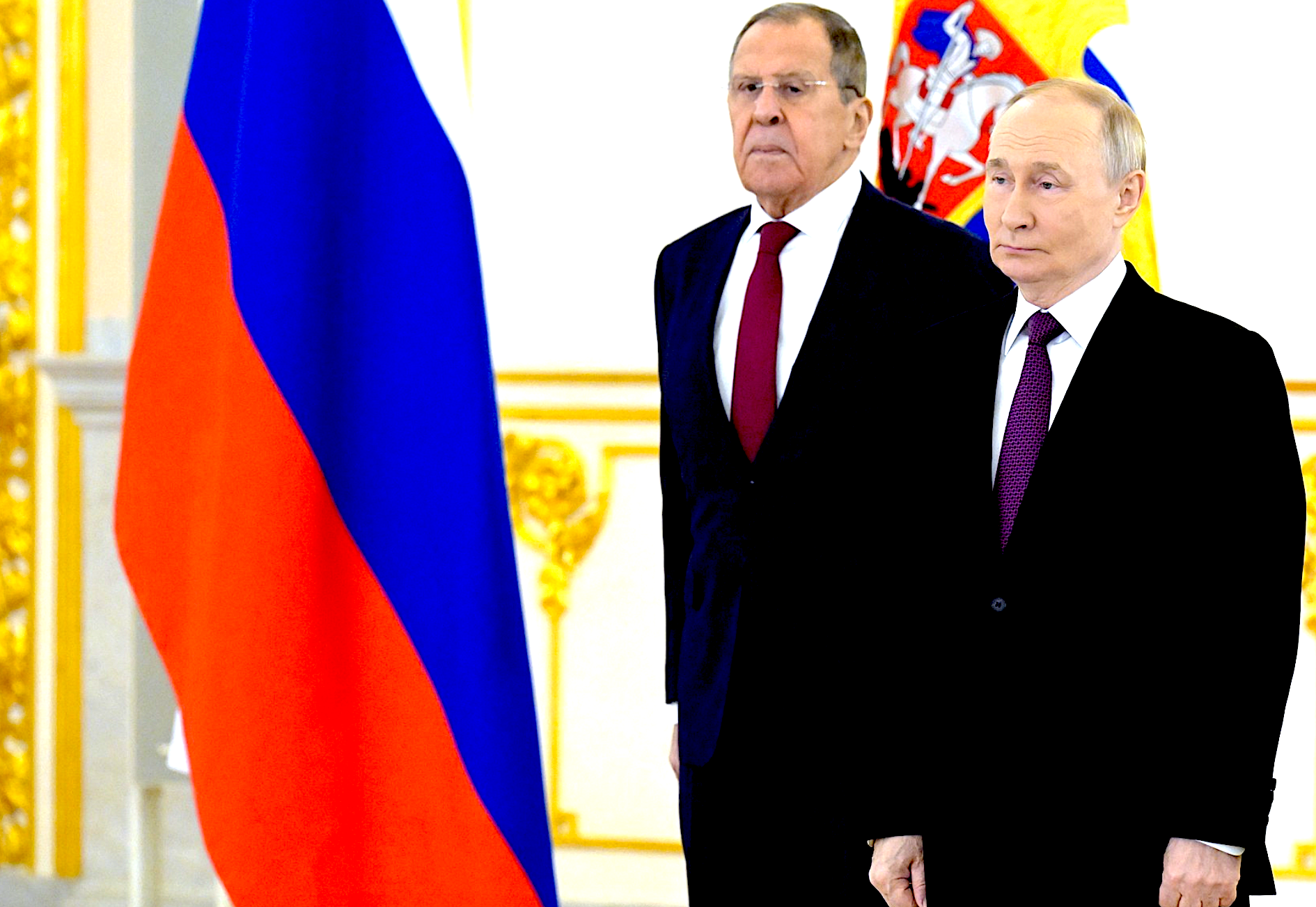
Russian Foreign Minister Sergey Lavrov and Russian President Vladimir Putin in November 2024. (Alexei Nikolskiy, RIA Novosti, President of Russia)

Three days later Russian Foreign Minister Sergei Lavrov likewise threw cold water on the Kellogg “peace plan,” declaring that Russia was “not happy with the proposals made by members of the Trump team to postpone Ukraine’s admission to NATO for 20 years and to station British and European peacekeeping forces in Ukraine.” 

The Hard Way

But what exactly does “the hard way” mean?

According to Scott Bessent, Donald Trump’s new Treasury secretary, the answer lies in ratcheting up sanctions on the Russian oil industry. “I will be 100 percent on-board for taking sanctions up” that target the major Russian oil companies, Bessent said during his Senate confirmation hearing. 

But Bessent will be working against a history of the U.S. and its European allies overselling sanctions as a tool to tear down the Russian economy (the opposite, in fact, has happened.) Moreover, given Russia’s status as a leading oil producer, any successful application of sanctions could have a negative economic impact on the U.S.

This is something that seems to have escaped the attention of Keith Kellogg, Trump’s “peace deal” guru. Noting that, under the Biden administration, the United States and its allies imposed a cap of $60/barrel on Russian oil (the market price for oil hovers around $78/barrel), Kellogg observed that, despite this, “Russia earns billions of dollars from oil sales.” 

“What if,” Kellogg mused during an interview on Fox News, “you lower the price to $45 a barrel, which is essentially the breakeven point?”

The question is, “breakeven point” for whom?

Scott Bessent in December 2024. (Senator Ted Cruz, Wikimedia Commons, Public Domain)

The concept of “breaking even,” when it comes to Russia, has two separate fiscal realities. The first is what the price of oil needs to be for Russia, which is heavily dependent upon the sale of oil for its national economy, to balance its national budget.

This number is assessed to be around $77/barrel for 2025. Let there be no doubt — if the price of oil dropped to $45/barrel, Russia would face a budget crisis. But not an oil production crisis. You see, the second “breakeven point” for Russia is the cost of production of a barrel of oil, which currently is set at $41/barrel.

Russia would be able to produce oil without any interruptions if Kellogg were able to achieve his goal of cutting the price of oil to $45/barrel.

To achieve the goal, Trump would have to get the Saudis onboard the oil-price-manipulation bandwagon.

The problem is the Saudis have their own “breakeven point” realities. To balance its budget, Saudi Arabia needs oil to be selling at around $85/barrel. But the cost of oil production in Saudi Arabia is very low — hovering around $10/barrel.

Saudi Arabia could simply flood the market with cheap oil if it wanted.

So could Russia.

How about the United States?

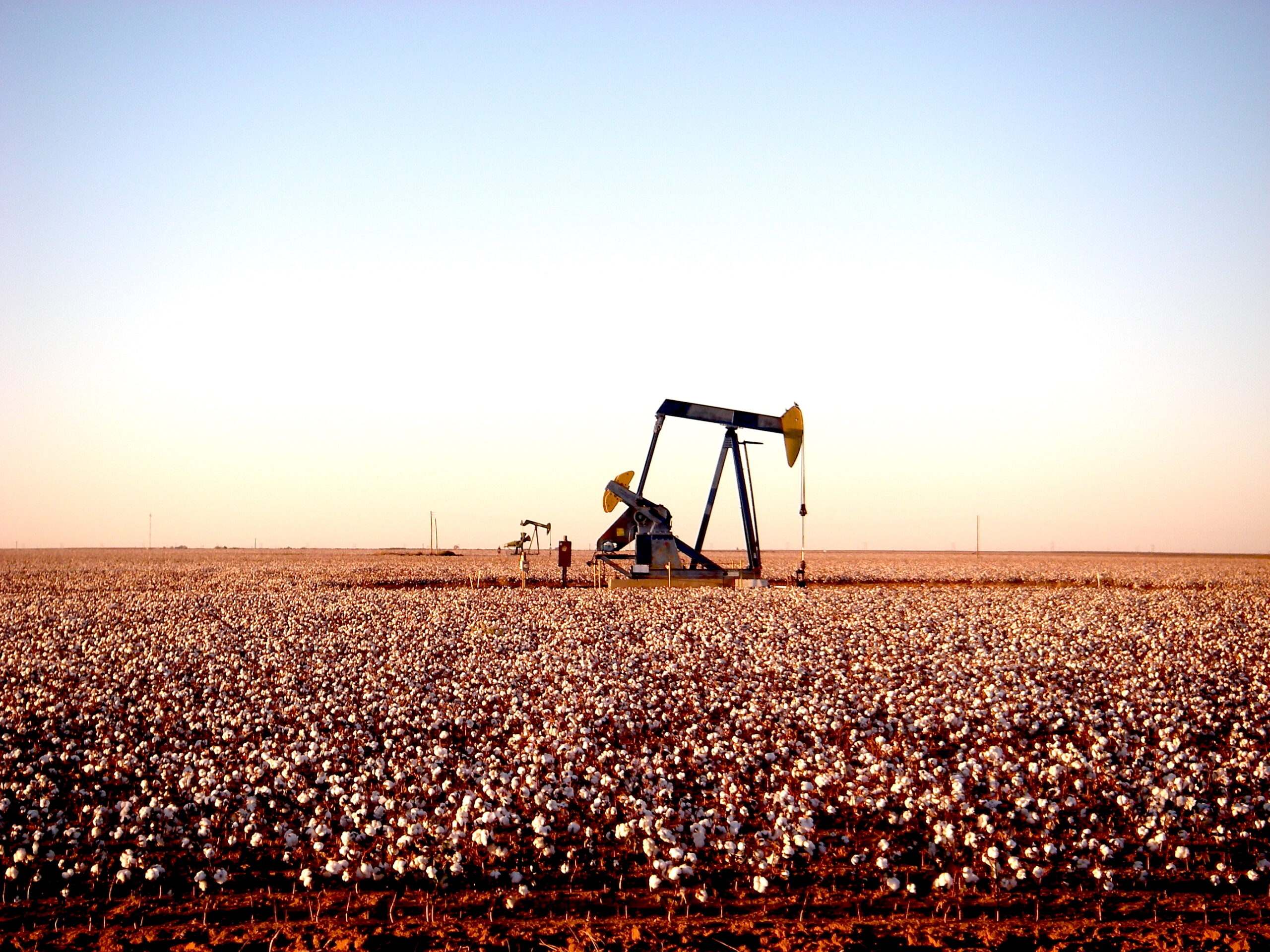
The Permian Basin, in West Texas, accounts for all of the U.S. growth in oil production since 2020. 

Active Permian Basin pumpjack near Andrews, Texas, in 2009. (Zorin09, Wikimedia Commons, CC BY 3.0)

In 2024, for new wells to be profitable in the Permian Basin, the breakeven point was around $62/barrel. For existing wells, this number was around $38/barrel. 

If drilling were to stop in the Permian Basin, U.S. oil production would decline by 30 percent over the course of two years.

In short, if Keith Kellogg were to successfully implement his “plan” to cut the price of oil to $45/barrel, he would effectively destroy the U.S. oil economy.

And if you destroy the U.S. oil economy, you destroy the U.S. economy.

Russia can ride out $45/barrel oil far longer than the U.S. can.

Donald Trump would do well to pay the wildcat oil producers of the Permian Basin — the ones who have sunk everything they own into a business venture that hinges on the promise of $78/barrel for the foreseeable future, and ask them how they feel about $45/barrel oil.

The bottom line is that if Keith Kellogg and Donald Trump made such a trip, they’d quickly understand the errors of their way.

Because if Donald Trump opts to go the route of “the hard way” with Russia, the consequences for him and the American people will be among the hardest imaginable.