Category Archives: Uncategorized

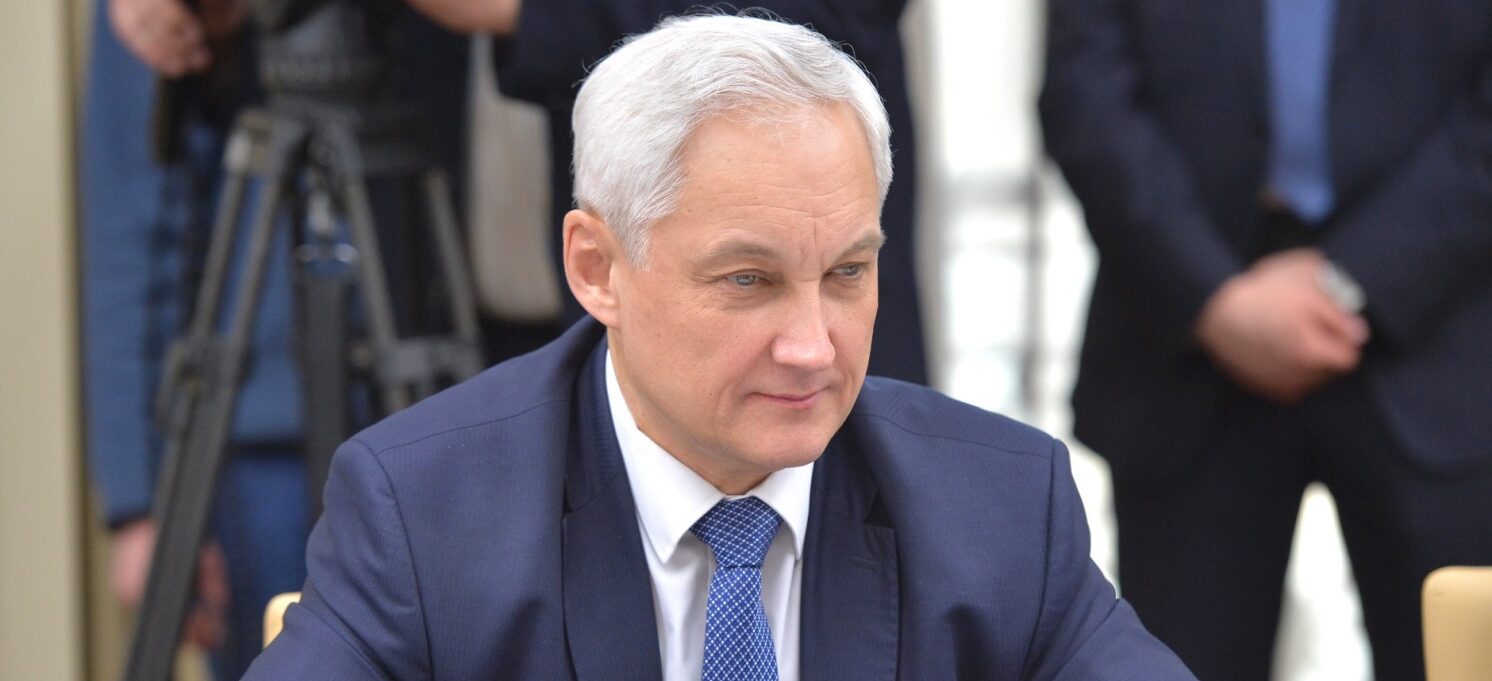
Intellinews: Cabinet reshuffle sees Shoigu out of Russian Defence Ministry, Belousov in

Intellinews, 5/13/24

Russian President Vladimir Putin fired his long-standing friend Sergei Shoigu as head of the Defence Minister and replaced him with economist Andrei Belousov as part of a government reshuffle following his inauguration last week.

Speculation about Shoigu’s imminent departure has been swirling for several weeks after his deputy Timur Ivanov was recently arrested for massive and conspicuous corruption.

Shoigu, who has served in government since 1991, is not popular with the military so the change is seen as Putin shoring up his control over the military and the appointment of Belousov will place more emphasis on running Russia’s increasingly militarised economy.

Belousov is close to Putin but a rival of the technocratic Prime Minister Mikhail Mishustin, who kept his job in the new government. He also has no experience of running a ministry, nor does he have any military experience.

He has largely played an advisory role to Putin for most of his career. In 2000, Belousov became an adviser to the Russian prime minister and then in 2006 the deputy minister economy ministry. From 2008 to 2012, he was director of the department for economics and finance in the years when Putin was prime minister. Belousov was Russia’s economy minister in 2012-2013, an aide to Putin in 2013-2020, and first deputy prime minister in 2020-2024. Belousov is very religious and favours Keynesianism economics of state-backed stimulus to promote growth.

In the previous government he was appointed First Deputy Prime Minister to supervise national projects, finance, foreign trade and counteraction to sanctions. He will also be responsible for the institutes of development, such as VEB.RF.

Belousov was the author of investments planned for the 12 national projects that have come back to prominence recently, and Mishustin was hired to implement them. Belousov was also behind the decision to hike VAT by 20% at the start of 2019. Belousov graduated from Moscow State University’s Faculty of Economics in 1981 with distinction and like Putin is a practitioner of martial arts, sambo and karate. He was exempted from the national service all Russian men have to perform.

Belousov is best known for proposing a super tax on the oligarchs in 2018 to pay for Putin’s May Decrees spending that increased wages in the regions among other things.

Bring Belousov in as the Defence Ministry suggests that the war spending on militarising the economy will now be dovetailed with the increased spending on the National Projects 2.0 that Putin recently announced.

As bne IntelliNews has reported, the National Projects and the military spending has become a boon for the Russian economy after the basic strategy of Putinomics changed and the Kremlin has started spending freely. Russia’s poorest regions have been the biggest winners as the military Keynesianism has boosted incomes in the far-flung regions that have largely been ignored for most of the last three decades.

“It’s very important to put the security economy in line with the economy of the country so that it meets the dynamics of the current moment,” presidential spokesman Dmitry Peskov said.

Shoigu assumed leadership of the defence ministry in 2012 after his tenure as the emergency services minister. Shoigu was previously one Russia’s most popular ministers after the illegal annexation of Crimea in 2014, which he was credited with orchestrating, but has been criticised for his poor handling of the military campaign in Ukraine. Under intense pressure after the invasion of Ukraine in 2022, Shoigu disappeared from view for two weeks, rumoured to have suffered from a massive heart attack.

Putin moved Shoigu sideways, appointing him to the powerful post of secretary of Russia’s security council, Putin’s spokesman Dmitry Peskov said. Shoigu replaces another long-time Putin ally, former FSB boss Nikolai Patrushev, who has been the council’s secretary since 2008.

Patrushev’s eldest son, who has been Agricultural Minister, was rumoured to be a possible replacement for Shoigu at the Defence Ministry, but instead has been promoted to deputy prime minister, the most powerful of the “golden youth” of the children of oligarchs and ministers in power.

Shoigu has faced criticism from Russia’s military for mishandling the war effort in Ukraine. Specifically, when Wagner leader Yevgeny Prigozhin mutinied earlier this year, he called for Shoigu and Valery Gerasimov to be removed from office. Shoigu was in the process of taking the control of Wagner under the direct control of the Defence Ministry at the time, a process that has now been completed.

Gerasimov continues to head the army and lead the war effort in Ukraine, but it is not clear if he will retain his job as Russia’s top general. Peskov said that a decision has not been made “yet.” It is also not clear what job, if any, Patrushev senior will be given.

Some analysts believe that Belousov is a temporary appointment and that either he will be replaced, or at least more serious military figures will be appointed around him to placate any criticism from the military bloc. Belousov is known as a supporter of boosting military spending and increasingly mobilising Russia’s economy for the war effort.

Belousov’s job is “to integrate the military-industrial complex into the country’s economy,” Peskov said in comments on May 12, adding a civilian was appointed to head the defence minister as ” the ministry should be open to innovation and progressive ideas.” Veteran Russian Foreign Minister Sergey Lavrov has also kept his job so far, although it is known that he has wanted to retire for some time.

Cabinet:

Andrey Belousov – Minister of Defence

Sergei Lavrov – Minister of Foreign Affairs

Konstantin Chuychenko – head of the Ministry of Justice

Vladimir Kolokoltsev – head of the Ministry of Internal Affairs

Alexander Kurenkov – head of the Ministry of Emergency Situations

Alexander Bortnikov – Director of the FSB

Sergei Naryshkin – head of the SVR

Viktor Zolotov – head of the Russian National Guard

Dmitry Kochnev – head of the Federal Protective Service (including presidents security service)

***

More information on the new Defense Minister Belousov from The Bell:

Who is Andrei Belousov? 

Belousov is often dubbed Putin’s closest economic advisor. There is some truth in that. He has worked directly with Putin in various roles since 2008. “A statesman surrounded by enemies,” was how one government source described him to The Bell in 2018. Since being appointed first deputy prime minister in 2020, Belousov has lived up to that description, actively sniffing out and seizing excess profits from commodities companies to bankroll his notion of a high-spending powerful central government.

  • Andrei Belousov was born in 1959. He graduated from the prestigious Moscow School of Physics and Mathematics No. 2 and the economics faculty at Moscow State University. He followed in the professional footsteps of his father, a famous Soviet economist who worked on preparing the Kosygin economic reforms in 1965. After the fall of the Soviet Union, Belousov worked at the Institute of National Economic Forecasting at the Russian Academy of Sciences, then set up his own Center for Macroeconomic Analysis and Short-term Forecasting. In 2006, German Gref made him his deputy at the economy ministry and in 2008, when Putin began his four-year term as Dmitry Medvedev’s prime minister, Belousov became director of the government’s department of economics and finance. By then he had become renowned as a competent economic forecaster, his reputation burnished by successfully predicting the 2008 economic crisis in a report published three years earlier.
  • Inside government, Belousov became known as Putin’s man. In 2013 he was appointed to a key role as economic aide to the presidential administration. All papers and economic proposals intended for Putin came through Belousov, a federal official told The Bell. In 2020, Belousov became first deputy prime minister with responsibility for economic policy in a major government reshuffle that saw Mishustin replace Medvedev.
  • Belousov has his own vision of how Russia’s economy should operate and works hard to bring his ideas into reality, another official said. Crucially, Putin listens to him. Belousov is an uncompromising believer in the state and sees a “circle of enemies” surrounding Russia, another source told The Bell. “In 2014 he was the only one of Putin’s economic circle to support the annexation of Crimea,” they said.
  • Belousov has always urged for increased government spending. Back in the mid-2000s, as Gref’s deputy, he argued with then Finance Minister Alexei Kudrin that the oil windfalls kept in the Stabilization Fund should be spent on infrastructure projects rather than saved.
  • To build up the government’s bankroll for spending, Belousov constantly tried to find new sources of revenue. In 2018 he proposed seizing 500 billion rubles ($5.5 billion) of “extra profits” from leading commodities companies and using the money to pay for Putin’s proposed May decrees, a vast plan for state investment. At that time, the oligarchs combined forces to fight back, prompting Belousov, who doesn’t mince his words, to call them “idiots and fools.” Belousov later managed to force through a highly controversial hike in sales tax from 18% to 20%, which brought the budget even more money.
  • After the invasion of Ukraine, business found it harder to fight off government demands. In 2023, Belousov secured a one-time budget contribution of 300 billion rubles ($3.2 billion) through a windfall tax. The government is currently preparing an “adjustment” to the tax system, the key elements of which could be an increase in income tax to 20% and corporate tax to 25%, which could generate up to two trillion rubles ($22 billion) a year.
  • Belousov has also seen success in developing Russia’s military-industrial complex, which the government does not officially regulate. One of his biggest successes has been a national project overseeing drone production, for which the government distributed preferential loans and passed special regulations.

Why has he been appointed now? 

Belousov’s appointment as defense minister was so unexpected that, at first, many observers found it hard to believe.

  • There’s nothing unique in itself about having a defense minister without a military background. In fact, none of Putin’s appointments in the role have: Sergei Ivanov (2001-07) came from foreign intelligence; Anatoly Serdykov (2007-2012) was a tax officer; Shoigu worked in construction, as a party official and head of the emergency situations ministry. Nonetheless, Belousov is the most overtly civilian defense minister, having never served in law enforcement or even completed national service. Instead, he’s mostly worked as an economist in academia and then in government roles focused on the domestic economy.
  • A late-night Sunday briefing by Putin’s spokesman Peskov made it clear that the Kremlin wants Belousov to monitor and improve how the country’s rapidly growing military budget is being spent. Spending by the defense ministry and the security services has more than doubled to 6.7% of GDP — approaching “the mid-80s situation, when security spending was 7.4% of the economy,” Peskov said. Belousov’s tasks are “to fit the security budget into the national economy so they match the dynamics of the current time” and to make the defense ministry “absolutely open to innovation, to the introduction of all advanced ideas and to create the conditions for economic competitiveness.”
  • It’s not hard to believe Peskov’s explanation is genuine. He even slightly underplayed the extent to which the economy has been militarized. Spending on defense and national security is set to exceed 8% of GDP this year. The rapid growth of the military-industrial complex has pushed the economy into overdrive. Therefore it makes sense to put a trusted economist in charge of overseeing a third of the government’s entire expenditure. But there could still be another motive behind the ministerial switch. As Ukraine’s arsenals are depleted and Western aid is delayed, Russia is making military progress after months of stagnation on the front lines. If Putin believes victory is getting closer, it makes sense to replace the PR-hungry Shoigu with an office-based economist less concerned with promoting his own role.

***

From Russia Matters, 5/13/24

Vladimir Putin’s post-inaugural decision to replace former emergency situations tsar Sergei Shoigu with career economist Andrei Belousov as Russia’s defense minister suggests that the Russian autocrat is doubling down on his war-of-attrition strategy, according to The Economist. Putin believes he can outproduce Ukraine and its Western backers, and Belousov would be instrumental in doing so, this British newspaper argued. Both The Economist’s sources and ISW’s analysts interpreted Belousov’s appointment as a signal that Putin expects the war to be protracted. Belousov’s appointment also “shows that Putin has serious concerns over corruption levels and misuse of funds within the Russian military, conflicts between the military and the Russian DIB and the perceived inefficacy of the Russian MoD as a whole,” ISW wrote in its assessment of Putin’s May 12 government reshuffle. Belousov’s appointment indicates Putin wants closer control over Russia’s defense spending—and a pliant official to do it, two people who know both men told FT. “He’s absolutely not corrupted … He’s a workaholic. He’s a technocrat,” one of the two people said in reference to Belousov.
James Carden & Katrina vanden Heuvel: The Ukraine Aid Package Heightens the Risk of Escalation

By James Carden & Katrina vanden Heuvel, The Nation, 5/2/24

Last week’s passage of the Ukraine aid package by both the House and the Senate showed if nothing else that bipartisanship—at least on matters of foreign policy—remains alive and well in Washington, with leading Democratic progressives joining Republican hawks to pass the $61 billion package.

Mark Green, a former four-term Democratic congressman from Wisconsin, and current head of the Wilson Center, captured the current D.C. zeitgeist well, writing that “moments like the final passage of this assistance package show the world that, just as America never turns its back on key allies and important challenges, they should never fully count us out.”

Yet, despite the torrent of self-congratulation, concerning details surfaced soon after the House vote—not least what appears to be the Biden administration’s likely use of questionable, highly subjective intelligence to win over Republican Speaker Mike Johnson.

Multiple mainstream media outlets report that the Biden administration arranged several multiple “high-level” intelligence briefings for the speaker. According to Politico’s Jonathan Martin, “It only took a higher level of intelligence briefings, granted to congressional leaders, for [Johnson] to pick up that old Cold War hymnal.” Martin noticed that, after having received briefings by the US Intelligence Community, several members of Congress, including Johson, House majority leader Steve Scalise, House foreign affairs committee chair Michael McCaul, and Representative Brian Fitzpatrick were all using the phrase “axis of evil” to refer to Russia, Iran, and China. As McCaul put it, “They’re all related, man…. To abandon Ukraine will only invite more aggression from Putin but also Chairman Xi in Taiwan. The ayatollah has already reared his ugly head.”

Where did this language come from, asked Martin?

“Spend an hour in the SCIF getting briefed,” Fitzpatrick shot back, referring to the secure facility used for classified briefings. “These are not isolated problems.”

After the vote, Johnson told Bloomberg, “I really do believe the intel and the briefings that we got…. I think Vladimir Putin would continue to march through Europe if he were allowed.”

If the US IC is putting forward cherry-picked conjecture (“Putin will march through Europe”) as fact, then don’t we once again have to confront the specter of politicized intelligence?

More worrying still, reporting on the aid package shows that the president and his staff have been serially misleading the public about what exactly US forces have been up to in Ukraine. Politico reported last week that “the administration secretly sent long-range [ATACMS] missiles to Ukraine for the first time in the war—and Kyiv has already used them twice to strike far behind Russian lines.” If true, this would contradict the president’s public assurances that (a) his administration would not send ATACMS to Ukraine, and (b) the US would not, due to the risks, countenance direct attacks on Russia.

Meanwhile, The Washington Post’s Karen DeYoung indicates that “scores of images recently leaked online, many with classified US military and intelligence assessments, illustrate how deeply the United States is involved in virtually every aspect of the war, with the exception of US boots on the ground.”

All of which raises the question: What else are they not telling us?

One important consideration—but one that remains notable for its absence in the coverage of the war—involves the risks of escalation. Professor Lyle Goldstein, who for 20 years taught at the Naval War College, has written about what he calls the “nuclear paradox”—that is, “if the US and NATO increase their military spending and conventional forces in Europe, the weakness of Russian conventional military forces could prompt Moscow to rely more heavily on its nuclear forces.”

Ignoring such risks, supporters of the aid package have instead cited it as a boon to the US economy. Yet, besides being morally grotesque, lining the pockets of defense industry behemoths like Raytheon and Lockheed Martin at the cost of hundreds of thousands of dead Ukrainian and Russian soldiers will do little to further the president’s campaign pledge to “build back better.”

Still more, the animating idea behind the aid package— that it helps Ukraine live to fight another day—is deeply misguided. It would be hard to improve upon the formulation of George Beebe, former CIA head of Russia analysis and director of the Quincy Institute’s Grand Strategy Program, that, if Washington “were intentionally to design a formula for Ukraine’s destruction, it might look a lot like the aid package passed by Congress this week.” At this late date, better and more weapons and ordnance will not carry the day—and they will certainly not in the absence of a Ukrainian Army able to deploy them. Recent reporting by BBC Ukraine indicates that 650,000 military-age men have fled the country.

Too often missing from the conversation is the humanitarian toll the war has taken on Ukraine. Estimates show that between 2021 and 2023, Ukraine’s GDP has shrunk by nearly 30 percent, with millions out of work. The Economist predicts that the country will need $37 billion in external financing in 2024. In short, there has to be a better way than prolonging the suffering in order to ward off the phantom of never-ending Russian expansion—after all, Putin’s military tried and failed to cross the Dnieper and take Kiev only two years ago. The idea that Ukraine is but a first step in Putin’s plans to retake Eastern Europe, while popular, simply overestimates Russian strength while ignoring the root cause of the current conflict. Wiser heads (if they indeed exist) in Washington might use the opportunity provided by the Ukraine Recovery Conference this June in Berlin to reassess our priorities.

The answer to war is not more war. A negotiated end to the cruel conflict will require hard choices and painful trade-offs. But the sooner it is done, the sooner Ukraine’s reconstruction, reconciliation, and entry into Europe can and should begin.

Patrick Lawrence: Could the Russians Seize Congress?

By Patrick Lawrence, Consortium News, 4/16/24

The Russians are coming — or coming back, better put.

As the November elections draw near, let us brace for another barrage of preposterous propaganda to the effect Russians are poisoning our minds with “disinformation,” “false narratives,” and all the other misnomers deployed when facts contradict liberal authoritarian orthodoxies.

We had a rich taste of this new round of lies and innuendo in late January, when Nancy Pelosi, the California Democrat who served as House speaker for far too long, asserted that the F.B.I. should investigate demonstrators demanding a ceasefire in Gaza for their ties, yes indeedy, to the Kremlin.

Here is Pelosi on CNN’s State of the Union program Jan. 28:

“For them to call for a cease-fire is Mr. Putin’s message. Make no mistake, this is directly connected to what he would like to see. Same thing with Ukraine…. I think some financing should be investigated. And I want to ask the F.B.I. to investigate that.”

O.K., we have the template: If you say something that coincides with the Russian position, you will be accused of hiding your “ties to Russia,” as the common phrase has it.

Be careful not to mention some spring day that the sky is pleasantly blue: I am here to warn you—“make no mistake” — this is exactly what “Putin,” now stripped of a first name and a title, “would like to see.”

There is invariably an ulterior point when those in power try on tomfoolery of this kind. In each case they have something they need to explain away.

In 2016, it was Hillary Clinton’s defeat at the polls, so we suffered four years of Russiagate. Pelosi felt called upon to discredit those objecting to the Israeli–U.S. genocide in Gaza.

Now we have a new ruse. Desperate to get Congress to authorize $60.1 billion in new aid to Ukraine, Capitol Hill warmongers charge that those objecting to this bad-money-after-bad allocation are… do I have to finish the sentence?

Two weeks ago Michael McCaul, a Republican representative who wants to see the long-blocked aid bill passed, asserted in an interview with Puck News that Russian propaganda has “infected a good chunk of my party’s base.” Here is the stupid-sounding congressman from Texas, as quoted in The Washington Post, elaborating on our now-familiar theme:

“There are some more nighttime entertainment shows that seem to spin, like, I see the Russian propaganda in some of it — and it’s almost identical on our airwaves. These people that read various conspiracy-theory outlets that are just not accurate, and they actually model Russian propaganda.”

I read in the Post that McCaul’s staff abruptly cut short the interview when Julia Ioffe, a professional Russophobe who has bounced around from one publication to another for years, asked him to name a few names.

So was this latest ball of baloney set in motion.

A week after McCaul’s Puck News interview, Michael Turner, an Ohio Republican who, as chairman of the House Intelligence Committee, swings a bigger stick, escalated matters when, reacting to McCaul’s statements, reported that this grave Russian penetration was evident in the upper reaches of the American government, as again reported in The Washington Post:

“Oh, it is absolutely true. We see directly coming from Russia attempts to mask communications that are anti–Ukraine and pro–Russia messages, some of which we even hear being uttered on the House floor.”

Masked communications uttered on the House floor: Hold the thought, as I will shortly return to it.

The VOA Rendition

The taker of the cake — so far, anyway — arrived last week from Voice of America, the Central Intelligence Agency front posing as a radio broadcaster, under the headline, “How Russia’s disinformation campaign seeps into U.S. views.” Same theme: The Rrrrrussians are poisoning America’s otherwise pristine discourse in an effort to block authorization of the assistance bill, which also includes aid to Israel ($14.1 billion) and Taiwan ($4 billion).

To drive home its point, VOA quotes a lobbyist named Scott Cullinane, who works for something called Razom, which means “together” in the Ukrainian language. Razom is a non-governmental organization “formed in 2014 to support Ukrainians in their quest for freedom.” That is, Razom’s founding coincided with the coup in Kiev the U.S. orchestrated in February 2014.

Razom works with a variety of Ukrainian NGOs to advance this cause and sounds to me like a player in the old civil-society-subterfuge game, though one cannot be sure because, on its website and in its annual reports, it does not say, per usual in these sorts of cases, who funds it.

Here is a little of VOA’s report on Cullinane’s recent doings on Capitol Hill:

“On a near daily basis, Scott Cullinane talks with members of Congress about Russia’s war in Ukraine. As a lobbyist for the nonprofit Razom, part of his job is to convince them of Ukraine’s need for greater U.S. support to survive.

But as lawmakers debated a $95 billion package that includes about $60 billion in aid for Ukraine, Cullinane noticed an increase in narratives alleging Ukrainian corruption. What stood out is that these were the same talking points promoted by Russian disinformation.

So, when The Washington Post published an investigation into an extensive and coordinated Russian campaign to influence U.S. public opinion to deny Ukraine the aid, Cullinane says he was not surprised.

‘This problem has been festering and growing for years,’ he told VOA. ‘I believe that Russia’s best chance for victory is not on the battlefield, but through information operations targeted on Western capitals, including Washington.’”

Straight off the top, there has been no Washington Post “investigation.” The Post simply quoted two paranoid congressmen without bothering to question, never mind investigate, the veracity of their assertions.

Beyond this, the question of Ukrainian corruption is another case of the sky being blue. There is no “alleging” the Kiev regime’s corruption: It is thoroughly documented by, among other authorities, Transparency International, which ranks Ukraine among the world’s most corrupt nations.

You see what is going on here? This is an echo chamber, ever treasured by the propagandists.

Puck News, a web publication of no great account, puts out a warmongering reporter’s interview with a warmongering congressman, The Washington Post reports it, another congressman seconds the assertions of the first, the Post reports that, and then VOA joins the proceedings to report that well-established, beyond-dispute facts are Russian disinformation.

And the echoes multiply, like the circles in a pond when a rock is tossed in. Here is how Tagesspiegel, a Berlin daily whose Russophobia dates to its founding during the U.S. occupation after World War II, reported on the assistance bill immediately after the VOA report:

“The controversy about the aid, which has already passed the U.S. Senate, is reflected in numerous posts on social media and articles on news sites. As The Washington Post reports, one actor has played a decisive role in this: the Russian government.”

When propaganda is king, you have to conclude, what goes around keeps going around.

It is well enough to laugh at this silly business, transparently calculated as it is. Except that this kind of chicanery has a long history, and we learn from it that the Russians have been coming, off and on, for seven-plus decades. The consequences of these conjured imaginings, we also learn, are very other than funny.

When I decided to write the book that came out last autumn as Journalists and Their Shadows, exploring the past was essential to the project. If we want to understand our “press mess,” I call the current crisis in our media, we had better understand how it got this way.

In the course of my researches into the exuberant anti–Communism of the early Cold War years, I came upon a lengthy takeout Look magazine published on Aug. 3, 1948, under the headline, “Could the Reds Seize Detroit?” This piece was exemplary of its time.

“Detroit is the industrial heart of America,” the writer began. “Today, a sickle is being sharpened to plunge into that heart…. The Reds are going boldly about their business.”

Before he finishes, James Metcalfe — let this byline be recorded — has Motor City besieged in “an all-out initial blow in the best blitzkrieg fashion.” The presentation featured masked Communists murdering police officers and telephone operators, seizing airports, blowing up bridges, power grids, rail lines, and highways.

“Caught in the madness of the moment, emboldened by the darkness, intoxicated by an unbridled license to kill and loot, mobs would swarm the streets.” Communist mobs, naturally.

It is easy to read this now with some combination of derision and contempt. Do we have any grounds to do so? Are we doing things so differently now?

There were dangers implicit in the Look piece. It published Metcalfe’s paranoic fantasy a year and a few months after President Harry Truman gave his famous “scare hell out of the American people” speech to Congress in March 1947. Look was in essence recruiting the public as the Truman administration launched the Cold War crusade.

Representatives McCaul and Turner are on a recruitment drive of the very same kind. They are not lying to one another in any kind of effort to clean up Congress. Do not wait for them to lift a finger on that score. They are lying to you and me in what amounts to a scare-hell operation.

And the danger this time is the same as the danger last time. It is the cultivation of a climate of fear wherein the American public is to acquiesce as the new Cold War proceeds and all manner of laws and constitutional rights are abused.

Last Friday the House reauthorized, for two more years, the law known as Section 702, which allows the intelligence cabal to surveille Americans’ digital communications — without warrants and on U.S. soil — if they claim to be targeting foreigners suspected of subversive activities.

What does this have to do with the way the paranoids on Capitol Hill, reporters at The Washington Post, and professional propagandists at VOA are currently carrying on about assistance to Ukraine?

Nothing. And everything.

Conor Gallagher: Will the American Oligarchy Accept Limits or Choose World War Three?

By Conor Gallagher, Naked Capitalism, 4/14/24

I recently came across this piece from the Century Foundation titled “A Bolder American Foreign Policy Means More Values and Less War.” Its central argument is that the US must “recenter values” like “multilateralism and human rights that are core to its identity.”

The Century Foundation calls itself a “a progressive, independent think tank,” and this particular piece appears to mean well but is just as disconnected from reality than all the neocon think tanks’ war mongering policy papers saying Washington will prevail as it takes on Russia, China, Iran, and whoever else it feels like.

The Century Foundation authors possess a Hollywoodized idea of America that isn’t a land filled with brutal class struggle but virtue, which flow out into its foreign policy that stands for international humanitarian or human rights law. I think anyone with a basic understanding of current events or recent history knows how ridiculous this is, and yet it is repeated ad nauseam by every purported think tank. I suppose this is a classic example of Upton Sinclair’s saying that “It is difficult to get a man to understand something, when his salary depends on his not understanding it,” but I think the Century Foundation is onto something with its focus on values. It’s just that it has it backwards. The problem is that values are what has the US  on the brink of starting World War III in multiple locations.

So what are the core values that do have it such a position – and whose are they?

I think the story of former US President Herbert Hoover is instructive. He had interests in mines in Russia until they were seized by the Bolsheviks. [1] Hoover never forgot about it and remained terrified of Communists for the rest of his life – and for good reason considering how much he stood to lose.

Though Hoover got booted out of office in 1932, he played a central role in organizing capitalists to counter worker organization both in the US and abroad. His legacy lives on at Stanford’s neocon Hoover Institution. Throughout his life, he remained a major admirer of pre-Soviet Russia: “At the top was a Russian noble family and at the bottom 100,000 peasants and workers with nobody much in between but the priesthood and the overseers.”

That pretty much sums up the capitalist class’ enduring vision not just for Russia, but everywhere. Ownership of Russian mines or Opium Wars in China might not factor much into my or your everyday life, but you can bet it’s an important part of American ruling class ideology. Whose values? The dominant value at play there is a belief that as Western capitalists they have a right and a duty to exploit and profit off of every corner of the globe. Just like capital must dominate labor, it must expand and find new sources of revenue. If governments in Russia and China impede that progress, they must be destroyed.

Rather than bromides like more American “values,” the following are some questions or thought exercises for think tanks to consider – whether they want to win another war or maybe even quit starting so many of them.

Can You Practice Realpolitik with Gangsters? 

The US is a market state that is dominated by and run for transnational capital. Its foreign policy and the military are a tool of the American oligarchy. Therefore, any serious policy discussion needs to deal with the fact that national interests as they’re expressed today are not in any real sense national but representative of the interests of a small cohort of the super wealthy.

When US officials go on about spreading “freedom,” they’re not lying. It’s just their idea of freedom is a state devoted to high profits – free from the political whims of local populations that could degrade an investment’s expected return.

Let’s remember there likely wouldn’t be any problem with Russia had Putin not put an end to the 1990s shock therapy administered by the Western finance capitalists who were making a killing by pillaging Russian resources. Like Bert Hoover, they’re haunted by that opportunity snatched away from them, and they’ve been trying to get it back for a quarter century now.

The question is will American capital ever voluntarily give up? Will it ever say “okay, we’re satisfied with what we’ve got here, you do your thing in your sphere of influence”?

It’s not like Moscow and Beijing haven’t tried. Russia for example floated the idea of joining NATO or working out some other security arrangement. For decades after the end of the USSR, Russia tried to be accepted into the West’s club to no avail.

China, too, constantly repeats the refrain that the world is big enough for both Beijing and Washington. It invited the US to join it in its Belt and Road Initiative. The US could have helped steer projects that would have benefited both countries. While such cooperation between the two big powers wouldn’t be a panacea for all the world’s problems, it would likely mean a lot better spot than current one.  Instead the US wanted the whole pie and instead we got the TPP, sanctions, export bans, a new Cold War, a spy balloon scandal, the disastrous effort to weaken Russia before taking on China, the successful effort to sever Europe from Eurasia to disastrous effect for Europe, and the desire to see a Ukraine sequel in Taiwan and/or the South China Sea.

There is a lot of confusion over why the West keeps escalating in a losing effort. Why, for example, are Western governments going around begging for shells to send Ukraine rather than accepting the L? The desperation seems to stem from the creeping realization that their system is coming undone. The entire post-WWII elite American mindset is built on the foundation of worldwide profit expansion via silicon and fire, and if they throw everything at Russia and lose, well a whole new domino theory could come into play – one where parasitic Western finance capital is driven back. (Granted it might in most cases be replaced by a more local form, but it’s nonetheless frightening for the Western honchos.)  Just look at what’s happening to France in Françafrique! And the US in the Middle East!

The fact that the West can no longer even manufacture enough weapons to supply its proxy wars almost certainly means that the dominoes will keep falling. This is a jolt to the system – described here by Malcolm Harris in his 2023 book Palo Alto:

War Capitalism could put on a blindfold and run into a maze of horrific, absurd plans with confidence because it had class power echolocation for a guide: As long as the rich strengthened and the working class weakened, then things had to be going in the right direction. It didn’t matter that capitalists were investing in finance sugar highs, monopoly superprofits, and an international manufacturing race to the bottom rather than strong jobs and an expanded industrial base. The twenty-first century was going to be all about software anyway, baby. The robots will figure it out. Silicon Valley leaders sat on top of this world system like a cherry on a sundae, insulated from the melting foundation by a rich tower of cream.

They likely still feel insulated from the consequences of their actions, which fall most heavily on their proxy fighters and the working class dealing with inflation and declining living standards, but the panic over this system’s implosion is real – and with good reason. The idea that the US  can just spend more money and develop more wonder weapons is breaking down in humiliating fashion.

The great danger is that a Western capitalist class with no memory of a world war views the fight against Russia or China as more than just an effort to strategically weaken them. To evoke Hoover, they must regain access to their mines in Russia or risk losing them everywhere, which would make this an existential fight for Western governments and the capital they serve. On the opposing side, Russian officials have already said its military operation against the West in Ukraine is an existential one. Well, then we have opposing nuclear-armed sides both viewing this as an existential fight.

The Great Irony in the West’s Predicament Is That Finance Capital’s Own Greed Has Eroded Its Ability to Satiate Its Greed Around the World.

They hollowed out the West in order to make a quick buck. Where the manufacturing isn’t completely gone, it’s entirely degraded (Boeing). Government has been reduced to a collection of worthless sycophants only looking to cash in on their servitude.

It was American elites’ greed that caused the American working class to lose 3.7 million decent paying jobs from 2001-2018 – and that’s only from shipping jobs to China.

Les Leopold in his book Wall Street’s War on Workers calculates that Wall Street strip mining of the US (including China, NAFTA, stock buybacks, etc.) has led to 30 million laid-off Americans since 1996. No wonder they’re desperate for new markets. But let’s focus on China for a moment, which vies for the number one spot on the enemy list with Russia.

The wilful decimation of the US’ manufacturing over recent decades destroyed its research capacity. It means the US relies on components made in China for aircraft carriers and submarines. It means a trillion dollars in defense spending helps enrich China – the very country which is supposedly behind the increased defense spending in the first place.

It was impossible to know this would happen, they say, despite warnings at the time that this very situation would arise. Workers knew. Here’s a piece from the New York Times back in 2000 titled “Unions March Against China Trade Deal”:

Thousands of steelworkers, truck drivers, auto workers and other union members rallied on Capitol Hill and swept through the halls of Congress today in a show of muscle intended to block a trade agreement with China.

Their message, conveyed by union leaders and rank-and-file members who came from as far away as Michigan and Nebraska, was that trade was working for American corporations but not for American workers.

…[the union members] said, they are only opposing a deal with a country that does not respect workers’ rights and would stop at nothing, in their view, to steal the jobs that are the backbone of the American middle class.

Not surprisingly, when Politico did a 20-year-anniversary story on China’s accession to the WTO, most US lawmakers didn’t want to talk about their vote to normalize trade relations with China in 2000 (which paved the way to the WTO). But four American “experts” who did the planning and negotiating of the normalization of trade ties with China are described in the POLITICO piece as having zero regrets. Why would they? They were rewarded with better positions.

It’s entirely unclear how exactly the US would conduct this war it wants so much with China considering it’s so reliant on it for minerals and components crucial to the American military. As Army Technology points out:

The US Department of the Interior released a list of 35 minerals it deems essential to the economic and national security in 2018 (updated in 2022), amongst them many [rare earth elements]. The problem for the US is that the local production of these materials is hugely limited.

The extent of reliance on imports varies from mineral to mineral. Beryllium is mainly used to create lightweight material used in fighter jets, lithium is essential for modern battery production and tin is used in electronics, including soldier semiconductors, a sector that is projected to reach a value of $17.5bn by 2030.

Whereas the US produces some of the minerals mentioned above, it entirely relies on China and other countries for many other supplies. Cerium is used in batteries and in most devices with a screen and magnets forged from neodymium and samarium are impervious to extreme temperatures that are used in fighter jet fin actuators, missile guidance, control systems, aircraft and tank motors, satellite communications and radar and sonar systems.

Here again, it was Wall Street that moved rare earth and other mineral processing to China, that sold off mining operations to Chinese companies, and reaped the rewards for doing so. Matt Stoller and Lukas Kunce tell the story in a 2019 piece at The American Conservative:

In the 1970s and 1980s, the Defense Department invested in the development of a technology to use what are known as rare-earth magnets. The investment was so successful that General Motors engineers, using Pentagon grants, succeeded in creating a rare earth magnet that is now essential for nearly every high-tech piece of military equipment in the U.S. inventory, from smart bombs and fighter jets to lasers and communications devices. The benefit of DARPA’s investment wasn’t restricted to the military. The magnets make cell phones and modern commercial electronics possible.

China recognized the value of these magnets early on. Chinese Premier Deng Xiaoping famously said in 1992 that “The Middle East has oil, China has rare earth,” to underscore the importance of a rare earth strategy he adopted for China. Part of that strategy was to take control of the industry by manipulating the motivations of Wall Street.

Two of Xiaoping’s sons-in-law approached investment banker Archibald Cox, Jr. in the mid-1990s to use his hedge fund as a front for their companies to buy the U.S. rare-earth magnet enterprise. They were successful, purchasing and then moving the factory, the Indiana jobs, the patents, and the expertise to China. This was not the only big move, as Cox later moved into a $12 million luxury New York residence. The result is remarkably similar to Huawei: the United States has entirely divested of a technology and market it created and dominated just 30 years ago. China has a near-complete monopoly on rare earth elements, and the U.S. military, according to U.S. government studies, is now 100 percent reliant upon China for the resources to produce its advanced weapon systems.

Can the US expect its proxy warriors to keep enlisting if they’re armed with sticks and kitchen knives going up against hypersonic missiles?

A 2020 Bank of America study found that it would cost American and European firms $1 trillion over five years to shift all the export-related manufacturing that is not intended for Chinese consumption out of China. Has there been any movement on this or is there just an assumption that AI will figure it out?

Let’s say, for arguments sake that the US ponied up $1 trillion tomorrow to help firms bring back this manufacturing, what other problems would arise? There’s at least one, which is already evident from the CHIPS Act and Inflation Reduction Act. According to this tracker, $263 billion has been invested and 113,400 jobs have been created, but a major problem has arisen. There aren’t enough workers with the necessary skills.

Taiwan Semiconductor Manufacturing Company had to delay the production start date of its Arizona plants to 2025 due to a lack of workers, and a major shortage is expected to continue in coming years. The shipyard building the US Navy’s new frigate can’t find workers, leading to a three-year delay – at least. Apply that to other industries, add in the country’s crumbling infrastructure, and the price keeps climbing.

There’s also the issue of how to check the power of parasitic finance capitalists that would immediately start to erode any efforts to improve the national situation.

Reining In US Finance Capitalism 

This brings us to another great irony.

Anyone in the US government with a few marbles left and a desire to make the US a strong nation state again should be looking to an unlikely source for advice on how to rein in the US oligarchy; they should talk to Russian President Vladimir Putin who successfully tamed the oligarchy in his country – at least at points where it would impede national interest.

The American system has failed to reform even slightly on its own, which means the hollowed out imperial force is now being repeatedly exposed and driven back by force abroad. There are parallels to Russia during the First World War when industrial and bureaucratic shortcomings, economic hardship, and a government lacking legitimacy led to the rise of the Bolsheviks.

I have yet to see a think tank recommend that yet, but at the rate the US keeps starting wars, they’d better think of something fast.

Notes

[1] It’s interesting to note that European Commission President Ursula von der Leyen’s great grandfather had a textile empire in Russia. He had one of the biggest fortunes in the country, but the enterprises were nationalized following the 1917 revolutions.