Category Archives: Uncategorized

Global Times: ‘Escalation unavoidable’ if Russia’s call for talks on Ukraine ignored by US

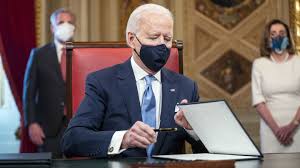
US President Joe Biden

Note: The Global Times is considered as reflecting official Chinese government views. – Natylie

By Yang Sheng and Wan Hengyi, Global Times (China), February 12, 2023

Before the one-year anniversary of the Russia-Ukraine conflict’s outbreak, Moscow sent a message for talks based on the “existing reality” and without “preconditions,” while US President Joe Biden is also scheduled to visit Poland to show Washington’s unwavering support for Kiev to continue the fight.

Chinese analysts believed that hopes for peace are low, and if Moscow’s call for talks is ignored, the conflict will undoubtedly escalate.

Russian Deputy Foreign Minister Sergey Vershinin said in an interview with Zvezda television that “Yes, according to the classics, any hostilities end up in talks, and, naturally, as we have said before, we will be ready for such talks, but only if those are talks with no preconditions, talks that would be based on the existing reality,” TASS reported on Saturday.

However, it is not Kiev, but Washington and Brussels who make the decision on talks with Moscow, Vershinin said.

Song Zhongping, a Chinese military expert and TV commentator, told the Global Times on Sunday that “the multiple rounds of Russia-Ukraine talks in the last year that reached no meaningful result have proven that even if Moscow and Kiev reach some agreements, Washington will immediately get involved and ruin the entire process. So the key at the moment is not about whether talks could happen between Russia and Ukraine again, but whether Washington and Moscow can reach at least some tacit consensus to avoid an escalation.”

Chinese analysts said that the US is not ready or willing for talks with Russia at this moment. Based on the latest arrangements and decisions made by the US, the Biden administration is going to keep the conflict from ending and will keep using it to undermine Russia and the EU, and Ukraine is the price that Washington is willing to pay which Moscow understands clearly.

Song said if Russia’s call for talks is ignored by the US, then Moscow will be more determined to seek a breakthrough via military measures. This is likely to happen in the coming weeks or even coming days, as Russian troops need to launch a new offensive before the West’s new military assistance to Ukraine is fully delivered.

If Russia realizes full control in the eastern region of Ukraine, Moscow would be able to declare a halt to “special military operation,” and then a new basis for talks would be created. Western countries will need to reconsider how to deal with the situation with a more pragmatic attitude, and the divergence between the pro-peace European countries and the pro-war US could emerge again, said analysts.

But the problem is that before there is hope for more peace talks, military conflicts and casualties would be unavoidable, they said.

“Russia’s call is more like a political expression to show that Moscow is open to negotiations rather than merely seeking a military solution, but this is not a realistic idea that would receive a positive response from the US at the moment,” Cui Heng, an assistant research fellow from the Center for Russian Studies of East China Normal University, told the Global Times on Sunday.

According to CNN on Friday, Biden will visit Poland this month to mark the one-year anniversary of the ongoing conflict in Ukraine, “returning to the region as the war enters a volatile new phase without a clear path to peace.”

“The main purpose of Biden’s trip to Europe at this time is to build momentum for his election next year. In addition, he also wants to suppress the pragmatic voices of peace in Europe and further put pressure on European leaders to jointly target Russia with a firmer hawkish stance, making a de-escalation of the conflict far from imminent,” Cui noted.

Branko Marcetic: Ukraine’s Postwar Reconstruction Has Big Business Licking Its Lips

crop man counting dollar banknotes
Photo by Karolina Grabowska on Pexels.com

By Branko Marcetic, Jacobin, 1/29/23

As unbelievable as it might sound, the invasion under which millions of Ukrainians are suffering right now will likely not be the end of their hardship. That’s because of the hand-rubbing that’s been happening the past few months over the potential business bonanza to be found in the country’s postwar reconstruction.

In November last year, Ukrainian president Volodymyr Zelensky signed a memorandum of understanding with BlackRock that will see the firm’s Financial Markets Advisory (FMA) — a special consulting unit set up after the 2008 crash to work with crisis-stricken governments — advise Ukraine’s economic ministry on designing a road map for rebuilding the war-torn country. In BlackRock’s words, the agreement has the “goal of creating opportunities for both public and private investors to participate in the future reconstruction and recovery of the Ukrainian economy.”

Ukrainian officials have been more blunt, with the ministry’s press release saying it would “primarily attract private capital.” The agreement formalizes a set of September 2022 talks between Zelensky and BlackRock chair and CEO Larry Fink, in which the president stressed that Ukraine must “be an attractive country for investors” and that it was “important to me that a structure like this be successful for all parties involved.” According to a release from the president’s office, BlackRock had already been advising the Ukrainian government “for several months” by the end of 2022. The two had agreed to focus on “coordinating the efforts of all potential investors and participants” in Ukrainian reconstruction, and “channeling investment into the most relevant and impactful sectors of the Ukrainian economy.”

The history of BlackRock FMA makes all of this particularly foreboding. According to an Investigate Europe dive into its activities in Europe, BlackRock is “an adviser to states on privatization” and “is very busy countering any attempt to increase regulation” in Europe. The firm used the 2008 financial crash — built on the risky mortgage securities Fink himself had pioneered — to increase its power and sway among political decision-makers, leaving a trail of conflicts of interest and revolving-door influence-peddling in its wake. In the United States, it’s been particularly controversial for running the Federal Reserve’s pandemic-era bond-buying program, nearly half of which ended up making purchases in BlackRock’s own funds.

Ukraine is already opening up for investment. In December last year, as Kiev and BlackRock were months into their discussions, the Ukrainian parliament rammed through property developer–backed legislation that had stalled prior to the war, deregulating urban planning laws to the benefit of a private sector that has been hungrily eyeing the demolition of historic sites. It comes on top of parliament’s earlier assault on the country’s Soviet-era labor laws, legalizing zero-hour contracts, weakening the power of unions, and stripping labor protections from 70 percent of its workforce. That particular change was advised not by BlackRock, but the British foreign office under Boris Johnson, and pushed by Zelensky’s party, which charged that the “extreme over-regulation of employment contradicts the principles of market self-regulation” and “creates bureaucratic barriers . . . for the self-realization of employees.”

“Steps towards deregulation and the simplification of the tax system are examples of measures which not only withstood the blow of the war but have been accelerated by it,” the Economist gushed in its 2022 Reform Tracker for the country. “With both domestic and international audiences committed to Ukraine’s recovery and development,” reforms were likely to accelerate after the war, it hoped, anticipating added deregulation, further “opening the path for international capital to flow into Ukrainian agriculture.” The recipe for success, it counseled, required more privatization of “loss-making state-owned enterprises,” which will “depress government expenditure.” This last goal of privatization, the Economist bitterly noted, had “stalled as the war broke out.”

Yet the Economist needn’t have worried, because this was one of the top priorities for postwar Ukraine, as mandated by the European backers currently propping up the country’s economy and pledging to rebuild it. This past July saw a host of big business, European, and Ukrainian representatives attend the Ukraine Recovery Conference, 2022’s version of the annual Ukraine Reform Conference, which had measured the country’s progress on the neoliberal pathway its post-2014 integration with the West demanded.

As the conference’s policy brief on economic recovery made clear, a postwar Ukrainian state won’t need BlackRock around to pursue the kind of agenda a Republican politician dreams of. Among the policy recommendations are a “decrease in government spending,” “tax system efficiency,” and “deregulation.” It advises further “reducing the size of government” through privatization and other reforms, liberalizing capital markets, and ensuring “investment freedom” — a euphemism for opening up markets — thereby creating a “better and more familiar investment climate for EU and global direct investment.”

The vision discussed by attendees is something straight out of Pete Buttigieg’s wildest fantasies: the country as start-up, one that’s digitized, business-friendly, and green, albeit with nine nuclear reactors built and supplied by the US-based Westinghouse. It’s a model that ramps up Zelensky’s own “country in a smartphone” vision he put forward three years ago.

This is a familiar story when it comes to crisis-riven nations that come to rely on the financial aid of Western governments and institutions, who often find that the funds they desperately need come with some unsavory strings attached. These come in the form of mandatory reforms that dismantle state involvement in the economy and open up the country’s markets to foreign capital, adding to its people’s impoverishment and suffering. This was happening in Ukraine long before the invasion, with the International Monetary Fund and Western officials like then US vice president Joe Biden pressuring the government to carry out reforms like cutting gas subsidies to Ukrainian households, privatizing thousands of state-owned companies, and lifting the long-standing moratorium on selling farmland. Zelensky saw this last item through under pandemic-driven financial pressures.

Ukrainians’ freedom to determine their own fate has been under assault from Moscow’s colonial-style land grab. Unfortunately, it looks likely that an end to the war will bring new assaults from the other direction as the West’s army of investors readies its invasion.

Zelensky takes credit for derailing Minsk agreements

RT.com, 2/9/23

So, literally all the players to the Minsk Agreements have admitted they were viewing them as a ruse, except for the Russians. – Natylie

Ukrainian President Vladimir Zelensky personally refused to implement the Minsk agreements – a roadmap for peace in the east of the country, which was co-sponsored by Germany and France.

He made the admission during an interview with Der Spiegel published on Thursday as he continues his tour across Europe.

Zelensky said he viewed the agreements as a “concession” on Ukraine’s part, and never once actually sought to implement them. Instead, they were merely used to exchange prisoners with the two breakaway Donbass republics.

The president claimed he openly told that to then-German Chancellor Angela Merkel, French President Emmanuel Macron, and Russian President Vladimir Putin back in 2019, with all of them acting “surprised.”

“But as for Minsk as a whole, I told Emmanuel Macron and Angela Merkel: ‘We cannot implement it like this,’” Zelensky stated. “I told [Putin] the same as the other two. They were surprised and said: ‘If we had known beforehand that you would change the meaning of our meeting, then there would have been problems even before the summit.’”

The Minsk agreements, originally brokered in 2014 and further expanded in 2015, envisioned a roadmap for reconciliation between Ukraine and the Donbass republics of Donetsk and Lugansk. The two regions rebelled against the country’s new authorities in the aftermath of the 2014 Maidan coup in Kiev, which ousted democratically elected President Viktor Yanukovich.

Ukraine’s failure to implement the agreement, which would have seen the breakaway territories reintegrated with the country but retain a special status, ultimately led to the ongoing conflict.

Since the outbreak of hostilities in Ukraine, multiple politicians have taken credit for the failure of the Minsk agreements, admitting they were merely a ruse to give Ukraine time to build up its military. Former Ukrainian president Pyotr Poroshenko was the first to admit last year that Kiev never intended to abide by them and used the deal to “create powerful armed forces.”

Merkel and another original signatory of the Minsk agreements, former French president Francois Hollande, have also since confirmed that this was actually the true goal of the deal.

Moscow considers these admissions to be evidence that the negotiations were conducted in bad faith and that the Ukrainian government and its backers had always intended for the Minsk agreements to flop and for the Donbass crisis to be resolved by force. Russia claims that its military campaign in Ukraine, launched last February, preempted an offensive planned by Kiev with NATO’s help. Ukraine, Germany, and France “lied to the people of Donbass, as they had a terrible fate planned for them, which Russia prevented,” Kremlin spokesman Dmitry Peskov said back in January.

“Germany, France and Ukraine were playing a swindle game with the Minsk agreements. Now is payback time,” he stated at the time.

Middle East Eye: Russia and Iran launch payment system as an alternative to Swift

crop man counting dollar banknotes
Photo by Karolina Grabowska on Pexels.com

Middle East Eye, 1/30/23

Iran and Russia have linked their banking systems, a senior Iranian official said on Monday, a move that will allow the two heavily sanctioned countries with deepening economic ties to trade and conduct business outside the US financial system.

The two connected their interbank communication and transfer systems. Since the 2018 reimposition of sanctions, Iran has been disconnected from the western-based Swift financial messaging system, while many Russian banks were kicked off the platform following Moscow’s invasion of Ukraine.

“Iranian banks no longer need to use SWIFT … with Russian banks, which can be for the opening of Letters of Credit and transfers or warranties,” deputy governor of Iran’s Central Bank, Mohsen Karimi, told the semi-official Fars news agency.

Swift is a Belgium-based financial messaging platform that allows trillions of dollars’ worth of money to cross borders daily and be transferred into bank accounts. It’s also used for foreign exchange settlement and trade. US banks often act as intermediaries in the transactions.

The decision to create an alternative payment system is the latest sign that Iran and Russia are moving beyond a marriage of convenience in hotspots like Syria, to a more comprehensive partnership against the West…

Read full article here.