Link here.
Jimmy Dore/Aaron Mate: Russia Had Zero Influence On Election Admits Washington Post!
Link here.
Link here.
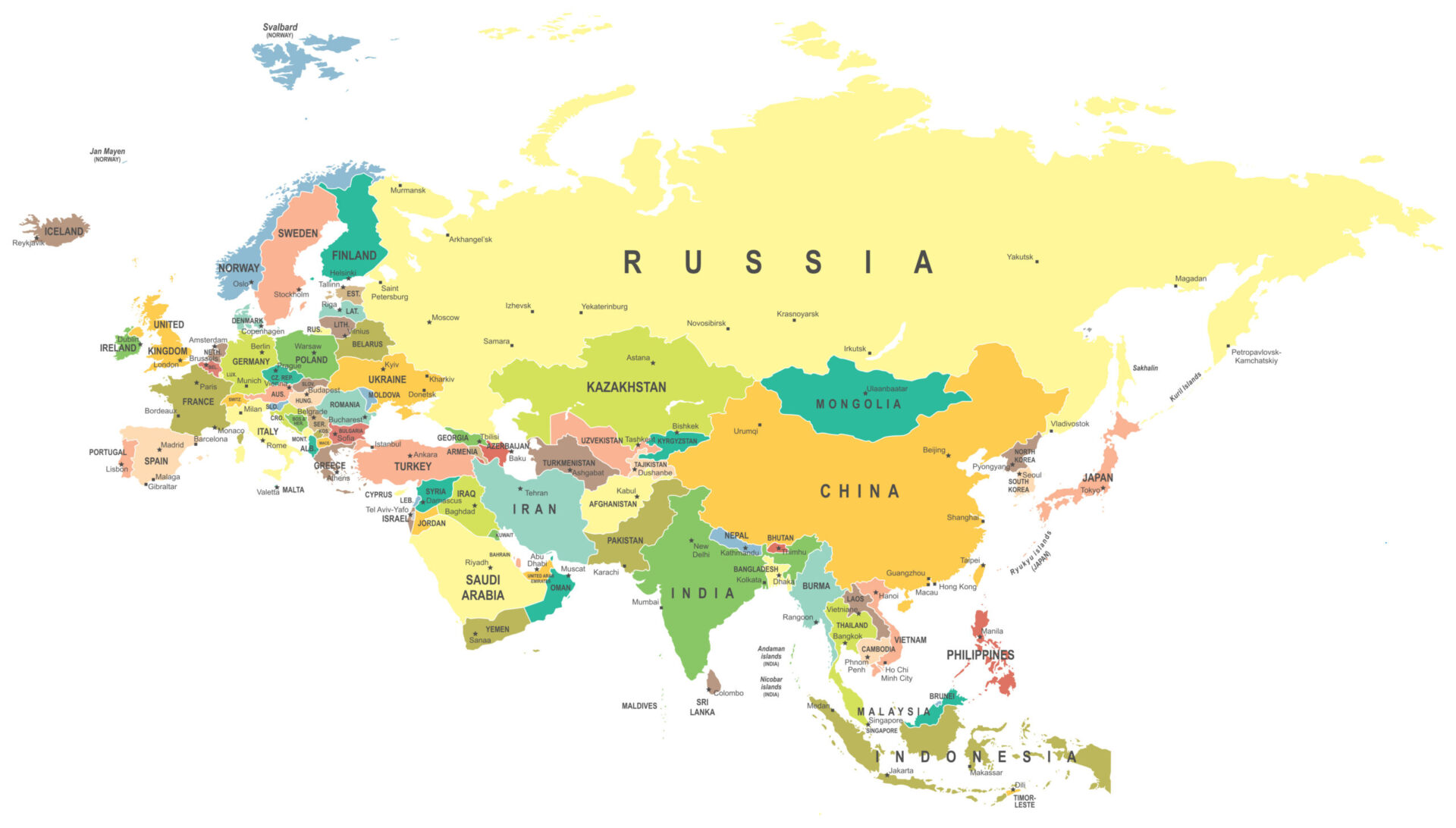
TASS, 1/16/22
KIEV, January 16. /TASS/. Ukrainian politician Viktor Medvedchuk has written his first article for the Russian media after arriving in Russia from Ukraine as a result of a detainee exchange. Medvedchuk previously held the position of the head of the political council of the Opposition Platform – For Life party, now banned in Ukraine. On April 12, 2022, Ukrainian President Vladimir Zelensky announced Medvedchuk’s detention and arrest on charges of high treason and violation of the laws of warfare. At the end of September, Medvedchuk left Ukraine for Russia.
In an article published on January 16 in the daily Izvestia, Medvedchuk discusses the military confrontation in Ukraine, examines its genesis and offers a forecast of how the situation may develop.
Conflict development forecast
According to Medvedchuk, in order to defuse the situation in Ukraine, it is crucial to recognize Russia’s interests.
“The Cold War ended with a political decision to build a new world where there will be no wars. It is clear that such a world has not been built, that the current world politics has returned back to square one – the point where the policy of d·tente began. Now there are only two ways out: a further slide towards a world war and a nuclear conflict or renewed efforts to ease tensions again, for which it is necessary to take into account the interests of all parties. But for this, it is crucial to politically recognize that Russia has its own interests to be taken into account,” Medvedchuk believes.
In his opinion, the conflict will either grow to eventually spill over into Europe and other countries, or it will be localized. However, for the latter option to materialize “it is essential that the party of peace be heard.” For the time being, the Western countries actively supporting military operations in Ukraine refuse to let this happen.
Political movement for peace in Ukraine crucial
Medvedchuk points out that many Ukrainians are peace-minded and do not support Zelensky in his pursuit of military triumphs. For these people to be heard, a political movement is needed without the participation of Western countries.
“If a party that seeks peace and civil dialogue does not fit into some kind of democracy, then is it real democracy? It is necessary to create a political movement of those who have not given up, who have not renounced their convictions on pain of death and prison, who do not want their country to become a scene of geopolitical skirmishes,” he wrote.
Medvedchuk noted that Ukraine had spent most of its history with Russia and is connected with it culturally and mentally. The economy is an unambiguous imperative for integration with Russia. Anti-Russian sentiment has brought nothing but grief and poverty to Ukraine,” Medvedchuk stressed.
Role of Ukraine’s southeast
In his opinion, Russia began to integrate into the European market faster than Ukraine thanks to its energy resources. “Ukraine’s independence could well have ended in economic collapse, had it not been for the southeast, currently a scene of fierce battles. In the 1990s, it was the Russian-speaking southeast that saved the economic, and with it, political independence of Ukraine,” Medvedchuk believes. “The business of the southeast is largely pegged to Russia and its interests, because the conflict has ceased to be an exclusively internal affair. Russia is faced with the need for protecting not only its economic interests, but also its international honor and dignity.”
Genesis of conflict
As for the genesis of the current conflict, according to Medvedchuk, the West and Russia perceived the end of the Cold War differently. The West unambiguously claimed its victory, considering Moscow as the loser.
“And since Russia, in its scheme of things is the loser, then the territories of the former Soviet Union and the Socialist block are legitimate spoils of war of the United States and NATO, which, in accordance to the ‘woe to the vanquished’ rule fall under the control of the West. Hence Ukraine is to be seen as a domain of the US and NATO, and by no means of Russia,” he explains.
Medvedchuk believes that the way out of the military confrontation between the East and the West, which could end in a nuclear catastrophe, was at a certain point jointly found by Moscow and Washington. It did not at all imply that the West would absorb the East.
“It was about equitable cooperation and joint construction of a new political and economic reality. We can clearly see two approaches to ending the Cold War: the triumph of the winners, on the one hand, and the construction of a new world and civilization, on the other. Future events will follow a scenario based on these two approaches,” Medvedchuk concluded.
Link to original article by Medvedchuk here.
By Stephen Bryen, Asia Times, 1/24/23
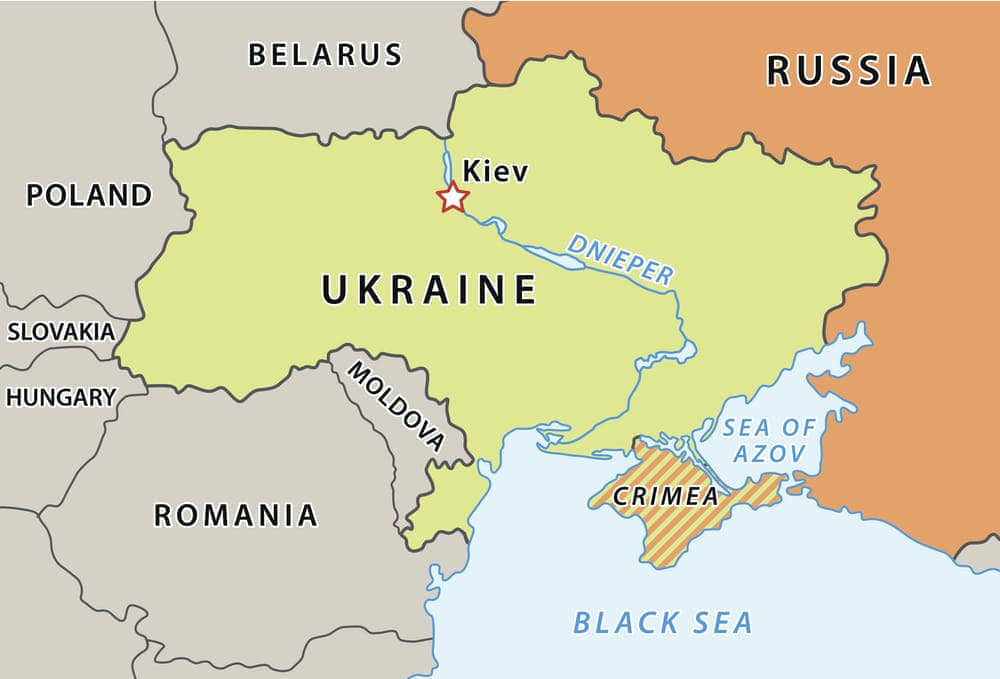
The delivery of tanks, advanced air defense systems and potentially long-range ground-launched bombs may be a response to Ukraine’s dire requests, but it also brings with it a new load of problems.
These hastily and urgently provided supplies indicate that all is not well in Kiev and that it is closer than ever to losing the war with Russia. These are not one-to-one replacements for equipment lost: Most of the delivered supplies aim to shift the fortunes of the war in favor of Ukraine.
At least one of the projected weapons, a 100-mile ground-launched long-range bomb known as ATACMS, also would shift the war from Ukrainian to Russian territory.
There is little doubt that putting this sort of weapon in Ukrainian hands will result in a bigger war in Europe. Russia will try to attack the transit centers for these supplies, most likely Poland, although retaliation could also conceivably include attacks on railroads and roadways in Germany.
The US decision to ship upgraded nuclear bombs to Europe also will convince the Russians that tactical nuclear war may be NATO’s response if Ukraine collapses. Compared with the US and NATO, Russia has a massive arsenal of tactical and strategic nuclear weapons.
Ukraine’s forces are falling back in the Donbas region and, if the retreat continues, will soon lose the strategic town of Bakhmut. The Russian wave, in the Pentagon’s view, is a sure thing and the US has asked Ukraine to abandon the area.
However, Ukraine’s military and political leaders can’t pull back because doing so would open the center of the country to the Russian army. That, in turn, could light off a long-suppressed clamor for political change in Ukraine with unknown and unknowable consequences.
President Volodymyr Zelensky knows full well he has arrested most of his political opponents and silenced the media he dislikes, including some instances where his opponents have allegedly been liquidated by Ukraine’s secret police, the SBU.
But that won’t protect him or his colleagues if people in Kiev start to understand that Ukrainian defenses are folding.
Despite claims to be a democracy, Ukraine is actually an authoritarian country that has blocked out real news and throttled any opposition. But because of social media, the messages will get through anyway and Zelensky and his team have a lot to fear.
It appears the US is placing its hope of reversing the battlefield situation on the new armor systems being sent to Ukraine. The US has put huge pressure on Germany to deliver its creaky Leopard II tanks and to allow Poland to ship the Leopards it has.
Poland has an inventory of 569 tanks, of which 398 are active. Most of the active tanks in Poland’s army are Leopard IIs (250). Poland is planning to replace the Leopards with 180 Korean K-2 Black Panther tanks, the first ten of which were delivered in December 2022. The K2 is an advanced tank featuring netcentric capabilities.
No one can say how effective Leopard tanks will be on the modern battlefield. In December 2016, numerous Leopard 2s were destroyed in fighting over the ISIS-held Al-Bab area near Aleppo, Syria. Ten Leopards were destroyed including five by anti-tank missiles (Russian origin), two by IEDs, and one by rocket fire.
The Russian wire-guided anti-tank missiles, 9k115 Metis and 9M113 Konkurs, are vintage 1970s weapons. This leads to the suspicion that the Leopards won’t turn out to be any more effective than the Russian-origin armor Ukraine already has, which could help explain why Poland is eager to unload them.
The US has made clear that it will not deliver the Abrams M-1 tank to Ukraine. This is the US main battle tank that is vital to NATO defense. Reluctance to send them to Ukraine could also represent a Pentagon view that the M-1s might not fare well on the modern battlefield against Russian forces because they control most of Ukraine’s airspace, meaning that tanks can be destroyed by air attack.
Psychologically, the loss of US tanks to Russian weapons would be a negative message about America’s ability to uphold security in Europe. (It certainly would unnerve the Baltic States and Germany.)
One of the key dangers in the Ukraine war is that it will spill over to other European countries, particularly Poland. Another Russian “option” may be to counter US support for Ukraine by attacking one or more of the Baltic states, namely Estonia, Latvia and Lithuania.
Tension is rising between the Baltics and Russia, as seen most recently by Russia’s decision to expel Estonia’s ambassador in Moscow.
Estonia is crucial because of its location on the Gulf of Finland and its sensitive border with Russia, close to St Petersburg. Estonia is setting up an “adjacent” zone giving it the right to inspect Russian civilian and military ships.
It is unlikely Estonia can carry out any inspections given that it only has two patrol vessels (EML-Roland and EML-Risto) and no other warships except some mine layers. But if Estonia even tried, it would create another friction point that Russia could exploit if it chose.
There is also a strategic element. With Finland joining NATO and already a de facto member, the Gulf of Finland becomes significantly more hostile for Russia and there will be growing pressure on Russian political leaders to take action against a rising threat to Russian security.
While Ukraine is far away, the Russians see NATO’s “ganging up” on Russia as a key issue for Russian security and stability. This brings the Baltic region into sharper focus because Russians see NATO trying to surround them and undercut their economic and military advantages.
The Biden administration, at least on the surface, appears to have little concern about the threat of a widening war or the possibility that Ukraine might be defeated by Russia. In fact, the administration and its allies keep claiming they are close to driving the Russians out of Ukraine – the latest such claim having come from Ukraine war supporter Boris Johnson.
If this claim were true, then all of the additional weapons slated for delivery to Ukraine would not be such an urgent need.
One of the problems is that war news is generated primarily by Ukrainian propaganda, which is endlessly parrotted in the Western media. Anytime there is contradictory information – for example, mention of Ukraine’s high casualties – Kiev pushes back so hard that Western leaders go silent.
Even so, accurate information does periodically leak. The latest example is a German report citing Berlin’s BND foreign intelligence service saying that Ukrainian casualties are very high in the Bakhmut area, estimated in the hundreds per day.
Washington could thus soon be faced with some dangerous choices. Should it commit US forces or US air power to Ukraine? If it did so, how quickly would the war spread in Europe?
Would NATO, always far more boisterous than can be justified by reality, support sending NATO forces to Ukraine? Or would NATO’s knees finally buckle?
The alternative – and more likely – scenario is that Washington will push for a peace settlement, something it has strictly opposed in the past. Will Russia be willing to sit down and discuss a deal? Of course, but only if the price is right.
By Branko Marcetic, American Committee for US-Russia Accord (ACURA), 1/16/22
Nearly a year in, the war in Ukraine has cost hundreds of thousands of lives and brought the world to the brink of, in President Joe Biden’s own words, “Armageddon.” Alongside the literal battlefield has been a similarly bitter intellectual battle over the war’s causes.
Commentators have rushed to declare the long-criticized policy of NATO expansion as irrelevant to the war’s outbreak, or as a mere fig leaf used by Russian President Vladimir Putin to mask what Condoleezza Rice and Robert Gates recently called “his messianic mission” to “reestablish the Russian Empire.” Fiona Hill, a presidential advisor to two Republican administrations, has deemed these views merely the product of a “Russian information war and psychological operation,” resulting in “masses of the US public … blaming NATO, or blaming the US for this outcome.”
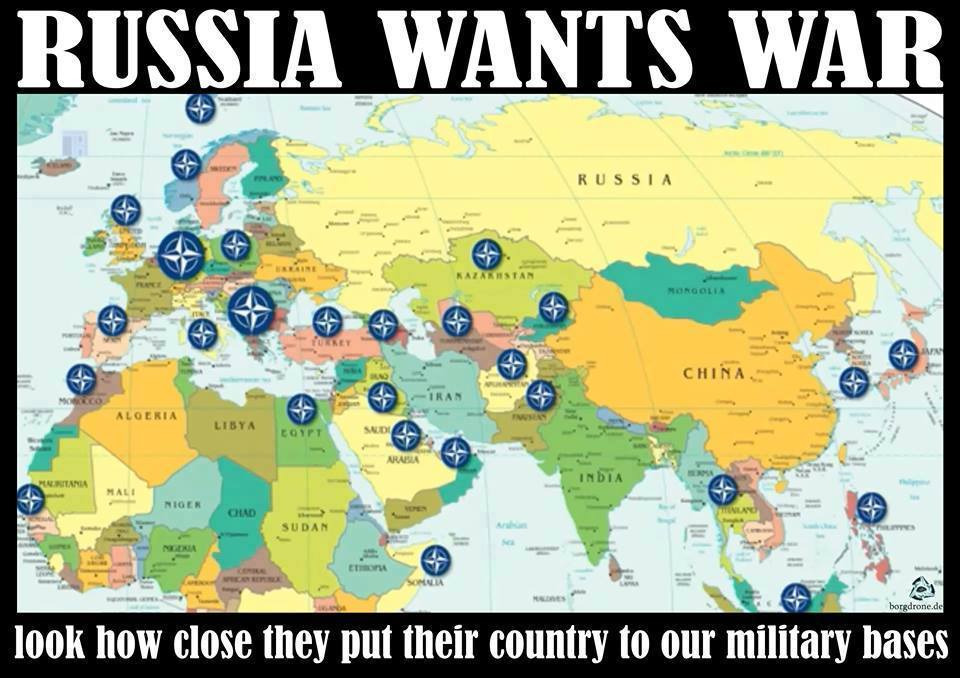
Yet a review of the public record and many dozens of diplomatic cables made publicly available via WikiLeaks shows that US officials were aware, or were directly told over the span of years, that expanding NATO was viewed by Russian officials well beyond Putin as a major threat and provocation, that expanding it to Ukraine was a particularly bright red line for Moscow, that it would inflame and empower hawkish, nationalist parts of the Russian political spectrum, and that it could ultimately lead to war.
In a particularly prophetic set of warnings, US officials were told that pushing for Ukrainian membership in NATO would not only increase the chance of Russian meddling in the country, but risked destabilizing the divided nation — and that US and other NATO officials pressured Ukrainian leaders to reshape this unfriendly public opinion in response. All of this was told to US officials in both public and private by not just senior Russian officials going all the way up to the presidency, but by NATO allies, various analysts and experts, liberal Russian voices critical of Putin, even, sometimes, US diplomats themselves.
This history is particularly relevant as US officials now test the red line China has drawn around Taiwan’s independence, risking military escalation that will first and foremost be aimed at the island state. The US diplomatic record regarding NATO expansion suggests the perils of ignoring or outright crossing another military power’s red lines, and the wisdom of a more restrained foreign policy that treats other powers’ spheres of influence with the care they treat the United States’ own.
An Early Exception
NATO expansion had been fraught from the start. The pro-Western Boris Yeltsin had told Bill Clinton he “saw nothing but humiliation for Russia if you proceed” with plans to renege on the verbal promises made years earlier not to enlarge NATO eastward, and warned it would be “sowing the seeds of mistrust” and would “be interpreted, and not only in Russia, as the beginning of a new split in Europe.” Just as containment architect George Kennan had predicted, the decision to go ahead helped inflame Russian hostility and nationalism: The Duma (the Russian parliament) declared it “the largest military threat to our country over the last fifty years,” while the leader of the opposition Communist Party called it “a Treaty of Versailles for Russia.”
By the time Putin became president the day before the new Millennium, “the initial hopes and plans of the early ‘90s [were] dead,” a leading liberal Russian politician declared. The first round of NATO enlargement had been followed by NATO’s 1999 bombing of Yugoslavia, done without UN security council authorization, triggering a Russian cut-off of contact with the alliance. By 2000, the revised Russian national security strategy warned that NATO using force beyond its borders “’is a threat of destabilization of the whole strategic situation,” while military officers and politicians started claiming“that if NATO expands further, it would ‘create a base to intervene in Russia itself,’” the Washington Post reported.
Ironically, there would be one exception to the next two decades’ worth of rising tensions over NATO’s eastward creep that followed: the early years of Putin’s presidency, when the new Russian president defied the Russian establishment to try and make outreach to the United States. Under Putin, Moscow re-established relations with NATO, finally ratified the START II arms control treaty, even publicly floated the idea of Russia eventually joining the alliance, inviting attacks from his political rivals for doing so. Even so, he continued to raise Moscow’s traditional concerns about the alliance’s expansion, telling NATO’s secretary-general it was “a threat to Russia.”
“If a country like Russia feels threatened, this would destabilize the situation in Europe and the entire world,” he’d said in a speech in Berlin in 2000.
Putin softened his opposition as he sought to make common cause with the George W. Bush administration. “If NATO takes on a different shape and is becoming a political organization, of course, we would reconsider our position with regard to such expansion, if we are to feel involved in the processes,” he said in October 2001, drawing attacks from political rivals and other Russian elites.
As NATO for the first time granted Russia a consultive role in its decision-making, Putin sought to assist its expansion. Italian president Silvio Berlusconi made a “personal request” to Bush, according to an April 2002 cable, to “understand Putin’s domestic requirements,” that he “needs to be seen as part of the NATO family,” and to give him “help in building Russian public opinion to support NATO enlargement.” In another cable a top-ranking state department official urges holding a NATO-Russia summit to “help President Putin neutralize opposition to enlargement,” after the Russian leader said allowing NATO expansion without an agreement on a new NATO-Russia partnership would be politically impossible for him.
This would be the last time any Russian openness toward NATO expansion is recorded in the diplomatic record held by WikiLeaks.
Allies Weigh In
By the middle of the 2000s, US-Russian relations had deteriorated, partly owing to Putin’s bristling at US criticism of his growing authoritarianism at home, and to US opposition to his meddling in the 2004 Ukrainian election. But as explained in a September 2007 cable by New Eurasia Foundation president Andrey Kortunov, now a Russian foreign policy advisor who has publicly criticized both Kremlin policy and the current war, US mistakes were also to blame, including Bush’s invasion of Iraq and a general sense that he’d given little in return for Putin’s concessions.
“Putin had clearly embarked on an ‘integrationist’ foreign policy at the beginning of his second presidential term, which was fueled by the 9/11 terrorist attacks and good relations with key leaders like President Bush” and other leading NATO allies, Kortunov said according to the cable. “However,” he said, “a string of perceived anti-Russian initiatives,” which included Bush’s withdrawal from the Anti-Ballistic Missile (ABM) Treaty and “further expansion of NATO,” ultimately “dashed Putin’s hopes.”
What followed was a steady drumbeat of warnings about NATO’s expansion, particularly regarding neighboring Ukraine and Georgia, much of it from Washington’s NATO allies.
“[French presidential diplomatic advisor Maurice] Gourdault-Montagne warned that the question of Ukrainian accession to NATO remained extremely sensitive for Moscow, and concluded that if there remained one potential cause for war in Europe, it was Ukraine,” reads a September 2005 cable. “He added that some in the Russian administration felt we were doing too much in their core zone of interest, and one could wonder whether the Russians might launch a move similar to Prague in 1968, to see what the West would do.”
This was just one of many similar warnings from French officials, that admitting the two states “would cross Russian ‘tripwires’,” for instance. A February 2007 cable records then-director general for political affairs Gérard Araud’s recounting of “a half-hour anti-US harangue” from Putin in a meeting one day earlier, in which he “linked all the dots” of Russian unhappiness with US behavior, including “US unilateralism, its denial of the reality of multipolarity, [and] the anti-Russian nature of NATO enlargement.”
Germany likewise raised repeated concerns about a potentially bad Russian reaction to a NATO Membership Action Plan (MAP) for the two states, with deputy national security advisor Rolf Nikel stressing that Ukraine’s entry was particularly sensitive. ““While Georgia was ‘just a bug on the skin of the bear,’ Ukraine was inseparably identified with Russia, going back to Vladimir of Kiev in 988,” Nikel recounted, according to the cable.
Other NATO allies repeated similar concerns. In a January 2008 cable, Italy affirmed it was a “strong advocate” for other states’ entry into the alliance, “but is concerned about provoking Russia through hurried Georgian integration.” Norway’s foreign minister (and today, prime minister) Jonas Gahr Stoere made a similar point in an April 2008 cable, even as he insisted Russia mustn’t be able to veto NATO’s decisions. “At the same time he says that he understands Russia’s objections to NATO enlargement and that the alliance needs to work to normalize the relationship with Russia,” reads the cable.
Almost Complete Consensus
The thinkers and analysts that US officials conferred with likewise made clear the Russian elite’s anxieties over NATO and its expansion, and the lengths they might go to counteract it. Many were transmitted by then-US Ambassador to Russia William Burns, today serving as Biden’s CIA director.
Recounting his conversations with various “Russian observers” from both regional and US think tanks, Burns concluded in a March 2007 cable that “NATO enlargement and U.S. missile defense deployments in Europe play to the classic Russian fear of encirclement.” Ukraine and Georgia’s entry “represents an ‘unthinkable’ predicament for Russia,” he reported six months later, warning that Moscow would “cause enough trouble in Georgia” and counted on “continued political disarray in Ukraine” to halt it. In an especially prescient set of cables, he summed up scholars’ views that the emerging Russia-China relationship was largely “the by-product of ‘bad’ US policies,” and was unsustainable — “unless continued NATO enlargement pushed Russia and China even closer together.”
Cables record Russian intellectuals across the political spectrum making such points again and again. One June 2007 cable records the words of a “liberal defense expert” and the “liberal editor” of a leading Russian foreign policy journal, that after Russia had done “everything to ‘help’ the US post-9/11, including opening up Central Asia for coalition anti-terrorism efforts,” it had expected “respect for Russia’s ‘legitimate interests.’” Instead, Lyukanov said, it had been “confronted with NATO expansion, zero-sum competition in Georgia and Ukraine, and US military installations in Russia’s backyard.”
“Ukraine was, in the long term, the most potentially destabilizing factor in US-Russian relations, given the level of emotion and neuralgia triggered by its quest for NATO membership,” went the counsel of Dmitri Trenin, then-deputy director of the Russian branch of the US-based Carnegie Endowment for International Peace, in a Burns-authored February 2008 cable. For Ukraine, he said prophetically, it would mean that
elements within the Russian establishment would be encouraged to meddle, stimulating US overt encouragement of opposing political forces, and leaving the US and Russia in a classic confrontational posture.
Indeed, opposing NATO’s enlargement eastward, particulary in Ukraine and Georgia, was “one of the few security areas where there is almost complete consensus among Russian policymakers, experts and the informed population,” he cabled in March 2008. Ukraine was the “line of last resort” that would complete Russia’s encirclement, said one defense expert, and its entry into NATO was universally viewed by the Russian political elite as an “unfriendly act.” Other experts cautioned “that Putin would be forced to respond to Russian nationalist feelings opposing membership” of Georgia, and that MAPs for either would trigger a cut-back in the Russian military’s genuine desire for co-operation with NATO.
From Liberals to Hardliners
These analysts were reiterating what cables show US officials heard again and again from Russian officials themselves, whether diplomats, members of parliament, or senior Russian officials all the way up to the presidency, recorded in nearly three-dozen cables at least.
NATO enlargement was “worrisome” said one Duma member, while Russian generals were “suspicious of NATO and US intentions,” cables record. Just as analysts and NATO officials had said, Kremlin officials characterized NATO’s designs on Georgia and Ukraine as especially objectionable, with ambassador to NATO Dmitry Rogozin stressing in a February 2008 cable that offering MAPs to either “would negatively impact NATO’s relations with Russia” and “raise tension along the borders between NATO and Russia.”
Deputy foreign minister Grigory Karasin “underscored the depth of Russian opposition” to their membership, a different March 2008 cable states, underlining that the political elite “firmly believes” it “represented a direct security threat to Russia.” The future, he said, rested on the “strategic choice” Washington made about “what kind of Russia” it wanted to deal with: “a Russia that is stable and ready to calmly discuss issues with the US, Europe and China, or one that is deeply concerned and filled with nervousness.”
Indeed, numerous officials — including then-director for security and disarmament Anatoly Antonov, today serving as Russia’s ambassador to the United States — warned pushing ahead would produce a less co-operative Russia. Pushing NATO’s borders to the two former Soviet states “threatened Russian and the entire region’s security, and could also negatively impact Russia’s willingness to cooperate in the [NATO-Russia Council],” one foreign ministry official warned, while others pointed to the policy to explain Putin’s threats to suspend the Conventional Armed Forces in Europe (CFE) treaty. “CFE would not survive NATO enlargement,” went a Russian threat in one March 2008 cable.
Maybe most pertinent were the words of Russian Foreign Minister Sergei Lavrov, at the time a veteran diplomat respected in the West, and who continues to serve in the position today. At least eight cables, a number of them written by Burns, record Lavrov’s expressions of opposition to expanding NATO to Ukraine and Georgia over the course of 2007-08, when Bush’s decision, over the objections of allies, to publicly affirm their future accession led to a spike in tensions.
“While Russia might believe statements from the West that NATO was not directed against Russia, when one looked at recent military activities in NATO countries … they had to be evaluated not by stated intentions but by potential,” went Burns’s summary of Lavrov’s annual foreign policy review in January 2008. On the same day, he wrote, a foreign ministry spokesperson warned that Ukraine’s “likely integration into NATO would seriously complicate the many-sided Russian-Ukrainian relations” and lead Moscow to “have to take appropriate measures.”
Besides being an easy way to garner domestic support from nationalists, Burns wrote, “Russia’s opposition to NATO membership for Ukraine and Georgia is both emotional and based on perceived strategic concerns about the impact on Russia’s interests in the region.”
“While Russian opposition to the first round of NATO enlargement in the mid-1990’s was strong, Russia now feels itself able to respond more forcefully to what it perceives as actions contrary to its national interests,” he concluded.
Lavrov’s criticism was shared by a host of other officials, not all of them hardliners. Burns recounted a meeting with former prime minister Yevgeny Primakov, a Gorbachev protégé who had negotiated over NATO’s first expansion with Madeleine Albright, who warmly eulogized him years later as a pragmatist. The US push for MAP for Georgia and Ukraine “‘infuriated’ Russians and threatened other areas of US-Russia strategic cooperation,” Primakov had said according to Burns, mentioning he’d be asked later that day on TV about rethinking Crimea’s status as Ukrainian territory. “[T]this is the kind of discussion that MAP produces,” he said — meaning, that it inflamed nationalist and hardline sentiment.
“Primakov said that Russia would never return to the era of the early 1990s and it would be a ‘colossal mistake’ to think that Russian reactions today would mirror those during its time of strategic weakness,” Burns’s cable states in closing.
This went all the way to the top, as US officials noted in cables reacting to a famously strident speech Putin gave at the Munich Security Conference in February 2007, which saw Putin assail NATO expansion and other policies as part of a wider, destabilizing US abuse of its sole-superpower status. Putin’s tone may have been “unusually sharp,” Primakov told Burns, but their substance “reflected well-known Russian complaints predating Putin’s election,” shown by the fact that “talking heads and Duma members were almost unanimous” in supporting the speech. A year later, a March 2008 cable reported German chancellor Angela Merkel’s final, two-hour-long meeting with Putin, in which he “argued strongly” against MAP for Ukraine and Georgia.
Putin’s Exit
Any illusions this stance would evaporate with Putin leaving the presidency were quickly dispelled. Such warnings continued and, if anything, grew more intense, after Putin was replaced by his liberal successor, Dmitry Medvedev, whose ascent sparked hopes for a more democratic Russia and an improved US-Russian relationship.
Under Medvedev, officials from the Russian ambassador to NATO and various officials in the foreign ministry to the chairman of the Duma’s international affairs committee made much the same warnings, cables show. In some cases, as with Karasin and Lavrov, it was the same officials making these long-standing complaints.
Medvedev himself “reiterated well known Russian positions on NATO enlargement” to Merkel in his first trip to Europe in June 2008, even as he avoided bringing up MAP for Ukraine and Georgia specifically. “Behind Medvedev’s polite demeanor, Russian opposition to NATO enlargement remained a red-line, according to both conservative and moderate observers,” one June 2008 cable reads, a view shared by a leading liberal analyst. Even critics to his right read Medvedev’s words as “an implicit commitment to use Russian economic, political and social levers to raise the costs for Ukraine and Georgia” if they moved closer to the alliance. The cable’s author, Deputy Chief of Mission at the US embassy in Moscow Daniel Russell, concluded he “agree[d] with the common wisdom.”
By August 2008, following the war with Georgia, Medvedev started to sound a lot more like his predecessor, threatening to cut ties with the alliance and restating grievances about encirclement. A cable from after the end of the five-day war — which an EU-commissioned report would later blame the Georgian government for starting — stated that “even the most pro-Western political experts” were “pointing the finger at the US” for jeopardizing US-Russian relations, with US dismissal of Russia’s concerns over, among other things, NATO expansion a key part of some of their analysis. Echoing Burns, one analyst argued that Russia finally felt “strong enough to stand up to the West” when it ignored its concerns.
Those concerns were central at a roundtable of Russian analysts months later, a January 2009 cable shows, who explained to a group of visiting US congresspeople Russians’ “deep displeasure” with the US government, and stressed the “bitter divorce” between Russia and Georgia would be even uglier with Ukraine. Pushing MAP for the country “helped the ‘America haters come to power’ in Russia and gave legitimacy to the hard-liners’ vision of ‘fortress Russia’,” said one.
Increasingly, cables show, such warnings came from liberals, even those who hadn’t previously viewed NATO and the United States as Russia’s chief threats. An August 2008 cable described a meeting with Russian human rights ombudsman Ambassador Vladimir Lukin — described as “a liberal on the Russian political scene, someone disposed toward cooperation with the US” — who explained Medvedev’s post-war recognition of independence of Georgia’s breakaway regions, which he had at first opposed, as a security-driven response to NATO’s drift towards Russia’s borders. Because escalations like the 2008 US-Poland misssile defense agreement showed anti-Russia actions “would not stop,” he said, “Moscow had to show that, like the US, it can and will take steps it deems necessary to defend its interests.”
The cable concluded that Lukin’s views “reflect the thinking of the majority of Russian foreign policy elite.”
Selling NATO to Ukraine
Other than Burns — whose Bush-era memos warning of the breadth of Russian opposition to NATO expansion and that it would provoke intensified meddling in Ukraine have become famous since the Russian invasion — US officials largely reacted with dismissal.
Russian objections to the policy and other long-simmering issues were described over and over in the cables as “oft-heard,” “old,” “nothing new,” and “largely predictable,” a “familiar litany” and a “rehashing” that “provided little new substance.” Even NATO ally Norway’s position that it understood Russian objections even as it refused to let Moscow veto the alliance’s moves was labeled a case of “parroting Russia’s line.”
US officials were similarly dismissive of explicit warnings — from Kremlin officials, NATO allies, experts and analysts, even Ukrainian leadership — that Ukraine was “internally divided over NATO membership” and that public support for the move was “not fully ripe.” The east-west split within the country over the idea made it “risky,” German officials cautioned, and could “break up the country.” Its three leading politicians all “took foreign policy positions based on domestic political considerations, with little regard to the long-term effects on the country,” they said.
Those very politicians likewise made clear public opinion wasn’t there, whether anti-Russian foreign minister Volodymyr Ogryzko, or more Russian-friendly prime minister Viktor Yanukovych — later misleadingly painted as a Kremlin puppet and ousted as president in the 2014 Maidan protests — who boasted to a US diplomat that support for NATO had jumped under his tenure. In response, the cables show, NATO officials pressed Ukranian leaders to take a firm public stance in favor of joining, and discussed how to persuade Ukraine’s population “so that they would be more favorable towards it.” Ogryzko later disclosed to Merkel “that a public education campaign is already underway,” and that Ukraine “had discussed the issue of public education campaigns with Slovakia and other nations that had joined NATO recently.”
This came in spite of acknowledged risks. Cables record liberal Russian analysts cautioning “that [Ukrainian president Viktor] Yushchenko was using NATO membership to shore up a Ukrainian national identity that required casting Russia in the role of enemy,” and that “because membership remained divisive in Ukrainian domestic politics, it created an opening for Russian intervention.”
“Experts tell us that Russia is particularly worried that the strong divisions in Ukraine over NATO membership, with much of the ethnic-Russian community against membership, could lead to a major split, involving violence or at worst, civil war,” Burns wrote in February 2008. Russia, he wrote, would then “have to decide whether to intervene; a decision Russia does not want to have to face.”
Despite the dismissive attitude of many US officials, parts of the US national security establishment clearly understood Russian objections weren’t mere “muscle-flexing.” The Kremlin’s anxieties over a “direct military attack on Russia” were “very real,” and could drive its leaders to make rash, self-defeating decisions, stated a 2019 report from the Pentagon-funded RAND Corporation that explored theoretical strategies for overextending Russia.
“Providing more US military equipment and advice” to Ukraine, it stated, could lead Moscow to “respond by mounting a new offensive and seizing more Ukrainian territory” — something not necessarily good for US interests, let alone Ukraine’s, it noted.
Warnings Ignored
Nevertheless, in the years, months, and weeks that led up to the Russian invasion, successive US administrations continued on the same course.
Ukraine’s co-operation with NATO has “deepened over time,” the alliance itself says today. By the war’s outbreak, the country frequently hosted Western troops at a military base, its soldiers received NATO training, it planned two new NATO-linked naval bases, and it received unprecedented sums of US military aid, including offensive arms — a Donald Trump policy his liberal predecessor had explicitly rejected, out of concern for provoking a disastrous response from Moscow. Three months before the invasion, Ukraine and the United States signed an updated Charter on Strategic Partnership “guided” by Bush’s controversial Bucharest declaration, which both deepened security co-operation between the two countries and supported Ukraine’s membership aspirations, viewed as an escalation in Moscow.
As US military activity has increased in the region since 2016, sometimes involving Ukraine and Georgia, NATO-Russian tensions have ratcheted up too. While Moscow publicly objected to US missions experts feared were too provocative, NATO and Russian forces have experienced thousands of dangerous military encounters in the region and elsewhere. By December, with fears of invasion ramping up, Putin told Biden personally that “the eastward expansion of the Western alliance was a major factor in his decision to send troops to Ukraine’s border,” the Washington Post reported.
None of this means other factors played no role in the war’s outbreak, from Russian domestic pressures and Putin’s own dim view of Ukrainian independence, to the copious other well-known Russian grievances toward US policy that frequently appear in the diplomatic record, too. Nor does it mean, as hawks argue, that this somehow “justifies” Putin’s war, any more than understanding how US foreign policy has fueled anti-American terrorism “justifies” those crimes.
What it does mean is that claims that Russian unhappiness over NATO expansion is irrelevant, a mere “fig leaf” for pure expansionism, or simply Kremlin propaganda are belied by this lengthy historical record. Rather, successive US administrations pushed ahead with the policy despite being warned copiously for years — including by the analysts who advised them, by allies, even by their own officials — that it would feed Russian nationalism, create a more hostile Moscow, foster instability and even civil war in Ukraine, and could eventually lead to Russian military intervention, all of which ended up happening.
“I don’t accept anyone’s red line,” Biden said in the lead-up to the invasion, as his administration rejected negotiations with Moscow over Ukraine’s NATO status. We can only imagine the world in which he and his predecessors had.
Branko Marcetic is a Jacobin staff writer and the author of Yesterday’s Man: The Case Against Joe Biden. He lives in Chicago, Illinois.
Link here.