So, Turkish President Recep Tayyip Erdogan picks up the phone and calls his Russian counterpart Vladimir Putin: let’s talk about the “grain deal.” Putin, cool, calm and collected, explains the facts to the Sultan:
First, the reason why Russia withdrew from the export grain deal.
Second, how Moscow seeks a serious investigation into the – terrorist – attack on the Black Sea fleet, which for all practical purposes seems to have violated the deal.
And third, how Kiev must guarantee it will uphold the deal, brokered by Turkey and the UN.
Only then would Russia consider coming back to the table.
And then – today, 2 November – the coup de theatre: Russia’s Ministry of Defense (MoD) announces the country is back to the Black Sea grain deal, after receiving the necessary written guarantees from Kiev.
The MoD, quite diplomatically, praised the “efforts” of both Turkey and the UN: Kiev is committed not to use the “Maritime Humanitarian Corridor” for combat operations, and only in accordance with the provisions of the Black Sea Initiative.
Moscow said the guarantees are sufficient “for the time being.” Implying that can always change.
All rise to the Sultan’s persuasion
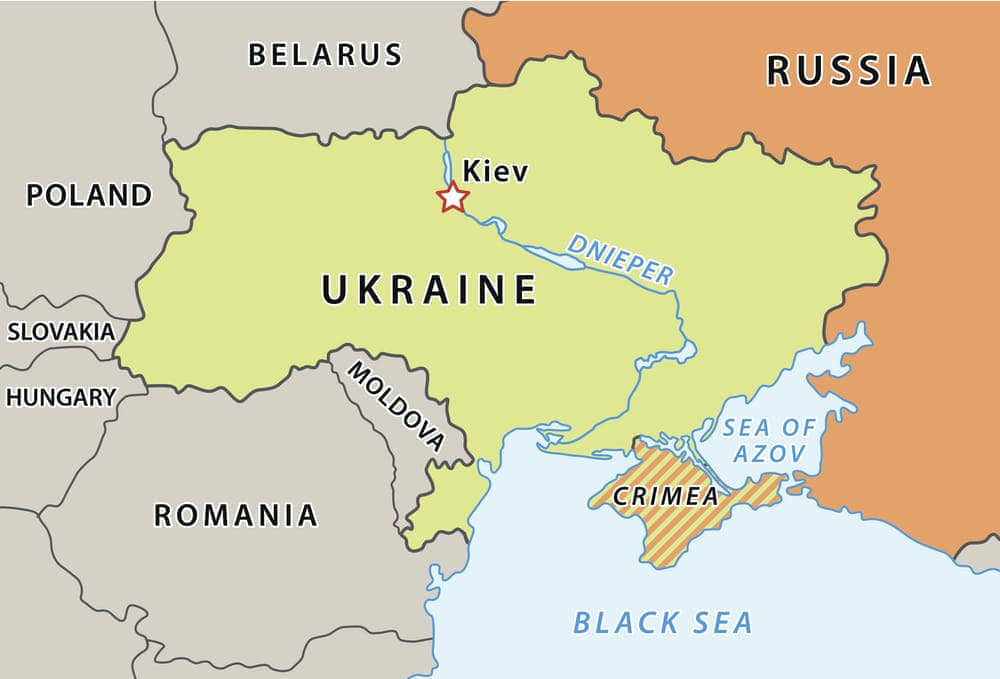
Erdogan must have been extremely persuasive with Kiev. Before the phone call to Putin, the Russian Ministry of Defense (MoD) had already explained that the attack on the Black Sea Fleet was conducted by 9 aerial drones and 7 naval drones, plus an American RQ-4B Global Hawk observation drone lurking in the sky over neutral waters.
The attack happened under the cover of civilian ships and targeted Russian vessels that escorted the grain corridor in the perimeter of their responsibility, as well as the infrastructure of the Russian base in Sevastopol.
The MoD explicitly designated British experts deployed in the Ochakov base in the Nikolaev region as the designers of this military operation.
At the UN Security Council, Permanent Representative Vassily Nebenzya declared himself “surprised” that the UN leadership “failed not only to condemn, but even to express concern over the terrorist attacks.”
After stating that the Brit-organized Kiev operation on the Black Sea Fleet “put an end to the humanitarian dimension of the Istanbul agreements,” Nebenzya also clarified:
“It is our understanding that the Black Sea Grain Initiative, which Russia, Turkey, and Ukraine agreed on under UN supervision on 22 July, must not be implemented without Russia, and so we do not view the decisions that were made without our involvement as binding.”
This means, in practice, that Moscow “cannot allow for unimpeded passage of vessels without our inspection.” The crucial question is how and where these inspections will be carried out – as Russia has warned the UN that it will definitely inspect dry cargo ships in the Black Sea.
The UN, for its part, tried at best to put on a brave face, believing Russia’s suspension is “temporary” and looking forward to welcoming “its highly professional team” back to the Joint Coordination Center.
According to humanitarian chief Martin Griffiths, the UN also proclaims to be “ready to address concerns.” And that has to be soon, because the deal reaches its 120-day extension point on November 19.
Well, “addressing concerns” is not exactly the case. Deputy Permanent Representative of Russia Dmitry Polyansky said that at the UN Security Council meeting western nations simply could not deny their involvement in the Sevastopol attack; instead, they simply blamed Russia.
All the way to Odessa
Prior to the phone call with Erdogan, Putin had already pointed out that “34 percent of the grain exported under the deal goes to Turkey, 35 percent to EU countries and only 3-4 percent to the poorest countries. Is this what we did everything for?”
That’s correct. For instance, 1.8 million tons of grain went to Spain; 1.3 million tons to Turkey; and 0.86 million tons to Italy. By contrast, only 0,067 tons went to “starving” Yemen and 0,04 tons to “starving” Afghanistan.
Putin made it very clear that Moscow was not withdrawing from the grain deal but had only suspended its participation.
And as a further gesture of good will, Moscow announced it would willingly ship 500,000 tons of grain to poorer nations for free, in an effort to replace the integral amount that Ukraine should have been able to export.
All this time, Erdogan skillfully maneuvered to convey the impression he was occupying the higher ground: even if Russia behaves in an “indecisive” manner, as he defined it, we will continue to pursue the grain deal.
So, it seems like Moscow was being tested – by the UN and by Ankara, which happens to be the main beneficiary of the grain deal and is clearly profiting from this economic corridor. Ships continue to depart from Odessa to Turkish ports – mainly Istanbul – without Moscow’s agreement. It was expected they would be “filtered” by Russia when coming back to Odessa.
The immediate Russian means of pressure was unleashed in no time: preventing Odessa from becoming a terrorist infrastructure node. This means constant visits by cruise missiles.
Well, the Russians have already “visited” the Ochakov base occupied by Kiev and the British experts. Ochakov – between Nikolaev and Odessa – was built way back in 2017, with key American input.
The British units that were involved in the sabotage of the Nord Streams – according to Moscow – are the same ones that planned the Sevastopol operation. Ochakov is constantly spied upon and sometimes hit out of positions that the Russians have cleared last month only 8 km to the south, on the extremity of the Kinburn peninsula. And yet the base has not been totally destroyed.
To reinforce the “message,” the real response to the attack on Sevastopol has been this week’s relentless “visits” of Ukraine’s electrical infrastructure; if maintained, virtually the whole of Ukraine will soon be plunged into darkness.
Closing down the Black Sea
The attack on Sevastopol may have been the catalyst leading to a Russian move to close down the Black Sea – with Odessa converted into an absolutely priority for the Russian Army. There are serious rumblings across Russia on why Russophone Odessa had not been the object of pinpointed targeting before.
Top infrastructure for Ukrainian Special Forces and British advisers is based in Odessa and Nikolaev. Now there’s no question these will be destroyed.
Even with the grain deal in theory back on track, it is hopeless to expect Kiev to abide by any agreements. After all, every major decision is taken either by Washington or by the Brits at NATO. Just like bombing the Crimea Bridge, and then the Nord Streams, attacking the Black Sea Fleet was designed as a serious provocation.
The brilliant designers though seem to have IQs lower than refrigerator temperatures: every Russian response always plunges Ukraine deeper down an inescapable – and now literally black – hole.
The grain deal seemed to be a sort of win-win. Kiev would not contaminate Black Sea ports again after they were demined. Turkey turned into a grain transport hub for the poorest nations (actually that’s not what happened: the main beneficiary was the EU). And sanctions on Russia were eased on the export of agricultural products and fertilizers.
This was, in principle, a boost for Russian exports. In the end, it did not work out because many players were worried about possible secondary sanctions.
It is important to remember that the Black Sea grain deal is actually two deals: Kiev signed a deal with Turkey and the UN, and Russia signed a separate deal with Turkey.
The corridor for the grain carriers is only 2 km wide. Minesweepers move in parallel along the corridor. Ships are inspected by Ankara. So the Kiev-Ankara-UN deal remains in place. It has nothing to do with Russia – which in this case does not escort and/or inspect the cargoes.
What changes with Russia “suspending” its own deal with Ankara and the UN, is that from now on, Moscow can proceed anyway it deems fit to neutralize terrorist threats and even invade and take over Ukrainian ports: that will not represent a violation of the deal with Ankara and the UN.
So in this respect, it is a game-changer.
Seems like Erdogan fully understood the stakes, and told Kiev in no uncertain terms to behave. There’s no guarantee, though, that western powers won’t come up with another Black Sea provocation. Which means that sooner or later – perhaps by the Spring of 2023 – General Armageddon will have to come up with the goods. That translates as advancing all the way to Odessa.
Noha Razek ia Assistant Professor of Economics, University of Regina. Brian McQuinn is Co-Director of the Centre for Artificial Intelligence, Data, and Conflict and Assistant Professor, International Studies, University of Regina
The European Union has just approved new sanctions against Russia, including a price cap on oil sales, following the United States’ Sept. 30 announcement of new economic sanctions. Both announcements are in response to Russia’s annexation of four regions of Ukraine.
The goal of sanctions against Russia is to cripple Russia’s capacity to wage war and reduce Vladimir Putin’s access to the materials and financing necessary to fight.
However, because there are still countries willing to purchase Russia’s petroleum products, sanctions are increasing Russia’s revenue, not decreasing it.
Worse yet, the sanctions are driving up global oil and natural gas prices, causing spikes in inflation worldwide and, ironically, reducing the world’s access to the metals and minerals necessary for the transition away from oil and natural gas.
Widespread impact from sanctions
In early March, the sanctions on Russia’s oil sector had driven oil price estimates up to US$185 per barrel and the price of natural gas in Europe nearly reached US$500 per barrel. In late August, the price of natural gas lowered to US$410 per barrel.
As the winter approaches, Anne-Sophie Corbeau, Global Research Scholar at the Center on Global Energy Policy of Columbia University, stated that current natural gas prices of US$300 per barrel could generate not only a natural gas crisis, but also a power crisis.
This increase has had widespread effects beyond the oil and natural gas industry, impacting agricultural products, minerals and rare metals needed for green technologies, manufacturing industries and fertilizer production.
There’s concern that the monetary policies implemented to contain those inflationary effects could squeeze the amount of money and assistance that have been previously directed to green energy investments.
Another concern is that some countries will revise their short- and long-term energy security policies, putting energy security before energy transition.
Sanction picking is ineffective
Unlike previous “one-size-fits-all” sanctions on Iran and Venezuela, countries boycotting Russia are only picking the restrictions they can afford. All major oil importers will need to reject Russia’s oil exports for the sanctions to be effective, but so far this has not happened.
Christof Rühl, a senior research scholar at Columbia University, has described this “sanction-picking” as a reckless gamble. He’s warned that energy sanctions will backfire, causing oil prices to surge, which will be economically detrimental to sanctioning countries.
The perception that sanctions on Russia’s oil will economically restrain Russia does not account for the dynamics of the global oil market. The U.S. Treasury Secretary cautioned Europe against imposing full sanctions on Russia’s energy exports, warning that it could result in elevated oil prices that would benefit Russia but be detrimental to the global economy.
Although Russia’s crude oil has been sold at a discount this year, the price is still higher than before the pandemic. This means Russia is still making more than the minimum price needed to finance its government budget and international financial obligations.
There is also the issue of Russian oil being traded under the radar. This could result in the emergence of three distinct groups: countries that are willing to trade with Russia, countries that are energy-independent of Russia and countries that are not energy secure and must take a neutral position. This would support further sanction-picking and set us back from our global energy security and transition goals.
Reorienting international trade
Despite the sanctions, Russia’s exports are still flowing into the global economy. This is because although trading firms have ceased new business with Russia, they continue to honour their contracts from before the conflict. Those contracts give trading firms the flexibility to purchase as much oil as they can every month.
Although some of Russia’s exports will be lost, export flows are likely to change. Some of Russia’s crude oil intended for Europe will be redirected to Asia because of the EU’s reluctance to purchase Russia’s oil. Refineries, particularly in China and India, are still willing to buy discounted Russian oil.
To wean itself off Russian exports, Europe is seeking to replace Russian petroleum imports with supplies from the Middle East and Asia to the extent that their contractual commitments, refining configuration and import capacity permit. One outcome of this trade reshuffling is that diesel prices in Europe will increase due to higher transportation costs.
Russia is resilient against sanctions
While some experts have argued that imposing sanctions on Russia’s oil sector, rather than their gas sector, will be more effective, this isn’t the case. The argument that oil is Russia’s biggest source of income is not supported by data on Russia’s GDP and government revenue.
Russia’s crude oil and refined products exports markets are well diversified. The World Bank concentration index indicates that Russia’s economy was relatively diversified in 2020, with a 0.26 concentration index. To put that in context, Saudi Arabia was in the top 20 per cent of least diversified economies with a 0.55 concentration index.
Russia has also shifted away from western markets, toward the Chinese market, since the imposition of sanctions in 2014 following its annexation of Crimea.
This diversification away from the West means that imposing sanctions on Russia’s oil sector will have limited effects on Russia’s economy.
What can be done?
The sanctions against Russia are strangling an important international source of energy, critical metals and minerals, causing non-renewable and green energy shortages, and driving up inflation. Given the role Russia plays in energy supply, the global economy could soon be faced with one of the largest energy supply shocks ever.
Ultimately, the impact of oil sanctions on Russia is limited, while repercussions on the global economy and countries’ abilities to achieve energy security and transition are severe.
As Nikos Tsafos, the previous energy chair at the Center for Strategic and International Studies wrote in March:
“A weapon is most useful when aimed at something — it is not clear what the western weaponization of energy exports is meant to accomplish exactly.”
It is time to evaluate the economic costs of the sanctions on the world and on Russia. Polls show inflation is the most pressing issue for the public in many countries. There is room for political leaders to make the case that some sanctions are not working and should be changed.
By Medea Benjamin & Nicholas J.S. Davies, Antiwar.com, 10/27/22
Ukraine has been wracked by shocking destruction and deadly violence since Russia invaded the country in February. Estimates of the death toll range from a confirmed minimum of 27,577 people, including 6,374 civilians, to over 150,000. The slaughter can only get more horrific as long as all sides, including the United States and its NATO allies, remain committed to war.
In the first weeks of the war, the United States and NATO countries sent weapons to Ukraine to try to prevent Russia from quickly defeating Ukraine’s armed forces and conducting a U.S.-style “regime change” in Kyiv. But since that goal was achieved, the only goals that President Zelenskyy and his Western allies have publicly proclaimed are to recover all of pre-2014 Ukraine and decisively defeat and weaken Russia.
These are aspirational goals at best, which require sacrificing hundreds of thousands, maybe millions, of Ukrainian lives, regardless of the outcome. Even worse, if they should come close to succeeding, they are likely to trigger a nuclear war, making this the all-time epitome of a “no-win predicament.”
At the end of May, President Biden responded to probing questions about the contradictions in his Ukraine policy from the New York Times Editorial Board,replying that the United States was sending weapons so that Ukraine “can fight on the battlefield and be in the strongest possible position at the negotiating table.”
But when Biden wrote that, Ukraine had no position at any negotiating table, thanks mainly to the conditions that Biden and NATO leaders attached to their support. In April, after Ukraine negotiated a 15-point peace plan for a ceasefire, a Russian withdrawal and a peaceful future as a neutral country, the United States and United Kingdom refused to provide Ukraine with the security guarantees that were a critical part of the agreement.
As now disgraced British prime minister Boris Johnson told President Zelensky in Kyiv on April 9th, the “collective West” was “in it for the long run,” meaning a long war against Russia, but wanted no part in any agreement between Ukraine and Russia.
In May, Russian forces advanced through Donbas, forcing Zelensky to admit, by June 2nd, that Russia now controlled 20% of Ukraine’s pre-2014 territory, leaving Ukraine in a weaker, not a stronger position.
Six months after Secretary Austin declared in April that the new goal of the war was to decisively defeat and “weaken” Russia, President Biden is rejecting calls for a new peace initiative. So the United States and United Kingdom had no reservations about intervening to kill peace talks in April, but now that they’ve sold President Zelensky on fighting an endless war, Biden insists that he has no say in the matter if Zelensky rejects peace negotiations.
But it is axiomatic that wars end at the negotiating table, as Biden acknowledged to the Times. The perennial thorny question for war leaders is “When to negotiate?” The problem is that, when your side seems to be winning, you have little incentive to stop fighting. But when you appear to be losing, there is no incentive to negotiate from a weak position either, as long as you believe that the tide of war will sooner or later shift in your favor and improve your position. That was the hope on which Johnson and Biden convinced Zelensky to stake his country’s future in April.
Now Ukraine has launched localized counter-offensives and recovered parts of its territory. Russia has responded by throwing hundreds of thousands of fresh troops into the war and starting to systematically demolish Ukraine’s electricity grid.
The escalating crisis exposes the weakness of Biden’s position. He is gambling with hundreds of thousands of Ukrainian lives, which he has no moral claim over, that Ukraine will somehow be in a stronger military position after a winter of war and power outages, with hundreds of thousands more Russian troops in the areas Russia controls. This is a bet on a much longer war, in which U.S. taxpayers will shell out for thousands of tons of weapons and millions of Ukrainians will die, with no clear endgame short of nuclear war.
Thanks to the moral and intellectual bankruptcy of the US mass media, most Americans have no inkling of the deceptive way that Biden and his bubble-headed British allies cornered Zelensky into a suicidal decision to abandon promising peace negotiations in favor of a long war that will destroy his country.
The horrors of the war, the contradictions in Western policy, the blowback on European energy supplies, the specter of famine stalking the Global South and the rising danger of nuclear war are provoking a worldwide chorus of voices urgently calling for peace in Ukraine.
If you’re on a media diet of the thin gruel that passes for news in America these days, you may not have heard the calls for peace from UN Secretary General Guterres, Pope Francis or the leaders of 66 countries speaking at the UN General Assembly in September, representing the majority of the world’s population.
But there are also Americans calling for peace. From across the political spectrum, from retired military officers and diplomats to journalists and academics, there are “adults in the room” who recognize the dangerous contradictions of US policy on Ukraine, and are joining leaders from around the world in calling for diplomacy and peace.
Jack Matlock served as the last US Ambassador to the Soviet Union, from 1987 to 1991, after a 35-year career as a Soviet specialist in the US Foreign Service. Matlock was at the embassy in Moscow during the Cuban missile crisis, where he translated critical messages between Kennedy and Khrushchev.
On October 17, 2022, in an article in Responsible Statecraft titled “Why the US must press for a ceasefire in Ukraine,” Ambassador Matlock wrote that as principal arms supplier to Ukraine and the sponsor of the most punitive sanctions on Russia, the United States “is obligated to help find a way out” of this crisis. The article concluded, “Until… the fighting stops, and serious negotiations get underway, the world is headed for an outcome where we all are losers.”
Another veteran U.S. diplomat who has spoken out for diplomacy over Ukraine is Rose Gottemoeller, the Deputy Secretary General of NATO from 2016 to 2019 after she served as President Obama’s senior adviser on arms control, disarmament and nonproliferation. Gottemoeller recently wrote in the Financial Times that she sees no military solution to the crisis in Ukraine, but that “discreet talks” could lead to the kind of “quiet bargain” that resolved the Cuban missile crisis 60 years ago.
On the military side, Admiral Mike Mullen was the Chairman of the Joint Chiefs of Staff from 2007 to 2011. After President Biden chatted at a fundraising party about the war in Ukraine leading to nuclear “Armageddon,” ABC interviewed Mullen about the danger of nuclear war. “I think we need to back off that a little bit and do everything we possibly can to get to the table to resolve this thing,” Mullen replied. “It’s got to end, and usually there are negotiations associated with that. The sooner the better as far as I’m concerned.”
Economist Jeffrey Sachs was the director of the Earth Institute and now the Center for Sustainable Development at Columbia University. He has been a consistent voice for peace in Ukraine ever since the invasion. In a recent article on September 26, titled “The Great Game in Ukraine is Spinning out of Control,” Sachs quoted President Kennedy in June 1963, uttering what Sachs called “the essential truth that can keep us alive today:”
“Above all, while defending our own vital interests, nuclear powers must avert those confrontations which bring an adversary to a choice of either a humiliating retreat or a nuclear war,” said JFK. “To adopt that kind of course in the nuclear age would be evidence only of the bankruptcy of our policy – or of a collective death-wish for the world.”
Sachs concluded, “It is urgent to return to the draft peace agreement between Russia and Ukraine of late March, based on the non-enlargement of NATO… The world’s very survival depends on prudence, diplomacy, and compromise by all sides.”
Even Henry Kissinger, whose own war crimes are well documented, has spoken out on the senselessness of current US policy. Kissinger told the Wall Street Journal in August, “We are at the edge of war with Russia and China on issues which we partly created, without any concept of how this is going to end or what it’s supposed to lead to.”
In the US Congress, after every single Democrat voted for a virtual blank check for arming Ukraine in May, with no provision for peacemaking, Progressive Caucus leader Pramila Jayapal and 29 other progressive Democratic Representatives recently signed a letter to President Biden, urging him to “make vigorous diplomatic efforts in support of a negotiated settlement and ceasefire, engage in direct talks with Russia, explore prospects for a new European security arrangement acceptable to all parties that will allow for a sovereign and independent Ukraine, and, in coordination with our Ukrainian partners, seek a rapid end to the conflict and reiterate this goal as America’s chief priority.”
Unfortunately, the backlash within their own party was so blistering that within 24 hours they withdrew the letter. Siding with calls for peace and diplomacy from all over the world is still not an idea whose time has come in the halls of power in Washington DC.
This is an extremely dangerous moment in history. Americans are waking up to the reality that this war threatens us with the existential danger of nuclear war, a danger most Americans thought we had survived once and for all at the end of the First Cold War. Even if we manage to avoid nuclear war, the impact of a long, bloody war will destroy Ukraine and kill millions of Ukrainians, cause humanitarian catastrophes across the Global South, and trigger a long-lasting global economic crisis.
That will relegate all humanity’s urgent priorities, from tackling the climate crisis to hunger, poverty and disease, to the back-burner for the foreseeable future.
There is an alternative. We can and must resolve this conflict through peaceful diplomacy and negotiation, to end the killing and destruction and let the people of Ukraine live in peace.
The theme of this year’s forum is APost–Hegemonic World: JusticeandSecurityforEveryone. The four day-long meeting brought together 111 experts, politicians, diplomats and economists from Russia and 40 foreign countries, including Afghanistan, Brazil, China, Egypt, France, Germany, India, Indonesia, Iran, Kazakhstan, South Africa, Turkiye, the United States, and Uzbekistan, to name a few.
Moderator of the Valdai Club’s plenary session Fyodor Lukyanov: Good afternoon, Mr President,
We look forward to seeing you every year, but this year, perhaps, we were more impatient than usual, since there are lots of issues to discuss.
President of Russia Vladimir Putin: I suppose so, yes.
Fyodor Lukyanov: The forum mainly focused on matters related to the international order, such as how the world is changing and, most importantly, who, in fact, is at the helm of the world, who runs it, and whether the world is amenable to being run at all.
However, we are discussing this as observers, but you have power, so please share your thoughts with us.
Vladimir Putin: Thank you very much.
Ladies and gentlemen, friends,
I had a chance to get a sense of what you discussed here during the last few days. It was an interesting and substantive discussion. I hope you do not regret coming to Russia and communicating with each other.
I am happy to see you all.
We have used the Valdai Club platform to discuss, more than once, the major and serious shifts that have already taken place and are taking place around the world, the risks posed by the degradation of global institutions, the erosion of collective security principles and the substitution of “rules” for international law. I was tempted to say “we are clear about who came up with these rules,” but, perhaps, that would not be an accurate statement. We have no idea whatsoever who made these rules up, what these rules are based on, or what is contained inside these rules.
It looks like we are witnessing an attempt to enforce just one rule whereby those in power – we were talking about power, and I am now talking about global power – could live without following any rules at all and could get away with anything. These are the rules that we hear them constantly, as people say, harping on, that is, talking about them incessantly
The Valdai discussions are important because a variety of assessments and forecasts can be heard here. Life always shows how accurate they were, since life is the sternest and the most objective teacher. So, life shows how accurate our previous years’ projections were.
Alas, events continue to follow a negative scenario, which we have discussed more than once during our previous meetings. Moreover, they have morphed into a major system-wide crisis that impacted, in addition to the military-political sphere, the economic and humanitarian spheres as well.
The so-called West which is, of course, a theoretical construct since it is not united and clearly is a highly complex conglomerate, but I will still say that the West has taken a number of steps in recent years and especially in recent months that are designed to escalate the situation. As a matter of fact, they always seek to aggravate matters, which is nothing new, either. This includes the stoking of war in Ukraine, the provocations around Taiwan, and the destabilisation of the global food and energy markets. To be sure, the latter was, of course, not done on purpose, there is no doubt about it. The destabilisation of the energy market resulted from a number of systemic missteps made by the Western authorities that I mentioned above. As we can see now, the situation was further aggravated by the destruction of the pan-European gas pipelines. This is something otherworldly altogether, but we are nevertheless witnessing these sad developments.
Global power is exactly what the so-called West has at stake in its game. But this game is certainly dangerous, bloody and, I would say, dirty. It denies the sovereignty of countries and peoples, their identity and uniqueness, and tramples upon other states’ interests. In any case, even if denial is the not the word used, they are doing it in real life. No one, except those who create these rules I have mentioned is entitled to retain their identity: everyone else must comply with these rules.
In this regard, let me remind you of Russia’s proposals to our Western partners to build confidence and a collective security system. They were once again tossed in December 2021.
However, sitting things out can hardly work in the modern world. He who sows the wind will reap the whirlwind, as the saying goes. The crisis has indeed taken on a global dimension and has impacted everyone. There can be no illusions about this.
Humankind is at a fork in the road: either keep accumulating problems and eventually get crushed under their weight, or work together to find solutions – even imperfect ones, as long as they work – that can make our world a more stable and safer place.
You know, I have always believed in the power of common sense. Therefore, I am convinced that sooner or later both the new centres of the multipolar international order and the West will have to start a dialogue on an equal footing about a common future for us all, and the sooner the better, of course. In this regard, I will highlight some of the most important aspects for all of us.
Current developments have overshadowed environmental issues. Strange as it may seem, this is what I would like to speak about first today. Climate change no longer tops the agenda. But that fundamental challenge has not gone away, it is still with us, and it is growing.
The loss of biodiversity is one of the most dangerous consequences of disrupting the environmental balance. This brings me to the key point all of us have gathered here for. Is it not equally important to maintain cultural, social, political and civilisational diversity?
At the same time, the smoothing out and erasure of all and any differences is essentially what the modern West is all about. What stands behind this? First of all, it is the decaying creative potential of the West and a desire to restrain and block the free development of other civilisations.
There is also an openly mercantile interest, of course. By imposing their values, consumption habits and standardisation on others, our opponents – I will be careful with words – are trying to expand markets for their products. The goal on this track is, ultimately, very primitive. It is notable that the West proclaims the universal value of its culture and worldview. Even if they do not say so openly, which they actually often do, they behave as if this is so, that it is a fact of life, and the policy they pursue is designed to show that these values must be unconditionally accepted by all other members of the international community.
I would like to quote from Alexander Solzhenitsyn’s famous Harvard Commencement Address delivered in 1978. He said that typical of the West is “a continuous blindness of superiority”– and it continues to this day – which “upholds the belief that vast regions everywhere on our planet should develop and mature to the level of present-day Western systems.” He said this in 1978. Nothing has changed.
Over the nearly 50 years since then, the blindness about which Solzhenitsyn spoke and which is openly racist and neocolonial, has acquired especially distorted forms, in particular, after the emergence of the so-called unipolar world. What am I referring to? Belief in one’s infallibility is very dangerous; it is only one step away from the desire of the infallible to destroy those they do not like, or as they say, to cancel them. Just think about the meaning of this word.
Even at the very peak of the Cold War, the peak of the confrontation of the two systems, ideologies and military rivalry, it did not occur to anyone to deny the very existence of the culture, art, and science of other peoples, their opponents. It did not even occur to anyone. Yes, certain restrictions were imposed on contacts in education, science, culture, and, unfortunately, sports. But nonetheless, both the Soviet and American leaders understood that it was necessary to treat the humanitarian area tactfully, studying and respecting your rival, and sometimes even borrowing from them in order to retain a foundation for sound, productive relations at least for the future.
And what is happening now? At one time, the Nazis reached the point of burning books, and now the Western “guardians of liberalism and progress” have reached the point of banning Dostoyevsky and Tchaikovsky. The so-called “cancel culture” and in reality – as we said many times – the real cancellation of culture is eradicating everything that is alive and creative and stifles free thought in all areas, be it economics, politics or culture.
Today, liberal ideology itself has changed beyond recognition. If initially, classic liberalism was understood to mean the freedom of every person to do and say as they pleased, in the 20th century the liberals started saying that the so-called open society had enemies and that the freedom of these enemies could and should be restricted if not cancelled. It has reached the absurd point where any alternative opinion is declared subversive propaganda and a threat to democracy.
Whatever comes from Russia is all branded as “Kremlin intrigues.” But look at yourselves. Are we really so all-powerful? Any criticism of our opponents – any – is perceived as “Kremlin intrigues,” “the hand of the Kremlin.” This is insane. What have you sunk to? Use your brain, at least, say something more interesting, lay out your viewpoint conceptually. You cannot blame everything on the Kremlin’s scheming.
Fyodor Dostoyevsky prophetically foretold all this back in the 19th century. One of the characters of his novel Demons, the nihilist Shigalev, described the bright future he imagined in the following way: “Emerging from boundless freedom, I conclude with boundless despotism.” This is what our Western opponents have come to. Another character of the novel, Pyotr Verkhovensky echoes him, talking about the need for universal treason, reporting and spying, and claiming that society does not need talents or greater abilities: “Cicero’s tongue is cut out, Copernicus has his eyes gouged out and Shakespeare is stoned.” This is what our Western opponents are arriving at. What is this if not Western cancel culture?
These were great thinkers and, frankly, I am grateful to my aides for finding these quotes.
What can one say to this? History will certainly put everything in its place and will know whom to cancel, and it will definitely not be the greatest works of universally recognised geniuses of world culture, but those who have for some reason decided that they have the right to use world culture as they see fit. Their self-regard really knows no bounds. No one will even remember their names in a few years. But Dostoevsky will live on, as will Tchaikovsky, Pushkin, no matter how much they would have liked the opposite.
Standardisation, financial and technological monopoly, the erasure of all differences is what underlies the Western model of globalisation, which is neocolonial in nature. Their goal was clear – to establish the unconditional dominance of the West in the global economy and politics. To do that, the West put at its service the entire planet’s natural and financial resources, as well as all intellectual, human and economic capabilities, while alleging it was a natural feature of the so-called new global interdependence.
Here I would like to recall another Russian philosopher, Alexander Zinoviev, whose birth centenary we will celebrate on October 29. More than 20 years ago, he said that Western civilisation needed the entire planet as a medium of existence and all the resources of humanity to survive at the level it had reached. That is what they want, that is exactly how it is.
Moreover, the West initially secured itself a huge head start in that system because it had developed the principles and mechanisms – the same as today’s rules they keep talking about, which remain an incomprehensible black hole because no one really knows what they are. But as soon as non-western countries began to derive some benefits from globalisation, above all, the large nations in Asia, the West immediately changed or fully abolished many of those rules. And the so-called sacred principles of free trade, economic openness, equal competition, even property rights were suddenly forgotten, completely. They change the rules on the go, on the spot wherever they see an opportunity for themselves.
Here is another example of the substitution of concepts and meanings. For many years, Western ideologists and politicians have been telling the world there was no alternative to democracy. Admittedly, they meant the Western-style, the so-called liberal model of democracy. They arrogantly rejected all other variants and forms of government by the people and, I want to emphasise this, did so contemptuously and disdainfully. This manner has been taking shape since colonial times, as if everyone were second-rate, while they were exceptional. It has been going on for centuries and continues to this day.
So currently, an overwhelming majority of the international community is demanding democracy in international affairs and rejecting all forms of authoritarian dictate by individual countries or groups of countries. What is this if not the direct application of democratic principles to international relations?
What stance has the “civilised” West adopted? If you are democrats, you are supposed to welcome the natural desire for freedom expressed by billions of people, but no. The West is calling it undermining the liberal rules-based order. It is resorting to economic and trade wars, sanctions, boycotts and colour revolutions, and preparing and carrying out all sorts of coups.
One of them led to tragic consequences in Ukraine in 2014. They supported it and even specified the amount of money they had spent on this coup. They have the cheek to act as they please and have no scruples about anything they do. They killed Soleimani, an Iranian general. You can think whatever you want about Soleimani, but he was a foreign state official. They killed him in a third country and assumed responsibility. What is that supposed to mean, for crying out loud? What kind of world are we living in?
As is customary, Washington continues to refer to the current international order as liberal American-style, but in fact, this notorious “order” is multiplying chaos every day and, I might even add, is becoming increasingly intolerant even towards the Western countries and their attempts to act independently. Everything is nipped in the bud, and they do not even hesitate to impose sanctions on their allies, who lower their heads in acquiescence.
For example, the Hungarian MPs’ July proposals to codify the commitment to European Christian values and culture in the Treaty on European Union were taken not even as an affront, but as an outright and hostile act of sabotage. What is that? What does it mean? Indeed, some people may like it, some not.
Over a thousand years, Russia has developed a unique culture of interaction between all world religions. There is no need to cancel anything, be it Christian values, Islamic values or Jewish values. We have other world religions as well. All you need to do is respect each other. In a number of our regions – I just know this firsthand – people celebrate Christian, Islamic, Buddhist and Jewish holidays together, and they enjoy doing so as they congratulate each other and are happy for each other.
But not here. Why not? At least, they could discuss it. Amazing.
Without exaggeration, this is not even a systemic, but a doctrinal crisis of the neoliberal American-style model of international order. They have no ideas for progress and positive development. They simply have nothing to offer the world, except perpetuating their dominance.
I am convinced that real democracy in a multipolar world is primarily about the ability of any nation – I emphasise – any society or any civilisation to follow its own path and organise its own socio-political system. If the United States or the EU countries enjoy this right, then the countries of Asia, the Islamic states, the monarchies of the Persian Gulf, and countries on other continents certainly have this right as well. Of course, our country, Russia, also has this right, and no one will ever be able to tell our people what kind of society we should be building and what principles should underlie it.
A direct threat to the political, economic and ideological monopoly of the West lies in the fact that the world can come up with alternative social models that are more effective; I want to emphasise this, more effective today, brighter and more appealing than the ones that currently exist. These models will definitely come about. This is inevitable. By the way, US political scientists and analysts also write about this. Truthfully, their government is not listening to what they say, although it cannot avoid seeing these concepts in political science magazines and mentioned in discussions.
Development should rely on a dialogue between civilisations and spiritual and moral values. Indeed, understanding what humans and their nature are all about varies across civilisations, but this difference is often superficial, and everyone recognises the ultimate dignity and spiritual essence of people. A common foundation on which we can and must build our future is critically important.
Here is something I would like to emphasise. Traditional values are not a rigid set of postulates that everyone must adhere to, of course not. The difference from the so-called neo-liberal values is that they are unique in each particular instance, because they stem from the traditions of a particular society, its culture and historical background. This is why traditional values cannot be imposed on anyone. They must simply be respected and everything that every nation has been choosing for itself over centuries must he handled with care.
This is how we understand traditional values, and the majority of humanity share and accept our approach. This is understandable, because the traditional societies of the East, Latin America, Africa, and Eurasia form the basis of world civilisation.
Respect for the ways and customs of peoples and civilisations is in everyone’s interest. In fact, this is also in the interest of the “West,” which is quickly becoming a minority in the international arena as it loses its dominance. Of course, the Western minority’s right to its own cultural identity – I want to emphasise this – must be ensured and respected, but, importantly, on an equal footing with the rights of every other nation.
If the Western elites believe they can have their people and their societies embrace what I believe are strange and trendy ideas like dozens of genders or gay pride parades, so be it. Let them do as they please. But they certainly have no right to tell others to follow in their steps.
We see the complicated demographic, political and social processes taking place in Western countries. This is, of course, their own business. Russia does not interfere in such matters and has no intention of doing so. Unlike the West, we mind our own business. But we are hoping that pragmatism will triumph and Russia’s dialogue with the genuine, traditional West, as well as with other coequal development centres, will become a major contribution to the construction of a multipolar world order.
I will add that multipolarity is a real and, actually, the only chance for Europe to restore its political and economic identity. To tell the truth – and this idea is expressed explicitly in Europe today – Europe’s legal capacity is very limited. I tried to put it mildly not to offend anyone.
The world is diverse by nature and Western attempts to squeeze everyone into the same pattern are clearly doomed. Nothing will come out of them.
The conceited aspiration to achieve global supremacy and, essentially, to dictate or preserve leadership by dictate is really reducing the international prestige of the leaders of the Western world, including the United States, and increasing mistrust in their ability to negotiate in general. They say one thing today and another tomorrow; they sign documents and renounce them, they do what they want. There is no stability in anything. How documents are signed, what was discussed, what can we hope for – all this is completely unclear.
Previously, only a few countries dared argue with America and it looked almost sensational, whereas now it has become routine for all manner of states to reject Washington’s unfounded demands despite its continued attempts to exert pressure on everyone. This is a mistaken policy that leads nowhere. But let them, this is also their choice.
I am convinced that the nations of the world will not shut their eyes to a policy of coercion that has discredited itself. Every time the West will have to pay a higher price for its attempts to preserve its hegemony. If I were a Western elite, I would seriously ponder this prospect. As I said, some political scientists and politicians in the United States are already thinking about it.
In the current conditions of intense conflict, I will be direct about certain things. As an independent and distinctive civilization, Russia has never considered and does not consider itself an enemy of the West. Americophobia, Anglophobia, Francophobia, and Germanophobia are the same forms of racism as Russophobia or anti-Semitism, and, incidentally, xenophobia in all its guises.
It is simply necessary to understand clearly that, as I have already said before, two Wests – at least two and maybe more but two at least – the West of traditional, primarily Christian values, freedom, patriotism, great culture and now Islamic values as well – a substantial part of the population in many Western countries follows Islam. This West is close to us in something. We share with it common, even ancient roots. But there is also a different West – aggressive, cosmopolitan, and neocolonial. It is acting as a tool of neoliberal elites. Naturally, Russia will never reconcile itself to the dictates of this West.
In 2000, after I was elected President, I will always remember what I faced: I will remember the price we paid for destroying the den of terrorism in the North Caucasus, which the West almost openly supported at the time. We are all adults here; most of you present in this hall understand what I am talking about. We know that this is exactly what happened in practice: financial, political and information support. We have all lived through it.
What is more, not only did the West actively support terrorists on Russian territory, but in many ways it nurtured this threat. We know this. Nevertheless, after the situation had stabilised, when the main terrorist gangs had been defeated, including thanks to the bravery of the Chechen people, we decided not to turn back, not to play the offended, but to move forward, to build relations even with those who actually acted against us, to establish and develop relations with all who wanted them, based on mutual benefit and respect for one another.
We thought it was in everyone’s interest. Russia, thank God, had survived all the difficulties of that time, stood firm, grew stronger, was able to cope with internal and external terrorism, its economy was preserved, it began to develop, and its defence capability began to improve. We tried to build up relations with the leading countries of the West and with NATO. The message was the same: let us stop being enemies, let us live together as friends, let us engage in dialogue, let us build trust, and, hence, peace. We were absolutely sincere, I want to emphasise that. We clearly understood the complexity of this rapprochement, but we agreed to it.
What did we get in response? In short, we got a ”no“ in all the main areas of possible cooperation. We received an ever-increasing pressure on us and hotbeds of tension near our borders. And what, may I ask, is the purpose of this pressure? What is it? Is it just to practice? Of course not. The goal was to make Russia more vulnerable. The purpose is to turn Russia into a tool to achieve their own geopolitical goals.
As a matter of fact, this is a universal rule: they try to turn everyone into a tool, in order to use these tools for their own purposes. And those who do not yield to this pressure, who do not want to be such a tool are sanctioned: all sorts of economic restrictions are carried out against them and in relation of them, coups are prepared or where possible carried out and so on. And in the end, if nothing at all can be done, the aim is the same: to destroy them, to wipe them off the political map. But it has not and will never be possible to draft and implement such a scenario with respect to Russia.
What else can I add? Russia is not challenging the Western elites. Russia is simply upholding its right to exist and to develop freely. Importantly, we will not become a new hegemon ourselves. Russia is not suggesting replacing a unipolar world with a bipolar, tripolar or other dominating order, or replacing Western domination with domination from the East, North or South. This would inevitably lead to another impasse.
At this point, I would like to cite the words of the great Russian philosopher Nikolai Danilevsky. He believed that progress did not consist of everyone going in the same direction, as some of our opponents seem to want. This would only result in progress coming to a halt, Danilevsky said. Progress lies in “walking the field that represents humanity’s historical activity, walking in all directions,” he said, adding that no civilisation can take pride in being the height of development.
I am convinced that dictatorship can only be countered through free development of countries and peoples; the degradation of the individual can be set off by the love of a person as a creator; primitive simplification and prohibition can be replaced with the flourishing complexity of culture and tradition.
The significance of today’s historical moment lies in the opportunities for everyone’s democratic and distinct development path, which is opening up before all civilisations, states and integration associations. We believe above all that the new world order must be based on law and right, and must be free, distinctive and fair.
The world economy and trade also need to become fairer and more open. Russia considers the creation of new international financial platforms inevitable; this includes international transactions. These platforms should be above national jurisdictions. They should be secure, depoliticized and automated and should not depend on any single control centre. Is it possible to do this or not? Of course it is possible. This will require a lot of effort. Many countries will have to pool their efforts, but it is possible.
This rules out the possibility of abuse in a new global financial infrastructure. It would make it possible to conduct effective, beneficial and secure international transactions without the dollar or any of the so-called reserve currencies. This is all the more important, now that the dollar is being used as a weapon; the United States, and the West in general, have discredited the institution of international financial reserves. First, they devalued it with inflation in the dollar and euro zones and then they took our gold-and-currency reserves.
The transition to transactions in national currencies will quickly gain momentum. This is inevitable. Of course, it depends on the status of the issuers of these currencies and the state of their economies, but they will be growing stronger, and these transactions are bound to gradually prevail over the others. Such is the logic of a sovereign economic and financial policy in a multipolar world.
Furthermore, new global development centres are already using unmatched technology and research in various fields and can successfully compete with Western transnational companies in many areas.
Clearly, we have a common and very pragmatic interest in free and open scientific and technological exchange. United, we stand to win more than if we act separately. The majority should benefit from these exchanges, not individual super-rich corporations.
How are things going today? If the West is selling medicines or crop seeds to other countries, it tells them to kill their national pharmaceutical industries and selection. In fact, it all comes down to this: its machine tool and equipment supplies destroy the local engineering industry. I realised this back when I served as Prime Minister. Once you open your market to a certain product group, the local manufacturer instantly goes belly up and it is almost impossible for him to raise his head. That’s how they build relationships. That’s how they take over markets and resources, and countries lose their technological and scientific potential. This is not progress; it is enslavement and reducing economies to primitive levels.
Technological development should not increase global inequality, but rather reduce it. This is how Russia has traditionally implemented its foreign technology policy. For example, when we build nuclear power plants in other countries, we create competence centres and train local personnel. We create an industry. We don’t just build a plant, we create an entire industry. In fact, we give other countries a chance to break new ground in their scientific and technological development, reduce inequality, and bring their energy sector to new levels of efficiency and environmental friendliness.
Let me emphasise again that sovereignty and a unique path of development in no way mean isolation or autarky. On the contrary, they are about energetic and mutually beneficial cooperation based on the principles of fairness and equality.
If liberal globalisation is about depersonalising and imposing the Western model on the entire world, integration is, in contrast, about tapping the potential of each civilisation for everyone to benefit. If globalism is dictate – which is what it comes down to eventually, – integration is a team effort to develop common strategies that everyone can benefit from.
In this regard, Russia believes it is important to make wider use of mechanisms for creating large spaces that rely on interaction between neighbouring countries, whose economies and social systems, as well as resource bases and infrastructure, complement each other. In fact, these large spaces form the economic basis of a multipolar world order. Their dialogue gives rise to genuine unity in humanity, which is much more complex, unique and multidimensional than the simplistic ideas professed by some Western masterminds.
Unity among humankind cannot be created by issuing commands such as “do as I do” or “be like us.” It is created with consideration for everyone’s opinion and with a careful approach to the identity of every society and every nation. This is the principle that can underlie long-term cooperation in a multipolar world.
In this regard, it may be worth revising the structure of the United Nations, including its Security Council, to better reflect the world’s diversity. After all, much more will depend on Asia, Africa, and Latin America in tomorrow’s world than is commonly believed today, and this increase in their influence is undoubtedly a positive development.
Let me recall that the Western civilisation is not the only one even in our common Eurasian space. Moreover, the majority of the population is concentrated in the east of Eurasia, where the centres of the oldest human civilisations emerged.
The value and importance of Eurasia lies in the fact that it represents a self-sufficient complex possessing huge resources of all kinds and tremendous opportunities. The more we work on increasing the connectivity of Eurasia and creating new ways and forms of cooperation, the more impressive achievements we make.
The successful performance of the Eurasian Economic Union, the fast growth of the authority and prestige of the Shanghai Cooperation Organisation, the large-scale One Belt, One Road initiatives, plans for multilateral cooperation in building the North-South transport corridor and many other projects, are the beginning of a new era, new stage in the development of Eurasia. I am confident of this. Integration projects there do not contradict but supplement each other – of course, if they are carried out by neighbouring countries in their own interests rather than introduced by outside forces with the aim of splitting the Eurasian space and turning it into a zone of bloc confrontation.
Europe, the Western extremity of the Greater Eurasia could also become its natural part. But many of its leaders are hampered by the conviction that the Europeans are superior to others, that it is beneath them to take part as equals in undertakings with others. This arrogance prevents them from seeing that they have themselves become a foreign periphery and actually turned into vassals, often without the right to vote.
Colleagues,
The collapse of the Soviet Union upset the equilibrium of the geopolitical forces. The West felt as a winner and declared a unipolar world arrangement, in which only its will, culture and interests had the right to exist.
Now this historical period of boundless Western domination in world affairs is coming to an end. The unipolar world is being relegated into the past. We are at a historical crossroads. We are in for probably the most dangerous, unpredictable and at the same time most important decade since the end of World War II. The West is unable to rule humanity single-handedly and the majority of nations no longer want to put up with this. This is the main contradiction of the new era. To cite a classic, this is a revolutionary situation to some extent – the elites cannot and the people do not want to live like that any longer.
This state of affairs is fraught with global conflicts or a whole chain of conflicts, which poses a threat to humanity, including the West itself. Today’s main historical task is to resolve this contradiction in a way that is constructive and positive.
The change of eras is a painful albeit natural and inevitable process. A future world arrangement is taking shape before our eyes. In this world arrangement, we must listen to everyone, consider every opinion, every nation, society, culture and every system of world outlooks, ideas and religious concepts, without imposing a single truth on anyone. Only on this foundation, understanding our responsibility for the destinies of nations and our planet, shall we create a symphony of human civilisation.
At this point, I would like to finish my remarks with expressing gratitude for the patience that you displayed while listening to them.
Thank you very much.
To read the Q&A discussion that followed, go here.