By Michael Gfoeller & David H. Rundell, Newsweek, 11/3/22
The absence of any serious effort to end the conflict between Russia and Ukraine through negotiations is striking. The withdrawal of Russian forces, Ukrainian neutrality, an end to economic sanctions and most importantly a cease fire and legitimate U.N.-monitored plebiscite are all negotiable, though you would hardly know it from the rhetoric of Russia or the West.
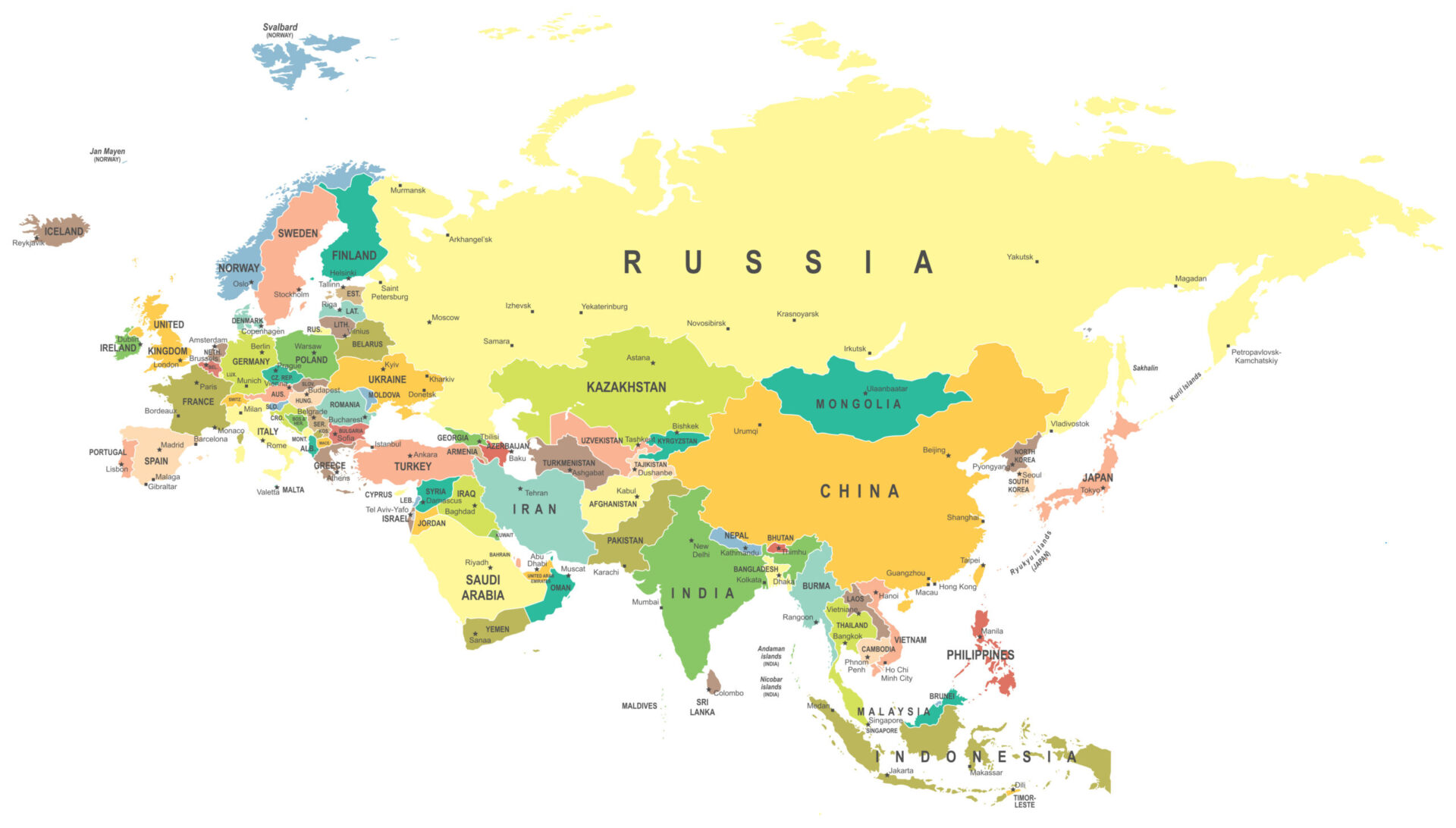
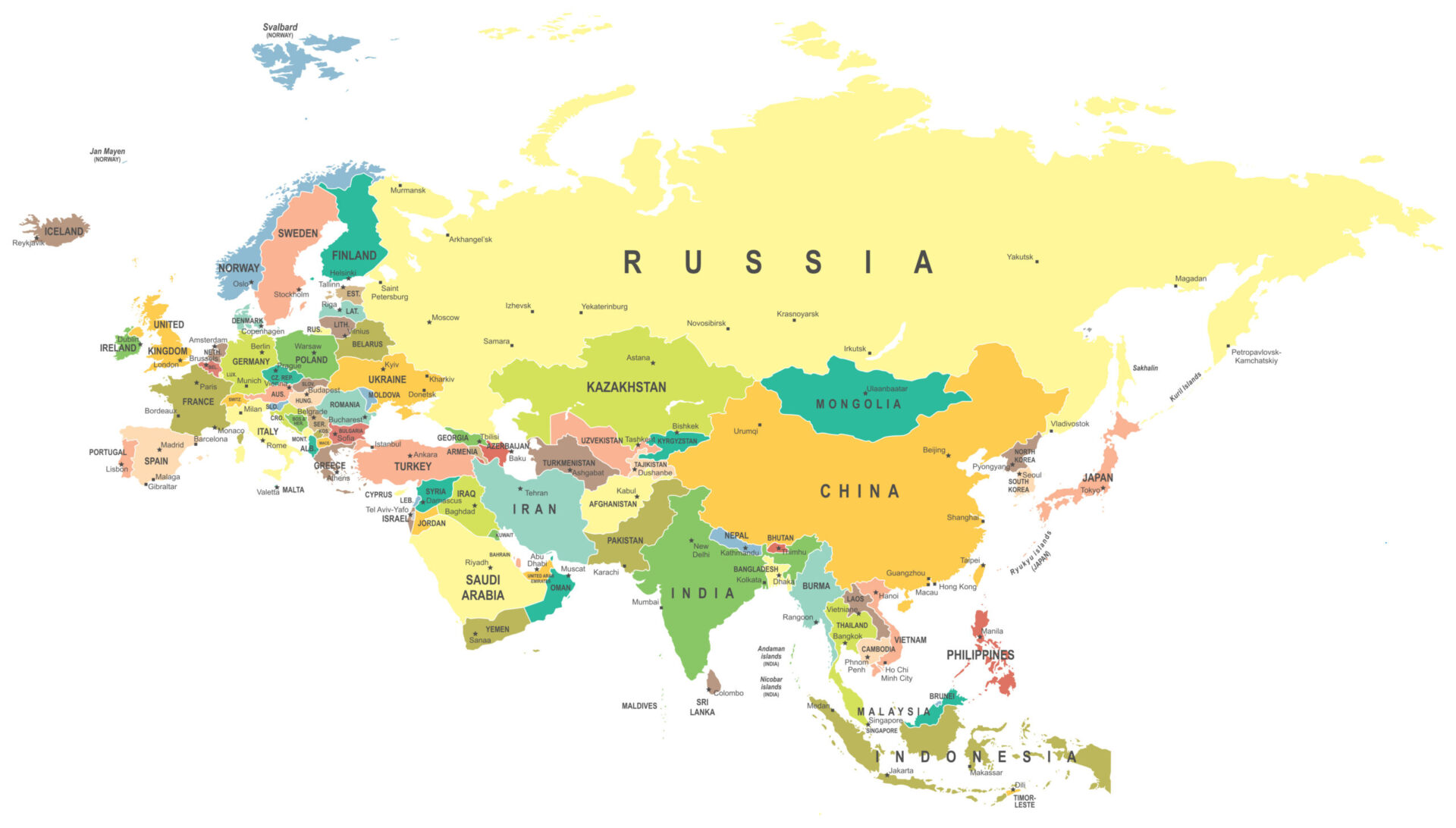
Before dismissing such efforts, it is important to ask yourself, “How much do I really know about Ukraine?” For most Americans, the answer is not much. A year ago, few of us could find Crimea on a map. Ukraine’s history is complex and the current situation fluid.
Part of the problem is just defining the borders of Russia. Are you talking about the Czarist Empire that included half of Poland, Stalin’s Soviet Union that covered most of Central Asia, or today’s much diminished and embittered Russian Federation? In none of these configurations does Russia have clear, naturally defensible borders. As a result, it has been invaded by the Mongols, Swedes, French, and twice by the Germans. Freeing themselves from the Nazis cost Russia 22 million lives. For comparison, American losses during World War II were 400,000 from a population of roughly similar size.
Because secure borders are such a vital concern for Russia, the eastward expansion of NATO was always going to be problematic. George Kennan was America’s pre-eminent Soviet expert and the author of our Cold War containment policy. In 1997 he wrote, “expanding NATO would be the most fateful error of American policy in the entire post-Cold War era. … Such a decision may be expected to inflame the nationalistic, anti-Western and militaristic tendencies in Russian opinion, to have an adverse effect on the development of Russian democracy, to restore the atmosphere of the Cold War to East-West relations and to steer Russian foreign policy in directions decidedly not to our liking.” His predictions were entirely correct, but his advice was ignored. NATO expanded, adding 14 new members that had either been part of the Soviet Union or dominated by it.
Ukraine was not among these new NATO members in part because Russia made its opposition very clear. U.S. Ambassador to Russia William Burns presciently wrote in a memo to Secretary of State Condoleezza Rice, “Ukrainian entry into NATO is the brightest of all red lines for the Russian elite (not just Russian President Vladimir Putin). In more than two-and-a-half years of conversations with key Russian players, from knuckle-draggers in the dark recesses of the Kremlin to Putin’s sharpest liberal critics, I have yet to find anyone who views Ukraine in NATO as anything other than a direct challenge to Russian interests.”
It is not hard to understand why Ukraine would be “brightest of all red lines,” for Moscow. Simply put, the key is the Crimean Peninsula and land access to it. Despite containing 11 time zones, Sevastopol has been Russia’s only warm-water naval base for nearly 250 years. It became Russian in 1783. In 1853, the Czar fought a war against France and Britain to keep it. During the Second World War, tens of thousands of Soviet troops died defending and ultimately liberating Sevastopol from the Wehrmacht. Whoever controls Crimea dominates the Black Sea and can threaten Russia’s southern flank. The idea that Sevastopol could become a NATO naval base has always been as unacceptable in Moscow as the placing of Soviet missiles in Cuba was to Washington.
Some argue that we are fighting for democracy and must crush Putin however long it takes. They clearly overlook not only how unpopular costly forever wars have become with the American public but also our checkered experience with regime change. Other pundits even call for reparations or war crime trials as if we were at Versailles or Nuremberg. They forget that both the Treaty of Versailles and the Nuremberg War Crimes Trials were entirely predicated on abject German defeats. Short of a nuclear war, that is not going to happen to Russia.
Ukraine has had historically flexible borders. Until 1918 the city of Lviv, (then Limburg) was Austrian. Between the two world wars, western Ukraine was Polish. Crimea was transferred from the Russian Soviet Socialist Republic to the Ukrainian one only in 1954 primarily to increase the number of Russian speakers in Ukraine. Not counting Crimea, post-Soviet Ukraine has now lost nearly 20 percent of its prewar territory and become almost entirely dependent on foreign arms and financial assistance, three quarters of which is American. Millions have been made homeless or fled the country. As manpower reserves and the tax base collapse, inflation has soared, and infrastructure been systemically destroyed. Despite recent gains, it is not at all clear that Ukraine is winning the war. Yet Ukraine remains a difficult country to help. Its post-Soviet governments have been profoundly corrupt, and one cannot give money endlessly to a man with a hole in his pocket.
Russia on the other hand is largely self-sufficient in food, energy, and armaments. The ruble is stronger today than it was a year ago. Western sanctions have caused more economic havoc in Europe than Russia. It is perhaps worth remembering that Putin’s parents lived through the Siege of Leningrad where 600,000 Russians chose to starve to death rather than surrender. It seems unlikely that he will now capitulate because he can no longer buy a Big Mac.
We do, in fact, live in a rules-based world order, and one of the cardinal rules of international relations is that large powers expect to control a sphere of influence that they will fight to defend, as we are prepared to do in Taiwan. One of the principal functions of diplomacy is avoiding or ending the carnage of military conflicts. Most often, that involves talking to people with opposing views whom you neither like nor trust.
What would a negotiated solution look like? It should begin with an honest appreciation of what the local populations want. Support for self-determination has been a central plank of American foreign policy since President Woodrow Wilson went to Versailles. We remain confident that the consent of the governed is the most fundamental form of legitimacy. The Czechs and Slovaks peacefully went their separate ways. Citizens of Quebec were allowed to vote on remaining Canadian. The people of Scotland were given a chance to leave the United Kingdom. The British even got to vote on staying in the European Union. Don’t the people of Crimea and the Donbas deserve as much? If we trusted the U.N. to monitor Iran’s nuclear activities, surely it can also be trusted to organize and monitor a fair election.
The First Crimean War (1853-1856) ended in a negotiated compromise. In all probability, the Second Crimean War will end the same way. In 1962, when faced with the possibly of nuclear Armageddon during the Cuban Missile Crisis, President Kennedy did his utmost to defuse the situation through independent thinking, negotiations, and compromise. Today, we face a similar situation. There are numerous issues to negotiate, but a ceasefire and plebiscite would be a good place to start. This would be complicated, controversial, and expensive to administer, but so is continuing to support and fund a war. The suffering of the Ukrainian population is getting worse by the day and winter is coming. It is time for creative thinking and effective diplomacy to end this war before it spins further out of control.
Ukraine is a country we are just getting to know. What is more important is to hate Russia: an emotion in which Americans have been well trained. Media workers and the experts they interview, one notices, can’t help stumbling occasionally: “the Soviet Union—I mean, Russia.” A history of contempt takes us back to an entity at once exotic and primitive, suspended in time and space.
This Russia hovers between barbarism and modernity, between Asia and Europe, an uncertain profile that has long troubled the Western mind. But the task has now been simplified: Hate Putin, hate “Putin’s Russia,” hate Russia—before, during, and after the fact, and in excess of the facts. And the Russian people? We will come back to them.
The Western moral calculus that ramps up war fever can be detected in a headline like “Fear of Reprisal for Bridge Blast Dims Kyiv’s Joy” (The New York Times, October 10, print edition). You sense it, too, in the teacherly posture of news analysis: “Putin’s Plan to Bomb Kyiv Into Submission? History Says It Won’t Work” (the Times, October 11). Was that, in fact, Putin’s idea? Pretty clearly, he did not decide to bomb Kyiv until Ukraine blew up the bridge connecting Crimea to Russia. The tone of polite journalism on this subject hardly differs from that of the tabloids: “How Moscow Grabs Kids and Makes Them Russians” (ABC News, linked on Drudge Report, October 13).
A recent on-the-ground story by Jeffrey Gettleman in The New York Times conveyed the experiences of a freelance American soldier in Ukraine; the long headline and deck in the print edition brought together the politics and human interest and the necessary ethical judgment: “American Finds in Ukraine the War He Sought: A Morally Clear Effort After Tours in Iraq and Afghanistan.” What is the meaning of the second part of the headline? War is a kind of health, it says, if only we find the right war. But the phrase “moral clarity” has also become a mantra for left-wing activist reporters. It instructs you to know where you are headed before you set out to write. Don’t let a morally clear viewpoint be confused by subtle, complex, and inconvenient facts: Those are the boring middle part of the story, and they can safely be skipped. Clarity is crystallized by silent omissions and an economy of truth. Your choice of adjectives and adverbs, meanwhile, will vouch for your passion.
The media in the US and in other NATO countries have achieved a harmonious moral clarity, and they are skipping the part with the inconvenient facts. “Putin’s Russia” functions as a kind of suture that binds the relevant wartime emotions to a generalized hatred of Russia—Russia past, Russia present, and the Russia to come. An exemption is carved out for courageous Russians who protest openly, or the disaffected ones who have left the country or hope to exit soon. How many does that leave us to hate? Possibly quite a few.
The Gettleman story was filed from Soledar, a town in Donetsk Oblast in eastern Ukraine, 80 miles northwest of Luhansk, where clashes between Russian-leaning inhabitants and the Ukrainian army go back to the ascent of an anti-Russian government in 2014. Yet the story makes a puzzle out of one old woman’s reluctance to obey Ukrainian orders that all non-Russians should evacuate immediately. The solitary woman whom the American soldier and the reporter met on the road may simply have preferred not to follow those orders, not to leave her home (without hope of ever returning), but to gamble on the Russian army sparing it. This was not a Peasant Mystery. It was more like an ordinary calculation.
Why have such perceptual errors become so common? The reason is that they fit into the selective division of allowed facts in the liberal-corporate media. We hear of the anti-war protests in Russia, of the anger toward Putin by generals who want him to be more decisive and among the populace who never wanted the war, and we hear of the new repression and censorship inside Russia. All this is the proper work of a free press. And Ukraine? We seldom hear of the censorship there, of the banning of opposition political parties, of the fact that all men of fighting age are forbidden to leave the country—or of the law that made Ukrainian the mandatory language of public workers, and thereby demoted Russian in Donetsk and Luhansk, which was itself a signal cause of the war. (Try to imagine the effects of prohibiting the Spanish language in Texas, New Mexico, Arizona, and California.) We do not hear of the assassination of Ukrainian mayors who were insufficiently hostile to Russia, and mainstream attention has sunk to zero (except here and there, in a subordinate clause) regarding the history and politics of the Azov Battalion.
None of these facts justifies anything that Russia has done. But they are, to repeat, facts, and they should be known by the citizens of a country that is well on the way to committing $100 billion in assistance and weapons to Ukraine for the purpose of prolonging this war. Such facts are part of the present crisis, which honest reporters have a duty to convey. But this means full publicity must also be accorded to facts that are inconvenient for your own position—in this case, your loyal membership in a West for whom the defeat of Russia has become suddenly more important than climate change, nuclear disarmament, the prevention of starvation in Africa, and many other causes that cannot be thought of honestly without a recognition that they stand in some tension with unconditional victory over Russia.
Do the people who call “Putin’s Russia” a totalitarian state affix any answerable meaning to the word “totalitarian”? Russia indeed has a heavy-handed authoritarian government whose censorship and obstruction of dissent have greatly increased since the start of the war. Even so, there have been protests inside Russia; the crowds have not been fired on, and most of the persons involved have not been arrested. The media hosts and the clutch of military, think tank, and academic experts who call Russia totalitarian should see if they can find anything remotely comparable in the annals of Stalinist Russia or Nazi Germany. A recent report on NPR told of a Ukrainian family returning to the bombed-out city of Mariupol. They were coming back voluntarily, though they blamed the Russians for the damage. They had decided to leave their safe haven in Warsaw, where permanent refuge was available, because they felt that Mariupol, even when occupied by Russian soldiers, was still their home. How many civilians ever chose to go back to a city occupied by Hitler’s army or Stalin’s?
The Russian invasion of Ukraine in February met the definition of an international war of aggression. But it was not unprovoked. Ever since the change of government in 2014 and the subsequent series of military clashes with Russia, Ukraine has subjected the Donbas region to persistent artillery shelling. The current war might have been avoided but for two circumstances: the US refusal to accept Ukraine as an independent nation outside NATO, and the Russian refusal to accept Ukrainian membership in the EU. A chance to resolve the dispute was apparently agreed on, in late March, by Recep Erdogan and Volodymyr Zelensky, with a proposed cease-fire set to open the way for negotiations. The US dispatched then–British Prime Minister Boris Johnson to scuttle the deal and inform Zelensky that a cease-fire was not an option agreeable to the West. Whether or not you classify it as a war crime, the deliberate protraction of the suffering of war is an immoral act. We say we do it because this is what Ukraine wants. But there is no evidence that the Ukrainian people want a long war, just as there is no evidence that the Russian people desired the invasion in February.
The Second World War is the picture that has held us captive. Every tyrant since then has looked like Hitler or Stalin. So every temptation to fight becomes an urgent imperative whose only alternative is appeasement. During the Cold War, the picture seemed to fit real events, but the Cold War ended and still the picture held us captive. The myth of the Second World War corrupted the wits of many clever people during the Vietnam War. Any act of aggression thereafter by a hostile non-Western government, in response to which the US had an ostensible moral justification and an economic or political motive for intervention, flipped the same switch: The year once more was 1938, and diplomacy was Munich. Saddam Hussein and Bashar al-Assad and Vladimir Putin have all been tapped to answer our need for a new Hitler. Or, for that matter, a new Stalin. George Will in a March 2014 column referred to Putin as “Stalin’s spawn.”
Eight years later, in his column on October 7, Will averred that “the behavior of the Russian army in Ukraine demonstrates…a centuries-old continuity: a culture of cruelty.” The reports of atrocities in Bucha are now proof of “Russia’s endemic cruelty”—in short, to be Russian is to be cruel. The diagnosis is medical: “Putin’s Russia has a metabolic urge to export its pathologies.” But consider now the implications of the “metabolic urge.” It resembles what used to be said about the desire by men of the darker races for white women—that, too, was an ingrained and irresistible reflex. Combine the biological tinge of this amateur analysis with the word “endemic” and you are inhabiting a well-known frame of mind: nation-as-race, race-as-virus. There were people in the 1930s who called the Jews a “bacillus.” Hatred is an extraordinary passion.
Let us try and return things to the human scale. Anyone who lived through the 1980s can remember the call to American leaders to overcome the “Vietnam syndrome”—that is, to restore the national self-confidence that enables a great nation to fight its good wars. We were told that this syndrome had been surmounted by the US invasion of Panama and, close on its heels, the Gulf War. Read the grim history of actual Russians in Svetlana Alexievich’s Secondhand Time, and you see how inconceivable they must find the idea of war as a healthy restorative. Some 21 million Soviet citizens were killed in World War II, and—though we find the fact hard to acknowledge—the Soviet Union itself was responsible, more than any other country, for the victory over fascism. The journalists and professors who have called Russia a fascist country are playing a poisonous game with words. They get away with it because war is only a distant dream to a great many Americans, and because most Americans now know the Second World War only as a myth.
“I’m trying to figure out,” President Biden said on October 6, “what is Putin’s off-ramp?” A better use of his time might be to determine our own off-ramp, short of the total defeat of Russia on its own border. The US withdrawal from the INF Treaty in 2019 and from the Open Skies Treaty in 2020 must have left Russians wondering how far the US would go in the cause of nonappeasement and reordering the world. Because an all-but-avowed American goal since the second expansion of NATO in 2004 has been to dismantle post-Soviet Russia: a design already achieved in part, which no imaginable Russian leader will permit the US to complete. And what would follow after bringing Russia to its knees, militarily and economically, even if that were possible? The sabotage of the Nord Stream pipelines and the Crimea bridge, and now the Russian attacks on Ukraine’s civilian infrastructure, are sowing such mutual hatred that compromise on either side will soon be as inadmissible as defeat. No one seems to have thought it through.
Sixty years ago today [October 30] , the world breathed a sigh of relief after humanity’s closest call with nuclear holocaust ended peacefully. Over the thirteen days from October 16 to 29, 1962, the Cuban missile crisis graphically showcased how easily catastrophe could be triggered in the nuclear age.
Exactly sixty years later, the world is again at risk of nuclear “Armageddon,” according to US president Joe Biden, as the same two states again find themselves locked in conflict over a neighboring state. Over the past eight months, a pervasive narrative has emerged in public discourse about the war in Ukraine: Russian president Vladimir Putin is a Hitler-like madman bent on European, if not world, domination, so dialogue and negotiation are pointless. Putin won’t talk, Russian officials’ statements to the contrary are merely a ruse, and even if they weren’t, talks would be immoral — a “reward” to an aggressor state — and would actually make things more dangerous, just as appeasing Nazi Germany made war more likely. The only way to end the war is through “overwhelming power” on the military side, and to “humiliate” its leader, or even remove him from power.
To that end, diplomacy for the purpose of de-escalation and finding a way out of the conflict before it triggers nuclear disaster, has become a “quasi-thought crime” in Washington. When thirty House progressives recently signed a letter meekly urging the president to add “a proactive diplomatic push” to his war strategy, they quickly retracted it and called for military victory instead under a blizzard of attacks. The Biden administration said it was “reassured” by the withdrawal of the letter, and has spent the war avoiding talks with Russian officials, with the president most recently ruling out a meeting with Putin to discuss the war.
As both US foreign policy and its political climate come to resemble more and more the most dangerous and intellectually stifling years of the Cold War, it pays to look back at those thirteen fearful days sixty years ago and how that era’s media and political establishment experienced them. What lessons does it hold for us today?
Brinkmanship in the Fog
In October 1962, the United States and Soviet Union were caught in a conflict spiral. Years of rising confrontation and conflict reached a boiling point in the fall of 1962, as the two nuclear powers found themselves in a long-running standoff over the divided city of Berlin. Then, on October 15, the CIA produced photographic evidence of Soviet nuclear missile installations being built in Cuba, which had been moving toward an alliance with the Soviets since the 1959 revolution that brought the Fidel Castro to power. Suddenly the focus of United States–Soviet conflict had shifted to ninety miles off the coast of Florida. It was, incidentally, a month before the midterm US elections, and Republican leaders made it clear they would make the issue the cornerstone of their campaign.
The Soviet move, spearheaded by premier Nikita Khrushchev, was prompted by a number of motivations. In part it was an attempt to even the strategic playing field, giving the Soviets the capability to strike targets on their adversary’s home territory, something the US had long been able to do vis-à-vis the Soviet Union. A bigger consideration was to defend Cuba, which had already suffered an attempted invasion by US-backed forces a year before, and now faced a harsh economic squeeze, as well as a widespread destabilization and assassination campaign run by the CIA.
From the start, the Soviets’ armed support for Cuba drew condemnation for constituting a clear provocation to the United States. The New York Times’s Washington bureau chief James Reston admonished the Soviets for “not understanding the limitations of political debate in America,” where many leaders were far more hawkish than President John F. Kennedy, and only grew more so after Khrushchev, in their view, “sought to tip the balance of power.”
Adding to the danger, many of Kennedy’s hawkish advisors were convinced that the United States would win a nuclear war against the Soviets but remained unaware of key facts — for instance, that Soviet submarines in the Caribbean were carrying nuclear-tipped torpedoes that could have done severe damage to US forces.
“I have confirmed some years ago from a source that they didn’t know Russia had this weapon,” says Lyle Goldstein, director of the Asia Engagement program at Defense Priorities.
They didn’t know that Soviet readiness to fire nuclear missiles at US cities from Cuba was far further along than they assumed, nor that nuclear cruise missiles were moved to within fifteen miles of the US base at Guantanamo. They didn’t know that Khrushchev was being pressured by his military advisors to “stand up to” the United States, or that Cuban leader Fidel Castro was urging him to carry out a preemptive strike.
“There was as much he didn’t know as what he did know,” says Michael Dobbs, author of One Minute to Midnight. “I’m sure there’s a lot of things Biden doesn’t understand about what’s going on in Ukraine and about Russian preparations for escalation.”
After nearly two weeks of agonizing tension, the crisis ended with an agreement: in return for a public declaration that the United States would not invade Cuba, Khrushchev agreed to remove the missiles under UN supervision. Kennedy also agreed to quietly remove nuclear-armed Jupiter missiles from Turkey (a fact that was kept secret for years after the crisis). For Kennedy, the takeaway from the episode was clear, as he outlined it in a speech months later: “while defending our own vital interests, nuclear powers must avert those confrontations which bring an adversary to a choice of either a humiliating retreat or a nuclear war.”
“It’s Worth It To Win”
In the heat of the crisis — and lacking much information we now possess in hindsight — calls for a military response to Khrushchev’s stationing of missiles began immediately in October 1962. M[any] of these calls came from the Right, which claimed that the Soviet’s Cuban gambit was just the start of a worldwide communist takeover.
“At this moment, there is only one way out of the Cuban fiasco and that is for the United States . . . to go into Cuba and to take it over, as we did before,” George Sokolsky, one of the era’s most virulent anti-communist voices, wrote on October 16. “The risk could be war with Soviet Russia . . . but it would seem to me that we have reached Armageddon and that we either do the job or make up our minds to lose Venezuela next: Brazil and Panama after that, and then witness a Fascist-Communist Revolution in the Argentine.”
Henry Luce, the influential media magnate who controlled Time and Fortune magazines, called for “a direct US invasion of Cuba,” a demand echoed in televised debate by National Review editor William F. Buckley. Republican Arizona senator Barry Goldwater, already a front-runner for the 1964 Republican presidential nomination (who believed military commanders shouldn’t need presidential authority to use nuclear weapons), pointedly borrowed Kennedy’s own words from the latter’s hawkish 1960 presidential campaign, asserting that “it is time for the United States to do ‘whatever must be done.’” Even the New York Times lent its voice in favor of “some overt action” against Cuba.
These calls, if anything, got more strident once the crisis became more clearly a nuclear one, with Kennedy revealing the existence of the missile sites to the public on October 22, and announcing a “quarantine,” or blockade, of Cuba as a response. Seen by turns as dangerously aggressive or a half measure, depending on who was talking, Kennedy made the move to buy time while avoiding more escalatory responses.
“If I judge American sentiment correctly, the nation is looking for further action by the president,” influential columnist Roscoe Drummond wrote a day later, “to eliminate by whatever means the offensive Soviet weapons now on hand.” The public weren’t “afraid of war,” he asserted, and “clearly accepts these risks.”
Arguments in favor of brinkmanship were common. “The die is cast” and the United States is now “committed to a course from which it cannot turn back,” stated one editorial, and “whether there will be a thermonuclear holocaust depends upon the Soviet Union.”
“No man on the planet can avoid being apprehensive in this showdown,” wrote the prominent editor of the Atlanta Journal, Eugene Patterson. “But this is not the time for public panic . . . or for sudden discovery of the terrors of nuclear war.” He insisted that other than “the occasional invisible man,” the US public would “close the door on fear” and “meet whatever obligation honor imposes.”
Columnists had some basis to say this. “It is impossible not to be deeply impressed when you hear a solid, hard-working family man pointing to his neat little house, and saying: ‘I know the policy I favor might mean an A-bomb right there. But I’ll risk that. It’s worth it to win,’” influential columnist Joseph Alsop had written earlier that month, after informally surveying a Los Angeles neighborhood, one of several newspaper surveys around the country that found ordinary Americans supporting stronger action. Yet while public opinion backed Kennedy’s blockade, polls showed it was overwhelmingly opposed to an invasion.
“Don’t Trust Any Damned Russian”
Calls for military escalation and a willingness to tolerate nuclear annihilation were paired with pessimism about the prospects for reaching an agreement to exit the crisis with the Soviet Union — a state seen as bent on the destruction of the United States.
“‘Co-existence’ is a dangerous illusion,” one editorial insisted, a widespread sentiment among hawkish voices. A number dismissed Khrushchev’s October 24 suggestion of a summit with Kennedy to resolve the issue. The October 22 view of National Review founder and prominent McCarthyite Ralph de Toledano prefigured what was to come: “War, as soon as possible, is the fixed policy of the Soviet Union,” and negotiations were just there to “lull the West.” “Whatever concessions the West makes . . . will make no difference,” he insisted.
“Khrushchev’s word has never been a guarantee. A Soviet promise usually is only a delusion and a cover-up,” read one editorial. “Stalin and Khrushchev have gained more from summit conferences than they have gained from conquests,” complained a Democratic congressman. Pointing to the Soviet premier’s infamous shoe-banging incident at the UN, the Chicago Tribune urged Kennedy not to “take another ride on the merry-go-round of UN futility or summit duplicity.” “In Cuba, Khrushchev has a gun pointed at our head,” wrote another. “At the bargaining table he would be asking for a reward for withdrawing the gun.”
When Khrushchev later floated a trade — withdrawing from Cuba for the removal of NATO bases from Turkey (not far from the eventual secret deal that would end the crisis) — former president Harry Truman weighed in: “Don’t trust any damned Russian.” Kennedy “quite properly” and “correctly” rejected the offer, said the press, since it would have let Khrushchev “make a profit.”
Beware the Bear
These views were driven by a distrustful, even paranoid view of Khrushchev, the Soviet leadership, and their intentions. The Soviets were thought disingenuous, conniving, and almost congenitally predisposed to aggression.
Of course, these views were partly based in fact. The Soviet leadership presided over a far more comprehensive system of dictatorship than today’s Russia, and in addition to Khrushchev’s often aggressive rhetoric, he had already once invaded a satellite state (Hungary) to put down a reformist uprising. In the United States, a vast system of domestic propaganda and self-censorship existed to keep these facts in the public mind, and the McCarthyite hysteria of the 1950s was just a few years in the past.
“Beware the Bear that Smiles,” warned the Philadelphia Daily News, which recounted a then recent anecdote about Khrushchev going to the opera to watch an American singer to charge he was “trying to appear reasonable and smiling.” It cast his conciliatory words (calling for a summit and affirming Russia would “take no rash actions” in response to the blockade) as a mere ruse.
Khrushchev’s actions in Cuba were depicted as part of a “vicious military trap” to “upset the existing balance of nuclear striking power.” He wanted to “use the missiles as a psychological weapon” at a planned December summit over the Berlin standoff. He was a “fanatic,” whose “phony-jolly professions of peaceful intent” were part of a “darkly Machiavellian scheme,” and it was “extreme gullibility” to believe any Soviet overtures were sincere, when Khrushchev was “topkick of the Communist conspiracy to put the world in chains.”
Back to 1938
Pro-war voices constantly invoked Adolf Hitler, Munich, and the notion of “appeasement” to justify escalation. This rhetorical strategy was echoed by US Air Force chief of staff Curtis LeMay — today remembered as one of history’s most dangerously reckless hawks — who privately told Kennedy a refusal to attack Cuba would be “worse than the appeasement at Munich,” a reference with particular emotional significance for the young president.
“As Sir Winston Churchill once said, surrender or unwillingness to fight for what is right when the military odds are in one’s favor leads eventually to a big war in which the risks are greater and the involvement is far more dangerous,” conservative US News & World Report publisher David Lawrence, who would go on to be one of the Vietnam War’s most prominent cheerleaders, wrote two days into the crisis. Hitting Kennedy for withholding air support from the Bay of Pigs invaders the previous year, Lawrence charged that there was “an appeasement faction in this country which has a considerable influence with President Kennedy,” which meant that the communist takeover of Latin America was effectively “sanctioned today by US policy.”
Lawrence wasn’t the only one to charge that US timidity had signaled weakness and emboldened Khrushchev. “Those who call for action against Castro are referred to as a ‘war party.’ Actually, such Americans are the true peace party,” wrote conservative radio commentator H. V. Kaltenborn, who likewise invoked Hitler. “Our failure to enforce our rights in Cuba and Berlin has increased the danger of war. We prefer appeasement to running a risk.”
Conservative radio broadcaster Henry J. Taylor blasted the “small-time Neville Chamberlains” whispering in Kennedy’s ear. “With Nazi and Communist history so easy to see,” he wrote, it was clear that “appeasing Khrushchev 90 miles from Florida” was “exactly the political weakness that . . . would have cost England her life and soul.”
A Balance of Terror
Alongside these arguments for military escalation and against diplomacy, a number of voices expressed confidence — misplaced, it would later turn out — that the danger of war, and particularly nuclear escalation, was low. So, the reasoning went, the United States could afford a more aggressive posture to force a Soviet back-down.
“There will be no nuclear holocaust as long as we maintain our deterrent capability and as long as the leaders of the Kremlin know we mean what we say,” Iowa Republican senator Jack Miller wrote on October 20.
Such statements underestimated the risk that accidents and misunderstandings could trigger inadvertent escalation — as in fact happened on October 27, a moment viewed by historians as the most dangerous day of the whole crisis. The Soviets’ shooting down of a U-2 spy plane over Cuba, not authorized by Khrushchev, very nearly triggered a US military response, and came on the same day that a different U-2 plane strayed into Soviet airspace, sending Soviet MiGs in pursuit and causing both sides to fear the other was deliberately escalating the crisis. Hours later, US attempts to surface a Soviet submarine were interpreted by its exhausted captain as the start of the war above ground, and he had to be talked down from launching a nuclear-tipped torpedo — only the most dangerous of multiple similar incidents.
“In the end, neither Kennedy nor Khrushchev completely controlled their own forces,” says Dobbs.
On that very day, David Lawrence argued that the nuclear balance of terror “restrains the two major powers from destroying one another,” so that there was little chance of a mistake triggering catastrophe.
“It takes more than one man to make a decision of such importance, either in Moscow or in Washington, and the people who surround any commander-in-chief nowadays know the consequences if a mistake is not prevented,” he wrote.
Ignoring this danger of accidental escalation, many voices at the time claimed that because Cuba was relatively peripheral to Soviets’ interests, there was little danger that war would be triggered as a result of the confrontation over the island. “If he will stall over such a vital problem as Berlin,” wrote columnist Ray Tucker, alluding to Khrushchev’s failure to follow through on a 1958 threat over the city, “it is not believed that he will invite nuclear destruction through love of Castro.” The world was not on the edge of war, a political science professor told an audience in Chicago, and “Khrushchev will not fight over Cuba.”
And with key elements of the ultimate agreement hidden from the public, many observers took away the lesson that Kennedy’s “firmness” alone led to the peaceful outcome, ignoring the contribution made by his willingness to offer the Soviets inducements. The fact that Kennedy quietly fed the press a false story after the fact, casting Adlai Stevenson as a weak appeaser — which belied the reality that he’d asked for and followed the UN ambassador’s advice to defuse the crisis almost to the letter — added to this perception.
“When confronted with the high resolve of US policy, supplemented by Russian intelligence which showed that the United States was prepared to attack, Khrushchev backed away,” the Des Moines Register told its readers.
Today, officials and some experts are similarly reassuring the public there’s little chance of Putin using a nuclear weapon over the Ukraine war.
Diplomacy Not a Dirty Word
A lot of this might sound familiar to observers of the current moment. But what’s remarkable about the public discourse of 1962 compared to that of today is the relative diversity of debate, as well as the positive coverage of, and steady drumbeat for, diplomacy — even as Kennedy and Khrushchev lobbed threats at each other and a platoon of armchair Cold Warriors lashed out at “appeasers.”
As the furious reaction last week to congressional progressives’ push for diplomacy shows, the idea of dialogue to de-escalate and resolve the current crisis in United States–Russia relations has become nearly taboo in today’s environment, in both the United States and Europe. Estonian prime minister Kaja Kallas has deemed any call for talks over the Ukraine conflict “very dangerous,” while Finland’s young, progressive prime minister rejected the idea of an off-ramp for Putin, saying that “the way out of the conflict is for Russia to leave Ukraine.” French president Emmanuel Macron has been repeatedly criticized for backing talks and warning against humiliating Russia, while fellow NATO member Romania’s defense minister was recently forced to resign for saying that the “only chance for peace may be negotiations with Russia.
But in 1962, there was nothing unusual about world leaders calling for diplomacy. “Talks on such problems are better than fight,” German foreign minister Gerhard Schroeder said on October 18. The Associated Press reported that Latin American government ministers expressed “grave fears” after Kennedy’s speech on October 22, and felt it must “inevitably lead to a summit meeting” — the same day the Senate Democratic leader expressed support for the idea. There were “worldwide appeals for negotiation,” the New York Times reported on October 26, including from the Pope, the UK, Canada, and Japan. This was certainly not a unanimous feeling, but neither was it considered out of bounds. Nor was the anti-diplomacy position the default.
The press likewise wasn’t monopolized by anti-diplomacy voices. The Washington Post’s Karl E. Meyer mocked “General Luce and his battalion of editorial rough-riders” for demanding Kennedy invade Cuba. “If the Russians are seeking a way out of Cuba, the US can do no less than look equally hard for the means of getting them out without too great a loss of face,” the Iowa City Press-Citizen editorialized in the wake of the blockade. European newspapers greeted news of talks with hope and relief. As late as the peak of danger on October 27, Walter Lippman and the Christian Science Monitor’s William Frye called on both Kennedy and Khrushchev to look for avenues to talks.
More than that, newspapers reported regularly and in detail on diplomatic overtures between the two governments, with talks carried on throughout the crisis. Kennedy’s decision to send word to Khrushchev that he was willing to have an informal discussion with the Soviet premier when he visited the United States was front page news all over the country on October 19, a day after Kennedy met with Soviet foreign minister Andrei Gromyko for an ultimately fruitless dialogue lasting hours. “Prospects of a Kennedy-Krhushchev meeting next month grew in strength,” the Miami News reported on October 21 after Khrushchev met with the new US ambassador to Russia, Foy Kohler.
This happened throughout the crisis, as with the US draft resolution for the UN that called on the two governments to “confer promptly” on resolving the crisis; or with Khrushchev and Kennedy’s indirect communication via the intermediary of antinuclear campaigner Bertrand Russell, with the letters from all three men reported on extensively; or Khrushchev’s October 26 acceptance of UN-mediated talks involving Cuba and the United States.
Speaking of Khrushchev, throughout the crisis, newspapers reported both his and his lower-ranking officials’ statements making clear their openness to talks, despite the Soviet leader’s consistently negative portrayal. As early as October 18, the fact that Khrushchev felt positively toward talks was widely reported, a trend that continued throughout. October 24 reports that the Soviet representative to the UN was “talking ‘negotiation’” were likewise widely printed.
It’s a very different story today. If any diplomatic engagement is happening between the US and Russia today, then unlike in 1962, it’s happening under the most ironclad secrecy, and in fact multiple sources are saying there is no engagement between the two sides. And today’s Western news consumers have been kept largely uninformed about diplomatic developments, including the Ukrainian president’s once-frequent calls for diplomacy and Western involvement in it, while public statements that suggest Moscow would be willing to negotiate are routinely ignored by US commentators. While Biden officials are reportedly looking for an off-ramp for Putin, it’s unclear if the political space exists to pursue it.
Unlearning Lessons
Sixty years on from the Cuban missile crisis, we have ended up with the worst of all worlds from that episode. The then widespread cries of appeasement and calls for military escalation over dialogue are now even more widely voiced than they were six decades ago, with today’s liberals and progressives sounding almost indistinguishable from that era’s hawks and reactionaries. At the same time, the quieter, underlying consensus in 1962 among both political leaders and the press, which held that dialogue was needed to prevent disaster, has, at least until the House progressives’ letter recently sparked some conversation, largely vanished in public discussion throughout this war.
Yet decades on, we know the hawks and those echoing their arguments were wrong: the Soviets were ready to take risks of nuclear war over Cuba; the prospect of accidental escalation was dangerously high; and the gestures of compromise that ultimately helped end the crisis didn’t encourage more Soviet aggression. If those calling for an invasion had been listened to, the result would almost certainly have been catastrophe. The very course they denigrated as “appeasement” that would make war more likely was, in the end, what saved the world.
“The lesson is the risks were far higher than we believed. We were closer to nuclear war than we thought,” Stephen Young, senior Washington representative for the Union of Concerned Scientists, says today.
What’s most shocking isn’t that decades later, we’re repeating history. It’s that today’s political leaders and media establishment seem determined not to learn from it.
From the beginning of March 2022 to the beginning of September 2022, we made 25 trips to Mariupol and the surrounding villages to report from the field on what was happening during the battle to take control of the city, but also afterwards, during its reconstruction. We also carried out several humanitarian missions there.
For two months, the population of Mariupol experienced a real martyrdom, as told to us by the inhabitants themselves. After the city was completely taken over, the DPR (Donetsk People’s Republic) and Russia launched its reconstruction, so that Mariupol could rise from its ashes like a phoenix.
In this documentary with English subtitles, you will find a chronological account of the life of the inhabitants during the battle and the reconstruction of Mariupol
Since it’s posted on the Odysee platform, I’m unable to embed the documentary but it can be viewed at the link here.
Artemy Sich has spent the past eight months trying to do his part to support the Russian war effort in Ukraine.
The Muscovite activist has organised several crowd-funding drives to buy clothing, equipment, and medicine for Russian troops. He also co-founded a social media project that provides original reporting and analysis about battlefield developments in Ukraine.
Earlier this month, he travelled to Russia’s Belgorod region to interview soldiers stationed near the border.
Sich says he supports the Kremlin’s decision to invade Ukraine because he does not see any option left for protecting ethnic Russians in Ukraine’s eastern Donbas region.
Nevertheless, he readily admits that Russia’s military campaign is not going according to plan – in contradiction to President Vladimir Putin’s assessment.
According to Sich, Russia failed in several ways. Moscow did not deploy enough troops, failed to target Ukrainian critical infrastructure early in the conflict, and did not prepare echeloned defences in captured territories, he said.
“Russia probably acted on incorrect assumptions, most notably underestimating the enemy’s capabilities and willingness to offer resistance,” he said.
“There was no collapse of the Ukrainian government, and consequently the Ukrainian military also did not collapse.”
Patriotic critics
Sich is part of a burgeoning group of “patriotic” critics in Russia who support the war, but are concerned by Moscow’s handling of it.
They generally avoid criticising Putin directly and instead frequently take aim at Russia’s top military brass for perceived incompetence or indecision.
For now, they oppose peace negotiations with Ukraine, saying it is too early for a ceasefire, and call on the Kremlin to seek victory through mobilisation, large-scale air raids, and sweeping military reforms.
But these critics are difficult to box into a single group.
They include war correspondents and military bloggers, novelists and historians, longtime activists and political neophytes, and Russian soldiers and mercenaries fighting on the front lines.
Putin supporters, as well as nationalist and communist opposition members, have also been lashing out in recent weeks.
What unites this otherwise eclectic movement is the belief that Russia needs to make serious adjustments to its military strategy or risk losing the war in Ukraine.
Since the start of the conflict in February, these groups have been firing up social media channels, amassing hundreds of thousands of followers.
Among them is a team of open-source analysts named Rybar, Igor Strelkov, a retired Russian military officer who commanded Donbas rebel forces back in 2014 and Vladlen Tatarsky, who is currently serving as a fighter in the Donbas and whose real name is Maxim Fomin.
Grey Zone and Starshie Eddie are two other popular accounts that operate on Telegram, VK and YouTube.
With detailed reporting and analysis of the situation on the front, their feeds have become the preferred source of information for many Russians.
And their relative editorial independence is also attractive in the current climate.
While state media presents an upbeat picture of the battlefields, pro-war commentators online question whether Russia had enough manpower to hold a 1,000km (620-mile) front line and comment openly on the Russian military’s shortages – that it lacks, for instance, sufficient quantities of drones and other key equipment.
Their criticism grew after the Ukrainian counteroffensive began in Kharkiv in early September, a move which forced the Russian military to withdraw troops from the entire region.
The subsequent Ukrainian gains in the east and the south during the next several weeks raised further alarm among patriotic critics.
“Nearly all the members of the Russian patriotic civil society warned about a potential Ukrainian offensive in Kharkiv, months before it happened,” Sich said.
“We couldn’t imagine that anyone could fail to see that this was about to happen, but it turned out that the Russian armed forces were completely unprepared for this breakthrough.”
So far, the Kremlin has shown a surprising level of tolerance.
There have been no visible efforts to silence criticism by pro-war commentators despite new legislation that threatens up to 15 years of prison for “discrediting” the Russian military.
On the contrary, state media has gradually begun to adopt some of the rhetoric pioneered by the patriotic critics.
During a recent fiery monologue, television host Vladimir Solovyov accused Russian military officials of hiding the true condition of the country’s armed forces.
“Too many scoundrels lied from top to bottom,” he said. “And not a single one of them was shot or even taken by the ear!”
Even more surprising, there are signs that the Kremlin is listening in for hints on military strategy.
In September, Putin announced the “partial mobilisation” of 300,000 military reservists in a bid to replenish Russia’s fighting force in Ukraine.
On October 10, Russia launched a mass air raid campaign against Ukrainian energy facilities.
The patriotic critics had been advocating for both of these moves for months.
Denis Volkov, head of the Levada Center, Russia’s leading independent polling agency, told Al Jazeera that data showed that committed hawks and opponents of the war each accounted for about 15 to 20 percent of the population.
The majority of Russians, he explained, were broadly supportive of the war, but tended to stay in line with government decisions.
So what explains this trend?
Volkov said that the Kremlin is aware that the public need an outlet to let off steam and hawks are regarded as politically loyal.
“The anger of patriots tends to be aimed at generals and mid-level bureaucrats, whereas those calling for immediate peace negotiations tend to blame the central political leadership and are opposed to Putin personally,” he said.
Sich had a different explanation.
He argued that the war and its bleak realities have forced Kremlin to recognise the value of feedback from observers that are outside the political system.
“Russia has a very adaptive regime and it became clear in September that we could no longer afford not to mobilise society,” he said.
“The government has been forced to welcome input from patriotic civil society because mass mobilisation requires you to accept the fact that there is no such thing as unnecessary help.”
Yet there are lingering questions about the sustainability of the partnership.
Volkov noted that the Russian government still has plenty of instruments to punish commentators who “step too far out of line”.
As an example, he pointed to the recent suspension of state media host Anton Krasovsky, who sparked mass controversy after he suggested drowning or burning Ukrainian children.
Sich warned that the Kremlin has long had a complicated relationship with Russian nationalists, and there was no guarantee the current detente would hold up in the long run.
“The Russian government has always been more wary of the patriotic opposition than the liberal opposition because the former group is better positioned to represent the will of the people instead of just copying Western political trends,” he said.
“For now, the Russian government is seeking to expand cooperation with the patriotic opposition, but it could very well reverse course once doing so is no longer expedient. Everyone on our side who goes for this collaboration needs to understand this.”