Link here.
Col. MacGregor discusses his latest article, which can be found here.
By Fred Weir, Christian Science Monitor, 10/20/22
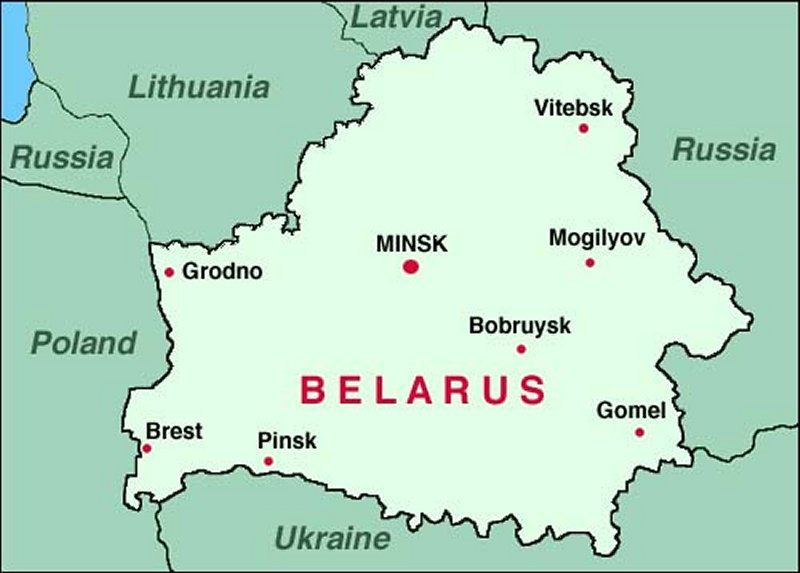
Eight months ago when Russia invaded Ukraine, one of its key fronts was launched from Belarus. Since then, Russia’s only major ally has remained on the sideline of the conflict between its two neighbors.
But now, Belarus appears to be edging toward directly joining in the war, under pressure from Moscow. And experts say that by doing so, it may ultimately be hastening its own absorption by Russia.
At a meeting this month to discuss the “increasing threat level” emanating from NATO states to the west, Belarusian President Alexander Lukashenko and Russian President Vladimir Putin agreed to create a joint “regional group of forces,” to augment Belarus’ 70,000-strong army with about 9,000 Russian troops.
Social media has been full of reports of Russian troops arriving in Belarus, and also difficult-to-interpret videos apparently showing trainloads of Belarusian heavy equipment moving eastward. Experts differ as to whether this means Russia is drawing on Belarus’ large stocks of Soviet-era tanks, mobile artillery, and armored vehicles to replenish its own forces, or if the equipment is being sent for modernization in Russian factories.
The level of military cooperation, which will create at least one joint Russian-Belarusian division-sized force, is something new.
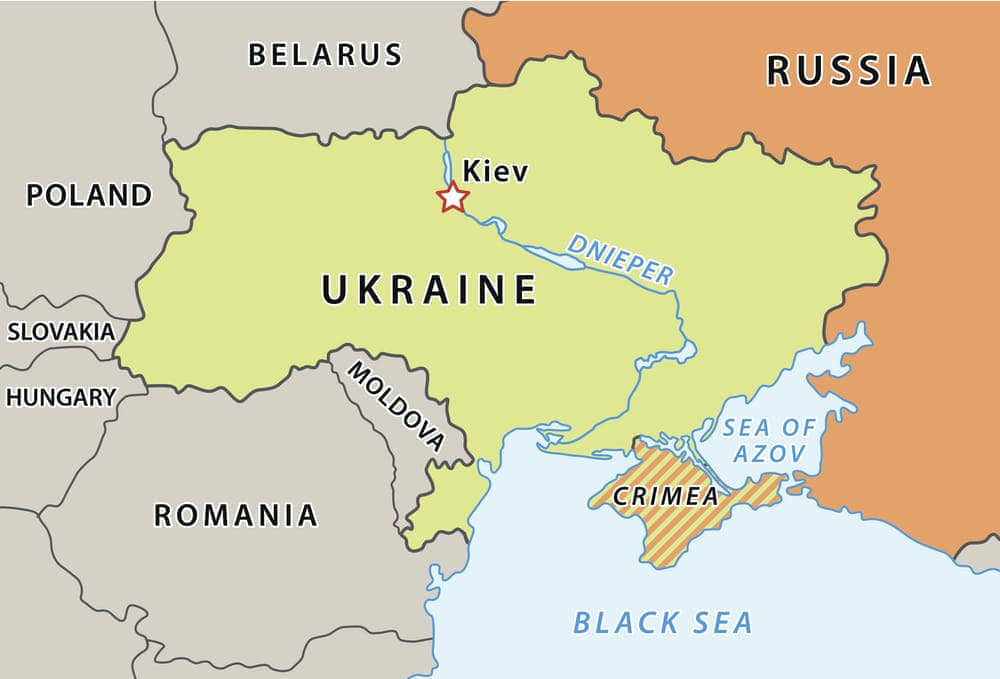
Russian troops invaded Ukraine last February from Belarusian territory, but Belarus’ own forces did not participate. Kyiv is warning that the new military grouping might be preparing to open a whole new front against Ukraine. Even if Mr. Lukashenko remains disinterested in committing his army to the war, the existence of a credible striking force hovering in the north will be a continuing worry for Kyiv.
Few options for Minsk
Minsk insists that it fears Western “provocations,” given the concentration of exiled Belarusian opposition figures in neighboring NATO countries such as Poland and Lithuania, who might try to create trouble for Russia amid the current Ukraine war turmoil through political destabilization in Belarus.
Belarus has theoretically been part of a “union state” with Russia since 1999, one that confers a lot of advantages to Minsk. But in practice, Mr. Lukashenko has resisted full integration and political subordination, playing a complicated game of ceding to the bare minimum of Moscow’s demands while flirting with the West and keeping the levers of local control firmly in his own hands.
Yet his ability to do that was deeply compromised when his rule was threatened amid mass protests two years ago. He quashed the uprising, but doing so left the West enraged at his suppression of opponents and Russia as his only source of political and economic support.
Even though Mr. Lukashenko’s rule seems more entrenched than ever, the insertion of Russian troops into the country is a new move and suggests that a permanent merger of the two security establishments is in the offing.
“We are moving toward the full-fledged erosion of Belarus’ military and political sovereignty at the very least,” says Artyom Shraibman, a Belarusian political scientist who currently lives in Ukraine. “The options for Lukashenko are narrowing. Much will depend on the results of the war. Will Russia be able to stabilize the front? How will Russia’s mobilization work out? Will Belarus get directly involved or not? What if Russia loses the war, or it reaches a stage of nuclear escalation with the West? Too many questions without answers.
“But it’s becoming harder and harder for Lukashenko to play the game of keeping his autonomy while using Russian resources,” he says. “For now, Belarusian trade with Ukraine is about zero, while sanctions have greatly reduced trade with the West. Russia is increasingly the only option for trade, finance, and political support, and the only question is how long it will take to completely absorb Belarus into Russia’s sphere. I suppose Russia might lose the war before Belarus completely loses its sovereignty, but the process right now is very alarming.”
An unpopular conflict?
Russia’s wartime exigencies may be not only accelerating the pace of Russia’s efforts to integrate Belarus, but also changing Moscow’s concept of the future Russian Federation. If Moscow wins the war in Ukraine, it will result in large parts of eastern Ukraine being permanently digested by Russia. With that process underway, Moscow’s planners may have less patience for the bureaucratic complexities of the union state, and look for more direct ways to incorporate Belarus into an expanded Russia.
“What we are seeing right now is connected with urgent military needs,” says Fyodor Lukyanov, editor of Russia in Global Affairs, a leading Moscow-based foreign policy journal. “The big new military grouping in Belarus could be used to attack Ukraine from another angle, or at least divert Ukrainian forces from other fronts. I don’t think either Putin or Lukashenko is entertaining any grand long-term thoughts.
“Lukashenko has clearly made the decision to be helpful because he has no other options but to bet on Putin and Russia,” he says. “The future of Belarus’ relationship with Russia – whether it will become part of Russia or something else – will depend on how things progress on the battlefield. If Russia fails in Ukraine, that will have huge repercussions in all areas, including Belarus.”
Most analysts doubt that Mr. Lukashenko wants to get directly involved in the conflict.
“The Belarusian army is about 70,000 men, but its combat-ready component is much smaller,” says Andrey Suzdaltsev, an independent Belarusian expert living in Moscow. “The army is really too weak to actually face the Western-armed Ukrainian forces with their fighting experience. By forming this joint grouping with Russia, Lukashenko wants to imitate participation in the special operation without actually doing anything.”
A random telephone survey of 1,000 Belarusians conducted in September by Andrei Vardomatsky, a leading Belarusian sociologist currently living abroad, found that support for Russian actions in Ukraine is roughly split, with 41.3% approving and 47.3% opposed.
But when asked about direct participation in the war, Mr. Vardomatsky says, “85% of respondents gave a negative answer, and 11% said they would react positively to it. Asked how they feel about using Belarus’ territory and military infrastructure to implement Russia’s military actions in Ukraine, more than 62% said they were against and 29% said they were positive.”
“He’s in the same boat with Putin”
Alexander Khramchikhin, deputy director of the Institute for Political and Military Analysis in Moscow, says he does not know the purpose of the joint force currently gathering in Belarus. But he suggests it’s probably a hedge against unexpected developments on Russia’s western flank and a bid to bolster Mr. Lukashenko’s grip on power. If it worries the Ukrainians and makes them divert forces, so much the better, Mr. Khramchikhin adds.
Russia is facing troubles around the post-Soviet region, aggravated by Western meddling, and needs to take actions to boost stability, says Vladimir Zharikhin, deputy director of the Kremlin-funded Institute of the Commonwealth of Independent States in Moscow.
“The situation is causing a more rapid consolidation of ties with friendly countries, like China and Belarus,” he says. “Lukashenko has realized that he’s in the same boat with Putin, and he faces threats from NATO. That’s why this military grouping has been formed, and the integration process in general is speeding up.”
By Ray McGovern, Antiwar.com, 10/21/22
A Rose has bloomed In the Blinken/Sullivan/Biden desert of ideas on Ukraine. I refer to Rose Gottemoeller, 69, who was Under Secretary of State for Arms Control during the Obama/Biden second term and knows much more about the real world than the boys Biden has in the back room (if I may risk damning her with faint praise).
Looking for adults in the room? Gottemoeller could be the woman of the hour, if Biden’s ivy-mantled advisers would stop preening, sit down, and listen.
Lowering the Nuclear Temperature
Writing in The Financial Times two weeks ago, Gottemoeller referred to the “quiet bargain” that ended the Cuban missile crisis of exactly 60 years ago. As for Ukraine, she dismisses military options:
“Which brings us to diplomacy. Is there any chance that negotiation could change Putin’s calculus? The Cuban missile crisis ended with a quiet bargain … some quiet nuclear diplomacy might produce results.
“Two years ago, Putin offered to remove Russia’s new ground-based intermediate-range nuclear missile from Europe under verifiable conditions, thus underpinning a moratorium on such missiles in Europe. When Putin and Xi Jinping met in Beijing prior to the February invasion, they spoke of extending such a moratorium to Asia.
“Perhaps it is time to launch discreet talks, if only at a technical level, to explore what the two men had in mind. It would not solve the horrendous crisis in Ukraine, but it might lower the nuclear temperature.”
Now get this. Gottemoeller’s very sensible suggestion found its way past the Washington Post censors. Columnist Ishaan Tharoor was able to tack some of the former Under Secretary of State’s thoughts onto the end of an article Tuesday titled “The uncomfortable need to talk about diplomacy with Russia.” Common sense in the Post on this issue is something of a breakthrough.
Biden: Still Looking for an Off-Ramp?
The day before Gottemoeller’s article appeared, President Biden lamented:
“First time since the Cuban missile crisis, we have a direct threat of the use (of a) nuclear weapon if in fact things continue down the path they are going … I’m trying to figure out what is Putin’s off ramp?”
It should be no secret to Biden that there is, as Gottemoeller suggests, in so many words – an off-ramp for both – a ramp with time-tested guardrails called “inspections.” Trust but verify.
As I noted in an earlier piece, which compared the Cuban crisis to the current one in Ukraine, Russian President Vladimir Putin warned on Dec. 21, 2021 that “if US and NATO missile systems are deployed in Ukraine, their flight time to Moscow will be only 7–10 minutes, or even five minutes for hypersonic systems.” [Emphasis added.] (Shades of MRBMs detected 60 years ago in Cuba.)
On December 30, 2021, Biden and Putin talked by phone at Putin’s urgent request. The Kremlin readout stated: “Joseph Biden emphasized … that Washington had no intention of deploying offensive strike weapons in Ukraine.” [Emphasis added.]
The mood in the Kremlin was upbeat. The Geneva negotiations, just ten days away were off to a good start. Oops! A couple of days after those talks started, Biden’s promise on the non-deployment of strike weapons systems on Ukrainian territory had fallen into the cracks. This became clear during the next conversation between Biden and Putin (Feb. 12).
Putin may feel diddled – and not for the first time. Yet, his chief strategic concern, in my view, is the medium-range ballistic missiles (cruise and hypersonic) that can be inserted virtually overnight into capsules in Romania, Poland, and eventually elsewhere on Russia’s periphery. The evidence suggests that, in due course, Putin would be willing to deal on this issue.
Is Biden, Like Dan Quayle, ‘No John Kennedy’?
The jury is out. Harvard’s Graham Allison claims that:
“In Biden, we have a seasoned cold warrior who has thought about the Cuban Missile Crisis and has thought about nuclear war. He has thought about what a full-scale war would look like, he’s even gone through scenarios on this — I know, personally.”
In my view, much will depend on whether President Biden can be brought to recognize how poorly served he, and the country, have been by his current coterie of advisers. Gottemoeller has a generation more experience than Jake Sullivan. She has dealt extensively with the Russians and with NATO. (From 2016 to 2019 she was Deputy Secretary General at the UN, so she knows how to mold the malleable Jens Stoltenberg, as well.)
Will the Biden boys let an adult into the room. They had better.
Intellinews, 10/24/22
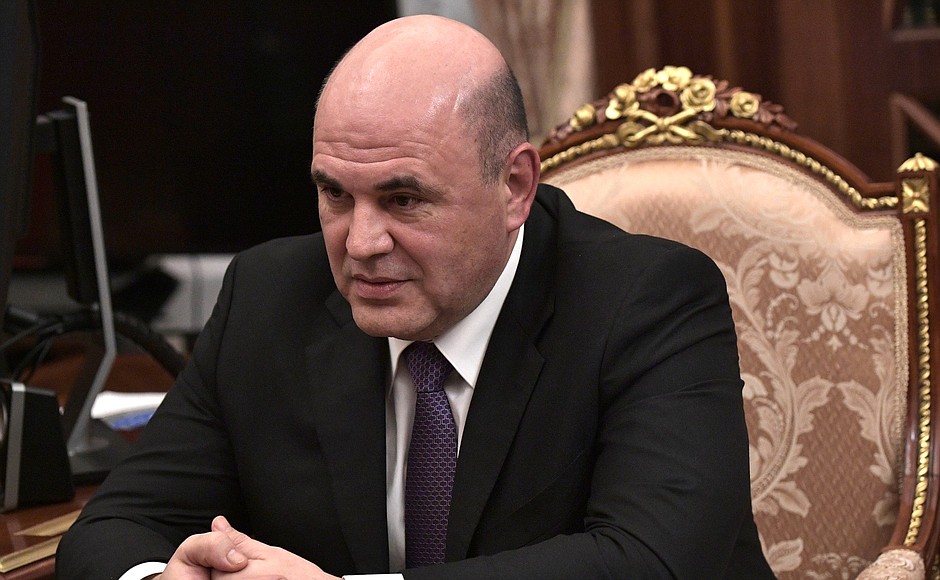
While Vladimir Putin has imposed martial law in the four occupied Ukrainian regions, his latest decree has also introduced a legal base for an effective economic martial law for all of Russia with the establishment of the Coordination Council headed by the technocrat Prime Minister Mikhail Mishustin.
bne IntelliNews has analysed how Kremlin is preparing for a protracted conflict and putting the Russian economy on a war footing and warned that the martial law decrees could mean streamlining the federal and private sector resources towards the war efforts in Ukraine.
Indeed, the Council is a special body endowed with broad powers to ensure “co-operation between the federal executive branch and the regions in resolving issues related to ensuring the needs of the law enforcement agencies during the special military operation [the full-scale military invasion of Ukraine],” the decree reads as cited by Vedomosti daily.
PM Mishustin will have to report to Putin on the Council’s progress on a daily basis. The Council’s decisions are binding on federal, regional and municipal authorities and “other bodies and organisations”, which can also potentially mean any private sector company.
Notably, Mishustin himself mentioned last week that the goals of boosting the military industrial complex output could “involve business [the private sector]”.
The Council is free to set its performance targets and implementation deadlines, such as repair of military equipment, provision of medical and sanitary services, repair, construction and engineering works, etc. The Council will also be in charge of distributing the budget for all these purposes.
The Council will also take responsibility for issues related to the formation of prices of goods and services needed for the war. The board will determine suppliers, contractors and service providers for the provision of goods and services. The board will also oversee implementation of all the supplies.
The Council headed by PM Mishustin will include six out of the ten deputy prime ministers (including the “import substitution Czar” Denis Manturov and “energy Czar” Alexander Novak), the Federal Security Bureau (FSB) director Alexander Bortnikov, Federal Tax Service head Daniil Egorov and the head of Russian national guard Rosgvardia head Viktor Zolotov, the Interior Minister Vladimir Kolokoltsev, Emergency Situations Minister Alexander Kurenkov, and number of other high-level security officials, including the Defence Minister Sergei Shoigu.
The economic bloc on the Council is represented by the presidential aide and ex-EconMin Maxim Oreshkin, currency EconMin Maxim Reshetnikov, the FinMin Anton Siluanov and Moscow Mayor Sergei Sobyanin.
Notably, the Council will also assist in building military infrastructure, co-ordination of digitalisation, automation and information-analytical support in the field of defence, including the creation of databases of conscripts.
In order to do so the Council is granted the right to request materials from authorities of different levels, invite their representatives (and other specialists) to Council meetings, give them instructions, as well as create committees to solve individual issues and propose decisions to the president.
The high-level officials on the council seem to be personally held responsible by Putin for their contribution to the war efforts, as the decree emphasises that the council members have to participate in all of the meetings “without the right to be replaced” (i.e. the transfer of powers to their deputies), Vedomosti notes.
The lawyers surveyed by the daily note an unprecedented “supra-governmental” legal nature of the Council that has the right to override federal and regional authorities and becomes the wartime headquarters. Previously a Co-ordination Council had been set up to deal with the coronavirus (COVID-19) pandemic, but it was established by a government decree, and not by Putin.
In addition, all Russian regions will now have wartime operational headquarters established, overseen by the government with the participation of representatives of security agencies, whose decisions are binding on the regional executive authorities.
By Clare Nuttall, Intellinews, 10/19/22
A new study by the United Nations Children’s Fund (Unicef) finds child poverty has risen by 19% in countries across Southeast and Eastern Europe and Eurasia as a result of the war in Ukraine.
Overall, an additional 10.4mn individuals, or around 2.5% of the total population of 22 countries assessed across the region, will fall into poverty due to the economic shock related to the war in Ukraine, including 4mn children. Thus while children make up 25% of the region’s total population, they will account for 40% of the increase in poverty.
The survey looks at 22 countries across the Eastern Europe and Central Asia region, including Eastern Europe, Southeast Europe, the South Caucasus and Central Asia.
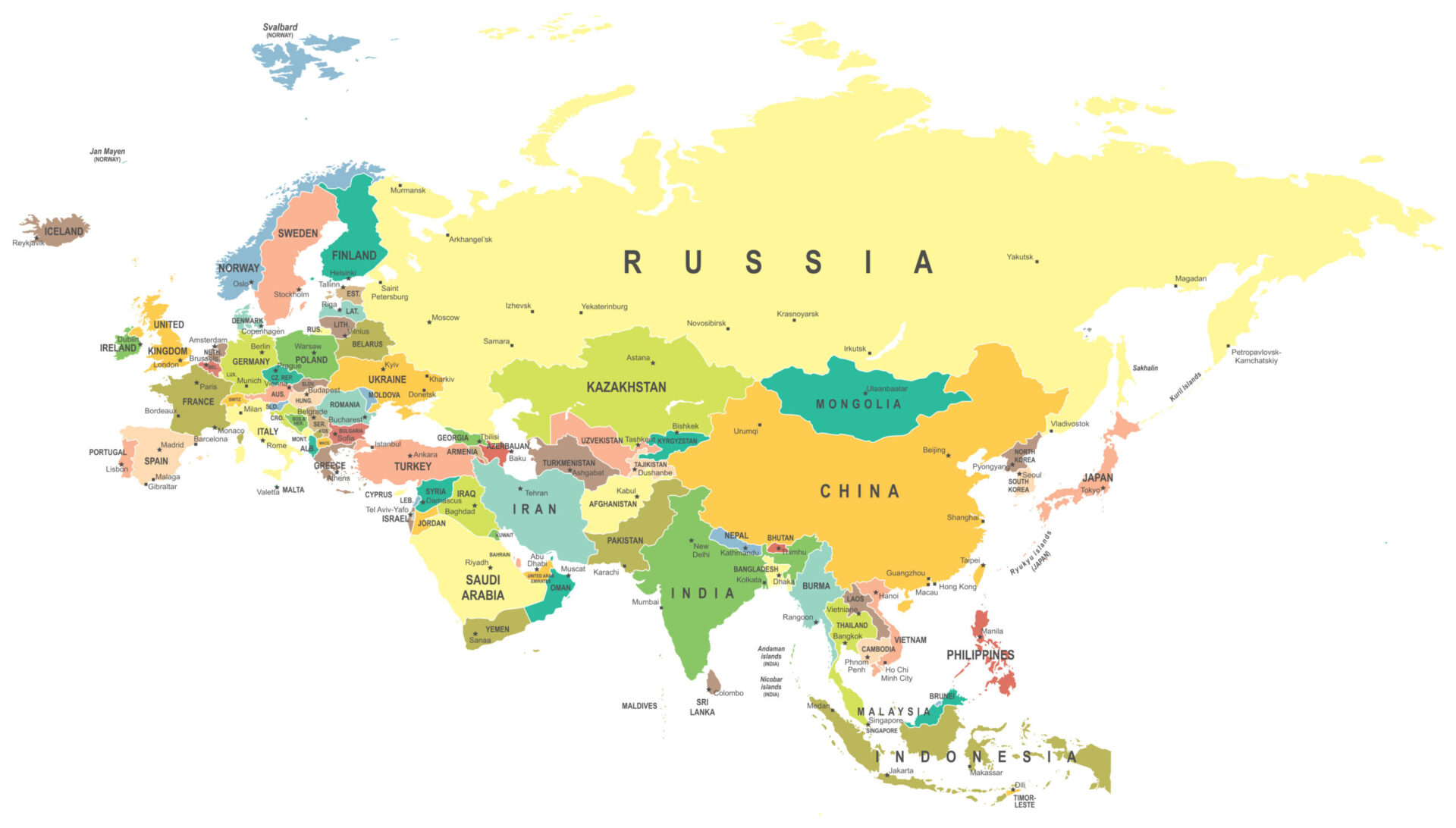
The single worst affected country is Russia, according to the research. Russia’s invasion of Ukraine has rebounded on its own population, with the most significant increase in the number of children living in poverty; an additional 2.8mn children now live in households below the poverty line. That is almost three-quarters of the total increase across the region.
At least an additional half million children in Ukraine will also be plunged into poverty. The actual figure is most likely more, as the projection is based on the International Monetary Fund’s (IMF’s) spring forecast of a 10% contraction in GDP; with the war dragging on for months already a much sharper economic decline is now expected.
Unicef cites estimates based on IMF growth forecasts from October 2021 (before the invasion of Ukraine) and April 2022 (two months after the invasion) which show that, in the absence of the war, the GDP per capita (USD PPP) for the 22 countries surveyed would have risen to $24,700 in 2022 from $23,300 in 2021. What actually happened was a considerably smaller increase to only $23,600. This means “the war and subsequent economic downturn has cost the region about $1,100 PPP per person for the 424mn population – or approximately $462bn PPP in total,” the report said.
Wider impact
While the impact is harshest in Russia and Ukraine, Unicef finds that several Southeast European countries plus Kyrgyzstan in Central Asia will also see a sharp increase in poverty.
Kosovo is likely to be the worst hit with an additional 3.7% of children and 2.1% of adults set to fall into poverty as a result of the crisis. Other badly affected countries include Kyrgyzstan (2.8% of children and 1.8% of adults), Moldova (2.7% and 2.2%) and Belarus (2.6% and 1.1%). Even some EU members are set to see a strong increase in poverty: Croatia (3.1% and 1.7%) and Romania (3.1% and 1.8%).
The exception is Azerbaijan, where the report says poverty is expected to decrease this year. Gas-rich Azerbaijan is expected to benefit from increased demand from European countries seeking to end their dependence on gas imports from Russia.
The problems are not just financial, since child poverty has severe implications for health and education. Unicef forecasts that the increase in poverty could result in an additional 4,500 children dying before their first birthday, and learning losses could be equivalent to an additional 117,000 children dropping out of school this year.
Burden on poor households
Unicef’s report stresses that the burden of the current crisis is failing heavily on poorer households. “The poorer a family is, the greater the proportion of their income that is committed to necessities such as food and fuel,” it says.
“The region-wide effect of the economic downturn is truly a crisis for the poor, and a crisis for millions of children. This is because across the region and within countries, the effects of the crisis – and specifically falls in remittances, and increases in food and fuel prices – are not experienced equally. Families with a higher reliance on remittances, and who spend a greater proportion of their incomes on necessities such as fuel and food – primarily the poor and those with more dependents – will be hit the hardest everywhere.”
The war and related economic downturn affect families in three main ways, namely higher prices for basic goods (food and fuel); disrupted trade and supply chains, and falling remittances; and increasing uncertainty in business and investment causing a worsening of economic conditions in the long term and stifling the recovery.
Making the problem worse, the current economic downturn, following swiftly after the financial shock of the coronavirus (COVID-19) pandemic, is forcing some governments to reduce public spending or put in place austerity measures.
The worst crisis
While the Eastern Europe and Central Asia region as a whole grew over the last two decades, there have been a number of crises during that period. They include the global financial crisis of 2008, the annexation of Crimea in 2014 and the subsequent devaluation of the Russian ruble in 2015 and the COVID-19 pandemic. All “led to widespread disruption of markets and supply chains, falls in remittances, and falls in economic growth in the ECA region – and with subsequently serious implications for child poverty risks,” said the report. “This is now true for the war in Ukraine.”
Unicef’s report forecasts the current crisis will be even worse than those that preceded it.
“The current crisis is now piling on more misery for families and children, and worryingly is projected to be the starkest of all recent crises for the region,” it says.
“A key concern is that many countries in the ECA region are heavily reliant on Russian markets, and forecasts predict that the economic contraction related in 2022 will be the largest shock in the Russian Federation since the transformation crisis (1992) that followed the collapse of the Soviet Union.”
Among the differences from the recent COVID-19 crisis and the current crisis caused by the war in Ukraine, are the refugee flows from the war and more limited fiscal and social protection responses at the national level.