It is never very easy to understand what is going on in the world if you depend on The New York Times for an accounting of daily events. This is especially so in all matters to do with Russia, China, or any other nation The Times has on its blacklist because the policy cliques in Washington have these countries on their blacklist. Rely on The Times for its reporting in these cases and you are by definition in the dark. No exceptions. This is what the once-but-no-longer newspaper of record has done to itself and to its readers over, I would say, the past 20–odd years. It is now nothing more than an instrument of the imperial ideology emanating from our nation’s capital.
It follows that we must always take care to read The Times, odious as we may find it, in the same way millions of Soviet citizens over many decades made it a point to read Pravda. As noted severally in these commentaries, it is important to know what we are supposed to think happened on a given day before going in search of what happened.
Never were these assertions truer than they were as 2022 turned to 2023. On December 30, Vladimir Putin and Xi Jinping gathered by video for one of their regular summits. The Russian and Chinese presidents have now met, in person or electronically, 40–odd times by my count. A day later Putin delivered his customary New Year’s address to the Russian people. These were momentous events by any measure. They declared Moscow’s and Beijing’s historic commitment to constructing nothing less than a new world order. The world turned in 2022, to put the point another way. But you could not possibly know this if you read The Times’s accounts and nothing more.
Here I must single out the reporting of Anton Troianovski. While I do not approve of attacking a journalist in ad hominem fashion, it is meet and just, as the New Testament would put it, to single out Troianovski as the worst Moscow bureau chief The Times has had in place at least since Andrew Higgins, Troianovski’s immediate predecessor, who was in turn the worst bureau chief since Neil MacFarquhar, who preceded Higgins and was worse than his predecessor, and let us leave it there, as this list of worse-than-the-worst extends back many years.
In the method just outlined, I read first of the Putin–Xi summit, which was unusually long and pointed, in a piece Troianovski filed afterward from Moscow. I then read the detailed readouts issued by the Chinese and Russian governments, which are respectively here and here. Then I was astonished to discover the sheer irresponsibility of Troianovski and his employer. Even correspondents who serve more or less openly as propagandists can sink lower than what you thought was their low point, I had to remind myself…
The nuclear disarmament of Belarus, Kazakhstan, and Ukraine was one of the great success stories of the end of the Cold War, and it was one of the most significant victories for the cause of nonproliferation.
When the Soviet Union ceased to exist, these newly independent states had to manage the problem of the Soviet nuclear legacy left behind in their lands. Their disarmament was bound up with their status as independent, sovereign countries as they sought and needed to be integrated with the rest of the world.
The commitment of the non-Russian republics to disarm saved the original Strategic Arms Reduction Treaty (START) and upheld the principles of the Non-Proliferation Treaty (NPT), and their eventual disarmament is one of the underappreciated achievements of U.S. foreign policy in the post-Cold War era.
While all three states were always willing to get rid of the nuclear weapons they had inherited from the Soviet Union, the paths that they took to disarmament were somewhat different with respect to the terms and timing of removing these weapons and their delivery systems from their territories. The Ukrainian case is the most involved of the three, and because of the war in Ukraine it is also the most salient today in current debates about disarmament and nonproliferation. It is therefore fortunate that there is a new book that can expertly guide us through this complicated and important history.
Mariana Budjeryn’s Inheriting the Bomb: The Collapse of the USSR and the Nuclear Disarmament of Ukraine is an excellent study of how the process of disarmament unfolded. Drawing on a wide range of sources, including some Ukrainian sources not tapped before, Budjeryn details in great depth the internal deliberations of the Ukrainian government and the intensive rounds of negotiations among the U.S., Russia and the three non-Russian republics.
The book should become a standard reference for anyone working on this issue and on nonproliferation more broadly, and I expect that it will.
Budjeryn shows how the Ukrainian government realized that they had no practical alternative to disarmament if they were going to be a full-fledged member of the international community, but they also believed that their country should not give up the weapons without receiving something in return. The Ukrainian government took a nuanced position on the question of disarmament, as they were committed to denuclearization but wanted, for reasons of sovereignty and leverage, to emphasize that they “owned” the weapons on their territory even if they couldn’t and wouldn’t use them.
This insistence on ownership created some tensions in relations with both the U.S. and Russia, and opened Ukraine up to untrue charges of “backsliding” on its commitments. But in the end, Ukraine was never in a position to keep the weapons and did not want to keep them.
One of the most fascinating aspects of the story is how the three non-Russian republics leveraged the U.S. desire to ratify and implement START into securing themselves places at the negotiating table. Russia would have preferred to keep all arms control discussions bilateral, but since START could not be implemented without the cooperation of the other states it became necessary to include them.
This created some interesting contradictions in Washington’s dealings with these states. On the one hand, Washington accepted that the three non-Russian republics were successors to the Soviet Union for the purposes of arms control under START, but it would not accept that they were successors to the Soviet Union’s status as a nuclear weapons state.
The U.S. bottom line was that there should be no additional nuclear weapons states emerging from the collapsed Soviet Union. The NPT was clear that there could only be five nuclear weapons states, and the U.S. was not going to compromise on this point. This meant that Belarus, Kazakhstan, and Ukraine had to commit to joining the NPT as non-nuclear weapons states while simultaneously assisting the U.S. in eliminating part of the Soviet nuclear arsenal that they had in their countries.
It took some time to get all three across the finish line with the ratification of both treaties, but it is a credit to their governments and to the Bush and Clinton administrations that they kept this process moving forward to a successful conclusion.
If Ukraine’s disarmament is discussed today, it is often mentioned as a supposed cautionary tale of what other states shouldn’t do. Shortly after the 2022 Russian invasion began, John Ullyot and Thomas Grant declared Ukraine’s disarmament to have been a mistake: “If you abandon your nuclear program and entrust your security to formal guarantees and conventional deterrence, you gamble with your future. If you give up your nukes, you give up your national security ace-in-the-hole.”
Bill McGurn of The Wall Street Journal asked rhetorically, “If Ukraine hadn’t given up its nukes after the collapse of the Soviet Union, would Vladimir Putin have dared invade?” This line of thinking is misguided for several reasons.
As Budjeryn shows, there really was no serious option of keeping the inherited nuclear weapons without exposing Ukraine to international opprobrium and isolation, and the cost of building up an indigenous nuclear weapons program to maintain their own arsenal was prohibitive. She sums up the Ukrainian foreign ministry’s view at the time: “The negative repercussions of the nuclear option would far outweigh the positive.”
It is a mistake for people today to indulge the fantasy that Ukraine could have kept these weapons without suffering severe negative political and economic consequences, and it gives encouragement to would-be proliferators that our collective commitment to nonproliferation is waning.
Another problem with the counterfactual is that there is no guarantee that Ukraine would have been made more secure if it had paid the high price to retain these weapons. If anything, possession of what would have been the world’s third-largest nuclear arsenal probably would have made Ukraine more of a target for interference and intervention, and the resources it would have had to pour into its nuclear weapons program would have come at the expense of its other defenses.
Budjeryn quotes Boris Tarasyuk, Ukraine’s then-foreign minister, as saying, “For Ukraine to keep nuclear weapons would have been to go against the entire world order.” When critics of disarmament argue that Ukraine should have somehow kept this arsenal, they are ignoring the enormous, immediate costs that Ukraine would have faced for doing so. Ukraine would not only have been putting its good relations with the U.S. and its allies at risk by keeping these weapons, but counterintuitively it would have also risked its own survival.
Budjeryn concludes: “If Ukraine had refused to join the NPT and kept a part of its nuclear inheritance, it would not be the same country it is today but with nuclear weapons. Indeed, it is doubtful whether it would be a country at all.”“Inheriting the Bomb” is essential reading for anyone interested in issues of disarmament and nonproliferation. It is exceptionally well-researched and well-written, and it deepens the reader’s understanding of the complex problems that were created by the collapse of the Soviet Union. It also reminds us of the importance of careful, patient diplomacy in managing multiple potential crises peacefully.
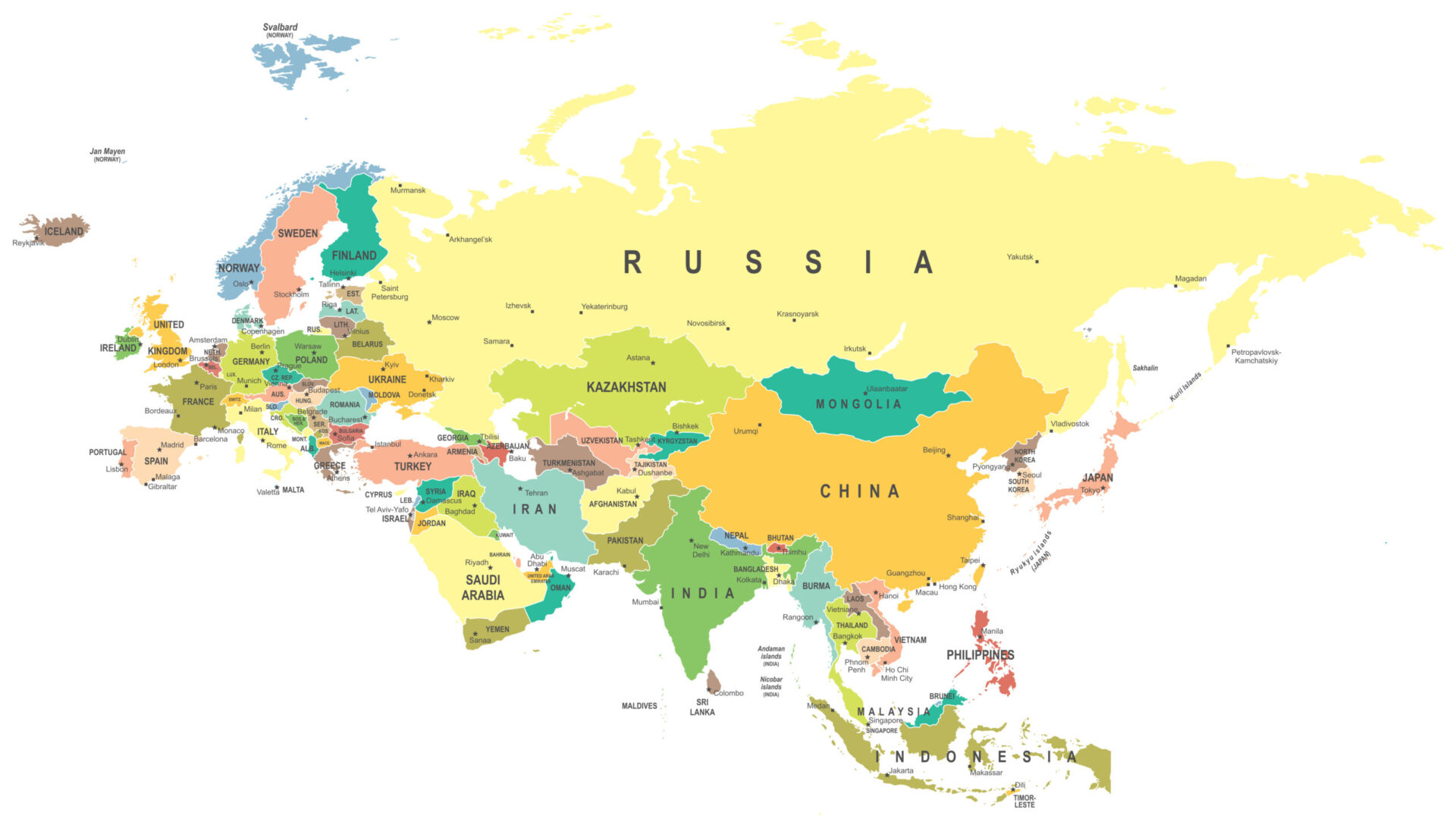
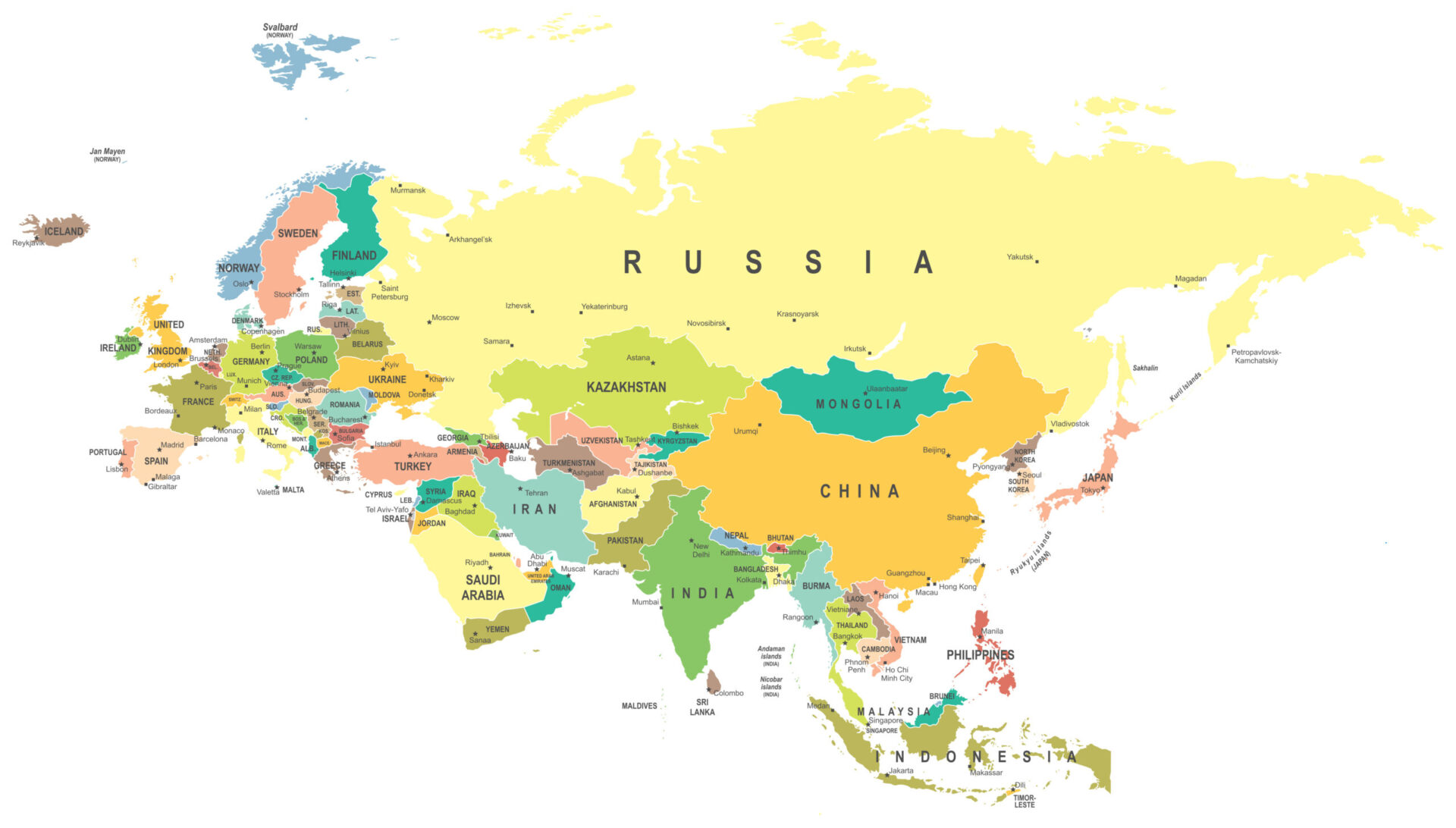
Consequent upon the Ukraine war, as the Sea of Azov becomes an inland sea for Russia, bracketed by the Crimean Peninsula and the mouth of the River Don, the sea and rail networks of the region extend to Iranian hubs on the Caspian Sea and ultimately lead to the Indian Ocean. A feature article in Bloomberg last week titled Russia and Iran Are Building a Trade Route That Defies Sanctions brings to centre stage this “sanctions-busting” project in the region.
Last month, Mehr News Agency reported that a first 12 million–ton shipment of Russian grain bound for India already transited Iran. The time has come for the inland trade corridor known as the International North-South Transport Corridor or the INSTC, which was launched in 2000 to connect the Baltic Sea with the Indian Ocean.
Ironically, the West’s “sanctions from hell” against Moscow roused the INSTC to life. Moscow is currently finalising the rules that would give ships from Iran the right of passage along inland waterways on the Volga and Don rivers!
The INSTC was conceived as a 7,200 km-long multimodal transportation network encompassing sea, road, and rail routes to move freight between Russia, Central Asia and the Caspian regions, Iran and India. At its core, this is a Russian-Iranian project who are stakeholders in countering the West’s weaponisation of sanctions.
But there is much more to their congruent interests. The Western sanctions motivate them to look for optimally developing their economies, and both Russia and Iran are pivoting to the Asian market, and in the process, a new trading bloc is forming that is completely free of Western presence. “The goal is to shield commercial links from Western interference and build new ones with the giant and fast–growing economies of Asia, ” Bloomberg noted.
Speaking to a group of senior Russian editors on Monday in Moscow, Foreign Minister Lavrov said, “Rest assured that in the near future, we will see a serious drop in the West’s ability to ‘steer’ the global economy the way it pleases. Whether it wants it or not, it will have to sit down and talk.” This is the crux of the matter — force the western powers to negotiate.
In the near term, INSTC’s takeoff will depend on some big projects. On Monday, the Russian Deputy Prime Minister Alexander Novak spoke about an energy grid involving Russia, Iran and Central Asia and the South Asian region.
Novak said, “A constant influx of national currencies gives confidence to the market. At the beginning of the year, we faced a situation where it was not very clear what to do with these currencies. At the moment, they are traded on the stock exchange and ensure mutual trade turnover… If at the beginning of the year this flywheel swayed very hard, then in just a few months it became commonplace, and we began to trade steadily in national currencies.” De-dollarisation provides an underpinning of the INSTC. This is one thing.
Second, Novak made the disclosure that Russia and Iran may reach an agreement on swap supplies of oil and gas by the end of this year. As he put it, “If we talk about perspective, this includes exports of gas to Afghanistan, Pakistan — either using the infrastructure projects of Central Asia, or through a swap from the territory of Iran. That is, we will receive their gas in the south of the country [Iran], and in exchange we will supply gas to the north for Iranian consumers.”
Novak added, “We expect around 5 mln tons [of oil] per year and up to 10 bln cubic meters [of gas] at the first stage.” Pakistan is interested in sourcing Russian gas. Novak referred to Russia’s agreement with Azerbaijan, which is set to increase gas supplies, and “when they increase gas production, we will be able to discuss swaps.”
Pakistan has an inherent advantage, as all the participating countries of the INSTC except India also happen to be members of China’s Belt and Road Initiative. At some point early enough, the two designated Iranian ports in the INSTC — Bandar Abbas and Chabahar — will likely get linked to Gwadar Port, which is the gateway to the China-Pakistan Economic Corridor [CPEC] leading to Xinjiang, and an important component of the BRI.
Clearly, the INSTC will spawn a web of international economic corridors. Iran is destined to become the hub of converging strategic interests with significant economic dimensions that will determine new alliances and impact the geopolitics of South and West Asia in the 21st century.
The US has been waging an information war to debunk the CPEC and fuel anti-China sentiments in the Pakistani public opinion. But it is a hopeless endeavour to malign the INSTC as a geopolitical project and impractical to threaten regional states from associating with what is an intercontinental trade route that is no single country’s franchise. After all, how to sanction a trading bloc?
The facts speak for themselves. The INSTC trials carried out to transport containers from Mumbai to St Petersburg using the trade corridor are able to reduce the delivery time of cargo from 45 days to 25 days at 30% cheaper rates than via Suez Canal, justifying the hopes for enhanced connectivity and utility of the corridor. Clearly, the trade potential of INSTC is immense.
However, Russia and Iran are determined to decouple the West. Lavrov said on Monday, “We can no longer rely on these people. Neither our people nor history will forgive us if we do… we too openly and naively put our faith in the assurances that we heard in the early 1990s about a common European home and the need for an international division of labour that would rely on the best performance and competitive advantages of each country, so that, by pulling our efforts together and saving resources, we would be able achieve the best and cost-effective results. All of that was empty talk.”
Iran and Eurasian Economic Union [comprising Russia, Belarus, Kazakhstan and Kyrgyzstan] have reportedly finalised the terms for a free trade agreement involving more than 7,500 types of commodities. A market as big as $700 billion is opening up to Iranian products and services as of the next Iranian year [starting March 21, 2023].
The FTA encourages free movement of goods and services, and provides for common policies in the macroeconomic sphere, transport, industry and agriculture, energy, foreign trade and investment, customs, technical regulation, competition, and antitrust regulation. It will be a game changer for the INSTC, transforming the power dynamic in the vast Eurasian landmass and the Gulf region. The INSTC signifies a strategic axis between Russia and Iran built around a trade route heralding a non-western trading bloc of free-wheeling regional states with common interests in resisting western hegemony.
…Some Russian panelists [on talk shows] believe that for lack of a consistent policy on the war, the United States will cut its losses midway in 2023 and turn from Ukraine fully to the oncoming conflict with China over Taiwan.
All of which brings me to the remarkable analysis that a young specialist on China who is now invited regularly to the Solovyov show has been saying. His stand-out remark last night which I have used as the title for this essay is that 2022 has marked the emergence of a ‘New Free World,’ anchored by Russia and China, that has resources exceeding those of the U.S.-led Collective West. At these words, which clearly were delivered without any sense of irony or jest, John Foster Dulles must be turning over in his grave.
This China analyst insists that the most recent 20th Party Congress in China which gave President Xi his third term has installed around him known top ranking Party members who are ‘loyal’ to Russia and who despise America. There is every expectation that starting in 2023 there will be the approval and initial implementation of major Chinese investment projects in Russia, marking a significant departure from the economic relations of these two powers till now.
This same analyst says that with respect to China’s officially disavowing any intention to enter into alliances or to form military blocs, the reality is that the relationship with Russia very closely resembles an alliance with a military dimension. How else can one understand the recent joint Chinese-Russian naval drills in the South China Sea or the still earlier joint air force drills over the Sea of Japan. This, at the very moment when the United States and its allies denounce Russia as a military aggressor.
He insists that without Chinese backing from the very beginning, Russia would never have dared to venture upon the SMO [this is consistent with what Ray McGovern has been saying since February of 2022. – NB]. Chinese diplomatic support has been critically important in the UN Security Council. And China stepped up its import of Russian oil by 10% in the past year despite its overall reduced consumption due to the impact of Covid lockdowns on its manufacturing industry. The net result is that China was the single largest consumer of Russian oil, coal and other strategic commodities in 2022.
He notes that on the very day when Zelensky was in Washington, Xi received Dmitry Medvedev, Russia’s former President and present day close assistant to Putin. Their meeting, without masks and with warm handshakes for photo opportunities at the outset lasted well beyond the officially scheduled 45 minutes into several hours. That was clearly meant to be a signal to Washington and to the world. Moreover, today or tomorrow Presidents Putin and Xi are expected to have a lengthy video tête-à tête which will focus on coordinating actions in response to Washington’s future actions directed at either the Ukraine war or the Taiwan conflict. We do not have to wait long to see the emergence of a two front challenge to American global domination.
Meanwhile other panelists on the Solovyov show pointed to further proofs that the American century is over. As we know, China filed a suit in the WTO claiming that the United States has grossly violated WTO rules by imposing its embargo on export of state of the art semiconductors and related technologies to China. We were told last night that 126 members of the WTO have supported the Chinese position. What the Kremlin now expects is for the U.S. to effectively shut down the WTO, removing one of the important global institutions by which it has enforced its ‘rules-based order.’
I end this report by paying tribute to Charles Dickens for coining the expression which sums up the calendar year 2022 for the Russian Federation: ‘it was the best of times, it was the worst of times.’