The United States “with its own hands” pushed the countries, which are not participating in “sanctions wars”, to form a “new Big Eight” group with Russia, the Russian State Duma speaker Vyacheslav Volodin said on Saturday.
Following the launch of Russia’s military offensive in Ukraine in late February, the US, EU, UK and many other countries imposed hard-hitting restrictions on Moscow, making Russia the most sanctioned country in the world.
In a Telegram post, Volodin included a table with IMF data on GDP based on purchasing power parity of countries he calls the “new G8” and of countries forming the current G7 (after Russia’s participation in the bloc was suspended over Crimea’s vote to join the country in 2014, the G8 effectively turned into the G7).
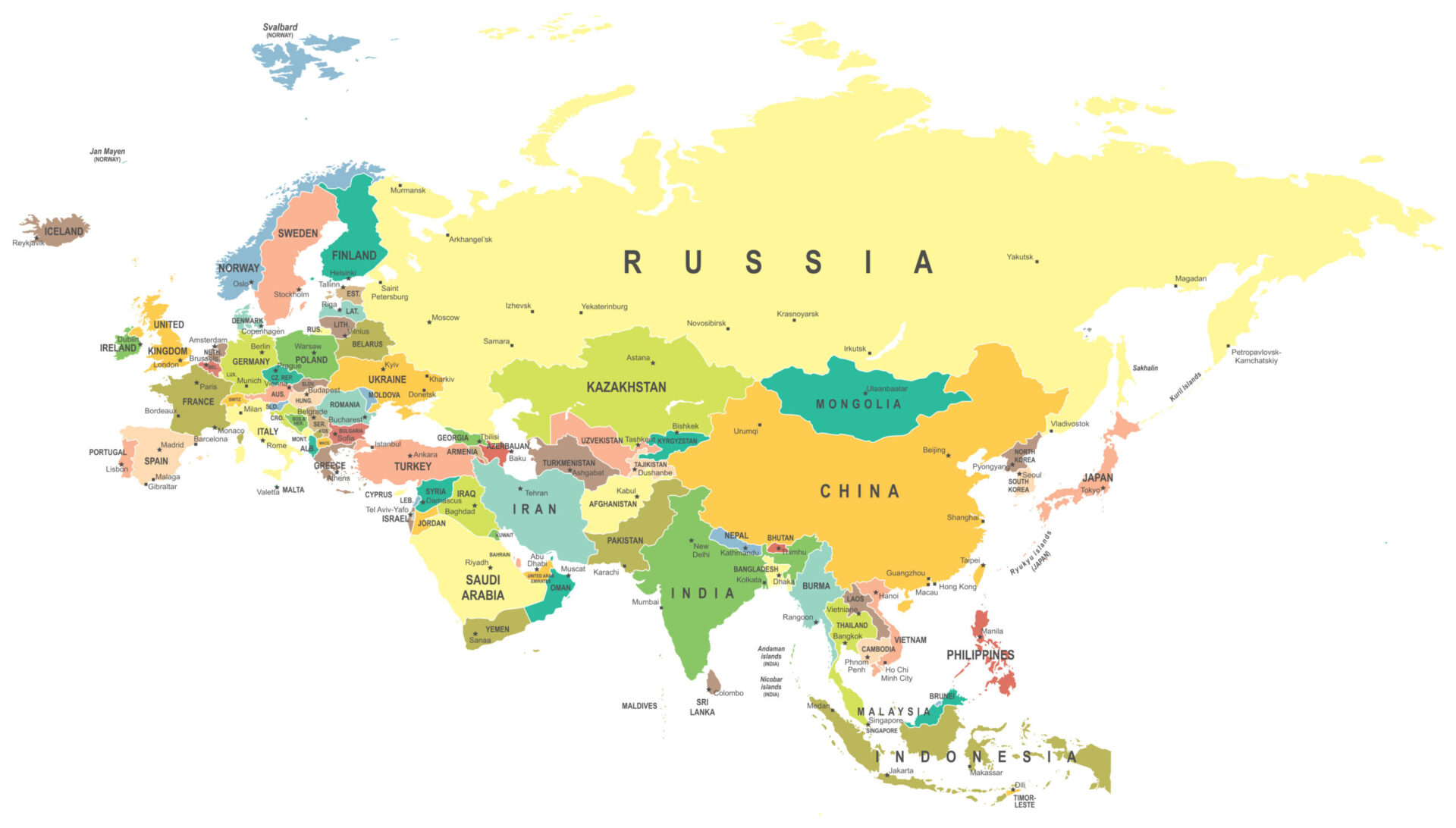
“The group of eight countries not participating in the sanctions wars – China, India, Russia, Indonesia, Brazil, Mexico, Iran, Turkey – in terms of GDP at PPP [purchasing power parity] is 24.4% ahead of the old group,” Volodin wrote.
In his opinion, the economies of the G7 members – the United States, Japan, Germany, Britain, France, Italy and Canada – continue “to crack under the weight of sanctions imposed against Russia.”
“The rupture of existing economic relations by Washington and its allies has led to the formation of new points of growth in the world,” Volodin claimed.
While having serious economic difficulties, the US, according to the Duma speaker, continues “doing everything to solve their problems at the expense of others.”
Creating tensions will “inevitably” lead the US to lose its world domination, Volodin stressed.
“The United States created the conditions with its own hands for countries wishing to build an equal dialogue and mutually beneficial relations to actually form a ‘new Big Eight’ together with Russia,” he added.
On Friday, US Deputy Assistant Secretary of State Eric Woodhouse stated that Washington and its allies had realized that they would get “spillovers” of anti-Russia sanctions into their own economies. Their determination in imposing sanctions on Moscow, he claimed, has demonstrated a willingness to “accept those costs.”
US Treasury Secretary Janet Yellen admitted on the same day that the anti-Russia sanctions have made a “huge difference to food and energy prices,” amid record-setting inflation.
The remarks followed the statement by the Russian President Vladimir Putin who said that “many years of mistakes made by Western nations” in their economic and sanctions policies have caused “a global wave of inflation, disruption of established logistical and manufacturing chains, a surge in poverty and a deficit of food.”
Graham E. Fuller is a former Vice Chair of the National Intelligence Council at CIA with responsibility for global intelligence estimates.
The war in Ukraine has dragged on long enough now to reveal certain clear trajectories. First, two fundamental realities:
Putin is to be condemned for launching this war– as is virtually any leader who launches any war. Putin can be termed a war criminal–in good company with George W. Bush who has killed vastly greater numbers than Putin.
Secondary condemnation belongs to the US (NATO) in deliberately provoking a war with Russia by implacably pushing its hostile military organization, despite Moscow’s repeated notifications about crossing red lines, right up to the gates of Russia. This war did not have to be if Ukranian neutrality, á la Finland and Austria, had been accepted. Instead Washington has called for clear Russian defeat.
As the war grinds to a close, where will things go?
Contrary to Washington’s triumphalist pronouncements, Russia is winning the war, Ukraine has lost the war. Any longer-term damage to Russia is open to debate.
American sanctions against Russia have turned out to be far more devastating to Europe than to Russia. The global economy has slowed and many developing nations face serious food shortages and risk of broad starvation.
There are already deep cracks in the European façade of so-called “NATO unity.” Western Europe will increasingly rue the day that it blindly followed the American Pied Piper to war against Russia. Indeed, this is not a Ukrainian-Russian war but an American-Russian war fought by proxy to the last Ukrainian.
Contrary to optimistic declarations, NATO may in fact ultimately emerge weakened. Western Europeans will think long and hard about the wisdom and deep costs of provoking deeper long term confrontations with Russia or other “competitors”of the US.
Europe will sooner or later return to the purchase of inexpensive Russian energy. Russia lies on the doorstep and a natural economic relationship with Russia will possess overwhelming logic in the end.
Europe already perceives the US as a declining power with an erratic and hypocritical foreign policy “vision” premised upon the desperate need to preserve “American leadership” in the world. America’s willingness to go to war to this end is increasingly dangerous to others.
Washington has also made it clear that Europe must sign on to an “ideological” struggle against China as well in some kind of protean struggle of “democracy against authoritarianism”. Yet, if anything this is a classic struggle for power across the globe. And Europe can even less afford to blunder into confrontation with China–a “threat” perceived primarily by Washington yet unconvincing to many European states and much of the world..
China’s Belt and Road initiative is perhaps the most ambitious economic and geopolitical project in world history. It is already linking China with Europe by rail and sea. European exclusion from the Belt and Road project will cost it dearly. Note that the Belt and Road runs right through Russia. It is impossible for Europe to close its doors to Russia while maintaining access to this Eurasian mega project. Thus a Europe that perceives the US already in decline has a little incentive to join the bandwagon against China. The end of the Ukraine war will bring serious reconsideration in Europe about the benefits of propping up Washington’s desperate bid to maintain its global hegemony.
Europe will undergo increasing identity crisis in determining its future global role. Western Europeans will tire of subservience to the 75 year American domination of European foreign policy. Right now NATO is European foreign policy and Europe remains inexplicably timid in asserting any independent voice.How long will that prevail?
We now see how massive US sanctions against Russia, including confiscation of Russian funds in western banks, is causing most of the world to reconsider the wisdom of banking entirely on the US dollar into the future. Diversification of international economic instruments is already in the cards and willl only act to weaken Washington’s once dominant economic position and its unilateral weaponisation of the dollar.
One of the most disturbing features of this US-Russian struggle in Ukraine has been the utter corruption of independent media. Indeed Washington has won the information and propaganda war hands down, orchestrating all Western media to sing from the same hymnbook in characterizing the Ukraine war. The West has never before witnessed such a blanket imposition by one country’s ideologically-driven geopolitical perspective at home. Nor, of course, is the Russian press to be trusted either. In the midst of a virulent anti-Russian propaganda barrage whose likes I have never seen during my Cold Warrior days, serious analysts must dig deep these days to gain some objective understanding of what is actually taking place in Ukraine.
Would that this American media dominance that denies nearly all alternative voices were merely a blip occasioned by Ukraine events. But European elites are perhaps slowly coming to the realization that they have been stampeded into this position of total “unanimity”; cracks are already beginning to appear in the façade of “EU and NATO unity.” But the more dangerous implication is that as we head into future global crises, a genuine independent free press is largely disappearing, falling into the hands of corporate-dominated media close to policy circles , and now bolstered by electronic social media, all manipulating the narrative to its own ends. As we move into a predictably greater and more dangerous crises of instability through global warming, refugee flows, natural disasters, and likely new pandemics, rigorous state and corporate domination of the western media becomes very dangerous indeed to the future of democracy. We no longer hear alternative voices on Ukraine today.
Finally, Russia’s geopolitical character has very likely now decisively tilted towards Eurasia. Russians have sought for centuries to be accepted within Europe but have been consistently held at arms length. The West will not discuss a new strategic and security architecture. Ukraine has simply intensified this trend. Russian elites now no longer possess an alternative to accepting that its economic future lies in the Pacific where Vladivostok lies only one or two hours away by air from the vast economies of Beijing, Tokyo, and Seoul. China and Russia have now been decisively pushed ever more closely together specifically out of common concern to block unfettered US freedom of unilateral military and economic intervention around the world. That the US can split US-induced Russian and Chinese cooperation is a fantasy. Russia has scientific brilliance, abundant energy, rich rare minerals and metals, while global warming will increase the agricultural potential of Siberia. China has the capital, the markets, and the manpower to contribute to what becomes a natural partnership across Eurasia.
Sadly for Washington, nearly every single one of its expectations about this war are turning out to be incorrect. Indeed the West may come to look back at this moment as the final argument against following Washington’s quest for global dominance into ever newer and more dangerous and damaging confrontations with Eurasia. And most of the rest of the world–Latin America, India, the Middle East and Africa– find few national interests in this fundamentally American war against Russia.
The head of the Security Council criticized Mikhail Podoliak for becoming the self-proclaimed “voice of the army”
The head of Ukraine’s National Security and Defense Council (NSDC), Alexey Danilov, has called out presidential adviser Mikhail Podoliak for making statements on behalf of the military.
Earlier this week, Podoliak unveiled an arms wish list for the West, saying Kiev needs 300 multiple-launch rocket systems, 500 tanks, and 1,000 howitzers to achieve heavy weapons parity with Russia.
On Saturday, in an interview with news outlet Liga, Danilov stressed that only senior military officials can make statements like this, questioning why Podoliak “is now the voice of the army.”
“I don’t understand why Podoliak makes such statements. Is he a representative of the General Staff? I only saw him on the stumps of Yanukovich,” Danilov said. By ‘stumps’, he was apparently referring to a path at former Ukrainian President Viktor Yanukovich’s country residence. In 2011, Yanukovich showed off the residence to a group of journalists, telling them that every morning for half an hour, he would run up and down the stumps – comments which inspired numerous internet memes.
Asked about the duration of the military conflict with Russia amid Kiev’s shortage of weapons, Danilov said it’s important for Ukraine “to end this war with a victory as soon as possible.”
“The longer it lasts, the more the degree of perception in the West will fall. Domestic problems, domestic politics, elections… They will switch to the domestic agenda and pay less and less attention [to Ukraine]. There will be a certain weariness from the war,” he said.
He echoed the remarks of UK Prime Minister Boris Johnson, who warned on Saturday of “Ukraine fatigue,” which he said is growing around the world, while stressing that this should not prevent the West from conveying its support for Ukraine at this “particularly critical time.”
The Ukrainian military earlier revealed that Ukraine has lost up to half of its heavy weapons, including 400 tanks, and Western supplies are unable to fill the gap as they cover only 10-15% of the country’s needs.
Russia attacked the neighboring state in late February, following Ukraine’s failure to implement the terms of the Minsk agreements, first signed in 2014, and Moscow’s eventual recognition of the Donbass republics of Donetsk and Lugansk. The German- and French-brokered protocols were designed to give the breakaway regions special status within the Ukrainian state.
The Kremlin has since demanded that Ukraine officially declare itself a neutral country that will never join the US-led NATO military bloc. Kiev insists the Russian offensive was completely unprovoked and has denied claims it was planning to retake the two republics by force.
Alexander Sladkov has been covering military conflicts for Russia’s main state TV channel for three decades. The burly, bearded, motorcycle-riding ex-military officer is considered by many to be Russia’s top war correspondent.
Now, he’s one of dozens of reporters, including several women, who have been embedded with the armies of Russia and its Donbas separatist allies to report on Russia’s war in Ukraine over the past four months.
Millions of Russians see the conflict, often in detailed and graphic daily reports, through the observations, assertions, and basic narratives formed by these reporters who travel with Russian forces, follow military guidelines, and appear to fully support the Russian cause. Opinion polls suggest that majorities of Russians increasingly trust these reports.
While a handful of independent Russian journalists, such as Meduza’s Lilya Yapparova, have produced some compelling alternative coverage by striking out on their own in Ukraine, the Russian reporters mostly offer a view of the war at odds with that of their Western counterparts. But their coverage is nonetheless more than simple propaganda; it reflects a combination of journalistic methods and a Russian understanding of the world.
“Everyone knows that I’m a person who wouldn’t report anything that I’m not 100% certain of,” Mr. Sladkov says. “I am not an information warrior – I know that there are lots of such people – but I am a reporter. These days I get a lot of time [on the premier Channel One news program] because interest is very high. Nobody tells me what to report.”
“No need to explain … what war is”
Mr. Sladkov, who intensively covered the devastating two-month siege of Mariupol, a Donbas port city on the Azov Sea that was defended by Ukrainian forces for the past eight years, spared his viewers – and the subscribers to his Telegram channel – none of the horrific destruction and gruesome scenes of a city in flames amid brutal street-by-street combat. He actually went out of his way to show the forests of sad, temporary graves of civilians caught in the crossfire that sprang up in apartment courtyards amid the smoke and relentless gunfire.
He says it’s not surprising that Russian audiences can look at all that horror without flinching, much less questioning their state’s purpose. “Russia has been constantly at war for decades. There is no need to explain to society what war is,” he says. “Every schoolboy can tell you the difference between a tank and an APC [armored personnel carrier], and identify all different sorts of weapons and what they are for.”
There was the Soviet war in Afghanistan in the 1980s, two devastating wars in the separatist Russian region of Chechnya, a brief but bloody conflict with Georgia in 2008, a highly kinetic Russian intervention in Syria since 2015, and an ongoing war against Kyiv in the Donbas for the past eight years, which the Russians claim the present “military operation” is designed to bring to a victorious end.
Mr. Sladkov has covered most of those wars. He was also embedded with United States infantry in Afghanistan and Iraq, where he says he learned much of what he knows about his trade.
Though he served 10 years in the Soviet army, he insists that he is not a soldier. And he says that his relations with the military are often “complicated” regarding where he can go and what he can report. “Of course there are military secrets, and you do need to keep a balance. If I have a weakness, it’s that I probably haven’t looked hard enough at the people, the civil population, who are trapped in the middle of the war. It’s not just about the troops.”
A supportive public
Though embedded journalists like Mr. Sladkov and Alexander Kots, another leading war correspondent interviewed for this story, enjoy massive advantages in terms of access to the troops and the front lines, as well as mega-audiences at home, nobody denies that the format is restrictive.
“Our war correspondents work according to the rules of wartime, and they must know how to behave on the battlefield,” says Viktor Baranets, a former official Russian military spokesman who is now the military columnist for the Moscow daily Komsomolskaya Pravda. “The journalist must accept the rules, and never deviate from them. A battlefield is not a playground.”
Mr. Baranets adds: “Personally, I think the Russian public gets more information than it should. As for casualties, I would never declassify this data before the operation ends. Why give the enemy the pleasure of hearing about our losses? We can square everything when it’s over.”
The improving levels of trust in the Kremlin’s decisions, engendered by official war reporting, seem reflected in recent public opinion surveys. A poll published this month by the state-funded Public Opinion Foundation found that 78% of Russians express confidence in President Vladimir Putin, reversing a prewar slide in his standing, while 85% identified themselves as “patriots.”
Another June poll, by the independent Levada Center, found that majorities of Russians pay close attention to events in Ukraine, and growing numbers are turning to state TV for their primary news about the conflict. A study by the internet research firm Mediascope supports that. The Levada poll found that 53% of respondents believe that TV coverage of the war is “objective.” Only a third said they rely on internet sources for their information about the war.
“I didn’t set out to report on war crimes”
There are things that embedded Russian correspondents don’t do: providing information about casualties, or graphically showing Russian losses. Neither will they finger Russian service members for crimes, whether looting, corruption, rape, or murder. Mr. Sladkov defends the record of the Russian military for punishing its own criminals – he cites the case of Yuri Budanov, a Russian officer convicted of murdering a Chechen woman during the first Chechen war – but insists it’s up to courts, not himself, to make such judgments.
When Russian troops were accused of war crimes in the Ukrainian city of Bucha in April, Mr. Kots, who had been there at the time of the Russian withdrawal, went public to say that he saw no bodies in the streets. He suggested that Ukrainian punitive squads who entered later actually did the killing. Though evidence impugning Russian troops has mounted since, he still stands by his claim.
Ms. Yapparova, a war correspondent with the Latvia-based opposition outlet Meduza, has a different perspective. She says she went to Bucha following the Russian withdrawal with no intention other than to find out what happened.
“It seemed to me that the priority should be [to document] the human suffering,” she says. “There might be a lot of unclear situations, facts that need to be established, but it was quite obvious what was happening, and who the aggressor is. I didn’t set out to report on war crimes committed by my own country’s army. I just turned on my tape recorder and that’s what I found myself doing. I was doing my job.”
Journalists and patriots
Anatoly Tsyganok, an independent military expert, says it’s a pity that Western countries have mostly banned or curtailed Russian-sourced reportage from reaching their own populations. There is no doubt that the aggregate work of Russian war journalists sheds a lot of light on the nature of the conflict, including the Russian conviction that it is a war to liberate the Russian-speaking people of the Donbas from Ukrainian nationalist oppression, he says.
In the battle of Mariupol as described by Russian war correspondents, it was mainly the forces of the Donetsk People’s Republic who fought their way through the city, which they consider their own territory. Their main opponent was the notorious Azov Regiment, who set up their fighting positions in homes and schools, leading to their destruction. In Russian reportage, the surviving civilian population emerged to express gratitude for their liberation. The degree of truth in this narrative may only be determined by historians, but it’s what most Russians today appear to believe.
“You can’t get a full picture of what is really happening if you exclude what is being reported by one of the sides,” says Mr. Tsyganok. “I get my information from every possible direction, and I can say that Russian correspondents, like Sladkov, are as professional as any in the West.”
Somewhat ominously, Mr. Sladkov and Mr. Kots believe that Russia is locked in an existential struggle against the entire West, not just the pro-Western regime in Kyiv, and both think the war will be long and hard, lasting at least five years.
“I am a patriot of my country, and I understand that there is no choice but to go forward to victory,” says Mr. Kots.
Ms. Yapparova, the independent journalist, says she doesn’t approve of her embedded colleagues. “Sladkov works for a huge, wealthy propaganda machine. I’m just a journalist.” But she does have one essential point of agreement with him. “I still consider Russia to be a great country. And I am a patriot of Russia.”