Category Archives: Uncategorized

Mike Whitney: Meet The New Boss; Putin Reroutes Critical Hydrocarbons Eastward Leaving Europe High-and-Dry

industrial machine during golden hour
Photo by Pixabay on Pexels.com

By Mike Whitney, Unz Review, 6/16/22

“Rejection of Russian energy resources means that Europe will become the region with the highest energy costs in the world. This will seriously undermine the competitiveness of European industry which is already losing the competition to companies in other parts of the world…. Our Western colleagues seem to have forgotten the elementary laws of economics, or simply prefer to ignore them.” Vladimir Putin, President of the Russian Federation

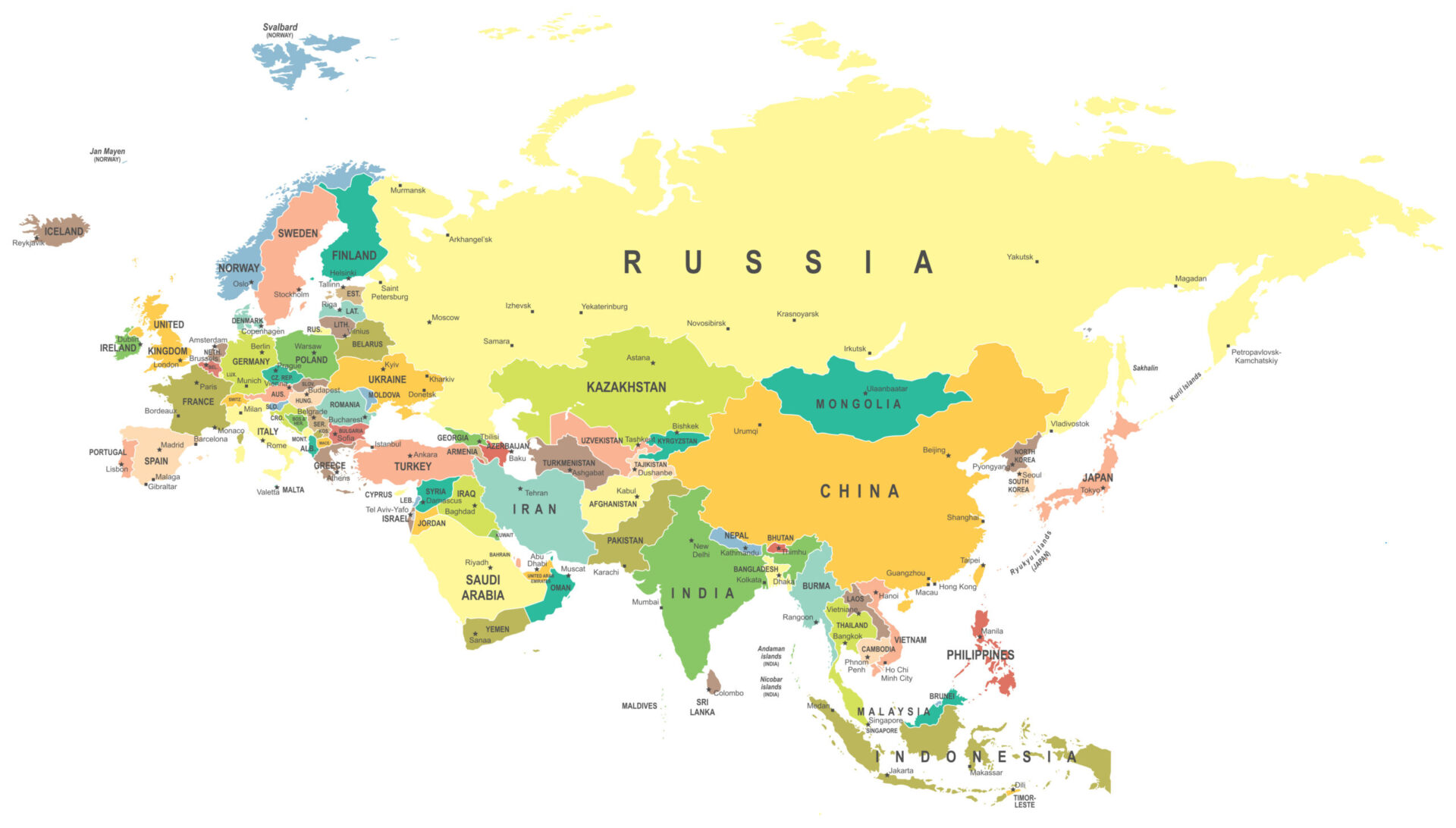
On Tuesday, Russia announced a 40% reduction in the flow of natural gas to Germany through the Nord Stream pipeline. The announcement, that was made by Gazprom officials, sent tremors through the European gas market where prices quickly soared to new highs. In Germany—where prices have tripled in the last three months—the news was met with gasps of horror. With inflation already running at a 40-year high, this latest reduction in supply is certain to tip the German economy into recession or worse. All of Europe is now feeling the impact of Washington’s misguided sanctions on Russia. Here’s more from Oil Price website:

“Russia’s Gazprom said on Tuesday that it would limit natural gas supply via the Nord Stream pipeline to Germany by 40 percent compared to planned flows because of a delay in equipment repairs… The lower supply of gas via Nord Stream to the biggest European economy, Germany, sent Europe’s gas prices surging by double digits…

Russian gas deliveries to Europe… have already been down after Ukraine stopped last month flows from Russia to Europe at … one of the two transit points… thus supply was cut off for a third of the gas transiting Ukraine onto Europe.” (“Europe’s Gas Prices Surge 13% As Russia Reduces Nord Stream Flow“, Oil Price)

The United States and its European allies have imposed more sanctions on Russia than any country in history. But Tuesday’s announcement helps to illustrate who is actually suffering from the sanctions and who is not. Russia is not suffering, in fact, Russia does not seem particularly perturbed at all. It has calmly brushed aside Washington’s attacks as one would whisk-away a fly at a family picnic. Even more surprising is the fact that the sanctions have strengthened the ruble, increased revenues from raw materials, sent Russia’s trade surplus into record territory, and pushed gas and oil profits into the stratosphere. By every objective standard, the sanctions appear to be benefiting Russia which, of course, is the opposite outcome that was expected.

Washington’s Economic Sanctions on Russia: Success or Failure?

  1. The Russian currency (the Ruble) has rallied to a five-year high.
  2. Russia’s commodities are raking in windfall profits
  3. Russia’s trade surplus is projected to hit a record high this year
  4. Russia’s oil and gas sales have risen sharply

There’s no evidence that Washington’s sanctions have achieved the objective of “weakening” Russia or damaging its economy. There is, however, considerable proof that the sanctions have backfired and inflicted a heavy toll on their supporters and their people. And while it’s hard to quantify how much damage has actually been done, we’ve tried to identify specific categories where the impact has been most dramatic. The sanctions have:

  1. Triggered a sharp rise in food and energy prices. (soaring inflation)
  2. Caused major disruptions in global supply-lines (Deglobalization)
  3. Greatly increased food shortages and the likelihood of famine
  4. Precipitated a severe slowdown in the global economy

So far, Russia has withstood these attacks patiently and without any retaliatory response. But we must assume that the sudden 40% reduction in gas flows to energy-dependent Germany is intended to send a message. Keep in mind, Nord Stream 2 was a massive multi-year, $10 billion project to which Russia was fully committed until Germany ‘pulled the rug out from under Putin’ at the eleventh hour. Germany proved that—when push comes to shove—Berlin will always march in lockstep with Washington rather than fulfill its business agreements or act in the interests of its own people. What Germany is discovering now, however, is that acting as Washington’s poodle comes at a very high price indeed. Here’s more from Reuters:

“Gazprom said on Tuesday it has curbed supplies via the Nord Stream 1 undersea pipeline to Germany to up to 100 million cubic metres (mcm) per day, down from 167 mcm, citing the delayed return of equipment that had been sent for repair….

Gazprom no longer exports gas westwards through Poland via the Yamal-Europe pipeline following Russian sanctions against EuRoPol Gaz, which owns the Polish section. Flows via Yamal-Europe continue eastwards from Germany to Poland.

“Due to the delayed return of gas compressor units from repair by Siemens … and technical engines’ malfunctions, only three gas compressor units can currently be used at the Portovaya compression station,” Gazprom said..

“Due to the sanctions imposed by Canada, it is currently impossible for Siemens Energy to deliver overhauled gas turbines to the customer. Against this background we have informed the Canadian and German governments and are working on a viable solution,” the company said.” (“Nord Stream gas capacity constrained as sanctions delay equipment“, Reuters)

Not often. Russia is sending a simple but poignant message to Germany: “You made your bed, now sleep in it.” Russia’s reaction is perfectly normal after having been “stabbed you in the back.”

And, Germany’s travails are just beginning because it has no way to make up for the energy shortfall it will face in the near future; a shortfall that will precipitate rolling blackouts, freezing homes, and a relentless strangulation of its domestic industry. As the German government is discovering, there is no viable substitute for Russian hydrocarbons which is neither readily available nor does the quality fit Germany’s particular requirements. In other words, the US has led Germany down the primrose path believing that they could simply switch to other energy suppliers and everything would be just dandy. That is certainly not the case. As it happens, Germany and all of Europe are going to pay more for their energy than any region in the world which will severely undermine the EU’s competitiveness. This, in turn, will lead to a sharp decline in living standards as well as growing social unrest. Here’s more from the Wall Street Journal:

Naturally, the media is going to point to a maintenance snafu as an excuse, but how credible is that? How often is supply of a vital resource cut by nearly half due to a compressor malfunction?

“For decades, European industry relied on Russia to supply low-cost oil and natural gas that kept the continent’s factories humming.

Now Europe’s industrial energy costs are soaring in the wake of Russia’s war on Ukraine, hobbling manufacturers’ ability to compete in the global marketplace. Factories are scrambling to find alternatives to Russian energy under threat that Moscow could abruptly turn off the gas spigot, bringing production to a halt.

Europe’s producers of chemicals, fertilizer, steel and other energy-intensive goods have come under pressure over the last eight months as tensions with Russia climbed ahead of the February invasion. Some producers are shutting down in the face of competition from factories in the U.S., the Middle East and other regions where energy costs are much lower than in Europe. Natural-gas prices are now nearly three times higher in Europe than in the U.S.” (“Some European Factories, Long Dependent on Cheap Russian Energy, Are Shutting Down; Industrial energy costs are soaring in the wake of Russia’s war on Ukraine, hobbling European manufacturers’ ability to compete globally”, Wall Street Journal)

The Wall Street Journal would like you to believe that Russia is responsible for Europe’s poor choices, but, it’s not true. Putin didn’t raise prices. Prices rose in response to the EU’s increased demand due to shortages brought on by the sanctions. How is that Putin’s fault?

It’s not. And the same goes for the EU officials who accused Putin of “blackmail”, a claim for which there was no basis whatsoever. When that accusation was made, the price of gas in the EU was one-third of its price today. Is that how blackmail works, by charging less than the market price?

Of course, not. It’s ridiculous. Europe was getting a great price on a scarce resource until they decided to take Uncle Sam’s bad advice and ruin it for themselves. Now they’re paying through the nose, and they can only blame themselves.

Did you know that EU leaders are already making plans to ration energy this winter?

It’s true. Europe has agreed to become another basket-case US lapdog in order to faithfully execute Washington’s ambitious global strategy. Here’s the story:

“Europe could be forced to start rationing energy this winter, starting with industrial uses of natural gas, especially if the winter is cold and China’s economy rebounds, the Executive Director of the International Energy Agency (IEA), Fatih Birol, told the Financial Times in an interview.

“If we have a harsh winter and a long winter  . . . I wouldn’t exclude the rationing of natural gas in Europe, starting from the large industry facilities,” Birol told FT.

The world faces a “much bigger” energy crisis than the one of the 1970s, Birol told German daily Der Spiegel last month.

“Back then it was just about oil,” Birol told the news outlet. “Now we have an oil crisis, a gas crisis and an electricity crisis simultaneously,” said the head of the international agency created after the 1970s shock of the Arab oil embargo.” (“IEA: Europe Could See Energy Rationing This Winter“, Oil Price)

She’s wrong, isn’t she? We don’t have “an oil, gas and electricity crisis”. What we have is a political crisis. All of these shortages can be easily traced back to the foolish choices that were made by incompetent politicians doing the bidding of neocon fantasists who think they can turn the clock back to the heyday of American global primacy. But those days are over, and everyone seems to know they’re over except the insulated group of self-deluded fanatics at the Washington think tanks and their political spawn at 1600 Pennsylvania Avenue.

Bottom line: We all would have been much better off listening to Kissinger who advised his pals at the World Economic Forum (WEF) to wrap up the Ukrainian war pronto before Russia made changes that could not be reversed. Unfortunately, Kissinger’s appeal fell on deaf ears and Putin has already started redirecting his energy flows eastward. Check out this eyepopping excerpt from an article at oilprice.com:

“The biggest reshuffle of oil trade flows since the Arab oil embargo of the 1970s is underway—and things may never return to normal. The Russian invasion of Ukraine and the sanctions on Russian oil exports are changing global oil trade routes. Over the past nearly five decades, oil flowed more or less freely from any supplier to any customer in the world…

This free energy trade is now over, after …. the Western sanctions that followed, plus Europe’s irreversible decision to cut off its dependence on Russian energy at any cost…

By the end of this year, Europe expects to have effectively banned 90% of all its imports of Russian oil before the war… For oil going to Europe, crude from the Middle East will now travel longer distances to European ports compared to the shorter routes to India and China…

For Europe, the choice of oil supply is now political, and it will be willing to pay a premium to procure non-Russian oil. This will tighten supply options and continue to support elevated oil prices for months to come.

Commenting on the EU’s embargo on Russian seaborne oil imports, Fitch Ratings said last week:

“This ban will have a significant impact on global oil trade flows, with about 30% of EU’s imports needing replacement from other regions, including the Middle East (Saudi Arabia and the UAE have sustained production spare capacity of about 2MMbpd and 1MMbpd, respectively), Africa and the US.” (“The Biggest Reshuffle Of Oil Flows Since The 1970s”, Oil Price)

What does it mean?

It means that inflation will continue to rise as Russia’s prodigious crude supplies are redirected eastward. It means that Washington has abandoned its 30 year-long ‘pet project’, Globalization, and splintered the world into rival blocs. It means that the dollar, the bond market, the western financial system and the so-called “rules-based order”—all of which are inseparably linked to economic growth that depends almost-entirely on the availability of cheap energy—will begin to creak-and-groan beneath the weight of feather-headed policy decisions that have brought certain ruin to the nations of the west and their people.

We’re going to pay a heavy price for Washington suicidal power-grab.

Tara Reade Interviews “Ukraine on Fire” Director Igor Lopatonok

Tara sits down to talk about propaganda, media, narratives and filmmaking with award-winning producer & director Igor Lopatonok.

Interview begins at about the 15 minute mark.

Gav Don: Russia may not be fighting for ground but for a psychological tipping point in the Donbas

king chess piece
Photo by Gladson Xavier on Pexels.com

By Gav Don, Intellinews, 6/12/22

Ukrainian President Volodymyr Zelenskiy this week visited troops around Bakhmut to thank them for the sacrifices that the war against Russia is demanding from them. Some thanks are certainly justified. Contrary to my expectations of 40 days ago, Ukrainian forces have successfully (so far at least) held open the jaws of the trap which Russia has been trying to close around their rear from north and south of the deep salient that stretches from Slovyansk in the west to Severodonetsk in the east.

How has that been possible, in the face of Russian superiority in the air and in artillery firepower? On paper Russian forces should have overwhelmed Ukrainian defences weeks ago. Ukraine has few or no tanks and little to no air power (video reportage from the Donbas salient shows no Ukrainian tanks or aircraft in action, and no aircraft). If Ukraine had any tanks or aircraft they would struggle to find fuel. Ukrainian artillery is present, but thinly, and only slowly being supplemented with retired US howitzers (at least the guns that have survived their journey from west Ukrainian airfields to the salient). Artillery ammunition is also in short supply.

In spite of these material disadvantages Ukrainian infantry cling on to the salient front lines, and only last week were they finally pushed out of Severodonetsk itself. Russian advances are measurable in fractions of kilometres. It all feels uncomfortably like WWI trench warfare.

A closer look at the conflict, and the two sides’ agendas, reveals the likely reasons for Russia’s apparently sclerotic advance, and spoiler alert, Russian incompetence is not one of them.

On the material side the key factor is that Ukrainian forces have had many months in which to dig deep, well-constructed and well-positioned trench and bunker systems in front of Russia’s objectives. A well-sited trench can be stormed by infantry but only at great cost in lives. In 1917 and 1918 the trench systems were breached by using a revolutionary new weapon (tanks), new infantry tactics (effectively storm-trooper tactics with small combined-arms infantry units infiltrating into gaps in defensive positions), new artillery tactics (intense barrages falling metres ahead and to the flanks of the advancing infantry) and a willingness to take very high casualties. Mortality for a single trench attack ran at 10% in 1916, falling to 2% by 1918.

Artillery accuracy

Today the presence of effective front-line anti-tank guided missiles (the Javelin, the NLAW and others) makes the use of tanks to breach trench lines too dangerous, while the presence of man-portable air defence systems like Stinger (MANPADs) does the same for close air support. That leaves artillery, which Russia has in abundance (both weapons and ammunition). However, what has passed unremarked is the painful fact that even first-class artillery, well handled with good target data provided by drone flights, is not a precision weapon.

A large artillery piece firing a single shell from, say, 10 km behind the contact line is surprisingly inaccurate. Targeting is not the precise science that we have grown used to seeing in the context of air-launched precision-guided weapons. The trajectory of the shell is ballistic and unguided.

The shell’s flight through the atmosphere from gun barrel to aiming point is about 50% longer than the line-of-sight range, so a gun fired at a target 10,000 metres away gives its shell a 15,000-metre journey through an unpredictable atmosphere. That takes about 25 seconds. During its flight the shell is subject to atmospheric winds from ground level up to its apogee and back to ground level. The air through which it is passing also provides changing levels of friction according to varying temperature, density and water content. None of these are measurable to the gun-layer or to his fire control computer.

Another major variable comes from changes in the muzzle velocity of each shell. A precise fire control solution depends on an exact prediction of muzzle velocity, but velocity too depends on unpredictable inputs, including the temperature of the propellant charge, the age of the charge (propellant oxidises very slowly in storage, gradually losing its power, so old stock provides a different muzzle velocity to new stock) and even the conditions in which the propellant has been stored over time.

A larger variation in muzzle velocity comes from the level of wear in the gun barrel. As the barrel is abraded by use, more propellant gas escapes around the shell in its passage up the barrel and muzzle velocity falls. Old knackered guns (like America’s retired 155mm howitzers) are removed from service partly because their accuracy falls, but a gun starts wearing as soon as it enters service.

Finally, a gun barrel heats up during sustained use and actually starts to droop under its own weight, marginally yes, but enough to change the ballistic trajectory.

When we combine all of these sources of error the result is that a single shell will have an aiming error of about 0.1%-0.5% of its line-of-sight range. Over a 10,000-metre range that means 10-50 metres.

Some of these errors can be corrected by firing test-rounds at the target. The test rounds provide a real-time measurement for the atmospheric errors and gun barrel wear errors, which are then fed into the firing solution. However, that approach demands that the battery has real-time observation of a target beyond its line of sight, and they warn the target that a salvo may be incoming. Finally, the artillery observer must be able to connect a single shell impact with a single gun (or a salvo with a single battery) to be able to join the dots. Good co-ordination is required along with sight of the target, either from a high vantage point or from a drone.

Muzzle velocity errors can be partly corrected by measuring muzzle velocity for each round. Modern guns are equipped to do this (with a small attachment at the end of the muzzle which is visible), but older ones are not – those US 155mm howitzers again.

Using these aids, accuracy for a single shot can be raised to plus or minus a few metres for indirect fire, but this is where ground fortifications come in. Ukrainian army trenches are typically one metre across – just wide enough for two men with equipment to squeeze past each other – so to hit a target inside a trench you need a +/- 0.5m firing accuracy, or a lot of luck. Strongpoints and bunkers are slightly larger, but buried under metres of earth, steel and even concrete. To destroy a strongpoint Russia needs not only a direct hit, but also a direct hit with a large shell (small shells just move the earth around).

So what we see in the drone video of Ukrainian defence lines is hundreds of shell holes from misses, and a very small number of actual hits on those defence lines.

The same logic applies to shellfire aimed at the roads along which Ukrainian supplies and reinforcements are moving into the salient. A road itself is a larger target, but the vehicles moving along it need not only +/- 1.5m accuracy to be hit, but are also fast moving targets. A road can therefore be well within effective fire range but remain open (if dangerous – fire enough shells and you will get lucky), and that is what we are seeing in the Donbas salient – the supply roads are within 15 km of Russian artillery lines and subject to indirect fire, but have remained open.

These combined circumstances can create a situation in which infantry units stand still while batteries on each side try to hit them, and each other. In this conflict Russia has a large material advantage. Ukrainian batteries are deprived of real-time forward observation of hits (because Russian air defences can take down drones as soon as they appear), are using older, more-worn guns and stocks of ammunition, and have less of it to replace accuracy with volume.

What’s taking so long?

So if Russia is winning the artillery exchange, why has it not also taken the salient? The answer to that probably reveals Russia’s agenda. Kyiv and the western media are presenting the Ukraine war as a traditional conflict for territory, in which victory is measured by the number of square kilometres won. On those terms it is possible to present Russia as both losing and incompetent – it occupies little more Ukrainian territory now than it did 40 days ago when Mariupol fell.

Where Moscow has fought hard for ground (for example towards Popasna) the reason is probably in order to bring the main road into the salient that runs north-east from Bakhmut to Lysychansk within the 20-km effective range of Russian artillery.

But Moscow is almost certainly fighting a completely different type of war – one whose target is not territory but men. Evidence for this assertion (and it is an assertion, as President Putin has not shared his agenda with me yet) can be found in the original statement of Russia’s war aims – “de-militarisation” – and in observation of Russia’s actions in the Donbas salient.

Rather than recreate the lethal battles of WWI by throwing infantry against prepared defensive lines, Russian forces appear to be simply using intensive artillery bombardment to play the odds against Ukrainian lives. Men in trenches and strongpoints are almost impossible to kill, but men need to cycle into and out of those lines for rest and resupply, and when they do that they must move through the open. In open country a large shell has a killing radius of some 50 metres – comfortably within the aiming error of heavy guns. And it is here that Ukrainian forces are losing men at a steady and terrible rate.

This style of warfare also lends itself well to the use of Multiple Launch Rocket Systems. These have poor accuracy but compensate with saturation, payload and range. Firing from the Russian rear, where they are invulnerable to counter-battery artillery fire, they can reach deep behind Ukrainian lines to areas where troops are resting or assembling in open and unprotected areas.

The rate at which men are being killed is in dispute. Russia’s Ministry of Defence releases its estimates of the number of Ukrainian men “neutralised” almost daily. It does not define “neutralised”, which might include serious injuries as well as deaths, and of course its information may be faulty (how would it know?). For what it is worth, the daily tally rarely falls below 200 and often rises to 500. This has been the case since the fall of Mariupol three weeks ago. In contrast, Kyiv for the first time reported its own casualties at about 100 dead per day and 500 injured, a ratio consistent with past dead/injured ratios in a conflict with excellent front-line medical care, but almost certainly a significant under-estimate of the dead.

The truth probably lies somewhere in the middle of the two extremes. If the actual number is 200 dead per average day, and 400 seriously injured (with many more lightly injured but returning quickly to duty), then Ukraine’s forces in the Donbas salient will have seen some 4,000 dead and 8,000 hospitalised since the start of the Donbas phase of the war.

At the start of the assault on the Donbas salient Ukraine appears to have had two full brigades at the eastern end of the salient – the 95th and 81st brigades. At full strength these would have had some 10,000 men. When we estimate the number of Ukrainians captured in the salient (badly reported, but somewhere in the low thousands), we can see some numerical support for my contention that Russia’s agenda is to kill, wound or capture Ukrainians while losing the absolute minimum of its own men in the process.

The loss rates above appear to correlate with the reported movement of Ukrainian reserve forces from west Ukraine into the salient – one report cites eight brigades (some 30,000 men) moving east from Ukraine’s western districts. Reserve forces (all with past basic or professional infantry training) may stand little chance of success, or even survival, in an offensive action or in fast-moving manoeuvre warfare, but they are adequate to hold a well-prepared line of trenches and strongpoints.

If Moscow’s agenda is the demilitarisation of Ukraine then drawing men into the Donbas salient where they can be killed steadily by artillery appears to me to be a highly effective and low-cost way of serving it.

If that is clear to me, it must also be clear to Kyiv, so why are Ukrainian forces holding on to ground which, in the end, doesn’t matter that much? Some point to political reasons (while the war continues so does the flow of money and material to Kyiv), but there may be a less Machiavellian reason.

As I said earlier, it is very hard to kill a soldier who is positioned in a well-built trench or bunker. However, when that soldier moves into the open the artillery targeting problem I mapped out above disappears. If the Ukrainian army were to withdraw from the salient en masse much of it would have to do so on foot (Ukraine is short of tanks, armoured cars, trucks and fuel). Walking slowly in the open to the west would expose the army to a murderous bombardment. We have been here before.

On February 26 1991 some 10,000 soldiers of the Iraqi army tried to withdraw north from Kuwait along Highway 80, a six-lane motorway. Caught in the open by Coalition forces, a slaughter ensued, so large that no official figures for the number of dead have ever been released. Those who were not killed or wounded fled. If Ukrainian forces decided to withdraw from the Donbas salient a similar experience might await them, only in larger scale.

It is likely that Moscow is working to trigger an amorphous point of collapse in Ukrainian morale with its relentless whinnying down of the latter’s forces with relentless shelling, while protecting its own forces from the same pressures by avoiding pointless attempts to gain territory. If the strategy succeeds that territory will fall into Russia’s hands anyway.

The US army estimates that on average when a unit has lost 30% of its men it can suffer from a collapse in morale and cease to be an effective fighting force. When highly motivated, as Ukraine’s soldiers are, that percentage can be higher.

Time is the unknown factor here, because it is impossible to measure the hearts and souls of Ukraine’s forces. We know that at the outset Ukraine had some 60,000 men of the first quality based in and near the Donbas salient. We can estimate that some 4,000 of those are now dead, some 8,000 are too injured to take part in the conflict, and that some thousands have surrendered or been captured. Adding in losses incurred between day one of the war and the fall of Mariupol (unquantified and probably unquantifiable at present), the original force has probably suffered some 30% total losses, and is probably losing 1% of its men per day.

That means a collapse might occur at any time between now and twenty days from now (when losses reach 50%). Replacement of degraded brigades by fresh reserve formations will delay collapse, but not man for man, since reserve forces may be expected to have collapse trigger points at much smaller mortality percentages than regular units.

Ukrainian counter-attacks (like this week’s attempt to retake part of Severodonetsk) actually play into the Russian strategy. An attack requires men to leave the safety of their defences and move in the open on ground which has been perfectly mapped by Russian artillery. As Russian forces move back Ukrainian forces move into what becomes in effect a killing-ground, where they are likely to suffer around 10% mortality in the space of an hour or two of the attack.

Collapse is contagious – once a major unit collapses it is likely to take its neighbours with it. The collapse of the Azov Brigade was not contagious to the main Ukrainian army because it was physically isolated and 150 km away from the Donbas salient, and because it took place gradually over two weeks, through the siege of Azovstal (which may be why that siege was forced on it by Kyiv).

The arrival of western weapons in the salient serves to delay collapse by a small amount. Outgoing fire (whether 122mm shells or MLRS warheads) will marginally destroy some Russian artillery units and ammunition stocks and reassure Ukrainian men in their trenches, but the margin cannot be large enough to change the dynamic. The only game-changer in this context would be a reversal in control of the airspace over the salient, and that has no chance of happening.

And so the agony of the Ukrainian army continues. Russia may succeed in closing the jaws of its trap (which would lead to complete and sudden collapse and mass surrender) or it may just continue to kill a few hundred Ukrainians each day until collapse comes, like a thief, silently and by night.

Dmitri Simes: Are Sanctions Hurting Russia?

By Dmitri Simes, The American Conservative, 6/13/22

Sanctions against Russia are a blessing in disguise, according toAlexey Butrimov, the general director of BJet, a Russian aviation company. Although he readily admits that the new restrictions have created significant complications for businessmen such as himself, he is confident that in the long-term, they will provide Russia with the much-needed stimulus to revive its long-dormant aviation industry. 

“On the one hand, we look at all the problems caused by sanctions with sadness, but we also understand deep down inside that we can finally resurrect our aviation,” he said. “When times are good, you don’t have much incentive to develop anything quickly. But now that we find ourselves in a situation where we don’t have anything, the only path forward is to build up our own aviation system.” 

Since Russian President Vladimir Putin’s decision in late February to send troops into Ukraine, Russia has quickly surpassed longtime pariahs such as Iran, North Korea, and Syria to become the most sanctioned country in the world. Almost overnight, the U.S. and its allies in Europe and Asia moved to freeze nearly half of Russia’s financial reserves, severely restrict Russia’s access to their financial and technological systems, and ban Russian planes and ships from entering their airspace and ports. Simultaneously, hundreds of multinational corporations have either suspended or downsized their operations in Russia since the start of the conflict. 

The Biden White House has vowed that as a result of these new sanctions, “Russia will very likely lose its status as a major economy, and it will continue a long descent into economic, financial, and technological isolation.” Meanwhile, on the political front, National Security Advisor Jake Sullivan told CBS News in April that sanctions were meant “to make it harder for [Russia] to fuel their war machine,” and thereby overtime help “improve Ukraine’s position at the bargaining table and make an outcome of this war that Ukraine wants to see more likely.” 

So far at least, sanctions have done little to alter Putin’s geopolitical calculus or undermine his domestic support. The Biden administration’s most dire predictions for the Russian economy have also not been borne out, at least not yet. Although Western-led sanctions undoubtedly initially caused the Russian ruble to plummet and many ordinary Russians to visibly panic, over three months later, the economic situation in the country appears much calmer. 

None of this is to say that tumultuous waters are not ahead for the Russian economy.

Following three decades as part of the globalized economy, Russia will have to completely restructure its supply and production chains away from the West and do so rapidly. Even more dauntingly, it will have to find ways to promote technological innovation despite having its ties with many of the world’s leading scientific powerhouses severed. 

Russia has spent years trying to sanctions-proof its economy. Since 2014, when the U.S. and European Union first imposed major sanctions against Russia over the annexation of Crimea, the Kremlin promoted import-substitution and greater economic ties with Asia as a way of reducing Russia’s dependence on Western technology and trade. At the same time, Moscow built up its financial reserves to $640 billion in order to have a significant cushion in the event of a crisis. Finally, Russia slashed its foreign debts and began cutting back its use of the dollar for trade settlements or as a reserve currency. This laid the groundwork in Russia for a potential sudden economic decoupling from the West. 

But that’s much easier said than done. Despite the Kremlin’s import-substitution push, many sectors of the Russian economy still remained heavily dependent on the West. A study by the Higher School of Economics, one of Russia’s top universities, published in April found that the U.S., Canada, and E.U. accounted for half of Russia’s foreign value added, including components for machinery, medications, and cars. 

Likewise, although Russia succeeded in accumulating vast financial reserves over the past eight years, it stored nearly half of that money in Western and Japanese banks. Consequently, when Russian troops crossed the border into Ukraine, those reserves were quickly frozen. It’s not clear when, if ever, Moscow will be able to recover them. 

Oleg Buklemishev, director of Moscow State University’s Center for Economic Policy Research, explained that notwithstanding the growing political tensions over the years, most of Russia’s trade outflows, ports, railroads, and financial infrastructure were oriented around the West. Consequently, many Russian business people opted to continue doing business as usual even as the Kremlin urged them to localize production or pivot to Asia. 

“My hypothesis is that 2014 convinced the Russian elite that it was possible to live under sanctions and that what new sanctions will be imposed won’t be critically important,” he said. “There seems to have been the expectation that the West would rattle its sabers as usual, but that business would prevail at the end of the day.” 

Therefore, when the West imposed unprecedented sanctions against Russia over its decision to send troops into Ukraine, the initial economic shock was unsurprisingly immense. In late February and early March, the Russian ruble lost almost 30 percent of its value against the dollar, prompting Biden to boast that the currency had been reduced to “rubble.” This rapid devaluation of the ruble caused many Russians to scramble to safeguard their finances. I personally observed long lines at banks and ATM machines in Moscow, as ordinary people tried to withdraw any foreign currency they could. At the same time, instances of panic buying were reported all across the country, with Russians seeking to stock up on everything from buckwheat to electronics. 

Interestingly enough, however, this wave of economic insecurity appears to have had little impact on the Kremlin’s political support. The Levada Center, Russia’s leading independent polling agency, found that Putin’s approval rating jumped from 71 percent in February to 82 percent in April, his highest mark since the start of his fourth presidential term back in 2018. At the same time, 74 percent of Russians expressed support for Moscow’s military campaign in Ukraine compared to 19 percent who opposed it. When asked whether Russia should make any concessions to the West in exchange for lifting sanctions, 80 percent of respondents said no. 

A similar consolidation process is visible among Russian elites. To date, only two high profile officials have resigned: Anatoly Chubais, the Kremlin’s special envoy for climate change and infamous architect of Russia’s privatization reforms during the 1990s, and Boris Bondarev, a veteran diplomat at the Russian mission in Geneva. 

Sergey Karaganov, head of Russia’s Council on Foreign and Defense Policy, a research group that advises the Kremlin, told me that Russian elites increasingly viewed the Ukraine crisis as an existential struggle for the future of their state. “A majority of people understand that a failure to achieve victory could undermine the regime’s stability and lead to the repetition of February 1917 or 1991,” he said, referring to the downfall of Czarist Russia and the Soviet Union. “The biggest fear for Russian elites is collapse, so they will fight until victory and if necessary, will pursue any escalation in pursuit of that goal.” 

Karaganov added that sanctions had further weakened the influence of Russia’s oligarch class, the faction within the Russian elite most closely affiliated with the West. “What happened with the oligarchs showed everybody that you should not do business with the West under any circumstances,” he said. “For decades, Russia’s wealthy classes have invested their wealth abroad with the expectation that they will spend their old age in Europe. That has now come to a rapid halt.” 

More than three months after sanctions were imposed, life in Russia has a surprising air of normalcy. Following its initial plunge, the ruble has recovered all of its pre-war value and then some in recent weeks thanks to a combination of high global energy prices and the Russian government’s strict capital control measures. Some of the early signs of economic anxiety have also appeared to dissipate: Moscow’s restaurants, cafes, and bars are as packed as ever. Although grocery prices have noticeably increased, supermarkets are still fully stocked with a wide range of products, including foreign snacks. The biggest difference can be seen in shopping malls, where some Western-owned stores have closed their doors. Nevertheless, local and Asian brands are continuing to work as usual and appear to have a fair share of clients on any given day. 

Are these signs that the Russian economy is quickly stabilizing or is it merely the calm before a storm? Buklemishev of Moscow State University suggested that it was closer to the latter option. He told me that the ruble’s recent appreciation showed that the Russian economy’s longtime dependence on hydrocarbon exports had reached “new absurd proportions,” since the currency’s current value is primarily driven by the fact that although imports have dropped steeply, energy sales continue to bring significant foreign currency revenue into Russia. Under the current capital controls regime, however, exporters are forced to convert a majority of their foreign currency earnings into rubles.

“There are not a lot of outward signs of economic problems, in Moscow at least, but we are beginning to see rising prices, a gradually disappearing assortment on shelves, and the closing of stores and factories,” he added. “What we are seeing now are probably the final days of a happy, calm existence. Going forward things will be different.”

Buklemishev is not the only one who is warning that hard times are ahead. In April, Russian Prime Minister Mikhail Mishustin admitted that Russia was facing its most difficult economic situation in three decades. Russia’s Central Bank has forecast that the country’s GDP could decline by 8 to 10 percent in 2022, while annual inflation is expected to reach 18 to 23 percent. Similar figures have been put forth by international observers, with the International Monetary Fund and World Bank projecting Russia’s economy to shrink this year by 8.5 percent and 11.2 percent respectively. 

During a press conference in late April, Elvira Nabiullina, the head of Russia’s Central Bank, warned that the new trade and logistical restrictions would make it substantially more difficult for Russian consumers and manufacturers to acquire a wide range of finished goods and components. Even highly localized industries of the Russian economy would be affected, she explained, since all it takes is to have one small but key component missing to disrupt production. Nabiullina predicted that Russia would begin to meaningfully feel the sting of sanctions in the second and third quarters of this year, as existing stockpiles begin to run down. Economic recovery, she said, would largely depend on how quickly Russian businesses will be able to establish new production and supply chains. 

The E.U.’s recent decision to ban 90 percent of Russian crude oil before the end of the year could further complicate matters for Moscow by potentially depriving it of a major source of revenue. 

To better understand the new challenges posed by sanctions, I spoke to several Russian entrepreneurs across different industries about how their life had changed and what they expect going forward. To my surprise, I discovered that many of them expressed confidence that they could not only adjust but even thrive in their new reality. 

“Sanctions have activated and mobilized the Russian business community,” said Nikolai Dunaev, the vice president of Opora Russia, a national association of small and medium business owners that counts its membership in the hundreds of thousands. 

“Over the past three months, almost everyone we talk to has found some ways to adapt,” Dunaev explained. “Some have found alternative suppliers in China, India, Turkey, and the Middle Eastern countries, while others have had to temporarily lower production or change the assortment of goods they produced. However, the important thing is that everyone is finding solutions to their problems, one way or another.” 

Some entrepreneurs have even reported that sanctions are providing their businesses with an unexpected boost. Valentina Andreeva is the owner of Mrs. Ruby, a Moscow-based premium furniture company. She told me that over the past five months, her business had already generated an entire year’s worth of revenues. “Right now we can’t process new orders because our current production capacity is just not enough,” she said. “We are expanding our productive capacity to meet this growth in demand because new orders are coming on every day.”  

Andreeva explained that previously, domestic luxury furniture producers such as herself faced stiff competition from Italian brands, which had expended substantial resources over the past few decades to establish a strong foothold in the Russian market. Following the imposition of sanctions, however, the logistical and financial chains connecting Russia and Italy were quickly severed. At the same time, sanctions helped to spark a “wave of patriotism” among wealthy Russians, causing them to flock to domestic brands as a sign of defiance. 

“For people in Russia who have become accustomed to exquisite furniture, there is nothing in the world that will cause them to turn away from this luxury,” Andreeva said. “And since the money is still there, they continue to order new furniture. The only difference now is that they buy it from Russia instead of Italy.” 

Andreevna predicted that even if sanctions are removed over the next two years and Italian brands can return to Russia, they will struggle to regain their previous market share. After all, why go through the extra trouble and risk of ordering something from abroad when you can just as easily buy that good closer to home? 

“If Russian producers can demonstrate that they can produce as well as Italy, then no one will order from Italy in the future because there are numerous barriers involved,” she said. 

Butrimov of BJet is similarly confident that sanctions will benefit his industry in the long run. That is undoubtedly a bold position considering that aviation is widely regarded as one of the sectors of the Russian economy that is most vulnerable to sanctions. Butrimov admits that it will be difficult for airplane manufacturers to find replacements for certain Western imports, especially high-tech components such as advanced engines and electronics. However, he believes that Russia will be able to develop its own alternatives over the next five years. 

In the meantime, Butrimov contended that Russian manufacturers had ways to “simplify” their designs without meaningfully sacrificing quality or safety. “For example, if you have a cockpit with electronic monitors, nothing is stopping you from temporarily installing an older solution,” he explained. “Yes, we will have to take a few steps back technologically, but once we are able to develop and produce our own monitors, that will help us make a major jump forward.”

According to Butrimov, one of Russia’s biggest advantages is that it possessed its own well-developed aviation industry just a few decades ago. During the Soviet era, the country not only designed its own aircraft but also fully controlled their production cycle. Although much of that capacity was degraded in the decades following the collapse of the Soviet Union, Butrimov told me that Russia still retained a large cohort of well-trained engineers and the ability to produce workable models.  

“Russia still has factories for the production of military airplanes, and in the current situation all we have to do is to expand the production of military aircraft to the civilian sector,” he said. “For example, we are still releasing the Il-96 and Il-76 airplanes. Nothing is preventing us from boosting our output of the Il-96, but this time with an upgraded engine and new avionics.” 

Butrimov already sees some signs that the Russian aviation sector has begun adjusting to its new realities. “We are seeing the emergence of new small companies that produce key components and the government is trying to promote the manufacturing of Russian equipment,” he said. “So on the one hand you have problems, but on the other hand these problems have finally kicked off the process of import-substitution, the result of which Russia will no longer be dependent on everyone.” 

Over the long run, perhaps the most important question is to what extent Russia will be able to continue producing technological innovations while under sanctions. The Russian economy certainly has enough natural resources and industrial know-how to survive, but can it thrive in a world where advanced technologies increasingly reign supreme? As I discovered, the answer to that question is very much up in the air at the moment. 

Sergei Abramov is the director of the Institute of Program Systems at the Russian Academy of Sciences, but he is perhaps best known for his work as the chief designer of Russia’s “SKIF-Aurora” supercomputer. Abramov told me that as a result of financial sanctions against Russia, his institute could no longer pay for services such as IP addresses, telecommunication infrastructure, servers, and even apps like Zoom or Dropbox. “You previously didn’t think about these issues,” he admitted. “All of us were so used to the fact that we could easily pull up a browser page or write a line of code, that we didn’t really think about the services that make these simple actions possible.” 

The more pressing issue for Abramov, however, is the danger of Russia falling technologically behind as a result of sanctions. As he explained to me, developing cutting-edge technologies in the Internet age is only possible through international cooperation since innovation requires large financial, technological, and knowledge resources. Abramov noted that when his institute developed the “SKIF-Aurora” supercomputer, it formed an alliance with Intel and Italy-based Eurotech company, both of whom significantly contributed to the final product. 

“Could we do this all without international cooperation? No, we could not,” he said. “Even though we had some solutions that were technologically cutting-edge, they were not enough to create the final product. A supercomputer requires hundreds of cutting-edge solutions, and that is very difficult to develop completely yourself.” 

Sanctions also created other barriers to innovation, Abramov warned. In addition to restricting technological imports, sanctions threatened to force the Russian economy into a prolonged slump, which would mean that other sectors will have fewer resources to order solutions from the IT industry. Perhaps even more worrisome, the difficulty of working under sanctions could push many talented Russian IT specialists to seek better opportunities elsewhere. Abramov said that of his five best students, four had left Russia. 

“The IT sector will continue its work and there will be some domestic solutions in software and hardware, but all of this work will be monstrously complicated,” he said. “Under such circumstances, it will be very difficult to talk about Russia developing products with competitive superiority.”

The mass exodus of IT workers since late February has sparked fears that Russia could soon face a major brain drain, although the exact scale of the problem is up for debate. The Russian Association for Electronic Communications caused a sensation when in March it reported that 50,000 to 70,000 specialists had fled the country and that another 100,000 were expected to leave the following month. 

By contrast, a study published in late May by the Russoft software developer’s association estimated that only 40,000 IT workers had moved abroad so far this year. Perhaps even more significantly, the Russoft study concluded that up to half of those specialists could return to Russia before the end of the year.

Valentin Makarov, the head of Russoft, told me that there are several reasons why he expects so many Russian IT workers to return home. First, the influx of well-paid Russian professionals to neighboring countries has caused real estate prices in those places to sharply increase, making long-term relocation far more costly. Second, many Russians who moved abroad reported experiencing hostility from locals. Finally, Makarov believes that the Russian government’s new package of incentives for IT companies and workers, which includes exemptions from taxation and military service, could help entice many back to Russia.

“Losing 20,000 specialists is of course very bad, but it’s not enough to seriously affect the quality of the industry’s work,” he said. Looking ahead to the future, Makarov argued that although adapting to the new post-sanctions reality would undoubtedly be difficult, the Russian IT sector was up for the challenge. He noted that some Russian companies had seen their sales increase by 2-8 times in recent months, fueled by a growth in demand for domestic IT solutions following the exodus of Western tech giants from Russia. The next step, according to Makarov, is to look for opportunities to expand into the markets of developing countries, which he says accounts for 40 percent of the total global IT market share. 

While Makarov conceded that it would not be possible to fully compensate for the loss of access to Western advanced technologies, he contended that Russia could join forces with companies in emerging tech markets such as China, India, Malaysia, and Indonesia to develop their own cutting-edge innovations. Makarov believes that geopolitical independence from the U.S. could be a powerful selling point for Russia, especially when it comes to establishing closer technological cooperation with Beijing.

“China is obviously more economically integrated with the West than with Russia, but geopolitical confrontation between China and the US is not going anywhere anytime soon,” he said. “On the contrary, as more and more sanctions are imposed against China, it will need to find new partners in technological development and all other areas. Since both Russia and China have very strong programmers, it makes sense for us to work together in building a new technological space rather than remain dependent on the United States.” 

In just three months, Russia’s relationship with the outside world has been completely upended. The post-Soviet era of globalization, in which Russia sold natural resources to the West in exchange for key components, technologies, and finished goods, is likely gone for good. But what comes next is far from certain. Will Russia find a way to defy the odds and retain its status as a major global economy? Or is it doomed to become an international pariah that will increasingly find itself technologically left behind? I suspect that we will have a definitive answer to that question only in a few years’ time.

Dimitri A. Simes has written for the National Interest and Nikkei Asia, and was a 2020 Robert Novak Journalism Fellow.

Stephen Walt: Why Do People Hate Realism So Much?

security logo
Photo by Pixabay on Pexels.com

By Stephen Walt, Foreign Policy, 6/13/22

The political scientist Robert Gilpin once wrote that “no one loves a political realist.” His lament seems especially apt today, as the ongoing tragedy in Ukraine has spawned an uptick of realism-bashing. A small sample: Anne Applebaum and Tom Nichols of the Atlantic, Columbia University professor and fellow FP columnist Adam Tooze in the New Statesman, University of Toronto professor Seva Gunitsky, and Michael Mazarr of Rand Corp. Even Edward Luce of the Financial Times, who is consistently one of the most insightful observers on U.S. and global policy, recently opined that “the ‘realist’ school of foreign policy … has had a terrible press recently, most of it richly deserved.”

Much of this ire has been directed at my colleague and occasional co-author John J. Mearsheimer, based in part on the bizarre claim that his views on the West’s role in helping to cause the Russia-Ukraine crisis somehow make him “pro-Putin” and in part on some serious misreadings of his theory of offensive realism.

Another obvious target is former U.S. Secretary of State Henry Kissinger, whose recent comments urging peace talks with Moscow, a territorial compromise in Ukraine, and the need to avoid a permanent rupture with Russia were seen as a revealing demonstration of realism’s moral bankruptcy. As I explain below, Kissinger is an outlier within the realist tradition, but he’s still a convenient foil for its critics.

The irony here is hard to miss. Realists of various stripes repeatedly warned that Western policy toward Russia and Ukraine would lead to serious trouble, warnings that were blithely ignored by those who claimed that NATO’s open-door policy would lead to lasting peace in Europe. Now that war has broken out, lives are being lost, and Ukraine is being destroyed, you would think proponents of open-ended NATO enlargement would have set aside their idealistic illusions and think about these issues in a hard-nosed, realist fashion. Yet the opposite has occurred: The people who got it right are singled out for attack, while those who believed that enlarging NATO would create a vast zone of peace in Europe are insisting that the war continue until Russia is totally defeated and greatly weakened.

This phenomenon isn’t all that surprising, insofar as realism has never been popular in the United States. It is recognized as an important tradition in the study of international relations, but it is also the object of considerable animosity. In 2010, for example, University of California, San Diego professor David Lake’s presidential address to the International Studies Association criticized realism and other paradigms as “sects” and “pathologies” that divert attention from “studying things that matter.” Back in the 1990s, when many believed liberal values were spreading around the world, the political scientist John Vasquez published a lengthy article in American Political Science Review claiming that realism was a “degenerative” research program that ought to be discarded.

So why do so many people dislike realism so intensely? I might not be the most objective judge on this issue, but here’s what I think is going on.

Realism is a rather gloomy perspective on politics, even in its more benign versions. It assumes that people are irredeemably flawed and that there is no way to eliminate all conflicts of interest among individuals or the social groups they form. Moreover, all versions of realism highlight the insecurity resulting from the absence of an overarching global authority that can enforce agreements and prevent states from attacking one another. When violence is a possibility, human groups of all sorts—be they tribes, city-states, street gangs, militias, nations, states, etc.—will look for ways to make themselves more secure, which means they will be strongly inclined to compete for power.

Contrary to what some critics maintain, realists do not see these features as iron laws that determine every move a state might make. Nor do they believe that cooperation is impossible or that international institutions are of no value, and they certainly don’t think that humans lack agency or the ability to make different choices as they strive to protect their interests. Realists simply maintain that international anarchy (i.e., the absence of an overarching central authority) creates powerful incentives for rivalry and competition among states—incentives that are difficult to manage or overcome.

It’s not hard to understand why many people are reluctant to embrace such a pessimistic view of the human condition, especially when it appears to offer no clear escape from it. But the real question is this: Is this is an accurate view of international politics? When you consider the conflict and strife that have occurred throughout human history and continue to this day, and the tendency for states to worry about their security, the prima facie case for realism is strong.

Second, realism’s emphasis on power politics leads many people to assume its proponents as overly fixated on military power and inclined to favor hawkish solutions. But this view is simply false: Apart from Kissinger (who was a hawk during the Vietnam War and backed the U.S. invasion of Iraq in 2003), the most prominent realists have generally leaned dovish. George F. Kennan, Reinhold Niebuhr, Walter Lippmann, Hans J. Morgenthau, and Kenneth Waltz were all early critics of U.S. involvement in Vietnam, and their scholarly successors were among the more prominent voices opposing the Bush administration’s march to war against Iraq in 2003.

Third, realism is also seen as indifferent or even hostile to ethical or moral considerations. There is a grain of truth in this charge, insofar as realism’s theoretical framework does not incorporate values or ideals in any explicit way. As the name implies, realism tries to engage with the world “as it really is,” not as we might like it to be. Yet as Michael Desch and others have pointed out, most realists are also guided by profound moral commitments, and they are conscious of both the tragic nature of international politics and the importance of trying to act morally despite the pressures to act otherwise. For realists, noble aims and good intentions are not enough if the resulting choices lead to greater insecurity or human suffering.

Fourth, realism is unpopular in the United States because it runs counter to the widespread belief in American exceptionalism—the idea that the United States is uniquely moral and always acts for the greater good of humanity. For realists, the need to remain secure and independent in a world lacking a central authority often leads states with very different characteristics to act in strikingly similar ways. The United States and the former Soviet Union could not have been more different in terms of their domestic orders, political ideologies, and economic systems, for example, but the pressures of competition during the Cold War led each to form and lead large alliances, promote their respective ideologies wherever they could, build tens of thousands of nuclear weapons, intervene in many other countries, fight destructive proxy wars, and assassinate foreign leaders. Locked in competition, these two very different countries produced rather similar foreign policies.

To be sure, realists recognize that domestic politics are not irrelevant and that there are important differences between, say, Nazi Germany on the one hand and Edwardian Britain on the other. But where idealists are quick to divide the world into “good” and “bad” states—and to blame the world’s problems almost entirely on the latter—realism recognizes that even well-established democracies will do horrible things to others when they believe their vital interests are at stake.

Back in the 1960s, for example, the Johnson administration was so worried that South Vietnam would become part of the communist world that it sent nearly half a million troops across the Pacific to fight there; 58,000 of those soldiers didn’t return. The U.S. military used napalm and Agent Orange and dropped some 8 million tons of ordnance on the country. When that didn’t work, the Nixon administration invaded Cambodia, undermining its fragile government and unwittingly helping the genocidal Khmer Rouge regime to gain power. Vietnam was a weak country and more than 8,000 miles from the continental United States, yet its leaders managed to convince themselves these actions were necessary for U.S. national security.

In July 1979—less than a decade later—the Carter administration became alarmed when a popular uprising in Nicaragua toppled pro-American dictator Anastasio Somoza, much as the Maidan uprising in Ukraine toppled pro-Russian President Viktor Yanukovych in February 2014. When it came to power in January 1981, the Reagan administration responded by organizing and arming a rebel army—the Contras—much as Russia has backed separatist militias in Ukraine. Nicaragua was a poor country with a population of barely 4 million people, yet U.S. officials saw it as a serious threat. Some 30,000 Nicaraguans died in the Contra War—equivalent to losing approximately 2.5 million Americans as a percentage of the country’s population.

These examples of past U.S. misconduct do not justify what Russia is doing today in the slightest. If we are consistent, all these actions (to include the invasion of Iraq) should be roundly condemned on both strategic and moral grounds. Nonetheless, they are a reminder that governments of all types will do brutal things when they feel threatened, even if their fears are sometimes illusory. But in a country like the United States, which sees itself as uniquely virtuous and where top officials rarely admit mistakes or accept responsibility for them, reminding people that U.S. leaders have sometimes acted much as Russian President Vladimir Putin is acting today is probably not be the best way to win them over.

This phenomenon is especially powerful in wartime, when the understandable desire to rally popular support encourages governments to describe their own cause as wholly just and to portray their opponents as the embodiment of evil. To suggest that prior U.S. actions might have had something to do with the tragedy in Ukraine does not excuse Putin’s decision to invade or the conduct of the Russian armed forces, but it is bound to trigger a harsh reaction from those seeking to frame the conflict as a simple morality play between a brutal aggressor and an innocent victim and the latter’s well-intentioned and equally innocent friends.

Realists recognize that evil acts occur and that some states behave worse than others, but they also understand that all states compete for security in an imperfect world and that no country’s conduct is beyond reproach. For this reason, realists see diplomacy and compromise as critical tools for managing disagreements and resolving differences without the use of military force. By contrast, if evil leaders or regimes bear sole responsibility for all the trouble in the world—as liberals, neoconservatives, and other idealists maintain—the only solution is to eliminate the evildoers once and for all. The problem, alas, is that trying to get rid of governments you deem evil tends to get a lot of people killed. And in some circumstances—like the current war in Ukraine—it could lead to a wider and more dangerous conflict.

Finally, realism tends to be unpopular because its proponents have an annoying tendency to be right. Not all the time, of course, because foreign policy is a complicated activity in which uncertainty is pervasive and the various theories that can help guide policymakers are crude instruments at best. For example, most realists—myself included—were surprised that NATO survived and expanded beyond the Cold War.

But realists were right about NATO enlargement, dual containment in the Persian Gulf, the war in Iraq, Ukraine’s ill-fated decision to give up its nuclear arsenal, the implications of China’s rise, and the folly of nation-building in Afghanistan, to note just a few examples.

That’s not a bad record, especially when compared to realism’s many critics. But I doubt it will make realism more popular, even if most states continue to act more or less as realism depicts.