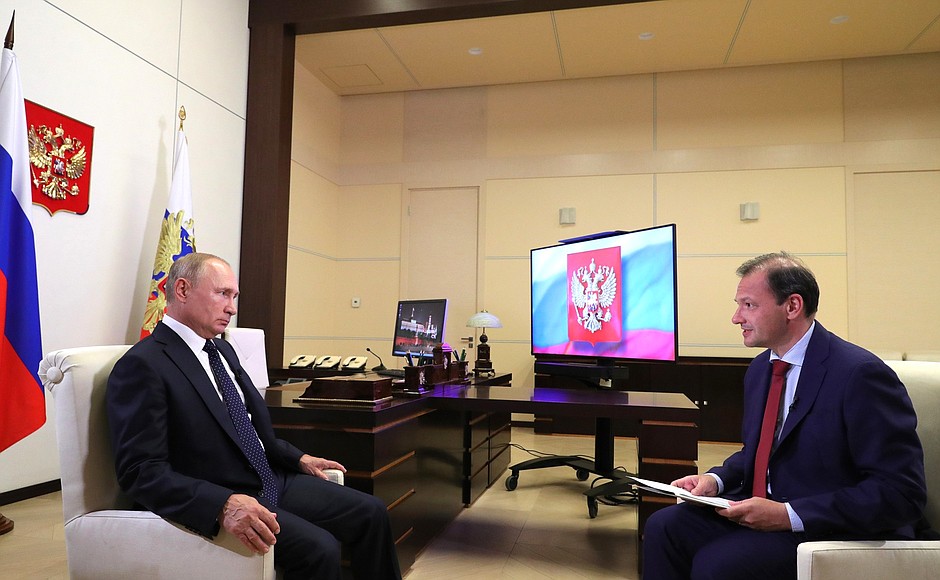
The Covid-19 pandemic is hitting Moscow the hardest by far, with the capital accounting for over half of the national total of 12,000 by this past Friday. Reports indicate that Moscow hospitals are now at maximum capacity. AFPreports:
Moscow’s hospitals and ambulance service are working at peak capacity after a sharp rise in those hospitalized with serious coronavirus complications, a senior city official said Friday.
The densely populated capital with more than 12 million residents has the largest outbreak in Russia, with 7,822 confirmed coronavirus cases out of a national total of almost 12,000.
The number in Moscow’s hospitals has doubled since last week and more than 85% of these patients have pneumonia, deputy mayor Anastasia Rakova was quoted as saying on the city virus task force’s Telegram account.
Moscow is not sending people with mild symptoms to hospitals. Those who test positive are monitored through online video consultations.
The city has been on lockdown since the end of March and the mayor, Sergei Sobyanin, is predicting that they have not approached the peak yet.
A new hospital to specifically treat Covid-19 patients, with 500-bed capacity, has been under rush construction and is scheduled to open later this month.
Last week Putin announced that health care workers would receive a pay raise for the duration of the pandemic in recognition of their hard work and sacrifice. More on this and the status of the Covid-19 response in the country can be found in the video below:
China, meanwhile, sent a team of medical experts to Russia on April 11th to assist with the pandemic, a spokesman for the Chinese Foreign Ministry announced. According to a TASS news agency report, the Chinese ambassador to Russia, Zhang Hanhui made the following public remarks:
“We won’t forget our friends who helped us. We are ready to do everything possible to help them overcome this crisis. We will express our full gratitude for helping us during a difficult time,” he said.
The ambassador reminded that at the start of the epidemic, Russian President Vladimir Putin sent a telegram to Chinese leader Xi Jinping with words of support, after which Russia sent a military plane with 23 tonnes of medical goods to China. “Now that our friends in the north are facing an epidemiological crisis, we must do our duty,” he said, noting that on April 2, China sent 26 tonnes of humanitarian aid to Russia.
It started well before the Covid-19 pandemic, but it is sure being ramped up in the wake of the virus. The demonization of China has been seen for years now in the corporate media, particularly among conservatives. It was part of the inspiration for the rise in right-wing populism that led to Trump’s victory in 2016.
Many working-class Americans had carried a smoldering anger for years about the corporate trade deals that saw millions of manufacturing jobs – for decades the backbone of an economy that was based on production of real goods – taken overseas. Permanent normal trade relations with China translated into over 2 million manufacturing jobs going to China which helped to underpin that country’s lifting of millions of its citizens out of poverty. This was perceived to be at the expense of the American worker. This is not an unjustified view.
However, the hard truth is that the Chinese government did not hold a gun to the economic elites’ heads in the United States, forcing them to relinquish millions of living wage jobs for Americans. The economic elites in the United States willingly did so due to greed and no sense of loyalty to their fellow Americans. Patriotism is for the rubes according to the elites who do not see themselves bound by such quaint notions.
It is much easier for FOX news personalities, Rising co-host Sagaar Enjeti and others, to portray China as some uniquely evil country than to hold American elites to account for their betrayal, along with the corporate media’s role from the 1990’s on in legitimizing corporate free trade as a law of nature not to be questioned.
As for China itself, it is definitely an authoritarian country. However, it is governed in a more complicated manner than the overly simplistic characterization provided by US corporate media outlets and politicians. China’s leadership does have a certain degree of accountability to its people, but it’s not via elections, which westerners see as the only viable means of political accountability. In the TED Talk below, Eric X. Li explains how China is actually governed, why the country has been able to achieve so much in a relatively short period of time, and what forms of accountability the Chinese leadership is held to in the absence of formal elections. Li points out that western analysts don’t have a familiar box in which to place China:
Another criticism we often hear about China’s authoritarianism is its alleged treatment of millions of Muslim Uyghurs in its Xinjiang province. But where are these stories of Chinese Uyghur repression coming from and how credible are they? In a recent in-depth report published at The Grayzone, investigative journalists Max Blumenthal and Ajit Singh detail how these allegations have been amplified based on threadbare evidence:
The claim that China has detained millions of ethnic Uyghurs in its Xinjiang region is repeated with increasing frequency, but little scrutiny is ever applied. Yet a closer look at the figure and how it was obtained reveals a serious deficiency in data.
The second study relied on flimsy media reports and speculation. It was authored by Adrian Zenz, a far-right fundamentalist Christian who opposes homosexuality and gender equality, supports “scriptural spanking” of children, and believes he is “led by God” on a “mission” against China.
As Washington ratchets up pressure on China, Zenz has been lifted out of obscurity and transformed almost overnight into a go-to pundit on Xinjiang. He has testified before Congress, providing commentary in outlets from the Wall Street Journal to Democracy Now!, and delivering expert quotes in the International Consortium of Investigative Journalists’ recent “China Cables” report. His Twitter bio notes that he is “moving across the Atlantic” from his native Germany.
Blumenthal and Singh go on to explain how the credibility of these claims suffer as the sources for them are exposed to scrutiny.
The “millions detained” figure was first popularized by a Washington, DC-based NGO that is backed by the US government, the Network of Chinese Human Rights Defenders (CHRD).
In a 2018 report submitted to the UN Committee on the Elimination of Racial Discrimination – often misrepresented in Western media as a UN-authored report – CHRD “estimate[d] that roughly one million members of ethnic Uyghurs have been sent to ‘re-education’ detention camps and roughly two million have been forced to attend ‘re-education’ programs in Xinjiang.” According to CHRD, this figure was “[b]ased on interviews and limited data.”
While CHRD states that it interviewed dozens of ethnic Uyghurs in the course of its study, their enormous estimate was ultimately based on interviews with exactly eight Uyghur individuals…
….Thanks to questionable sources like the CHRD, the United States government has accused China of “arbitrarily detain[ing] 800,000 to possibly more than two million Uighurs, ethnic Kazakhs, and other Muslims in internment camps designed to erase religious and ethnic identities.”
I have written in my first book and on this blog about the National Endowment for Democracy and its genesis as the government agency created by congress in the wake of the Church Committee hearings which exposed the deadly operations of the CIA that outraged the American public: “In 1983, the National Endowment for Democracy (NED) was born and Allen Weinstein, who helped write the legislation that brought it into existence, admitted in 1991, ‘A lot of what we do today was done covertly 25 years ago by the CIA.’”
Blumenthal and Singh discuss the second major source for the Uyghurs in concentration camps claims against China:
The second key source for claims that China has detained millions of Uyghur Muslims is Adrian Zenz. He is a senior fellow in China studies at the far-right Victims of Communism Memorial Foundation, which was established by the US government in 1983.
The Victims of Communism Memorial Foundation is an outgrowth of the National Captive Nations Committee, a group founded by Ukrainian nationalist Lev Dobriansky to lobby against any effort for detente with the Soviet Union. Its co-chairman, Yaroslav Stetsko, was a top leader of the fascist OUN-B militia that fought alongside Nazi Germany during its occupation of Ukraine in World War Two. Together, the two helped found the World Anti-Communist League that was described by journalist Joe Conason as “the organizational haven for neo-Nazis, fascists, and anti-Semitic extremists from two dozen countries.”
Today, Dobriansky’s daughter, Paula, sits on the board of the Victims of Communism Memorial Foundation. A former Reagan and George HW Bush official and signatory of the original Project for a New American Century document, Paula Dobriansky has become a fixture in neoconservative circles on Capitol Hill.
Like Russia, China is a country on the other side of the world with a different history, culture and geography. It doesn’t have the same interests as the United States. It’s also a major economic power. It is therefore a competitor to the United States. But a competitor doesn’t necessarily have to be an enemy to be vilified. I don’t see the genuine problems between the United States and China as being insurmountable, but instead they could be managed with courage and skillful diplomacy. But as I’ve explained in regard to managing relations with Russia, diplomacy requires an understanding of the other nation’s perceived interests and what shapes them. For some insight into how the U.S. military posture in Asia – which the Pentagon is now quietly requesting $20 billion more for – may look from China’s perspective, check out award-winning journalist John Pilger’s documentary “The Coming War on China”:
Unfortunately, for a significant segment of our political class, the world is a Manichean place in which any other country who has the capability of pursuing national interests that are separate from the United States, must be met with a mobilization for war and the propaganda framing to support it, which the defense industry and the corporate media profit from. This represents an immature, arrogant and entitled mindset that is a holdover from our 3-decades long stint of being able to dominate much of the globe with our economic power, petrodollar and 700+ military bases. That domination is not sustainable and is in the process of collapsing. It is time for our political class to accept it and adopt a more mature outlook in which we manage our problems with competitor nations with sophisticated diplomacy and a dose of humility.
In this brief video, retired army colonel and historian Andrew Bacevich, president of the non-interventionist Quincy Institute, discusses how Covid-19 has exposed the failure of the U.S. national security state’s priorities in the post-Cold War era.
In terms of how the national security state failed in its handling of the pandemic, Scott Ritter explains in a recent article for The American Conservative that the National Center for Medical Intelligence (NCMI) – a body within the larger U.S. intelligence apparatus – failed in its most basic duties. First Ritter explains what the NCMI is and provides an example of how it can work successfully:
Included in this budget is a small, specialized intelligence unit known as the National Center for Medical Intelligence (NCMI), which operates as part of the Defense Intelligence Agency. The mission of the NCMI is to serve as the lead activity within the Department of Defense (DoD) “for the production of medical intelligence,” and to prepare and coordinate “integrated, all-source intelligence for the DoD and other government and international organizations on foreign health threats and other medical issues to protect U.S. interests worldwide.”
For a small agency, the NCMI packs a large punch in terms of the overall impact of its product. For example, in April 2009—two months prior to when the WHO and the U.S. Centers for Disease Control and Prevention (CDC) officially declared the global outbreak of H1N1 influenza a pandemic, NCMI published an intelligence product, known as an “Infectious Disease Risk Assessment,” which predicted that a recent outbreak of the Swine Flu (H1N1) would become a pandemic.
The positive work done by the NCMI in relation to the H1N1 outbreak contributed to the creation of the 2012 “National Strategy for Biosurveillance,” designed to help facilitate a full-time institutionalized process for obtaining timely and accurate insight on current and emerging biological risks. President Obama himself noted the critical role played by “accurate and timely information” during the 2009 H1N1 pandemic that enabled decision makers, including himself, to “develop the effective responses that save lives.
Then Ritter describes how the NCMI completely dropped the ball on the coronavirus:
The NCMI’s job, [Air Force Col. Dr. Anthony M.] Rizzo noted, is predictive in nature—not to explain what is happening, but rather “what we believe is going to happen.” To do this, NCMI has access to the resources of the totality of the intelligence community, including intercepted communications, satellite imagery, and sensitive human intelligence, including covert sample collection.
The coronavirus was clearly part of the NCMI’s remit. And yet its first Infectious Disease Risk Assessment for COVID-19 was issued on January 5, 2020, reporting that 59 people had been taken ill in Wuhan, China. This report was derived not from any sensitive intelligence collection effort or independent biosurveillance activity, but rather from a report issued to the WHO by the Wuhan Municipal Health Commission, dated January 5, 2020.
The next day the CDC warned American citizens to take precautions if traveling to China, followed a day later with the activation of a COVID-19 incident management team within the CDC Emergency Management System. This, however, is not the kind of predictive analysis that U.S. policymakers needed if they were going to get ahead of the coronavirus pandemic. Unlike 2009, when the NCMI provided a full two months heads up about the threat of a Swine Flu pandemic, in 2020 the Trump administration was taking its cues from the WHO, which waited until January 30, 2020 to declare a Public Health Emergency of International Concern (PHEIC). The NCMI had been relegated to a mere observer, having failed in its mission to provide timely, predictive analysis of pending epidemiological threats.
In a recent article by Ken Klippenstein for The Nation, it is brought out that the Pentagon had predicted in a 2017 report that a respiratory virus was likely to cause a health crisis in the United States within the coming years. Furthermore, the Pentagon assessed that the federal government had insufficient equipment to handle such a crisis, such as ventilators, masks, etc.:
Despite President Trump’s repeated assertions that the Covid-19 epidemic was “unforeseen” and “came out of nowhere,” the Pentagon was well aware of not just the threat of a novel influenza, but even anticipated the consequent scarcity of ventilators, face masks, and hospital beds, according to a 2017 Pentagon plan obtained by The Nation.
“The most likely and significant threat is a novel respiratory disease, particularly a novel influenza disease,” the military plan states. Covid-19 is a respiratory disease caused by the novel (meaning new to humans) coronavirus. The document specifically references coronavirus on several occasions, in one instance saying, “Coronavirus infections [are] common around the world.”
The Nation article quotes a retired intelligence official, Denis Kaufman, who said that some agencies within the intelligence community had warned of a possible pandemic but that administration officials had ignored it:
Denis Kaufman, who served as head of the Infectious Diseases and Countermeasures Division at the Defense Intelligence Agency from 2014 to 2017, stressed that US intelligence had been well-aware of the dangers of coronaviruses for years. (Kaufman retired from his decades-long career in the military in December of 2017.)
“The Intelligence Community has warned about the threat from highly pathogenic influenza viruses for two decades at least. They have warned about coronaviruses for at least five years,” Kaufman explained in an interview.
“There have been recent pronouncements that the coronavirus pandemic represents an intelligence failure…. it’s letting people who ignored intelligence warnings off the hook.”
The bottom line is that the national security apparatus of the United States, including all of those serving in the executive branch of government who are privy to such information, failed in connection with a real threat to the average American’s security while being preoccupied with and investing gobs of resources into countering foreign bogeymen.
Putin Gives 2nd Address to Russia on Covid-19 Crisis
It was recently announced that Putin is under self-quarantine at his residence outside of Moscow after learning that a hospital administrator he came in contact with last week had tested positive for Covid-19. As reported by Zerohedge (emphasis in original)
On Tuesday it was revealed that Denis Protsenko, the head doctor at the infectious diseases hospital treating coronavirus patients in Moscow, tested positive for COVID-19.
Just a week ago Dr. Protsenko was photographed shaking hands with President Vladimir Putin, during the Russian leader’s visit to the hospital, where he donned a full protective Hazmat suit to visit patients. But during most of his interaction with Protenko, Putin wasn’t wearing the protective gear.
Putin’s office now reports he’ll conduct his duties remotely, in self-isolation after the exposure. “The president prefers these days to work remotely,” Kremlin spokesman Dmitry Peskov told the press just before Putin was due to hold a cabinet meeting by videoconference Wednesday.
After a surge in confirmed cases of the virus earlier this week, Putin gave a second address to the nation on Thursday regarding the Covid-19 crisis (see video above). In that address he announced that the paid work holiday would be extended through the end of April. According to Bryan MacDonald’s report at RT:
Putin said the peak of the coronavirus epidemic is yet to come both globally and in Russia. Moscow, which is the hardest hit Russian city, announced almost 600 new confirmed cases on Thursday.
“I’ve made a decision to extend the time off until the end of the month, that is, until April 30 inclusively, while maintaining wages for employees,” the President said.
According to Putin, the combination of isolation regimes and holidays will allow Russia “to buy time for proactive measures.” However, he conceded it’s too early to talk about turning the tide of infections.
Putin also announced that, depending on circumstances, some regions will be allowed to implement tighter restrictions with respect to countering the spread of the virus.
“More stringent restrictions must be observed somewhere, while somewhere else, where there is a high level of preparedness, local, point solutions will be enough now,” the president said, calling for the need to take into account specific regional features.
The Russian regions will receive additional powers to decide which methods to choose to fight the novel coronavirus, Putin said.
“The constituent regions and heads of the regions will get additional authorities by my orders. Before the end of this week, they are to define the concrete set of preventive measures optimal for their territories from the point of view of ensuring the health and safety of the people, as well as stability of the economy and key infrastructure,” Putin said.
There are reports that Russian economists quoted in the Russian media have suggested that the month-long holiday may lead to billions of dollars in losses and numerous company failures, with the country’s largest retail association predicting millions of job losses in that sector along with major debt defaults from shopping centers across Russia.
One final note: The Kremlin has officially denied that talks have occurred between Russia and Saudi Arabia on oil, which undermines a claim Trump made via a tweet yesterday that a deal – which would help the U.S. shale industry by letting up on the recent nosedive in oil prices – was imminent between the two countries. According to the Moscow Times, which quoted the Russian Interfax news agency:
“No, there was no conversation,” Putin’s spokesman Dmitry Peskov told Interfax news agency, adding that “so far” there were no plans for such talks, after Trump said the Saudi crown prince had spoken to Putin and he expected them to agree on a cut in oil production.