Category Archives: Uncategorized

Russia Gradually Re-Opens Economy; Sovereign Wealth Fund to Finance Mass Production of Drug to Treat Covid-19

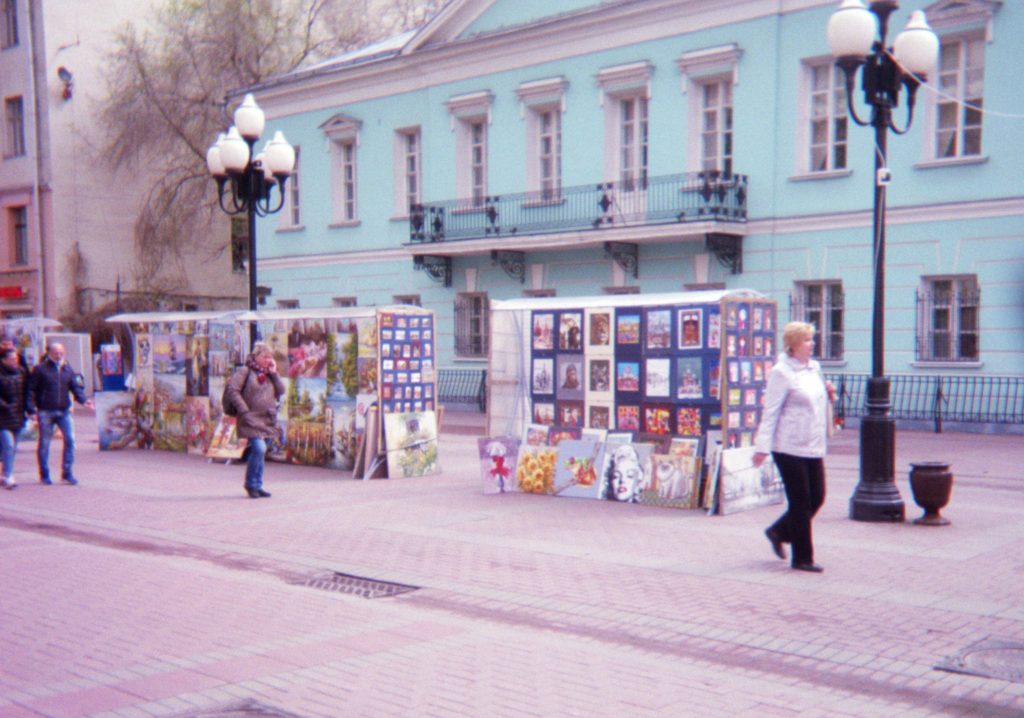
(Old) Arbat Street, Moscow; photo by Natylie Baldwin, May 2017

As of May 12th, the federal Russian paid holiday came to an end as the Russian economy began to re-open. It was reported that Russia’s fourth largest city, Yekaterinburg, was re-opening shopping centers, parks and outdoor patios of restaurants earlier this week.

Though Putin’s political opponents criticized the move for being premature and motivated more by economics than science, polling showed that 80% of Russians supported sending people back to work and 89% supported partial re-opening of important sectors of the economy as long as precautions were taken. Another poll suggested that around 1/3 of Russians had been affected by reduced income during the crisis.

As of yesterday, there were over 317,000 confirmed cases of Covid-19 in Russia with 3,099 deaths, still mostly concentrated in Moscow. The rate of infections seems to have stabilized in the last few days.

Last week, Kremlin spokesman Dmitry Peskov was diagnosed with the virus and is being treated in the hospital. The mercurial Chechen leader, Ramzan Kadyrov, has been hospitalized as a suspected case in recent days. Prime Minister Mishustin has recovered and returned to work earlier this week.

Intellinews reported last week that Russia will use its Sovereign Wealth Fund to finance mass production of an antiviral drug said to demonstrate effectiveness against the coronavirus:

The Russian Direct Investment Fund (RDIF), Russia’s sovereign wealth fund, is ready to start the mass production of a drug it claims is effective in the treatment of the coronavirus (COVID-19) together with Russian pharmaceutical company ChemRar Group, the fund said on May 13.

Together RDIF and ChemRar have developed a drug called Favipiravir that is based on a drug developed in Japan that was used against influenza, but was tested for use against COVID-19 and found effective….

….As bne IntelliNews reported the fund has already invested into, and is producing, a state-of-the-art briefcase-sized testing kit that can determine if a person is infected with the COVID-19 that was supposed to go into mass production in April. The kit was developed with the participation of Japanese scientists and Russia’s leading virology institute Vektor, based in Novosibirsk.

Now the RDIF, together with ChemRar Group, has announced the positive first interim results of a “multi-centre randomised open comparative clinical trial” of the drug Favipiravir on patients hospitalised with COVID-19.

“According to the data received, 60% of the 40 patients who took Favipiravir have tested negative for coronavirus after five days of treatment, which is two times higher than in the standard therapy group. The data is consistent with the results of studies conducted in China, which also showed a reduction in the disease duration from 11 days to 4-5 days,” the RDIF said in a statement.

The drug is still undergoing extensive clinical trials, including at six leading Russian institutes in Moscow, Smolensk and Nizhny Novgorod. In total, 30 medical centres in eight Russian regions will conduct studies on 330 patients with confirmed coronavirus infection, the RDIF said.

This morning there were reports out of Russia that the first round of testing on a vaccine had shown positive results: immunity appeared to be established with no negative side effects so far.
CIA Expert Douglas Valentine Discusses the Agency’s 70 Years of Continuing Operations in Ukraine

Douglas Valentine is an author who specializes in the study of the CIA. His most famous book – the one that started Valentine on his road to focusing on the notorious intelligence agency – is The Phoenix Program. The title is a reference to the CIA’s program to “neutralize” the Viet Cong and its sympathizers throughout the Vietnamese countryside. His new book is called The CIA as Organized Crime: How Illegal Operations Corrupt America and the World. The following is a 9-minute clip from a longer video interview with Valentine by Regis Tremblay about the history of the CIA and its operations. This clip focuses on the CIA’s 70-year history of secret operations in Ukraine against the Soviet Union and later the Russian Federation.

Note: I plan to post the entire interview at a later time.

How We All Benefit from Improved US-Russia Relations

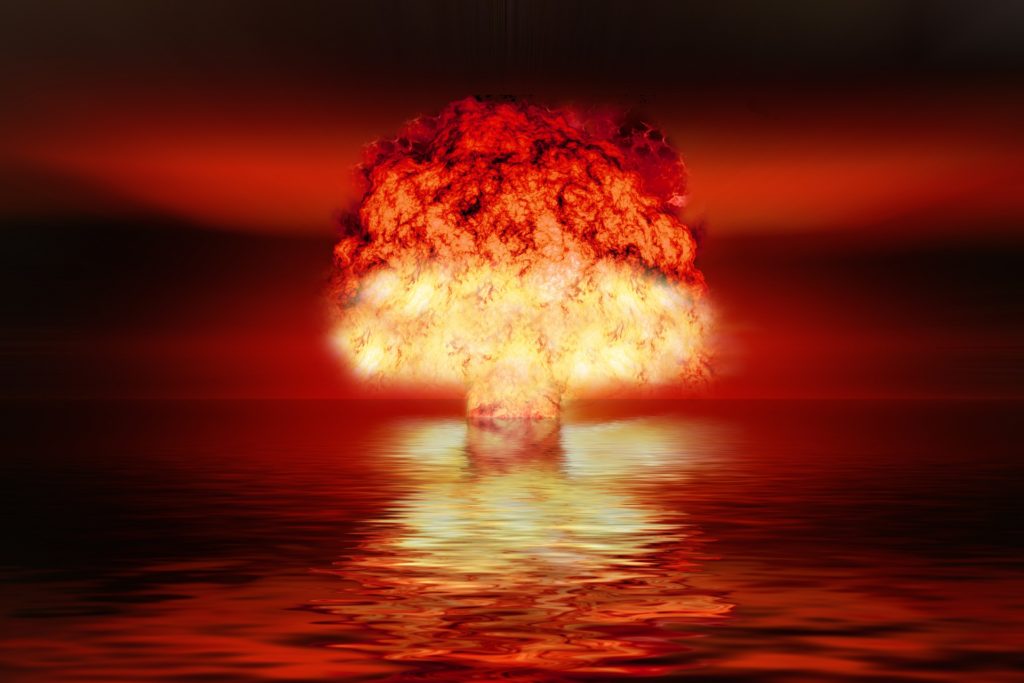
Atomic bomb explosion

by Natylie Baldwin

Originally appeared at Oped News on 5/13/20

The Covid-19 pandemic has reminded many of us of our vulnerability and mortality. It has also led some to realize that perhaps our nations should cooperate on behalf of the greater good. The world’s two nuclear superpowers, the U.S. and Russia, have both delivered aid to each other over the past six weeks. Moreover, Donald Trump and Vladimir Putin released a joint statement honoring the 75th anniversary of the U.S. and Soviet armies meeting up at the bridge over the Elbe River in Germany during WWII, in which both countries allied to defeat Hitler’s Nazi regime.

Many of us who grew up during the subsequent Cold War, with the specter of nuclear annihilation always looming in the background, heaved a sigh of relief when the two superpowers seemed to call a halt in 1989, with several nuclear arms control treaties having been negotiated. As our media and culture moved on to other problems, one might have thought nuclear weapons were no longer a danger.

But, in fact, the U.S. and Russia together still have 1700 nuclear weapons pointed at each other on hair trigger alert. Several scientific studies have indicated that, in addition to killing millions in the immediate aftermath of the explosions, even a limited exchange of these weapons would lead to nuclear winter within a year, wiping out much of our global agriculture and killing billions of people through starvation.

The U.S. unilaterally pulled out of the Antiballistic Missile Treaty in 2002 and the Intermediate Range Nuclear Forces Treaty in 2019. It now appears that the remaining arms control agreement known as New START is in danger of expiring in February, despite Moscow’s repeated announcements that it is ready to renew it without preconditions. Since the U.S. Congress has passed legislation that hamstrings the president in terms of withdrawing some or all of the sanctions as a tool in any negotiations with Russia, it is imperative that the administration agree to the extension of New START, which would require no congressional action.

In response to these setbacks on arms control, the Bulletin of the Atomic Scientists moved their doomsday clock to 100 seconds to midnight in January. Later that month, the U.S. deployed its first “usable” low-yield nuke onto a submarine on patrol in the Atlantic. Last month, in response to a U.S. State Department paper suggesting that the fielding of such weapons could help counter Russia and China, a Russian Foreign Ministry spokesperson stated unequivocally that any use of such low-yield nukes against Russia would be met with full retaliation. The Russians have also stated their fear that the deployment of a “missile defense system” in Eastern Europe by Washington has the capability of being used for a potential first strike against it.

Although it’s unlikely that either Washington or Moscow would decide to intentionally start a nuclear war, there is a documented history of accidents and close calls throughout the nuclear era that were averted by a combination of luck and cooler heads prevailing. In current conditions where controversial military exercises by both NATO and Russia occur within short distances of each other, adding “usable” nukes and dubious “defense shields” into the mix presents even greater risks.

With increased tensions and hostility between the nuclear superpowers in recent years – often enabled by sensationalist media reporting and domestic partisan fights – what might happen if a political leader or military officer in Russia had to make a quick decision on how to interpret an early warning system telling them there are incoming nuclear missiles from the U.S.? This actually happened in September of 1983 when Soviet Lt. Col. Stanislav Petrov received such a message. The message was erroneous, but he couldn’t know that for certain at the time. He technically violated military protocol – and was reprimanded for it – by not reporting the warning up the chain of command, which would have set in motion a retaliatory nuclear strike on the U.S.

During the Cuban Missile Crisis of 1962, John Kennedy had to deal with hardliners on his national security team who were encouraging escalation in response to the installation of Soviet nuclear missile sites in Cuba. Kennedy opted for a naval blockade rather than an attack on the island. The fact that the Kennedy administration was operating on a mistaken CIA analysis, which had concluded that nuclear warheads had not yet been delivered to Cuba, makes Kennedy’s restraint all the more critical in retrospect. Nikita Khrushchev, who had to keep his own hardliners at bay, also showed restraint when he ordered Soviet ships that were approaching the U.S. blockade to stop. The confrontation ended when Khrushchev accepted a deal conveyed by Robert Kennedy to the Soviet ambassador that, in exchange for Khrushchev withdrawing nuclear weapons systems from Cuba, the U.S. promised not to attack Cuba and to surreptitiously remove nuclear weapons in Turkey on the Soviet border.

During the crisis, both American navy forces and Soviet nuclear submarines were in the Caribbean. At one point, the Americans detonated non-lethal depth charges in the vicinity of the B-59 Soviet submarine. Cut off from communication and believing they were under attack, two officers on the B-59 wanted to fire their nuclear torpedo. But Vasili Arkhipov, the third officer who had to grant permission for the order to be carried out, refused, thereby averting WWIII.

Historians James Blight and Janet Lang, two of the foremost experts on the Cuban Missile Crisis, have calculated that if the crisis were run 100 times with the same conditions, 95 times it would end in nuclear war. How many times will we luck out?

We should all welcome the opening that the pandemic has provided, giving both the U.S. and Russia the opportunity to make cooperative gestures in order to gradually build trust, which could lead to the repair of the tattered safety net we’re currently relying on when it comes to the still profound danger of nuclear weapons.

Is the U.S. the Norma Desmond of the World Stage?

Classic movie buffs may remember a 1950’s film noir called Sunset Boulevard starring Gloria Swanson as Norma Desmond.

Norma is a woman beyond her prime and living in the past. She cannot accept the fact that she is not the beautiful and feted movie star that she was 20+ years before, that no one hangs on her every move anymore, and no more leading roles will be forthcoming – in short, the world has moved on. To push away the pain of this rejection – as well as the courage and effort it would take to rebuild her life on a different basis, she creates an elaborate delusion to live in. Within this delusion – which is enabled by a number of others still in her orbit, namely her butler – Norma has tons of fans who still adore her and Cecil B. DeMille is going to call her any moment to give her a big role.

With the delusion having been set for a long time, everyone must tiptoe around Norma, careful not to upset the charade.  They sense to do so would be dangerous.  When a ne’er do well writer who has latched on to Norma, played by William Holden, decides he’s had enough of her, he says something very blunt and direct to pierce her delusion during a fight. Norma flips out and shoots him dead.  The last scene of the movie is classic, showing just how insane she’s become, still failing to recognize how she has destroyed herself and others. 

The final scene of Sunset Boulevard, 1950, Paramount Pictures

As a fan of old movies in general and Sunset Boulevard in particular, I keep coming back to how the psychological profile of Norma Desmond’s character seems so reminiscent of the United States right now – or more precisely the political class that dictates its policies and the narrative used to maintain the illusion.  After the end of the Cold War, Washington was the grand dame on the world stage, at the peak of her powers economically and militarily. And she wielded her power without apology for years, becoming entitled to wield it – making demands and bossing others around whom she perceived to be lesser lights.

She’s declining now but doesn’t accept it – continuing to bomb other nations without remorse, assassinating foreign military leaders, sanctioning 1/3 of the world’s population, dotting every corner of the globe with military bases, and engaging in brinksmanship – all while continuing to proclaim her greatness, exceptionalism and indispensability. Other players on the world stage seem to see through the masquerade, but still feel the need to tiptoe around her.

Having a population whose life expectancy is decreasing, an infrastructure that rates a D+ from civil engineers, doesn’t manufacture much of its essential needs, and who can’t even competently handle a public health crisis doesn’t upset the story that America continues to tell herself. Rather than accept her declining stature and use whatever influence she still has to engineer a soft landing domestically and work with the rest of the world toward a multi-polar order that values peaceful co-existence, America seems to have chosen the Norma Desmond path: very entitled, very narcissistic, and dangerously deluded.  

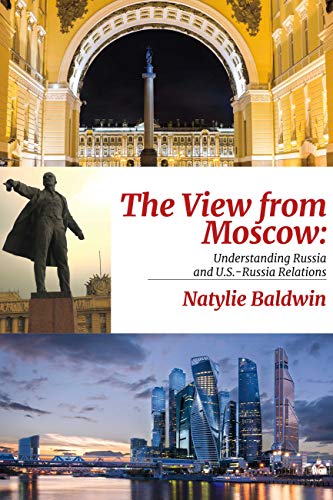
NOW IN PRINT – “The View from Moscow: Understanding Russia and U.S.-Russia Relations”

The print edition is now available for purchase at Bookshop. Due to the pandemic, Amazon is not making new book titles available in print until further notice.

Here is the book description:

Russia is the world’s other nuclear superpower – the only country that has the ability to wipe the United States off the map within 30 minutes.

With Russia and the U.S. currently having 1,700 nuclear weapons pointed at each other on hair trigger alert, our relationship with Russia is one of the most critical, requiring a rational policy.

In order to conduct a rational foreign policy, we must understand the other country’s point of view. That doesn’t mean one must agree with it, but we must know how Russia perceives its own interests so we can determine what they may be willing to risk or sacrifice on behalf of those perceived interests. It’s also essential to determine areas of common cause and cooperation. Understanding the Russian viewpoint means understanding Russia’s history, geography and culture. The western corporate media – and even some of our alternative media – has a very poor track record in providing this crucial service with respect to many of the nations with whom we’ve already gone to war. The so-called experts they consult often have conflicts of interest, nefarious agendas, and lack an objective understanding of the nation they are speaking about. This has certainly been the case when it comes to reporting on Russia, a country with which the stakes are potentially much higher for the entire world.

This book fills the void left by much of our media in understanding the Russian point of view, which can help us formulate a reasoned policy toward the world’s other nuclear superpower.