Firefighters working on the blaze at a Kharkov munitions depot; EPA/SERGEY KOZLOV
It is not impossible that a further factor is IMF concern about the outcome of the High Court case in London brought by Russia in connection with Ukraine’s failure to repay the $3 billion debt it owes Russia. The Russians have applied to the High Court for summary Judgment, and the High Court is expected to rule on this in April. If the Judgment is in Russia’s favour, then Ukraine will be legally in default to a member of the Paris Club, and according to the IMF’s own rules ineligible for further funding.
Since a Judgment from the High Court in Russia’s favour would call into question the entire wisdom of the IMF agreeing to a bailout plan with Ukraine in the first place, it is understandable if the IMF is unwilling to say anything about it.
Without further help from the IMF the economic pressures on Ukraine will grow. As Zolotaryov says, Ukraine is already running budget and trade deficits, which the transport blockade and the nationalisation of the enterprises will only make worse. If IMF funding is cut off following a decision by the High Court in London that Ukraine is in default, then Ukraine will lose its external funding.
Zolotaryov says Ukraine has no option but to cover its existing deficits by printing more money. If external funding is cut off, money printing will have to accelerate in which case inflation might take off.
A few days ago, the London court granted a motion to have the hearing expedited and reportedly rejected all of Ukraine’s arguments against Russia’s request for the expedited hearing. This is believed to be a good indication that the court will rule in Russia’s favor. TASS reported the following:
LONDON, March 29. /TASS/. London’s High Court has ruled to hear the case of Ukraine’s $3 billion sovereign debt to Russia in an expedited procedure, the presiding judge said on Wednesday.
The presiding judge also rejected all of Ukraine’s objections under Russia’s lawsuit.
The court has thus supported Russia’s position on the case’s expedited examination.
The Ukrainian side, on the contrary, insisted on a full-scale judicial process that would include the study of all the political aspects of the case.
As readers of this blog may remember, Poroshenko’s political fortunes have evaporated since he took over the presidency of a nation that has become a political and economic nightmare. He is essentially hogtied in terms of implementing the Minsk Agreement because of the increasing influence and violence of the right-wing ultra-nationalists who have threatened him if he should make any concessions (real or perceived) to the Donbass region. The groups that comprise this movement, such as Svoboda and Right Sector, have recently held a conference and released a Manifesto outlining their vision for the country. Anatoly Karlin provided the following commentary and translation of the Manifesto:
On March 16, representatives of the political party Svoboda, Right Sector, and the National Corpus (i.e. the Azov batallion’s political wing) gathered to sign a National Manifesto.
The document affirms the ideological unity of the three main forces of Ukrainian nationalism, and conveniently summarizes its core vision.
Considering the Poroshenko’s governments ever greater submissiveness before Ukrainian nationalist forces, and the specter of them assuming an even more central role in the regime that might well soon replace his, it is now all the more vital to understand their vision for Ukraine.
Below, I provide a translation of this document, stressing readability over word-for-word accuracy.
Read Karlin’s translation here:
http://theduran.com/the-manifesto-of-ukrainian-nationalism/
As a result of this increasing mentality in Ukraine, there were violent attacks against the Polish consulate with damage to the roof and windows but no casualties. This, in turn, prompted the Polish government to close their consulates in the country temporarily. Reutersreported the following:
Poland temporarily closed its consulates in Ukraine after a grenade attack overnight at one of its buildings near the Polish border that Kiev said was intended to harm bilateral ties with Warsaw.
Relations between Poland and Ukraine have deteriorated in the past year in a row over World War Two atrocities [including the official revering of Stepan Bandera – the ultranationalist Ukrainian who actively colluded with Nazi Germany during WWII and played a role in atrocities against Poles and Jews – Natylie], although Warsaw still strongly supports Western sanctions imposed on Russia for the 2014 annexation of Ukraine’s Crimea Peninsula.
Ukraine’s President Petro Poroshenko and Polish president Andrzej Duda both condemned the attack, which took place in the early hours on Wednesday in the town of Lutsk near the border.
No one was hurt but the roof of the Polish consulate there and some windows were damaged. Ukraine’s Security Service said the weapon used appeared to be a rocket from an RPG-26, a disposable anti-tank launcher developed by the Soviet Union.
“The investigation considers several options of the incident, including act of terrorism,” the security service said in a statement.
The Ukrainian government, of course, found a way to try to blame Russia as the statement by the Ukrainian security service continued:
“The provocations against the Republic of Poland, which once in a while occur in Ukraine, are of benefit only to one party – the Russian Federation. Its methods of operation can be seen from far off.”
….The head of Poland’s National Security Bureau, Pawel Soloch, said: “Undoubtedly, this was a provocation.”
“The question is: who did it and for what purpose? We know the context – there is a Russian aggression against Ukraine,” he said on Polish private RFM-FM radio.
Between overthrowing American democracy, current programs to undermine upcoming European elections, and creating myriad provocations in Ukraine, the Baltics and the Balkans, those Russians sure are impressive. I wonder if Putin puts on a cape and tights before he leaps those tall buildings in a single bound.
How does he do it all and still manage to be dating those scores of women the western media told us about as well as overseeing an empire of wineries, villas, castles and mansions all over the world? Is he on meth?
Back to Ukraine…
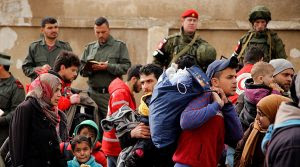
As if this all wasn’t enough, an explosion and fire raged for several days at what is believed to be the largest munitions depot in Europe, located in the Ukrainian region of Kharkov. This prompted the evacuation of around 20,000 residents. RT had the following details in the early hours of the disaster:
Thousands of people are being evacuated from Balakleya in the Kharkov region of Ukraine, as a massive fire has broken out at a munitions depot, which is said to be the largest in the country. There are reports of explosions and shattered windows.Chaotic scenes with hundreds of vehicles stuck in traffic jams were reported on social media after the Balakleya city administration ordered an emergency evacuation of most of the city.
Videos uploaded by local residents show a huge blaze with what appears to be a missile flying off in a random direction and falling to the ground, as detonations are heard in the background.
….More than 16,000 people have been evacuated from the city of Balakleya, home to 29,000 people, the Ukrainian Emergency Ministry reported. Over 3,500 people were also evacuated from nearby villages.
On March 28th, TASS reported that the fire had finally been put out and residents were returning to their homes.
KIEV, March 28. /TASS/. Fires at a military depot in northeastern Ukraine’s Kharkov region have been extinguished now and the evacuated citizens have returned home, the State Emergency Service of Ukraine said on Tuesday.
“As of 7 a.m. on March 28, no fires caused by munitions explosions are registered in Balakleya and the nearby settlements. The territory of Balakleya and the neighboring villages in the emergency zone has been cleared of explosives,” the service said in a statement.
The town’s power supply has been fully restored and gas supply has been resumed in 50% of the areas.
Nearly 1,500 explosive objects have been seized since the effort began. Pyrotechnic specialists are now examining the area and clearing of explosives the territory close to the depot.
….The depot may house up to 150,000 tonnes of armaments. Media reports say some 125,000 tonnes of munitions had been there before the incident.
*********************************
There were some pretty rough arrests, & 1 officer was hospitalized but for most of the day police in #Moscow were generally patient w crowds
MOSCOW, March 27. /TASS/. The Kremlin respects the citizens’ right to take part in rallies provided they are conducted in accordance with the law, Russian Presidential Spokesman Dmitry Peskov said.
When commenting on the protests that took place in a number of Russian cities on Sunday, he said that “the Kremlin respects people’s civil position and their right to express it.” “But we respect it when civil activism is expressed in accordance with the law and in places where the law prescribes,” Peskov added.
He added that the Kremlin “cannot respect those who deliberately misguide people and who instigated these illegal activities yesterday.” “We cannot respect those who deliberately misled underage minors promising them some payment in return for participating in an unauthorized protest, thereby exposing them to danger. We cannot accept, nor respect this,” Peskov added.
The Kremlin is not worried about any possible repetition of such protests, but is concerned that some elements will manipulate civil activists for their goals, the spokesman said.
The thing is not about fears. We are afraid that someone will continue using civil activists, people who are actively engaged in civic activities, for their goals, calling on people to take part in illegal and unauthorized events. We are concerned about this, not about the manifestation of civil activism and holding various events in line with the law,” Peskov explained.
The Kremlin spokesman noted that there is a rather active dialogue with the civil society through different channels and at various levels. He stressed that the president actively contacts with people who work in different fields. “During this dialogue there is a constant exchange of information and the possibility is given to understand the current problems and if people are dissatisfied and their assessment on the positive outcome of the authorities’ work,” he said.
On March 26, protests against corruption were held across Russia, the largest of which took place on Moscow’s main central street, Tverskaya. According to the Interior Ministry, around 7,000 to 8,000 people rallied in the capital, although the protest organizers are yet to release their estimates.
The protests were fueled by the government’s failure to respond to the investigation by opposition leader Alexei Navalny’s Anti-Corruption Foundation (FBK) into Prime Minister Dmitry Medvedev. It’s claimed he has embezzled a secret empire worth $1.2 billion.
Most of the demonstrations, including the Moscow march, had not been sanctioned by the authorities, resulting in multiple arrests and clashes with the police. In the Russian capital alone, some 850 people have been detained.
Since the FBK film – “He is not Dimon to you” – making the allegations against Medvedev was released online, it has received 13 million views. Several days before the protests, the Moscow police said they could not be held responsible for unsanctioned rallies. Four hours before people protested on Tverskaya scores of special vehicles and buses with riot police lined the streets. Demonstrators, many of whom looked like ordinary people out for a walk, marched south towards the Kremlin. The large majority were peaceful, did not seek clashes with the police, and urged against rash actions. They objected to comparisons with Ukraine’s 2014 Maidan revolution and took pictures with riot police in the background.
What do you want?
“How shall we recognize our own? Are they with the authorities or not?” – these were the questions being asked in the somewhat confused crowd 15 minutes before the protest. People were coming out of the subway and joining the masses watching the police with suspicious, worried eyes. “Look, are they all for corruption, since we are against it?” asked a surprised elderly lady pointing at the officers, who were staring back at the growing crowds. Features typical of opposition protests were missing: There were no leaders, megaphones, or a clear plan of action. People didn’t know if they should be standing or moving.
Many were watching live broadcasts from other parts of Tverskaya. “In Pushkinskaya [square], a guy holding a placard that read ‘Corruption kills’ has been detained,” a man with a selfie stick and a large smartphone announced loudly. People immediately surrounded him, thinking he was the best informed among them. Another man suggested that the police would not be able to put a crowd of 500 people into police vans: “To stop a crowd like that, the only option is to start killing them”.
“What do we want? Do we want to fight or what?” asked an intellectual looking young man. “I and you know one thing – the dialogue with the authorities is over. We want change. Not promises. The first thing why we are here is to demand the resignation of the government, not just Medvedev.”
From the other side of the square, somebody suggested deciding there and then whether “Crimea is ours or not ours”, but this was quickly dropped as others said this discussion was for another time, as this was not what the protest was about.
A man called Oleg standing with his elderly mother also spoke out: “We all demand an answer to the film that Navalny released. The media are silent, the authorities are silent, as if nothing had happened. Although that film very much looks like the truth. Why have they not denied anything, why have they not sued Navalny for libel if it’s a lie?” He also told me his parents continue working beyond their retirement age because they do not have enough money to buy food. “The authorities ask us to be patient, but why don’t they tell us what for? It is time they explained at least something,” he added.
Somebody in the crowd suddenly shouted: “Let’s go” and people start moving towards the Kremlin. Oleg and his mother followed without hesitation. Aren’t you afraid of clashes with the police? – I ask him. “It is time we stopped being afraid, we are tired of being afraid. Something needs to be done,” he replied.
So which is it? Are young Russians turning against the state, or do they idolize Vladimir Putin and ‘more than any other generation are proud of their country’? Will a new generation liberalize Russia, or not? To answer that, we need to move beyond anecdotal stories and look at the hard data of sociological surveys. These are quite revealing.
For instance, sociologist Olga Kryshtanovskaya surveyed young Russians in 26 cities. She concluded that ‘there is widespread cynicism among Russia’s young people’, but ‘despite their alienation, most young Russians are not clamoring for democratic change.’ She found also that:
- About 25 percent of those polled consider themselves “liberals” or “democrats,” but relatively few people understand what those terms mean. Many respondents would like to see a nationalist, monarchist or anarchist party.
- The younger the respondent, the more likely he or she is to believe that Russia is a great power.
- Putin remains the most popular politician among younger Russians. …
- Russia’s young people are more inclined to support “the complete destruction of the system”—even by revolution—than gradual change. But many consider revolution difficult to achieve.
- Young people put little stock in the opposition or anti-Kremlin leaders such as Alexei Navalny.
Kryshtanovskaya concludes that ‘there is potential support among young people for a wide range of outcomes, not just a Russia that is pro-Western and democratic.’
Interestingly, other surveys suggest that young Russians are more optimistic about their country than older people. One poll, for instance, concludes that, ‘those ages 18 to 29, are the most likely to hold positive views about the economy’. This perhaps helps in part explain why Putin’s popularity is higher among young Russians than among older ones. As the Levada Centre noted, in a 2014 poll ‘Eighteen-to-24-year-olds … backed Putin more than any other age bracket’. Later polls have shown a similar picture. Julia Ioffe admits, ‘Russians between the ages of 18 and 24 approve of him [Putin] at a higher rate than any other age group: 88 percent.’ This hardly suggests that Russian youth are turning against their political leadership en masse.
As for more general political attitudes, Pew Global concludes that, ‘Older Russians ages 50 and older are more willing to say NATO is a major military threat (55%) than Russians ages 18 to 29 (43%)’, but also says that, ‘Nearly equal numbers of men and women and young (18-29) and old (50+) think homosexuality is morally unacceptable.’ Thus while, younger Russians may be less hostile to the West than their parents and grandparents, they are not obviously more socially liberal.
All in all, therefore, sociological data suggests that on the whole young Russians are politically apathetic, but in so far as they do have political opinions they are in fact more patriotic than their elders, more optimistic about the future, more supportive of the country’s president, and just as socially conservative. The hype about youth participation in last Sunday’s protests is probably just that – hype.
Again, I don’t think Russians are going to overthrow Putin any time soon. Western journalists and politicians – even ones as high up the ladder as to serve as advisers to presidents – who believe this are showing that they have absolutely no understanding of Russians as they actually are. This is why Obama’s advisers, who thought that implementing some economic sanctions and possibly manipulating oil prices in league with Saudi Arabia, would force Russians into the streets to call for Putin’s head were woefully ignorant of both Russia in particular and political psychology in general. Any time a leader – even one who is not popular among their people – is perceived to be getting beat up on by a foreign power, they will rally around their leader, increasing his popularity. Moreover, due to Russian’s culture and history, they have a high degree of stamina. A modest recession was not going to turn Russians into pitchfork-wielding mobs baying for blood in front of the Kremlin.
*********************************
During a press conference in Ankara last Thursday, U.S. Secretary of State Rex Tillerson, stated that the Syrian president’s fate “will be decided by the Syrian people.”
Washington’s UN representative, Nikki Haley, also announced that the ousting of Assad is no longer a priority:
You pick and choose your battles and when we’re looking at this, it’s about changing up priorities and our priority is no longer to sit there and focus on getting Assad out…
According to Reuters, another (unnamed) administration source confirmed that regime change is no longer being pursued in Syria.
A recent interview with Wikileaks’ Julian Assange covers what Assange believes to be behind the change in policy with regard to Syria and the conflict between Trump and organs of the national security state, particularly the CIA, which have vested interests in regime change in Syria.
Speaking of Wikileaks, late last week the organization released documents relating to the CIA’s “Marble” program whereby the intelligence agency can conduct cyberwarfare while making it look like their operations are originating from Russia or China.
You’d think this might be newsworthy but, as of Friday afternoon, I could only find a major story in the UK Mirror as well as coverage by RT and one Huffington Post columnist who didn’t appear to have many readers.
No mention by Amy Goodman, Common Dreams, or The Real News Network.
Is it that Wikileaks isn’t reliable? Well, no. They have a 100% authenticity rate over the decade that they’ve been publishing.
It’s interesting that Liberals and Democrats praised Wikileaks years ago when their leaks were perceived to be exposing the Bush administration or the various institutions responsible for enabling Bush’s crimes.
Now, when it’s somehow perceived that Wikileaks’ leaks are making Trump not look bad, Liberals and Democrats are calling Assange and Wikileaks Russian stooges. The comments section of the NYT is filled with this kind of mentality in response to the Vault 7 leaks exposing the CIA’s nefarious activities in violation of Americans’ privacy rights, in addition to their unaccountable crimes in the foreign policy realm.
Regardless of how one feels about Trump (and I find most of his policies abhorrent), this is childish and intellectually dishonest.
People will have to face up to the fact, sooner or later, that Democrats are just as bought off as their Republican counterparts. This is why Democratic party leaders have shown no evidence that they’ve learned anything from the election. Nancy Pelosi has stated that the Democrats don’t need to change and more recently slurred out an incoherent answer to Anderson Cooper’s inquiry as to who the leaders of the Democratic Party were in an interview.
Furthermore, Tom Perez – the new milquetoast leader of the DNC – spewed platitudes in response to being asked what the Democratic Party stood for. Instead of articulating a program of policies that would create concrete improvements in Americans’ lives and revive the party, like a $15 an hour minimum wage, Medicare for All, or pulling out of our wars and investing the money in infrastructure and a green jobs program, he sputtered on about “leading with our values.”
They aren’t going to do this because their elite donors will not let them. The party leadership recently voted to keep taking corporate money from these same elites. Is it because they have to? Well, no. Bernie Sanders proved they didn’t have to when he raised more money overall than Clinton with small donations and nothing from corporations.
It is not that the Democratic Party leadership can’t change, it doesn’t want to change because it is too invested in its corrupt ways. Of course, they will not admit this to the American public so they must keep up the circus of Russiagate as a distraction.
Meanwhile, the American people will continue to suffer and tensions with the world’s other nuclear superpower will continue to be ratcheted up.