Andrew Korybko: Putin Is Finally Climbing The Escalation Ladder

By Andrew Korybko, Substack, 11/22/24

Putin surprised the world on Thursday when he addressed the nation to inform them that Russia had tested a new hypersonic medium-range missile earlier that morning in an attack against a famous Soviet-era industrial complex in the Ukrainian city of Dnepropetrovsk. He explained that this was a response to the US and UK recently allowing Ukraine to use their long-range missiles inside of Russia. Their decision resulted in the NATO-Russian proxy war in Ukraine “assuming elements of a global nature” in his words.

As was explained here with regards to the “moment of truth” that this latest phase of the conflict led to, he was faced with the choice of either escalating or continuing his policy of strategic patience, the first of which could foil attempts by Trump to reach a peace deal while the second could invite more aggression. Putin chose the former and did so in a creative way that few foresaw. The Oreshnik missile system whose existence he disclosed on Thursday has Multiple Independently-targetable Reentry Vehicles (MIRVs).

It’s essentially the same sort of weapon that Russia could use in the event of a nuclear conflict with the West since the aforesaid feature coupled with its hypersonic speed means that it’s impossible to intercept. In other words, Putin rattled Russia’s nuclear saber in the most convincing way possible short of testing a nuclear weapon, which his government previously confirmed that it wouldn’t do for the reasons that were explained here. He’s therefore finally climbing the escalation ladder.

Putin hitherto declined to escalate in response to the over 1,000 days’ worth of NATO-backed Ukrainian provocations that included bombing the Kremlin, early warning systems, strategic airfields, nuclear power plants, and the Crimean Bridge, among many other sensitive targets, so as to avoid World War III. He also prioritized political goals over military ones up until this point, but that’s all changing now since he realized that his strategic patience was interpreted as weakness and only invited more aggression.

Seeing as how Ukraine’s latest use of Western weapons inside of Russia’s pre-2014 territory isn’t unprecedented due to the HIMARS already having been used in Belgorod and Kursk Regions, the latter of which Ukraine invaded with NATO’s support over the summer, the question arises of why it took over three months for his views to change. It should also be noted that Russia didn’t significantly respond to Ukraine fielding the F-16s despite Lavrov previously warning that they could be nuclear-equipped.

Russia might have therefore received intelligence that the West is plotting an even greater provocation in the future. Belarusian media just aired a documentary exposing a Western plot to destabilize and invade their country, which readers can learn more about by reviewing the seven analyses that were listed in this one here. Correspondingly, it was assessed that “Russia’s Updated Nuke Doctrine Aims To Deter Unacceptable Provocations From NATO”, and the aforesaid would certainly constitute such.

Putin’s strategic patience would have finally reached its limits if he caught wind that anything of the sort was afoot, which would explain why he’d order the Oreshnik to be used against that Soviet-era industrial complex in Central Ukraine in order to send an unmistakable message to the West to reconsider its plans. Recalling how concerned he is about avoiding World War III, it also makes sense why his spokesman confirmed that Russia informed the US about this approximately half an hour ahead of time.

After all, launching an intermediate-range hypersonic missile westward without any advance notification could have prompted the US to panic by interpreting this as the start of a potential nuclear first strike by Russia, thus setting into motion the exact same scenario that he’s worked so hard to avoid. His motive was to deter the West from carrying out unacceptable provocations that cross Russia’s most sensitive redlines, which the West might be plotting out of desperation to “escalate to de-escalate” on its terms.  

It was written herehere, and here that Trump might resort to that, but the latest ATACMS escalation – which can be regarded as a provocation due to these missiles having a much longer range than the HIMARS – suggests that the “Collective Biden” decided to do so first out of fear that whatever deal he might reach with Putin would compromise on too many of the US’ interests. Accordingly, Putin might now have decided to beat the US to the punch by “escalating to de-escalate” on Russia’s terms instead.

Thursday morning was the first time that a MIRV was used in combat, which is much more significant than the US “boiling the frog” by expanding the range of the missiles that Ukraine has already been able to use inside of Russia’s pre-2014 borders after once again signaling its escalatory plans long in advance, especially since few saw it coming and the US only had around a 30-minute notice. Putin also warned that Russia’s new doctrine allows it to use such weapons against those who arm Ukraine.

It’s unlikely that he’ll throw caution to the wind by launching Oreshniks against military targets in NATO countries at the risk of sparking World War III, but it can’t be ruled out that the next escalation that he’s considering in response to more aggression could be bombing Moldova instead. Foreign Ministry spokeswoman Zakharova said earlier in the week that the Western-backed government there is “turning the country at a rapid pace into a logistics hub used to supply the Ukrainian armed forces.”

It’s not a NATO member though so Russia could bomb it without crossing the West’s red lines while still signaling that he’s not the pushover that they convinced themselves that he was after misreading the reasons for his strategic patience if they still keep provoking him even after Thursday’s escalation. They want him to accept Western/NATO peacekeepers along the Line of Contact (LOC), Ukraine’s continued militarization, its future membership in NATO, and no change in its anti-Russian legislation.

By contrast, Putin wants to expel Ukraine from the four regions that voted to join Russia in September 2022, no Western/NATO peacekeepers along the LOC, Ukraine’s demilitarization, the restoration of its constitutional neutrality, and the rescinding of its anti-Russian legislation. Beating the West to the punch by “escalating to de-escalate”, or at least finally climbing the escalation ladder in response to their provocations, is therefore aimed at achieving as many of these maximum goals as he can.

If he sticks to his guns and doesn’t waver from his newfound approach, which is arguably long-overdue since some believe that he should have begun applying it after the failure of spring 2022’s peace talks, then he stands a much greater chance of achieving at least part of the most important ones. NATO can always conventionally intervene in Ukraine west of the Dnieper to salvage some of its geopolitical project so Russia should assume that it won’t be able to demilitarize or denazify that part of the country.  

What it can do, however, is employ military and diplomatic means (both individually and in combination through its abovementioned newfound approach) to obtain control over all the territory that it claims as its own east of the Dnieper, possibly including Zaporozhye’s eponymous city of over 700,000 people. The new LOC could then be patrolled by purely non-Western forces deployed as part of a UN mandate while Ukraine might be coerced to demilitarize everything that remains under its control east of the Dnieper.

All heavy weapons would have to be withdrawn westward as part of a massive demilitarized zone (DMZ), while the possibility also exists that this “Transdnieper” region might also receive political autonomy or at least cultural autonomy to protect the rights of ethnic Russians and those who speak that language. This scenario was first tabled here in March and could take the form shown below, with the western part of the country in blue possibly hosting NATO troops as part of the arrangement that’ll then be described:
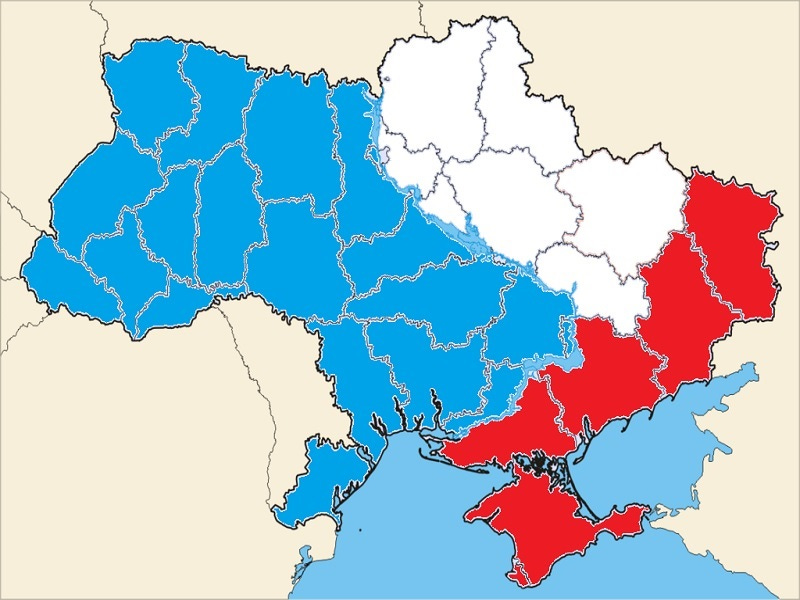
Ukraine could be deterred from breaking the ceasefire due to the DMZ placing it at a disadvantage, while Russia would be deterred by the “security guarantees” that Ukraine clinched with a bunch of NATO countries this year, which amount to de facto Article 5 support. While Russia could storm into the DMZ, NATO could also storm into Western Ukraine or possibly even cross the Dnieper, whether due to a swift intervention or having already deployed its troops west of the river per tacit agreement with Russia.

What was detailed in the three preceding paragraphs is the maximum that Russia can realistically achieve given the new military-strategic circumstances in which it finds itself over 1,000 days since the special operation began. Putin finally started climbing the escalation ladder in order to deter the even greater provocations that the West might now be plotting with the intent of coercing him into freezing the existing LOC and then possibly accepting the deployment of Western/NATO peacekeepers there.

Such a scenario would be completely unacceptable for him from the perspective of Russia’s national security interests and his own reputational ones after promising to check NATO’s expansion in Ukraine. Keeping that bloc west of the Dnieper while demilitarizing everything east of it and north of the administrative borders of the four former Ukrainian regions that joined Russia in September 2022, tentatively known as the “Transdnieper” region, would be a tolerable compromise though.

Trump might deem this to be pragmatic enough of a deal for him to go along with since it could still be spun by all relevant parties to the conflict as a victory (e.g. Russia gained land and created a DMZ deep inside Ukraine; Ukraine continued to exist as a state; and the US de facto incorporated Western Ukraine into NATO). It could even enter into force prior to that if either side “escalates to de-escalate” before his inauguration and this is the “mutually face-saving” compromise that they reach to avoid World War III.

Of course, it would be better if they agree to this without sparking a Cuban-like brinksmanship crisis that risks spiraling out of control, hence why their diplomats should begin discussing it now or a third country’s ones like India’s should propose it behind the scenes to get the ball rolling. Putin’s newfound (and arguably long-overdue) approach signals that he won’t accept freezing the existing LOC, nor especially the deployment of NATO/Western peacekeepers there, and will escalate to avert that.

He might even go as far as using tactical nukes in Ukraine (and/or NATO’s logistics hub in Moldova) if he feels that he’s being cornered by the evolving circumstances in which the West might soon place him through its possibly forthcoming greater provocations (e.g. destabilizing and invading Belarus). The West must therefore start taking Putin seriously after he finally began climbing the escalation ladder otherwise the worst-case scenario of World War III might become unavoidable if they push him too far.
Mark Episkopos: Trump has a mandate to end the Ukraine War

By Mark Episkopos, Responsible Statecraft, 11/13/24

The enduring truism of electoral politics, unflinchingly even if uncritically repeated, that Americans don’t vote on foreign policy, was repudiated this election cycle.

While no single foreign policy issue commanded anything near voters’ concern for domestic challenges, the twin spiraling crises in Europe and the Middle East led a large swathe of the electorate to conclude that foreign policy is too important to be left to the technocrats.

President-elect Trump deftly exploited this lingering anti-establishment sentiment first by picking JD Vance as his running mate and then by defining himself against Harris — who did everything she could to advertise the Democratic party to anti-Trump neoconservatives, up to and including by christening Liz Cheney a core campaign surrogate — as the anti-war candidate.

The difficult but necessary work of resolving the Ukraine war, the most dangerous and destructive conflict on the European continent since 1945, now falls to the incoming Trump administration. But doing so requires coming to grips with, and rejecting, the shibboleths and superstitions that have characterized the established approach to Ukraine.

When diagnosing the crises facing U.S. foreign policy, it pays to consult the prior generation of American diplomats. As is well known, the Cold War exercised a disciplining effect on its American and Soviet figurants. The neck to neck nature of that rivalry, coupled with what both parties recognized as the catastrophic consequences of direct confrontation, meant that neither side was in a position to dictate to the other.

The two superpowers were bound to a shared logic of strategic caution that permitted and, indeed, necessitated competition on the margins but harshly discouraged an uncompromising “winner takes all” mentality on existential questions of war and peace.

This provided fertile ground for the development of a decision-making community eager to learn from their mistakes, obsessively grasping for even the most minute ways in which U.S. policy can be refined or reformed. It is not brute coercive force but rather a persistent open-mindedness, tempered by a nagging recognition and respect for the limits of American power, that produced such exertions of political genius as the long telegram and policy of detente that enabled the U.S. to contend on favorable footing with its Soviet competitor.

To draw the obvious connection between this culture of purpose-driven introspection being a rare commodity in past decades and the cascade of foreign policy blunders visited upon America since 1991 could very well be seen as an exercise in reaching for low-hanging fruit. It’s not a charge of which I wish to acquit myself. The prudence and foresight exercised by policymakers in the not-so-distant past does offer an instructive parallel to the contemporary challenges facing the U.S. — there is no shame in repairing to old wisdoms.

Yet the pervasive nescience gripping parts of Washington has been replaced by something even worse: a kind of shallow, performative introspection that draws all the wrong lessons in service of a failing status quo.

This strain is fast becoming the prevalent bar in the swan song of Kyiv’s maximalist battlefield program. Ukraine is losing the war, we are told, because its Western backers dithered in their provision of lethal aid; because the White House paid too much heed to Moscow’s red lines; and because NATO would not formally commit itself to “victory,” defined as Russia’s unconditional battlefield capitulation.

The lessons stemming from these conclusions are simple. The Pentagon should have emptied its stockpiles to aid Ukraine even if doing so would have exposed critical vulnerabilities in its own preparedness — as a lawmaker put it in the war’s early days, “if it shoots, send it.”

Western countries, the argument goes, should have stampeded as a matter of principle over anything Moscow may regard as a red line. Even to try to balance our aid for Ukraine with the real and serious risk of escalation, as the Biden administration attempted to do with its escalation management model, is decried by these voices as surrendering to Russian “nuclear blackmail.”

Still, and for many of the same reasons, this war has taken on a metaphysical superstructure that blots out and renders impossible any meaningful debate. We are told against all the weight of all available evidence that the wanton slaughter unfolding in eastern Ukraine and, more recently, Russia’s Kursk region, is part of a noble crusade for democracy. And it is a global crusade, for Russia’s “victory” in Ukraine will impel Putin’s Westward march and give Xi Jinping a “green light” to attack Taiwan.

But when has wartime mobilization ever made a country less corrupt, more free, or more liberal? To the extent that democracy requires stability, it is not at all clear that Ukrainian institutions have benefited from the indefinite continuation of a war that has ravaged the country’s economic outlook and thrust it into a demographic crisis.

The notion that the Chinese are waiting to see who controls which part of western Donetsk —as opposed to gauging factors much closer to home, like the balance of forces in the Asia-Pacific and Taiwan’s deterrent capabilities — is hardly deserving of sober commentary. Nor can Beijing interpret the West’s clear signal that it will not fight for Ukraine as taking a stance on Taiwan, as the latter occupies an entirely different tier of strategic significance in U.S. policy thinking.

Finally, as I previously explained along with my colleagues George Beebe and Anatol Lieven, there is not a shred of evidence that Moscow demonstrates either the capability or the intention to launch a war of aggression against any NATO state; indeed, doing so would contradict Russia’s strategic aims behind invading Ukraine in the first place.

The problem is not just that the Ukraine war is the most propagandized, ideologized conflict since Iraq, though it is that, too. It is, moreover, that the military and political realities governing this conflict have become dangerously unwound from security discourses in most Western governments.

Any effort to disentangle the West from this quagmire can only but start with acknowledgement of simple truths: Ukraine could not, cannot, and will not prevail over Russia in a full-scale conventional war, if victory is defined as the complete ejection of Russian forces from Ukraine’s 1991 borders solely by military means; Ukraine is decisively losing this war of attrition and no amount of Western military aid can reverse its trajectory of collapse; Russia’s total, unconditional defeat cannot be brought about by any means short of a full-on war between NATO and Russia, whereas Washington and European capitals have concluded and continually reaffirmed over the past three years that they will not go to war over Ukraine.

It isn’t difficult to tell where this leads, but that doesn’t make it any easier to accept after three years spent submerged in an ocean of denial and conceit. It is long past time for Washington to come up for air on Ukraine.

American, European, and Ukrainian interests are best served by a U.S.-led effort to swiftly reach a negotiated settlement, something President-elect Trump rightly identified as one of his key foreign policy priorities. The administration should be candid with the American people that this process will be complex and challenging, as peace talks always are, but the cost of inaction, of failing to rise to the occasion, is infinitely greater.

President-elect Trump has secured a powerful mandate to stop this war and, in doing so, strengthen not just America’s European posture but its global standing. The time to seize it is now.

Ben Aris: Russia faces a wave of bankruptcies as borrowing costs skyrocket

By Ben Aris, Intellinews, 11/10/24

Russian businesses are bracing themselves for a financial crunch that could put many of them out of business. The Central Bank of Russia (CBR) interest rate has reached a crushing 21%, with expectations for a further hike in December, and over the last two years companies have built up significant commercial debt with floating rate interest payments.

The CBR has progressively raised rates since the second quarter of 2023 in a bid to control persistent inflation and support the faltering ruble. However, the soaring cost of borrowing is now pushing many companies towards a dangerous debt spiral, with interest payments consuming one out of every four rubles they earn.

Late payments from customers and partners have been climbing, signalling distress in the corporate sector as firms struggle to service debt under such high rates. With real interest rates, once bank premiums are factored in, effectively reaching 25% for businesses, the likelihood of defaults and bankruptcies has risen sharply, Meduza reports.

Before the war only around 20% of corporate loans were issued at floating rates. By mid-2023, however, that share had surged to 44%, as businesses took out loans with terms pegged to the CBR’s key rate. Many firms, driven by the need for capital to support import substitution after the imposition of sanctions and to acquire assets as foreign companies left Russia, borrowed heavily – and under the assumption that interest rates would eventually stabilise or decrease.

That didn’t happen. Heavy government spending overheated the economy and sent inflation soaring. The CBR began an aggressive rate-hike tightening cycle that has ended yet.

By late 2024, floating-rate loans constituted 53% of corporate borrowing. This surge, combined with the weakened ruble and heightened government spending, drove up inflation, fuelling further rate hikes.

The demand for loans has also soared as businesses race to lock in capital ahead of anticipated new restrictions. Tightened reserve requirements and stricter lending standards are expected to come into force by year-end, leading companies to expand their loan portfolios by 22% in the past year alone.

The situation will only get worse. Building up debt is not a problem while the economy was growing, turning in a surprise 3.6% expansion in 2023, but as bne IntelliNews reported, Russia’s economy is cooling and a sharp slowdown is expected in 2025 that will only increase the pressure on corporations further. The prospects for the CBR to switch to easing monetary policy remains remote as long as the war in Ukraine continues.

Corporate bankruptcies in Russia have jumped by 20% this year, as soaring interest rates and liquidity shortages push firms closer to financial ruin, according to data from the Unified Federal Registry of Bankruptcy Declarations (Fedresurs), Meduza reports.

The uptick in insolvencies, though initially concentrated in the first quarter, is poised to accelerate as tighter monetary conditions make debt servicing increasingly unsustainable.

Signs of distress have intensified in recent months, with the Russian Union of Industrialists and Entrepreneurs (RSPP) reporting a substantial rise in complaints over late payments.

“Previously, 22% of business owners faced this issue, but that figure has now jumped to 37%,” said the union as cited by Meduza. The RSPP attributes the escalation to the difficulty of assessing working capital loans, a situation forcing many companies to delay payments to suppliers and other creditors.

The retail sector is especially vulnerable. Russia’s Union of Shopping Centres has petitioned the government for critical relief measures, including subsidised interest rates of 7-10%, debt restructuring, and payment deferrals of five to 10 years, reports Kommersant. Without such interventions, the union warns, 200 shopping centres could face bankruptcy within the coming months. Similarly, office and warehouse owners are attempting to renegotiate terms with creditors.

Officials are increasingly sounding the alarm bell. Sergey Chemezov, CEO of the state-owned defence conglomerate Rostec, warned that the current lending environment is untenable for manufacturers whose production cycles exceed a year.

“If we keep operating like this, most of our businesses will go bankrupt,” Chemezov said in October, adding that even high-revenue arms sales are insufficient to offset debt costs at rates exceeding 20%.

“If a product’s manufacturing cycle takes a year, advance payments cover only 40% of production costs. The rest must be borrowed, but high interest rates wipe out all profits,” he added.

Red lights are also flashing in the corporate bond market, where high rates are making bonds unaffordable as a source of capital. A key risk measure, the net debt-to-EBITDA ratio, has surged among lower-tier firms, with Gazprombank estimating this metric now exceeds three. While previously manageable, this debt-to-earnings ratio has become perilous under today’s interest rates, which is already forcing some companies to spend three out of four rules they earn to servicing debt.

The high rates have also made rolling maturing bonds over untenable, putting even more pressure on corporate reserves as management had not planned to retire their debt at this stage and assumed that bonds could be refinanced. To refinance maturing bonds, companies are now forced to offer yields around 27% to attract investors wary of default risks, according to credit rating agency Expert RA, as cited by Meduza.

Industries on the frontlines include paper and wood processing, wholesale trade, and agriculture. Russia’s coal industry is already in crisis after EU markets were closed by sanctions. The construction sector, particularly vulnerable to delayed payments, has been hit by a double whammy after a generous mortgage subsidy programme was ended on July 1, sending the cost of borrowing for would-be home owners upwards. Mortgage loan applications halved in July alone as Russia’s real estate market was rocked by the decision.

Real estate companies have responded by offering their own financing programmes, similar to the subprime model used in the US that caused the 2008 global financial crisis. Borrowers can take out cheap loans with rates well below the regulator’s prime rate for a fixed period of a few years, but the rates will rise to match the prime rate after the honeymoon period is over. It’s a bet that the CBR will reverse its monetary policy in a few years – in other words it’s a bet that the war in Ukraine will stop soon – and rates will fall again. But if that doesn’t happen, Russia will face a major housing-induced financial crisis.

Retail loans have also been hit by a double whammy as the CBR attempted to cool mushrooming consumer borrowing that was adding to inflation as part of its non-monetary policy methods to cool the economy and bring inflation down. The United Credit Bureau has reported a notable decline in average credit scores across Russia. By October 2024, the likelihood of default among consumers had risen by 12% compared to the previous year, and long-term overdue payments are becoming more prevalent. That is worrying the regulator, which reports a build up in the concentrations of debt that could precipitate a financial crisis.

Historically, corporate bankruptcies and bond defaults tend to surge three to six months after rate hikes, reports Meduza, a trend that could manifest before year-end as companies face imminent bond repayments. Many corporate bonds mature in the fourth quarter of this year, and with investor sentiment fragile, refinancing options remain costly and elusive.

Oligarch Alexey Mordashov, the founder of steel mill Severstal, put it this way: “At the current interest rate, it’s more profitable for companies to halt expansion or even downsize and put funds in the bank rather than continue operations and take on the associated risks,” Meduza reports.

Dave DeCamp: Russia Says US Missile Defense Base in Poland Is a Potential Target

By Dave DeCamp, Antiwar.com, 11/21/24

Russian Foreign Ministry spokeswoman Maria Zakharova said Thursday that a controversial US missile defense base in Poland is a potential target of the Russian military, comments that come amid soaring tensions as the US just authorized Ukraine to strike Russian territory with long-range NATO missiles.

“Given the level of threats posed by such Western military facilities, the missile defense base in Poland has long been included among the priority targets for potential neutralization. If necessary, this can be achieved using a wide range of advanced weaponry,” Zakharova said.

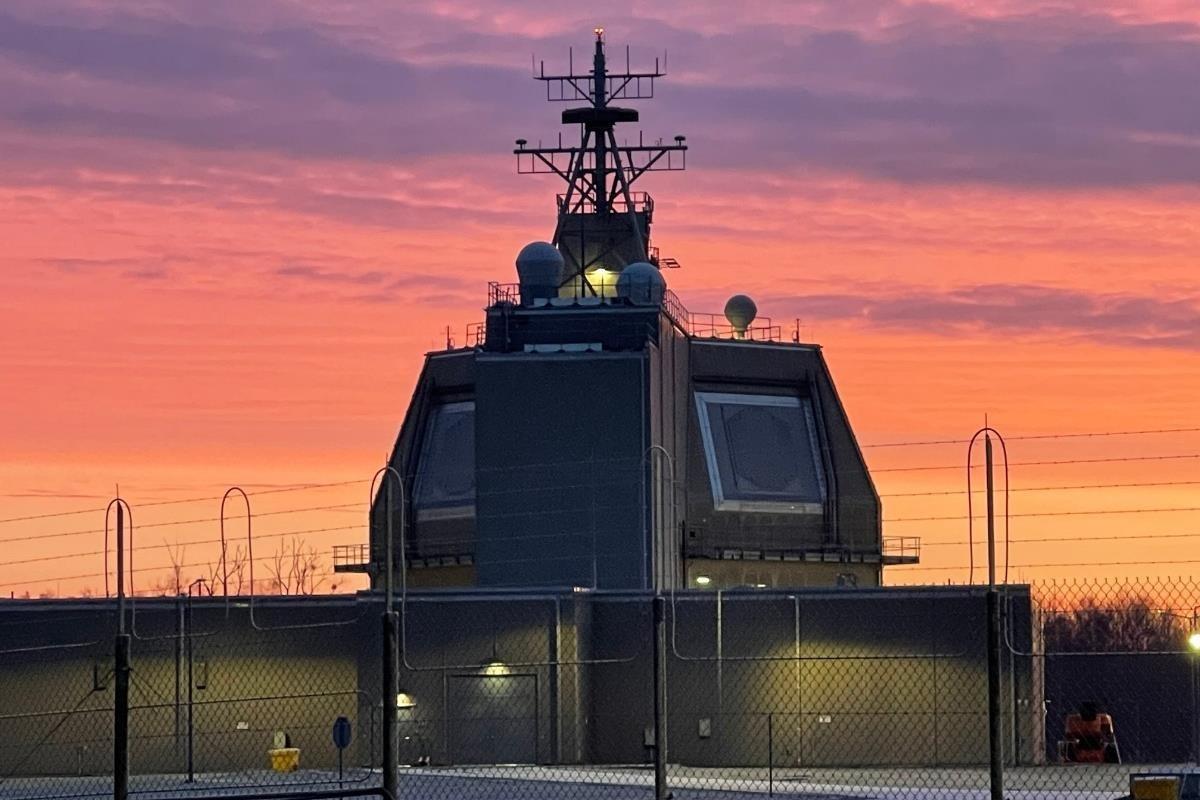
The Aegis Ashore anti-ballistic missile system in Poland has long been a security concern for Russia as its Mark-41 launchers are capable of fitting nuclear-capable Tomahawk missiles, which have a range of about 1,000 miles. A land-based version of the Tomahawks was previously banned by the Intermediate-Range Nuclear Forces (INF) Treaty, which the US withdrew from in 2019.

The US just recently opened the Aegis Ashore base in Poland, and NATO formally took control of it on Thursday. “The integration of the Aegis Ashore system into NATO’s defensive network underscores our collective commitment to ensuring the security of all Allies,” US Air Force Gen. James Hecker, the head of NATO’s Allied Air Command, said at a ceremony formalizing NATO control of the base.

The Aegis Ashore Ballistic Missile Defence System facility at Redzikowo, Poland

Zakharova said the establishment of the base follows “a series of deeply destabilizing actions by the Americans and their North Atlantic allies in the strategic sphere” and said the move “aligns with the longstanding and destructive practice of advancing NATO’s military infrastructure closer to Russia’s borders.”

Her warning that Russia could potentially target the base comes after Russia updated its nuclear doctrine in response to the US supporting long-range Ukrainian strikes on Russian territory. Under the new doctrine, Russia now considers an attack by a non-nuclear armed state that’s supported by a nuclear-armed power as a joint attack.

Russian President Vladimir Putin also said on Thursday that Russia has the right to strike the military facilities of countries that are supplying Ukraine with the missiles. “We believe that we have the right to use our weapons against the military facilities of those countries that allow their weapons to be used against our facilities,” he said.

Analysis & Book Reviews on U.S. Foreign Policy and Russia