MK Bhadrakumar: Ukraine War Turns Into Russian Roulette

By MK Bhadrakumar, Consortium News, 9/16/24

U.K. Prime Minister Keir Starmer met with U.S. President Joe Biden in the White House on Friday with the question of the use of long-range missiles by Ukraine to hit deep inside Russia on their agenda of conversation. But there were no announcements, nor was there any joint press conference.

Starmer later told the media that the talks were “productive” but concentrated on “strategy” rather than a “particular step or tactic.” He did not signal any decision on allowing Kiev to fire long-range missiles into Russia. 

Starmer said no final decision had been taken on the Storm Shadow missiles and hinted that further developments may follow at the gathering of the U.N. General Assembly later this month. “We’ll obviously pick up again in UNGA in just a few days time with a wider group of individuals,” he said.

One reason for such extreme secrecy is that the U.S. and U.K. are intensely conscious of Russian President Vladimir Putin’s explicit warning Thursday that any use of Western long-range missiles to strike Russia “will mean that NATO countries, the United States, and European countries are parties to the war in Ukraine. This will mean their direct involvement in the conflict, and it will clearly change the very essence, the very nature of the conflict dramatically.” 

Putin added in measured words: “This will mean that NATO countries – the United States and European countries –- are at war with Russia. And if this is the case, then, bearing in mind the change in the essence of the conflict, we will make appropriate decisions in response to the threats that will be posed to us.” 

[See: Raising the Stakes in Ukraine]

Admittedly, Putin has given similar warnings before, but did not follow through even when Western weaponry was used by Ukraine  — with impunity to invade Russia recently. So much so that Biden was plainly dismissive about the latest Kremlin warning, saying, “I don’t think much about Vladimir Putin.” 

For its part, Moscow estimates that although no official decision on the matter has been announced it has already been made and communicated to Kiev, meaning that Moscow would have to respond with actions of its own. 
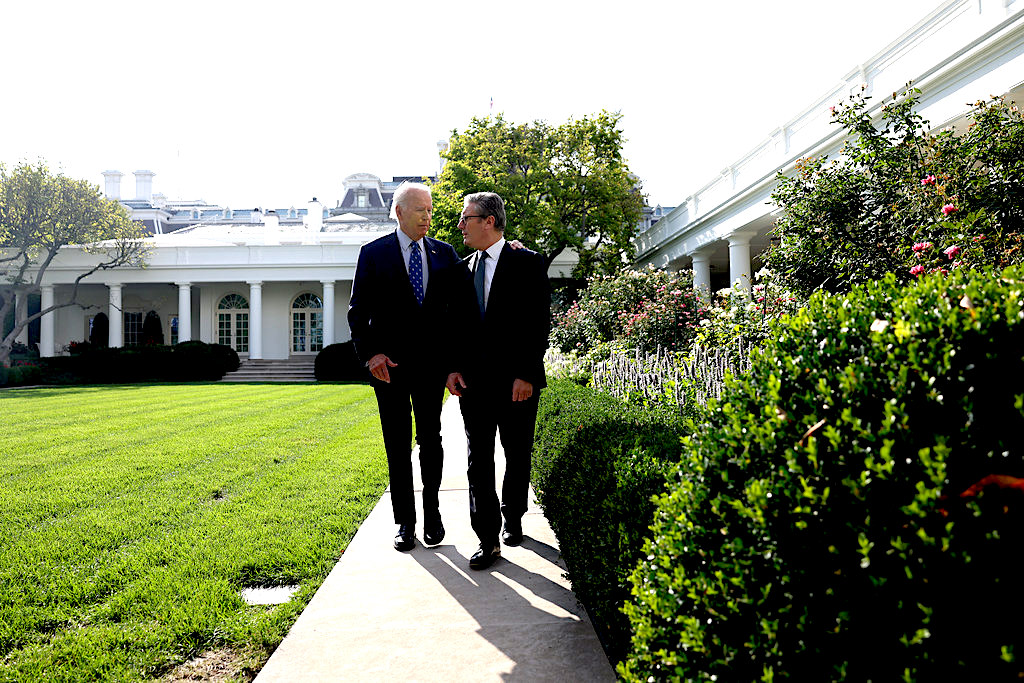
Biden and Starmer at the White House on Friday. (Simon Dawson / No 10 Downing Street, CC BY 2.0)

Deputy Foreign Minister Sergey Ryabkov, Moscow’s point person on the diplomatic track, was quoted as saying on Saturday:

“The decision has been made, the carte blanche and all indulgences have been given (to Kiev), so we [Russia] are ready for everything. And we will react in a way that will not be pretty.” 

Former Russian President Dmitry Medvedev, who now serves as deputy chairman of the country’s security council, went a step further saying that the West is testing Russia’s patience but it is not limitless. He said Ukraine’s invasion already gave Russia formal grounds to use its nuclear arsenal. 

Please Donate Today to CN’s Fall Fund Drive 

Medvedev warned that Moscow could either resort to nuclear weapons in the end, or use some of its non-nuclear, but still deadly novel weapons for a large-scale attack.

“And that would be it. A giant, grey, melted spot instead of ‘the mother of Russian cities’,” he wrote on the Telegram messaging app, referring to Kiev. 

Putin, in his remark on Thursday once again rejected the Anglo-American sophistry that it is Ukraine that will be using any Western long-range missiles and not NATO. He pointed out that the Ukrainian army 

“is not capable of using cutting-edge high-precision long-range systems supplied by the West. They cannot do that. These weapons are impossible to employ without intelligence data from satellites which Ukraine does not have. This can only be done using the European Union’s satellites, or U.S. satellites – in general, NATO satellites…most important, the key point even – is that only NATO military personnel can assign flight missions to these missile systems. Ukrainian servicemen cannot do this.

Therefore, it is not a question of allowing the Ukrainian regime to strike Russia with these weapons or not. It is about deciding whether NATO countries become directly involved in the military conflict or not.” 

Interestingly, neither Washington nor London has so far refuted Putin’s above explanation and, curiously, it has been missing from British press reports — perhaps on fears that public opinion might militate against such direct involvement by the U.K. in a war against Russia in a combat role.

Moscow anticipates that the U.S.-U.K. ploy may be to test the waters by first (openly) using Britain’s Storm Shadow long-range air-launched cruise missile, which has already been supplied to Ukraine.

On Friday, Russia expelled six British diplomats assigned to the Moscow embassy in a clear warning that U.K.-Russia ties will be affected. Russia has already warned the U.K. of severe consequences if the Storm Shadow were to be used to hit Russian territory. 
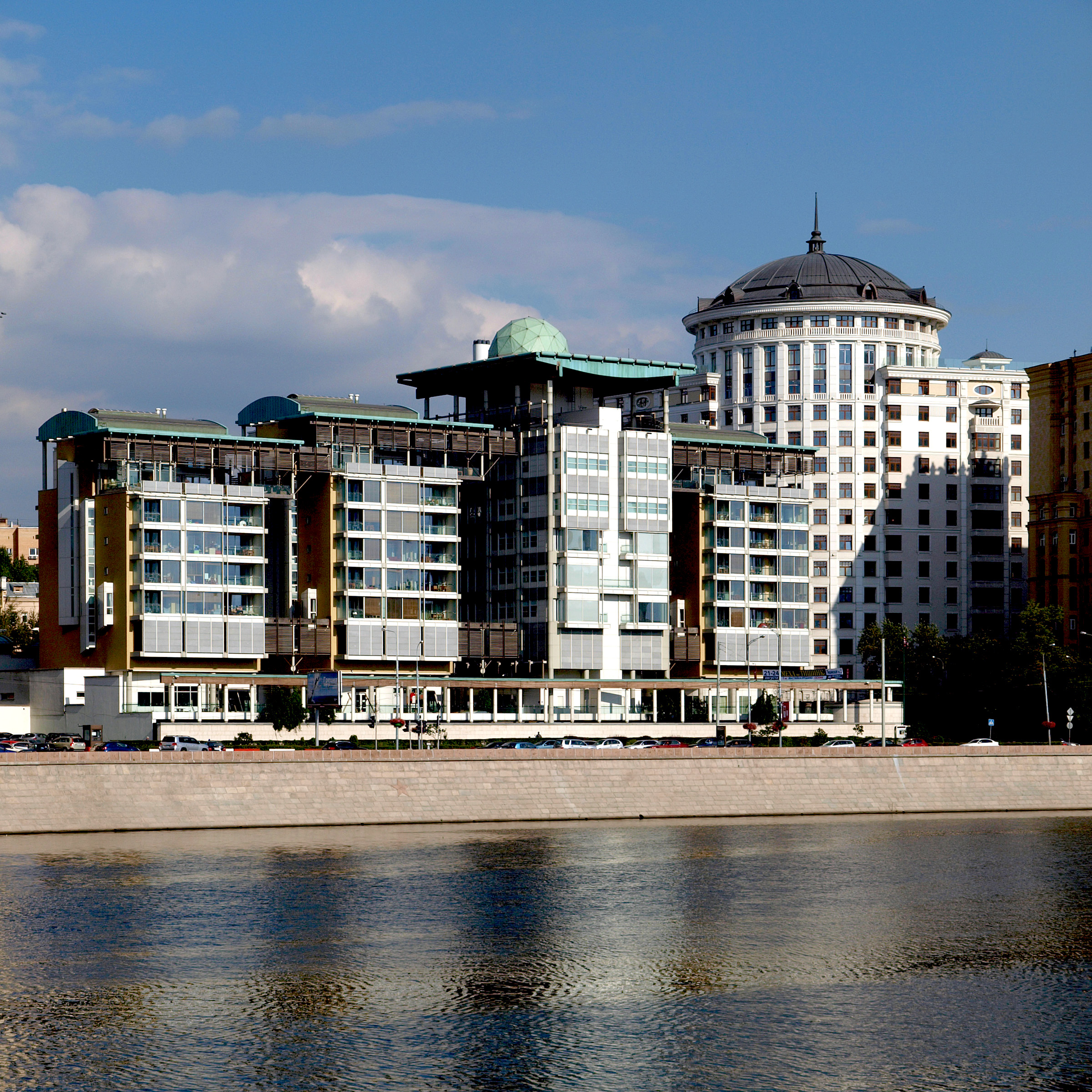
U.K. embassy in Moscow. (NVO, Wikimedia Commons, CC BY-SA 3.0)

What makes the developing situation extremely dangerous is that the cat-and-mouse game so far about NATO’s covert involvement in the Ukraine war is giving way to a game of Russian roulette that follows the laws of Probability Theory.

That is to say, although Russia cannot be defeated or evicted from the territories in eastern and southern Ukraine that it annexed, Washington and London regard that the final outcome of this random event cannot yet be determined before it occurs; it may even be any one of several possible outcomes, and the probability cannot be ruled out that the actual outcome  might even be determined by chance.

Apparently, Biden believes that Russia’s current battlefield dominance is a random phenomenon and possible outcomes range from an annihilation of Russian military power to a large-scale disruption of life in Russia and a possible collapse of Russia — at a minimum, the weakening of the Russian hand in any future negotiations.

Simply put, the war is now about Russia rather than Ukraine and long-range missiles can be a game changer. 
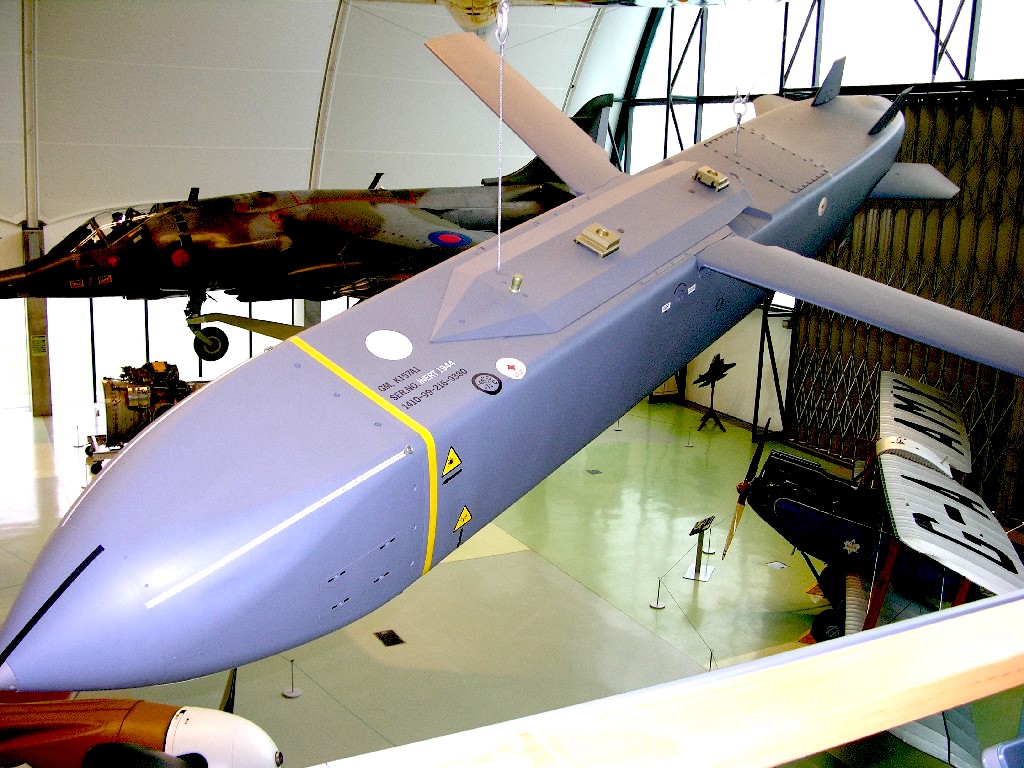
Storm Shadow missile on display at the Royal Air Force Museum London. (Corrado Baldassi, Wikimedia Commons, CC BY-SA 3.0)

Thus, Biden, with no political constraints working on him anymore, is escalating the war to create new facts on the ground before his presidency ends in January, which may create conditions for permanent NATO military presence on Ukrainian territory and present Russia with a fait accompli. 

Such a strategy built on the quicksands of probability is akin to a game of Russian roulette — an act of bravado. Indeed, Biden’s options to support Ukraine are shrinking with each escalation. As The Wall Street Journal puts it, 

“With only four months left in the Biden administration and little hope of Congress approving additional funding for Ukraine no matter who wins the presidency, the White House is debating how best to help Kyiv given its limited toolbox.” 

Equally, Europe’s interest in the war is also waning.

European politics is becoming unpredictable with the ascendancy of the far-right in Germany, the crisis of leadership in French politics, the relative decline of the EU’s economy vis-a-vis global rivals due to limited innovation, high energy prices and skills gaps, etc. and, of course, the overarching economic crisis in Europe with no end in sight, as brought out starkly in the recent report by Mario Draghi. 

Basically, Biden is pre-setting the trajectory of the war beyond next January so that even after his retirement, his policy approach aimed at inflicting a strategic defeat on Russia remains on track.

White House National Security Advisor Jake Sullivan said on Saturday that Washington is working on a “substantial” round of further assistance for Kiev. He confirmed a meeting this month between Biden and his Ukrainian counterpart Zelensky.

Sullivan noted that Biden is working to put Ukraine in the “best possible position to prevail” during his final months in office.

The bottom line is that Biden’s war strategy is attenuating as “escalation management” while NATO transitions as a direct party to hostilities. 

M.K. Bhadrakumar is a former diplomat. He was India’s ambassador to Uzbekistan and Turkey. Views are personal.

This article originally appeared on Indian Punchline.

The views expressed are solely those of the author and may or may not reflect those of Consortium News.
Ian Proud: Turkey joining BRICS represents another step to a multipolar world

By Ian Proud, Website, 9/6/24

Ian Proud was a senior officer at the British Embassy in Moscow from July 2014 to February 2019, at a time when UK-Russia relations were particularly tense. He performed a number of roles in Moscow, including as Head of Chancery, Economic Counsellor – in charge of advising UK Ministers on economic sanctions – Chair of the Crisis Committee, Director of the Diplomatic Academy for Eastern Europe and Central Asia and Vice Chair of the Board at the Anglo-American School. He oversaw the Embassy’s preparations for the 2018 FIFA World Cup in Russia and rebuilt embassy staffing structures following the mass expulsion of staff that followed the March 2018 Salisbury nerve agent attack.

With Turkey – a key NATO member – having lodged an application to join, BRICS is set to get bigger, and this can only be a good sign for the collective strength of developing nations in a multipolar world.  It’s also a bad sign, longer term, for US political and economic dominance.

Two key moments in the acceleration of BRICS were 2014 when the Ukraine crisis started and 2022, when full blown war broke out.  The weaponisation of the global financial system by the west against Russia helped the core focus of BRICS coalesce around the need to create an alternative financial architecture for developing nations. A BRICS bank (now called the New Development Bank was established) to create an alternative to the World Bank. A Contingent Reserve Arrangement was established, providing an alternative to the IMF for countries who need access to a pool of reserves in the face of currency crises. As the Belgium-based Swift interbank communication service has become politicised, so BRICS Pay was created.

Throughout, a core aim is to reduce dependence on the US Dollar for global trade and, therefore foreign exchange reserves. Russia and China’s shift to trading oil in Yuan, Saudi Arabia’s abandonment of the Petrodollar Pact, and the UAE and India’s agreement on trading in rupees are good recent examples of countries choosing to de-dollarize.  While the dollar remains the pre-eminent global trading currency, we should expect to see its share of global trade decline slowly over the coming decade.  This will pose longer-term systemic risks to the USA’s ability to service its vast federal debt, as the cost of borrowing inexorably rises.  

BRICS is gathering momentum as the potential benefits of membership become clearer in the eyes of developing nations, and Turkey’s bold decision to apply for membership is a sign of that. While I was the economic counsellor at the British Embassy in Moscow, I watched in slow motion as dissatisfaction in developing countries grew about western domination of the international financial system. Take the International Monetary Fund. Today, 59.1% of the Fund’s voting shares are accounted for by countries with accounting for 13.7% of the World’s population. 57.7% of the bumper distribution of Special Drawing Rights during the COVID Pandemic went to the world’s wealthiest countries.

It’s not only that developing countries see that the western dominated financial bodies don’t represent their interests.  They have also became increasingly politicised; for example, under pressure from the US in 2015, the IMF changed its rules on debt servicing to allow Ukraine to avoid default, even though it was at that time refusing ever to service its debt obligations to Russia.  While IMF conditionality on its programmes is rigid, the rules can be changed quickly if the political imperative from Washington demands it.

Take the G7, which was the preeminent grouping of the world’s most affluent nations before BRICS found its feet. Following the outbreak of war in Ukraine, G7 countries coordinated over 20,000 economic sanctions against Russia. There is no plan in place for sanctions relief as and when an inevitable ceasefire in Ukraine starts and a peace process begins.  The G7 froze $300bn in Russian foreign exchange reserves; they have more recently established a funding vehicle in which the proceeds of those Russian assets held in Europe are used to fund weapons supplies to Ukraine. Bodies like the IMF, SWIFT and Euroclear have been decisively subjugated by the political interests of the G7.

The G20, was intended to be a more inclusive global grouping of the world’s leading 20 economies when it was set up to focus on international financial stability.  But it has also become increasingly dysfunctional as powerful G7 nations try repeatedly to politicise its agenda.

So, BRICS has emerged as a more appealing meeting point for developing countries. Its values of non-interference, equality and mutual benefit mean countries with troubled political relationships can come together to strengthen relations through economic ties.  Hence the China, Russia, India triangle, which over history has been beset by tension and conflict. Iran and Saudia Arabia joined BRICS in 2024, almost unthinkable a few short years ago, but made possible by a gradual thawing in their relations brokered by China in 2023. Pakistan is now looking to join BRICS, despite India’s prominent founding role in the group. This gradual rapprochement through trade should be applauded.When it was first convened in 2009, BRICS was seen as a developing nations’ counterbalance to the rich countries’ club of the G8 (now G7). Today, three of the BRICS founding members rank among the world’s top ten economies. Six are members of the G20 group.  The group accounts for 45% of the global population and 28% of its economic output now. Set free from the need to fit within a west-leaning normative set of rules and values, BRICS collaboration has been unleashed by putting the economics first, and letting the politics follow. It’s therefore no surprise that Turkey – which is also a G20 member – has turned to BRICS. After decades of trying to join the European Union, it’s clear that road is permanently blocked.

I don’t see Turkey’s future membership of BRICS and its NATO membership as mutually exclusive.  Indeed, straddling Europe and Asia, I think it’s very much to be encouraged that a prominent NATO member state should enjoy a less antagonistic relationship with the developing world. The very point of BRICS is that countries aren’t required to choose one side against another.  There is a long list of other countries who wish to join BRICS, including Mexico, Nigeria, Bahrain, Pakistan, Thailand and Vietnam. Before the end of this decade, BRICS will represent a majority of the global population.

The USA, the EU and the UK will continue to be powerful players, but their influence on developing countries and their dominance of the global financial system, seems set to wane as BRICS forges a more multipolar world over the longer term.

John Varoli: Are You a Russian Agent? Take the Test

By John Varoli, Substack, 9/9/24

With less than two months until the U.S. presidential election on Nov 5, the ruling Party in the White House is stepping up its witch hunt for ‘Russian agents’ who toil around-the-clock on behalf of the Kremlin and its ‘candidate’, Donald Trump, who seek to subvert U.S. ‘democracy’ and inflict havoc on our trembling nation.

Last week, the U.S. government’s so-called ‘Justice Department’ unveiled official accusations against a number of Russian media companies whose content are deemed a threat to national security. (The Truth is indeed dangerous to those in power in Washington DC).

Singled out as the main threat to U.S. ‘democracy’ is the Moscow media company, RT, which for over a decade has been the bogeyman stalking the nightmares of the American ruling class.

Also, last week Dmitri Simes, an American citizen and a leading U.S. foreign policy expert, was officially accused of acting as a Russian agent and violating sanctions. His house in Virginia was ransacked by the Gestapo FBI and valuable art works were stolen. What was Simes’ crime? He hosts a talk show in Moscow where global affairs and U.S. foreign policy are discussed freely, without censorship. Dangerous!

This follows the Gestapo FBI ransacking Scott Ritter’s house in New York State on Aug 7 as payback for his criticizing U.S. foreign policy and calling for friendship with Russia and other dangerous ideas. An investigation is ongoing, and focuses on Ritter’s recent travel to Russia and allegedly serving the Kremlin for the $300 he received while writing articles for RT.

How fortunate for us Americans that the White House is vigilant, protecting us from dangerous information, saving us the anguish of thinking for ourselves. Today’s ‘progressives’ certainly know better than those ‘far-right’ Founding Fathers who were obsessed with extremist notions of “freedom of speech” and “freedom of the press”.

Those devious Russians are so sneaky that they can seize control of your mind and turn you into one of their agents without you ever suspecting a thing. The minds of most Americans are fragile — for example, one witty meme on social media planted by Russian agents can turn many of us into Kremlin bots.

Apparently, President Putin is building an army of Kremlin stooges inside the Land of the Free, and it could soon be marching across the American heartland to the sound of balalaika music, dancing the kazachok, vodka bottles in hand and calling for world peace. What horror!

Therefore, to lend a hand to the Gestapo FBI, I’ve compiled a Russian Agent Test. Take it and see whose side you’re on in this epic battle between Good and Evil.

  1. Do you want world peace?
  2. Are you against nuclear war?
  3. Do you think it’s wrong to dominate other countries, steal their natural resources and carpet bomb them into submission?
  4. Do you think friendship with Russia is in the interests of the American people?
  5. Do you believe in justice and freedom for the people of Donbass?
  6. Do you think that Ukraine is a dangerous totalitarian state?
  7. Are you against sending more weapons and cash to Zelensky’s corrupt regime?
  8. Do you think Russians are human and have human rights? 
  9. Do you believe in Freedom of Speech?
  10. Do you believe in Freedom of the Press?
  11. Are you capable of thinking for yourself?
  12. Have you ever read or watched RT content or any Russian media?
  13. Do you like memes that mock Biden, Clinton, Harris, or Obama, and then share them with friends?

If you answered “Yes” to even one of these questions, then certainly you’re a ‘Russian agent.’ And you’re likely to be a person of interest to the Gestapo FBI.

Remember — the most important task before the American nation is to ‘protect our democracy’, and this demands zero tolerance toward anyone who thinks freely and critically. We will save ‘Democracy’ by seeking out and mercilessly destroying anyone who disagrees with our ruling class.

“From Soviet Dissident to Target of US Deep State” | Larry Johnson Interviews Dimitri K. Simes

Center for Citizen Initiatives, 9/6/24

Dear CCI Friends,

We would like to share with our readership a recent interview with renowned scholar Dmitri Simes about the FBI raid on his home in the United States a short while ago.

Dr. Simes is a distinguished writer and thinker and was head of the Center for National Interest in Washington DC for over 30 years. This think tank was founded by former US President Richard Nixon following his detente with the Soviet Union and the signing of the ABM treaty.  It was part of the effort by President Nixon to promote better understanding and better relations between the US and Russia. 

Please review the interview and make your own judgment. In our hope for better US Russia relations, it is important that all voices be heard, dissent not be seen as a threat, and freedom of expression be honored. In this interview, you will have the opportunity to listen personally to what Dr. Simes has to say, and the challenges facing those who seek a better environment of peace and security between the US and Russia….

Respectfully,

Krishen, Paula and Pamela
Center for Citizen Initiatives

YouTube link here.

Russia’s Budget Deficit Down to 0.2% of GDP

Russia Matters, 9/6/24

Russia’s budget deficit declined to just 331 billion rubles ($3.7 billion) or 0.2% of GDP for the first eight months of the year, according to Bloomberg.  Russia recorded a budget surplus of 767 billion rubles ($8.5 billion) in August, thanks to almost 1 trillion rubles of increased revenue from non oil-and-gas sectors compared to July, this news agency reported. The Russian government’s revenues from taxes on oil and gas surged too, totaling 778.6 billion rubles ($8.7 billion) last month, up by 21% from a year ago, according to Bloomberg. In good news for Russian consumers, consumer prices in the week through Sept. 2 fell 0.02%, according to data from the Federal Statistics Service release, this news agency reported. On the negative side, S&P Global’s Purchasing Managers’ Index for Russian manufacturing fell to 52.1 last month compared to 53.6 in July, according to MT.

Analysis & Book Reviews on U.S. Foreign Policy and Russia