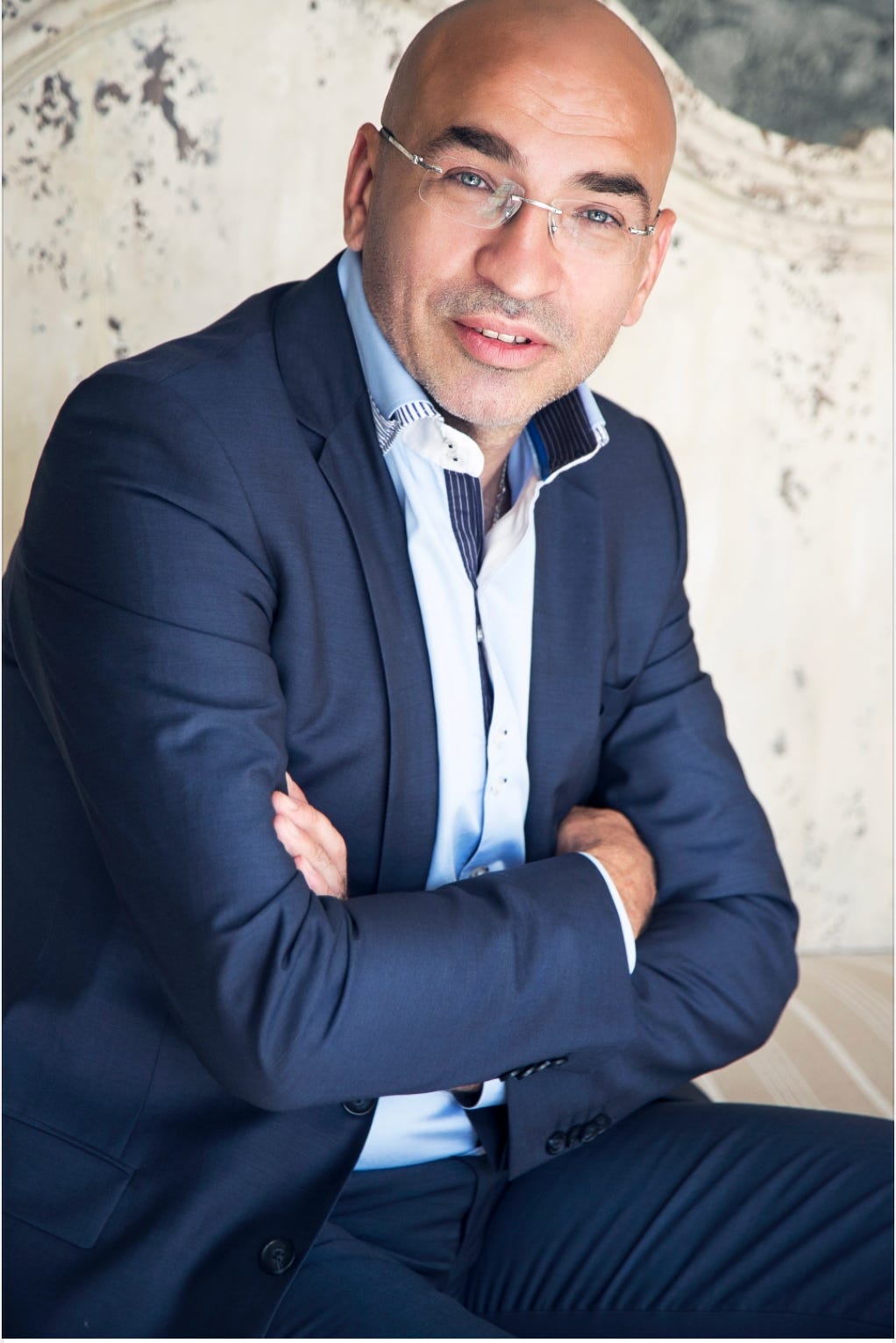
Mark Episkopos: Trump’s most underrated diplomatic win: Belarus

By Mark Episkopos, Responsible Statecraft, 10/22/25

Mark Episkopos is a Eurasia Research Fellow at the Quincy Institute for Responsible Statecraft. He is also an Adjunct Professor of History at Marymount University. Episkopos holds a PhD in history from American University and a masters degree in international affairs from Boston University.

Rarely are foreign policy scholars and analysts blessed with as crystalline a case study in abject failure as the Western approach to Belarus since 2020. From promoting concrete security interests, advancing human rights to everything in between, there is no metric by which anything done toward Minsk can be said to have worked.

But even more striking has been the sheer sense of aggrieved befuddlement with the Trump administration for acknowledging this reality and seeking instead to repair ties with Belarus.

A recent New York Times report cited several experts who charged the White House with rushing to give away the farm to Minsk for nothing that they can put their finger on. But anyone who has reached this conclusion hasn’t looked very hard, or, as it were, not in the right places. The administration’s Belarus strategy has so far been remarkably effective and, if consistently pursued over the coming months, promises greater successes still.

Critics of the White House initiative to engage Belarus are keen to inveigh against the country’s authoritarianism, an argument curiously seldom deployed against U.S. cooperation with dozens of partners across the Middle East and Africa whose domestic politics hardly fits the liberal-democratic mold. One need not venture so far from Europe to happen upon the glaring inconsistencies of a “values-based” approach to Belarus. Azerbaijan is hardly any more aligned with the Western liberal-democratic model than Belarus, yet the very same European champions of democratization in Minsk have not the slightest qualms about striking deals with President Ilham Aliyev in Baku.

European leaders could respond, with full justification, that concrete interests are served by maintaining good relations with Azerbaijan, but the same has always been true when it comes to Belarus’ importance in Eastern European security issues. Even within a narrowly selective democratization framework, it’s been well established that the only way to advance a substantive dialogue on civil society with Belarus is through engagement, whereas punishment and isolation drives Belarus away from the West and thereby produces the opposite effect.

There is no government on either side of the Atlantic that does not accept, even if tacitly or grudgingly, the basic diplomatic principle that it is necessary to engage countries that differ from the West — itself far from a monolith — in their norms, values, and institutions. On what basis, then, is Belarus one of the few to be held to another standard? European leaders would counter that Belarus is different because it provided passage and logistical support to Russian troops in the opening stages of Russia’s 2022 invasion of Ukraine. This argument shifts the debate from values back to security, which is where it should have always been.

The Europeans are quite correct that there are legitimate concerns stemming from what scholars have called the “Belarusian balcony,” or Belarus’ capacity to act as a staging ground for hybrid attacks or a full-scale confrontation between NATO and Russia. Such concerns are felt especially acutely by Belarus’ Western neighbors, Poland and Lithuania. But the best and only viable way to address these challenges is through sustained dialogue with Belarus, not by pushing for a change in government or punishing Minsk until it cuts ties with Moscow. The latter strategies were tried for the past five years and have been revealed as deeply counterproductive for reasons fully explained in the latest Quincy Institute brief on Belarus.

To the extent that the Europeans are interested in a stable Belarus-West relationship that reduces risks of escalatory spirals on NATO’s eastern flank, their current policy is akin to kicking in a wide open door. President Alexander Lukashenko has built his brand of “multi-vector” foreign policy precisely on the idea that Belarus’ sovereign interests are best advanced by hedging between Russia and the West not just to secure the best terms for itself but to assert itself as a regional stabilizer.

Minsk has long sought positive relations with the West as the only possible counterweight to what would otherwise be its one-sided dependence on Russia. Lest this be dismissed as an exotic arrangement, consider that the precedent for this style of hedging was set by NATO members themselves.

Turkish President Recep Erdoğan and Hungarian Prime Minister Viktor Orban, for instance, have developed their own nuanced relationships with competitors, including Russia and China. These governments have layered their national interests on top of NATO’s overall priorities in ways that are not always complementary but are nonetheless accepted as part of their sovereign foreign policy decisions. There is no reason why Belarus, a Russian military ally, cannot engage in similar hedging behavior in its dealings with the West.

The White House, contrary to many skeptics’ claims, is not trying to conjure a diplomatic opening ex nihilo. Rather, it is exploiting a window for substantive diplomacy that has existed for decades. That window is premised on the crucial understanding, lacking under previous administrations, that severing Belarus’ tight-knit military, economic, and diplomatic ties to Russia is not just unviable but unnecessary. Lukashenko was well positioned to provide a backchannel for the kinds of signaling and trial balloons that paved the way for the Alaska summit between President Trump and Vladimir Putin in August. The White House rightly perceives that Minsk, beyond the POW exchanges and other services it is rendering now, has — by dint of geography if nothing else — a major postwar role to play in supporting a peace deal.

American interests toward Belarus extend beyond finding additional ways to advance the Ukraine peace process. The White House cannot conclusively accomplish its goal of retrenching away from Europe and prioritizing other theaters while NATO’s eastern flank remains a powder keg. Progress on a U.S.-led normalization track with Belarus can set the stage for a much-needed dialogue between Minsk and its Western neighbors building into a new set of security agreements.

This understanding can eventually be formalized into a binding commitment by Belarus not to enable, facilitate, or engage in aggression against any of its neighbors, something Minsk has consistently averred it has no interest in, as part of a normalization deal. An agreement along these lines does not violate any of Belarus’ treaty obligations to Moscow, which are purely defensive in nature, and carries positive deescalatory spillover effects for long-term deconfliction and confidence building between Russia and NATO.

If carried to its conclusion, the U.S.-Belarus track can be a template for a model of low-risk, low-cost American regional engagement that strikes a sustainable balance between U.S. ends and means. It would, in its novelty and boldness, amount to something that can be called a Trump Doctrine for NATO’s eastern flank.

Lucy Komisar: When Challenged On Ukraine, Hillary Clinton Lashes Out

By Lucy Komisar, The Realist Review, 10/14/25

Lucy Komisar is an investigative journalist based in New York. She won the Gerald Loeb, National Press Club and other awards for her expose in the Miami Herald of Ponzi fraudster Allen Stanford. Her articles have appeared in the New York Times, Washington Post, Wall Street Journal, Chicago Tribune and many other publications in the U.S. and Europe. Her website is https://thekomisarscoop.com/

A few days ago, former US Secretary of State Hillary Clinton replied to my question about Ukraine at the Council on Foreign Relations (CFR). She and John Sullivan, who served as Ambassador to Russia under both Presidents Trump and Biden, revealed themselves to be either liars or so ignorant of reasons for the U.S. Ukraine war as to be utter fools. [The full video can be found here].

This was a fly-on-the-wall event where you get to hear the delusions of the people who shape US foreign policy. The CFR meeting was hosted by the Dean of the Columbia School of International and Public Affairs, Keren Yarhi-Milo, who talked about the biases commonly found among policymakers and the intelligence community when they try to understand the intentions of US adversaries. She spoke about mirror imaging, which is what happens when you think that the adversary thinks in exactly the same way that you do; she spoke about the inability to empathize, she spoke about other biases that lead us to misunderstand and misperceive the intentions of our adversaries. She said it happens in the United States, repeatedly. All important.

But then Keren Yarhi-Milo veered into arm-chair psychology, telling the audience that in her view, ”[if] you want to understand the Ukraine, the decision to invade Ukraine, what’s driving this, you have to really understand Putin’s psychology, and the reference point, and how it’s all about, in his mind, regaining the Soviet empire.” So she knows what is in Putin’s mind, though he has never said that!

At the event, Ambassador John Sullivan, who also served as Deputy Secretary of State under Trump, echoed Yarhi-Milo, asserting that “you have to really understand Putin’s psychology” when evaluating his policy in Ukraine. He said, “I once had a conversation with my then-boss Secretary Blinken. And we were talking about what Putin is like. And, you know, he’s often compared to a gangster. And I didn’t want to make an ethnic reference, or if I made one it would be one that would be from my own tribe. So I’m from South Boston. And I started talking about Whitey Bulger.”

Bulger was a mafioso, murderer and a crook. Is that how Sullivan really feels about the Boston Irish?

“And I mean, you’ve got to understand, you can’t understand Putin unless you really understand where he’s from, what he’s about. He’s a tough kid from Leningrad, right? And not understanding who—his sense of grievance, his sense of loss.” He adds: “He is committed to the proposition that the great geopolitical catastrophe of the twentieth century was the demise of the Soviet Union. …He doesn’t lament the demise of Soviet communism. He famously says, if you’re not nostalgic for how we lived in Soviet days you don’t have a heart, but if you want to return to Soviet communism you don’t have a brain. I mean, it’s hard to be the richest person in the world with a billion-dollar palace in Sochi.”

So, Putin is like the Bulgar of the American politics, not Russia?

In fact, there is no evidence that Putin is richest person in the world (that seems to be Elon Musk) and there is also no evidence of this palace. But who cares about evidence! And even his “you don’t have a brain” quote contradicts what Putin said! But who cares!

For once, Clinton got closer to the truth when she said, “… it’s been our experience, and certainly the research shows, that you introduce, through this over-personalization, volatility. And really, the volatility becomes a greater driver than your credibility, your ability to really read this person, to manage this person, to try to shape the events.” But she didn’t challenge Yarhi-Milo or Sullivan on Putin. And she certainly didn’t like me raising the point when I asked her question:

My name is Lucy Komisar. I’m a journalist.

I was very impressed with the Dean’s analysis of how one should look with empathy and look at the other side. And then I saw in the discussion of Russia absolutely the oppositeI didn’t hear anybody talk about Kissinger and Kennan talking about not moving NATO one inch to the east, the 2014 American-sponsored coup that threw out an elected Ukraine head of government because he was too pro-Russian, the new government bombing the Russian speakers for eight years.”

David Westin of Bloomberg News, serving as moderator, then broke in:

There’s a question here, right? I’m sorry, ma’am, is there a question in here? Is there a question? This is a speech. I’m sorry.

[Here I would note that my comment was way shorter than others were allowed to make without interruption. But then again, those didn’t challenge the speaker.]

After the unasked for interruption, I continued:

Let me finish. That the Soviet Union, anybody that wanted it—that talked about it being collapsed, that it was a tragedy, but anybody that wanted to have it come back had no brain. Why did you not talk about any of these facts? And instead of that do a lot of armchair psychologizing about Putin and his motives?.

Enter Hillary.

Secretary Clinton, clearly annoyed by my daring to question the prevailing wisdom she has dedicated her career to crafting and selling replied:

First of all—(applause—of course there was applause, this was the Council after all)—I reject the premise of your question. I think you have gone into a lot of misstatements. (More applause). I don’t agree at all about a lack of empathy and understanding. You know, both John and I have spent a lot of time with Putin trying to understand. And what we finally understood is that he wants to destroy the West and destroy the United States.

…And you may disagree with that. You may have a more benevolent view of what he did, invading—you know, first of all, making up Chechen war, invading Georgia, invading Ukraine twice, threatening his neighbors, being Assad’s air force. I could go on and on. So you have your view. I do not think it is the view supported by history. And certainly not the view of what we’re seeing today.

I would commend to you, if you’re willing to read it, a recent study out of the University of Munich talking about what if Putin could win. Because there’s no doubt, with his latest drone activity and what he’s trying to do to intimidate everybody from Poland to Romania to Denmark to Italy, he is sending a message that you had better back off from supporting Ukraine, a free and independent country that has every right to chart its own sovereign future—just like Poland did joining NATO, just like Estonia, Latvia, and Lithuania did joining NATO. Putin and Russia don’t have a veto over what free and independent nations can choose for themselves. It’s time he understood that and got over both his history and the greater history that has kept him imprisoned and kept Russia poor, an extractive commodity market that could do so much more on behalf of its own people. And you and I have a disagreement. (Yet more applause).

A few comments are in order.

I found Clinton’s remarks deeply misinformed, especially since it’s clear that it was Washington that started this new Cold War. As former US Defense Secretary Robert Gates wrote in his 2014 memoir “Duty: Memoirs of a Secretary at War” that, “When the Soviet Union was collapsing in late 1991, Dick [Cheney] wanted to see the dismantlement not only of the Soviet Union and the Russian empire but of Russia itself, so it could never again be a threat.”

There is no time here to go into her nonsense about the drones (some of which are coming from Ukraine and Poland); the Russian invasion of Georgia which actually was a response to Georgian aggression; and the war in Ukraine which was clearly provoked after 8 years of Ukraine’s war on their own ethnic Russian citizens. Her remarks about Romania, Denmark, Italy: Any evidence? And if Russia is so poor how can it invade Europe? And how is it that its extractive market-based economy have a higher growth rate than the U.S. and Europe?

And then there is, given her record, the biggest question of all: Why would anyone believe (much less applaud) what Hillary has to say on these matters?

After Clinton’s diatribe, Westin, good establishment lackey that he is, added:

I will add only that I am so happy for the Council and for the United States of America where we can have this sort of discussion… There are a lot of places in the world we could not have had this sort of discussion, which is only beneficial.

Clinton replied, Absolutely.

Well.

Following Westin’s assertion that at the Council one could have this discussion, I was threatened by the Council director of meetings that I could be defenestrated (removed from membership) for asking my question. This is relevant in an era where from cancel-culture to deportations, free speech in the U.S. is under attack.

Here is her email:

Subject: 10/8 CFR Event
Date: Thu, 9 Oct 2025 21:16:34 +0000
From: Nancy Bodurtha NBodurtha@cfr.org
To: LK@Dear Lucy:

Following your disregard of the moderator at last evening’s discussion with Secretary Clinton, Dean Yarhi-Milo, and Ambassador Sullivan, I write to remind you that CFR’s code of conduct is explicit in the expectation that members exhibit the highest levels of courtesy and respect toward speakers, moderators, staff, guests, and one another. CFR reserves the right to drop or suspend members for any conduct that is prejudicial to the best interests, reputation, and proper functioning of the organization.

Sincerely,
Nancy

Nancy D. Bodurtha
Vice President, Meetings and Membership
Council on Foreign Relations
58 East 68th Street, New York, New York 10065
tel 212.434.9466
nbodurtha@cfr.org www.cfr.org

Here is my response:

Following my remarks, Westin said: “I am so happy for the Council and the United States of America where we can have this sort of discussion. There are a lot of places in the world where we could not have had this sort of discussion, which is only beneficial.”

I guess you don’t agree. Should I ask him if my question was “prejudicial to the best interests, reputation, and proper functioning of the organization”? Of course, there are countries where questions like mine would not be allowed. Was your message to me directed by Mike Froman or your own idea? BTW, NOBODY intimidates me!

—and—

The best interest of the Council is to promote diversity of views and expression, not to try to shut down minority views.

Lucy Komisar

***

Council officials should inform Nancy Bodurtha that it is not appropriate to threaten journalist members for asking challenging questions of powerful political figures. I would add that it is actually hard to know if my views are those of the “minority” since CFR members have often thanked me for questions they did not raise themselves.

Russian forces surround Ukrainian army in Pokrovsk; Kupyansk Close to Falling to Russian Forces

Intellinews, 11/7/25

Ukrainian forces are struggling to hold their positions in the eastern city of Pokrovsk and nearby Myrnohrad, where Russian troops are intensifying their offensive in what could become Ukraine’s most serious battlefield setback in months, Germany’s Bild newspaper reported.

According to Bild, Ukrainian officers described the situation as “critical”, saying Russian forces had captured about 80% of Pokrovsk and were closing in on the remaining Ukrainian positions. “Putin is now throwing all his forces at this region. The situation is extremely dire,” one senior Ukrainian officer told the publication. “We’ve lost 80% of the city… The guys in Myrnohrad are in an even worse situation; they’re effectively surrounded.”

Military sources cited by Bild said between 300 and 1,000 Ukrainian troops remain encircled near Myrnohrad, struggling with limited supplies and evacuation options. Russian forces have reportedly broken into Pokrovsk’s city limits and are pushing to complete the encirclement, despite Kyiv’s official claims that Ukrainian units are holding their ground.

“The Ukrainians’ garrison surrounded in Myrnohrad now occupies about 42 sq km. In my estimation between 300-1000 Ukrainian troops remain in the pocket but the condition of these men is likely very poor considering the inability to get supply in or medevac out,” military blogger Ayden posted on X.

According to the report, Russia is also gaining the upper hand in the drone war. Ukraine has deployed a record number of drone units along this section of the front, but Russian forces have greater resources. Russian drones are reportedly patrolling Ukraine’s main supply routes, and, thanks to a larger number of long-range unmanned aircraft, are able to penetrate several kilometres deeper into Ukrainian territory. This allows them to “hunt Ukrainian drone operators with near impunity,” The Economist explained.

It remains unclear whether Russia can sustain this tempo of attacks. However, the anticipated collapse of the Pokrovsk defence suggests that Russian forces have found a formula that works, the publication said.

The battle for Pokrovsk — a strategic transport hub in the Donetsk region — has been raging for more than a year. Its loss would mark a major symbolic and tactical defeat for Ukraine, potentially opening the way for Russian advances deeper into Donbas and dealing a blow to Ukrainian morale ahead of winter.

Western analysts, including those writing for The Economist, note that Russia has gained a technological edge in drone warfare on this front, deploying greater numbers of long-range drones that can target Ukrainian logistics routes and operators.

A collapse in Pokrovsk’s defence could also have political repercussions, bolstering Moscow’s leverage in any future peace talks and testing US President Donald Trump’s stated ambitions to broker an end to the war, according to a BBC report.

Ukrainian officials have not confirmed the extent of territorial losses, but local reports suggest the situation on the ground remains fluid and extremely tense.

***

Russian commander details advances in key city of Kupyansk

RT, 11/8/25

Russian forces have advanced further in the battle for the encircled city of Kupyansk in Ukraine’s Kharkov Region, according to the commander of an assault unit involved in the operation.

Russian President Vladimir Putin said last month that some 10,000 Ukrainian servicemen had been surrounded in Kupyansk and Krasnoarmeysk (Pokrovsk) in Russia’s Donetsk People’s Republic. Kiev has not responded to Putin’s call for the blocked forces to surrender. Ukraine’s Vladimir Zelensky continues to deny the dire situation on the ground.

In a video published by the Russian Defense Ministry on Saturday, the commander of the 121st Regiment of the 68th Motorized Rifle Division, call sign Lavrik, said that his unit “continues its mission to liberate the western part of Kupyansk from the Ukrainian military.”

On Friday, his troops took control of Lesya Ukrainka Street, with mopping up operations ongoing in three other nearby streets, he said.

At least ten Ukrainian soldiers who tried holding on to their positions in the area were eliminated, according to Lavrik. Kiev’s troops entrenched in a strip of forest on the southern outskirts of Kupyansk have also been struck, he added.

“We are moving forward. Our spirits are high,” the commander said.

The Russian Defense Ministry said in a separate statement on Saturday that its forces “continue to destroy the encircled enemy grouping” in Kupyansk.

Zelensky, who previously denied any encirclement and accused Moscow of exaggerating its progress on the battlefield, claimed on Thursday that Ukrainian troops had been able to advance by more than a kilometer within Kupyansk. He did not say where exactly the gains were made.

Kupyansk has been a major contested logistics hub in the conflict’s northeastern front. Russian forces claimed partial control of the city in September, publishing a video of its servicemen in the center near the administration building, stadium, and TV tower.

Lavrik said on Thursday that he expects the full capture of Kupyansk by the Russian military within a week.

Ted Galen Carpenter: Washington’s Long Road to Alienating Russia

By Ted Galen Carpenter, The American Conservative, 10/21/25

An especially damaging example of Washington’s lack of strategic empathy or even basic consideration regarding another major country has been its belligerent display of power and contempt toward Russia since the dissolution of the Soviet Union. Most analysts who examine the onset of this “second cold war” have concentrated on the rising Russian–Western tensions over Ukraine, especially since that country’s U.S.-backed Maidan Revolution in 2014.  

The focus on Ukraine during the post-2014 period is understandable, given that a full-scale proxy war between NATO and Russia over Ukraine’s geopolitical status is now taking place and alarming threats are being hurled from various capitals. But the deterioration of relations with Moscow on the part of the United States and its key European allies began long before 2014 and has involved issues not directly related to Ukraine. Moreover, policymakers in Washington deserve most of the blame for the onset of the second cold war, an outcome that is doubly tragic because it was so unnecessary. 

Moscow’s acceptance not only of Germany’s reunification but of a united Germany’s membership in NATO signaled the potential for an entirely new era in Russian–Western relations. The dissolution of the Warsaw Pact military alliance confirmed the Kremlin’s new, much less aggressive political and security orientation. Any lingering doubt about the possibility of warmer relations should have vanished at the end of 1991, when the USSR itself dissolved and a noncommunist Russia became the principal successor state.

Robert M. Gates, who served as secretary of defense in both George W. Bush’s administration and Barack Obama’s administration, candidly describes in his 2014 book, Duty: Memoirs of a Secretary at War, some of the serious U.S. policy missteps. Gates recalled that in one of his early reports to Bush, “I shared with him my belief that from 1993 onward, the West, and particularly the United States, had badly underestimated the magnitude of Russian humiliation in losing the Cold War and then in the dissolution of the Soviet Union….” In an even more candid comment, Gates added: “What I didn’t tell the president was that I believed the relationship with Russia had been badly mismanaged after Bush 41 [George H. W. Bush] left office in 1993.”

Saying the bilateral relationship had been “mismanaged” is putting matters gently. Indeed, even during the elder Bush’s tenure, hawkish elements within the U.S. policy hierarchy worked hard to sabotage a Western rapprochement with Russia. The elder Bush’s secretary of defense, Dick Cheney, suggested that the United States not be content with the collapse of the Soviet Union, but work to fragment Russia. Fortunately, the president and some other key advisers, most notably Secretary of State James Baker and National Security Advisor Brent Scowcroft, opposed such an openly confrontational approach. Instead, they soothed Moscow and led Kremlin leaders to believe that Washington would not make any move to expand NATO beyond the eastern border of a united Germany. How sincere they were about easing Moscow’s security concerns remains uncertain to this day.

In any case, President Bill Clinton’s administration adopted a noticeably less accommodating stance toward Russia. This phase of Washington’s Russia policy was characterized by a lack of strategic empathy and tone deafness. Key policymakers, such as Secretary of State Warren Christopher, Deputy Secretary of State Strobe Talbott, and Czech-born U.S. Ambassador to the United Nations Madeleine Albright, were thoroughly marinated in the Cold War era’s anti-Soviet conventional wisdom. They transferred their ingrained hostility toward the USSR to a newly democratic Russia with scarcely any hesitation.

Albright and her supporters were exceptionally receptive to requests from anti-Russia figures in Poland, the Baltic republics, and other Eastern European countries to join NATO—especially after she became Secretary of State in 1997. It was hardly a secret that Boris Yeltsin’s administration (and most other Russians) would regard NATO expansion into Central and Eastern Europe as an extremely hostile act. Indeed, Yeltsin warned Clinton about the danger of a negative reaction from both his country’s population and political elite during a private summit discussion.  

Instead of heeding Yeltsin’s warning, Clinton submitted a treaty to the U.S. Senate approving the addition of Poland, the Czech Republic, and Hungary to the alliance. NATO expansion was underway. Meanwhile, Washington and its European allies also were beating up on Serbia, Moscow’s principal remaining political ally in Eastern Europe. As former U.S. ambassador to Moscow Jack Matlock points out, Russian public opinion shifted from being strongly favorable toward the United States to being strongly hostile during the 1990s because of such actions.

Clinton’s successor, George W. Bush, endorsed subsequent phases of NATO expansion, ultimately bringing the rest of the former Warsaw Pact countries into a U.S.-led, blatantly anti-Russia military alliance. There were other, more mundane military measures that also antagonized Moscow. Gates specifically stated that “U.S. agreements with the Romanian and Bulgarian governments to rotate troops through bases in those countries” constituted a “needless provocation.” Indeed, the “rotations” soon were so continuous as to constitute de facto permanent U.S. garrisons in those two countries—something that U.S. officials had repeatedly assured Moscow informally was not Washington’s intention.

Not content with the level of provocation that the multiple rounds of NATO expansion had caused by incorporating former Warsaw Pact members and establishing an ongoing U.S. military presence in those new Eastern European members, Bush then proposed to offer Georgia and Ukraine membership in NATO. By that time, though, Moscow’s objections to U.S. policy were becoming loud and emphatic. Even some longtime key U.S. allies, most notably France and Germany, balked at adding corrupt and politically volatile Georgia to NATO. They also argued that it was at the very least premature to suggest bringing Ukraine into the fold. Indeed, Russian President Vladimir Putin’s February 2007 address to the Munich Security Conference should have made it quite clear that the Kremlin would not tolerate NATO membership for either Georgia or Ukraine. 

Moscow then exploited a clumsy bid in August 2008 by Washington’s Georgian client regime to suppress the de facto independence of two secessionist entities: South Ossetia and Abkhazia. Russia responded to Georgia’s ill-advised military offensive by sending Russian troops pouring into that country. The Kremlin’s action was a milestone confirming that Moscow would no longer passively accept further NATO expansion. Putin’s use of force in Georgia should have made it clear to all concerned that his warnings were not a bluff. 

Instead, the United States and its NATO allies continued to ignore or dismiss such indicators. Recklessly, they next proceeded to assist anti-Russia factions in Ukraine to overthrow the elected, pro-Russia government in Kiev and install an obedient pro-NATO replacement. Russia responded by seizing the strategically crucial Crimea peninsula from Ukraine and supporting separatist Russian speaking populations in Ukraine’s Donbas region. Moscow also sent a modest contingent of its own troops into the Donbas to back the secessionist factions. The Western powers embraced an escalatory strategy of their own, both by imposing severe economic sanctions on Russia and by supporting Kiev’s increasingly brutal crackdown on the Donbas rebels. 

Russian–Western relations gradually but inexorably deteriorated thereafter and then utterly plunged in February 2022 when Russia expanded its invasion of Ukraine, while NATO members began to give huge quantities of military hardware and economic aid to Kiev. The confrontation between Russia and NATO took the form of a proxy war with disturbing potential for escalation into a direct conflict, making the second cold war even more dangerous and volatile than the original. 

Examining the early stages of the West’s post-Cold War confrontation with Russia underscores how easily it could have been—and should have been—avoided. Policymakers in the Clinton, George W. Bush, and Obama administrations deserve history’s harshest judgement for sheer ineptitude in the arena of foreign affairs. [Not sure why the Biden administration was not included in this list for dismissing Russia’s last ditch attempt at avoiding war by requesting negotiation with Washington and NATO on Russia’s legitimate security concerns in December of 2021. – Natylie]

Sarah Lindemann-Komarova: Life During Special Military Operation, Time in Siberia: Part I – Economics

By Sarah Lindemann-Komarova, Substack, 10/23/25

Many Western economists and pundits have concluded that the future prospects for the Russian economy are grim. Unimpressed by Russia’s resilience in the face of “bone crushing sanctions”, impending economic collapse is seen as a way to strengthen the Ukrainian hand at the negotiating table. To some, it is a strategic victory that will lead to regime change and, if all their dreams come true, the breakup of the Russian Federation.

Pers Hogan used an apt anecdote to frame his negative forecast. Clinton asks Yeltsin to describe the Russian economy in one word and he responds “Good/Khorosho”. When asked to expand on that, Yeltsin says “Not good/Ne Khorosho”.

The “not good” is foreboding. It includes lackluster GDP growth (but still in the plus column), daunting interest rates (even with recent tweaks downward), inflation (even with slight improvements), and disastrous demographics (despite massive incentives to have babies). Then, the doomsday recipe of economic isolation, military support at the expense of social, and limited economic diversification.

3 of 4 cars Chinese in this courtyard

The “good”, not much, but drafting off of the “not good” catastrophic worker shortage, there has been a dramatic increase in salaries. This is true even in poorer regions like the Altai Republic that went from $405 in March 2022 to $831 in July 2025.

To bolster an argument for a more nuanced vision of Russia’s future, it is helpful to apply a “yes, but” addendum. This is justified by the Russian character that is rooted in patience and a predilection to perezhit (live through it). Closing in on four emotionally hard and costly years of the SMO, the key “yes, but” is that for the first time in post-Soviet Russia real money is going to the regions (home to 91% of the population). This includes private investment (the money the West rejected) and Federal government support.

Manzherok Skate Park

Some Federal support is related to National Projects that predate the SMO. However, there is an increased emphasis on accountability and results. In July, Prime Minister Mishustin announced that President Putin was expanding the Altai Republic’s Federal social-economic development plan until 2030 providing over $12 million annually for schools, medical facilities etc.

Incentives for people to enlist are so impressive that in depressed regions like Altai they are economic development drivers. Signing bonuses are 1,460,000 r. (almost 2 years of the new, improved local avg. monthly salary). Those in the battle zone receive a minimum of 210,000 r a month (over 3 times the avg. salary). In addition, their children receive free and guaranteed places in kindergarten, free school lunch, university tuition, and no credit or tax payments while serving. Plots of land are waiting for those who return and need them.

The following is an example of other economic activity and its impact on Manzherok, a Village in the Altai Republic. Located in Southern Siberia bordering Mongolia and China, the Republic is home to 200,000 people, 1/3 of them are Altai. Famous for its natural beauty, it has been referred to as the Switzerland of Russia and some believe it is a gateway to the Buddist/Hindu spiritual kingdom Shambhala. (Full disclosure, I live in Manzherok)

Sunset fishing on the Katun River

This case requires an asterisk because Manzherok, pop. 2,000, is the epicenter for the development of domestic tourism in Russia. The foundation for this began over a decade ago when Sberbank (the largest bank in Russia) took over a failing ski resort project. German Gref, Sber CEO, described his epiphany, “The Manzherok project is a poor asset we inherited and we tried to sell for eight years. We couldn’t.. We could create a new growth point in our country…and create a highly competitive resort, making it the best resort in the world.”

More attractions….More Impressions Manzherok Resort

At a Sber investors conference Gref expressed his plan to repatriate $10 Billion that Russians spend at ski resorts abroad, “While Europe is closed, we will name Courchevel Manzherok and everyone will come to us”. Thus, a massive public private partnership was formed with the Russian Government.

Sber Resort at night

Limited diversification

Domestic tourism is not much of a thing in Russia. The Russian summer vacation tradition is the dacha, visiting relatives, or staying home. According to the Levada Center in 2018 only 12% of respondents visited a Russian destination as a tourist, in 2024 it was 19%. Better, but money and lack of infrastructure, beyond Moscow, St. Petersburg, and Sochi, continue to be constraints.

Hikers on their way to Sofyski Glacier

Despite terrible roads and no hotels, the Altai Republic was a summer destination for neighboring Siberian regions. The season was short from the middle of June to the end of July. It attracted nature lovers who were fine sleeping in tents so they could raft down the Katun River, climb the Belukha Mountain and take long hikes to pristine glaciers, waterfalls, and lakes for cold water plunges. University students never forgot their days exploring the Ukok Plateau and other ancient wonders marking home to some of the Earths first people.

Archeologists lifting the legendary Princess of Ukok, a 5th Century BC Mummy

Manzherok’s celebrity pre-dated Sberbank marketing. Surrounded by mountains and overlooking the Katun River rapids, it is home to the only warm water lake in the Republic. it was immortalized in two films by director/ writer Vasily Shukshin and by pop star Edita Piekha’s 1966 hit “Friendship is Manzherok” honoring the 1966 Soviet-Mongol Friendship Festival that took place there.

At the dawn of the 21st century, only abandoned buildings remained of the furniture factory that once supported most of the villagers. There was no indoor plumbing. Andrei, a young man in his early 20’s who lived with his mother in a beautiful spot on the river bank, was the first to invite tourists to stay in a primitive shed in 2000. The other villagers were shocked and against, one sued but Andrei fought back and won.

Abandoned Manzherok Furniture Factory. It is now a Sber Resort Headquarters

Today, the majority of villagers have some form of housing on their property to generate income. Others provide banya or driving services, sell fresh produce from their gardens or souvenirs. Some work at the Sber Resort or in an ever expanding number of stores and restaurants. A small but growing group have opened stores or restaurants.

In addition to 5 and 3 star hotels, the Sber “Manzherok” Resort now has 13 chalets. Each one was designed to reflect the art and culture of a neighboring Central Asian country. During peak season the chalets are listed for up to $5,700 a night. There are currently six ski lifts, 50 km of trails, night skiing, and a panorama restaurant on top of the mountain.

Manzherok Resort Phase Two

Gref recently described his vision forward, “It will be the largest ski resort in Russia with 250 km of trails. There are 870 snow-making guns, 100% of the trails are covered with snow. The ski season will be 151 days with 2.5 million cubic meters of snow = 1.5-2 m of snow on each trail. That means in April girls can ski in bikinis.” Sber has already spent $1.5 Billion and Gref expects they will at least double that number to realize their future plans that include an amusement park (Siberian Disneyland).

The government is an essential partner in this process. Prime Minister Mishustin has been the point man for two major projects. Sber is primary financer for the small airport to expand into an international airport capable of accommodating 1.2 million passengers (it was built to accommodate 100,000 and is currently handling 400,000). The government will fund 20 km of four lane highway leading to and through the Village to the Resort. Both of these projects are scheduled for completion by 2028.

Camp Coffee Manzherok’s first coffee shop started by 2 women from Moscow

Economic Isolation

July, peak tourist season and the month critical to many of the new small business owners, messages started to appear in the Village chat. The Resort was closing for a week and the only road in and out was closing for two days from the North and one day to the South. A day later came an announcement that the Internet may break down so you better get cash in case you need to buy something. Subsequent messages scolded everyone to clean up their yards and take pride in our fine Village. Hunker down and explain all this to the tourists staying in your guest house or mini hotel. Government at all levels was buzzing, excited, and honored and expected residents to feel the same.

Residents and tourists dunk in the Katun River

The Resort was hosting the International Ecology Forum, the first such event in Russia. Why Manzherok? Sber’s Deputy Chairman of the Board explained that respecting the environment was a key aspect of their development plan. It was also clear from his explanation, “It’s here that you can experience pristine nature, which has a unique energy and allows you to recharge your batteries”, that inviting five Prime Ministers and two high ranking officials from Central Asian countries, Byelorussia, and Armenia was a great marketing strategy. Mishustin served as Russian host.

Several days before the event an army of security personnel descended on the Village and were posted on every dusty road. One day a sidewalk was closed until a bomb squad could check out an abandoned blue plastic bag that turned out to be garbage.

The highway through downtown Manzherok

The dignitary’s airport arrivals were live-streamed. They traveled along the empty highway in black limousines through the middle of the Village and up the hill to the Resort. Beyond the devasting reports presented, important discussions and cooperation agreements were made targeting specific issues such as animal, water, and tree preservation. One example, Kazakhstan will help restore Manzherok Lake.

The importance of what they were talking about up on the mountain made it possible to appreciate the helicopter circling the Village throughout the night and forget the inherent contradiction of a ski resort location for an environmental conference. A rare evening of hope for the environment and a reminder that Altai has some street cred fighting to defend it.

A helicopter circling during the Forum

It was in Altai that the perestroika environmental movement was born when locals stood in front of the tractors to stop the Soviet government from building the Katun Hydroelectric Dam. More recently, the Power of Siberia 2 pipeline, that was announced at the September Shanghai Cooperation Organization meeting, was originally supposed to transit through the sacred Altai Ukok Plateau, a UNESCO heritage site. It was rerouted in response to local and international protests.

Villagers

No one in the Village is against development but they expected to be the caretakers of their land. Tension between local people and a big corporation moving in are to be expected. In this situation the problem was exacerbated when Gref gave an interview and said “Today, everything related to Manzherok zone is under our control.” And worse, he referred to people’s homes as “Shanghai” (the old scruffy, poverty ridden Shanghai) and “kibitki” (gypsy tents).

Villagers are replacing their ancestral homes (2 “kibitki”)

A former Sber manager became Mayor and spent most of his time trying to push local deputies to support Sber’s wish list for the Village General Plan for development. The pot kept getting sweetened with gifts like a garbage truck, playgrounds, school bus, skate park etc. Everybody drove a hard bargain but in the end Sber got a lot of land but the Villagers got what they needed which was to save the last local wild place and outlawing 5 story buildings.

Villagers are replacing their ancestral homes (2 “kibitki”)

Another card was played at the Federal Level establishing zones equivalent to eminent domain (complex territorial development-KRT) in the US. But, so far, they appear to know where the lines are. Both KRT and the four lane highway construction have been designed to avoid all houses. Beyond a few million dollar buyouts on the mountain everyone has been assured their property rights will be respected. No one feels assured and even if the homes are safe, it is clear that beyond a few horses, cows, and goats that continue to roam the riverbank, the Village of Manzherok, as it was long loved, is gone.

A neighbor and her goat

The Governor has made creating a welcoming business and investment climate the number one priority. This is shared by some of the people moving in. It is called progress. A non-resident who is in charge of land issues explained, “There is going to be development, there are going to be tall buildings, tile, cement, lights that’s development, you can’t stop it. You are going to have to get used to noise, and lights, and tons of people.” Change is hard and the bar keeps getting raised. The Ministry of Finance RF is pitching the idea of making the Republic a gambling zone. The Governor thinks it is a good idea, “I understand all the concerns of our residents. But the days when the gambling business was synonymous with crime…are long gone. Now it’s a civilized part of the entertainment industry generating significant budget revenue.”

Conclusion

How quickly and smoothly Russia can reorient its economy and how desperate the West is to hinder this process are the key questions. The transition for the automobile market has been stunningly fast with China going from 2% of the market in 2019 to 60% in 2024.

A Villagers first time on skates at the Sber Resort

Developing domestic tourism is a long term process. There is currently an import substitution project for ski resort equipment since the first generation of the Resort’s ski lifts came from Europe. Not only does it require building massive amounts of infrastructure that has been catastrophically ignored in the regions, but you must change habits and inspire people to vacation beyond the dacha. Another challenge for the Manzherok ski resort is that 300 km away there is Sheregesh that has legendary snow, a hip vibe, has had girls skiing in bikinis for years, and they are also building an airport.

The view from the Sber Hotel Restaurant

Still, early indicators are promising. In the first 8 months of 2025 domestic tourism was up 5% in Russia. In Manzherok, growth with a 55% increase in winter visitors to the Resort (327,000). For the Republic overall, also good news. In the first 6 months of 2023 income from accommodations was $22,825,000 and in 2025 it was $56,087,500. This is only what is officially reported. You hear complaints from hosts that they have fewer people this year but competition is fierce with dozens of new guests houses, motels, and hotels springing up.

The Governor is pleased, in the first eight months the tourist business generated 1.5 billion rubles in taxes, two times greater than last year. The Republic’s budget revenue increased by 2.2 billion rubles in September. Still, the whole thing is a huge bet with a lot of moving parts beyond sanctions. How much marketing do you need to do to get Moscovites and foreigners excited about spending their holiday in Siberia?

No one expects the sanctions to end when the shooting does. No one expects the world to go back to where it was in that millisecond shared post-Soviet euphoria when a peace dividend was assumed. Living through it is no longer enough, the people in Manzherok and beyond want to thrive and they have enough skin in the game to want to be part of the development process. No one is sacrificing for the status quo.

Analysis & Book Reviews on U.S. Foreign Policy and Russia