The following article was made possible by paid subscribers. Support independent journalism on whistleblowers and press freedom and become a subscriber with this limited offer for World Press Freedom Week.
On World Press Freedom Day, the United States State Department abandoned its policy of not commenting on the case against WikiLeaks founder Julian Assange and essentially backed the prosecution against him.
Matthew Lee of the Associated Press asked State Department spokesperson Vedant Patel “whether or not the State Department regards Julian Assange as a journalist who would be covered by the ideas embodied in World Press Freedom Day.”
“I’m not asking for the [U.S. Justice Department point of view. I’m asking for what the State Department thinks,” Lee said.
It was not the first time Lee had posed this question. In 2021, on World Press Freedom Day, Lee asked if President Joe Biden’s administration was looking into the Assange case, “his detention, his extradition, the request for extradition here, the charges against him?”
“I realize you can’t speak for DOJ, but from the State Department’s perspective, is the current position still – does that still hold? Do you believe that Mr. Assange is a journalist?” Lee added. “And given the importance you place on accurate and factual information being disseminated, do you believe that the information that was published based on the U.S. government documents that he obtained and put out was either unfactual or inaccurate?”
Jalina Porter, who was a spokesperson for the State Department, avoided the question. “So to your specific on Julian Assange, we’ll have to get back to you on that.”
But now, with Biden going around repeatedly declaring that “journalism is not a crime,” Patel read a prepared response.
“The State Department thinks that Mr. Assange has been charged with serious criminal conduct in the United States, in connection with his alleged role in one of the largest compromises of classified information in our nation’s history,” Patel declared. “His actions risked serious harm to U.S. national security to the benefit of our adversaries.”
Patel continued, “It put named human sources to grave and imminent risk and risk of serious physical harm and arbitrary detention. So it does not matter how we categorize any person, but we view this as something, he’s been charged with serious criminal conduct.”
The response was lousy and stale. The State Department basically dusted off a few talking points from 2010, when WikiLeaks first published U.S. State Embassy cables that exposed the inner workings of U.S. diplomacy.
To be clear, Assange’s “role” was that of a publisher who received documents from U.S. Army whistleblower Chelsea Manning. A 2011 review by the Associated Press of sources, which the State Department claimed were most at risk from the publication of cables, found no evidence that any person was harmed. The potential for harm was “strictly theoretical.”
Lee appropriately pushed back on the idea that being charged with “serious criminal conduct” made Assange a person unworthy of support on World Press Freedom Day.
“Yeah, but anyone can be charged with anything. Evan Gershkovich has been charged with a serious criminal offense in Russia, and you say that he is a journalist, and he is obviously,” Lee replied. “And I just want to know whether or not you, the State Department – regardless of any charges that he faces – believe that he is a journalist, or he is something else.”
Patel contended the two cases are “completely different.” He said, “The United States doesn’t go around arbitrarily detaining people, and the judicial oversight and checks and balances that we have in our system versus the Russian system are a little bit different.”
The U.S. government subjected nearly 800 people to rendition, indefinite detention, and torture and brought them to Guantanamo Bay military prison, which was established a legal blackhole for alleged terrorism suspects. It’s still open, continues to hold detainees not charged with any crimes, and in fact, the United Nations recently condemned the US for keeping Abu Zubaydah in arbitrary detention, which “may constitute crimes against humanity.”
Yes—the U.S. does arbitrarily detain people. Just not people the U.S. thinks should be free from arbitrary detention.
“Okay. So, basically, the bottom line is that you don’t have an answer. You won’t say whether you think he is a journalist or not,” Lee stated.
The State Department cannot say that US officials do not believe Assange is a journalist because they know that puts them at odds with civil society organizations that they frequently partner with on press freedom issues and campaigns to free detained journalists.
Gershkovich’s case is not meaningfully different from the case against Assange. Russian intelligence accused Gershkovich of “collecting state secrets.” Like the U.S. government, the Russian government claims the authority to detain a journalist to make an example out of them and send a message that they will protect their military information from further disclosure.
Few may know, the State Department intervened in the extradition process to help the Crown Prosecution Service win their appeal after a district judge ruled that extraditing Assange would be oppressive for health reasons. Diplomats offered empty “assurances” that Assange would not be mistreated in U.S. custody and leaned on the United Kingdom to approve Assange’s extradition to preserve the close partnership between the U.S. and the U.K.
Now, on the same day, White House Press Secretary Karine Jean-Pierre was asked about Assange. “Advocates on Twitter today have been talking a great deal about how the United States has engaged in hypocrisy by talking about how Evan Gershkovich is held in Russia on espionage charges but the United States has Espionage Act charges pending against Julian Assange.”
The reporter who asked this question also suggested the US had lost the “moral high ground.” Unlike the State Department, the White House did not feel compelled to take this question seriously. “Look, I’m not going to speak to Julian Assange and that case from here,” Jean-Pierre blurted.
CODEPINK co-founder Medea Benjamin, CODEPINK member Tighe Barry, and others in the peace group probably deserve credit for forcing the State Department to respond to a question about Assange with something more than “no comment.”
Secretary of State Antony Blinken participated in a World Press Freedom Day event hosted by the Washington Post. As he sat down to talk with Post columnist David Ignatius, Benjamin stepped on to the stage. “Excuse us. We can’t use this day without calling for the freedom of Julian Assange.”
The Post muted the audio for the video broadcast as security swiftly dragged Benjamin offstage. Security was so rough that it made Blinken uncomfortable. He stood up from his seat and told them, “Take it easy. Take it easy. Take it easy, guys.”
Associated Press reporter Matthew Lee tied his Assange question to the protest, noting the case had been “raised perhaps a bit abruptly at the very beginning of [Blinken’s] comments.”
Perhaps, that is why the State Department had a canned response ready. Or maybe the State Department flack had an answer prepared because all the advocates chatting about US hypocrisy bother the department.
There is more political support in the world for ending the case than ever before, with parliamentarians in the U.K., Australia, Mexico, Brazil, and a handful of U.S. representatives urging the Justice Department to drop the charges. U.S. officials are afraid to engage reporters and defend the case in public.
Confrontation works. Letters to the Justice Department that demand an end to the case are welcome, but they do not have the capacity to provoke an immediate response as CODEPINK’s protest apparently did.
Flemming Rose, Editor-in-chief of Frihedsbrevet (Denmark), 4/22/23 (Machine translation)
For this week’s ‘Free Thought’, I have spoken with the British historian Geoffrey Roberts about an article he recently published in the Journal of Military and Strategic Studies under the title “Now or Never: The Immediate Origins of Putin’s Preventive War on Ukraine”.i We also talked about the historical craft, how the war in Ukraine will be viewed in 50 years, and what secret documents Roberts would like to see if he could get access to the Russian archives.
Geoffrey Roberts has researched and written about the history of diplomacy for many decades. In particular, he has dealt with the processes leading up to the outbreak of the Second World War and to the Hitler-Stalin Pact of 1939, which involved the division of Eastern Europe into spheres of interest between Germany and the Soviet Union. He is the author a voluminous work entitled Stalin’s Wars: From World War to Cold War 1939–1953, which was based on his studies in the Russian archives. Roberts is also co-author of a book on the wartime relationship between Churchill and Stalin and has written a biography of Georgy Zhukov, Stalin’s most important general during World War II. Most recently, Roberts has written a book entitled Stalin’s Library: A Dictator and His Books.
Reasons for War
Why did Vladimir Putin decide in February 2022 to invade Ukraine and start the biggest land war in Europe since World War II? And when did he make that fateful decision?
There are many opinions about that. It is one of those events that historians will write thousands of articles and books about for decades to come.
Some believe that Putin is driven by the ambition to restore the Soviet Union or the Russian Empire. Others point out that Putin is motivated by the desire to gain control of what is called “the Russian world”, which includes regions where the Russian Orthodox Church and Russian language and culture dominate.
Still others point to Putin launching the war to consolidate his power at home and save his regime from internal threats and opposition.
A fourth claim is that the decision to go to war was the work of an isolated, maniacal dictator. A dictator surrounded by puppets who was convinced the Russian army would be welcomed by a majority of the Ukrainian population.
A fifth explanation says that Putin feared a democratic Ukraine with a political order alternative to his authoritarian regime in Russia, which could lead disaffected Russians to rebel against the Kremlin.
Geoffrey Roberts rejects all these explanations. He believes that Putin went to war to prevent Ukraine from developing into an increasingly strong and threatening military bridgehead for NATO on the border with Russia.
According to Roberts, for Putin the decision to invade Ukraine was not only about the immediate situation; it was about a future in which he feared Russia would face an existential threat from the West. In that context, Roberts states, it is not decisive whether Putin is morbidly paranoid or whether his fantasies have no root in the real world. The key is what Putin actually thought and on what basis he made the decision to go to war; for Roberts as a historian, it is about uncovering the logic and inner dynamics of Putin’s reasoning that preceded the war.
Roberts does this by reviewing Putin’s public comments and statements from spring 2021 until the invasion in February 2022, comparing them with what he has said since.
His method is empirical, meaning that he reconstructs the story based on what Putin says and does. Roberts identifies a common thread of elements and talking points that recur all the way through the narrative – the fear of NATO expansion, concern about NATO missile defense in Poland and Romania, the transformation of Ukraine into an anti-Russia and a NATO armed outpost on the border with Russia, criticism of Ukraine for discrimination against pro-Russians and not implementing the so-called Minsk agreements of 2014 and 2015, which were an attempt to regulate the conflict between the Ukrainian central government and the Russian-backed separatists in eastern Ukraine.
According to Roberts, throughout the run up to the February 2022 invasion, Putin maintained that the Minsk agreements were the only mechanism available to deal with the dispute between Kiev and the Donbass rebels. Roberts also cites Putin’s ‘infamous’ summer 2021 essay on the historical unity of Russia and Ukraine, in which he laments alleged discrimination against Russians in Ukraine, declaring:
“We will never allow our historic lands and people close to us to be used against Russia.”
In autumn 2021, the rhetoric sharpened, and on November 18, i.e. a month before Moscow submitted its formal security demands to NATO, Putin proposed legally binding security guarantees from NATO in relation to Ukraine. When his demands were published, they went even further and were not only about Ukraine, but also about the infrastructure NATO had built in its new member states.
Russia’s demands were rejected by the West at the end of January 2022. A few days later, Putin said at a press conference in the Kremlin:
“It is stated in Ukraine’s doctrines that they will take Crimea back, if necessary by force. It’s not just something Ukrainian representatives say publicly, it’s written down in their documents. Imagine then that Ukraine becomes a member of NATO. It is being loaded with weapons and more offensive weapons will be deployed on its territory, just like in Poland and Romania – who is going to stop it? Imagine Ukraine launching an operation against Crimea or Donbass. Crimea is Russian territory. We see that case as settled. Imagine that Ukraine is a member of NATO and begins a military operation. So what should we do? Fight against NATO? Has anyone even thought about that? Apparently not.”
Roberts hypothesizes that it was the fear of a nuclear-armed Ukraine that prompted Putin to attack at the last minute. The historian refers to Volodymyr Zelensky’s speech at the security conference in Munich five days before the invasion, in which the Ukrainian president aired the idea that Ukraine should acquire tactical nuclear weapons in order to defend itself. None of the Western leaders present objected, according to Roberts, even though such an initiative would have been a violation of the international agreement on the non-proliferation of nuclear weapons.
Three days later, Putin was asked whether he considered Zelensky’s words to be bluster or a real statement of intent.
Putin replied: “We reckon that his words were primarily directed at us. I would like to say that we have heard them. Ever since Soviet times, Ukraine has had broad nuclear capabilities. They have several nuclear power plants and a nuclear industry which is quite developed and they have a school to educate people. They have everything to be able to solve that problem much faster than the countries that are starting from scratch.”
He added:
“The only thing they lack is systems for enriching uranium. It’s just a matter of technology. It is not an insurmountable task for Ukraine. It can be done quite easily, and the presence of tactical nukes in Ukraine and missiles with a range of 300–500 kilometres means they can hit Moscow. It is a strategic threat to us and that is how we perceive it. We have to and will take it extremely seriously.”
Roberts summarizes:
“On the eve of the invasion, many astute and well-informed commentators convinced themselves that the supposedly realistic and pragmatic Putin would not risk such an attack. What they missed was the crystallization of Putin’s apocalyptic vision of a future, nuclear-armed Ukraine embedded in NATO and intent on provoking a Russian-Western war. Arguably, it was that long-term nuclear threat that finally prompted Putin to go to war.”
Putin’s Preventative War
According to Roberts, from Putin’s point of view it was a preventive war, which sounds completely crazy from the perspective of the West, but which nevertheless drove the Russian president. Putin’s Russia is not the first, and will hardly be the last, country to go to war on such a basis.
German Emperor Wilhelm II was motivated by a similar logic when, in July 1914, he urged Austria-Hungary to attack Serbia before its nationalism became too threatening to the Hapsburg empire.
Adolf Hitler saw his attack on the Soviet Union in June 1941 as an attempt to eliminate an emerging strategic and ideological threat from the “Jewish-Bolshevik” regime in the east.
In the same vein, Great Britain and France proclaimed Egypt’s leader Gamel Abdel Nasser a new expansionist and totalitarian threat in the Middle East, and in 1956 they put preventive obstacles in his way by taking control of the Suez Canal, while US President Dwight D. Eisenhower, who had otherwise vowed not to enter the civil war in Vietnam, was so obsessed with the so-called domino theory – meaning that if one country fell to the communists in Southeast Asia, others would follow – that he chose to get involved in the war as a preventive measure to stop the red peril from spreading.
A more recent example of a preventive war is US President George W. Bush’s invasion of Iraq in 2003, which was justified by the fact that Saddam Hussein’s regime had to be liquidated before the dictator in Baghdad got his hands on weapons of mass destruction and the missiles to launch them with.
Roberts comments:
“Pre-emptive action to avoid an even bloodier conflict in the future is a standard justification for aggressive war, one that is often accompanied by illusions of a quick and easy victory. To say that Putin believed he had been backed into a corner by Ukraine and the West is not to endorse his perceptions and assessment of the situation.”
The Interview
The all-out attack came as a shock. Did the war catch you out?
“I wasn’t that surprised, but I was shocked. When Putin in December 2021 presented his proposal for a security agreement with the West that included legally binding guarantees for Russia, I thought to myself he had backed himself into a corner, because if the West did not give him anything in the way of serious negotiations, he would have to respond with military means. Hence I was not surprised as such by the military action, more by its scope and size. I had been expecting a limited operation in eastern Ukraine, so the all-out attack came out of left field.”
In response to the widespread perception in the West that Putin is full of lies and what he says cannot be trusted, Roberts stresses that, yes, politicians do lie and pretend, and Putin is no exception, but what politicians say in public often reflects a core of their real beliefs.
Roberts elaborates:
“Politicians lie to their own populations, but less so to each other on the international stage. Here they usually try to communicate something to the other party. When you as a head of state have to make critical decisions about war and peace, it is crucial that your position is understood by the other party. Therefore, I believe that you can take Putin at his word in this context.”
How will posterity view the war? How do you think historians will look at the war in Ukraine 50 years from now? Which narratives will dominate?
“I believe that as in the discussions about the causes of the First World War, the Second World War and the Cold War, there will be a debate between, on the one hand, those who politicize and allow ideological considerations to guide their understanding of the causes of the conflict, and, on the other, those who see history as a past that you try to bring to life by studying the documents of that time without a predetermined political or ideological agenda.”
Roberts adds:
“But unlike the current debate about the causes of the war in Ukraine, I think those who stick to history without politicizing it too much will stand stronger as time goes on, because in a few decades there will, hopefully, be much more documentation to substantiate one or other interpretation of the causes of the war. Historical documents that confirm or deny things that are claimed – without evidence – in public today.”
If you could see a classified document that could shed light on why and how Putin decided to go to war, which document would you most like to see?
“I would like to see the Russian General Staff’s operational plan for the invasion because it would shed light on Moscow’s strategic goals, military preparations and calculations.”
Anything else?
“I would also like to see minutes of Putin’s meetings with his inner circle to see if a future nuclear threat from Ukraine was considered in the confidential decisionmaking process. I’m by no means certain, but my impression is that the nuclear factor, was the straw that broke the camel’s back. It wasn’t the only factor, but that’s the way I read the evidence of Putin’s public comments.”
You are a historian and you usually write about the past, spending your time digging in archives and reading confidential documents. What is it like to be a historian writing about current events?
“You lack perspective. Over time, some aspects of an historical event will appear more important than when it occurred. Some believe that makes all history relative to present-day standpoints but I disagree with that. I find that relativity – changing perspectives on the past as time marches on – helps to enrich our understanding. Equally, as a historian you can put yourself beyond your own contemporaneity and look at the past from the perspective of people in the past, with an historical awareness in the deepest sense of the term.”
Roberts continues:
“The second challenge of writing about contemporary events as a historian is that you lack the documentation and the evidence that you can later find in the archives, and which were once secret or confidential. One is forced to rely on what is available in the public space. In Putin’s case, it is what he says and does. It is undoubtedly a limitation.”
Despite these limitations, and knowing that posterity will uncover new evidence and documents, Roberts feels on fairly safe ground when it comes to Putin’s officially stated motivations for going to war.
He says:
“It is often the case that the secret and confidential documents end up confirming the motives articulated publicly by decision-makers while an event was taking place. I could have reconstructed the Soviet side of the story of the Hitler-Stalin Pact based on the Soviet newspapers of the time and Stalin’s statements. Despite countless contemporaneous claims to contrary, the Russian archives reveal that when Stalin said something in public, he usually meant it. I feel pretty confident that my review of Putin’s thinking and motivations based on public sources will be broadly confirmed once we get access to classified documents. This does not mean that Putin was right, but that is how he saw what was going on, and those are the considerations and calculations that informed his decision for war.”
Ukraine and Finland
One of the perspectives on the war that Roberts believes will change over time concerns the view of Ukraine’s situation and future if the country ends up losing Crimea and eastern Ukraine.
He says:
“If the war stops and there are negotiations and a peace agreement, it will – as it looks now – probably mean that Ukraine will lose land in the east, but in return will receive guarantees for its sovereignty and independence as a state. Many will say ‘oh no, that’s terrible. It shows that aggression pays,’ but I think that in the long run Ukraine’s loss of land will prove less important when the history of the war is written.”
What do you mean?
“I think that the focus will eventually shift from the losses Ukraine has suffered to what Ukraine has managed to preserve; namely its existence as a sovereign state that will hopefully recover after the war and will continue to be economically supported by the West. It will have security guarantees and maybe become a member of the EU”.
It sounds a bit like the history of Finland after the Finnish-Soviet war of 1939–40, which Finland lost, but over time it is the story of Finland’s survival and success as a sovereign state that counts the most.
“Yes, that’s a good comparison. I think the narrative will shift from a focus on what Ukraine has lost to what Ukraine has won and achieved. I hope so, but if the war continues for much longer, I am worried that Ukraine will collapse as a state.”
The most avoidable war in history
Geoffrey Roberts sees the war in Ukraine as one of those wars that could have been avoided. He calls it perhaps the most avoidable war in history.
He says:
“If Putin had calculated the situation differently and understood the costs, I am not sure he would have gone to war. Or if the West had concluded an agreement with Russia on European security, or if Ukraine had implemented the Minsk agreements on regulating the conflict in Donbass, or if NATO had not expanded in the way it ended up doing.”
What do you mean by the last one?
“Originally, I supported the expansion of NATO, because I saw it as part of the establishment of a European security system that would include everyone – including Russia. The expansion of NATO wasn’t a problem as such, it was that the process ended up isolating Russia. Russia should have been part of NATO in some form. I only became an opponent of NATO expansion when the alliance turned against Russia.”
When does that happen?
“The major turning point occurred in 2008 with the war in Georgia and NATO’s decision to include Ukraine and Georgia as members at some point in the future. The process probably became irreversible in 2010, when Russia under President Medvedev proposed a new, inclusive security order in Europe, which was rejected by the West. And then followed the crises in Libya and Syria and the Arab Spring, and in 2014 came Ukraine, which burned all bridges between Russia and the West.”
What makes you think that Putin only made the decision to go to war at the last minute?
“We cannot be sure; further documentation is needed, but I base my assessment on two indicators. Firstly; the meeting of Putin’s Security Council on February 21st, a few days before the invasion. It was about the recognition of Donetsk and Lugansk as independent republics and the negotiations with the West. When you listen to the comments of those present, you get the impression that no decision had been made to go to war; and if it had been made, there are several in Putin’s inner circle who knew nothing about it. Of course, it may well be that Putin had made the decision long before, but just didn’t tell anyone about it.”
And what is the other indicator?
“This is Putin’s speech to the nation after the Security Council meeting. It is an emotional speech in which there are several spontaneous elements. That, I think, indicates that this is a decision he has just made rather than the presentation of something he had resolved to do been several days – if not weeks – before.”
“Of the approximately 400 military interventions the U.S. has conducted since 1776, half occurred between 1950-2019, and more than 25 percent occurred in the post-Cold War period. This startling statistic is according to a “new, comprehensive dataset of all U.S. military interventions since the country’s founding” that Sidita Kushi and Monica Duffy Toft unveiled in a recent article published in the Journal of Conflict Resolution.
This dataset contains “over 200 variables that allow scholars to evaluate theoretical propositions on drivers and outcomes of intervention…[and] doubles the universe of cases, integrates a range of military intervention definitions and sources, expands the timeline of analysis, and offers more transparency of sourcing through historically-documented case narratives of every U.S. military intervention included in the dataset.”
Why did the frequency of U.S. military interventions increase after it had defeated the Soviet Union and American safety was at its height during the “unipolar moment?” Do we intervene because we have to — or because we can? Can this militaristic American grand strategy continue as the international system shifts to multipolarity? Join our conversation with Monica Duffy Toft, Professor of International Politics at Tufts University, and Sidita Kushi, Assistant Professor of Political Science at Bridgewater State University, and John Mearsheimer, the R. Wendell Harrison Distinguished Service Professor at the University of Chicago. QI Executive Vice President Trita Parsi will moderate.”
KYIV — “I was on the streets for the Orange Revolution when I was in my last year at university in 2004, and I was on the streets again in 2014. So, the 10-year mark of when we tend to mount revolutions is approaching,” said Inna Sovsun, an opposition lawmaker for Ukraine’s liberal pro-European Holos party.
And she suspects there’s another political upheaval on its way.
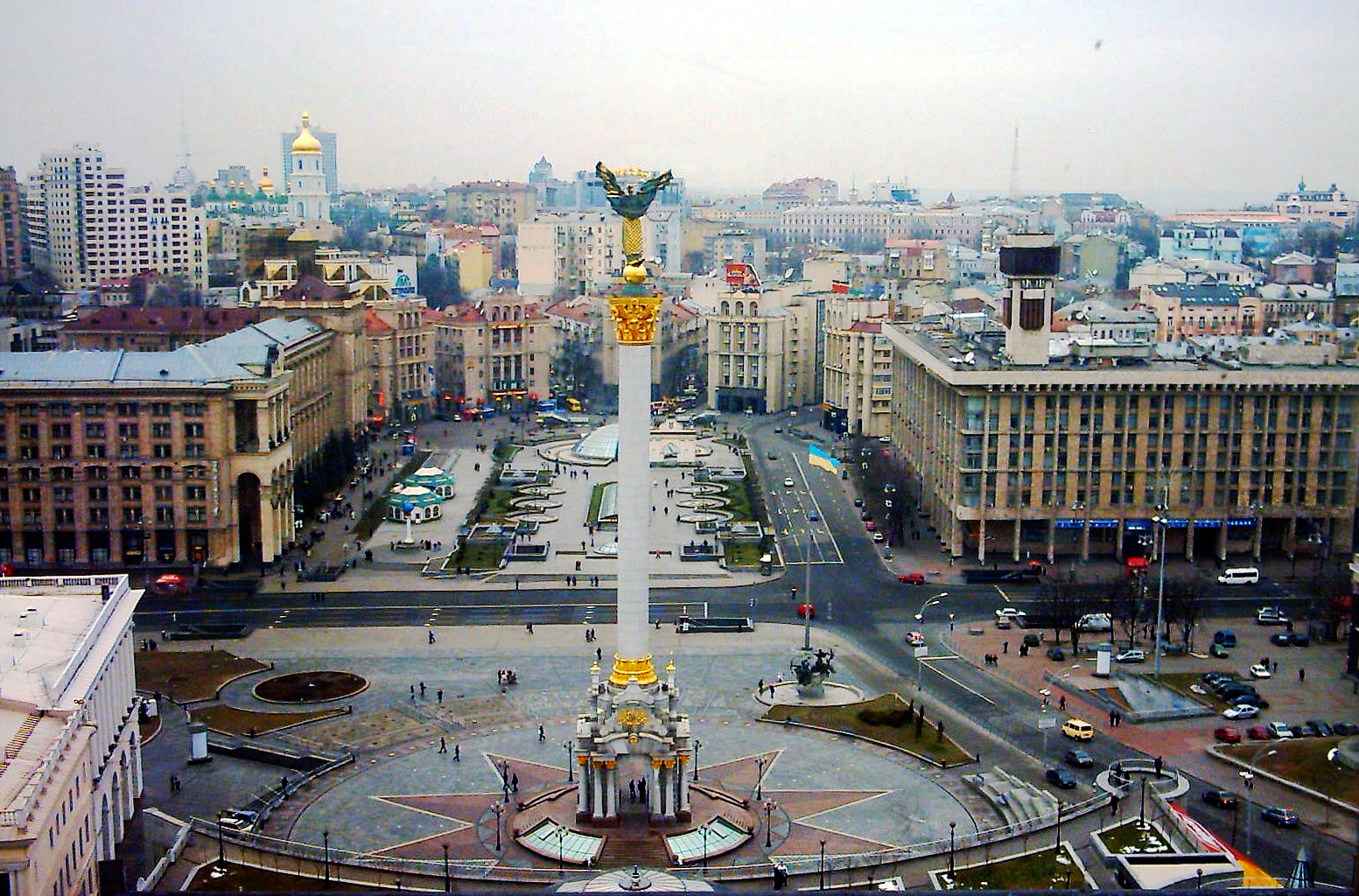
Sat in a café overlooking Kyiv’s Independence Square, where nearly a decade ago hundreds of thousands of frustrated Ukrainians protested and toppled Viktor Yanukovych — Russian President Vladimir Putin’s satrap — the 38-year-old mother-of-one, whose partner is now serving as a combat doctor in Bakhmut, spoke about the the possibility of another Maidan.
The 2014 Maidan Revolution had unforeseen consequences, of course, setting in motion events that have led Ukraine to where it is today — defending itself against a Russian invasion ordered by a revanchist and resentful Putin. And much as that color revolution had repercussions, so will the war, which is forging a strong sense of nationhood and raising huge expectations of a better future — expectations that will be hard to meet.
Sovsun isn’t alone in seeing another upheaval on the horizon. A former Ukrainian cabinet minister told me matter-of-factly, “You know, Maidan could happen again.” Asking not to be named so he could discuss sensitive topics freely — like many other lawmakers, reformers and civil society leaders — he was circumspect in speaking out publicly for fear of undermining the war effort and providing propaganda fodder for Russia.
“This war has triggered great hopes, and people will be very impatient for change,” he said. “They will want money and justice and the completion of the reform they demanded back in 2014, and they will want them quickly.”
And while navigating the tempestuous postwar political waters would be difficult for any leader, according to the former minister, it will be especially so for Ukrainian President Volodymyr Zelenskyy, as he’s become part of the problem — a leader with autocratic tendencies.
That may sound surprising, looking in from the outside. After all, for a year now, Zelenskyy has been lauded as the embodiment of Ukrainian resistance, and even an icon of democracy. He’s still applauded for declining America’s offer for a ride out of Kyiv when Russian tanks were a menacing 60 kilometers from the capital, and his inspirational wartime rhetoric and spellbinding oratory have been instrumental in persuading the United States and Europe to back Ukraine in its existential hour of need.
Zelenskyy’s leadership, communication skills and indomitable spirit garner praise at home in Ukraine too. His poll numbers are sky high — only the army polls higher. But seasoned observers say his 84 percent approval rating is the result of a rally-round-the-flag sentiment, and they predict his numbers will plunge once the existential threat has gone — much as they did soon after the populist comedian-turned-president was elected by a landslide in 2019, having promised to defend the interests of the people against the rich and the ruling class.
Unfortunately, Zelenskyy was unable reprise his role as TV’s “president of the people” in real life, his support at one point plummeting to just 11 percent, after sacking a reform-minded prime minister, stacking his government with friends and former business partners, and getting nowhere with his anti-corruption drive. Instead, the Ukrainian president was accused of becoming increasingly autocratic and flouting laws by issuing presidential decrees to sanction foes, all in the name of battling Russian aggression — but, according to some critics, also with an eye toward disrupting his political opponents.
Four months before Russia invaded, Zelenskyy and two close associates were also implicated in offshore financial activity. Based on the Pandora Papers — a cache of documents revealing the offshore activities of political leaders and other prominent individuals worldwide — the Organized Crime and Corruption Reporting Project disclosed that the Ukrainian leader had established offshore companies before becoming president but continued to profit from them after taking office. Zelenskyy, for his part, denied any money laundering or illegality with the funds.
A woman looks at a memorial dedicated to late Euromaidan activists along the Alley of the Heavenly Hundred Heroes | Chris McGrath/Getty Images
Reproach for his prewar record is not for now, political opponents say — but after the guns have gone silent, there will be questions regarding events leading up to the war, and why Zelenskyy ignored stark intelligence warnings from the West about the high probability of a Russian invasion and failed to put Ukraine on a war footing much earlier.
Now and again, however, those questions are raised even in the middle of the war — the issue last flared up in August, when a cascade of public criticism followed Zelenskyy’s remarks on why he downplayed the warnings of an imminent attack, claiming he had to because Ukrainians would otherwise panic, flee and trigger economic collapse.
Opposition politicians and civil society leaders interviewed by POLITICO said Zelenskyy will also be under the gun over how he and his tight-knit team of old pals and onetime business partners have governed during the war — in a way not dissimilar to how they did so before the invasion, trying to establish a “managed democracy” with one dominant party.
“Of course, we need to support the government, and we need to remain united,” said Mykola Knyazhytsky, an opposition lawmaker from the western city of Lviv. “But I worry about the future of democracy in my country. Even in wartime, there must be political opposition, the democratic process must continue, there must be parliamentary oversight,” he said.
Like others, Knyazhytsky noted that Zelenskyy’s taking advantage of presidential wartime authority and martial law to grab more power, to control the television media, to sideline parliament and to disregard legislative oversight on how government funds are being disbursed — and to whom — and whether its beneficiaries are business allies of the Ukrainian president or companies tied to members of his ruling party.
Some also fear the global adulation Zelenskyy’s now receiving is feeding a folie de grandeur. “He thinks he’s the number one politician in the world and that Joe Biden is way, way below him, and even further down [are] leaders like Macron and Scholz,” the former minister said, adding that it isn’t healthy and augurs badly. Like others, he mentioned that the Ukrainian leader seems to begrudge sharing the stage or the limelight, much like an actor wanting all the best lines, while a former Zelenskyy aide said his office is always scouring polling data to check no one is eclipsing him.
According to critics, this determination to be an undiminished protagonist may go some way in explaining why Zelenskyy is spurning calls to form a coalition government, or a government of all the talents in Ukraine, during the country’s hour of need.
But Tymofiy Mylovanov, president of the Kyiv School of Economics who is also a former minister of economic development and an informal adviser to the government, dismisses the claim that Zelenskyy has an autocratic streak. “Fundamentally, Zelenskyy responds to what people want . . . In my view, Ukraine is very lucky to have him. I think previous presidents would have capitulated in the first few weeks of the war and negotiated,” he said.
According to Mylovanov, Zelenskyy is building a nation-state and thus has no choice but to bypass institutions because too often they’re captured by vested interests. “No one knows what bigger perspective Zelenskyy has in mind. I think he has changed his views over the last three years on the job as he learns and as he understands the broader perspective and the forces at play. I think, in many ways, he understands more than most of us,” he added.
And in January, during one of his nightly television addresses, Zelenskyy had indeed assured Ukrainians that “there will be no return to the way things used to be.”
But those remarks came in the middle of a corruption scandal surrounding illicit payments and over-inflated military contracts, which led to a string of resignations and dismissals of several senior Ukrainian officials — including five regional governors and four deputy ministers. The scandal came to light after an investigative journalist published details of fraudulent contracts when the government failed to act.
Meanwhile, Zelenskyy’s assurances don’t assuage some veteran observers of the country either. “We have not seen significant enough efforts to address corruption — although perhaps with one important exception,” said a former senior U.S. diplomat who has considerable experience in Ukraine. “I think they really are trying to prevent diversion of any of the massive Western assistance they’re receiving. I believe they do understand the risks, if there were to be a major scandal.”
But the former diplomat said that what struck him in recent meetings with opposition politicians and civil society leaders in Kyiv was how, “on the one hand, they truly appreciate Zelenskyy’s strength as a war leader,” but are “deeply worried also about corruption and his authoritarian style.”
“In their minds, there is going to be a reckoning as soon as the war ends,” he said. “And I think that’s probably going to be true.”
*****
Seymour Hersh wrote an article recently about Bill Burns’ trip to Ukraine and its partial purpose in dressing down Zelensky for over-the-top corruption antics by him and those in his administration, which reportedly led to his firing of 10 officials:
The issue of corruption was directly raised with Zelensky in a meeting last January in Kiev with CIA Director William Burns. His message to the Ukrainian president, I was told by an intelligence official with direct knowledge of the meeting, was out of a 1950s mob movie. The senior generals and government officials in Kiev were angry at what they saw as Zelensky’s greed, so Burns told the Ukrainian president, because “he was taking a larger share of the skim money than was going to the generals.”
Burns also presented Zelensky with a list of thirty-five generals and senior officials whose corruption was known to the CIA and others in the American government. Zelensky responded to the American pressure ten days later by publicly dismissing ten of the most ostentatious officials on the list and doing little else. “The ten he got rid of were brazenly bragging about the money they had—driving around Kiev in their new Mercedes,” the intelligence official told me.
Hersh’s article is behind a paywall. It’s $5/month for a subscription. You can watch Kim Iversen break down the article below.
There was also a report last summer of high-ranking Ukrainian officials buying up luxury real estate in Switzerland while the average Ukrainian youth is dying at the front.