Ben Aris: A blueprint for a Ukrainian peace deal

By Ben Aris, Intellinews, 4/28/23

Talk of peace plans is back in the news after China’s President Xi Jinping and Ukrainian President Volodymyr Zelenskiy had a “long and meaningful” telephone call on April 26.

But a workable formula still seems a long way off. The Russian and Ukrainian starting positions are so far apart it seems impossible to close them. The Kremlin is insisting that not only does it keep all the land it has captured but that Kyiv recognises the four Ukrainian regions Moscow annexed in September as Russian. Kyiv says that talks can’t start until all Russian troops have left the country and returned to the 1991 borders. Obviously these two positions are irreconcilable. There is no common ground on which to start talks.

China entered the diplomatic fray on the anniversary of the start of the war with a 12-point peace plan proposal and is trying to position itself as a neutral arbitrator. And it is true that of all the great powers, China is best positioned to bring a deal about. Xi is as close to President Vladimir Putin as a foreign leader can get and, while Beijing’s relations with Washington are less than good, they are at least, for the meantime, still cordial. Moreover, with his trip to Moscow to see Putin in March, Xi has drawn up a chair at the top table of international diplomacy. China’s position on the war can no longer be ignored.

Having said all that, the peace deal that China has proposed is also a non-starter. While the text was full of nice sentiments like “respect for territorial sovereignty”, “an end to hostilities”, and the “prevention of the use of nuclear weapons” the practical part, where the lines of demarcation should be and who controls what territory, are no better than the Russian demands. China’s plan would concede the Donbas, the land bridge and Crimea to Russia and turn the whole of eastern Ukraine into a demilitarised zone.

Nevertheless, it’s a starting gambit that no one expects to be accepted and the goal is to start talks, not draw up an ideal solution at the first pass. What is encouraging is that Xi seems to be genuinely interested in seeing an end to the war.

So what would a possible deal look like? Ukraine and Russia came within a whisker of doing a deal in May, until it was reported that UK Prime Minister Boris Johnson flew into Kyiv and killed it off, saying that the West would not support any peace deal with Russia.

However, during the April process real progress was made and several points were agreed between the Russian and Ukrainian sides that can be built on. The points in a deal would have to deal with the problems listed below. And before proceeding further it should be acknowledged that the atmosphere is currently so toxic it would be a miracle if many of these suggestions could be made to work.

Nato: The first and easiest point to agree on is that Ukraine should give up its Nato ambitions and return to a position of neutrality that was enshrined in its constitution until 2014, when former President Petro Poroshenko changed it and made Nato membership an national ambition.

The Russian Ministry of Foreign Affairs issued an eight-point list of demands in December 2021 that in effect only had one demand that really mattered: Ukraine be permanently barred from joining Nato by a “legally binding guarantee” to that effect.

The Ukrainian negotiators conceded the point and suggested that instead Ukraine sign bi-lateral security agreements with all its Western partners – something the Russian delegates accepted.

The US refused to accept Russia’s insistence on locking Ukraine out of Nato in the January round of diplomacy just before the war, but the point here is to ensure Ukraine’s security, not for it to join Nato per se – something that the US seems more keen on that it cares to admit.

Russian security deal: Any security deal for Ukraine needs a similar security deal for Russia if stability is to return to Europe. The problem with Nato, as far as Russia is concerned, is that it is excluded from the treaty, which was specifically set up to protect Europe from the Soviet Union. The Kremlin argues that the Soviet Union no longer exists and in 2008 proposed Europe sign off on a new post-Cold War pan-European security pact that this time includes Russia and takes in the new realities – a proposal that was rejected out of hand.

For security deals with Ukraine to work, this concern of Russia’s over its security also needs to be addressed, and the idea of a new pan-European security pact needs to be revived. However, as Russia has already drawn up a template, this should be relatively easy, as there is plenty of common ground.

At the same time, once peace arrives, the arms control talks that were kicked off with the signing of a new START treaty in January 2021 should be revived and all the lapsed Cold War missile and security agreements put back in place.

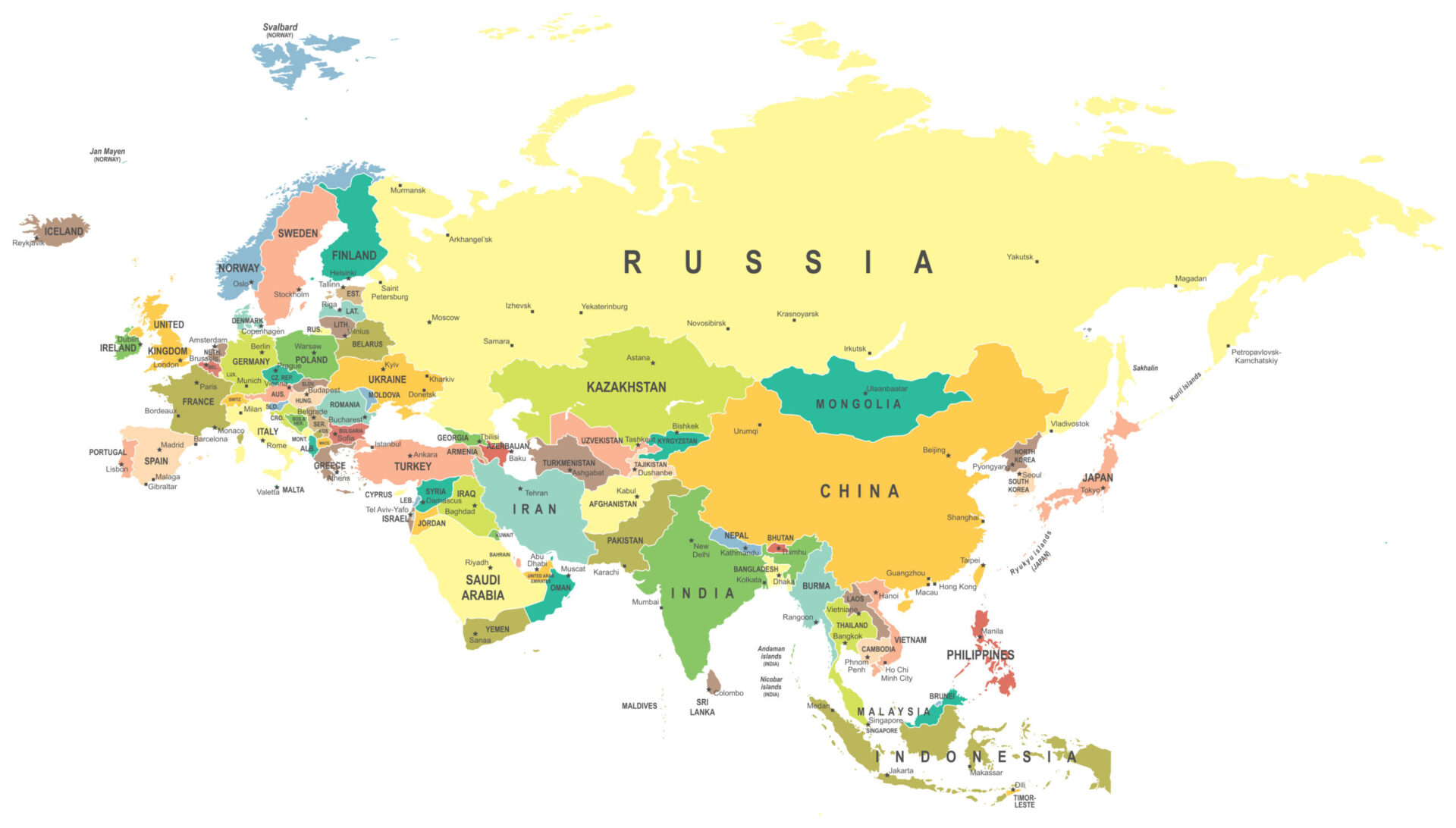
Donbas and the land bridge: The question of territory will be much more difficult, as obviously Russia will not want to give up any territory it has captured without being forced to.

Of all the territory that Russia now holds in the southeast, it has the least claim to the land bridge, which was occupied at great military cost, including the destruction of Mariupol, the main city in the region. The referenda held last September as part of the annexation were an even more obviously sham than that held in Crimea in 2014. As part of a lasting deal – one that not only ends this war, but prevents the next one – the land bridge should be returned to Ukraine.

The large numbers of Donbas residents holding Russian passports – some 600,000 people – makes the question of the Donbas region much more complicated to solve. The situation is made even more complicated by the share of the locals that genuinely want to join Russia. Over the last eight years in an underreported story, the Ukraine army has been shelling the towns in the Donbas, including residential areas with civilian casualties, creating local animosity amongst a proportion of the local population.

The Russian constitution obliges the government to protect Russian citizens wherever they are, which has been used as a justification for launching the “special military operation” but is thin grounds for the occupation of the territory, and is no grounds for annexation.

During the April peace talks Ukrainian President Volodymyr Zelenskiy offered to meet with Putin personally to negotiate on the status of the Donbas. One option on the table was to grant the region some sort of “autonomous” status, but within Ukraine. That would hand political control to Moscow that would clearly back the local regimes, as it has done in South Ossetia and Abkhazia that were hived off Georgia. The Kremlin signalled it was open to this conversation, but it is not clear if it would accept it.

Another choice would be to create a new country, “Donbas Republic”, (without the “the” as the definite article is used for regions but not countries), but for the local economy to be viable it would need to keep Mariupol as a port and access to the sea. It’s unlikely either side would agree to this as, there is no precedent for a country based on the Donbas region.

The most likely outcome is a stalemate where the issue of the Donbas is kicked down the road to be solved “later” by some form of “referendum” or commission and turns into a frozen conflict, similar to northern Cyprus.

Crimea: Russia will never agree to give up Crimea under any circumstances. While the Kremlin can invent some excuses to lay claim to the Donbas, Russians believe Crimea is part of Russia and has been since it was annexed by Catherine the Great in the 16th century. Even the Ukrainians saw it as “Russian,” at least in a cultural sense, according to Gallup polls taken before the war. However, one fix here would be if the Kremlin agreed to pay for it, like the Tsar’s sale of Alaska to the US.

An obvious price would be $300bn – three times more than the value of the entire pre-war economy – which would solve the problem of how to expropriate the frozen Central Bank of Russia (CBR) money that can’t be touched legally thanks to Europe’s strong property rights. There is a chance the Kremlin will agree to this, as it has surely already written that money off anyway. At least another Alaska deal would bring some sort of closure for everyone involved.

Although an ugly solution, it has the benefit of reducing tensions by putting some legitimacy on Russia’s occupation and provides Ukraine some tangible compensation for its loss. Many Ukrainians would accept the deal as a compromise that allows them to rebuild their ruined country, and that would contribute to avoiding a new war in the future. It would provide the ready cash Ukraine needs to rebuild, which is very unlikely to be provided by its Western partners, private investors or multilateral development banks.

Free trade agreements: The final and key part of a peace plan that will last is to sign free trade agreements (FTAs) between the EU, Ukraine and Russia.

Ukraine was invited to join the EU last July, but in reality it has no chance of doing so for at least a decade, as the EU is not ready for Ukraine mainly because of the size of Ukraine’s agricultural sector. That was amply illustrated by the recent bans on Ukrainian wheat to Central Europe, which has crashed the local grain markets.

A new FTA, or an expansion of the Deep and Comprehensive Free Trade Area (DCFTA) already in place, would allow the EU to regulate imports from Ukraine, but also let Ukraine trade its way out of its current economic abyss and so negate, or even eradicate, its dependence on IMF programmes or donor loans.

When Rome finally destroyed Carthage for the first time, the city quickly bounced back by energetically trading with Rome and was able to repay all its reparations to Rome, early and with interest. The fact that Rome destroyed Carthage a second time, and much more thoroughly, only highlights the need to think long term and build a peace that allows for growth and recovery as well as simply stopping the shooting.

Import duties on Ukrainian goods to the EU have been temporarily suspended, but the current DCFTA system of quotas is so small they are used up in the first weeks of every year.

An FTA between Russia and Ukraine would also reopen Ukraine’s eastern border to trade, which would only add to its income. Moreover, entrepreneurial Russians, who already know the market well, would pour into Ukraine, and this is the fastest route to real foreign direct investment (FDI), unsavoury as that may sound.

And if there is a FTA between Ukraine and Russia, there needs to be one between Russia and the EU too, as open borders between Ukraine and EU as well as Ukraine and Russia will simply push Russian goods through Ukraine into the EU and vice versa. The Russians will be as keen to regulate trade with Ukraine crossing its border as the EU. Indeed, it was the EU’s refusal to include Russia in Ukraine’s DCFTA talks that caused the beginning of the worsening of relations between all involved.

The benefits of a new comprehensive trade deal between Russia and the EU would also bring huge new economic benefits for the EU, returning all the cheap and copious raw materials and energy, as well as access to the giant Russian consumer market – increased in size by a third by the addition of the Ukrainian market.

All of this may seem pie in the sky because of the political considerations, but a deal along these lines is inevitable thanks to the proximity of the two countries. As I wrote in another blog, [in] the geography of diplomacy, proximity matters and the geography in this case says Ukraine and Russia should be close commercial partners, even if their ideologies are currently at loggerheads. For example, despite the fact that the two have been at war for more than a year, Russian gas is still transiting Ukraine and the Russian state-owned national gas company Gazprom is still paying hundreds of millions of dollars in transit fee payments to its Ukrainian counterpart Naftogaz, scrupulously sticking to the terms of the 2019 contract. Bottom line: prosperity breeds peace and poverty leads to hate and violence.
Gordon Hahn: Can Zelenskiy’s Ukraine End the War?

By Gordon Hahn, Russian and Eurasian Studies Blog, 4/27/23

A series of European developments have demonstrated recently the accelerating dissipation of American hegemony at the hands of the Sino-Russian bandwagon seeking to organize the world’s ‘Rest’ away from the West and the US hegemonic system. Now the leaking has turned into a flood. Chinese president Xi has lassoed Ukrainian President Volodomyr Zelenskiy for negotiations to end or at least stop the NATO-Russian Ukraine war despite apparent US opposition to any such talks or even a ceasefire as stated by numerous US officials in recent weeks. Ukraine’s defection from the American NATO-Ukraine project-turned Russian regime change by proxy war puts Washington in a tight spot and might produce drastic measures.

As I noted recently, a series of European leaders were preparing for trips to the Forbidden City to consult on economic and political issues with Chinese officials. Brazil’s President added the weight of South America’s most powerful state when he met with Xi and called for for a Ukraine peace conference to be led by China. But it turned out that the most important pilgrimage to Beijing was that of French President Emmanuel Macron. The leader of one of NATO’s and the EU’s key members and contender for leadership in Europe announced what many conservative dissidents from across Europe have been stating for years. After meeting with XI, Macron noted in an interview on his flight back to Paris that Europe should avoid “vassal” and “follower” status in relation with the US and instead seek “strategic autonomy” as a “third pole” in the international system along with the US and China. Such a development would obviously represent the removal of the key building block in the American or Western pole in the international system. Washington and Brussels, which had enjoyed hegemony since the Cold War’s end, would see the end of the unipolar system they sat atop of and begin to vie for Beijing’s favors, even as the last protects the hated Russians.

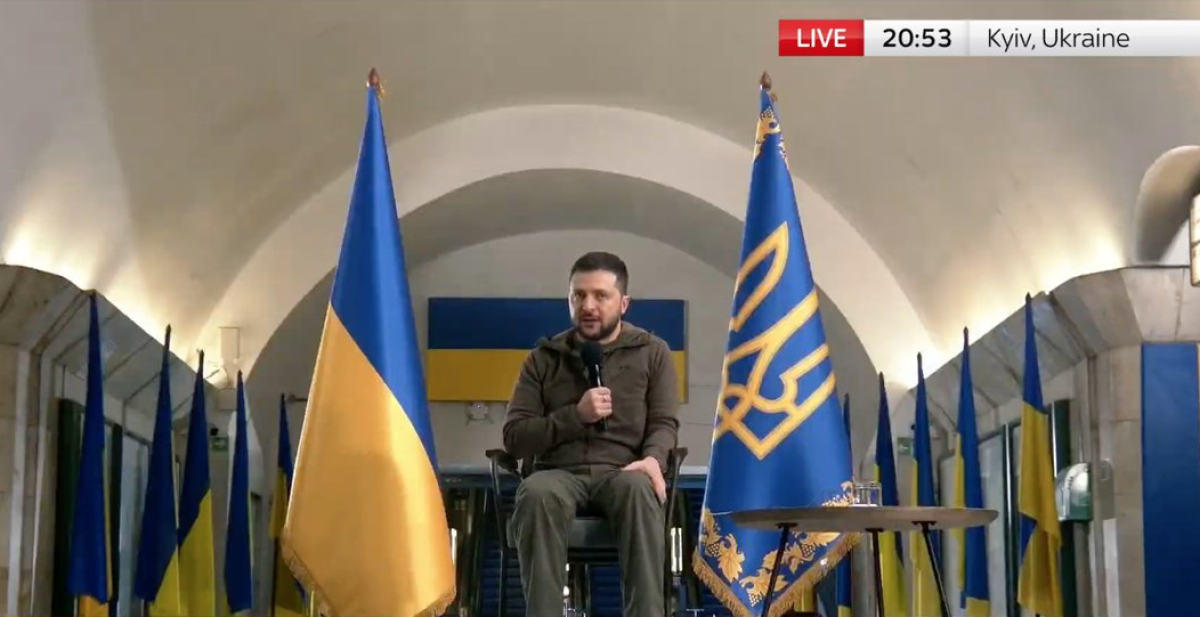
Now comes Zelenskiy’s call to XI and the latter’s acknowledgement that they discussed involving Ukraine in pursuit of a peace process with Russia and the announcement that Beijing is appointing a special envoy to Kiev to coordinate preparation for talks. The fact that Zelesnkiy initiated the contact with Xi and that it came as Ukraine’s hold on the pivotal Donbass transport hub of Bakhmut was being completely broken suggests that Zelenskiy, understanding that Western aide will be too little too late to prevent a Russian march to the Dnepr River which will force the government’s withdrawal from Kiev, sees the handwriting of Ukraine’s total and utter defeat is on the wall. This is a wise move but what that may be too late for him, the Maidan regime, and even Kiev’s sovereignty over Ukrainian territory–the latter being under threat not just from Russia but also by dint of its dire circumstances by Poland and even the US and NATO.

I recently noted Seymour Hersh’s reports that CIA Director William Burns while in Kiev earlier this month handed Zelenskiy a list of 35 Ukrainian generals who were involved in actions skimming $400 million of Western assistance to Ukraine since the war began. Burns reportedly told Zelenskiy that he, the Ukrainian president, should have been at the top of the list. Zelenskiy was thus forced to fire the most ambitious military corruptionaires on the list. This suggests that Washington has serious hold over Zelenskiy and can control Ukraine’s war policies, putting aside Kiev’s full dependence on Western financing for its state budget. But not only does this mean that Washington and Brussels can now manipulate Zelenskiy even more than they had prior to presenting their intelligence acquired from eavesdropping on Kiev’s internal communications and that more than ever Ukraine is a de facto NATO member and a Western satellite state fully reliant on the alliance, especially Washington, for its survival but that Washington can deploy intelligence to raise the tensions in Ukrainian civilian-military relations and those specifically between Zelenskiy and his generals among others. The compromising materials gathered on Zelenskiy could be deployed in future to peak the temperature and then recruit generals, in particular chief of the Ukrainian General Staff Viktor Zalyuzhniy, ultranationalists, neofascists, or others to mount a coup against and/or an assassination of Zelenskiy for any betrayal of the interests of US President Joe Biden, NATO, and other core Western interests by making peace with Putin under Chinese auspices. This would not only out an end to the Western hopes of parlaying the NATO-Russian Ukraine war into the demise of Putin and his regime but would place Beijing above the ‘indispensable nation’ as the chief arbiter of international politics. In Washington and Brussels avoiding such an outcome is valued far more highly than Zelenskiy’s life and the survival of Ukraine.

It is not exactly clear what connection there is in Zelenskiy’s mind between his reaching out to Beijing…with previous pronouncements made by Zelenskiy and Polish President Andrzej Duda about the ‘dissolution’ of borders between Poland and Ukraine and what I suggested many months ago was the real possibility of Polish or NATO forces [going] into Western Ukraine to black any Russian advance beyond the Dnepr. However, it is clear that such a plan can be carried out without Zelenskiy at Kiev’s helm. In sum, if there is no US imprimatur on Zelenskiy’s contacts with Beijing and feelers for possible talks with the Kremlin, then Zelenskiy has put himself in a very precarious position. Whether its Nord Stream, Trump, his son Hunter, or simply approximation of the truth, Biden has shown he is no less ruthless than any other tyrant. Biden’s audacity and that of those who help determine his policies in Washington, Brussels, Davos, and elsewhere will only be emboldened to take desperate actions, given the rapidly deteriorating situation on the Ukrainian front as the Russian winter offensive slowly and methodically gains steam and now encircling troops in Bakhmut, Avdeevsk, and elsewhere, the beginning of the 2024 presidential campaign, and the high stakes of the presidential and congressional election’s outcome for Biden, his family, patrons, and allies.

Lee Fang: How The FBI Helps Ukrainian Intelligence Hunt ‘Disinformation’ On Social Media

internet writing technology computer
Photo by Markus Winkler on Pexels.com

By Lee Fang, Website, 4/28/23

Lee Fang is a journalist with a longstanding interest in how public policy is influenced by organized interest groups and money. He has previously written for The Intercept and The Nation.

The Federal Bureau of Investigation pressures Facebook to take down alleged Russian “disinformation” at the behest of Ukrainian intelligence, according to a senior Ukrainian official who corresponds regularly with the FBI. The same official said that Ukrainian authorities define “disinformation” broadly, flagging many social media accounts and posts that he suggested may simply contradict the Ukrainian government’s narrative.

“Once we have a trace or evidence of disinformation campaigns via Facebook or other resources that are from the U.S., we pass this information to the FBI, along with writing directly to Facebook,” said llia Vitiuk, head of the Department of Cyber Information Security in the Security Service of Ukraine.

“We asked FBI for support to help us with Meta, to help us with others, and sometimes we get good results with that,” noted Vitiuk. “We say, ‘Okay, this was the person who was probably Russia’s influence.'”

Vitiuk, in an interview, said that he is a proponent of free speech and understands concerns around social media censorship. But he also admitted that he and his colleagues take a deliberately expansive view of what counts as “Russian disinformation.”

“When people ask me, ‘How do you differentiate whether it is fake or true?’ Indeed it is very difficult in such an informational flow,” said Vitiuk. “I say, ‘Everything that is against our country, consider it a fake, even if it’s not.’ Right now, for our victory, it is important to have that kind of understanding, not to be fooled.”

In recent weeks, Vitiuk said, Russian forces have used various forms of disinformation to manufacture fake tension between President Volodymyr Zelenskyy and Valerii Zaluzhnyi, the four-star general who serves as commander-in-chief of Ukraine’s military.

Indeed, recent reports have focused on the relationship between the two Ukrainian leaders. The German newspaper Bild reported that Zelenskyy and Zaluzhnyi had argued regarding tactics deployed in the battle over Bakhmut. Vitiuk said that any notion of conflict between Zelenskyy and his military chief, however, is false.

“They try to create problems in Ukraine, and they try to sow the seeds of misunderstanding between Ukraine and our partners that support us,” said Vitiuk.

Vitiuk, a senior official in Ukraine’s domestic intelligence agency, spoke to me this week at the RSA Convention in San Francisco, an annual gathering that brings together a collection of cyber security firms, law enforcement, and technology giants.

Full article here.

Taking the Capitalist Road Was the Wrong Choice For Ukraine – My Interview with Expert Renfrey Clarke

By Natylie Baldwin, Covert Action Magazine, 5/5/23

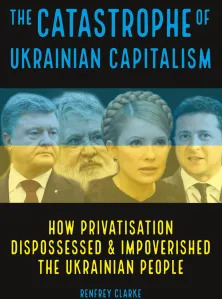
Renfrey Clarke is an Australian journalist. Throughout the 1990s he reported from Moscow for Green Left Weekly of Sydney. This past year, he published The Catastrophe of Ukrainian Capitalism: How Privatisation Dispossessed & Impoverished the Ukrainian People with Resistance Books.

In April, I had an email exchange with Clarke. Below is the transcript.

Natylie Baldwin: You point out in the beginning of your book that Ukraine’s economy had significantly declined by 2018 from its position at the end of the Soviet era in 1990. Can you explain what Ukraine’s prospects looked like in 1990? And what did they look like just prior to Russia’s invasion?

Renfrey Clarke: In researching this book I found a 1992 Deutsche Bank study arguing that, of all the countries into which the USSR had just been divided, it was Ukraine that had the best prospects for success. To most Western observers at the time, that would have seemed indisputable.

Ukraine had been one of the most industrially developed parts of the Soviet Union. It was among the key centres of Soviet metallurgy, of the space industry and of aircraft production. It had some of the world’s richest farmland, and its population was well-educated even by Western European standards.

Add in privatisation and the free market, the assumption went, and within a few years Ukraine would be an economic powerhouse, its population enjoying first-world levels of prosperity.

Fast-forward to 2021, the last year before Russia’s “Special Military Operation,” and the picture in Ukraine was fundamentally different. The country had been drastically de-developed, with large, advanced industries (aerospace, car manufacturing, shipbuilding) essentially shut down.

World Bank figures show that in constant dollars, Ukraine’s 2021 Gross Domestic Product was down from the 1990 level by 38 per cent. If we use the most charitable measure, per capita GDP at Purchasing Price Parity, the decline was still 21 per cent. That last figure compares with a corresponding increase for the world as a whole of 75 per cent.

To make some specific international comparisons, in 2021 the per capita GDP of Ukraine was roughly equal to the figures for Paraguay, Guatemala and Indonesia.

What went wrong? Western analysts have tended to focus on the effects of holdovers from the Soviet era, and in more recent times, on the impacts of Russian policies and actions. My book takes these factors up, but it’s obvious to me that much deeper issues are involved.

In my view, the ultimate reasons for Ukraine’s catastrophe lie in the capitalist system itself, and especially, in the economic roles and functions that the “centre” of the developed capitalist world imposes on the system’s less-developed periphery.

Quite simply, for Ukraine to take the “capitalist road” was the wrong choice.

NB: It seems as though Ukraine went through a process similar to that in Russia in the 1990s, when a group of oligarchs emerged to control much of the country’s wealth and assets. Can you describe how that process occurred?

RC: As a social layer, the oligarchy in both Ukraine and Russia has its origins in the Soviet society of the later perestroika period, from about 1988. In my view, the oligarchy arose from the fusion of three more or less distinct currents that by the final perestroika years had all managed to accumulate significant private capital hoards. These currents were senior executives of large state firms; well-placed state figures, including politicians, bureaucrats, judges, and prosecutors; and lastly, the criminal underworld, the mafia.

A 1988 Law on Cooperatives allowed individuals to form and run small private firms. Many structures of this kind, only nominally cooperatives, were promptly set up by top executives of large state enterprises, who used them to stow funds that had been bled off illicitly from enterprise finances. By the time Ukraine became independent in 1991, many senior figures in state firms were substantial private capitalists as well.

The new owners of capital needed politicians to make laws in their favour, and bureaucrats to make administrative decisions that were to their advantage. The capitalists also needed judges to rule in their favour when there were disputes, and prosecutors to turn a blind eye when, as happened routinely, the entrepreneurs functioned outside the law. To perform all these services, the politicians and officials charged bribes, which allowed them to amass their own capital and, in many cases, to found their own businesses.

Finally, there were the criminal networks that had always operated within Soviet society, but that now found their prospects multiplied. In the last years of the USSR, the rule of law became weak or non-existent. This created huge opportunities not just for theft and fraud, but also for criminal stand-over men. If you were a business operator and needed a contract enforced, the way you did it was by hiring a group of “young men with thick necks.”

To stay in business, private firms needed their “roof,” the protection racketeers who would defend them against rival shake-down artists—for an outsized share of the enterprise profits. At times the “roof” would be provided by the police themselves, for an appropriate payment.

This criminal activity produced nothing, and stifled productive investment. But it was enormously lucrative, and gave a start to more than a few post-Soviet business empires. The steel magnate Rinat Akhmetov, for many years Ukraine’s richest oligarch, was a miner’s son who began his career as a lieutenant to a Donetsk crime boss.

Within a few years from the late 1980s, the various streams of corrupt and criminal activity began merging into oligarchic clans centred on particular cities and economic sectors. When state enterprises began to be privatised in the 1990s, it was these clans that generally wound up with the assets.

I should say something about the business culture that arose from the last Soviet years, and that in Ukraine today remains sharply different from anything in the West. Few of the new business chiefs knew much about how capitalism was supposed to work, and the lessons in the business-school texts were mostly useless in any case.

The way you got rich was by paying bribes to tap into state revenues, or by cornering and liquidating value that had been created in the Soviet past. Asset ownership was exceedingly insecure—you never knew when you’d turn up at your office to find it full of the armed security guards of a business rival, who’d bribed a judge to permit a takeover. In these circumstances, productive investment was irrational behaviour…

Read full interview here.

Russian Prime Minister Mishustin’s Remarks at Strategic Session on Improving Living Standards

Russian government website, 4/25/23

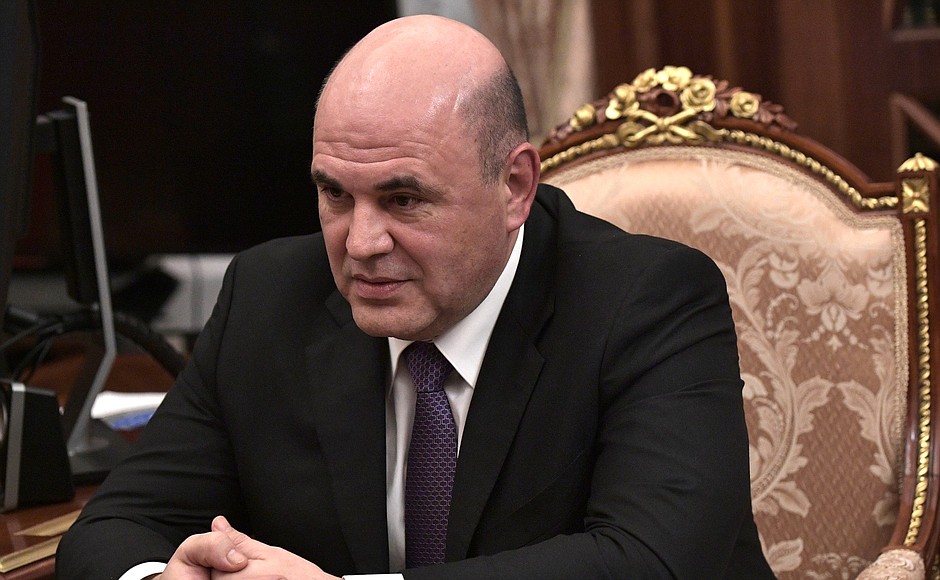
Prime Minister Mikhail Mishustin’s opening remarks:

Good afternoon, colleagues.

Today we will discuss one of the President’s priority goals – to improve the living standards of our citizens.

Fulfilling the social obligations to our people is our direct responsibility. This effort should not be influenced by any external threat or risk, including sanctions from unfriendly states.

We are working in several key areas in this effort – reducing poverty, providing targeted support to needy families with children, and increasing real salaries and incomes. We are also improving the wellbeing of our pensioners and other socially vulnerable citizens.

As the President noted, there should be no one that can barely make ends meet if they are employed. Therefore, the Government continues supporting the incomes of our citizens. Under the President’s instructions, we have raised the subsistence level twice in a special procedure – starting on June 1 last year and again the beginning of January of this year. The overall increase was over 13.5 percent. By doing this, we have maintained the real incomes of 15 million people.

We are also consistently increasing the minimum wage at a rate that is higher than inflation. It has increased since the start of this year and is now 16,242 roubles. Moreover, on January 1 of next year we will adjust it for inflation again on the President’s instruction, this time by 18.5 percent, which will raise the salaries of 4.8 million people. We are helping the regions bring the salaries of public sector employees in line with the President’s May executive orders. These employees work in many diverse areas, from healthcare and the social sphere to education, science and culture. Their salaries should be increased to the level determined by the President. We will continue this policy through this year, fully implementing the decisions envisaged in the President’s executive orders.

Another area is the programmes on reducing poverty in the regions of the Russian Federation. The majority of regions have such programmes. The local officials know better who needs assistance and how to provide it. In some cases it’s a social contract, in others retraining or upgrade courses. A flexible approach like this that considers the local specifics will allow the regions to meet their personnel needs more quickly.

The President emphasised that protection for maternity and childhood and support for families are indisputable values for each of us.

We continue to assist low-income families with children; there is an integral system for state support. The law on the unified monthly benefit in connection with the birth and upbringing of a child entered into force at the beginning of this year. Over 5 million children under 17 and 190,000 pregnant women, for whom this measure was designed, have used it.

We will continue improving the system of guarantees for our people through the social treasury to make sure they receive all of their support benefits on schedule and in full, and remotely, if they so wish, without excessive red tape and bureaucracy.

Colleagues,

I suggest discussing the objectives we need to fulfil in the near term for improving the living standards of our people.

Analysis & Book Reviews on U.S. Foreign Policy and Russia