“German journalist Alina Lipp said she was facing three years in prison in her home country for her reporting on crimes committed by Ukrainian forces against civilians. She also said that Germany would hold court hearings without her. They will not allow her to present her case as it would hamper the process. She is accused by the German authorities of supporting the Russian invasion of Ukraine and faces three years in prison under article 140 of the constitution or a monetary fine.” – India Today
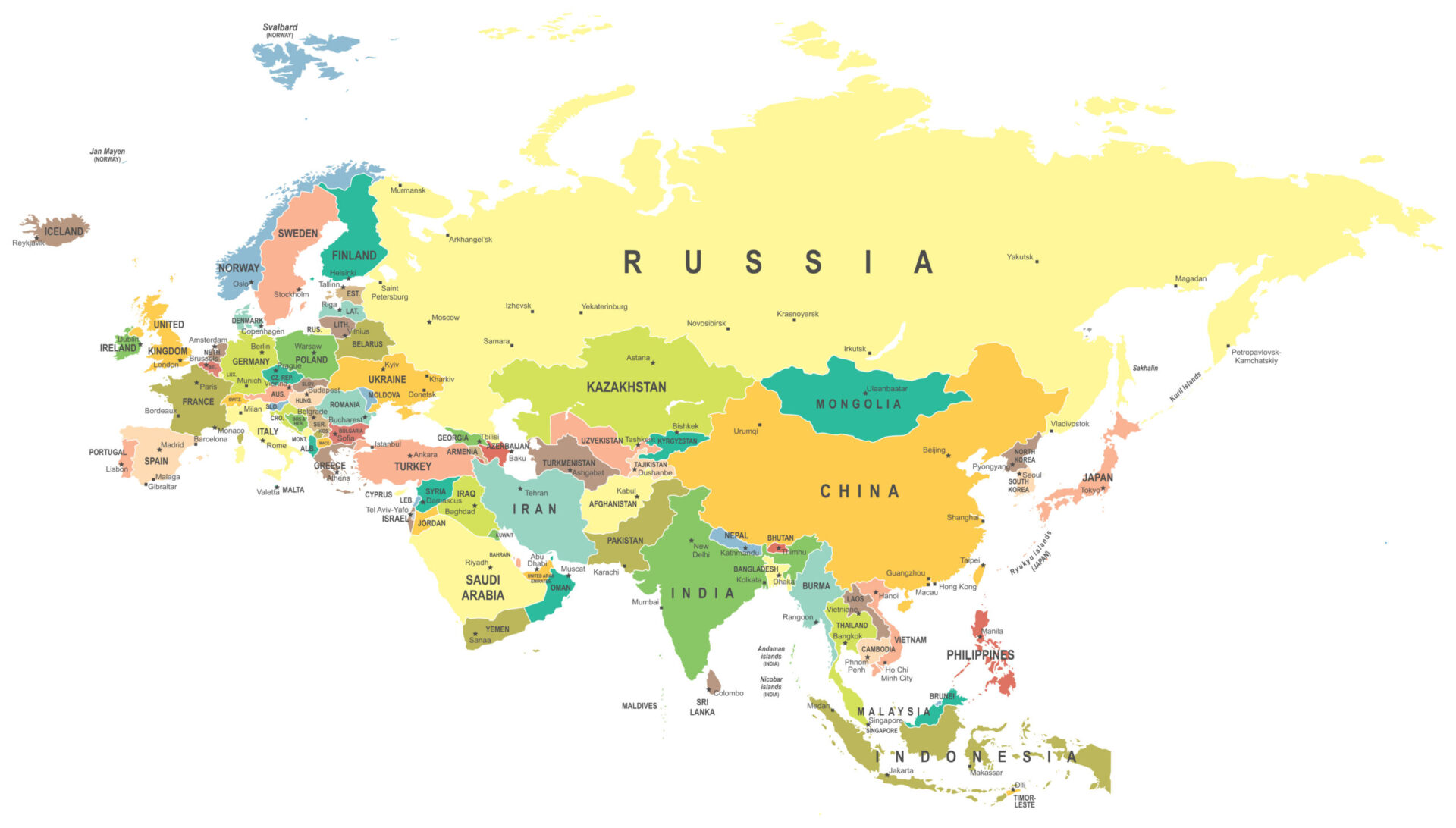
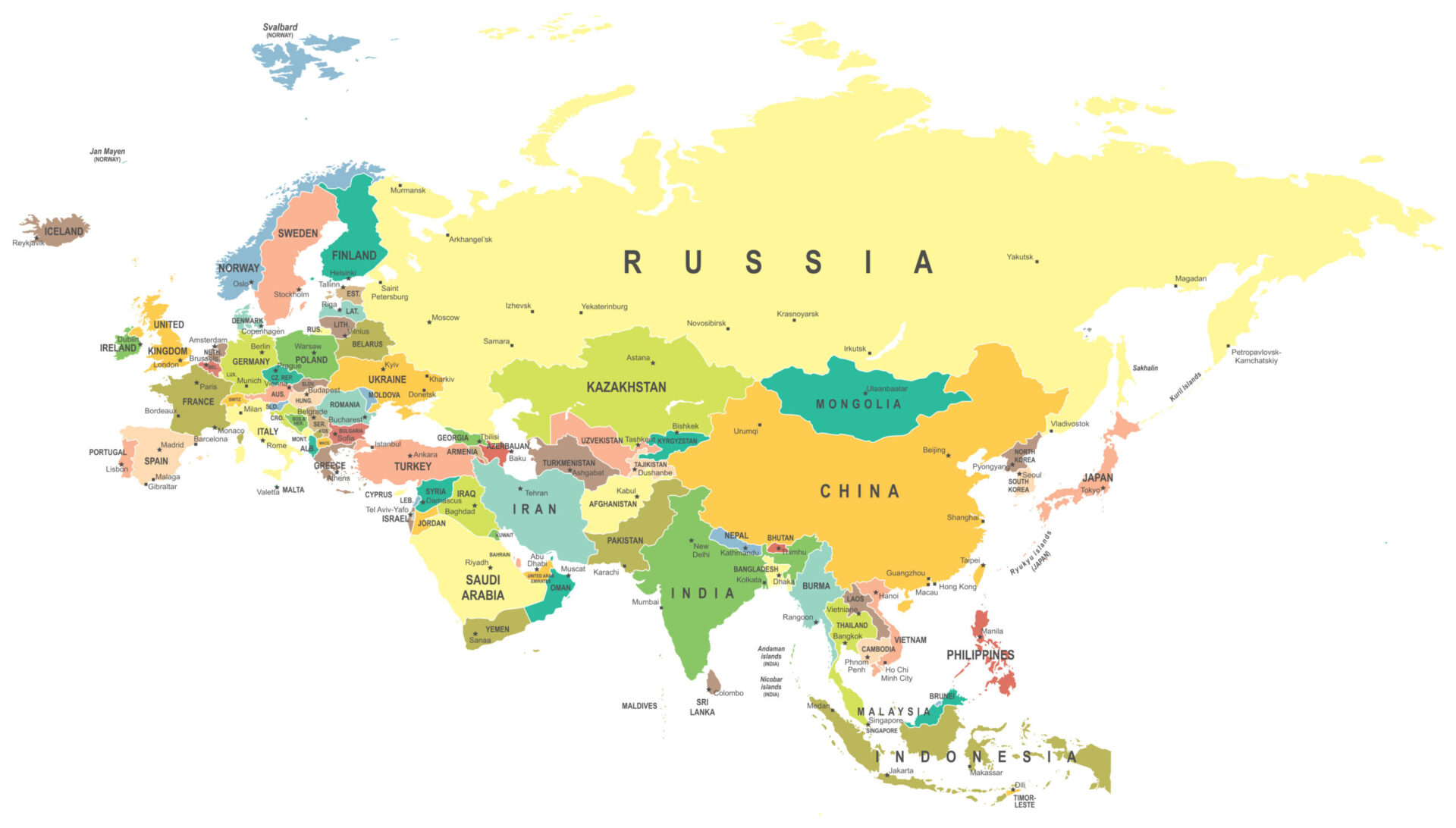
On July 20, Russian Foreign Minister Sergei Lavrov said that Russia’s war aims had been altered and that Russia might have to push further west. “Now the geography is different,” he said, “it’s far from being just the DPR and LPR [Donetsk and Luhansk People’s Republics], it’s also “Kherson and Zaporizhzhia regions and a number of other territories.”
Is Russia expanding its war goals? Are Lavrov’s comments “confessing dreams to grab more Ukrainian land,” as Ukraine’s foreign minister said?
Western commentators confidently declare that Lavrov’s comments reveal war aims larger than those declared at the start of the war. Reuters’ headline announces that “Russia declares expanded war goals,” and The New York Times’ headline declares that “Russia Signals That It May Want a Bigger Chunk of Ukraine.” That’s not surprising, though, the Times continues, because “Western officials have always scoffed at Moscow’s claims that its invasion is anything less than an act of expansion.”
Their interpretations display a confidence that ignores that they do not know what is going on in Putin’s mind. One reasonable component of interpreting Lavrov’s and Putin’s words would be to listen to what they have actually said.
Though the Times repeats the accepted Western accusation that Putin has ambitions to expand Russia and recreate the Soviet Union, there is no evidence, John Mearsheimer, has argued to support that accusation.
Though western commentators often quote Putin’s 2005 line that “Whoever does not miss the Soviet Union has no heart,” they frequently amputate it from the line that follows: “Whoever wants it back has no brain.”
Though we cannot know Putin’s thoughts, we might at least consider and analyze his words. And he seems never to have expressed a goal of conquering or absorbing Ukraine. “There is no evidence in the public record,” Mearsheimer argues, “that Putin was contemplating, much less intending to put an end to Ukraine as an independent state and make it part of greater Russia when he sent his troops into Ukraine on February 24th.”
Instead, when Putin announced Russia’s invasion of Ukraine, Mearshemeir reminds, he said, “It is not our plan to occupy Ukrainian territory.” Then, seemingly articulating his goals, he added, “Russia cannot feel safe, develop, and exist while facing a permanent threat from the territory of today’s Ukraine.”
Putin listed a number of goals at the start of the invasion, including the protection of ethnic Russians in the Donbas. The primary goal that he demanded repeatedly was that Ukraine neither became a member of NATO nor a base for NATO “weapons systems that threaten us in close vicinity to Russian territory.”
The military focus on the Donbas region was sufficient to keep NATO from Russia’s border and to keep weapons out of the vicinity from which they could threaten Russian territory. But that changed when the US sent Ukraine long range High Mobility Artillery Rocket Systems (HIMARS) that carry missiles with a range of 50 miles and have the capacity to strike Russian territory.
Western reports of Lavrov’s July 20 announcement omit his crucial line that “If Ukraine receives long-range weapons from Western countries, then the geographical tasks of the special operation of the Russian troops will change.” Lavrov did not say there was a change or expansion in Russia’s goals: he said the same task remains: “The President said very clearly, as you quoted him – denazification, demilitarization in the sense that there are no threats to our security, military threats from the territory of Ukraine , this task remains.”
The task is the same. The geography has changed because, with the US insertion of long range HIMARS into Ukrainian territory, the Donbas is no longer wide enough to ensure that there are no “weapons systems that threaten us in close vicinity to Russian territory.”
Lavrov’s message is not new. In early June, Lavrov warned that “the longer the range of weapons you supply, the farther away the line from where [Ukraine] could threaten the Russian Federation will be pushed.” Lavrov’s July message reiterated the same point. Russia’s war aims may have to extent west “Because we cannot allow the part of Ukraine that Zelensky will control or whoever replaces him to have weapons that will pose a direct threat to our territory. . . .”
The US has not only inserted those weapons into Ukraine. According to the same New York Times article that says Russia has expanded its goals and wants a bigger chunk of Ukraine, “American military officials said Wednesday that they planned to send four more of the M142 HIMARS multiple-rocket launch vehicles, as well as more of the guided rockets they fire and more guided artillery ammunition.”
Ukrainian officials have also suggested that those US supplied HIMARS will be used against targets in Crimea. Vadym Skibitskyi, representative of the Chief Intelligence Directorate of the Ministry of Defense of Ukraine, said on July 16 that both Crimea and Russia’s Black Sea Fleet are targets.
The huge majority of Russians and Crimeans see Crimea as Russian territory. No Russian government could tolerate an attack on Crimea or the loss of Crimea. An attack on Crimea would be seen by Putin – or by any Russian administration – as an attack on Russia. Sending Ukraine HIMARS that can reach Russia and Ukraine’s statement that they can be used to strike Crimea mean that the geography has changed and that the line from where Ukraine could threaten Russia might be moved further west.
Former president and current Deputy Chairman of the Russian Security Council Dmitry Medvedev said on July 17 that if Ukraine attacks Crimea, the Ukrainian leadership “will be faced with a doomsday, very quick and tough, immediately.”
Though Western commentators have insisted that Lavrov’s comments signal a change and expansion of Russia’s goals in Ukraine, it is impossible to know Putin’s thoughts. Putin’s and Lavrov’s words suggest another possible interpretation. The goal has not changed: only the geography for accomplishing the goal has changed. And that geography has been changed by the insertion by the US of long range HIMARS rocket systems into Ukraine.
A month ago I wrote that Ukrainian resistance in the Severodonetsk and Lysychansk salient might experience a sudden collapse under constant Russian shell-fire. Approximately ten days after that article the collapse came, and the front moved west by about 20 km. Neither side has released reliable figures for the number of troops killed, wounded or captured, but a sober estimate suggests that surprisingly few Ukrainians fell into Russian hands. At the last minute Ukraine carried out a ragged but successful withdrawal – with video reportage showing Ukrainian troops fleeing in private cars and even walking westwards.
But the collapse did not signal the restart of mobile warfare. Instead, Russia’s momentum appears to have stalled. While Russian forces continue to shell Ukrainian lines and rear areas, at a rate somewhere in the region of 20,000 shells per day across a 30-km front that runs due north from Horlivka, reports from the contact line conspicuously lack any substantial movement of that line. Russian tactics – shell the line until it cracks then occupy the ground without resistance or Russian casualties – are extremely slow.
In the two weeks since the taking of Lysychansk the contact line has moved no more than a few kilometres west. Fronts are also stalled in Kherson and Kharkiv.
Meanwhile, Ukrainian government sources have been talking up the size of the infantry forces which have been mobilised since February. Defence Minister Reznikov claimed that Kyiv has a “million-man army” at its disposal, a number that turned out to include police forces, the National Guard and the Border Guard. Stripping those away still leaves a still very considerable force of 700,000 men and women in uniform with some military training from national service and more recent militarisation. The number is probably exaggerated but not by much – men have been forbidden from leaving Ukraine since the start of the war, and it is not hard to give a man a uniform, a rifle and a unit.
Reznikov declared that this large, if weak, force would be thrown against the Kherson front, presumably in an attempt to move the contact line east to the Dnepr River. A few days later he walked back from this plan, saying “Let’s just say, there was a little misunderstanding. I did not say that we are gathering a million-strong army. Please forgive my English, it is not my native language”. So, no “human wave” offensive in Western Kherson, but we have seen harassing attacks along the northern and southern fringes of the 1,000-km front. Casualty rates are not being reported but are likely very high for the attackers.
A “human-wave” offensive looks very unlikely, in part because of the logistical challenge of assembling a hundred thousand men in one place in secret with all the supplies and ammo they need.
Much more likely is the steady deployment of replacement troops to the contact line in the Donbas salient, who would then dig in. Even partly trained troops can hold a trench line with limited supplies. With a reserve of several hundred thousand men Ukraine can take losses of 200 men per day in the Donbas more or less indefinitely.
That situation (if it is happening) would pose a serious challenge to Russia. With a clear agenda to preserve soldiers’ lives, Moscow’s only practical strategy is the one it is using on the Donbas front: shell the enemy to pieces before occupying abandoned defence lines. The tactic keeps Russian soldiers alive, but is very, very slow.
Consider: the attack on Severodonetsk and Lysychansk began around May 6 but Lysychansk finally fell only on July 3. It took 60 days for the front line to move 30 km – 500 metres per day. Today’s rates of advance are even slower.
Kyiv can dig fortified lines all over the larger Donbas salient on to the Dnepr River. Ukraine’s Javelin missiles have neutralised Russia’s tanks and the hand-held MANIPADs can also counter airstrikes. That leaves Russia with the option: “artillery conquers, and infantry occupies”.
Geography makes Russia’s calculus worse. Ukrainian forces occupy a salient poking into Russian-held territory with Slovyansk at its northern end and Horlivka at its southern. The salient is 30 km wide and 20 km deep. With constant pressure, moving at 500 metres per day, Russia might take eight weeks to occupy it. But that would still leave half of Donetsk Oblast in Ukrainian hands, with another 40 km of ground to capture but this time on a north-south front of 80 km.
It is likely that Russia’s original plan was to take this ground with rapid armoured thrusts from the north and south to surround, neutralise and capture the Ukrainian forces inside the larger salient. Instead, Russian troops have become bogged down in a slow slogging fight over well-prepared trenches, relying on a ten-to-one advantage in artillery fire to win small advances.
HIMARS tips the artillery balance
In the past two weeks the calculus has grown worse still. Until now Russia has been able to move its flow of artillery ammunition (a few thousand tonnes per day) to within an hour’s drive of the gun line without fear of retaliation. That has changed. With a small force of US HIMARS rocket-firing trucks in operation the artillery balance has changed in three painful ways.
First, the standard rocket fired by HIMARS can fly 70 km. This means that a launch vehicle sited a protective 20 km behind the contact line can hit forward logistics facilities about 50 km beyond it – those railheads where Russian ammunition moves from trains to trucks for the last leg to the gun line. As soon as HIMARS arrived, Ukraine claimed (reliably) to have hit some 30 of those logistics points, destroying large quantities of stored Russian artillery ammunition. More importantly, the rail heads have to move further away from the gun line, slowing the flow of ammunition forwards as the same number of trucks does double the work.
Second, HIMARS rockets have an accurate inertial guidance system which allows them to hit fixed ground targets (like a warehouse or a railhead) with their 100 kg warhead. Inertial guidance is internal to the rocket, so it cannot be jammed or spoofed. This means that Russia must now spread its logistics depots among more sites and that those sites must be concealed from US satellite reconnaissance. That slows up the logistics flow.
Third, while a HIMARS rocket is not invulnerable to anti-missile defences, it is hard to hit, coming in low and very fast (500 metres per second), with a flight time from launch to impact of only about 120 seconds. If Russia wants to hit incoming HIMARS rockets it must spread its surface-to-air launchers more thinly, opening space in which the remnants of Ukraine’s air force might be able to operate once more.
Reports from the contact line corroborate that the rate of incoming Russian artillery fire has indeed slowed.
Sited well behind the contact line, HIMARS launchers are harder to kill because they can operate under cover from shoulder-launched air defence and from Ukraine’s remaining large air defence missile units. They can also move (fast) within seconds of firing rockets, skipping out of the way of retaliation.
Harder, but not impossible – Russia has already claimed three launcher kills out of the eight presently in service. That remaining threat might be neutralised if the US finally decides to supply extended-range HIMARS ammunition to Ukraine.
HIMARS has two extended range options. The first is a standard rocket with a smaller warhead that can fly 135 km. That would mean hitting a target 50 km behind the contact line from 85 km away – a range that makes a counter-strike very unlikely.
The second is a much larger rocket that carries a 200 kg warhead for 300 km. This weapon (TACAMS) offers a new range of possibilities to Kyiv – for example its combination of precision (a few metres) and payload would allow it to damage or even destroy the Kerch Straits bridge that connects Crimea with Russia. It could do the same to the bridges across the Dnepr that supply Russian troops in western Kherson and that would also supply an assault on Odesa. Since Moscow regards Crimea as sovereign Russian territory an attack on it raises the alarming possibility that Moscow might regard a TACAMS attack on Crimea as an American act of war against Russia. The possibilities for TACAMS-driven escalation are frightening.
Wither Russian strategy
What does all this mean for Russia’s strategy from here on? It is worth remembering that Russia is still in its declared “Phase 2” of the “Special Military Operation”. I speculated two months ago on what Phase 2 might contain. Whatever its aims (and those are very much not public) they were probably set with an assumption that Russia could move the contact line faster than 500 metres per day.
Phase 2 might have been reduced to occupation of the whole of Donetsk Oblast. If it includes an advance to the Dnepr River Russian forces would have another 70 km to take, on a front some 400 km long. It is hard not to conclude that if Phase 2’s objective was to occupy trans-Dnepr Ukraine the aim is now out of reach absent a full mobilisation of Russia’s armed forces. It is highly unlikely that a full mobilisation is politically possible – Putin’s support would drain away, while US Neocon activists inside and outside the Administration might finally get their way and drag the West into a war with Russia. Moscow has repeatedly confirmed that fresh conscripts will not be sent to fight in Ukraine, while reports from inside Russia suggest that recruitment of non-conscripts is proving difficult, slow and surprisingly expensive.
The same conclusion seems to apply to the taking of Odesa. There is no reason to believe that the rate of advance on Odesa would be any faster than it has been in the Donbas. Indeed, an attempt to advance on both fronts simultaneously would dilute Russia’s artillery advantage in both areas, perhaps fatally, and Ukrainian nationalist sentiments are likely to withstand more pain west of the Dnepr than east of it. If Odessa is out of reach then Kharkiv is equally so. Back east of the Dnepr a Russian win would have to include the capture of the main Dnepr cities – Zaporizhiye, Dnipro and Kremenchuk – each considerably larger than Mariupol and each closer to home and covered by HIMARS and Ukrainian artillery (such as it is).
It is hard to escape the conclusion that a quick win is simply no longer available to Russia, and that a slow one is out of reach too.
Where does that leave Phase 2? A clue might be found in Putin’s recent statement that the war is reaching a point at which Ukraine’s negotiating options have vanished. It is interesting to think about how negotiating options can vanish. One way is for a party to achieve unequivocal victory through the complete collapse of the other. Think of Germany in May 1945. That is not happening in Ukraine.
Another way is for one party to have reached all its goals in a way that effectively prevents the other party from upsetting them. It may be this result that Putin was referring to. Looking at the rate of advance in the Donbas, that interpretation would imply that Russia’s Phase 2 goal has shrunk to marginal additional gains in the Donbas, perhaps the capture of that small northern salient up to Slovyansk and Kramatorsk, leaving the western half of the Donetsk Oblast in Ukrainian hands.
One plan might be to take those two cities and then “freeze” the front throughout Ukraine, using artillery and air superiority to stop Ukraine from bombarding civilians in the Donbas and Kherson (which it has been doing consistently in recent weeks without comment from Western media), by systematically destroying artillery and rocket systems anywhere that they appear.
Standstill?
A unilateral standstill declaration by Moscow would leave Ukraine with two choices – either accept it, and with it a frozen conflict long term, or throw large numbers of partly trained men into near-suicidal attacks against well-prepared Russian lines covered by artillery and air support. The latter option would kill up to 100,000 Ukrainian men (initially; more if sustained) probably for no territorial gain. At present Kyiv is loudly proclaiming its intention to recover all territory occupied by Russia – a firm case of Unicorns and Rainbows – possibly in order to keep weapons and money flowing in from the West. Kyiv can of course continue to make wild statements of impossible ambitions while in practice accepting a fait accompli.
A unilateral standstill would stop the killing on both sides and would cause Western media audiences to grow bored of the Ukraine war and turn their attention to more pressing matters – inflation, living costs, national elections, the energy crisis and whatever else comes along to distract them. US audiences are already there – Ukraine is no longer high in the running order of national news programmes, or even on them at all much of the time. UK audiences too are beginning to focus on other issues, not least the replacement of a deeply Russophobic Prime Minister who has been a major cheerleader for Western support of Ukraine. A standstill would also reduce, even remove, the incidents that are presented as Russian “outrages” (like the destruction of a Ukrainian army mess in Vinnitsa last week).
A frozen conflict might in practice appeal to both sides. Ukraine could continue to plead for money and weapons from the West (being still under occupation), while Russia could declare the Operation “complete” and look to liberate its frozen foreign reserves and restart the sale of oil and gas to Europe. It must be tempting.
The alternative looks very much less tempting. Denied the ability to carry out manoeuvre warfare by Javelin and its cousins Moscow has the option of a slow, painful, expensive westwards slog, with every day bringing new accusations of outrage and war crimes, new risks of escalation from Nato or of political trouble at home, and new military funerals.
But there is a very real possibility that none of what I describe above will happen. Ukrainian forces are now more or less tank-less and plane-less, but Russian forces are very much tanked up and ready to roll. To a soldier there is always the prospect that if you push hard enough and long enough on one point your opponent’s resistance at that point will collapse, allowing your manoeuvre forces to flood through the gap you’ve created and restart the fast mechanised war that you should have enjoyed all along. With advances of 20-30 km per day on offer the Dnepr and Odessa look only one tempting week away, with tens or hundreds of thousands of enemy infantry surrendering into captivity behind your armoured spearheads as they envelop whole army corps. Cities throw open their gates – unwilling and unable to suffer the same fate as Mariupol – and Kyiv sues for an immediate peace on terms similar to the March deal in Ankara.
This is not a complete fantasy. If Russian claims for Ukrainian mortality rates (both in and behind the contact line) are correct then the new Ukrainian front in the Donbas salient might well collapse. If the 700,000 man Ukrainian national service army is as weak, partly trained and short of ammunition as it looks then it might well throw up its hands in surrender. Larger defeats have happened (and Russia’s Ministry of Defence narrates them in its Telegram feed at regular intervals).
At present there are no signs that Moscow is limiting its aims to the Donbas and Kherson, and some signs that it has larger goals in mind. With one exception at Ankara in March, whenever Moscow has been offered a choice of more violence or less violence since February it has chosen “more violence”. We have ten weeks of good fighting weather in which to find out which choice it will make now.
The agreement between Russia and Ukraine to allow the safe export of up to 20 million tons of Ukrainian wheat and other grains offers hope of easing an acute global food crisis and comes as especially good news for people in the Horn of Africa.
From Ethiopia to Eritrea and Kenya, high food prices and staples shortages have contributed to several of the world’s most dire hunger hotspots. In recent years, Eritrea has relied on Ukraine for virtually all its wheat imports.
But the grain export deal – brokered by the United Nations and Turkey, and the first major accord between the two bitter antagonists since Russia’s invasion Feb. 24 – will only help stave off looming famine in Somalia, for example, if it is allowed to work as spelled out in the agreement, and relatively quickly, experts say.
On one hand, events suggest the deal reached Friday may be offering as much false hope as genuine relief from a crisis that experts say has left more than 800 million people in some state of food insecurity.
Indeed Saturday, within hours of signing the deal, Russia sent missiles crashing into the Black Sea port of Odesa, one of several Ukrainian ports that under the deal could resume safely shipping grains to global markets. On Monday Ukraine, citing the missile attacks, said it would seek additional security guarantees to pursue implementation of the agreement.
“Yes, if the deal pulls off exactly as described it will be helpful, but it won’t make the food crisis go away,” says Daniel Maxwell, professor in Food Security at Tufts University’s Friedman School of Nutrition.
Noting that world food prices were already at critically high levels last year, Dr. Maxwell says Russia’s war in Ukraine has combined with existing drought and conflict to create a perfect storm of food supply disruption. Returning the two breadbaskets to the global market would ease pressure on supplies and prices – but first the deal has to work.
And “as the … attacks on Odesa show,” he says, “it is unlikely to pull off exactly as described.”
At the same time, others say, the world should not lose sight of the hope the deal offers, not just for easing the global food crisis, but potentially for encouraging more diplomatic breakthroughs in the five-month-old war.
Despite the attack on Odesa’s port, which Russia justified as intended for a military target, Ukraine’s deputy minister for infrastructure, Yuriy Vaskov, told reporters Monday that within two weeks he expects all Black Sea ports to be consistently exporting agricultural products.
More broadly, implementation of the agreement is going to require continuing contacts among the deal’s four signatories, which some say at least opens the door to further cooperation and diplomacy.
“The most important thing, the channels of cooperation are now open,” says Waheguru Pal Sidhu, an expert in international relations and U.N. diplomatic efforts at New York University’s Center for Global Affairs.
“The process of implementation of this deal means that all four parties will have to remain engaged, and we know from experience that over time, such mechanisms can build cooperation and even respect,” he says. “So I wouldn’t say categorically that this is just a one off, because potentially it could expand into other conversations.”
“Beacon in the Black Sea”
Under the deal, Russia would lift its blockade of Ukraine’s Black Sea ports for verified food shipments, while Ukraine would remove mines it placed in its waters to repel a Russian sea invasion. Ukraine grain shipments would resume by sea through Turkey, while the U.N. would assist Russia with its own grain and fertilizer shipments.
The deal was the first sign of diplomacy working in Russia’s war, with U.N. Secretary-General António Guterres calling it a “beacon in the Black Sea.”
But if weeks of negotiations involving Turkish President Recep Tayyip Erdoğan and Mr. Guterres finally succeeded, it was not so much because the two sides are ready for diplomacy to stop the fighting, analysts say, but because the deal gives each side things they desperately wanted.
Ukraine, which normally supplies about 12% of wheat on the global market, is anxious to empty its stuffed grain silos before spoilage sets in and the summer harvest swings into full gear.
Russia wants to resume exporting grains and fertilizers as well, but it has another motivation, experts say: Sensitive to global perceptions, Moscow was keenly aware that the Western charge it was “weaponizing food” was taking root.
“This is important for [Russian President Vladimir] Putin, he has consistently argued that Russia is a responsible player that is always willing to meet its obligations, as long as no obstacles are set up by its opponents,” says Andrei Kortunov, director of the Russian International Affairs Council, which is affiliated with the Foreign Ministry. “Russia has long been trying to convince the global community that this conflict is not the main cause of the food crisis. It may be a catalyst, but the crisis is much deeper.”
Yet the viability of the grain deal remains burdened by the still intense military conflict.
The United States has widely shared declassified intelligence and satellite imagery confirming the Russian Navy’s mining of the ports of Odesa and Ochakiv, while offering evidence that Russia mined the Dnipro River intending to cut off maritime trade. Last week Britain’s Foreign Office condemned what it said was Russia’s shelling of civilian infrastructure, including grain shipment facilities, aimed at halting grain exports and in turn laying waste to the next harvest.
For some analysts, Russia’s missile attacks on Odesa’s port were not so much aimed at jettisoning the deal, but at reminding Ukraine that deal or no deal, it remains capable of striking anywhere it chooses.
Russian message to Africa
Others say the timing of Russia’s acceptance of the deal may not have been coincidental: Russian Foreign Minister Sergei Lavrov is currently on a visit to Africa, where he is able to show this deal as a practical demonstration to regional leaders that Russia is concerned about the food shortages and taking action to remedy the situation.
“Lavrov has many things to discuss with African leaders, but food is one of those issues that Russia can leverage to its advantage,” says Mr. Kortunov. “The timing of this deal is fortuitous, and the pieces fall together pretty well. Putin gets the deal, and Lavrov can emphasize it in his meetings in Africa.”
Like Professor Sidhu, some Russian experts cite the increasingly acrimonious information war, noting that Moscow cares very much what countries in Asia, the Middle East, and Africa think, if not the West.
“Being blamed for world starvation is not what Russia would like,” says Fyodor Lukyanov, editor of Russia in Global Affairs, a leading Moscow-based foreign policy journal. “But Russian leaders seem to care less and less about accusations hurled against them by the West.”
In any case, many Russian analysts say they give the grain deal good odds of succeeding – because all parties have an interest in it, and despite the Odesa attack.
“To strike the port so soon after the deal was made, even if no grain facilities were touched” was “a bit strange,” says Mr. Lukyanov. “It’s either a brutal message that, deal or no deal, the war will continue as usual or, perhaps, just chaotic decision-making. Either way,” he adds, “it probably won’t derail the agreement. Everyone wants it to work.”
Diplomatic seed
Even so, few in Russia seem to think the grain deal suddenly portends bright days ahead for a broader diplomatic push to end the war. As many see it, the Kremlin still has key military objectives, such as completing the conquest of the Donbas region, before returning to negotiations.
Still, some say the grain deal may have planted a seed that could grow into something larger.
This deal “is just a small, incremental technical agreement [but] if it works, it will demonstrate that Russia and Ukraine can find ways to take necessary steps,” says Mr. Kortunov.
NYU’s Professor Sidhu notes that the grain deal is the second instance of U.N. involvement in negotiations between Ukraine and Russia, the first being talks that led to the release of civilians and fighters trapped at Mariupol’s devastated Azovstal steel works.
And he says the U.N. is likely to be part of any future negotiations between two parties that have no level of trust between them.
“Trust is still very much absent, so if anything is going to work it will require involvement of more than just the two, and it’s going to follow the old adage, ‘Mistrust, and verify,’” he says. “So verification is going to be key to this agreement, but eventually the verification process may lead the way to something larger.”