By Sylvia Demarest, Substack, 2/18/26
“If you wait by the river long enough, the bodies of your enemies will float by.” Sun Tzu
“Were the Soviet Union to sink tomorrow under the waters of the ocean, the American military-industrial establishment would have to go on, substantially unchanged, until some other adversary could be invented. Anything else would be an unacceptable shock to the American economy.” George Kennon
Introduction
The Soviet Union dissolved in 1991. Since then, the American military-industrial establishment has invented new enemies to justify the continuation of US militarism. After 1991, the US deindustrialized, financialized, and accumulated an enormous national debt. Neoliberalism and the rule of money became dominant, while economic inequality increased. Despite frequent failures, the military budget continued to increase. President Trump recently called for the military budget to be increased by $500 billion to $1.5 trillion. The US annual budget deficit is $2 trillion. The US national debt is now $39 Trillion. The interest paid annually on the national debt is over $1 trillion a year. Will Congress add another $500 billion in military spending?
US militarism has settled on the enemies to confront, defeat, and loot: Iran, Cuba, North Korea, Russia and China. Also on the agenda are South America, Canada, and Greenland. Israel is pushing the US to attack and destroy Iran. Will President Trump to order an attack Iran? We will soon find out.
A US armada has surrounded Iran. The armada includes two aircraft carriers, a dozen warships, and hundreds of fighter jets equipped with advanced air defense systems. In the last few days, more than 150 military cargo flights are rapidly transferring weapon systems and ammunition to US Middle East bases. This includes another 50 fighter jets, including F-35s, F-22s and F-16s.
This essay will discuss whether the avalanche of bullying and threats on the part of both the US and Israel are signs of strength or of weakness?
The Munich Security Conference
Just when you think the centuries long era of western colonialism has ended, Secretary of State Marco Rubio goes to the Munich Security Conference and says this:
“For five centuries, before the end of the Second World War, the West had been expanding – its missionaries, its pilgrims, its soldiers, its explorers pouring out from its shores to cross oceans, settle new continents, build vast empires extending out across the globe.”
“But in 1945, for the first time since the age of Columbus, it was contracting. Europe was in ruins. Half of it lived behind an Iron Curtain and the rest looked like it would soon follow. The great Western empires had entered into terminal decline, accelerated by godless communist revolutions and by anti-colonial uprisings that would transform the world and drape the red hammer and sickle across vast swaths of the map in the years to come.”
“Against that backdrop, then, as now, many came to believe that the West’s age of dominance had come to an end and that our future was destined to be a faint and feeble echo of our past. But together, our predecessors recognized that decline was a choice, and it was a choice they refused to make. This is what we did together once before, and this is what President Trump and the United States want to do again now, together with you.”
Secretary Rubio got a standing ovation and is now being touted as “presidential material.” You should listen to the entire speech.
The countries not featured in Munich; Russia, China, Iran, and North Korea, as well as countries from Africa, South America, the Middle and Far East must be shocked to hear that colonial Europe will rise again and join the US to dash their hopes for sovereignty, economic development, and prosperity. Is the collective west still powerful enough to recolonize and dominate the world?
Recent actions by the US in blockading Venezuela and Cuba are reminiscent of 1863 when Commodore Matthew Perry arrived off the coast of Japan with a fleet of modern war shipsdemanding that Japan open her economy “or else”. In 1864 the Treaty of Kanagawa was signed, and trade ports were opened to US ships. Less than 100 years later Japan lay in ruins from WW2, Tokyo had been firebombed, and Hiroshima and Nagasaki destroyed by US atomic weapons.
Today, Cuba is being blockaded, and Secretary Rubio has said that the only path forward is for Cuba to open her economy to US investment. History repeats.
Meanwhile, in Gaza, a so called “Peace Plan” has been imposed without any input from the people who supposedly own the place, the Palestinians, who continue to be bombed and killed by Israel. The “Peace Plan” is to be administered by President Trump and seems to involve turning Gaza into a resort, designed by Jared Kushner. Meanwhile, the future of war and peace with Russia and Iran is being “negotiated” by non-diplomats, i.e. real estate developers Steven Witkoff and President Trump’s son-in-law Jared Kushner. If you think this is odd and possibly dangerous, you are not alone.
US Policy and “Enduring Security”
The US has been at war, in one form or another, since 1941. During this entire time, the US has applied pressure on allies and adversaries alike. At no time was reconciliation and peace offered as an option. The “Cold War” allowed the US to practice coercion around the world without restraint. The US fought several “hot wars”, in Korea, Vietnam, and Iraq. In addition, the US overthrew governments it saw as uncooperative or “leftist”, assassinated uncooperative leaders, conducted regime change operations, and funded proxy wars all over the world. US meddling continued after the end of the Cold War including wars in Afghanistan and Iraq, proxy wars in Syria and elsewhere, mostly for the security of Israel. US bullying, financial warfare, economic sanctions, and the bombing countries in Africa and the Middle East has continued. The US has used sanctions to pressure and disrupt over 35 countries. The US imposed sanctions on Cuba (since the 1960s), Iraq (1990s), Iran (since 1979), Russia (after 2014) and Venezuela (since the 2000s). In each of these cases the US did not face an existential threat yet did not hesitate to use the dollar system and US financial power to weaken these countries. For over 80 years, the US has been structurally incapable of diplomacy, reconciliation, or accommodation.
The attitude supporting US aggression stems from the geographic isolation of the US and the idea that this isolation created “enduring security”. Protected by 2 oceans and surrounded by weak neighbors, the US has not faced the threat of invasion since the War of 1812. As a result, the US has consistently acted in a cavalier and coercive behavior towards the rest of the world.
At some point the countries of the world will be forced to find ways to confront and counter continued US aggression. Given the development of new weapons systems, and other offensive non-kinetic techniques, the “enduring security” the US enjoys is rapidly fading.
Israel and the Gaza War
As a direct result of what many are calling genocide in Gaza, Israel is losing the public relations battle. Despite what appear to be significant military advances, in Iraq, Syria, and Lebanon, Israel may be growing weaker, not stronger, as internal conflicts increase and international condemnation grows.
The very public efforts of the billionaire “friends of Israel” to censor and cancel people who criticize Israel and Zionism may be backfiring. This is especially true with younger people, including many young Jews. For decades it was forbidden to discuss AIPAC or Zionist political, economic, and media power in the US. Now, Zionist influence in all these areas is common knowledge and openly discussed. At some point the use of Zionist money to buy and control policy and politicians may even backfire. If these trends continue, the continued profession of undying support and loyalty to Israel, could become a political liability and Israel could lose US support.
The US Learns from the British Empire
As Secretary Rubio’s speech at Munich demonstrated, the age of colonialism is not yet dead. The foreign policy followed by the US today closely resembles the way the British managed their colonial empire. The British used indirect control via financial leverage, elite co-option, and selective violence, all enforced by naval dominance to control her empire. Britain also tried to manage rivals by encouraging peripheral conflicts, and the use of economic pressure, and coercion. A few of the results were the Opium Wars against China and the use of colonial policing in India, Africa and the Middle East.
As Kautilya the Contemplator states: “Three features of British imperial statecraft are especially relevant. The first was control of chokepoints rather than territory. Britain dominated trade routes, insurance markets and global finance — clear precursors to America’s later control of the dollar system. The second was proxy governance through indirect rule, in which local elites were empowered so long as they aligned with imperial interests. The third was a reliance on punitive expeditions rather than negotiated settlements. Resistance was met with exemplary violence, not reconciliation. This pattern was vividly illustrated by the brutal suppression of the 1857 Indian mutiny.”
“The United States inherited this logic wholesale but expanded it to a planetary scale. Where Britain controlled sea lanes and imperial trade, the United States dominates both the global maritime commons and the financial plumbing of the international system. Where Britain managed colonies, America manages alliance hierarchies and client states.”
The dollar being the global reserve currency is what allows the US to run huge budget deficits and to finance a global military empire. The dominance of Wall Street and the spread of dollar denominated debt provides the financial control that allows the US to bully other nations into submission. What would happen if the belief in US financial and military dominance was severely damaged?
The International Environment
The Middle East, and perhaps the entire globe, is at an economic, political and social turning point. For over 500 years Europe, and since World War 2, the US, have dominated global affairs. Vladamir Putin has called the colonial era “the Vampire Ball”. Today an absurd number of large and small wars continue in strategic locations, often instigated, organized, and funded, by the US and allies like Israel, the UK, and the EU. These wars are designed to destabilize countries and maintain control and global hegemony on behalf of the “Golden Billion”. Regions that were part of colonial empires, remain undeveloped, their wealth owned, extracted and funneled to countries in the northern hemisphere. The youth of these countries forced to migrate north due to the lack of education and opportunity.
To an unsustainable degree the prosperity of the US and especially the EU, still depends on maintaining a relationship of inequality and dominance with the rest of the world. The world’s wealth finances the US budget deficit and the world’s capital flows support our stock, bond, and real estate markets.
Yet today, China has become the dominant manufacturing power, and Russia leads the world in the development of hypersonic and other weapons. These trends, when taken as a whole, raises the question of whether the power of the US/UK/EU/Israel is weakening.
US economy and markets
The global quest for continued US financial and military dominance is no longer sustainable. Continued aggression and militarism risks confrontation and counter measures. The US is spending huge, and increasingly unaccountable amounts of money, on a military industrial complex that produces expensive weapons that rely on inputs the US no longer produces at home and on a manufacturing base that no longer exists. The US has nuclear weapons as a deterrent; but the US has lost the industrial capacity to produce the weapons in the amounts needed to fight a conventional war for longer than a few weeks, even against a mid-level power like Iran. This represents a serious change in the global balance of power.
Modern weapons place the US Navy and Air Force at risk. Iran, Russia, and China have the capacity to sink US battle ships and Aircraft carriers. The F-35 is being delivered without radar because the US lacks the needed rare materials. Instead, free weights are being loaded in the nose to balance the aircraft. In a war against a peer competitor, this aircraft is vulnerable.
The US is stretched militarily with 800 bases that cannot be reliably defended or even resupplied in a real crisis. Here’s a short list of US domestic vulnerability: The US depends on imports for basic needs, including critical areas such as maintaining the electric grid. A growing number of Americans are financially insecure and completely fed up with the cost of living, inflation and foreign wars. US federal budget deficits are on track to top $2 trillion a year. The US is experiencing a low-level conflict over immigration enforcement that could destabilize the country. The US population is deeply divided by ideology. The US stock market is very stretched and has been captured by what appear to be several bubbles, including a bubble in artificial intelligence.
The US stock market is globally dominant and now represents 2/3rds of equity values globally, yet the US population is only 5% of the global population. A huge percentage of the world’s savings are invested in the US stock, bond, and real estate markets–without these flows the US cannot sustain current spending. Should these capital flows reverse, the US economy would deteriorate rapidly.
US/Israeli Aggression is Bad for Business
The Middle East is no longer an undeveloped back water. Sophisticated cities have been built, and many countries manage huge investment funds and strategic assets. The region is a significant energy producer. The prospect of another war means all these valuable assets would be at risk. This makes resolving the political situation in the region a priority. Such a resolution implies that the entire Middle East’s geopolitical architecture needs to change. When Benjamin Netanyahu banishes a map of “Greater Israel” including all of Syria, Lebanon, Jordon and parts of Saudi Arabia and Egypt, it means Israel poses a direct threat to each of these countries. Israel’s behavior as a conquering power has a history. in 1948 Israel used violence and terrorism to depopulate Palestine and confiscate the property, businesses, and homes of the people living there–over 700,000 people. Given this history, even oil-rich states that have been aligned with the US and Israel must now recognize the risk. Why would Greater Israel treat the current residents of these countries any differently that they have treated the Palestinians?
Here’s a quote from a Substack that asks “Is Israel The Bankrupt Colony?: “What no one says aloud, at least not in official transcripts or press conferences, is that the Middle East’s geopolitical architecture is being quietly restructured not because conscience finally awakened in the imperial capitals, but because the balance sheet no longer closes. The numbers simply do not add up anymore. The debts are too high, the costs too visible, the returns too uncertain. What the world is witnessing is not a moral awakening but a foreclosure. The repossession of a region by creditors who were once clients. The quiet disposal of an asset, Israel, that has turned toxic on every ledger that matters to the men who actually move capital around the world.”
“This is not a story anyone in power particularly wants told. It cuts too close to the bone, exposes too many comfortable lies, implicates too many respectable institutions. But the numbers, the bond spreads, the capital flight, the downgrades from ratings agencies, and the trillion-dollar deals being signed in desert palaces suggest it is the story being written nonetheless, whether we choose to read it or not.”
This is the Arab League–almost Identical to the old Ottoman Empire. It represents the crossroads of global trade, the opening to Africa, and the ability to develop an area of the world that has been in the crosshairs of colonialism. Looking at the map–what’s odd in this picture?
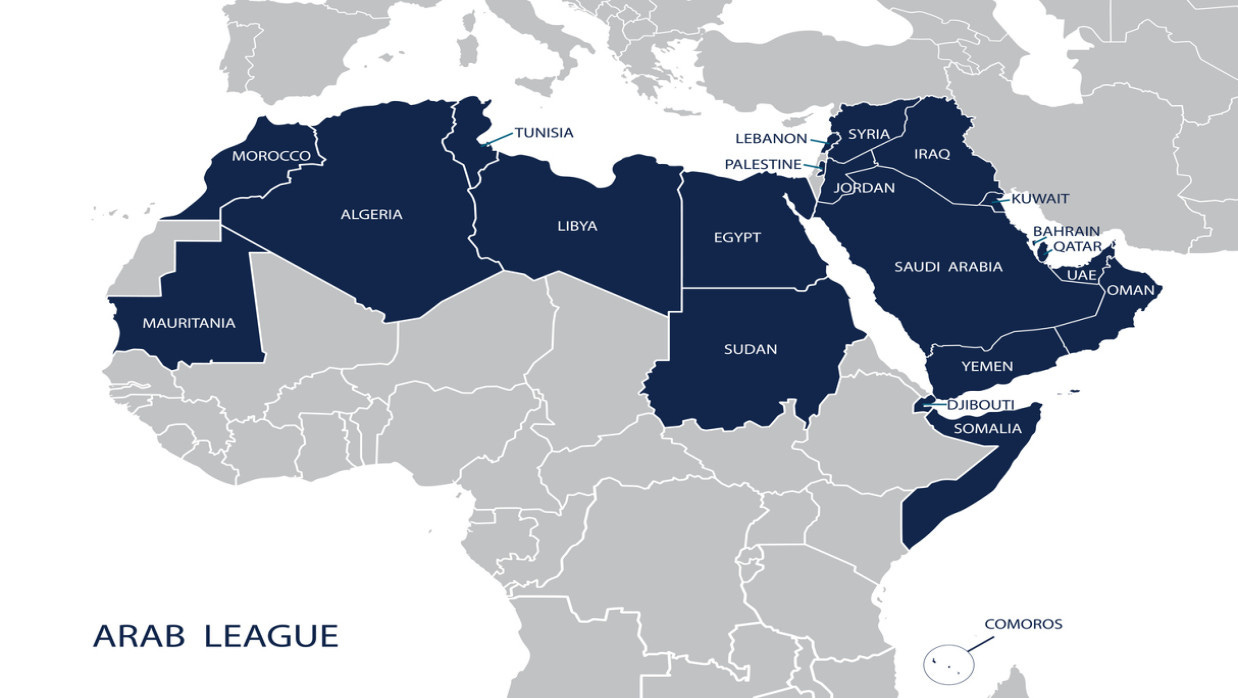
For eight decades the “democratic government” of Israel has functioned as a military base. Israel provided the US and the UK with leverage over the most energy rich part of the world. The model, which was not widely discussed at the time, used Israel and Israeli brutality to destabilize, divide, and dominate the region. As this Substack has pointed out, sectarian grievances were fomented, the most brutal sects of Islam were empowered and used to divide and destabilize the region. Brutal Sunni Islamic sects were financed and armed to overthrow governments and to provide Israel with a cover for her own brutality. Operation Timber Sycamore is just one example of the covert programs, this one authorized by President Barack Obama. It funded Islamic groups to overthrow the Syrian Government, an enemy of Israel. The Sunni Monarchies were persuaded to support the overthrow on Sadam Hussein, Basher al Assad, and Quaddaffi in Libya Also not discussed was the ultimate intent; to make sure that no Arab power would ever be able to consolidate enough strength to challenge Western interests.
Until now. Israel has been a profitable deal for the US. US arms manufacturers sold weapons. Oil was priced in dollars, keeping the US debt machine afloat. Israel used her domination over the West Bank and Gaza to develop surveillance tools, border security, and cyber capabilities and systems that were then sold to the west and to the Gulf states to control a population increasing opposed to Israel depredations against the Palestinians, and to the US militarism that protected Israel! But the model is now breaking down everywhere.
Despite the clear intent to depopulate and redevelop Gaza on top of the blood and bodies of the women and children murdered there, the Palestinians have refused to leave. Egypt refused to open the Raffa crossing and Gaza has been left as festering wound for Israel and Donald J. Trump.
What changed over the years that could empower the Arab states to defy western power? China. Over the last decade China has become a buyer of Saudi, Iranian, and Russian oil, paying in Yuan and offering an alternative to the dollar system. The Belt Road Initiative also pumped development money into the Gulf and North Africa offering an alternative to western investment. This is yet another reason why China is a target.
In 2023 China persuaded the Saudi’s and Iran to normalize relations. News of this deal sent a shock wave through the region and reconfigured security arrangements without the involvement of the US. The Saudi’s and Iran had spent decades fighting proxy wars across the region in Yemen, Syria, Lebanon and Iraq–but after talks in Bejing they agreed to restore diplomatic relations.
Then there’s financial wealth and power. Middle Eastern sovereign wealth funds control $5-7 trillion with other countries controlling billions. They are no longer coming to the west, hat in hand begging for investment and for weapons.
Perhaps certain American interests are also now in conflict. The military industrial complex and the “forever war lobby” makes money off war, conflict, destabilization, and destruction, but the financial industry makes money off investment returns. Profitable long-term investments require peace, development, stability, and security. Militarism and war are incompatible with profitable investing. Yet, despite all the trillions being discussed, the Palestinians are still being bombed, any surviving structure is still being destroyed, and justice for Palestine is still a distant hope.
Countering US Aggression
The Ukraine War has become a fulcrum point for global change. First, contrary to the thousands of times the phrase “unprovoked” has been repeated, Russia was forced to intervene in Ukraine. The plan seems to have been to use sanctions, excluding Russia from SWIFT, and the confiscation of $300 billion in Russian Central Bank assets to destabilize, regime change, and open up Russia to western exploitation. To that end the entire financial and military capacity of the US/UK/EU/ and Israel has been used to support Ukraine including US ISR capabilities. President Joe Biden promised to fund Ukraine for “as long as it takes.” Weapons and money flowed into Ukraine. But Russia did not collapse and instead fought a slow war of attrition that may have been designed to grind down and exhaust the west and achieve the objectives of the SMO. Meanwhile, during this long and horrible war, Russia reorganized her military and strengthened supply chains, trained a battle-hardened army, and developed technologies in drones, missiles, and missile defense that now lead the world.
But it was the confiscation of Russia assets, not only Central Bank assets, but the assets of individual Russians that may come back and haunt the US and the West. If assets are not safe in the US, the UK or in the EU, alternatives will be found. US dependence on the world’s savings requires maintaining confidence in the system. Supporting the confiscation of sovereign and individual assets weakens confidence.
If the US dollar lost reserve currency status the US would be unable to fund not only Militarism and war, but most social programs. The US would be forced to retreat and implement austerity measures that would be both deflationary and socially destabilizing. The dollar seems secure, for now.
Below is a list of potential counter measures an adversary could use to weaken the US economy and blunt US aggression:
1–The stock market bubble could be attacked. The US stock market plays an incredibly significant role in the US economy. It is the repository of the nation’s and, increasingly the world’s savings. The stock market is stretched and is also in the middle of an AI bubble. The AI bubble is dependent on a constant supply of high-performance chips from Taiwan. China could blockade Taiwan and prevent the chips from being delivered.
2–The invincibility of the US military could be attacked and undermined. As pointed out, both the US Navy and Air Force are vulnerable to modern weapons. The US is increasingly involved in blockades including boarding and seizing oil tankers. The ships and aircraft involved in these activities are vulnerable to modern weapons. There are efforts to blockade Russia in the Baltics, to seize ships carrying Russian oil. To blockade China and prevent the delivery of oil. War with Iran is being threatened. What if the naval assets engaged were sunk? What if the US attacked Iran and Iran sunk an aircraft carrier?
3–The ability of the US to roll over the national debt could be attacked. The US is dependent on the world’s savings continuing to be invested in US stock and bond markets. Problems rolling over the debt could lead to the Fed having to buy the debt. This would be a serious blow to confidence and create serious problems with inflation.
4–The US electric grid could be attacked. Cyber weapons are real and highly developed. The US electric grid is old and highly vulnerable. A significant part of the US going dark for any period would lead to a huge national crisis. Electric transformers could also be attacked.
5–The ability to import goods could be attacked. The US is dependent on imports for almost all consumer goods. What if the container ships stopped arriving?
6–Political divisions in the US could be exploited. The US is deeply divided. There are millions of people in the US who do not have legal status. Some of the states could try and leave the union. What if a foreign power found a way to exploit these issues? The US has supported “color revolutions” all around the world, including several in just the last year. What if a successful color revolution was organized in the US?
Conclusion
The real question is how the US and Israel will react if the war in Ukraine, or Iran goes badly, if a battleship or aircraft carrier is sunk, if Israel is being pounded. Would the US or Israel turn to nuclear weapons? If so, how will the other nuclear powers react. Given the changes afoot, we live in dangerous times.