Alexander Mercouris on the Helsinki Summit; Russians Pessimistic re US-Russia Relations; Scott Ritter’s Analysis of Mueller Indictment of GRU Agents; Russia Works with France on Humanitarian Aid to Syria While Announcing Return of 100,000 Refugees; World Cup Tourists Inject $1.5 Billion into Russia

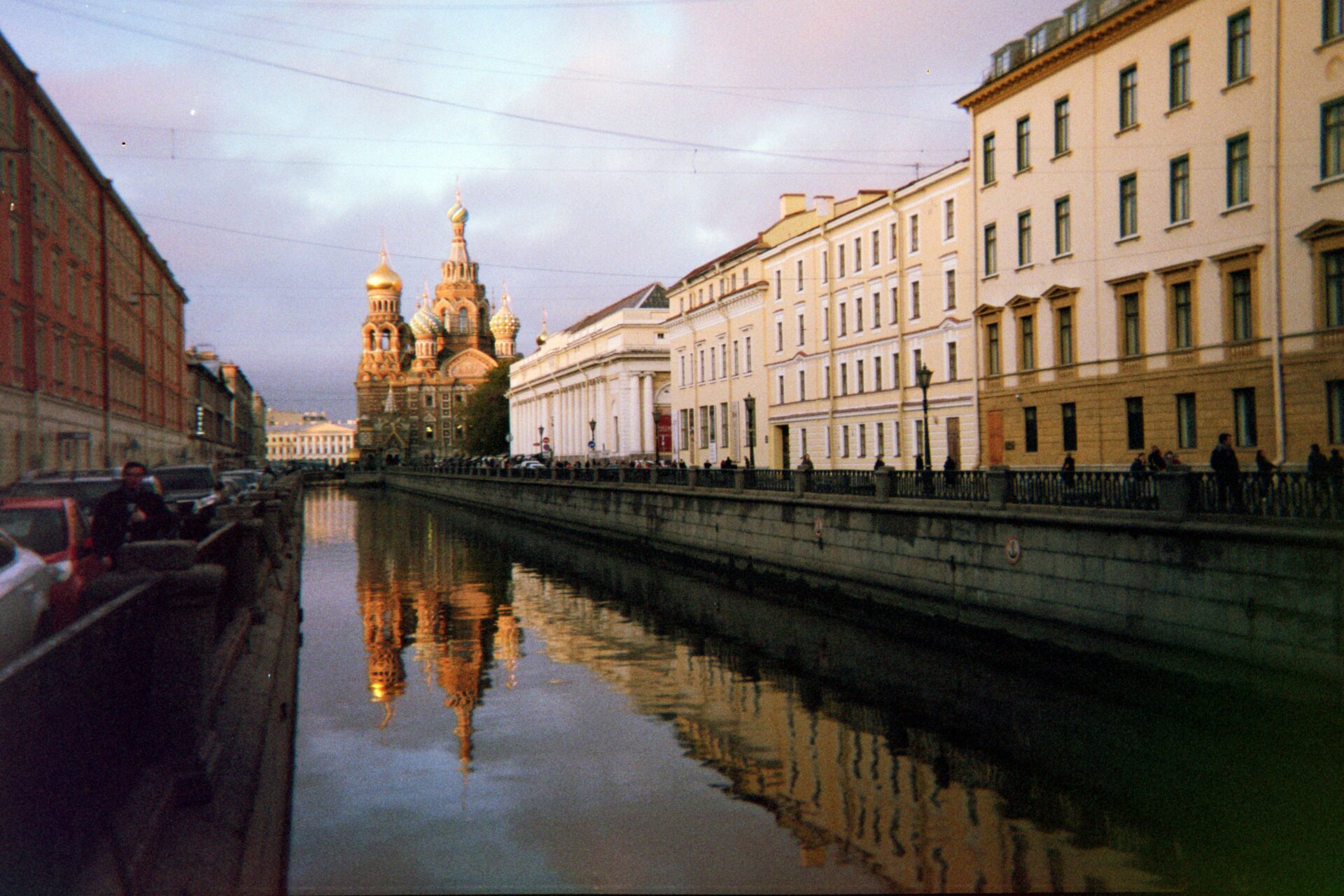
Church on Spilt Blood, Built at site of reformist Czar Alexander II’s 1881 assassination. St. Petersburg, Russia; Photo by Natylie S. Baldwin, 2015

Alexander Mercouris cuts through the hyperbole and provides a detailed analysis of what actually went on at the Helsinki Summit between Putin and Trump.  Some pertinent excerpts include the following regarding rumors of a “grand bargain” to sell out Iran in Syria to appease Israel, the Gulf states and Washington, which was always a fairy tale:

On the subject of Syria, in the weeks leading up to the summit there were some media reports suggesting that Donald Trump was coming under pressure from Israel, the Saudis and the United Arab Emirates to agree a deal at the summit with Putin whereby Russia would be granted sanctions relief and possibly even recognition of Crimea, US troops in Syria would be withdrawn, and in return the Russians would agree that Iranian forces would be expelled from Syria.

The Russians were clearly worried by these reports.  Not only did they go out of their way to deny them, but Putin and Lavrov held talks in Moscow on 12th July 2018 with Ali Akbar Velayati, Iranian Supreme Leader Ayatollah Khamenei’s Special Adviser on International Relations, in order to reassure the Iranians that they were not true.

….Contrary to what some people are saying, I think it is most unlikely that Putin would have given Netanyahu any assurances that Russia would act to rein in Iranian activities in Syria.If Netanyahu asked Putin for such assurances (which I also think unlikely) Putin would almost certainly have told him what the Russians always say when faced with requests for such assurances: Iran and Syria are sovereign states and Russia cannot interfere in arrangements two sovereign states make with each other.

I suspect that the source of some of the stories about a ‘grand bargain’ between Putin and Trump involving the role of the Iranians in Syria is the regular discussions the Russians have with the Israelis, the Iranians and the Syrians whereby the Russians routinely pass on to the Iranians and the Syrians Israeli concerns about the presence of Iranian forces in Syria in particular locations as well as Israeli concerns about specific actions which the Iranians take.

….The Russians are not engaged here in discussions over some sort of ‘grand bargain’ to remove all Iranian troops from Syria, which as I have said they would see as counterproductive and impossible.  Rather they are engaged in the classic diplomatic exercise of conflict prevention: keeping the Israelis, the Iranians and the Syrians informed about each other’s moves and red lines in order to prevent an uncontrolled escalation of the conflict between them, which might risk an all-out war, which nobody wants, and which the Russians are doing their best to prevent.

Recent reports of an understanding between the Israelis, the Iranians and the Syrians supposedly brokered by the Russians whereby Iranian forces agreed not to participate in the Syrian army’s ongoing military operations in south west Syria close to the Israeli occupied Golan Heights are a case in point.

The Iranians and the Syrians  agreed to this, not because the Russians forced them to but because it is in their interest to.  The Syrian army does not need Iranian help to defeat the Jihadis in southwest Syria so keeping the Iranians away from the area allows the Syrians to clear the area of the Jihadis without risking a military confrontation with Israel.

As I have stated previously, Russia will continue to leave the door open to Washington for cooperation in areas of mutual interest, while continuing to balance beneficial relations with those in its backyard, including Israel, Iran, and China – the latter two of which offer many potential benefits in the coordinated New Silk Roads and related trade relations.  Russia will not agree to sell out Iran or China for any deal with Washington which has little of concrete value to offer while having demonstrated repeatedly that it breaks agreements whenever it decides.

Neither will Russia agree to further Israel’s interests at the expense of its own or those of another nation with which it has good relations.   Russia is too sophisticated of a diplomatic player to fall into such traps that would ultimately do nothing to further its long-term interests.

Further on in Mercouris’ analysis, he explains what the point of this summit really was and how many of the knuckleheads who pass for journalists and political analysts in the mainstream media were simply feeding into the clueless memes about Russia and Trump in their predictions and coverage.  I will quote him generously in his apt explanation:

A fundamental prerequisite for any successful negotiation is for the two parties to the negotiation to know each other’s minds so that a modicum of trust and understanding – essential if any agreement is to be reached – can be established between them.

As a businessman Trump knows this very well.  He therefore needed to meet with Putin in a lengthy one-to-one encounter in order to get to know Putin properly so as to see whether Putin is in fact the sort of person he can negotiate and eventually do a deal with.

That is the reason why Trump insisted that his first meeting with Putin should take the form of a one-to-one encounter.

That by the way is absolutely standard practice in negotiations – both commercial negotiations and diplomatic negotiations – with leaders of negotiating teams often meeting privately in one-to-one meetings in order to get to know each other better to see whether a deal between them is even possible.  Once a proper relationship between them is established the full negotiating teams can be brought into the negotiations in what in diplomacy are called ‘plenary sessions’.  Needless to say it is during the plenary sessions – with each side’s experts present – that the details are discussed and ironed out.

Not only is this standard practice in negotiations – Putin does it all the time – but it is simply not true as some people are suggesting that there was no one else present in the room when Putin and Trump met with each other.

Both Putin and Trump obviously had interpreters present.  Trump doesn’t speak Russian and Putin speaks English badly.  The job of the interpreters – who are full time state officials – is not just to interpret what the leaders say to each other but also to prepare a written transcript (a “stenographic record”) of what they said.

Once this transcript is written up – something which normally takes no more than a few days – it is circulated to senior officials including in the U.S. case to the U.S. President’s two most important foreign policy advisers, Bolton and Pompeo.  By now it is highly likely that Bolton and Pompeo have already seen and read through the transcript, and that they therefore know exactly what Putin and Trump said to each other.

Since the one-to-one meeting was first and foremost a “get-to-know” you session, no binding agreements would have been reached during it, and neither Putin nor Trump – each in their own way an experienced negotiator – would ever have imagined that they would be.

Russians were not impressed by the summit or its potential to improve relations between the two nations in the future.  According to the Moscow Times reporting on a state-sponsored poll of Russians about the summit and US-Russia relations, half of Russians were pessimistic about the future of bilateral relations while a large majority believes the U.S. is aggressive and untrustworthy:

Ahead of the summit, 52 percent of Russians told the state-run VTsIOM polling agency that they believed the political meeting would fail to improve bilateral ties.

Forty-eight percent of Russians surveyed two days after Putin sat down with Trump at the summit said they expected U.S.-Russia relations to stay the same, while 38 percent said they were optimistic about an improved relationship.

An overwhelming majority of respondents agreed with the assessment that the U.S. is an “aggressive” country that “meddles in the affairs of other states” and “isn’t trustworthy.”

Meanwhile, according to a poll by The Hill/HarrisX , 61% of Americans think it is in the U.S.’s interests to have better relations with Russia and 54% support Trump’s proposal to have a follow-up summit with Putin in Washington later this year.   However, the White House has just announced that the meeting will be postponed until 2019, after Mueller completes his investigation.

**************************************************************************

Former weapons inspector Scott Ritter provided an excellent overview of the recent indictment of GRU agents accused of being responsible for the “hack” of the DNC emails and John Podesta’s emails at TruthDig.

He points out how an indictment isn’t proof of a prosecutor’s case, only a listing and narrative of the accusations with enough information to argue probable cause – a far cry from evidence sufficient to convince beyond a reasonable doubt.  There is the old adage that a competent prosecutor can indict a ham sandwich and Ritter elaborates on how that adage is relevant to this particular indictment, which Mueller likely assumes – like the previous indictment of the employees of the St. Petersburg-based Internet Research Agency – will never actually go to court where the claims would have to be proved and the evidence presented in open court with the accused having the opportunity to respond:

There is one major problem with the indictment, however: It doesn’t prove that which it asserts. True, it provides a compelling narrative that reads like a spy novel, and there is no doubt in my mind that many of the technical details related to the timing and functioning of the malware described within are accurate. But the leap of logic that takes the reader from the inner workings of the servers of the Democratic Party to the offices of Russian intelligence officers in Moscow is not backed up by anything that demonstrates how these connections were made.

That’s the point of an indictment, however—it doesn’t exist to provide evidence beyond a reasonable doubt, but rather to provide only enough information to demonstrate probable cause. No one would, or could, be convicted at trial from the information contained in the indictment alone. For that to happen, the government would have to produce the specific evidence linking the hacks to the named Russians, and provide details on how this evidence was collected, and by whom. In short, the government would have to be willing to reveal some of the most sensitive sources and methods of intelligence collection by the U.S. intelligence community and expose, and therefore ruin, the careers of those who collected this information. This is something the government has never been willing to do, and there is much doubt that if, for some odd reason, the Russians agreed to send one or more of these named intelligence officers to the United States to answer the indictment, this indictment would ever go to trial. It simply couldn’t survive the discovery to which any competent defense would subject the government’s assertions.

Robert Mueller knew this when he drafted the indictment, and Rob Rosenstein knew this when he presented it to the public. The assertions set forth in the indictment, while cloaked in the trappings of American justice, have nothing to do with actual justice or the rule of law; they cannot, and will never, be proved in a court of law. However, by releasing them in a manner that suggests that the government is willing to proceed to trial, a perception is created that implies that they can withstand the scrutiny necessary to prevail at trial.

And as we know, perception is its own reality.

Despite Rosenstein’s assertions to the contrary, the decision to release the indictment of the 12 named Russian military intelligence officers was an act of partisan warfare designed to tip the scale of public opinion against the supporters of President Trump, and in favor of those who oppose him politically, Democrat and Republican alike. Based upon the media coverage since Rosenstein’s press conference, it appears that in this he has been wildly successful.

But is the indictment factually correct? The biggest clue that Mueller and Rosenstein have crafted a criminal espionage narrative from whole cloth comes from none other than the very intelligence agency whose work would preclude Rosenstein’s indictment from ever going to trial: the National Security Agency. In June 2017 the online investigative journal The Intercept referenced a highly classified document from the NSA titled “Spear-Phishing Campaign TTPs Used Against U.S. And Foreign Government Political Entities.” It’s a highly technical document, derived from collection sources and methods the NSA has classified at the Top Secret/SI (i.e., Special Intelligence) level. This document was meant for internal consumption, not public release. As such, the drafters could be honest about what they knew and what they didn’t know—unlike those in the Mueller investigation who drafted the aforementioned indictment.

A cursory comparison of the leaked NSA document and the indictment presented by Rosenstein suggests that the events described in Count 11 of the indictment pertaining to an effort to penetrate state and county election offices responsible for administering the 2016 U.S. presidential election are precisely the events captured in the NSA document. While the indictment links the identity of a named Russian intelligence officer, Anatoliy Sergeyevich Kovalev, to specific actions detailed therein, the NSA document is much more circumspect. In a diagram supporting the text report, the NSA document specifically states that the organizational ties between the unnamed operators involved in the actions described and an organizational entity, Unit 74455, affiliated with Russian military intelligence is a product of the judgment of an analyst and not fact.

If we take this piece of information to its logical conclusion, then the Mueller indictment has taken detailed data related to hacking operations directed against various American political entities and shoehorned it into what amounts to little more than the organizational chart of a military intelligence unit assessed—but not known—to have overseen the operations described. This is a far cry from the kind of incontrovertible proof that Mueller’s team suggests exists to support its indictment of the 12 named Russian intelligence officers.

If this is indeed the case, then the indictment, as presented, is a politically motivated fraud. Mueller doesn’t know the identities of those involved in the hacking operations he describes—because the intelligence analysts who put the case together don’t know those names. If this case were to go to trial, the indictment would be dismissed in the preliminary hearing phase for insufficient evidence, even if the government were willing to lay out the totality of its case—which, because of classification reasons, it would never do.

Read the full article here

**************************************************************************

Last week, France and Russia began coordinating the delivery of humanitarian aid to parts of Syria devastated by the war.  RussiaFeed reports:

Yesterday, some 50 tonnes of medical aid was sent to eastern Ghouta in Syria as part of an agreement reached between France and Russia to coordinate humanitarian aid in the war torn Middle Eastern country.

…..It is hoped that if the operation is successful, further cooperation could be developed in the area of getting aid to areas of Syria which have been liberated and are back under the territorial control of Assad’s government in Damascus. Up until this point, the aid has been utilized in the Raqqa region in northeastern Syria under the occupation of French and American military forces.

A few days later, the Russian Ministry of Defense announced that 100,000 refugees have been repatriated to Syria since January.    Euronews reported the following details:

According to the Russian Ministry of Defence, 101,976 refugees have been returned to Syria since January–232,792 “since the start of [the ministry’s] operation”, and 1,417,385 in total since 2015.

Additionally, 336,500 more places have been prepared around the country for receiving and accommodating refugees, the Russian Ministry of Defence stated. The statement detailed a report of ongoing infrastructure reparations, as well as medical assistance and food supplies.

With the aid of Turkey, Iran, and the Russian Centre for Reconciliation of Opposing Sides, Syria has recovered territory previously occupied by rebel groups and oversees ceasefire compliance, allowing, finally, for the return of refugees.

“It is estimated that more than 1.7 million Syrians have expressed a desire to return home from eight countries,” the ministry stated. The largest number of potential returnees come from Lebanon, followed by Turkey, Germany, Jordan, Iraq, Egypt, Denmark, and Brazil.

**************************************************************************

The hysterical levels of anti-Russia sentiment in the media and Washington did not stop Russia from gaining a PR benefit and an economic infusion of $1.5 billion from the recent World Cup tournament.   According to the Financial Times (behind paywall):

Russia is already enjoying a World Cup windfall of positive international PR and a surge in national pride after staging a widely praised tournament and seeing its team defy rock-bottom expectations. The event also gave its economy a welcome shot in the arm, the country’s top bank said on Thursday.

Visiting football fans spent $1.5bn during the one-month tournament, according to state-owned lender Sberbank.

Moscow had hoped to use the event to defy western nations that have sought to diplomatically isolate Russia following its 2014 annexation of Crimea and its alleged meddling in the 2016 US election.

The country welcomed foreign fans with visa-free travel and spruced-up host cities, and a notable relaxation of heavy-handed policing encouraged street parties and a carnival atmosphere, fuelling celebrations that saw bars run out of beer and cafes open all night.

Sberbank said in a research report that its network alone had serviced 899,000 foreign bank cards from 194 countries during the month-long tournament, with one Chinese bank card used to make purchases in 11 different cities.

Fast-food outlets and restaurants saw spending of Rbs6.2bn ($98m), Sberbank said, with hotels accounting for Rbs5bn — though the real figure was likely to be far higher given that accommodation was also bought in advance or through foreign travel agents.
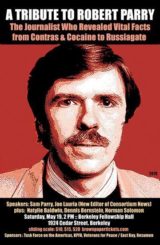
My Remarks at the Tribute to Robert Parry in Berkeley, CA on May 19, 2018

Note:  Video will be posted as soon as it is available at the Consortium News website.  Other speakers at the event included Sam Parry (Robert’s son), Norman Solomon, Dennis Bernstein, Ann Wright, and Consortium’s new editor, Joe Lauria.  

I’d like to thank everyone for coming today.  I’d also like to thank the organizers for inviting me to speak at the tribute to a man who was very inspirational to me.

My own interest in foreign affairs began in college.  Not long after I graduated, 9/11 happened.  I joined the local peace movement to oppose our post-9/11 wars.  It didn’t take long for me to realize that the media is a big part of the problem.

The myth we’re taught is that our democracy is underpinned by a media that serves as a watchdog on the government and other powerful institutions – a noble fourth estate.

But when it comes to issues of war and peace, the media rarely – if ever- serves as a questioner of government claims, performing due diligence on a matter of life, death and destruction of societies.

We saw the mainstream media’s gross negligence with Iraq, Libya and other examples stretching much further back.  We are now seeing the same thing happen with the world’s other nuclear superpower, Russia.

I grew increasingly concerned about the degree of recklessness by U.S. political elites who supported the coup in Kiev – completely disregarding Russia’s security interests on its border.

I began to dig deeper into post-Soviet Russia and U.S.-Russia relations. I realized just how distorted and lacking in context the narrative Americans were being given was.

During this time, one of the sources I relied on, among others, was Robert Parry and Consortium News.

I also connected up with Sharon Tennison – an independent writer and program coordinator with over 3 decades of experience on the ground all over Russia, including citizen to citizen diplomacy during Cold War I.

She became my mentor and we traveled to Russia in October of 2015 for two weeks where I was able to speak to a cross-section of Russians in several different cities on a range of issues.  We traveled to Crimea where I interviewed a range of Crimeans about what happened in late 2013 and early 2014.

At this point, I had researched and co-authored a book about the Ukraine crisis – providing historical and contextual background of U.S.-Russia relations, as well as writing articles for a couple of alternative outlets.  I tried submitting articles about my on the ground observations and interviews in Crimea to several other “alternative” outlets in the hopes of getting this information out to a wider audience.  After all, not many American writers had actually been to Crimea and could provide on-the-ground perspectives.  But I was having little luck.

Somehow I got hold of Robert Parry’s email address and submitted to him.  Within 48 hours my article was posted, with many others to follow.

I was even more pleasantly surprised when a couple of weeks later I received a check in the mail for my work – which is a big deal for independent writers these days.  The money I earned from my articles at Consortium helped finance a return trip to Russia in 2017 and more articles.

Bob said that journalism required the acknowledgment that there were usually 2 sides – and possibly more – to every story and that Americans needed to hear both sides.  It’s critical to have an informed citizenry with a reasonable understanding of issues in a democracy.

This is especially true with issues most average Americans don’t have practical experience with, such as international policies, policy relating to other countries.  In order to conduct a rational foreign policy, one must understand the other country’s point of view – it doesn’t mean one must agree with it, but we must know how the other side perceives its own interests so we can determine what they may be willing to risk or sacrifice on behalf of those perceived interests.  Further, it’s essential to determine areas of common interest and cooperation.

Understanding that viewpoint means understanding the other side’s history, geography and culture.  The MSM has not provided this crucial service or provided a platform for those who can with respect to Iraq, Libya and many of the other nations with whom we’ve gone to war.  The so-called experts they consult often have conflicts of interest, nefarious agendas, and often lack an objective understanding of the nation about which they are writing or talking.  This has certainly been the case when it comes to reporting on Russia – a country with which the stakes are potentially much higher.

One source of mine who has spoken to State Dept. personnel in the recent past about their experience and expertise on Russia said that these diplomats admitted that they had been shuttled around to different countries in different regions – from Latin America to east Asia – before landing at their Russia post where they were suddenly expected to work and make decisions regarding that country with no knowledge of its history, traditions or culture.  This is also true with mainstream journalists who cover Russia.

Canadian Russia expert Patrick Armstrong got a similar response when he spoke to a former Treasury Dept. official who’d been involved with implementing the sanctions against Russia.  He was told:  “The bottom line is that the US government has a very shallow bench on Russia. And so they end up acting more-or-less at random.”

As Armstrong commented, “”Shallow bench”?  More of an echo chamber in which people at the top expect to hear what they want to hear and are told it; reinforced by a news media full of people paid to believe what they believe.”

Robert Parry referred to these phenomena as careerism and groupthink.  He argued that it was ruining journalism and the important role it’s supposed to play in our democracy.  And there are examples everywhere.

When our most experienced academic expert on Russia, Stephen Cohen, can hardly get an interview on CNN and cannot get an op-ed published by NYT or WaPo, but a neocon ideologue like Michael Weiss – who has no on the ground experience or educational credentials about Russia – can be hired as a commentator by CNN on the subject – it’s not just sad, it’s dangerous.

When someone like Rachael Maddow – who we know from her past investigative reporting knows better – has allowed herself to be used as a cartoonish purveyor of anti-Russia propaganda while virtually ignoring coverage of more immediate issues facing average Americans and distracting them away from confronting the Democratic Party’s failures and dishonesty, it’s dangerous.

Our media, like our political system, is in deep crisis.  Indeed these two crises reinforce each other as both our media and our political system are corrupted by money and have been largely reduced to cheap spectacle.

According to polls, large majorities of Millenials have contempt for these establishment institutions.  They are open to and looking for alternatives to these broken systems.

This makes Robert Parry’s legacy and the space for genuine investigative journalism that he fostered at Consortium News more important than ever.  With strong leadership and the continued quality of long form journalism from its current and new contributors, we can make a much needed difference at this critical time.

U.S. Attack on Syria

The sky erupts with missile fire as the U.S., U.K. and France launched an attack on parts of Damascus, the capital of Syria, early Saturday in retaliation for Syria’s alleged use of chemical weapons last weekend. (Photo: Hassan Ammar / AP)


A team from the OPCW was due to arrive in Syria to investigate the alleged chemical weapons attacks in Douma on Saturday, April 14th.  However, that is the morning on which Washington, in coordination with France and the UK, decided to launch around 100 missiles into Syria.  Russia analyst and former British military officer, Paul Robinson had a good summary and analysis of the strikes at his blog :

What stands out for me is the choice of weapons in this attack: long-range missiles. The Brits, for instance, fired their missiles from close to their airbase on Cyprus. They didn’t come close to Syria. It seems that they were afraid of Syrian and Russian air defences, and they weren’t prepared to go to the effort of suppressing them, which would have required a long and costly campaign and would have run the danger of getting them into a war with the Russians. The Russian Ministry of Defence says that its own air defences didn’t get involved but that those of the Syrian army shot down 71 of the 103 missiles fired. The Syrian Observatory for Human Rights (not normally noted for promoting pro-Assad propaganda) claims that 65 were shot down. The Americans are currently denying this. The truth is hard to determine. It may be that the Western allies are right to be fearful of the Syrian/Russian air defence system. Or maybe not. What is clear, though, is that they don’t seem to be willing to take the chance. They also don’t want to get too deeply involved. So, they have limited themselves to firing a few missiles in an utterly pointless manner, while making some wild claims that this would ‘set back Syrian chemical weapons programme for years.’

This is playing at war. Unfortunately, it is symptomatic of how the Americans and the Brits wage war nowadays. They can’t resist getting involved, but the outcome doesn’t matter to them enough for them to commit the resources, and make the sacrifices, required for a successful outcome. So, in Afghanistan they committed themselves enough to stir up the locals, to flood the country with money which boosted corruption and filled the coffers of the Taliban, and generally to make everything worse, but not enough to win (which would  have required a simply enormous amount of resources). In Libya, they did just enough to push the country into chaos, but not enough to put it back together again. In Syria, they’ve pumped in enough weapons and money to thoroughly mess the place up (and in the process supply a whole bunch of people who really aren’t their friends), but not enough to overthrow Assad. And so on.

Now, to be fair, it’s a sign of some intelligence that they haven’t gone any further than they have. It would have been completely disproportionate to have done so. We must welcome the fact that in attacking Syria, they limited themselves to a symbolic gesture and stayed well clear of Russian targets. As I said in my last post, achieving the objective of regime change would require enormous destruction. It’s a good thing that our leaders aren’t prepared to go that far. The problem is, though, is that if they want to succeed that’s how far they have to go. If they’re not prepared to do so, they shouldn’t get involved at all in the first place. Unfortunately, they just can’t stop themselves. Consequently, they end up playing at war, failing time after time, while causing a lot of death and destruction in the process.

Robinson makes an excellent point.  These actions seem to just be an excuse to waste huge amounts of money on arms and to destroy countries whose leaders don’t comply with our wishes or are in the way of our geopolitical and economic desires.   There is certainly no will to stabilize or install a functioning government because, as Robinson points out, it would require too much investment in terms of human resources, which would also risk major casualties.

However, the bad will and distrust that builds as a result of these repeated actions and the propaganda that leads up to them has created a dangerous atmosphere between nuclear superpowers whose military personnel are in close proximity.  What if there is a slip-up in the “choreography” of these launches supposedly designed to avoid hitting any Russian targets?   What if Russians dial up the hotline to find out what’s going on and are put on hold for nearly a half hour as the Russian military claimed happened in 2016 when the Syrian army was hit in Deir Ezzor?   Why do we want to take it that far?  And why does our leadership keep saying and doing reckless things that the Russians have to allegedly provide a face-saving out for?

As for Russia’s response to this illegal attack on its ally without even waiting for the results of an investigation that might actually substantiate the allegations against the Syrian government, Russia analyst Gilbert Doctorow wrote the following:

For the Russians there could only be outrage. They were on the receiving end of what was a publicly administered slap in the face to President Vladimir Putin, who was named and supposedly shamed in Trump’s speech for providing support to the “animal” Assad. Putin had been calling upon the U.S. and its allies to show restraint and wait for the conclusion of the OPCW investigation in Duma.

Russia’s ambassador to Washington, Anatoly Antonov, repeated after the attacks Moscow’s prior warning that there would be “grave consequences” for the U.S. and its allies. These were not spelled out. But given Putin’s record of caution, it would be surprising if Moscow did anything to exacerbate the situation.

That caution left the U.S. exposed as an aggressor and violator of international law. Since we are in a New Cold War, habits from the first Cold War are resurfacing. But the roles are reversed today. Whereas in the past, it was Washington that complained to high heaven about the Soviet military intervention in Hungary and Czechoslovakia, today it is Russia that will go on the offensive to sound off about US aggression.

But is that all we may expect? I think not. Putin has a well-earned reputation as a master strategist who takes his time with every move. He also knows the old saying that revenge is a dish best served cold. He has frequently advocated “asymmetric” responses to Western moves against Russian interests. The question of counter moves had already been on his mind since the U.S. Treasury introduced new and potentially harsh economic sanctions on Russia with effect from April 6.

In fact, Russian legislators were busy preparing to introduce in the Duma on Monday a bill empowering the Russian president to issue counter-sanctions. These include an embargo on the sale of critical components to the U.S. aircraft industry which is 40 percent dependent on Russian-sourced titanium for production of both military and civilian planes. There is also the proposed cancellation of bilateral cooperation in space where the Russians supply rocket engines used for U.S. commercial and other satellite launches, as well as a total embargo on sales of U.S. wines, spirits and tobacco in the Russian Federation.

Aside from the withdrawal of titanium sales, these and other enumerated measures pale in significance to the damage done by the U.S. sanctions on the Rusal corporation, the world’s second largest producer and marketer of aluminum, which lost $12 billion in share value on the first day of sanctions. But that is to be expected, given that the United States is the world’s largest economy, measuring more than 10 times Russia’s. Accordingly its ability to cause economic damage to Russia far exceeds the ability of Russia to inflict damage in return.

The only logical outcome of further escalations of U.S. economic measures would be for Russia to respond in the one area where it has something approaching full equality with the United States: its force of arms. That is to say, at a certain point in time purely economic warfare could well become kinetic. This is a danger the U.S. political leadership should not underestimate.

Considering the just inflicted U.S. insult to Russia by its attack in Syria, Moscow may well choose to respond by hitting U.S. interests in a very different location, where it enjoys logistical superiority and also where the counter-strike may be less likely to escalate to direct crossing of swords and the unthinkable—possible nuclear war.

A number of places come to mind, starting in Ukraine where, in an extreme reaction, Russia has the option of removing the regime in Kiev within a 3-day campaign, putting in place a caretaker government until new elections were held. That would likely lead to armed resistance, however, and a Russian occupation, which Moscow neither wants nor can afford.

Speaking of the restraint showed by Putin, I keep making the point that many pundits and politicians keep accusing Putin of being aggressive, yet they are constantly banking on Putin’s restraint in the face of a never-ending series of provocations.  Is there not some irony here?

Our corporate mainstream media did its usual despicable job of largely egging on the militarism.  Fairness and Accuracy in Reporting (FAIR) provides the gory details here and here.  Doctorow, in another article, followed the European media on the Syria attack and reported more variety of coverage and viewpoint, especially in Germany (which declined to participate in the attack) and Euronews:

The Die Welt online edition today discusses how the United States and Europe used the mission to test the battleground effectiveness of some of their latest weaponry.

Frankfurter Allgemeine has two feature articles, neither of which follow the American media agenda and might be said to show some independence of thought.  One article presents and defends the notion that the weekend attacks showed the Pentagon is “the last bastion of Sense” in the Trump administration. What they think of the President is self evident.  Meanwhile the other article tells us that despite the attacks Syrian President Bashar Assad will not give in and is holding to his chosen course, while the Russians are said to be counting on opening a strategic dialogue with the USA over arms control.

….To be sure, the most remarkable departure from the US media track that I note in Europe yesterday and today is on the television, specifically on Euronews.  The company’s motto is “Euronews. All Views.”  Nice sounding and usually irrelevant, but not this weekend. To be sure, the US, UK, French government accounts of what they achieved are given full coverage in each hourly news bulletin.  But at the same time, the Russians are given what appears to be equal time to set out their totally diametrically opposed positions: on whether any chemical attacks at all occurred in Douma, Eastern Goutha, on the violation of international law and of the UN Charter that the Allied attack on Syria represented, on its being “aggression,” on its link to the Skripal case.

In fact, on Saturday Euronews exceptionally gave nearly complete live coverage to Russian Foreign Minister Sergey Lavrov as he spoke in Moscow to the 26th Assembly of the Council of Foreign and Defense Policy. During this talk, Lavrov divulged the findings of the Swiss laboratory which had examined samples of the chemicals gathered in Salisbury in relation to the Skripal poisonings, findings which he said pointed not to Novichok, as was reported by Boris Johnson, but to a nerve agent developed by the United States and produced also in Britain.  Lavrov likened the faked attack in Salisbury to the faked chemical attack in Douma.

Letting the Russians deliver extensively their views on what happened in Syria without commentary by their own journalists might be considered extraordinary by Euronews or any other European broadcaster’s standards, for which the public can only be grateful.

My mentor, Sharon Tennison, was in Washington DC in the lead-up to the strike on Syria.  Here is the atmosphere she reported:

Mood in Washington, April 8 – 13: The immediate possibility of war between Syria and Russia was on TV screens in hotel lobbies and congressional waiting rooms and tensions were felt behind closed doors in nearly every meeting. It felt like our capital was completely “locked down.” No one wanted to mention their positions on current issues. I’d never before experienced our capital like this.

Simultaneously, young families visiting Washington were innocently enjoying historic monuments, etc. In impromptu inquiries, I asked if they were paying attention to politics and got nonchalant answers back. Apparently they were unaware of the current situation. How could they not be aware? Maybe they view TV news as hyped up fictional TV programs? What a disconnect!


Russians Meet Mainstream Americans (RMMA) in Walnut Creek, California

RussianVisitorsWithAnnWright2

Photo courtesy of Center for Citizen Initiatives

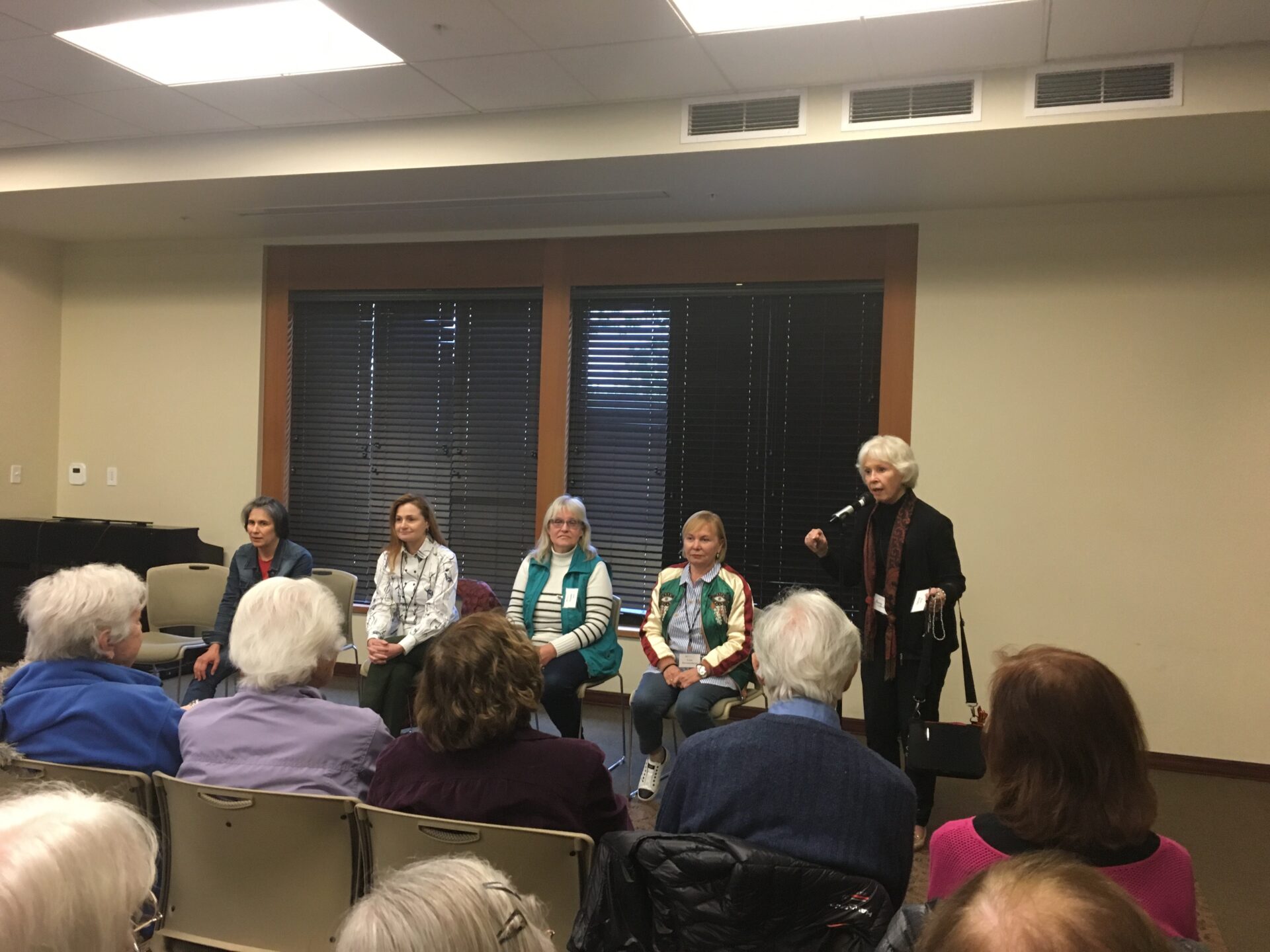
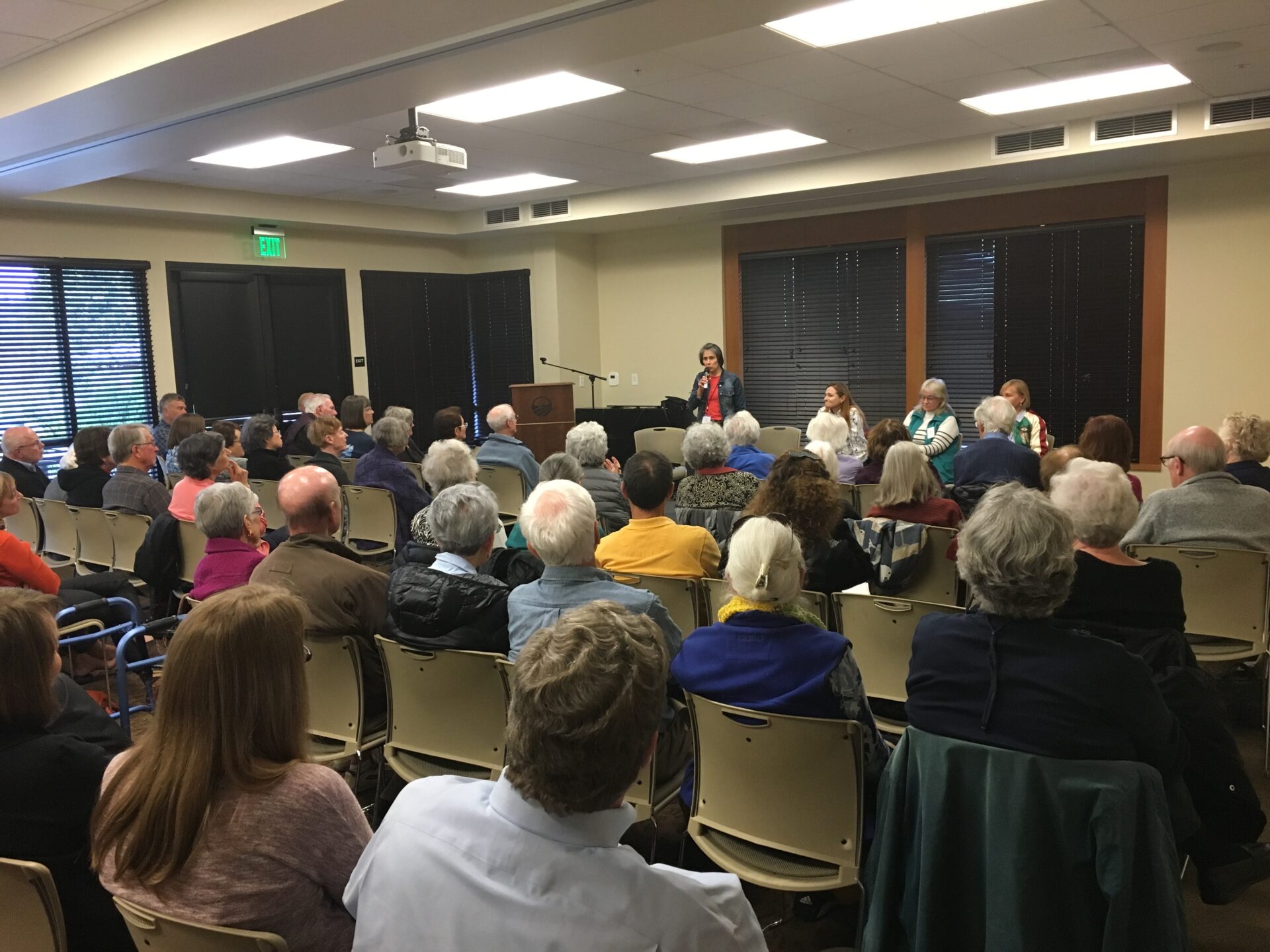
“No, I will not tell you about war.  It is disgusting and should never happen,” Lena recalled her father telling her when she was a child and would ask him to tell her tales of his experience in the Great Patriotic War – as WWII is known in Russia, which took the lives of 27 million Soviets.  Lena, a wife, mother, and teacher of English and German, who is originally from Western Ukraine and lives in Yekaterinburg in the Ural Mountain Region of the Russian Federation, was the first of four ladies from Russia to speak at the RMMA event in Walnut Creek, California on April 5th.

In her opening remarks, she explained the reason for her involvement in the program.  it was her father’s words that had inspired Lena to work for peace and the prevention of war.

Prior to Lena’s comments, Sharon Tennison of the Center for Citizen Initiatives introduced the evening’s 4 visitors from Russia and the history of the program that had brought them there.

Sharon introducing the RMMA event in Walnut Creek, CA on April 5, 2018

Tennison’s earlier program in the 1980’s, during the first Cold War, brought groups of non-Communist Party Soviet citizens to visit Americans across the United States.  The Soviet visitors stayed in the homes of volunteer Americans for several days during their stay in a particular city.  During their visit, the Soviet citizens would meet community leaders, members of the media, business people and average Americans – who could all see for themselves that, in most important ways,  these were just people like them.  Groups of Americans had already visited the Soviet Union for the same people-to-people outreach, which had enabled Tennison to network with Soviet citizens.

With tensions between the West and Russia at an all time high in the post-Soviet era, Sharon has resurrected the idea.  After visiting Atlanta and two cities in Texas, the four Russian ladies were now touring the San Francisco Bay Area.

The second lady was Tatyana, who has lived in Crimea all of her life, the daughter of a Ukrainian mother and a Russian father.  She teaches English and history.  I met Tatyana during my trip to Crimea in October of 2015 .  For her opening, she spoke of the monument that was just erected in Yalta to FDR.  Yalta was, of course, the location of the famous conference of the “Big Three” (FDR, Stalin and Churchill) as WWII was winding down in 1945.  She wanted to remind others of the wisdom of FDR, who as U.S. president during WWII, was allied with the Soviet Union and treated the country and its leadership with respect, and hoped to work toward a peaceful post-war coexistence, despite ideological differences.

The third lady was Natasha from Krasnodar, a mother and business woman with experience in the agricultural industry.   I had also met Natasha on my October 2015 trip.

Natasha Ivanova of Krasnodar, Russia, speaks at RMMA event in Walnut Creek, CA on April 5, 2018

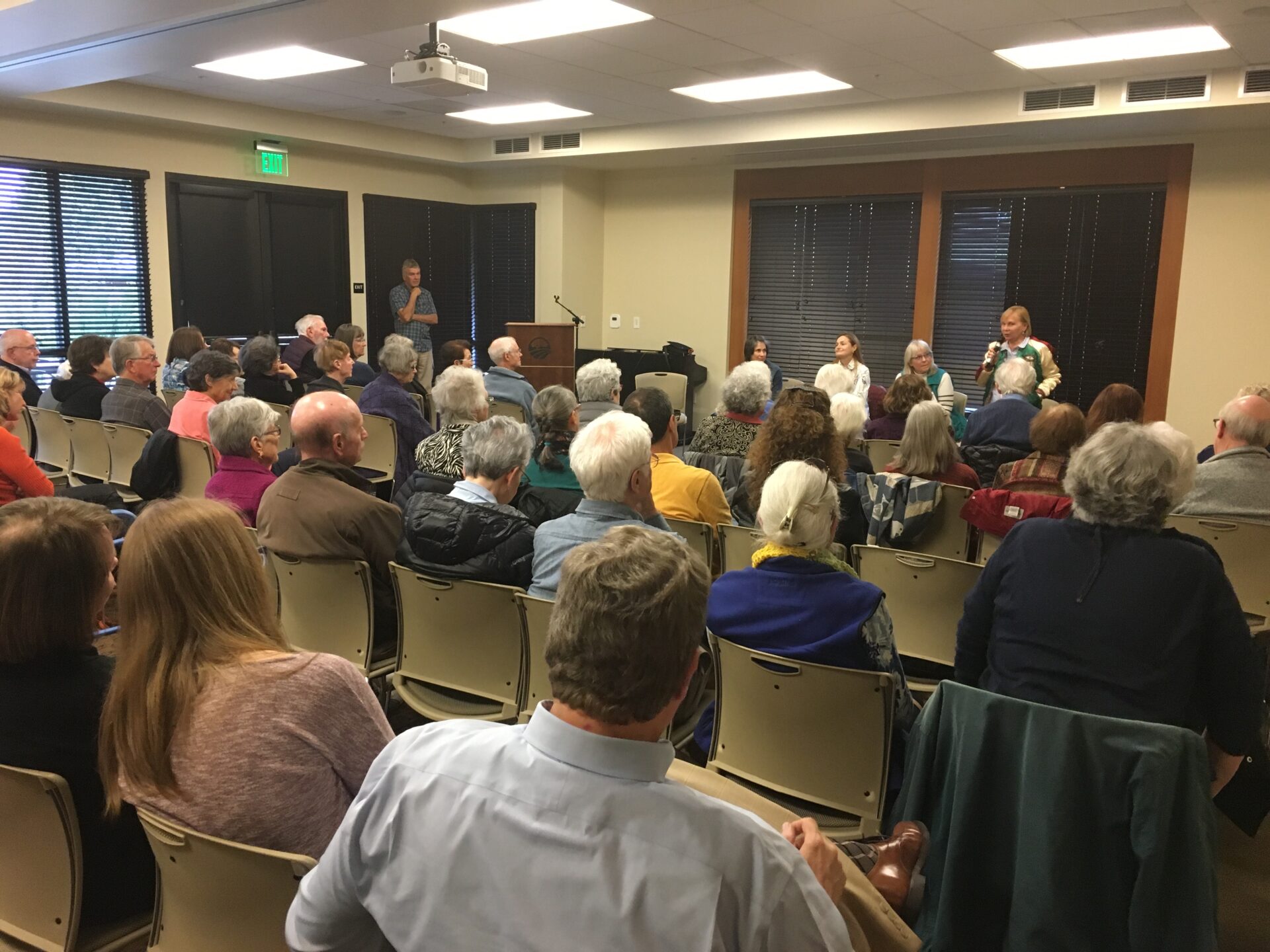
The fourth speaker was Ilyana, a wife, mother and hydro-engineer from St. Petersburg.

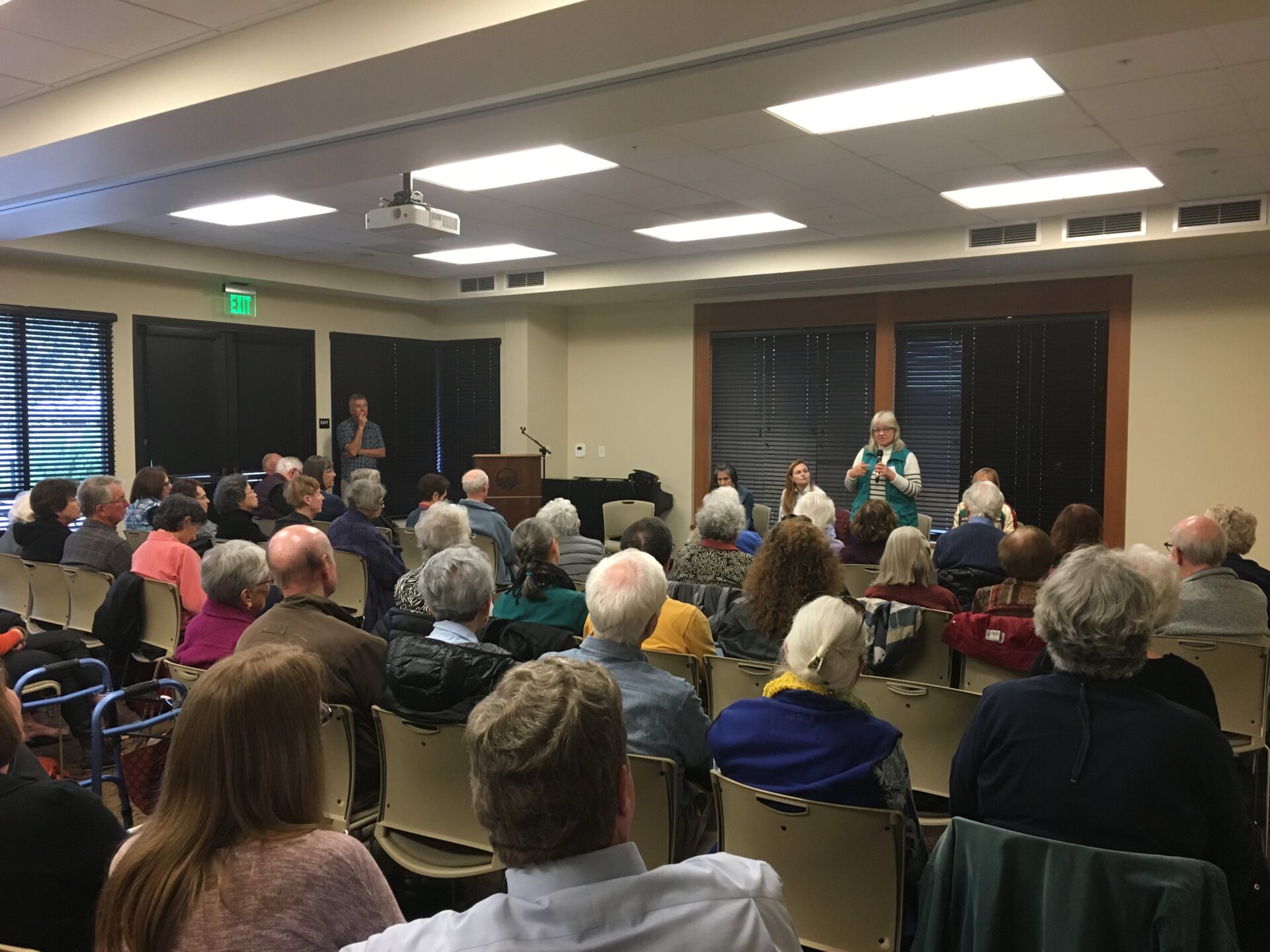
Lena, Tatyana, Natasha and Ilyana all took over an hour’s worth of questions from the audience, which filled the conference room, with probably 60 or so in attendance.  The most heated topics seemed to be the Crimea issue and internal Russian politics – particularly gay issues, media/propaganda and Putin.

When Tatyana attempted to provide a local, on-the-ground experience of what happened in Crimea during and after the Maidan protests and the illegal deposing of the democratically elected president of Ukraine at the time (Yanukovich) – which did not comport with the mainstream western media depiction – one woman in the front row shook her head and made it clear that she was not very open to Tatyana’s narrative.

When the subject of the recent presidential elections in Russia in which Putin won ~76% of the vote, an even better showing than was expected, a couple of audience members suggested that the elections were not free and fair.

Lena explained that there were 7 parties in Russia and that Putin ran as an independent.  All four ladies attempted to provide the audience with an explanation of why Putin is so genuinely popular in contemporary Russia, describing the chaos, criminality and massive poverty of the 1990’s (referred to by many Russians as “the crazy 90’s”) and the stability, lack of external debt, economic resurgence, decline in street crime, and renewed pride that the Putin era had brought.  One of the ladies, who admitted she did not vote for Putin, agreed that there was not yet a credible alternative to the current Russian leader.

In response to more questions about the allegedly poor state of human rights in Russia, Lena explained that each region of Russia had an advocate for human rights and children’s rights that citizens could appeal to.  The advocate would investigate the cases and serious issues were brought straight to the attention of the Russian president.

One member of the audience asked about the political opponents of Putin who seemed to mysteriously end up dead.  All of the ladies expressed skepticism at the claims of Putin being behind the deaths and cited the lack of evidence provided to substantiate the claims.  After pointing out that Russia was a very wealthy country with abundant natural resources, Ilyana asked the audience, “Who has an interest in portraying Putin this way?”

Ilyana of St. Petersburg, Russia, speaks at the RMMA event in Walnut Creek, CA on 4/5/18

Naturally, the issue of media and propaganda came up with suggestions by one audience member that the Russians were subjected to propaganda.  The ladies explained that there was a diversity in the Russian print media and that Russians had access to international media, including American, via satellite and internet.  Ilyana asked the audience to consider the following:  “Who owns your media?  Do these owners have interests?  What are their interests?”

In response to another question on this, Tatyana explained that the New York Times Moscow bureau would periodically come to Crimea to report.  But they would talk only to a few people who represented about 5% of the viewpoint in Crimea, but they portrayed it as though it represented 100%.  “You see, they did not lie, but they distorted.”

One audience member pointed out that our revered NYT had promoted on its front pages what amounted to government-sourced gossip about Iraqi weapons of mass destruction that led to a million deaths and the destabilization of an entire region.  He also added a cautionary note about believing unsubstantiated claims of political murders in far-away foreign countries.  “What if someone from another country believed the rumors and gossip about the Clintons being behind the death of Vince Foster and Seth Rich without evidence presented?”

Lena from Yekaterinburg, Russia, speaks at the RMMA event in Walnut Creek, CA on 4/5/18

On the topic of propaganda, Lena stated:  “I don’t think I’m brainwashed.  I live in Russia [and know what it is like there].  I don’t want to leave my country.  But I also have a son here in the U.S. and a grandson and a lovely daughter-in-law.  My heart is with you [America], but it is also with Russia.”


Analysis & Book Reviews on U.S. Foreign Policy and Russia