By Kautilya The Contemplator, Substack, 10/17/26
In the autumn of 2022, the Russian military confronted a problem that has haunted armies throughout history. After months of fighting in Ukraine, it was facing a manpower problem. After all, the stated 150,000-190,000 force that went into Ukraine in February 2022 turned out to be insufficient for the scale and duration of the conflict that followed. Instead, it had to re-orient itself for a longer war of attrition that would require rebuilding its military strength while continuing to fight.
After months of fighting that resulted in the loss of experienced officers, soldiers and equipment, Russian forces did not end combat due to exhaustion. Over the following months and years, Russia mobilized its reserves and replenished existing formations. Damaged armored vehicles were repaired and returned to the battlefield. Training and re-training of combat veterans helped reinforce the army. Factories like Uralvagonzavod, Almaz-Antey, Kurganmashzavod and Kalashnikov Concern began to churn out equipment for a conflict whose demands were only growing.
This raises a fundamental question that many analyses of military power often overlook. How does an army regenerate itself while the battlefield continues to consume the very resources it needs to survive? After all, replacing losses is not the same as restoring combat power. A 100,000-strong experienced army cannot just be replaced by recruiting another 100,000 men. Similarly, a repaired tank can restore a weapon to service, but its operational value still depends on reliability, ammunition, maintenance and a trained crew.
The main distinction here is between replacing losses and restoring combat power. Soviet military thinkers studied this problem extensively. The Red Army saw several of its formations wiped out in the first half of the Great Patriotic War. The Soviet response went beyond just mobilizing more men to building an elaborate relationship between the General Staff, training academies, military production facilities, transport networks and the wider economy. Historical and contemporary Russian military thought reveals that the military strength of a state cannot just be measured by the army that it deploys today but also the combat power it generates tomorrow. As such, the attrition war in Ukraine should be understood as a contest between two systems of military regeneration where each side is attempting to restore its own fighting strength while destroying the other’s ability to do the same. As battlefield realities have demonstrated over the past years, Russia has gradually targeted and degraded Ukraine’s ability to regenerate military power over time while outproducing all of NATO in equipment and armaments.
The Soviet Foundation: Why Armies Must be Rebuilt Before They Are Destroyed
Soviet military thought viewed military power not as a fixed quantity but as something that had to be continuously reproduced. Vladimir Triandafilov discusses this problem in his 1929 work The Nature of the Operations of Modern Armies (Характер операций современных армий). He argued that mobilization depended on available manpower and the economic capacity to equip and sustain it. Numerical strength alone was insufficient and he warned against the excessive multiplication of divisions:
«Такое (тройное) развертывание сильно понизило бы качество войск и поставило под большое сомнение их боеспособность»
“Such a threefold expansion would seriously diminish troop quality and cast considerable doubt about their combat capability.”1
Triandafilov had identified a fundamental limitation of military mobilization in which organizational expansion could outpace the availability of trained officers, specialists and effective command structures. An army could increase its number of divisions without proportionately increasing its combat power. This distinction between nominal strength and actual fighting effectiveness is what must be understood when assessing the combat effectiveness of Russian and Ukrainian formations today.
On June 25, 1941, three days after the German invasion, the Soviet High Command issued Stavka Directive No. 0025 organizing the 19th, 20th, 21st and 22nd Armies under Marshal Semyon Budyonny as a reserve grouping. This was among the first steps in the process of ensuring sustained combat power. While the assembly of these armies was not a uniquely Soviet practice and all major armies routinely maintain strategic reserves, what mattered was the attempt to organize additional military power just three days into the German invasion, while the initial defensive campaign by the frontline Red Army formations was already underway.
The scale of Soviet force regeneration became evident during 1942 when between July and November, two tank armies, 80 rifle divisions, 53 rifle brigades and 70 tank brigades were withdrawn into reserve for restoration.2 General Sergey Shtemenko describes the High Command’s effort to rebuild its strategic strength following the Battle of Stalingrad. He states:
«Окончательного перелома в войне невозможно было достичь без создания сильных и разнообразных резервов».3
“A decisive turning point in the war could not be achieved without creating strong and varied reserves.”
Shtemenko writes that the Stavka possessed four reserve armies on March 1, 1943 that became ten by April 1. These included combined-arms and tank armies.4 This process of rebuilding formations while combat continued helped create the conditions for the Red Army’s transition from the defensive struggles of 1942 to the sustained strategic offensives of 1943.
The Soviet military textbook Tactics (Тактика) subsequently discusses a particularly revealing principle concerning the restoration of combat power:
«Восстановление боеспособности подразделений и частей осуществляется обычно в прежней организационной структуре, а иногда и путем создания сводных формирований. Оно должно проводиться в сроки, обеспечивающие упреждение противника в переходе к активным действиям».5
“Combat capability is normally restored within existing organizational structures, but sometimes through the creation of composite formations. Restoration must be completed in time to preempt the enemy’s transition to active operations.”
Time played a critical role in ensuring that combat power was restored quickly to prevent the enemy from exploiting a weakness. As such, Soviet commanders often consolidated surviving troops and equipment into new combat-ready (or composite) formations to continue combat rather than regenerate every depleted unit to its original strength.
The parallels with Russia’s current campaign are instructive. In June 2022, three months after the start of the conflict, the Russian military began assembling the 3rd Army Corps, drawing from volunteer formations recruited from different Russian regions. These units were brought under a larger military command structure with training and preparation undertaken before their deployment. Following the partial mobilization announcement in September 2022, Moscow began expanding its reserve formations. In June 2023, Defense Minister Sergei Shoigu announced the creation of a reserve army and an army corps with 3,786 pieces of military equipment allocated to them.6 By October, nine trained and replenished reserve regiments had been established. By December, every combined-arms army had a reserve regiment.
A June 2026 assessment by the Institute for the Study of War identified ten newly formed divisions since 2022 including the 67th, 70th and 72nd Motor Rifle Divisions, the 104th Airborne Division and two naval infantry divisions.7 Even though these developments illustrate Russia’s effort to expand military organization while sustaining frontline operations, the new divisions may not have reached their full combat readiness as yet.
The Army That Repaired Itself: The Soviet System of Battlefield Regeneration
Restoring the combat effectiveness of forces already engaged on the battlefield was as important as creating, training and equipping strategic reserves. This required an organized system capable of repairing damaged equipment and returning them to combat to ensure the continued tempo of operations. Formations could not consistently rely on receiving newly manufactured equipment.
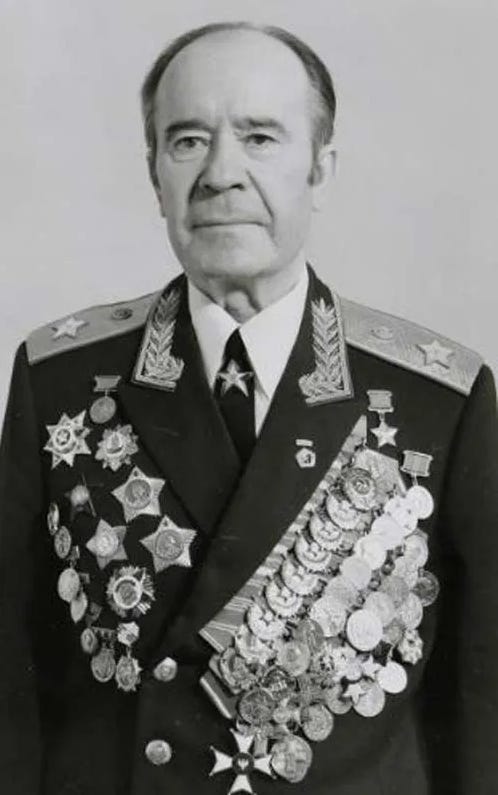
General Alexey Ivanovich Radzievsky assessed this problem in significant detail in his book Tank Strike (Танковый удар) drawing on the experience of Soviet tank armies during the Great Patriotic War. The 3rd Guards Tank Army during the Lvov-Sandomierz offensive of July-August 1944 provides a revealing illustration. Radzievsky notes that the number of armored vehicles and self-propelled guns repaired during the operation exceeded the army’s initial armored strength. Many damaged vehicles were being repaired and returned to combat repeatedly. He recalls:
«Опыт минувшей войны показал, что не менее 60% боевых машин при подготовке операции и 85–90% боевых машин в ходе наступления прибывало на пополнение после ремонта. Следовательно, восстановление танков и САУ являлось главным источником восполнения потерь».8
“The experience of the past war demonstrated that at least 60% of combat vehicles received as replacements during preparations for an operation, and 85-90% during an offensive, came from repairs. Consequently, restoring tanks and self-propelled guns was the principal means of replacing equipment losses.”
This distinction between temporarily disabled vehicles and an irrecoverable loss was fundamental to maintaining combat power. This historical experience provides another framework for understanding the Russian campaign in Ukraine. Russian forces have employed forward repair facilities to recover damaged vehicles and return them to service. According to Russian officials, certain battlefield repairs averaged 2-3 days.9
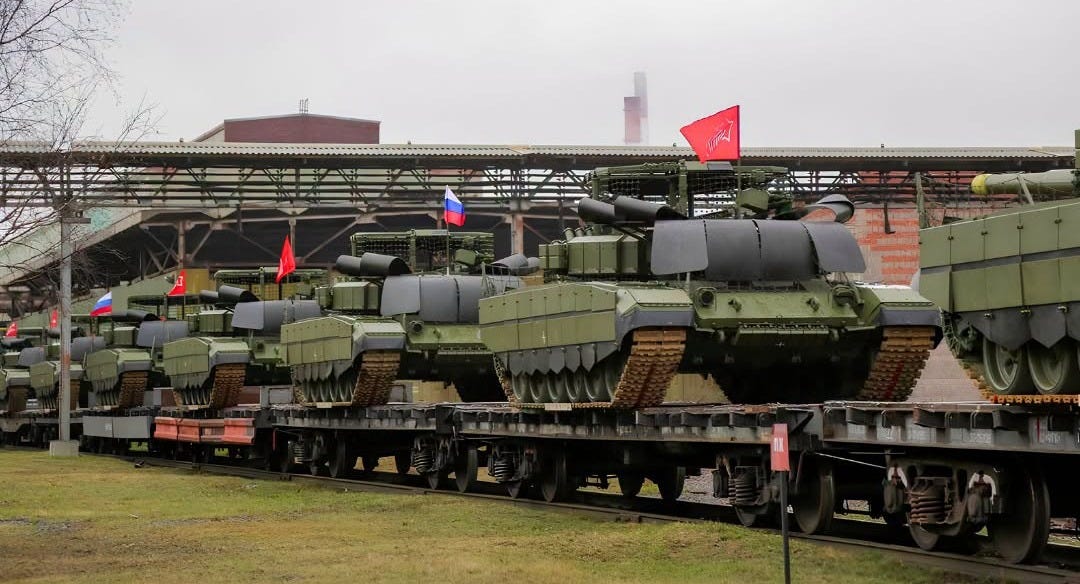
During the 2022-24 period which witnessed the highest use of armored equipment, Russia’s established repair and refurbishment infrastructure offered several advantages in turnaround times relative to Western-supplied Ukrainian systems that depended on specialized maintenance facilities outside of Ukraine. Damaged M1A1 Abrams and Leopard tanks required evacuation to repair facilities in Poland or Germany. German PzH 2000 self-propelled howitzers also had to be serviced outside of Ukraine. Shortages of specialized mechanics and spare parts compounded the problem. The Polish Center for Eastern Studies reported that such arrangements could remove equipment from service for weeks.10 This difference illustrates Radzievsky’s central insight that the interval between equipment being disabled and its return to combat is an important determinant of military endurance.
A significant advantage for Russia has also been the enormous material reserve of armored vehicles, hulls, engines and components that it inherited from the Soviet arsenal. This has enabled factories to restore and modernize equipment without manufacturing every vehicle from scratch thereby playing a critical role in the speed of regenerating equipment. At the same time, Soviet-era reserves are finite and cannot indefinitely substitute for new production.
The Arsenal Behind the Army: The Economics of Force Regeneration
Soviet military planners understood that mobilization and battlefield repairs alone could not sustain a prolonged war. The industrial capacity of the state mattered as much as the strength of the armed forces. Here, Nikolai Voznesensky, the Soviet First Deputy Premier who oversaw wartime economic planning through Gosplan (the State Planning Committee) provides some useful insights. In his work The War Economy of the USSR During the Great Patriotic War (Военная экономика СССР в период Отечественной войны) he describes how industrial capacity had to be re-organized and expanded while the war was already consuming its output. A key principle that he highlights is how the economy had to be able to absorb disruption while simultaneously expanding production. Reserves of productive capacity, machinery, fuel, raw materials and skilled labor were as indispensable to sustaining warfare. He states:
«Опыт показал, что в современной войне выигрывает тот, кто обладает производственными, людскими, сырьевыми и другими материальными резервами».11
“Experience has shown that in modern warfare, victory belongs to the side possessing reserves of productive capacity, manpower, raw materials and other material resources”
Expanding output despite significant constraints on labor, machinery and raw materials was a significant achievement. The evacuation of factories, re-organization of industrial processes and concentration of resources on military requirements enabled Soviet industry to rebuild its productive capacity. Industrial regeneration preceded the regeneration of military formations.
Russian industrial capacity today has markedly increased though is not on the same war footing as in the 1940s. In June 2025, Rostec reported that its production of artillery ammunition had increased by 30% during 2024.12 Ammunition for tanks and other armored vehicles more than doubled.
Voznesensky also observed that the labor required to manufacture a T-34 tank fell dramatically during the war:
«Затрата живого труда на танковых заводах в производстве танка Т-34 уменьшилась с 8 тыс. человекочасов в 1941 году до 3,7 тыс. человекочасов в 1943 году».13
“The expenditure of direct labor at tank factories in the production of the T-34 declined from 8,000 worker-hours in 1941 to 3,700 worker-hours in 1943.”
This reduction of nearly 54 percent shows a less obvious dimension of Soviet wartime mobilization. Industrial regeneration also depended on increasing the military output obtainable from scarce labor and manufacturing capacity. The Red Army was able to rapidly replenish its formations even as it was incurring significant losses in men and material on the frontlines.
The deeper insight from the Soviet experience is that force regeneration entails the continuous conversion of economic resources into military power. The connection between Shtemenko’s reserve armies and Voznesensky’s industrial reserves is fundamental. While the battlefield devours resources, the economic and mobilization systems in the rear must continuously work to replenish them. The ability of a military to successfully conduct a prolonged campaign depends on how optimally these processes remain connected and ensure that regeneration outpaces attrition. Frontline strategic reserves depend on reserves of productive capacity in the rear. Both are components of the same system of military endurance.
Destroying the Enemy’s Capacity to Regenerate
Russia’s stated war objective of Ukraine’s de-militarization assumes a clearer meaning in light of this analysis of force regeneration. Destroying existing formations is insufficient if they can be replenished and restored to combat. Since the conflict started in 2022, Ukraine’s armies have been reconstituted several times through extensive Western financial and military support.
Initially, Ukraine, with NATO support, mobilized hundreds of thousands of personnel and established foreign-supported training and equipment pipelines. Its 2023 summer counteroffensive highlighted the difficulties of converting new recruits and Western weapons into combat effective formations, especially when training was compressed and there was a shortage of experienced officers. By early 2025, the pressure was even more visible. Many Ukrainian brigades were operating significantly below strength.
Replacing existing losses was increasingly consuming the manpower needed for future reserves. This was occurring at a time when Russia was applying sustained pressure across the entire frontline forcing Ukraine to disperse scarce reserves. At the same time Russia was striking the core infrastructure needed for force regeneration such as training and recruitment centers. In 2026, the rising intensity of strikes on production facilities, ports and energy systems has degraded industrial capacity which will further disrupt the process of regenerating combat power.
The decisive measure of attrition is not the destruction inflicted on the adversary’s forces but degrading its ability to restore effective combat strength. The tragic daily scenes of men in Ukraine being forced into vehicles against their will by police and military recruitment personnel to be sent to the front does not solve the regeneration problem. Ukrainian frontline units are depleted and troops have not been rotated out. Despite these conditions, the Ukrainians are continuing to hold out, but for how long?
The Enduring Lesson of Soviet Military Experience
The enduring lesson of Soviet military thought is that combat power must be continuously reproduced. Triandafilov understood the limitations of numerical mobilization. Shtemenko demonstrated the importance of strategic reserves. Radzievsky underscored the operational value of battlefield repairs. Voznesensky identified the industrial reserves necessary to sustain military production. Together, their insights describe an entire ecosystem dedicated to preserving and restoring military power.
Russia’s experience in Ukraine reflects a continuation of this tradition. Its ability to generate manpower, restore equipment, produce substantial amounts of hardware and ammunition has enabled it to sustain the conflict for this long. For Ukraine, the problem is also consequential. Western support can replenish weapons (now increasingly drones) and support its struggling economy but it cannot immediately create experienced officers, command structures or replenish depleted formations. Russia’s attrition strategy is not just focused on destroying Ukraine’s existing fighting capability but exhausting the entire ecosystem, including Western support, that supports regenerating its ability to continue fighting.
The decisive question is therefore not which army inflicts greater destruction, but which can sustain and restore effective combat power longer than its adversary. The army that matters tomorrow is not merely the one that survives today’s battles, but the one that can be rebuilt while those battles are still being fought.
References available at original link here.